Posted tagged ‘Trump and Iran’

Iran’s Bluster Is Just Fear of Trump — and Revolution

February 10, 2017

Iran’s Bluster Is Just Fear of Trump — and Revolution, PJ MediaMichael Ledeen, February 10, 2017

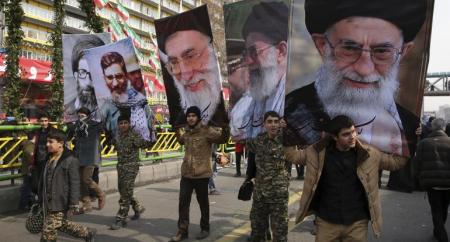
he-not-heavy-he-my-brotherIranians march while carrying various portraits of Supreme Leader Ayatollah Ali Khamenei in an annual rally commemorating the anniversary of the 1979 Islamic revolution, which toppled the late pro-U.S. Shah, Mohammad Reza Pahlavi, in Tehran, Iran, Friday, Feb. 10, 2017. (AP Photo/Vahid Salemi)

They’re chanting “Death to America” in Tehran again, on the anniversary of the Iranian revolution of 1979. And they are stomping on big posters of The Donald.

Iranian leaders are warning the United States that tough talk and threats are pointless; that Iran is so powerful they will pursue their revolutionary mission no matter what we do or say, that their efforts are blessed by Allah.

But it’s all bluster — and the Iranian people know it.

The rent-a-crowds, which have a high proportion of military men, are not really prepared to directly challenge the United States. The marches, chants, and posters are not so much for our consumption as for that of their own citizens, most of whom are disgusted with the failed regime and yearn for a return to the Western world. The regime fears that, sooner or later, the tens of millions who detest Khamenei, Rouhani, et al., will flood the streets as they recently did on the occasion of the funeral of Hashemi Rafsanjani, chanting anti-regime and anti-Russian slogans.

Today’s “festivities” are designed to keep the Iranian people in their oppressed places — and mass hangings and torture underline their real targets.

The regime is intensely worried that the Trump team is preparing serious action. The mullahs know that if America moves, most Iranians will try to bring down the regime.

As luck would have it, another Persian anniversary arrives next month: Nowruz, the Persian new year, whose origins lie in the country’s Zoroastrian past. The radical Muslims who rule the Islamic Republic have always disliked these celebrations — the most famous of which features jumping through bonfires — and it is likely that there is a vast Zoroastrian underground in the country.

This would be a great occasion for Trump, Tillerson, Pence, Mattis, Flynn, and Pompeo to call for a free Iran. Something like this:

We Americans embrace those brave Iranians who are fighting to be free. We are common victims of the tyrants around Khamenei.

The Tehran regime constantly preaches “Death to America,” and they have made good on this slogan, killing hundreds of American soldiers, taking scores of American hostages, harassing our naval forces in the Persian Gulf, and supporting terrorism worldwide.

We support the Iranian people in their legitimate efforts to freely design a modern constitution, remove the theocratic tyrants, and rejoin the Western world.

Revolutionary Donald? If he can do it here, he can do it there, too.

Beautiful Friendship

February 10, 2017

Beautiful Friendship, Front Page MagazineCaroline Glick, February 10, 2017

flags-1

Originally published by the Jerusalem Post

On Sunday, Trump restated his desire to develop ties with Russian President Vladimir Putin. Netanyahu must present Trump with a viable plan to reconstitute US-Russian ties in exchange for Russian abandonment of its alliance with Tehran and its cooperation with Iran and Hezbollah in Syria.

Next week can be the beginning of a new era in Israel’s relations with the US. But to make the most of this unprecedented opportunity, Israel needs to recognize its role as America’s ally. It must take the necessary steps to perform that role, and it must free the administration from the shackles of the PLO while securing its long-term interests in Judea and Samaria unilaterally, and quietly.

********************

Less than a week after he was inaugurated into office, President Donald Trump announced that he had repaired the US’s fractured ties with Israel. “It got repaired as soon as I took the oath of office,” he said.

Not only does Israel now enjoy warm relations with the White House. When Prime Minister Benjamin Netanyahu arrives in the US capital next week, he will be greeted by the most supportive political climate Israel has ever seen in Washington.

It is true that dangers to Israel’s ties with America lurk in the background. The radical Left is taking control of the Democratic Party.

But the forces now hijacking the party on a whole host of issues have yet to transform their hatred of Israel into the position of most Democratic lawmakers in Congress.

Democrats in both houses of Congress joined with their Republican counterparts in condemning UN Security Council Resolution 2334 that criminalized Israel. A significant number of Democratic lawmakers support Trump’s decision to slap new sanctions on Iran.

Similarly, radical Jewish groups have been unsuccessful in rallying the more moderate leftist Jewish leadership to their cause. Case in point is the widespread support Trump’s appointment of David Friedman to serve as his ambassador to Israel is receiving from the community.

Whereas J Street and T’ruah are circulating a petition calling for people to oppose his Senate confirmation, sources close to the issue in Washington say that AIPAC supports it.

Given this political climate, Netanyahu must use his meeting with Trump to develop a working alliance to secure Israel’s long-term strategic interests both on issues of joint concern and on issues that concern Israel alone.

The first issue on the agenda must be Iran.

Since taking office, Trump has signaled that unlike his predecessors, he is willing to lead a campaign against Iran. Trump has placed Iran on notice that its continued aggression will not go unanswered and he has harshly criticized Obama’s nuclear deal with the mullahs.

In the lead-up to his meeting with Trump, Netanyahu has said that he will present the new president with five options for scaling back Tehran’s nuclear program. No time can be wasted in addressing this problem.

Iran continues spinning its advanced centrifuges.

The mullahs are still on schedule to field the means to deploy nuclear warheads at will within a decade. Netanyahu’s task is to work with Trump to significantly set back Iran’s nuclear program as quickly as possible.

Then there is Syria. And Russia.

On Sunday, Trump restated his desire to develop ties with Russian President Vladimir Putin. Netanyahu must present Trump with a viable plan to reconstitute US-Russian ties in exchange for Russian abandonment of its alliance with Tehran and its cooperation with Iran and Hezbollah in Syria.

Here, too, time is of the essence.

According to news reports this week, President Bashar Assad is redeploying his forces to the Syrian border with Israel. Almost since the outset of the war in Syria six years ago, Assad’s forces have been under Iranian and Hezbollah control. If Syrian forces deploy to the border, then Iran and Hezbollah will control the border.

Israel cannot permit such a development. It’s not just that such a deployment greatly expands the risk of war. As long as Russia is acting in strategic alliance with Iran and Hezbollah in Syria, the deployment of Iranian-controlled forces to the border raises the real possibility that Israel will find itself at war with Russia in Syria.

Then there are the Sunnis. For the past six years, Netanyahu successfully withstood Obama’s pressure by developing an informal alliance with Sunni regimes that share its opposition to Iran and to the Muslim Brotherhood.

According to sources aware of the Trump administration’s strategic plans, the administration wishes to integrate Israel more strongly into Washington’s alliance structure with Sunni regimes. Israel, of course, has good reason to support this plan, particularly if it involves extending the US military’s Central Command to include Israel.

There are, however, significant limitations on the potential of Israel’s ties to Sunni regimes. First, there is the fact that all of these regimes are threatened by Islamist forces operating in their territory and on their borders.

As Israel Air Force commander Maj.-Gen. Amir Eshel warned this week, Israel is concerned that in the event any of these regimes is overthrown, the advanced US weapons it fields will fall under the control of Islamist forces.

Then there is the fact that in exchange for taking their relations with Israel out of the proverbial closet, the Arabs will demand that Israel make concessions to the PLO.

This then brings us to the only subject the media is discussing in relation to Netanyahu’s upcoming meeting with Trump: Will Trump push Israel to make concessions to the PLO or won’t he? The short answer is that it doesn’t appear that Trump has the slightest intention of doing so.

Over the past week, the administration has made three statements about the Palestinians.

First, of course, was the White House’s statement about the so-called Israeli settlements that came out last Thursday.

Although nearly all media reports on the statement claimed it aligned Trump with his predecessors in opposition to Israel’s civilian presence in Judea and Samaria, the fact is that the statement was the most supportive statement any US administration has ever made about those communities.

Obama, of course rejected Israel’s right to any civilian presence beyond the 1949 armistice lines, including in Jerusalem. In his final weeks in office, Obama joined the international mob in falsely castigating Israeli communities in these areas as illegal.

George W. Bush for his part, made a distinction between the so-called settlement blocs and the more isolated Israeli villages in Judea and Samaria. He gave grudging and limited support for Israel’s right to respect the property rights of Jews in the former. He rejected Jewish property rights in the latter.

Trump repudiated both of these positions.

In its statement on Thursday, the administration made no distinction between Jewish property rights in any of the areas. Moreover, the statement did not even reject the construction of new Israeli communities.

According to the text of the statement, “the construction of new settlements or the expansion of existing settlements beyond their current borders may not be helpful in achieving” the goal of peace.

But, then again, they may be helpful. And then again, they may have no impact whatsoever on the chance of achieving peace.

Not only did the administration’s statement not reject Israel’s right to build new communities, it rejected completely the position of Trump’s predecessors that Israeli communities are an obstacle to peace.

In the administration’s words, “We don’t believe the existence of settlements is an impediment to peace.”

After renouncing the positions of its predecessors on Israeli communities in Judea and Samaria, the administration then refused to say whether its vision for peace includes a Palestinian state.

In line with the Republican Party’s platform that makes no mention of support for Palestinian statehood, the Trump administration continues to question the rationale for supporting a policy that has failed for the past 95 years.

Finally, the administration said it had no comment on the regulations law this week regarding Jewish construction rights in Judea and Samaria.

All White House spokesman Sean Spicer would say was that it would be discussed in Trump’s meeting with Netanyahu.

This brings us back to that meeting, and how Netanyahu should broach the Palestinian issue.

Both from statements by administration sources since the election and from the administration’s refusal to speak with Palestinian Authority officials since Trump’s electoral victory, Trump and his top advisers have made clear that they see no upside to US support for the PLO.

They do not want to support the PLO and they do not want to be dragged into fruitless discussions between Israel and the PLO. For the past 24 years, US mediation of those discussions has weakened America’s position in the region, has weakened Israel and has empowered the PLO and anti-American forces worldwide.

According to sources with knowledge of the administration’s position, Trump views the Israeli- Palestinian conflict as an internal Israeli issue.

He expects Israel to deal with it and do so in a way that stabilizes the region and keeps the Palestinians out of the headlines, to the extent possible.

In this vein, sources with knowledge of administration considerations claim that last Thursday’s White House statement on Israeli communities in Judea and Samaria was in part the result of exasperation with Israel’s inability to keep quiet on the issue. Had Netanyahu and Defense Minister Avigdor Liberman not announced that they were issuing permits for thousands of building starts in Judea and Samaria, the White House wouldn’t have felt compelled to issue a statement on the matter.

The administration’s desire to disengage from the PLO is well aligned with Israel’s strategic interests. No good has ever come to Israel from US support for the PLO. Moreover, Israel has achieved its greatest strategic successes in relation to determining its borders when it has kept its moves as low key as possible.

For instance, in 1981, when then-prime minister Menachem Begin applied Israeli law to the Golan Heights, he did so with no fanfare. Rather than loudly announcing Israel’s right to sovereignty over the area, Begin insisted that the move was done to satisfy administrative imperatives and that Israel would be willing to consider border corrections in the event that Syria became serious about peace at some later date.

Begin’s example should inform Netanyahu’s preparations for his meeting with Trump.

Unfortunately, Netanyahu does not seem to realize the implications of Trump’s lack of interest in following in his predecessors’ footsteps in relation to the PLO.

Over the past few weeks, Netanyahu has insisted that he wishes to coordinate his positions on the Palestinians with the administration. While he should take any concerns Trump voices to him on the issue into consideration, he should also make clear that the administration’s belief that no good has come to the US from its support for the PLO is well-founded. He should also explain Israel’s need to control Area C in perpetuity, and the problem with maintaining military administration of the area. Finally, he should assure Trump that Israel intends to secure its interests in Judea and Samaria in a way than does not impinge on US priorities.

Next week can be the beginning of a new era in Israel’s relations with the US. But to make the most of this unprecedented opportunity, Israel needs to recognize its role as America’s ally. It must take the necessary steps to perform that role, and it must free the administration from the shackles of the PLO while securing its long-term interests in Judea and Samaria unilaterally, and quietly.

Dr. Jasser reacts to a Seattle judge’s ruling regarding the travel ban 02.07.2017

February 9, 2017

Dr. Jasser reacts to a Seattle judge’s ruling regarding the travel ban 02.07.2017, AIFD via YouTube, February 7, 2017

(Please see also, A Maniac is Running Our Foreign Policy! (It’s Not Trump). — DM)


US Sanctions on Iran Must be Enforced by Ukraine

February 9, 2017

US Sanctions on Iran Must be Enforced by Ukraine, Iran News Update, February 9, 2017

mahan_air_iran_464855538

The lack of U.S. sanctions enforcement under the Obama administration undermined U.S. credibility and deterrence.

Although the current government is requesting more U.S. military assistance and a tougher Western stance in its current struggle against Russia in Eastern Ukraine, it sees no contradiction between its desire for Western support and its partnership with Iran’s sanctioned aviation sector.

************************

In their February 7 article for The Hill, Emanuele Ottolenghi senior fellow at the Foundation for Defense of Democracies, and Boris Zilberman, deputy director of congressional relations and a Russia analyst, co-contributed an opinion piece on why the US must enforce sanctions on Iran. 

According to Ottolenghi and Zilberman, anti-tank missile components, reportedly the AT-4 Spigot, destined for Iran were seized by the Ukrainian State Border Guard on January 19. These weapons were concealed in the cargo hold of a UM Airlines flight from Kiev to Tehran. While Ukraine captured this illicit cargo, Kiev continues to allow Iran to evade a U.N.- implemented sanctioned international arms embargo and Western sanctions.

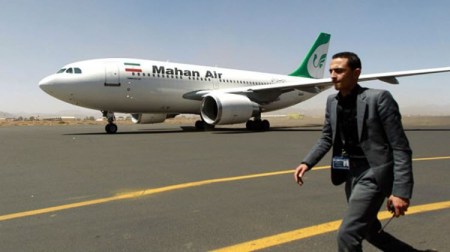
Iranian carriers like Caspian Airlines and Mahan Air are banned, but close cooperation with Ukrainian airlines, and Kiev’s failure to enforce U.S. sanctions against Iran, let’s them continue to benefit, and should become an important part of the Trump administration’s review of its foreign policy options toward Ukraine.

“The Iranian aviation sector’s reliance on Kiev is not new. Publicly available data from commercial flight trackers show that Dart Airlines is currently leasing aircraft to Iran’s privately owned Kish Air. Dart’s fleet is also frequently chartered for Iran and Lebanon routes by unknown operators. Iran Air Tours, ATA Airlines and Zagros Airlines, among others, also lease aircraft from Ukrainian operators,” write Ottolenghi and Zilberman.

These private companies are not under U.S. sanctions, but Ukraine’s fleet caters to sanctioned entities. One of Air Khors’s aircraft is currently leased to the Iraqi Al-Naser Airlines, which the U.S. Treasury sanctioned in May 2015 when the company fronted for Mahan Air, data shows.

Air Khors leased a Boeing 737 to Naft Airlines, which is being operated by U.S. sanctioned Caspian Airlines.

Treasury has also slapped sanctions on two other Ukrainian airlines for assisting Mahan Air, Bukovyna Airlines, as well as UM Airlines, which was carrying the missile parts seized last week.

Lebanese businessman Rodrigue Merhej, UM airlines chairman, is also under U.S. Treasury sanctions since 2013 for their support of Mahan Air. The January 19 flight was a scheduled flight.

Ottolenghi and Silberman say that, “Since last year, there are daily flights between Kiev and Tehran, including a weekly Mahan flight that commenced last March, when Mahan and UM announced an expanded partnership. Their cooperation connects Kiev to Mahan’s Asian destinations through Tehran, giving Ukrainian passengers a convenient connecting hub to Asia.”  “They add, It also enables Mahan to officially enter the Ukrainian market.”

This partnership, that Washington has sanctioned since 2013, was announced by Kiev and Tehran, with the inaugural Mahan flight to Kiev welcomed by former Ukrainian President Viktor Yushchenko, and senior member of the Ukrainian parliament and ally of current President Petro Poroshenko, Oleh Barna. Eugene Dykhne, acting head of Kiev’s Boryspil International Airport; the Iranian ambassador to Kiev; and Mahan Air’s managing director for international relations, also attended.

The lack of U.S. sanctions enforcement under the Obama administration undermined U.S. credibility and deterrence.

Although the current government is requesting more U.S. military assistance and a tougher Western stance in its current struggle against Russia in Eastern Ukraine, it sees no contradiction between its desire for Western support and its partnership with Iran’s sanctioned aviation sector.

This past summer, Merhej boasted about the popularity of the Kiev-Tehran route. He said, ”The occupancy is increasing every day. We have about 75 passengers per flight today. Two months ago, it was 55 passengers. I am confident that we will reach 100 passengers by the end of June.”

“What Merhej failed to address is that UM Airlines, via its support of Mahan Airlines, has been involved in moving illicit cargo for the Syrian regime and the Iranian Revolutionary Guard Corps’ external arm, the Qods Force. The U.S. Treasury confirmed in 2013 that UM Airlines has trained Mahan Air pilots and engineers, and transferred airplanes to Mahan Air. UM has now been caught transferring weapons as well,” write Ottolenghi and Zilberman.

The seizure of weapons last week shows that UM Airlines has not stopped its illicit activity with Mahan Airlines, and that this activity has increased since the initial designations by Treasury. This is a major red flag.

Was last week’s weapons seizure was just the tip of the iceberg in illicit activity facilitated by UM and Mahan Airlines? Ottolenghi and Zilberman say that since conflict erupted in 2014, Ukraine has become a “supermarket” for the illicit arms trade, one that Iran can easily exploit through its direct air connection to Kiev.

“Authorities in Ukraine should be commended for seizing the weapons shipment, but when Kiev asks the United States for economic and military assistance, the least it can do is prevent sanctioned entities such as UM and Mahan Airlines to operate from its soil,” conclude Ottolenghi and Zilberman.

Israel’s inaction in Syria may open Golan to Iran

February 7, 2017

Israel’s inaction in Syria may open Golan to Iran, DEBKAfile, February 6, 2017

jordanisraelsyria480en

Prime Minister Binyamin Netanyahu has given “diplomatic priority” to stressing the perils posed by Iranian-sponsored terrorism and its nuclear-capable ballistic weapons, and placed them at the top of his talks with British premier Theresa May in London Monday, Feb. 6, and with President Donald Trump in Washington on Feb. 15.

But it stands to reason that their national security and intelligence experts have advised the US president and the British premier that Netanyahu has been firmly advised up to the present day to stay clear of military involvement in the Syrian conflict by the IDF high command and his past and present defense ministers, Avigdor Lieberman and Moshe Ya’alon.

Israel therefore stands to be excluded from the practical deliberations ongoing for Syria’s future. Jordan in contrast has stepped forward as the key Middle East player in the pacts and military understandings shaping up between the US, Russia and Turkey for throwing Iran out of Syria.

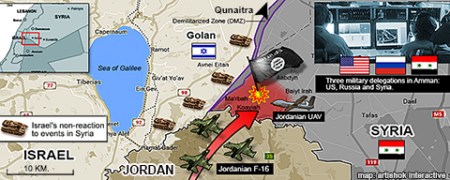
Jordan’s King Abdullah swallowed his pride and took the initiative of flying to Washington last Thursday, Feb. 2, to buttonhole President Trump. From their brief conversation, he became the first Middle East ruler to win a green light from the US for an air strike against the ISIS ally, the Khalid Ibn al-Walid Army, which occupies the triangle formed by the Syrian, Jordanian and Israeli borders. Israel has never attacked this force in the five years since it moved into that part of southern Syria.

DEBKAfile”s military and intelligence sources disclose that Abdullah informed Trump that the air strike would take place under the supervision of the US, Russian and Syrian commands, making it the first instance of US-Russian support for a Middle East army’s action against ISIS in Syria.

And so, on Saturday, Feb. 4, six Royal Jordanian Air Force F-15 fighters and five drones bombed seven Khalid Ibn al-Walid positions. This air strike most probably heralded more bombardments to come. Jordanian commando units are also likely to mount raids, in concert with the Syrian rebel militias they have trained, to seize the ground occupied by ISIS’ offshoot.

And on the diplomatic front, the US President authorized Jordan’s attendance at the Syrian peace talks that are ongoing under Russian sponsorship at the Kazakh capital of Astana. The Jordanian delegation was deputized to act on America’s behalf to monitor the process for determining the future of Syria.

This move came a week after the British prime minister was urged by Trump to fly straight to Ankara after their talks in Washington in search of a military collaboration deal for Syria between the UK and Turkey.

The onset of Jordan’s military action in Syria has pumped up to seven the number of foreign armies involved in that country’s conflict: Russia, Iranian Revolutionary Guards, pro-Iranian Shiite militias from Iraq, Afghanistan and Pakistan, the Lebanese Hizballah, US forces, the Turkish Army and now Jordan.

Synchronously with the Jordanian air strike in southern Syria, President Bashar Assad announced that its launch makes it possible for Syrian civilians who fled from the Islamists to start returning to their homes, starting with the Quneitra region of the Syrian Golan. He was talking about 30,000 refugees.

It is obvious to anyone familiar with the Syrian scene that this population shift is an open invitation for thousands of Iranian Revolutionary Guards Corps members and Hizballah terrorists to take the opportunity of stealing into the Golan, in the guise of returning refugees.

Israel, aside from providing an intelligence service on Syria to coalition forces, finds itself left out of any say in the currently evolving peace process. While ISIS may be rooted out of this border area at some point, the Netanyahu government’s military inaction risks exposing the Golan to another attempted incursion by Iranian and Hizballah forces by covert means.

The diplomatic prioritization of the Iranian threat, coupled with talks with US president Trump and deals with Russian President Putin, amount to a policy that has gone bankrupt for Netanyahu and his security chiefs. The powers who will determine what happens next in Syria are bound by military cooperation and action. Because Netanyahu’s rhetoric about the perils posed by Iran is not backed by military action, Israel has no influence on coming events, and faces the very real risk of being faced with an Iranian presence on its northern doorstep.

In trouble, Iran tries to discredit the MEK – dissidents

February 7, 2017

In trouble, Iran tries to discredit the MEK – dissidents, Iran Focus, February 6, 2017
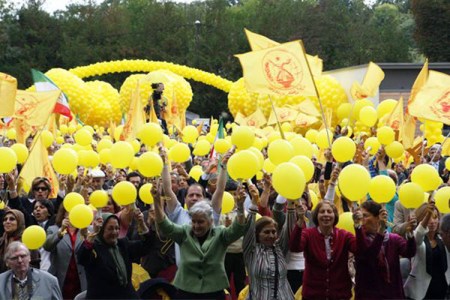
mek-rally-750

London, 7 Feb – As President Donald Trump’s new US administration steps up pressure on Iran over its belligerent activities, Iranian opponents are arguing that Tehran is now targeting its main organised opposition movement, the People’s Mojahedin Organisation of Iran (PMOI or MEK), with disinformation in order to discredit its role as a potential alternative to the theocratic regime.

The MEK, established over 51 years ago, as an opposition movement to the Shah’s regime, soon fell out with the clerical government that took over with the 1979 revolution. Since 1981, the MEK has been considered as the ruling theocracy’s main nemesis. The MEK is also the leading force in the main opposition coalition National Council of Resistance of Iran (NCRI).

Following the publication of articles by the Iranian ‘lobby’ targeting the MEK with ‘misinformation’, Farzin Hashemi, a Member of the NCRI Foreign Affairs Committee, wrote on Monday:

“Over the past week, once again policy on Iran was widely discussed in the media. Simultaneously, in recent weeks there has been more growing call for a new approach toward Iranian opposition, the MEK. The announcement by the US National Security Advisor that ‘Iran is officially on notice’ drew much attention. This position was followed by more Tweets from President Trump and a new round of sanctions, raising the prospect of a change of policy in the US approach towards Iran”.

Hashemi pointed out that both the NCRI and the MEK support sanctions against Iranian officials over their role in ballistic missile proliferation, a violation of United Nations Security Council Resolution 2231:

“As far as the Iranian Resistance, and its components including the People’s Mojahedin Organization of Iran (MEK/PMOI), is concerned imposing sanctions against a number of individuals and companies affiliated to the clerical regime for their role in missile proliferation is a positive step in confronting the illegitimate and terrorist dictatorship whose record includes 120,000 political executions”.

Last week the Trump administration sanctioned 25 Iranian officials and entities for a recent ballistic missile test launch by Tehran. Hashemi argued, however, that in order to deal with the threats emanating from Tehran – which it described as the Godfather of state-sponsored terrorism – the world community ought to impose comprehensive sanctions on Iran’s Revolutionary Guards (IRGC), the Ministry of Intelligence, and “other entities involved in suppression of the Iranian people and export of terrorism”.

“The IRGC and its affiliated militias and their commanders must be expelled from the countries of the region, in particular from Iraq, Syria, and Yemen. Otherwise, the region would not witness peace and tranquillity”.

“The prospect of a shift of US policy, has already shaken not only the Iranian regime and its lobbies but also apologists and advocates of the old and failed policy of appeasement. In order to maintain the ‘golden era,’ a term used by the mullahs’ officials internally and sometimes publicly to describe the last few years of US policy on Iran, they have resorted to a two-pronged strategy”, Hashemi argued.

Through their “propaganda in the media”, under various covers, they are trying to create an “echo chamber” with which any suggestion of the need for a firm policy on Iran and its rogue behaviour, both at home and abroad, is described as “war mongering”, he said. “They are desperately trying to intimidate those calling for a change of policy to side with the people of Iran, through such false labels”.

“Simultaneously, they are engaged in a massive disinformation campaign to discredit the democratic opposition, the MEK and the coalition National Council of Resistance of Iran (NCRI), led by its President-elect Maryam Rajavi. By spreading fake news about the MEK/PMOI, originated from the Ministry of Intelligence of the mullahs’ regime and the intelligence section of the IRGC, their objective is to convey this false message that there is no viable opposition and the world must accept and deal with the religious dictatorship ruling Iran. Thus, the core of the issue is not their debunked allegations but their hidden agenda to maintain the policy of appeasement”.

“So, the choice is simply to opt between supporting the central banker of international terrorism with the record of having executed 120,000 dissidents for political reasons –ironically, the majority of them members and sympathizers of the PMOI/MEK – or to side with the Iranian people in their quest for a free and democratic Iran in which there would be no more executions, no more gender discrimination, no more supporting terrorist groups and destabilizing the entire region and no more nuclear weapons program”.

Iranian dissidents have also taken to social media, such as Twitter and Facebook, to denounce Tehran’s ‘media propaganda ploy’ against the MEK.

On 9 January this year, 23 US prominent dignitaries, many of them with years of public service, urged the Trump administration “to adopt and pursue an Iran policy that recognizes the interests and inalienable rights of the Iranian people, and not just the clerical regime ruling over them.”

Highlighting the failure of the past policy that the nuclear deal might lead to a change of behavior from Tehran, the signatories stressed that the regime’s aggressive policy is part of their efforts on “preserving the vulnerable system of dictatorship”.

They also called for the voice of the Iranian people to be listened to through the NCRI and the MEK.

The former US officials also spoke out against Iran’s misinformation campaign against the MEK.

Pointing out that some “media and policy community continue to recycle defamatory allegations from decades past,” they wrote “We now know that these designations of the resistance as a terrorist group by Western governments were not made in response to confirmed terrorism; all were diplomatic gestures taken at the request of Tehran. Iran’s Ministry of Intelligence and Security has for many years impaired the exiled opposition by covertly spreading false and distorted claims through third parties in the West. Other governments like Germany and the Netherlands closely monitor Iran’s influence operations on their soil; a thorough counter‐intelligence investigation by the US is clearly needed and long overdue”.

They concluded by recommending to Trump: “With a more enlightened grasp of the Iranian regime’s priorities and vulnerabilities, your Administration will be equipped to exert leverage enabling the US to oppose Tehran’s repression and adventurism while standing for the fundamental values both our peoples share”.

Hashemi added: “While, Tehran’s lobby and advocates of appeasement will desperately continue to allocate all their resource to discredit the resistance, and in particular the MEK (PMOI) and to preserve the failed old policy, their time is over”.


More about the People’s Mojahdin Organization of Iran (PMOI/ MEK) —– Source

The People’s Mojahedin Organization of Iran (Also known as MEK, or Mujahedin-e-Khalq / Mujahedeen-e-Khalq), was founded on September 6, 1965, by Mohammad Hanifnejad, Saeed Mohsen, and Ali-Asghar Badizadgan. All engineers, they had earlier been members of the Freedom Movement (also known as the Liberation Movement), created by Medhi Bazargan in May 1961.1

The MEK’s quest culminated in a true interpretation of Islam, which is inherently tolerant and democratic, and fully compatible with the values of modern-day civilization. It took six years for the MEK to formulate its view of Islam and develop a strategy to replace Iran’s dictatorial monarchy with a democratic government.

MEK’s interpretation of Islam

The theocratic mullah regime in Iran believe interpreting Islam is their exclusive domain. The MEK reject this view and the cleric’s reactionary vision of Islam. The MEK’s comprehensive interpretation of Islam proved to be more persuasive and appealing to the Iranian youth.
MEK’s founders and new members studied the various schools of thought, the Iranian history and those of other countries, enabling them to analyze other philosophies and ideologies with considerable knowledge and to present their own ideology, based on Islam, as the answer to Iran’s problems.

MEK’s leadership’s arrest during the 70s.

The Shah’s notorious secret police, SAVAK, arrested all MEK leaders and most of its member’s in1971. On May 1972, the founders of the MEK, Mohammad Hanifnejad , Saeed Mohsen and Ali Asghar Badizadegan, along with two members of the MEK leadership, Mahmoud Askarizadeh and Rasoul Meshkinfam, were put before death squads and were executed after long months of imprisonment and torture. They were the true vanguards, who stood against the dictatorial regime of Shah. However, they are also recognized for their opposition to what is today known as Islamic fundamentalism.

The death sentence of Massoud Rajavi, a member of MEK’s central committee, was commuted to life imprisonment as a result of an international campaign by his Geneva based brother, Dr. Kazem Rajavi (assassinated in April 1990 in Geneva by mullahs’ agents) and the personal intervention of the French President Georges Pompidou and Francois Mitterrand. He was the only survivor of the MEK original leadership.
Massoud Rajavi’s critical role in characterizing religious extremism

From 1975 to 1979, while incarcerated in different prisons, Massoud Rajavi led the MEK’s struggle while constantly under torture for his leading position.

Massoud Rajavi stressed the need to continue the struggle against the shah’s dictatorship. At the same time, he characterized religious fanaticism as the primary internal threat to the popular opposition, and warned against the emergence and growth of religious fanaticism and autocracy. He also played a crucial role when some splinter used the vacuum in the MEK leadership who were all executed or imprisoned at the time, to claim a change of ideology and policy. Massoud Rajavi as the MEK leader condemn these individual’s misuse of MEK’s name while continuing to stress the struggle against dictatorship. His efforts while still in prison forced these individuals to no longer operating under the name of MEK and adopting a different name for their group. These positions remained the MEK’s manifesto until the overthrow of the shah’s regime.

Release of Political Prisoners on the last days of the Shah

A month before the 1979 revolution in Iran, the Shah was forced to flee Iran, never to return. All democratic opposition leaders had by then either been executed by the Shah’s SAVAK or imprisoned, and could exert little influence on the trend of events. Khomeini and his network of mullahs across the country, who had by and large been spared the wrath of SAVAK, were the only force that remained unharmed and could take advantage of the political vacuum. In France, Khomeini received maximum exposure to the world media. With the aid of his clerical followers, he hijacked a revolution that began with calls for democracy and freedom and diverted it towards his fundamentalist goals. Through an exceptional combination of historical events, Shiite clerics assumed power in Iran.

Khomeini’s gradual crackdown on MEK in fear of their popular support

In internal discourses, Rajavi the remaining leader of the MEK, argued that Khomeini represented the reactionary sector of society and preached religious fascism. Later, in the early days after the 1979 revolution, the mullahs, specifically Rafsanjani, pointed to these statements in inciting the hezbollahi club-wielders to attack the MEK.

Following the revolution, the MEK became Iran’s largest organized political party. It had hundreds of thousands of members who operated from MEK offices all over the country. MEK publication, ‘Mojahed’ was circulated in 500,000 copies.

Khomeini set up an Assembly of Experts comprised of sixty of his closest mullahs and loyalists to ratify the principle of velayat-e faqih (absolute supremacy of clerical rule) as a pillar of the Constitution. The MEK launched a nationwide campaign in opposition to this move, which enjoyed enormous popular support. Subsequently, the MEK refused to approve the new constitution based on the concept of velayat-e faqih, while stressing its observance of the law of the country to deny the mullahs any excuse for further suppression of MEK supporters who were regularly targeted by the regime’s official and unofficial thugs.

Khomeini sanctioned the occupation of the United States embassy in 1979 in order to create an anti-American frenzy, which facilitated the holding of a referendum to approve his Constitution, which the MEK rejected.

MEK’s endeavors to participate in the political process avoiding an unwanted conflict with government repressive forces
The MEK actively participated in the political process, fielding candidates for the parliamentary and presidential elections. The MEK also entered avidly into the national debate on the structure of the new Islamic regime, though was unsuccessful in seeking an elected constituent assembly to draft a constitution.

The MEK similarly made an attempt at political participation when [then] Massoud Rajavi ran for the presidency in January 1980. MEK’s leader was forced to withdraw when Khomeini ruled that only candidates who had supported the constitution in the December referendum – which the MEK had boycotted- were eligible. Rajavi’s withdrawal statement emphasized the MEK’s efforts to conform to election regulations and reiterated the MEK’s intention to advance its political aims within the new legal system”. (Unclassified report on the People’s Mojahedin Organization of Iran(PMOI/ MEK) by the Department of State to the United States House of Representatives, December 1984.)

However, the MEK soon found itself in a direct struggle against the forces of the regime’s Supreme leader. The MEK’s differences with Khomeini dated back to the 1970s, and stem from its opposition to what is known today as Islamic extremism. Angry at the position taken by the MEK against his regime and worried about the MEK’s growing popularity, Khomeini ordered a brutal crackdown against the MEK and its supporters. Between 1979 and 1981, some 70 MEK members and sympathizers were killed and several thousand more were imprisoned by the Iranian regime.

June 20, 1981- Khomeini’s order to open fire on peaceful demonstration of half-a-million supporters of MEK

The turning point came on 20th June 1981, when the MEK called a demonstration to protest at the regime’s crackdown, and to call for political freedom which half-a-million supporters participated at. Khomeini ordered the Revolutionary Guards to open fire on the swelling crowd, fearing that without absolute repression the democratic opposition (MEK) would force him to engage in serious reforms – an anathema as far as he was concerned; he ordered the mass and summary executions of those arrested.

Since then, MEK activists have been the prime victims of human rights violations in Iran. Over 120,000 of its members and supporters have been executed by the Iranian regime, 30,000 of which, were executed in a few months in the summer of 1988, on a direct fatwa by Khomeini, which stated any prisoners who remain loyal to the MEK must be executed.

Having been denied its fundamental rights and having come under extensive attack at the time that millions of its members, supporters and sympathizers had no protection against the brutal onslaught of the Iranian regime, the MEK had no choice but to resist against the mullahs’ reign of terror.

“Towards the end of 1981, many of the members of the MEK and supporters went into exile. Their principal refuge was in France. But in 1986, after negotiations between the French and the Iranian authorities, the French government effectively treated them as undesirable aliens, and the leadership of the MEK with several thousand followers relocated to Iraq.” (Judgment of the Proscribed Organizations Appeal Commission, November 30, 2007.)

MEK Today

The MEK today is the oldest and largest anti-fundamentalist Muslim group in the Middle East. It has been active for more than a half century, battling two dictatorships and a wide range of issues. The MEK supports:

• Universal suffrage as the sole criterion for legitimacy
• Pluralistic system of governance
• Respect for individual freedoms
• Ban on the death penalty
• Separation of religion and state
• Full gender equality
• Equal participation of women in political leadership. MEK is actually led by its central committee consist of 1000 women.
• Modern judicial system that emphasizes the principle of innocence, a right to a defense, and due process
• Free markets
• Relations with all countries in the world
• Commitment to a non-nuclear Iran

The MEK remains a strong and cohesive organization, with a broad reach both worldwide and deep within Iran. MEK is the leading voice for democracy in Iran, supported by its interpretation of Islam that discredits the fundamentalist mullahs’ regime.
The Mainstream Media’s Pointless Fixation on Trump and Putin

February 7, 2017

The Mainstream Media’s Pointless Fixation on Trump and Putin, PJ MediaRoger L Simon, February 6, 2017

(According to several recent DEBKAfile articles, Trump and Putin are already working to restrain Iran in Syria. See, e.g., Russia freezes Syrian, Iranian military movements. — DM)

allies

Meanwhile, in the real world, America and the rest of the West have two serious problems. You could even call them crucial — Iran and ISIS.  Putin can help with both.

**************************

You would think the mainstream media had had a collective lobotomy or is suffering from some mass version of premature Alzheimer’s disease, considering how quickly they have forgotten the red reset button with Russia, the chummy open-mic whisper from Obama to Medvedev, and the even chummier backslapping between John Kerry and Sergey Lavrov in their zeal to poleax Donald Trump for his lax attitude toward Vladimir Putin.

Was Putin less an ex-KGB agent in those not so distant Obama days, less a killer? Surely those same media geniuses are not such historical illiterates they have never heard of the KGB’s bloodthirsty antecedents — the GRU, the NKVD, and the Cheka?  As we all know,  or should, Russians, Soviet and otherwise, have been offing each other for a long time — well before Donald Trump came on the scene, although you wouldn’t believe that, considering the swill currently being written by our residents of digital Grub Street.

Have they actually forgotten that FDR dealt regularly with Stalin (indeed was his ally), a dictator whose despotism dwarfed Putin’s and who ended up murdering more people than Hitler? Estimates range from 30 to 60 million.  Nevertheless, Franklin complimented Uncle Joe on more than one occasion over a number of years to get what the American president wanted.  (Attn.: youthful New York Times reporters — in case this surprises you, you can read about it in “Caught between Roosevelt and Stalin: American Ambassadors to Moscow” by Dennis J. Dunn or, more simply, in the columns of your own monstrous Walter Duranty.)

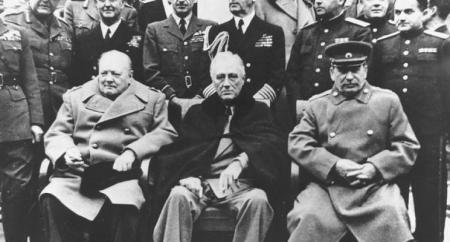
Roosevelt and Churchill sat with Stalin at Yalta, where they cozied up to the general secretary in manners the MSM, or even the fevered swamps of the alt-left, would not dare contemplate about our current president in their most extreme moments of Trump Derangement Syndrome.

Yet now even the likes of Charles Krauthammer are all in a dither about Trump’s too friendly attitude toward Bad Vlad — Donald’s supposed (actually cherry-picked and virtually non-existent) declaration of moral equivalency between us and them — as are such Republican stalwarts as Mitch McConnell and Marco Rubio. How virtuous of them to remind us ignorant folk of what we have all known for years — Putin’s ugly character and behavior. How astoundingly insightful.  Perhaps they will get a good mention on CNN.

Meanwhile, in the real world, America and the rest of the West have two serious problems. You could even call them crucial — Iran and ISIS.  Putin can help with both. And, as both Vlad and Donald undoubtedly know, Trump has considerable leverage to get that accomplished by muscling Putin economically, if and when Donald chooses to do so.

Horrifying as ISIS is, Iran in particular is becoming increasingly dangerous every day, firing off long-range test missiles right and left that soon will be capable of hitting Europe or even, in one report, Boston. They are also undoubtedly quietly continuing their nuclear research, waiting to mate their spanking new weapons of mass destruction with a 21st century delivery system and become the hegemon of the Middle East.  Obviously Saudi Arabia and other Sunni states are alarmed.  Israel always has been.  The rest of us should be too.

Anyone who believes or trusts in Obama’s Iran deal — clearly the biggest American foreign policy blunder in recent memory — to save us from this situation is, to be blunt, a fool. That deal is our Munich.

Iran must be reined in — and quickly.  Winnowing Russia away from the Islamic Republic is a key part of the solution, though not simple. First the Revolutionary Guards have to be extricated from Syria.  Putin is thought to be nervous about Iranian ambitions himself.  There is opportunity here for Trump.  Instead of blathering on endlessly about how he rates Putin on a scale of ten (Trump has already  stated several times he doesn’t know if he can get along with him), the media should start investigating what’s really happening here geopolitically  and not endlessly parse Trump’s language, looking for an opportunity to pounce.  I can’t imagine anything more useless and self-destructive.

The Trump Way of Winning the War

February 4, 2017

The Trump Way of Winning the War, Real Clear PoliticsCaroline Glick, February 4, 2017

(As to Trump-Putin cooperation against Iran in Syria, please see Trump-Putin safe zones deal ousts Iran from Syria and Russia freezes Syrian, Iranian military movements. — DM)

trumpinovaloffice

The PLO is disoriented, panicked and hysterical. Speaking to Newsweek this week, Saeb Erekat, PLO chief Mahmoud Abbas’s chief conduit to Israel and the Americans, complained that since President Donald Trump was sworn into office, no administration official had spoken to them.

“I don’t know any of them [Trump’s advisers]. We have sent them letters, written messages. They don’t even bother to respond to us.”

The Trump administration’s shunning of the PLO is a marked departure from the policies of its predecessor. For former president Barack Obama, together with Iran, the Palestinians were viewed as the key players in the Middle East. Abbas was the first foreign leader Obama called after taking office.

Erekat’s statement reveals something that is generally obscured. Despite its deep support in Europe, the UN and the international Left, without US support, the PLO is irrelevant.

All the achievements the PLO racked up under Obama – topped off with the former president’s facilitation of UN Security Council Resolution 2334 against Israel – are suddenly irrelevant. Their impact dissipated the minute Trump took office.

Israel, in contrast, is more relevant than ever.

While Trump occasionally pays lip service to making peace in the Middle East, his real goal is to win the war against jihadist Islam. And he rightly views Israel as a woefully underutilized strategic ally that shares his goal and is well-placed to help him achieve it.

During the electoral campaign, Trump often spoke derisively of Obama’s nuclear pact with Tehran. And he repeatedly promised to eradicate Islamic State. But when asked to explain what he intended to do on these scores, Trump demurred. You don’t expect me to let the enemy know my plan, do you?

Trump’s critics dismissed his statements as empty talk. But since he came into office, each day signals that he does have a plan and that he is implementing it. The plan coming into focus involves a multidimensional campaign that if successful will both neutralize Iran as a strategic threat and obliterate ISIS.

Regarding Iran specifically, Trump’s moves to date involve operations on three levels. First, there is the rhetorical campaign to distinguish the Trump administration from its successor.

Trump launched the campaign on Twitter on Wednesday writing, “Iran is rapidly taking over more and more of Iraq even after the US has squandered three trillion dollars there.”

Shortly before his post, Iraq’s Prime Minister Haider Abadi appointed Iranian proxy Qasim al Araji to serve as his interior minister.

At a minimum, Trump’s statement signaled an abandonment of Obama’s policy of cooperating with Iranian forces and Iranian-controlled Iraqi forces in the fight against ISIS in Iraq.

At around the same time Trump released his tweet about Iranian control of Iraq, his National Security Adviser Lt.-Gen. (ret.) Michael Flynn took a knife to Obama’s obsequious stand on Iran during a press briefing at the White House.

While Trump’s statement related to Iran’s growing power in Iraq, Flynn’s remarks were directed against its nonconventional threat and its regional aggression. Both were on display earlier this week.

On Sunday, Iran carried out its 12th ballistic missile test since concluding its nuclear deal with Obama, and its first since Trump took office.

On Monday, Iranian-controlled Houthi forces in Yemen attacked a Saudi ship in the Bab al-Mandab choke point connecting the Red Sea to the Indian Ocean.

Flynn condemned both noting that they threatened the US and its allies and destabilized the Middle East. The missile test, he said, violated UN Security Council Resolution 2231 that anchored the nuclear deal.

Flynn then took a step further. He drew a sharp contrast between the Obama administration’s responses to Tehran’s behavior and the Trump administration’s views of Tehran’s provocative actions.

“The Obama administration failed to respond adequately to Tehran’s malign actions – including weapons transfers, support for terrorism, and other violations of international norms,” he noted.

“The Trump administration condemns such actions by Iran that undermine security, prosperity and stability throughout and beyond the Middle East and place American lives at risk.”

Flynn ended his remarks by threatening Iran directly.

“As of today, we are officially putting Iran on notice,” he warned.

While Flynn gave no details of what the US intends to do to Iran if it continues its aggressive behavior, the day before he made his statement, the US opened a major, multilateral, British-led naval exercise in the Persian Gulf. US naval forces in the region have been significantly strengthened since January 20 and rules of engagement for US forces in the Persian Gulf have reportedly been relaxed.

Perhaps the most potent aspect of Trump’s emerging strategy for defeating the forces of jihad is the one that hasn’t been discussed but it was signaled, through a proxy, the day after Trump took office.

On January 21, Prime Minister Benjamin Netanyahu posted a remarkable message to the Iranian people on his Facebook page. Netanyahu drew a sharp distinction between the “warm” Iranian people and the “repressive” regime.

Netanyahu opened his remarks by invoking the new administration.

“I plan to speak soon with President Trump about how to counter the threat of the Iranian regime, which calls for Israel’s destruction,” the prime minister explained.

“But it struck me recently that I’ve spoken a lot about the Iranian regime and not enough about the Iranian people, or for that matter, to the Iranian people. So I hope this message reaches every Iranian.”

Netanyahu paid homage to the Green Revolution of 2009 that was brutally repressed by the regime. In his words, “I’ll never forget the images of proud, young students eager for change gunned down in the streets of Tehran in 2009.”

Netanyahu’s statement was doubtlessly coordinated with the new administration. It signaled that destabilizing with the goal of overthrowing the regime in Tehran is a major component of Trump’s strategy.

By the looks of things in Iran, regime opponents are taking heart from the new tone emanating from Washington. Iranian dissidents have asked for a meeting with Trump’s team. And a week and a half before Trump’s inauguration, regime opponents staged a massive anti-regime protest.

Protesters used the public funeral of former Iranian president Akbar Hashemi Rafsanjani to denounce the regime. In 2009, Rafsanjani sided with many of the Green Movement’s positions. His daughter was a leader of the protests.

Among the estimated 2.5 million people who attended the funeral, scores of thousands interrupted the official eulogies to condemn the regime, condemn the war with Syria and condemn the regime’s Russian allies.

This then brings us to Syria, where the war against ISIS and the campaign against Iran are set to converge. To date, Trump has limited his stated goals in Syria to setting up safe zones inside the country where displaced Syrians can live securely. Saudi Arabia and the Emirates have agreed to cooperate in these efforts.

Trump is now engaged in a talks with the Kremlin both above and below the radar about the possibility of coordinating their operations in Syria to enable safe zones to be established.

It is fairly clear what the US objective here would be. The US wishes to convince Moscow to effectively end its alliance with the Iranian regime. Trump repeatedly stated that the entire spectrum of US-Russian relations is now in play. Talks between the two governments will encompass Ukraine, US economic sanctions on Russia, nuclear weapons, Russian bases in Syria and Russia’s alliance with Iran and its Hezbollah proxies.

Everything is on the table.

Trump understands that Russia is threatened by Sunni jihadists and that Russia views Iran as a counterweight to ISIS and its counterparts in the Caucasus. A deal between the US and Russia could involve a Russian agreement to end its support for Iran and Hezbollah in exchange for US acceptance of Russia’s annexation of Crimea, cancellation of sanctions and perhaps some form of acquiescence to Russia’s military presence in Syria.

Russia and the US could then collaborate with Arab states with Israeli support to defeat ISIS and end the Syrian refugee crisis.

Combined with actions the Trump administration is already taking in the Persian Gulf and Red Sea, and its telegraphed aim of backing a popular Iranian insurrection, Trump’s hypothetical deal with Russia would neutralize Iran as a conventional and nonconventional threat.

This then brings us back to Israel – the first target of Iran’s aggression. If Trump’s strategy is successful, then the PLO will not be Israel’s only foe that is rendered irrelevant.

Earlier this week it was reported that in the two-and-a-half years since the last war with Hamas, the Iranian-backed, Muslim Brotherhood-affiliate terrorist group has rebuilt its forces. Today Hamas fields assets and troops that match the capabilities it fielded during Operation Protective Edge.

Hezbollah, with its effective control over Lebanon, including the Lebanese military, is a strategic threat to Israel.

To date, Israel has demurred from targeting Hezbollah and Hamas missile arsenals, but not because it is incapable of destroying them. Israel’s efforts to avoid conflict with its enemies, even at the price of their rearmament, also haven’t stemmed from fear of European or UN condemnation or even from fear of the so-called “CNN-effect.”

Israel has chosen not to defeat its enemies – not to mention the EU-backed NGOs that whitewash them – because the Americans have supported them.

The Clinton administration barred Israel from taking decisive action against either Hezbollah or the Palestinians.

The Bush administration forced Israel to stand down during the war with Hezbollah in 2006.

The Obama administration effectively sided with Hamas against Israel in 2014.

In other words, across three administrations, the Americans made it impossible for Israel to take decisive military action against its enemies.

Under Obama, the US also derailed every Israeli attempt to curb the power of EU-funded subversive organizations operating from inside of Israel.

Trump’s emerging strategy on Iran and ISIS, together with his refusal to operate in accordance with the standard US playbook on the Palestinians, indicates that the US has abandoned this practice. Under Trump, Israel is free to defeat its enemies. Their most powerful deterrent against Israel – the US – is gone.

Israel has long argued that there is no difference between al-Qaida and Hamas or between ISIS and Hezbollah. It has also argued that Iran threatens not only Israel but the world as a whole. Hoping to co-opt the forces of jihad rather than defeat them, successive US administrations have chosen to deny this obvious truth.

Unlike his predecessors, Trump is serious about winning. To do so, he is even willing to take the radical step of accepting Israel as an ally.

The PLO is right to be hysterical.

Time for Trump to Release Full Details of the Iran Nuclear Deal

February 4, 2017

Time for Trump to Release Full Details of the Iran Nuclear Deal, PJ MediaRoger L Simon, February 3, 2017

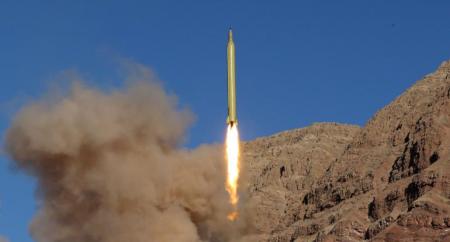
iranianmissileA ballistic missile is launched and tested in an undisclosed location, Iran, March 9, 2016. REUTERS/Mahmood Hosseini/TIMA

Does anyone know what’s really in the Iran nuclear deal with all its unpublished side agreements and secret verbal pledges?

Certainly not the American public, on whose behalf it was putatively negotiated. And probably not most, if not all, members of Congress who were bypassed in its negotiation and “signing” in a manner that doesn’t seem remotely constitutional.

Despite the yeoman efforts of Jay Solomon, Omri Ceren and others, the full extent of the deal is still a mystery. We don’t know in anywhere near full detail what Obama and Kerry, with the aid and comfort of wannabe fiction writer Ben Rhodes, hath wrought, though we do—pace Solomon, Ceren, etc.—have some sense that where compromises were made they almost universally favored Iran. Obama, for reasons again mysterious, seemed desperate to get a deal.

We also know that Iran has already broken at least one U.N. resolution:

The Khorramshahr medium-range ballistic missile flew 600 miles before exploding, in a failed test of a reentry vehicle, officials said. Iran defense minister Brigadier Gen. Hossein Dehqan said in September that Iran would start production of the missile.

U.N. resolution 2231 — put in place days after the Iran nuclear deal was signed — calls on the Islamic Republic not to conduct such tests. However, this is at least Iran’s second such test since July. The resolution bars Iran from conducting ballistic missile tests for eight years and went into effect July 20, 2015

Some Iranian officials claim that Obama & Co. gave them verbal permission during the negotiations to test missiles up to 2000 kilometers, enough to reach Israel, but not Europe. That’s nauseating, if true. Again, we don’t know, although we do know the Iranians insist they will continue with their tests.

Trump, however, has responded properly and forcefully by imposing new sanctions on 13 Iranian people and a dozen of their companies. He made his views evident to all in, unsurprisingly, a tweet: “Iran is playing with fire – they don’t appreciate how ‘kind’ President Obama was to them. Not me!” Via his national security adviser General Flynn, he further made clear that “nothing’s off the table.”

But most importantly, are the Iranians also breaking the original nuclear deal? Well, we don’t know because, as noted, we don’t know what it is. Not only that, as many have reported and PJM’s Michael Ledeen predicted quite some time ago, neither side has actually signed the deal in the first place. So it may not even exist. It’s a tree growing unseen in the wilderness or, perhaps more accurately, one of those Hollywood-style “verbal agreements”—enforceable only when opportune. It’s maximum plausible deniability all around.

That means nothing really happened. In the end, Iran can do anything it wants, or can get away with, in the nuclear realm just as it obviously believes it can do anything it wants in the missile launching realm.

Perhaps I’m missing something, but what reason could there be, at this point, not to release the so-called terms of this so-called deal—other than the embarrassment of the officials involved? America has a right to know what has been done in its behalf. Instead of BS transparency, we need real transparency. So do the citizens of many others countries that are in the crosshairs of the newly-enriched (by us) Iran with its expansionist goals that have been brutally apparent since this imaginary signing in Syria, Lebanon, Yemen and who knows where else.

The time is long since past for the complete details of this quondam deal to be released. I suspect they would be more than a little disturbing. Do it, Mr. President.

Guest Column: Washington Finally Designates Iran’s Revolutionary Guard Corps

February 4, 2017

Guest Column: Washington Finally Designates Iran’s Revolutionary Guard Corps, Investigative Project on Terrorism, Raymond Tanter and Edward Stafford, February 3, 2017

1962

The U.S. Treasury Department announced sanctions Friday on a host of Iranian companies and individuals as terrorists. It is a welcome development, which hopefully sends a signal to Tehran to rein in its global terror support, ballistic missile testing, and oppression of its people.

The action targets people and entities involved in procuring technology and/or materials to support Iran’s ballistic missile program, as well acting for or on behalf of, or providing support to, Iran’s Islamic Revolutionary Guard Corps (IRGC)-Qods Force.

The Iranian entities operate like a network out of Lebanon. It is the base of Hizballah (Party of God), an IRGC proxy, which was designated in 1997, but the IRGC was not designated.

Friday’s sanctions could help liberal democracy grow in Iran by showing Iranians that their leadership would face consequences for violating civil liberties at home and international relations norms abroad.

Per the Iranian Constitution (See Articles 107, 110), Iran is a theocratic dictatorship. Its parliament is under the sway of the Supreme Leader and other ayatollahs who select themselves. There is no such thing as a separation of powers by an independent authority.

Iran’s military is subordinated to the IRGC, which also controls most of the economy. Electoral results that do not satisfy the leadership are ignored and protests of anti-democratic governmental action are ruthlessly and systematically suppressed.

In the aftermath of the 2009 presidential elections, the Greens and the National Council of Resistance of Iran (NCRI) led protests. There is evidence the NCRI continues to exist despite facing heavy persecution. But the Greens have faded away, with their leaders Mir Hossein Mousavi and Mehdi Karroubi under house arrest in Tehran, subject to the whims of Supreme Leader Ayatollah Khamenei.

It appears as if Iran’s leaders face few domestic consequences for their illiberal and anti-democratic rule; so, to paraphrase Burke, the fewer consequences from within, the more needed from without.

Candidates for Designation

A 2015 study by Israel’s Meir Amit of the Intelligence and Terrorism Information Center, Portrait of Qasem Soleimani, commander of the Iranian Islamic Revolutionary Guards Corps’ Qods Force, provides ample evidence of the IRGC’s role in fomenting global terrorism.

Starting in 2012, the IRGC recruited several thousand Shi’ite volunteer fighters from among Afghan refugees living in Iran. The IRGC also cultivated terrorist networks in the Golan Heights. These activities morphed into terrorism on Aug. 20, 2015, when local forces, including Hizballah operatives supported and supplied by the IRGC, fired four rockets at Israel from the Syrian-controlled Golan Heights. Two hit Israeli territory in the Upper Galilee and two fell in the Golan.

Last April, Hizballah with the backing of the IRGC, began building new military installations in Syria, according to a report from the Foundation for Defense of Democracies. These appear to be geared toward a future, conventional war with Israel, but they offered Hizballah a venue from which it can launch strikes against northern Israeli cities.

Deliberately targeting civilians is a textbook example of terrorism. During this same time, the IRGC helped Hizballah operate complex weapons rockets that increased Hizballah’s ability to target Israeli cities.

A study published last fall by Iranian specialist Alireza Jafarzadeh and his colleagues shows how Iran fuels the Syrian civil war by placing the IRGC on the ground and transporting some Afghan refugees living in Iran to fight in Syria. The IRGC combined its troops and those of surrogates on the ground in terrorist assaults on civilians in places like Aleppo, Syria. This combination of forces on land with Syrian airstrikes proved to be a toxic mix of terrorism: “Syria is our 35th province, and is a strategic province for us,” Mehdi Taeb, a former commander of IRGC intelligence said in 2013. Because Taeb retains influence in the IRGC, his statements were and are indicative of the depth of the IRGC commitment to Syrian regime capabilities to conduct terrorism against civilians:

“If the enemy attacks us and seeks to take Syria or Khuzestan [an Iranian province], our priority would be to keep Syria, because if we keep Syria, we can retake Khuzestan. But if we lose Syria, we cannot keep Tehran.”

These three studies show the IRGC meets the legal criteria for an FTO designation. They are: 1) It must be a foreign organization; 2) engage in terrorist activity or terrorism, or retain the capability and intent to engage in terrorist activity or terrorism; and 3) the organization’s terrorist activity or terrorism must threaten the security of U.S. nationals or the national security (national defense, foreign relations, or the economic interests) of the United States).

To designate an organization or individual, there must be evidence they threaten the United States’ national security, foreign policy, or economy. The studies cited show that the IRGC is a threat to U.S. national security interests.

As evidence of congressional interest in designation, on Friday, MSNBC reported a bipartisan letter to President Trump in favor of sanctions against the IRGC. In addition,The Iranian Revolutionary Guard Corps (IRGC) Terrorist Designation Act” was introduced in the House and Senate in January. These identical bills emphasize that the IRGC meets the criteria for designation as a foreign terrorist organization under U.S. law.

“If a foreign organization looks like a terror group, operates like a terror group, and supports terrorism, then it should be called for what it is–a foreign terrorist organization,” said House co-sponsor Michael McCaul, R-Texas. “As obvious as that seems, for years the IRGC has been allowed to operate clandestinely using front companies and illicit networks to evade formal designation.”

Fellow Texas Republican and Senate co-sponsor Ted Cruz added that, by designating IRGC as a foreign terror organization, the U.S. would be “signaling to financial institutions and companies who facilitate or conduct business with the IRGC that they may be held liable.”

The Way Forward

Regarding the executive branch, President Trump made excellent choices for his national security team—Secretary of State Rex Tillerson; Defense Secretary James Mattis; National Security Adviser, Mike Flynn; Homeland Security Secretary, John Kelly; Director of National Intelligence, Dan Coats; and Director of Central Intelligence, Mike Pompeo.

These talented officials need not sing from the same songbook, that is, they need not agree. But it is important that their views be taken into account in the interagency process. That said, consider two major benefits of designation their consultation might produce.

First, tagging the IRGC would give succor to democratic forces within Iran by imposing costs on anti-democratic ones, including those who lead the IRGC. The IRGC leader Qasem Soleimani, who goes virtually unchallenged, would be weakened. A weaker Soleimani could give rise to splits within the regime and place Iran on its back foot. Now, Tehran can spend money abroad on Afghan fighters, Hizballah in Lebanon and Syria, Hamas in Gaza, and ignore unmet economic needs of the population.

Second, designating the IRGC sends a strong signal to the Arab Gulf States, led by Saudi Arabia: Washington is serious about regime change in Tehran. Prince Turki al Faisal, former Saudi intelligence chief, spoke to a group of Iranian dissidents in Paris in July 2016. Although he was not then in the government, Prince Turki remains an influential player in Riyadh.

A crowd of over 100,000 Iranian oppositionists chanted in Farsi that they wanted regime change in Iran. Prince Turki spoke to the dissidents in Arabic, saying he also wanted to see regime change in Tehran. This remark brought the house down.

In a subsequent brief conversation with Tanter, Turki said that designating the IRGC would be a good start toward unraveling of the Iranian regime.

The bottom line is that designation could help bring liberal democracy to Iran by weakening the grip of its key repressive institution—the Islamic Revolutionary Guard Corps and its proxies like Hizballah.