Posted tagged ‘Trump and Iran scam’

Trump slaps sanctions on Iran over missile test

February 3, 2017

Trump slaps sanctions on Iran over missile test, Washington Times, Dave Boyer, February 3, 2017

rockettheboatIn this Dec. 29, 2016, photo, released by the semi-official Iranian Students News Agency (ISNA), a long-range S-200 missile is fired in a military drill in the port city of Bushehr, on the northern coast of Persian Gulf, Iran.

The Trump administration hit Iran with new sanctions Friday, one day after President Trump said he had put Tehran “on notice” for testing a missile.

The Treasury Department announced sanctions against 13 individuals and 12 entities.

Speaker Paul D. Ryan said the “swift and decisive response proves that our new administration is serious about holding the Iranian regime accountable for its illicit behavior.”

Iran’s latest ballistic missile test was a flagrant violation of U.N. Security Council resolutions,” the Wisconsin Republican said. “I applaud President Trump for imposing new sanctions to crack down on Tehran’s dangerous ballistic missile program and support for terrorism across the globe.”

House Foreign Affairs Committee Chairman Ed Royce, California Republican, said Iran’s action poses “a direct threat to the United States and our allies.”

“I’m glad the administration is taking long-overdue steps to hold the regime accountable,” Mr. Royce said. “I look forward to working with the administration to build on these designations, push back against Iran’s destructive policies, and promote stability in the Middle East.”

Some of those on the sanctions list are based in the United Arab Emirates, Lebanon and China. The penalties were imposed under existing authority that had been issued by then-President Barack Obama. A bipartisan group of senators had urged Mr. Trump in a letter Thursday to take action against Iran.

“Iranian leaders must feel sufficient pressure to cease deeply destabilizing activities, from sponsoring terrorist groups to continued testing of ballistic missiles,” the lawmakers wrote. “Full enforcement of existing sanctions and the imposition of additional sanctions on Iran for its ballistic missile program are necessary.”

Iran tested a missile Sunday. On Wednesday, White House national security adviser Mike Flynn said the Trump administration was putting Iran “on notice,” calling the missile test “provocative.”

The missile launch was followed by Iran-backed Houthi militants’ deadly attack this week on a Saudi naval vessel in the Red Sea.

Mr. Trump told reporters Thursday that he wasn’t ruling out the prospect of military action against Tehran.

“Nothing’s off the table,” the president said.

Iran’s Foreign Minister Javad Zarif said on Twitter that the Iranian government was “unmoved” by Mr. Trump’s warnings.

“We’ll never initiate war,” Mr. Zarif said. “We will never use our weapons against anyone, except in self-defense. Let us see if any of those who complain can make the same statement.”

Ali Akbar Velayati, a top aide to Iran leader Ayatollah Ali Khamenei, said Thursday that Iran will continue to test ballistic missiles and “not ask any country for permission in defending itself.”

“This is not the first time that an inexperienced person has threatened Iran,” he said. “Iran is the strongest power in the region and has a lot of political, economic and military power. America should be careful about making empty threats to Iran.”

Mr. Trump said Friday that Iran is “playing with fire.”

“They don’t appreciate how ‘kind’ President Obama was to them,” he said on Twitter. “Not me!”

Mr. Obama signed an agreement with other world powers in 2015 to lift economic sanctions against Iran in exchange for limits on Tehran’s nuclear program and regular international inspections.

Mr. Trump has called it a bad deal and says he wants to renegotiate parts of it.

Re-isolate Iran now

January 27, 2017

Re-isolate Iran now, Israel Hayom, David M. Weinberg, January 27, 2017

In fact, the U.S. and Israel should reach an accord on a basket of responses to Iranian violations and aggressions, including the placement of a military option against Iran’s nuclear program back on the table.

Trump and Netanyahu must together promulgate an approach for combating the malign influence and hegemonic ambitions of Iran.

*********************************

Prime Minister Benjamin Netanyahu has made it clear that one of the top items on his agenda for consultation with U.S. President Donald Trump in Washington next month is countering Iranian aggression. With good reason. The net result of the Joint Comprehensive Plan of Action has been to foster Iran’s rise to regional hegemon.

While the JCPOA suspended a part of Iran’s nuclear weapons program for a few years, the ayatollahs see it as providing time to advance their centrifuge capability and regional sway.

In a Hoover Institution paper published this month, Professor Russell Berman and Ambassador Charles Hill call Iran a “de facto Islamic caliphate,” and the Islamic Revolutionary Guard Corps an “Iranian expeditionary force for invading strategic Arab spaces.”

They call former President Barack Obama’s declared goal — of finding and bolstering so-called moderates in Tehran via the JCPOA — an “illusion.” Iran is not a polity of moderates and hard-liners, they write. It is a revolutionary theocracy masquerading as a legitimate state actor. So the first thing Trump must do is recognize the consistently hostile character of the regime.

Alas, Obama was obsessed from the advent of his presidency with making nice to Iran, and was willing to subordinate much of American foreign policy in service of that goal. He sent many secret letters to Supreme Leader Ayatollah Ali Khamenei that recognized the prerogatives of the Islamic republic and foreswore regime change. He cut funding to anti-regime groups and abandoned Iranian moderates during the early days of the Green Revolution in 2009, after the regime fixed an election. He effectively conceded Syria as within Iran’s sphere of influence.

In his penetrating book, “The Iran Wars: Spy Games, Bank Battles, and the Secret Deals That Reshaped the Middle East,” Wall Street Journal reporter Jay Solomon exposes the money trail that accompanied this strategic sellout to Iran. In exchange for talking, Obama gave the Iranians hundreds of millions of dollars monthly, stabilizing their economy. And in the end, Obama offered Iran a deal that legalized full-blown uranium, plutonium, and ballistic missile work on a timeline, and did not force the country to disclose its previous nuclear cheating. The deal also released roughly a hundred billion dollars to Iran; had American officials traveling to drum up business for Iran; and removed restrictions on a range of Iranian terrorists.

Along the way, the administration abandoned the powerful sanctions leverage it had over Iran. Solomon chronicles the ramp-up of severe banking sanctions on Iran that were having a disastrous impact on the Iranian economy. “Iran’s economy was at risk of disintegrating, the result of one of the most audacious campaigns in the history of statecraft. The country was months away from running short on hard currency. The budget had a $200 billion black hole. And the U.S. Treasury Department had made sure Iran had no way to recover. Iranian ships and airplanes were not welcome beyond Iran’s borders, and oil revenue was frozen in overseas accounts.”

And then, behold, Obama backed off. Administration officials all of a sudden claimed that tightening the noose on the Iranian economy would cause the sanctions policy to collapse! And Secretary of State John Kerry was sent to cut a sweet deal with Iran; a deal that squandered — and then reversed — a decade’s worth of effort to constrain Iran.

Now Trump must act to constrain Iran all over again.

Over the past year, Iran has intensified a pattern of aggression and increased its footprint across the region. Iranian advisers with Shiite militias from as far away as Afghanistan have flooded Syria, giving Tehran a military arc of influence stretching to the Mediterranean.

Khamenei says that Iran’s massive military presence (alongside Hezbollah) in Syria is a supreme security interest for the regime — a front line against Israel — and that Iran has no plans to leave.

This has grave implications for Israel. Netanyahu must demand of Trump (and Putin) to include the removal of all foreign forces, especially Iran, in any future agreement regarding Syria. This will be very difficult — especially since Russia has just signed a long-term agreement to greatly enlarge its military presence in Syria, including the port in Tartus and air base in Latakia.

Iran, too, is aggressively expanding its naval presence in the Red Sea region and eastern Mediterranean. Since 2011, it has been sending warships through the Suez Canal, and has used maritime routes to send arms shipments to Hizballah and Hamas. (Israel has intercepted five of these armament ships.) And in the Strait of Hormuz, IRGC speedboats have repeatedly engaged in provocative encounters with American warships, including the conduct of surprise live rocket fire exercises in proximity to U.S. Navy vessels.

Then there is Iranian terrorism. IRGC agents have been caught planning attacks on Israeli, American, British and Saudi targets in Kenya. Over the past five years, Iranian agents were exposed while planning to attack Israeli diplomats in Azerbaijan, Cyprus, Georgia, India, Nigeria, Thailand and Turkey. Hezbollah operatives supported by Iran carried out the bus bombing of Israeli tourists at the Burgas airport.

Also: The detailing of Iranian terrorism in Arab countries such as Egypt, Jordan and Saudi Arabia could fill this entire newspaper.

Then there is Iran’s ballistic missile program. In December, U.S. Senator Ted Cruz sent a seven-page letter to three senior officials of the Obama administration, detailing his well-founded concerns that North Korea and Iran might be working together on developing nuclear missiles. (Not surprisingly, the Obama officials never answered.)

Cruz’s basic question was: Why does Iran, having promised not to make nuclear weapons, continue to pour resources into developing long-range ballistic missiles, including numerous missile tests this past year? If not for nuclear weapons, then for what?

The intrepid analyst Claudia Rosett continually has raised the suspicion that North Korea’s nuclear program is secretly doubling as a nuclear backshop for Iran. It’s very possible that the $1.7 billion in air-freighted cash that Obama granted Iran is being used to finance nuclear weapons and missile research in North Korea. It’s even possible that Iran may be bold enough to buy warheads from North Korea.

Only Washington can stop this, by re-isolating and pressuring Iran. Netanyahu should travel to Trump with a comprehensive plan to influence U.S. policy toward Iran, as well as plans for joint action against Tehran.

This should include an end to the secrecy surrounding many sections of the JCPOA. All side agreements should be disclosed relating to Iranian technology acquisitions, raw material quantities, uranium and plutonium enrichment levels, sanctions relief and financial transfers. Loopholes and exceptions made surreptitiously by Obama should be closed.

Penalties should be set firmly in place for Iran’s prohibited missile programs. (Such penalties do not exist in the JCPOA or in U.N. Security Council Resolution 2231.)

U.S. and Israeli resources should be pooled, in a renewed and formal U.S.-Israel agreement, to uncover and eliminate any undisclosed sites within Iran connected to nuclear weapons technology; to counter Iranian terror threats across the region; and to subvert any Iranian bases in Syria and Lebanon.

In fact, the U.S. and Israel should reach an accord on a basket of responses to Iranian violations and aggressions, including the placement of a military option against Iran’s nuclear program back on the table.

Trump and Netanyahu must together promulgate an approach for combating the malign influence and hegemonic ambitions of Iran.

Sanctioned Iranian Airlines Ferrying Illicit Weapons to Tehran

January 24, 2017

Sanctioned Iranian Airlines Ferrying Illicit Weapons to Tehran, Washington Free Beacon, January 24, 2017

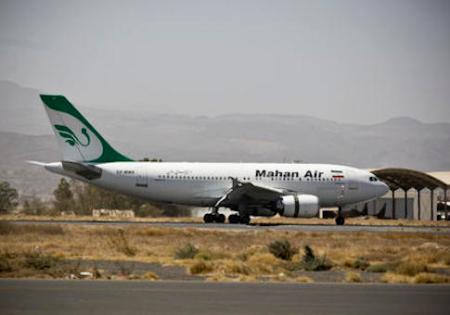
A plane from the Iranian private airline, Mahan Air lands the international airport in Sanaa, Yemen, Sunday, March 1, 2015. The first direct flight from Iran to the rebel-held Yemeni capital arrived, Sunday, an Airbus 310 carrying Iranians including aid workers from the Iranian Red Crescent as Yemen's Shiite rebels formalize ties with the regional Shiite powerhouse. The rebels, who overran the capital, Sanaa, last September, are widely believed to have support from Iran, a claim they frequently denied. (AP Photo/Hani Mohammed)

A plane from the Iranian private airline, Mahan Air lands the international airport in Sanaa, Yemen, Sunday, March 1, 2015.  (AP Photo/Hani Mohammed)

Boeing and Airbus should be paying close attention to the situation developing in Ukraine, according to one senior congressional adviser, who told the Free Beacon that the Trump administration would take sanctions enforcement more seriously than the Obama administration. The two airlines could find themselves ensnarled in sanctions violations if they move forward with deals to sell plans to Iran, the source said.

***********************************

Two airlines sanctioned by the United States for enabling Iran’s global terrorist operations appear to have played a central role in moving illicit missile components from Ukraine to the Islamic Republic, according to information obtained by the Washington Free Beacon.

Ukrainian authorities confirmed this week they had seized a shipment of missile system components bound for Iran, which could put the Islamic Republic in violation of international bans prescribed under the nuclear agreement.

Video of the seizure show Ukrainian authorities uncovering 17 boxes of missile parts bound for Iran and meant to be used in its Fagot anti-tank guided missile system.

Sources familiar with the incident told the Free Beacon that the airlines involved in this illicit activity have long been sanctioned by the United States for providing support to Iran’s global terror network. The reversal of longstanding economic sanctions on Iran provided under the nuclear agreement has boosted this activity and strengthened Iran’s illicit weapons pipeline, according to these sources.

Iran’s use of commercial airlines to import weapons has been well documented over the years. This latest incident could complicate efforts by global airplane manufacturers Boeing and Airbus to complete landmark deals with the Islamic Republic that are fiercely opposed by many in Congress.

The Free Beacon disclosed late last year that Iran secretly has been using commercial aircraft to smuggle weapons to terrorists supporting Syrian President Bashar al-Assad in that country’s bloody civil war. Many of the commercial planes flown by Iran were originally sold by the United States and later repurposed by Iran for use by its Air Force and Revolutionary Guard Corps, or IRGC, sources said.

“Iran was caught red-handed trying to import military hardware, including infrared guided anti-tank missiles,” Rep. Peter Roskam (R., Ill.), a vocal opponent of Boeing’s efforts to sell new planes to Iran, told the Free Beacon. “This is yet another example of the Islamic Republic using commercial aircraft for military purposes. Airbus and Boeing cannot claim ignorance on this—the Regime’s behavior is on full display before the world.”

The exposure of this illicit network in Ukraine demonstrates that Iran continues to use commercial airlines as cover for its movement of arms and other illicit materials, sources said.

The weapons were found onboard planes operated by Ukraine’s UM Airlines, which officially partners with Iran’s Mahan Air. The United States has sanctioned both carriers for providing support to Iran’s terror network, including the transportation of weapons and resources to the terror group Hezbollah, an Iranian proxy group.

Business between UM and Mahan reached its highest levels following the Iran nuclear agreement, when the Obama administration lifted longstanding economic sanctions on Iran. Removing the sanctions paved the way for the airline partnership and the multi-billion dollar trade deals between Iran, Boeing, and Airbus.

Mahan officially entered the Ukrainian marketplace in 2016 and now partners with UM on daily flights into Tehran.

While the removal of sanctions under the Iran deal helped to legalize business ties possible between the two airlines, they continue to carry out illicit activities, as highlighted by the missile shipment discovered this week.

Experts say there is no way to know how much illegal activity the two carriers have engaged in during their partnership.

“Authorities in Ukraine should be commended for seizing the weapons shipment, but when Ukraine asks the United States for economic and military assistance, the least it could do is not allow airlines, sanctioned for their support of the Assad regime and the IRGC, to operate from their soil,” Boris Zilberman, a regional expert and deputy director of congressional relations at the Foundation for Defense of Democracies, told the Free Beacon.

Boeing and Airbus should be paying close attention to the situation developing in Ukraine, according to one senior congressional adviser, who told the Free Beacon that the Trump administration would take sanctions enforcement more seriously than the Obama administration. The two airlines could find themselves ensnarled in sanctions violations if they move forward with deals to sell plans to Iran, the source said.

“No one is surprised that the Iranians are running weapons literally any way they can. Not even the Obama administration ever claimed that Iran stopped using civilian airlines like Iran Air for military uses,” said the source, who works with Congress on sanctions enforcement issues. “If I was Boeing or Airbus, I’d be worried about a knock on the door from Trump administration sanctions enforcers sooner rather than later.”

A State Department official was not able to provide information as to whether the missile discovery violates international agreements governing the nuclear deal.

“We’ve seen these reports but we do not have any further comment at this time,” the official said.

Emails and phone calls to the Ukrainian embassy in Washington, D.C., seeking comment were not answered.

Senior National Security Experts Calling for Working with the Iranian Opposition Applauded by Iranian Americans

January 18, 2017

Senior National Security Experts Calling for Working with the Iranian Opposition Applauded by Iranian Americans, Iran News Update, January 18, 2017

noi2-750

This bi-partisan urge to the incoming Trump administration “to establish a dialogue with Iran’s exiled resistance, the National Council of Resistance of Iran (NCRI),” who have called for free elections to establish a secular, democratic, non-nuclear republic in Iran, as well as to end to Tehran’s “religious dictatorship.”

Successive US administrations, offering concessions in a futile attempt to moderate the behavior of the totalitarian regime, have failed, and ignored 80 million freedom loving people in Iran.

***************************

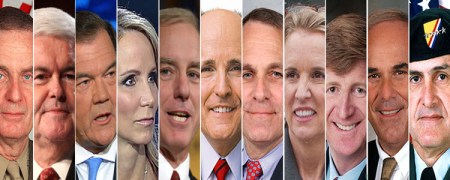
In an article published in the PR Newswire, a Cision Company on Jan. 16, 2017, the Organization of Iranian American Communities-US (OIACUS), the largest, most active and enduring grass root organization of Iranian-Americans in the United States welcomes the letter initiated by nearly two dozen bi-partisan former senior U.S. government officials who have urged President-elect Donald Trump to work with the Iranian opposition, as an integral part of a new policy on Iran.

Signed by 23 former top officeholders during the past five administrations the letter to the president-elect states, “To restore American influence and credibility in the world, the United States needs a revised policy based on universally shared norms and principles reflecting the ideals of peace and justice. A policy highlighting, and demanding an end to, Iran’s domestic human rights violations and malevolent regional actions will attract broad support and generate needed leverage against Iran’s threatening behavior.”

This bi-partisan urge to the incoming Trump administration “to establish a dialogue with Iran’s exiled resistance, the National Council of Resistance of Iran (NCRI),” who have called for free elections to establish a secular, democratic, non-nuclear republic in Iran, as well as to end to Tehran’s “religious dictatorship.”

Successive US administrations, offering concessions in a futile attempt to moderate the behavior of the totalitarian regime, have failed, and ignored 80 million freedom loving people in Iran.

The OIAC calls on the new administration to reach out to the Iranian people and their well-organized opposition movement, saying that foreign military intervention is not the answer, and that the United States should recognize the aspirations of Iranian people for a free and democratic future as the only effective and viable policy.

Our members have a range of political and party affiliations. However the members are unified in the belief that democracy and human rights in Iran are imperative to the national security of America, peace in the Middle East, and beyond. “In this honorable endeavor, we shall welcome your engagement and decisive decision-making.”

At a January 24th Congressional briefing, Iranian Americans will also join their representatives to present their policy recommendations on Iran with their representatives in Washington, DC.

Domestic Protests and Trump Inauguration Both Threaten Iran’s Relations with Russia

January 14, 2017

Domestic Protests and Trump Inauguration Both Threaten Iran’s Relations with Russia, Iran News Update, January 13, 2017

(Fascinating article. Please see also, Mystery blasts in Damascus: Syria accuses Israel. “The Russians have taken charge of the Syrian war and no longer bother to consult with the Syrian president or Iran on its conduct.” — DM)

deadmullah

With the US and Russia strongly at odds, it was understood that Moscow would defend its Iranian partners in disputes over the nuclear deal. But if the US and Russia begin to reconcile and engage in greater political coordination under the Trump administration, this situation could be threatened, especially at a time when Iran’s partnership with Russia is also being openly challenged at home.

*****************************

On Wednesday, Voice of America News published an article detailing some of the protests that were seen in Iran on the occasion of the state-organized funeral of former President Ali Akbar Hashemi Rafsanjani. Various slogans were heard to be shouted as part of those protests, and Iranian state media muted the television broadcast of the funeral as a result. These included calls for the release of political prisoners including the Green Movement leader Mir Hossein Mousavi and Mehdi Karroubi. But the funeral also served as an outlet for critical sentiments about the Iranian regime’s relationship with Russia and the associated interventions in the Syrian Civil War.

VOA News noted that demonstrators could be heard shouting “Death to Russia” and “the Russian embassy is a den of spies,” in mimicry of slogans that have been used against the United States by supporters of the Islamic theocracy. The report suggested that these demonstrations reflected both a change in the Iranian government’s view of Russia and widespread popular anxiety about that change. That anxiety in turn adds to questions about the durability of the Iran-Russia alliance, which some analysts have characterized not as an alliance but as a tenuous “partnership of convenience.”

Although Iran and Russia have both been backing Syrian dictator Bashar al-Assad virtually since the outset of the civil war aimed at ousting his government, it has frequently been suggested that the two countries’ interests in the region could begin to diverge in a way that threatened their cooperation. Russia’s partnership with Iran was already threatened by its friendly relations with Iran’s bitter enemy, Israel. And as the Syrian Civil War has dragged on, that threat has apparently intensified with Iran providing anti-Israeli Shiite paramilitary Hezbollah a permanent base in Syria.

Leaving aside the different perceptions of this situation by Tehran and Moscow, it has also been suggested that the latter could be more willing to accept a future for Syria in which Assad is not a long-term player. This difference is arguably reflected in the different degrees of hostility with which the two countries pursue moderate Syrian rebels. Although both have been accused of focusing their efforts on those moderate rebels instead of militant groups like ISIL, Russia guaranteed safe passage to the rebels and to civilians in rebel-controlled territory following the recent conquest of Aleppo. Iran, on the other hand, stopped fleeing Syrians at its own checkpoints and demanded concessions from the rebels to secure their release.

If such differences do reflect broader tensions in the Iran-Russia partnership, it is possible that these could be exploited by other interested parties, particularly incoming US President Donald Trump. Since winning election in November, Trump has continued to advocate for improved relations with Russia, while also maintaining a hard line on such issues as the Iran nuclear agreement.

His prospective Cabinet appointees have largely maintained this same line. The Weekly Standardreports that Trump’s choice for Secretary of State, Rex Tillerson, has called for a thorough review of the nuclear agreement, in the interest of strengthening its enforcement mechanisms and making sure that Tehran is held accountable to its provisions to a greater extent than it was under the Obama administration. Meanwhile, UPI reports that Trump’s Secretary of Defense pick, James Mattis, underscored the importance of such a review when he referred to Iran as the worst destabilizing force in the Middle East.

Speaking more concretely during his Senate confirmation hearing, Mattis described Iran’s “malign influence” as having grown as a result of recent policies, and suggested that it would be the responsibility of the incoming presidential administration to see that the United States counters that influence, particularly in Iraq and Afghanistan. And of course this objective, if adopted by the administration itself, will have serious bearing on its strategy with regard to Syria, where improved relations with Russia could also play a part.

Although Mattis also expressed an interest in taking a fairly hard line on Russia, his comments to this effect are at odds with those of the president elect and in any event, they would have to be reconciled with the desire to undermine the power of a Middle Eastern government that could be significantly constrained by Russia.

The Voice of America article indicated that some Iranian officials are noticeably worried about the effects that improved relations between Moscow and Washington could have on Iran’s plans for its Russian partnership. These effects would probably not be limited to the Syrian Civil War but would also include changes in the ways in which the Iran nuclear deal, or Joint Comprehensive Plan of Action, is understood and enforced.

Earlier this week, the seven parties that had negotiated that agreement met in Geneva, for the last time before US President Barack Obama leaves office and Donald Trump is sworn in. There was some danger of Iran using this meeting to initiate conflict-resolution mechanisms built into the agreement, following comments by the Iranian Foreign Ministry promising “retaliation” and demanding “compensation” from the US for its reauthorization of the Iran Sanctions Act.

The provisions of that act remain suspended under the JCPOA, but US congressmen almost universally considered it important to keep the law in effect for the next ten years, so as to retain a credible threat of the “snap back” of economic sanctions in the event that Iran is caught cheating on the deal. The Iranians, on the other hand, had insisted that any additional sanctions activity – even unenforced activity – would be regarded as a violation of the spirit of the deal.

However, Reuters reported on Wednesday that Tehran had effectively backed down from its previous threats in the context of the meeting. This apparent change in tone may support a conclusion put forward in a previous Iran News Update article, which suggested that Iran was beginning to reorient its strategies regarding the JCPOA, so as to account for the change in prospective responses under the Trump administration as compared to the Obama administration.

Trump’s own threats to tear up or undermine the nuclear deal are one aspect of this, and they may necessitate that Tehran act differently in order to preserve that deal. Previously, the Iranians themselves had suggested a willingness to tear up the agreement, but some analysts took this to be a ploy to gain further concessions at a time when the Obama White House was paranoid about losing its foreign policy legacy. Some also viewed that ploy as successful, considering that Iran made several perceived violations, including two instances of exceeding heavy water limits, but faced no serious consequences under the deal.

But in times to come, the Iranian regime may have to treat more lightly if it wishes to preserve the agreement, which provided Iran with tens of billions of dollars in unfrozen assets, plus unspecified benefits from sanctions relief and new international business. The changing circumstances reflect not only the loss of a conciliatory opponent in the Obama administration, but also the prospective loss of a strong international backer in the Russian government.

With the US and Russia strongly at odds, it was understood that Moscow would defend its Iranian partners in disputes over the nuclear deal. But if the US and Russia begin to reconcile and engage in greater political coordination under the Trump administration, this situation could be threatened, especially at a time when Iran’s partnership with Russia is also being openly challenged at home.

Straun Stevenson Blames President Obama for the Legacy of Death and Destruction in Middle East

January 8, 2017

Straun Stevenson Blames President Obama for the Legacy of Death and Destruction in Middle East, Iran News Update, January 8, 2017

(Please see also, In its Last Days, Obama Administration Clings to Hope of a Positive Role for Iran. — DM)

obama-750

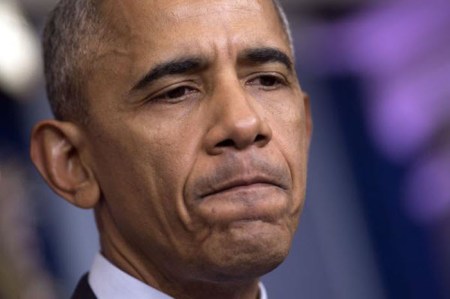
Struan Stevenson, president of the European Iraqi Freedom Association, former member of the European Parliament representing Scotland (1999-2014), president of the Parliament’s Delegation for Relations with Iraq (2009-14) and chairman of Friends of a Free Iran Intergroup (2004-14), writes in his January 6, 2017 article for UPI, that the legacy of President Barack Obama will be death and destruction in the Middle East. His vision cooperation between  the United States and Iran “has unlocked a Pandora’s box of conflict and sectarian strife across the zone.”

During the closing days of the Obama administration the controversial nuclear deal with Iran and his policies regarding that ruthless regime have allowed the mullahs to threaten the security of the Middle East, and perhaps, while Saudi Arabia, the Gulf states and Turkey have tried to prevent Iran’s aggressive expansionism in the region.

The U.S. and other countries is the West failed the Syrian opposition and allowed a civil war to continue into its seventh year, costing hundreds of thousands of lives, and setting off the huge migration crisis in Europe.

$150 billion of frozen assets were released to Iran by the U.S. as part of the nuclear deal, which the Tehran government was expected to use to shore up their economy, on the brink of collapse. Instead, the regime redouble its spending the Islamic Revolutionary Guards Corps and Quds Force, both of which are listed terrorist organizations in the West and are involved in many conflicts in the Middle East. Not only does Iran support Bashar al-Assad in Syria, and Yemen’s Houthi rebels, it funds and supplies Hezbollah in Lebanon and the brutal Shi’ia militias in Iraq.

The nuclear deal has been breached, which Stevenson says demonstrates Iran’s complete disdain for the West. Two Qadr-H missiles were fired last March, in defiance of a U.N. Security Council resolution tied to the agreement. “Israel must be wiped out” was marked on the missiles, and the test firing took place on the day that the U.S. Vice President Joe Biden was visiting Israel. Vladimir Putin sent the first shipment of Russian S-300 surface-to-air missiles to Iran last August.

President Obama attempted to make deals with the so-called “moderate” and “smiling” Iranian President Hassan Rouhani, which he interpreted as having a green light for Tehran’s expansionist policy. Rouhani is in fact in charge of a government which has executed around 3,000 people since he took office in 2013, ten just this year. Mass hangings are now carried out in public, even in football stadiums. Many of the officials in his government were complicit in the 1988 massacre of some 30,000 political prisoners, most of whom were part of the opposition People’s Mojahedin of Iran. In fact, it was supervised by Mostafa Pour-Mohammadi, who is Rouhani’s justice minister.

Obama began his administration by agreeing with Iran, and backing Nouri al-Maliki as prime minister in Iraq. Stevenson writes, “Maliki was a puppet of the mullahs, doing their bidding by opening a direct route for Iranian troops and equipment heading to Syria to bolster the murderous Assad regime. Iran’s support for Maliki in Iraq and for Assad in Syria, two corrupt dictators who repressed and brutalized their own people, resulted in the rise of Daesh, also known as the Islamic State.Thanks to U.S. acquiescence over Tehran, Daesh grew and became a threat to the whole world.”  He continues, “Obama compounded this grievous mistake by providing American military support and air cover for the genocidal campaign being waged by pro-Iranian Shi’ia militias in Iraq. Once again Iran exploited its role in ousting Daesh as a means for implementing its ruthless policy of ethnic cleansing to annihilate the Sunnis in Iraq’s al-Anbar Province. Horrific sectarian atrocities were committed during the so-called “liberation” of the ancient cities of Fallujah and Ramadi. The Shi’ia militias, who formed the main part of the force fighting to recapture these cities from Daesh and are now engaged in the battle to recapture Mosul, are led by Gen. Qasem Soleimani, commander of the Iranian terrorist Quds Force. Soleimani has also played a key role in Syria and the massacre in Aleppo.”

Tehran is gaining strength in Iraq. The Iraqi army is poorly trained, and the Iranian has Prime Minister Haider al-Abadi’s agreement to allowing Iranian-funded militias to take control of military operations. Political disarray in Baghdad, has paved the way for Iran to consolidate its hold in Iraq.

The unenviable task of trying to sort out the Middle East mess will be left to President-elect Donald Trump. Many people on his team believe that Iran is the main source of conflict in the Middle East and poses a greater threat to the West than North Korea or even Russia. It will be interesting to see how Trump will fare.


In its Last Days, Obama Administration Clings to Hope of a Positive Role for Iran

January 8, 2017

In its Last Days, Obama Administration Clings to Hope of a Positive Role for Iran, Iran News Update, January 7, 2017

(Iran News Update 

Iran News Update (INU) features news, analysis, and commentary on events inside Iran and the Iranian Diaspora around the world.  News and information is provided in cooperation with the National Council of Resistance of Iran (NCRI), the parliament in exile of the Iranian Resistance, and the People’s Mojahedin Organization of Iran (PMOI/MEK).

— DM)

hstaee-750

Kerry’s remarks seem to imply that the Obama administration’s early claims about Iranian moderation will continue to be repeated until it departs the office. But the incoming administration cannot be expected to pick up that thread. And articles like the above-mentioned Fox News editorial indicate that on such issues as Iran’s coordination with America’s enemies, Donald Trump and his advisors will recognize the continuance of Tehran’s worst behaviors.

**********************

On Friday, Fox News published an editorial on the topic of recent nuclear threats from North Korea. As well as being a longstanding thorn in the side of the United States, the Korean dictatorship’s obsession with nuclear weapons development has also variously exposed the cooperation between Iran and other enemies of Western democracies.

This cooperation was highlighted in the Fox News article, with specific reference to a number of instances of Iran helping North Korea with its nuclear program. In the view of the author and other critics of recent US foreign policy, this assistance has effectively been further enabled by a conciliatory approach to dealing with the Iranian nuclear program. As well as failing to address this alleged cooperation while negotiating the 2015 Iran nuclear agreement, the Obama administration has also taken very little punitive action against Iran following its post-agreement ballistic missile tests, which were conducted in defiance of UN Security Council resolutions on the matter.

This has arguably given North Korea the impression that the United States is presently either unwilling or unable to react to such tests, of which the Fox News article says the east Asian dictatorship conducted 20 in the past year alone. But to whatever extent Obama-era permissiveness encouraged these activities, that permissiveness is all but certain to end when Donald Trump assumes the presidency on January 20. And the Fox News article concludes with recommendations as to what Trump can do to prevent North Korea’s nuclear development and missile testing.

Those recommendations include bolstering US defensive capabilities along the West Coast, and also constraining “enablers” of North Korean development, chiefly the Islamic Republic of Iran. However, the appropriate means for such constraint remain a serious topic of dispute. On the campaign trail, Trump frequently accused the Obama administration of handing the Iranians a nuclear agreement that brought little benefit to the West. He also threatened to tear it up – a measure that theoretically would have taken the world community back to the drawing board and allowed it to pursue a more comprehensive suite of Iranian concessions.

But subsequent to his election, Trump has taken a different tack, promoting renegotiation of the existing deal instead of its cancellation. Even some Republicans who opposed the deal or viewed it as seriously flawed have taken a similar view. As an example, The Guardian featured an article on Friday that detailed the input offered to Trump by Bob Corker, the Republican head of the Senate Foreign Relations Committee. He has been insistent that tearing up the nuclear deal would create more problems than it would solve, and that the best way forward is to enforce its existing provisions much more strictly than the Obama administration has done.

Iran has at various times been caught in the midst of small violations of the Joint Comprehensive Plan of Action, including two instances of exceeding the deal’s defined limits on Iranian stockpiles of heavy water, a nuclear byproduct. The absence of consequences for these violations has gone a long way toward promoting the perception of the outgoing administration’s permissiveness. And there has been a great deal of associated speculation and analysis of the reasons for this. The most natural explanations deal with the administration’s fear of endangering Iranian participation in the agreement. But the situation may also be more complex than this and include worries about antagonizing Iran at a time when its participation in regional conflicts is occasionally viewed as a positive thing.

Real Clear Politics points out that this perspective was explicitly expressed by Obama’s Secretary of State John Kerry in an interview with MSNBC’s Andrea Mitchell. “Together, Iran and Russia had to prop [Assad] up, and save him from the possibility that the extremists might take over the country,” Kerry said, apparently deviating from previous US positions calling for Assad’s ouster and promoting the possibility of a victory by moderate rebel groups led by the Free Syrian Army.

Iran and Russia have widely been credited with not only preventing Assad’s fall to these groups, but also with damaging them so severely as to push the Syrian Civil War toward a situation in which the only choices for the country’s future are the established Assad dictatorship and the militant rebels affiliated with ISIL and the Al Nusra Front. Meanwhile, Iran has done its best to advance the notion that its own interests in the region are adverse to Islamic extremism. But Tehran’s pro-democratic opposition the National Council of Resistance of Iran has often referred to the Islamic Republic as the “prototype” for Islamic extremism throughout the world.

On Friday, The Iran Project pointed to recent statements by Alaeddin Boroujerdi, the chairman of Iran’s National Security and Foreign Policy Commission, claiming that Iran has always been committed to a political solution in Syria. If taken at face value, those comments can be expected to encourage Kerry’s notion that under current circumstances, a victory for Iran in Syria is a defeat for Islamic terrorism. But the trouble with this claim is that it can only be reasonably defended if one takes “Islamic terrorism” to refer only to “Sunni terrorism.”

As a major part of Iran’s strategy not only in Syria but also in Iraq and Yemen, it has directed recruitment and deployment of multitudes of Shiite militant groups to those battlefields. Previous reports have confirmed that many of these groups swear allegiance to the Islamic Republic over and above the governments of the countries in which they are operating. In this way, Iran is evidently extending its Hezbollah model of foreign influence into other part of the region. And in Syria, it is a well-known fact that Iran is actually utilizing the Lebanese paramilitary group to strengthen its operations and build a large-scale network that spans several nearby countries.

On Thursday, Xinhua News Agency pointed out that the Iranian leadership had fervently disputed rumors that Hezbollah would be withdrawing from the Syrian Civil War. It is not clear what the ultimate source of those rumors was. But they are possibly rooted in Turkey’s demands for such a withdrawal as part of a political solution to the crisis, or else in the outgoing US administration’s optimism about Iranian “moderation” and willingness to cooperate over important foreign affairs. But although Boroujerdi’s comments about a desire for a political solution promote this perception, they are belied by the Iranian leadership’s clear unwillingness to withdraw its militant proxies, even as they continue to violate ceasefire agreements negotiated by Turkey, Russia, and others.

Nevertheless, Kerry’s remarks seem to imply that the Obama administration’s early claims about Iranian moderation will continue to be repeated until it departs the office. But the incoming administration cannot be expected to pick up that thread. And articles like the above-mentioned Fox News editorial indicate that on such issues as Iran’s coordination with America’s enemies, Donald Trump and his advisors will recognize the continuance of Tehran’s worst behaviors.

Iran Vows Nuclear Retaliation for U.S. Breach of Deal

December 14, 2016

Iran Vows Nuclear Retaliation for U.S. Breach of Deal, Washington Free Beacon, , December 14, 2016

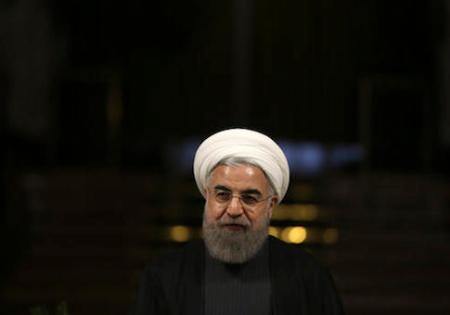
Iranian President Hassan Rouhani speaks in a news briefing after his meeting with his Slovenian counterpart Borut Pahor at the Saadabad palace in Tehran, Iran, Tuesday, Nov. 22, 2016. (AP Photo/Vahid Salemi)

Iranian President Hassan Rouhani  (AP Photo/Vahid Salemi)

“But the Obama administration counted on Iran waiting until the next president before revealing the game, and the Iranians sprung the trap early,” the source added. “So now the administration will do everything it can to look the other way and get through the next few weeks, so they can blame the inevitable collapse on Trump.”

***************************

Senior Iranian officials vowed on Wednesday to continue moving forward with nuclear weapons work and other banned activities as retaliation against the United States for breaching last year’s nuclear accord, according to reports in the country’s state-controlled media.

Iranian leaders instructed the country’s atomic energy organization to move forward with sensitive nuclear work, including the construction of nuclear-powered ships and submarines.

Further provocative actions will be announced in the coming days, according to these Iranian leaders, who described the country’s actions as revenge for recent moves by the U.S. Congress to extend sanctions on Iran, a move the Islamic Republic claims is a breach of the nuclear deal.

Iran’s latest moves have not elicited concern from Obama administration officials, who continue to pursue a series of measures meant to decrease international pressure on Tehran and provide it with greater financial resources.

“Considering that the US administration has ignored and delayed compliance with its undertakings under the [nuclear agreement] and given the recent extension of the Iran Sanctions Act (ISA) that had already been declared as a violation of the nuclear deal by the Islamic Republic of Iran… the Atomic Energy Organization of Iran is ordered to develop the country’s peaceful nuclear program within the framework of the Islamic Republic of Iran’s international undertakings as defined in the following missions,” Iranian President Hassan Rouhani wrote in a letter Tuesday to the country’s top nuclear agency.

Iran will move forward with a “plan for designing and building propulsion systems to be used in marine transportation in cooperation with scientific and research centers,” according to Rouhani’s letter.

It also will engage in the “production of fuel for nuclear propulsion systems,” Rouhani wrote.

This is the first in a range of responses planned by Tehran, according to Ali Akbar Velayati, a senior aide to Iran’s Supreme Leader Ali Khamenei.

The renewed nuclear work is “the first but not the last measures to be taken by Iran,” Velayati was quoted as saying on Wednesday.

Iran’s announcement did not draw a sharp response from Obama administration officials, who declined to say whether the nuclear work would constitute a breach of the deal.

“This announcement itself does not constitute a violation,” State Department spokesman John Kirby told reporters. “I think there’s a lot we just don’t know. I mean, this announcement just got made. There’s a lot we don’t know about it and what it means. And so I think we’d have to reserve some judgment here about the degree to which this could present any kind of problem.”

Kirby expressed faith in international nuclear inspectors, telling reporters that they would likely catch a breach of the deal.

Michael Rubin, a former Pentagon adviser and expert of rogue regimes, told the Washington Free Beacon that Iran is using the renewal of sanctions as an excuse to ramp up its illicit research activities

“The JCPOA [Joint Comprehensive Plan of Action], which they have never officially signed, was a gift made possible by Obama’s ego and Kerry’s naiveté,” Rubin said. “If they disagree with the United States, they can follow a legal process to pursue that but the fact that they are having a temper tantrum shows their insincerity. Especially because no new sanctions have been applied to Iran. After all, the U.S. president can waive any sanctions so long as Iran complies with its commitments.”

One senior foreign policy consultant who has worked with Republican and Democratic offices in Congress on the issue told the Free Beacon that Iran always planned to breach the deal once it received promised economic relief.

“The Iran deal was deliberately structured to prevent American leaders from pressuring Iran. Kerry and his Iranian counterparts wrote the deal so that Iran would get most of the benefits immediately, so that they could blackmail American lawmakers by threatening to costlessly walk away, which is exactly what they’re doing,” the source said.

“But the Obama administration counted on Iran waiting until the next president before revealing the game, and the Iranians sprung the trap early,” the source added. “So now the administration will do everything it can to look the other way and get through the next few weeks, so they can blame the inevitable collapse on Trump.”

Former ‘Al-Sharq Al-Awsat’ Editor ‘Abd Al-Rahman Al-Rashed: ‘Which Muslims Are Against Trump?’

December 14, 2016

Former ‘Al-Sharq Al-Awsat’ Editor ‘Abd Al-Rahman Al-Rashed: ‘Which Muslims Are Against Trump?’ MEMRI, December 14, 2016

In his December 13, 2016 column in Al-Arabiya, titled “Which Muslims Are Against Trump?” senior Saudi journalist ‘Abd Al-Rahman Al-Rashed, former editor of the London-based Saudi daily Al-Sharq Al-Awsat and also former director of Al-Arabiya TV, expressed satisfaction that U.S. President-elect Donald Trump is putting together an administration that is aware of the Iranian danger. It is “Iran, Al-Qaeda, and Islamic groups like the Muslim Brotherhood” that object to Trump’s choice of top officials, and that seek to depict him as anti-Muslim, he wrote, adding that the Muslim Brotherhood was angered by Trump’s friendly stance towards Egyptian President Al-Sisi. He underlined that Trump’s national security advisor pick, Lt.-Gen. Michael Flynn, is only saying “what we ourselves say – that there is a dangerous virus inside Islamic society called extremism.”

The following is his column, in the original English: [1]

al-rashedAl-Rashed (source: Alarabiya.net)

“We must understand the motives behind the groups that launch incitement campaigns against the new American administration. Iran knows that two of the appointed generals know it through expertise and personal experience. ISIS knows that the phase of truce will end with President Barack Obama’s exit. The Muslim Brotherhood, which enjoyed Obama’s support and bet on Clinton’s election as president, is now before a new phase that may not be in its interest.

************************

“Extremist powers in our region have declared war against President-elect Donald Trump under the excuse that he has a project to fight Islam and Muslims. They are trying to incite around one billion Muslims against the new U.S. administration and against the U.S. Those performing this task are doing so through religious and media platforms affiliated with extremist Islamic parties, including the Muslim Brotherhood and the Iranian regime.

“Is Trump really hostile to Muslims in general? Do his secretaries of state [sic] really have hostile stances against Islam as a religion?

“Ever since Trump announced the appointments of major secretaries of state [sic], many in our region spoke out against them, claiming Washington was willing to launch war on one billion Muslims. General James Mattis, whom Trump chose as secretary of defense, has in fact clearly and frankly voiced hostility – but against terrorist organizations like Al-Qaeda. He also has frank stances against what Iran is doing in Iraq, Syria and Lebanon.

“General Michael Flynn, Trump’s new national security advisor, has also made outspoken speeches against extremist Islamic groups. Many have used these speeches to indicate that he is hostile against Islam and Muslims. Truth be told, what General Flynn said is what we ourselves say, that there is a dangerous virus inside Islamic society called extremism that has killed Muslims and threatened them everywhere and harmed them more than it even harmed the West and followers of other religions.

“The ‘Dangerous Disease’

“Doesn’t this dangerous disease exist in Muslims’ societies across the world? It certainly exists. Look at what happened in Turkey and Egypt during the past few days and what had happened in Saudi Arabia, Morocco and Jordan. Hideous crimes were committed by extremist groups – the same ones which Flynn and Mattis call for confronting. Mike Pompeo, whom Trump chose to manage the most important foreign security institution, the CIA, has the same opinions about the necessity of confronting extremism and he’s aware of Iran’s sabotaging role in the region and the world.

“If we realize that those who are angered by these three appointments are Iran, Al-Qaeda, and Islamic groups, like the Muslim Brotherhood, we can understand that the problem is not in Trump’s choices, but in these men’s project to confront terrorism which the former parties sponsor or at least benefit from. The majority of Islamic countries agree with these state secretaries’ proposals and vision of the crisis that threatens the entire world. We, as Muslims, have for a decade and half now been engaged in a war against extremism and extremists, as an ideology and groups, and want the world to differentiate between Muslims and not put them all in one category and to stand with the majority of peaceful Muslims against this evil minority. It’s in our interest to deter regimes like Iran that supports terrorist groups, be it Sunni or Shi’ite, and allies with them and engages in regional wars under dishonest slogans such as defending Islam or standing against the West.

“We understand that Hillary Clinton’s defeat in the elections angered the Muslim Brotherhood. What fueled the latter’s anger was how Trump received Egyptian President Abdel-Fattah Al-Sisi in New York earlier this year. It’s on this basis that they try to picture Trump’s administration as racist and as an enemy of Islam and Muslims. They want to establish a popular bloc that exerts pressure to confront the new American government in order to intimidate it and force it to alter its stances and they are doing so by entrenching themselves behind Islam and Muslims.

“Iran’s Leadership Of Extremists

“However, the Muslim Brotherhood must realize that we don’t agree with them and don’t care about their aspirations for power and don’t want to stand with them. At the same time, we support any government in the world that’s willing to ally with us against extremism and terrorism as this has always been our desire, even before Trump entered the political arena. These groups must realize the threat of media, political and religious incitation against Trump and the West and how it will cause new waves of violence under false justifications.

“For 40 years now, Iran has led extremist groups, whether armed or politicized or Sunni or Shiite, in Lebanon, Palestine and the Gulf, and it continues to do so. It’s currently guilty when it comes to Iraq and the sectarian chaos across it and it’s responsible for the rivers of blood in Syria. It’s for the first time that we see Washington officials who realize the facts on the ground and frankly declare that they will not accept blackmail or keep silent over extremist and terrorist regimes’ and groups’ practices.

“We must understand the motives behind the groups that launch incitement campaigns against the new American administration. Iran knows that two of the appointed generals know it through expertise and personal experience. ISIS knows that the phase of truce will end with President Barack Obama’s exit. The Muslim Brotherhood, which enjoyed Obama’s support and bet on Clinton’s election as president, is now before a new phase that may not be in its interest.

“These are the reasons behind the anger and quick judgments against the new American administration, and they reflect the stance of all three groups, i.e. Iran, ISIS and the Muslim Brotherhood, and those who sympathize with them. Meanwhile, the majority of Islamic countries will be very happy if he who arrives to the White House desires to fight extremism and terrorism.”


[1] English.alarabiya.net, December 13, 2016.

Obama Admin Staking Iran Deal Legacy on Doomed Bid to Sell Tehran Aircraft

December 12, 2016

Obama Admin Staking Iran Deal Legacy on Doomed Bid to Sell Tehran Aircraft, Washington Free Beacon, , December 12, 2016

kerry-zarifJohn Kerry, Javad Zarif / AP

The Obama administration is locked in a last minute bid to save last year’s nuclear deal with Iran by promoting the delivery of airliners to the Islamic Republic, despite mass opposition in Congress that has moved the administration to engage in a series of public relations maneuvers and backroom deals meant to secure the multi-billion dollar sale, according to multiple sources familiar with the administration’s thinking who spoke to the Washington Free Beacon.

The Obama administration has been scrambling for weeks to provide Iran with assurances the United States will continue to grant Iran vast relief from economic sanctions and help push through deals with Boeing and AirBus, American and French airplane manufacturers, respectively. The effort comes as the nuclear deal hangs in the balance following a flood of Iranian threats and the election of Donald Trump, a vocal opponent of the deal, as well as several new moves by Congress to increase pressure on Tehran’s global terror operations.

Boeing confirmed Monday it sealed a $16 billion deal to sell Iran 80 jetliners, an announcement that sources told the Free Beacon was meant to provide momentum to the nuclear deal and stop Tehran from walking away.

Multiple sources familiar with the situation told the Free Beacon the administration is promoting a false prognosis and that the pact is likely to collapse by next year, when President-elect Trump assumes control of the White House and is partnered with a Congress that is more than willing to put a kibosh on the sale, which lawmakers say will embolden Iran’s terrorist forces.

“The Obama administration oversold the deal to the Iranians by secretly promising to relieve a range of sanctions that Congress was never going to agree to,” said one senior congressional adviser apprised of the White House’s thinking on the matter.

“The administration then did everything it could do unilaterally, including lifting restrictions on military assets and ballistic missile banks, to try to make good on those secret promises,” the source said. “But Congress was never going to allow Iran to steamroll across the Middle East, even if the Obama administration was willing to look the other way, and so the deal was always going to collapse under its own weight.”

The State Department would not provide more details about the deal, including how it is being financed, by press time.

Tehran has a long history of using its national air carrier, Iran Air, to ferry weapons and support to terror groups across the region, including in Lebanon and Syria. Despite these concerns, the Obama administration has fast tracked special licenses permitting Boeing and AirBus to move forward with the sales without violating sanctions barring such agreements.

Experts have repeatedly warned that Iran Air could easily resell these planes to other Iranian airline companies still targeted by sanctions for their illicit activities.

David Pasch, a spokesman for Rep. Peter Roskam (R., Ill.), who has worked to block the plane sales to Iran, told the Free Beacon that Congress will have an easy time killing the deal next year.

“We will aggressively fight this deal next Congress, though we probably won’t even need new legislation to do it,” Pasch said. “The incoming appointees at Treasury and State will no longer report to a White House willing to bend over backwards and ignore national security concerns to keep Iran from walking away from the nuclear deal.”

One senior congressional aide who works on the issue told the Free Beacon that the flurry of recent news stories casting the deal as a lock is part of a public relations campaign by the White House meant to given the appearance the deal is set in stone, despite multiple obstacles standing in the way.

“The administration is creating a facade of false assurances to assuage Iranian concerns about completing these sales,” the source told the Free Beacon. “They want, in essence, to make this a fait accompli. In reality, there are a number of obstacles in the way of completing this deal. For example, the House has already passed legislation to cut off Ex-Im [export-import] financing for aircraft sales to Iran. I think with a Trump administration we can reasonably expect renewed movement in Congress to block these dangerous deals.”

The planes are not set to be delivered to Iran until 2018, meaning that Congress and the next administration have a couple years to disassemble the deal. There also remain questions about how these Western companies will get financing to seal the deal with Iran, which remains a safe haven for terrorist financing.

These obstacles are expected to grow more daunting under a Trump administration, which has discussed increased transparency for companies willing to deal with regimes that sponsor terrorism such as Iran.

Another issue of top concern to opponents of the sale is a carve out guaranteeing Boeing engineers work with Iran to provide spare parts and technical know-how, a move that immunizes Tehran from future sanctions targeting the airline sector.

“The Obama administration created a fantasy world in which it’s safe to sell airplanes to Iran, then pulled Boeing into that fantasy world,” said the congressional adviser quoted above. “But it’s not safe to sell airplanes to Iran, because the Iranians use their airplanes for all sorts of illegal things, including arming Syria’s war machine. That’s why the sale stalled, because no one wanted to touch it. But the administration is desperate to make it look like the sale was moving forward, so that when it collapses they can blame it on Trump.”