Posted tagged ‘Trump agenda’

Reflections on Trump’s First State Visit to the Middle East

May 19, 2017

Reflections on Trump’s First State Visit to the Middle East, The National InterestAhmed Charai, May 19, 2017

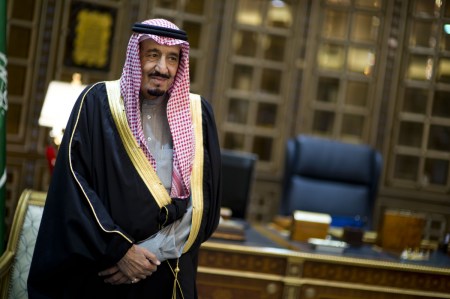
King Salman of Saudi Arabia in 2013. Flickr/Secretary of Defense

The Trump administration, working alongside its Arab allies, should promote moderate or quietist forms of Islam, and not remain neutral on religious matters. This means working with Islamic leaders, many of whom are state-funded imams, to challenge jihad on a religious basis and offer a form of faith shorn of violence.

These strategic insights come together in Morocco, where King Mohammed VI has used his religious role as commander of the faithful to inspire religious leaders to combat jihadism and urge tolerance and peace.

******************************

President Trump is visiting the Middle East. He will travel to Saudi Arabia and Israel, then visit the Vatican. Given the sequence of the first two, some observers speculated that he will attempt to revive the Israeli-Palestinian peace process, perhaps within a broader, regional framework. But different potential outcomes for Arab-Israeli relations, short of a peace settlement, may also be in the offing.

Both Saudi Arabia and Israel have proven themselves to be invaluable partners to the United States in the struggle against ISIS. An American-brokered framework whereby direct cooperation between the two is formalized—rather than a reliance on the United States as an intermediary—may create a framework to broaden the cooperation. Heightened partnership to counter the shared threat of Iran would be an obvious next step. The Trump administration’s new strategy is the creation of a regional alliance, focused on the Gulf countries but also including countries such as Egypt, Jordan and Morocco. A multilateral approach in which Israel plays a more direct and visible role in the coalition would signify a breakthrough. It would bolster confidence among Arab publics that broader cooperation and conflict resolution are warranted.

Donald Trump made the eradication of the Islamic State a priority during his campaign. He has been criticized for his more muscular strategy, as well as the desire to augment intelligence, economic and communications measures to put the screw to the organization.

It seems possible that the president is making a clean break with the Obama administration’s policy of disengagement from the Middle East. For Trump, the rubric of a “war on terrorism” seems to be appealing. Arabs appreciate the fact that, unlikely his predecessor, Trump appears to be recognizing the Shia extremist terror threat as represented by Iran and its proxy militias alongside the widely recognized Sunni jihadist threat.

In the view of this administration, this alliance should function like NATO, as an alliance (perhaps supported by the West) with multiple objectives. The eradication of Islamic State is the main objective, but the containment of Iranian influence in the region is also on the menu.

The use of a massively powerful bomb against the Islamic State in Afghanistan provided a mighty demonstration of strength, but may also have been intended to send a message about the president’s commitment to confront his adversaries with some of the most powerful tools in his arsenal.

But of course, matters are not so simple.

At the geostrategic level, Russia and the pro-Iranian Shia arc cannot be ignored politically. The alliance between the two poses layers of complexity, whereby American and Russian accounts in the Baltic states and vis à vis NATO may be dragged into the diplomatic mix. Moscow cannot be excluded from the equation in any prospective political resolution in Syria. As for Iran, Russia wields heavy influence on its government and its security sector. Trump faces a Twister-like game of challenges in navigating the array of alliances, rivalries and hostilities among the players. Yet his aspiration to eradicate the Islamic State and block Iranian expansion in the region depends on his effective management of these quandaries.

Nor do Trump’s aspirations allow for neglect of the broader counterterrorism challenge beyond military action, intelligence work and even diplomacy. He must wage an ideological war, and challenge extremist strands within Arab and Islamic societies that guarantee the perpetuation of conflict—whatever the outcomes on the battlefield—unless they are addressed.

The Trump administration, working alongside its Arab allies, should promote moderate or quietist forms of Islam, and not remain neutral on religious matters. This means working with Islamic leaders, many of whom are state-funded imams, to challenge jihad on a religious basis and offer a form of faith shorn of violence.

These strategic insights come together in Morocco, where King Mohammed VI has used his religious role as commander of the faithful to inspire religious leaders to combat jihadism and urge tolerance and peace.

King Mohammed VI has demonstrated his commitment to deeper cooperation with neighboring countries by embarking on several state visits and signing an unprecedented number of economic-partnership conventions. He has also expressed support for joint efforts to combat radicalization, and officials from Cote d’Ivoire, Niger, Tunisia, and Guinea have indicated a willingness to train their imams in Morocco.

If Trump is looking for a healthy example of Muslim leaders bringing peace through Islam, Morocco is a good place to start.
A Coup Attempt, Not a Constitutional Crisis

May 19, 2017

A Coup Attempt, Not a Constitutional Crisis, PJ MediaDavid P. Goldman, May 18, 2017

Trump won by calling attention to the errors of his opponents and by dominating the news cycle. He played continuous offense. At the White House, by contrast, Trump has appeared cautious in stating his foreign policy goals, and defensive in responding to attacks on his performance and propriety. The policy issues that stood out clear during the campaign and helped Trump outflank the Republican Establishment have become fuzzy, especially after the firing of Gen. Flynn.

With the policy issues out of focus, Trump has lost control of the news cycle, and risks letting the news cycle control him. His opponents won’t succeed in dislodging him. But they have succeeded in distracting Trump from his policy agenda.

***************************

A ranking Republican statesman this week told an off-the-record gathering that a “coup” attempt was in progress against President Donald Trump, with collusion between the largely Democratic media and Trump’s numerous enemies in the Republican Party. The object of the coup, the Republican leader added, was not impeachment, but the recruitment of a critical mass of Republican senators and congressmen to the claim that Trump was “unfit” for office and to force his resignation.

It’s helpful to fan away the psychedelic fumes of allegation and innuendo and clarify just what Trump might have done wrong. Trump will not be impeached, and he will not be harried out of office. But he faces a formidable combination of media hostility—what the president today denounced as a “witch hunt”—and a divided White House staff prone to press leaks. The likely outcome will be a prolonged dirty war of words that will delay Trump’s domestic agenda and tie down his loyalists with the chores of fire-fighting.

One thinks of Gulliver tied down by the Lilliputians. Trump was elected by campaigning against the Republican Establishment as well as Obama, ridiculing their policy blunders in Iraq and Afghanistan and questioning their credibility. In the flurry of personal attacks, the underlying policy issues have faded into the background, and that gives the initiative to Trump’s enemies.

Nothing that has been alleged, much less proven, about President Trump comes close to the threshold for impeachment, as Prof. Jonathan Turley of George Washington University’s law school explained in a May 17 comment in The Hill. Even if Trump asked then FBI Director James Comey to go easy on Gen. Michael Flynn, Prof. Turley notes, “Encouraging leniency or advocating for an associate is improper but not necessarily” illegal. The charge of obstruction of justice presumes that there is an issue before the bar of justice, but as Turley adds, “There is no indication of a grand jury proceeding at the time of the Valentine’s Day meeting between Trump and Comey. Obstruction cases generally are built around judicial proceedings — not Oval Office meetings.”

The appointment of respected former FBI Director Robert Mueller as special counsel to look into allegations of Russian interference in the November 2016 election strongly suggests that the Trump team feels it has nothing to fear from a thorough review. In this case Trump’s detractors appear to be bluffing. Press reports of contacts between Trump’s campaign and Russian diplomats and businessmen appear to reflect the sort of conversations that every presidential campaign conducts with important foreign governments. It is not clear that Russia was responsible for the delivery of embarrassing Democratic National Committee emails to Wikileaks, moreover. Pro-Trump media report that DNC staffer Seth Rich was Wikileaks’ source. Rich was murdered on a Washington street in July 2016, and a counter-conspiracy theory is circulating about his death.

Then there is the alleged leak of highly classified intelligence on the laptop bomb threat to airliners, of which Wall Street Journal editors intoned, “Loose Lips Sink Presidencies.” Exactly what the president told the Russians is under dispute, but the salient fact in the case is that presidents and cabinet members frequently leak classified information without prompting the condemnations that piled up on Trump. Obama’s then Defense Secretary Leon Panetta leaked the role of Pakistani physician Shakil Afridi in locating Osama bin Laden’s lair, and President Obama himself revealed that Seal Team 6 had killed Osama, making the unit a subsequent  target for terrorists. Apart from inadvertent leaks, the Obama administration deliberately leaked British nuclear secrets to Russia, over bitter protests from London.

Why did Obama get a pass while Trump got the bum’s rush? Apart from the antipathy of the major media to a candidate who campaigned against them, there is the hostility of the intelligence agencies. That, the Wall Street Journal editors said, is Trump’s own fault: “Mr. Trump’s strife and insults with the intelligence community were also bound to invite blowback,” their May 17 editorial scolded. “In that case the public leaks about Mr. Trump’s actions, if true, will do more damage than whatever he said in private.”

The Journal editors imply that disaffection in the intelligence community is the result of Trump’s obstreperousness, but the source of the dispute is policy and accountability. Trump’s first national security adviser, Gen. Michael Flynn, was fired by Obama as head of the Defense Intelligence Agency for claiming that U.S. intelligence agencies bore some responsibility for the emergence of ISIS. The CIA funded Sunni rebels against the Assad regime including many from a branch of al-Qaeda, the al-Nusra Front, in its campaign to overthrow Syrian President Bashar al-Assad. Trump has shifted America’s priority to stopping the bloodshed in Syria rather than forcing out al-Assad, and is willing to work with Russia to achieve this—provided that the result doesn’t give undue influence to Iran, a senior administration official explained.

A shift to peacemaking and the limited possibility of a regional deal with Russia away from the covert war operations of the CIA under the Obama administration represents a major policy change. It threatens the credibility of Sen. McCain, the Wall Street Journal editorial page, and the Republican Establishment, not to mention the CIA officials who made their careers on collaboration with Syria’s Sunni rebels.

During the campaign, candidate Trump delivered an effective message that he would abandon the costly and unpopular nation-building campaigns of his predecessors and focus instead on America’s own security. He attacked not only Obama but the George W. Bush administration and the Republican Establishment which had fostered a failing policy in the region.

Trump won by calling attention to the errors of his opponents and by dominating the news cycle. He played continuous offense. At the White House, by contrast, Trump has appeared cautious in stating his foreign policy goals, and defensive in responding to attacks on his performance and propriety. The policy issues that stood out clear during the campaign and helped Trump outflank the Republican Establishment have become fuzzy, especially after the firing of Gen. Flynn.

With the policy issues out of focus, Trump has lost control of the news cycle, and risks letting the news cycle control him. His opponents won’t succeed in dislodging him. But they have succeeded in distracting Trump from his policy agenda.

Destroying Donald Trump is all that matters in the newsrooms of the mainstream media

May 19, 2017

Destroying Donald Trump is all that matters in the newsrooms of the mainstream media, Washington Times,

(America can survive, and probably prosper, under President Trump. The “mainstream media?” Maybe not. — DM)

ANALYSIS/OPINION:

Now anything goes. All restraints are loosened, all self-discipline trashed. There’s no cure or even treatment for Trump Derangement Syndrome, a disease as wild and as swiftly lethal as anything imported from the Ebola River valley of the dark continent. The rules and taboos that once guided even the sleaziest excuse for a newspaper no longer apply.

Destroying Donald Trump is all that matters in the newsrooms of the mainstream media, so called, and by any means necessary. Rarely have so many hysterics contributed so much of the national conversation.

A columnist in The New York Times, ground zero in the epidemic of Trump Derangement Syndrome, suggests that a mutiny at the White House is the “more appropriate” way to rid the nation of the legitimate 46th duly elected president of the United States. Why waste time on impeachment? Mike Pence, Paul Ryan and Mitch McConnell could organize the ambush. The columnist likens them to “stewards for a syphilitic emperor.”

Ross Douthat is regarded as a “conservative” at The New York Times, and he thinks impeachment would take too long, be too messy, and recommends invoking the Twenty-fifth Amendment, which permits the president’s Cabinet to remove the president if a majority of the secretaries tells Congress that the president can no longer perform his duties.

Ultimately, he writes in the newspaper once known as “the old gray lady” and which has become “the old crazy lady,” he does not believe “our president sufficiently understands the nature of the office he holds, the nature of the legal constraints that are supposed to bind him, perhaps even the nature of normal human interactions, to be guilty of obstruction of justice in the Nixonian or even Clintonian sense of the phrase.”

A half-century ago a certain magazine thought a long-distance psychiatric examination of a presidential candidate was in order, and asked 12,000 psychiatrists (who knew there were so many headshrinkers on the fruited plain?) whether they thought Barry Goldwater was crazy, and 1,189 responded with a diagnosis: Mr. Goldwater, the Republican nominee for president in 1964, was nothing less than nuts. The American Psychiatric Association, sensitive to the public outrage that followed, told their members never to do it again.

But since the psychiatrists wouldn’t do it, Ross Douthat was fitted out with degrees in medicine and psychiatry (honorary degrees, we must hope), and told to get to work. (He is expected to retire his shingle once President Trump has been dispatched to the nut house, but who knows? On the Upper East Side there’s never enough psychiatrists.) Dr. Douthat writes that the president has no aides, friends and confidantes who have any remaining regard for him. “They have no respect for him, indeed they seem to palpate with contempt for him, and to regard their mission as equivalent to being stewards for a syphilitic emperor.”

Since impeachment would take so long, Dr. Douthat would “respectfully ask Mike Pence and Paul Ryan and Mitch McConnell to reconsider their support for a man who never should have had his party’s nomination, never should have been elevated to this office, never should have been endorsed and propped up and defended by people who understood his unfitness all along.”

It’s hard to imagine anything more calculated to invoke a Second Amendment answer to such a Twenty-fifth Amendment coup, and it would be nothing less than a coup by the Republican elites and the press that so many Americans believe have “rigged” the elections meant to express the nation’s will. You don’t have to be a Trump friend, supporter or voter to see where this would inevitably lead. The United States has never been a banana republic or a third world dump where elections are ultimately determined in the streets, but this would be the ultimate national indignity, wrought by just those who would go to civil war to depose an indignity.

The two stories that have dominated the news this week were the work of the very two newspapers, The Washington Post and The New York Times, that have become the not-so-loyal opposition, drivers of the coup with tales told in every edition. The Post accuses the president of dispensing national secrets to the Russians, based on the word of an anonymous source who concedes he wasn’t in the meeting, and denied by those who were. The New York Times says it heard a passage read from a memo written by James Comey, telling how the president asked him go easy on Mike Flynn, and denied by the White House.

All this to support tales of Trump campaign collusion with the Russians, which Democrats and Republicans agree that no one has yet found any evidence of. There’s no fire and only a few wisps of something that might be smoke, or more likely, the passing of partisan gas.

The President Goes to Israel

May 18, 2017

The President Goes to Israel, American Thinker, Shoshana Bryen, May 18, 2017

It is worth getting out of the weeds of Washington on occasion and looking at the big picture. This is one of those occasions.

President Trump is going to Israel, visiting the one stable, prosperous, multiethnic, multicultural, democratic ally the United States has in a region marked by war, repression, and corruption. When he visits the Western Wall, he will be the first sitting president to do so — Barack Obama came as a candidate, George W. Bush as governor of Texas, George H.W. Bush as vice president, and Bill Clinton both before and after his presidency.

The fact that he will visit during the week of the 50th anniversary of the reunification of Jerusalem is a potent symbol of American support for Israel’s determination to keep the city open to all religious faiths – and specifically open to Jewish worship. There is no forgetting that only for the past 50 years, only under Israeli control, have Jews been able to study, visit, and pray at Judaism’s holiest sites. During Jordanian occupation of the eastern side of the city, and for the 500 years of Ottoman rule before that, Jews were restricted or banned entirely from their heritage.

The President’s visit to the holiest site in the Jewish world — accessible to Jews for less than his lifetime – is an exclamation point.

The reunification of Jerusalem was, of course, accomplished in the context of the Six-Day War, and the presidential visit comes in that context as well. The war was waged by Arab States unreconciled to Jewish sovereignty in any part of the historic Jewish homeland. Visiting on the eve of the commemoration of Israel’s defense of its place and defense of its rights, Mr. Trump has chosen a time ripe with symbolism to assert America’s longstanding — and newly recovered — shoulder-to-shoulder defense of Israel’s legitimacy and right to sovereign security.

But the visit is not only about symbols; certainly security is never only about symbols.

Mr. Trump was preceded in Israel by Defense Secretary James Mattis and Chairman of the Joint Chiefs of Staff Joseph Dunford. Their visits were aimed at deepening U.S.-Israeli security cooperation and reversing the previous administration’s plan to enhance the role of Iran in the region and decrease American influence. Mr. Trump can be expected to praise the first and find additional ways to work with Israel to constrain Iran’s freedom of action in both missile and nuclear development, and in military activity in Syria, Yemen and the Persian Gulf.

The President will visit with Arab leadership in the Gulf before arriving in Israel. The Sunni Arab world knows Iranian aggression and radical Islam are its fundamental security problems, not Israel. They are thrilled with the administration’s harder line on Iran, and the understanding that American influence and American presence matters. They want to be on Mr. Trump’s “good side,” and that’s helpful. Responding to his interest in Israeli-Palestinian talks, a new incarnation of an “Arab Peace Plan” has been floated. Trying to appear reasonable, the Arabs say Israel has only to “stop building settlements in the West Bank and ease trade restrictions in the Gaza Strip.” In exchange, they will allow Israel access to Gulf State airspace and enable direct communications with Israel.

The good news is that the plan doesn’t appear to try to settle the whole problem in a grand gesture. It does get closer to reality — the prior “Arab Peace Plan” in 2002 required that Israel withdraw from all the territory acquired in the 1967 war, including Jerusalem, before the Arab States would consider — consider, mind you — ending their state of war with Israel. As things go, this is an improvement and an affirmation of the points made by Mr. Trump and Prime Minister Netanyahu made in their joint press conference in February that progress on Palestinian-Israeli accommodation might be accomplished in a regional context.

The Palestinians, it appears, took the possibility that they will be sidelined to heart and went one better than the Arab States, dropping their eight-year insistence on an Israeli building freeze as a precondition to negotiations. U.S. Ambassador to Israel David Friedman put a nail in the coffin of “settlement freezes,” saying, “The U.S. won’t dictate how you should live together, that is something you will have to decide on your own.” Having lost the battle on that issue, the Palestinians will have to be content with the President’s visit to the Church of the Nativity in Bethlehem.

Are there glitches? Yes. There is a long way to go before the Arab States meet their UN-mandated obligation to provide Israel with “termination of all states of belligerency and respect for the sovereignty, territorial integrity and political independence of all States in the region.” The Palestinians aren’t likely to do it before their political and financial masters do.  And Americans David Berns and Jonathan Schrier, working in the U.S. Consulate in Jerusalem — which sees itself as an embassy to the fictitious State of Palestine — tried to create a firestorm over an issue of sovereignty. It was more like a paper fire in a wastebasket, embarrassing the President, but doing no damage.

But those are points that can be left for later.

When the President of the United States arrives in Israel as Israel prepares to commemorate 50 years of the Six-Day War and the reunification of Jerusalem, Americans should be pleased and proud that President Trump chose this time and this place to cement relations with Israel — our ally and friend.


Trump Administration Taps Sheriff David Clarke for DHS Role

May 17, 2017

Trump Administration Taps Sheriff David Clarke for DHS Role, Washington Free Beacon, May 17, 2017

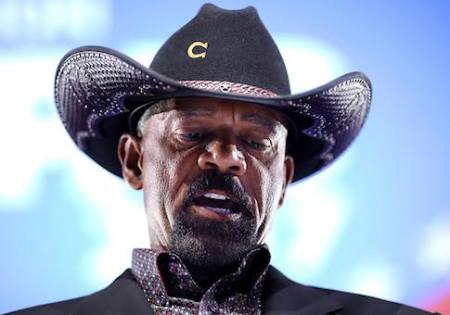
NATIONAL HARBOR, MD – FEBRUARY 23: Milwaukee County Sheriff David Clarke speaks as part of a pannel discussion titled “When did World War III Begin? Part A: Threats at Home” during the Conservative Political Action Conference at the Gaylord National Resort and Convention Center February 23, 2017 in National Harbor, Maryland. (Photo by Chip Somodevilla/Getty Images)

The Trump administration tapped Milwaukee County Sheriff David Clarke to serve as assistant secretary of the Department of Homeland Security for partnership and engagement.

Clarke, a tough-talking, conservative firebrand recognized by his penchant for cowboy hats, announced the appointment during an interview with a local Wisconsin radio station Wednesday afternoon.

“I’m both honored and humbled to be appointed to this position by [DHS Sec. John Kelly], working for the Trump administration in this position,” Clarke told WISN Milwaukee.

Clarke will begin in the position in June. The position does not require Senate confirmation.

Clarke, a Trump loyalist who served as a surrogate during the campaign, was one of three black speakers who endorsed President Donald Trump at the Republican National Convention. He is a vocal proponent of gun rights with close ties to the National Rifle Association.

His name has been floated as a possible replacement to former FBI Director James Comey, but the announcement Wednesday scraps those rumors.

Clarke’s brazenness and tendency to fire-off provocative, off-hand comments have contributed to his rise as one of Wisconsin’s most controversial political figures. The law-and-order sheriff has frequently told Black Lives Matters protesters to “stop trying to fix the police, fix the ghetto” and referred to Ferguson demonstrators as “vultures on a roadside carcass.”

Clarke is also facing scrutiny for the death of a mentally ill inmate who died of dehydration at the Milwaukee County Jail after being refused water for seven days. No criminal charges have been filed, but the case is under review by the Milwaukee County District Attorney’s Office.

The 38-year-old man was one of four people, including the newborn of an inmate, who died last year at the jail overseen by Clarke.

The sheriff will replace the current acting assistant secretary John Barsa.

Justice with Judge Jeanine | Fox News | May 13, 2017 – President Trump Full Interview

May 14, 2017

Justice with Judge Jeanine | Fox News | May 13, 2017 – President Trump Full Interview, Fox News via YouTube

(The wide-ranging interview of President Trump and others touches on such topics as the firing of James Comey, his replacement, the media and press conferences and President Trump’s accomplishments which the “mainstream” media have failed to cover. — DM)

https://www.youtube.com/watch?v=W2FUG4o5i70


Nothing happens in America besides carping about Trump

May 12, 2017

Nothing happens in America besides carping about Trump, Israel National News, Jack Engelhard, May 12, 2017

Yes, it’s time to move the US Embassy from Tel Aviv to Jerusalem, and who cares what the Democrats will say. 

Give them something else to carp about. They’re already out of their minds.

***********************

President Trump’s visit to Israel later this month will be a timely getaway from all the feverish heat he’s been taking here in the U.S.A.

He may want to stay in Israel until the Democrats calm down…and whoever thought we’d say that Israel is a much calmer place than America.

But so it is at this moment. Being a Republican, especially being Trump, is not safe when nearly every Democrat in and out of Washington wants to skin you alive. From the moment Trump fired FBI Director James Comey – actually, from the moment Trump won the election – the Democrats have been on the warpath to oust him from office.

They want nothing less than his abdication by whatever means. That’s all they think about. They have no agenda for the rest of America.

Trump is their agenda – period.

Every day they find something else to pin on him and dumping Comey was just another ticket for them…and the howling began and won’t stop.

Throughout the dials, CNN, NBC, CBS, ABC, it’s been a cavalcade of rhetorical hysteria.

Trump was acting tyrannical, cried Chris Matthews on MSNBC – the same Matthews who gets a thrill up his leg only when it’s Obama talking and acting.

Unconstitutional, wailed Chuck Todd at NBC. On CNN, Anderson Cooper was plainly crude and rude to Trump adviser Kellyanne Conway.

So it’s been and so it continues and the theme was set when Chuck Schumer raged in the Senate that Comey was getting “too close to home.” That’s why Trump fired him – and what is home to the Democrats? Russia. They are obsessed by Russia, these Democrats, and fixed on a dream that one day they will find the secret door that leads from Putin to Trump.

In fact, even as we speak, three investigations are underway with Russia in mind as intrusive troublemakers – in the Senate, the House and at the FBI.

In addition to that, Schumer wants a Special Prosecutor to prosecute…I mean investigate Trump and Russia and whatever links can be found between the two…even if it takes the next four to eight years. In other words, if you ask what’s going on in America today, the answer is, nothing much – nothing much besides Trump and Russia.

So it goes so long as we have a two party system and the party that loses just won’t quit. Instead of behaving like ladies and gentlemen, they turn into a mob.

In Israel, famous politically for running the country with 34 (yes, 34) political parties, the constant Bibi-bashing in the media pales when compared to the anti-Trump frenzy in the US.

And in Israel, things are getting done. One of those things is getting ready for Trump’s visit. He could not have picked a better time, May 22/23.

That’s around the time when Israel celebrates the reunification of Jerusalem. So here’s his chance to get away from it all and…and make good on a promise.

Yes, it’s time to move the US Embassy from Tel Aviv to Jerusalem, and who cares what the Democrats will say.

Give them something else to carp about. They’re already out of their minds.

The Left’s Mania

May 11, 2017

The Left’s Mania, Gingrich Productions, Newt Gingrich, May 10, 2017

The Left is getting trapped in its own mania.

Steadfast liberals in the media, academia, and Congress are so pathologically opposed to President Trump and the Republican majority – and so fiercely committed to rejecting the fact that the American people elected both, that they now willfully embrace vulgarity, insults, violence, and hysterical dishonesty.

Late night comedians are so dismayed that they have traded jokes for political assaults and opening monologues for lewd diatribes. Take for example Stephen Colbert’s unhinged rant against President Trump last week. His comments were as obscene as they were offensive, and went well past the line of political satire. Had a TV personality made a similar implication about President Obama or Secretary Clinton, he or she would have been promptly fired and blacklisted from the entertainment industry. Not surprisingly though, Colbert’s network, CBS, took no such action, further proving the media’s growing complicity toward this kind of behavior.

Meanwhile, on college campuses such as Middlebury College and UC-Berkeley, instead of learning to respect those with differing views, liberal students have resorted to violence and threats to silence those with whom they disagree. The academic institutions have largely let it happen – although Middlebury College has said it plans to discipline about half of the more than 70 students who rioted in order to keep Charles Murray, a libertarian social scientist, from speaking March 2, the college has been vague and indecisive about what the ultimate discipline might be. What message does this send to the student body? It implies that if you disagree with someone, it’s okay to shout them down and, if necessary, hurt them.

At UC-Berkeley, administrators have simply given up policing the violent Left. CNN reported that during one protest, “masked agitators” caused $100,000 in damage to the campus. The mere threat of another riot – and the college’s inability or unwillingness to defend against it – kept Ann Coulter from speaking there last month.

Finally, faced with the reality of their dwindling influence, Democrats nationally have turned to fear-mongering and outrageous lies to undermine the efforts of the Republican majority.

Here are a few examples:

  • Elizabeth Warren on May 4 tweeted that the American Health Care Act “will devastate Americans’ healthcare. Families will go bankrupt. People will die.”
  • Bernie Sanders told CNN’s Anderson Cooper on May 4, “If the bill passed today in the House became law, thousands of Americans would die.”
  • Democratic National Committee Chairman Tom Perez said Republicans will be responsible for “every preventable death, every untreated illness and every bankruptcy” if AHCA is passed.
  • Democratic groups across the country have promoted the blatant lie that victims of rape, domestic abuse, and sexual assault could be denied health insurance under the law. Even the Washington Post had to stand up and correct this complete falsehood.
  • Some spread the untruth that Congress was unaffected by the AHCA and had some other tier of health care. This is demonstrably false.
  • There are some liberal groups even offering to send the ashes of the dead to Republicans in Congress. This is just morbid and deranged.

From the party of President Franklin Delano Roosevelt’s pledge that “the only thing we have to fear is fear itself,” the Left has descended to the politics of cremation and demagogic fear-mongering.

Let’s be clear: The Left is calling Republicans looking for a better health care plan murderers in order to distract from the complete failure of Obamacare. These extreme liberal over-reactions have even caused the New York Times to pause and fact-check their outlandish claims.

The Left is behaving like it has nothing to lose. The irony is its members’ actions are promoting ideas that are completely opposite to liberalism. Liberals are trapped in a pathology of anger and desperation that is leading them to silence dissenting opinion with vulgarity, threats, and violence; and obstruct real progress by spreading lies and propaganda. I discuss this pathology at length in my new book, Understanding Trump, which will be released June 13.

All Americans who care about maintaining the basic tenets of civil society today must stand up to the Left’s campaign of violence and intimidation.

Russian monitors for Syrian Golan – not Iranians

May 11, 2017

Russian monitors for Syrian Golan – not Iranians, DEBKAfile, May 11, 2017

The issue came up during Russian Foreign Minister Sergey Lavrov’s talks with US President Donald Trump and Secretary of State Rex Tillerson in Washington on May 11, and a day earlier, in a telephone conversation between Russian President Vladimir Putin and Israeli Prime Minister Binyamin Netanyahu.

****************************

Moscow this week responded to Israel’s concerns about posting Iranian and Turkish officers on its borders to monitor the potential “de-escalation” zones Russia is proposing for Syria. In respect of those concerns, DEBKAfile’s military and intelligence sources reveal that Russia agreed in high-level contacts in the last few days to replace them with Russian military officers in the Mt. Hermon region and the areas where Israeli, Lebanese and Syrian borders meet. The proposal also calls for the expansion of the UN Disengagement Observer Force (UNDOF), which supervises the cease-fire between Israel and Syria on the Golan.

(DEBKAfile was the first publication to reveal Israel’s concerns on May 3 and May 5.)

The Russian military are preparing to establish four ceasefire safe zones in Syria. The southernmost would be located along Syria’s borders with Israel and Jordan. The issue came up during Russian Foreign Minister Sergey Lavrov’s talks with US President Donald Trump and Secretary of State Rex Tillerson in Washington on May 11, and a day earlier, in a telephone conversation between Russian President Vladimir Putin and Israeli Prime Minister Binyamin Netanyahu.

The chairman of the US Joint Chiefs of Staff, Gen. Joseph Dunford, was also involved in the exchanges on the ceasefire zones between Washington, Moscow and Jerusalem during his visit to Israel this week as the guest of the Israeli chief of staff, Lieut. Gen. Gady Eisenkott. On Tuesday, May 9, Dunford said that “Israel is concerned about the possibility of having Iranian or Iranian-backed forces, such as Hizballah, so close to its border.” Both Putin and Lavrov promised that neither Iranian, pro-Iranian, nor Turkish officers would be placed in areas close to the Israeli border.

Our military sources report that during talks between Washington, Moscow and Jerusalem on Thursday, May 11, the three sides agreed to continue to discuss the Russian proposal.

Another issue raised among them was who will deal with the ISIS forces in the Yarmouk area near the Israel-Jordan and Israel-Syria borders, including the bases established by the Khaled bin al-Walid army, which has sworn allegiance to ISIS.

The coming DEBKA Weekly out Friday, May 12, also reveals positive US-Russian dialogue on more Syrian issues.  If you are not already a subscriber, click here.

White House Clearance Process Increasingly Politicized

May 2, 2017

White House Clearance Process Increasingly Politicized, Washington Free Beacon, May 1, 2017

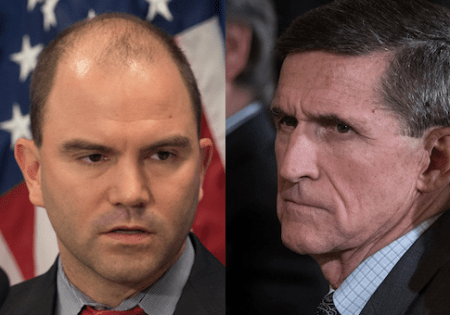
Ben Rhodes, Michael Flynn / Getty Images

“The CIA did not want to deal with him,” Codevilla stated. “Hence, it used the power to grant security clearances to tell the president to choose someone acceptable to the agency, though not so much to him.”

***************************

Security clearances granting access to state secrets have become increasingly politicized in a bid by opponents to block senior advisers to President Trump from joining the closed White House community of those with access secret intelligence.

In February, intelligence agencies denied a high-level security clearance to Robin Townley, an African affairs specialist and close aide to then-White House National Security Adviser Michael Flynn.

The denial of the Top Secret, Sensitive Compartmented Information clearance, the high-level security clearance known as TS/SCI, was widely viewed as a bureaucratic power play by opponents of both Flynn and Townley inside intelligence agencies.

Angelo Codevilla, an intelligence expert, said the denial of clearances was engineered by the CIA and came despite Townley’s holding of the high level clearance for many years when he worked at the Defense Intelligence Agency.

The clearance denial drove Townley out of the White House National Security Council staff.

The apparent motivation was political, as Townley was known inside government as a critic of the current intelligence structure. Townley, like Flynn, advocated for intelligence reforms designed to improve what many critics regard as an outdated system of intelligence agencies.

“The CIA did not want to deal with him,” Codevilla stated. “Hence, it used the power to grant security clearances to tell the president to choose someone acceptable to the agency, though not so much to him.”

Flynn also is under scrutiny from the Pentagon inspector general over foreign payments he received after retiring as an Army three-star general and whether they were reported on security clearance forms.

Several months before Townley’s clearance denial, Democrats on Capitol Hill complained about plans to give high-level security clearances to Trump’s daughter Ivanka Trump, and her husband, Jared Kushner. Both were granted interim TS/SCI clearances and currently are presidential advisers.

The blocking of security clearances under Trump contrasts with the handling of clearances during the Obama administration when a key liberal adviser with a questionable security background was given a high-level clearance.

Ben Rhodes, the White House deputy national security adviser for strategic communications under Obama, was denied an interim TS/SCI clearance by the FBI in October 2008, according to an email obtained from John Podesta last year.

The email stated that Rhodes was the only White House official out of 187 prospective White House aides to be denied the interim TS/SCI clearance.

Yet, despite the denial, Rhodes would later be granted access to some of the most secret U.S. intelligence information and emerge as one Obama’s closest aides who boasted of a “mind-meld” with the president on various issues.

Rhodes became one of the most active originators and shapers of key American foreign and national security policies under Obama.

He engineered what he dubbed the “echo chamber” of pliable news reporters and think tank experts who could be relied on to spread White House propaganda, including false and misleading information, to the American public on the Iran nuclear deal in a bid to win congressional backing for the accord.

Two House Republicans asked the FBI in January to investigate how Rhodes was granted access to secrets for eight years after the initial denial of an interim clearance in 2008.

Regarding Ivanka Trump and Kushner, two House Democrats, Rep. Elijah Cummings (Md.) and Rep. Bennie Thompson (Miss.) complained on Twitter in November that granting clearances to the couple would be improper and a conflict of interest because they were in business and lacked government experience.

High-level security clearances are granted to White House officials so they can participate in various activities, including policy development work, meetings with the president and senior advisers, working groups, and intelligence briefings.

Most internal meetings are classified and thus a security clearance is required for access. Denying a clearance to an official can be tantamount to firing.

In the White House complex, junior clerical staff members often are granted TS/SCI clearance.

Most jobs inside the White House complex, which includes the executive mansion and the adjacent Eisenhower executive office building, where the National Security Council and other key posts are located, require the TS/SCI clearance. Other clearance levels include Secret and Confidential.

The process for gaining a clearance includes filling out Form SF-86 that requires disclosing details of past employment and finances.

Chinese hackers were able to gain access to millions of the secret and highly sensitive forms during the hack disclosed last year of the Office of Personnel Management. The stolen SF-86s were among some 22 million documents on federal employees stolen and could greatly assist Chinese intelligence agent recruitment and cyber espionage operations.

Ground for clearance denial can include illegal drug use, contacts with foreign governments, or a history of bankruptcy.

The TS/SCI clearance grants a holder access to special intelligence, such as information obtained from foreign recruited agents and electronic communications intelligence.

The clearance also can include signing extensive non-disclosure agreements.