Posted tagged ‘Terrorism’

Congress to Compel Disclosure of $1.7B ‘Ransom Payment’ to Iran

June 1, 2016

Congress to Compel Obama Disclosure of $1.7 Billion ‘Ransom Payment’ to Iran Bill requires White House to reveal details about Iranian capture of U.S. sailors

BY:
June 1, 2016 4:58 am

Source: Congress to Compel Disclosure of $1.7B ‘Ransom Payment’ to Iran

Credit: Iranian state media

New legislation could force the Obama administration to disclose if it paid Iran $1.7 billion in taxpayer funds as part of a “ransom payment” earlier this year to secure the release of 10 U.S. sailors who were abducted at gunpoint by the Iranian military, according to a copy of the legislation and conversations with lawmakers.

The bill, jointly filed by Rep. Mike Pompeo (R., Kan.) and Sen. John Cornyn (R., Texas), comes on the heels of a Washington Free Beacon report disclosing that the Obama administration has been suppressing potentially “shocking” details related to the January abduction of the sailors, who were held at gunpoint by Iranian soldiers and forced to apologize on camera.

The legislation, dubbed the No Impunity for Iranian Aggression at Sea Act, would compel the Obama administration to issue a report to Congress detailing whether it paid Iran a $1.7 billion settlement as part of the hostage release. It also would level sanctions against Iran for possible breach of Geneva Convention rules governing legal military detainment.

Lawmakers and others have suspected for months that taxpayer money was partly used to secure the release of the sailors and other imprisoned Americans, though the administration has been adamant the issues are not linked.

The new legislation would require the White House to certify whether any federal funds, including January’s $1.7 billion payment, were doled out to Iran as part of a “ransom” to secure the release of these sailors and citizens imprisoned in Iran.

The legislation noted that the administration released the money to Iran just a day after it freed several U.S. citizens from prison.

The bill would further require the White House to determine if Iran’s treatment of the sailors—which included filming them crying—constitutes a violation of the Geneva Conventions or international laws governing innocent passage in international seas, according to the bill.

If it is determined that Iran violated either of these accords, the legislation would force the White House to list and sanction every Iranian complicit in the detainment.

Pompeo, a member of the House’s intelligence committee, told the Free Beacon on Tuesday that the White House continues to stonewall efforts to determine precisely what happened to the sailors.

“After the Iranians captured ten U.S. Navy sailors, President Obama mentioned these brave men and women only in passing in his last State of the Union address,” Pompeo told the Free Beacon. “Since then, instead of investigating whether the Iranians violated the Geneva Convention and the right of innocent passage, the Obama administration has only offered apologies and then fired an American Naval officer. There has been no criticism of the Iranians, no public explanation of why these Americans were forced on their knees, hands on their heads, or why they were forced to confess—nothing from President Obama that would send a signal that this is an unacceptable way to treat American sailors.”

Pompeo said that he and Cornyn are seeking to ensure there are “consequences on the Iranians responsible.”

“The Obama administration cannot just focus on its inherently flawed nuclear deal and hope inflammatory incidents like this blow over,” he said.” The implications for the safety of Americans and the U.S. military are too great.”

Rep. Randy Forbes (R., Va.) disclosed to the Free Beacon earlier this month that classified details surrounding the incident are being withheld by the administration. It could be more than a year before this information becomes public, Forbes said.

“I think that when the details actually come out, most Americans are going to be kind of taken aback by the entire incident, both how Iran handled it and how we handled it,” Forbes said. “I think that’s going to be huge cause for concern for most Americans. That’s why I’ve encouraged members of Congress to get that briefing so they do know exactly what did take place.”

Islam not a religion of peace even for a day, says ISIS’ Indian recruit

May 30, 2016

Islam not a religion of peace even for a day, says ISIS’ Indian recruit

By: Vicky Nanjappa

Published: Tuesday, May 24, 2016, 8:32 [IST]

Source: Islam not a religion of peace even for a day, says ISIS’ Indian recruit – Oneindia

Bengaluru, May 24: Islam was not a religion of peace even for a day was the message given out by Abu Salha al Hindi, a former Indian Mujahideen operative who features now in a video that was released allegedly by the ISIS.

A video that is over 10 months old was released by members of the ISIS from India in what is being seen as a desperate attempt to spread their propaganda in the country.

There has been an attempt by the Indian government to counter the ISIS narrative by roping in the moderate Muslims to spread the message of peace in a bid to stop recruitments into terrorist outfits. However, the ISIS video looks to counter the same.

Islam never a religion of peace:

 The video clip has several Indians speaking in it. There are brazen messages and attempts made to belt out sentiments by quoting Babri or Godhra. However the most desperate attempt is made by Abu Salha who tries to counter the narrative that Islam is a religion of peace.
In the video he is heard saying, ” stop listening to those who say Islam is a religion of peace. It was never a religion of peace. It was not a religion of peace even for one single day.
Those who say Islam is a religion of peace are cowards. Are you all cowards to listen to these persons, he also states.

Six messages:

The video has messages from the six persons who are seen in it. Abu Salman says all should spend time preparing for jihad. Abu Salha says Islam was never a religion of peace for one single day.
Aman Tandel is the one who speaks about avenging Godhra and Babri.He also says the deaths caused due to the Muzzafarnagar riots too will be avenged. Abu Ammar invites Muslims of the Indian sub-continent to join the fight for jihad.Abu Omar Farooq goes on to state that after the Batla House encounter it was difficult to live in India. Bada Sajid who died in September 2015 says that India is a place of idol worship which is forbidden in Islam. OneIndia News

Watch: Arab ‘arson terror’ strikes Samaria

May 30, 2016

Watch: Arab ‘arson terror’ strikes Samaria Residents of Yitzhar report five arson attacks in the last two days, emphasizing ‘there is no difference between this and other terror.’

By Ido Ben-Porat

First Publish: 5/29/2016, 4:37 PM

Source: Watch: Arab ‘arson terror’ strikes Samaria – Defense/Security – News – Arutz Sheva

Arab assailants from the village of Urif in Samaria set two fires adjacent to the Jewish town of Yitzhar last Friday afternoon, report residents of the Jewish town.

The town’s firefighter team, together with soldiers and residents, struggled against the large blazes just west and south of Yitzhar for over two hours, until they finally achieved control over most of the fire.

Then over Shabbat on Saturday, the Arab attackers lit three other fires at various points around the town. The blazes were controlled just before they had the chance to spread out and cause serious damage.

In the Shabbat assault the assailants came from the further towns of Huwara and Einabus as well as Urif, and they lit a fire just beneath the eastern neighborhoods of the town.

The arsonists were identified by the security coordinator and an army force who were conducting surveillance on the site, allowing a quick response to put out the fire.

Residents of Yitzhar note that Arab arson attacks take place every summer, mostly on Fridays and Saturdays so as to target their Shabbat observance. Due to the relatively remote location of the town it is impossible to wait for firefighting units to arrive.

“The residents drop everything and run, sometimes in their Shabbat clothes, in order to fight the fire,” said Uriya Cohen, director of the local council.

“This is terror to all intents and purposes,” he clarified. “There is no difference between an Arab who throws a firebomb at a car, and one who lights a fire whose goal is to reach homes in the town.”

“It cannot be that residents and young guys are distanced from Yitzhar with no reason and no evidence on an arbitrary administrative order, even as the Arab terror is going wild,” added Cohen.


Deceiving Cairo and helping IS, Hamas sets Gaza on course for new troubles

May 28, 2016

Deceiving Cairo and helping IS, Hamas sets Gaza on course for new troubles Hamas officials promised Egypt two months ago they’d end cooperation with IS fighters in Sinai. But Gaza’s rulers have done nothing of the kind, and the repercussions could impact Israel

By Avi Issacharoff
May 28, 2016, 5:06 pm

Source: Deceiving Cairo and helping IS, Hamas sets Gaza on course for new troubles | The Times of Israel

Salafi demonstrators in Gaza waving Islamic State flags during a demonstration that took place on January 19, 2015. (Courtesy MEMRI)

A few days ago, Hamas’s security forces in Gaza arrested a group of Salafi activists — members of Salafiya Jihadiya, a movement made up of Islamist groups that identify mainly with Islamic State. The head of the group is the son of a well-known Salafi preacher from the Shahin family. Hamas officials claimed that the group was planning to cross Gaza’s border into Sinai to join members of Islamic State in their fight against Egypt.

News of the arrests created the sense that Hamas was working to stop attempts by these Gazan activists to help Islamic State in its war against the Egyptian army. The arrests were presented as part of an impressive operation by Hamas, fulfilling promises its representatives made to Egypt during a visit to Cairo two months ago. At that time, amid escalating tension between Egypt and Hamas and accusations of close collaboration between Hamas’s military wing and Walayat Sinai (Islamic State’s branch in Sinai), the high-ranking Hamas delegates assured Egyptian officials that Hamas would end its relationship with Islamic State there and then.

 Hamas has indeed since reinforced its troop deployment along the Gaza-Egypt border, and promised to stop all smuggling done via the tunnels there. The Salafi arrests thus provided further ostensible proof of the new Hamas commitment to Egypt’s well-being. (Those arrests, in turn, prompted rocket fire at Israel two days ago, for which the Sheikh Omar Hadid Brigade, a Salafi group, claimed responsibility — a case of Israel being targeted by a Gaza terror group angry with Hamas.)

Yet there seems to be a wide gap between what senior Hamas officials are telling the Egyptians and what the heads of its military wing are actually doing on the ground. Despite the promises by Gaza’s rulers to stop the smuggling to and from Sinai and the recent arrests, Hamas continues to maintain a delicate and complicated web of interests and alliances with Islamic State in Sinai.

According to an abundance of Arab, Israeli and Palestinian sources, wounded members of Islamic State are still being brought into Gaza for medical treatment at almost the same rate as before the Hamas delegation’s visit to Cairo two months ago. Likewise, arms smuggling from the Gaza Strip to Sinai and vice versa continues, albeit at a reduced rate, supervised by members of Hamas’s military wing. Overall, in short, it is largely business as usual.

Israel's Coordinator of Government Activities in the Territories Maj. Gen. Yoav Mordechai in 2015 (Gershon Elinson/Flash90)

Israel’s Coordinator of Government Activities in the Territories Maj. Gen. Yoav Mordechai (Gershon Elinson/Flash90)

When Maj. Gen. Yoav Mordechai, the Coordinator of Government Activities in the Territories (COGAT), mentioned some of these facts in interviews on the Saudi Arabian news site Elaph two weeks ago, Hamas issued vigorous denials, of course. But other sources — not Israeli ones, but sources actually living in Gaza — confirm that over the past 10 months, dozens of Islamic State fighters have received medical treatment in the hospital in Khan Yunis, for example. This is astonishing considering Hamas’s delicate relationship with Egypt.

Yahya Sinwar (screenshot)

Yahya Sinwar (screenshot)

The transfer of wounded Islamic State fighters is not the work of some low-ranking activist looking for a quick way to make money. It is a deliberate policy of Hamas that began in mid-2015. The Hamas official in charge of arranging medical treatment for Islamic State members is Mohammed Sutari, a well-known activist from the Khan Yunis refugee camp. This is the same place that produced the hard core of Hamas’s military wing, including notorious terror chief Mohammed Deif and Yahya and Muhammad Sinwar.

This week the Elaph website, quoting a Palestinian source, published the name of one Islamic State fighter who is receiving medical treatment in Gaza. Maj. Gen. Mordechai named two more: Ibrahim Matar, who helps Sutari coordinate medical treatment for Islamic State members, and Said Abdelal, a Gazan from Rafah who is responsible for coordinating Islamic State’s military activities (apparently training) in the Gaza Strip.

Hamas military wing commander Muhammad Deif

Hamas military wing commander Muhammad Deif

The most problematic factor for Cairo may be the smuggling of arms between Gaza and Sinai. There’s been a dramatic reduction in the scope, but Hamas still manages to bring quantities of arms into the Gaza Strip and to move arms and ammunition from Gaza to Sinai. Constrained by Egypt’s crackdown on the border tunnels, some of the smuggling has been done recently by sea.

In addition, despite those widely reported Salafi arrests, several former Hamas activists (whose ideology leans toward that of those same Salafist groups) have crossed the border in recent weeks to join the fighting in Sinai against the Egyptian army. The best-known case is that of Musa Abdallah el-Mor, a former member of Hamas’s military wing whose family set up a mourning tent in Rafah after he was killed in Sinai while fighting against the Egyptian army there.

All of this cross-border activity takes place under the noses of Egyptian officials, who heard the promises of the Hamas senior officials and then watched in dismay over the past two months as Hamas, and especially its military wing, did as they pleased and kept up their relationship of interests with Islamic State.

Egypt’s response to this, it must be said, shows a degree of confusion and perhaps a lack of clear strategy.

The Egyptians opened the Rafah border crossing briefly, for humanitarian reasons. At the same time, they allowed tons of concrete into the Gaza Strip when concrete and wood were in short supply there. They did this even though they knew that Hamas was using such materials to build tunnels, including tunnels that crossed into Sinai.

Palestinians inspect the damage after Egyptian forces flooded smuggling tunnels dug beneath the Gaza-Egypt border, in Rafah in the southern Gaza Strip, on September 18, 2015. (Abed Rahim Khatib/ Flash90)

Palestinians inspect the damage after Egyptian forces flooded smuggling tunnels dug beneath the Gaza-Egypt border, in Rafah in the southern Gaza Strip, on September 18, 2015. (Abed Rahim Khatib/ Flash90)

These might have been interpreted as goodwill gestures by Egypt, but Egyptian intelligence heads quickly realized that the likes of Deif and Yahya Sinwar were unmoved, and have no intention of ordering a complete halt to cooperation with Islamic State anytime soon. It is doubtful, then, that Cairo will again open the Rafah crossing for periods longer than just a day or two, even with Ramadan approaching.

In other words, almost two years after the 50-day Operation Protective Edge Israel-Hamas war, and despite several statements suggesting that relations between Cairo and Gaza might be about to improve, that’s not happening.

Instead, the Gaza Strip is spiraling back to the dangerous routine of tension with Egypt and a humanitarian situation that is slowly but consistently deteriorating. One can only hope that we are not in for a rerun of the summer of 2014.

Gaza rockets miss the mark

May 28, 2016

Gaza rockets miss the mark Terrorists from Gaza fire three rockets towards southern Israel, but they explode on the Gazan side of the border.

By Elad Benari, Canada

First Publish: 5/27/2016, 11:55 PM

Source: Gaza rockets miss the mark – Defense/Security – News – Arutz Sheva

Rocket fired from Gaza (archive)
Flash 90

Terrorists from Gaza on Friday night fired rockets towards southern Israel, but missed the mark as three rockets exploded on the Gazan side of the border.

There were no reports of injuries or damages on the Palestinian side.

Earlier this week, a rocket from Gaza was fired towards southern Israel, exploding in an open area of the Sha’ar Hanegev Regional Council and causing no physical injuries or damages.

The Israel Air Force retaliated by striking two terrorist infrastructures belonging to Hamas in Gaza.

Rocket and mortar fire from Gaza has continued to “trickle” into Israel on occasion. On May 6, two mortar shells fired from Gaza exploded near the security fence in the Eshkol Regional Council.

There were no physical injuries or damages. Israeli aircraft hit two Hamas targets in Gaza in retaliation for the attack.

8 Iranian missile launches since nuke deal signed, expert tells US Congress

May 26, 2016

8 Iranian missile launches since nuke deal signed, expert tells US Congress Islamic Republic increases ballistic missile tests, strives to improve accuracy, despite American opposition

By Judah Ari Gross

May 26, 2016, 4:29 pm

Source: 8 Iranian missile launches since nuke deal signed, expert tells US Congress | The Times of Israel

But the US state department has more concerns about Liberman than Iranian rockets

An Iranian Shahab-3 missile launched during military exercises outside the city of Qom, Iran, in June 2011. (AP/ISNA/Ruhollah Vahdati)

In the 10 months since the Iran nuclear agreement was signed, the Islamic Republic has increased the frequency of its ballistic missile testing, according to researcher Michael Elleman, who testified before a US senatorial committee this week.

Iran is primarily focused on increasing the accuracy, not the range, of its missiles, Elleman said.

 Elleman, a senior fellow at the International Institute for Strategic Studies (IISS) think tank, was called to speak Tuesday before the US Senate Committee on Banking, Housing, and Urban Affairs, which is investigating the effects of the Joint Comprehensive Plan of Action (JCPOA), the official name for the Iran nuclear deal signed in July 2015.

Since then, Iran’s ballistic missile program has become a central issue in the debate surrounding the nuclear deal, with opponents of the agreement saying test launches violate the terms of the JCPOA, while proponents argue missile tests are “inconsistent” with United Nations resolutions but not necessarily illegal.

According to the UN decision, “Iran is called upon not to undertake any activity related to ballistic missiles designed to be capable of delivering nuclear weapons, including launches using such ballistic missile technology,” until October 2023.

As they’re only “called upon not to” test missiles, but not expressly forbidden from doing so, Iran has used that loophole to increase its testing with impunity.

“[The US has] engaged in a lot of hue and cry over Iran’s missile capabilities, but they should know that this ballyhoo does not have any influence and they cannot do a damn thing,” Iranian supreme leader Ali Khamenei said this week.

A Khalij Fars ballistic missile on a transporter during a military parade in Iran. (Iranian military/CC BY-SA 3.0/WikiMedia)

A Khalij Fars ballistic missile on a transporter during a military parade in Iran. (Iranian military/CC BY-SA 3.0/WikiMedia)

According to Elleman, in the almost year following the signing of the agreement and the removal of sanctions, Iran has performed at least eight missile tests — three in 2015 and five thus far in 2016.

In 2005, 2013 and 2014, however, when negotiations for the deal were in full swing, Iran did not perform a single test of a “nuclear-capable missile,” the IISS fellow testified.

After talks fell through in 2005 and before they resumed in 2013, the Islamic Republic “averaged roughly five test launches per year,” according to Elleman.

A missile launched from the Alborz mountains in Iran on March 9, 2016, reportedly inscribed in Hebrew, 'Israel must be wiped out.' (Fars News)

A missile launched from the Alborz mountains in Iran on March 9, 2016, reportedly inscribed in Hebrew, ‘Israel must be wiped out.’ (Fars News)

Though the increase from an average of five to eight missile tests a year seems dramatic — it’s a 60 percent increase, after all — Elleman offered perspective by comparing that to the US and Soviet missile testing programs during the Cold War, which averaged “about one test a week,” or nearly 10 times as many tests per year.

Tactically speaking, ballistic missiles have little value other than as a means of delivering a nuclear warhead, Elleman pointed out.

In May, an Iranian official claimed the country had tested a missile capable of reaching Israel, which had almost unheard-of accuracy for Iran.

“We test-fired a missile with a range of 2,000 kilometers and a margin of error of eight meters,” Brigadier General Ali Abdollahi was quoted as saying at a Tehran science conference.

However, this was swiftly denied by the Iranian defense minister on the same day.

“We’re still trying to get to the bottom of what exactly transpired,” White House spokesman Josh Earnest said at a press briefing.

“We are aware of Iranian claims of an additional ballistic missile launch. We’re also aware of statements from the defense minister indicating that such a launch did not take place,” he said.

Accuracy over range

Whether or not the test took place, the emphasis on the rocket’s margin of error points to a renewed focus on the accuracy of Iran’s existing arsenal of missiles, rather than on the development of farther-reaching projectiles.

“Iran seeks to improve the accuracy of its missiles, a priority that supersedes the need to develop longer-range missiles,” Elleman told the Senate committee on Tuesday. “Iran has repeated said that it does not need missiles with a range of greater than 2,000 kilometers, or 1,200 miles.”

At that range, Iran could easily reach any target within Israel, which is just under 1,000 miles away.

A military exhibition displays the Shahab-3 missile under a picture of the Iranian supreme leader Ayatollah Ali Khamenei, in Tehran, in 2008 (photo credit: AP/Hasan Sarbakhshian)

A military exhibition displays the Shahab-3 missile under a picture of the Iranian Supreme Leader Ayatollah Ali Khamenei, in Tehran, in 2008. (AP/Hasan Sarbakhshian)

At this point in time, however, Iran’s missile technology is far from accurate enough to reliably hit a predetermined target, and changing that will not be easy or quick, Elleman said.

“Substantial improvements in missile accuracy will take years, if not a decade, to materialize,” he said.

As with so many things, he most important aspects of a military attack are location, location, location. A missile — even a nuclear-tipped missile — landing in the Arava desert would have an incomparably lesser effect than a missile landing on, say, Dizengoff Center in Tel Aviv.

“Iran’s ballistic missiles have poor accuracy. The successful destruction of a single fixed military target, for example, would probably require Iran to use a significant percentage of its missile inventory,” Elleman told the Senate committee.

Illustrative photo of a Fateh-110 ballistic missile, taken at an Iranian armed forces parade in 2012. (military.ir/Wikimedia Commons)

Illustrative photo of a Fateh-110 ballistic missile, taken at an Iranian armed forces parade in 2012. (military.ir/Wikimedia Commons)

That inventory consists of over 300 missiles considered “nuclear-capable,” according to the international Missile Technology Control Regime monitoring association, which defines it as any missile capable of delivering a 1,100 pound (500 kg) warhead a distance of 186 miles (300 km), Elleman said.

Slow progress on ICBM technology

In terms of increasing the range of its ballistic missiles, the senior researcher said Iran has not made great strides in that effort.

“I have seen no evidence to suggest that Iran is actively developing an intermediate- or intercontinental-range ballistic missile (IRBM or ICBM, respectively),” Elleman said, but he added, “I cannot speak to a covert program.”

The most recent test that could be related to ICBMs appears to have been the launch of the Simorgh rocket, which is believed to have been conducted last month. US and Iranian officials have not publicly acknowledged the test, though Russian revealed that the launch popped up on one of their radar stations.

Iranians take photos of the Simorgh satellite rocket during celebrations to mark the 37th anniversary of the Islamic Revolution, in Teheran, February 11, 2016. (AFP/Atta Kenare)

Iranians take photos of the Simorgh satellite rocket during celebrations to mark the 37th anniversary of the Islamic Revolution, in Teheran, February 11, 2016. (AFP/Atta Kenare)

The Simorgh rocket is designed to launch satellites into space. However, Elleman told the Senate committee, “Without question, rockets designed to boost a satellite into orbit and long-range ballistic missiles employ many of the same technologies, key components, and operational features.”

But it’s not likely that the Simorgh itself would be used as a weapon because of the considerable effort that would be required to convert it into a reliable ICBM. Rather, the information gleaned from the space rocket would be applied to create a new type of missile, Elleman said.

“Iran’s ambitious space program provides engineers with critical experience developing powerful booster rockets and other skills that could be used in developing longer-range missiles, including ICBMs,” he said.

The production of those long-range missiles, which would be capable of striking the United States, is still years away, assuming Iran continues on its current course.

According to Admiral William Gortney of the North American Aerospace Defense Command, Iran is anticipated to have an operational intercontinental ballistic missile by the year 2020.

Michael Elleman, a senior fellow at the International Institute for Strategic Studies think-tank. (Screen capture: C-Span)

Michael Elleman, a senior fellow at the International Institute for Strategic Studies think tank. (Screen capture: C-Span)

Meanwhile, Elleman, who has interviewed Russian and Ukrainian scientists who worked in the Iranian missile program, estimated the Islamic Republic would not be able to produce an operational ICBM until “2022, at the earliest.”

In his testimony, the senior IISS researcher also discussed an interesting piece of modern history, namely that Israel is partially responsbile for the Iranian missile defense program, which was created before the 1979 revolution when the two countries were still allies.

“Ironically, the shah teamed with Israel to develop a short-range system after Washington denied his request for Lance missiles,” Elleman said.

“Known as Project Flower, Iran supplied the funds and Israel provided the technology. The monarchy also pursued nuclear technologies, suggesting an interest in a delivery system for nuclear weapons,” he said.

‘F**k Israel, long live the Intifada’ frenzied mob screams at Jewish University of California Irvine student

May 26, 2016

‘F**k Israel, long live the Intifada’ frenzied mob screams at Jewish University of California Irvine student

By Pamela Geller on May 26, 2016

Source: ‘F**k Israel, long live the Intifada’ frenzied mob screams at Jewish University of California Irvine student | Pamela Geller

It’s getting to be open season on Jewish students on our nation’s campuses. Why aren’t administrators acting against these neo-Nazis? Because they’re leftists and Muslims — two protected classes.

“‘F**k Israel, long live the Intifada’ angry mob screams at Jewish UC student,” by Hannah Broad, Jerusalem Post, May 22, 2016:

Second-year Eliana Kopley was attempting to enter the showing of the Israeli documentary “Beneath the Helmet” about the IDF when a crowd of protesters physically obstructed her.

An angry anti-Israel mob at the University of California at Irvine chased a Jewish student into a building while chanting anti-Semitic epithets after she tried to attend a campus screening of an Israeli documentary last Wednesday, the Observer reported.

Second-year Eliana Kopley was attempting to enter the showing of the Israeli documentary “Beneath the Helmet” about the IDF when a crowd of protesters physically obstructed her and chased her into an adjacent building.

The angry mob proceeded to pound intimidatingly on the windows and doors while shouting “Long live the Intifada!” and “F**k Israel!”

Kopley called the police, who escorted her safely into the film screening amidst the angry rhetoric of the activists. In spite of arriving safely to the event, Kopley was overwhelmed by the trauma of the incident and became emotional.

In contrast to the Kopley’s response to the irate horde of protesters, the UC Irvine campus group Students for Justice in Palestine lauded the mob’s behavior and labeled their intimidation techniques a success.

Academic centers across the United States have seen an uptick in increasingly vehement anti-Israel sentiment, particularly in California.

In 2015, more than 30 organizations, including Jewish fraternity AEPI, the Simon Wiesenthal Center and the Zionist Organization of America wrote to University of California regent Bruce D. Varner in July, requesting that substantive measures be taken to combat rising anti-Semitism on UC-affiliated campuses….

Hamas is Fantastic!!

May 26, 2016
Published on May 22, 2016
Ami Horowitz

Would university students donate money to Hamas to blow up schools and hospitals? Watch and find out!!!

Russian UN envoy Churkin names Turkish companies helping ISIS make bombs

May 26, 2016

Russian UN envoy Churkin names Turkish companies helping ISIS make bombs

Published time: 26 May, 2016 06:31

Source: Russian UN envoy Churkin names Turkish companies helping ISIS make bombs — RT News

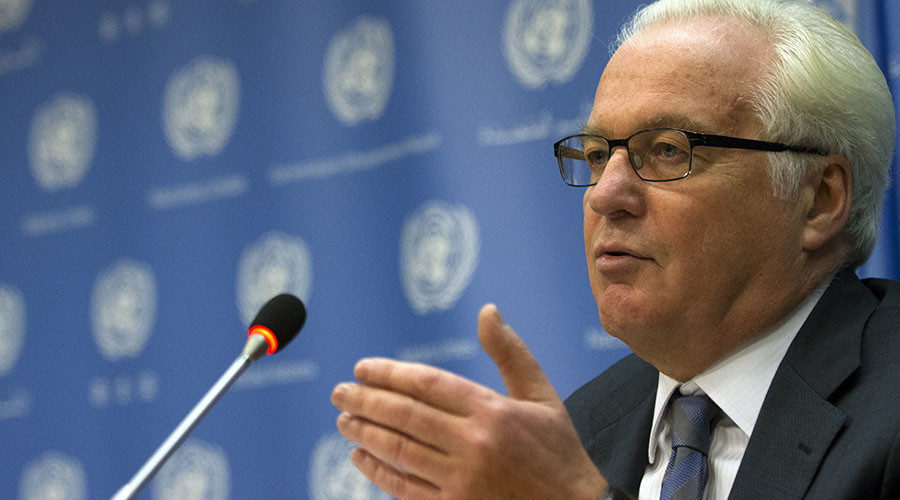
Russian ambassador to the United Nations Vitaly Churkin. © Brendan McDermid / Reuters

Russia has presented a list of Turkish companies to the UN that Moscow believes are providing Islamic State with the components needed to make homemade explosive devices.

In UN Ambassador Vitaly Churkin’s letter to UN Secretary General Ban Ki Moon, the envoy says analysis of chemical components of explosives recovered in Islamic State (IS, formerly ISIS/ISIL) liberated areas of Iraq’s Tikrit and the Syrian city of Kobani, implicate Turkish companies.

Read more

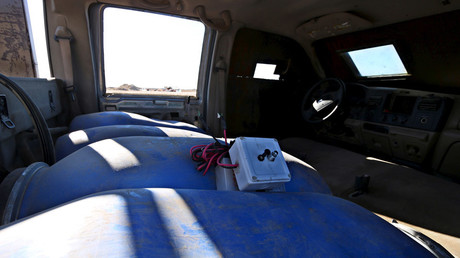
Containers filled with explosive materials, thought to have belonged to Islamic State militants. © Rodi Said

Components found in the explosives, Churkin wrote, “indicate that they were either manufactured in Turkey or delivered to that country without the right of re-export.”

The composition of the improvised explosive devices (IEDs) included the use of aluminum powder, ammonium nitrate, granulated carbamide and hydrogen peroxide that were produced by Turkish firms “Gultas Kimya” , “Marikem Kimyevi Ve Endüstriyel Ürünler”, “Diversey Kimya”, “Metkim”, and “EKM Gubre”.

Churkin specifically noted a sevenfold export increase from Turkey to Syria of ammonium nitrate used by terrorists as a component for the manufacture of improvised explosive devices.

He also noted that the “detonation cords manufactured in third countries have been illegally resold through Turkey to ISIL fighters,” as bombs used by Islamists also contained American made microcontrollers produced by Microchip Technology, Swiss-made transistors made by ST Microelectronics and Finish Nokia phones model 105 RM-908.

“These facts demonstrate that the Turkish authorities are deliberately involved in Daesh activity, as they are providing access to components for improvised explosive devices that are being widely used to commit terrorist acts,” the Russian envoy said.

Read more

© RT

The Turkish Foreign Ministry was quick to reject Russia’s claims calling the letter “the most recent example of Russia’s propaganda campaign against Turkey.”

Russia has repeatedly accused and presented evidence of Turkish involvement in running IS operations in Syria and Iraq. Churkin’s letter comes following an earlier 20-month long study published by Conflict Armament Research (CAR), which concluded that over 50 companies from 20 countries, sold or received hundreds of components used by Islamic State terrorists to build explosive devices. A total of 13 Turkish firms were found to be involved in the supply chain.

The 107-page report concluded homemade explosives can easily be assembled using everyday products that are actually not subject to transfer controls such as export licensing. As a result, their supply within the region is basically unregulated and weakly monitored. Other key components, such as detonators and detonating cords, are subject to export licensing, but are also commonly used in commercial activities, such as mining and industry.

Smugglers Caught Red-Handed Exporting Mortar Parts From Hebron to Gaza

May 26, 2016

Hamas has a factory in Hebron to manufacture parts for its weapons which ships the goods the Gaza. This time the smugglers were caught.

By: Hana Levi Julian

Published: May 26th, 2016

Source: The Jewish Press » » Smugglers Caught Red-Handed Exporting Mortar Parts From Hebron to Gaza

A recent joint operation by Israeli military, police, customs and tax officials and Shin Bet intelligence agents has turned up a massive shipment of military parts headed for Gaza from Hebron. It is also now clear there is a Hamas manufacturing facility in the ancient Judean city.

Terrorists were caught red-handed with contraband – weaponry parts – at the Tarqumiya crossing near Hebron with a large shipment headed for the Kerem Shalom crossing into Gaza.

The shipment was listed as textiles and jewelry, and was huge, according to a statement by security officials.

But hidden among the goods were a lot of electric motors that are useful for building tunnels – attack tunnels – and special cuttings for mortars and rockets.

Gaza’s ruling Hamas terrorist organization has, in fact, a manufacturing and distribution center set up in Hebron, with a plant there to produce parts for its war machine.

Imagine what might have happened, if the Tarqumiya checkpoint no longer existed?

Or if the Kerem Shalom crossing were simply wide open, as Turkey continues to demand?