Posted tagged ‘Taliban’

White House Struggles To Distinguish Between The Islamic State and Taliban Prisoner Swaps

January 30, 2015

White House Struggles To Distinguish Between The Islamic State and Taliban Prisoner Swaps, Jonathan Turley’s Blog, Jonathan Turley, January 30, 2015

(President Humpty Dumpty:

‘When I use a word,’ Humpty Dumpty said, in rather a scornful tone, ‘it means just what I choose it to mean — neither more nor less.’

‘The question is,’ said Alice, ‘whether you can make words mean so many different things.’

‘The question is,’ said Humpty Dumpty, ‘which is to be master — that’s all.’

Hence, Islam is the religion of peace and terrorists aren’t terrorists. Will all of the king’s horses and all of the king’s men be able to put him back together again?– DM)
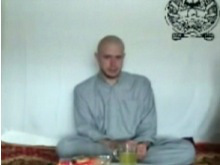
bergdahl
150124201815-nr-dnt-harlow-sajida-al-rishawi-explainer-00001707-large-169

The White House again seems to be struggling with barriers of both language and logic as many raise comparisons between the controversial Bergdahl swap and the effort this week of Jordan to swap a terrorist for one of its downed pilots with Islamic State. During a week where one of the five Taliban leaders released by the Administration has been found trying to communicate with the Taliban, the Jordanian swap has reignited the criticism of the swap for Army Sgt. Bowe Bergdahl, which violated federal law and released Taliban leaders with long and bloody records. The White House seems to be trying to argue that the Taliban are not terrorists in direct contradiction to its prior position that they are indeed terrorists. It shows the fluidity of these terms and how the government uses or withdraws designations as terrorists to suit its purposes. The familiarities between Islamic State (IS) and the Taliban appear to be something in the eye of beholder or, to quote a certain former president, “It depends on what the meaning of the word ‘is’ is.”

As a refresher, the Taliban has long been viewed as terrorists, even when they were in power. They have destroyed religious sites, art, and in one of the most infamous acts in modern history, blew up the giant ancient Buddhas at Bamiyan.The United Nations and human rights groups have documented a long list of civilian massacres and bombings carried out by the Taliban. One report described “15 massacres” between 1996 and 2001. The UN estimates that the Taliban were responsible for 76% of civilian casualties in Afghanistan in 2009, 75% in 2010 and 80% in 2011. The Human Rights Watch estimates that “at least 669 Afghan civilians were killed in at least 350 armed attacks, most of which appear to have been intentionally launched at non-combatants.” This includes the widespread use of suicide belts. The Taliban has always had a close alliance with al Qaeda.

That record was put into sharp relief with the swap for Bergdahl with ties to terrorism including one who was the head of the Taliban army, one who had direct ties to al-Qaeda training operations, and another who was implicated by the United Nations for killing thousands of Shiite Muslims. While we have always said that we do not negotiate with terrorists, we not only negotiated for Bergdahl but gave them what they wanted.
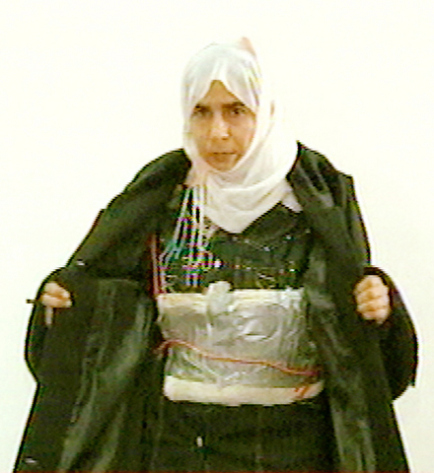
20051114181303

The Jordanian swap raised the same obvious concerns. Many have objected, for good reason, to the idea of releasing Sajida al-Rishawi, who participated with her husband in a terrorist attack on a wedding party at the luxury Radisson hotel in the Jordanian capital of Amman on Nov. 9, 2005. al-Rishawi hoped to be welcomed to paradise by walking into a wedding of 300 people enjoying a family gathering with children and murdering them in cold blood. Her husband’s bomb went off but not her bomb. It goes without saying that she is a hero to the murderous Islamic State for her effort to kill men, women, and children at a wedding.

The swap appears in part the result of pressure from Japan to secure the release of one of its citizens. In my view, such a propose swap was disgraceful. al-Rishawi is as bad as it gets as a terrorist. To yield to terrorists who engage in weekly demonstrations of beheading unarmed captives is morally wrong and practically suicidal. Just as the West is funding this terrorist organization through millions of ransom payments, the exchange of a terrorist only fuels their effort to capture and torture more Western captives.

This brings us back to the White House. When asked about the proposed swap with Islamic State, the White House was aghast. White House spokesman Eric Schultz stated “Our policy is that we don’t pay ransom, that we don’t give concessions to terrorist organizations. This is a longstanding policy that predates this administration and it’s also one that we communicated to our friends and allies across the world.”

The media understandably sought guidance on why the swap with Bergdahl was the right thing to do (despite the flagrant violation of federal law) while the swap for the pilot was not. The White House acknowledged that the Taliban are still on a terrorist list but then tried to rehabilitate the organization into something else. The White House is now referring to the Taliban as an “armed insurgency.” It notes that the Taliban are not listed by the State Department as a terrorist organization. However, they are listed as one of the “specially designated global terrorist” groups by the Department of the Treasury. Indeed, they have been on that list since 2002. Worse yet, the statement from the White House came in the same week that the Taliban claimed responsibility for killing three U.S. contractors.

John Earnest tried to thread the needle by explaining “They do carry out tactics that are akin to terrorism, they do pursue terror attacks in an effort to try to advance their agenda.” He seems to struggle to explain what is terrorist attacks and what are attacks “akin to terrorism.” Most people view suicide belts and civilian massacres to be a bit more than “akin to terrorism.”

Earnest also note that, while the Taliban has links to al Qaeda, they “have principally been focused on Afghanistan.” However, “Al Qaeda is a terrorist organization that has aspirations that extend beyond just the border between Afghanistan and Pakistan.” That is diametrically opposed to the position of the Administration in claiming sweeping powers to strike targets around the world against any forces linked to al Qaeda and many who have few such links. Indeed, while referencing to the authorization to attack al Qaeda, the Administration attacked Islamic State, which was actively fighting with al Qaeda.

The spin of the White Hosue also ignores the role of the Taliban-aligned Haqqani network in holding Bergdahl, a well-known terrorist group.

There are obviously arguments to make for the Bergdahl swap (though I find little compelling in the arguments that justify the violation of federal law by the White House). However, the argument must acknowledge that we negotiated with a group of hostage taking terrorists and we need to address the implications of that fact. Alternatively, if the White House now believes that the Taliban is no longer a terrorist organization, it needs to take it off its listing of such groups (a listing that subjects people to criminal charges for material support or assistance with the group). It cannot have it both ways and call it a terrorist group unless such a label is inconvenient.

Obama Wins War on Terror By Saying It Doesn’t Exist

January 30, 2015

The White House explains that Taliban is not a terrorist group — it is an “armed insurgency.”

By: Tzvi Ben-Gedalyahu

Published: January 30th, 2015

via The Jewish Press » » Obama Wins War on Terror By Saying It Doesn’t Exist .


You are looking at an "armed insurgent" and not a terrorist, according to the White House.
You are looking at an “armed insurgent” and not a terrorist, according to the White House. 

The White House said that Taliban is an “armed insurgency” and not a terrorist group, a handy semantic tactic to allow President Barack Obama to declare he was won the war on terror.

It is strange why no one thought of this solution before. You get rid of terror simply by re-defining it. Perhaps he has learned from the Palestinian Authority how to re-write the dictionary. Mahmoud Abbas has convinced the world that “ultimatum,” as in “Israel must agree to my terms or else,” actually mean “negotiations.”

So is Taliban a terrorist organization?

ABC News’ Jon Karl asked White House Press Deputy Press Secretary Eric Schultz Wednesday how the government can explain if there is any difference between a Jordanian and Americans agreement to free terrorists in return for the release of hostages.

Jordan has agreed to trade a convicted terrorists for the release by the ISIS of one of their air force pilots. Karl asked if Jordan simply is not doing exactly what the United States did when it agreed to release five Taliban leaders from Guantanamo Bay in return for Army Sgt. Bowe Bergdahl.

Karl pointed out that Taliban ”is clearly a terrorist organization,” like ISIS.

No, no, no, said Schultz.

“We don’t make concessions to terrorist groups,” he said, assuring reporters that the Islamic State “is a terrorist group.”

But what about Taliban?

Wasn’t Taliban once the ruling government of Afghanistan that refused to hand over members of Al Qaeda who were allegedly involved in the 9/11 attacks on New York and Washington?

Doesn’t Taliban maintain a powerful force in Afghanistan and Pakistan from where it attacks U.S. soldiers as well as children in a Pakistani school?

Isn’t Taliban included in the State Dept.’s Specially Designated Global Terrorist list?

Doesn’t the  National Counterterrorism Center list the “Taliban Presence in Afghanistan” on a map of global terrorism presences?

The answer to all of these questions is, “yes.”

So Taliban is a terrorist group,. right?

Schultz said:

     I don’t think that the Taliban, um — uh – the Taliban is an armed insurgency.

White House Press Secretary tried a bit of damage control on Thursday.

 “They [Taliban] do carry out tactics that are akin to terrorism. They do pursue terror attacks in an effort to try to advance their agenda,” he told reporters.

Nu?

Well, says Earnest, “it’s important to draw a distinction between the Taliban and al-Qaeda. The Taliban has resorted to terror tactics, but those terror tactics have principally been focused on Afghanistan” although many American personnel and soldiers in Afghanistan “are in harm’s way.

Got it? Taliban only uses “terror tactics.” If it quacks, it doesn’t mean it’s a duck. Maybe it’s a ventriloquist.

“The Taliban is a very dangerous organization,” Earnest admitted but it still is different from ISIS.

His twisted narrative goes like this:

         What the President has pursued is a clear strategy for building up the central government of Afghanistan and the Afghan security forces, so that they could be responsible for security in their own country and take the fight to the TalibanThat, however, is different than the strategy that we have pursued against Al Qaeda. Al Qaeda is a terrorist organization that has aspirations that extend beyond just the border between Afghanistan and Pakistan..

Al-Qaeda and their affiliates around the globe have sought to carry out terror attacks against Americans and American interests all around the globe….

There’s no doubt that the threat from the Taliban is different than the threat that is posed by al-Qaeda.

By that reasoning, Hamas is not a terrorist group because it is not a worldwide threat.

House Armed Services Committee member Rep. Duncan Hunter said in a statement, “It’s all semantics. I would suggest that this administration start talking to any of the service members who fought in Afghanistan, who might have been injured or seen their friends hurt or killed, and ask them if the Taliban is a terror organization.

“The administration might actually learn something and stop looking so foolish.”

What  no one has said that one of the biggest threats in the world is to deny that terrorist organizations are terrorist organizations.

Afghanistan Going off the Rails as U.S. Withdrawal Speeds Up

October 31, 2014

Afghanistan Going off the Rails as U.S. Withdrawal Speeds Up, Foreign PolicyGopal Ratham, October 30, 2014

(Will today’s sideshow soon move to the circus big tent? — DM)

Insurgent attacks rise as poppy cultivation reaches a post-Taliban high in Afghanistan.

487292753-sigar-cropped_0

While the world’s eyes are trained on Iraq, Syria, and the fight against the Islamic State, a new report to Congress by the government’s reconstruction watchdog warns that Afghanistan, where U.S. troops have been fighting the Taliban and other insurgent groups in the longest war in American history, remains dangerously unstable even as the American military withdrawal accelerates.

Insurgent attacks have reached the highest levels since 2011, the Afghan army has sustained heavy combat losses and is experiencing high attrition rates, and opium poppy cultivation has more than doubled from its pre-1999 levels when the Taliban ruled the country, potentially undermining the Afghan state’s legitimacy even as the nation is experiencing budget shortfalls, the Office of the Special Inspector General for Afghanistan Reconstruction, or SIGAR, said in a quarterly report sent to Congress Thursday.

The dire warnings come as a new Afghan coalition government led by President Ashraf Ghani and his rival Abdullah Abdullah —  who assumed the role of a chief executive officer — has taken power after a contentious election and political standoff. The new government signed security agreements with the United States and NATO allowing international coalition forces to remain in the country after December. The Obama administration has said it will gradually withdraw the remaining 24,000 American troops, with the last leaving the country in 2016. The NATO forces are likely to follow the same pattern, leaving Afghan military forces to take full responsibility for security after 2016.

As part of that plan, U.S. Marines and British forces on Monday ended their combat mission and vacated two of their largest bases in Afghanistan — Camp Bastion and Camp Leatherneck — in the Helmand province, the site of some of the most violent battles of the 13-year-long war. Since the arrival of forces in 2001, about 350 Marines and 407 British troops have died in Helmand, theWashington Post reported. The departure of the last remaining coalition troops there was carried out in secrecy to prevent Taliban attacks — further evidence of the coalition’s tenuous security gains.

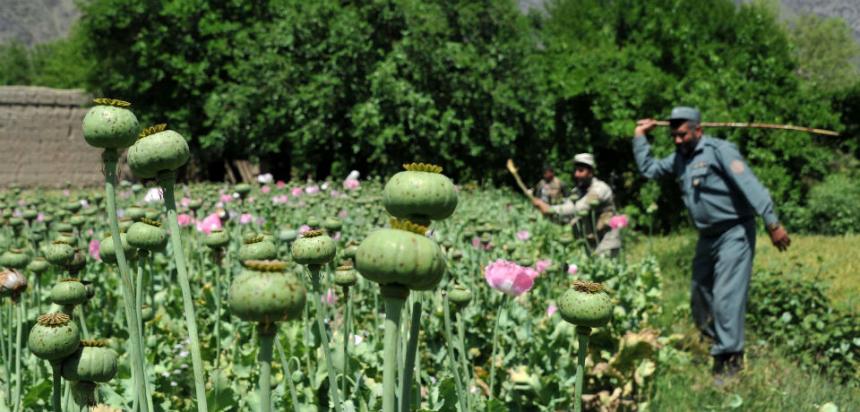
Poppy cultivation, a barometer of the underground economy that plays a role in financing the insurgency, is soaring, the report warned. About 209,000 hectares of land were under poppy cultivation in 2013, an increase of 36 percent from the previous year, the SIGAR report said, citing statistics from the U.N. Office of Drugs and Crime. The size of the crop has doubled since 1999, when the Taliban ruled the country and opium was grown on 91,000 hectares.

Afghanistan’s opium cultivation supports the equivalent of about 411,000 jobs, exceeding the overall size of the Afghan national security forces, and generates about $3 billion of revenue from drug exports, the report said.

The booming drug trade is potentially fueling the Taliban-led insurgency that still remains strong in the country’s south, southeast, and east. Citing U.N. statistics, the report said that the total number of attacks for the nine months ending Aug. 15 totaled 15,968, or 61 a day — the second-highest level since 2011 after the fall of the Taliban. Military officials and Western observers believe international terrorist groups and the Taliban took advantage of the months-long uncertainty over the outcome of Afghan presidential elections that finally ended Sept. 29 with the formation of the coalition government led by Ghani.

Afghan security forces, which have been leading the fight against the Taliban, face high rates of attrition and combat casualties, the report said.

Between September 2013 and August 2014, more than 36,000 Afghan army personnel were dropped from rolls, and between March 2012 and August 2014 more than 2,850 troops were killed in action with another 14,600 wounded, the report said.

The report, in a strong slap at the Pentagon, said the U.S.-led coalition had made it difficult to independent assessments of the capability of the Afghan forces by abruptly classifying details of the country’s military capabilities. That raises the disturbing possibility that the United States is trying to paper over significant and lingering problems with the Afghan forces already struggling to fill the security vacuum left by the departing American forces.

The inspector general’s office “is deeply troubled by the decision” of the international coalition “to classify the executive summary of the report that assesses the capability of the ANSF which were unclassified prior to this quarter,” the report said. “ISAF’s classification of the report summary deprives the American people of an essential tool to measure the success or failure of the single most costly feature of the Afghanistan reconstruction effort.”

The coalition military decided to classify the Afghan military capability “to address potential concerns about operational security,” an ISAF military official said in an email. “After careful review, it was determined that the entirety of the report was classified to include the executive summary which contained Afghan-provided readiness information.”

Providing such information openly could jeopardize Afghan security forces, the official said, adding that SIGAR will continue to get the information it needs to carry out its congressionally mandated duties.

Unlike previous years, in 2014 the Taliban has attacked Afghan forces on multiple fronts, said Omar Samad, a former Afghan ambassador to France, who is now president of Silk Road Consulting, a Washington-based geopolitical advisory firm.

Although such attacks have dealt a psychological blow to Afghan forces, it’s not clear if the Taliban has been able to retain control of territories, said Samad who just returned from Kabul.

“What will make a big difference in the next year or two is the effective use of air power,” Samad said. “We don’t know yet whether ANSF who are in training mode now will have the right equipment and training to carry out operations needed or whether they’ll have to be complemented by NATO forces after 2014.”

To make matters worse for the new Afghan government, the country’s finance ministry is facing serious budget shortfalls, the report said. For the first seven months of the Afghan financial year that began Dec. 21, 2013, the domestic revenues missed government targets by 22 percent and declined 3.8 percent compared with the same period last year, the report said.

“I don’t think it’s a surprise to Afghans and those who follow it closely that this year would be a challenging year,” Samad said. Mismanagement of the country’s economy in the last years of former President Hamid Karzai have made the challenges “bigger than expected,” he added.


