Posted tagged ‘Taiwan’

Trump is Right on Taiwan

December 4, 2016

Trump is Right on Taiwan, Commentary Magazine, , December 4, 2016

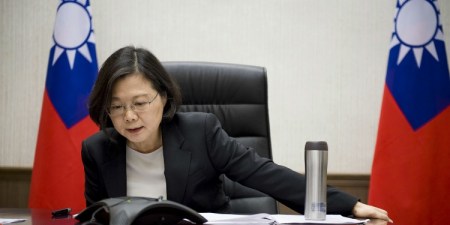
taiwan-callTaiwan Presidential Office via AP

Simply on its face, Trump is right to talk to Taiwan’s president. Unlike her Chinese counterpart, she is a democratically elected leader. Taiwan is the 11th largest Asian economy in terms of gross domestic product (purchasing power parity), with an economy larger than that of Singapore, Pakistan, Malaysia, or Israel. It’s also the United States’ 10th largest trading partner.

Nor should China’s propaganda about Taiwan being simply a renegade province true. Taiwan was only under mainland Chinese control during the Qing Dynasty, and Chinese control was tenuous even then. Control of Taiwan passed among colonial powers, each leaving a distinct stamp on the character of Taiwan, which is as different from mainland China as Argentina is from Colombia.

Trump may have reversed the policy of his immediate successors with regard to contacts, but the simple fact is that, even after the U.S. switched its recognition of China to Beijing from Taipei, U.S.-Taiwanese official exchanges still occurred at a high level–although admitted less so in recent decades.

The reason why critics consider Trump’s phone call as diplomatically counterproductive is because it will anger China. But has kowtowing to China’s diplomatic sensitivities or even broader cooperation with China enhanced America’s security? In Dancing With the Devil, my history of a half-century of U.S. diplomacy with rogue regimes and terrorist groups, I trace how successive U.S. administrations sought to use Beijing as an intermediary in diplomacy with North Korea. In order to keep China cooperative, both Democratic and Republican administration offered waivers on sensitive technology. Rather than pressure Pyongyang to roll back its nuclear developments and aggression, Chinese officials simply pocketed the concessions and did nothing. After a quarter century, the U.S. State Department has nothing to show for Chinese mediation with North Korea.

More recently, Chinese hackers stole designs for both America’s new F-35 and F-22 stealth aircraft. This saved Beijing billions of dollars and years of basic design work, all the while amplifying China’s ability to check the ability of the United States to project power or, conversely, for China to project power themselves. The Chinese hacking of tens of millions of U.S. personnel records is simply icing on the cake.

If China wants to the United States to defer to its world view, it should show that such deference benefits the United States as well as China. Regardless, it should not be the policy of the United States to endorse or empower Chinese land grabs of territories that have distinct identities and do not desire to be under Beijing’s control.

Rather than condemn Trump on Taiwan, it would be far better to encourage the incoming administration to show as much moral clarity on issues relating to the Ukraine, Belarus, Kazakhstan and the Baltics as they face a growing Russian menace.

China Files Complaint After Trump Call With Taiwan – Fox Report

December 4, 2016

China Files Complaint After Trump Call With Taiwan – Fox Report via YouTube, December 3, 2016

(Please see also, Trump speaks with “president” of Taiwan, harasses her sexually. — DM)

https://www.youtube.com/watch?v=Y7XtLgF3Js8

Trump speaks with “president” of Taiwan, harasses her sexually

December 3, 2016

Trump speaks with “president” of Taiwan, harasses her sexually, Dan Miller’s Blog, December 3, 2016

(The views expressed in this article are those of Pajama Boy’s father and do not necessarily reflect my views, those of the other editors, or Warsclerotic. — DM)

This is a guest post by a well-known political commentator, the father of Pajama Boy. He is a true “Obama patriot,” whose views should matter little after mid-day on January 20th.

othepajamaboy

Here are the thoughts of President Reject Obama:

President Elect Donald Trump violated all known rules of common decency by accepting a telephone call from Taiwanese “President” Tsai Ing-wen without My permission. Indeed, Ms. Tsai did as well by placing the call without My permission. Obviously, I would not have granted permission because it was just a trick, intended to embarrass Me and My fundamentally transformed country.

Chinese Foreign Minister Wang Yi said Saturday the call between Taiwan’s president and Trump was “just a small trick by Taiwan,” according to Hong Kong’s Phoenix TV.

Both should be ashamed and both are on the wrong side of both history and herstory. I will continue to treat the renegade Chinese province of Taiwan as an outcast from the community of well-behaved nations, while reassuring Chinese President Xi Jinping of My continued fealty. He is My good friend, the powerful leader China — and indeed our entire climate change ravaged world — needs.

Taiwan is not even a country. As noted here,

The call is widely believed to be the first between a U.S. president or president-elect and a leader of Taiwan since 1979, when diplomatic relations between the two were cut off. China regards Taiwan, a nearly 14,000 square-mile island off its coast, as a renegade province which should be returned to China ever since Gen. Chiang Kai-shek fled mainland China to Taiwan in 1949. [Emphasis added.]

The U.S. adopted a “One China” policy to help facilitate diplomacy with Beijing in 1972, and President Jimmy Carter formally recognized Beijing as the sole government of China in 1978. The U.S. embassy in Taiwan’s capital, Taipei, was closed in 1979. [Emphasis added.]

Since Ms. Tsai is merely the “president” of a rogue province of China not recognized by America, she is a make-believe president and a mere peon. It should be beneath the dignity of even a pitiful excuse for a President Elect like Trump even to consider talking with her.

Moreover, it is my understanding that Trump may well have attempted to harass her sexually, just as he does every female he encounters. Since they had “only” a telephone conversation and were probably separated by thousands of miles, it is possible that he did not attempt to grab her pussy, as he would have done had it been within reach.

tsai-ing-wen

Nevertheless, Trump doubtless lusted after her and “committed adultery” in what passes for his heart.

It is my sincere hope that, for as long as I am your President, America will continue to look up to, greatly admire and, in every other way possible, kowtow to the glorious People’s Republic of China, her generous leaders and her happy industrious workers. Our own workers should look up to and emulate them with great admiration, rather than childishly disparaging them and the products of their wholesome industry.

Editor’s comments 

Since Taiwan is not a “real country” recognized by America, but is instead merely an estranged province of the People’s Republic of China, with no legitimate president other than Chinese President Xi Jinping, what’s the big deal? Had Trump accepted a phone call from (the ghost of) Homer Tomlinson, the self-proclaimed King of the World, would it have been seen as catastrophic?

homertomlinson

Oh well.

President Elect Trump is committed to unraveling unfair trade deals with China and helping American businesses to compete fairly with Chinese businesses. China won’t like it, but as Pajama Boy’s father remarked a few years ago, “elections have consequences.” If that entails selling Taiwan more than we presently do, so be it.

Though the leaders of the U.S. and Taiwan in the last few decades have not been in contact, the U.S. has sold the island nation with weapons that the Chinese have perceived as an illegal act according to international law. In 2015, the U.S. sold $1.83 billion worth of weapons to Taiwan, which included anti-aircraft and anti-ship systems.

The more the merrier.

How about recognizing Taiwan as a sovereign nation, as we did until 1978 when President Carter withdrew recognition to appease China? Surely, Carter was not slighting the indigenous people of Taiwan. Was he?

Taiwanese original inhabitants“) is the term commonly applied to the indigenous peoples of Taiwan, who number more than 530,000 and constitute nearly 2.3% of the island‘s population. Recent research suggests their ancestors may have been living on Taiwan for approximately 8,000 years before a major Hanimmigration began in the 17th century.[2]Taiwanese aborigines are Austronesian peoples, with linguistic and genetic ties to other Austronesian ethnic groups, which includes those of the Philippines, Malaysia, Indonesia, Madagascar and Oceania.[3][4] The issue of an ethnic identity unconnected to the Asian mainland has become one thread in the discourse regarding the political status of Taiwan. [Emphasis added.]

For centuries, Taiwan’s aboriginal inhabitants experienced economic competition and military conflict with a series of colonizing newcomers. Centralized government policies designed to foster language shift and cultural assimilation, as well as continued contact with the colonizers through trade, intermarriage and other intercultural processes, have resulted in varying degrees of language death and loss of original cultural identity. For example, of the approximately 26 known languages of the Taiwanese aborigines (collectively referred to as the Formosan languages), at least ten are now extinct, five are moribund,[5] and several are to some degree endangered. These languages are of unique historical significance, since most historical linguists consider Taiwan to be the original homeland of the Austronesian language family.[2] [Emphasis added]

Taiwan’s Austronesian speakers were formerly distributed over much of the island’s rugged central mountain range and were concentrated in villages along the alluvial plains. The bulk of contemporary Taiwanese aborigines now live in the mountains and in cities.

The indigenous peoples of Taiwan face economic and social barriers, including a high unemployment rate and substandard education. Since the early 1980s, many aboriginal groups have been actively seeking a higher degree of political self-determination and economic development.[6] The revival of ethnic pride is expressed in many ways by aborigines, including the incorporation of elements of their culture into commercially successful pop music. Efforts are under way in indigenous communities to revive traditional cultural practices and preserve their traditional languages. The Austronesian Cultural Festival in Taitung City is one means by which tribe members promote aboriginal culture. In addition, several aboriginal tribes have become extensively involved in the tourism and ecotourism industries with the goal of achieving increased economic self-reliance and preserving their culture.[7] [Emphasis added]

China’s dominion over Taiwan, and therefore over her indigenous people, seems likely to hasten their cultural genocide. Might that be why “The issue of an ethnic identity unconnected to the Asian mainland has become one thread in the discourse regarding the political status of Taiwan?” Where are the leftists, who loudly and routinely bemoan the ill-treatment of indigenous peoples elsewhere — except, of course, the indigenous Jews of Israel whom they seek to replace with Arabian Palestinians who want to eliminate them as part of their final solution to the “Jewish problem?”
The China Test

August 26, 2016

The China Test, Washington Free Beacon, August 26, 2016

U.S. Secretary of State Hillary Clinton, left, prepares to shake hands with China's Vice President Xi Jinping during a meeting at Diaoyutai State Guesthouse in Beijing, Thursday, May 3, 2012. (AP Photo/Jason Lee, Pool)

U.S. Secretary of State Hillary Clinton, left, prepares to shake hands with China’s Vice President Xi Jinping during a meeting at Diaoyutai State Guesthouse in Beijing, Thursday, May 3, 2012. (AP Photo/Jason Lee, Pool)

TOKYO—Anyone paying even passing attention to the news from East Asia knows that the rise of China has taken a bad turn in recent years, and that our closest allies in the region feel threatened by the increasingly belligerent policies of President Xi. It’s not clear, however, that even well informed Americans realize how dire the situation is. It’s time they paid better attention, because China’s lawless pursuit of resources and territory is coming to resemble nothing else so much as the behavior of the Japanese empire before World War Two—a disconcerting comparison I have heard more than once from analysts and government officials here, where I have been traveling with a group of journalists and policy experts on a trip arranged by the country’s Ministry of Foreign Affairs.

Xi’s strategic vision holds that much of the western Pacific—the area within the so-called “first island chain” that stretches south from the Japanese archipelago through the Philippines and Malaysia, and which includes the Yellow Sea, the East China Sea, and the South China Sea—is effectively a Chinese lake. The other sovereign countries that border this critical part of the world reside, in this view, within a Chinese version of Putin’s “near-abroad.” They must be taught to accept Chinese hegemony, and interlopers like the United States must be compelled to retreat to the “second island chain,” which stretches south from Japan through the Mariana Islands, which include Guam.

This deeply illiberal vision isn’t just talk. China is taking step after aggressive step to turn it into a de facto reality. In the East China Sea, China in 2013 declared an Air Defense Identification Zone that includes Japan’s Senkaku islands—a small chain to which China laid a belated claim after undersea natural resources were discovered nearby in the seventies. The U.S. government does not take a position on which country exercises sovereignty over the islands, but has made clear that because the islands are under Japanese administrative control, America is obligated to join its ally Japan in defending them.

Since the air defense zone has been declared, incursions by fleets of Chinese fishing boats—some of which appear to be crewed by ad hoc Chinese maritime militiamen—accompanied by armed vessels of the Chinese coast guard have skyrocketed in number. In the first week of this August alone, there were 18 intrusions into Japan’s territorial waters around the Senkakus by Chinese coast guard vessels, according to figures provided by the Japanese government.

In the South China Sea, Beijing has been more aggressive, seizing disputed islands and reefs, expanding its footprint with land reclamation projects, and building military installations atop the artificial terrain. Having learned a lesson by declaring an air defense zone in the East China Sea before they had the capacity to enforce it, the Chinese have held off with that step in this region. But that won’t last if China proceeds as expected with seizing and building a military facility atop Scarborough Shoal, an uninhabited piece of key terrain that, once built up, will complete a triangle of such installations in the area. After that, an enforceable air defense zone would likely be declared, assets of the U.S. military would operate at greatly increased risk, and Chinese ballistic missile submarines would sail with a lowered threat of U.S. monitoring, armed with missiles that could strike the U.S. mainland.

Everywhere that China is operating, affairs trend in the wrong direction for a rules-based international order. China’s goal is hegemony in the western Pacific. Once the U.S. is forced from the region and China’s neighbors have accommodated Beijing, it is not too hard to imagine that the People’s Republic will look to seize Taiwan.

Such developments are still in the future, but the coming year will be especially dangerous. Even though the Chinese military cannot yet defeat America in a conflict, China’s politburo is about to undergo a reshuffle. The possible instability incentivizes Chinese leaders to be provocative, in order to harness nationalist sentiment and stave off domestic threats to the regime. Moreover, the Chinese are very much aware that the Obama administration has little appetite for confrontation, and also that a new president, if tested aggressively shortly after taking office, could easily fail her exam.

The good news is that it is still not too late for China to be stopped without a war. The bad news is that this result will require unfaltering American resolve and leadership. Though America’s friends in the region have been pleased with the idea of the so-called “rebalancing” of U.S. military forces to reinforce assets in the Asia Pacific, they have been dismayed by how long it has taken the Obama administration to get serious about the Chinese test—and are worried that the White House itself still may not be serious enough to pass it. That President Obama has been considering declaring a policy of “No First Use” for America’s nuclear weapons dismays even the current leaders of Japan, who guide a country with a deeply ingrained anti-nuclear tradition but one that also relies on the U.S. nuclear umbrella for its survival.

China has a habit of testing American presidents soon after they take office. George W. Bush faced the issue of an American surveillance plane being forced down on Hainan Island in 2001, and Obama had to deal with an attempt by Chinese ships to block the passage of the U.S.S. Impeccable in international waters in 2009. The next president will certainly face another provocation in 2017, and a robust menu of responses must be planned now, before the crisis arrives.

There is a long list of American policies that stop short of armed action but that could also impose pain on the Chinese government and—most importantly—cause it to lose face before its own population, a matter of great concern to Chinese leaders. These could include U.S. recognition of Japan’s sovereignty over the Senkakus and allowing American general officers to travel to Taiwan, which is currently forbidden in an effort to avoid offending Beijing.

Most importantly, the next president must be prepared to draw the line on Chinese territorial expansions, none of which can now be rolled back, but which cannot be allowed to grow. A bold move worth considering is informing China that any effort to reclaim land on Scarborough will trigger a U.S. blockade of the shoal.

If the new administration passes its test and succeeds in deterring the Chinese from further expansionism in the short term, its long term strategy should focus on strengthening the network of America’s regional allies, building up their militaries, and encouraging them to work with one another—a devilishly complex task given the difficult and painful historical disputes among these countries. All of this will be difficult, and some of it quite risky, but the cost of inaction will be the dismantling of the international liberal order and its replacement by a new age of empires. The next American president will decide what the future holds.


