Posted tagged ‘Syria’

 Russia: Bad Turkey Planning Invasion of Syria, Good Israel Cooperating with Russians

February 4, 2016

Russia: Bad Turkey Planning Invasion of Syria, Good Israel Cooperating with Russians

Source: The Jewish Press » » Russia: Bad Turkey Planning Invasion of Syria, Good Israel Cooperating with Russians

Russian attack planes in Syria

Russian attack planes in Syria
Photo Credit: TASS

The current activity at the Turkish-Syrian border suggest that Turkey prepares to invade Syria, Russian Defense Ministry spokesman Igor Konashenkov said Thursday, according to various reports in Russia’s state-sponsored media. “We have good reasons to believe that Turkey is actively preparing for a military invasion of a sovereign state – the Syrian Arab Republic,” Konashenkov told reporters. “We’re detecting more and more signs of Turkish armed forces being engaged in covert preparations for direct military actions in Syria,”.

Meanwhile, Russia’s Federation Council Speaker Valentina Matviyenko told Israeli media that Russia is content with the level of cooperation with Israel over military operations in Syria.

Last year, during Prime Minister Benjamin Netanyahu’s visit to Moscow, an agreement was reached by the two countries on coordination between Russia’s Aerospace Force and Israel’s Air Force. Matviyenko noted, according to TASS: “We are satisfied how our mechanism has been tailored,” which we only vaguely understood, but assume she meant to say, “We are pleased with the way our agreement has been adjusted.”

As to Turkey, the Russians are not at all pleased with its plan to invade a country they’ve already invaded. As Konashenkov remarked with thick irony, “We’re perplexed by the fact that the usually talkative representatives of the Pentagon, NATO and of the groups allegedly protecting the rights of Syrian people remain silent despite our calls to react to these actions.”

A Thursday afternoon Russian Defense Ministry tweet read: “Russian MoD registers a growing number of signs of hidden preparation of the Turkish Armed Forces for active actions on territory of #SYRIA.”

The Russians are irate because Turkey will not allow a Russian inspection flight over its territory, which they take to prove that Ankara is hiding illegal military activity on the border with Syria.

Elsewhere on the Syrian front, another Russian Defense Ministry spokesman announced Thursday that since the start of February Russian planes have made 237 sorties and attacked almost 900 targets in five Syrian provinces.

John Kerry calls ISIS ‘apostates’

February 4, 2016

John Kerry calls ISIS ‘apostates’

ByPamela Geller on February 3, 2016

Source: John Kerry calls ISIS ‘apostates’ | Pamela Geller

The Obama administration continues its absurd Islamic proclamations devoid of Islamic theology.

Over the past four years, Obama and his yapping minions have insisted that the Islamic State “is not Islamic” despite their every action, every declaration being based on Islamic texts and teachings. The Islamic State prays around every murder, every rape, every conquest. Muhammad is their model. The Islamic State kills Muslims who have “betrayed” Islam — secular Muslims, Shia Muslims, apostates.

So I cannot help but be bemused and amused by John Kerry, world-renowned Islamic scholar, declaring the Islamic State faithful to be “apostates.” What school of Islamic jurisprudence is Kerry basing this on? First, it’s “ISIS has nothing to do with Islam” and now, when it can no longer be denied, it’s, “well — they’re Islamic apostates!” These are the people in charge of our security?

The former Imam of the Grand Mosque in Mecca, Adel Kalbani, said,  “ISIS have the same beliefs as we do.” The Islamic State explains their every action using the Quran, hadith and sira.

It is interesting that when the Obama administration could no longer deny the connection between the Islamic State and Islam, they have resorted to using Islamic terminology to explain them. Obama is far more the apostate than the devout Muslims serving the Islamic State: he was raised a Muslim and his father was a Muslim, making him a Muslim according to Islamic law. But now he identifies as a Christian. So here we have the apostate President’s non-Muslim Secretary of State declaring that people whose every move is guided by the Quran are apostates. It would be a great comedy if so many people weren’t getting killed.

John Kerry calls ISIS ‘apostates’ By Arutz Sheva Staff, February 2, 2016:
With unusual choice of language, US Secretary of State wades into Islamic theology, claims Islamic State not true Muslims but ‘apostates.

With an unusual choice of language, US Secretary of State John Kerry waded into Islamic theological debate on Tuesday when he branded the Islamic State terror group “apostates.”

The United States affords its citizens religious freedom and does not consider apostasy a crime, but Kerry chose the term to rubbish the jihadists’ claims of piety.

“Daesh is in fact nothing more than a mixture of killers, of kidnappers, of criminals, of thugs, of adventurers, of smugglers and thieves,” he declared using the Arabic acronym for ISIS.

“And they are also above all apostates, people who have hijacked a great religion and lie about its real meaning and lie about its purpose and deceive people in order to fight for their purposes.”

Some Muslim legal scholars consider the proper punishment for turning one’s back on the faith to be death and several majority Islamic countries execute convicted apostates.

ISIS claims to have founded a “caliphate” based on its interpretation of Islamic sharia law and itself often brands its Muslim enemies apostates.

Kerry was in Rome on Tuesday for a meeting of the 23 nations at the core of the US-led coalition fighting ISIS in Iraq and Syria and supporting local forces.

The end of a news conference by Kerry and Italy’s foreign minister Paolo Gentiloni was briefly disrupted by protesters alleging US policy had caused the jihadists’ rise.

Lavrov, Kerry confirm plans to hold meeting on Syria in Munich on February 11

February 4, 2016

Lavrov, Kerry confirm plans to hold meeting on Syria in Munich on February 11 World

February 04, 14:25

Source: TASS: World – Lavrov, Kerry confirm plans to hold meeting on Syria in Munich on February 11

The top diplomats also agreed to take steps to minimize the pause in the intra-Syrian talks
US and Russian Foreign Ministers John Kerry and Sergey Lavrov © Alexandr Sherbak/TASS
MOSCOW, February 4. /TASS/. Russian Foreign Minister Sergey Lavrov and his US counterpart John Kerry in a phone conversation on Thursday confirmed plans to hold a meeting of the International Syria Support Group (ISSG) in Munich on February 11, Russia’s Foreign Ministry has said.
“The agreement was also confirmed on holding another ministerial meeting of the International Syria Support Group in Munich on February 11,” the ministry said. The sides will consider “all the aspects of the Syrian settlement in line with the UN Security Council resolution 2254.” Lavrov and Kerry also agreed to take steps to minimize the pause in the intra-Syrian talks.
The talks in Switzerland’s Geneva were suspended on Wednesday until February 25, UN special envoy for Syria Staffan de Mistura said. “While expressing common regret over the fact that the UN-brokered intra-Syrian dialogue has been temporarily suspended, Lavrov and Kerry agreed to make necessary efforts to ensure that this pause is as short as possible,” the ministry said. Read also Moscow regrets Syria talks paused, but no one expected everything to be smooth — Kremlin Syrian internal opposition says it has legitimate right to take part in talks Russia hopes Syrian Support Group will put no obstacles to intra-Syrian talks — FM Deputy UN envoy: Syria peace talks suspended until 25 February
The Russian side has voiced concerns as some representatives of the Syrian opposition set unacceptable preconditions to establish sustained negotiations with the government of Syria. Moscow also called on the United States and its allies to remain committed to the provisions of the UN Security Council resolution 2254 adopted on December 18 that endorsed a road map for peace process in Syria. Lavrov and Kerry “stated the need for urgent steps both of the Syrian government and the opposition in order to ensure humanitarian access under the UN auspices to the areas of the country blocked both by the government forces and the armed opposition units,” the ministry said.
The Russian and US top diplomats agreed on “possible coordinated actions on delivering humanitarian aid to the certain areas of Syria by air with the use of means of military-transport aviation,” it said.

Russia content with cooperation with Israel over military operation in Syria

February 3, 2016

Russia content with cooperation with Israel over military operation in Syria

Russian Politics & Diplomacy February 03, 18:28

Source: TASS: Russian Politics & Diplomacy – Russia content with cooperation with Israel over military operation in Syria

“We are satisfied how our mechanism has been tailored,” Russia’s Federation Council Speaker Valentina Matviyenko says

© EPA/PAVEL WOLBERG

JERUSALEM, February 3. /TASS/. Russia is content with the level of cooperation with Israel over the military operation in Syria, Russia’s Federation Council Speaker Valentina Matviyenko said on Wednesday. Answering a TASS question whether the fight against terrorism was on the table of her meeting with Israel’s parliamentary speaker Yuli-Yoel Edelstein, Matviyenko said, “We discussed the issue.” Last year during a visit of Israel’s Prime Minister Benjamin Netanyahu to Moscow an agreement was reached on coordination between Russia’s Aerospace Force and Israel’s Air Force, she recalled. “We are satisfied how our mechanism has been tailored,” the speaker of the Russian upper parliamentary house said. Russia’s aviation grouping has been delivering air strikes against the Islamic State terrorist organization (outlawed in Russia) in Syria since September 30 at the request of Syria’s President Bashar Assad.

Report: Turkey suspects Russia building air base near border with Syria

January 22, 2016

Report: Turkey suspects Russia building air base near border with Syria

January 22, 2016, Friday/ 14:41:44/ TODAY’S ZAMAN

Source: Report: Turkey suspects Russia building air base near border with Syria

 Report: Turkey suspects Russia building air base near border with Syria

Turkish troops and military vehicles are seen on the Turkish-Syrian border near the Syrian town of Qamishli in this May 2015 file photo. (Photo: DHA)

Turkish authorities reportedly have intelligence suggesting that Russia might be preparing to establish an air base close to Turkey’s border with Syria, a step likely to deepen tensions that flared between the two countries after Turkish warplanes downed a Russian fighter jet in November last year, according to a report.

A Russian delegation led by a lieutenant general flew to the northern Syrian town of Qamishli, right across the border from Nusaybin in southeastern Turkey, on Jan. 16, a news report published in the Hürriyet daily said, quoting unnamed security sources.

Qamishli is being controlled by the Democratic Union Party (PYD), a Syrian Kurdish group that is linked to the Kurdistan Workers’ Party (PKK) terrorist group. Ankara opposes PYD efforts to expand its influence in northern Syria, saying it is a terrorist organization that is no different from the Islamic State in Iraq and the Levant (ISIL).

The Russian delegation conducted extensive inspections in and around the airport in Qamishli, according to the sources. The delegation, which included officials from Russian military intelligence, was accompanied by representatives from the PYD.

Turkish sources suspect that the delegation’s visit is a part of Russian plans to renovate the airport in the town so that it can be turned into a base for warplanes and military cargo planes. This would also entail the installation of radars that would be able to closely monitor Turkish military activities in the area.

After reports that Russia deployed troops to YPG-controlled Qamishli, the Turkish military reinforced the Syrian border with additional tanks and armored vehicles and has started to dig trenches on the border as a security measure.

The Turkish armed forces are now digging trenches on the Turkish side of the border opposite an airport in Qamishli. A large minefield lies between Nusaybin, a Turkish border town in the southeastern province of Mardin, and Qamishli in Syria.

The deployment of Russian troops and military experts to conduct examinations in Kurdish-controlled Qamishli has brought tension between the two countries to a dangerous new level, increasing the prospect of an inadvertent encounter in the area.

These events come after media reports yesterday of an agreement between the US and the YPG for the US to use an airfield in the YPG-controlled part of Hasakah province in northeastern Syria. US military experts are now working to expand the airfield so as to deploy American aerial vehicles, including UAVS, for strikes against ISIL.

The recent developments reveal the complicated nature of geopolitics and the rapidly shifting alignments in Syria’s combustible battlefield, with countless numbers of actors seeking to carve out zones of influence for themselves. Syrian Kurds, who have adopted a non-aligned stance in the Syrian civil war, have cultivated close ties with both the US and Russia to further their own interests, which involve establishing a separate political zone for the Kurdish people.

Speaking in a parliamentary session on Thursday, Deputy Prime Minister Tuğrul Türkeş confirmed Russia’s deployment of a small contingent force in Qamishli. But he played down the nature of the development, saying that a small-scale Russian military presence near the Turkish border is not a significant threat to NATO-member Turkey.

Russia’s foray into Syria’s prolonged war created a new conundrum both for Turkey and the US-led international coalition against the Islamic State in Iraq and the Levant (ISIL).

When a Russian bomber jet violated Turkish airspace after two previous incursions, it prompted Turkish air forces to shoot it down. Subsequently a major dispute broke out between the two nations, triggering a series of sanctions imposed by Moscow on Turkish trade goods.

Following the jet crisis Russia deployed cutting-edge S-400 air defense systems to Syria. This was a move meant to keep Turkish air forces out of Syrian airspace, and one which practically ruled out any Turkish contribution to Western coalition air strikes against ISIL targets in Syria. To avoid another incident, the US urged Turkey to suspend all its flights over Syria.

On Thursday, the US-led coalition carried out new air strikes against ISIL targets in Syria. On the same day, according to Turkish military sources, Russian jets pounded Turkmen positions in western Syria and rural Aleppo, in an intensifying campaign to uproot Western-backed moderate Syrian rebel groups, including Turkmen forces, to the dismay and fury of Turkey and the West.

Russia’s selective targeting of moderate groups has complicated the fight against ISIL, leading to renewed accusations from the West and Turkey, who say Moscow intends to destroy non-ISIL opposition groups rather than fighting the extremist ISIL militants.

Moscow denies charges of watering down its fight against ISIL.

Russian Foreign Ministry Spokesperson Maria Zakharova accused Turkey of sending militants to Syria to join terrorist groups such as the “al-Nusra Front.” She went on to claim that the recent Turkish efforts to build a wall are not intended to boost border security, but rather serve as shelter for terrorists and position from which terrorists can cross the border.

Turkey and Russia frequently engage in tit-for-tat accusations and recriminations over each other’s stance in the Syrian conflict, exacerbating the state of discord among them.


Erdoğan says Turkey will not allow Russia to settle north of Syria

January 22, 2016

Erdoğan says Turkey will not allow Russia to settle north of Syria

Source: Erdoğan says Turkey will not allow Russia to settle north of Syria – Daily Sabah

AA Photo

President Recep Tayyip Erdoğan said on Friday that Turkey will not allow Russia to build a base in northern Syria.

President Erdoğan was asked by reporters after the Friday prayer of what he thinks about claims that Russia will build a base in Northern Syria.

Erdoğan said that Turkey is aware that there are around 100 Russian soldiers deployed in northern Syria.

Erdoğan said that the PYD terror organization, which is known to be supported by Russia, is no different than the Daesh terror organization.

“There is no difference between them. We will also talk with Mr. Biden about this issue in detail tomorrow,” Erdoğan said.

He also emphasized that Qatar, Germany, France and the U.K. were part of the issue.

“We will not allow such a thing in northern Syria,” he said.

Erdoğan also touched upon the PKK’s terror attack on an elementary school which happened on early Friday in Turkey’s southeastern Diyarbakır province.

He said that the terror attack on the school showed the vicious plans of the terror organization.

Erdoğan said that the attack was also a response to the 1,128 academics who signed a petition that described security operations against the PKK in the country’s southeast as a “massacre.”

“They [the academics] say ‘This is who we are. We don’t have a problem with this issue. We are with terror’,” Erdoğan said.

“Our only consolation is that none of our children died during the attack,” he concluded.

The Inside Track From Israel’s Gaza Border Defenders

January 21, 2016

The Inside Track From Israel’s Gaza Border Defenders, Investigative Project on Terrorism, Paul Alster, January 21, 2016
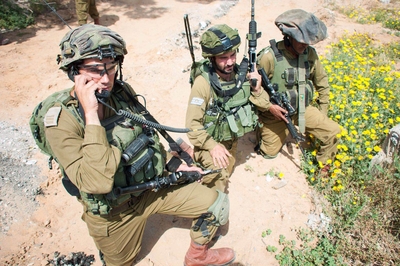
1339Photos courtesy of IDF Spokesperson.

Like it or not, the Iran nuclear deal is done. In much of the Middle East, defense officials in many states believe that a sizeable proportion of the soon-to-be released $100 billion Iranian windfall will be directed toward funding proxy armies of the Islamic Republic, for whom the Jewish state remains the prime target. Israel’s focus is now, more than ever, on defense and surveillance.

In the north, Hizballah, Iran’s proxy Lebanese army, remains a massive threat to regional stability, siding with Syria’s disgraced President Bashar Assad and his saviors from Russia. In Gaza, it is no secret that a previous rift between Iran and Hamas has been smoothed over to further mutual objectives and that another, and possibly more brutal round of hostilities between Israel and Hamas may not be far away.

“The sanctions relief and the nuclear deal with Iran represent a strategic shift that the IDF will have to tackle over the next decade,” Israel Defense Forces (IDF) Chief of Staff Gadi Eizenkot said Monday in a speech at the INSS conference in Tel Aviv. “We also see [Iran’s] attempt to influence Arab Israelis and those in the Gaza Strip, and the estimation is that as Iran’s economic situation improves, over the next one-to-two years, it will divert considerably more resources into opposing Israel, via the Iranian military industry.”

Last week, the Investigative Project on Terrorism (IPT) saw first-hand the situation on Israel’s south-western border, meeting with a senior IDF source who cannot be identified for security reasons. Close to the Kerem Shalom border crossing, where Israel oversees the transfer of many hundreds of tons of goods and supplies every day into Gaza,  we scrambled up a sizeable sand dune that offered a panoramic view of the situation on the ground toward the closed Rafah crossing from Egypt into Gaza.

“We hear the explosions and the fighting [against the Islamists] on the Egyptian side. The Egyptian army is taking it seriously,” the senior IDF source explained as we looked across the triangular border junction and heard distant noises, apparently explosions. “We hear this every day. Terrorists continue to try to cross from Egypt into Gaza.”

Minutes later, a text message announced that the Keren Shalom crossing suddenly had been closed. It turned out that the Egyptian army reportedly engaged and killed 13 jihadists  just a couple of miles away. Two days earlier, an attempt to breach the Israel-Gaza border fence and plant an IED resulted in an Israeli airstrike reportedly eliminating a member of the Al Aqsa Martyrs Brigade.

Meanwhile, Hamas continues to test fire rockets into the sea, and in recent months other Islamic militants in Gaza sporadically lob rockets toward Israel. On the other side of the border triangle, Egypt is doing its best to keep a lid on ISIS and other Islamist forces in the Sinai Peninsula.

It’s clear that relations between the Israeli and Egyptian militaries are good, a dangerous common enemy helping to focus minds. Under President Abdel Fattah el-Sisi, Egypt (despite a lack of support from the United States), has taken the fight to the terror organizations, often at a significant cost in Egyptian military lives. The horrific October downing of the Russian passenger jet out of Sharm el-Sheikh brought the scale of the task facing Egypt into focus. Israel remains alert for the jihadists turning their attention and firepower from Sinai, but for now believes that Gazan-based terror poses its most immediate threat.

“It’s been quite quiet with Hamas [since the 2014 Protective Edge war], but they don’t keep quiet for long,” the IDF source said. “We’re not looking for a fight – we have an interest that there will be quiet here – but if we have to deal with Hamas, this time we’ll deal with them properly.”

Many Israelis were dismayed when Israel unilaterally pulled out of Gaza in 2014 without a ceasefire, some criticism coming notably from members of the left-wing opposition and media for allowing Hamas off the hook when many believed it was in utter disarray. Now, despite ongoing attempts to stem the flow of weapons, reports suggest Hamas is rebuilding fast and may have some surprises in store for Israel if there’s another round of fighting.

“Look, we’re quite certain they are still building tunnels,” the official said, planting his heel in the sand and showing how easy it is to dig. “And yes, I’m sure they have new weapons – anti-tank, anti-aircraft etc. Like us, they will want to be better next time, but we understand more. The reality is different. We’re learning all the time what is going in Gaza. The army is always preparing for the war to come and [Hamas] won’t meet the same thing as in [Protective Edge].”

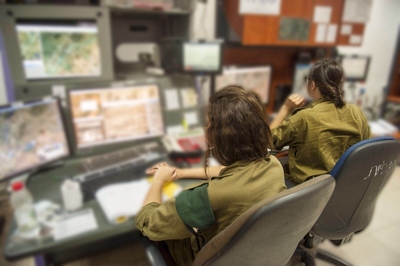
While Israeli soldiers and advanced technology such as its Guardium unmanned patrol vehicles are the first line of defense – the IDF indicated last year that the development of underground tunnel detection systems is also a priority project – the eyes of the military are actually in special units of female soldiers, known as the tazpitanyot. They monitor all movements, looking for suspicious activity, known terror operatives, and attempts to breach the border.
1340 (2)

They work in a series of non-descript trailers and shipping containers belying the fact that inside are massed banks of video screens and radar images, and the ability to combine pictures filmed from aerial blimps with other cameras – both day and night vision. This arrangement allows operatives to zoom in and see Gazans as far as a mile from the border fence.

When anything, or anyone suspicious pops up, there are pictures of ‘Wanted’ terror suspects close to the screens.  They instruct the on-the-ground forces to investigate. Never averting their gaze from the screen during a four-hour shift, each soldier has been trained to identify every landmark, tree, or rock within her specific area of surveillance. “If there’s even a single branch missing from a tree, they’ll spot it” the women’s commanding officer said. They also have remote control of the machine guns sited on border watch towers.

No security system is 100 percent foolproof, and during the first two weeks of the last round of fighting, four terror tunnels emerged on the Israeli side, only being detected at the last moment.  In two cases, the IDF fought gun-battles leaving  at least 10 terrorists and six Israeli soldiers dead. Hamas had hoped to kill civilians before luring Israeli soldiers back through the tunnels then kidnapping them or causing mass casualties.

Methods and practices of surveillance are being continually reviewed, but no-one in the Israeli military doubts the tatzpitanyot’s crucial front-line role in its border security, both north and south.

Islamist militants in Aleppo, Syria, got reinforcements from Turkey

January 21, 2016

Islamist militants in Aleppo, Syria, got reinforcements from Turkey – Russian Foreign Ministry

Published time: 21 Jan, 2016 12:25 Edited time: 21 Jan, 2016 13:14

Source: Islamist militants in Aleppo, Syria, got reinforcements from Turkey – Russian Foreign Ministry — RT News

© Hosam Katan


Terrorists have increased their activities ahead of the next week’s inter-Syrian talks, with insurgents in the Syrian province of Aleppo receiving reinforcements from Turkey, Russia’s Foreign Ministry said.

The much-anticipated talks between the Syrian government and different opposition groups are scheduled to take place in the Swiss city of Geneva on January 25.

“Unfortunately, in recent days, it’s especially noticeable that ahead of the planned start of the inter-Syrian negotiations in Geneva the activities of terrorist groups have intensified. Obviously, they’re trying to turn the tide in their favor on the battlefield,” Foreign Ministry spokeswoman Maria Zakharova said during a briefing in Moscow.

Read more

Al-Qadam district south of Damascus © RT Arabic

According to Zakharova, Attempts to launch counter-attacks against the government forces were performed by Al-Nusra Front and Ahrar ash-Sham groups, which “got serious reinforcements from Turkey.”

The increased activity of the terrorists was witnessed in several suburbs of Damascus, Homs and Idlib provinces of Syria, she added.

Russia will continue providing humanitarian assistance to the civilian population in Syria, Zakharova stressed.

She reiterated that Russia’s Emergencies Ministry has performed 30 flights “not only to Syria, but also to Lebanon and Jordan” in January, delivering 600 tons of food and essentials for those affected by the conflict.

Besides humanitarian assistance, “Russia has also been involved in evacuation of citizens who want to leave dangerous areas,” she added.

Zakharova said that Moscow was “surprised” by recent comments from Washington, in which “representatives of the US State Department said that they don’t see Russia’s efforts in regard to providing humanitarian aid to Syria.”

“This is very strange, especially since the State Department allegedly sees everything, including Russian tanks that are being flown in or crawling into the territory of other states, but there’s no humanitarian aid in sight,” she said.

Read more

U.S. Secretary of State John Kerry shakes hands with Russian Foreign Minister Sergey Lavrov before their meeting on Syria, in Zurich, Switzerland, January 20, 2016. © Jacquelyn Martin

Zakharova said that Russia is concerned over Ankara’s increased military incursions into Syria, adding that “it cannot be ruled out that… fortifications [built by Turkey] along the Syrian-Turkish border may be used by militant groups as strongholds.

“While all parties involved pin their hopes on the start of a meaningful and… inclusive dialogue between the Syrian government and the opposition, external forces continue to help militants in Syria, including terrorist groups, providing them with arms and ammunition,” she stressed.

According to the spokeswoman, the Syrian government has sent an official appeal to UN secretary-general and chairman of the UN Security Council over “repeated incursions of Turkish troops into Syrian border areas.”

Since March 2011, Syria has been engulfed in a bloody civil war, in which over 250,000 lives were lost, according to UN estimates.

During those years, the Syrian government of President Bashar Assad battled various opposition and terror groups, including Islamic State (IS, formerly ISIS) and Al-Nusra Front.

Has the gunman who brought ISIS terror to Tel Aviv fled to Syria?

January 2, 2016

Has the gunman who brought ISIS terror to Tel Aviv fled to Syria?, DEBKAfile, January 2, 2016

TelAviv_Terror480

Saturday night Jan. 2, Israeli police and security services knew everything about the gunman who Friday sprayed automatic bullets on passersby on Tel Aviv’s favorite recreation street, killing two people and injuring eight – except where to find him. They gave his name as Nashat Melhem, 29, from the Israeli Arab village of Ar’arah in the eastern Wadi Ara district.

He was actually filmed in the act of shooting into a milling street crowd outside a Dizengoff café, before getting clean away. The clips were sported by all the media. The Shin Bet internal security service obtained a court gag order for controlling the release of information about the investigation and the related probe into the murder of an Israeli Arab taxi driver, Amin Shaaban, aged 42, an hour before after the Dizengoff shooting. His body was found outside the beachside Mandarin hotel in North Tel Aviv.

This led to the inference that Melhem’s murder spree was planned with accomplices and that they or Melhem murdered the cab driver to cover their escape route – possibly to the Palestinian territories by a car parked near the hotel, or even by sea aboard a boat waiting off the nearby beach.

Judging from the information and images released, DEBKAfile’s analysts have reached the following conclusions:

1. Melhem was not a random killer, but a terrorist who planned his attack in detail including his escape..

2. This was no solo operation. This type of modus operandi requires accomplices.

3. Their identities and whereabouts are as deeply mystifying as his.

4.  His family’s attempts to depict the gunman as disturbed and unstable don’t detract from the stark fact that he was responsible for the first undoubted Islamic State terror attack on the most popular high street in Israel, trendy Dizengoff. Like the jihadist killers in Tunis, France and San Bernardino, California, Melhem did not wait for direct orders from Abu Bakr al-Baghdadi to kill Jews: He was inspired by al-Baghdadi’s ideology.

5. The Tel Aviv attack had all the hallmarks of the outrages the Islamic State perpetrated in France in recent years – e.g., the 2012 murder by Mohammed Merah of four Jews in Toulouse; the atrocity of Yassin Salhi who displayed his boss’s severed head on the fence of an American gas factory (and this week took is own life in a French prison); and the Nov. 13 massacre of 130 victims in Paris.

French intelligence and security services had all these perpetrators on their watch lists at some time before they committed their acts of terror, but found their hands tied for apprehending the killers in time to stop them.

6. Israeli security and intelligence services appear to be in a similar situation to their French counterparts.  They too knew enough about Nashat Melhem to appreciate that he needed holding in check, but did nothing about it.

7. For his escape, Melhem or his backers may have studied the tricks of the notorious female terrorist Hayat Boumeddiene, who helped plan the deadly attacks at the Charlie Hebdo Paris office and the kosher market before escaping to Syria via Turkey and announcing she had reached her destination with the Islamic State forces.

8. Israeli authorities come up against the first almost certain ISIS attack in Tel Aviv, while yet unable to figure out how to extinguish the wave of Palestinian terror, which has surged since September – with daily stabbings, motor, shooting and other attacks – but dates back in fact to June 2014, when Hamas terrorists murdered the three Israeli teens, Gil-ad Shaar, Naftali Frenkel and Eyal Yifrah, after snatching them at the Gush Etzion intersection.

9. The panicky response to the Tel Aviv shooting was evidence of bewilderment. Instead of a disciplined pursuit of the killer, a disorderly pack of hundreds of security officers with drawn guns raced through Dizengoff, Raines and Spinoza streets with their weapons drawn, followed by crowds of photographers and onlookers.

It took much too long for authority to take charge, and meanwhile the shooter made good his escape.

Picture Tells Arab Journalist the Story on Israeli Prisoner Treatment

December 24, 2015

Picture Tells Arab Journalist the Story on Israeli Prisoner Treatment, Investigative Project on Terrorism, December 24, 2015

This week’s air strike in Syria which killed a notorious Hizballah terrorist generated the usual cries of “death to Israel” and promises of retribution.

Samir Kuntar was one of the most hated terrorists in Israeli history, a man who killed a 4-year-old girl by smashing her head with a rifle butt. He served nearly 30 years in an Israeli prison before being released in a 2008 exchange in which Israel received the remains of two slain soldiers. Kuntar received a hero’s welcome in Lebanon.

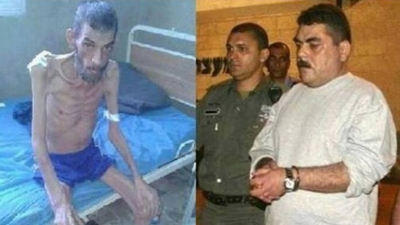
1321

A Syrian journalist took a different tact this week in remembering Kuntar’s release. Faisal al-Qassem was struck by Kuntar’s robust condition in pictures from the release, and placed one next to a picture of a Syrian prisoner.

“Samir Kuntar left an Israeli prison with a beer belly and a doctorate,” al-Qassem wrote in a Facebook post flagged Wednesday by the Times of Israel. “At the other extreme, this is how Syrians leave [dictator Bashar] Assad’s prisons.”

He has a point. Kuntar doesn’t look like a man who missed many meals in Israeli custody, while the emaciated Syrian invokes memories of those who survived Nazi concentration camps.

Many of Qassem’s 8.7 million followers seemed to agree, with more than 100,000 hitting “like.”

“We are taught that Israeli prisons are the worst in the world but in fact we know that the Israelis are more merciful than all of the Arabs,” wrote one Facebook user in Arabic. “Some say that the Zionists are our biggest enemy, dogs and murderers. But Muslims kill more Muslims that the Zionists,” read another.

A lot of Arabic-language media dispense rabidly anti-Israel views and promote anti-Semitic conspiracy theories. It is refreshing to see Qassem’s recognition of reality and the strong support it generated.