Posted tagged ‘Syria war’

Russian siege on Raqqa, distant from US troops

May 27, 2017

Russian siege on Raqqa, distant from US troops, DEBKAfile, May 27, 2017
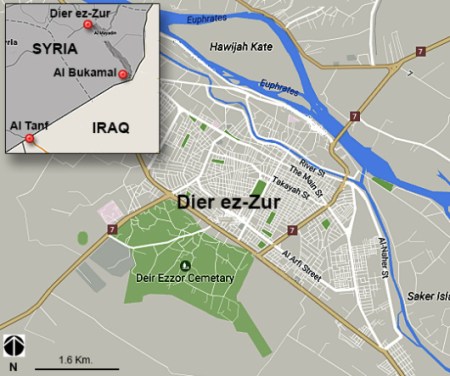
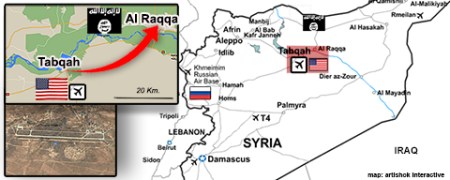
DEBKAfile’s military sources can disclose that Putin has ordered the Russian commanders in Syria to impose an aerial and special forces ground siege on the northern town of Raqqa, the Islamic State’s de facto Syrian capital. This move was designed to match the American initiative on the strategic Syrian-Iraqi border, without a military clash.

Why Raqqa? Firstly, it is in the north, far from the American positions. Second, Russian intelligence had apparently discovered a deal between the Kurdish-dominated Syrian Democratic Forces – SDF – and ISIS which allowed the jihadists safe passage out of their stronghold towards the south.

************************

Russian President Vladimir Putin acted to strengthen the military alliance he had set up with Iran and Turkey for working together in Syria – as a counterweight to President Donald Trump’s spectacular success in forging a Sunni Arab bloc during his four days in the Middle East.

It was a tough call. Putin’s allies demanded action to prevent a Syrian rebel force, backed by US, Western and Jordanian special forces, from taking control of the Syrian-Iraqi border. The Russian leader had to find a way to satisfy them without getting into a clash of arms with American troops.

On Saturday, May 27, as Trump flew home from his nine-day trip, Putin turned the dilemma over with his two allies, President Tayyip Erdogan of Turkey and the newly-elected Iranian president, Hassan Rouhani.

Three days earlier, the Russian president was put on the spot by Iran’s National Security Adviser Ali Shamkhani, who arrived in Moscow Wednesday, May 24. He slapped down a demand from supreme leader Ayatollah Ali Khamenei for an answer as to how the Russian leader proposed to put a stop to the takeover by American special forces and their allies of the eastern province of Deir ez-Zour and the Al-Tanf crossing at the Syrian-Iraqi-Jordanian border triangle. (See attached map)

Shamkhani warned Putin that without fast action, the Americans would block the routes from Baghdad to Damascus against the passage of Iranian and Russian forces.

The Russian leader took a couple of days to come up with a stratagem, which he revealed to Erdogan during their conversation on Saturday.

DEBKAfile’s military sources can disclose that Putin has ordered the Russian commanders in Syria to impose an aerial and special forces ground siege on the northern town of Raqqa, the Islamic State’s de facto Syrian capital. This move was designed to match the American initiative on the strategic Syrian-Iraqi border, without a military clash.

Why Raqqa? Firstly, it is in the north, far from the American positions. Second, Russian intelligence had apparently discovered a deal between the Kurdish-dominated Syrian Democratic Forces – SDF – and ISIS which allowed the jihadists safe passage out of their stronghold towards the south.

The Russian siege on Raqqa was therefore a move against the US-backed SDF and the Kurds, without getting entangled in a direct showdown with the US forces in the South: Putin had installed a Russian-backed foothold in northern Syria to counter the US-led front in the south.

Immediately after the Putin-Erdogan phone call, a Russian military source in Moscow released this story: “Russian intelligence drones have set up a perimeter around the city ([Raqqa] to monitor possible terrorist escape routes, with combat aircraft and special forces units engaged in preventing militants’ escape.” The report went on to warn that any attempts by ISIS fighters to leave the town “will be squashed.”

Putin’s maneuver in Syria was designed to achieve three goals:

1. To counterbalance the America-led takeover of the Syrian-Iraqi border in the south, the Russians would assert control of the northern section of that same border.

2.  To showcase the Russian army as the great champions fighting the Islamic State terrorists, compared with the American troops and their allies who had turned aside from this mission, although President Trump had made it the centerpiece of his nine-day trip.

Putin was careful not to name his objective as the conquest of Raqqa, but only a siege operation.

3. To hit US allies, such as the Syrian Kurds in the north, without tangling with the Americans in combat.
Trump: Iran must disarm militias, never gain nuke

May 22, 2017

Trump: Iran must disarm militias, never gain nuke, DEBKAfile, May 22, 2017

Our military sources add: The issue of the pro-Iranian militias ties in directly with the battlefield confrontation building up in the past fortnight along Syria’s borders with Jordan and Iraq. DEBKAfile reports have disclosed the arrival of American and other Western special operations forces at a key crossing. They were followed this week by Russian elite contingents, who arrived nearby to support a Syrian-Iranian-Hizballah scheme to grab this vitally important border. The Americans are positioned there to prevent Iran from forging a land bridge from Tehran to Syria through Iraq by seizing control of this strategic border.

*********************

“We can declare with one voice that Iran must not be allowed to possess a nuclear weapon ever, ever and must cease training terrorists and militias immediately!’ said US President Donald Trump in a statement he issued at the Israeli president’s residence in Jerusalem on Monday on May 22, shortly after arriving in Israel.

“I come her to affirm that we are not only friends, but allies and will stand together always,” he went on to say and urged: “We must strengthen our cooperation, as we both face common threats from ISIS and other terrorists who foment terrible violence all over the world. Together we can end scores of years of violence,” he said.  Trump, who flew to Israel directly from Riyadh, reported on the strong consensus he found in the Muslim world on the need to stand up together against Iran.

He cited Saudi King Salman in this consensus, adding that the monarch and other Arab rulers feel strongly about the need for peace between Israel and the Palestinians. Many of them, he said, expressed the will to end extremism, after hearing his speech. He also found a growing realization among the Arab and Muslim leaders he met in Riyadh Sunday of “their common cause with Israel under threat from Iran” and a willingness to help in the peace effort.

Trump said he was honored to be in the homeland of the Jewish people. He commended Israel’s commitment to peace and said he looked forward to discussing the process with the Palestinian leader Mahmoud Abbas in Bethlehem Tuesday.

In a throwaway remark to reporters on arrival at the president’s residence, the US president said he had two first-rate envoys working on promoting a peace treaty, and named his special Middle East envoy Jason Greenblatt and the new US Ambassador to Israel, David Friedman. He joked: “If there is no peace, I’ll know whom to blame.”
President Reuven Rivlin said: We can’t wake up with Iran and Hizballah on our border. We want Iran out of Syria, out of Lebanon and away from our borders, and we must move forward to this goal together with America.”

DEBKAfile:  Donald Trump once again rebutted media evaluations of his trip to Israel as a demonstration of friendship without real content. Very shortly after his arrival, he stood up at the president’sl residence in Jerusalem and delivered a string of important policy statements and new revelations:

1. Iran would not be permitted to possess a nuclear weapon.

2, Iran must dismantle the Shiite terrorists and militias.

3. Iran must remove all those same foreign militias from Syria.

4. Iran must evacuate Hizballah forces from Syria and disarm this Lebanese Shiite organization.

5.  The Saudi King Salman had told him first hand of his fervent wish for an Israeli-Palestinian peace. Trump heard the same sentiment from other Arab and Muslim rulers.

Our military sources add: The issue of the pro-Iranian militias ties in directly with the battlefield confrontation building up in the past fortnight along Syria’s borders with Jordan and Iraq. DEBKAfile reports have disclosed the arrival of American and other Western special operations forces at a key crossing. They were followed this week by Russian elite contingents, who arrived nearby to support a Syrian-Iranian-Hizballah scheme to grab this vitally important border. The Americans are positioned there to prevent Iran from forging a land bridge from Tehran to Syria through Iraq by seizing control of this strategic border.

Syria & allies push back at US-held border post

May 20, 2017

Syria & allies push back at US-held border post, DEBKAfile, May 20, 2017

The US bombardment of that force Thursday underlined for Saudi Arabia and the dozens of Arab and Muslim rulers, gathered in Riyadh to meet the US president, his administration’s determination to prevent Iran and its Lebanese surrogate, Hizballah, from gaining control of Syria. American troops were accordingly engaged proactively in securing the border crossings between Syria and Iraq.

This clash of arms is likely to expand into an outright US showdown with the US and Syria, Iran and Hizballah in the next 24-48 hours ahead of President Trump’s visit to Israel, the second stop of his four-national trip.

*********************

The Syrian-pro-Iranian-Hizballah force in southern Syria renewed its advance on the Iraqi border on Saturday, May 20, two days after sustaining heavy casualties from a US air strike on its convoys and in spite of US Defense Secretary James’ Mattis warning, “We will defend our troops.”

Syrian military sources reported the capture Saturday of the Suweida region and another 60 square kilometers. This offensive brought the Syrian army and its allies closer to the strategic Al-Tanf crossing at the Syrian border intersection with Iraq and Jordan, which is held by US and other special operations units.

The US-led coalition force is also made up of elite units from Britain, Holland, Germany and the Czech Republic, as well as Jordan and a large contingent of the rebel Free Syria Army trained and armed by American instructors in Jordan.

The latest arrival to boost this force, DEBKAfile’s military sources report, was a unit of Norwegian special forces, which entered Syria from Iraq through the Al-Waleed border crossing in western Anbar. They arrived along with American reinforcements and linked up with the US and British forces deployed at Al Tanf.

However, the Syrian force and its allies to the US air strike moved fast enough Saturday to threaten the FSA troops fighting there with being trapped by a siege. They have pushed their offensive forward against the US-led force, despite their losses from an American air raid, as a show of defiance that was timed for President Donald Trump’s arrival in Saudi Arabia.

Another US air strike appears to be unavoidable for pushing them back. The danger is also rising of a major clash on the ground between US-led coalition special forces troops and the combined Syrian-Iranian-Hizballah force.

The US bombardment of that force Thursday underlined for Saudi Arabia and the dozens of Arab and Muslim rulers, gathered in Riyadh to meet the US president, his administration’s determination to prevent Iran and its Lebanese surrogate, Hizballah, from gaining control of Syria. American troops were accordingly engaged proactively in securing the border crossings between Syria and Iraq.

However, Tehran, Damascus and Hizballah are evidently not about to shirk a direct confrontation with Washington and the Trump administration, apparently with the support of Moscow.

This clash of arms is likely to expand into an outright US showdown with the US and Syria, Iran and Hizballah in the next 24-48 hours ahead of President Trump’s visit to Israel, the second stop of his four-national trip

Hizballah’s elite force sustains heavy casualties from US air strike

May 19, 2017

Hizballah’s elite force sustains heavy casualties from US air strike, DEBKAfile, May 19, 2017

(Please see also, The Devil’s Triangle: At-Tanf/Abu Kamal/Ar Rusafah. — DM)

US jets and assault helicopters took off from the Ayn al-Asad air base in western Iraqi for an operation to prevent the convoy from reaching the strategic Al-Tanf crossing at the intersection of the Syrian, Iraq and Jordanian borders.

***********************

Most of the damage inflicted by the US air strike Thursday in South Syria was sustained by Hizballah’s elite unit, the Radwan Force, DEBKAfile’s military sources disclose. This was the first aerial attack the United States has conducted on a combined Syrian-Iranian-Hizballah convoy in the seven-year Syrian war. Our sources add that the US jets and assault helicopters took off from the Ayn al-Asad air base in western Iraqi for an operation to prevent the convoy from reaching the strategic Al-Tanf crossing at the intersection of the Syrian, Iraq and Jordanian borders. They hit at least three of Hizballah’s armored vehicles and several trucks, which caught fire. The Americans and Hizballah have both imposed a blackout on the details of the incident and the scale of casualties.

DEBKAfile ran a number of stories this week disclosing the activities of US, British and Jordanian special operations forces in southern Syria for taking over key segments of the Syrian-Iraqi border, including the Al-Tanf crossing. US Secretary of Defense James Mattis commented this week that Washington had not change its policy of non-intervention in the Syria war, adding, “But we will defend our troops.”

Russian monitors for Syrian Golan – not Iranians

May 11, 2017

Russian monitors for Syrian Golan – not Iranians, DEBKAfile, May 11, 2017

The issue came up during Russian Foreign Minister Sergey Lavrov’s talks with US President Donald Trump and Secretary of State Rex Tillerson in Washington on May 11, and a day earlier, in a telephone conversation between Russian President Vladimir Putin and Israeli Prime Minister Binyamin Netanyahu.

****************************

Moscow this week responded to Israel’s concerns about posting Iranian and Turkish officers on its borders to monitor the potential “de-escalation” zones Russia is proposing for Syria. In respect of those concerns, DEBKAfile’s military and intelligence sources reveal that Russia agreed in high-level contacts in the last few days to replace them with Russian military officers in the Mt. Hermon region and the areas where Israeli, Lebanese and Syrian borders meet. The proposal also calls for the expansion of the UN Disengagement Observer Force (UNDOF), which supervises the cease-fire between Israel and Syria on the Golan.

(DEBKAfile was the first publication to reveal Israel’s concerns on May 3 and May 5.)

The Russian military are preparing to establish four ceasefire safe zones in Syria. The southernmost would be located along Syria’s borders with Israel and Jordan. The issue came up during Russian Foreign Minister Sergey Lavrov’s talks with US President Donald Trump and Secretary of State Rex Tillerson in Washington on May 11, and a day earlier, in a telephone conversation between Russian President Vladimir Putin and Israeli Prime Minister Binyamin Netanyahu.

The chairman of the US Joint Chiefs of Staff, Gen. Joseph Dunford, was also involved in the exchanges on the ceasefire zones between Washington, Moscow and Jerusalem during his visit to Israel this week as the guest of the Israeli chief of staff, Lieut. Gen. Gady Eisenkott. On Tuesday, May 9, Dunford said that “Israel is concerned about the possibility of having Iranian or Iranian-backed forces, such as Hizballah, so close to its border.” Both Putin and Lavrov promised that neither Iranian, pro-Iranian, nor Turkish officers would be placed in areas close to the Israeli border.

Our military sources report that during talks between Washington, Moscow and Jerusalem on Thursday, May 11, the three sides agreed to continue to discuss the Russian proposal.

Another issue raised among them was who will deal with the ISIS forces in the Yarmouk area near the Israel-Jordan and Israel-Syria borders, including the bases established by the Khaled bin al-Walid army, which has sworn allegiance to ISIS.

The coming DEBKA Weekly out Friday, May 12, also reveals positive US-Russian dialogue on more Syrian issues.  If you are not already a subscriber, click here.

New ISIS mobile tactics against US in Syria, Iraq

May 8, 2017

New ISIS mobile tactics against US in Syria, Iraq, DEBKAfile, May 8, 2017

The effect of this tactic has been disastrous. Capable of penetrating as far as 10 km inside Iraqi lines, the deadly vehicles and suiciders have managed to slow the US-Iraqi advance and, in some places, brought it to a halt. The method has won the title of “crust mobile defense” from American commanders in Syria and Iraq

In short, the Mosul offensive, estimated to last a couple of months, is going into its eighth month with no end in sight.

A live example of this method was seen in Iraq Sunday, May 7, when at least five ISIS suicide bombers detonated their explosives vests against Kurdish Peshmerga forces outside the K1 base near the northern oil city of Kirkuk where US instructors are deployed. At least two Kurdish servicemen were killed.

****************************

It is important to get the spate of reported successes by US-backed forces fighting the Islamic State in Syria, Iraq and Afghanistan in proper proportion – in particular, the impression that ISIS is falling back from its strongholds in Mosul and Raqqa and that its certain defeat is just around the corner.

On Monday, May 8, it was disclosed that Sheikh Abdul Hasib, Islamic State commander in the Afghan province of Khorasan was killed in a raid on April 27 by US and Afghan special operations forces, in which two US Army Rangers lost their lives.

All these reports are accurate as far as they go, but they don’t take into account the upbeat sense prevailing in the ISIS command. The Islamic organization’s strategists, former officers of Iraq’s Saddam Hussein regime and Baath party, are confident they have found a convincing tactical answer to the American push for crushing them in Mosul. They don’t believe they are close to defeat or that Abu Bakr Al-Baghdadi’s caliphate is anywhere near collapse.

DEBKAfile’s intelligence and counterterrorism sources offer six reasons for the jihadists’ confidence, which the Mosul battle has if anything solidified:

1.  The numbers of ISIS fighters still fighting in the Old City of Mosul is seriously underestimated as 300-400 by American and Iraqi military sources. The true figure is ten times larger – 3,000-4,000.

2.   The American and the Iraqi commands have not worked out how to counter the ISIS forces’ device of connecting tunnels running under buildings, which are accessed through holes blown through the walls of attached buildings. The jihadists can therefore move around between battles unobserved.

3.  The only force able to combat ISIS tactics is the Iraqi Gold Division, the one elite force available to the US-Iraqi command. It is not however large enough to fight in more than one arena at once and is, moreover, too slow-moving to overwhelm the swift, invisible ISIS fighters. Most other Iraqi army units have been withdrawn from the Mosul front after being decimated.

4.  ISIS has given up the strategy of defending large urban areas, pursued early in its campaign of conquest in such places as Ramadi, Tikrit and Fallujah – and the start of its defense of Mosul. Instead, their commanders have split them up into small detachments of no more than 10-15 fighters each for commando and suicide raids against their adversaries. These detachments are supported by a large group well behind the front lines which is running assembly lines of booby-trapped cars for delivery to the commando detachments.

Each is provided with more than a dozen explosive cars for release against Iraqi and US troops for maximum losses, as well plenty of exposive vests for multiple suicide attacks.

5. The effect of this tactic has been disastrous. Capable of penetrating as far as 10 km inside Iraqi lines, the deadly vehicles and suiciders have managed to slow the US-Iraqi advance and, in some places, brought it to a halt. The method has won the title of “crust mobile defense” from American commanders in Syria and Iraq

In short, the Mosul offensive, estimated to last a couple of months, is going into its eighth month with no end in sight.

A live example of this method was seen in Iraq Sunday, May 7, when at least five ISIS suicide bombers detonated their explosives vests against Kurdish Peshmerga forces outside the K1 base near the northern oil city of Kirkuk where US instructors are deployed. At least two Kurdish servicemen were killed.

6. High on the success of their tactics in Iraq, ISIS chiefs are duplicating it at the Raqqa battlefield in Syria. They have begun relocating their northern Syrian command centers to the eastern Deir ez-Zor region and Euphrates Valley, which straddles the Syrian-Iraqi border. The terrorist organization has selected the small desert town of Al-Mayadin east of Deir ez-Zor as the next seat for its central command, mainly because of its isolation. Only five roads access the town, most of them not fit for vehicular traffic and so any approaching enemy is quickly exposed.

ISIS is now planning to post its “crust mobile defense system” squads along the 170km of road linking Al Mayadin to Raqqa.

Trump-Putin call focuses on Syria, security zones

May 3, 2017

Trump-Putin call focuses on Syria, security zones, DEBKAfile, May 2, 2017

Clearly, Putin was making the point that, just as the US deals with the Syrian issue in alignment with Saudi Arabia, Israel and Jordan, Russia coordinates its actions with Iran and Turkey. Since both presidents are similarly weighed down by their allies, the road to a consensus between Washington and Moscow is destined to be long with many convolutions. Therefore, the tension on the Israeli and Jordanian borders of southern Syria will continue to escalate before it abates.

***************************

One of the most consequential exchanges on the disposition of Syria’s border lands with Israel and Jordan – and the future of the Syrian conflict at large – took place between Presidents Donald Trump and Vladimir Putin in a phone call on Tuesday, May 2. The call took place when German Chancellor Angela Merkel was visiting Putin at his Black Sea residence in Sochi.

DEBKAfile’s military and intelligence sources reveal that the two presidents focused strongly on an effort to agree on how de-escalate the Syrian conflict now in its sixth year and bring it to an end. The Russian leader proposed drawing armistice lines between the warring sides under the guarantee of a special Russian military mechanism. The Americans have not released any ideas, but they are believed to be contemplating establishing safety zones barred to the Syrian air force. One of those zones would be marked out in the south on Syria’s borders with Israel and Jordan.

The Syrian dictator Bashar Assad, the Iranian military-political command and Hizballah are resisting US feelers for the introduction of these safe zones, regarding the plan as a ploy hatched by the Saudis, Israelis and Jordanians to take control of South Syria by engaging local Syrian rebel groups as their vehicle. Damascus, Tehran and Beirut believe that if they allow the scheme to go forward without resistance, it will be the start of similar off-limits enclaves in other parts of Syria, and the country will quickly fall apart into self-ruling segments.

That is why late last month, Syrian army units, the Shiite militias under Iranian Revolutionary Guards officers’ command and Hizballah combined their resources to push against the local Syrian rebels of the South in the regions of the borders with Israel and Jordan.

It is doubtful whether Trump and Putin were able to work out something tangible in their first phone conversation since the US fired Tomahawk cruise missiles against the Syrian Shayrat air base on April 7. The Russian president used the shock of that event to cultivate closer ties with the Syrian ruler and strengthen his missile defenses, in case of an American repeat attack or Israeli air strikes on military targets in Syria.

At the same time, Putin becamed more careful about infringing on parts of Syria deemed to be under American influence, especially the Kurdish enclaves.

The US president was also careful not to direct personal attacks on Putin or criticize Russia’s military involvement in Syria, merely expressing the hope that at some point the two powers could reach an understanding to end the vicious conflict.

When reporters in Sochi asked the Russian president if he thought he could sell his plan to Assad, he replied: “A ceasefire is the first priority and cooperation with Washington is critical.”

At the same time, Russia operates in tandem with Turkey and Iran and was trying to “create the conditions for political cooperation on all sides,” he said.

Clearly, Putin was making the point that, just as the US deals with the Syrian issue in alignment with Saudi Arabia, Israel and Jordan, Russia coordinates its actions with Iran and Turkey. Since both presidents are similarly weighed down by their allies, the road to a consensus between Washington and Moscow is destined to be long with many convolutions. Therefore, the tension on the Israeli and Jordanian borders of southern Syria will continue to escalate before it abates.

US Marines in Syria to defend Kurds against Turkey

April 30, 2017

US Marines in Syria to defend Kurds against Turkey, DEBKAfile, April 30, 2017

Pentagon spokesman Army Capt. Jeff Davis said – President Donald Trump made a fateful choice:  In the face of Turkish President Tayyip Edrogan’s threats of all-out war on the Kurds, he decided to commit US military forces to keeping the Kurdish militia safe under the US military wing and fully focused on the main objective of defeating ISIS.

The potential of a rare military run-in between two members of NATO may now be in store for the US president. And pretty soon, there may be fireworks when he sits down opposite Erdogan at the NATO summit in Brussels on May 25.

**********************

The US has sent a group of US Marines armed with eight-wheeled Stryker armored carriers to northern Syria as a buffer between Syrian Kurds and Turkish forces, after Turkish air strikes killed 20 members of the US-backed Kurdish YPG (People’s Protection Units) militia, injured 18 and destroyed the local Kurdish command headquarters. Clashes broke out between Turkish and Kurdish forces after the air strikes.

The convoy of US armored vehicles took up positions at the village of Darbasiyah in the northeastern Hasakah province, a few hundred meters from the Turkey border.

It was the second time American armored troops had stepped in to separate Turkish and the Kurdish YPG militia that leads the Syrian Democratic Force (SDF), to which the Americans assign a major role in the offensive to capture Raqqa from ISIS. On March 17, US Marines advanced towards the northern Syrian town of Manbij when the Turkish army was on the point of fighting the Kurdish militia for control of the town.

However, on April 24, the Turkish air force went into action against the PKK (Kurdish Workers Party) base near Sinjar on Mount Karachok in Iraq, wiping out ammunition dumps and weapons store – but also against a YPG command center in northeastern Syria, claiming they were both hubs of a conjoined terrorist entity.

By its twin operation, Ankara emphasized that Turkey was very much present in the Syrian and Iraqi arenas and informed Presidents Donald Trump and Vladimir Putin that Turkey’s view of its national security interests in those arenas took precedence over helping to promote the two powers’ objectives.

The Pentagon responded Friday, April 28, that the US wants the SDF to focus on liberating the ISIS-held town of Tabqa and the ISIS capital of Raqqa “and not be drawn into conflicts elsewhere.”

The movements of Turkish jets in Syrian air space are routinely reported and coordinated in advance with Russian and American air force command centers in Syria. The YPG commanders therefore took note that neither the Russians nor the Americans chose to warn Turkey off its plans to hammer the US-aligned Kurdish militia. They feared this would happen when they threw in their lot with the American forces. But the US command in Syria promised them protection under an American ground and aerial umbrella.

After the Turkish attack, the Trump administration, seeing the Kurdish militia had one foot out of the door of the alliance versus ISIS, was forced to choose between losing the operation’s spearhead or spreading the American umbrella to avert more Turkish attacks.

By sending another contingent of marines over to Syria – “We have US forces that are there throughout the entire northern Syria that operate with our Syrian Democratic Force partners,” Pentagon spokesman Army Capt. Jeff Davis said – President Donald Trump made a fateful choice:  In the face of Turkish President Tayyip Edrogan’s threats of all-out war on the Kurds, he decided to commit US military forces to keeping the Kurdish militia safe under the US military wing and fully focused on the main objective of defeating ISIS.

The potential of a rare military run-in between two members of NATO may now be in store for the US president. And pretty soon, there may be fireworks when he sits down opposite Erdogan at the NATO summit in Brussels on May 25.

Syrian Christian Forces Ask Trump for Help

April 18, 2017

Syrian Christian Forces Ask Trump for Help, Clarion ProjectRyan Mauro, April 18, 2017

Volunteer with the Syrian Christian Forces (Photo: video screenshot)

A Syriac Christian militia in Syria that is fighting the Islamic State (ISIS) and Al-Qaeda and also opposes the Assad regime is asking President Trump for direct military assistance and to be treated as equals with the U.S.-backed Arab forces preparing to take Raqqa, the “capitol” of ISIS.

The Syriac Military Council (MFS) is a Christian component of the 50,000-strong Syrian Democratic Forces, an alliance of Kurds, Sunni Arabs, Turkmen and Christians backed by the United States and formed in October 2015. The U.S. military describes the alliance as its “best partnered forces” in Syria. The special operators helping the forces to fight ISIS say they have “absolute confidence” in them as the forces, including 1,000 women, prepare to attack Raqqa.

The MFS’ request for President Trump’s help reads in part:

 “There is no single reason to exclude us from the same support in equipment as is given to the Arabs. The fact that we suffered under genocides emphasizes the need for delivery of military equipment. If we are weak, we are a target of the extremist forces that the SDF is fighting against. 

“We will be part of any operation against Raqqa, regardless our current level of military equipment. We cannot imagine that the U.S. would deliberately want us to be poorer equipped than our Arab partners when we go into that big battle. 

“We thank the U.S. for the air support given in crucial battles and the support to the SDF. We also hope that this is an opportunity to work together for the long-term security and freedom of our people and all the peoples of the region.”

The MFS statement says that the U.S. military assistance favors the Turkmen and Arab components of the SDF over the Christians and Kurds. It also disputed Turkey’s claim that the Kurdish component is part of the PKK terrorist group.

The MFS has a presence in the Christian areas of northeastern Hasakah Province, a multiethnic province with Kurds and Arabs. The province has great potential for U.S. strategy, as it has been suggested as a candidate for a “safe zone” for refugees, most prominently by Dr. Ben Carson when he was running for the GOP presidential nomination. About half of Syria’s oil production is based in Hasakah Province.

The Syriac Military Council (MFS) launched by the Syriac Union Party in January 2013 and is estimated to be about 2,000-strong and includes a Christian female unit named the Beth Nahrin Women Protection Forces. The organization includes Christians identifying as Assyrians, Syriacs and Chaldeans.

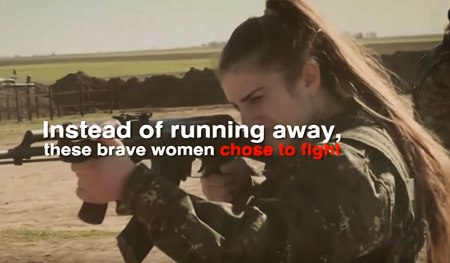
Watch a video of the Christian females’ training camp in the Kurdish area of northern Syria. 

https://www.youtube.com/watch?v=9c97bDXXMC4


The MFS initially tried to ally with various Syrian rebel groups, such as those backed by Turkey who are fighting under the Free Syria Army banner, but their Islamist orientation prevented it from going anywhere. A MFS commander said, “Most have a mentality that they can’t accept diversity within Syria.”

In early 2014, MFS allied with the Kurdish People’s Protection Units (YPG), which Turkey considers to be a branch of the PKK Kurdish terrorist group. The U.S. position is that they are operationally separate, which MFS agrees with, even if they are ideologically unified. The YPG is the Kurdish component of the Syrian Democratic Forces.

The MFS is on the side of the secular-democratic Syrian opposition, even if it doesn’t directly engage Assad’s forces. It “started out as a staunchly anti-government militia, and its leaders insist that its views have not changed,” reports Middle East Eye.

The Syriac Military Council (MFS) and its Beth Nahrin Women Protection Forces (HSNB) condemn the Assad regime as a “murder machine.” When they launched, they declared support for “the Syrian people’s revolution in its desire to bring down the Ba’ath regime.”

The MFS commander in Hasakah says the Assad regime and ISIS should be viewed as part of the same enemy, accusing the ruling dictatorship of exploiting ISIS to stay in power.

“They [the Assad regime] are the ones that bring ISIS in…We want to launch attacks on ISIS, but the army of the regime does not allow us to. They have contracted different outside militias, some of which are sympathetic to ISIS, and allowed them to enter and loot homes,” he said.

With President Trump’s reversal on the Assad regime, U.S. policy is now aligned with the Syrian Christian forces that belong to the Syriac Military Council and oppose Assad, ISIS, Al-Qaeda and Islamist rebels.

As the MFS Christians prepare for the bloody battle in Raqqa, they are hoping that President Trump hears their voice. Let’s hope that their statement reaches him.

US Air Force to quit Incirlik, move to Syria base

April 8, 2017

US Air Force to quit Incirlik, move to Syria base, DEBKAfile, April 8, 2017

When the work is finished, the rising complex of air bases will enable America to deploy twice as many warplanes and helicopters in Syria as the Russians currently maintain.

The five US bases in Syria are part of Trump’s three-pronged strategy which aims at a) fighting Islamist terror; b) blocking Iran’s land and air access to Syria; and c) providing the enclaves of the Syrian Kurdish-PYD-YPG with a military shield against the Turkish army.

********************

Several US engineering teams are working round the clock to build a big new air base in northern Syria after completing the expansion of another four. They are all situated in the Syrian borderland with Iraq, DEBKAfile’s military forces report.

This was going on over the weekend as senators, news correspondents and commentators were outguessing each other over whether the US missile attack on the Syrian Shayrat air base Friday, in retaliation for the Assad regime’s chemical attack on Khan Sheikhoun, was a one-off or the start of a new series.

As the White House parried those questions, the Trump administration was going full steam ahead on the massive project of preparing to pull US air force units out of the Incirlik air base in southern Turkey, in active American use since 2002. Those units were in the middle of a big moving job to the five new and expanded air bases in Syria. Their hub is to be Tabqa, which is just 110km west of the Islamic State’s Syrian capital, Raqqa. The other five are Hajar airport in the Rmelan region, two small air fields serving farm transport in Qamishli, which have been converted to military us; and a fifth in the Kurdish Kobani enclave north of Aleppo near the Syrian-Turkish border.

Tabqa is also becoming the main assembly-point for the joint US, Kurdish, tribal Arab force that is coming together in readiness for a major charge on Raqqa.

When the work is finished, the rising complex of air bases will enable America to deploy twice as many warplanes and helicopters in Syria as the Russians currently maintain.

The site of the Tabqa air field was captured as recently as late March by the Syrian Democratic Force (Kurdish-Arab fighters) which were flown in and dropped there by the US Air Force’s Air Mobility Command. It was quickly dubbed “Incirlik 2” or “Qayyarah-2” after the US command center running the Iraqi military offensive against ISIS in Mosul.

Tabqa is designed to accommodate the 2,500 US military personnel housed at Incirlik. Like the Americans, the German Bundeswehr is also on the point of quitting Incirlik and eying a number of new locations in Cyprus and Jordan. The Germans are pulling out over the crisis in their relations with Ankara. The Americans are quitting because President Donald Trump wants to chill US ties with Turkish President Reccep Tayyip Erdogan and cooperation with the Turkish army.

The five US bases in Syria are part of Trump’s three-pronged strategy which aims at a) fighting Islamist terror; b) blocking Iran’s land and air access to Syria; and c) providing the enclaves of the Syrian Kurdish-PYD-YPG with a military shield against the Turkish army.


