Posted tagged ‘Syria war’

Putin to Assad, Tehran: You want to carry on fighting? Count me out

March 14, 2016

Putin to Assad, Tehran: You want to carry on fighting? Count me out, DEBKAfile, March 14, 2016

RussianReatreat480

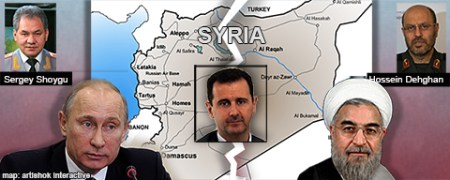
A deep rift with Tehran over the continuation of the Syrian war and an irreconcilable spat with Syrian ruler Bashar Assad over his future prompted Russian President Vladimir’s shock order Monday, March 14, for the “main part” of Russian military forces to quit Syria the next morning. This is reported by DEBKAfile’s military and intelligence sources.

The final limits of the military withdrawal, five months after the Moscow embarked on its intervention, were not defined. But the Kremlin did say that Moscow would retain a military presence at the naval port of Tartous and the Hmeymim airbase outside Latakia. This left the bulk of Russian military aerial and naval presence in situ; Putin is unlikely to give up this strong foothold in the Eastern Mediterranean.

The Russian president did not fix a timeline for the military withdrawal – only its start. Neither did he promise to discontinue all military operations in Syria.

He did say only that “The task put before the defense ministry and Russian armed forces has on the whole been fulfilled” and he spoke of a “fundamental turnaround in the fight against international terrorism.”

A sign of where Moscow as heading now was disclosed by his order to the Russian foreign Minister to “Intensify our participation in a peaceful solution of the Syrian conflict”

This was a reference to the UN-brokered talks resuming in Geneva Tuesday, March 15, between the warring sides of the Syrian conflict.

DEBKAfile’s intelligence circles noted that, after Putin’s bolt from the blue, Russian warships in the Caspian and Mediterranean Seas remain ready to interfere in the fighting from a distance, if the Assad regime’s situation deteriorates. They saw an omen of Moscow’s impending military exit in last month’s massive delivery to the Syrian army of advanced T-90 tanks and heavy self-propelled artillery.

Western sources viewed the shipments as further Russian investment in high-stakes Syrian military victories in the battles for Aleppo in the north and Deraa in the south.

But this assumption was negated by the Kremlin announcement Monday. The tanks and artillery were, in fact, provided to enable Syria and its Iranian ally to carry on fighting without Russian support.

The rift between Moscow and Tehran over the Syrian war came to a head on Feb. 19 during Iranian Defense Minister Gen. Hossein Dehghan’s visit to Moscow. The Iranian minister presented his government’s demand for Russia to back away from its deal with the US for a Syrian ceasefire.

Tehran wants the war to continue without pause. After walking handed in hand with Moscow in the Syrian arena for a time, the Iranians were aghast to find Putin turning aside and entering into collaboration with the Obama administration for an end to hostilities and a political solution to the conflict.

As for Assad, he has no intention of playing along with Putin’s plans for him to step down and hand over rule in Damascus in stages. Assad does not mean to quit at any time.

The Russian president may have acted now because he was simply fed up with the interminable bickering with his two allies, which was going nowhere except for the continuation of the calamitous five-year war. He therefore presented them with a tough fait accompli. If you want to carry on fighting, fine; but count the Russian army out of it.

Our ISIS Problem is also our Saudi Arabia Problem

March 9, 2016

Our ISIS Problem is also our Saudi Arabia Problem, WNDWilliam Murray, March 8, 2016

H/t The Counter Jihad Report

ISIL, or ISIS, now calling itself the Islamic State, is part of a continuing Sunni Muslim problem. Here is some real history to counter current media perceptions paid for by Saudi Arabia and other Gulf states.

Ask the media or any Democratic or Republican senator, and they will tell you that Shiite Muslims (or Shia) are the greatest threat faced by Western civilization today. Besides Sen. John McCain, current presidential candidates Sens. Ted Cruz and Marco Rubio have referred to the Shiite threat in virtually every stump speech, often citing the “Shia Crescent” that runs from Iran through Iraq and Syria and ending in Lebanon. Rubio constantly refers to “our Sunni allies such as Saudi Arabia” and has suggested the creation of a Sunni state in Syria. Apparently, the senator is, as is former Secretary of State Hillary Clinton, unaware that there is already a Sunni state in northern Syria, and it is run by the Islamic State, otherwise known as ISIS or ISIL.

The Sunni Islamic State does have a competitor in Syria, al-Nusra, which is part of al-Qaida and also a Sunni terror organization. The Army of Islam operating in Syria is also a Sunni terror organization supported by Saudi Arabia and Turkey. During battles between al-Nusra and the Islamic State, American-led coalition aircraft have supported Sunni al-Nusra, which is al-Qaida. Which Sunni group to back in the Syrian civil war is always a question for the White House.

In 2015 most of the 17,000 civilians killed in Iraq died at the hands of Sunni terrorists. That is 10 times the number killed in the Sunni terror attack on 9/11. The attacks on the World Trade Center and the Pentagon were conducted by al-Qaida, a Sunni terror organization. The first terror attack on the Trade Center in 1993 was financed by Khalid Sheikh Mohammed, a Sunni cleric also associated with the Sunni terror group al-Qaida.

The 9/11 attack was planned by al-Qaida from Afghanistan, which at the time was controlled by the Taliban, a Sunni Muslim group dedicated to the elimination of Shiites and Christians.

Sunni groups, many funded by interests inside Saudi Arabia and Qatar, declared responsibility for the 2004 Madrid train bombings killing 191 and wounding over 1,800. A Sunni group took responsibility for the 2005 London bus bombings killing 52 and wounding 700. Sunni terror groups were responsible for the massacre of 334 people including 186 children during the 2004 attack on a school in Beslan, Russia, and also the Moscow theater attack in 2002. The various Paris attacks, including the 2015 Charlie Hebdo magazine and Jewish deli attacks over three days and a later attack in November on a theater and restaurants that killed 130, were conducted by the Islamic State, a Sunni Muslim organizations.

The Fort Hood terror attack in 2009 killing 13 plus an unborn child was conducted by Maj. Nidal Hasan, a Sunni Muslim connected to a “vetted” Sunni imam, Anwar al-Awlaki, who was allowed to speak at the Pentagon and Congress. Al-Awlaki and his son, both U.S. citizens, were killed by a drone strike though a death warrant issued by President Obama to shut him up lest he embarrass those at the Pentagon who had “vetted” him. He had been the imam at the Virginia mosque attended by some of the 9/11 hijackers.

There have been numerous “minor” terror attacks against Western targets, such as the 2013 Boston Marathon bombings that killed “only” three and wounded 264. The bombers were brothers from a family of Sunni Muslims who had immigrated legally to the United States from Chechnya, Russia. Other “small” attacks by Sunni Muslims in the United States include the following: A Sunni Muslim convert killed one at a Little Rock military recruiting center in 2009, and four Marines were killed by a Sunni Muslim immigrant in Chattanooga in 2015. Other attacks such as against a 2002 El Al ticket counter at Los Angeles International Airport have been downplayed as only three died.

Most recently in the United States was the 2015 San Bernardino massacre, which was carried out by a Sunni Muslim couple connected to Saudi Sunni extremists and influenced by the Islamic State. A total of 14 were killed and 22 wounded.

In Asia the 2002 Bali bombings that killed 202 mostly Australian tourists was orchestrated Jemaah Islamiyah, a Sunni Muslim organization seeking Shariah law in that nation. Sunni groups have bombed numerous churches in the Philippians, and Thailand suffers almost daily deaths by Sunni Muslim separatist organizations that want a breakaway state under Shariah law. China suffers numerous attacks from Sunni groups every year.

The most noted attack in India by Sunni Muslims from Pakistan was in 2008 when 10 members of Lashkar -e-Taiba, conducted 12 coordinated shooting and bombing attacks over four days, killing 164 people and wounding 308. A landmark hotel, the Taj Mahal Palace, was nearly completely destroyed.

The mass beheadings of 21 Egyptian Christians in Libya that outraged the press in the United States for a few days in 2015 were conducted by a Sunni terror group. All of the slaughter in this Hillary Clinton established “democracy” is being conducted by three Sunni Muslim factions.

Back to the “Shia threat” alluded to by Hillary Clinton, McCain, Cruz and Rubio as well as Secretary of Defense Ash Carter. The last large scale Shia attack against the West was in 1983 against a military target in Lebanon at the U.S. military barracks, killing 299 American and French servicemen.

I have left Israel out of this analysis because it faces a Sunni threat from the south in Gaza and a Shia threat to the north. In line with the theology of the two groups, Sunni-oriented Hamas normally attacks civilian targets while Shia Hezbollah usually attacks military targets.

With this history, why does the Obama administration, like the Bush administration before it, as well as both liberal and conservative members of Congress and virtually all presidential candidates, say the greatest threat is from Shia Muslims?

The simple answer is that Saudi Arabia is Sunni Muslim, and most of the financing for Sunni extremist groups has come from Saudi Arabia, which is “our ally.” The initial funding for the revolt in Syria, which handed us the Islamic State problem, came from Saudi Arabia. Over $2 billion in arms were moved into Syria from Turkey and prepositioned before the initial Sunni uprising that to this day Obama and McCain insist was a secular revolt.

Some contend that only private elements within Saudi Arabia supported ISIS and never the Saudi government. Although Saudi Arabia may not directly support or fund ISIS, Saudi Arabia gives legitimacy to ISIS extremist ideology. Saudi textbooks are used in the ISIS-controlled schools in Syria and Iraq.

If we want to cut off the real head of the snake, the Islamic ideology that threatens the world through al-Qaida and the Islamic State today, we must shut down the educational funding source – and that is Saudi Arabia. Saudi Arabia runs a close second to North Korea on human rights abuses and should be treated to the same sanctions and boycotts. All Saudi-printed literature and all funding of mosques and schools in the United States and Europe should be banned at once.

To stop ISIS, which is actually the second generation of al-Qaida, we must dig out the root which is Saudi Arabia.

Note: The preceding were William J. Murray’s prepared remarks for The Awakening, Orlando, Florida, March 5, 2016.

Saudis ready to give Syrian rebels missiles against Russian warplanes and tanks

March 4, 2016

Saudis ready to give Syrian rebels missiles against Russian warplanes and tanks, DEBKAfile, March 4, 2016

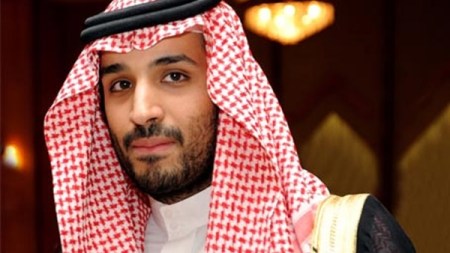
Saudi def minSaudi Defense Minister Prince Mohammed bin Salman

For the first time in the five-year Syrian conflict, Saudi Arabia is preparing to supply Syrian rebel groups with anti-air and anti-tank missiles in an attempt to stall Russia’s military efforts to extend Bashar Assad’s days in power. Deputy Crown Prince Mohammed bin Salman, the defense minister, is choreographing this escalated Saudi intervention in the Syrian war. He plans to arm Syrian rebels militias with missiles capable of striking the new Russian T-90 tanks, which DEBKAfile’s intelligence sources disclose were shipped directly to the Syrian army’s armed divisions in the last two weeks from the Russian Black Sea base of Novorossiysk.

The big Russian landing craft Novocherkassk, which unloaded a further supply of tanks at Tartus port on Thursday, Thursday, March 3, also delivered a consignment of MLRS rocket launchers.

A second Russian vessel is heading for Syria with more hardware.

This is in line with Moscow’s decision to upgrade the Syrian army’s armaments and rebuild the units severely ravaged by five years of combat. For Riyadh, this is tantamount to the indefinite and unacceptable prolongation of Assad’s days in power.

Most Western and Middle East observers think the Saudis may be bluffing about their plan to arm Syrian rebels with missiles, as a ploy to get Washington and Moscow to treat them seriously as a player on the Syrian stage and take their interests into account. Ideally, Riyadh would hope to break up American cooperation with Iran in Iraq and Russian cooperation with Iran in Syria.

The Saudis have so far pitched into this endlessly complex scenario with two tangible steps:

1. The deployment last week of four Saudi Air Force F-15 bomber fighters at the Turkish base of Incirlik near the Syrian border, to be followed by a contingent of ground troops for operations in Syria.

2. A direct challenge to Iran’s fighting arm in Syria, the Lebanese Hizballah and its leader Hassan Nasrallah,  by cancelling the $4 billion defense package Riyadh had pledged for the rehabilitation of Lebanon’s armed forces. The Lebanese high command is collaborating increasingly with Hizballah and a large slice of Saudi assistance funds would most certainly have reached its hands.

According to a high-ranking Saudi source, the decision to arm Syrian rebels with missiles is final. He said, “The Syrian opposition might soon acquire surface-to-air missiles, which will raise the wrath of Russia and Iran.” He added:: “No Saudi official will own up to these consignments but, just as 30 years ago, Saudi Arabia was not deterred from intervening in Afghanistan against the Russian army – and we came out the winners” – we will not hesitate to take on the Russian army in Syria too.

DEBKAfile’s military sources point out that in the Afghan war, the Saudis acted with the full support of the United States, whereas in Syria, the Americans are solidly opposed to any Saudi intervention. That is a huge difference between the two cases.

The introduction of Saudi missiles in support of the anti-Assad opposition would create a new situation in the Syrian conflict, whereby Riyadh also has a say – not just Washington, Moscow and Tehran. And that is exactly what Defense Minister Mohammed was after. Saudi willingness to give the rebels missiles takes the oil kingdom’s intervention in the Syrian conflict a lot farther than Israel, the Gulf emirates, Jordan or Turkey have been ready to go until now.

In new Syrian exodus, some 50,000 refugees head to Jordanian, Israeli borders

February 10, 2016

In new Syrian exodus, some 50,000 refugees head to Jordanian, Israeli borders, DEBKAfile, February 10, 2016

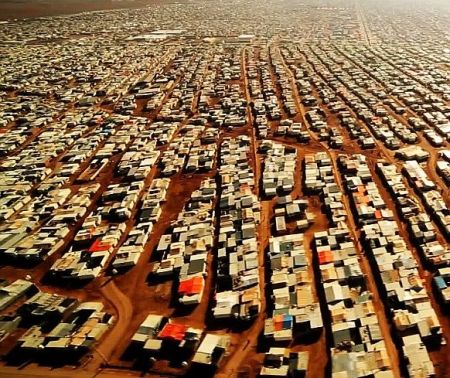
An aerial view shows the Zaatari refugee camp near the Jordanian city of Mafraq, some 8 kilometers from the Jordanian-Syrian border. 03/02/2016. BBC News

An aerial view shows the Zaatari refugee camp near the Jordanian city of Mafraq, some 8 kilometers from the Jordanian-Syrian border. 03/02/2016. BBC News

Syria’s refugee crisis in the north is now repeating itself in the south, with tens of thousands of destitute women, children and elderly people fleeing their homes – not this time from beleaguered Aleppo to the Turkish border, but from the southern region of Daraa towards the Jordanian and Israeli borders.

Unlike the broad coverage of the refugee crisis on the Syrian-Turkish border, the refugee exodus from the south has received scant media attention – even from Israeli correspondents.

With the intensification of attacks in southern Syria, about 50,000 refugees are now streaming toward Jordan and another 20,000 making tracks from Israel’s Golan border at Quneitra.

DEBKAfile’s military sources report that, since the weather has cleared and Russian air strikes resumed against the rebels holding the northern part of Daraa, tens of thousands of civilians are on the move from the South. About 15,000 to 20,000 have reached the Jordanian border, and more than 30,000 are believed heading that way; while another 20,000 refugees may be making for the Golan town of Quneitra on the Israeli border.

Jordan has taken in 650,000 Syrian refugees in previous exoduses from the five-year old war.

A desperate SOS appeared on social media Wednesday, Feb. 10, in which the rebel-controlled Daraa Provincial Council warned that tens of thousands of civilians were in flight from Russian air strikes and the barrel bombs dropped by the Syrian warplanes and helicopters.

There was no way to bring water, food or medicines to the fleeing refugees.

Military sources monitoring the situation report that the exodus was first touched off by the fall of Alaman, 3 km north of Daraa in the last few days to Syrian and Hizballah forces. They next cut off parts of Highway 5 from Daraa to Damascus. The rebels were left with only one remaining escape route, the road to the Jordanian border, but that too is under heavy fire, forcing the refugees to go round through rough country.

As in Aleppo, the Darnah district is held by hundreds of assorted rebel militias, ranging from the US-backed Free Syrian Army to groups which have sworn allegiance to ISIS. According to our intelligence sources, it is often hard to determine which groups are taking orders from whom.

Jordan has followed the Turkish policy towards the tens of thousands of refugees massing on its border  A single crossing is operating at Ramtha, but refugees are not allowed to pass through.

The Israeli government has not yet issued any statements of policy with regard to the Syrian refugees heading for the Golan.

Putin bypasses Israel, sets up joint war room for S. Syria with Jordan

January 14, 2016

Putin bypasses Israel, sets up joint war room for S. Syria with Jordan, DEBKAfile, January 14, 2016

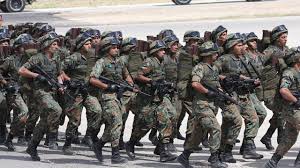
Jordan_specail_forces

By teaming up with Jordan for a joint war room to cover operations in southern Syria, Putin has gone around Netanyahu’s back and acquired a helper for evicting Syrian rebels from southern Syria.

***************************

In a pivotal step reflecting the changeability of military and political deals in Israel’s neighborhood, Jordan has almost overnight agreed to establish a shared war room with Russia for the concerted conduct of their operations in Syria. This represents an extreme reversal of Amman’s policy. Until now, Jordan fought against Russia’s protégée Bashar Assad from a joint war room north of Amman called the US Central Command Forward-Jordan, as part of a lineup with the US, Saudi Arabia and Israel.

But this week Jordan shifted onto a new plane.

DEBKAfile’s military and intelligence sources say Jordanian King Abdullah’s decision to team up with Moscow starts a whole new ball game rolling on policy-making and intelligence-sharing. He doesn’t plan to shut down his shared command center with the US and Israel, but the center of gravity of Jordan’s military and intelligence efforts will be redirected to the new center with Russia, representing a major earthquake in those areas.

Amman is working hard to downplay the new partnership, presenting it as designed to foster better coordination between the American and Russian military efforts in Syria and the war on the Islamic State.

That picture is misleading.

With all due respect to the Jordanian monarch, his military and his intelligence services, they are not exactly qualified for the role of coordinator between the two world powers. The US and Russian presidents handle this in person. And in fact, the new Russian-Jordanian war room did come up, according to our Washington and Moscow sources, in the latest telephone conversation between the two presidents on Jan. 13.

Obama then held a quick meeting with King Abdullah at Andrews Air Force Base in Maryland and asked for an explanation.

For the various rebel militias holding out in large parts of southern Syria, including the Israeli border regions, the new Jordanian-Russian war room is bad news. Hitherto, Jordan provided the rebels with their main pipeline for fighters, weapons and funds from the US, Saudi Arabia and the UAE. The US even ran training camps in Jordan for Syrian rebel fighters.

This pipeline is now likely to be shut down or reduced to a minimum.

The Jordanians gloss over their shift, claiming it is designed to force the Syrian rebels of the South to accept a ceasefire and join peace talks with the US and Russia on Syria’s future. That is no more than diplomatic-speak for the real purpose, which is to compel them to give up the fight against Assad, and make way for Moscow to achieve its key objective, which is to restore the Assad regime’s control over the South.

Ever since his major intervention in Syria, Putin has tried to persuade Prime Minister Binyamin Netanyahu to pull the rug from under the Israeli-backed rebels in the South. They are deemed as a necessary buffer for securing Israel’s northern border and blocking the reimposition of Assad’s authority there.

The content of the exchanges between Putin and Netanyahu has only been shared with tight circles of confidants in Jerusalem and the Kremlin, so little is reliably known about their areas of agreement and dispute.

There is no doubt that the prime minister spoke firmly about Israel’s abiding concern that, once Assad regained control of the South, he would open the door up to the Israeli border and let in his allies and Israel’s arch enemies, Hizballah and the mostly-Iraqi Shiite militias fighting under the command of officers from Iran’s Revolutionary Guard Corps.

By teaming up with Jordan for a joint war room to cover operations in southern Syria, Putin has gone around Netanyahu’s back and acquired a helper for evicting Syrian rebels from southern Syria.

Saudi Arabia stews in policy hell

January 4, 2016

Saudi Arabia stews in policy hell, Asia Times, January 3, 2016

Last week’s mass executions in Saudi Arabia suggest panic at the highest level of the monarchy. The action is without precedent, even by the grim standards of Saudi repression. In 1980 Riyadh killed 63 jihadists who had attacked the Grand Mosque of Mecca, but that was fresh after the event. Most of the 47 prisoners shot and beheaded on Jan. 2 had sat in Saudi jails for a decade. The decision to kill the prominent Shia cleric Nimr al-Nimr, the most prominent spokesman for restive Saudi Shia Muslims in Eastern Province, betrays fear of subversion with Iranian sponsorship.

Saudi-beheading22-300x183Official Saudi beheading

Why kill them all now? It is very hard to evaluate the scale of internal threats to the Saudi monarchy, but the broader context for its concern is clear: Saudi Arabia finds itself isolated, abandoned by its longstanding American ally, at odds with China, and pressured by Russia’s sudden preeminence in the region. The Saudi-backed Army of Conquest in Syria seems to be crumbling under Russian attack. The Saudi intervention in Yemen against Iran-backed Houthi rebels has gone poorly. And its Turkish ally-of-convenience is consumed by a low-level civil war. Nothing has gone right for Riyadh.

Worst of all, the collapse of Saudi oil revenues threatens to exhaust the kingdom’s $700 billion in financial reserves within five years, according to an October estimate by the International Monetary Fund (as I discussed here). The House of Saud relies on subsidies to buy the loyalty of the vast majority of its subjects, and its reduced spending power is the biggest threat to its rule. Last week Riyadh cut subsidies for water, electricity and gasoline. The timing of the executions may be more than coincidence: the royal family’s capacity to buy popular support is eroding just as its regional security policy has fallen apart.

For decades, Riyadh has presented itself as an ally of the West and a force for stability in the region, while providing financial support for Wahhabi fundamentalism around the world. China has been the kingdom’s largest customer as well as a provider of sophisticated weapons, including surface-to-surface missiles. But China also has lost patience with the monarchy’s support for Wahhabi Islamists in China and bordering countries.

According to a senior Chinese analyst, the Saudis are the main source of funding for Islamist madrassas in Western China, where the “East Turkistan Independence Movement” has launched several large-scale terror attacks. Although the Saudi government has reassured Beijing that it does not support the homegrown terrorists, it either can’t or won’t stop some members of the royal family from channeling funds to the local jihadis through informal financial channels. “Our biggest worry in the Middle East isn’t oil—it’s Saudi Arabia,” the analyst said.

China’s Muslims—mainly Uyghurs in Western China who speak a Turkish dialect—are Sunni rather than Shia.  Like Russia, China does not have to worry about Iranian agitation among Shia jihadis, and tends to prefer Iran to the Sunni powers. As a matter of form, Beijing wants to appear even-handed in its dealings with Iran and Saudi Arabia, for example in recent contacts between their respective navies. Chinese analysts emphasize that Beijing has sold weapons to both—more in absolute to terms to Iran but more sophisticated weapons to the Saudis.

More pertinent than public diplomacy, though, is where China is buying its oil.

Nonetheless, China’s oil import data show a significant shift away from Saudi Arabia towards Russia and Oman (which China considers part of the Iranian sphere of influence). Russia’s oil exports to China have grown fourfold since 2010 while Saudi exports have stagnated. Given the world oil glut, China can pick and choose its suppliers, and it is hard to avoid the inference that Beijing is buying more from Russia for strategic reasons.  According to Russian sources, China also has allowed Russian oil companies to delay physical delivery of oil due under existing contracts, permitting Russia to sell the oil on the open market for cash—the equivalent of a cash loan to Russia.

saudioil1-768x558

China’s interests in Syria coincide with Russia’s. Both have reason to fear the growth of ISIS as a magnet for their own jihadis.  Thousands of Chinese Uyghurs make their way into Southeast Asia via the porous southern border of Yunnan province, with financial assistance from Saudi supporters and logistical support—including passports—from local Turkish consulates. Chinese Uyghurs were implicated in the bombing of Bangkok’s Erawan Temple last August, and have linked up with ISIS supporters as far south as Indonesia. Turkey reported last month that most jihadists crossing its border into Syria to join ISIS are Chinese Muslims.

With Kurdish and allied forces gaining control of Syria’s border with Turkey, aided by Russian air support, Chinese Uyghurs may lose access to Syria. Late in December Kurdish forces crossed to the western bank of the Euphrates River and are in position to link up with Kurdish militias in northwestern Syria, eliminating Turkish hopes of a “safe zone” controlled by Turkey on the southern side of the Syrian border.  For its part, Turkey risks paralysis from a low-intensity civil war with its Kurdish population. The Kurdish-majority southeast of the country is under siege and fighting has spread to Turkey’s western provinces.

It’s an ill wind that blows nobody good, and China seems hopeful that it has contained its jihadist problem. On New Year’s Day, the Communist Party leader in China’s Xinjiang province declared that “the atmosphere for religious extremism has weakened markedly.”

China is extremely reluctant to commit military forces to overseas conflicts, and its military is ill-prepared to do so even if Beijing were to change its mind. The People’s Liberation Army lacks ground attack aircraft like the two squadrons of Russian Su-24 and Su-25 deployed in Syria. Nonetheless, Beijing is happy that Russia is reducing ISIS forces in Syria as well as Saudi- and Turkish-backed Sunni Islamists like the Army of Conquest.

It will be hard to evaluate the success of Russian bombing in Syria until the dust settles, but there is a great deal of dust in the air. According to Israeli sources, Russia is dumping vast amounts of its Cold War inventory of dumb bombs on Syrian Sunnis with devastating effect. The Russian bombing campaign makes up in volume what it lacks in sophistication, killing far more civilians than Western militaries would tolerate, but changing the situation on the ground. That explains Russian President Vladimir Putin’s newfound popularity among world leaders. He is doing their dirty work.

Saudi Arabia’s proxies in Syria are in trouble. Early in 2015, the Army of Conquest (Jaish al-Fateh), a coalition of al-Qaida and other Sunni Islamists backed by the Saudis, Turks and Qataris, had driven the Syrian army out of several key positions in Northwest Syria, threatening the Assad regime’s core Alawite heartland. The coalition began breaking up in November, however, and the Syrian Army recently retook several villages it had lost to the Army of Conquest. One of the Army of Conquest’s constituent militias, Failaq al-Sham, announced Jan. 3 that it was leaving the coalition to defend Aleppo against regime forces reinforced by Russia.

Everything seems to have gone wrong at once for Riyadh. The only consolation the monarchy has under the circumstances is that its nemesis Iran also is suffering from the collapse of oil revenues and the attrition of war. Iran began withdrawing its Revolutionary Guard forces from Syria in December, largely due to high casualties. The high cost of maintaining the war effort as Iran’s finances implode also may have been a factor. Iran’s Lebanese Shia proxy, Hezbollah, has suffered extremely high casualties, virtually neutralizing its whole first echelon of combat troops. And Russia has shown no interest in interfering with Israeli air strikes against Hezbollah.

The oil price collapse turns the competition between Saudi Arabia and Iran into a race to the bottom. But the monarchy’s panicked response to its many setbacks of the past several months raises a difficult question. In the past, the West did what it could to prop up the Saudi royal family as a pillar of stability in the region, despite the Saudis’ support for jihadi terrorism. Soon the West may not be able to keep the House of Saud in power whether it wants to or not.

U.S. ‘discriminates’ against Christian refugees, accepts 96% Muslims, 3% Christians

November 17, 2015

U.S. ‘discriminates’ against Christian refugees, accepts 96% Muslims, 3% Christians, Washington Times

Obama and FrancisPresident Obama reacts as he meets with Pope Francis during their exchange of gifts at the Vatican on March 27, 2014. (Associated Press) more >

Less than 3 percent of the Syrian refugees admitted to the United States so far are Christian and 96 percent are Muslim, the result of a referral system that Republican Sen. Tom Cotton says “unintentionally discriminates” against Christians.

State Department figures released Monday showed that the current system overwhelmingly favors Muslim refugees. Of the 2,184 Syrian refugees admitted to the United States so far, only 53 are Christians while 2,098 are Muslim, the Christian News Service reported.

Mr. Cotton and Sen. John Boozman, both Arkansas Republicans, called Monday for a moratorium on resettlements, a White House report on vetting procedures, and a re-evaluation of the refugee-referral process.

“[T]he United States’ reliance on the United Nations for referrals of Syrian refugees should also be re-evaluated,” said Mr. Cotton in a statement. “That reliance unintentionally discriminates against Syrian Christians and other religious minorities who are reluctant to register as refugees with the United Nations for fear of political and sectarian retribution.”

The current system relies on referrals from the United Nations High Commissioner for Refugees. Syria’s population in 2011 was 90 percent Muslim and 10 percent Christian, CNS said.

At a news conference Monday in Turkey, President Obama described as “shameful” the idea of giving religious preferences to refugees, apparently referring to Texas Sen. Ted Cruz’s suggestion that the United States should accept Christian refugees while Muslim refugees are sent to majority-Muslim countries.

“That’s not American. That’s not who we are. We don’t have religious tests to our compassion,” Mr. Obama said.

Figures from the State Department Refugee Processing Center updated Monday showed that 96 percent of the Syrian refugees accepted so far are Muslim, while less than 3 percent are Christian. The other 33 identified as belonging to smaller religious faiths or said they had no religion.

Ben Rhodes, Obama deputy national security adviser, said Sunday that the White House still plans to accept 10,000 Syrian refugees despite last week’s deadly terrorist attack on Paris. Republicans have countered that it’s all but impossible to conduct background checks on those seeking refuge.

Mr. Cotton and Mr. Boozman called Monday for a temporary moratorium on resettlements and “a requirement that the President certify the integrity of the security vetting process as a condition of lifting the moratorium.”

“The American people have long demonstrated unmatched compassion for the world’s persecuted and endangered. But when bringing refugees to our shores, the U.S. government must put the security of Arkansans and all Americans first,” Mr. Cotton said. “No terrorist should be able to take advantage of the refugee process to threaten the United States.”


Syria rebels: We have killed Al Qods Chief Soleimani

November 14, 2015

Syria rebels: We have killed Al Qods Chief Soleimani, DEBKAfile, November 14, 2015

Syrian rebel sources claimed Saturday night that they had killed Iranian al Qods chief, the commander of Iranian forces in Iraq and Syria, Gen. Qassem Soleimani, in the fighting east of Aleppo. This claim is not confirmed by any other sources. The rebels say they located the Iranian general’s movements by means of intelligence and struck his car with a TOW missile, killing him and three other Iranian commanders with him, Masoud Askari, Mahmud Dahakan and Ahmed Rajai. If this is confirmed it would count as a signal Syrian rebel feat.

ISIS launches its winter terror offensive with first 274 deaths

November 13, 2015

ISIS launches its winter terror offensive with first 274 deaths, DEBKAfile, November 13, 2015

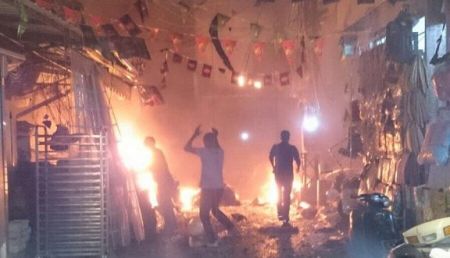
Borj_al-Barajneh12.11.15Suicide bombers strike Hizballah in Beirut
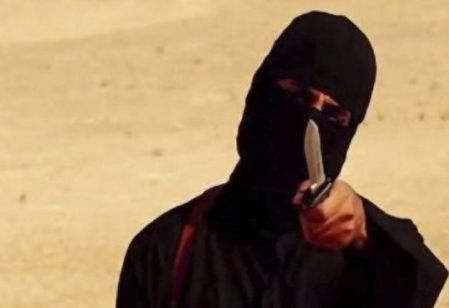
Execution of Steven Sotloff (1983 – 2014) by Jihadi John of ISIS. In August 2013, Sotloff was kidnapped in Aleppo, Syria, and held captive by militants from the Islamic State of Iraq and the Levant. Jihadi John (Mohammed Emwazi, born August 1988) a British man who is thought to be the person seen in several videos produced by the Islamic extremist group ISIL showing the beheadings of a number of captives in 2014 and 2015. (Photo by Universal History Archive/UIG via Getty Images)

Execution of Steven Sotloff (1983 – 2014) by Jihadi John of ISIS. In August 2013, Sotloff was kidnapped in Aleppo, Syria, and held captive by militants from the Islamic State of Iraq and the Levant. Jihadi John (Mohammed Emwazi, born August 1988) a British man who is thought to be the person seen in several videos produced by the Islamic extremist group ISIL showing the beheadings of a number of captives in 2014 and 2015. (Photo by Universal History Archive/UIG via Getty Images)

The US drone strike Thursday night, Nov. 11, targeting the Islamic State’s infamous executioner known as “Jihad John” in the northern Syrian town of Raqqa may or may not have hit the mark – the Pentagon says it is too soon to say. The hooded, masked terrorist with the British accent has been identified as a British Muslim born in Kuwait called Mohamed Emwazi. He appeared on videos worldwide showing the cold-blooded murders of US, British, Japanese and other hostages.

The drone attack occurred shortly after the latest ISIS atrocity: Thursday night, two or three suicide bombers blew themselves up, killing 43 people and injuring at least 240 in the Hizballah stronghold of southern Beirut opposite Burj Barajneh.

Ten days earlier, the Islamic State brought down the Russian Metrojet airliner over Sinai killing all 224 people aboard. This spectacular act of terror was apparently the first strike of the jihadist group’s winter offensive. It achieved its objectives of multiple murder; mortal damage to Egypt’s tourism industry and a blow to the prestige of its president Abdel-Fatteh El-Sisi.

The attack also punished President Vladimir Putin for bringing the Russian military into the center of the Syrian conflict.

The next Islamic State assault was aimed to undermine the credibility of Jordan’s King Abdullah and his security services: On Nov. 8,  a Jordanian police captain opened fire at a high-security US training facility outside Amman, killing two American trainers, a South African and two Jordanians. The number of US personnel injured in the attack was not released. This attack was timed to coincide with the 10thanniversary of the massive al Qaeda assault on Amman’s leading hotels, all American owned, which left 61 dead.

In northern Sinai, the murder of a family of 9 Egyptians at El Arish Thursday morning raised the total of ISIS murders in less than a month to 274.

DEBKAfile’s counterterrorism sources discern three objectives in the attack Thursday night in Beirut

1. A lesson for Tehran and Hizballah’s leader Hassan Nasrallah to show them that the Islamic State is able to reach them on their home ground, no matter how many troops they deploy to fight the jihadis in Syria (Iran and Hizballah together field an estimated 13,000 soldiers in Syria). ISIS was capable of inflicting terrible casualties both on the battlefield and in their homeland, first in Beirut and eventually in Tehran.

2.  The day before, Wednesday, Nov. 11, in a speech marking the “Day of the Shahid,” Nasrallah gloated over Hizballah’s triumph in a battle outside Aleppo. He also boasted that his domestic security shield in Lebanon presented an impenetrable barrier against ISIS or Nusra Front terrorist intrusions.

The Islamic State’s tacticians determined to blow up both claims in Nasrallah’s face. He and Iran were to be shown that they could not stop ISIS or prevent the Syrian war’s spillover into Lebanon.

3.  By blowing up the Russian airliner over Sinai, the Islamists sought to underscore this point for Moscow too. Russia might send a powerful military force to Syria, but the Islamists would hit Putin from the rear at a location of its choosing anywhere in the Middle East. Moscow may have opted to defend Bashar Assad, but what can it do to protect Hizballah and its other allies?.

DEBKAfile’s counterterrorism sources note that US and Russia have taken lead roles in the broad military effort to defeat ISIS – often by means of pinpointed operations. At the same time, under their noses, the Islamist terrorists have launched their winter campaign, striking with extreme ferocity and agility in unexpected places that are outside the regular battle fronts in which the big powers are engaged.

Amplifying Details on the Sinai Plane Bombing and the Egypt-Libya Nexus

November 7, 2015

Amplifying Details on the Sinai Plane Bombing and the Egypt-Libya Nexus, Independent Strategy and Intelligence Study Group, November 7, 2015

The last few days have been filled with a flurry of information regarding the downing of Flight 7K9268. Within the last 18 hrs we’ve received amplifying information from our sources in the country. Our sources within the Egyptian Directorate of Military Intelligence (DMI) confirmed that Russian investigators found the remnants of the explosive device we were talking about in our 03 NOV “Sinai Plane Crash Update.” Furthermore, the running theory of those investigators is that depressurization caused by an internal explosion tore off the tail section, causing the plane to flip over and send it to the ground. When we asked one of our sources if 500 grams of C4 could cause that, he answered back that it wouldn’t take much to bring a plane down, especially if the device was placed near the fuel line – which is what DMI assesses to be the case. Another source working with Russia’s Health Ministry Center for Forensic Medical Expertise confirmed that parts of an explosive device was uncovered.

sinai-crash-300x168Source: Associated Free Press/Getty Images (Maxim Grigoryev)

As for the operative who emplaced the device on the plane, we’ve confirmed that the individual did not receive any assistance from a member of the security forces – because he’s a member of the security forces himself. The individual in question used his position to circumvent the 8 explosive detection systems and security checkpoints located at the airport in order to get to his target. DMI knew how this went down fairly quickly, although our sources couldn’t answer how this fell through the cracks, although they did imply that the security forces are plagued with serious internal issues due to the rising insider threat. However, Sharm al-Sheik Airport Chief Abdel-Wahab Ali was removed from his position due to these major security lapses. The fact that the British government aired these very same concerns LAST YEAR made the decision to remove him much easier.

The Latest: Sharm El-Sheikh Airport Chief Has Been Replaced
http://www.nytimes.com/aponline/2015/11/04/world/middleeast/ap-egypt-russian-plane-crash-the-latest.html?_r=0

UK had concerns about Sharm el-Sheikh airport security almost a year ago
http://www.theguardian.com/politics/2015/nov/05/uk-had-concerns-sharm-el-sheikh-airport-security-year-ago-egyptian-beach-resort

Sinai Plane Crash Update
http://isisstudygroup.com/?p=9184
IS-Sinai-300x135Islamic State-Sinai (IS-Sinai) aka “Wilayat Sinai (WS)”: Just entered the next stage of Operations. Source: The ISIS Study Group

Adding further weight to what we’ve been saying is that the Black Box reveals that the crash was not an accident. More importantly, the media (and some Western governments) are saying what we first mentioned in our “Sinai Plane Crash Update.” Excerpt:

European investigators who analyzed the two flight recorders from the Metrojet plane that went down last weekend in Egypt are categorically saying the crash is not an accident, CNN affiliate France 2 reported Friday.

The investigators said the cockpit voice recorder of Metrojet Flight 9268 shows an explosion and the flight data recorder confirms the explosion is not accidental — there is no sign of mechanical malfunction during the initial part of the flight, France 2 reported.

Everything is fine during the first 24 minutes, then in a fraction of a second there is a blackout and no more cockpit conversation, convincing investigators there was a bomb on board, according to France 2.

CNN Aviation Analyst Richard Quest said there would have been different data on the black boxes if there was a catastrophic failure than if there was an explosion. The key is what happened just before the data suddenly stops, he said.

“It’s this split second, and it’s a millisecond, where you hear an explosion of some description,” he said. “And you see all the parameters (on the recorders) go haywire before the power is completely lost. If this report is accurate, (investigators) have now analyzed that … heard it and they can identify it.”

If the plane had broken apart due to structural failure, there would have been more noise — and for a longer time, he said.

France’s air accident investigation agency, the BEA, told CNN that Egyptian officials will make an announcement about the crash investigation within the next 24 hours.

Report: Black boxes show bomb brought down Russian jet
http://www.cnn.com/2015/11/06/middleeast/russian-plane-crash-egypt-sinai/

Screen-Shot-2015-11-06-at-6.50.48-PM-300x167

Media now talking about the bomb being placed in the cargo hold among the luggage near the fuel line
Source: CNN

This wasn’t the first time WS gained access to an Egyptian airport either. Last year they recruited an employee at Cairo International Airport who provided Team Baghdadi with schematics of the facility, locations of guard postings and security procedures. Fortunately, DMI found out and arrested him before the attack plan was set into motion – which was the same plan carried out in Sharm al-Sheik. This was one of a long list of incidents – many of which were never reported by the country’s media outlets – that led to GEN Sisi authorizing the DMI to lead the crackdown on the insider threat within the security forces. From MAY 15 – JUL 15 several junior and mid-level officers within the Army were detained for either being sympathizers or full-fledged members of WS. There’s also been an increase in military personnel refusing to carry out missions against WS – not because they’re “scared” – because they “didn’t want to kill their Muslim Brothers” (which is a red flag since most Muslims would never consider IS as their “Muslim Brothers”). For the most part the military has been the main advocate for moderate Islam and secularism. Unfortunately, that all changed when the Muslim Brotherhood’s Muhammad Morsi rose to power, where he quickly began to sack “problematic” (read-those of moderate Islam or secular leanings) officers. Then he began to fill the ranks with those he reflected his values – in other words, guys with extremist views. The result was a new breed of officers in the junior and mid-level ranks who were very sympathetic to the ideologies of al-Qaida (of which the MB is closely-aligned) and IS. WS’ increase in capability is a good indicator of the success they’ve had in recruiting personnel with formal military experience (Check out “ISIS-Sinai Beheads Croatian Hostage – Just the Beginning” for additional info).

ISIS-Sinai Beheads Croatian Hostage – Just the Beginning
http://isisstudygroup.com/?p=8195
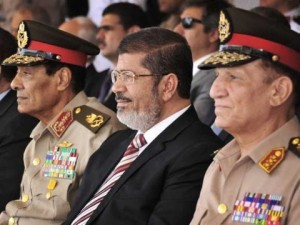
mohamed-morsi-300x225Egypt’s insider threat: Morsi’s legacy. Source: Sharif Abdel Minoem (Associated Press)

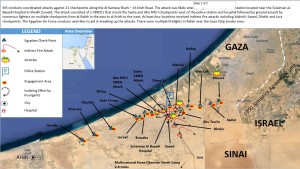
The bombing of that Russian airliner is the beginning of WS and IS’ Libya affiliate entering into a new phase of Team Baghdadi’s overall global campaign of conducting high-profile attacks outside of Syria and Iraq. WS followed up the plane bombing with another attack targeting an officer’s club that killed three policemen. But that’s just the start – WS fully intends to expand their operations to targeting Russians and Western tourists to both cripple Egypt’s tourism industry (which would result in significant economic damage) and retaliating for Russia’s Syria intervention. The indicators were all there with the sharp increase in the frequency and scale of attacks carried out by WS in Sinai throughout the year and this past summer in particular (Reference – “Sinai Under Siege Rising capabilities of Wilayat Sinai”). That said, the first real indicators of WS’ increased capabilities was seen as early as JAN 14 when they shot down an Egyptian military helicopter in the Sinai with a MANPAD that was traced back to one of the Qaddafi regime weapons depots that was raided by so-called “moderates” during the early days of the “Arab Spring.” In AUG 15 another attempt was made by WS to bring down an aircraft – this time a Thomson Airways airliner – as it was heading to Sharm al-Sheik Airport. Fortunately the pilot was able to perform evasive maneuvers and avoid being brought down (See the Guardian’s article titled, “Sharm el-Sheikh flight from Stansted dodged missile in August” and our initial piece on the Sinai crash, “Islamic State Claims to Have Shot-Down Russian Plane in Sinai – But Did They?”).

Egypt: 3 police officers killed in North Sinai bombing
http://www.cnn.com/2015/11/04/africa/egypt-north-sinai-bombing/

Militants Down Egyptian Helicopter, Killing 5 Soldiers

Sharm el-Sheikh flight from Stansted dodged missile in August
http://www.theguardian.com/uk-news/2015/nov/06/missed-by-a-1000-feet-how-british-holidaymakers-came-close-to-being-hit-by-a-missile-in-august?CMP=twt_gu

Sinai Under Siege Rising capabilities of Wilayat Sinai (WS)
http://isisstudygroup.com/?p=7587

Islamic State Claims to Have Shot-Down Russian Plane in Sinai – But Did They?
http://isisstudygroup.com/?p=9157
WS-July-2015-attack-Sinai-300x169

This is just a quick snapshot of attacks that occurred in JUL 15
Source: The ISIS Study Group

WS also wanted to show Baghdadi that they’re an effective force capable of achieving the objectives of his external operations campaign, but also to justify that their request for additional funding. This was also a bid for obtaining heavier weaponry from IS’ Libya affiliate, who sends weapons and supplies to Syria – some of which goes through Sinai (Check out “The Strategic Importance of Egypt to ISIS,” “2015: The Year of ISIS Expansion From Gaza to North Africa” and “The ISIS Expansion Into North Africa” for more details). We don’t think Libyan IS Emir Abu Nail will satisfy that request until after he seizes Darnah – which IS was driven out of back in JUN 15. As of this writing, IS-Libya has been busy consolidating its forces in the al-Fatayeh-area located Southeast of the city. That area is the likely staging-area from which the offensive to retake the town will be launched. The Libyan affiliate is facing a tough fight as they’re forced to take on several other opposition groups of varying jihadist flavors as well as the forces of the Egypt-back Libyan GEN Khalifa Haftar.

For the third time, Haftar’s forces fail to control Derna
https://www.middleeastmonitor.com/news/africa/20744-for-the-third-time-haftars-forces-fail-to-control-derna

Isis in Libya: Islamic State driven out of Derna stronghold by al-Qaeda-linked militia
http://www.ibtimes.co.uk/isis-libya-islamic-state-driven-out-derna-stronghold-by-al-qaeda-linked-militia-1506241

ISIS responsible for most Libya killings: ICC prosecutor
https://www.dailystar.com.lb/News/Middle-East/2015/Nov-06/321833-isis-responsible-for-most-libya-killings-icc-prosecutor.ashx

ISIS In Libya? Gadhafi Sirte Residence Searched By Islamic State For Hidden Money: Report
http://www.ibtimes.com/isis-libya-gadhafi-sirte-residence-searched-islamic-state-hidden-money-report-2139456

Warplanes bomb Libya’s Sirte, target Islamic State: witness
http://www.reuters.com/article/2015/10/29/us-libya-security-idUSKCN0SN2JM20151029

The Strategic Importance of Egypt to ISIS
http://isisstudygroup.com/?p=1392

2015: The Year of ISIS Expansion From Gaza to North Africa
http://isisstudygroup.com/?p=5248

The ISIS Expansion Into North Africa…
http://isisstudygroup.com/?p=3257

IS’ Libya affiliate is the terror organization’s most-developed branch and has become a critical part of Baghdadi’s vision of being able to project power outside of Syria/Iraq. Its worth noting that the Libya affiliate has been tasked with providing material support to other affiliates in North Africa in addition to WS and the main effort in Syria. WS actually receives a great deal of their financial support from the Libya affiliate. In fact so much influence has been placed on bolstering the Libya affiliate that some foreign fighters have actually been diverted there. Our sources report the presence of fighters from France, Germany, Egypt, Algeria, Sudan, Saudi Arabia, Canada and one unconfirmed report of Americans serving among the ranks. Recent reporting also suggests that a group of Indonesian jihadists are projected to be entering the country for this same purpose – other sources imply that they may have already arrived. Not only is Libya an alternative for foreign fighters who aspire to wage jihad but can’t make the trip to Syria, its a training ground for select personnel who get sent back to their countries of origin to establish their own attack networks and conduct the cell-based external operations that the IS leadership has been transitioning to over the last few months (For more info on this transition to cell-based external OPs, check out “Neil Prakash and Friends – an Update” and “Nail in the Coffin: ISIS’ Anwar al-Awlaqi BN Sends Fighters to Europe”). Think of it as IS’ way of “diversifying their terror portfolio” for their goal of launching such attacks in the West.

Neil Prakash and Friends – an Update
http://isisstudygroup.com/?p=8862

The Loss of Key ISIS External OPs Figures and the Anwar al-Awlaqi Battalion
http://isisstudygroup.com/?p=8467

Nail in the Coffin: ISIS’ Anwar al-Awlaqi BN Sends Fighters to Europe
http://isisstudygroup.com/?p=8562

With all this happening, what’s next for Vlad? Make no mistake, he’s going to respond – and when he does, people are either going to die or “disappear.” The big mistake the IS mothership in Syria and the Sinai affiliate made is thinking that Vlad is as soft and flaccid as President Obama. They’re going to find out real quick just how big of a mistake they made once he expands his intervention in Syria (although there will be challenges-more on that in another article) followed by enhanced collaboration with the Sisi regime – which has been steadily moving away from America and getting closer to Russia for well over a year (Check out “Egypt Atmospherics” for more details). On the flip side we assess that IS’ Caucasus affiliate (made up mostly of remnants of Imarat Kavkaz or “IK”) are going to become very active in launching attacks inside Russia itself. Although the media seized on the fact that Syria is one of Vlad’s client states, what didn’t get any real coverage are the 2,500-3,000 Russian nationals currently fighting under the IS banner in Syria – many of which are of Chechen/Dagestani/Tajik ethnicity (Reference the following for additional info – “Russia Poised to Increase Military Presence in Middle East in Response to Islamic State’s Strength,” “Islamic State’s Expansion into the Caucasus Region,” “Gulmurod Khalimov Update – His Militant Views May Not Be a Recent Development” and “Introducing Tajik Special Police COL Gulmurod Khalimov: Islamic State Defector”). At some point those foreign fighters are going to return to Mother Russia. A few already have. So if you thought this high-profile attack was an “isolated incident” that only affects Egypt, you thought wrong.

Egypt Atmospherics…
http://isisstudygroup.com/?p=614

Russia Poised to Increase Military Presence in Middle East in Response to Islamic State’s Strength
http://isisstudygroup.com/?p=8416

Islamic State’s Expansion into the Caucasus Region
http://isisstudygroup.com/?p=6880

Gulmurod Khalimov Update – His Militant Views May Not Be a Recent Development
http://isisstudygroup.com/?p=7760

Introducing Tajik Special Police COL Gulmurod Khalimov: Islamic State Defector
http://isisstudygroup.com/?p=7027
vlad2-300x219

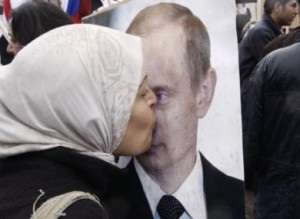
Egyptian locals are increasingly “Pro-Vlad” – but aren’t big fans of President Obama
Source: The ISIS Study Group

Other Related Articles:

Haftar-Sisi Alliance: The Roadblock to ISIS Bridge Into the Maghreb
http://isisstudygroup.com/?p=5033

Egypt Strikes ISIS Positions in Libya: Moderate Muslims Rise Up Against Terror
http://isisstudygroup.com/?p=4889

Egypt and UAE Launch Airstrikes in Libya – US Kept in the Dark
http://isisstudygroup.com/?p=1302

Is Egypt Planning Military Intervention in Libya?
http://isisstudygroup.com/?p=584

Jordan Steps Up Airstrikes Against ISIS, Egypt Launches New Sinai Offensive
http://isisstudygroup.com/?p=4669

Egyptian Army and IDF Take On ISIS Supporters in Sinai
http://isisstudygroup.com/?p=1500

Egyptian Army Hits Back At ISIS In Sinai
http://isisstudygroup.com/?p=2410

ISIS Plots to Bring the “Flames of War” to US, UK and Australia
http://isisstudygroup.com/?p=6431&