Posted tagged ‘Sunni’

The World Bows to Iranian Regional Hegemony

March 4, 2015

The World Bows to Iranian Regional Hegemony, Asia Times Online via Middle East Forum, David P. Goldman, March 4, 2015. Originally published under the title, “World Bows to Iran’s Hegemony.”
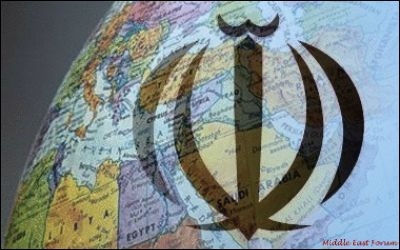
1025The looming nuclear agreement is a dark cloud for countries within range of Iranian ballistic missiles.

The powers of the world hope to delay, but not deter, Iran’s eventual acquisition of nuclear weapons.

The US has tacitly accepted the guiding role of Iranian commanders in Iraq’s military operations against ISIS.

Washington destroyed the balance of power that defined the region’s politics when it pushed through majority rule in Iraq.

****************

The problem with Israeli Prime Minister Benyamin Netanyahu’s address to Congress March 3 was not the risk of offending Washington, but rather Washington’s receding relevance. President Barack Obama is not the only leader who wants to acknowledge what is already a fact in the ground, namely that “Iran has become the preeminent strategic player in West Asia to the increasing disadvantage of the US and its regional allies,” as a former Indian ambassador to Oman wrote this week.

For differing reasons, the powers of the world have elected to legitimize Iran’s dominant position, hoping to delay but not deter its eventual acquisition of nuclear weapons. Except for Israel and the Sunni Arab states, the world has no desire to confront Iran. Short of an American military strike, which is unthinkable for this administration, there may be little that Washington can do to influence the course of events. Its influence has fallen catastrophically in consequence of a chain of policy.

The best that Prime Minister Netanyahu can hope for is that the US Congress will in some way disrupt the Administration’s efforts to strike a deal with Iran by provoking the Iranians. That is what the White House fears, and that explains its rage over Netanyahu’s appearance.

Tehran may overplay its hand, but I do not think it will. The Persians are not the Palestinians, who discovered that they were a people only a generation ago and never miss an opportunity to miss and opportunity; they are ancient and crafty, and know an opportunity when it presents itself.

Most of the world wants a deal, because the alternative would be war. For 10 years I have argued that war is inevitable whatever the diplomats do, and that the question is not if, but how and when. President Obama is not British prime minister Neville Chamberlain selling out to Hitler at Munich in 1938: rather, he is Lord Halifax, that is, Halifax if he had been prime minister in 1938. Unlike the unfortunate Chamberlain, who hoped to buy time for Britain to build warplanes, Halifax liked Hitler, as Obama and his camarilla admire Iran.

China is Chamberlain, hoping to placate Iran in order to buy time. China’s dependence on Middle East oil will increase during the next decade no matter what else China might do, and a war in the Persian Gulf would ruin it.

Until early 2014, China believed that the United States would guarantee the security of the Persian Gulf. After the rise of Islamic State (ISIS), it concluded that the United States no longer cared, or perhaps intended to destabilize the region for nefarious reasons. But China does not have means to replace America’s presence in the Persian Gulf. Like Chamberlain at Munich, it seeks delay.

Obama, to be sure, portrays his policy in the language of balance of power. He told the New Yorker’s David Remnick in 2014,

It would be profoundly in the interest of citizens throughout the region if Sunnis and Shias weren’t intent on killing each other. And although it would not solve the entire problem, if we were able to get Iran to operate in a responsible fashion – not funding terrorist organizations, not trying to stir up sectarian discontent in other countries, and not developing a nuclear weapon – you could see an equilibrium developing between Sunni, or predominantly Sunni, Gulf states and Iran in which there’s competition, perhaps suspicion, but not an active or proxy warfare.

That, as the old joke goes, is the demo version.

On the ground, the US has tacitly accepted the guiding role of Iranian commanders in Iraq’s military operations against ISIS. It is courting the Iran-backed Houthi rebels who just overthrow a Saudi-backed regime in Yemen. It looks the other way while its heavy arms shipments to the Lebanese army are diverted to Hezbollah.

At almost every point at which Iran has tried to assert hegemony over its neighbors, Washington has acquiesced. “In the end, peace can be achieved only by hegemony or by balance of power,” wrote Henry Kissinger. The major powers hope for peace through Iranian hegemony, although they differ in their estimate of how long this will last.

Apart from its nuclear ambitions, the broader deal envisioned by Washington would leave Iran as a de facto suzerain in Iraq. It would also make Iran the dominant power in Lebanon (via Hezbollah), Syria (via its client regime) and Yemen (through its Houthi proxies). Although Sunni Muslims outnumber Shi’ites by 6:1, Sunni populations are concentrated in North Africa, Turkey and South Asia. Iran hopes to dominate the Levant and Mesopotamia, encircling Saudi Arabia and threatening Azerbaijan.

It is grotesque for America to talk of balance of power in the Persian Gulf, because America destroyed the balance of power that defined the region’s politics from the end of the First World War until 2006, when Washington pushed through majority rule in Iraq.

The imperialist powers in their wisdom established a power balance on two levels. First, they created a Sunni-dominated state in Iraq opposite Shi’ite Iran. The two powers fought each other to a standstill during the 1980s with the covert encouragement of the Reagan administration. Nearly a million soldiers died without troubling the world around them.

Second, the Sykes-Picot agreement of 1916 created two states, Syria and Iraq, in which minorities ruled majorities – the Alawite minority in Syria, and the Sunni minority in Iraq. Tyranny of a minority may be brutal, but a minority cannot exterminate a majority.

America’s first great blunder was to force majority rule upon Iraq. As Lt General (ret.) Daniel Bolger explained in a 2014 book,

The stark facts on the ground still sat there, oozing pus and bile. With Saddam gone, any voting would install a Shiite majority. The Sunni wouldn’t run Iraq again. That, at the bottom, caused the insurgency. Absent the genocide of Sunni Arabs, it would keep it going.

Under majority Shi’ite rule, Iraq inevitably became Iran’s ally. Iranian Revolutionary Guards are now leading its campaign against the Sunni resistance, presently dominated by ISIS, and Iranian officers are leading Iraqi army regulars.

This was the work of the George W Bush administration, not Obama. In its ideological fervor for Arab democracy, the Republicans opened the door for Iran to dominate the region. Condoleezza Rice, then Bush’s National Security Advisor, proposed offering an olive branch to Iran as early as 2003. After the Republicans got trounced in the 2006 Congressional elections, defense secretary Donald Rumsfeld got a pink slip, vice president Dick Cheney got benched, and “realist” Robert Gates – the co-chairman of the 2004 Council on Foreign Relations task force that advocated a deal with Iran – took over at Defense.

China and Russia

In the past, China has sought to strike a balance between Saudi Arabia and Iran with weapons sales, among other means. One Chinese analyst observes that although China’s weapons deliveries to Iran are larger in absolute terms than its sales to Saudi Arabia, it has given the Saudis its best medium-range missiles, which constitute a “formidable deterrent” against Iran.

1026A Chinese warship arrives in Bandar Abbas, Iran in September 2014.

As China sees the matter, its overall dependency on imported oil is rising, and the proportion of that oil coming from Iran and its perceived allies is rising. Saudi Arabia may be China’s biggest provider, but Iraq and Oman account for lion’s share of the recent increase in oil imports. China doesn’t want to rock the boat with either prospective adversary.

Among the world’s powers, China is the supreme rationalist: it views the world in terms of cold self-interest and tends to assume that others also view the world this way. One of China’s most respected military strategists told me bluntly that the notion of a nuclear exchange between Israel and Iran (and by implication any regional nuclear power and Iran) was absurd: the Iranians, he argued, know that a nuclear-armed Israel could destroy them in retaliation.

Other Chinese analysts are less convinced and view Iran’s prospective acquisition of nuclear weapons with trepidation. It is not only war with Israel but with Saudi Arabia that concerns the oil-importing Chinese. For the time being, Beijing has decided to accommodate Iran. In a March 2 commentary, Xinhua explicitly rejected Israeli objections:

The US Congress will soon have a guest, Israeli Prime Minster Benjamin Netanyahu, who is expected to try to convince lawmakers that a deal with Iran on its nuclear program could threaten the very existence of the Jewish state.

Despite the upcoming pressure, policymakers in Washington should have a clear mind of the potential dangers of back-pedaling on the current promising efforts for a comprehensive deal on the Iranian nuclear issue before a March 31 deadline …

With a new round of talks in Switzerland pending, it is widely expected that the P5+1 [the five permanent members of the UN Security Council plus Germany] could succeed in reaching a deal with Iran to prevent the latter from developing a nuclear bomb, in exchange for easing sanctions on Tehran.

The momentum does not come easy and could hardly withstand any disturbances such as a surprise announcement by Washington to slap further sanctions on Tehran.

The Obama administration needs no outside reminder to know that any measures at this stage to “overwhelm” Iran will definitely cause havoc to the positive atmosphere that came after years of frustration over the issue.

While it is impossible for Washington to insulate itself from the powerful pro-Israel lobbyist this time, the US policymakers should heed that by deviating from the ongoing endeavor on Iran they may squander a hard-earned opportunity by the international community to move closer to a solution to the Iran nuclear issue, for several years to come if not forever.

Russia has taken Iran’s side explicitly, for several reasons.

First, Russia has stated bluntly that it would help Iran in retaliation for Western policy in Ukraine, as I wrote in this space January 28. Second, Russia’s own Muslim problem is Sunni rather than Shi’ite. It has reason to fear the influence of ISIS among its own Muslims. If Iran fights ISIS, it serves Russian interests. Russia, to be sure, does not like the idea of a nuclear power on its southern border, but its priorities place it squarely in Iran’s camp.

Demographic Time Bomb

The Israeli prime minister asserted that the alternative to a bad deal is not war, but a better deal. I do not think he believes that, but Americans cannot wrap their minds around the notion that West Asia will remain at war indefinitely, especially because the war arises from their own stupidity.

Balance of power in the Middle East is inherently impossible today for the same reason it failed in Europe in 1914, namely a grand demographic disequilibrium: Iran is on a course to demographic disaster, and must assert its hegemony while it still has time.

Game theorists might argue that Iran has a rational self-interest to trade its nuclear ambitions for the removal of sanctions. The solution to a multi-period game – one that takes into account Iran’s worsening demographic weakness – would have a solution in which Iran takes great risks to acquire nuclear weapons.

Between 30% and 40% of Iranians will be older than 60 by mid-century (using the UN Population Prospect’s Constant Fertility and “Low” Variants). Meanwhile, its military-age population will fall by a third to a half.

Belated efforts to promote fertility are unlikely to make a difference. The causes of Iranian infertility are baked into the cake – higher levels of female literacy, an officially-sanctioned culture of sexual license administered by the Shi’ite clergy as “temporary marriage,” epidemic levels of sexually-transmitted disease and inbreeding. Iran, in short, has an apocalyptic regime with a lot to be apocalyptic about.

Henry Kissinger is right: peace can be founded on either hegemony or balance of power. Iran cannot be a hegemon for long because it will implode economically and demographically within a generation. In the absence of either, the result is war. For the past 10 years I have argued in this space that when war is inevitable, preemption is the least damaging course of action. I had hoped that George W Bush would have the gumption to de-fang Iran, and was disappointed when he came under the influence of Condoleezza Rice and Robert Gates. Now we are back in 1938, but with Lord Halifax rather than Neville Chamberlain in charge.

Should We Give Up on the Iraqi Army?

March 4, 2015

Should We Give Up on the Iraqi Army? The Daily BeastPeter W. Galbraith, March 4, 2015

(Please see also Video shows abandoned Iraqi Security Forces armored vehicles near Ramadi.– DM)

1425464112618.cachedSgt. Shawn Miller/US Army

In Baghdad’s Firdos Square, where in 2003 U.S. Marines helped Iraqis topple the statue of Saddam Hussein, there is now a billboard featuring Iran’s Supreme Leader Ayatollah Khameini.

**********************

The U.S. is training a national army for a nation that does not exist.

The Iraqi Army and Shiite militias have now launched an operation to retake Tikrit, a Sunni city 95 miles north of Baghdad that was Saddam Hussein’s hometown. The Americans are standing back. The U.S.-led coalition air forces are not flying missions in support because this is essentially an Iranian-organized and -led operation dominated by Shiite militias that answer to Tehran as much as Baghdad. This may be the shape of things to come.

In mid-February, a Pentagon official made headlines by announcing an April-May time frame for an Iraqi offensive to take Mosul from the so-called Islamic State. Mosul is the second-largest city in Iraq. As The Daily Beast reported last week, the Pentagon now says the April/May date is no longer operative. The Iraqi Army, it was explained, is not ready.

It may never be ready.

1425464110516.cachedStaff Sgt. Tanya Thomas/US Army

At the beginning of 2014, the Iraqi Army comprised 17 divisions. By the end of the year, it was at most seven divisions, possibly as few as five. And, even at full strength, the Iraqi Army was not much of a fighting force.

In spite of outnumbering the ISIS attackers by a ratio of between 10/1 and 15/1, the Iraqi Army lost Mosul in just 10 hours on June 10, 2014. The ISIS forces came to Mosul in pickup trucks. The defenders had armored American Humvees, tanks, helicopters, artillery, and advanced rifles, all of which ended up in ISIS’s hands. Two months later, ISIS used these American weapons to attack the Kurds. The United States, which provided weapons worth billions to the Iraqi Army, is now spending hundreds of millions on airstrikes to destroy them.

Pentagon planners understand the deficiencies of the Iraqi Army. It is disorganized, poorly led, politicized, corrupt, and plagued by sectarian and ethnic divisions. But, where they go wrong is to imagine that these problems can be corrected with better leadership, training, and a policy of inclusiveness towards disaffected Sunnis and Kurds.

In fact, the problems of the Iraqi Army reflect the problems of Iraq where Shiites and Sunnis don’t agree on what it means to be Iraqi and where the Kurds unanimously don’t want to be Iraqi at all. The deficiencies of the army cannot be corrected because they reflect the realities of the society.

The Obama administration and virtually all American foreign policy experts blame former Iraqi Prime Minister Nouri al Maliki’s sectarian policies for contributing to the rise of ISIS. In this telling, Maliki alienated Sunnis by breaking promises to include the Sons of Iraq (the Sunni militia that was key to the defeat of al Qaeda in 2007) in the Iraqi Army, by appointing Shiite loyalists as top officers, and by marginalizing Sunnis in the army, government, and society. Maliki’s administration was sectarian, corrupt and ineffective. But, he may have been right about the Sunnis.

George W. Bush engineered a revolution in Iraq, albeit apparently unaware that he was doing so. The 2003 invasion ended 80 years of Sunni Arab dictatorships and replaced them with democratically elected governments. In each of the elections held since 2005, Iraqi Shiites voted overwhelmingly for Shiite religious parties.

Sunnis, even the many who are not particularly religious, do not accept that the Iraqi identity should be defined in a way that excludes them or treats them as a minority. Many Sunnis believe that Iraq’s new rulers are more loyal to their Shiite co-religionists in Iran than they are to Iraq.

Iran’s decades-long sponsorship of Iraq’s Shiite parties, including the Dawa party of both Maliki and current Prime Minister Haider al Abadi—reinforces Sunni perceptions, which, in any event, may not be wrong. In Baghdad’s Firdos Square, where in 2003 U.S. Marines helped Iraqis topple the statue of Saddam Hussein, there is now a billboard featuring Iran’s Supreme Leader Ayatollah Khameini.

As the Shiites see it, the Sunnis have refused to accept majority rule. They remember—as American planners seem to have forgotten—that Sunni tribal leaders welcomed and supported the al Qaeda extremists who, between 2003 and 2006, assassinated Shiite clerics, massacred Shiite pilgrims, and bombed markets and bus stations in Shiite cities and towns.

The Sunnis turned against al Qaeda not out of revulsion with the killing of Shiites or because they wanted reconciliation, but rather because the extremists had turned on the tribal leaders. When al Qaeda demanded money, daughters and fealty, the Sunni sheikhs had enough. Helped with American cash, they formed militias that finished off al Qaeda in Mesopotamia in a matter of months.

Maliki understood full well that there was no genuine reconciliation between the Shiite religious parties and the Sunnis. He minimized the Sunni role in the Iraqi Army (and central government) because he saw no value in incorporating Sunnis into an army whose primary mission is to protect a Shiite state from Sunnis. And, he was not wrong in his judgment.

When ISIS approached Mosul, some Sunni officers and troops acted as a fifth column providing intelligence and weapons to the attackers. Sunni soldiers who surrendered either went home or joined ISIS. The Shiite commanders fled to nearby Kurdistan, leaving Shiite recruits to face torture and execution (all recorded in videos) at the hands of ISIS.

Ever since Bush’s administrator in Iraq, L. Paul Bremer III, dissolved Saddam Hussein’s army in 2003, the United States has struggled to create an effective Iraqi army. It is impossible to build a real national army when Iraqis do not have a shared idea of the nation and when its components see each other as the enemy.

There are, of course, effective fighting forces in Iraq that are combatting ISIS. The Kurdistan Peshmerga pushed ISIS out of territory it took in August and continue to battle ISIS around Kirkuk, Makhmur, and Mosul. The Kurds have sustained nearly 1,000 casualties and, supported by American close air support, inflicted many times that number on ISIS.

The Kurds, of course, are motivated to defend Kurdistan. They may support a Mosul operation from their territory, but they have made it clear that they will not sacrifice Kurdish lives in a Sunni Arab city or on behalf of a country, Iraq, that they don’t want to be part of.

Shiite militias—armed and, in some cases, led by the Iranians—defended Baghdad and Samarra (home to an important Shiite shrine) last summer. More recently, they have pushed ISIS out of villages in religiously and ethnically mixed Diyala province (sometimes clashing with Peshmerga units).

The Iraqi Army itself is increasingly a sectarian institution. Ironically, this may make it a more effective fighting force. Sunni Arabs who remain in the army are reluctant to sacrifice their lives on behalf of a Shiite state, especially if it means fighting against fellow Sunnis. (Many recruits signed up not to defend Iraq but for a salary, which also contributes to a reluctance to get killed.) By contrast, the Shiite militias fought hard in 2014 to defend their homes and their religion. To the extent that the Iraqi Army becomes more like a Shiite militia (albeit paid and better armed), it may share the militias’ zeal.

The Pentagon still sees the Iraqi Army as a national institution and, as a result, provides it with the lion’s share of U.S. military assistance. Seeing it as another of the ethnic and sectarian forces in Iraq is probably more realistic and may lead to a more effective distribution of weaponry. Currently, more U.S. weapons go to an Iraqi Army that is not ready to fight than to a Kurdistan Pershmerga that is fighting. (Iran supplies the Shiite militias as part of the informal division of labor among the anti-ISIS forces.)

If the offensive against Tikrit now underway should fail (and the Iraqi Army has had considerable difficulty trying to take even some small villages adjacent to a large air base in Anbar province), it will not auger well for a Mosul campaign.

But, success in Tikrit will not necessarily translate into success in Mosul. A foreign army—and this is exactly how Mosul’s Sunnis will see the Iraqi Army—fighting house to house in a city of 3 million is certain to kill a lot of civilians even if the Army behaves well, which is unlikely.

Should it lose Mosul, ISIS would still have substantial territory in Iraq, a pool of resentful Sunnis and a sanctuary in Syria.

In a deeply divided Iraq, a successful government offensive to take Mosul may not solve much.

Special Report: How Iran’s military chiefs operate in Iraq

February 25, 2015

Special Report: How Iran’s military chiefs operate in Iraq, Reuters, February 24, 2015

File photo of a tank belonging to the Shi'ite Badr Brigade militia taking position in front of a gas station in Suleiman Beg, northern IraqA tank belonging to the Shi’ite Badr Brigade militia takes position in front of a gas station in Suleiman Beg, northern Iraq in this September 9, 2014 file photo. CREDIT: REUTERS/AHMED JADALLAH/FILES

The face stares out from multiple billboards in central Baghdad, a grey-haired general casting a watchful eye across the Iraqi capital. This military commander is not Iraqi, though. He’s Iranian.

*********************

(Reuters) – The face stares out from multiple billboards in central Baghdad, a grey-haired general casting a watchful eye across the Iraqi capital. This military commander is not Iraqi, though. He’s Iranian.

The posters are a recent arrival, reflecting the influence Iran now wields in Baghdad.

Iraq is a mainly Arab country. Its citizens, Shi’ite and Sunni Muslims alike, have long mistrusted Iran, the Persian nation to the east. But as Baghdad struggles to fight the Sunni extremist group Islamic State, many Shi’ite Iraqis now look to Iran, a Shi’ite theocracy, as their main ally.

In particular, Iraqi Shi’ites have grown to trust the powerful Iranian-backed militias that have taken charge since the Iraqi army deserted en masse last summer. Dozens of paramilitary groups have united under a secretive branch of the Iraqi government called the Popular Mobilisation Committee, or Hashid Shaabi. Created by Prime Minister Haider al-Abadi’s predecessor Nuri al-Maliki, the official body now takes the lead role in many of Iraq’s security operations. From its position at the nexus between Tehran, the Iraqi government, and the militias, it is increasingly influential in determining the country’s future.

Until now, little has been known about the body. But in a series of interviews with Reuters, key Iraqi figures inside Hashid Shaabi have detailed the ways the paramilitary groups, Baghdad and Iran collaborate, and the role Iranian advisers play both inside the group and on the frontlines.

Those who spoke to Reuters include two senior figures in the Badr Organisation, perhaps the single most powerful Shi’ite paramilitary group, and the commander of a relatively new militia called Saraya al-Khorasani.

In all, Hashid Shaabi oversees and coordinates several dozen factions. The insiders say most of the groups followed a call to arms by Iraq’s leading Shi’ite cleric Grand Ayatollah Ali al-Sistani. But they also cite the religious guidance of Ayatollah Ali Khamenei, the supreme leader of Iran, as a key factor in their decision to fight and – as they see it – defend Iraq.

Hadi al-Amiri, the leader of the Badr Organisation, told Reuters: “The majority of us believe that … Khamenei has all the qualifications as an Islamic leader. He is the leader not only for Iranians but the Islamic nation. I believe so and I take pride in it.”

He insisted there was no conflict between his role as an Iraqi political and military leader and his fealty to Khamenei.

“Khamenei would place the interests of the Iraqi people above all else,” Amiri said.

FROM BATTLEFIELD TO HOSPITAL

Hashid Shaabi is headed by Jamal Jaafar Mohammed, better known by his nom de guerre Abu Mahdi al-Mohandis, a former Badr commander who once plotted against Saddam Hussein and whom American officials have accused of bombing the U.S. embassy in Kuwait in 1983.

Iraqi officials say Mohandis is the right-hand man of Qassem Soleimani, head of the Quds Force, part of Iran’s Revolutionary Guard. Mohandis is praised by some militia fighters as “the commander of all troops” whose “word is like a sword above all groups.”

The body he heads helps coordinate everything from logistics to military operations against Islamic State. Its members say Mohandis’ close friendships with both Soleimani and Amiri helps anchor the collaboration.

The men have known each other for more than 20 years, according to Muen al-Kadhimi, a Badr Organisation leader in western Baghdad. “If we look at this history,” Kadhimi said, “it helped significantly in organizing the Hashid Shaabi and creating a force that achieved a victory that 250,000 (Iraqi) soldiers and 600,000 interior ministry police failed to do.”

Kadhimi said the main leadership team usually consulted for three to four weeks before major military campaigns. “We look at the battle from all directions, from first determining the field … how to distribute assignments within the Hashid Shaabi battalions, consult battalion commanders and the logistics,” he said.

Soleimani, he said, “participates in the operation command center from the start of the battle to the end, and the last thing (he) does is visit the battle’s wounded in the hospital.”

Iraqi and Kurdish officials put the number of Iranian advisers in Iraq between 100 and several hundred – fewer than the nearly 3,000 American officers training Iraqi forces. In many ways, though, the Iranians are a far more influential force.

Iraqi officials say Tehran’s involvement is driven by its belief that Islamic State is an immediate danger to Shi’ite religious shrines not just in Iraq but also in Iran. Shrines in both nations, but especially in Iraq, rank among the sect’s most sacred.

The Iranians, the Iraqi officials say, helped organize the Shi’ite volunteers and militia forces after Grand Ayatollah Sistani called on Iraqis to defend their country days after Islamic State seized control of the northern city of Mosul last June.

Prime Minister Abadi has said Iran has provided Iraqi forces and militia volunteers with weapons and ammunition from the first days of the war with Islamic State.

They have also provided troops. Several Kurdish officials said that when Islamic State fighters pushed close to the Iraq-Iran border in late summer, Iran dispatched artillery units to Iraq to fight them. Farid Asarsad, a senior official from the semi-autonomous Iraqi region of Kurdistan, said Iranian troops often work with Iraqi forces. In northern Iraq, Kurdish peshmerga soldiers “dealt with the technical issues like identifying targets in battle, but the launching of rockets and artillery – the Iranians were the ones who did that.”

Kadhimi, the senior Badr official, said Iranian advisers in Iraq have helped with everything from tactics to providing paramilitary groups with drone and signals capabilities, including electronic surveillance and radio communications.

“The U.S. stayed all these years with the Iraqi army and never taught them to use drones or how to operate a very sophisticated communication network, or how to intercept the enemy’s communication,” he said. “The Hashid Shaabi, with the help of (Iranian) advisers, now knows how to operate and manufacture drones.”

A MAGICAL FIGHTER

One of the Shi’ite militia groups that best shows Iran’s influence in Iraq is Saraya al-Khorasani. It was formed in 2013 in response to Khamenei’s call to fight Sunni jihadists, initially in Syria and later Iraq.

The group is responsible for the Baghdad billboards that feature Iranian General Hamid Taghavi, a member of the Iranian Revolutionary Guard. Known to militia members as Abu Mariam, Taghavi was killed in northern Iraq in December. He has become a hero for many of Iraq’s Shi’ite fighters.

Taghavi “was an expert at guerrilla war,” said Ali al-Yasiri, the commander of Saraya al-Khorasani. “People looked at him as magical.”

In a video posted online by the Khorasani group soon after Taghavi’s death, the Iranian general squats on the battlefield, giving orders as bullets snap overhead. Around him, young Iraqi fighters with AK-47s press themselves tightly against the ground. The general wears rumpled fatigues and has a calm, grandfatherly demeanor. Later in the video, he rallies his fighters, encouraging them to run forward to attack positions.

Within two days of Mosul’s fall on June 10 last year, Taghavi, a member of Iran’s minority Arab population, traveled to Iraq with members of Iran’s regular military and the Revolutionary Guard. Soon, he was helping map out a way to outflank Islamic State outside Balad, 50 miles (80 km) north of Baghdad.

Taghavi’s time with Saraya al-Khorasani proved a boon for the group. Its numbers swelled from 1,500 to 3,000. It now boasts artillery, heavy machine guns, and 23 military Humvees, many of them captured from Islamic State.

“Of course, they are good,” Yasiri said with a grin. “They are American made.”

In November, Taghavi was back in Iraq for a Shi’ite militia offensive near the Iranian border. Yasiri said Taghavi formulated a plan to “encircle and besiege” Islamic State in the towns of Jalawala and Saadiya. After success with that, he began to plot the next battle. Yasiri urged him to be more cautious, but Taghavi was killed by a sniper in December.

At Taghavi’s funeral, the head of Iran’s Supreme National Security Council, Ali Shamkhani, eulogized the slain commander. He was, said Shamkhani, one of those Iranians in Iraq”defending Samarra and giving their blood so we don’t have to give our blood in Tehran.” Both Soleimani and the Badr Organisation’s Amiri were among the mourners.

A NEW IRAQI SOUL

Saraya al-Khorasani’s headquarters sit in eastern Baghdad, inside an exclusive government complex that houses ministers and members of parliament. Giant pictures of Taghavi and other slain al-Khorasani fighters hang from the exterior walls of the group’s villa.

Commander Yasiri walks with a cane after he was wounded in his left leg during a battle in eastern Diyala in November. On his desk sits a small framed drawing of Iran’s Khamenei.

He describes Saraya al-Khorasani, along with Badr and several other groups, as “the soul” of Iraq’s Hashid Shaabi committee.

Not everyone agrees. A senior Shi’ite official in the Iraqi government took a more critical view, saying Saraya al-Khorasani and the other militias were tools of Tehran. “They are an Iranian-made group that was established by Taghavi. Because of their close ties with Iranians for weapons and ammunition, they are so effective,” the official said.

Asarsad, the senior Kurdish official, predicts Iraq’s Shi’ite militias will evolve into a permanent force that resembles the Iranian Revolutionary Guard. That sectarian force, he believes, will one day operate in tandem with Iraq’s regular military.

“There will be two armies in Iraq,” he said.

That could have big implications for the country’s future. Human rights groups have accused the Shi’ite militias of displacing and killing Sunnis in areas they liberate — a charge the paramilitary commanders vigorously deny. The militias blame any excesses on locals and accuse Sunni politicians of spreading rumors to sully the name of Hashid Shaabi.

The senior Shi’ite official critical of Saraya al-Khorasani said the militia groups, which have the freedom to operate without directly consulting the army or the prime minister, could yet undermine Iraq’s stability. The official described Badr as by far the most powerful force in the country, even stronger than Prime Minister Abadi.

Amiri, the Badr leader, rejected such claims. He said he presents his military plans directly to Abadi for approval.

His deputy Kadhimi was in no doubt, though, that the Hashid Shaabi was more powerful than the Iraqi military.

“A Hashid Shaabi (soldier) sees his commander … or Haji Hadi Amiri or Haji Mohandis or even Haji Qassem Soleimani in the battle, eating with them, sitting with them on the ground, joking with them. This is why they are ready to fight,” said Kadhimi. “This is why it is an invincible force.”

Hero of the Middle East: Abdel Fattah el-Sisi

February 23, 2015

Hero of the Middle East: Abdel Fattah el-Sisi, The Gatestone InstituteBassam Tawil, February 23, 2015

(Please see also Obama kept reform Muslims out of summit on extremism. — DM)

The courageous, historic speech yesterday by the Grand Imam of al-Azhar University, the seat of Sunni Islam, calling for the reform of Islam, was the result of the even more courageous, historic speech delivered a few weeks ago by Egypt’s devoutly Muslim President, Abdel Fattah El-Sisi.

The Muslim Brotherhood, the current American administration’s great friend, is the poison tree whose fruit is the Islamist terrorism embodied by the ISIS, Al-Qaeda, Hamas, Palestinian Islamic Jihad, Al-Nusra Front, Boko Haram and others.

Apparently some of the Sunni Arab States have not yet realized that their own national security, and ability to withstand Iran, depend on how strong Egypt is.

It is possible, in fact, that U.S. policy is to weaken the Sunni world seeking to unite under el-Sisi’s flag of modernity. With European complicity, the U.S. Administration is trying to defraud the Arabs and turn the Israel-Palestine conflict into a center of Middle Eastern chaos, in order to hide the nuclear deal they are concocting with Iran.

The treachery of the U.S. Administration is the reason why Egypt’s faith in the United States, which is supposed to defend the Arabs against a nuclear Iran, has effectively evaporated.

And now the greatest American insanity of all time: America and Turkey are arming and training Islamist terrorist operatives in Turkey, on the ground that they are “moderates” opposed to Bashar Assad’s regime in Syria. They either ignore or are unaware that there is no such thing as a moderate Islamist terrorist. The other name of the “moderates” opposing Assad is ISIS.

The Muslim Brotherhood, in effect, runs Turkey. According to recent rumors, Turkey is also planning to build a nuclear reactor, “for research and peaceful purposes.”

Sheikh Dr. Ahmed al-Tayyeb, the Grand Imam of Cairo’s Al-Azhar University, the seat of Sunni Islam, yesterday delivered a courageous, historic speech in Mecca, Saudi Arabia, urging reform in religious education to curb extremism in Islam. Al-Tayyeb’s address was the result of an even more courageous and historic speech, delivered a few weeks ago by Egypt’s devoutly Muslim President, Abdel Fattah el-Sisi, at Al-Azhar University.

El-Sisi’s monumental statement, truly worthy of a Nobel Prize, is having a seismic result. Al-Sisi directed his remarks, about the ills of Islam to Islamic clerics in Egypt and around the world. It was enormously brave of him. He did not single out radical Islam, but he did call on all Muslims to examine themselves, carry out a religious revolution and renew their faith.

El-Sisi, a man of monumental courage, urged Muslims not to behave according to the ancient, destructive interpretations of the Qur’an and Islam that make the rest of the world hate them, destroy Islam’s reputation and put Muslim immigrants to Western countries in the position of having to fight their hosts. He claimed that it is illogical for over a billion Muslims to aspire to conquer and subdue six billion non-Muslims.

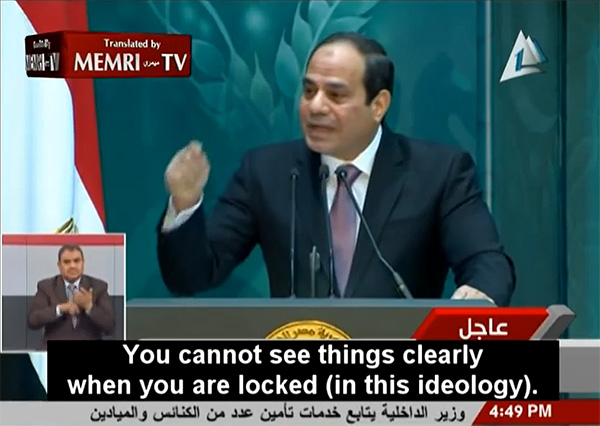
949 (1)Egypt’s President, Abdel Fattah el-Sisi, delivered a historic speech to top Islamic scholars and clergy at Al-Azhar University in Cairo, December 28, 2014. (Image source: MEMRI)

Islam deals in depth with uniting the Muslim nation (umma) and mutual responsibility among Muslims, as though they were one entity. The Prophet Muhammad (S.A.A.W.) said that every drop of Muslim blood is more precious than the entire Kaaba. Thus the liberty ISIS took upon itself to burn alive a Jordanian pilot and 45 Egyptians, to spread terrorism throughout Syria, Iraq and Egypt and to kill other Muslims in various locations around the globe, claiming they were “infidels,” is heresy in and of itself.

The calls for the deaths of “a million shaheeds” and the killing of Jews for the sake of Al-Aqsa mosque in Jerusalem, as was done by Arafat in the past, and is being done now by his heirs in the Palestinian Authority and Hamas, are a crime; they are extremist incitement that is opposed to the forgiving and compromising spirit of Islam. The murder and terrorism carried out by terrorist organizations such as ISIS, Hamas, Palestinian Islamic Jihad [PIJ] and other Islamist organizations against Jews, Christians and other non-Muslims is contrary to the modern Islam needed in the contemporary era.

El-Sisi was correct that the Muslim Brotherhood’s Sunni ideology, which drives most of the extremist Islamist organizations around the world, preaches forced conversion of “infidels” to Islam at any price, or death. Some of the “infidels” are supposed to join Islam of their own accord(targ’ib), out of self-serving interest, and some not of their own accord (tarhib), out of fear and death threats. Such conversions are also contrary to the original Islam, which states that no one is to be forced to convert to Islam and that a calm religious dialogue should be held.

However, a few days after President el-Sisi’s speech, which attempted to unify Muslims and Christian Copts, the Muslim Brotherhood and their affiliated terrorist organizations increased their attacks on Egyptian civilians and security forces throughout Egypt and the Sinai Peninsula, as well as murdering 21 Egyptian Christian Copts in Libya. The Muslim Brotherhood knows that behind the scenes, U.S. President Obama supports the movement, especially the branch in Egypt seeking to overthrow President Sisi. This approval from the U.S. encourages the Muslim Brotherhood to be even more determined to subvert and undermine Egypt’s stability, sabotage its economic rehabilitation and destroy the el-Sisi regime.

In this atmosphere of American support, the Ansar Bayt al-Maqdis terrorist group in the Sinai Peninsula operates under Muslim Brotherhood protection. It recently changed its name to the “Sinai Province” of the Islamic State and swore allegiance to the “Caliph,” Abu Bakr al-Baghdadi. It is currently working hand-in-hand with Hamas in the Gaza Strip to weaken el-Sisi’s Egyptian forces in the Sinai Peninsula.

Other Islamist terrorist organizations also kill Egyptian civilians and security forces with bombs and assault rifles. In the name of the Muslim Brotherhood’s ideology, they indiscriminately attack people on public transport, in airports and in public places, with the intent of retaking control of Egypt.

For this reason, an Egyptian court recently designated Hamas a terrorist organization, along with its military wing, the Izz al-Din al-Qassam Brigades, and outlawed both of them. In response, Qatar, a slippery agent in the service of America but also, treacherously, in the service of Iran, allowed armed Izz al-Din al-Qassam Brigades operatives to be interviewed by its Al-Jazeera TV. The operatives called the Egyptian president a traitor to the Islamic-Arab cause and to those seeking to “liberate Palestine.”

At the same time, Qatar continues to use its Al-Jazeera TV to broadcast hate propaganda targeting the el-Sisi regime, to disseminate videos and to fabricate insulting quotes intended to cause friction between el-Sisi on one side and the leaders of the Arab world and the Gulf States on the other — and to keep them from giving hungry Egyptians economic aid.

As the date for the economic conference in Sharm el-Sheikh (in the Sinai Peninsula) nears, Al-Jazeera’s propaganda machine has moved into ever-higher gear. Apparently, some of the Sunni Arabs states have not yet realized that their own national security and ability to withstand Iran depend on how strong Egypt is.

The U.S. Administration could easily halt the subversion of Egypt, but not only does it turn a blind eye, it suffers from a peculiar form of ignorance that makes it fight ISIS while at the same time supporting the Muslim Brotherhood, the hothouse of most Islamic terrorist organizations, including ISIS. The damage done to Egypt and the cracks in the weak Sunni Muslim ranks in the Middle East will eventually harm American interests and expose the Gulf States to the increasing Iranian threat.

The Muslim Brotherhood, the current American administration’s great friend, is the poison tree whose fruit is the Islamist terrorism embodied by ISIS, Al-Qaeda, Hamas, Palestinian Islamic Jihad, Al-Nusra Front, Boko Haram and others. This linkage has become obvious to all the Arab states, while the U.S. and Europe steadfastly ignore the danger to their own survival, and refuse to outlaw them.

It is possible, in fact, that U.S. policy is to weaken the Sunni world that is seeking to unite under el-Sisi’s flag of modernity. With European complicity, the U.S. Administration is trying to defraud the Arabs and turn the Israeli-Palestinian conflict into a center of Middle Eastern chaos, in order to hide the nuclear deal they are concocting with Iran. That is why the West does not really want to rehabilitate the Palestinian refugees by settling them in the Arab states, and why the West continues to nourish false Palestinian hopes that perpetuate this conflict.

The treachery of the U.S. Administration is the reason why Egyptians’ faith in America, which is supposed to defend the Arabs against a nuclear Iran, has effectively evaporated.

In the meantime, Iran’s Houthi proxies have taken over Yemen, threatening the entire Persian Gulf from the south. The el-Sisi regime is currently in the market for new allies, such as Russian President Vladimir Putin. Putin recently paid a visit to Egypt to examine the possibilities of building a nuclear reactor, sounding the first chord of a regional nuclear arms race.

The problems of the Middle East begin in the United States: that was the claim of participants in the Al-Jazeera TV show, “From Washington.” They described American policy towards Egypt as hesitant, indecisive and undemocratic. They claimed that the U.S. Administration had not yet decided whether or not to support el-Sisi, who heralded change and the willingness to fight radical Islam (a fight America used to participate in) or to remain neutral and waffle, in view of Egypt’s presumed instability. The Americans seem to be putting their all money on the extreme Islamists, who they seem to think will eventually win the bloody conflict currently being waged in Egypt.

The Americans have forgotten that under Mubarak, the regime turned a blind eye to attacks against Israel that were carried out by the Muslim Brotherhood and their carefully fostered agents. Unfortunately, since el-Sisi was elected, Egypt itself has become a victim of radical Islamic terrorism. The U.S. Administration, however, appears clearly to hate el-Sisi, and seems to be doing its utmost to undermine him and see him thrown out.

Under ousted President Mohamed Morsi, Egypt was tolerant and patient toward the U.S. Administration’s best friends, the Muslim Brotherhood, as well as Islamist and Palestinian terrorist organizations such as Hamas, Ansar Bayt al-Maqdis, Al-Qaeda, and Palestinian Islamic Jihad, all of which set up camp in the Sinai Peninsula. These terrorist groups smuggled weapons in from Iran, Sudan, Libya and Lebanon; dug smuggling and attack tunnels; developed missiles and carried out terrorist attacks “only” against Israel, the current U.S. Administration’s other apparent enemy, even though so many American Jews foolishly voted for them.

Now those same Islamist and Palestinian terrorist organizations are striking a mortal blow to the security or Egypt, and killing its civilians and security personnel.

The Muslim Brotherhood, mindful of America’s pro-Islamist policy toward it, is deliberately indulging in a wave of terrorism in Egypt and the Sinai Peninsula. Muslim Brotherhood operatives there are targeting civilians, public transport, airports and natural gas pipelines, all to undermine Egypt’s internal security and bring down el-Sisi’s regime in favor of extremist Islamists and a nuclear-threshold Iran.

In the current international situation, the U.S. Administration has apparently finally cut a deal with Turkey — which will be flimsy and ethereal — that allows Turkey to do the only thing it really cares about: to bring down the regime of Syria’s President, Bashar al-Assad.

The U.S. is also trying to cut a deal with Qatar, which along with Turkey openly supports the Muslim Brotherhood and its terrorist proxies in Egypt, Gaza, Syria and Iraq, who in general work against Western interests.

The ironic result is that Turkey plays host to both NATO and senior Hamas figures, while it deliberately ignores the slaughter by ISIS of Kurds and other ethnic minorities in Iraq and Syria. The Muslim Brotherhood, in effect, actually rules Turkey. Turkey’s President Recep Tayyip Erdogan and his AKP party make it easy for foreign fighters to cross the Turkish border into Syria and join the ranks of ISIS. Meanwhile, the Turkish government wages a diversionary propaganda war against Israel. According to recent rumors, Turkey is also planning to build a nuclear reactor, “for research and peaceful purposes.”

Another surreal result is that Qatar hosts the U.S. military bases, while it finances and encourages terrorist organizations operating against Israel and the Egypt. It also panders to Sheikh Yusuf al-Qaradawi, the spiritual mentor of the Muslim Brotherhood, an Islamist terrorist who issues fatwas permitting the murder of civilians and approves death sentences for apostasy.

And now the greatest American insanity of all time: the U.S. and Turkey are arming and training Islamist terrorist operatives in Turkey, on the grounds that they are “moderates” opposed to Bashar Assad’s regime in Syria. They either ignore or are not aware that there is no such thing as a moderate Islamist terrorist.

The other name of the “moderates” opposing Bashar Assad is ISIS; Iran’s Supreme Leader, Ali Khamenei and Hezbollah’s Hassan Nasrallah are now even saying that the U.S. is arming ISIS.

In the meantime, the Egyptian army continues its struggle against Islamist terrorist targets in the Sinai Peninsula and Libya, unaided, and even undermined, by the U.S.

In view of the U.S. Administration’s collaboration with the Muslim Brotherhood and terrorist organizations in the Gaza Strip, I am persuaded that in the near future it will be possible to find a joint Egyptian-Israeli-Palestinian formula for eradicating the Hamas-PIJ enclave of terrorism, this time by Arabs.

Most ironically of all, in the shadow of American zigzagging, a joint Arab-Israeli front is developing against Sunni and Shi’ite radicalism, and the Palestinians can only profit from it. Thus el-Sisi, who, with towering vision and courage, dares to speak openly about the poison tree of radical Islam and its fruit, when others are afraid, is a truly great Islamic hero.

Aiding Islamic Terrorists Is Our Foreign Policy

February 20, 2015

Aiding Islamic Terrorists Is Our Foreign Policy, Front Page Magazine, Daniel Greenfield, February 20, 2015

s3tttf7n-14138040081-370x350

In the White House, Obama has tried to shape an Islamist future for the Middle East, favoring Islamist governments in Turkey and Islamist movements such as the Muslim Brotherhood. He saw his role as paving the way for the next generation of regional regimes that would be explicitly Islamist.Obama’s foreign policy in the region has been an elaborate exercise in trying to draw up new maps for a caliphate. The inclusion of terrorist groups in this program isn’t a mistake. It’s not naiveté or blindness. It’s the whole point of the exercise which was to transform terrorist groups into governments.

Obama’s foreign policy in the region has been an elaborate exercise in trying to draw up new maps for a caliphate. The inclusion of terrorist groups in this program isn’t a mistake. It’s not naiveté or blindness. It’s the whole point of the exercise which was to transform terrorist groups into governments.

******************

Obama says that we are not fighting a war on Islam. What he leaves out is that under his administration the United States is fighting in a civil war that is taking place within Islam.

It’s not a conflict between the proverbial moderate Muslim and the raging fanatic. That was an outdated Bush era notion. Instead Obama has brought us into a fight between Muslim governments and Muslim terrorists, not on the side of the governments we were allied with, but on the side of the terrorists.

It’s why Egypt is shopping for French planes and Russian nukes. Yemen’s government was run out of town by Obama’s new Iranian friends in a proxy war with Saudi Arabia. And the Saudis are dumping oil.

Iran and Qatar are the regional powers Obama is closest to. What these two countries have in common, is that despite their mutual hostility, they are both international state sponsors of Islamic terrorism.

Obama’s diplomats will be negotiating with the Taliban in Qatar. Among the Taliban delegation will be the terrorist leaders that Obama freed from Gitmo. And Iran gets anything it wants, from Yemen to the bomb, by using the threat of walking away in a huff from the hoax nuclear negotiations as leverage.

In Syria and Iraq, Obama is fighting ISIS alongside Islamic terrorists linked to Al Qaeda and Iran. In Libya, he overthrew a government in support of Islamic terrorists. His administration has spoken out against Egyptian air strikes against the Islamic State Jihadists in Libya who had beheaded Coptic Christians.

At the prayer breakfast where he denounced Christianity for the Crusades was the foreign minister of the Muslim Brotherhood government of Sudan that has massacred Christians. Unlike Libya, where Obama used a false claim of genocide to justify an illegal war, Sudan actually has committed genocide. And yet Obama ruled out using force against Sudan’s genocide even while he was running for office.

The United States now has a strange two-tier relationship with the Middle East. On paper we retain a number of traditional alliances with old allies such as Egypt, Israel and Saudi Arabia, complete with arms sales, foreign aid and florid speeches. But when it comes to policy, our new friends are the terrorists.

American foreign policy is no longer guided by national interests. Our allies have no input in it. It is shaped around the whims of Qatar and Iran; it’s guided by the Muslim Brotherhood and defined by the interests of state sponsors of terror. Our foreign policy is a policy of aiding Islamic terrorists.

It’s only a question of which terrorists.

Obama’s familiar argument is that ISIS and Al Qaeda fighters shouldn’t be called Islamic terrorists. Not even the politically correct sop of “Radical Islam” is acceptable. The terrorists are perverting Islam, he claims. The claim was banal even before September 11, but it bears an entirely new significance from an administration that has put Muslim Brotherhood operatives into key positions.

The administration is asserting the power to decide who is a Muslim. It’s a theological position that means it is taking sides in a Muslim civil war between Islamists.

This position is passed off as a strategy for undermining the terrorists. Refusing to call the Islamic State by its name, using the more derogatory “Daesh,” denying that the Islamic terrorists are acting in the name of Islam, is supposed to inhibit recruitment. This claim is made despite the flood of Muslims leaving the West to join ISIS. If any group should be vulnerable to our propaganda, it should be them.

But that’s not what this is really about.

According recognition to a state is a powerful diplomatic tool for shaping world politics. We refuse to recognize ISIS, as we initially refused to recognize the USSR. Obama resumed diplomatic ties with Cuba. His people negotiate and appease the Taliban even though it was in its own time just as brutal as ISIS.

Obama is not willing to recognize ISIS as Islamic, but he does recognize the Muslim Brotherhood as Islamic. Both are violent and murderous Islamists. But only one of them is “legitimate” in his eyes.

Those choices are not about terrorist recruitment, but about building a particular map of the region. Obama refuses to concede that ISIS is Islamic, not because he worries that it will bring them more followers, this is a tertiary long shot at best, but because he is supporting some of their rivals.

The White House Summit on Countering Violent Extremism has brought a covert strategy out into the spotlight. Despite its name, it’s not countering violence or extremism.

The new director of the Center for Strategic Counterterrorism Communications, the axis of Obama’s CVE strategy, is Rashad Hussain who appeared at Muslim Brotherhood front group events and defended the head of Islamic Jihad. In attendance was Salam Al-Marayati of the Muslim Public Affairs Council, yet another Muslim Brotherhood linked group, who had urged Muslims not to cooperate with the FBI and defended Hamas and Hezbollah.

In Syria, the United States is coordinating with Assad and backing the Syrian rebels, who have their own extensive ties to the Muslim Brotherhood and even Al Qaeda. This could be viewed as an “enemy of my enemy” alliance, but this administration backed the Brotherhood before it viewed ISIS as a threat. Top Democrats, including Nancy Pelosi and John Kerry, had focused on outreach to Assad under Bush.

They’re not allying with Assad and the Brotherhood to beat ISIS. They’re fighting ISIS to protect the Brotherhood and their deal with Iran.

In the White House, Obama has tried to shape an Islamist future for the Middle East, favoring Islamist governments in Turkey and Islamist movements such as the Muslim Brotherhood. He saw his role as paving the way for the next generation of regional regimes that would be explicitly Islamist.

The Arab Spring was a deceptive code name for a clean sweep that would push out the old leaders like Mubarak and replace them with the Muslim Brotherhood and other likeminded Islamists. Islamic terrorism, at least against the United States, would end because their mission had been accomplished.

Stabilizing unrest by putting the destabilizers in charge wasn’t a new idea. Carter helped make it happen in Iran. And the more violent an Islamic terrorist group is, the more important it is to find a way to stop the violence by putting them in charge. The only two criteria that matter are violence and dialogue.

So why isn’t Obama talking to ISIS? Because ISIS won’t talk back. It’s impossible to support a terrorist group that won’t engage in dialogue. If ISIS were to indicate any willingness to negotiate, diplomats would be sitting around a table with headchoppers in less time than it takes a Jordanian pilot to burn.

And that still might happen.

Obama isn’t trying to finish off ISIS. He’s keeping them on the ropes the way that he did the Taliban. Over 2,000 Americans died on the off chance that the Taliban would agree to the negotiations in Qatar. Compared to that price in blood, the Bergdahl deal was small potatoes. And if Obama is negotiating with the Taliban after all that, is there any doubt that he would negotiate to integrate ISIS into Iraq and Syria?

Obama’s foreign policy in the region has been an elaborate exercise in trying to draw up new maps for a caliphate. The inclusion of terrorist groups in this program isn’t a mistake. It’s not naiveté or blindness. It’s the whole point of the exercise which was to transform terrorist groups into governments.

Stabilizing the region by turning terrorists into governments may sound like pouring oil on a fire, but to progressives who believe in root causes, rather than winning wars, violence is a symptom of discontent. The problem isn’t the suicide bomber. It’s our power structure. Tear that down, as Obama tried to do in Cairo, and the terrorists no longer have anything to fight against because we aren’t in their way.

Bush tried to build up civil society to choke off terrorism. Obama builds civil society around terrorists.

Obama does not believe that the terrorists are the problem. He believes that we are the problem. His foreign policy is not about fighting Islamic terrorists. It is about destroying our power to stop them.

He isn’t fighting terrorists. He’s fighting us.

What’s worse than no strategy?

February 11, 2015

What’s worse than no strategy? Israel Hayom, Clifford D. May, February 11, 2015

It seems like only yesterday that U.S. President Barack Obama was being criticized for having no strategy to ‎counter the jihadi threat. In fact, it was about 10 days ago. Peggy Noonan’s Feb. 1 Wall Street ‎Journal column was headlined: “America’s strategy deficit.”‎

Since then, a different perception has been taking root: Obama does indeed have a strategy — ‎a “secret strategy,” one that is alarmingly misguided. ‎

According to this theory, he believes that fighting terrorism requires accommodating the regime ‎long recognized by the U.S. government as the world’s leading sponsor of terrorism: the Islamic Republic of Iran. ‎

He may also see the Islamic republic not as a rival to the Islamic State group but as a more moderate ‎alternative — despite the fact that Iran’s Supreme Leader Ali Khamenei has repeatedly declared ‎hostility toward America the foundation of the Islamic revolution. ‎

The president appears to believe that Sunni jihadis can be countered by Shia jihadis. Last week, Islamic State demonstrated its barbarism by immolating a Jordanian pilot. That should not ‎cause us to forget that Iran’s rulers supplied militias in Iraq with improvised explosive devices used to immolate ‎American soldiers, are supporting Syrian dictator Bashar Assad who has used chemical ‎weapons to scorch the lungs of his opponents, and are continuing to illicitly develop nuclear ‎weapons capable of immolating millions.‎

Dr. Michael Doran, a senior fellow at the Hudson Institute, has not just speculated about ‎Obama’s “secret strategy.” He has painstakingly combed through the record and produced a ‎‎9,000-word report persuasively establishing that Obama, since early in his presidency, has ‎been in pursuit of a “comprehensive agreement” that would allow Iran to become what the ‎president has called “a very successful regional power.” ‎

Understand what that means: Iran would be the hegemon of the Middle East. Some states would ‎accept Tehran’s authority, striking deals and kowtowing in order to survive. Europeans would ‎accommodate Iran, based on its control of the flow of Gulf oil. Israel and Saudi Arabia, nations ‎that Iran’s rulers have threatened to wipe from the map, would be left to fend for themselves.‎

And some Sunnis would almost certainly turn to al-Qaida and Islamic State to help defend ‎them from Shia domination. Indeed, Islamic State rose in response to the extension of ‎Iranian power in Baghdad after America’s withdrawal from Iraq, coupled with ‎Obama’s decision not to support non-Islamist Syrians who had rebelled against the Assad ‎dictatorship.‎

Doran cites evidence that in the first year of Obama’s first term, there were more ‎White House meetings on Iran than any other national security concern. Detente with Iran was ‎seen as “an urgent priority,” but the president “consistently wrapped his approach to that priority ‎in exceptional layers of secrecy” because he was convinced that neither Congress nor the ‎American public would support him.‎

A year ago, Doran further reports, Benjamin Rhodes, a member of the president’s inner ‎circle, told a group of Democratic activists (unaware that he was being recorded) that a deal with ‎Iran would prove to be “probably the biggest thing President Obama will do in his second term ‎on foreign policy.” He made clear that there would be no treaty requiring the Senate’s advice and ‎consent.‎

The president believes that “the less we know about his Iran plans, the better,” Doran ‎concludes. “Yet those plans, as Rhodes stressed, are not a minor or incidental component of his ‎foreign policy. To the contrary, they are central to his administration’s strategic thinking about ‎the role of the United States in the world, and especially in the Middle East.” ‎

Those plans also explain why the president has refused to use tough sanctions, or even the threat ‎of tough sanctions, to force Supreme Leader Ali Khamenei to choose between his nuclear ‎weapons program and economic collapse. Doran writes, “For Obama, to force a confrontation ‎with Khamenei would destroy any chance of reaching an accommodation on the nuclear front ‎and put paid to his grand vision of a new Middle East order.”‎

Doran’s piece was published in the online journal Mosaic on Feb. 2. Four days later, ‎Obama released his 2015 National Security Strategy. It contained nothing about the ‎‎”secret strategy.” In fact, it contained nothing that could be called a strategy. ‎

That appraisal is widely shared. For example, David Rothkopf — who served in the Clinton ‎administration, “voted for Barack Obama twice” and now edits Foreign Policy magazine — called‎ the National Security Strategy “a brief filed by the president in defense of his record to date” and “a mishmash ‎leavened by good intentions but unintentionally spiced up by oversights, misrepresentations, and ‎a bad track record.” ‎

Last Friday, National Security Adviser Susan Rice reassured an audience at the Brookings ‎Institution that “the dangers we face … are not of the existential nature we confronted during ‎World War II or the Cold War.” But if Iran becomes nuclear-armed, other despotic regimes will ‎follow, greatly increasing the likelihood that terrorists will get their hands on nukes and, sooner ‎or later, use them.‎

Remember that American leaders of both parties similarly minimized the threat posed by al-Qaida prior to Sept. 11, 2001. Is the lesson of that day, as Rice implies, that we should ‎worry only about existential threats — confident that we can absorb lesser doses of death and ‎destruction? Or should we have learned instead to do all we can to prevent our enemies from ‎inflicting such punishment now and in the future?‎

This is a debate worth having. But it will be inhibited so long as the president insists on hiding ‎his views, leaving it to a few exceptional scholars to read between the lines. ‎

Qatar, Egypt on a collision course

February 9, 2015

Qatar, Egypt on a collision course, Israel Hayom, Dr. Reuven Berko, February 9, 2015

This anti-Egypt agenda, which seems to be shared by Turkey, is fueled by the desire to realize the dream of installing a Sunni Islamic empire, all while undermining moderate Arab regimes and giving a nod to Iran, as a way of covering all bases — just in case.

******************

Qatar and Egypt are at odds, and the attempts by the late King Abdullah of Saudi Arabia to facilitate a reconciliation between them have failed.

Qatar’s relentless efforts to overthrow Egyptian President Abdel-Fattah el-Sissi’s regime and reinstate the Muslim Brotherhood to power are evident from the programs airing on the Doha-controlled Al-Jazeera television network, and from the publication of doctored wiretaps featuring the Egyptian president and his advisers, who allegedly “stole” Egypt away from the Muslim Brotherhood and the “holy” Mohammed Morsi.

This anti-Egypt agenda, which seems to be shared by Turkey, is fueled by the desire to realize the dream of installing a Sunni Islamic empire, all while undermining moderate Arab regimes and giving a nod to Iran, as a way of covering all bases — just in case.

Egypt’s decision to outlaw the Muslim Brotherhood has resulted in increased incitement by Qatar as well as in an escalation in terrorist attacks in Egypt and Sinai. Egyptian intelligence has linked the latest series of attacks to Ansar Beit al-Maqdis, an offshoot of the Islamic State group, as well as to Hamas’ Izzedine al-Qassam Brigades. Hamas and the Izzedine al-Qassam Brigades are very much Qatar’s “babies,” and their involvement in these terrorist attacks has prompted Egypt to outlaw both.

In response, Al-Jazeera has begun portraying Izzedine al-Qassam Brigades’ operatives, who have denounced Sissi as a traitor to Islam and Arabs everywhere, as heroes fighting for the liberation of “Palestine.” The Qatari television station has also been obsessively covering the riots and unrest instigated by the Muslim Brotherhood to undermine the regime, intimidate foreign investors, and reverse the image of stability Sissi’s government is trying to convey to the world.

The airing of secret wiretaps, on which Sissi is heard mocking the wealthy Persian Gulf states, at this time seeks to pit Cairo against the Gulf states, ahead of the World Economic Forum on the Middle East, which is scheduled to convene in Sharm el-Sheikh, in Egypt, in late February, and where Egypt will lobby for aid.

Sissi’s assertion about the current situation in the Middle East is correct: Sunni Arab states are being offered as sacrifice to Iran, which is pursuing its nuclear endeavors uninterrupted. These states understand that Egypt’s stability is a prerequisite for their own national security, and therefore aiding Cairo is a favor that could only work to their advantage.

At the end of the day, in a reality where Iran poses an existential threat to other Arab countries, pointing to the emir of Qatar as a leader drowning in gold while millions of Egyptians go hungry — as heard on the wiretaps — may prove to be a double-edged sword, which may end up striking Qatar itself.

Islamist State plots terror attacks inside Tehran. Hizballah high-up killed in Damascus bus blast

February 2, 2015

Islamist State plots terror attacks inside Tehran. Hizballah high-up killed in Damascus bus blast, DEBKAfile, February 2, 2015

Shiite_Bus_in_Damascus_1.2.15Shiite pilgrim bus explosion in Damascus

The Islamic State of Iraq and the Levant has launched a new terror offensive against Iranians, their followers and other Shiites.  It was kicked off Sunday, Feb. 2 with an attack on a Damascus bus carrying Lebanese Shiite pilgrims to shrines in Syria. Nine people were killed and at least 20 injured. ISIS has set its sights next on the Muslim Shiite heartland, Iran and its cities – especially the capital Tehran.

The Damascus bus attack is ascribed by some sources to a Saudi suicide bomber by the name of Abu al-Ezz al-Ansari. The claim that the Syrian rebel Jabhat al-Nusra was the perpetrator was false, say DEBKAfile’s intelligence and counter-terrorism sources. This group does not go in for Saudi recruits and certainly not suicide bombers of that ilk.

ISIS fingered Nusra to conceal its own responsibility for the attack and its real target. Our sources reveal that the Islamic State attacked the Shiite pilgrims in order to get at a high-ranking officer of Hizballah’s armed wing, who was on the bus.

Hizballah headquarters in Beirut has imposed deep hush on his death and identity. But because they could not pretend the bus explosion did not happen, they pinned it Monday on “takfir [infidel] groups” which they say collaborate with Israel.

This attack revealed most significantly that Hizballah has begun covering the tracks in Syria of its top Hizballah men by inserting them among Shiite pilgrims traveling by bus from Lebanon to Damascus. They are camouflaging the movements of their top men in Syria by an elaborate security net, ever since an Israeli air strike on Jan. 18, killed around nine Hizballah and Iranian officers, including the Iranian general, Ali Allah Dadi.

Still, ISIS agents were able to find the bus and blow it up, indicating deep hostile penetration of the Iranian and HIzballah forces assigned to Syria to fight for Bashar Assad.

Conscious of the Islamic State’s next plans, the Iranian Al Qods Brigades commander, Gen. Qassem Soleimani, paid an unscheduled visit to Beirut last Thursday, Jan. 29, for urgent talks with Hizballah leader Hassan Nasrallah and briefings for the organization’s military council members. Their most pressing concern was the detailed ISIS program, which is ready to go, for a broad new campaign of terror against Iranian and pro-Iranian targets in Lebanon, Syria, Iraq and the Iranian homeland.

Kurdish Land-Grab Stuns Baghdad

January 27, 2015

Kurdish Land-Grab Stuns Baghdad, Newsweek and , January 27, 2015

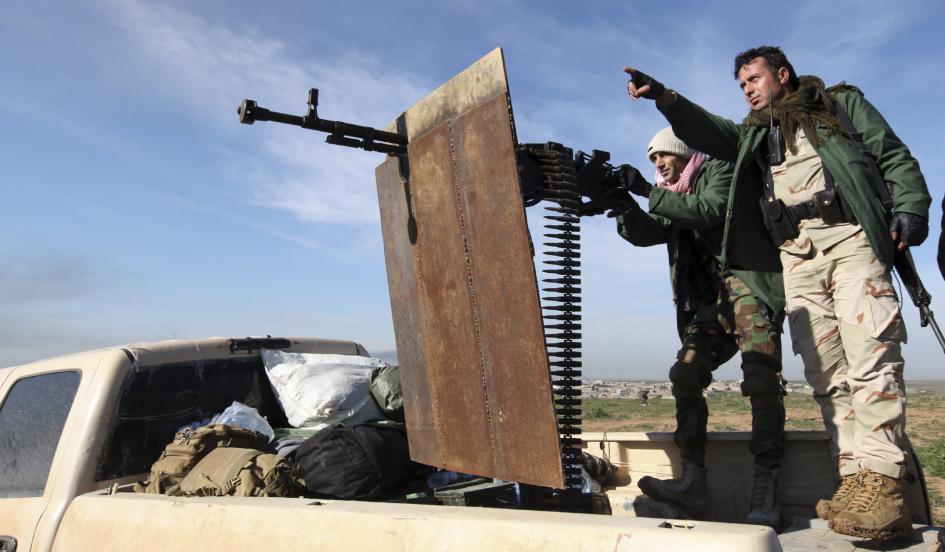
peshmergaKurdish Peshmerga fighters keep watch during the battle with Islamic State militants on the outskirts of Mosul January 21, 2015. AZAD LASHKARI/REUTERS

A senior Kurdish federal official, who declined to be named, said that Peshmerga forces would never hand back areas captured after Isis’s march across northern Iraq, which brought the group to within miles of the semi-autonomous Kurdish region.

While the threat of Isis remains significant, Kurds may have to put their independence dreams on hold and the Iraqi government will worry about Kurdish territorial claims later. As the terror group continues to grow, both parties need each other and the radical Islamist threat will bind them together, at least for now.

******************

Kurdish forces launched a barrage of Grad missiles against Islamic State (Isis) positions inside Mosul last week, for the first time since Isis overran Iraq’s second-largest city in June last year, marking a dramatic shift in the Kurds’ battle against the terrorist group.

The bombardment was preceded by a large-scale Kurdish operation against Isis in northern Iraq, which saw 5,000 Kurdish fighters, supported by US-led coalition airstrikes, sweep around Mosul to recapture an area larger than the size of Andorra, Liechtenstein and San Marino combined.

In the offensive, Kurdish Peshmerga fighters killed over 200 Isis militants, ousting the group from almost 300 square miles of territory, capturing a number of areas contested with Baghdad. As they advanced, encircling Mosul on three sides and cutting vital Isis supply lines to the nearby towns of Tal Afar and Sinjar, the Kurdish forces began a counter-offensive that analysts worry may be the start of a territory war between the Kurdish capital, Erbil, and Baghdad.

The Kurdish forces captured Makhmour, to the east of the city; the towns of Zimar and Wannah, and several Arab villages located in the Sinjar Mountains, west of Mosul; and the area around Mosul Dam, in what amounts to a Kurdish land-grab backed by Western airstrikes.

Iraqi Kurds believe that the recaptured territory around the city is rightfully theirs while the Iraqi government “fears that the Kurds will use territory as leverage during political negotiations”, according to Ranj Alaaldin, a visiting scholar at Columbia University.

A senior Kurdish federal official, who declined to be named, said that Peshmerga forces would never hand back areas captured after Isis’s march across northern Iraq, which brought the group to within miles of the semi-autonomous Kurdish region. “All the current military operations that involve the Peshmerga are implemented in coordination with the international military coalition and the central government is aware of it, but, in the Kurdish areas, we will never ever let Arabs control them again,” the official warned. “We are not ready to fight, terrify our fighters’ souls to liberate these areas and hand them to a traitor who would sell it to the killers. We will not allow this scenario to take place again in these areas.”

While the Kurds argue that they have taken control of this territory to defend against Isis, many Iraqis believe that the Kurds will never give up what they have captured because of their ambitions for an independent state.

“In the chaos that followed the Isis assault on Iraq in June, the Iraqi army melted away from its positions throughout northeastern and northwestern Iraq and the Peshmerga swiftly moved in to take their place – taking control of the whole of Kirkuk,” she said.

Despite these aspirations, Iraqi officials seem content to let Kurdish forces claim the territory from Daesh (as Isis is also known), for now. “As long as we are not ready to move as far as to fight in Mosul, it would be better to let them (Kurds) re-control these areas rather than leave it at the hands of Daesh,” a senior Iraqi military officer said. “Now, we will not raise any political disputes. Let [the Kurds] drive the militants away from these areas and we will think about the consequences later,” he added.

Hamed al-Khudari, a senior Shia lawmaker, agreed that Iraqis should “clear our lands” and “talk about this [territorial dispute] later”. Nevertheless, analysts do not believe that the Iraqi government in Baghdad is capable of ousting Kurdish forces from the territory they have seized in the recent advance. “Baghdad cannot do much to kick out the Kurds from any territory they have captured,” says Wladimir van Wilgenburg, analyst on Kurdish politics for the Jamestown Foundation.

The Kurds’ success on the battlefield, coupled with rumours of a potential Iraqi operation in Mosul, has put Isis on the back-foot but also caused disagreement between Erbil and Baghdad. Differences remain over involvement in any potential operation to recapture Mosul. Masrour Barzani, the head of Kurdistan’s regional security council, has said that Mosul will soon be “liberated” from the terror group’s self-proclaimed caliphate. “I don’t think anyone would envy the situation the people of Mosul are in,” he said. “The terror of Isis is too much for anyone to handle.”

But Kurdish officials believe that the responsibility for the recapture of the predominantly Sunni-Arab city lies solely with Baghdad. “Peshmerga are now 8km away from Mosul but they will not fight inside the city,” the official, who declined to be named, said. “When it comes to liberating Mosul, its people have to fight, not anyone else. We will just support them because we do not want anyone to say that Kurds are fighting Arabs. The [Iraqi] government understands that Mosul is not our battle or Shiites’ battle. Arab Sunnis in Mosul have to take the initiative to liberate their areas.”

Whereas Kurdish officials believe that Baghdad should take leadership over the battle for the city, where citizens now live under the group’s radical version of Islamic law, Iraqi officials claim that the battle against “Daesh is everyone’s to fight. The main goal now for all Iraqis is to fight Daesh and drive them away from all the Iraqi lands, so we will not allow anyone to talk about these [territorial] issues”, says al-Khudari. “This [fighting against IS] is the responsibility of everyone including the central government, the Kurdish forces, the public crowd (Shia militias and volunteers) and the anti-IS Sunni tribes.”

The lack of Kurdish motivation to enter into a battle for Mosul alongside Iraqi forces is due to the knowledge that any fight would be a drawn-out and lethal affair, according to van Wilgenburg. “They know the battle is going to be very heavy if it has to involve street to street fighting,” he says.

“The Kurds are already assisting the fight in Mosul. They recently fired into the city.” Erbil and Baghdad both have “to be pragmatic”, says Gonul Tol, executive director at the Center for Turkish Studies at the Middle East Institute. Baghdad is focused on recapturing Isis-held territory as opposed to Kurdish territory while Kurds “do not want to get involved” in Mosul to avoid “igniting a Kurdish-Arab war”.

While the threat of Isis remains significant, Kurds may have to put their independence dreams on hold and the Iraqi government will worry about Kurdish territorial claims later. As the terror group continues to grow, both parties need each other and the radical Islamist threat will bind them together, at least for now.