Posted tagged ‘Palestinians’

Another Tunnel Collapse in Gaza, 1 Dead, 1 Missing Following IDF Action [video]

March 4, 2016

The Jewish Press » » Another Tunnel Collapse in Gaza, 1 Dead, 1 Missing Following

By: David Israel Published: March 3rd, 2016

Source: The Jewish Press » » Another Tunnel Collapse in Gaza, 1 Dead, 1 Missing Following IDF Action

IDF tunnel detection and demolition machines
Photo Credit: Screenshot

The Hamas underground construction business continues to suffer blows as yet another tunnel, this one in Khan Yunis, has collapsed Thursday afternoon, News 0404 reported. One terrorist was killed and at least one is missing, possibly under the rubble. Khan Yunis, in the southern part of the Gaza Strip, is about an equal distance from either the Egyptian border to the south or Israel to the east.

Two Hamas terrorists were killed in an earlier tunnel collapse in the southern Gaza Strip on Tuesday night.

One week earlier, seven Hamas terrorists succumbed to a tunnel collapse in northern Gaza.

According to Ma’an, Israeli forces crossed the Gaza border east of Khan Younis on Wednesday morning, advancing 300 feet into the Strip where their bulldozers leveled land. Locals said the soldiers were destroying tunnels.

Hamas has been voicing its suspicions recently that its tunnels aren’t collapsing all by themselves and that Israel or Egypt or both are helping it along. So far this season Hamas has reported the collapse of 11 different tunnels.

Deputy Hamas leader Ismail Haniyeh last month said the terror organization has launched an investigation to discover why so many tunnels have been collapsing, burying so many Hamas martyrs. Haniyeh claimed the military arm of Hamas, the Izz al-Din al-Qassam Brigades, discovered underground cameras and sensors intended to expose the tunnels project and the Hamas activities therein.

Has Israel finally discovered a cure for the tunnels? It’s either that or the Hamas quality control dept. is sleeping on the job.

Hamas claims to have rebuilt many of the tunnels that were destroyed in its 2014 devastating provocation of Israel. Last week, Israel threatened to seal the border crossings to the Gaza Strip as punishment to the terror organization’s obsession with tunnel digging.

In February, Faris Atilla, Israel’s liaison coordinator for Gaza, said in a statement that “Israel knows Hamas and some contractors and dealers use the construction materials for other purposes,” suggesting they were being stolen and used for terror tunnel building.

IDF machinery inside the Gaza Strip during search for terrorist tunnels, February, 2016 (ForISRAEL2014).

WATCH: Hamas Emulates Islamic State Executions of Israelis in New Propaganda Videos

March 2, 2016

WATCH: Hamas Emulates Islamic State Executions in New Propaganda Videos

by Deborah Danan

1 Mar 2016

Source: WATCH: Hamas Emulates Islamic State Executions of Israelis in New Propaganda Videos

TEL AVIV – A new propaganda video showing terrorists simulating Islamic State-style executions of Israeli soldiers is one of the latest in a series of Hamas-produced videos showcasing terrorist skills and demonstrations.

The clip shows three masked Hamas terrorists in camouflage carrying out synchronized throat-slittings of three IDF soldiers in front of a cheering crowd.

MEMRI gathered a series of clips shown on Gaza TV, including “how-to” clips for would-be terrorists to carry out suicide bombings, beheadings, and stabbings.

One of the clips shows a rally in the Gaza town of Rafah in which the murder of Eitam and Dalia Henkin is reenacted. The narrator hails the terrorists responsible for the murder as “heroes” and heaps further praise on them for executing the couple in front of their young children, while leaving the children themselves unharmed.

Israeli investigators said the terrorists would likely have continued their massacre had the parents not put up a struggle, which caused one of the gunmen to accidentally shoot his accomplice in the hand, prompting both attackers to flee the scene, Arutz 7 reported.

In another scene, actors dressed as Israeli civilians and soldiers board a bus, followed by a suicide bomber. The bus then explodes, apparently killing all those on board.

Hamas recently aired a music video encouraging terrorists to resume suicide bombings in Israeli cities. The video featured Jewish flesh being “roasted” and the smoking remains of a bombed Egged bus.

Palestinians: We Want Our Own Knesset

March 1, 2016

Palestinians: We Want Our Own Knesset

by Khaled Abu Toameh March 1, 2016 at 5:00 am

Source: Palestinians: We Want Our Own Knesset


  • Apparently Najat Abu Bakr forgot that she is a member of the Palestinian parliament and not the Israeli one. She and her colleagues have no right to criticize President Abbas or any senior official in Ramallah. Such criticism is considered an “insult” to top officials and even an act of treason.
  • And so we have two legislators. One is forced to seek shelter within her own parliament for fear of being arrested by the Palestinian security forces. The other receives all the rights and privileges enjoyed by her fellow Arabs inside Israel — in spite of her immensely provocative behavior.
  • That is the difference between a law-abiding country and the Palestinian Authority, which has been functioning for many years as a mafia.
  • Najat Abu Bakr and many Palestinians dream of the day they too will have a Knesset, a true parliament, where leaders are held accountable.

What do Haneen Zoabi and Najat Abu Bakr have in common?

Both women are outspoken members of parliament — Zoabi in Israel and Abu Bakr in the Palestinian territories.

Zoabi, who hails from Nazareth, is a citizen of Israel. Abu Bakr, from the West Bank city of Nablus, is an elected member of the Palestinian Legislative Council (PLC), the parliament that has been effectively paralyzed since 2007, when Hamas expelled the Palestinian Authority (Abbas ) from the Gaza Strip.

Haneen Zoabi (left) and Najat Abu Bakr (right) are outspoken members of parliament — Zoabi in Israel and Abu Bakr in the Palestinian territories. That is pretty much where the similarities end.

But outspoken participation in parliaments is pretty much where the similarities end.

Zoabi, who resides inside Israel, lives a rather different life from her colleague, Abu Bakr, who is a Palestinian citizen.

Zoabi, the Israeli member of parliament, is a provocateur of long standing who regularly enrages the Jewish-Israeli public. She joined a flotilla “aid” convoy to the Gaza Strip — a move that left many Israelis furious.

On other occasions, her statements have also been interpreted as a show of solidarity with Israel’s enemies. More recently, she received a light sentence after signing a plea-bargain admitting she had insulted an Arab working for the Israel Police.

Zoabi was back in the headlines again last month — along with two other Arab members of Israel’s Knesset, Jamal Zahalka and Basel Ghattas — for meeting with families of Palestinians who had carried out terror attacks against Israelis.

By all accounts, for that performance she and the other two Knesset members received a mere “slap on the wrist:” they were suspended from attending parliamentary committee meetings for a few months.

Even though Zoabi’s behavior and rhetoric are thoroughly abhorrent to many Israelis, including some of Israel’s Arab citizens, Israel’s president, Reuven Rivlin, along with other Israelis, came out against expelling her and some other Joint Arab List colleagues from the Knesset.

“We cannot allow the Knesset, whose representatives are chosen by the public, to independently overturn the public’s choice,” Rivlin said, referring to proposed legislation that would allow Knesset members to vote out their colleagues who express support for terrorism.

But let us return to the question: how are Haneen Zoabi and Najat Abu Bakr, our two female parliamentarians, each doing?

While Zoabi, an Arab Muslim citizen of Israel, carries out her duties — and lives her life — freely, Abu Bakr has been forced to seek refuge within the Palestinian Legislative Council building in Ramallah.

In short, the two women are living in different worlds.

Since last week, when President Mahmoud Abbas ordered her arrest, Abu Bakr has been holed up inside the Palestinian Authority parliament building. Her crime: blowing the whistle on the financial corruption of a cabinet minister who is closely associated with President Abbas.

Her claim is that the minister has been privately selling water to Palestinians and has illegally taken more than $200,000 from the Palestinian budget.

But that is not her only alleged crime. A further one concerns her public support for a teacher’s strike in the West Bank. The strike has seriously embarrassed President Abbas and the Palestinian Authority leadership. Abbas has ordered scores of striking teachers arrested and has deployed hundreds of policemen at checkpoints to foil a protest organized by the teachers, who are demanding higher salaries and better conditions.

Apparently, Abu Bakr forgot that she is a member of the Palestinian parliament and not the Israeli one. She and her colleagues have no right to criticize President Abbas or any senior official in Ramallah. Such criticism is considered an “insult” to top officials and even an act of treason.

Members of the Palestinian Authority’s Parliament enjoy none of the rights enjoyed by Arab members of Israel’s parliament, the Knesset.

Parliamentary immunity, for instance, means that Zoabi and her colleagues cannot be detained or summoned for interrogation by the authorities.

In truth, there is no life in the Palestinian parliament. It has been paralyzed, thanks to the PA and strife with Hamas, and mostly functions as the butt of Palestinian jokes.

But the absence of an effective parliament suits President Abbas and his government just fine. No parliament means no one to hold them accountable.

Meanwhile Abu Bakr, the MP who dares to open her mouth against the president or a top-echelon Palestinian Authority official, is grabbed by the long arm of the Palestinian security forces.

Abu Bakr is now a fugitive. Monday was the sixth day she has been huddling in the parliament building. She has refused to leave the building or report for interrogation, and is demanding that Abbas cancel the arrest warrant issued against her.

Where is comrade Zoabi now? The Joint Arab List in Israel has been conspicuously silent about the harassment of their fellow member of parliament in Ramallah.

What a different picture we would have seen had Abu Bakr been delayed at an IDF checkpoint for fifteen minutes. In less time than that, Zoabi would have strung Israel up for violating the rights of a parliament member in the Palestinian territories.

And so we have two legislators. One is forced to seek shelter within her own parliament for fear of being arrested by the Palestinian security forces. The other receives all the rights and privileges enjoyed by her fellow Arabs inside Israel – in spite of her immensely provocative behavior.

That is the difference between a law-abiding country and the Palestinian Authority, which has been functioning for many years as a mafia.

Najat Abu Bakr and many Palestinians dream of the day they too will have a Knesset, a true parliament, where leaders are held accountable. For now – and for the foreseeable future – that day is just a pipedream.

Zoabi and her fellow Arab citizens of Israel will not be packing their bags and heading for Ramallah anytime soon, however. It seems that another Arab dictatorship is not their idea of prime real estate.

Khaled Abu Toameh, an award-winning journalist, is based in Jerusalem.

Snipers from Hebron arrested

February 29, 2016

2 brothers from Hebron arrested for carrying out shooting attacks It has been released that 2 Palestinian brothers were arrested during a Shin Bet, IDF and Israeli Police joint operation. They are suspected of carrying out shooting attacks against IDF soldiers and civilians in recent months.

Feb 29, 2016, 2:15PM Becca Noy

Source: Snipers from Hebron arrested | JerusalemOnline.com

image description
Photo Credit: Shin Bet/Channel 2 News

The Shin Bet, IDF and Israeli Police arrested 2 Hebron residents who carried out shooting attacks against Israelis in recent months, in which 4 Israelis were injured.

The brothers are 23-year-old Hamas activist Nazar Fisal Muhammad Bedui and 33-year-old Akram Fisal Muhammad Bedui. In the beginning of November, the 2 committed a shooting attack near the Cave of the Patriarchs, in which 2 Israelis were injured. At the end of the month, they fired at a car that was traveling to the same area. No one was harmed in this terror attack. In the beginning of January, the 2 brothers fired again near the same location. A 20-year-old woman was injured in this attack.

image description
1 of the brothers Photo Credit: Shin Bet/Channel 2 News

Nazar was brought in for questioning on January 9th and a week later, his brother carried out another terror attack, in which no one was injured. Akram admitted in his interrogation that he carried out the last attack to deflect the suspicions against his brother who was arrested.

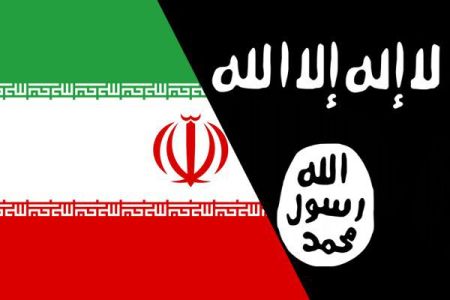
Analysis: Iran, ISIS Likely to Unite for WWIII

February 28, 2016

Analysis: Iran, ISIS Likely to Unite for WWIII, The Jewish PressHana Levi Julian, February 28, 2016

Iran-ISIS-flagPhoto Credit: JP.com graphic

Israeli military analysts are now beginning to prepare top officials, who are in turn beginning to prepare the nation, for what eventually may become the start of World War III.

Most analysts still believe the Syrian crisis is a sectarian conflict between the Sunni, Shi’a and Alawite Muslims. But that time is long gone.

A cataclysmic clash of civilizations is taking place in Syria, one that a number of nations have patiently awaited for decades.

Turkey, so deeply invested in the glorious history of its Ottoman Empire period, would find great satisfaction in stretching its influence with a modern-day “Turkish Islamic Union” that might embrace like-minded nations in the region and perhaps also beyond.

Da’esh, as it is known in the Middle East and which in English calls itself the “Islamic State” (known by others as ISIS or ISIL) is rapidly stretching its influence to build a worldwide Sunni caliphate. It began as a splinter group from the Al Qaeda terrorist organization, and then morphed into the Islamic State in Iraq and Syria (hence “ISIS”) — but at last count had successfully recruited more than 41 other regional Muslim terrorist organizations to its cause from around the world on nearly every continent.

And then there is the Islamic Republic of Iran, a Shi’ite Muslim nation, which is extending its tentacles as rapidly throughout the world as Da’esh, but far more insidiously and certainly more dangerously. If in this world one might define any nation today as Amalek, that ice-cold, black-hearted evil that first picks off the weakest of the Jewish nation, it is Iran, which has quietly extended its influence and control farther and more deeply than any other enemy Israel has ever had. Wealthy, patient, smiling and calculating, Iran acquires new allies each year, even among those Israel once counted as friends. Meanwhile, Iranian officials never forget to keep the home fires burning, to stir the pot and keep it simmering, and always to nurture the various conflicts at home in the Middle East.

This past week, Iran announced the money it donates to families of Arab “martyrs” who murder Israelis will be paid via its own special charity organization, and not through the Palestinian Authority government.

But Tehran has yet to reveal the details of exactly how it intends to pay.

Instead, a high-ranked government official simply made an announcement this weekend saying Iran did not trust the Ramallah government, driving a deeper wedge already dividing the PA’s ruling Fatah faction from Gaza’s ruling Hamas terror organization — Iran’s proxy group.

Hamas has been planting sleeper cells and budding regional headquarters, however, throughout the PA-controlled areas of Judea and Samaria, and it is clear the group’s next goal is an attempt to wrest control of those two regions from the PA, thus completing Iran’s takeover of the PLO — the PA’s umbrella organization and liaison to the United Nations.

Money is always helpful in such an enterprise, and Iran has recently enjoyed a massive infusion of cash that came courtesy of the United States and five other world powers after sanctions were lifted last month as part of last July’s nuclear deal.

Iranian Ambassador to Lebanon Mohammed Fath’ali announced last Wednesday that Iran would pay Arab families for each “martyr” who died attacking Israelis in Jerusalem and each Arab family whose home was demolished by Israel after one of its occupants murdered Israelis in a terror attack.

Iranian Parliament Speaker Ali Larijani last week underlined Tehran’s continued strong support for the wave of terror against Israel.

“The Islamic Republic supports the Palestinian Intifada and all Palestinian groups in their fight against the Zionist regime. We should turn this into the main issue in the Muslim world,” Larijani said in a meeting with a number of “resistance” groups in Tehran,FARS reported Sunday (Feb 28).

But it is clear that Iran is not content solely with a takeover of the PLO.

Tehran has its eye on a much wider goal, now more clearly than ever the resurrection of an updated Persian Empire — in modern parlance military analysts refer to it as an “Axis of Evil” — in much the same manner that Sunni Da’esh (ISIS) is single-mindedly pursuing its goal of rebuilding a worldwide caliphate.

Iranian forces via proxies have already managed to involve themselves in what once were domestic affairs in Yemen, Syria, Lebanon, Egypt, Jordan, Bahrain, Saudi Arabia, Iraq, Israel, Cuba, Mexico, the United States, Afghanistan, Venezuela, Brazil, Argentina, Qatar, Turkey and numerous other nations.

Larijani has at last proclaimed officially that Iran doesn’t differentiate between Shiites and Sunnis since they share many commonalities, adding that Tehran “has supported the Palestinian nation (although they are Sunnis) for the past 37 years.”

The remark is significant in that Iran’s Revolutionary Guard Corps and Lebanese Shi’ite Hezbollah guerrillas – another Iranian proxy – are fighting Sunni opposition forces in Syria on behalf of President Bashar al-Assad. Iranian forces are fighting the Sunni Muslim Da’esh (ISIS) terror organization that seized a significant percentage of territory in Syria.

But south of Israel, Iran’s proxy Hamas, a Sunni Muslim group, has been providing material and technical support to the same Da’esh — but its “Sinai Province” terror group in the Sinai Peninsula.

Here we finally see that Iran is willing to adapt and support terror wherever it can be found, as long as it meets two of three criteria: (1) it furthers its goal to destabilize the region, (2) in the process it works towards the annihilation of Israel, and/or (3) will contribute towards conquest and influence to reach the goal of an ultimate renewed, updated Persian Empire.

How long then until Iran connects the two dots and simply arranges a meeting between its own Supreme Leader Ayatollah Ali Khamenei and the leader of Da’esh, Abu Bakr al-Baghdadi? Hezbollah’s Hassan Nasrallah and Hamas leader Khaled Meshaal will likely be invited for dessert …

The other question is how long until someone strikes the spark that ignites the conflagration — the region is already in chaos.

U.S., Europe Fund Torture by Palestinian Authority

February 26, 2016

U.S., Europe Fund Torture by Palestinian Authority

by Khaled Abu Toameh February 26, 2016 at 5:00 am

Source: U.S., Europe Fund Torture by Palestinian Authority

  • A report by the Euro-Mediterranean Human Rights Monitor documented 1,391 cases of Palestinians arbitrarily arrested by the two Palestinian parties, Fatah and Hamas, in 2015.
  • Systematic torture in Palestinian prisons in the West Bank and Gaza Strip was documented in the report — at least 179 cases of torture in Palestinian Authority (PA) prisons in 2015.
  • The PA security forces are trained and funded by several Western countries, including the US. This establishes a direct line between these Western donors and the arbitrary arrests, torture and human rights violations that have become the norm in PA-controlled prisons and detention centers.
  • The report also revealed that the Palestinian Authority regularly disobeys court orders by refusing to release detainees, showing contempt for its courts and judges.
  • Before our eyes, two police states are being built: one in the West Bank and a second in the Gaza Strip — in the face of talk by international parties of establishing an independent Palestinian state. But the last thing the Palestinians need is another police state.

Palestinians who incite violence against Israel are called Palestinian leaders. Palestinians who beg to differ with Palestinian Authority (PA) President Mahmoud Abbas or one of his friends are called criminals and can expect to be interrogated and/or imprisoned.

The PA leadership has always clamped down on its critics, including journalists, editors, academics, human rights activists and parliament members. In this regard, the PA and its president show a distinct similarity to the other dictators that run the Arab world.

Like the legendary Japanese monkeys who see no evil, hear no evil and speak no evil, the international media regularly turns a blind eye to blatant Palestinian Authority abuses. But here’s a newsflash for them: Say you don’t like Abbas and you face arrest or interrogation on charges of “insulting His Excellency.”

Take, for example, the case of Professor Abdul Sattar Qassem, who teaches Political Science at An-Najah University in Nablus.

Qassem, a long-time critic of President Abbas and the Oslo Accords, was arrested earlier this week by Palestinian security forces on charges of “incitement.” Qassem was arrested on the heels of a television interview in which he stated that those who collaborate with Israel should receive the death penalty, according to the PLO’s “Revolutionary Law.” The Palestinian leadership considered this statement “incitement” against President Abbas and Palestinian security personnel.

Professor Abdul Sattar Qassem (left) stated in a TV interview that those who collaborate with Israel should receive the death penalty. The Palestinian Authority leadership considered this “incitement” against President Mahmoud Abbas (right), and arrested Qassem.

Qassem was released on bail after three days in detention, although a Palestinian court had ordered him remanded in custody for 15 days. It is still unclear whether he will be officially charged and put on trial.

No stranger to Palestinian prison, Qassem has been arrested at least three times in the past few years for publicly criticizing President Abbas and other senior Palestinian officials. His outspokenness has also exposed him to violence: his car was torched while parked in front of his home in Nablus, and he escaped an assassination attempt when unidentified gunmen shot several rounds at him outside this home.

The culprits have never been caught. Palestinian sources say the assailants are unlikely to ever be apprehended. Had the perpetrators posted critical comments about President Abbas on Facebook, however, these sources say that they would have been locked up long ago.

A recent report published by the Euro-Mediterranean Human Rights Monitor documented 1,391 cases where Palestinians were arbitrarily arrested by the two Palestinian parties, Fatah and Hamas, in 2015.

The report noted that the bulk of the arrests (1,274) had taken place in the areas controlled by the Palestinian Authority in the West Bank. Among those arrested were 35 Palestinian journalists and civil rights activists, and 476 students and academics.

Cameras and computers were confiscated from the detained journalists before they were interrogated about their work and activities on social media, the report said.

Now let us go to Gaza. How is Hamas doing on this score? Hamas authorities last year arrested “only” 23 journalists and civil rights workers, 24 university students and five teachers and academics.

Thus, the figures show, we might say, some arresting facts: Hamas has a better record than the Western-funded Palestinian Authority when it comes to assaults on public freedoms and human rights violations. The report also revealed that the Palestinian Authority regularly disobeys court orders by refusing to release detainees. In other words, the Palestinian Authority, which repeatedly boasts that it has managed to build an “independent and credible judiciary system” with the help of Western donors, shows contempt for its courts and judges.

Systematic torture — scores of cases — in Palestinian prisons in the West Bank and Gaza Strip was also documented in the report. In 2015, there were at least 179 cases of torture in Palestinian Authority prisons, as opposed to 39 cases in Hamas prisons during the same year.

The Palestinian Authority security forces are trained and funded by several Western countries, including the United States. This establishes a direct line between these Western donors and the arbitrary arrests, torture and human rights violations that have become the norm in Palestinian Authority-controlled prisons and detention centers.

Yet there is silence — until the word “Israel” pops up. Then Western news outlets, including those based in Israel that are tasked with covering Palestinian affairs, go into high gear.

This criminal indifference — one is tempted to say negligence — on the part of the international community permits and even promotes Palestinian Authority and Hamas human rights abuses.

We are witnessing how the two Palestinian parties approach the task of building state institutions. Before our eyes, two police states are being built — one in the West Bank and a second in the Gaza Strip. This is taking place in the face of talk by the same donors and other international parties (at least in relation to the PA) of establishing an independent Palestinian state. But the last thing the Palestinians need is another police state.

President Abbas, who has just entered the 11th year of his four-year term in office, has no cause to be concerned about the human rights violations committed by his security forces. In fact, he has every reason to continue clamping down on his critics. Why should he worry? The international community absolves him of the abuses perpetrated under his rule.

That is why this week Abbas instructed his security forces to launch an investigation into the behavior of a legislator, Dr. Najat Abu Baker. Dr. Abu Baker, it seems, had the temerity to demand an inquiry into the financial practices of a Palestinian cabinet minister.

Soon after she lodged charges of financial wrongdoing, Dr. Abu Baker, an elected member of the Palestinian Legislative Council, was summoned by the Palestinian prosecutor general for interrogation on charges of “slander” and “incitement.” This is quite a way to respect Dr. Abu Baker’s parliamentary immunity.

Dr. Abu Baker’s case is yet a further example of the disregard that the Palestinian Authority shows not only for the judicial system, but also for the legislative body that is meant to serve as a watchdog over the executive branch. But even watchdogs know their owners. By summoning Dr. Abu Baker for interrogation and threatening to arrest her, Abbas is sending a message of deterrence to his detractors, namely that even a member of parliament cannot escape the long arm of the Palestinian security forces.

For now, the international community has some choices. It could continue to close its eyes to the police states being erected with its monies. Alternatively, it could choose a new path: to hold the Palestinian Authority accountable for its actions, including the torture that takes place within its very core. But the West had better hurry up. The PA repression is far from lost on the Palestinians, who are being driven by it into the waiting arms of Hamas and other such groups.

Proper state institutions for the Palestinians is a laudatory goal; what the Palestinians have today are two banana republics.

Khaled Abu Toameh, an award winning journalist, is based in Jerusalem.

Treasury Department: Islamic State Building Base In Gaza Strip

February 25, 2016

Treasury Department: Islamic State Building Base In Gaza Strip; Using Palestinian Enclave to Recruit and Deploy Fighters

by Aaron Klein and Ali Waked24 Feb 2016

Source: Treasury Department: Islamic State Building Base In Gaza Strip

TEL AVIV – With little fanfare, the Treasury Department earlier this month imposed financial sanctions on three Islamic State leaders, including a jihadist from the Gaza Strip it said was central to recruiting and deploying foreign fighters and establishing an IS base inside Gaza.

The move highlights the growing threat of the Gaza Strip serving as a central headquarters for IS.

“Treasury and our partners worldwide are aggressively targeting ISIL’s ability to earn and make use of its money, and we are making progress on many fronts,” said Adam J. Szubin, Acting Under-Secretary for Terrorism and Financial Intelligence. Szubin said the new sanctions target “key ISIL leadership figures responsible for oil and gas production, foreign terrorist fighter recruitment and facilitation, and other financial facilitation.”

One of the three newly-sanctioned IS leaders is Gaza-based Salafi jihadist Husayn Juaythini. Treasury accused Juaythini of providing support and services to IS “by facilitating communications and the movement of foreign terrorist fighters and conducting financial activities in support” of the terrorist organization.

The Treasury profile of Juaythini stated that he was “the link” between IS Leader Abu Bakr al-Baghdadi and armed groups in Gaza, and “had money that he was using to build an ISIL presence in Gaza.”

The profile continued:

Juaythini traveled to Syria in September 2014 to pledge allegiance to ISIL and was tasked to return to Gaza and establish a foothold for ISIL there. …

Juaythini not only maintains ties with ISIL, but as of mid-2014 was deputy head of the extremist group and U.S.-designated SDGT Mujahidin Shura Council (MSC). In 2013, Juaythini attempted to acquire supplies for the MSC in the environs of Jerusalem to conduct attacks against Israel and help the group overcome financial difficulties.

He also worked with a Libya-based facilitator, who served as the primary money and weapons facilitator for Juaythini’s activities in Gaza. As of January 2015, Juaythini was instrumental in fostering connections between Gaza- and Libya-based terrorists, and facilitating their travel to Syria.

The Treasury Department also sanctioned Faysal al-Zahrani, a top oil official in Syria and IS recruiter and religious adviser Turki al-Binali.

Just last week, Breitbart Jerusalem reported a Palestinian jihadi militant had been killed while fighting for IS in Libya, the organization said.

Some 100 Palestinians have reportedly fought for IS in Syria, Iraq, and Libya.

Over the last three years, some 30 Gazans have been killed while fighting for IS in Syria and Iraq, and another four in Libya, including Abu Azra.

Aaron Klein is Breitbart’s Jerusalem bureau chief and senior investigative reporter. He is a New York Times bestselling author and hosts the popular weekend talk radio program, “Aaron Klein Investigative Radio.” Follow him on Twitter @AaronKleinShow. Follow him on Facebook.

Iran: $7,000 to every terror family

February 25, 2016

Iran: $7,000 to every terror family Foreign Ministry publishes condemnation after Iran promises to pay families of Palestinian terrorists.

 By Matt Wanderman
First Publish: 2/24/2016, 8:57 PM

Source: Iran: $7,000 to every terror family – Defense/Security – News – Arutz Sheva

Members of Iran’s Basij paramilitary force march in Tehran
Reuters

The Foreign Ministry has declared that “Israel condemns the Iranian ambassador to Lebanon’s announcement that his country will financially support Palestinian terrorists and their families.”

The official statement explained, “This is additional proof of Iran’s deep involvement in supporting terror against Israel. After the agreement with the world powers, Iran is allowing itself to continue being a central player in international terror.”

The Iranian ambassador to Lebanon, Mohammad Fateh Ali, recently announced that his country would pay $7,000 to the family of any terrorist killed in the recent wave of terror, and an additional $30,000 to any family whose house was destroyed in response. Fateh Ali made his statement during a press conference in Beirut and further called on Lebanon too join the fight against Israel, promising: “the martyrs’ blood will release the entire Palestine, from the river to the sea”

Also today, Defense Minister Moshe Ya’alon (Likud) accused the Islamic Republic of embedding “sleeper cells” in the US and Europe. He warned that these cells are gathering weapons and intelligence, and recruiting new members to carry out terror attacks.

“The Iranian regime through the Iranian Revolutionary Guard corps is building a complex terror infrastructure including sleeping cells that are stockpiling arms, intelligence and operatives and are ready to act on order including in Europe and America,” Ya’alon said during an official visit to Cyprus.

Last summer a Cypriot court convicted a Lebanese-Canadian man of planning to carry out terror attacks against Israeli targets in Cyprus. The man belonged to the terror group Hebzollah, which Iran supports.

 Israeli Defense Split on Turkey’s Gaza Port Demands

February 25, 2016

Israeli Defense Split on Turkey’s Gaza Port Demands

By: JNi.Media Published:

February 24th, 2016

Source: The Jewish Press » » Israeli Defense Split on Turkey’s Gaza Port Demands

Artist’s rendering of an offshore harbor and airport for Gaza, under Israeli control
Photo Credit: Minister Israel Katz Facebook page

Israeli negotiations with Turkey on renewal of full economic and diplomatic relations hinge, not surprisingly, on an area that isn’t part of Israel or Turkey, namely the Gaza Strip. Or, more to the point, the Turks insist that Israel must allow the Gazans to build a new port, having lived since 2007 under a tight Israeli blockade. With the Hamas’ track record on abusing whatever shipments Israel does allow through the border crossings, using cement to build terror tunnels instead of rehabilitating residential buildings that collapsed during the 2014 war, it’s obvious why Israel would resist such a demand. However, it appears that at least some in the IDF echo the Turkish sentiment, arguing that something must be done to alleviate the suffering of Gaza’s civilian population, and soon.

Military Intelligence chief Major General Hertzi Halevy on Tuesday told the Knesset Foreign Affairs and Defense Committee that the deteriorating economy in Gaza is liable to cause an explosion which would be turned against Israel. MKs who participated in the closed-door meeting told Ha’aretz that Halevy believes the rehabilitation of Gaza is going too slowly, and stresses that an economic improvement would be the best restraining measure against a new war.

But others in Israel’s security apparatus insist that “Whatever enters the Gaza Strip must undergo an Israeli check. If someone is eager to transport goods by sea, they are invited to bring them through the Ashdod harbor.” Responding to news earlier this week that Israel and Turkey are on the way to some agreement on a Gaza harbor, a source in the defense ministry told Walla that “we have no intention to turn a blind eye on anything that’s going into Gaza.”

Only a month ago Israel’s media reported that Hamas has rebuilt its attack tunnels that had been destroyed by the IDF in the summer of 2014, and that, according to IDF intelligence, some of those tunnels reach well into Israeli territory. Meanwhile, reports on the deterioration of the quality of life inside the Strip suggest most Gazans receive only 3 hours of electricity a day, and the Egyptian flooding of the smuggling tunnels reaching into the northern Sinai have eroded the quality of drinking water, especially in the southern Strip. How long, ask those who support the harbor plan, before the suffering population that has nothing to lose throws itself on the border fences, provoking a ghoulish clash with the Israeli military?

There are five alternatives being discussed by the Israeli leadership, to appease to Turks while helping the Gazans without harming Israeli security. One calls for the harbor to be built in El Arish, a sleepy Egyptian town in the north-western Sinai, which is under Egyptian rule. Another is the exotic idea of building an artificial island that would face the Gaza shore, where ships would unload their goods under strict Israeli control. There’s also an idea to build a Gaza harbor in Cyprus; and, of course, there’s the more intuitive idea of building the harbor in Gaza, but wrapping its operation tightly in long-term ceasefire deals. Naturally, as soon as Hamas starts shooting rockets at Israel, Israel could wipe out their nice harbor.

Defense Minister Moshe Ya’alon and most of the military brass are not impressed by any of the above, and continue to insist on delivering the shipments to Gaza the way God intended it to be done — through Ashdod. They boost their position by regularly releasing stories about the frightening things the customs officials are discovering in those shipments — and they’re not making anything up, there’s a hangar down in Ashdod, packed with an arsenal of cleverly concealed weapons and explosives, chemicals and poisons, and, most recently, toy drones.

The Shabak is also against the harbor in Gaza, but for a different reason: they fear that a Palestinian harbor in Gaza would erode the standing of Mahmoud Abbas or his replacement, and permanently dismantle the separation between Gaza and the PA.

Unless the Turks give up on their Gaza harbor principle, this debate is not likely to just fade away. Gazans are paying for their terrible mistake of voting Hamas into power ten years ago, Hamas is there to stay — but can Israel afford to let those Gazan civilians continue to suffer? Perhaps now would be a good time to put into action one of those programs that advocate paying local Arabs to immigrate to better places. At this point it probably won’t require that much money.

Erdan: IDF plan for peace talks is ‘infuriating’

February 23, 2016

Erdan: IDF plan to beat terror with peace talks is ‘infuriating’ Internal Security Minister discusses IDF Intelligence head’s call for ‘diplomatic process,’ noting periods of peace talks more lethal.

By Ido Ben-Porat

First Publish: 2/23/2016, 3:28 PM

Source: Erdan: IDF plan for peace talks is ‘infuriating’ – Defense/Security – News – Arutz Sheva

Minister Gilad Erdan
Flash 90

Internal Security Minister Gilad Erdan (Likud) on Tuesday denied that IDF Intelligence Corps head Maj. Gen. Herzl (Herzi) Halevi told the Security Cabinet the Arab terror wave will expand if peace talks aren’t launched with the Palestinian Authority (PA).

Halevi appeared at the Security Cabinet on January 24 together with other senior Intelligence Corps officials to deliver the annual intelligence appraisal for 2016, before delivering it again Tuesday to the Knesset’s Foreign Affairs and Defense Committee, according to Channel 10 reports on Monday night.

The report alleged that Halevi told the Cabinet a “diplomatic process” with the PA is the only way to stop the terror wave, as he claims the military has largely done all it can. If peace talks are not advanced, he stated additional forces will join the terror wave, including the Tanzim terror group, which is the “armed wing” of PA Chairman Mahmoud Abbas’s Fatah faction.

“I sat in many meetings that he (Halevi) took part in. I never heard him say something like that,” Erdan told Army Radio on Tuesday, denying the reports.

“If something like that was said in a briefing for military correspondents, I think that’s an infuriating statement because we remember the days of a diplomatic process, in which the attacks and the terror were much stronger.”

Erdan’s statement would appear to be a reference to the 1994 Oslo Accords, in which Israel supplied the newly created PA and its Security Forces with weapons. The Accords led to the 2000 Second Intifada or Oslo War, in which over 1,000 Israelis were murdered; PA officials later bragged that 70% of the attacks were conducted by PA Security Force members.

In the current wave as well a number of the terrorist attackers have been identified as PA policemen.

Erdan also spoke about returning the bodies of terrorists, a move he has generally opposed as a deterrence factor so as to avoid massive funerals encouraging more attacks.

“Since our last talk I think one or two bodies were returned. The reason no one heard about it is because the families agreed to cooperate with the police and hold a respectable funeral…not one with incitement or support for the act of terror that the terrorist conducted,” he said.

“We have no interest in holding these bodies, rather (we do it) simply because we are in a wave of terror in which the glorification of the ‘martyr’ and the imitation by his friends is an integral part. We are not prepared for things like this to happen in funerals and possibly even bring about additional attacks.”