Posted tagged ‘Obama’s legacy’

Saudi king wants Obama to tackle Iranian ‘mischief’

August 31, 2015

Saudi king wants Obama to tackle Iranian ‘mischief,’ Al-Monitor, August 31, 2015

U.S. US Secretary of Defense Ashton Carter meets with Saudi Arabia's King Salman bin Abdul-Aziz Al Saud (R) at Al-Salam Palace in Jeddah, Saudi Arabia, July 22, 2015. (photo by REUTERS/Carolyn Kaster) Read more: http://www.al-monitor.com/pulse/originals/2015/08/saudi-king-washington-visit-iran-deal.html#ixzz3kPeQtHQK width= U.S. Defense Secretary Ash Carter meets with Saudi Arabia’s King Salman bin Abdul Aziz (R) at Al-Salam Palace in Jeddah, Saudi Arabia, Wednesday, July 22, 2015.

King Salman bin Abdul-Aziz Al Saud’s three-day visit, strategically scheduled just days before Congress votes on the agreement, offers the Saudi leader a powerful platform to insist that the United States help combat Iranian “mischief.” The king is seeking assurances in the fight against Iran’s proxies across the region, as well as with elements of the nuclear deal itself.

The visit “underscores the importance of the strategic partnership between the United States and Saudi Arabia,” White House spokesman Josh Earnest said Aug. 27.

“The president and the king will discuss a range of issues and focus on ways to further strengthen the bilateral relationship, including our joint security and counterterrorism efforts,” Earnest said. “They will also discuss regional topics, including the conflicts in Yemen and Syria, and steps to counter Iran’s destabilizing activities in the region.”

Despite deep reservations about the deal, sources close to the Saudi government say that unlike Israel, the kingdom quickly concluded that it could not be defeated in Congress and that no better alternatives were likely to emerge.

Riyadh, however, has repeatedly made clear that its support is conditioned on a tough inspection regime and snapback sanctions. Salman may seek further assurances on those aspects of the deal in light of recent reports that allege that Iran will be allowed an unusual amount of autonomy with regard to inspections of its military installation at Parchin.

“The agreement must include a specific, strict and sustainable inspection regime of all Iranian sites, including military sites, as well as a mechanism to swiftly re-impose effective sanctions in the event that Iran violates the agreement,” the Saudi Embassy in Washington said after the deal was announced.

Most of the discussion is expected to center on non-nuclear issues, however.

Salman and President Barack Obama, who will meet Sept. 4 at the White House, are expected to further flesh out Washington’s promise of increased military support for the Gulf Cooperation Council countries — including a potential missile defense shield — as discussed during the US-GCC Camp David summit in May. That meeting, which was skipped by four of the top six regional leaders — including Salman — aimed to reassure the Gulf nations of America’s commitment to their security amid the perceived rapprochement with Iran.

“This is an opportunity to reset this relationship when there are some pretty considerable concerns on both sides,” said David Weinberg, a Gulf analyst with the Foundation for Defense of Democracies. “It comes in the context of the United States trying to reassure the Gulf states about the Iran deal, as well as to focus on this Camp David agenda in terms of concrete US security assistance. It’s reasonable to assume that that’s going to be a big focus of the trip as well.”

Much of the conversation is expected to focus on military hardware: The Saudis are seeking upgrades to their F-15s along with other advanced weaponry, but Israel is said to have raised concerns during Defense Secretary Ashton Carter’s recent visit to the region. Congress may object to such sales if lawmakers deem that they would undermine Israel’s so-called qualitative military edge.

The Saudis will be interested “in how much the White House will invest itself so that it can get the technology that it wants,” former Obama National Security Council Middle East adviser Prem Kumar told Al-Monitor. They will want to see if the White House “will spend some political capital on the Hill.”

Another topic of interest is the proposed creation of a GCC-wide “rapid reaction force” to take on external threats. The White House paid lip service to the idea in its joint statement from the Camp David summit, but the idea has failed to gain traction among concerns by Qatar and Oman that it would be dominated by the Saudis.

“In terms of GCC-wide reassurance, the Saudis are interested to hear what the US is prepared to do to support the GCC rapid reaction force, the joint Arab defense force, if that is going to materialize,” Kumar said.

Beyond military requests, Salman is likely to seek US backing for his more muscular approach to foreign policy compared with his predecessor. That includes beefed-up US support for his campaign against the Houthis in Yemen and a renewed focus on getting rid of President Bashar al-Assad in Syria.

For Riyadh, said former Saudi Embassy political analyst Fahad Nazer, a nuclear Iran “is more of a long-term issue. They’re concerned about the here-and-now.”

“The Saudis at this point have kind of parted ways with their traditional behind-the-scenes diplomacy and trying to mediate between warring factions,” Nazer said. “[They’ve realized] it’s time for them to take the helm of ensuring their own interests.”

In Yemen, “The Saudis want the US to get more involved, beyond intelligence and logistical support to the Saudi-led coalition,” said Kumar, now vice president with the Albright Stonebridge Group. Already, the Pentagon in recent weeks has more than doubled its advisers on the ground providing targeting intelligence for airstrikes and helping the Saudis roll back the Houthis, according to the Los Angeles Times.

Those battlefield successes have led some Saudi cheerleaders to argue that the intervention in Yemen offers a “template” for similarly emboldened leadership in Syria. While Nazer and others doubt Riyadh will go that far, the Saudis have recently announced their own proposal to withdraw support for Sunni rebels if Iran removes its forces and Hezbollah fighters with a view to parliamentary and presidential elections under UN supervision.

“I think there are a couple concrete things” on the Saudi wish list, Kumar said. “First is to increase support for the Syrian opposition, in some form or other. Safe zones, maybe direct pressure on the [Assad] regime, that would not necessarily undercut diplomatic initiatives.”

The king’s visit isn’t just about politics, however. He will be accompanied by a large entourage of ministers and business executives, and some of them are expected to stay on after the royal visit.

The US-Saudi Arabian Business Council has announced a daylong investment forum with the ministers of finance as well as commerce and industry.


The Senate Must Sue Obama to Block the Iran Treaty

August 31, 2015

The Senate Must Sue Obama to Block the Iran Treaty, American ThinkerRobert B. Sklaroff and Lee S. Bender, August 31, 2015

(I assume that suit would be filed in a Federal District Court, most likely the one sitting in Washington, D.C., followed by appeals to the D.C. Circuit and thence to the Supreme Court. The process would likely take years, with the outcome currently difficult to assess. An assessment would have to take into account that the Supreme Court has become increasingly “pragmatic” in recent years and tends to favor the Executive Branch.

Such a suit is not a bad idea, but the Congress should also note Obama’s failure to disclose key information necessary to evaluate the “deal” and disapprove it. Obama will veto its disapproval and the Congress is unlikely to override his veto. That will leave the “deal” a mere executive agreement and, therefore, subject to being overturned by the next president. That would likely happen well before rendition of a final adjudication on the suggested suit.

Interestingly, Iranian President Rouhani has asked the Iranian Parliament not to approve the “deal” because it would then become legally binding on Iran. — DM)

When Congress returns from recess after Labor Day, one of the most pressing issues on the agenda is the Joint Comprehensive Plan of Action (JCPOA), known commonly as “the Iran deal.” Much has been discovered since the Corker-Cardin-Menendez bill was enacted, including the White House’s and State Department’s deceit which influenced the Senate to abandon its constitutionally-provided role regarding treaties.

Now it might take a lawsuit spearheaded by Senate Majority Leader Mitch McConnell (R-KY) to reverse not only the damage to the Constitution but also potential damage to America and our allies as a result of the provisions of the Iran nuclear-deal.

Senate Majority Leader Mitch McConnell has overwhelming justification to sue President Obama over the JCPOA which constitutes a treaty and thereby must be ratified by a 2/3-vote of those present prior to implementation.

Such a suit could ultimately prompt the Supreme Court to disclaim Obama’s portrayal of this document as an Executive Agreement. It could also sustain the overwhelming will of the American people–according to polling data—to trash this “legacy” effort, for reasons that have been exhaustively detailed.

Blocking implementation of the Iran nuclear-deal would thereby necessitate the legislative branch triggering a confrontation between the judicial and the executive branches.

Two essays {authored by RBS} published in The Hill explored the legalities of this initiative, focused on its “treaty” [July 29] and “rule-of-law” [August 25] components.

In the interim [USA Today, August 5], Professor Alan Dershowitz recognized that a Supreme Court opinion challenged the president’s power to enter into long-term deals with foreign powers without the consent of Congress. He is cannot avoid congressional oversight by simply declaring an important deal with foreign powers to be an executive agreement rather than a treaty [Gibbons v. Ogden]:  “[G]eneral and permanent commercial regulations with foreign powers must be made by treaty, but…the particular and temporary regulations of commerce may be made by an agreement of a state with another, or with a foreign power, by the consent of Congress.”

Two other authors, legal-authority Andrew C. McCarthy [National Review Online, July 17] and accomplished-author Caroline B. Glick [Jerusalem Post, July 21] also claimed the deal is a treaty, but none of these columnists proposed a remedy that would force a clash with this out-of-control Obama Administration. Jerry Gordon has detailed, comprehensively, “How Best to Overturn the Iran Nuclear Pact” [New English Review, August].

The drip-drip-drip of news about details of the deal as well as “secret” side arrangements that has emerged this summer congeals into two major rationales for such litigation, addressing both specifics and lack of transparency. Specifically, multiple side-deals between Iran and the IAEA satirize the concept of “anytime, anywhere surveillance” but, perhaps more important, Obama and his cabinet-members “inexplicably” failed to reveal this information to Congress as secrets.  Moreover, the Administration also misled Congress and the American public about the nature of the deal and the resulting preservation of Iran’s nuclear infrastructure and right to continue advanced research that will provide it with a bomb when the pact expires in a mere decade to 15 years.

The “legislative intent” of the Corker-Cardin Bill (Iran Nuclear Agreement Review Act of 2015) was focused exclusively on Iran’s nuclear program, contrasting with the final pact the Administration concluded that was expanded to allow lifting of conventional-weapon sanctions. Iran sought—and was granted—this specific concession at the very end of the negotiations.  This was outside what the Administration had originally advised Congress about the parameters of this deal, focused on nuclear-weapons capability and not conventional weapons (or ICBMs). Thus, the final version of the Iran nuclear-deal encompassed issues, such as weaponization, that the Administration did not disclose to Congress before it debated and passed the Corker-Cardin Bill.

(Other facets of the negotiation were also misrepresented by the Obama Administration prior to when Kerry inked the deal. For example, although release of American prisoners was not ultimately achieved, Deputy Secretary of State Antony Blinken testified before the Senate Foreign Relations Committee on  January 21, 2015 that the Administration’s negotiators “continue to insist” that Americans held in detention be released.)

This pattern of deception started before the Corker-Cardin Bill was passed in May. It was even maintained by Iran when the Tasnim News agency reported [June 15] “Secretary of Iran’s Supreme National Security Council (SNSC) Ali Shamkhani reiterated that negotiations between Tehran and six major world powers solely focus on nuclear topics, dismissing any talk of military subjects in the talks.” And, reflecting the persistence of the deception,  it was manifest one week prior to when the deal was signed [July 14] during a Senate Armed Services Committee hearing via testimony from Defense Secretary Carter and Chairman of the Joint Chiefs of Staff Dempsey that the arms embargo, pursuant to Security Council Resolution 1929, was not to be lifted [July 7].

Thus, overall, absent the ability to review all relevant data, the Senate (1)—cannot render an informed judgment, consistent with its “advise/consent” role, and (2)—cannot be viewed to be facing a 60-day deadline, for the Corker-Cardin Bill mandates that this “clock” start “ticking” only after the database has been completed.

Refusal to provide copies of side-agreements to Congress continues unabated, as per testimony on August 5 by chief-negotiator Wendy Sherman and IAEA Director General Yukiya Amano. We now know why normally-sedate Senator Corker exploded (“We cannot get him to even confirm that we will have physical access inside of Parchin”) because such inspections have been serially outsourced by Obama to the IAEA and then, we learned more recently, by the IAEA to Iran.

The “toughest inspections-regime in history” forces America (and the world) to allow Iran to provide proof that Iran is not making nukes in Iran.

Perhaps more ominous is the dismissive posture adopted by Secretary of State Kerry [July 28] when confronted by Rep. Brad Sherman (D-CA) during a House Foreign Affairs Committee hearing. The innocent hypothetical was unambiguous:  Would he “follow the law” governing existing congressional sanctions if Congress voted to override a veto? The elitist reply challenged rule-of-law:  “I can’t begin to answer that at this point without consulting with the President and determining what the circumstances are.”

Could BHO go rogue?

The ability of the Supreme Court to exercise “judicial review” is rooted in the Supremacy Clause, was affirmed in 1803 [Marbury v. Madison], and has never been tested again to this day.

But, because the Supreme Court does not command any enforcement-military, the remedy for potential lawlessness is unclear. Indeed, this concern would extend to any nullification effort by the President related to the prospect that the Supreme Court would declare the Iran-Nuclear Deal to be a “treaty” rather than the “executive agreement” the President has potentially improperly considered it to be, to skirt congressional oversight and approval.

These concerns were predicted [May 7] and corroborated [July 23] in essays that presage the current crisis [by RBS, both published in The American Thinker]. They were confirmed in an e-mail exchange by noted constitutional scholar, Dr. John C. Eastman [the Henry Salvatori Professor of Law & Community Service at the Dale E. Fowler School of Law at Chapman University and Founding Director of The Claremont Institute’s Center for Constitutional Jurisprudence]:First, because only a ‘treaty’ is the Supreme law of the land, a mere executive agreement could not overturn statutorily-imposed sanctions.” Eastman continued in an e-mail, “And neither, in my view, could a change in the constitutionally-mandated default rule for adopting a treaty.  Second, if that is true, then members of the Senate who, collectively, had the votes to prevent ratification of a treaty would have standing to challenge the process that negated their vote.  That’s the Coleman v. Miller case on all fours.” This 1939 landmark decision ensured that Congress was empowered to specify a deadline by which an external entity was to affirm proposed legislation, such as a Constitutional amendment.

The Ottoman-Islamic defeat at the “Gates of Vienna” in 1683 is on the verge of being reversed by Obama/Kerry and their P5+1 partners, again in Vienna; the irony is that the West is validating Iranian-Islamic supremacism. It seems only the U.S. Senate can rescue (Judeo-Christian) Western Civilization from the Administration’s collaboration and perfidy.

The Senate must definitively impose a limit to the President’s executive lawlessness before a constitutional crisis erupts. Resolution by the courts may be the most effective way to check and to balance the scales that Obama has usurped.


CNN: DNC Not Backing Iran Deal ‘Big Embarrassment’ for Obama

August 30, 2015

CNN: DNC Not Backing Iran Deal ‘Big Embarrassment’ for Obama, Washington Free Beacon, August 30, 2015

President Obama suffered an “embarrassment” with the Democratic National Committee not passing a resolution over the weekend in support of his Iran nuclear deal, CNN panelists said Sunday.

According to the Washington Post, party chair Debbie Wasserman Schultz (D., Fla.) blocked the resolution at the summer meeting in Minnesota.

“The Obama-controlled DNC could not pass a resolution this weekend expressing support for President Obama’s Iran deal,” New York Times reporter Jonathan Martin said. “It’s a bit of an embarrassment for the administration seeing as it’s how his party, he appointed Debbie Wasserman Schultz, and it’s revived the sort-of latest round of eye-rolling among Democratic operatives about the state of the party.”

CNN host John King said Martin was being diplomatic, saying it was a “big embarrassment for the president.”

Report: Hezbollah enlisting West Bank youth to carry out terror attacks against Israel

August 30, 2015
Lebanese Hezbollah supporters march during a religious procession, to mark the burning of the tents that is part of the Ashura religious ceremony, in NabatiehLebanese Hezbollah supporters march during a religious procession in Nabatieh. (photo credit:REUTERS)

Saudi daily quotes Palestinian security source as saying PA concerned by Hezbollah attempts to make inroads with Palestinian youth.

Hezbollah has been working intensively to enlist former operatives from Fatah’s armed wing, the Al Aksa Brigades, in order to carry out terror attacks against Israeli targets in the West Bank and inside Israel, a Palestinian security source was quoted as saying on Sunday.

Saudi daily Okaz quoted the source as saying that “among those Hezbollah members involved in the operation is Kayis Ubayid, who was behind the kidnapping of Col. (res.) Elahanan Tenebaum in 2000.” Tenenbaum was released to Israel from Hezbollah captivity as part of a prisoner exchange in 2004.

The source added that Palestinian security forces believe that recent shootings and the use of explosive devices such as that thrown at an IDF position near Beit Jala, south of Jerusalem, earlier this month, are part of the Lebanese Shi’ite group’s efforts.

The Palestinian source claimed that Israel is well-aware of the Hezbollah activities. He added that some of those Palestinian operatives approached by Hezbollah reported the Shi’ite group’s efforts to Palestinian Authority officials. “We estimate that there are a number of youths who were drawn into joining Hezbollah’s ranks and are now operating in the West Bank, because of economic hardship or the deterioration in the security situation,” the source said.

“We don’t know how many people there are, but there is no doubt that the phenomenon is gaining momentum among former Al Aksa Brigade youths that have been approached by Hezbollah to work in exchange for economic support. The matter is a personal choice of these youth, who have chosen to take action against Israeli targets.”

The Palestinian security source expressed concern that, for the first time, their was a willingness among Palestinian youth to join Hezbollah. “These attempts have not gone unnoticed by us in recent years, but in recent months we feel that the phenomenon has grown, with interest expressed by the youths,” he said. “The number of youths involved can be counted on two hands, but nonetheless this is a dangerous development, which if it manages to carry out just one terror attack – it will change the situation completely. We fear that the issue will become a phenomenon, with more and more youths being seduced into getting money from Hezbollah. When they number in the dozens, handling them will become much more complicated.”

The source said that the matter was a security challenge for the Palestinian Authority, which is also currently acting against Hamas’s efforts to revive its military wing, the Kassam Brigades, in the West Bank.

The source said that in the mid-2000s, Hezbollah had tried to enlist West Bank youth, offering salaries which reached tens-of-thousands of dollars per month. “In the years 2004-2005, the Al Aksa Brigades claimed responsibility for terror attacks which were all funded by Hezbollah, whose main enlister was Kayis Ubayid.

This would not mark the first time that Palestinian security forces have warned of Hezbollah attempts to enlist fighters in the West Bank. The move could potentially be tied to Hezbollah’s patron – Iran.

In January, Iranian Defense Minister Hussein Dehghan warned that Israel “will not escape revenge” for its alleged assassination of Iranian Revolutionary Guards’ General Muhammad Allah-Dadi and of Jihad Mughniyeh in an air strike in the Syrian Golan Heights attributed in foreign reports to the IAF.

Dehghan said at the time that Iran would continue to arm the West Bank and Hezbollah. “Tehran will continue to strengthen the axis of resistance in order to deal with the Zionist entity.”

Iranian President Says Nuclear Deal a ‘Non-Committal Agreement’

August 29, 2015

Iranian President Says Nuclear Deal a ‘Non-Committal Agreement,’ The Jewish PressTzvi Ben-Gedalyahu, August 29, 2015

(If Rouhani, backed by Khamenei, says the “deal” has no legally binding effect, that is Iran’s position. Why should the U.S. be “legally bound” by such an agreement? — DM)

rouhani-obamaPresidents Rouhani and Obama.

Iranian President Rouhani said Saturday the parliament should not vote on the nuclear deal so that it will not become a legal obligation.

************************

Iran has given U.S. Congressmen the perfect reason to oppose the nuclear deal by saying that the Iranian parliament should not make it a legal obligation for the Islamic Republic.

Iranian President Hassan Rouhani told a news conference Saturday that the deal is only a political understanding, and he urged parliament not to vote on it so that it does not become a legal obligation.

Iran’s official Islamic Republic News Agency (IRNA) reported Saturday:

President Hassan Rouhani underlined that Joint Comprehensive of Action (JCPOA) does not need the Majlis (Iranian parliament) approval for its implementation.

‘Under the Iranian Constitution, a treaty has to be submitted for approval or disapproval to the Parliament if it has been signed by the president or a representative of his,’ President Rouhani said, addressing a press conference in Tehran on Saturday.

‘That is not the case about the Iran-Group 5+1 nuclear agreement or the JCPOA,’ the Iranian president added.

Rouhani emphasized that parliamentary approval of the JCPOA would mean that he has to sign it, “an extra legal commitment that the administration has already avoided,” according to IRNA.

The Associated Press added that Rouhani said:

Why should we place an unnecessary legal restriction on the Iranian people?

President Barack Obama needs only four more Democratic senators to back the bill in order to prevent a veto-proof majority if Congress rejects the agreement.

If the agreement is approved, the United States will be obligated to honor it unless it can catch Iran cheating, a process that could involved months or even a year.

On the other side of the ocean, Rouhani has made it clear that the deal has no legal standing in Iran.

Admiral James ‘Ace’ Lyons (Ret). on the Iran Nuke Deal

August 29, 2015

Admiral James ‘Ace’ Lyons (Ret). on the Iran Nuke Deal, The Daily Ledger via You Tube, August 27, 2015


Obama’s Politicized Intelligence

August 29, 2015

Obama’s Politicized Intelligence, Washington Free Beacon, August 28, 2015

(Please see also, Pentagon Not Targeting Islamic State Training Camps. Is there anything that Obama has not distorted for political purposes? — DM)

“Analysts,” reports the Daily Beast, “have been pushed to portray the group as weaker than the analysts believe it actually is.” This sort of dishonesty helps no one—except a president whose primary concern is leaving office with his reputation for ending wars intact, and the military brass who wish to remain in his good graces.

**********************

The anniversary of the U.S. war against the Islamic State passed with little notice. It was August 7 of last year that President Obama authorized the first airstrikes against ISIS in Iraq, a campaign he expanded a month later to include targets in Syria. So far this month, the president has delivered remarks on the Voting Rights Act, his deal with Iran, the budget, clean energy, and Hurricane Katrina. ISIS? Not a peep.

Obama’s quiet because the war is not going well. Despite the loss of Tikrit earlier this year, the Islamic State’s western boundary is stable, and its eastern boundary now encroaches on Damascus. The president’s air campaign is one of the most limited and desultory America has fought in decades—ranking last in daily averages of strike sorties and bombs dropped. In late July, when the Turks permitted America the use of their air bases to launch attacks on ISIS, a “senior administration official” told the New York Times that the decision was “a game changer.” In the ensuing days the number of airstrikes in Syria actually fell.

The growing number of U.S. advisers—there are now more than 3,300 American military personnel in Iraq—has been unable to repair the damage wrought on the Iraqi Army by sectarian and political purges after our 2011 withdrawal. Even as the administration brags about killing more than 10,000 ISIS terrorists, a number that strains credulity, the Caliphate has become more deeply entrenched in its territory, and inspires attacks abroad.

Meanwhile the congressional authorization that the president sought is dead. One of our most gifted generals predicts the conflict will last “10 to 20 years.” And now comes news that the Pentagon is investigating whether intelligence assessments of ISIS have been manipulated for political reasons. “Analysts,” reports the Daily Beast, “have been pushed to portray the group as weaker than the analysts believe it actually is.” This sort of dishonesty helps no one—except a president whose primary concern is leaving office with his reputation for ending wars intact, and the military brass who wish to remain in his good graces.

What’s especially galling about this allegation is that Obama and the Democratic Party have spent years spuriously accusing President Bush of lying the United States into war in 2003. Spend a moment thinking of what the news cycle would be if George W. were still our president and the Pentagon inspector general opened an investigation into whether the bureaucracy was sprucing up intelligence to make it politically palatable: The chorus of “Bush lied, people died” would be deafening, Congress would demand investigations, the national security leak machine would start humming, John Conyers would reconvene his mock impeachment hearing, and the entire controversy would be set against the backdrop of antiwar marches and publicized denunciations of militaristic policy. What have we instead? ABC’s Good Morning America mentioned the Pentagon investigation. No other broadcast network did.

It’s an unanticipated consequence of Barack Obama’s presidency: his immobilization of the antiwar legions, the way his election immediately neutered the zealots who, if a Republican were in office, would be marching against drone strikes and mass surveillance and war in Afghanistan and air war in Libya, Syria, Iraq and proxy war in Yemen. What does it say about the left that the most spirited attacks on Obama national security policy have come from the right: On drones, surveillance, and congressional authorization for war, you are far more likely to hear criticism from Ted Cruz or Rand Paul than from the politicians who rode into office denouncing Bush’s misadventure in Iraq. The protestors who flooded New York in 2004 and fell to the ground at the D.C. “Die-In” in 2007—they either support the president or are too busy with Occupy Wall Street and Black Lives Matter to care.

Obama has thus been allowed to wage a war for more than a year not only without the authorization he called for but also without the accountability that pressure from his left would bring. He’s flying solo, and below him are an endless, inconclusive war, a terrorist state built on sharia law and sex slavery, rampant chemical weapons use, civilian casualties, and a refugee crisis that is causing social, economic, and political instability in Europe. The only thing missing from this picture is outrage—elite fury over the geopolitical and humanitarian results of the president’s evasive policy, of doing only the bare minimum necessary to convince people that you aren’t ignoring the problem.

There’s no outrage because the media, our bipartisan political establishment, and indeed the American people themselves are unwilling to face the scope of the challenge the Islamic State presents. To uproot it we would have to send U.S. ground forces to Iraq in large numbers, not just special forces operating in tandem with unrestricted air support. We would have to retake and hold ground lost in the years since we departed Iraq, and we would have to commit to remaining in Iraq and Syria for a long time. To deal a blow to radical Islam that would deter recruitment, stop the bandwagon effect, and secure America from attack by militants and their fellow-travelers would require a military and economic commitment the United States, and least of all our president, is simply not prepared to make.

Easier to perform the illusion of activity, of success and advance, so that all the boxes are checked, all our consciences placated. Easier to pretend that the problem of ISIS can be “contained” and that our new ally Iran can handle the situation in its emerging capacity as regional hegemon. Easier to go about our business, to spin or outright ignore the war our country has been waging in Iraq and Syria for more than a year. So much easier not to worry about what’s happening over there—until, that is, the enemy attacks us here.

Dividing the Arabs: America and Europe’s Double Game

August 29, 2015

Dividing the Arabs: America and Europe’s Double Game, The Gatestone InstituteBassam Tawil, August 29, 2015

  • Iran is on its way in a few years to having nuclear weapons capability. The breakout time, according to President Obama, would effectively be “zero.” Iran could then make as many bombs as it would like, along with intercontinental ballistic missiles to delver them to major American cities, directly from Iran, from South America, or — making identification and retaliation impossible — from submarines submerged off the U.S. coast.
  • Obama with one hand allows Iran to glide to nuclear capability and encourage the Muslim Brotherhood and similar Islamist terrorist organizations such as the Islamic State in the Sinai Peninsula — while with the other hand, he claims to support Israel.
  • Qatar’s role is duplicitous. It plays host to U.S. military bases at the same time that it funds and supports ISIS.
  • Hamas, since last year’s war, has chosen to use its scant resources to rebuild its kidnapping tunnels and war capability, instead of developing businesses and turning the Gaza Strip into a magnificent Arab Riviera, as Dubai has become. Hamas’s failure does not come from a lack of resources; it comes from a deliberate choice of how to use them.
  • The Iranians, in opposing American policy, which is a tissue of amateur plans and plots, are flexible and exploit Islam’s taqiyya [dissimulation] — religious approval to lie in the cause of Allah and to further Islam. However, they are not even bothering with that, they are telling the truth: “Death to America; Death to Israel.”

The United States is playing a double game in the Middle East: empowering Shiite Iran, while at the same time enabling Sunni ISIS to overthrow the moderate Arab regimes, as if to stop Iran.

The Americans are well aware that the Sunni Arab countries around Iran will now have to arm themselves to the teeth, thereby gutting the Nuclear Non-Proliferation Treaty (NPT).

America, despite its power and the image it projects of working against ISIS in Iraq, does not touch ISIS in its real headquarters, Syria, where ISIS actually could actually be hurt. So nothing really changes, and both Iran and ISIS continue to strengthen.

Even as the members the UN Security Council, eager do business with Iran, voted to allow Iran to build nuclear weapons, the Iranians continue to fund Hezbollah, Hamas and the Palestinian Islamic Jihad in the Gaza Strip — all Iranian proxies — in order to split the Arab ranks.

In other words, the hypocritical Obama administration, in backing the Iranians, keeps trying to sabotage the Arabs and provoke dissension.

The U.S. “divide-and-conquer” policy can also be seen in America’s ongoing support for Turkey and Qatar, both loyal to the Muslim Brotherhood. Turkey and Qatar, however, do nothing but foment incitement and support terrorist organizations. Both countries have totally abandoned the real existential interest of the Arab nation: its historic battle against Iran.

Qatar’s role is duplicitous. It plays host to U.S. military bases at the same time that it funds and supports ISIS, which is working against the West and against moderate Arab regimes.

The worst, however, is Turkey, which supports ISIS — the enemy of the West — despite Turkey being a member of NATO. Turkey also expends inordinate efforts at retaining its control of occupied Cyprus. Above all, its hypocrisy is scandalous. While it claims to care about the independence and human rights of the Palestinians, Turkey is really nothing but a radical Islamist country now denying independence and human rights to its own Kurdish citizens. At the same time, it supports Hamas and Iran in their effort to crush the unity of the Palestinian Authority (PA) and the PLO as the only legitimate representatives of the Palestinian people.

Turkey, like many other nations, including the countries that negotiated with Iran, is just waiting for the sanctions to be lifted from Iran, so that its dubious military and economic relations with the Mullahs will finally be acceptable.

Turkey and Qatar have also divided the Sunni Islamic camp and fragmented the Arab ranks. Both countries give the Palestinians political support, the deluded hope of “return,” and funding that is used for rebuilding Hamas’s military capabilities and kidnapping tunnels.

It is both folly and underhandedness for the United States to provide these countries with even a tattered umbrella of military aid.

Not only the U.S. but Europe, which supports Iran, would like to see Hamas — a terrorist offshoot of the Muslim Brotherhood — become stronger at the expense of the Palestinian people.

Europe would like to empower Hamas even further by handing it diplomatic and political support. There are rumors that the UN is planning to grant Hamas observer status in the General Assembly, as it did the Palestinian Authority.

We all know that the issue of Palestine could have been resolved long ago by establishing a demilitarized Palestinian state next to Israel, and giving the descendants of the original Palestinian refugees living in the Arab states full citizenship. But the manipulations employed by the Europeans and Americans deliberately perpetuate the Palestinian issue by using “good cop – bad cop” tactics. (Emphasis added. — DM)

Europe and the U.S. whitewash not only Hamas’s threats to Israel, but also, more importantly, its deadly subversion of Palestinian Authority. Both Europe and America totally disregard Hamas’s planned coup against PA leader Mahmoud Abbas last year, Hamas’s war crimes in the Gaza Strip, and the unspeakable treatment of its own people at home. Only one year ago, Hamas was murdering its own citizens extra-judicially, and ordering them to be cannon fodder for the benefit of international television crews.

Hamas, since then, has chosen to use its scant resources to rebuild its kidnapping tunnels and war capability, instead of to develop businesses and turn the Gaza Strip into a magnificent Arab Riviera, as Dubai has become. Hamas’s failure does not come from a lack of resources; it comes from a deliberate choice of how to use them.

Hamas and Palestinian Islamic Jihad are now operating against Egypt and Israel not only from the Gaza Strip, but from the Sinai Peninsula as well. Thus, in addition to allowing Iran to sail to nuclear weapons capability, President Obama encourages the Muslim Brotherhood and other Islamist terrorist organizations such as the Islamic State in the Sinai Peninsula with one hand, while with the other hand he claims to support Israel.

After all is said and done, if we Arabs had joined ranks — even temporarily and even with Israel — we could have long ago put a stop to Iran’s plans for expansion.

But because of our own shortsightedness, we waited too long and now the Iranians have established footholds in the Arabian Gulf and the Red Sea, and are increasing their control of Arab states such as Iraq, Syria, Lebanon and Yemen.

Iran is on its way in a few years to having nuclear weapons capability. The breakout time, according to President Obama, would effectively be “zero.” Iran could then make as many bombs as it would like, along with intercontinental ballistic missiles to delver them to the major cities of the “Great Satan,” the United States, directly from Iran, from South America, or — making identification and retaliation impossible — from submarines submerged off the U.S. coast.

The Iranians, in opposing American policy, which is a tissue of amateur plans and plots, are flexible and exploit Islam’s taqiyya [dissimulation] — religious approval to lie in the cause of Allah and to further Islam. However, they are not even bothering with that, they are telling the truth: “Death to America; Death to Israel.”

1225U.S. President Barack Obama (left). Iranian President Hassan Rouhani (right).

By this point, near the end of the process of Sunni Muslim self-destruction, a large part of the Arabs’ energy has been wasted on internal wars and the misallocation of resources to the barren, useless confrontation with Israel, even while many Arab states secretly collaborate with the Zionists.

All that will be left for the Arabs will be to continue to argue among themselves and with the Israelis about the Palestinian issue. We should instead stop the distractions and the wounds we are inflicting upon ourselves, and put the Palestinian problem behind us by granting equal rights and citizenship to Palestinians residing in Arab countries, in order to shift our focus totally, if belatedly, to the real battle: The Islamic Republic of Iran.

Israel will Never be a Second Czechoslovakia

August 29, 2015

Israel will Never be a Second Czechoslovakia, American ThinkerShoula Romano Horing, August 29, 2015

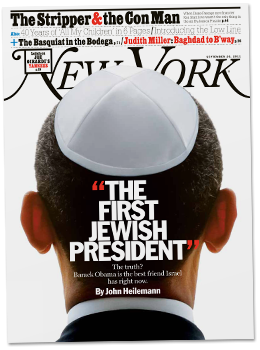
(Obama loves Israel to death. Or tries.

Obama first Jewish president

— DM)

Israel is not like the Czechoslovakia of 1938 and never will be. Israel is an independent military and nuclear power that intends to use its right of self-defense against Iran and its terrorist proxies whether “Emperor” Obama  likes it or not, or tries to stop it.

Obama and his army of Democratic followers in the Congress, progressive groups, and the media repeatedly state their main argument in favor of the agreement, which is that Israel is the only country in the world opposing the Iran nuclear deal. First,  It seems that President  Obama  and his supporters have not paid attention to a recent CNN poll taken on  August 20  that  found that 60 percent of Americans  disapprove of how Obama is handling the Iran deal, and  56 percent  believe that Congress should reject it.

Secondly, like any other self-respecting sovereign country, Israel is against any deal that threatens her own survival by an evil Jihadist Islamic state clearly intent on its annihilation, which is being imposed on her by world powers as a fait accompli.

It seems that Obama and his supporters are delusional, expecting that Israel will allow itself to become a second Czechoslovakia. They are outraged and shocked that Israel has not only refused to quietly accept this very bad deal but dares to fight the deal publicly, loudly, and proudly.

Like Czechoslovakia in 1938, Israel is a small democracy surrounded by hostile nations, and like Czechoslovakia, it was excluded from negotiations that led to a diplomatic deal that shapes its fate and threatens its survival. In 1938, the enlightened democracies in Europe decided to sacrifice Czechoslovakia for a comfortable, temporary solution. The Munich agreement was signed, when Britain and France believed that handing Czechoslovakia to Hitler was the only way to save the world from another war. It is regarded as the shameful culmination of the Allies refusal to confront Nazi aggression and gave Hitler what he wanted in exchange for his verbal promise of “peace in our time” as Neville Chamberlain called it.

In his biography of Franklin Delano Roosevelt, Champion of Freedom, Conrad Black recalls the scene when the poor Czechoslovakian delegates were brought into the room to be informed of their nation’s fate as set out in the Munich Agreement. “No Czech answer was requested. They were handed a fait accompli. The Czechs wept, and Hubert Masarik (Czech diplomat attending the Munich conference) said, prophetically and justly: ‘They don’t know what they are doing to us or to themselves.… These poor, good men were the final players in a macabre and shameful Gothic tragedy.”

The Jewish state has for 67 years been mourning its beloved soldiers who have courageously died defending it from the evil regimes that surround her. However, it will never weep over a deal imposed on it by a morally bankrupt world. Those days of passivity were over when the enormity of the Holocaust was revealed. The Jewish state has been fighting for itself on its own since its independence.

Obama’s threats of a military attack on Iran when violations of the deal occur are not taken seriously by anyone and are a source of laughter for the Iranian regime. Israel does not need  the U.S. or any another party to save her but it does need for Obama and the world powers to move away from Israel’s path and let it do everything in its means to minimize the nuclear threat, and the more menacing conventional  threat resulting from the hundreds of  billions of dollars Iran and its terrorist proxies will get  from the deal.

For the last two years, Obama has been trying to tie Israeli hands and prevent it from practicing its right to self-defense against Iran. Dan Raviv from CBS News reported in March 2014, that the Obama’s administration has asked Israel to stop killing key scientists in the Iranian nuclear program while Obama has been negotiating. In an August interview with the German magazine Der Spiegel, Israeli Defense Minister Moshe Yaalon implicitly warned that the assassinations could be renewed by saying;” I am not responsible for the lives of Iranian scientists.’

But much worse, in Article 10 of the deal, Obama and world powers have agreed that they will assist Iran in thwarting attempts to undermine its nuclear program. The agreement stipulates that they, with the Iranians, will foster “cooperation through training  and workshops to strengthen Iran’s ability to protect against and respond to, nuclear security threats, including sabotage, as well as to enable effective  and sustainable nuclear security  and physical protection systems.”

Recent years have seen various mishaps befall the Iranian nuclear program, from powerful computer viruses to the death of the nuclear scientists, which world media outlets have often attributed to the Israeli intelligence agency, Mossad. According to an audio recording with former Defense Minister Ehud Barak leaked to an Israeli television channel on August 22, Israeli leaders planned to attack military targets in Iran in 2010, 2011, and 2012 but were held back due to the opinions of other government and military leaders.

It is quite disturbing that the U.S. as well as the U.K., Russia, China, France, and Germany will actively try to prevent covert actions against the Iranian nuclear program, as well as any potential military operation against Iran, making such options far more complicated and dangerous for a country like Israel. Congress should ask Obama whether he will order U.S. jets to shoot down Israeli jets intent on destroying an Iranian nuclear weapon facility.

The Congressional Democrats must not repeat the mistakes of the past and sacrifice the future for the present; The Democrats must not ignore Iranian aggression in the hopes of gaining an illusory peace. A vote for the deal is a vote for the beginning of the next war between Israel and Iran and its proxies. The Jewish people can never again remain passive in the face of genocidal enemies.


Resolving the Syrian war is not the silver bullet for stopping ISIS

August 29, 2015

Resolving the Syrian war is not the silver bullet for stopping ISIS, DEBKAfile, August 29, 2015

(Please see also, Pentagon Not Targeting Islamic State Training Camps. — DM)

jISIS_mobile_defense_of_SVBIED_8.15ISIS “mobile defense SVBIED” in action in Iraq

President Obama may likewise offer King Salman all sorts of assistance for standing up to ISIS, but he will find no buyers in Riyadh for his failed policy of reliance on Saudi Arabia’s rival, Iran, for liquidating the Islamist threat looming against the oil kingdom from neighboring Iraq.  Neither is US aid much use for stemming the tide of pro-ISIS radicalism spreading among young Saudi men.

As matters stand today, therefore, the Islamic State faces no tangible threat – even if Iran does go ahead and achieve a nuclear bomb.

**************************

The war to stop the Islamic State in Iraq and the Levant (ISIS) has entered a dark tunnel. And with it the bottomless conflicts in Syria, Yemen, Libya and Iraq. The search for a ray of light moves next week from Moscow to Washington, when Saudi King Salman Bin Abdulaziz makes his first visit as monarch for talks with President Barack Obama.

The three worried Arab rulers received in the Kremlin Tuesday, Aug. 25, by President Vladimir Putin could only talk in circles: Egyptian President Abdel-Fatteh El-Sisi,is  embattled on three fronts, Sinai, his border with Libya and Cairo; Jordan’s King Abdullah II – is wedged between two wars; and UAE Crown Prince Sheikh Mohamed bin Zayed Al Nahyan, has sent his army to fight the Yemen insurgency alongside Saudi Arabia.

For them, resolving the Syrian conflict looked like the silver bullet, the key to ending all their troubles. But whichever Russian or Iranian plans and ideas they considered for a way forward, they were all forced to come back to the same impasse. Even Putin and Obama can’t get around or ignore two solid facts:

1. In the year since the US built an international coalition for fighting ISIS, the brutal Islamists have not been cut down; they have instead been empowered to seize more turf outside their Iraqi and Syrian conquests, such big oil fields in Libya, an ascending threat to Egypt and big plans for Lebanon.

2. A major letdown has followed on the high hopes reposed in Iran. The nuclear deal negotiated with the six world powers – and the elevated regional status conferred on Iran – hinged closely on US expectations that Tehran would put up effective military resources for tackling ISIS.

But the Revolutionary Guards, the popular Syrian and Iraqi forces the Guards established,and  the Afghan and Pakistani Shiite militias they imported – none have proved a match for ISIS and jihadi tactics.

In Syria, ISIS stands fast, unthreatened in the terrain, towns and oil fields they have captured, in the past year – excepting only on fringe fronts, where they have been forced back by local Kurdish rebel fighters.

Hizballah is a big part of the disappointment. It was supposed to serve as a bulwark against ISIS invading eastern Lebanon from Syria. Instead, these Lebanese Shiite fighters, allies of Assad’s army, are bogged down in a bitter battle for the strategic Syrian town of Zabadani, after failing to breach Syrian rebel defenses in forays from the south, the north or the center.

The door is therefore open for the Islamist State to march into Hizballah’s strongholds in the Lebanese Beqaa valley and head north to the port of Tripoli for a foothold on the Mediterranean.

Whether Bashar Assad stays or goes, which might have made a difference at an early stage of the Syrian insurgency, is irrelevant now that his army and allied forces are in dire straits.

In Iraq, the forces fighting ISIS are equally stumped. The jihadis are in control of a deadly string of  strategic towns, Ramadi, Faluja, the refinery city of Baiji, Mosul, and most of the western province of Anbar, including Haditha which commands a key stretch of the Euphrates River.

Here, too, the Islamist terrorist army’s lines remain intact, unbroken either by the undercover Jordanian Special Forces campaign 200 km inside Anbar, albeit backed by US and Israeli military and intelligence assistance; by the “popular mobilization committees” set up by the Iranian general Abu Mahdi al-Muhandis, deputy of the Al Qods chief Qassem Soleimani, or less still by US-trained Iraqi army units.

This week, the impasse spurred two combatants into chilling escalations:

— Iran began shipping its solid propellant missile, Zelzal-3B (meaning “earthquake”), across the border into Iraq, in the hope that this powerful projectile, with a range of 250km , would give the Revolutionary Guards their doomsday weapon for tipping the scales against ISIS.

— The Islamists, for their part, embraced a new tactic, known in the west as “SVBIED mobile defense.” Scores of armed vehicles are packed tight with hundreds of tons of explosives and loosed against military convoys on the move and static enemy positions and bases.

This tactic quickly proved itself by killing the 10th Iraqi Division’s chief, deputy and its command staff, as well as the deputy chief of Iraqi forces in Anbar.

In Moscow last week, Putin offered his three Middle East guests Russian nuclear reactors, arms, joint pacts for fighting terror and assorted ideas for the future of Bashar Assad. But he too had no practical proposals for bringing the Islamic State down.

President Obama may likewise offer King Salman all sorts of assistance for standing up to ISIS, but he will find no buyers in Riyadh for his failed policy of reliance on Saudi Arabia’s rival, Iran, for liquidating the Islamist threat looming against the oil kingdom from neighboring Iraq.  Neither is US aid much use for stemming the tide of pro-ISIS radicalism spreading among young Saudi men.

As matters stand today, therefore, the Islamic State faces no tangible threat – even if Iran does go ahead and achieve a nuclear bomb.