Posted tagged ‘Obama and Syria’

U.S.-Backed Syrian Rebel Commander Boasts of Fighting With AQ Affiliate

June 29, 2016

U.S.-Backed Syrian Rebel Commander Boasts of Fighting With AQ Affiliate, Investigative Project on Terrorism, Ariel Behar and Ravi Kumar, June 28, 2016

1660Nuruddin az-Zinki fighter with a Tow missile.

A commander of a U.S.-backed Syrian opposition group says his fighters continue to ally on the battlefield with an al-Qaida-tied jihadist group.

The United States continues to arm Nuruddin az-Zinki as it fights dictator Bashar al-Assad’s forces. But in an interview posted online last week, az-Zinki founder Tawfiq Shihab Al Deen acknowledged teaming up “with Al Nusra (an al-Qaida affiliate in Syria), which is a group that proved themselves to be forceful fighters.”

“Our groups, Nuruddin az-Zinki, along with Al Nusra, are the only groups continuously fighting against the regime in the al-Malah area in Aleppo,” Shihab al-Deen told Abdullah al-Muhasayni, a radical Saudi preacher said in an interview posted on YouTube June 21.

Al-Muhasayni interviewed jihadi commanders in Syria during the month of Ramadan. He is known to be the conduit between the Jihadi rebel groups in Syria and their benefactors in the Gulf.

The United States has armed Nuruddin az-Zinki, which has posted many videosshowing their fighters using U.S. TOW missiles.

It is not clear why the United States continues to support Nuruddin az-Zinki despite its alliance with an al-Qaida affiliate.

Muhasayni’s interview with Shihab al-Deen could indicate that this alliance between Nuruddin az-Zinki and Al Nusra extends beyond the battlefield. Muhasayni is considered the spiritual father of al-Qaida in Syria.

The U.S. suspended non-lethal aid to Syrian rebels late in 2014, after jihadists seized warehouses storing supplies. But support for Nuruddin az-Zinki continued, the McClatchy news service reported.

Hizballah set to fight ISIS for Euphrates Valley

June 17, 2016

Hizballah set to fight ISIS for Euphrates Valley, DEBKAfile, June 17, 2016

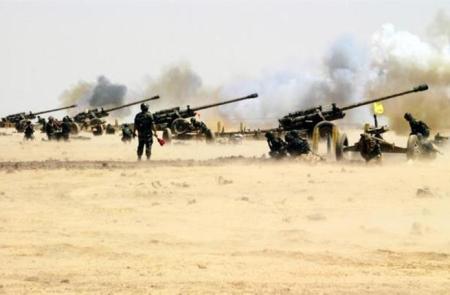
Hezbollah_Zabadani_12.8.15Hizballah artillery in action in Syria

Hizballah this week ordered a general military call-up for their biggest combat mission in the Syrian war since their forces began fighting in support of the Assad regime in 2013, DEBKAfile military forces report.

Iran’s Lebanese proxy has been assigned the task of expelling the Islamic State from broad areas it occupied in the Deir ez-Zor region of eastern Syria and, in particular, the Euphrates River valley which connects eastern Syria and western Iraq.

This Hizballah offensive is designed to open the way for the pro-Iranian Shiite Popular Mobilization Forces and the Badar Forces militias which entered the ISIS-held Iraqi town of Fallujah Friday June 17 to move west and up the Iraqi side of the valley. The two militias spearheaded the Fallujah operation under the command of Iran’s Maj. Gen. Qassem Soleimani of the Revolutionary Guards and Ground Corps Brig. Gen. Mohammad Pakpour.

The plan is for Hizballah forces to meet these pro-Iranian militia forces on the Syria-Iraq border and so gain control over the most important strategic land pass between Iraq and Syria.

Whereas the pro-Iranian militias in Iraq are fighting under US air cover, Hizballah is assured of Russian air support in Syria. And so, for the first time in the Syria conflict and its own history, Hizballah will receive air cover from both the US and Russia, the two superpowers now coordinating their military moves in Syria and Iraq.

This strategy, which essentially connects the Syrian and Iraqi campaigns against ISIS, was charted on June 9, at a secret meeting in Tehran of the Russian, Iranian and Syrian defense chiefs.

DEBKAfile military sources in Washington say that the operation’s plan was put before President Barack Obama and he sanctioned it as part of the war on ISIS.

In the run-up to the Syrian segment of the plan, Hizballah is transferring substantial combat strength from Lebanon into Syria, and emptying its other Syrian fronts, especially around Aleppo, for the large-scale concentration around Palmyra.

The Hizballah force will start out by targeting the Syrian town of Al-Sukhna, 63km south of Palmyra and 136km north of Deir ez-Zor, thus gaining command of M20, the main highway link between northern to eastern Syria.

DEBKAfile military sources say that this military offensive by Hizballah against ISIS, with combined US-Russian support, threatens to transform a terrorist organization dedicated to fighting Israel in the service of Iran into one of the most powerful armies in the Middle East. Israel cannot stop this happening. The former Israel defense ministers who harangued this week against the Netanyahu government’s alleged “scaremongering” willfully ignored this dangerous development. They must also be held at least partly accountable for the failure of Israel’s air raids over Syria to diminish Hizballah’s military capabilities.

Breaking: State Dept. Protests Obama Lethargy

June 17, 2016

Breaking: State Dept. Protests Obama Lethargy, Power LineSteven Hayward, June 16, 2016

There’s an old joke about how it would be nice if there was an American Interests desk at the State Department, since Foggy Bottom was usually more sympathetic to foreign nations than our own. The truth behind that joke is what makes so extraordinary the story the Wall Street Journal is reporting tonight about the 51 State Department employees who have signed a petition calling for a tougher military policy against the Assad regime in Syria:

BEIRUT—Dozens of State Department officials this week protested against U.S. policy in Syria, signing an internal document that calls for targeted military strikes against the Damascus government and urging regime change as the only way to defeat Islamic State.

The “dissent channel cable” was signed by 51 State Department officers involved with advising on Syria policy in various capacities, according to an official familiar with the document. The Wall Street Journal reviewed a copy of the cable, which repeatedly calls for “targeted military strikes” against the Syrian government in light of the near-collapse of the ceasefire brokered earlier this year.

The views expressed by the U.S. officials in the cable amount to a scalding internal critique of a longstanding U.S. policy against taking sides in the Syrian war, a policy that has survived even though the regime of President Bashar al-Assad has been repeatedly accused of violating ceasefire agreements and Russian-backed forces have attacked U.S.-trained rebels.

The Wall Street Journal doesn’t say so directly, but this represents massive internal disgust with the pusillanimity of Obama going on for several years now. That the State Departmentwould want stronger military action is simply extraordinary. Here and there the reality of the matter breaks through:

“It’s embarrassing for the administration to have so many rank-and-file members break on Syria,” said a former State Department official who worked on Middle East policy. . . The recent letter marked a move by the heart of the bureaucracy, which is largely apolitical, to break from the White House.

In other words, this is a no-confidence vote on Obama’s Middle East policy, from a government body that is otherwise endlessly accommodating to drift and indecision.

Iran’s Chess Board

June 3, 2016

Iran’s Chess Board, Front Page MagazineCaroline Glick, June 3, 2016

official_photo_of_hassan_rouhani_7th_president_of_iran_august_2013

Even if Obama’s successor disavows his actions, by the time Obama leaves office, America’s options will be more limited than ever before. Without war, his successor will likely be unable to stem Iran’s rise on the ruins of the Arab state system.

********************

Reprinted from jpost.com.

Strategic thinking has always been Israel’s Achilles’ heel. As a small state bereft of regional ambitions, so long as regional realities remained more or less static, Israel had little reason to be concerned about the great game of the Middle East.

But the ground is shifting in the lands around us. The Arab state system, which ensured the strategic status quo for decades, has collapsed.

So for the first time in four generations, strategy is again the dominant force shaping events that will impact Israel for generations to come.

To understand why, consider two events of the past week.

Early this week it was reported that after a two-year hiatus, Iran is restoring its financial support for Islamic Jihad. Iran will give the group, which is largely a creation of the Iranian Revolutionary Guard Corps, $70 million.

On Wednesday Iranian media were the first to report on the arrest of a “reporter” for Iran’s Al-Alam news service. Bassam Safadi was arrested by Israel police in his home in Majdal Shams, the Druse village closest to the border with Syria on the Golan Heights. Safadi is suspected of inciting terrorism.

That is, he is suspected of being an Iranian agent.

There is nothing new about Iranian efforts to raise and run fronts against Israel within its territory and along its borders. Iran poses a strategic threat to Israel through its Hezbollah surrogate in Lebanon, which now reportedly controls the Lebanese Armed Forces.

In Gaza, Iran controls a vast assortment of terrorist groups, including Hamas.

In Judea and Samaria, seemingly on a weekly basis we hear about another Iranian cell whose members were arrested by the Shin Bet or the IDF.

But while we are well aware of the efforts Iran is making along our borders and even within them to threaten Israel, we have not connected these efforts to Iran’s actions in Iraq and Syria. Only when we connect Iran’s actions here with its actions in those theaters do we understand what is now happening, and how it will influence Israel’s long-term strategic environment.

The big question today is what will replace the Arab state system.

Syria, Iraq, Lebanon, Yemen and Libya no longer exist. On their detritus we see the fight whose results will likely determine the fates of the surviving Arab states, as well as of much of Europe and the rest of the world.

Israel’s strategic environment will be determined in great part by the results of Iran’s actions in Iraq and Syria. While Israel can do little to affect the shape of events in these areas, it must understand what they mean for us. Only by doing so, will we be able to develop the tools to secure our future in this new strategic arena.

Until 2003, Saddam Hussein was the chief obstacle to Iran’s rise as the regional hegemon.

US forces in Iraq replaced Hussein until they left the country in 2011. In the meantime, by installing a Shi’ite government in Baghdad, the US set the conditions for the rise of Islamic State in the Sunni heartland of Anbar province on the one hand, and for Iran’s control over Iraq’s Shi’ite-controlled government and armed forces on the other.

Today, ISIS is the only thing checking Iran’s westward advance. Ironically, the monstrous group also facilitates it. ISIS is so demonic that for Americans and other Westerners, empowering Iranian-controlled forces that fight ISIS seems a small price to pay to rid the world of the fanatical scourge.

As former US naval intelligence analyst J.E. Dyer explained this week in an alarming analysis of Iran’s recent moves in Iraq published on the Liberty Unyielding website, once Iranian- controlled forces defeat ISIS in Anbar province, they will be well placed to threaten Jordan and Israel from the east. This is particularly the case given that ISIS is serving inadvertently as an advance guard for Iran.

In Syria, Iran already controls wide swaths of the country directly and through its surrogates, the Syrian army, Hezbollah and Shi’ite militias it has fielded in the country.

Since the start of the war in Syria, Israel has repeatedly taken action to block those forces from gaining and holding control over the border zone on the Golan Heights.

Prime Minister Benjamin Netanyahu’s surprising recent announcement that Israel will never relinquish control over the Golan came in response to his concern that in exchange for a cease-fire in Syria, the US would place that control on the international diplomatic chopping block.

A week and a half ago, Iran began its move on Anbar province.

On May 22, Iraqi forces trained by the US military led Iraq’s offensive to wrest control over Fallujah and Mosul from ISIS, which has controlled the Sunni cities since 2014. Despite the fact that the lead forces are US-trained, the main forces involved in the offensive are trained, equipped and directed by Iran.

As Iraqi forces surrounded Fallujah in the weeks before the offensive began, Qassem Soleimani, the commander of the Revolutionary Guards’ Quds forces, paid a public visit to the troops to demonstrate Iran’s dominant role.

The battle for Fallujah is a clear indication that Iran, rather than the US, is calling the shots in Iraq. According to media reports, the Pentagon wanted and expected for the forces to be concentrated in Mosul. But at the last minute, due to Soleimani’s intervention, the Iraqi government decided to make Fallujah the offensive’s center of gravity.

The Americans had no choice but to go along with the Iranian plan because, as Dyer noted, Iran is increasingly outflanking the US in Iraq. If things follow their current course, in the near future, Iran is liable to be in a position to force the US to choose between going to war or ceasing all air operations in Iraq.

On May 7, Asharq al-Awsat reported that the Revolutionary Guards is building a missile base in Suleimaniyah province, in Iraqi Kurdistan.

A senior IRGC general has made repeated visits to the area in recent weeks, signaling that the regime views this as an important project. The report further stated that Iran is renewing tunnel networks in the region, built during the 1980-88 Iran-Iraq War.

Dyer warned that depending on the type of missiles Iran deploys – or has deployed – to the base, it may threaten all US air operations in Iraq. And the US has no easy means to block Iran’s actions.

To date, commentators have more or less agreed that US operations in Iraq and Syria make no sense. They are significant enough to endanger US forces, but they aren’t significant enough to determine the outcome of the war in either territory.

But there may be logic to this seemingly irrational deployment that is concealed from view. A close reading of David Samuels’s profile of President Barack Obama’s Deputy National Security Adviser Ben Rhodes published last month in The New York Times, points to such a conclusion.

Samuels described Rhodes as second only to Obama in his influence over US foreign and defense policy. Rhodes boasted to Samuels that Obama’s moves toward Iran were determined by a strategic course he embraced before he entered office.

A fiction writer by training, Rhodes’s first “national security” job was as the chief note taker for the Iraq Study Group.

Then-president George W. Bush appointed the group, jointly chaired by former secretary of state James Baker and former congressman Lee Hamilton, in 2006, to advise him on how to extricate the US from the war in Iraq.

In late 2006, the ISG published its recommendations.

Among other things, the ISG recommended withdrawing US forces from Iraq as quickly as possible. The retreat was to be enacted in cooperation with Iran and Syria – the principle sponsors of the insurgency.

The ISG argued that if given the proper incentives, Syria and Iran would fight al-Qaida in Iraq in place of the US. For such action, the ISG recommended that the US end its attempts to curb Iran’s nuclear program.

Responsibility for handling the threat, the ISG recommended, should be transferred to the US Security Council.

So, too, the ISG recommended that Bush pressure Israel to withdraw from the Golan Heights, Jerusalem and Judea and Samaria in the framework of a “peace process.”

Such action too would serve to convince Iran and Syria that they could trust the US and agree to serve as its heirs in Iraq.

Bush of course, rejected the ISG’s recommendations.

He decided instead to sue for victory in Iraq. Bush announced the surge in US forces shortly after the ISG published its report.

But now we see, that through Rhodes the Iraq Study Group’s recommendation became the blueprint for a new US strategy of retreat and Iranian ascendance in Iraq and throughout the Middle East.

The chief components of that strategy have already been implemented. The US withdrawal from Iraq in 2011 left Iran as the new power broker in the country. The nuclear pact with Iran facilitated Iran’s transformation into the regional hegemon.

Against this strategic shift, the US’s minimalist campaigns in Iraq and Syria against ISIS make sense.

The US forces aren’t there to defeat ISIS, but to conceal Iran’s rise.

When ISIS is defeated in Anbar and in Raqqa in Syria, its forces are liable to turn west, to Jordan.

The US is currently helping Jordan to complete a border fence along its border with Iraq. But then ISIS is already active in Jordan.

And if events in Iraq and Syria are any guide, where ISIS leads, Iran will follow.

Iran’s strategic game, as well as America’s, requires Israel to become a strategic player.

We must recognize that what is happening in Iraq is connected to what is happening here.

We need to understand the implications of the working alliance Obama has built with Iran.

Even if Obama’s successor disavows his actions, by the time Obama leaves office, America’s options will be more limited than ever before. Without war, his successor will likely be unable to stem Iran’s rise on the ruins of the Arab state system.

In this new strategic environment, Israel must stop viewing Gaza, Judea and Samaria, the Golan Heights and Lebanon as standalone battlefields. We must not be taken in by “regional peace plans” that would curtail our maneuver room. And we must bear in mind these new conditions as we negotiate a new US military assistance package.

The name of the game today is chess. The entire Middle East is one great board. When a pawn moves in Gaza, it affects the queen in Tehran.

And when a knight moves in Fallujah, it threatens the queen in Jerusalem.

Syrian Opposition Official: West Responsible For Assad Remaining In Power; U.S. Enabled Russia To Become Main Player In Syria Crisis

May 19, 2016

Syrian Opposition Official: West Responsible For Assad Remaining In Power; U.S. Enabled Russia To Become Main Player In Syria Crisis, MEMRI, May 18, 2016

Khaled Khoja, who served as president of the National Coalition for Syrian Revolutionary and Opposition Forces until March 2016, gave an interview to the London-based Saudi daily Al-Sharq Al-Awsat on April 17, 2016, in which he harshly attacked the international community and particularly the U.S. Khoja argued that the U.S. never desired regime change in Syria and therefore did not take a decisive stand against Bashar Al-Assad despite his many crimes, and did not significantly support the Syrian opposition. According to him, the Americans showed apathy regarding the crisis, enabling Russia to fill the vacuum that they had created in a way that suited Russian interests. He added that the purpose of American military aid to the Kurds was to create a Kurdish canton, which would effectively lead to the splintering of Syria. Khoja stressed that the Syrian High Negotiations Committee remains insistent that the first step is to establish a transitional governing body, and only then can a new constitution, elections, and other topics be addressed.

It should be mentioned that the interview was given prior to the April 19 announcement by the head of the Syrian High Negotiations Committee, Riyad Hijab, that its delegation was suspending its participation in the Geneva talks.

Following are excerpts from the interview:[1]

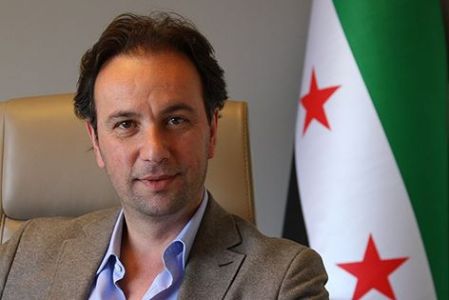
28054Khaled Khoja (image: Zamanalwsl.net)

We Insist On A Serious Transition Of Power And All Authority

Khoja started by mentioning the Syrian High Negotiations Committee’s expectations from the current round of the Geneva talks: “We are here to focus on forming the governing body for the transitional phase. U.S. Special Envoy Staffan de Mistura is continuing his relentless efforts to begin discussing the political transitional phase, which will be based on establishing the ‘governing body,’ as stated in the Geneva announcement, UN Security Council Resolution 2218, and other resolutions. We have been empowered by opposition forces to discuss realizing these goals and we cannot deviate from them. Negotiations today should pick up where Geneva II left off [in February 2014] under the supervision of [former UN Special Envoy to Syria] Lakhdar Brahimi. We must start by forming this [governing] body and then proceeding to discuss the issues of the constitution, the elections, and other matters that fall under the governing body’s authority. Naturally, we have clear views on all these issues, which we will reveal at the appropriate time. I wish to say that we reject the verbal slips replacing the phrase ‘transitional governing body’ with ‘transitional regime’ or ‘transitional government’ and adhere to ‘transitional phase governing body’ and all it implies – meaning a serious transition of power and all authority.”

International And American Support For The Opposition Is Feeble

According to Khoja, “the position of international, and especially American, support for the Syrian opposition is feeble. The sad thing is that the true positions [of the U.S. and international community] regarding Assad is still feeble and vague despite all the evidence marking Bashar Al-Assad as a ‘war criminal,’ and despite the many official American statements that hold him responsible for ongoing killing and acts of slaughter. The lack of international political desire to push for the start of the transitional political phase in Syria has provided Assad and the parties supporting him, whether Iranians or Russians, with room to maneuver, enabling him [Assad] to continue heading the regime and to remain a chaos-creating factor in the region, [a factor] which exacerbates the refugee crisis and uses it as a card for pressuring neighboring countries and Europe, and which exports ISIS and terrorism…”

U.S. Apathy Is A Main Factor In Russia Becoming The Main Player In The Crisis

Khoja said further: “There is clearly American apathy regarding the Middle East, which opens the door for Russia to fill the vacuum left by the Americans… When we speak of the mass extermination of the Syrian people, their expulsion, the use of chemical weapons against them, the documentation of regime crimes in detention centers, forced disappearances, preplanned acts of murder, and red lines that have become green lights – all this causes observers to lose faith in the American position… Had the Americans not created this vacuum, we would not have been in the state we are in today, and Russia would not have become the main player in the crisis, holding the reins of initiative… Politically speaking, I believe the American position has not changed much since the onset of the Syrian revolution… [From the start] there was no real American support for change… The military aid we received [from the U.S.] is no match for the [American] military aid received by the Kurdish [Democratic] Union Party and the Kurdish People’s Defense Unit militias [YPG]. We believe that this aid for the Kurds was meant to create a new Kurdish ‘canton’ and to enforce a new reality as a foregone conclusion. American apathy has turned Syria into a series of ‘cantons’. The ‘Southern Canton,’ which is apart from the ‘Northern Canton,’ the ‘Kurdish Canton,’ and the ‘Alawi Canton.’ We cannot discount the possibility that as part of the political process, we will see a strengthening of [the phenomenon] of these cantons, but we will absolutely not agree to this…”

Syria Cannot Remain A Group Of Cantons In The Medium And Long Term

Khoja said that during the second round of negotiations there was talk of a federal solution that was “marketed by the Americans, the Russians, and UN Special Envoy de Mistura, who spoke openly and explicitly in one press conference on the topic of federation. Except that he did not discuss this issue with us, but rather only with other parties. The Russians did not hide their support for the federal solution and in my opinion, there is a serious attempt to create facts on the ground in Syria in order to strengthen the ‘canton’ situation.

“Any international solution, regardless of which parties promote it, cannot impose a situation that the Syrian people do not agree to. It is possible that the current situation will continue in the near future, but not in the medium and long term. The proof of this is that in the 1920s, the French tried to establish four statelets in Syria, but they only lasted a few years.”


Endnotes:


[1] Al-Sharq Al-Awsat (London), April 17, 2016.

Exclusive: US warplanes intervene in Syrian war

May 17, 2016

Exclusive: US warplanes intervene in Syrian war, DEBKAfile, May 17, 2016

US-16-fighter-jets_Operating_in_Syria_B_17.5.16.jpg

On Tuesday, May 17, the US expanded its involvement in the war in Syria, and for the first time since the war began in 2011, US F-16 fighter-bombers bombed radical Syrian rebels fighting Iranian, Syrian and Hizballah forces near Aleppo,DEBKAfile’s military and intelligence sources say in an exclusive report.

According to the sources, the targets were mainly troops, positions, and transportation routes of rebel groups such as ISIS and the Nusra Front that also threaten moderate Syrian rebel groups in the area. But there is no doubt that the American airstrikes will help Syrian President Bashar Assad, just like the Russian bombings have done.

The US warplanes took off from Incirlik airbase in southern Turkey and entered Syrian airspace over Idlib province in northern Syria.

Our sources said that the airstrikes were coordinated with the Russian air force command at Hmeymim airbase next to Latakia, and via American and Russian officers operating from the Jordanian capital Amman.

There is no doubt that the intervention was a turnaround by the administration of President Barack Obama that until now had opposed any US air force operation inside Syria due to concern over tipping the balance in favor of one of the warring sides.

There are now no less than ten air forces engaged in the Syrian war: those of the US, Russia, Israel, Britain, France, Belgium, Germany, Syria, Turkey and Jordan.

Last week, ahead of the US air force’s entry, the Pentagon reinforced the American special forces troops at Remalan airbase, located in northern Syria next to the Kurdish city of Hassakeh.

Obama previously announced that 250 troops had been deployed to reinforce the 50 already on the ground. But DEBKAfiles military sources report that the actual number of US soldiers at the base is much higher, and that the troops have attack and transport helicopters that can deliver them within a short period of time to any of the fronts in Syria.

The US air force attacks on the Aleppo and Idlib fronts are expected to continue in the coming days.

Suddenly Russia consents to consider Assad’s ouster

May 4, 2016

Suddenly Russia consents to consider Assad’s ouster, DEBKAfile, May 4, 2016

Washington and Moscow have made dramatic progress over the last few days in marathon telephone talks between Secretary of State John Kerry and Foreign Minister Sergei Lavrov on ending the war in Syria. Russia agreed for the first time to discuss the possibility that Syrian President Bashar Assad will step down, and the conditions under which such a process will take place, according to DEBKAfile’s intelligence sources.

The sources add that the Russians also agreed to begin to negotiate the future of senior Syrian military commanders who are carrying out the war against the rebels. The contacts that include the Saudis and the Jordanians have reached such an advanced stage that participants have started to prepare lists of Syrian commanders who will be removed or remain in their posts.

One of the clearest signs of the progress was the arrival of nearly all of the heads and commanders of the Syrian rebel organizations on Monday and Tuesday (May 2-3) for intensive talks at the US Central Command Forward-Jordan, a war room outside Amman staffed by officers from the US, Jordan, Saudi Arabia and the UAE. The gathering was arranged via a series of meetings held in Geneva over the last few days between the top diplomats of the US, Saudi Arabia and Jordan.

Our sources report that US officials and senior officers in charge of the Obama administration’s strategy for the war in Syria presented the rebel leaders and commanders with a series of agreements already reached by Washington and Moscow on ways of ending the war. The main part of the agreement focused on the resignation of Assad and the departure of him and his family from the country-the Syrian opposition’s key demand for continuing the talks.

The rebel leaders were asked by the US officials and officers, who were accompanied by Saudi and Jordanian officials, to help facilitate implementation of the agreed measures and not to try to interfere with them, or in other words, to stop the fighting.

According to the information from our sources, the discussions in Jordan are continuing.

Washington’s current goal is achieve a ceasefire in all of Syria that will prevent an imminent attack by Russian, Iranian, Syrian and Hizballah forces on Aleppo, the country’s second-largest city.

Our military sources report that on Monday and Tuesday, by order of President Vladimir Putin, the Russian air force suddenly halted its airstrikes in the Aleppo area.

Thus, the Iranian, Syrian and Hizballah armies are preparing to launch their assault without the air support needed to capture the city. Even though the Syrian air force can operate in an uninhibited manner in the Aleppo area, it is not up to a large-scale and decisive attack.

No specific information is forthcoming for the Russian U-turn on Assad ousters in mid offensive for the recovery of Aleppo.

However Putin is prone to sudden zigzag in policies.

GCC leaders reject Obama’s Middle East policy

April 23, 2016

GCC leaders reject Obama’s Middle East policy, DEBKAfile, April 23, 2016

Big Bomber


DEBKAfile’s intelligence sources and its sources in the Gulf report exclusively that US President Barack Obama failed to convince the leaders of the six Gulf Cooperation Council member states, during their April 22 summit in Riyadh, to support his Middle East policy and cooperate with Washington.

Our sources also report that Saudi Arabia, with Turkey’s help, and the US carried out separate military operations several hours before the start of the summit that showed the extent of their differences.

The US on Thursday started to use its giant B-52 bombers against ISIS in an attempt to show Gulf leaders that it is determined to quash the terrorist organization’s threat to Gulf states. The bombers deployed at Qatar’s Al Udeid airbase attacked targets around Mosul in northern Iraq, but the targets were not identified.

Meanwhile, Saudi Arabia and Turkey, which recently established a bloc along with Egypt and Jordan to oppose Obama’s Middle East policy, started to infiltrate a force of 3,500 rebels back into Syria.

The force has been trained and financed by the Saudis at special camps in Turkey and Jordan. Members of the force are now fighting alongside other rebels north of Aleppo, but they are being bombed heavily by the Russian and Syrian air forces.

Riyadh sent the rebels into Syria to demonstrate to Obama that the Saudi royal family opposes the policy of diplomatic and military cooperation between the US and Russia regarding Syria that enables President Bashar Assad to remain in power in Damascus.

Since the war in Syria began in 2011, Obama has promised countless times that Washington would train and arm Syrian rebel forces outside the country, and then deploy them in Syria in order to strengthen rebel forces.

However, it has not done so except for one instance in 2015. The US infiltrated a small force consisting of no more than several dozen fighters, but it was destroyed by the Nusra Front, an affiliate of Al Qaeda, shortly after it crossed the border. The terrorist group had apparently been tipped off about the arrival of the pro-American force.

All of Washington’s efforts to recruit and train Syrian fighters, which have cost close to $1 billion, have failed.

DEBKAfile’s sources report exclusively that the leaders of the six GCC member states put their previous differences aside and presented Obama with four requests aimed at building a new joint policy regarding the region. According to our sources, these requests were:

1. Action by Washington to strengthen the Sunni majority in Iraq and facilitate representation of the Sunnis in the central government in Baghdad. The Gulf rulers told Obama that his policy of trying to win the support of Iraqi Prime MinisterHaider al-Abadi is mistaken.

They also pointed out reports by their intelligence services that al-Abadi is likely to be deposed and be replaced by a pro-Iranian prIme minister in the near future.

Obama rejected the request and said he refuses to change his Iraq policy.

2. Imposition of new US sanctions on Iran over its continuing ballistic missile tests.

On April 19, several hours before Obama’s departure for Riyadh, Iran carried out its latest act of defiance by attempting to launch a satellite into orbit using one of its “Simorgh” intercontinental ballistic missiles. The missile failed to leave the Earth’s atmosphere, fell to earth and crashed along with the satellite.

Obama turned down the Gulf leaders on new sanctions as well.

3. Provision of US-made F-35 fighter-bombers to Saudi Arabia and the UAE so they can take action against the Iranian missile threat. The US president declined the request.

4. Abandonment of Washington’s cooperation with Russia and the UN for political solution in Syria, and instead cooperate with Gulf states and Turkey to end the war and depose President Bashar Assad. Obama refused.

In other words, the summit in Riyadh, Obama’s final meeting with GCC leaders before he leaves the White House next January, ended without a single agreement.

Arab Press Reports On U.S.-Russia Understandings Allowing Assad To Remain In Power In Syria During Transitional Phase

April 22, 2016

Arab Press Reports On U.S.-Russia Understandings Allowing Assad To Remain In Power In Syria During Transitional Phase, MEMRI, N. Mozes*, April 22, 2016

(The analysis does not mention the Arab press’ reaction to the Putin – Obama agreement to turn Golan over to Syria. — DM)

According to many reports in the Arab press in recent days, alongside the indirect talks in Geneva between the Syrian regime and opposition that are being mediated by UN Special Envoy Staffan de Mistura, the U.S. and Russia have been conducting separate secret talks to draw up understandings on resolving the crisis. The reports state that the U.S. is inclined to accept the position of the Syrian regime and its Russian ally, namely, that the idea of a transitional governing body should be abandoned in favor of a joint regime-opposition body, and that the Syrian regime should remain in the hands of President Bashar Al-Assad, at least in the transitional phase.

Concurrently, during his talks with the regime and opposition delegations, de Mistura presented an idea that he claims he did not initiate, which involves Assad remaining as a figurehead president and appointing deputies to whom he would delegate his political and military authority. It is hard to imagine that the U.S. and Russia were unaware of this proposal, which is in line with what has been reported on their own understandings regarding Assad’s remaining president during the transitional period. These reports, if true, show that the U.S. has backed down even further from its position vis-à-vis Assad and the Syrian opposition, and that it is disregarding the clause in the 2012 Geneva I communique calling for the establishment of a transitional body with full authority.

Arab press reports on these U.S.-Russia efforts increased greatly after Secretary of State John Kerry’s March 24, 2016 meetings with Russian Foreign Minister Sergey Lavrov and President Vladimir Putin. Following the meetings, Kerry said that both sides had agreed to step up their efforts to achieve a political transition in Syria and had agreed on a timetable and that a draft constitution would be submitted in August 2016.[1] On April 8, Kerry confirmed reports that the U.S. was further backing down from its previous position when he told the Saudi Al-Arabiya TV channel that while Assad can no longer lead his country in light of the many crimes he had committed, he would still be present at the start of the transitional phase. He added that if Assad would facilitate this phase, then a safe exit for him could be discussed.[2]

According to the Arab reports, the U.S.-Russia understandings would be imposed on the parties involved, as with the February 12, 2016 agreement on cessation of hostilities. In another similarity to that agreement, the Assad regime will be the main one to benefit.

This paper will review the reports on U.S.-Russia understandings on the Syrian crisis:

27751U.S. Secretary of State John Kerry and Russian Foreign Minister Lavrov (image: Orient-news.net, April 17, 2016)

Anti-Assad Media: American-Russian Deal Includes Assad Remaining In Power

On April 16, 2016, three days after the start of the third round of indirect talks in Geneva between the Syrian regime and opposition under the mediation of UN Special Envoy Staffan de Mistura, the London-based Saudi daily Al-Sharq Al-Awsat reported that Western diplomats “are warning that there will be a U.S.-Russia deal on Syria before the summer.” According to the report, it is the Americans who are pressuring the Russians to arrive at understandings that are to be “very close to the Russia proposal regarding the nature of the transitional phase, the regime, the constitution, and the elections.” The diplomats cited in the report said that the U.S. is trusting Moscow to find a solution for the Syrian crisis while ignoring Western and regional elements.[3]

The following day, the newspaper reported that the U.S. and Russia were discussing not only “regime leader Bashar Al-Assad’s remaining in power during the transitional phase, but also the central role he would play in it, including in drafting a constitution and in the elections set for 18 months after the start of negotiations between the sides.”[4] In a later report, the paper cited Western sources who warned against recycling “the Yemen model” under which Yemen president ‘Ali ‘Abdallah Saleh had officially been removed but had in effect remained in control of the armed forces and in possession of many political cards.[5]

On April 17, the London-based Saudi daily Al-Hayat also reported on the U.S.-Russia talks. According to the daily, Robert Malley, the White House Coordinator for the Middle East and chief advisor to President Obama on Syria, and Putin’s Syria envoy Alexander Lavrentiev were holding intensive talks behind the scenes with the aim of drawing up “constitutional and political principles” based on a “political partnership” between the regime and the opposition, “in accordance with an improved Lebanese model.”[6] Under this proposal, the regime and opposition would share executive, military, security, legal, and constitutional authority. The newspaper also stated that Obama would present these understandings during his visit to the Gulf states on April 21, and that the Russians would present them to Qassem Soleimani, commander of the Qods Force of Iran’s Islamic Revolutionary Guard Corps (IRGC), who recently visited Moscow. The understandings would then be brought before Syrian regime representatives, and a “select list” of oppositionists who agree to a political solution.[7]

On April 18, 2016, the London-based daily Al-Arabi Al-Jadid reported that in light of the Geneva talks’ failure so far to bring the sides closer together, representatives of presidents Obama and Putin are working in Geneva to formulate an alternative plan in the event that the negotiations fail; this plan would be imposed on the sides via a UN Security Council resolution, under Chapter VII of the United Nations Charter. Two main proposals to resolve the crisis were presented at these U.S.-Russia Talks: The first is based on the principle of a “political partnership” among all elements of Syrian society, which would be more comprehensive than the 1989 Taif Agreement and would include leaving Assad in power, because he controls the main power base in Syria. The second proposal includes the establishment of a transitional council comprising eight technocrats; this council would lead the transitional phase.[8]

Russian Foreign Minister Lavrov denied the reports about secret U.S.-Russia talks, stressing that they were “routine consultations.”[9] However, during the regime-opposition Geneva talks, de Mistura brought the delegations a proposal “from an expert” that also involved Assad’s remaining in power, at least temporarily. Under this proposal, he would continue to serve as president and would appoint three deputies to whom he would delegate his political and military authority and who would manage the country during the transitional phase.[10] It is hard to imagine that the U.S. and Russia, who sponsor the Geneva talks, were unaware of this proposal, which is in line with what has been reported on their own understandings regarding Assad’s remaining president during the transitional period.

As noted, these reports come in addition to similar reports in the Arab press following Kerry’s March 24 visit to Moscow that focused on a U.S.-Russia convergence on the issue of the Syrian crisis. Thus, the London-based Qatari daily Al-Quds Al-Arabi reported on March 29, 2016 that the U.S. and Russia had drawn up the general details of a three-point plan that includes general parliamentary elections under UN auspices, a new constitution, and creation of a presidential election mechanism allowing Assad to run “even though the U.S. would prefer that Russia persuade him not to do so.” The report also added that the president’s authority would be downgraded.[11]  Al-Hayat reported on March 31 that Kerry had informed Arab countries that the U.S. and Russia had arrived at understandings that included Assad’s exit to another country, but not a timetable for it.[12]

On April 11, 2016, a Syrian oppositionist website reported that Russia had prepared an alternative plan in case the Geneva talks failed; it dictated the establishment of a military council comprising both regime and opposition elements; this council would rule the country and prepare for parliamentary and presidential elections. Under this plan, there would be no transitional phase and no interim ruling body, as neither are compatible with the current Syrian constitution. Russia reportedly presented this plan to Kerry during the latter’s Moscow visit, and Kerry assured his hosts that the U.S. would not oppose it but that Russia would have to persuade the opposition to accept it.[13]

Kerry: Assad Should Remain For Start Of Transitional Phase

The American administration’s statements on resolving the Syrian crisis are rife with internal contradictions. For example, officials repeatedly state that Assad is illegitimate because of his crimes against his people, and that he cannot unite Syria, but at the same time Kerry said that Russia and the U.S. have agreed that he should remain for the start of the transitional phase. This effectively confirms reports that the American position is moving closer to the Russian one, and that the former no longer objects to Assad’s remaining in power during the transitional phase.

In an April 8, 2016 interview, Kerry told the Saudi Al-Arabiya TV: “During the transitional phase, Assad will remain in power in accordance with the Geneva [I] communique, since this communique required joint [regime and opposition] consensus regarding the phase. This means that both Assad and the opposition must join this consensus… The U.S. and Russia have reached an agreement that was reached also with many other countries, that is, there is no escaping a transitional phase followed by a united, secular, and non-sectarian Syria… Likewise, we agreed that Assad should be present at the start of the transitional phase…

“The Russians have made it clear that Assad has assured them that he will participate in the transitional phase and support the drafting of a new constitution and the holding of presidential elections. If he does not meet his commitments, I do not believe the Russians will continue to support him.”

In response to the question of whether Assad would be allowed safe passage out of Syria if he agreed to step down, Kerry responded: “… If Assad is willing to be a constructive factor in the efforts to make peace in Syria, this safe passage would receive significant attention, and the sides should seriously consider this effort and enable Assad to live safely, which is what I wish for him…”[14]

On April 16, a Syrian opposition website also reported that the U.S. had agreed to postpone the debate on Assad’s fate, and stated that Kerry, on his April 7 visit to Bahrain, had told the Gulf Cooperation Council foreign ministers that Assad’s withdrawal from power should not be discussed at this time.[15]

U.S.-Russia Military Coordination

Although U.S. administration officials reject the prospect of military coordination with Russia and the Syrian regime against the Islamic State (ISIS), there are indications of U.S.-Russia coordination regarding military activity in Syrian territory. Thus, the Syrian Democratic Forces – an umbrella organization of Kurdish and Sunni Arab forces fighting ISIS, Jabhat Al-Nusra, and Islamist opposition factions – received aerial support from both the U.S.-led international coalition and the Russian air force during its takeover of the city of Al-Shaddadi in southern Al-Hasakah in northwest Syria.[16] On March 24, the Pentagon reported that international coalition jets had bombed an ISIS post near Tadmur.[17]  A Syrian oppositionist website reported that this attack was carried out as regime forces, backed by the Russian air force, reached the outskirts of the city.[18]

The Syrian Opposition Fears That The U.S. Will Back Down Still More From Its Original Position

The Syrian opposition, represented by the High Negotiations Committee (HNC) that was established in Riyadh, expressed grave concern at the reports of an imminent U.S.-Russia deal enabling Assad to remain in power, and displeasure at the U.S. for not updating it on the details of such a deal. [19] On April 2, 2016, HNC general coordinator Riyad Hijab said: “It is clear that the U.S. has agreed with Russia on vague matters of whose nature we are not being informed… We do not fear rapprochement between the U.S and Russia, but rather the vagueness and opaqueness of these relations.”[20] Basma Qadmani, a member of the HNC delegation to the Geneva talks, stressed: “The American ambiguousness is disturbing to the Syrian opposition… We do not know what the U.S. discussed with Moscow. There are all sorts of rumors, and we are waiting for the U.S. to confirm that it still opposes leaving Assad in power.”[21]

In light of this ambiguity, HNC officials stressed that the purpose of the current Geneva talks was to establish a transitional governing body with full authority in accordance with the Geneva I communique, which they interpret as including Assad’s departure and a replacement of the existing regime.

* N. Mozes is a research fellow at MEMRI.

Endnotes:

[1] Nytimes.com, March 24, 2016.

[2] Alarabiya.net, April 8, 2016.

[3] Al-Sharq Al-Awsat (London), April 16, 2016.

[4] Al-Sharq Al-Awsat (London), April 17, 2016.

[5] Al-Sharq Al-Awsat (London), April 18, 2016.

[6] A reference to the 1989 Taif Agreement that ended the Lebanese civil war and distributed political, civil, and military authority in the country along sectarian lines. Past reports indicated an intention to implement the Lebanese model in Syria as well.

[7] Al-Hayat (London), April 17, 2016.

[8] Al-Arabi Al-Jadid (London), April 18, 2016.

[9] Sputniknews.com, April 18, 2016.

[10] Webtv.un.org, April 18, 2016.

[11] Al-Quds Al-Arabi (London), March 29, 2016.

[12] Al-Hayat (London), March 31, 2016.

[13] Orient-news.net, April 11, 2016.

[14] Alarabiya.net, April 8, 2016.

[15] Alsouria.net, April 16, 2016.

[16] Orient-news.net, February 19, February 20, 2016.

[17] Defense.gov, March 24, 2016.

[18] Zamanalwsl.net, March 24, 2016.

[19] See MEMRI Special Dispatch No. 6280, Syrian Opposition On Eve Of Geneva Talks: U.S. Made ‘A Scary Retreat’ From Its Former Position, January 27, 2016.

[20] Etilaf.org, April 2, 2016.

[21] Orient-news.net, April 3, 2016.

Is Obama plotting yet again to harm embattled Israel?

April 19, 2016

Is Obama plotting yet again to harm embattled Israel? American ThinkerVictor Sharpe, April 19, 2016

According to a report dated April 16, 2016 in the sometimes reliable Debka Special Report,Israel’s top political leaders and military commanders were stunned and shocked last weekend when they found out that US President Barack Obama and Russian President Vladimir Putin have agreed to support the return of the Golan to Syria.”

If this is true, Barack Hussein Obama is plotting yet again a way to torment the Jewish state with yet another vile edict, one which clearly has nothing to do with enlightened statecraft but much more to do with evil witchcraft.

The occupant in the Oval Office cannot salivate enough at the prospect of harming Israel’s security and survivability. No doubt he is fulfilling a malevolent pact he has made with a cabal of Islamists and extreme leftists; both of which ideologies have satanic hatred for Israel.

With this threat hanging over the strategic territory known as the Golan Heights, it is time once again to learn its history and Biblical significance.  Even as modern day Syria is convulsed in a murderous and bloody civil war with untold thousands dead and maimed; even as its tyrant, Bashir al-Assad, fights for his political and physical life; even with all this, he nevertheless spews forth his hatred of Israel and his call to take away the Golan Heights from the Jewish state.

But so do those “rebels” who are fighting him and thus remind us of the famous aphorism: “better the devil you know,” or better still, “a plague on all your houses.”

Those of us who have stood on the Golan’s 1,700 foot steep escarpment, are struck by its immense strategic value overlooking Israel’s fertile Hula Valley and the beautiful harp-shaped lake below, called in Hebrew, Kinneret (better known as the Sea of Galilee.)

But during Syria’s occupation of the territory, no agriculture of any significance took place and no restoration of its terrain was ever undertaken. Instead, the Golan was a giant Syrian army artillery encampment whose sole purpose was to deliberately rain down upon Israeli farmers, fishermen and villagers an endless barrage of shells.

So what is the history of the Golan Heights and what is its overwhelming biblical significance to the reconstituted Jewish state? Perhaps we should return primarily to the biblical books of Joshua and Numbers.

Before the Tribes of Israel would cross the River Jordan and enter the Promised Land, the first among them had already taken possession of territory east of the River Jordan. These were the half tribes of Manasseh, Gad, and Reuben who liberated the Bashan and Gilead from the Amorites.

Biblical Bashan incorporates today’s Golan Heights. Gilead is the fertile land, which lies in what is the north eastern area of today’s Kingdom of Jordan:

“ … a little balm, and a little honey, spices and myrrh, nuts and almonds” (Gen 43:11.)

 It was Canaan, west of the Jordan, (including today’s so-called West Bank) which would pose the formidable challenge to Joshua bin Nun, the general leading the Israelite tribes.

So it was that Moses, the Lawgiver, spoke to the children of Gad and Reuben thus:
“Shall your brethren go to war, and shall you sit here?” (Numbers 32:6) The leaders of the two tribes replied that they would indeed send their warriors west into Canaan and fight alongside their brethren while their families would remain behind.

“We will build sheepfolds here for our cattle and cities for our little ones. But we ourselves will go ready armed before the children of Israel until we have brought them unto their place: and our little ones shall dwell in fenced cities because of the inhabitants of the land. We will not return unto our houses until the children of Israel have inherited every man his inheritance.” (Numbers 32: 16-18)

The story of reconstituted Israel and its people is mirrored in the biblical story of those ancient ancestors. The young men and women of modern Israel have gone again and again from their homes; be they villages, towns or cities, to the borders and established communities there in times of danger and peril, just like those young men did from the biblical tribes of Gad and Reuben.

The Jewish pioneers of today in Judea and Samaria — the biblical and ancestral heartland known today as the “West Bank” — are no different.

But the world has chosen to demonize them as ‘‘obstacles to peace” and an impediment to the creation of a fraudulent Arab state to be called Palestine; a state that has never existed in all of recorded history; and certainly not as a sovereign independent Arab state.

The pioneers are now called “settlers” and their homes and farms derisively called “settlements.” It matters not to the infernal chorus that sings the international siren song of hate and ignorance that these pioneers are returned to their ancestral homesteads and seek to take up their ploughshares to sow, to plant and re-possess their homeland.

But the purpose of this article is also to learn about the biblical and post biblical history of the Jewish descendants of Gad, Reuben and Manasseh. Such facts, of course, will not persuade the likes of Barack Hussein Obama as he plots and schemes.
 The Bashan region, now known as the Golan Heights, is a part of the biblical territory promised to the Patriarch Abraham and the people of Israel for an everlasting covenant — the Covenant of the Parts — recounted in Genesis 15. The city of Bashan was a refuge city (Deut, 4:43).

During the biblical period of the Jewish Kings, a battle high on the Golan took place between King Ahab and the army of Aram. A Jewish victory occurred at the present site of Kibbutz Afik, which lies a few miles east of Lake Kinneret, the Sea of Galilee.

After the end of the Babylonian Exile, and during the Second Temple Period, Jews returned to their homes on the Golan. Subsequently the returnees were attacked by gentiles and Judah Maccabee brought his forces up to the Heights to defend them.

At the conclusion of the Hasmonean Period, King Alexander Yannai finally re-conquered the Golan and Jews returned yet again. They rebuilt communities in central Golan, including the major cities of Banias and Susita, which formed part of the defense of the Golan.

Their residents fought heroically against the Roman legions during the Great Revolt of 135 AD, known also as the Second Uprising. It was led by the charismatic Shimon Bar Kokhba, known as the “Son of a Star” and a Jewish folk hero. Some 10,000 residents of Gamla alone perished fighting against Rome.

Second century Jewish coins were found on the Golan after its liberation during the last days of the June, 1967 Six Day War. These ancient coins were inscribed with the words, “For the Redemption of Holy Jerusalem.”

In the succeeding period of the Talmudic Period, Jewish communities flourished and expanded. Archaeologists have found the remains of 34 synagogues on the Golan. Jewish life on the Golan largely ended after the defeat of the Byzantine army by Arabs from Arabia carrying the new banner of Islam and the region descended into a long period of neglect.

But Jewish life returned yet again in the latter years of the 19th century when members of the Bnei Yehuda society from Safed purchased land on the Golan. In 1891, Baron Rothschild purchased around 18,000 acres in what is present day Ramat Magshimim.

The Jewish pioneers of the First Aliyah (immigration) began to farm land they had purchased in the Horan region until the Turkish Ottoman occupiers evicted them in 1898. Their land was then seized, and in 1923 the entire Golan was given away by Britain to the French Mandate over Syria and Lebanon.

Zionist leaders had earlier demanded the Golan be included within the new Jewish National Home because of its immense historical roots in biblical and post-biblical Jewish history. But Jewish liberation of the ancestral land was not possible until Israel was forced to fight for its very survival during the Six Day War.

The Golan is only 60 miles from Haifa; and the slopes of Mount Hermon, the highest point in the region, are the present eyes and ears of Israel. The Golan Heights were officially annexed to Israel in 1980. But it was the left wing Israeli Prime Minister, Yitzhak Rabin, who first offered to give the Heights away in 1994.

Since then, Israelis have winced at the wrenching offers made by subsequent left leaning Israeli governments and politicians who declared publicly their desire to give the entire Heights to the Syrians in return for a delusional peace. The overwhelming majority of Israelis are adamantly opposed to any such suggestion.

The Baker-Hamilton Iraq Study Group suggested that a way out for the United States from its Iraqi imbroglio would be for Israel to give the Golan Heights away to Syria. This, it was believed by the ISG, would bring Syria into responsible nationhood and wean her away from support of the “insurgents” attacking Iraqi and U.S assets. Of course this was before the successes of the “Surge” instituted by General Petraus made such a suggestion moot.

President Obama mistakenly renewed diplomatic relations with Syria as a way, he believed, of distancing the Arab dictatorship from its alliance with Iran. This was yet another delusional act by the current U.S. President whose foreign policy is in tatters.

But Obama’s carrot to the Syrian dictator, should it ever be resurrected, inevitably will be the Golan Heights. Again and again, he chooses to appease Arab and Muslim tyrants and it is becoming more and more apparent that indeed he is preparing to apply brutal pressure against Israel to force it to give away yet more of its biblical patrimony.

 But what would such pressure on Israel to withdraw from the Golan Heights mean? Bringing down the Israeli radar stations on the Hermon Massif to the valley floor below would seriously degrade any warning of future hostile Syrian attacks.

It would further hamper Israel’s ability to prevent attacks upon it by Syrian forces and by Hezb’allah, now armed to the teeth by the Iranian mullahs and with an estimated 150,000 missiles aimed at Israel and hidden among Lebanese civilians.

To put any trust in an Arab nation, especially the Iranian-backed Syrian regime, is truly mind boggling. Besides which, the so-called rebels fighting the Syrian regime have already stated that their ambition is also to take the Golan from Israel at the same time that they plan on making Syria yet another Islamic Republic and a future part of an Islamic Caliphate.

And consider this. The British colonial power gave away the Golan to France’s Syrian colony in 1923. Syria attacked Israel in 1967 and lost the Golan. Syria had occupied it for 44 years. Israel’s liberation of the Golan has lasted nearly 50 years. Ask yourself then, who has possessed the Golan the longest?

Any thought of being brutally forced by Obama and Putin to abandon biblical Bashan (the Golan) with its immense strategic value to such Islamist foes as exist in Syria would be a betrayal of a loyal ally of the United States and of those first Jewish ancestors on the Golan who long ago “built sheepfolds for their cattle and cities for their little ones.”