Posted tagged ‘Nukes’

Clearing my spindle, Iran edition

November 30, 2014

Clearing my spindle, Iran edition, Power LineScott Johnson, November 29, 2014

(A very good summary of the Iranian mullahs vs. those who don’t want them to have nukes. — DM)

I take it that the mullahs who run the show in Iran have been pursuing nuclear warheads to hitch to ballistic missiles for about as long as the regime as been in business. They have sacrificed much in pursuit of their goals and they are within shouting distance of success, mostly minus whatever sacrifice imposed by the sanctions crafted by Congress against the will of the Obama administration.

Watching the absurd negotiations taking place with the Iranian regime in Vienna, with the United States and the rest of the crew steadily bidding against themselves, I wonder what is to be done by the likes of us. We understand what is happening, but are powerless to do a blessed thing about it.

As the negotiations drag on past their appointed hour, I want to round up some of the recent news and commentary that sheds some light on where we are and whither we are tending. Beyond the links I have little in the way of commentary other than to say that they provide an aid to understanding the consequential events taking place behind closed doors.

Rebecca Shimoni Stoil, Times of Israel, “Former envoy: Iran showed no flexibility in nuke talks.” What do you make of that? Probably more than the Obama administration does.

Bret Stephens, Wall Street Journal, “Iran cheats, Obama whitewashes” (subscribers only, accessible via Google here). Stephens makes a powerful case that the Obama administration has gone into public relations on behalf of the Islamic Republic of Iran:

Why the spin and dishonesty? Partly it’s the old Platonic conceit of the Noble Lie—public bamboozlement in the service of the greater good—that propels so much contemporary liberal policy-making (cf. Gruber, Jonathan: transparency, lack of). So long as the higher goal is a health-care bill, or arms control with Russia, or a nuclear deal with Iran, why should the low truth of facts and figures interfere with the high truth of hopes and ideals?

But this lets the administration off too easily. The real problem is cowardice. As a matter of politics it cannot acknowledge what, privately, it believes: that a nuclear Iran is undesirable but probably inevitable and hardly catastrophic. As a matter of strategy, it refuses to commit to the only realistic course of action that could accomplish the goal it professes to seek: The elimination of Iran’s nuclear capabilities by a combination of genuinely crippling sanctions and targeted military strikes.

And so—because the administration lacks the political courage of its real convictions or the martial courage of its fake ones—we are wedded to this sham process of negotiation. “They pretend to pay us; we pretend to work,” went the old joke about labor in the Soviet Union. Just so with these talks. Iranians pretend not to cheat; we pretend not to notice. All that’s left to do is stand back and wait for something to happen.

Caroline Glick, Jerusalem Post, “Iran’s no China.” Glick draws the inevitable contrast, not to our benefit:

Not only will Obama’s Iran opening not redound to the US’s benefit in the short term. Its inevitable result will be a decade or more of major and minor regional wars and chronic instability, with the nuclear-armed Iran threatening the survival of all of America’s regional allies. It will also lead to shocks in the global economy and massively expand Iran’s direct coercive power over the world as a whole.

Not only is Obama no Nixon, compared to him, Neville Chamberlain looks like a minor, almost insignificant failure.

Ron Ben-Yishai, YnetNews, “Despite nuclear talks’ extension, Iran still on the verge of a bomb.” Not sure about “despite,” but you get the idea.

Michael Herzog, Al Monitor, “Israel views extension of Iran talks as lesser of two evils.” Keep hope alive!

Andrew McCarthy, PJ Media, “Iran celebrates victory over Great Satan because American have clearly surrendered.” As I have observed previously, the public pronouncements of the powers-that-be in Iran have proved far better guides to the course of events than have those of their opposite numbers in the P5+1. Why would that be?

Amos Yadlin, INSS, “Kicking the can down the road.” Keep hope alive!

Aaron David Miller & Jason Brodsky, Wilson Center, “4 big reasons the Iran nuclear deal didn’t happen.” Miller and Brodsky usefully summarize the conventional wisdom while overlooking the glaringly obvious. By contrast, Michael Ledeen extracts the 1 big reason in“The fantasy of the deal.”

Eds., New York Daily News, “Obama bombs in Iran again.” The editors of the Daily News pay attention to what the mullahs have to say:

The supreme religious leader of Iran has confirmed what many Americans already knew: The seven-month extension of talks on Iran’s nuclear program is a victory for the fanatics in Tehran and a serious setback for the world.

Ayatollah Ali Khamenei crowed that, in blowing through the deadline set for Iran to agree to curbs on its uranium enrichment, the West had failed to cow a resurgent Islamic Republic.

“In the nuclear issue,” he told fellow mullahs, “America and colonial European countries got together and did their best to bring the Islamic Republic to its knees — but they could not do so — and they will not be able to do so.”

As I say, the public pronouncements of the mullahs on this matter of the utmost seriousness have a higher truth quotient than those of the Obama administration. The least we can do is attend to them.

Reuel Marc Gerecht, Weekly Standard, “Extending extensions.” In the department of what is to be done?, Gerecht offers this: “Increase the pressure. Don’t be scared of Ali Khamenei. We still hold the high ground. Use it—or lose it. Iranian research and development continue to advance.”

George Will, Washington Post, “Better a contained Iran than an all out war.” Will seems to me the lamest commenter on this subject. He holds to the views expressed in this December 2013 column, but he has yet to explain what he means by “containment.”

Will assumes that the same theory of deterrence applies to Iran’s ongoing war against the United States as applied to the Soviet Union’s against what we used to call the free world. For these purposes Will does not differentiate between a theologically driven regime such as Iran’s and a militantly atheist regime such as the Soviet Union’s. Will has thus opted for discretion as the better part of valor in ignoring the case made by Norman Podhoretz in the Wall Street Journal column “Strike Iran now to avert disaster later” (accessible via Google here).
Obama’s Parallel Universe

November 26, 2014

Obama’s Parallel Universe, Front Page Magazine, November 26, 2014

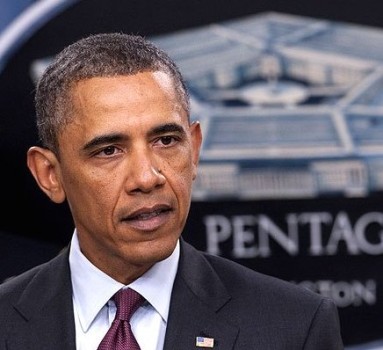
obama_iran_0117-383x350

[T]here is not a single aspect of Iran’s nuclear program that has stopped advancing. On the contrary, they are making progress by leaps and bounds.

******************

You’ve got to hand it to Obama. He is no slouch when it comes to redefining reality.

He can look at an elephant and proclaim it a donkey without a bat of the eye. Or in the case of Iran, look at spinning centrifuges and see no threat.

Over the weekend he told George Stephanapolous that the nuclear deal with Iran, which his negotiators extended for another eight months on Monday without a single concession from Iran, has “definitely stopped Iran’s nuclear program from advancing.”

Welcome to Obama’s Parallel Universe.

Iran continues to spin centrifuges and expand its stockpiles of enriched uranium. It continues to develop new generations of centrifuges that will allow Iran to race to the bomb five times faster than it can today. As we learned earlier this month, the International Atomic Energy Agency even found that Iran was feeding uranium gas into some of these new generation centrifuges in violation of the interim nuclear deal. The U.S. declined to call out the Iranians for cheating.

Iran also continues work on the plutonium bomb plant at Arak, rather than dismantling it as the U.S. initially demanded. It continues to deny full scope inspections and to refuse inquiries from the IAEA to explain its past nuclear weapons-related activities, without which the United States and its allies cannot map the full scope of the Iranian program or verify it.

In fact, there is not a single aspect of Iran’s nuclear program that has stopped advancing. On the contrary, they are making progress by leaps and bounds.

When Stephanapolous played the sceptic and asked Obama whether he could get the deal through Congress, Obama said he was “confidant that if we reach a deal that is verifiable and assures that Iran does not have breakout capacity, not only can I persuade Congress but I can persuade the American people that it’s the right thing to do.”

The problem is, no one believes that is what this deal will accomplish, including the French and German foreign ministers who took part in the months-long farce in Vienna, Austria that gave birth to yet another extension of talks.

Former CIA Director General Michael Hayden told Congress last week that without an “invasive inspections regime” attached to any deal, “I am unwilling to guarantee American intelligence can sufficiently verify the agreement on its own.”

That’s a pretty damning admission. Given the track record so far – massive U.S. and Western concessions on sanctions relief and enrichment, and no meaningful concessions on Iran’s side – it’s unlikely such an inspection regime will ever exist.

Former U.S. Ambassador Eric Edelman told a Washington, DC conference last week that the Western powers have been in “serial retreat” on their negotiating demands toward Iran since the EU-3 first started unsuccessful talks in 2003.

At the start of the current process, one year ago, Secretary of State John Kerry was still talking about “dismantling” Iran’s centrifuge enrichment program.

But in the first stage of talks, the P5+1 (US., UK, France, Russia, China + Germany) swept that demand off the table, caving into Iran’s demand that the great powers recognize a supposed “right to enrich,” which I and others argue Iran forfeited in the mid-2000s when the United Nations Security Council passed resolutions condemning Iran for violating its commitments under the Nonproliferation treaty.

Why would Iran agree to make meaningful concessions when the United States continues to back off its demands and to throw away its trump card: the complex tissue of U.S. and multilateral sanctions that had crippled Iran’s economy and brought it to the negotiating table in the first place?

The Economist published a series of revealing economic charts on the impact of the Iran sanctions in its November 1st edition, drawing on sources from the Economist Intelligence Unit, the Energy Information Administration, the Statistical Centre of Iran, and the Central Bank of Iran.

Once crippling oil and financial sanctions imposed in 2010-2011 began to kick in, Iran’s economy went into a freefall. Iran’s GDP has been gradually expanding for several years. In 2012, the economy went into full recession, retracting by 6%. Consumer prices skyrocketed by 40%, as did the youth unemployment rate. Vehicle production plunged, the currency collapsed, while both imports and exports declined dramatically.

By all accounts, the halving of Iran’s oil exports – a much greater impact than most analysts had expected – resulted in bringing Iran to the table.

But now, all of that is changing.

Mark Dubowitz, of the Foundation for Defense of Democracies, estimates that real sanctions relief over the first year of negotiations was close to $20 billion – far more than the administration has claimed.

“The Geneva process has turned around Iran’s economy,” he told a Washington, DC conference last week. As a result, “their nuclear intransigence has increased, not decreased.”

Former IAEA nuclear safeguards chief Olli Heinonen told the same conference that the negotiations were “rewarding Iran for its past bad behavior,” and set a “bad example for future proliferators.”

The Iranians “will just lie their faces off to get a bomb,” Senator Mark Kirk (R,IL) added.

On Monday, Secretary of State John Kerry declared in Vienna that a final agreement, to be negotiated in the coming months, would “close off all the pathways for Iran to get fissile material for a nuclear weapon.”

The formula was designed to meet a key criterion set down by Democrats in the House and Senate, such as Florida Rep. Ted Deutch, who agree with their Republican colleagues that Congress must set a high threshhold for what an acceptable deal must look like.

For these security-minded Democrats, an acceptable nuclear deal “must dismantle Iran’s centrifuge program to prevent Iran from becoming a threshold nuclear state, create robust verification and monitoring mechanisms to prevent undetectable breakout, force Iran to come clean on its past nuclear activities including possible military dimensions and cover a long enough duration that the regime won’t simply ‘wait it out.’”

If a deal along these lines cannot be reached, “Congress must make clear to Iran that sanctions will be ratcheted up dramatically at the end of the extension period,” he added.

The problem is, Obama has no intention of letting that happen, and has made it clear he will remove additional sanctions by the stroke of his Executive Order pen or by issuing waivers to legislative sanctions. (On pages 5-7 of his excellent testimony before Congress last week, FDD’s Dubowitz outlines “the administration’s plan to circumvent Congress” through executive branch sanctions relief).

Die-hard Obama loyalists in Congress, such as Virginia Democrat Gerry Connolly, argue that a bad nuclear agreement is better than no agreement. “Beware making the perfect the enemy of the good,” he said last week. “Without an agreement, we are condemning the world to a conflict with Iran.”

That in the end is Obama’s hammer. He will accuse anyone who opposes his massive concessions to Iran as a war-mongerer – a charge that Rep. Ted Deutch has tried to tackle head on. “Those who oppose a bad deal do not support a ‘march to war,’ but refuse an agreement that allows Iran to acquire a nuclear weapon,” he said.

Want to bet what Obama will be saying about him when he and Kerry finally reveal the terms of the bad deal they want Congress to approve? “They’ve red-teamed this. They will paint their opponents as war-mongers,” Dubowitz says.

Get ready to enter Obama’s parallel universe.

Like Hassan ibn Saba, leader of the 11th century hashish cult fictionalized by novelist Vladimir Bartol, Obama believes himself to be a master of illusion. If you can make people believe the illusion, then the illusion becomes reality. Perception is everything.

So here we go. Obama wants us to watch his hands and repeat after him: Iran is not a threat. We have stopped Iran’s nuclear weapons development. Iran is our ally against ISIS. Iran is a rational regime.

It’s up to us and to Congress to break the spell. Don’t look at his hands but at the fire burning just behind him.

Iranian Negotiators Brag How They Are Artfully Tricking Western Diplomats With A Good Cop/Bad Cop Tactic

November 25, 2014

Iranian Negotiators Brag How They Are Artfully Tricking Western Diplomats With A Good Cop/Bad Cop Tactic, Jonathan Turley’s Blog, Jonathan Turley, November 25, 2014

No doubt, Kerry and others never heard of this tactic even though every kid watching old cop shows is well-versed in it.

*********************

mohammad_javad_zarif_2014
220px-john_kerry_official_secretary_of_state_portrait


Many cops, attorneys and others have used the classic good cop/bad cop tactic to try to force concessions or confessions. The key of course is not to admit that you are just doing good cop/bad cop. That seems to have escaped Iranian negotiators in the ongoing nuclear program talks who have been giving interviews bragging about how they are screaming at American and other diplomats in a good cop/bad cop ploy. Hmmmm. It is nothing like a man screaming like a lunatic to convince you that he and his country should have access to weapons-grade nuclear material.

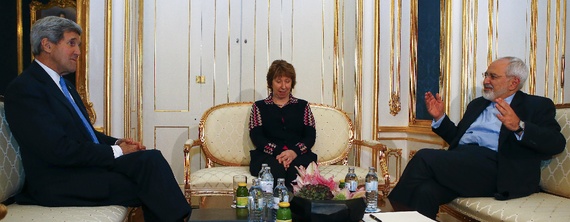
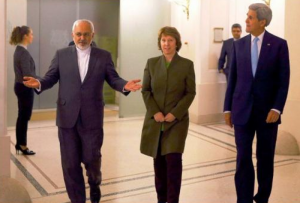
Part of the tactic does not appear to be an act. This appears to be the signature style of Iran’s foreign minister and lead negotiator Javad Zarif. His shouting and screaming is so loud that security repeatedly came bursting into the room out of concern that there was a violent breakout. Western diplomats have been sitting back to allow Zarif to blow himself out in each of the tirades. In one incident, European Union Foreign Policy Chief Catherine Ashton assured worried security officers that it was just Zarif again and that everyone was used to it.

What really caught my eye however was that Zarif’s unprofessional outbursts were openly discussed in the Iranian press and that the Iranian team also has been discussing how they are tricking Western diplomats with the use of the good cop/bad cop tactic. No doubt, Kerry and others never heard of this tactic even though every kid watching old cop shows is well-versed in it.

Iranian diplomat Abbas Araghchi discussed how Zarif “shouted” at Kerry in a way that was likely “unprecedented” in the history of U.S. diplomacy. That appears to be a good thing and a source of pride. He then went on to brag that he and Zarif play the roles of “good cop, bad cop” to “baffle the Western diplomats” and keep them uneasy. Clever.

As if to show the triumph of Iranian diplomacy, Araghchi said that after Zarif yells at Kerry and other diplomats there is largely silence in the room except for “one or two very respectful sentences.” They appear to mistake shocked and embarrassed silence of diplomats with people are cowed by the brilliant screaming and pounding of Zarif. They will see the same reaction to people raving on the New York subway. Few people call the guy screaming about the microchip in his brain in the Penn Station “a master negotiator.” However, they may now wonder if he is an Iranian diplomat.

Iran’s win-win

November 25, 2014

Iran’s win-win, Power Line, Paul Mirengoff, November 24, 2014

(The $700 million per month that Iran will receive is, presumably, in addition to its continuing lucrative relief from business sanctions. While the money continues to roll in and the negotiations continue to plod along, there is no realistic expectation that any final deal will prevent Iran from getting (or keeping) nuclear weaponry. — DM)

Iran will receive about $700 million per month in frozen assets. In exchange, it makes no concessions. Instead, the status quo is maintained with regard to Iran’s nuclear program.

Obama envisages some sort of mega-deal with Iran, pursuant to which the mullah regime helps bring stability to the region. Iran’s posture in the nuclear negotiations would persuade anyone but a fool or a blind ideologue that a meaningful “grand bargain” is not to be had.

*****************

The deadline for reaching a deal with Iran over its nuclear program expires today without the parties having reached a negotiated agreement. The negotiating period will be extended until July 1 of next year.

This development is being reported as “no deal,” but there actually is a deal of sorts here. According to the British foreign secretary, Iran will receive about $700 million per month in frozen assets. In exchange, it makes no concessions. Instead, the status quo is maintained with regard to Iran’s nuclear program.

In all likelihood, then, Iran’s economy will continue to expand. No longer will it experience the severe bite that caused it to come to the negotiating table. Thus, Iran will have even less incentive to make concessions than it has had in the run-up to the current stalemate.

Meanwhile, Obama will feel pressure to make additional concessions. Clearly, he wants a deal; otherwise he would have walked away in the face of Iran’s intransigence.

Obama wants a deal for his legacy. Two of the three major components of that legacy — Obamacare and Obamnesty — are subject to possible reversal. The third component — pulling out of Iraq — has exploded in his face.

Obama also wants a deal to reduce the likelihood of Israel attacking Iran. Short of a deal, Obama needs the negotiating process to continue for this purpose.

Finally, Obama envisages some sort of mega-deal with Iran, pursuant to which the mullah regime helps bring stability to the region. Iran’s posture in the nuclear negotiations would persuade anyone but a fool or a blind ideologue that a meaningful “grand bargain” is not to be had.

I’ll leave it to the reader to say which of these descriptons fit Obama.

Obama’s desperation has already driven him to make a series of concessions. Lee Smithcatalogues them.

Among the concessions are these:

1. Obama has offered Iran a 10-year sunset period. After 10 years, any deal would be void.

2. Obama has given up on its demands that Iran enrich no uranium at all.

3. Obama has abandoned the demand that Iran must dismantle its centrifuges.

According to Smith, there are also reports that Obama may have given up on demanding that Iran fully disclose its past activities, including possible military dimensions of the nuclear program.

No wonder Iran wants to keep Obama at the negotiating table. The mullahs are in a win-win position. Either the status quo continues and Iran prospers or Obama eventually gives away the store.

The mullahs lose only if Israel attacks. Neither side wants that, so negotiations, such as they are, will persist.

The Many Iranian Obstacles in the Way of a Strong Nuclear Deal

November 23, 2014

The Many Iranian Obstacles in the Way of a Strong Nuclear Deal, The Atlantic, November 23, 2014

(Assuming an eventual bad nuke deal, will the U.S. Congress be able to kill it? In a reasonably bipartisan fashion?– DM)

I just want this much‘I just want this much enriched uranium’ (Reuters)

It will be near-impossible, especially after the immigration debate, to sell the Republican-controlled Congress on whatever Iran deal Obama negotiates. But the Democrats won’t be an easy sell, either.

***********

The other day I fell into conversation with a very smart congressman named Ted Deutch, a Democrat from Florida, about his minimum requirements for an Iran nuclear deal. Deutch, who sits on the House Foreign Affairs Committee, is—like a large number of Democrats—fairly-to-very dubious about the possibility of a true breakthrough with Iran, and fairly-to-very worried about the consequences of a bad deal. (It seems likely, at this moment at least, that the Iran talks will be extended for several more months.)

Democrats such as Deutch will need to be convinced by the Obama administration that it hasn’t been outplayed by Iran. If an accord is eventually reached, and if Obama cannot convince the Democrats that he has delivered to them the toughest possible deal, then Congress will do everything in its power to undo the agreement. The Republicans, of course, are itching to subvert an Obama-negotiated deal, and Democratic support will be important to them as they make their case.

As I’ve written previously, I support a diplomatic solution to the challenge posed by the Iranian nuclear program because such a solution could theoretically achieve, without bloodshed, what a military strike might not achieve with bloodshed. But as I outline in this column, I don’t believe that either the diplomatic solution, or a solution that requires crushing sanctions and the credible threat of force, are overly likely to neutralize this threat. (And yes, it is a threat. An Iran with nuclear weapons would pose an acute challenge to pro-American moderates across the Middle East, and to the cause of nuclear non-proliferation, in particular in the world’s most volatile region. And it would pose a genocidal threat to Israel; please see, in case you haven’t read it yet, John Kerry’s condemnation of Iranian Supreme Leader Ayatollah Khamenei’s recently tweeted nine-point plan for Israel’s destruction.)

(One more parenthetical: Of course the Iranian regime wants a nuclear capability. Iran is surrounded by enemies—imagined, in some cases, but real, in others—and it is completely rational for Iran’s leaders to want to deter these enemies with nuclear weapons. Its leaders see what happened to Saddam Hussein and Muammar Qaddafi, who didn’t have nuclear weapons. And these leaders also have pretensions of empire, by the way.)

The goal of a deal is to make it as hard as possible for Iran to reach the nuclear threshold. Deutch’s analysis focuses on three potential weaknesses. The first is the notion that any agreement to curtail Iranian uranium-enrichment activities would one day expire. “I worry about a time-limited deal, one which remains in place for a 10- or 15-year term,” he said. “What happens after that period? Does Iran then have a free path to a bomb?”

The answer is, yes, Iran would have a free path to the bomb. Ten or 15 or even 20 years might seem like a long time in the U.S., but the people of the Middle East are patient. Any agreement that contains an expiration date is an inadequate agreement, because it will, in essence, grant Iran time-delayed permission to build nuclear weapons.

Deutch’s second concern relates to sanctions relief: “I don’t want to see the Iranian economy prematurely bolstered.” A legitimate fear on the part of skeptics is that the U.S. will agree to lift the most biting sanctions now in place before guaranteeing real progress in the deconstruction of Iran’s nuclear program. “The third issue,” Deutch went on to say, “concerns our ability to access any enrichment, research, or military sites.” He makes the point that the Iranian regime had kept hidden from the world at least two uranium-enrichment facilities, at Natanz and Fordow. “We need access to sites like Parchin which have military dimensions and which the Iranians prohibited us from seeing. If we can’t become comfortable in our knowledge about what they’re doing in nuclear-weapons development, then I’m not comfortable with a deal.”

It seems unlikely that the Iranians will share with the West the true scope of their nuclear-weapons development work. And unfortunately, it seems as if the West is willing to let Iran slide on this important issue. From Reuters:

World powers are pressing Iran to stop stonewalling a U.N. atomic bomb investigation as part of a wider nuclear accord, but look likely to stop short of demanding full disclosure of any secret weapon work by Tehran to avoid killing an historic deal.

Officially, the United States and its Western allies say it is vital that Iran fully cooperate with a U.N. nuclear agency investigation if it wants a diplomatic settlement that would end the sanctions severely hurting its oil-based economy. …

A senior U.S. official stressed that the powers had not changed their position on Iran’s past activities during this week’s talks: “We’ve always said that any agreement must resolve the issue to our satisfaction. That has not changed.”

Privately, however, some officials acknowledge that Iran may never be prepared to admit to what they believe it was guilty of: covertly working in the past to develop the ability to build a nuclear-armed missile—something it has always denied.

Deutch’s position on the matter of Iranian concealment is not particularly hawkish for his party. He is fairly representative of a broad swath of Democratic thinking and, in fact, on important issues he scans less hawkish than the (putatively) most important Democrat, Hillary Clinton. Given what Clinton told me in an interview over the summer, I can’t imagine that she’s overjoyed by reports coming out of the nuclear talks this week. “I’ve always been in the camp that held that they did not have a right to enrichment,” she said. “Contrary to their claim, there is no such thing as a right to enrich. This is absolutely unfounded. There is no such right. I am well aware that I am not at the negotiating table anymore, but I think it’s important to send a signal to everybody who is there that there cannot be a deal unless there is a clear set of restrictions on Iran. The preference would be no enrichment. The potential fallback position would be such little enrichment that they could not break out. So, little or no enrichment has always been my position.”

It will be near-impossible, especially after the immigration debate, to sell the Republican-controlled Congress on whatever Iran deal Obama negotiates. But the Democrats won’t be an easy sell, either.

Iran: Inspectors may access suspect nuclear site

November 23, 2014

Iran: Inspectors may access suspect nuclear site, Times of Israel, November 22, 2014

(Why not Parchin? Please see also, West seen easing demands on Iran atom bomb ‘mea culpa’ in deal. — DM)

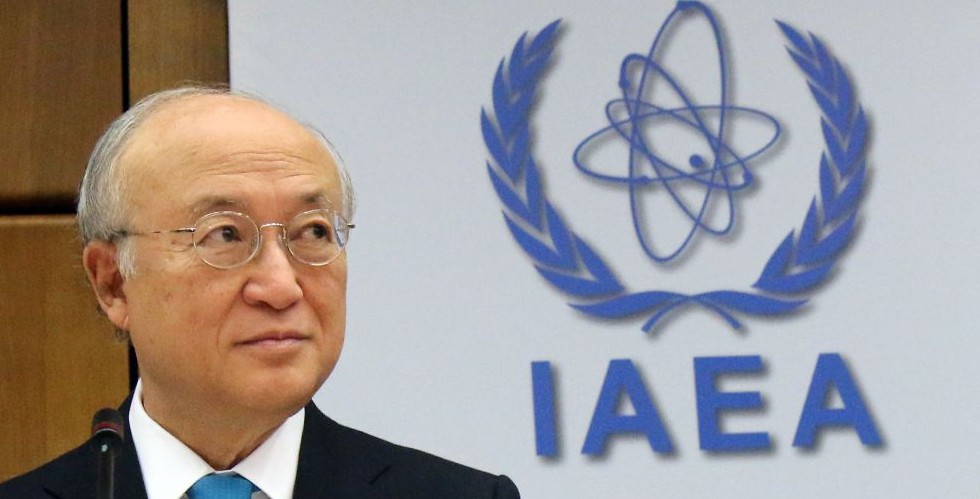
Austria-Iran-Nuclear_Horo-e1401748045152Yukiya Amano of Japan, director general of the International Atomic Energy Agency (IAEA) awaits the board of governors meeting at the International Center in Vienna, Austria, Monday, June 2, 2014. (photo credit: AP/Ronald Zak)

IAEA says ‘large-scale, high-explosive experiments’ may have been conducted at the Marivan military base.

As well as Marivan, IAEA inspectors are also interested in the Parchin military base, where they suspect tests that could be applied to a potential nuclear site have been carried out.

Iran has so far denied access to Parchin.

********************

TEHRAN, Iran – Tehran is ready to allow nuclear inspectors access to its Marivan military site, an Iranian official said Saturday, a facility long suspected of being used to develop explosive weapons.

The declaration comes as Iran and six world powers hold talks in Vienna to reach a lasting agreement on Tehran’s disputed nuclear program before November 24.

Such a deal, after 12 years of rising tensions, is aimed at easing fears that Tehran will develop nuclear weapons under the guise of its civilian activities — an ambition the Islamic Republic has always fiercely denied.

The Marivan site, close to the Iraqi border, was mentioned in a 2011 report by the International Atomic Energy Agency (IAEA) on Iran’s alleged pursuit of nuclear weapons.

The UN agency suggested at the time that “large scale high explosive experiments” may have been carried out at the complex.

Britain, China, France, Russia, the United States and Germany have been locked in talks with Iran since February after an interim accord gave it some relief from economic sanctions in return for nuclear curbs.

“We are ready to allow the IAEA controlled access to the Marivan site,” Behrouz Kamalvandi, spokesman for Iran’s Atomic Energy Organisation, was quoted as saying by the IRNA news agency.

He said the IAEA’s view of Marivan was based on “false” information.

IAEA spokeswoman Gill Tudor said the watchdog “will discuss the offer” with Tehran.

“The situation regarding a visit to the Marivan region is not as simple as that conveyed by Iran,” she told AFP.

As well as Marivan, IAEA inspectors are also interested in the Parchin military base, where they suspect tests that could be applied to a potential nuclear site have been carried out.

Iran has so far denied access to Parchin.

Exclusive: Cornered but unbound by nuclear pact, Israel reconsiders military action against Iran

November 22, 2014

Exclusive: Cornered but unbound by nuclear pact, Israel reconsiders military action against Iran, Jerusalem Post,  Michael Wilner, November 22, 2014

( “By framing the deal as fundamentally flawed, regardless of its enforcement, Israel is telling the world that it will not wait to see whether inspectors do their jobs as ordered.” )

Israeli official cites “sunset clause” in proposed comprehensive deal, which guarantees Iran a path into the nuclear club and may corner Israel into war.

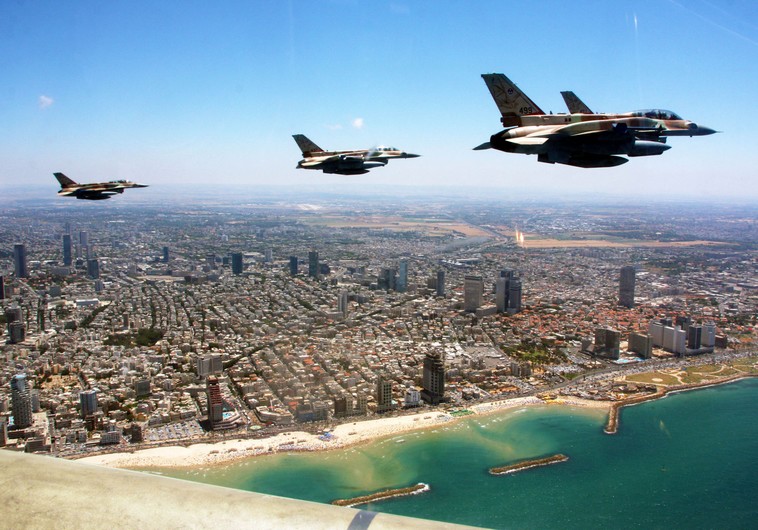
IAF pix Israel Air Force planes fly over Tel Aviv. . (photo credit:IDF SPOKESPERSON’S UNIT)

[M]ore than any single enforcement standard or cap included in the deal, Israel believes the Achilles’ heel of the proposed agreement is its definitive end date – the sunset clause.

“You’ve not dismantled the infrastructure, you’ve basically tried to put limits that you think are going to be monitored by inspectors and intelligence,” said the official, “and then after this period of time, Iran is basically free to do whatever it wants.”

***************

WASHINGTON —  Historic negotiations with Iran will reach an inflection point on Monday, as world powers seek to clinch a comprehensive deal that will, to their satisfaction, end concerns over the nature of its vast, decade-old nuclear program.

But sharing details of the deal under discussion with The Jerusalem Post on the eve of the deadline, Israel has issued a stark, public warning to its allies with a clear argument: Current proposals guarantee the perpetuation of a crisis, backing Israel into a corner from which military force against Iran provides the only logical exit.

The deal on the table

World powers have presented Iran with an accord that would restrict its nuclear program for ten years and cap its ability to produce fissile material for a weapon during that time to a minimum nine-month period.

Should Tehran agree, the deal may rely on Russia to convert Iran’s current uranium stockpile into fuel rods for peaceful use. The proposal would also include an inspection regime that would attempt to follow the program’s entire supply chain, from the mining of raw material to the syphoning of that material to various nuclear facilities across Iran.

Israel’s leaders believe the best of a worst-case scenario, should that deal be reached, is for inspections to go perfectly and for Iran to choose to abide by the deal for the entire decade-long period.

But “our intelligence agencies are not perfect,” an Israeli official said. “We did not know for years about Natanz and Qom. And inspection regimes are certainly not perfect. They weren’t in the case in North Korea, and it isn’t the case now – Iran’s been giving the IAEA the run around for years about its past activities.”

“What’s going to happen with that?” the official continued. “Are they going to sweep that under the rug if there’s a deal?”

On Saturday afternoon, reports from Vienna suggested the P5+1 – the US, United Kingdom, France, Russia, China and Germany – are willing to stop short of demanding full disclosure of any secret weapon work by Tehran.

Speaking to the Post, a senior US official rejected concern over limited surveillance capabilities, during or after a deal.

“If we can conclude a comprehensive agreement, we will have significantly more ability to detect covert facilities – even after its duration is over – than we do today,” the senior US official said. “After the duration of the agreement, the most intrusive inspections will continue: the Additional Protocol – which encompasses very intrusive transparency, and which Iran has already said it will implement – will continue.”

But compounding Israel’s fears, the proposal Jerusalem has seen shows that mass dismantlement of Iran’s nuclear infrastructure – including the destruction, and not the mere warehousing, of its parts – is no longer on the table in Vienna.

“Iran’s not being asked to dismantle the nuclear infrastructure,” the Israeli official said, having seen the proposal before the weekend. “Right now what they’re talking about is something very different. They’re talking about Ayatollah Khamenei allowing the P5+1 to save face.”

Officials in the Netanyahu government are satisfied that their ideas and concerns have been given a fair hearing by their American counterparts. They praise the US for granting Israel unprecedented visibility into the process.

But while those discussions may have affected the talks at the margins, large gaps – on whether to grant Iran the right to enrich uranium, or allow it to keep much of its infrastructure – have remained largely unaddressed.

“It’s like the chemical weapons deal in Syria,” the official said. “They didn’t just say: Here, let’s get rid of the stockpile and the weapons, but we will leave all the plants and assembly lines.”

‘Sunset clause’

Yet, more than any single enforcement standard or cap included in the deal, Israel believes the Achilles’ heel of the proposed agreement is its definitive end date – the sunset clause.

“You’ve not dismantled the infrastructure, you’ve basically tried to put limits that you think are going to be monitored by inspectors and intelligence,” said the official, “and then after this period of time, Iran is basically free to do whatever it wants.”

The Obama administration also rejects this claim. By e-mail, the senior US administration official said that, “‘following successful implementation of the final step of the comprehensive solution for its duration, the Iranian nuclear program will be treated in the same manner as that of any non-nuclear weapon state party to the NPT – with an emphasis on non-nuclear weapon.”

“That has in no way changed,” the American official continued, quoting the interim Joint Plan of Action reached last year.

But the treatment of Iran as any other signatory of the Nuclear Non-Proliferation Treaty –189 countries are members, including Iran – would allow Tehran to ultimately acquire “an industrial-sized capability,” the Israelis say. “The breakout times [to a nuclear weapon] will be effectively zero.”

Israel and world powers seek to maximize the amount of time they would have to identify non-compliance from a nuclear deal, should Iran choose to defy its tenets and build a bomb.

But in the deal under discussion in Vienna, Iran would be able to comply with international standards for a decade and, from Israel’s perspective, then walk, not sneak, into the nuclear club.

“You’ve not only created a deal that leaves Iran as a threshold nuclear power today, because they have the capability to break out quickly if they wanted to,” the Israeli official contended. “But you’ve also legitimized Iran as a military nuclear power in the future.”

From the moment this deal is clinched, Israel fears it will guarantee Iran as a military nuclear power. There will be no off ramp, because Iran’s reentry into the international community will be fixed, a fait accompli, by the very powers trying to contain it.

“The statement that says we’ve prevented them from having a nuclear weapon is not a true statement,” the Israeli official continued. “What you’ve said is, you’re going to put restrictions on Iran for a given number of years, after which there will be no restrictions and no sanctions. That’s the deal that’s on the table.”

Revisiting the use of force

Without an exit ramp, Israel insists its hands will not be tied by an agreement reached this week, this month or next, should it contain a clause that ultimately normalizes Iran’s home-grown enrichment program.

On the surface, its leadership dismisses fears that Israel will be punished or delegitimized if it disrupts an historic, international deal on the nuclear program with unilateral military action against its infrastructure.

By framing the deal as fundamentally flawed, regardless of its enforcement, Israel is telling the world that it will not wait to see whether inspectors do their jobs as ordered.

“Ten, fifteen years in the life of a politician is a long time,” the Israeli said, in a vague swipe against the political directors now scrambling in Vienna. “In the life of a nation, it’s nothing.”

Prime Minister Benjamin Netanyahu has threatened the use of force against Iran several times since 2009, even seeking authorization from his cabinet in 2011. Iran’s program has since grown in size and scope.

According to his aides, the prime minister’s preference is not war, but the continuation of a tight sanctions regime on Iran’s economy coupled with a credible threat of military force. Netanyahu believes more time under duress would have led to an acceptable deal. But that opportunity, in his mind, may now be lost.

Whether Israel still has the ability to strike Iran, without American assistance, is an open question. Quoted last month in the Atlanticmagazine, US officials suggested that window for Netanyahu closed over two years ago.

But responding to claims by that same official, quoted by Jeffrey Goldberg, over Netanyahu’s courage and will, the Israeli official responded sternly: “The prime minister is a very serious man who knows the serious responsibility that rests on his shoulders. He wouldn’t say the statements that he made if he didn’t mean them.”

“People have underestimated Israel many, many times in the past,” he continued, “and they underestimate it now.”

As Iran Deadline Approaches, European Leaders More Skeptical Than American Counterparts Over Prospects for Final Nuclear Deal

November 21, 2014

As Iran Deadline Approaches, European Leaders More Skeptical Than American Counterparts Over Prospects for Final Nuclear Deal, Algemeiner, Ben Cohen, November 21, 2014

Screen-Shot-2014-11-21-at-11.47.31-AM-300x203Iranian Foreign Minister Javad Zarif in Vienna with EU negotiator Catherine Ashton and US Secretary of State John Kerry. Photo: Twitter

With four days to go before the international deadline for an agreement over Iran’s nuclear program expires, the signs emerging from Vienna, where negotiations have been taking place, are that a final deal will not be agreed by Monday. Moreover, European leaders are said to be increasingly disillusioned with the American determination to grant more concessions to entice Iran into a deal, adding yet another layer of complexity to the deliberations.

Both US Secretary of State John Kerry and French Foreign Minister Laurent Fabius will return to Paris later today for what Reuters described as “consultations.” Earlier reports that Iranian Foreign Minister Javad Zarif was planning to leave Vienna for Tehran turned out to be false, with Iranian negotiators subsequently confirming that “the talks will continue.”

The obstacles to any deal are well-known, and little progress has been made to bridge the gaps between the two sides, despite the enthusiasm of the Obama Administration for a deal. Major powers in the shape of the P5+1 – the five permanent members of the UN Security Council and Germany – want Iran to reduce its number of centrifuges from the 19,000 currently in operation to 4,500, in order to delay Iran’s accumulation of the fissile material that would enable a nuclear weapon.

The Iranians are unhappy with the degree and timing of sanctions relief, insisting that sanctions should be terminated immediately rather than incrementally.

Nor is there agreement over the duration of any deal. The P5+1 is said to be looking for a 20 year deal, while the Iranians want something much shorter.

Domestic considerations are also coming to the fore, particularly in the United States, where unease with both the substance of any deal, and the possibility that President Obama will bypass Congress to secure it, is growing among legislators as well as the American public. “We did some polling last week, which we’ve not yet publicly released, which shows that 7 out of 10 Americans want Congressional approval of a deal,” said Josh Block, the President of The Israel Project, an Washington-DC based advocacy group, who is in Vienna monitoring the talks.

Western states are hardly in lockstep. The British government has sounded distinctly pessimistic that a deal is within reach, while Kerry is said to be anxious that the French government will not support a deal, having been unsuccessful in his earlier attempt to secure an undertaking from Fabius that no last minute objections would surface.

“There was a meeting in Vienna today of the French and British Foreign Ministers and the US Secretary of State which was described to me as ‘frosty,’” Block said. “That leads me to believe that the French and maybe the British will adopt a harder line than the Americans.”

The French, Block explained, have “fundamental objections” to nuclear proliferation in the Middle East and want to avoid a deal that would cause non-nuclear states in the region to embark on nuclear programs.

Back in Washington, DC,  Sen. Mark Kirk (R-Ill) has said that he will “definitely” reintroduce sanctions legislation on Iran in the next Congress.

“I think the Republicans will definitely bring it up. It’s a movie we’re going to see again,” Kirk said on Capitol Hill. “The Republican majority will be working with [Sen. Mitch McConnell – R-KY] about when the time is to come up for a vote on that.”

President Obama will also have to keep a close eye on those Democratic Party legislators who will refuse to back a deal that does not explicitly prevent Iran from acquiring a nuclear weapon. Last year, 16 Democrats led by Sen. Robert Menendez (D-NJ) joined the 59 co-sponsors of a bill to impose tough new sanctions on Iran in the event of a failed deal, but the legislation was blocked by outgoing Senate Majority Leader Harry Reid (D-NV).

Sen. Chuck Schumer (D-NY) today released a statement declaring, “Along with my colleagues, who authored the bipartisan sanctions law that brought the Iranians to the negotiating table, I wish negotiations to succeed. But the success of negotiations can only be defined as an agreement that removes the threat of a world with a nuclear Iran.”

“Unless Iran is willing to agree to a final deal that prevents it from building, developing or acquiring a nuclear weapon, we should not allow any relaxation of sanctions,” Schumer said.

Hamas, Abbas, Obama and Islamic savagery

November 18, 2014

Hamas, Abbas, Obama and Islamic savagery, Dan Miller’s Blog, November 18, 2014

Today Palestinian extremists Islamists murdered four Israelis, three of whom were also U.S. citizens, at a Jerusalem synagogue. Several others are in critical condition. Palestinians celebrated their actions and their intended consequences. 

celebratingmurder_20141118_105338

This morning I posted an article by Robert Spencer of Front Page Magazine titled More Beheadings, More Denial at Warsclerotic, of which I am an editor. Mr. Spencer’s article deals with Obama’s response to the recent Islamic beheading of “Abdul-Rahman Kassig, previously known as Peter.” Obama proclaimed that Kassig’s beheading by personnel of the Islamic State “represent no faith, least of all the Muslim faith.” As I noted in a parenthetical comment at the top of the article,

(Please see also this article, and others, on today’s Islamic slaughter at a Jerusalem synagogue. “Knives, axes and guns” were used.” Hamas responded with praise for the terrorists who did it. Will Obama, our Islamic “scholar” in chief, declare that such Palestinian “actions represent no faith, least of all the Muslim faith?” He won’t. Nor, of course, will he admit that the Palestinian’s Islamic actions, like those of the Islamic State, do represent Islam.– DM)

Mr. Spencer observed that Islamic savagery comparable to that of the Islamic State could happen in the United States and that

It could happen anywhere that people read the phrase “when you meet the unbelievers, strike the necks” (Qur’an 47:4) as if it were a command of the Creator of the Universe. But to point out that simple and obvious fact nowadays only brings down upon one’s head charges of “hatred” and of “demonizing all Muslims,” when in a sane society it would bring honest explanations from Muslims of good will of what they were doing to ensure that no Muslim ever acted on that verse’s literal meaning. [Emphasis added.]

Here’s a pertinent video by Pat Condell:

Continuing with the quotation from Mr. Spencer,

In reality, they’re doing nothing. No Muslim organization, mosque or school in the United States has any program to teach young Muslims and converts to Islam why they should avoid and reject on Islamic grounds the vision of Islam – and of unbelievers – that the Islamic State and other jihad groups offer them. This is extremely strange, given the fact that all the Muslim organizations, mosques and schools in the United States ostensibly reject this understanding of Islam. And even stranger is that no American authorities seem to have noticed the absence of such initiatives, much less dared to call out Muslim groups about this. [Emphasis added.]

On the contrary, instead of calling on Muslim groups to take some action to prevent this kind of thing from happening in the future, Obama’s latest denial was even more strenuous in its dissociation of the beheading from Islam: “ISIL’s actions represent no faith, least of all the Muslim faith which Abdul-Rahman adopted as his own.” [Emphasis added.]

“Least of all”! As if it were possible that the Islamic State’s actions represented Buddhism, or Methodism, or Christian Science, or the Hardshell Baptists, or the Mandaeans, to greater or lesser degrees, but the most far-fetched association one could make, out of all the myriad faiths people hold throughout the world, would be to associate the Islamic State’s actions with…Islam. The Islamic State’s actions represent no faith, least of all Islam – as if it were more likely that the Islamic State were made up of Presbyterians or Lubavitcher Hasidim or Jains or Smartas than that it were made up of Muslims.

Here’s a video of Ayaan Hirsi Ali, a former Muslim, speaking at Yale University on September 15th. Although more than an hour long, it’s well worth watching and consideringPlease see also this article, commenting on her background and views of Islam.

Is Jonathan Gruber still advising Obama?  This video is from left-leaning(?) MSNBC.

Did Obama “steal” His notions about Islam from Gruber, or merely Gruber’s tactics for masking His true beliefs and intentions, this time about Islam rather than about ObamaCare? Did Obama arrive at His notions of Islam and how to present them Himself, based on His own Islamic studies — particularly the propriety of lying to non-Muslims on behalf of Islam? Or is He, again, just sucking up to Iran? In the latter connection, please see this semi-satirical post titled To get a nuke deal with Iran Obama and the Islamist world demonize Israel.

The Israeli-Palestinian “peace” process and the “two state solution.”

For years, the Obama Administration has been pushing Israel, hard, to agree to a two state solution with the “moderate” Palestinian Authority (Fatah). Hamas is the Palestinian entity which, in April of this year, formed a quasi-unified government with the Palestinian Authority under Mahmoud Abbas. Fatah’s alleged moderation, and that of Abbas, is of this type:

Modeate Muslim

Abbas is seventy-nine years old and probably will not last much longer. He has personally encouraged terrorism, most recently when commenting on the killing of a Palestinian, Mutaz Hijazi, who attempted to assassinate Yehuda Glick, an advocate of Jewish prayer on the Temple Mount.

Hijazi was quickly found and killed by Israeli security forces. Abbas responded by promptly writing to his widow:

With anger, we have received the news of the vicious assassination crime committed by the terrorists of the Israeli occupation army against [your] son Mu’taz Ibrahim Khalil Hijazi, who will go to heaven as a martyr defending the rights of our people and its holy places.

Hijazi, it should be stressed, shot Glick, a civilian, at pointblank range. Fortunately Glick now appears to be recovering in hospital.

The assassin’s admirer, Mahmoud Abbas, is the same Mahmoud Abbas about whom President Barack Obama said last March:

I think nobody would dispute that whatever disagreements you may have with him, he has proven himself to be somebody who has been committed to nonviolence and diplomatic efforts to resolve this issue. [Emphasis added.]

That was in an interview where Obama, of course, portrayed Israeli prime minister Binyamin Netanyahu as the recalcitrant party who needs to “seize the moment” and make peace.

Even if Abbas wanted to reject Islamic terrorism, doing so would be akin to signing his own death warrant.

In a speech in Ramallah on November 11, marking the tenth anniversary of the death of his predecessor, Yasser Arafat, Abbas declared: “He who surrenders one grain of the soil of Palestine and Jerusalem is not one of us.”

This statement alone should be enough for Kerry and Western leaders to realize that it would be impossible to ask Abbas to make any concessions. Like Arafat, Abbas has become hostage to his own rhetoric. How can Abbas be expected to accept any deal that does not include 100% of his demands — in this instance, all territory captured by Israel in 1967? [Emphasis added.]

Abbas himself knows that if he comes back with 97% or 98% of his demands, his people will either spit in is face or kill him, after accusing him of being a “defeatist” and “relinquishing Palestinian rights.”

Abbas was elected for a five year term as President of the Palestine Liberation Organization (PLO) on November 11, 2004, until January 9, 2009. However,

due to Palestinian Internal conflict he unilaterally extended his term for another year and continues in office even years after that second deadline expired. As a result of this, Fatah’s main rival, Hamas announced that it would not recognise the extension or view Abbas as rightful president.[6][7][8] [Emphasis added.]

For these and many other reasons, a “two state solution” would ultimately pit Israel and Hamas against either other, more so even that presently. It would result in either the death of Israel — the only free and democratic state in the region — or the death of the  Palestinian  state notion. The United States should agree with Israel that the death of the Palestinian state notion is preferable to the death of Israel. There is no apparent reason to assume, or even to hope, that Obama does.

On a lighter note, this might be better than a two state solution but, due to regional demographics and Israel’s dedication to democracy, would not work either.

The new Congress will not kill a bad nuke deal with Iran

November 16, 2014

The new Congress  will not kill a bad nuke deal with Iran, Dan Miller’s Blog, November 16, 2014

(I wrote this article in response to an article posted today at Warsclerotic titled GOP poised to dash Obama’s Iran hopes | TheHill. — DM)

A bad nuke deal with Iran seems likely to be approved by the P5+1 negotiators under Obama’s guidance. It will be disastrous. However, if it is signed and Obama tries to implement it, there will be little if anything the Congress can do about it, even if it wants to, until January of 2017 — which will likely be too late. Even if it is not too late in 2017 it may or may not happen, depending on who is our President and who controls Congress.

I have written extensively about the Iran Scam and Obama’s untruths and obfuscations concerning it. I did so most recently in a semi-satirical article titled To get a nuke deal with Iran Obama and the Islamist world demonize Israel. Please read at least the Iran Scam article; to repeat here the points made there would make this post far too long.

According to an article titled GOP poised to dash Obama’s Iran hopes,

Sen. Lindsey Graham (R-S.C.) took to the Senate floor on Thursday to ask for unanimous consent to schedule a vote on a bill that would give Congress final approval over any deal, or else reinstate tough sanctions on Iran.

Democratic Sen. Chris Murphy (Conn.) quickly rejected the request, arguing that scheduling a vote on the deal would be “premature at this point.” He said it would “send a fairly chilling message” that U.S. officials at the table with Iran did not have full authority to negotiate an agreement.

But when Republicans take control of the Senate, they could move to pass that bill, or push legislation from Senate Foreign Relations Chairman Bob Menendez (D-N.J.) and Sen. Mark Kirk (R-Ill.) which would reinstate sanctions if Iran violates any deal.

Their bill also pledges military support for Israel if it decides to strike Iran’s nuclear facilities, which it has threatened to do.

. . . .

The president has already threatened to veto the legislation, but doing so would be politically risky. The bill already enjoys the support of 60 senators, including 16 Democrats, and there is sweeping support for a similar bill in the House.

A deal that’s not supported by Congress or seen as weak could also hurt the 2016 Democratic presidential nominee, especially if it fails to prevent Iran from obtaining nuclear weapons capabilities.

Obama has displayed utter disdain for the Congress and constitutional processes. He will most likely continue to do so, in spades, when the new Republican dominated Congress is seated in January. The perceptions of the author of the linked article are excessively optimistic, as suggested below.

As a lame duck President, Obama has little if anything to lose. Any impact on the 2016 elections of a bad nuke deal with Iran may well not be of substantial importance to Obama and, to the extent that it is, He will probably use His ample opportunities to “Gruber” – to obfuscate and lie effectively — about the facts and their consequences substantially to diminish any adverse impact of His actions on those elections.

There’s more here about Obama, Gruber and Grubering, which Obama continues to do with at least modest success.

As the Obama administration did from the beginning and continues to do with the ObamaCare debacle, it will “Gruber” the facts and  consequences of a nuke deal in presenting it to the Congress and the public. Should the next Congress nevertheless pass a bill which He does not like, He will veto it as He has promised to do. To override a veto requires the affirmative vote of two thirds of both houses under Article 1, Section 7, of the Constitution. Even in the unlikely event that an Obama veto is overridden, there is no reason to assume that He will apply the new law as Congress intends.

Congressional attempts to defund administration efforts to implement an agreement with Iran seem unlikely to work: multiple other governmental functions, facially unconnected with the matter, would still have to be funded. The parameters of their funding would have to be extraordinarily tight to avoid fund shifting. Even then, the Obama administration has shown itself to be extraordinarily adept at fund shifting regardless of congressional intent as reflected in seemingly clear statutory language.

Even were U.S. Sanctions – the only sanctions on which the Congress has any significant impact – to be reinstated, their enforcement would be up to the Obama administration, not the Congress. The administration would likely refuse to enforce them, as it has multiple times with other Federal laws of which Obama does not approve. Were the Congress or other interested parties to succeed in getting judicial review, the process would be long and the results uncertain until the Supreme Court granted and exercised review. That process could easily take years. In addition, it remains questionable whether the Congress, its representatives or anyone else would even have standing to initiate judicial action.

At the Federal level, legal actions cannot be brought simply on the ground that an individual or group is displeased with a government action or law. Federal courts only have constitutional authority to resolve actual disputes (see Case or Controversy). Only those with enough direct stake in an action or law have “standing” to challenge it. A decision that a party does not have sufficient stake to sue will commonly be put in terms of the party’s lacking “standing”. For Supreme Court decisions focusing on the “standing” issue, see, e.g., County of Riverside v. McLaughlin, 500 U.S. 44 (1991),Northeastern Fla. Chapter of the Associated Gen. Contractors v. City of Jacksonville, 508 U.S. 656 (1993) and Lujan v. Defenders of Wildlife, 504 U.S. 555 (1992). [Emphasis added.]

In any event Germany, Iran’s most substantial commercial partner and others who now deal with Iran, as well as Iran itself, have enjoyed substantial sanctions relief for long enough that the process is broken to the point that U.S. efforts to revive useful sanctions would likely be ineffective. According to an article at FARS News Agency, an Iranian source, posted on November 16th,

Chairman of the Iranian parliament’s National Security and Foreign Policy Commission Alaeddin Boroujerdi said imposing sanctions against Tehran is an already failed policy.

“The sanctions imposed on Iran are a failed policy; the sanctions tool has never been able to make the Iranian nation withdraw from its righteous positions,” Boroujerdi said in a meeting with new Italian Ambassador to Tehran Mauro Conciatori on Sunday. [Emphasis added.]

Sanctions have only resulted in ample financial loss for the European industrial and trade companies,” he added. [Emphasis added.]

The article claiming that a Republican controlled Congress can dash Obama’s hopes for a nuke deal with Iran also suggests that it can pledge “military support for Israel if it decides to strike Iran’s nuclear facilities.” It can certainly do that. However, just as the Obama administration has refused to enforce or simply ignored aspects of other legislation, it can refuse to enforce or simply ignore that pledge as well.

With the exception of a possible — but far from certain — prompt and effective Israeli military attack on Iran’s nuke facilities, the mess has gone too far for effective action. Israel, which rarely brags about what she can or intends to do, has quite properly been rather coy about the resources she can use against Iran. So have possible allies in the Middle East concerning such help as they may be willing and able to provide. However, Israel probably has substantial electromagnetic pulse (EMP) capabilities which could be used to damage Iran’s command and control facilities substantially.

The attack could be carried out using a nuclear warhead detonated after launch by one of Israel’s Jericho III missiles at high-altitude over north central Iran.

EMP affects computers and other electronics and would disrupt critical infrastructure that relies on electronics and electricity, such as communications, transportation, and other networks.

The burst would create “no blast or radiation effects on the ground,” the article stated.

“Coupled with cyber-attacks, Iranians would not know it happened except for a massive shutdown of the electric power grid, oil refineries, and a transportation gridlock,” the article said.

“Food supply would be exhausted and communication would be largely impossible, leading to economic collapse. Similarly, the uranium enrichment centrifuges in Fordo, Natanz, and widely scattered elsewhere, would freeze for decades.”

Iran more than likely also has substantial EMP capabilities, so unless Israel uses her own first, and sooner than Iran anticipates, it will be too late.

Summary and Conclusions

Sanctions may well have prompted Iran to agree to discuss a nuke deal with P5+1. However, the negotiations have done little beyond diminishing those sanctions to the point of ineffectiveness, while giving Iran ample time, incentive and opportunity to continue research on, and implementation of, its nuke plans. If preventing Iran from continuing its development of nukes had been the objective, or even a substantial  objective, Iran’s military facilities and advances on nuke development would have been central to any “interim agreement.” Far from being central, they were not even peripheral.

Obama and Iran nukes

From the beginning, as contended herehere, here and elsewhere, the “Grubered” interim agreement and White House Summary of it have given Iran every possible advantage and shielded its military facilities from effective scrutiny.

Some elections have consequences. Obama’s 2012 election had very unfortunate consequences. However, the 2014 elections will probably have few if any beneficial consequences with respect to the Iran Scam and come January 2017 it will probably be too late should effective action then be attempted.

If, as seems likely, a nuke deal with Iran, good for Iran and bad for the most of the rest of world is signed, it now appears that the only possible effective solution with a decent chance of success will be prompt military action by Israel, in conjunction with her temporary and therefore uncertain allies in the Middle East which are opposed to Iranian nukes.

I am well aware of the possible adverse consequences of such a strike, including extreme actions that Russia and her allies might take in response. However, the possibility of mutually assured destruction worked in the past and should work again. Russia, et al, unlike Iran, are not compelled by a barbaric religion to bring to the world Armageddon and the arrival of the Twelfth Imam. They want power, not death. If they and their enemies are obliterated, their current power and hopes of increasing it would be destroyed along with them.