Posted tagged ‘news’

From ‘Atoms for Peace’ to Witkoff: A history of Iran’s nuke program, and efforts to stop it

April 15, 2025

As the Trump Administration attempts, again, to thwart Iran’s decades-long effort to attain nuclear weapons, a look at key dates in the long-simmering conflict

13 April 2025

https://www.timesofisrael.com/long-fraught-timeline-of-us-iran-tensions-as-nuclear-negotiators-meet/
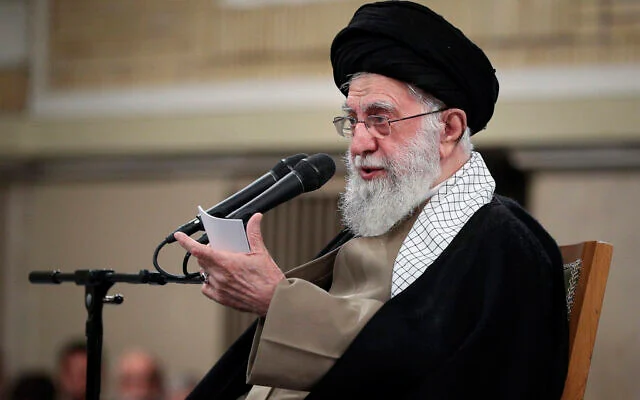
Iran and the United States held talks in the sultanate of Oman on Saturday, jump-starting negotiations over Tehran’s rapidly advancing nuclear program.

Iran’s state-run broadcaster said US Mideast envoy Steve Witkoff and Iran’s Foreign Minister Abbas Araghchi “briefly spoke” together — the first time the two nations have done that since the Obama administration.

Araghchi said more talks are planned for April 17.

The talks represent a milestone in the fraught relations between the two nations over Iran’s program, which is enriching uranium close to weapons-grade levels.

Here’s a timeline of the tensions between the two countries over Iran’s atomic program.

Early days

1967 — Iran takes possession of its Tehran Research Reactor under America’s “Atoms for Peace” program.

1979 — Shah Mohammad Reza Pahlavi, fatally ill, flees Iran as popular protests against him surge. Ayatollah Ruhollah Khomeini returns to Tehran and the Islamic Revolution sweeps him to power. Students seize the United States Embassy in Tehran, beginning the 444-day hostage crisis. Iran’s nuclear program goes fallow under international pressure.

August 2002 — Western intelligence services and an Iranian opposition group reveal Iran’s secret Natanz nuclear enrichment facility.

June 2003 — Britain, France and Germany engage Iran in nuclear negotiations.

October 2003 — Iran suspends uranium enrichment.

February 2006 — Iran announces it will restart uranium enrichment following the election of hard-line president Mahmoud Ahmadinejad. Britain, France and Germany walk out of stalled negotiations.

June 2009 — Iran’s disputed presidential election sees Ahmadinejad re-elected despite fraud allegations, sparking Green Movement protests and a violent government crackdown.

October 2009 — Under President Barack Obama, the US and Iran open a secret backchannel for messages in the sultanate of Oman.

July 2012 — US and Iranian officials hold face-to-face secret talks in Oman.

July 14, 2015 — World powers and Iran announce a long-term, comprehensive nuclear agreement that limits Tehran’s enrichment of uranium in exchange for the lifting of economic sanctions.

The nuclear deal collapses

May 2018 — Trump unilaterally withdraws the US from the nuclear agreement, calling it the “worst deal ever.” He says he’ll get better terms in new negotiations to stop Iran’s missile development and support for regional militias. Those talks don’t happen in his first term.

May 8, 2019 — Iran announces it will begin backing away from the accord. A series of regional attacks on land and at sea blamed on Tehran follow.

Jan. 3, 2020 — A US drone strike in Baghdad kills Gen. Qassem Soleimani, the architect of Tehran’s proxy wars in the Middle East.

Jan. 8, 2020 — In retaliation for Soleimani’s killing, Iran launches a barrage of missiles at military bases in Iraq that are home to thousands of American and Iraqi troops. More than 100 US service members suffer traumatic brain injuries. As Iran braces for a counterattack, the Revolutionary Guard shoots down a Ukrainian passenger plane shortly after takeoff from Tehran’s international airport, reportedly mistaking it for a US cruise missile. All 176 people on board are killed.

July 2020 — A mysterious explosion tears apart a centrifuge production plant at Iran’s Natanz nuclear enrichment facility. Iran blames the attack on Israel.

April 6, 2021 — Iran and the US under President Joe Biden begin indirect negotiations in Vienna over how to restore the nuclear deal. Those talks, and others between Tehran and European nations, fail to reach any agreement.

April 11, 2021 — A second attack within a year targets Iran’s Natanz nuclear site, again likely carried out by Israel.

April 16, 2021 — Iran begins enriching uranium up to 60% — its highest purity ever and a technical step from weapons-grade levels of 90%.

Feb. 24, 2022 – Russia launches its full-scale invasion of Ukraine. Moscow ultimately will come to rely on Iranian bomb-carrying drones in the conflict, as well as missiles.

July 17, 2022 — An adviser to Iran’s supreme leader, Kamal Kharrazi, says that Iran is technically capable of making a nuclear bomb, but has not decided whether to build one. His remarks will be repeated by others in the coming years as tensions grow.

Mideast wars rage

Oct. 7, 2023 — Hamas terrorists from the Gaza Strip storm into Israel, killing some 1,200 people and taking 251 others hostage. This begins the most intense war ever between Israel and Hamas. Iran, which has armed Hamas, offers support to the group. Regional tensions spike.

Oct. 8, 2023 — Iranian proxy Hezbollah begins near-daily rocket and drone attacks on Israel in support of Hamas, which will continue for the next 13 months.

Nov. 19, 2023 — Yemen’s Houthi rebels, long supported by Iran, seize the ship Galaxy Leader, beginning a monthslong campaign of attacks on shipping through the Red Sea corridor that the US Navy describes as the most intense combat it has seen since World War II. The attacks mirror tactics earlier used by Iran.

April 14, 2024 — Iran launches an unprecedented direct attack on Israel, firing over 300 missiles and attack drones. Israel, working with a US-led international coalition, intercepts much of the incoming fire.

April 19, 2024 — A suspected Israeli strike hits an air defense system by an airport in Isfahan, Iran.

July 31, 2024 – Ismail Haniyeh, a Hamas leader, is assassinated by Israel during a visit to Tehran after the inauguration of reformist President Masoud Pezeshkian.

Sept. 27, 2024 — After massively ramping up the war against Hezbollah, an Israeli airstrike kills its leader Hassan Nasrallah.

Oct. 1, 2024 — Iran launches its second direct attack on Israel, though a US-led coalition and Israel shoot down most of the missiles.

Oct. 16, 2024 — Israel kills Hamas leader Yahya Sinwar in the Gaza Strip.

Oct. 26, 2024 — Israel openly attacks Iran for the first time in response to the Oct. 1 missile attack, striking air defense systems and sites associated with its missile program.

Trump returns — and reaches out

Jan. 20, 2025 — Trump is inaugurated for his second term as president.

Feb. 7, 2025 – Iran’s Supreme Leader Ayatollah Ali Khamenei says proposed talks with the US are “not intelligent, wise or honorable.”

March 7, 2025 – Trump says he sent a letter to Khamenei seeking a new nuclear deal with Tehran.

March 15, 2025 — Trump launches intense airstrikes targeting Houthi rebels in Yemen, the last members of Iran’s self-described “Axis of Resistance” capable of daily attacks.

April 7, 2025 — Trump announces the US and Iran will hold direct talks in Oman. Iran says they’ll be indirect talks, but confirms the meeting.

April 12, 2025 — First round of talks between Iran and the US take place in Oman, ending with a promise to hold more talks after US Mideast envoy Steve Witkoff and Iranian Foreign Minister Abbas Araghchi “briefly spoke” together — the first time the two nations have done that since the Obama administration.

April 19, 2025 — Next round of talks scheduled between the US and Iran.
Top Iranian officials told Khamenei to allow US nuke talks or risk fall of regime – NYT

April 14, 2025

In rare coordinated effort, officials said to have warned Iran’s supreme leader that military threats from US and Israel are real, and country faces massive unrest if it goes to war

11 April 2025

https://www.timesofisrael.com/top-iranian-officials-warned-khamenei-regime-in-danger-without-nuclear-talks-nyt/

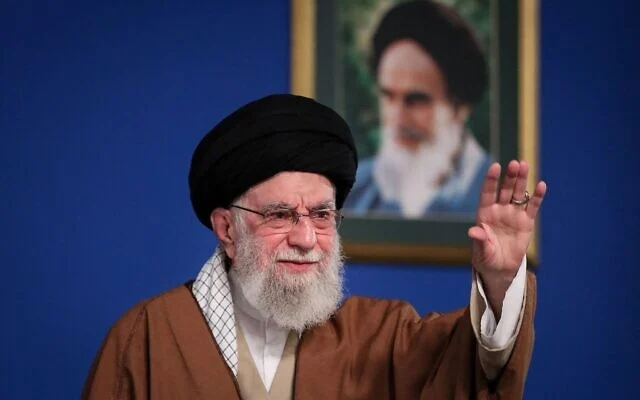
In a rare intervention, Iran’s Supreme Leader Ayatollah Ali Khamenei was urged by his top officials to allow negotiations with the United States on the regime’s nuclear program or risk the fall of the Islamic Republic, The New York Times reported Friday.

The US and Iran are set to meet in Oman on Saturday for talks over Tehran’s rogue nuclear program.

According to The New York Times report, which cited two senior Iranian officials who are familiar with the details, Khamenei held a meeting last month attended by heads of the judiciary and parliament. Those officials, in what the sources described as an unusual, coordinated effort, pressured Khamenei into accepting talks with Washington, even direct ones.

They told Khamenei that the threat of military action by the US and Israel against its nuclear sites was serious.

“If Iran refused talks or if the negotiations failed, the officials told Mr. Khamenei, military strikes on Iran’s two main nuclear sites, Natanz and Fordow, would be inevitable,” the sources said, as reported by the Times.

The country, already in economic shambles, would be forced to respond, but then would also likely be plunged into domestic unrest if it were to go to war, they said.

The combination of such events would amount to an existential threat to the Islamic Republic, the officials reportedly told Khamenei.

The sources said that Mohammad Bagher Ghalibaf, an ex-Islamic Revolutionary Guards Corps chief and current conservative head of Parliament, told Khamenei that a war combined with a domestic economic implosion could quickly get out of control.

They also quoted President Masoud Pezeshkian as telling Khamenei that managing the country through its current crises was not tenable. The report points to power cuts that threaten to shutter factories and water shortages in the central city of Yazd, which saw schools and government offices closed this week.

Iran previously rejected talks but has since relented amid US President Donald Trump’s threats.

Hossein Mousavian, a former diplomat who served on Iran’s nuclear negotiating team on a 2015 deal and is now a visiting fellow at Princeton University, told The New York Times that the change illustrated that preserving the regime was Khamenei’s main priority.

“Mr. Khamenei’s turnaround demonstrates his long-held core principle that ‘preserving the regime is the most necessary of the necessities,’” Mousavian said.

While Khamenei relented and agreed to talks, he also imposed his own conditions, the report said.

Citing three Iranian officials, the NYT said that Khamenei agreed to discuss strict monitoring for the nuclear program and a significant reduction of the enrichment of uranium. However, he has said that Iran’s missile program is off limits, regarding it as being part of Iran’s defenses. The sources said that was a “deal breaker.”

However, the report also said that Iran was “open to discussing its regional policies” and support for its terror proxies like Hamas, Hezbollah and the Houthis in Yemen.

Hamas and Hezbollah have been severely weakened by Israel in the conflicts since Hamas’s Oct. 7 2023 assault on southern Israel, and the US is currently carrying out massive strikes on the Houthis.

The US has vowed not to allow Iran to obtain a nuclear weapon, and Trump has repeatedly threatened “bombing” and a “very bad day for Iran” if no agreement is reached to prevent it.

Iran, which is sworn to Israel’s destruction, denies seeking a nuclear weapon, but it has ramped up its enrichment of uranium to 60 percent purity, which has no application beyond nuclear weapons, and has obstructed international inspectors from checking its nuclear facilities.

Iranian officials said Friday that the Islamic Republic is giving the talks “a genuine chance,” and that, if there are not further “threats and intimidation from the American side, there is a good possibility of reaching an accord.”

The talks on Saturday will be led by Foreign Minister Abbas Araghchi and US special envoy Steve Witkoff, with Omani Foreign Minister Badr al-Busaidi as intermediary, according to Iranian state media.

Trump has characterized the talks as “direct,” while Iranian officials have insisted they will be “indirect.”

Khamenei adviser Ali Shamkhani said in a post to X on Friday that Araghchi was heading to Oman “with full authority for indirect negotiations with America.”

“Tehran seeks a real, just deal—away from media show and rhetoric. Key proposals are ready. If Washington shows determination for a deal, the path to agreement will be clear,” he wrote, in a message posted separately in Farsi, English, Arabic, Russian, and Hebrew.

The Iranian foreign ministry said on Friday the US should value the Islamic Republic’s decision to engage in talks despite what it called Washington’s “prevailing confrontational hoopla.”

The ministry’s spokesman, Esmaeil Baqaei, said Iran was “giving diplomacy a genuine chance in good faith and full vigilance,” adding, “America should appreciate this decision, which was made despite their hostile rhetoric.”

In the lead-up to the talks, Trump reiterated his warning that military action was “absolutely” possible if talks failed.

During his first term, Trump withdrew from a 2015 deal between Iran and six world powers — the US, Russia, China, France, Britain and Germany —  and also imposed stiff sanctions. Iran responded by dropping some of its commitments to the deal, known as the Joint Comprehensive Plan of Action.

Hardline media in Iran voiced skepticism on the talks.

For example, the Kayhan newspaper ran editorials warning that new sanctions imposed this week showed the United States was “an enemy of Iran and its people” and dismissed negotiations to lift sanctions as a “failed strategy.”

Reformist media outlets struck a more optimistic tone, emphasizing the potential economic and investment opportunities talks could create.

Witkoff, expected to lead the American negotiation effort, visited Russia on Friday for talks on Ukraine with Russian President Vladimir Putin, an ally of Iran.

Expert-level consultations between Russia, China and Iran on nuclear issues took place in Moscow on Tuesday, according to the Russian foreign ministry.

Iran has in recent months also been talking with the three European signatories of the 2015 nuclear deal, namely France, Germany and Britain.

On Friday, Germany urged the two sides to reach a “diplomatic solution,” adding that it is a “positive development that there is a channel for dialogue between Iran and the United States.”

Israel sees opening for strikes on Iranian nuclear sites: US intelligence

February 25, 2025

13 February 2025

https://www.theaustralian.com.au/business/the-wall-street-journal/israel-sees-opening-for-strikes-on-iranian-nuclear-sites-us-intelligence/news-story/0beab805f30db7e9ee8d528831523bfe

US intelligence agencies concluded during the final days of the Biden administration that Israel is considering significant strikes on Iranian nuclear sites this year, aiming to take advantage of Iran’s weakness, officials familiar with the report said.

The finding was included in an analytical assessment produced around the new year as the Biden administration wound down. The analysis highlighted the risks of further high-stakes military activity in the Middle East after the degradation of Iran’s capabilities over the past year.

The intelligence analysis concluded Israel would push the Trump administration to back the strikes, viewing him as more likely to join an attack than now-former President Joe Biden and fearing the window for halting Tehran’s pursuit of a nuclear weapon was closing, two of the people familiar with the intelligence said.

The US intelligence community produced a second report delivered during the early days of President Trump’s administration reiterating that Israel is considering such strikes on Iranian nuclear facilities, according to one of the US officials familiar with the intelligence.

US military support and munitions would likely be needed for an Israeli attack on Iran’s heavily fortified nuclear sites given their complexity, US military officials say.

Israeli Prime Minister Benjamin Netanyahu’s office didn’t respond to requests for comment, and Israel’s military declined to comment. Israeli officials have repeatedly signalled that there is an opportunity for more aggressive action against Iran.

“Iran is more exposed than ever to strikes on its nuclear facilities,” Israeli Defense Minister Israel Katz said in November. “We have the opportunity to achieve our most important goal – to thwart and eliminate the existential threat to the State of Israel.” Iran in the past has threatened a massive retaliation if its nuclear sites were hit, but Tehran is now significantly weakened after Israel’s strikes last year on its conventional military sites, and the heavy losses suffered by its regional proxies, including Hezbollah and Hamas.

During the presidential transition, some members of Trump’s team considered the viability of Israel launching preventive strikes on Iranian nuclear sites, including having US forces join Israeli aircraft in a bombing campaign. Now as president, Trump has said he prefers a negotiated solution.

Trump last week signed a national-security memorandum to reimpose his policy of “maximum pressure” on Iran and didn’t rule out supporting Israeli strikes if his desired negotiations to end Iran’s nuclear work fail.

“Reports that the United States, working in conjunction with Israel, is going to blow Iran into smithereens, ARE GREATLY EXAGGERATED,” he wrote last week on Truth Social.

A spokeswoman for the Office of the Directorate of National Intelligence declined to comment. A spokesman for the National Security Council said the administration doesn’t comment on intelligence matters.

Tehran has been signalling that it is open to talks with the US “If the main obstacle for the US is Iran pursuing nuclear weapons, then that can be resolved,” its foreign minister told state television last week. “Iran’s stance on nuclear weapons is clear.”

In December, the US intelligence community issued its sharpest warning yet that Iran could move to develop nuclear weapons. Iran has amassed a large stockpile of highly enriched uranium and is thought to have been working on the technical details of completing work on a bomb should it make the political decision to go ahead.

Iran has long forsworn development of a nuclear weapon, but the December report concluded the risks have increased that it could change its mind to develop an effective deterrent, pointing to a public debate in the country over going nuclear. Israel over the past year wiped out the top leadership and much of the arsenal amassed by Lebanese militia Hezbollah, an Iran ally and a deterrent to Israeli attacks, and crippled Iran’s air defences.

The fall of the Assad regime in Syria also deprived Iran of one of its most important allies and a crucial platform for projecting power in the region. Meanwhile, Iranian missile strikes against Israel in retaliation for Israeli attacks have failed to do much damage.

Iran’s leaders are also struggling with an economic crisis brought on by bad management, corruption and heavy sanctions, leaving the country in a weakened state as international pressure builds.

The Biden administration successfully urged Israeli leaders to avoid strikes on Iran’s major nuclear facilities last year when Israel retaliated for an Iranian missile and drone strike. The Israeli attacks instead hit Iran’s air defences and missile-production facilities, diminishing the country’s overall military infrastructure.

The timing and nature of any Israeli strikes on Iran would likely be subject to negotiations between the US and Israel and influenced by other factors, including the fate of fragile ceasefires in Gaza and Lebanon.

Any Israeli attack on Iran’s nuclear facilities would need to hit multiple sites, some in underground fortifications, and be thorough enough that Iran couldn’t quickly rebuild what was destroyed, Israeli analysts said.

Israel would be better served by a new deal in which Iran agrees to dismantle its nuclear program, said Yakov Amidror, a former Israeli national-security adviser under Netanyahu.

“If a good agreement cannot be achieved, Israel will have to act against the nuclear project of Iran” he said.

The Middle East has been struggling with several crises over the past year and a half, including wars in Gaza and Lebanon, the collapse of the Assad family’s half-century dictatorship in Syria, and direct attacks between Iran and Israel. Biden worked to contain the fighting, but Iran and the US were drawn deeper into the conflicts.

Trump’s intervention helped achieve a ceasefire deal in Gaza in January after a year of fruitless efforts. He has also pushed for a normalisation of relations between Saudi Arabia and Israel.

The president roiled the Middle East and Western policy establishments last week by saying the US would take control of Gaza, redevelop the enclave and empty it of Palestinians.

Avner Golov, a former senior director at Israel’s National Security Council and now vice president of MIND Israel, a security-focused non-profit based in Tel Aviv, said while Netanyahu’s priority is the Iranian nuclear issue, Trump seems more interested in ending the war in Gaza and moving toward regional peace deals.

“At the end of the day,” Golov said of Trump’s priorities, “it’s Saudi first with all the deals around it, then Iran.”

Israel hit nuke weapons research site in Iran last month, set back program — report

November 19, 2024

Full article from Nov 15 copied below. Just before that is a link to an article from 18 Nov in which Netanyahu confirms the strike on the nuke target.

Netanyahu says Israel’s retaliatory strike on Iran hit component of its nuke program
18 Nov 24
https://www.timesofisrael.com/liveblog_entry/netanyahu-says-israels-retaliatory-strike-on-iran-hit-component-of-its-nuke-program/

Israel hit nuke weapons research site in Iran last month, set back program — report
15 Nov 24
https://www.timesofisrael.com/israel-targeted-secret-nuclear-weapons-research-in-iran-strikes-last-month-report/

Strike destroyed equipment used to design explosives for bomb; will have to be replaced if regime seeks to press ahead. IAEA chief tours nuclear sites. Iran ‘won’t try to kill Trump’

Israel’s airstrikes in Iran last month destroyed an active nuclear weapons research facility in Parchin, the Axios news site reported Friday, citing three US officials, one current Israeli official and one former Israeli official.

The report came as the UN nuclear watchdog prepares to vote on censuring Iran for refusing to cooperate with its inspectors, and amid a report that the Islamic Republic told the Biden administration last month it would not seek to assassinate US president-elect Donald Trump.

According to Axios, an Israeli strike on Parchin — part of an hours-long operation on October 26, which came in response to an earlier Iranian attack on Israel — destroyed sophisticated equipment used to design the explosives that could surround uranium in a nuclear device, significantly damaging Iran’s efforts to resume its nuclear weapons research.

The Israeli strike “will make it much harder for Iran to develop a nuclear explosive device if it chooses to do so,” Axios cited two Israeli officials saying.

Iran would need to “replace the equipment that was destroyed” if it wants to produce nuclear weapons, the report cited the Israeli officials saying, “and if Iran tries to procure it, they believe they will be able to track it,” Axios said.

The “Taleghan 2” complex was already known to have been targeted in the strikes — as testified by satellite imagery — and was already recognized as having been a site of Iran’s earlier nuclear program which officially shut down in 2003.

US and Israeli intelligence reportedly began to detect new activity at the site earlier this year, including computer modeling, metallurgy and research on explosives, that would be relevant to creating a nuclear device.

“They conducted scientific activity that could lay the ground for the production of a weapon. It was a top-secret thing. A small part of the Iranian government knew about this, but most of the Iranian government didn’t,” a US official told Axios.

Knowledge of the research at Taleghan 2 reportedly prompted the US Director of National Intelligence to change its official assessment of Iran’s nuclear program in August, which had previously noted Iran was “not currently undertaking” the activities necessary to produce a testable nuclear device.

Israel is not known to have hit other nuclear sites in the October 26 airstrikes, when dozens of Israeli aircraft took out air drone and ballistic missile manufacturing and launch sites, as well as air defense batteries.

The US urged Israel to refrain from hitting nuclear sites in the attack, to avoid triggering a major escalation with Iran, though it endorsed Israel’s move in responding to Iran’s October 1 attack on Israel, when the Islamic Republic shot 181 ballistic missiles at Israel, its second such direct attack since April.

According to Axios, Israel made an exception for Taleghan 2, because the site was not part of Iran’s declared nuclear program — which the Islamic Republic denies has a military component, but acknowledges as a supposedly civilian enterprise.

Had Iran acknowledged the significance of the attack, it would have in the process admitted its own violation of the nuclear non-proliferation treaty.

“The strike was a not-so-subtle message that the Israelis have significant insight into the Iranian system even when it comes to things that were kept top secret and known to a very small group of people in the Iranian government,” a US official told Axios.

The news site also quoted Israeli officials who said the strike would make it much harder for Tehran to develop a nuclear weapon if it chooses to do so.

“This equipment is a bottleneck. Without it the Iranians are stuck,” a senior Israeli official said.

“This is equipment the Iranians would need in the future if they want to make progress towards a nuclear bomb. Now they don’t have it anymore and it is not trivial. They will need to find another solution and we will see it,” the official added.

Nuclear inspections

The report came the same day as the head of the UN nuclear watchdog visited two Iranian nuclear sites as part of a visit to Iran.

During the visit, Iran’s foreign minister told International Atomic Energy Agency chief Rafael Grossi that Tehran is willing to resolve outstanding disputes over its nuclear program but won’t succumb to pressure.

Grossi visited the Natanz nuclear plant and the Fordow enrichment site, which is dug into a mountain around 100 km (60 miles) south of the capital Tehran, state media reported, without giving details.

Relations between Tehran and the IAEA have soured over several long-standing issues including Iran barring the agency’s uranium-enrichment experts from the country and its failure to explain uranium traces found at undeclared sites.

“The ball is in the EU/E3 court,” Iranian Foreign Minister Abbas Araqchi wrote on X following talks in Tehran with Grossi on Thursday, referring to three European countries — France, Britain and Germany — which represent the West alongside the United States at nuclear talks.

“Willing to negotiate based on our national interest and inalienable rights, but not ready to negotiate under pressure and intimidation,” Araqchi said.

France’s foreign ministry spokesman told reporters the three European powers would wait to see the results of Grossi’s visit before deciding how to respond.

“We are fully mobilized with our E3 partners and the United States to bring Iran to the full implementation of its international obligations and commitments as well as cooperation in good faith with the agency,” he said.

“That mobilization comes in different ways, including through resolutions…so we expect that these messages are passed during Rafael Grossi’s visit and we will adapt our reaction accordingly.”

Trump’s return to office as US president in January upends nuclear diplomacy with Iran, which had stalled under the outgoing administration of Joe Biden after months of indirect talks.

During Trump’s previous tenure, Washington ditched a 2015 nuclear deal between Iran and six world powers that curbed Tehran’s nuclear work in exchange for relief from international sanctions.

Trump has not fully spelled out whether he will resume his “maximum pressure” policy on Iran when he takes office.

We won’t try and kill Trump

Also Friday, The Wall Street Journal reported that an Iranian message, delivered in writing on October 14, assured the Biden administration that it would not seek to kill Trump.

The message came in response to a written warning sent by the US to Tehran in September, over alleged plots to kill the former president, who has since won election to a second, non-consecutive term.

American officials have reported ongoing efforts by Iran to assassinate Trump administration members — including, but not limited to, Trump himself — who were behind a 2020 US airstrike that killed Qassem Soleimani, who led the Quds Force in Iran’s Islamic Revolutionary Guards Corps, a proscribed terror organization.

Over the summer, the US Secret Service moved to increase then-candidate Trump’s security detail, amid intelligence of an Iranian plot on his life.

Several attempts were made on the candidate’s life after the change, though neither was linked to Iran.

Last week, US prosecutors announced charges in an alleged IRGC-directed plot to kill Trump, which was to be carried out by an Afghan national who is at large and believed to be in Iran.

The Afghan suspect and two other men were charged separately with plotting to kill an Iranian-American dissident in New York.

Why Trump can reset the Middle East conflict

November 13, 2024

As the Islamic Republic ratchets up its bellicose rhetoric following Israel’s retaliatory strikes on Iranian military sites, US president-elect Donald Trump has a golden opportunity to deliver a reset that can reshape the Middle East.

https://www.theaustralian.com.au/commentary/why-trump-can-reset-the-middle-east-conflict/news-story/5762cf2020a52c0e3ed6f312b69dcbe6?btr=5924277be99ca614dfaad8825bbf6de3

In seeking a more active role in degrading Iran’s ability to sow violence and discord throughout the region, the new Trump administration should resist the temptation of military intervention, whether originating from Washington or Jerusalem.

Military action would only play into the hands of Iran’s hardliners, whose schtick of part victim, part revolutionary purist and occasional nationalist is little more than an attempt to divert attention from their basic shortcomings, where incompetence is underpinned by brutality.

Worse, attacking Iran runs the real risk of embroiling the region in another cycle of devastating violence whose outcome may end up being worse for the US than the status quo ante.

The new administration’s focus should be on degrading the Islamic Republic’s ability to finance domestic repression and regional terrorism, as well as strengthening support for the Iranian people so that when the timing is right they can effect change from within.

Unwinding Biden’s failed Iran policies

Trump will move swiftly to cast off the Obama-era officials who regained influence under Joe Biden’s administration and pushed a strategy that offered economic and diplomatic inducements to Iran to return to the 2015 Joint Comprehensive Plan of Action nuclear deal.

Regardless of the merits of Trump’s exit from that deal in 2018, the failure of the Biden administration to re-engage the regime, marred by the influence-peddling of the so-called Iran Experts Initiative and sidelining of key personnel involved in Iran policy, has emboldened regime hardliners.

The seismic shifts in the strategic landscape following the October 7 atrocities last year and the two unprecedented Iranian missile and rocket attacks on Israel exposed the chaotic nature of Biden’s Iran policy. Despite offering sanctions relief and diplomatic rapprochement since taking office in 2021, Tehran’s hardliners have shown little to no interest in moderating their belligerency.

In unwinding the first Trump administration’s hard-hitting economic sanctions, the Biden administration effectively gave the regime a free pass to ramp up its support for regional terror proxies Hezbollah, Hamas, the Houthis and assorted Iraqi and Syrian Shi’ite militias.

Not even the unprecedented nationwide protest movement that erupted in 2022 following the death in custody of Mahsa Jina Amini, who had been arrested for improper hijab, was enough to precipitate an end to the inertia, leading to accusations that Biden lacked an Iran policy altogether.

Squandering an opportunity to bolster those who sought to topple the Islamic Republic’s regime from within, the Biden administration continued to turn a blind eye to the enforcement of sanctions, allowing Iran’s oil exports to increase by 50 per cent last year, with the bulk going to China. Sanctions waivers totalling $US10bn were approved for countries such as Iraq, and in September last year the US greenlit a controversial hostage deal that gave Iran access to $US6bn in frozen assets in exchange for five detained US citizens. The new Republican administration now has a mandate to change course.

Tehran is vulnerable right now

In the 13 months since Hamas’s October 7 attacks, Israel has invaded Gaza and Lebanon and wrought profound destruction on the capabilities of two of Iran’s most important proxies, including the core player in its axis of resistance, Hezbollah. Israel’s demonstrated capacity to hit anything or anyone inside Iran underscores the extent to which the Islamic Republic’s adversaries and even the regime itself have likely underestimated the country’s vulnerabilities.

Iran has long feared a second Trump presidency and sought to use its sophisticated cyber and hacking capabilities to interfere in the US elections to shift the scales in favour of Kamala Harris. The CIA even had uncovered a plot to assassinate Trump allegedly directed from Tehran.

In a move perhaps designed to pre-empt a Trump victory, last week Iran executed Jamshid Sharmahd, a prominent dissident who had resided in the US for two decades and was also a citizen of Germany. While the Biden administration had declined to get involved in Sharmahd’s case, an Iranian court indicted the US government alongside Sharmahd earlier this year and ruled that both must pay compensation to Iran of $US2.5bn ($3.8bn).

It is possible Iran feared that a future president Trump might take a harder line than Biden on its hostage-taking of Americans and that killing Sharmahd in the final months of Biden’s presidency would be less likely to provoke a response.

Maximum pressure 2.0?

The new Trump administration is likely to discover that a weakened Iran will be harder to predict, deter and dissuade than one secure in its position as a regional heavyweight. Stopping short of military intervention, Trump should revert to his earlier strategy of maximum pressure to strangle Iran’s ability to fund its network of proxies and discourage hardliners within the country from doubling down on their quest for nuclear weapons.

Decades of mismanagement and rampant corruption have left Iran’s domestic economy in a moribund state. Chronic unemployment and inflation have hollowed out what remains of the middle class, with many Iranians grappling with rising shortages of basic staples, including food and energy.

The new administration should compound Iran’s economic malaise by expanding Trump’s 2018 sanctions regime, which targeted a broad sweep of companies and industries, irrespective of national origin, and effectively made them choose between doing business with Iran and the US – unsurprisingly, the vast majority chose the latter.

In particular, a new maximum pressure campaign should sanction the Islamic Revolutionary Guard Corps’ economic interests, including the “charitable foundations” (bonyads) that dominate significant parts of the economy.

Targeted sanctions also should be applied to key members of the regime’s elite and their immediate families, many of whom reside in North America and Europe. Restricting the elites’ ability to travel and access funds will create internal tensions within the regime in the same way the crackdown on oligarchs following Russia’s invasion of Ukraine provoked significant recriminations inside Russia. Expropriating interest on seized Russian assets to aid Ukraine’s war effort is an innovative measure that could similarly be adopted in the case of Iran.

Death of the Ayatollah

There is a strong likelihood that during Trump’s second presidency Iran’s 85-year old Supreme Leader Ayatollah Ali Khamenei will die. There is a significant chance that his death will spark a further inflection point in the ever-deepening schism between the Iranian people and their authoritarian rulers, promising a precipitous moment of great vulnerability for the regime.

One of two likely successors to Khamenei, former president Ebrahim Raisi died in a helicopter crash in May.

The second is Khamenei’s son Mojtaba, a shadowy figure, disliked by some factions of the regime and the public more broadly. Notwithstanding the obvious challenges inherent in installing familial succession in a regime opposed to hereditary rule, Mojtaba Khamenei lacks religious credentials and the political stature of his father, who was a key figure in the revolution’s early days under the Islamic Republic’s founder, Ayatollah Ruhollah Khomeini.

The prospect of a succession struggle at the top of the Iranian regime offers the US and its allies an unparalleled opportunity to consider what a post-Khamenei Iran could look like and to plan for what can be done to support the Iranian people should they once again choose to rise up.

Middle East policy was one of the few foreign policy areas in which Trump achieved meaningful success. Rather than be caught on the hop, as Barack Obama was in 2009 and Biden was again in 2022, Trump should build on this legacy and prepare in advance for how the US can harness Iran’s next mass popular uprising to help transform the regime from within.

Kylie Moore-Gilbert is a scholar of the Middle East based at Macquarie University. She is the bestselling author of The Uncaged Sky: My 804 Days in an Iranian Prison. Patrick Gibbons is a former diplomat who served in the Australian embassy in Tehran. He is a partner at corporate advisory firm Orizontas.

Inside Israel’s secret 20-year plan to strike Iran: Advanced weapons unveiled

October 26, 2024

From long-range missiles to bunker-busting bombs, Israel has spent decades and billions developing specialized munitions for a possible attack on Iran’s nuclear facilities.

https://www.jpost.com/israel-news/article-824803

Over recent decades, Israel’s defense establishment has invested billions in preparing for a potential strike on Iran, developing specialized munitions along the way. Some of these capabilities were only revealed after being sold to foreign air forces. Here’s what can be disclosed amidst these preparations.

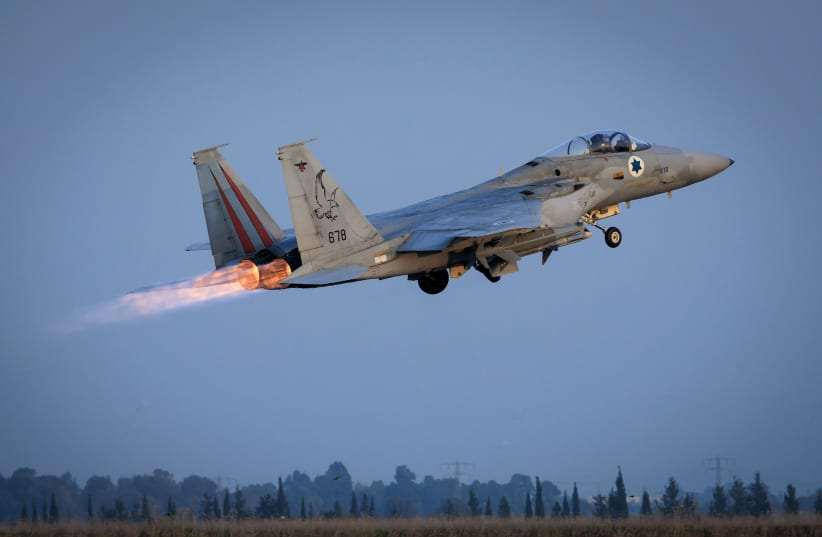
Last month, Israel conducted another strike in Yemen, deploying F-15 jets from a base 1,800 kilometers away, showcasing its renowned improvisation skills. These aircraft, initially designed for air combat, were modified in Israel for strike missions. The Israeli Air Force also equipped them to carry modern munitions from both American and Israeli manufacturers.

However, an attack on Iran presents a far more complex challenge, despite the similar distance.

Iran’s nuclear facilities and ballistic missile bases are deeply embedded underground, in contrast to less-protected targets like oil terminals. Additionally, Iran operates an advanced air defense system, primarily domestically developed. According to their claims, yet to be tested, this system matches the capabilities of Russian systems like the S-300, which can intercept missiles launched by Israel. However, the Israeli-attributed strike on Isfahan after Iran’s April attack was not intercepted by these advanced defenses. Iran also maintains an outdated fleet, including Russian MiG-29s and American F-14s from the Shah’s era, which continue to operate despite international sanctions.

In light of these challenges, Israel’s defense forces have spent 20 years preparing for a possible strike on Iran, investing billions of dollars and shekels. This investment includes developing specialized munitions, some of which even the US declined to sell to Israel, as well as innovations not available to the US.

Striking from 1,800 km away

Strikes at a range of about 2,000 kilometers are typically carried out by American and Russian forces using cruise missiles and bombers. Israel, however, has allocated significant portions of its US aid to acquiring fighter jets capable of flying two hours each way – ranging from the advanced F-15I squadron to four F-16I Sufa squadrons.

Lockheed Martin developed conformal fuel tanks specifically for these jets, enhancing their range without significantly affecting aerodynamics or radar signature.

Foreign reports indicate that Israel has developed detachable fuel tanks for F-35 jets, enabling them to reach Iran while maintaining stealth capabilities. Without these, their range is insufficient, and standard under-wing tanks compromise much of their stealth.

Long-range attack missiles

In the late 2000s, Israel’s defense industries unveiled two long-range attack missiles launched from fighter jets. While details like their precise range remain unclear, it’s known that they have a range of hundreds of kilometers, allowing strikes from outside the range of Iranian defenses. These missiles travel at supersonic speeds, reducing enemy alert times and complicating interception efforts, increasing their chances of hitting the target.

Rampage missile

The Rampage, developed in a collaboration between Israel Aerospace Industries (IAI) and Elbit Systems, is based on Elbit’s EXTRA rocket. Initially designed for ground launch, the Rampage was adapted for air deployment, gaining increased range and speed when launched from jets. It features multiple navigation systems, providing redundancy for accurate targeting.

With a length of 4.7 meters, a diameter of 30.6 cm, and a weight of 570 kg, it carries a 150 kg warhead, making it effective against missile batteries, command centers, and other critical targets. It can be launched from Israel’s F-15, F-16, and F-35 aircraft. Its reliance on existing rocket technology makes it relatively affordable, estimated at a few hundred thousand dollars per unit.

Rocks missile

The Rocks missile, unveiled by Rafael Advanced Defense Systems in 2019, combines supersonic cruise capabilities with satellite and inertial navigation, as well as optical targeting. It is based on Rafael’s Anchor missile, which mimics the Iranian Shahab missile in speed and maneuverability for testing purposes.

The Rocks can be launched from smaller F-16 jets and potentially the F-35. Foreign assessments suggest it has a range of 300 km and can carry a 500 kg warhead, making it capable of targeting fortified or underground structures.

Additional developments

Foreign sources indicate that Israel has a surface-to-surface missile system, equipped with both conventional and nuclear warheads, known as the Jericho missiles. Despite the hundreds of ballistic missiles Iran has launched towards Israel, the likelihood of Israel using these missiles in a strike appears low. These missiles were initially developed by the French Dassault company, later upgraded by IAI.

Israel maintains a policy of ambiguity regarding its capabilities in this area, often announcing “rocket propulsion tests” during launches from its Palmachim base. However, the 1988 unveiling of the Shavit satellite launcher confirmed Israel’s long-range ballistic capabilities, as any satellite launcher can be adapted for military use. Thus, these missiles are expected to remain off the table for now.

Additionally, Elbit has developed bunker-busting bombs, named 500 MPR, capable of penetrating up to four meters of concrete. These bombs, tested on F-15I jets, have a shorter range, reaching a few dozen kilometers based on the method of deployment.

PopEye Turbo

Another Israeli weapon, known only from foreign reports, is the PopEye Turbo cruise missile, developed by Rafael with a range of 1,500 km. It is designed for launch from Israeli Navy submarines and is capable of carrying both conventional and nuclear warheads. This range allows Israeli submarines to strike Iran from the Red Sea or the Arabian Sea without entering the Persian Gulf.

Exporting these advanced munitions to trusted foreign customers allows Israeli companies to reinvest in missile and bomb development, reducing the costs for Israel’s Defense Ministry. It is likely that undisclosed munitions are stored in Israeli Air Force warehouses, waiting for the right moment. 

Yahya Sinwar studied Israel in mission to destroy it

October 18, 2024

Yahya Sinwar spent two decades in Israeli prisons studying the country and trying to identify its weaknesses before emerging to assemble a powerful militia dedicated to toppling it.

https://www.theaustralian.com.au/business/the-wall-street-journal/yahya-sinwar-studied-israel-in-mission-to-destroy-it/news-story/076c7dcbd1e9fb41c04596abfc57ba01

Yahya Sinwar, the Hamas leader who was killed by Israeli forces, spent two decades in Israeli prisons studying the country and trying to identify its weaknesses before emerging to assemble a powerful militia dedicated to toppling it.

That mission culminated on Oct. 7 last year, when at his command Hamas led the deadliest attack in Israel’s more than 75-year history. It triggered a war with Israel in Gaza, and now Lebanon, that has upended the Middle East, reignited the Palestinian cause and left more than 40,000 people dead.

Israel vowed to hunt down the wiry and silver-haired Sinwar after the Oct. 7 attacks that killed 1,200 people and left 250 people held hostage, and his death fulfills one of Israel’s main goals of the Gaza war. For more than a year, he evaded the Israeli military, hiding in underground tunnels from where he directed Hamas’s war effort. On Thursday, Israeli officials announced his Wednesday death.

“I prefer to be a fighter among the army and soldiers, and I will die as a fighter,” Sinwar told a Palestinian news website in 2011.

Sinwar, who for years led Hamas in Gaza, took full control of the US-designated terrorist organisation in August after Israel killed its political leader, Ismail Haniyeh, in Iran.

Sinwar’s ascension, which took the group in an even more violent direction, followed a years-long internal struggle over how Hamas should achieve its political and military ambitions. A hardliner, Sinwar believed Israeli and Palestinian civilian deaths were necessary to destabilise Israel.

He launched the attacks last year in the hope that Iran and Hezbollah militants in Lebanon would join the fighting. But those allies initially offered only limited help, with Iran-backed Hezbollah firing rockets at Israel in tit-for-tat exchanges that began the day after the Hamas attacks from Gaza. In April, after the death of an Iranian general in Damascus, Iran launched around 300 missiles and drones at Israel in retaliation for the killing.

Israel this fall launched an air-and-ground campaign against U.S.-designated terrorist group Hezbollah, killing its leader Hassan Nasrallah in Lebanon as it sought to deter attacks into its north. Iran, in response, fired some 200 missiles at Israel, an assault to which Israel has promised to respond. The escalating conflict has left the region on the brink of all-out war.

Sinwar was detained by Israel in 1988, and later told Israeli interrogators that he strangled a suspected Palestinian collaborator, according to a transcript of his confession.

Later convicted, he devoted his time in prison to getting to know Israeli society. He learned Hebrew, watched Israeli news and read books on Jewish history. He was released in 2011 in a prisoner exchange in which Israel gave up more than 1,000 Palestinian prisoners for one Israeli soldier.

Sinwar once said that what Israel considers its strength – that most Israelis serve in the army and soldiers hold a special status in society – was a weakness that could be exploited. One of the goals of the Oct. 7, 2023, attacks was to capture Israeli soldiers who could be traded for Palestinian prisoners. What became clear later was that Sinwar could also use them as insurance to keep himself alive.

But he ultimately miscalculated how Israel would respond to the unprecedented attacks, as Israeli Prime Minister Benjamin Netanyahu vowed to destroy Hamas and dismantle its military. While Israel engaged in talks to free hostages, Netanyahu gave priority to a military campaign against Hamas that eventually led to Sinwar’s killing.

The war has wiped out much of Hamas’s top leadership, including Sinwar, Haniyeh and military commander Mohammed Deif in July.

Netanyahu hasn’t presented a plan for who should govern Gaza after the war. He has ruled out Washington’s proposal that the Palestinian Authority, which runs parts of the West Bank, be put in charge of the enclave.

Some Arab states have pushed for Hamas to retain a role in governing the strip to avert an insurgency by the group’s remaining fighters. Sinwar could be succeeded by his deputy in Gaza, Khalil al-Hayya, who has represented Hamas in ceasefire negotiations with Israel, or by former Hamas leader, Khaled Meshaal.

Sinwar launched the Oct. 7 attacks in part over frustration with the paralysis in the long-running Israeli-Palestinian conflict and the fading global diplomatic importance of the Palestinian cause. The atrocities in southern Israel and subsequent destruction wrought in Gaza have undoubtedly refocused attention back on the issue.

Sinwar grew up in a refugee camp in Khan Younis in Gaza, the son of refugees who fled what is now Israel during the 1948 war with Arab states. In the 1980s, Sinwar became close to the founder of Hamas, Sheikh Ahmed Yassin, and worked with his mentor to hunt Palestinian informants suspected of collaborating with Israel. The internal police force was a forerunner to Hamas’s military wing, the Izz ad-Din al-Qassam Brigades.

During a series of interrogations after his 1988 detention and charge, Sinwar explained how he rounded up a suspected Palestinian collaborator with Israel while the man was in bed with his wife, according to a transcript of his confession.

He blindfolded the Palestinian, called Ramsi, and drove him to an area with a freshly dug grave before strangling him with a scarf known as a kaffiyeh, a symbol of the Palestinian cause.

“I was sure that Ramsi knew he deserved to die for what he did,” Sinwar said in his confession.

Sinwar’s reputation as one of the founders of Hamas and as its chief enforcer immediately propelled him through the hierarchy of Hamas prison inmates.

By the mid-1990s, Sinwar was already the most important Hamas prisoner held by Israel, according to Ehud Ya’ari, an Israeli broadcast journalist who interviewed him in prison. “It was not in question at all that he was the guy in charge,” said Ya’ari.

While Sinwar had a reputation as a violent enforcer, he also had a more cerebral, academic side. He hand wrote hundreds of pages of his thoughts and conclusions upon reading Jewish and Zionist history, demonstrating a curiosity about his enemy that stunned Israelis who met him at the time, Ya’ari added.

He also penned a coming-of-age novel about life in Gaza and a nonfiction book about his experience setting up Hamas’s internal police force.

In 2004, he appeared to develop neurological problems, speaking unclearly and struggling with walking. Doctors examined him, finding an abscess in the brain, and rushed him to hospital for surgery. After a successful operation, Sinwar returned to prison and thanked the doctors for saving his life. He also spent hours in conversation with one of his jailers.

Following his exchange in 2011, Sinwar quickly rose through Hamas’s political leadership. He became Hamas’s leader in Gaza in 2017 and for a time signalled to Israel that he was seeking a long-term quiet in the conflict between the militants and the Israeli military.

“The truth is that a new war is in no one’s interest,” Sinwar told an Italian journalist writing in 2018 in an Israeli daily.

But he became increasingly frustrated with Hamas’s diplomatic isolation, and began to deepen relations with Israel’s arch-enemy Iran and its proxy Hezbollah.

In the months leading up to Oct. 7, the anti-Israel allies discussed ways that they could attack their joint enemy. But while Iran’s proxies have attacked Israel and U.S. forces in the Middle East since the start of the war in Gaza, Tehran and its allies have for the most part avoided an all-out escalation, a decision that frustrated Sinwar.

Once the war began, Sinwar knew that success for Hamas would depend on him surviving and outlasting Israel, forcing a permanent ceasefire that would leave Hamas intact.

For a time, Sinwar believed that he might emerge victorious. His messages to his Hamas colleagues and ceasefire mediators became increasingly confident, even grandiose, according to Arab ceasefire mediators. During negotiations for a temporary pause in fighting earlier in the war, he urged Hamas’s political leadership outside Gaza not to make concessions and to push for a permanent end to the war.

Sinwar believed high civilian casualties in Gaza would create worldwide pressure on Israel to stop the war, according to messages he sent to mediators. But even as the U.S. repeatedly pushed the two sides to agree to a ceasefire, Israel proposed conditions that would likely have led to Hamas’s demise, and Sinwar dug in.

At the end of July, Israel assassinated Haniyeh in Tehran, and Sinwar was officially elevated to run the broader group, his de facto role since the war began.

In September, Hamas raised the stakes, suggesting it had killed six high-profile hostages, including an Israeli-American, amid Israeli military pressure in Gaza. The group threatened to kill more hostages if Israel tried to rescue others, illustrating how much pressure Sinwar was under. The hostages were a valuable bargaining chip to force a ceasefire, but he was also willing to kill some of them as leverage over Israel’s government to force a deal.

Ultimately, Israel’s intelligence and military capabilities proved too much for Sinwar.

In a message to Hezbollah before he was killed, the Hamas leader thanked the Shia militant group for its support and invoked a 7th-century battle in Karbala, Iraq, where the grandson of the Prophet Muhammad was slain, causing a schism in Islam.

“We have to move forward on the same path we started,” Sinwar wrote to Hezbollah. “Or let it be a new Karbala.”

Eliminated: How Israel killed the Hamas mastermind of terror, Yahya Sinwar

October 18, 2024

For more than a year, Israeli soldiers scoured the scorched earth of Gaza in search of Yahya Sinwar, who was thought to be hiding in a vast tunnel network. Then, by pure chance, they found him.

https://www.theaustralian.com.au/world/the-times/most-wanted-man-eliminated-how-israel-killed-the-hamas-mastermind-of-terror-yahya-sinwar/news-story/8800ee91ef3932d057c24e564e4a732d

For more than a year, Israeli soldiers scoured the scorched earth of Gaza in search of the leader of Hamas, Yahya Sinwar, who was thought to be hiding in a vast tunnel network. Then, by chance, they found him.

Late on Wednesday in the southern city of Rafah, trainee Israeli troops from the 828th Battalion, a mixture of novice soldiers and reservists, spotted three suspicious figures moving “home to home on the run”, the military said.

The soldiers fired on the group, apparently wounding one of them, who fled alone into a building. They sent in a small drone in pursuit, and through its camera saw a figure sitting among debris, his face covered by a scarf, who hurled a stick at it in defiance.

Deciding it was too dangerous to enter, they called in tank fire instead. The building was hit by two 120mm shells, with shrapnel scything across the upper floors.

When the trainee soldiers piloted a drone back into the wreckage, they discovered something remarkable.

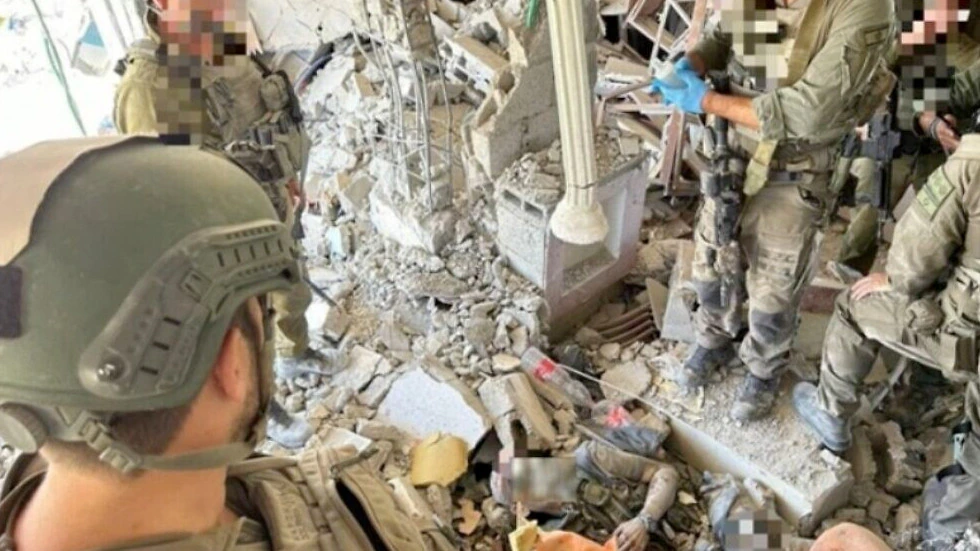
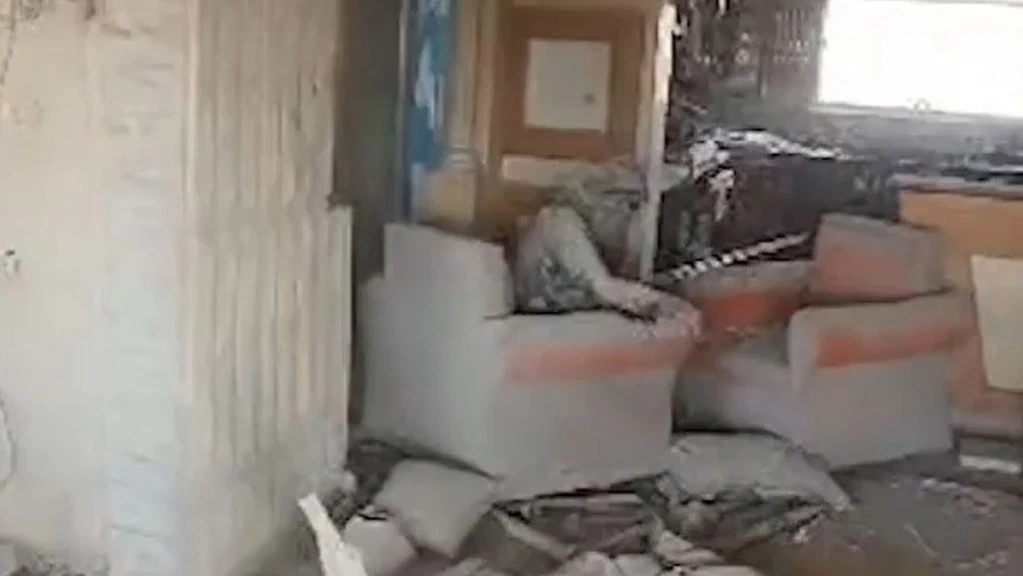
Entombed in the rubble was a body. The head was partially shattered, the face covered in ash, but the corpse was instantly recognisable: it was Israel’s No 1 enemy. His lips slightly parted in death, Sinwar, 61, was given away by his distinctive ears.

Even though it looked exactly like him, it seemed scarcely believable that the troops would stumble across the leader of Hamas in the middle of a city repeatedly cleared by the Israel Defence Forces over months of heavy fighting. Soldiers from the 450th infantry battalion were ordered to storm the building for a closer look.

Wearing gloves to protect the forensic evidence, they took pictures of the corpse, wearing combat fatigues, and sent them to the Israeli police. Specifically, they needed to get images of his yellowing teeth.

Using a wooden stick, they pushed back the man’s upper lip to reveal an identifiable gap between his front incisors. Investigators had the Hamas leader’s DNA from the 22 years he spent in Israeli jails. “We had Sinwar’s dental data on file, and the match was clear,” Aliza Raziel, head of the police’s Forensic Identification Division, said, describing it as “one of the most significant moments this year”.

The seismic discovery was quickly communicated up the chain of command until, in the skies above Israel, two of its most senior security officials held an impromptu meeting in a military helicopter to assess the information. Examining classified documents spread out on a makeshift table, Herzi Halevi, Israel’s top general, and Ronen Bar, head of Shin Bet, the domestic intelligence agency, pored over the details of Sinwar’s apparent assassination.

At the same time, grisly photos of Sinwar’s corpse were leaked online, forcing the IDF to issue a statement. By this stage they were confident enough to assert with a “high” degree of confidence that Sinwar was dead. Four hours later, the military issued a simple message on social media: “Eliminated: Yahya Sinwar.”

Unlike the planned assassination of Hassan Nasrallah, the leader of Hezbollah, in Beirut last month, it appears that Sinwar’s demise owed much more to luck than design. Releasing drone footage of Sinwar’s last moments, Rear Admiral Daniel Hagari, the IDF spokesman, confirmed the soldiers “identified him as a terrorist in a building” but did not know who it was.

“We fired on the building and went in to search. We found him with a flak jacket and a gun and 40,000 shekels [pounds 8,200],” he added.

Sinwar began terrorising the people of Gaza in the 1980s, when as head of the al-Majd, the morality police of Hamas, he was responsible for murdering suspected Palestinian collaborators and torturing those accused of supposed sins such as homosexuality or indulging in vices such as alcohol, drugs and fornication.

As rumours spread in Gaza of his demise, Palestinians expressed tentative hope that his death would mark the beginning of the end of the war, after another bloody day in which 28 people were killed in an Israeli airstrike on a school in Jabalia in the north.

Displaced from his home, Osama al-Kafarna, 43, now living in Khan Yunis, blamed both Sinwar for starting the war and Israel for its retributive, year-long campaign that has left more than 42,000 dead, according to the Hamas-run health ministry.

“Israel has always accused Sinwar of being the one who obstructs the deal, but now after his death we hope that we will not hear more lies from Israel and the war will end as soon as possible,” he said.

For Israelis and Palestinians alike, Sinwar’s death is a decisive moment. At least 97 hostages remain unaccounted for, 33 of whom are believed to be dead. And it remains unclear how Israel intends to quash the radical Sunni ideology that fuels Hamas.

“We’ve closed the account with the arch murderer Sinwar,” said Einav Zangauker, the mother of the hostage Matan Zangauker and one of the most vocal campaigners for a ceasefire, in a video statement. “But now, more than ever, the lives of my son Matan and the other hostages are in tangible danger.”

Israel had claimed that Sinwar had been hiding in tunnels under Gaza, using hostages as human shields. Hagari said he had been “running away” before he died but Hamas will try to paint him as a martyr, defiant to the last.

Binyamin Netanyahu, the Israeli prime minister, addressed the nation in a speech intended to capture the history of the moment. “Evil has been delivered a blow,” he said, before adding: “But our task is not yet complete.”