Posted tagged ‘Middle East’

Snipers from Hebron arrested

February 29, 2016

2 brothers from Hebron arrested for carrying out shooting attacks It has been released that 2 Palestinian brothers were arrested during a Shin Bet, IDF and Israeli Police joint operation. They are suspected of carrying out shooting attacks against IDF soldiers and civilians in recent months.

Feb 29, 2016, 2:15PM Becca Noy

Source: Snipers from Hebron arrested | JerusalemOnline.com

image description
Photo Credit: Shin Bet/Channel 2 News

The Shin Bet, IDF and Israeli Police arrested 2 Hebron residents who carried out shooting attacks against Israelis in recent months, in which 4 Israelis were injured.

The brothers are 23-year-old Hamas activist Nazar Fisal Muhammad Bedui and 33-year-old Akram Fisal Muhammad Bedui. In the beginning of November, the 2 committed a shooting attack near the Cave of the Patriarchs, in which 2 Israelis were injured. At the end of the month, they fired at a car that was traveling to the same area. No one was harmed in this terror attack. In the beginning of January, the 2 brothers fired again near the same location. A 20-year-old woman was injured in this attack.

image description
1 of the brothers Photo Credit: Shin Bet/Channel 2 News

Nazar was brought in for questioning on January 9th and a week later, his brother carried out another terror attack, in which no one was injured. Akram admitted in his interrogation that he carried out the last attack to deflect the suspicions against his brother who was arrested.

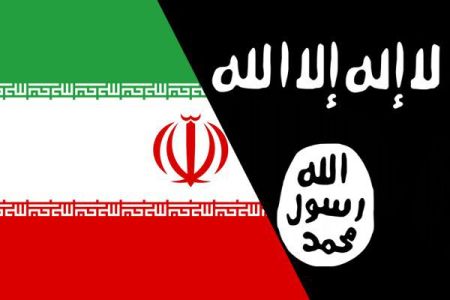
Analysis: Iran, ISIS Likely to Unite for WWIII

February 28, 2016

Analysis: Iran, ISIS Likely to Unite for WWIII, The Jewish PressHana Levi Julian, February 28, 2016

Iran-ISIS-flagPhoto Credit: JP.com graphic

Israeli military analysts are now beginning to prepare top officials, who are in turn beginning to prepare the nation, for what eventually may become the start of World War III.

Most analysts still believe the Syrian crisis is a sectarian conflict between the Sunni, Shi’a and Alawite Muslims. But that time is long gone.

A cataclysmic clash of civilizations is taking place in Syria, one that a number of nations have patiently awaited for decades.

Turkey, so deeply invested in the glorious history of its Ottoman Empire period, would find great satisfaction in stretching its influence with a modern-day “Turkish Islamic Union” that might embrace like-minded nations in the region and perhaps also beyond.

Da’esh, as it is known in the Middle East and which in English calls itself the “Islamic State” (known by others as ISIS or ISIL) is rapidly stretching its influence to build a worldwide Sunni caliphate. It began as a splinter group from the Al Qaeda terrorist organization, and then morphed into the Islamic State in Iraq and Syria (hence “ISIS”) — but at last count had successfully recruited more than 41 other regional Muslim terrorist organizations to its cause from around the world on nearly every continent.

And then there is the Islamic Republic of Iran, a Shi’ite Muslim nation, which is extending its tentacles as rapidly throughout the world as Da’esh, but far more insidiously and certainly more dangerously. If in this world one might define any nation today as Amalek, that ice-cold, black-hearted evil that first picks off the weakest of the Jewish nation, it is Iran, which has quietly extended its influence and control farther and more deeply than any other enemy Israel has ever had. Wealthy, patient, smiling and calculating, Iran acquires new allies each year, even among those Israel once counted as friends. Meanwhile, Iranian officials never forget to keep the home fires burning, to stir the pot and keep it simmering, and always to nurture the various conflicts at home in the Middle East.

This past week, Iran announced the money it donates to families of Arab “martyrs” who murder Israelis will be paid via its own special charity organization, and not through the Palestinian Authority government.

But Tehran has yet to reveal the details of exactly how it intends to pay.

Instead, a high-ranked government official simply made an announcement this weekend saying Iran did not trust the Ramallah government, driving a deeper wedge already dividing the PA’s ruling Fatah faction from Gaza’s ruling Hamas terror organization — Iran’s proxy group.

Hamas has been planting sleeper cells and budding regional headquarters, however, throughout the PA-controlled areas of Judea and Samaria, and it is clear the group’s next goal is an attempt to wrest control of those two regions from the PA, thus completing Iran’s takeover of the PLO — the PA’s umbrella organization and liaison to the United Nations.

Money is always helpful in such an enterprise, and Iran has recently enjoyed a massive infusion of cash that came courtesy of the United States and five other world powers after sanctions were lifted last month as part of last July’s nuclear deal.

Iranian Ambassador to Lebanon Mohammed Fath’ali announced last Wednesday that Iran would pay Arab families for each “martyr” who died attacking Israelis in Jerusalem and each Arab family whose home was demolished by Israel after one of its occupants murdered Israelis in a terror attack.

Iranian Parliament Speaker Ali Larijani last week underlined Tehran’s continued strong support for the wave of terror against Israel.

“The Islamic Republic supports the Palestinian Intifada and all Palestinian groups in their fight against the Zionist regime. We should turn this into the main issue in the Muslim world,” Larijani said in a meeting with a number of “resistance” groups in Tehran,FARS reported Sunday (Feb 28).

But it is clear that Iran is not content solely with a takeover of the PLO.

Tehran has its eye on a much wider goal, now more clearly than ever the resurrection of an updated Persian Empire — in modern parlance military analysts refer to it as an “Axis of Evil” — in much the same manner that Sunni Da’esh (ISIS) is single-mindedly pursuing its goal of rebuilding a worldwide caliphate.

Iranian forces via proxies have already managed to involve themselves in what once were domestic affairs in Yemen, Syria, Lebanon, Egypt, Jordan, Bahrain, Saudi Arabia, Iraq, Israel, Cuba, Mexico, the United States, Afghanistan, Venezuela, Brazil, Argentina, Qatar, Turkey and numerous other nations.

Larijani has at last proclaimed officially that Iran doesn’t differentiate between Shiites and Sunnis since they share many commonalities, adding that Tehran “has supported the Palestinian nation (although they are Sunnis) for the past 37 years.”

The remark is significant in that Iran’s Revolutionary Guard Corps and Lebanese Shi’ite Hezbollah guerrillas – another Iranian proxy – are fighting Sunni opposition forces in Syria on behalf of President Bashar al-Assad. Iranian forces are fighting the Sunni Muslim Da’esh (ISIS) terror organization that seized a significant percentage of territory in Syria.

But south of Israel, Iran’s proxy Hamas, a Sunni Muslim group, has been providing material and technical support to the same Da’esh — but its “Sinai Province” terror group in the Sinai Peninsula.

Here we finally see that Iran is willing to adapt and support terror wherever it can be found, as long as it meets two of three criteria: (1) it furthers its goal to destabilize the region, (2) in the process it works towards the annihilation of Israel, and/or (3) will contribute towards conquest and influence to reach the goal of an ultimate renewed, updated Persian Empire.

How long then until Iran connects the two dots and simply arranges a meeting between its own Supreme Leader Ayatollah Ali Khamenei and the leader of Da’esh, Abu Bakr al-Baghdadi? Hezbollah’s Hassan Nasrallah and Hamas leader Khaled Meshaal will likely be invited for dessert …

The other question is how long until someone strikes the spark that ignites the conflagration — the region is already in chaos.

Over 20 blasts in Damascus as ‘terrorists shell residential areas’

February 28, 2016

Over 20 blasts in Damascus as ‘terrorists shell residential areas’ – Russian military

Published time: 27 Feb, 2016 16:41 Edited time: 27 Feb, 2016 18:30

Source: Over 20 blasts in Damascus as ‘terrorists shell residential areas’ – Russian military — RT News

The Syria truce coordinating center has detected shelling of residential areas in Damascus carried out by terror groups, said Sergey Kuralenko, the head of the center launched by Moscow at Khemim airbase earlier in the week.

Over 20 blasts were registered earlier Saturday over a period of five hours, Kuralenko said.

The information on the shelling was immediately passed to the US coordination center in Amman, the military said, RIA Novosti reported.

READ MORE: Russia suspends all Syria airstrikes on areas & armed groups included in ceasefire – General Staff

There were no immediate reports of any casualties, according to SANA news agency.

The Syrian capital came under shelling just a few hours after a nationwide ceasefire was introduced. The deal on “cessation of hostilities” came into effect at midnight Damascus time. Outlined by the US and Russia, it was unanimously adopted by the United Nations Security Council earlier Friday and obliged all parties involved in the conflict to abide by it.

The exceptions are Islamic State group (IS, formerly ISIS/ISIL), Al-Nusra, and other terrorist organizations as designated by the UN Security Council.

The news of the cessation in hostilities was met with mixed reactions in the Syrian capital.

“Do you think people are happy to see blood, devastation and ruins? People should have a rest and get back to normal life,” a woman told RT.

“It’s impossible to introduce a ceasefire. Terrorists and their supporters are going to use this time to obtain more weapons, and then the battles with the Syrian army will go on,” a man said.

During their Saturday phone call, Russian Foreign Minister Sergey Lavrov and US Secretary of State John Kerry welcomed the ceasefire and agreed on more intensive military cooperation between the two countries on regular basis.

Syria’s warring parties are expected to sit down to negotiating table again on March 7. However, the peace talks will be canceled if hostilities go on, UN Special Envoy Staffan de Mistura said.

U.S., Europe Fund Torture by Palestinian Authority

February 26, 2016

U.S., Europe Fund Torture by Palestinian Authority

by Khaled Abu Toameh February 26, 2016 at 5:00 am

Source: U.S., Europe Fund Torture by Palestinian Authority

  • A report by the Euro-Mediterranean Human Rights Monitor documented 1,391 cases of Palestinians arbitrarily arrested by the two Palestinian parties, Fatah and Hamas, in 2015.
  • Systematic torture in Palestinian prisons in the West Bank and Gaza Strip was documented in the report — at least 179 cases of torture in Palestinian Authority (PA) prisons in 2015.
  • The PA security forces are trained and funded by several Western countries, including the US. This establishes a direct line between these Western donors and the arbitrary arrests, torture and human rights violations that have become the norm in PA-controlled prisons and detention centers.
  • The report also revealed that the Palestinian Authority regularly disobeys court orders by refusing to release detainees, showing contempt for its courts and judges.
  • Before our eyes, two police states are being built: one in the West Bank and a second in the Gaza Strip — in the face of talk by international parties of establishing an independent Palestinian state. But the last thing the Palestinians need is another police state.

Palestinians who incite violence against Israel are called Palestinian leaders. Palestinians who beg to differ with Palestinian Authority (PA) President Mahmoud Abbas or one of his friends are called criminals and can expect to be interrogated and/or imprisoned.

The PA leadership has always clamped down on its critics, including journalists, editors, academics, human rights activists and parliament members. In this regard, the PA and its president show a distinct similarity to the other dictators that run the Arab world.

Like the legendary Japanese monkeys who see no evil, hear no evil and speak no evil, the international media regularly turns a blind eye to blatant Palestinian Authority abuses. But here’s a newsflash for them: Say you don’t like Abbas and you face arrest or interrogation on charges of “insulting His Excellency.”

Take, for example, the case of Professor Abdul Sattar Qassem, who teaches Political Science at An-Najah University in Nablus.

Qassem, a long-time critic of President Abbas and the Oslo Accords, was arrested earlier this week by Palestinian security forces on charges of “incitement.” Qassem was arrested on the heels of a television interview in which he stated that those who collaborate with Israel should receive the death penalty, according to the PLO’s “Revolutionary Law.” The Palestinian leadership considered this statement “incitement” against President Abbas and Palestinian security personnel.

Professor Abdul Sattar Qassem (left) stated in a TV interview that those who collaborate with Israel should receive the death penalty. The Palestinian Authority leadership considered this “incitement” against President Mahmoud Abbas (right), and arrested Qassem.

Qassem was released on bail after three days in detention, although a Palestinian court had ordered him remanded in custody for 15 days. It is still unclear whether he will be officially charged and put on trial.

No stranger to Palestinian prison, Qassem has been arrested at least three times in the past few years for publicly criticizing President Abbas and other senior Palestinian officials. His outspokenness has also exposed him to violence: his car was torched while parked in front of his home in Nablus, and he escaped an assassination attempt when unidentified gunmen shot several rounds at him outside this home.

The culprits have never been caught. Palestinian sources say the assailants are unlikely to ever be apprehended. Had the perpetrators posted critical comments about President Abbas on Facebook, however, these sources say that they would have been locked up long ago.

A recent report published by the Euro-Mediterranean Human Rights Monitor documented 1,391 cases where Palestinians were arbitrarily arrested by the two Palestinian parties, Fatah and Hamas, in 2015.

The report noted that the bulk of the arrests (1,274) had taken place in the areas controlled by the Palestinian Authority in the West Bank. Among those arrested were 35 Palestinian journalists and civil rights activists, and 476 students and academics.

Cameras and computers were confiscated from the detained journalists before they were interrogated about their work and activities on social media, the report said.

Now let us go to Gaza. How is Hamas doing on this score? Hamas authorities last year arrested “only” 23 journalists and civil rights workers, 24 university students and five teachers and academics.

Thus, the figures show, we might say, some arresting facts: Hamas has a better record than the Western-funded Palestinian Authority when it comes to assaults on public freedoms and human rights violations. The report also revealed that the Palestinian Authority regularly disobeys court orders by refusing to release detainees. In other words, the Palestinian Authority, which repeatedly boasts that it has managed to build an “independent and credible judiciary system” with the help of Western donors, shows contempt for its courts and judges.

Systematic torture — scores of cases — in Palestinian prisons in the West Bank and Gaza Strip was also documented in the report. In 2015, there were at least 179 cases of torture in Palestinian Authority prisons, as opposed to 39 cases in Hamas prisons during the same year.

The Palestinian Authority security forces are trained and funded by several Western countries, including the United States. This establishes a direct line between these Western donors and the arbitrary arrests, torture and human rights violations that have become the norm in Palestinian Authority-controlled prisons and detention centers.

Yet there is silence — until the word “Israel” pops up. Then Western news outlets, including those based in Israel that are tasked with covering Palestinian affairs, go into high gear.

This criminal indifference — one is tempted to say negligence — on the part of the international community permits and even promotes Palestinian Authority and Hamas human rights abuses.

We are witnessing how the two Palestinian parties approach the task of building state institutions. Before our eyes, two police states are being built — one in the West Bank and a second in the Gaza Strip. This is taking place in the face of talk by the same donors and other international parties (at least in relation to the PA) of establishing an independent Palestinian state. But the last thing the Palestinians need is another police state.

President Abbas, who has just entered the 11th year of his four-year term in office, has no cause to be concerned about the human rights violations committed by his security forces. In fact, he has every reason to continue clamping down on his critics. Why should he worry? The international community absolves him of the abuses perpetrated under his rule.

That is why this week Abbas instructed his security forces to launch an investigation into the behavior of a legislator, Dr. Najat Abu Baker. Dr. Abu Baker, it seems, had the temerity to demand an inquiry into the financial practices of a Palestinian cabinet minister.

Soon after she lodged charges of financial wrongdoing, Dr. Abu Baker, an elected member of the Palestinian Legislative Council, was summoned by the Palestinian prosecutor general for interrogation on charges of “slander” and “incitement.” This is quite a way to respect Dr. Abu Baker’s parliamentary immunity.

Dr. Abu Baker’s case is yet a further example of the disregard that the Palestinian Authority shows not only for the judicial system, but also for the legislative body that is meant to serve as a watchdog over the executive branch. But even watchdogs know their owners. By summoning Dr. Abu Baker for interrogation and threatening to arrest her, Abbas is sending a message of deterrence to his detractors, namely that even a member of parliament cannot escape the long arm of the Palestinian security forces.

For now, the international community has some choices. It could continue to close its eyes to the police states being erected with its monies. Alternatively, it could choose a new path: to hold the Palestinian Authority accountable for its actions, including the torture that takes place within its very core. But the West had better hurry up. The PA repression is far from lost on the Palestinians, who are being driven by it into the waiting arms of Hamas and other such groups.

Proper state institutions for the Palestinians is a laudatory goal; what the Palestinians have today are two banana republics.

Khaled Abu Toameh, an award winning journalist, is based in Jerusalem.

Obama Opposes New Pro-Israel Bill

February 25, 2016

Obama Opposes New Pro-Israel Measures, Will Not Follow Provisions to Help Jewish State White House rejects portions of new bill to help Israel

BY:
February 25, 2016 12:35 pm

Source: Obama Opposes New Pro-Israel Bill

President Barack Obama has announced in a rare statement that he will not follow newly passed measures aimed at boosting the Israeli economy and strengthening ties between the United States and the Jewish state, according to a statement issued by the president.

Obama stated that while he would sign the new trade resolution, portions of which focus on combatting economic boycotts of Israel, he would not enforce certain pro-Israel provisions that order the United States to stop partnering with countries that support the Boycott, Divestment, and Sanctions movement, or BDS, which aims to isolate Israel.

The president’s rejection of these provisions comes two weeks after the White House issued a separate statement expressing support for every provision of the trade bill except for those focusing on strengthening the U.S.-Israel relationship.

The Obama administration has repeatedly opposed efforts to fight the BDS movement over the past several months, with several senior officials expressing support for European efforts to explicitly label Jewish-made products produced in disputed areas of Israel.

Obama claimed in the statement that his administration does not back the BDS movement. However, he will not uphold parts of the new trade legislation that seek to combat the BDS-backed labeling of Jewish goods, which the Israeli government has described as anti-Semitic.

“Certain provisions of this Act, by conflating Israel and ‘Israeli-controlled territories,’ are contrary to longstanding bipartisan United States policy, including with regard to the treatment of settlements,” Obama said in the statement.

“Moreover, consistent with longstanding constitutional practice, my administration will interpret and implement the provisions in the Act … in a manner that does not interfere with my constitutional authority to conduct diplomacy,” Obama said, making clear he will not enforce any part of the law that he views as legitimizing Israeli settlements.

Rep. Peter Roskam (R., Ill.), who authored the pro-Israel language along with Rep. Juan Vargas (D., Calif.), criticized the administration for not upholding the will of Congress and the American people.

“This law—including the anti-BDS provisions I was proud to author—passed with overwhelming bipartisan support in both the House and the Senate,” Roskam said in a statement. “Incredibly, President Obama has already announced his intention to prioritize his misguided notions of legacy over the law of the land.”

“We did not provide a statutory menu from which President Obama can pick and choose provisions to enforce,” the lawmaker added. “The president has signed this bill into law—it is now his responsibility to fully and faithfully execute it in its entirety.”

Roskam expressed dismay that “fighting efforts to delegitimize Israel interferes with his diplomacy, but rest assured that I intend to use my authority as chairman of the Ways and Means Subcommittee.”

Congress has undertaken a series of efforts to boost the U.S.-Israel relationship following a contested debate over the Iran nuclear deal that strained relations between the two countries.

Senate lawmakers, led by Sen. Mark Kirk (R., Ill.), recently filed legislation that would help state and local governments divest taxpayer funds from companies that back the BDS movement.

The bill comes as more than 20 state governments pursue efforts to combat the BDS movement and divest from anyone who supports it.

Turkey says Syria ceasefire is not binding if it threatens security

February 25, 2016

Turkey says Syria ceasefire is not binding if it threatens security

February 25, 2016, Thursday/ 11:20:39/ REUTERS | ISTANBUL

Source: Turkey says Syria ceasefire is not binding if it threatens security

Turkey says Syria ceasefire is not binding if it threatens security

Turkish Prime Minister Ahmet Davutoğlu. (Photo: Reuters)

Prime Minister Ahmet Davutoğlu said on Thursday that Turkey would not be bound by the Syrian ceasefire plan if its security was threatened, and would take “necessary measures” against the Syrian Kurdish People’s Protection Units (YPG) and Islamic State of Iraq and the Levant (ISIL) if needed.

The ceasefire process, put in train by Russia and the United States, could be complicated by NATO member Turkey’s deep distrust of the Washington-backed Syrian Kurdish YPG militia, which has made territorial gains in northern Syria near the Turkish border. Turkey regards the YPG as a terrorist group and fears it will further inflame unrest among its own Kurdish population.

“The ceasefire is not binding for us when there is a situation that threatens Turkey’s security; we will take necessary measures against both the YPG and Daesh when we feel the need to,” Davutoğlu said in comments broadcast live on CNN Türk television. “Daesh” is an Arabic acronym for ISIL.

“Ankara is the only place that decides actions regarding Turkey’s security,” he said. However, he also said the ceasefire should not pave the way for new attacks.

Syria’s opposition has indicated it is ready for a two-week truce, saying it is a chance to test the seriousness of the Syrian government’s commitment to a cessation of hostilities.

The YPG told Reuters on Wednesday it would abide by the plan to halt the fighting, but reserved the right to respond if attacked. Turkey has shelled YPG positions in Syria in recent weeks, saying it was retaliating to cross-border fire.

Separately, Foreign Minister Mevlüt Çavuşoğlu said the YPG, like ISIL, sought to divide Syria.

“The aim of the PYD and YPG is clear: just like Daesh, they want to divide Syria to form their own management,” Çavuşoğlu told the Anatolian agency in an interview broadcast live on television. The PYD is the political wing of the Syrian Kurdish militia.

“As the international support group, our aim is not to divide Syrian territory but to protect its territorial integrity,” he said.

He also told Anatolian that Saudi planes, due to take part in air strikes against ISIL, were expected to arrive at Turkey’s İncirlik Air Base “today or tomorrow”.

The Doğan news agency cited army sources as saying Saudi F-15 warplanes would arrive at İncirlik on Friday, and that C-130 cargo planes had been shipping military materials to İncirlik for the last two days.

‘No Plan B for Syrian settlement’

February 25, 2016

No Plan B for Syrian settlement’ – Russian Foreign Ministry

Published time: 25 Feb, 2016 11:06 Edited time: 25 Feb, 2016 11:33

Source: ‘No Plan B for Syrian settlement’ – Russian Foreign Ministry — RT News

Su-24 bombers of the Russian Aerospace Forces at the Khmeimim airbase in Syria. © Dmitriy Vinogradov
Moscow is not discussing any alternative plans for a political settlement in Syria, Deputy Foreign Minister Mikhail Bogdanov has said. The Russian-American peace initiative on Syria is going to be formalized through a UN Security Council resolution.

“We’re perplexed by our Western partners, the US included, mentioning the existence of some kind of ‘Plan B,’ Nothing is known on that one, we are considering no alternative plans,” Bognanov told the ‘Middle East: From violence to security’ conference in Moscow.

On February 22, Russian and American presidents simultaneously announced that an agreement on peaceful plan for Syria had been reached, coming into force on February 27, at midnight Damascus time.

Terrorist organizations such as Islamic State and Al-Nusra Front are not included in the ceasefire and will continue to be attacked until their complete annihilation, the Russian president said in a statement dedicated to the Syrian truce.

Commenting on the ambiguous so-called “Plan B” mentioned by US Secretary of State John Kerry, President Putin’s press secretary Dmitry Peskov said that Russia’s priority remains “carrying out the plan, the initiative that has been voiced by the two presidents [Vladimir Putin and Barack Obama].”

Damascus has no idea about an American “Plan B” either, said Bouthaina Shaaban, a political and media adviser to the President Assad.

“I don’t know whether these [Plan B] statements were made to apply pressure [on Damascus], anyway, it should not be put on the Syrian government, which has agreed on the Russian-American initiative,” Shaaban told RT.

The roadmap for bringing end to violence in Syria is going to be put on paper at the United Nations Security Council (UNSC), Mikhail Bogdanov also said.

Such a document, possibly formalized as a UNSC resolution, is likely to be ready “within days,” a high-ranking Russian diplomat said.

Moscow is concerned with the declared intentions to create a buffer zone on the Turkish-Syrian border and attempts to pull together a military bloc for a ground invasion into Syria. The aims and international legitimacy of such plans raise “grave concern,” the diplomat said.

The Deputy FM also referred to the idea promoted by President Vladimir Putin about forming a “broad antiterrorist front” with the central role of the UNSC and participation of Syrian and Iraqi armies, Kurdish self-defense forces, armed patriotic Syrian opposition and involvement of the regional and global players.

“The developments [in Syria] show that the necessity for a broad front is only growing,” Bogdanov said.

All armed groups that want to join the ceasefire agreement are due to lodge a request by noon, February 26. Mikhail Bogdanov acknowledged that such requests from the Syrian oppositions indeed have been filed.

Moscow does work with Damascus to ensure introduction of the armistice and expects Washington to do the same with the US allies and opposition groups Washington has influence on, Bogdanov stressed.

The diplomat also hopes that Russian and American militaries will define collectively the areas, where armed groups that comply with the ceasefire agreement are operating, to add them to a no-strike list

Treasury Department: Islamic State Building Base In Gaza Strip

February 25, 2016

Treasury Department: Islamic State Building Base In Gaza Strip; Using Palestinian Enclave to Recruit and Deploy Fighters

by Aaron Klein and Ali Waked24 Feb 2016

Source: Treasury Department: Islamic State Building Base In Gaza Strip

TEL AVIV – With little fanfare, the Treasury Department earlier this month imposed financial sanctions on three Islamic State leaders, including a jihadist from the Gaza Strip it said was central to recruiting and deploying foreign fighters and establishing an IS base inside Gaza.

The move highlights the growing threat of the Gaza Strip serving as a central headquarters for IS.

“Treasury and our partners worldwide are aggressively targeting ISIL’s ability to earn and make use of its money, and we are making progress on many fronts,” said Adam J. Szubin, Acting Under-Secretary for Terrorism and Financial Intelligence. Szubin said the new sanctions target “key ISIL leadership figures responsible for oil and gas production, foreign terrorist fighter recruitment and facilitation, and other financial facilitation.”

One of the three newly-sanctioned IS leaders is Gaza-based Salafi jihadist Husayn Juaythini. Treasury accused Juaythini of providing support and services to IS “by facilitating communications and the movement of foreign terrorist fighters and conducting financial activities in support” of the terrorist organization.

The Treasury profile of Juaythini stated that he was “the link” between IS Leader Abu Bakr al-Baghdadi and armed groups in Gaza, and “had money that he was using to build an ISIL presence in Gaza.”

The profile continued:

Juaythini traveled to Syria in September 2014 to pledge allegiance to ISIL and was tasked to return to Gaza and establish a foothold for ISIL there. …

Juaythini not only maintains ties with ISIL, but as of mid-2014 was deputy head of the extremist group and U.S.-designated SDGT Mujahidin Shura Council (MSC). In 2013, Juaythini attempted to acquire supplies for the MSC in the environs of Jerusalem to conduct attacks against Israel and help the group overcome financial difficulties.

He also worked with a Libya-based facilitator, who served as the primary money and weapons facilitator for Juaythini’s activities in Gaza. As of January 2015, Juaythini was instrumental in fostering connections between Gaza- and Libya-based terrorists, and facilitating their travel to Syria.

The Treasury Department also sanctioned Faysal al-Zahrani, a top oil official in Syria and IS recruiter and religious adviser Turki al-Binali.

Just last week, Breitbart Jerusalem reported a Palestinian jihadi militant had been killed while fighting for IS in Libya, the organization said.

Some 100 Palestinians have reportedly fought for IS in Syria, Iraq, and Libya.

Over the last three years, some 30 Gazans have been killed while fighting for IS in Syria and Iraq, and another four in Libya, including Abu Azra.

Aaron Klein is Breitbart’s Jerusalem bureau chief and senior investigative reporter. He is a New York Times bestselling author and hosts the popular weekend talk radio program, “Aaron Klein Investigative Radio.” Follow him on Twitter @AaronKleinShow. Follow him on Facebook.

‘OK, big brother’: Turkish military cooperate with ISIS on border, telephone calls reveal

February 24, 2016

OK, big brother’: Turkish military cooperate with ISIS on border, telephone calls reveal

Published time: 23 Feb, 2016 13:48 Edited time: 23 Feb, 2016 15:48

Source: ‘OK, big brother’: Turkish military cooperate with ISIS on border, telephone calls reveal — RT News

© Sertac Kayar
Further proof of ties between the Turkish military and Islamic State fighters operating on the Syrian-Turkish border has been revealed in the Cumhuriyet newspaper, which published more transcripts of telephone calls between the jihadists and officers.

The documents are said to come from an ongoing court case on Islamic State at the Ankara 3rd High Criminal Court. The investigation was reportedly prompted after six Turkish citizens reported to police that their relatives had joined the terrorists. At least 19 people came under surveillance as a result and prosecutors then charged 27 individuals. The daily published the first batch in December.

The new transcripts published by the daily Monday are said to be conversations between Turkish officers and Mustafa Demir, a member of Islamic State (IS, formerly ISIL/ISIS) who is a leading figure on the Syrian-Turkish border.

“The transcripts and the documents in the investigation revealed that Demir received money… from smugglers at the border and cooperated with the officers as far as [border] crossings are concerned,”Cumhuriyet said.

In the first transcript, translated into English by Today’s Zaman, Demir is talking to a Turkish military officer.

– […] where are you, big brother? At the place where I told you to be?

– Yeah. We also saw you, your men…

– Is it possible for you to arrange that I talk with the commander here, regarding the business here? What if we could establish a contact here as we helped you…

– Okay […] I’ll pass this now. I have two military posts there. If the worst comes to the worst, I’ll tell that to the commander of the station and have him take a look…

In another transcript, Demir allegedly talks with another Turkish officer, who says that he and his comrades are “in the minefield” and calls Demir to come to him immediately.

“We have stuff; come here from that side, the men are here…,” the transcript says.

“Okay, big brother, [I’m] coming…Is it [the mine field] the place where I gave First Lieutenant Burak a car?” Demir reportedly answers.

READ MORE: ‘Erdogan was in a fix’: Jailed Cumhuriyet chief on why Turkey punished journos for Syria revelations

Mustafa is reported to have close ties with an IS leader, İlhami Balı, believed to be responsible for suicide bombings in Ankara, which rocked the capital in October, killing more 100 people.

READ MORE: Mystery over who bombed Turkish convoy allegedly carrying weapons to militants in Syria

This is not the only case of cooperation between Turkish military and Islamic State militants Cumhuriyet newspaper has revealed. In May, it reported that a Turkish convoy that was presumably hit by an airstrike in northwestern Syria was transporting weapons to terrorist organizations.

In November the editor-in-chief of the Cumhuriyet newspaper, Can Dundar, and its Ankara bureau chief, Erdem Gul, were arrested and are currently at the Silivri prison awaiting trial. No date has been set yet. Turkish prosecutors are demanding life sentences for both jounalists.

Dundar and Gul are charged each with one count of “gathering secret state documents for the purposes of political and military espionage,” as well as “attempting to topple the government of the Republic of Turkey.”

Syria truce center launched at Khmeimim airbase, Russia hands over hotline contact to US

February 24, 2016

Syria truce center launched at Khmeimim airbase, Russia hands over hotline contact to US

Published time: 23 Feb, 2016 15:34 Edited time: 24 Feb, 2016 03:28

Source: Syria truce center launched at Khmeimim airbase, Russia hands over hotline contact to US — RT News

A coordination center to reconcile the warring parties in Syria has started its work at the Khmeimin airbase near Latakia, Russia’s Defense Ministry says. Moscow has also handed over the hotline contact to the US, as required by the joint plan to monitor the truce.

The coordination center created at the airbase Russia has been using for its anti-terror campaign in Syria will monitor the various sides’ compliance with the ceasefire.

It also plans to help establish contacts between the Syrian government and the opposition, the Defense Ministry’s spokesman, Major General Igor Konashenkov, said in a statement Tuesday.

The center will “render the maximum assistance” to everyone who applies to it, Konashenkov said. This however excludes Islamic State and Al-Nusra militants as well as other terrorist groups designated by the UN Security Council.

Read more

A Syrian soldier examines radar systems at the Syrian Air Force base in the Homs Province © Iliya Pitalev

Opposition groups, who decide to observe a ceasefire and launch peace talks, will be able to apply to the center 24 hours a day via a common telephone number.

The center will also assist in delivering humanitarian aid, Konashenkov said.

In the meantime, Moscow has handed over contact details to the US military and now awaits reciprocal information from Washington. The hotlines on monitoring the ceasefire in Syria are to be established between the two countries under their agreement from February 22.

On Monday, the US and Russia reached an agreement on a Syrian nationwide ceasefire plan and adopted “Terms for a Cessation of Hostilities in Syria” – a document that outlines major aspects of the future truce.

According to the plan, the ceasefire is due to begin Thursday at 22:00 GMT, and all the parties should voice their agreement by 10:00 GMT. The truce will be applied to all parties of the Syrian conflict excluding Islamic State, Al-Nusra Front and other terrorist organizations.

READ MORE: Breaking down the US-Russia ceasefire plan for Syria

Moscow and Washington agreed to establish a hotline and work together to contribute to the Syrian peace process. Russian President Vladimir Putin and his US counterpart Barack Obama welcomed the plan.

The Syrian government accepted the terms of a ceasefire deal and pledged to coordinate with Russia to decide which groups and areas would be included in the “cessation of hostilities” plan, SANA news agency reported, citing sources in the Syrian Foreign Ministry.

Damascus also reportedly stressed that military operations against Islamic State, Al Nusra and other terrorist organizations linked to it, and Al Qaeda should continue.

The US has urged the Syrian opposition to support the terms of the ceasefire. “We urge the maximum number of armed opposition factions to express their support and readiness to participate in the cessation. We believe this arrangement is an important opportunity to stop the violence, facilitate the delivery of humanitarian assistance, and help provide the space necessary for the political process to continue,” said John Kirby, the spokesperson for the US State Department, on Tuesday.