Posted tagged ‘Middle East’

Watch: Arab ‘arson terror’ strikes Samaria

May 30, 2016

Watch: Arab ‘arson terror’ strikes Samaria Residents of Yitzhar report five arson attacks in the last two days, emphasizing ‘there is no difference between this and other terror.’

By Ido Ben-Porat

First Publish: 5/29/2016, 4:37 PM

Source: Watch: Arab ‘arson terror’ strikes Samaria – Defense/Security – News – Arutz Sheva

Arab assailants from the village of Urif in Samaria set two fires adjacent to the Jewish town of Yitzhar last Friday afternoon, report residents of the Jewish town.

The town’s firefighter team, together with soldiers and residents, struggled against the large blazes just west and south of Yitzhar for over two hours, until they finally achieved control over most of the fire.

Then over Shabbat on Saturday, the Arab attackers lit three other fires at various points around the town. The blazes were controlled just before they had the chance to spread out and cause serious damage.

In the Shabbat assault the assailants came from the further towns of Huwara and Einabus as well as Urif, and they lit a fire just beneath the eastern neighborhoods of the town.

The arsonists were identified by the security coordinator and an army force who were conducting surveillance on the site, allowing a quick response to put out the fire.

Residents of Yitzhar note that Arab arson attacks take place every summer, mostly on Fridays and Saturdays so as to target their Shabbat observance. Due to the relatively remote location of the town it is impossible to wait for firefighting units to arrive.

“The residents drop everything and run, sometimes in their Shabbat clothes, in order to fight the fire,” said Uriya Cohen, director of the local council.

“This is terror to all intents and purposes,” he clarified. “There is no difference between an Arab who throws a firebomb at a car, and one who lights a fire whose goal is to reach homes in the town.”

“It cannot be that residents and young guys are distanced from Yitzhar with no reason and no evidence on an arbitrary administrative order, even as the Arab terror is going wild,” added Cohen.


Deceiving Cairo and helping IS, Hamas sets Gaza on course for new troubles

May 28, 2016

Deceiving Cairo and helping IS, Hamas sets Gaza on course for new troubles Hamas officials promised Egypt two months ago they’d end cooperation with IS fighters in Sinai. But Gaza’s rulers have done nothing of the kind, and the repercussions could impact Israel

By Avi Issacharoff
May 28, 2016, 5:06 pm

Source: Deceiving Cairo and helping IS, Hamas sets Gaza on course for new troubles | The Times of Israel

Salafi demonstrators in Gaza waving Islamic State flags during a demonstration that took place on January 19, 2015. (Courtesy MEMRI)

A few days ago, Hamas’s security forces in Gaza arrested a group of Salafi activists — members of Salafiya Jihadiya, a movement made up of Islamist groups that identify mainly with Islamic State. The head of the group is the son of a well-known Salafi preacher from the Shahin family. Hamas officials claimed that the group was planning to cross Gaza’s border into Sinai to join members of Islamic State in their fight against Egypt.

News of the arrests created the sense that Hamas was working to stop attempts by these Gazan activists to help Islamic State in its war against the Egyptian army. The arrests were presented as part of an impressive operation by Hamas, fulfilling promises its representatives made to Egypt during a visit to Cairo two months ago. At that time, amid escalating tension between Egypt and Hamas and accusations of close collaboration between Hamas’s military wing and Walayat Sinai (Islamic State’s branch in Sinai), the high-ranking Hamas delegates assured Egyptian officials that Hamas would end its relationship with Islamic State there and then.

 Hamas has indeed since reinforced its troop deployment along the Gaza-Egypt border, and promised to stop all smuggling done via the tunnels there. The Salafi arrests thus provided further ostensible proof of the new Hamas commitment to Egypt’s well-being. (Those arrests, in turn, prompted rocket fire at Israel two days ago, for which the Sheikh Omar Hadid Brigade, a Salafi group, claimed responsibility — a case of Israel being targeted by a Gaza terror group angry with Hamas.)

Yet there seems to be a wide gap between what senior Hamas officials are telling the Egyptians and what the heads of its military wing are actually doing on the ground. Despite the promises by Gaza’s rulers to stop the smuggling to and from Sinai and the recent arrests, Hamas continues to maintain a delicate and complicated web of interests and alliances with Islamic State in Sinai.

According to an abundance of Arab, Israeli and Palestinian sources, wounded members of Islamic State are still being brought into Gaza for medical treatment at almost the same rate as before the Hamas delegation’s visit to Cairo two months ago. Likewise, arms smuggling from the Gaza Strip to Sinai and vice versa continues, albeit at a reduced rate, supervised by members of Hamas’s military wing. Overall, in short, it is largely business as usual.

Israel's Coordinator of Government Activities in the Territories Maj. Gen. Yoav Mordechai in 2015 (Gershon Elinson/Flash90)

Israel’s Coordinator of Government Activities in the Territories Maj. Gen. Yoav Mordechai (Gershon Elinson/Flash90)

When Maj. Gen. Yoav Mordechai, the Coordinator of Government Activities in the Territories (COGAT), mentioned some of these facts in interviews on the Saudi Arabian news site Elaph two weeks ago, Hamas issued vigorous denials, of course. But other sources — not Israeli ones, but sources actually living in Gaza — confirm that over the past 10 months, dozens of Islamic State fighters have received medical treatment in the hospital in Khan Yunis, for example. This is astonishing considering Hamas’s delicate relationship with Egypt.

Yahya Sinwar (screenshot)

Yahya Sinwar (screenshot)

The transfer of wounded Islamic State fighters is not the work of some low-ranking activist looking for a quick way to make money. It is a deliberate policy of Hamas that began in mid-2015. The Hamas official in charge of arranging medical treatment for Islamic State members is Mohammed Sutari, a well-known activist from the Khan Yunis refugee camp. This is the same place that produced the hard core of Hamas’s military wing, including notorious terror chief Mohammed Deif and Yahya and Muhammad Sinwar.

This week the Elaph website, quoting a Palestinian source, published the name of one Islamic State fighter who is receiving medical treatment in Gaza. Maj. Gen. Mordechai named two more: Ibrahim Matar, who helps Sutari coordinate medical treatment for Islamic State members, and Said Abdelal, a Gazan from Rafah who is responsible for coordinating Islamic State’s military activities (apparently training) in the Gaza Strip.

Hamas military wing commander Muhammad Deif

Hamas military wing commander Muhammad Deif

The most problematic factor for Cairo may be the smuggling of arms between Gaza and Sinai. There’s been a dramatic reduction in the scope, but Hamas still manages to bring quantities of arms into the Gaza Strip and to move arms and ammunition from Gaza to Sinai. Constrained by Egypt’s crackdown on the border tunnels, some of the smuggling has been done recently by sea.

In addition, despite those widely reported Salafi arrests, several former Hamas activists (whose ideology leans toward that of those same Salafist groups) have crossed the border in recent weeks to join the fighting in Sinai against the Egyptian army. The best-known case is that of Musa Abdallah el-Mor, a former member of Hamas’s military wing whose family set up a mourning tent in Rafah after he was killed in Sinai while fighting against the Egyptian army there.

All of this cross-border activity takes place under the noses of Egyptian officials, who heard the promises of the Hamas senior officials and then watched in dismay over the past two months as Hamas, and especially its military wing, did as they pleased and kept up their relationship of interests with Islamic State.

Egypt’s response to this, it must be said, shows a degree of confusion and perhaps a lack of clear strategy.

The Egyptians opened the Rafah border crossing briefly, for humanitarian reasons. At the same time, they allowed tons of concrete into the Gaza Strip when concrete and wood were in short supply there. They did this even though they knew that Hamas was using such materials to build tunnels, including tunnels that crossed into Sinai.

Palestinians inspect the damage after Egyptian forces flooded smuggling tunnels dug beneath the Gaza-Egypt border, in Rafah in the southern Gaza Strip, on September 18, 2015. (Abed Rahim Khatib/ Flash90)

Palestinians inspect the damage after Egyptian forces flooded smuggling tunnels dug beneath the Gaza-Egypt border, in Rafah in the southern Gaza Strip, on September 18, 2015. (Abed Rahim Khatib/ Flash90)

These might have been interpreted as goodwill gestures by Egypt, but Egyptian intelligence heads quickly realized that the likes of Deif and Yahya Sinwar were unmoved, and have no intention of ordering a complete halt to cooperation with Islamic State anytime soon. It is doubtful, then, that Cairo will again open the Rafah crossing for periods longer than just a day or two, even with Ramadan approaching.

In other words, almost two years after the 50-day Operation Protective Edge Israel-Hamas war, and despite several statements suggesting that relations between Cairo and Gaza might be about to improve, that’s not happening.

Instead, the Gaza Strip is spiraling back to the dangerous routine of tension with Egypt and a humanitarian situation that is slowly but consistently deteriorating. One can only hope that we are not in for a rerun of the summer of 2014.

Gaza rockets miss the mark

May 28, 2016

Gaza rockets miss the mark Terrorists from Gaza fire three rockets towards southern Israel, but they explode on the Gazan side of the border.

By Elad Benari, Canada

First Publish: 5/27/2016, 11:55 PM

Source: Gaza rockets miss the mark – Defense/Security – News – Arutz Sheva

Rocket fired from Gaza (archive)
Flash 90

Terrorists from Gaza on Friday night fired rockets towards southern Israel, but missed the mark as three rockets exploded on the Gazan side of the border.

There were no reports of injuries or damages on the Palestinian side.

Earlier this week, a rocket from Gaza was fired towards southern Israel, exploding in an open area of the Sha’ar Hanegev Regional Council and causing no physical injuries or damages.

The Israel Air Force retaliated by striking two terrorist infrastructures belonging to Hamas in Gaza.

Rocket and mortar fire from Gaza has continued to “trickle” into Israel on occasion. On May 6, two mortar shells fired from Gaza exploded near the security fence in the Eshkol Regional Council.

There were no physical injuries or damages. Israeli aircraft hit two Hamas targets in Gaza in retaliation for the attack.

8 Iranian missile launches since nuke deal signed, expert tells US Congress

May 26, 2016

8 Iranian missile launches since nuke deal signed, expert tells US Congress Islamic Republic increases ballistic missile tests, strives to improve accuracy, despite American opposition

By Judah Ari Gross

May 26, 2016, 4:29 pm

Source: 8 Iranian missile launches since nuke deal signed, expert tells US Congress | The Times of Israel

But the US state department has more concerns about Liberman than Iranian rockets

An Iranian Shahab-3 missile launched during military exercises outside the city of Qom, Iran, in June 2011. (AP/ISNA/Ruhollah Vahdati)

In the 10 months since the Iran nuclear agreement was signed, the Islamic Republic has increased the frequency of its ballistic missile testing, according to researcher Michael Elleman, who testified before a US senatorial committee this week.

Iran is primarily focused on increasing the accuracy, not the range, of its missiles, Elleman said.

 Elleman, a senior fellow at the International Institute for Strategic Studies (IISS) think tank, was called to speak Tuesday before the US Senate Committee on Banking, Housing, and Urban Affairs, which is investigating the effects of the Joint Comprehensive Plan of Action (JCPOA), the official name for the Iran nuclear deal signed in July 2015.

Since then, Iran’s ballistic missile program has become a central issue in the debate surrounding the nuclear deal, with opponents of the agreement saying test launches violate the terms of the JCPOA, while proponents argue missile tests are “inconsistent” with United Nations resolutions but not necessarily illegal.

According to the UN decision, “Iran is called upon not to undertake any activity related to ballistic missiles designed to be capable of delivering nuclear weapons, including launches using such ballistic missile technology,” until October 2023.

As they’re only “called upon not to” test missiles, but not expressly forbidden from doing so, Iran has used that loophole to increase its testing with impunity.

“[The US has] engaged in a lot of hue and cry over Iran’s missile capabilities, but they should know that this ballyhoo does not have any influence and they cannot do a damn thing,” Iranian supreme leader Ali Khamenei said this week.

A Khalij Fars ballistic missile on a transporter during a military parade in Iran. (Iranian military/CC BY-SA 3.0/WikiMedia)

A Khalij Fars ballistic missile on a transporter during a military parade in Iran. (Iranian military/CC BY-SA 3.0/WikiMedia)

According to Elleman, in the almost year following the signing of the agreement and the removal of sanctions, Iran has performed at least eight missile tests — three in 2015 and five thus far in 2016.

In 2005, 2013 and 2014, however, when negotiations for the deal were in full swing, Iran did not perform a single test of a “nuclear-capable missile,” the IISS fellow testified.

After talks fell through in 2005 and before they resumed in 2013, the Islamic Republic “averaged roughly five test launches per year,” according to Elleman.

A missile launched from the Alborz mountains in Iran on March 9, 2016, reportedly inscribed in Hebrew, 'Israel must be wiped out.' (Fars News)

A missile launched from the Alborz mountains in Iran on March 9, 2016, reportedly inscribed in Hebrew, ‘Israel must be wiped out.’ (Fars News)

Though the increase from an average of five to eight missile tests a year seems dramatic — it’s a 60 percent increase, after all — Elleman offered perspective by comparing that to the US and Soviet missile testing programs during the Cold War, which averaged “about one test a week,” or nearly 10 times as many tests per year.

Tactically speaking, ballistic missiles have little value other than as a means of delivering a nuclear warhead, Elleman pointed out.

In May, an Iranian official claimed the country had tested a missile capable of reaching Israel, which had almost unheard-of accuracy for Iran.

“We test-fired a missile with a range of 2,000 kilometers and a margin of error of eight meters,” Brigadier General Ali Abdollahi was quoted as saying at a Tehran science conference.

However, this was swiftly denied by the Iranian defense minister on the same day.

“We’re still trying to get to the bottom of what exactly transpired,” White House spokesman Josh Earnest said at a press briefing.

“We are aware of Iranian claims of an additional ballistic missile launch. We’re also aware of statements from the defense minister indicating that such a launch did not take place,” he said.

Accuracy over range

Whether or not the test took place, the emphasis on the rocket’s margin of error points to a renewed focus on the accuracy of Iran’s existing arsenal of missiles, rather than on the development of farther-reaching projectiles.

“Iran seeks to improve the accuracy of its missiles, a priority that supersedes the need to develop longer-range missiles,” Elleman told the Senate committee on Tuesday. “Iran has repeated said that it does not need missiles with a range of greater than 2,000 kilometers, or 1,200 miles.”

At that range, Iran could easily reach any target within Israel, which is just under 1,000 miles away.

A military exhibition displays the Shahab-3 missile under a picture of the Iranian supreme leader Ayatollah Ali Khamenei, in Tehran, in 2008 (photo credit: AP/Hasan Sarbakhshian)

A military exhibition displays the Shahab-3 missile under a picture of the Iranian Supreme Leader Ayatollah Ali Khamenei, in Tehran, in 2008. (AP/Hasan Sarbakhshian)

At this point in time, however, Iran’s missile technology is far from accurate enough to reliably hit a predetermined target, and changing that will not be easy or quick, Elleman said.

“Substantial improvements in missile accuracy will take years, if not a decade, to materialize,” he said.

As with so many things, he most important aspects of a military attack are location, location, location. A missile — even a nuclear-tipped missile — landing in the Arava desert would have an incomparably lesser effect than a missile landing on, say, Dizengoff Center in Tel Aviv.

“Iran’s ballistic missiles have poor accuracy. The successful destruction of a single fixed military target, for example, would probably require Iran to use a significant percentage of its missile inventory,” Elleman told the Senate committee.

Illustrative photo of a Fateh-110 ballistic missile, taken at an Iranian armed forces parade in 2012. (military.ir/Wikimedia Commons)

Illustrative photo of a Fateh-110 ballistic missile, taken at an Iranian armed forces parade in 2012. (military.ir/Wikimedia Commons)

That inventory consists of over 300 missiles considered “nuclear-capable,” according to the international Missile Technology Control Regime monitoring association, which defines it as any missile capable of delivering a 1,100 pound (500 kg) warhead a distance of 186 miles (300 km), Elleman said.

Slow progress on ICBM technology

In terms of increasing the range of its ballistic missiles, the senior researcher said Iran has not made great strides in that effort.

“I have seen no evidence to suggest that Iran is actively developing an intermediate- or intercontinental-range ballistic missile (IRBM or ICBM, respectively),” Elleman said, but he added, “I cannot speak to a covert program.”

The most recent test that could be related to ICBMs appears to have been the launch of the Simorgh rocket, which is believed to have been conducted last month. US and Iranian officials have not publicly acknowledged the test, though Russian revealed that the launch popped up on one of their radar stations.

Iranians take photos of the Simorgh satellite rocket during celebrations to mark the 37th anniversary of the Islamic Revolution, in Teheran, February 11, 2016. (AFP/Atta Kenare)

Iranians take photos of the Simorgh satellite rocket during celebrations to mark the 37th anniversary of the Islamic Revolution, in Teheran, February 11, 2016. (AFP/Atta Kenare)

The Simorgh rocket is designed to launch satellites into space. However, Elleman told the Senate committee, “Without question, rockets designed to boost a satellite into orbit and long-range ballistic missiles employ many of the same technologies, key components, and operational features.”

But it’s not likely that the Simorgh itself would be used as a weapon because of the considerable effort that would be required to convert it into a reliable ICBM. Rather, the information gleaned from the space rocket would be applied to create a new type of missile, Elleman said.

“Iran’s ambitious space program provides engineers with critical experience developing powerful booster rockets and other skills that could be used in developing longer-range missiles, including ICBMs,” he said.

The production of those long-range missiles, which would be capable of striking the United States, is still years away, assuming Iran continues on its current course.

According to Admiral William Gortney of the North American Aerospace Defense Command, Iran is anticipated to have an operational intercontinental ballistic missile by the year 2020.

Michael Elleman, a senior fellow at the International Institute for Strategic Studies think-tank. (Screen capture: C-Span)

Michael Elleman, a senior fellow at the International Institute for Strategic Studies think tank. (Screen capture: C-Span)

Meanwhile, Elleman, who has interviewed Russian and Ukrainian scientists who worked in the Iranian missile program, estimated the Islamic Republic would not be able to produce an operational ICBM until “2022, at the earliest.”

In his testimony, the senior IISS researcher also discussed an interesting piece of modern history, namely that Israel is partially responsbile for the Iranian missile defense program, which was created before the 1979 revolution when the two countries were still allies.

“Ironically, the shah teamed with Israel to develop a short-range system after Washington denied his request for Lance missiles,” Elleman said.

“Known as Project Flower, Iran supplied the funds and Israel provided the technology. The monarchy also pursued nuclear technologies, suggesting an interest in a delivery system for nuclear weapons,” he said.

Russian UN envoy Churkin names Turkish companies helping ISIS make bombs

May 26, 2016

Russian UN envoy Churkin names Turkish companies helping ISIS make bombs

Published time: 26 May, 2016 06:31

Source: Russian UN envoy Churkin names Turkish companies helping ISIS make bombs — RT News

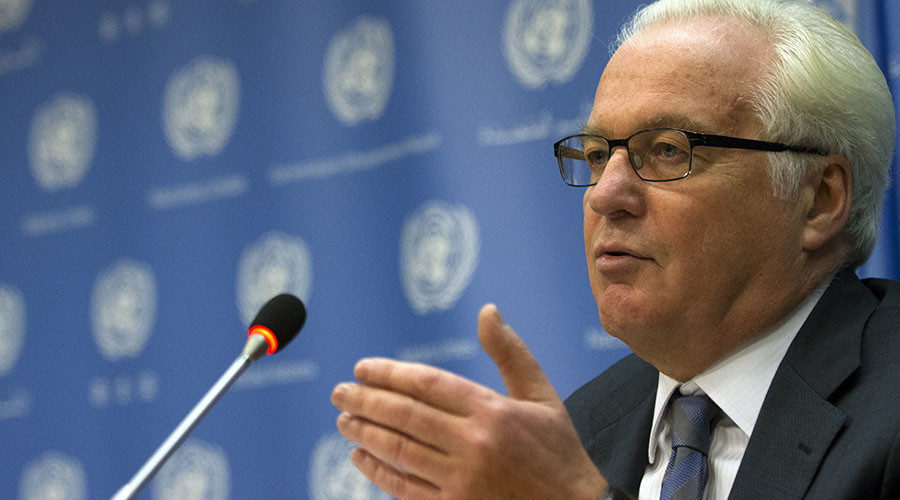
Russian ambassador to the United Nations Vitaly Churkin. © Brendan McDermid / Reuters

Russia has presented a list of Turkish companies to the UN that Moscow believes are providing Islamic State with the components needed to make homemade explosive devices.

In UN Ambassador Vitaly Churkin’s letter to UN Secretary General Ban Ki Moon, the envoy says analysis of chemical components of explosives recovered in Islamic State (IS, formerly ISIS/ISIL) liberated areas of Iraq’s Tikrit and the Syrian city of Kobani, implicate Turkish companies.

Read more

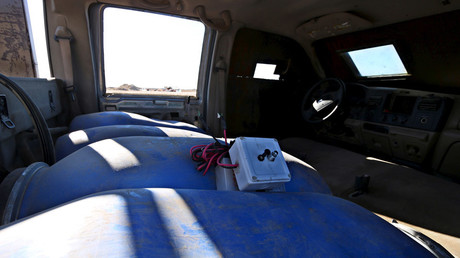
Containers filled with explosive materials, thought to have belonged to Islamic State militants. © Rodi Said

Components found in the explosives, Churkin wrote, “indicate that they were either manufactured in Turkey or delivered to that country without the right of re-export.”

The composition of the improvised explosive devices (IEDs) included the use of aluminum powder, ammonium nitrate, granulated carbamide and hydrogen peroxide that were produced by Turkish firms “Gultas Kimya” , “Marikem Kimyevi Ve Endüstriyel Ürünler”, “Diversey Kimya”, “Metkim”, and “EKM Gubre”.

Churkin specifically noted a sevenfold export increase from Turkey to Syria of ammonium nitrate used by terrorists as a component for the manufacture of improvised explosive devices.

He also noted that the “detonation cords manufactured in third countries have been illegally resold through Turkey to ISIL fighters,” as bombs used by Islamists also contained American made microcontrollers produced by Microchip Technology, Swiss-made transistors made by ST Microelectronics and Finish Nokia phones model 105 RM-908.

“These facts demonstrate that the Turkish authorities are deliberately involved in Daesh activity, as they are providing access to components for improvised explosive devices that are being widely used to commit terrorist acts,” the Russian envoy said.

Read more

© RT

The Turkish Foreign Ministry was quick to reject Russia’s claims calling the letter “the most recent example of Russia’s propaganda campaign against Turkey.”

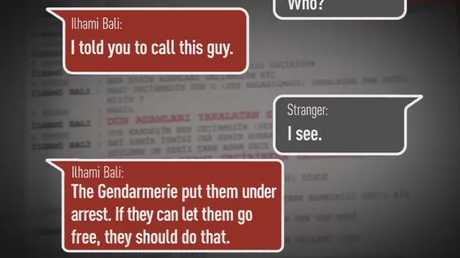
Russia has repeatedly accused and presented evidence of Turkish involvement in running IS operations in Syria and Iraq. Churkin’s letter comes following an earlier 20-month long study published by Conflict Armament Research (CAR), which concluded that over 50 companies from 20 countries, sold or received hundreds of components used by Islamic State terrorists to build explosive devices. A total of 13 Turkish firms were found to be involved in the supply chain.

The 107-page report concluded homemade explosives can easily be assembled using everyday products that are actually not subject to transfer controls such as export licensing. As a result, their supply within the region is basically unregulated and weakly monitored. Other key components, such as detonators and detonating cords, are subject to export licensing, but are also commonly used in commercial activities, such as mining and industry.

Iranian commander: We can destroy Israel ‘in under 8 minutes’

May 23, 2016

Iranian commander: We can destroy Israel ‘in under 8 minutes’ If supreme leader gives order, Revolutionary Guards ‘will raze the Zionist regime’ quickly, says senior adviser of elite al-Quds unit

By Times of Israel staff May 22, 2016, 4:14 pm

Source: Iranian commander: We can destroy Israel ‘in under 8 minutes’ | The Times of Israel

A missile launched from the Alborz mountains in Iran on March 9, 2016, reportedly inscribed in Hebrew, ‘Israel must be wiped out.’ (Fars News)

A senior Iranian military commander boasted that the Islamic Republic could “raze the Zionist regime in less than eight minutes.”

Ahmad Karimpour, a senior adviser to the Iranian Revolutionary Guards’ elite unit al-Quds Force, said if Supreme Leader Ali Khamenei gave the order to destroy Israel, the Iranian military had the capacity to do so quickly.

 “If the Supreme Leader’s orders [are] to be executed, with the abilities and the equipment at our disposal, we will raze the Zionist regime in less than eight minutes,” Karimpour said Thursday, according to the semi-official Fars News Agency.

A senior Iranian general on May 9 announced that the country’s armed forces successfully tested a precision-guided, medium-range ballistic missile two weeks earlier that could reach Israel, the state-run Tasnim agency reported.

Iranian Supreme Leader Ali Khamenei meets the Iranian Revolutionary Guards Corps (IRGC) Navy unit that detained US sailors earlier in January, in a photo released by Iran on January 24, 2016.

Iranian Supreme Leader Ali Khamenei meets the Iranian Revolutionary Guards Corps (IRGC) Navy unit that detained US sailors earlier in January, in a photo released by Iran on January 24, 2016.

“We test-fired a missile with a range of 2,000 kilometers and a margin of error of eight meters,” Brigadier General Ali Abdollahi was quoted as saying at a Tehran science conference. The eight-meter margin means the “missile enjoys zero error,” he told conference participants.

Iran in March tested ballistic missiles, including two with the words “Israel must be wiped off the earth” emblazoned on them, according to the US and other Western powers.

Under a nuclear deal signed last year between world powers and Iran, ballistic missile tests are not forbidden outright but are “not consistent” with a United Nations Security Council resolution from July 2015, US officials say.

According to the UN decision, “Iran is called upon not to undertake any activity related to ballistic missiles designed to be capable of delivering nuclear weapons, including launches using such ballistic missile technology,” until October 2023.

Khamenei has repeatedly threatened to annihilate the Jewish state, and in September 2015 suggested Israel would not be around in 25 years. In a quote posted to Twitter by Khamenei’s official account on September 9, 2015, Khamenei addressed Israel, saying, “You will not see next 25 years,” and added that the Jewish state will be hounded until it is destroyed.

“After negotiations, in Zionist regime they said they had no more concern about Iran for next 25 years; I’d say: Firstly, you will not see next 25 years; God willing, there will be nothing as Zionist regime by next 25 years. Secondly, until then, struggling, heroic and jihadi morale will leave no moment of serenity for Zionists,” the quote from Iran’s top leader reads in broken English.

In November 2014, Khamenei stated that the “barbaric” Jewish state “has no cure but to be annihilated.” A plan titled “9 key questions about the elimination of Israel” was posted on his Twitter account, using the hashtag #handsoffalaqsa, in reference to the tensions on the Temple Mount. The sometimes grammatically awkward list explained the how and why of Khomeini’s vision for replacing Israel with a Palestinian state.

The first point stated that “the fake Zionist regime has tried to realize its goals by means of infanticide, homicide, violence & iron fist while boasts about it blatantly.” Due to the above, Khomeini argued, “the only means of bringing Israeli crimes to an end is the elimination of this regime.”

 Turkey’s President Erdogan ‘Waiting for Israel’ to Respond on Gaza

May 21, 2016

Pres. Erdogan says Turkey will mend ties with Israel if Jerusalem agrees to allow Ankara to repair water, energy and infrastructure in Gaza.

By: Hana Levi Julian Published: May 21st, 2016

Source: The Jewish Press » » Turkey’s President Erdogan ‘Waiting for Israel’ to Respond on Gaza

Turkey’s President Recep Tayyip Erdogan.
Photo Credit: Social media

President Recep Tayyip Erdogan says he is waiting for Israel to grant permission for Turkey to construct energy and water transfer infrastructure in Gaza, according to a report published Saturday (May 21) in the Hurriyet Daily News, quoting an earlier broadcast.

“I expect that something will happen this month. It’s my wish that we’ll reach a conclusion in a short time,” Erdogan told a news broadcast by A Haber on May 19.

“In regards to [lifting] the embargo, they say, ‘We are open to allowing goods into Gaza through Turkey, but we are not open to those coming from places other than Turkey.’ But the problem is not only this. We have some other demands,” Erdogan said.

The Turkish leader said Ankara has demanded that Israel allow provision of continuous energy to Gaza, “as the enclave has only three to four hours of electricity per day,” Erdogan said.

He added that Turkey’s proposal to provide electricity to Gaza through a naval vessel was rejected by Israel.

“But they proposed something else: We told them that we are ready to construct all the infrastructure [of energy]. They viewed the proposal positively,” Erdogan said.

The second demand, he said, was that Turkey be allowed to provide water to Gaza either by desalinating the sea water or by drilling wells. “There are positive developments with regard to this issue as well,” he said.

Turkey’s third demand from Israel, said Erdogan, was regarding construction projects in Gaza.

“Our third offer is about building schools and hospitals. The construction of a hospital has been completed and necessary equipment is being provided. ‘These must be done,’ we told them. ‘If these would be done, then we’ll immediately appoint ambassadors and improve our relations in the right direction.’”

According to the report, Israeli and Turkish diplomats are expected to meet in the near future to finalize an agreement between the two countries.

But it’s impossible to know what the final outcome will be: Erdogan’s ruling Justice and Development (AK) Party is set to meet at a nationwide Congress on May 22 to choose a new prime minister.

Incumbent Prime Minister Ahmet Davutoglu, hand-picked by Erdogan, resigned his position earlier this month.

AP: Soros-Backed Group that Helped Sell Iran Nuclear Deal DIRECTLY FUNDED journalists and media outlets — Gave NPR $700,000 since 2005, $100,000 just last year

May 21, 2016

AP: Soros-Backed Group that Helped Sell Iran Nuclear Deal DIRECTLY FUNDED journalists and media outlets — Gave NPR $700,000 since 2005, $100,000 just last year

ByPamela Geller on May 21, 2016

Source: AP: Soros-Backed Group that Helped Sell Iran Nuclear Deal DIRECTLY FUNDED journalists and media outlets — Gave NPR $700,000 since 2005, $100,000 just last year | Pamela Geller

Read this latest dispatch from Omri Ceren, political analyst and The Israel Project senior adviser, breaking down the blockbuster AP story on how the group that helped sell Iran nuke deal also funded media. It is an extraordinary window into how media is bought and paid for. It’s deeply disturbing, like watching sausage being made.

Here’s the back-story on how and why the media supported the most dangerous ‘deal’ in American history – Obama’s nuclear pact with Iran.

“A group the White House recently identified as a key surrogate in selling the Iran nuclear deal gave National Public Radio $100,000 last year to help it report on the pact and related issues, according to the group’s annual report. It also funded reporters and partnerships with other news outlets.” Aaron Klein notes, not mentioned in the AP article is that the Ploughshares Fund is financed by billionaire George Soros’ Open Society Institute.

For those of you smart enough to never trust big media — here’s the concrete evidence of your “tin foil hat” theories.

AP: In The New York Times Magazine article, Rhodes explained how the administration worked with nongovernmental organizations, proliferation experts and even friendly reporters to build support for the seven-nation accord that curtailed Iran’s nuclear activity and softened international financial penalties on Tehran.

Omri Ceren: In his NYT profile, Ben Rhodes put the Ploughshares Fund at the center of the echo chamber constructed by the White House to sell the Iran deal: “We are going to discourse the [expletive] out of this… We had test drives to know who was going to be able to carry our message effectively, and how to use outside groups like Ploughshares, the Iran Project and whomever else” [a].

The Ploughshares Fund is a donation hub that has distributed millions of dollars in recent years to groups pushing the Iran deal. After Congress failed to defeat the deal, Ploughshares President Joseph Cirincione published a video and letter boasting about how the echo chamber – over 85 groups and 200 people – was created with Ploughshares money: “groups and individuals were decisive in the battle for public opinion and as independent validators… they lacked a common platform – a network to exchange information and coordinate efforts. Ploughshares Fund provided that network… we built a network of over 85 organizations and 200 individuals… We credit this model of philanthropy – facilitating collective action through high-impact grantmaking – with creating the conditions necessary for supporters of the Iran agreement to beat the political odds” [b].

The Associated Press just published a deep dive into Ploughshares’s most recent annual report, which details some of those 85 organizations and 200 individuals. The full article is pasted below. The AP broke down the network funded by Ploughshares into three kinds of groups:

Journalists and media outlets (this is the part that’s getting the most attention, and includes NRP and at least two unnamed writers who were funded to write at Mother Jones and The Nation):

Ploughshares has funded NPR’s coverage of national security since 2005, the radio station said. Ploughshares reports show at least $700,000 in funding over that time. All grant descriptions since 2010 specifically mention Iran… Previous efforts… Ploughshares has set its sights on other media organizations, too. In a “Cultural Strategy Report” on its website, the group outlined a broader objective of “ensuring regular and accurate coverage of nuclear issues in reputable and strategic media outlets” such as The Guardian, Salon, the Huffington Post or Pro Publica. Previous efforts failed to generate enough coverage, it noted. These included “funding of reporters at The Nation and Mother Jones and a partnership with The Center for Public Integrity to create a national security desk.”

Think tanks and nuclear-issues associations:

The 33-page document lists the groups that Ploughshares funded last year to advance its nonproliferation agenda. The Arms Control Association got $282,500; the Brookings Institution, $225,000; and the Atlantic Council, $182,500… Princeton University got $70,000 to support former Iranian ambassador and nuclear spokesman Seyed Hossein Mousavian’s “analysis, publications and policymaker engagement on the range of elements involved with the negotiated settlement of Iran’s nuclear program.”

Lobbies:

Other groups, less directly defined by their independent nuclear expertise, also secured grants. J-Street, the liberal Jewish political action group, received $576,500 to advocate for the deal. More than $281,000 went to the National Iranian American Council.


On May 5 the NYT published its profile of Ben Rhodes, in which Rhodes bragged about creating an “echo chamber” with the Ploughshares Fund to sell the Iran deal on the basis of false pretenses [a]. A few hours ago the AP published a deep dive into Ploughshares showing that the group is funding a range of lobbies, policy shops, and journalists and media outlets, all of which are bouncing Iran messaging back and forth between each other [b].

Aspects of the Ploughshares network had already been reported out. In Feb 2012 the WFB reported on Ploughshares funding NPR [c]. In March 2015 the WSJ reported “the Ploughshares coalition includes a former Iranian government spokesman, the liberal Jewish organization J Street and a group of former American diplomats who have held private talks with Iranian government officials… [and] the Arms Control Association” [d]. In July 2015 the WFB printed details of a Ploughshares conference call that brought together White House officials with over 100 participants, in which groups were told to prepare for a “real war” that would involve “blitzing the hell out of the Hill,” pressuring Congressional Democrats, and leaning on Jewish groups [e][f]. In August 2015 Commentary published 1,500 words and a couple dozen links naming names in the network [g].

What hadn’t been widely discussed – until today’s AP story – was that Ploughshares has been directly funding journalists and media outlets in the context of the politicized Iran deal fight. In case you’re running down this angle, here are some documents published by Ploughshares Fund describing the group’s efforts in its own words.

In 2014 Ploughshares commissioned a “Cultural Strategy Report.” It laid out how the organization could use PR firms, Hollywood studios, video games, and journalists to create a “cultural strategy that could complement existing funding and operational activities.” Here is part of the section describing directly funding journalism [PDF here – h]:

Similar to an academic chair, directly fund one or more national journalism positions at media outlets like The Guardian, Salon, Huffington Post, or Pro Publica, whose exclusive “beat” and focus of investigation and reporting would be nuclear weapons, disarmament, and nonproliferation… We understand that similar efforts supported by Ploughshares Fund in the past did not generate the desired volume of coverage (funding of reporters at The Nation and Mother Jones and a partnership with the Center for Public Integrity to create a national security desk). However we feel this strategy would be more successful by focusing on themes, media outlets and journalists who resonate with the target audiences (youth and faith communities) and by pursing this strategy in concert with other approaches.

— In 2015 Ploughshares published a video and letter from Ploughshares President Joe Cirincione titled “How We Won.” Cirincione boasted that the group leveraged its funding so lobbyists, policy voices, and journalists could “coordinate efforts” to push the Iran deal. The video ends with a scrolling list of groups involved. The letter goes into detail on how Ploughshares leveraged funding to create its network [i]:

These groups and individuals were decisive in the battle for public opinion and as independent validators… they lacked a common platform – a network to exchange information and coordinate efforts. Ploughshares Fund provided that network. Often, networks can make all the difference… We built a network of over 85 organizations and 200 individuals in favor of a negotiated solution to the Iranian crisis… We credit this model of philanthropy – facilitating collective action through high-impact grantmaking – with creating the conditions necessary for supporters of the Iran agreement to beat the political odds.

A lot of work is now being done on how the Iran deal echo chamber worked and funded. Two other articles from the last 48 hours: how Ploughshares also funded faith groups to be part of the pro-deal network [j] and how the network was mobilized this week to attack witnesses who testified in front of the House Oversight Committee on the White House’s sales campaign [k].—

[a] http://www.nytimes.com/2016/05/08/magazine/the-aspiring-novelist-who-became-obamas-foreign-policy-guru.html
[b] http://bigstory.ap.org/article/7044e805a95a4b7da5533b1b9ab75cd2/group-helped-sell-iran-nuke-deal-also-funded-media
[c] http://freebeacon.com/issues/public-radio-pay-to-play/
[d] http://www.wsj.com/articles/obama-ramps-up-lobbying-on-iran-1427674427
[e] http://freebeacon.com/national-security/white-house-officials-plot-ways-to-pressure-lawmakers-into-supporting-iran-deal/
[f] http://freebeacon.com/national-security/white-house-instructs-allies-to-lean-on-jewish-community-to-force-iran-deal/
[g] https://www.commentarymagazine.com/american-society/economy/money-behind-iran-nuclear-deal-ploughshares/
[h] http://www.ploughshares.org/sites/default/files/resources/M+A_Ploughshares_culture%20report.pdf
[i] http://www.ploughshares.org/issues-analysis/article/how-we-won
[j] http://www.algemeiner.com/2016/05/20/ben-rhodes-echo-chamber-on-iran-had-many-supporters
[k] http://nypost.com/2016/05/18/obamas-iran-echo-chamber-just-cant-stop/

 New Hezbollah Chief of Staff Declares Truce with Israel

May 19, 2016

By: JNi.Media

Published: May 19th, 2016

Source: The Jewish Press » » New Hezbollah Chief of Staff Declares Truce with Israel

Cairoport illustration

Mustafa Mughniyeh, who replaced Hezbollah’s slain Chief of Staff Mustafa Badreddine, has reportedly declared that Israel, at least for now, is no longer considered the enemy of the Shiite organization. According to cairoportal.com, citing a source they say is familiar with Hezbollah’s internal affairs, Mughniyeh is planning to carry out a major attack against the Saudis.

The new Hezbollah military chief, whose father was legendary terrorist Imad Mughniyeh—killed in 2008 in a car bomb blast, reportedly said that “while my father and uncle (Badreddine) failed to kill the Emir of Kuwait, I will not fail to kill the king of Wahabia (a reference to the Wahabi faith, Saudi Arabia’s state religion, which is the most viciously anti-Shiite) and cut off the hand of anyone who wishes to turn Syria Wahabi.”

Speaking before a cadre of Hezbollah’s top command, Mughniyeh then declared that Israel is a friend and a strategic ally opposite the Saudi enemy, and therefore, from this day on, there is no more war against Israel.

He also noted that Israel was the only country that liberated the Shiites in south Lebanon from the Palestinian conquest in 1982. The PLO, which had been driven out of Jordan a decade earlier, created an independent state in everything but a name in south Lebanon, and used it as a base from which to harass Israel—leading to the first Lebanon war.

Time to Leave UNESCO – Again

May 18, 2016

Time to Leave UNESCO – Again

by Guy Millière

May 17, 2016 at 5:30 am

Source: Time to Leave UNESCO – Again

  • UNESCO’s poisonous, fraudulent resolution is not only biased: it is negationist. All traces of Jewish presence in Jerusalem and Judea in ancient times are eliminated at the stroke of a pen.
  • Only six countries voted to reject the resolution: the United States, Estonia, Germany, Lithuania, the Netherlands and the United Kingdom. France, Spain, Sweden, Slovenia accepted the text and voted yes. The resolution was presented with the support of several Muslim countries — some often described as “moderate”: Egypt, Tunisia and Morocco.
  • UNESCO is a branch of the United Nations, and the UN is an organization where democracies are in the minority, surrounded by a huge majority of dictatorships and authoritarian regimes imbued with hatred toward the West. Israel is virtually the only country designated as guilty of violating human rights by the so-called Human Rights Council, and where, in 2009, Iranian President Mahmoud Ahmadinejad was welcomed as a hero.

On April 11, 2016, the Executive Board of UNESCO adopted a resolution called “Occupied Palestine.” The title immediately exposes it as a biased document. That is not surprising. All the texts adopted by UNESCO concerning the Middle East are biased.

However, those who read it carefully can see that a further step was taken.

UNESCO’s resolution is not only biased: it is negationist. All traces of Jewish presence in Jerusalem and Judea in ancient times are eliminated at the stroke of a pen. The Temple Mount is never mentioned. It is only called by the name al-Aqsa Mosque / Haram al Sharif. The name “Western Wall” is placed between quotation marks, to indicate that it is an invalid name: Al Buraq Wall is used without quotation marks. The graves of Jewish cemeteries are described as “Jewish fake graves.”

It is a radical anti-Semitic resolution: denying historical fact, claiming that what exists does not, presenting the history of Judaism and the Jews as lies. Accusing Jews of “planting Jewish fake graves” is the lie. It is saying that Judaism is a sham and Jews are liars and falsifiers.

The document is absolutely anti-historical, anti-fact and “anti-Zionist”: it tries unambiguously to “prove” that Israel was founded on an imposture and has no reason to exist. The document constantly describes Israel as the “occupying power” and presents it as a predatory and arbitrary country.

Voting for such a text means would endorsing historical negationism, radical anti-Semitism, and absolute “anti-Zionism”.

Correctly deciphering the meaning of the resolution and its implications, the representatives of six Western countries — the United States, Estonia, Germany, Lithuania, the Netherlands and the United Kingdom — voted no.

Representatives of other Western countries — France, Spain, Sweden, Slovenia — accepted the text and voted yes.

The resolution was presented with the support of several Muslim countries — some often described as “moderate”: Egypt, Tunisia and Morocco.

The text was written by Palestinian Authority (PA) “experts.” Since 2011, the Palestinian Authority has had a seat at UNESCO under the name “State of Palestine.”

The Israeli government immediately expressed its anger. Prime Minister Benjamin Netanyahu said that “anyone, let alone an organization tasked with preserving history, could deny this link which spans thousands of years.”

A petition was circulated by Stand With Us and the International Legal Forum, demanding that UNESCO change its attitude and remains “true to its founding principles.”

The anger of Israel’s government and indignation of others other is legitimate. The petition is fully justified.

However, expecting that UNESCO will change its attitude is illusory. Expecting that UNESCO will remain true to its founding principles is hoping for something that will not happen. UNESCO long ago abandoned its founding principles.

UNESCO is a branch of the United Nations, and the UN is an organization where democracies are in the minority, surrounded by a huge majority of dictatorships and authoritarian regimes imbued with hatred toward the West.[1] Israel is virtually the only country designated as guilty of violating human rights by the so-called Human Rights Council, and where, in 2009, Iranian President Mahmoud Ahmadinejad was welcomed as a hero.

In October, 2015, UNESCO had already started down path it follows today. It defined Rachel’s Tomb as the Bilal bin Rabah Mosque and the Cave of the Patriarchs as the Ibrahimi Mosque, and declared them “Palestinian sites.”

What is worrisome is that only six Western countries were ready to reject a totally poisonous, fraudulent resolution.

The Western countries that voted for the resolution evidently approve of its contents. These countries have lost all legitimacy to claim they want peace in the Middle East. By approving the resolution, they show they are at war: against Judaism, Jews and Israel. One of them, France, claims it will hold a meeting to revive the “peace process”: in this context, the claim is grotesque.

The fact that a group of Muslim countries, often described as “moderate,” supported the resolution can only lead to the question: How can a country that supports such a document be described as “moderate?”

That Palestinian Authority “experts” have written such a resolution should be sufficient to show that the PA is not “moderate.” It clearly has no intention at all of creating a State alongside Israel; instead, as its leaders often openly admit, its plan is that Israel has to be demonized, crushed and replaced.

The underlying problem is that this negationism, anti-Semitism and “anti-Zionism” are deeply rooted in both Europe and Islam.

The Quran says Jews and Christians (“Crusaders”) have falsified their sacred books, and the history of Judaism and the Jewish people is false. Muslim tradition says that Muhammad ascended to heaven from al Aqsa, and that the Al Buraq Wall is the wall where he attached the winged creature on which he flew to heaven. No room is left for the Temple Mount or the Western Wall, even though they were there, with countless archeological artifacts, for more than a thousand years before Muhammad was even born.

Muslim tradition also says that Jews, as disbelievers, are condemned to the humiliating status of dhimmi,[2] and that all territories conquered by Islam have to remain Muslim forever.[3] Muslim tradition cannot accept a country ruled by Jews or Christians on land that was once conquered by Islam — whether Israel, formerly part of the Ottoman Empire, or large swaths of Portugal and Spain.

The resolution adopted by the Executive Board of UNESCO on April 11 is “Islamically correct.” “Moderate” Muslim countries cannot contradict the Quran and Muslim tradition without risking being accused of irtidad (apostasy).[4] Palestinian Authority “experts” are being true to the Quran and to Muslim tradition.

Western countries that approved the resolution showed their submission and dhimmitude to “Islamic correctness.” Dhimmis, in Islamic history, are second class, “tolerated” citizens, who are subjected to special laws which remind them of their inferiority as well as a tax, the jizya, to purchase “protection” for their homes, possessions and lives.[5]

Countries that rejected the resolution would be considered insubordinate.

Refusing such a resolution is not enough. It is about time to ask the Muslim world to leave behind its heavy load of noxious traditions, blackmail threats and violence.

It is also time to do more.

Under the presidency of Ronald Reagan, the United States left UNESCO in 1984, because UNESCO was obviously subservient to the Soviet Union, and was serving interests contrary to those of freedom, liberty and Western values.

U.S. Secretary of State John Kerry spoke in French to a gathering of UNESCO representatives in Paris, on Oct 18, 2015, assuring them that “the engagement of the United States with this organization has never been as strong as now.”



The United States returned to UNESCO in 2003. In 2011, when the Palestinian Authority was admitted to UNESCO, the U.S. froze its financial contribution.

The United States badly needs to leave UNESCO again. UNESCO is obviously subservient to “Islamic correctness,” and serving interests contrary to those of freedom, liberty and Western values. Eighty years ago, negationism and anti-Semitism led to the Holocaust. It is urgent to say, “Enough.”

Dr. Guy Millière, a professor at the University of Paris, is the author of 27 books on France and Europe.


[1] Dore Gold, Tower of Babble: How the United Nations Has Fueled Global Chaos, Crown Forum, 2005.

[2] Bat Ye’or, Islam and Dhimmitude: Where Civilizations Collide, Fairleigh Dickinson University Press, 2001.

[3] Robert Spencer, Islam Unveiled: Disturbing Questions about the World’s Fastest-Growing Faith, Encounter Books, 2003.

[4] Yohanan Friedmann, Tolerance and Coercion in Islam: Interfaith Relations in the Muslim Tradition, Cambridge University Press, 2006.

[5] Bat Ye’or, op. cit.