Posted tagged ‘Middle East’

Obama Administration Admits Iran Worked on Nuclear Weapons

June 20, 2016

The Obama Administration says two radioactive particles found at Parchin prove Iran was working on nuclear weapons, at least in the past.

By: Hana Levi Julian

Published: June 20th, 2016

Source: The Jewish Press » » Obama Administration Admits Iran Worked on Nuclear Weapons

The Parchin military complex
Photo Credit: Institute for Science and International Security

The Obama Administration has belatedly come to the realization that Iran really was working on a nuclear weapon of mass destruction, just as Israeli and other intelligence sources said prior to the signing of the nuclear pact with Tehran in 2015. Current and former government officials told the Wall Street Journal that the administration has concluded radioactive particles discovered last year were tied to an Iranian nuclear weapons program.

Two man-made uranium particles discovered in soil samples at the Parchin facility southeast of Tehran by the United Nations International Atomic Energy Agency were too small to confirm exactly what kind of nuclear weapons work took place at the site. But they were big enough to make it clear that nuclear weapons-related activity was indeed going on there.

Iranian explanations for their presence — chemical storage for use in developing conventional weapons — were not supported by the evidence of satellite imagery and test results.

The issue was raised in an article written by Jay Solomon for the Wall Street Journal, in which the Obama administration was said to have underlined the discovery mentioned in a 16-page December 2015 report by the IAEA indisputably points to an Iranian weapons program, contradicting denials by Tehran.

On Saturday an Iranian government spokesman in fact denied uranian was found at Parchin, WSJ reported, adding the spokesman quoted a 2005 IAEA report that found no “unusual activities” there.

The terms of the pact signed by Iran with the six world powers last July required Tehran to address the evidence compiled by the IAEA showing that Iran had a program to create a nuclear weapon of mass destruction until at least 2003. Iranian officials repeatedly denied the charge.

In exchange for suspending its nuclear technology activities for a 10-year period, Iran would receive the $150 billion that had been held in frozen assets in addition to international sanctions being rolled back.

Now that Iran is receiving all those benefits, however, Tehran’s lies are also becoming clear. And the critics of the deal who were opposing it from the start are citing this latest news as confirmation that opposition of the deal was justified, and that Obama didn’t go far enough in his demands that Iran come clean on its nuclear activities before lifting sanctions in January.

Evidence of the man-made uranium that was found at Parchin has only low levels of fissionable isotopes, according to WSJ. But this can be used as a substitute for weapons-grade materials in the development of nuclear bombs and can also be used as a component in a neutron initiator — a triggering device for a nuclear weapon, WSJ reported.

But now the IAEA is blocked from any further investigation of the Parchin site, thanks to the deal signed last year. And although the deal forces Iran to allow the agency access to “all” suspected nuclear technology sites, that does not include Iranian military sites — where the weaponry is most likely to be developed.

ISRAEL to build a massive underground wall on Gaza border to block Hamas tunnels and terrorists from access to Israel

June 20, 2016

ISRAEL to build a massive underground wall on Gaza border to block Hamas tunnels and terrorists from access to Israel

Source: ISRAEL to build a massive underground wall on Gaza border to block Hamas tunnels and terrorists from access to Israel

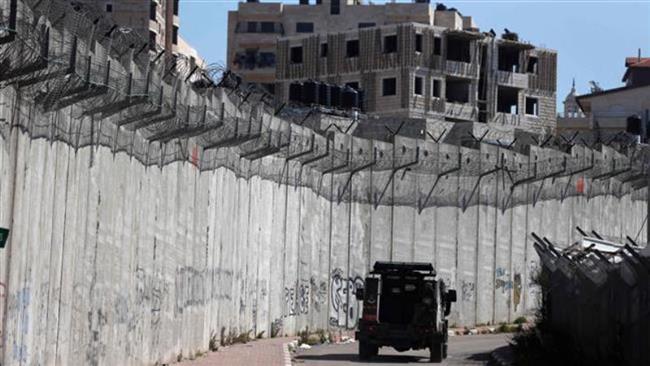
Israel is planning to build a massive concrete wall which will extend below ground along the Gaza Strip border, Yedioth Ahronoth newspaper has revealed. The barrier is aimed at combating the threat posed by Hamas tunnels crossing into the country from Gaza.

RT  Similar to the “West Bank barrier” or security fence that Israel began building in 2002 to separate Israelis from violent Palestinians in Judea and Samaria, this newest wall is intended to protect Israelis living along or near the border from infiltration via terror tunnels as well as defend against cross-border fire.

The wall, which will stretch along the 96km (60 mile) border around the Gaza Strip, will extend several dozen meters below the ground, and will also be present above the ground. It is estimated to cost US$568 million. The costly plan – aimed at tackling Hamas terror tunnels – was cleared for publication by Israel’s military censor, according to Ynet, a website affiliated with Yedioth Ahronoth.

The wall will be the third defense system of its kind to be erected along the border. The first 60km (37 mile) barrier was constructed in 1994, following the Oslo Accords. The second was built following Israel’s decision to disengage from Gaza in 2005. However, neither system proved successful in combating the threat of attack tunnels.

Israel’s plan comes after two Hamas tunnels spanning from Gaza to Israel were discovered in April and May. Hamas has confirmed it is building tunnels, and residents in southern Israel communities bordering Gaza have reported hearing digging sounds under their homes, i24 reported.

Hamas has previously used tunnels to avoid or carry out attacks, store weapons, and enter Israel. It says, however, that the tunnels are needed to defend against Israeli fire.

Meanwhile, Foreign Policy reported in March that Israel is building an ‘Underground Iron Dome,’ a system that could detect and destroy cross-border tunnels. The government has spent more than $250 million on the project since 2004, according to Israel’s Channel 2 TV station.

The Thursday report comes just one day after a senior Defense Ministry official said that Israel has “no desire to rule over Gaza, and as long as there is no alternative government there, we have no business being there…but on the other hand, we cannot conduct a constant war of attrition.”

“Therefore the next conflict has to be the last conflict in terms of Hamas ruling the Strip. We are not looking for an adventure, but a confrontation with Hamas is inevitable. It is an ongoing and growing threat and we need to be prepared for it,” he added.

In February, Israeli Prime Minister Benjamin Netanyahu vowed to build barriers to “defend ourselves against wild beasts.”

“We are preparing a multi-year project to encircle Israel with a security fence, to defend ourselves in the Middle East as it is now, and as it is expected to be,” Netanyahu said in a statement at the time.

“At the end, in the State of Israel, as I see it, there will be a fence that spans it all,” he added. “I’ll be told, ‘This is what you want, to protect the villa?’ The answer is yes. Will we surround all of the State of Israel with fences and barriers? The answer is yes. In the area that we live in, we must defend ourselves against the wild beasts.”

“Selling a House to a Jew is a Betrayal of Allah”

June 20, 2016

Selling a House to a Jew is a Betrayal of Allah”

by Khaled Abu Toameh

June 20, 2016 at 5:00 am

Source: “Selling a House to a Jew is a Betrayal of Allah”

  • The renewed campaign against Palestinians suspected of selling real estate to Jews is also part of the belief that the entire land is Muslim-owned, and no Muslim is entitled to give up even one inch of it to a non-Muslim. In other words, it is forbidden for a Muslim to sell his home or land to a Jew or Christian. This would be the nail in the coffin of any Palestinian leader who attempts to make any territorial compromise as part of a peace agreement with Israel.
  • This campaign has raised fears that Palestinians may resume extrajudicial executions of suspected land dealers.
  • “The land dealers should know that they would not be able to avoid earthly and life punishment. Not only will they not be buried in Islamic cemeteries, but their entire families will also be punished and it would be forbidden to marry or to deal in any way with their family members.” — Palestinian National Work Commission in Jerusalem.
  • This campaign undermines Palestinians’ long-standing claim that Jews “illegally seize” Arab-owned houses and land in Jerusalem. It seems that rather than illegal seizure, Jews have been paying willing Arabs cold hard cash for the properties.

A Palestinian Muslim who commits the “crime” of selling property to Jews should not expect to be buried in an Islamic cemetery. Marriage to local Palestinians will no longer be an option for this criminal’s family members, and any weddings the family makes will have no guests attending.

Both the living and the dead, then, will pay the price for such “treason.”

This is only a sampling of the punitive measures that will now be faced by Palestinian residents of Jerusalem who are involved in real estate transactions with Jews.

The latest measures were recently announced by a group of Palestinian activists in east Jerusalem, as part of a renewed campaign against Palestinians who are found guilty of selling a home or plot of land to a Jewish individual or organization.

The campaign, which has received the blessing of senior Palestinian Authority (PA) and Hamas officials, comes in the context of Palestinian efforts to thwart Israeli efforts to “Judaize” Jerusalem. It is also part of the belief that the entire land is Muslim-owned and no Muslim is entitled to give up even one inch of it to a non-Muslim. In other words, it is forbidden for a Muslim to sell his home or land to a Jew or Christian.

This campaign has raised fears that Palestinians may resume extrajudicial executions of suspected land dealers.

Although the activists behind the campaign did not openly call for the execution of Palestinians involved in real estate transactions with Jews, past experience shows that “suspects” are often kidnapped and killed by their own people.

Between 1996 and 1998, at least eight Palestinians suspected of selling property to Jews or serving as middlemen in such transactions were abducted and killed by Palestinian activists.

Palestinians consider the selling of homes or land to Jews an act of high treason. Palestinian Authority laws and fatwas (Islamic religious decrees) prohibit Palestinians from selling land to “any man or judicial body corporation of Israeli citizenship, living in Israel or acting on its behalf.”

In 2009, a Palestinian Authority court in Hebron sentenced Anwar Breghit, 59, to death for selling land to Israelis. While the sentence was never carried out, it achieved its aim: to deter others from engaging in similar transactions with Jews.

In 2014, PA President Mahmoud Abbas issued an executive order that amended sections of the penal code related to real estate transactions, and increased punishments for selling land to “hostile countries” and their citizens. Abbas’s decision came following reports that Palestinians had sold houses in Jerusalem’s Silwan neighborhood to Jews.

In 2014, following reports that Palestinians had sold houses in Jerusalem’s Silwan neighborhood (pictured above) to Jews, Palestinian Authority President Mahmoud Abbas issued an executive order that amended sections of the penal code related to real estate transactions, and increased punishments for selling land to “hostile countries” and their citizens. (Image source: Wikimedia Commons/Gilabrand)

Yet this sell-to-Jews-get-murdered equation is nothing new. In 1998, Amnesty International documented the pattern: “Torture of those accused of “collaboration” with Israel or selling land to Israelis appeared to be systematic,” the report said.

“Unlawful killings, including possible extrajudicial executions, continued to occur. Three land dealers were found dead during May [1998] after [PA] Justice Minister Freih Abu Meddein, announced that the Palestinian Authority would begin applying a Jordanian law which provided for the death penalty for those accused of selling land to Jews.”

Last week, a Palestinian group, the National Work Commission in Jerusalem, issued yet another warning to Palestinians suspected of involvement in real estate transactions with Jews. In a leaflet distributed in east Jerusalem, the group called for a religious, economic and social boycott of the suspected real estate dealers and their families.

“We call for additional measures to renounce and besiege the brokers and weak people among Palestinians in Jerusalem. We call for a total boycott of these people on all levels — social and economic — and to refrain from dealing with them in trade or purchases or sales or participating in their joys and sorrows and in any religious, national or cultural event. The land dealers should know that they would not be able to avoid earthly and life punishment. Not only will they not be buried in Islamic cemeteries, but their entire families will also be punished and it would be forbidden to marry or to deal in any way with their family members.”

The group, which consists of scores of Palestinian political activists and prominent figures from east Jerusalem, also threatened to post photos and personal details of the land dealers on social media. In addition, the group called on Arab countries to ban the entry of any Palestinian found guilty of involvement in real estate transactions with Jews.

This threat came only days after several Palestinian families from the Old City of Jerusalem launched a similar campaign targeting Palestinians suspected of involvement in real estate deeds with Jews. The families signed what they called “The Document of the Jerusalem Pledge and Its Covenant,” to prevent real estate transactions with Jews.

The document states that any Palestinian caught selling a house or land to Jews would be considered “out of the national ranks and a traitor to Allah and his Prophet.” It too warned that those who defy the ban would be deprived of a prayer at a mosque upon his or her death and would not be buried in an Islamic cemetery. The families called on the Palestinian Authority and other Palestinian factions and institutions to take all measures to “chase out the collaborators and those who cover up for them, and expose them and shame them regardless of their influence and status.”

Mustafa Abu Zahra, a prominent Palestinian businessman from Jerusalem and one of the engineers of the document, called on the Palestinian Authority to “deter” anyone who thinks of selling of facilitating the sale of Arab-owned property to Jews.

Another Palestinian official, Najeh Bkeirat, who played a major role in the drafting of the document, claimed that Israel was seeking to “empty the Old City of Jerusalem from its native residents as it is already doing in Haifa, Jaffa and Acre.”

The renewed campaign against Palestinians suspected of selling real estate to Jews would be the nail in the coffin of any Palestinian leader who attempts to make any territorial compromise as part of a peace agreement with Israel. The stakes are very, very high: betrayal of Allah and Prophet Mohammed are at issue.

“This document constitutes a message of warning to the Palestinian Authority and its negotiators that they must not give up one grain of the soil of Jerusalem and the land of Palestine,” explained Palestinian columnist Ghassan Mustafa Al-Shami. “The document also represents a message to all the Palestinian national factions that they must take all the measures to pursue anyone who dares to think of selling Jerusalem and West Bank lands and houses, and that they should be put on trial for treason.”

Finally, this campaign undermines Palestinians’ long-standing claim that Jews “illegally seize” Arab-owned houses and land in Jerusalem. It seems that rather than illegal seizure, Jews have been paying willing Arabs cold hard cash for the properties. By endorsing such campaigns, the Palestinian Authority leadership is once again shooting itself not only in the foot, but also in the head.

Strategic Outlook for Saudi Arabia and Iran

June 20, 2016

Strategic Outlook for Saudi Arabia and Iran

by Shmuel Bar

June 20, 2016 at 4:30 am

Source: Strategic Outlook for Saudi Arabia and Iran

  • In Saudi Arabia, Mohammad bin Salman’s “Vision 2030” is totally identified with his leadership. If it succeeds, he will harvest the praise; on the other hand, many in the Saudi elite will latch on to any sign of failure of his policies in order to block his ambitions.
  • Mohammad bin Salman’s social-political agenda to broaden the power base of the regime to include the young and educated — and to a great extent relatively secular or moderate — will certainly be seen by the Wahhabi clerics and the tribal social conservatives as geared towards reducing their control over the populace and hence their weight in the elite.
  • Another serious risk is that the economic plan entails reducing the Saudi welfare state. The economic and social fallout of weaning the Saudis away from entitlements will be exploited by domestic opposition elements and by Iran.
  • In Iran, the electoral process within the Assembly showed what was not evident during the parliamentary elections held in February, namely that even a formal preeminence of moderates does not and cannot influence the decision making of the Iranian regime and that Khamenei succeeds to pull the strings despite seemingly democratic procedures.
  • After having won the chairmanship of the Assembly, Jannati delivered a speech demanding total loyalty to Khamenei, which can be considered as targeting the moderates.

Following the announcement of Saudi Arabia’s “Vision 2030” Economic Plan by Deputy Crown Prince Muhammad bin Salman on April 25, King Salman announced a reshuffling of the government. The reshuffling was clearly orchestrated by the Deputy Crown Prince and reflects his agenda. This shuffle probably is not the last word even in the near term; the changes in the government strengthen the political position of Mohammad bin Salman, because the new ministers owe him their posts, and through them he will strengthen his hold on the levers of government, especially in the economic sphere. His next step may be to move to neutralize Prince Mitab bin Abdullah, the minister in charge of the Saudi Arabian National Guard (SANG) and a close ally of Crown Prince Mohammad bin Nayef. He could do this by absorbing SANG into the Ministry of Defense.

Such a step would probably not sit well with many of the members of the royal family; however, if Mohammad bin Salman takes such a step, it will only be with the consent of his father, King Salman, and none would actively oppose him. Such a step would have significant ripple effects; international influence in Saudi Arabia has focused for decades on acquiring sectorial influence in the various centers of power of the Kingdom – the different factions of the royal family, the business sector, the army, the SANG etc. The continuing concentration of power in the hands of Mohammad bin Salman will reduce the political relevance of many of these assets of international players and they will be obliged to restructure their connections and sources of information on the politics and economic decision making of the Kingdom.

Farther down the road — in our assessment not in the short term — King Salman may appoint his son to the position of Prime Minister – a title that he presently holds himself. Such a promotion would pave the way for Mohammad bin Salman to depose the Crown Prince, Mohammad bin Nayef, to be appointed as the next Crown Prince and to succeed his father. A possibility exists — though in our assessment it is not likely in the near future — that the King will even abdicate and pass the reins of the Kingdom to his son after he has been duly appointed as Crown Prince. These scenarios will be a disappointment to policy-shapers in Washington who prefer — or at least feel more comfortable with Mohammad bin Nayef. This too will call for a significant shift in the international disposition towards the Saudi regime; development of channels of influence with Mohammad bin Salman and his confidantes, adapting to a new and unfamiliar paradigm of decision-making in the Kingdom and coping with Mohammad bin Salman’s not-typically-Saudi regional policies towards Iran and other threats.

Mohammad bin Salman’s “Vision 2030” is totally identified with his leadership. If it succeeds, he will harvest the praise; on the other hand, many in the Saudi elite will latch on to any sign of failure of his policies in order to block his ambitions. However, none of them will actively attempt to disrupt Mohammad bin Salman’s plans; such a power struggle could precipitate the end of the rule of the al-Saud family and the very existence of the Saudi state, and they are aware that either they “hang together or they hang separately”. The risks to the regime from the economic reform process, however, do not necessarily come from proactive efforts to disrupt it. Mohammad bin Salman’s social-political agenda to broaden the power base of the regime to include the young and educated — and to a great extent relatively secular or moderate — will certainly be seen by the Wahhabi clerics and the tribal social conservatives as geared towards reducing their control over the populace and hence their weight in the elite. Another serious risk is that the economic plan entails reducing the Saudi welfare state. The economic and social fallout of weaning the Saudis off entitlements will be exploited by domestic opposition elements and by Iran.

Saudi Prince Mohammed bin Salman meets with U.S. Secretary of State John Kerry in Riyadh, Saudi Arabia, on May 7, 2015. (Image source: U.S. State Department)

The changes in the Saudi Oil Ministry reflect Mohammad bin Salman’s strategic policy of using Saudi oil to minimize Iran’s economic and political profits from the lifting of sanctions, even at the expense of Saudi profit from its oil. This policy has broad support in the Saudi elite, with the possible exception of some of the government oil bureaucracy and the oil-related business community. But the latter do not have the power to derail the regime’s priorities in this regard. Therefore, we are likely to see a continuation of the Saudi policy of high production, willingness to offer attractive deals in order to undercut Iranian overtures to existing Saudi markets, and a high level of sensitivity to any threats to the oil industry. The chances of Iranian retaliation for the Saudi economic warfare are high. These could take the shape of cyber-attacks on installations inside Saudi Arabia, or terrorist attacks (including rocket attacks) against pipelines, refineries and other installations, and even attacks – without taking responsibility — on Saudi oil shipping inside the Persian Gulf or — more likely further away from the theater. Such attacks may normally be seen as providing Iran plausible deniability from the point of view of international law, but they will be attributed to Iran by the Saudi regime, that will see itself as obliged to react. Therefore, in the current state of relations between Saudi Arabia and Iran, and assuming that the chances of rapprochement are slim, the chances of actual limited military conflict between Iran and Saudi Arabia remain.

* * *

The Islamic State has come under increasing military pressure in both Iraq and Syria in recent weeks, and it is likely to lose territory. Yet this will not make Iraq more united or stable, nor will it bring the civil war in Syria any closer to an end. Iran’s influence in Iraq will grow, while the Sunnis will see the US as Iran’s enabler. The Islamic State will try to respond to its losses by launching major terror attacks in the West. The Islamic State lacks the manpower to defend all the Iraqi and Syrian territory it has occupied since 2014. Consequently, its strategy consists first and foremost of defending strategically or symbolically important assets, primarily al-Raqqah, Fallujah and Mosul, as well as key supply routes. In addition, it is compensating for its defeats by carrying out lethal terror attacks in Syria and Iraq in order to demonstrate that while these regimes can, with foreign backing, regain territory, they cannot defend their citizens.

The military successes against the Islamic State will entail a number of long-range problematic political implications: exacerbation of the Sunni-Shiite conflict in Iraq and in the region in general, strengthening Iranian influence on the back of American military power, increased animosity towards the US, and widening the gap between the Baghdad government and the Kurds. The Islamic State will eventually be pushed out of Fallujah, thanks to the American support. Once the Islamic State is pushed out of Fallujah and perhaps out of Mosul, Shiite militias will move in to exact their revenge. Fallujah will again be a fertile ground for Sunni radicalism and a new Sunni insurgency in the area is almost inevitable; the Sunni populace will probably rebel again under some successor of the Islamic State and Fallujah will have to be “liberated” again. Furthermore, the American airstrikes in support of the Shiite ground offensive will strengthen the image of the US as enabler of the Iranian takeover of Iraq and as responsible for Shiite atrocities. Atrocities committed in Fallujah by the Shiite militias under American auspices will give pause to the plans for initiating an offensive on Mosul.

The Iraqi political system which the Americans constructed is on the verge of final collapse. The stalemate over the election of a new cabinet and “popular” demonstrations staged by Muqtada al-Sadr are indicative of the inherent failure of the Iraqi political system. While al-Sadr had proven that he can paralyze the government and the Parliament, he cannot become the solution. He has helped to demolish an already dysfunctional political system, but his sources of political influence draw on the very factors that made that system dysfunctional: sectarianism, a politicized military, use of “popular” violence to challenge democratic procedures, involvement of religious authorities in the democratic process, involvement of external actors (particularly Iran) and the implicit threat of armed militias. Since the current crisis derives from the power struggle within the Shiite community, it will hinge to a great degree on Iran. It may escalate to a Shiite civil war, and such a scenario would probably draw Iran to intervene directly, or to encourage a Shiite military commander to stage a coup and establish military rule, then pledge his allegiance to Iranian Supreme Leader Khamenei. We assess that the US, under the current administration, would probably acquiesce to “Pax Iranica” in Iraq, but the more influence any settlement would accord Iran, the more it would be unacceptable to the Gulf States, and they would use their influence with the Sunnis and the Kurds to block it, inter alia, by increasing support of radical Sunni groups in the country.

The cause of Kurdish independence is gaining momentum; all the Kurdish factions seem to be dedicated to holding a referendum on Kurdish independence before the elections in the US in order to create a fait accompli for the next administration. The issue of independence, however, is linked to the demand of the new PUK-Gorran alliance for parliamentary elections and for the inclusion of mixed Arab-Kurdish areas that the Peshmerga seized from the Islamic State in those elections and in the independence referendum. (Foremost of these areas are the oil-rich area of Kirkuk, the provinces of Nineveh, Diyala, and Salah ad-Din and the regional capital of Mosul that is still in the hands of the Islamic State). If the Kurdish Region succeeds in annexing these areas, it will also signify a watershed event in the process of the breakup of Iraq.

Turkey and Iran will both oppose these plans and the current US administration will not lend its support to a move that, in essence, proves the failure of its Iraq policy and signals the breakup of Iraq. Specifically, the prize of Kirkuk for the Kurdish state would be prodigious; the Baghdad government has halted the export of oil produced by its oil company in Kirkuk to Turkey in retaliation for the KRG’s independent oil exports. If Kirkuk Province joins the Kurdish Region, the KRG would presumably be able to take control of Kirkuk’s oil and resume its export to Turkey or — if the PUK-Gorran alliance comes to power in the KRG — to opt for the Iranian offer of export through Iran to the Persian Gulf.

Turkey views the Raqqa offensive in Syria with great concern. The American connection with the Kurdish YPG, which is viewed in Ankara as an extension of the PKK, is seen as yet another indication of the US inching towards support of an independent Kurdistan — the chronic nightmare of Turkey. Furthermore, if the Islamic State is pushed out of al-Raqqa and surrounding areas by the YPG, these areas will come under the control of Syrian Kurdistan (Rojava). Even before such a scenario emerges, the Islamic State’s priority of defending its regional capital, Raqqa will probably bring it to redeploy its forces now deployed in the Jarablus-Azaz Corridor, the stretch of land along the Syrian-Turkish border which separates the eastern Kurdish territory from the western enclave around the town of Afrin, north of Aleppo. The withdrawal of Islamic State forces from this corridor would tempt the YPG to launch an offensive westward from Jarablus in order to link up with the Afrin enclave. Such a prize would be a far greater achievement for the YPG than the capture of the non-Kurdish Raqqa area, and it would probably prefer it. If the YPG indeed takes such a step, it is likely to precipitate Turkish intervention, turning Turkey — a NATO member — into an active participant in the Syrian civil war against a party that is allied with both the US and Russia.

* * *

In Iran, Despite the hopes of the moderate camp, the hardliner 90-year-old Ayatollah Ahmad Jannati was elected (May 24) as head of the Assembly of Experts, after having gained 55 of 88 votes. This nomination does not bode well for President Rouhani’s future, should he insist on implementing deeper liberalizing reforms.

More than anything else, Ayatollah Jannati’s election highlights the Supreme leader’s grip on power. Ayatollah Khamenei did his best to help Jannati’s election by delivering his directives to some members of the Assembly. The electoral process within the Assembly showed what was not evident during the parliamentary elections held in February, namely that even a formal preeminence of moderates does not and cannot influence the decision making of the Iranian regime, and that Khamenei pulls the strings despite seemingly democratic procedures. The Assembly of Experts is rather formal and ceremonial body, unlike the Majles, however its role might become crucial at some circumstances, should the Assembly be summoned to nominate the following leader in the event of Khamenei’s death.

Ahmad Jannati, is important by virtue of what he epitomizes as a symbol rather than by his current political capacity, which won’t persist long, given his age. He has been serving as secretary of the Guardian Council since 1992, and in this capacity was instrumental in consolidating Khamenei’s power and, in all elections, was responsible for weeding out “undesirable” candidates to the Majles and Assembly of Experts. After having won the chairmanship of the Assembly, Jannati delivered a speech demanding total loyalty to Khamenei, which can be considered as targeting the moderates. Jannati is not alone with this mindset: his respective first and second deputies are hardliners: Mohammad Kermani and Mahmoud Shahroudi. The latter served for many years as the head of the judiciary, is close to Khamenei and is mentioned as a potential successor to Khamenei. This casting of the Assembly of Experts highlights that Khamenei is preparing to guarantee his ideological legacy and the ideological continuity of the regime after his death.

The election of Jannati was even more conspicuous in the light of the corresponding withdrawal of the chief candidate of the moderates, who they had hoped would serve as an ally within the regime — former President Hashemi Rafsanjani. Rafsanjani decided to withdraw from the electoral competition under pressure by the hardliners, including attacks on his children, his daughter, Faezah and his son, Mehdi.

On May 28, Ali Larijani was elected as the speaker of the Majles for the third term. Larijani is considered a hardliner; for over 30 years, he has been a confidant of Supreme Leader Ali Khamenei. His brother Sadeq Larijani is chief of the judiciary, and his other brothers have played important roles in diplomacy and government affairs. A veteran of the Islamic Revolutionary Guard Corps (IRGC), Larijani is also the son of Grand Ayatollah Hashem Amoli and son-in-law to prominent Islamic ideologue Morteza Motahhari. The moderate conservative politician Ali Motahhari is his brother-in-law. Given this multifaceted background, he has been able to establish strong, longstanding ties with both the military and the clergy, and with different factions in the Majles, with the exception of former president Mahmoud Ahmadinejad, who became Larijani’s nemesis. During Ahmadinejad’s second term, Larijani openly confronted him.

By contrast, Larijani is considered close to President Hassan Rouhani. During the nuclear negotiations, Larijani contained anti-Rouhani moves in the legislature and got the Majles to ratify the agreement. However, it must be clear that he did this not because he is Rouhani’s ally, but because he was ordered to carry out this mission by the Supreme Leader. Hence, Larijani will remain supportive of Rouhani, but only on the condition that the latter complies with the wishes of the Supreme Leader. If Larijani decides to stand for office, he may leverage his position in the Majles and his status with the Supreme Leader to whittle away at Rouhani’s popularity.

In the meantime, the Majles will be more supportive of Rouhani. Out of the 80 Majles members who opposed the nuclear agreement, fewer than a dozen remain. None of them is high profile, and their low numbers prevent them from establishing a bloc of their own, as they did in the previous parliament. Instead, they will have to operate within a “Principlists” bloc that is dominated by more moderate “Principlist” figures. This means that the remaining hardliners will be less likely to stage the theatrics that were so successful in challenging the government during the last Majles, particularly through their repeated summoning of various ministers to answer questions; and the impeachment of the minister of science, technology and higher education. Their absence will lead to a calmer parliamentary environment, more focused on addressing the serious economic issues Iran faces such as unemployment, reform of the banking sector, and the steep economic slowdown. This notwithstanding, one should bear in mind that the above scenario is confined to the functioning of the Majles vis-à-vis Rouhani, whereas the real chances of success of his program depend on other foci of power.

Dr. Shmuel Bar is a senior research fellow at the Samuel Neaman Institute for National Policy Studies at the Technion in Haifa, Israel, and a veteran of Israel’s intelligence community.

Arabs demand UN stop Israel’s anti-terror wall

June 20, 2016

Gaza Arabs demand UN stop Israel’s anti-terror tunnel wall Gaza leaders blast Israeli plan to build underground wall around the Strip to block terror tunnels, cite ‘environmental concerns’.

By Dalit Halevi

First Publish: 6/20/2016, 9:44 AM

Source: Arabs demand UN stop Israel’s anti-terror wall – Defense/Security – News – Arutz Sheva

Construction of an underground security wall along Israel’s border with Gaza has prompted an outcry in the Strip, with calls for intervention by international human rights organizations and the United Nations to block the Israeli plan.

The wall, which will run tens of yards into the ground and is intended to block Hamas terror tunnels, will be built entirely on Israel’s side of the border.

That hasn’t stopped Palestinians from crying foul, however, with claims that the wall would cause environmental damage.

In an interview published on Sunday by the Falastin newspaper, a Hamas mouthpiece, Gaza environmentalists warned that the security wall would block groundwater from Israel moving into the Gaza Strip. This, they claim, would prevent the replenishment of underground aquifers and force Gazans to draw more heavily from alternative sources.

The experts cited in the interview also suggested that the wall could cause cave-ins along the border, and would block the movement of animals across the Gaza-Israel border.

The Untold Story Behind The “Mutiny At The State Department” Where Dozens Demand War With Syria

June 19, 2016

The Untold Story Behind The “Mutiny At The State Department” Where Dozens Demand War With Syria

by Tyler Durden – Jun 17, 2016 6:37 PM

Source: The Untold Story Behind The “Mutiny At The State Department” Where Dozens Demand War With Syria | Zero Hedge

Confirming once again that the entire US Middle-East campaign over the past 4 years has been one ongoing plan to destabilize and eliminate Syria’s president Bashar al-Assad from power – certainly including the involvement of ISIS which as we reported a year ago was “created” and facilitated by the Pentagon as a tool to overthrow Assad, an analysis which yesterday gained renewed prominence – overnight the WSJ reported that dozens of State Department officials this week protested against U.S. policy in Syria, signing an internal document that calls for “targeted military strikes against the Damascus government and urging regime change as the only way to defeat Islamic State.”

In other words, over 50 top “diplomats” are urging to eliminate Assad in order to “defeat ISIS”, the same ISIS which top US “diplomats” had unleashed previously in order to… eliminate Assad.

While one can understand the US state department’s relentless eagneress to create yet another failed state led by a US puppet ruler, one wonders if at least the boilerplate justification could not have used some more fine tuning.

Amusingly, the whole thing is wrapped in a narrative that the State Department is ready and willing to “mutiny” against Obama’s pacifism, because you see it was Obama who has been so successful in extricating and removing US troops from harm’s way in both the middle east and Afghanistan. Oh wait…

Here are the full details from he WSJ:

The “dissent channel cable” was signed by 51 State Department officers involved with advising on Syria policy in various capacities, according to an official familiar with the document. The Wall Street Journal reviewed a copy of the cable, which repeatedly calls for “targeted military strikes” against the Syrian government in light of the near-collapse of the ceasefire brokered earlier this year.


The views expressed by the U.S. officials in the cable amount to a scalding internal critique of a longstanding U.S. policy against taking sides in the Syrian war, a policy that has survived even though the regime of President Bashar al-Assad has been repeatedly accused of violating ceasefire agreements and Russian-backed forces have attacked U.S.-trained rebels.

More spin: why has Obama been so “against” unleash a full blown invasion on Syria? “Obama administration officials have expressed concern that attacking the Assad regime could lead to a direct conflict with Russia and Iran.”

Oh so that’s why the nuclear arms race is now officially back, just a few weeks after the US launched a ballistic missile shield over Europe, in the process shifting the entire post-cold war nuclear proliferation balance of power. Got it.

Meanwhile, the attempt to paint Obama as a liberal, peace loving dove continue:

“It’s embarrassing for the administration to have so many rank-and-file members break on Syria,” said a former State Department official who worked on Middle East policy. These officials said dissent on Syria policy has been almost a constant since civil war broke out there in 2011. But much of the debate was contained to the top levels of the Obama administration. The recent letter marked a move by the heart of the bureaucracy, which is largely apolitical, to break from the White House.

Oh, if only Obama would be more willing to install even more pro-US puppet regimes… like in Afghanistan, Libya, Egypt, Tunisia, Iraq, Ukraine and so on, and so on… Clearly all of these have turned out so well, that certainly things would be so much better in the middle east. Well, maybe not, but at least that damn Qatari pipeline would finally start flowing.

So why leak this now:

The internal cable may be an attempt to shape the foreign policy outlook of the next administration, the official familiar with the document said. President Barack Obama has balked at taking military action against Mr. Assad, while Democratic presidential hopeful Hillary Clinton has promised a more hawkish stance toward the Syrian leader. Republican candidate Donald Trump has said he would hit Islamic State hard but has also said he would be prepared to work with Russia in Syria.


The cable warns that the U.S. is losing prospective allies among Syria’s majority Sunni population in its fight against the Sunni extremist group Islamic State while the regime “continues to bomb and starve” them. Mr. Assad and his inner circle are Alawite, a small Shiite-linked Muslim sect and a minority in Syria. In Syria’s multisided war, the regime, Islamic State and an array of opposition rebel groups are all battling each other.

It gets better:  “Failure to stem Assad’s flagrant abuses will only bolster the ideological appeal of groups such as Daesh, even as they endure tactical setbacks on the battlefield,” the cable reads, using an Arabic acronym for Islamic State.

But wait, as the Pentagon itself admitted, the “Daesh” was carefully bred by the US government precisely for this reason: to overthrow Assad. Don’t believe us? Read the following line from the leaked document:

“… there is the possibility of establishing a declared or undeclared Salafist Principality in eastern Syria (Hasaka and Der Zor), and this is exactly what the supporting powers to the opposition want, in order to isolate the Syrian regime, which is considered the strategic depth of the Shia expansion (Iraq and Iran).”

Does not compute.

There is more: “The cable asserts Mr. Assad and Russia haven’t taken past cease-fires and “consequential negotiations” seriously and suggests adopting a more muscular military posture to secure a transitional government in Damascus.”

The Russian-led force is also pushing toward Raqqa from the south, making the march on the Islamic State stronghold a strategic and symbolic competition between the rival coalitions. Islamic State is also being rolled back in Iraq, where U.S.-allied government forces have retaken major cities and are advancing in Fallujah, the first city the extremists fully occupied back in 2014

Well, sure: with Russia’s backing of a sovereign nation, why should Assad fold to relentless US pressure. Actually that may well be the point: the US is humiliated that a small, feeble middle-eastern nation dares to defy it for years, just because it has the backing of the Kremlin. We don’t need to explain the ugly optics of this.

Perhaps the real reason why the cable has “emerged” now is because due to Russian intervention, ISIS will soon be history:

Although Islamic State is losing ground to multiple, U.S.-backed offensives in Syria, Iraq and Libya, Western diplomats say they worry the group has embedded itself so deeply in the population that it will be a major influence for years to come, eventually going underground as its quasi-army is defeated.

And finally, one last reason emerges: the US is merely pandering to Saudi demands, something it has clearly done very well ever since the Sep 11 attacks which covered up Saudi involvement:

The cable also echoes the growing impatience among U.S. Gulf allies with the lack of military intervention targeted at the Damascus government to force Mr. Assad to resign and make way for a transitional government. Peace talks between Syria’s government and opposition collapsed in April over Mr. Assad’s fate, with the regime insisting he should stay in power, while the negotiated cease-fire continued to disintegrate. Saudi Arabia and the United Arab Emirates have pressed the U.S. to provide more sophisticated weapons to rebels. But Washington has resisted.

In other words, if the US does fold and proceeds with military strikes, i.e. full blown invasion and war, on Assad, it will once again be Saudi Arabia that is running US foreign policy, and pushing the US nation into what may be a state of open war with Russia.

We can only hope the American people wake up and stop this travesty before Saudi Arabia’s favorite presidential candidate is elected president.

Hillary Clinton Had Secret Memo on Obama Admin ‘Support’ for ISIS

June 15, 2016

Hillary Clinton Received Secret Memo Stating Obama Admin ‘Support’ for ISIS

by Patrick Howley

14 Jun 2016

Source: Hillary Clinton Had Secret Memo on Obama Admin ‘Support’ for ISIS

WASHINGTON, DC — Hillary Clinton received a classified intelligence report stating that the Obama administration was actively supporting Al Qaeda in Iraq, the terrorist group that became the Islamic State.

The memo made clear that Al Qaeda in Iraq was speaking through Muhammad Al Adnani, who is now the senior spokesman for the Islamic State, also known as ISIS. Western and Gulf states were supporting the terrorist group to try to overthrow Syrian dictator Bashar al Assad, who was being propped up by the Russians, Iranians, and Chinese.

In August 2012, a “SECRET” classified memo was sent to various top Obama administration officials and agencies, including to the State Department and to Clinton’s office personally.

“The document is an IAR, an intelligence information report,” said Christopher J. Farrell, who serves on the board of directors of Judicial Watch, which obtained the document. “It is produced by somebody within the Defense intelligence agency (DIA). It is reporting from the field by an intelligence agent” who could be a U.S. government agent, a defense attaché, or a source.

“It’s a report from the field back to headquarters with some intelligence that somebody is willing to bet their career on,” Farrell said.

Farrell confirmed that the report was sent to Clinton’s office, based on the recipient marking “RUEHC/SECSTATE WASHINGTON DC.”

The report identifies Al Qaeda in Iraq (AQI) as being one of the principal elements of the Syrian opposition, which the West was choosing to “support.”

THE GENERAL SITUATION:

A. INTERNALLY, EVENTS ARE TAKING A CLEAR SECTARIAN DIRECTION.

B. THE SALAFIST, THE MUSLIM BROTHERHOOD, AND AQI ARE THE MAJOR FORCES DRIVING THE INSURGENCY IN SYRIA.

C. THE WEST, GULF COUNTRIES, AND TURKEY SUPPORT THE OPPOSITION; WHILE RUSSIA, CHINA, AND IRAN SUPPORT THE REGIME.

The intelligence report contains an extensive backgrounder on AQI and its methods and capabilities, noting that AQI was speaking through the spokesman of the Islamic State of Iraq Muhammad Al Adnani.

Al Adnani is now the chief spokesman for the current version of the Islamic State, also known as ISIS.

According to the report:

AL QAEDA – IRAQ (AQI):

A. AQI IS FAMILIAR WITH SYRIA. AQI TRAINED IN SYRIA AND THEN INFILTRATED INTO IRAQ.

B. AQI SUPPORTED THE SYRIAN OPPOSITION FROM THE BEGINNING, BOTH IDEOLOGICALLY AND THROUGH THE MEDIA. AQI DECLARED ITS OPPOSITION OF ASSAD’S GOVERNMENT BECAUSE IT CONSIDERED IT A SECTARIAN REGIME TARGETING SUNNIS.

C. AQI CONDUCTED A NUMBER OF OPERATIONS IN SEVERAL SYRIAN CITIES UNDER THE NAME OF JAISH AL NUSRA (VICTORIOUS ARMY), ONE OF ITS AFFILIATES.

D. AQI, THROUGH THE SPOKESMAN OF THE ISLAMIC STATE OF IRAQ (ISI) ABU MUHAMMAD AL ADNANI, DECLARED THE SYRIAN REGIME AS THE SPEARHEAD OF WHAT HE IS NAMING JIBHA AL RUWAFDH (FOREFRONT OF THE SHIITES) BECAUSE OF ITS (THE SYRIAN REGIME) DECLARATION OF WAR ON THE SUNNIS. ADDITIONALLY, HE IS CALLING ON THE SUNNIS IN IRAQ, ESPECIALLY THE TRIBES IN THE BORDER REGIONS (BETWEEN IRAQ AND SYRIA), TO WAGE WAR AGAINST THE SYRIAN REGIME, REGARDING SYRIA AS AN INFIDEL REGIME FOR ITS SUPPORT TO THE INFIDEL PARTY HEZBOLLAH, AND OTHER REGIMES HE CONSIDERS DISSENTERS LIKE IRAN AND IRAQ.

E. AQI CONSIDERS THE SUNNI ISSUE IN IRAQ TO BE FATEFULLY CONNECTED TO THE SUNNI ARABS AND MUSLIMS.

The intelligence report also predicts the rise of a broad “Islamic State” forming from segments of Al Adnani’s group:

THIS CREATES THE IDEAL ATMOSPHERE FOR AQI TO RETURN TO ITS OLD POCKETS IN MOSUL AND RAMADI, AND WILL PROVIDE A RENEWED MOMENTUM UNDER THE PRESUMPTION OF UNIFYING THE JIHAD AMONG SUNNI IRAQ AND SYRIA, AND THE REST OF THE SUNNIS IN THE ARAB WORLD AGAINST WHAT IT CONSIDERS ONE ENEMY, THE DISSENTERS. ISI COULD ALSO DECLARE AN ISLAMIC STATE THROUGH ITS UNION WITH OTHER TERRORIST ORGANIZATIONS IN IRAQ AND SYRIA, WHICH WILL CREATE GRAVE DANGER IN REGARDS TO UNIFYING IRAQ AND THE PROTECTION OF ITS TERRITORY.

“AQI HAD MAJOR POCKETS AND BASES ON BOTH SIDES OF THE BORDER TO FACILITATE THE FLOW OF MATERIEL AND RECRUITS,” the report states.

“THERE WAS A REGRESSION OF AQI IN THE WESTERN PROVINCES OF IRAQ DURING THE YEARS OF 2009 AND 2010; HOWEVER, AFTER THE RISE OF THE INSURGENCY IN SYRIA, THE RELIGIOUS AND TRIBAL POWERS IN THE REGIONS BEGAN TO SYMPATHIZE WITH THE SECTARIAN UPRISING. THIS (SYMPATHY) APPEARED IN FRIDAY PRAYER SERMONS, WHICH CALLED FOR VOLUNTEERS TO SUPPORT THE SUNNI’S IN SYRIA,” the report continues.

“IN PREVIOUS YEARS A MAJORITY OF AQI FIGHTERS ENTERED IRAQ PRIMARILY VIA THE SYRIAN BORDER.”

Al Adnani was named by the State Department as a “Specially Designated Global Terrorist” in 2014.

The Clinton campaign did not immediately return a request for comment on this report.


Saudi Arabia Has Funded 20% Of Hillary’s Presidential Campaign, Saudi Crown Prince Claims

June 14, 2016

Saudi Arabia Has Funded 20% Of Hillary’s Presidential Campaign, Saudi Crown Prince Claims

by Tyler Durden – Jun 14, 2016 4:57 AM

Source: Saudi Arabia Has Funded 20% Of Hillary’s Presidential Campaign, Saudi Crown Prince Claims | Zero Hedge

In what may be the pinnacle of hypocrisy, moments ago Hillary Clinton, while speaking live on national security and addressing the Orlando shooting took some time from her constant bashing of the Second Amendment and calling for a ban on assault rifles, to say some less than kind words about Saudi Arabia whom it accused of supporting radical organizations. This is what she said:

The third area that demands attention is preventing radicalization and countering efforts by ISIS and other international terrorist networks to recruit in the United States and Europe. For starters, it is long past time for the Saudis, the Qataris and the Kuwaitis and others to stop their citizens from funding extremist organizations. And they should stop supporting radical schools and mosques around the world that have set too many young people on a path towards extremism. We also have to use all our capabilities to counter jihadist propaganda online. This is something that I spend a lot of time on at the State Department.

There is nothing wrong with that statement, as it is the whole truth – Saudi Arabia’s involvement in supporting terrorism stretches from Sept 11 all the way through to ISIS – however, where there  is a big, and potentially law-breaking,  problem is what Jordan’s official news agency, Petra News Agency, reported on Sunday citing the Saudi crown price, namely that Saudi Arabia is a major funder of Hillary Clinton’s campaign to become the next president of the United States.

As MEE notes, the Petra News Agency published on Sunday what it described as exclusive comments from Saudi Deputy Crown Prince Mohammed bin Salman which included a claim that Riyadh has provided 20 percent of the total funding to the prospective Democratic candidate’s campaign.

The report was later deleted and the news agency has not responded to requests for comment from Middle East Eye. However, the deletion took place too late, as the Washington-based Institute for Gulf Affairs managed to capture the report and has re-published the original Arabic Petra report, which quoted Prince Mohammed as having said Saudi Arabia had provided with “full enthusiasm” an undisclosed amount of money to Clinton.

The pdf of the report is shown below:

Click HERE

Below is a screenshot of the English report published, and then quickly deleted, by the Petra News Agency:


As a reminder, It is illegal in the United States for foreign countries to try to influence the outcome of elections by funding candidates. That appears not to have stopped the Saudis, however.

“Saudi Arabia always has sponsored both Republican and Democratic Party of America and in America current election also provide with full enthusiasm 20 percent of the cost of Hillary Clinton’s election even though some events in the country don’t have a positive look to support the king of a woman (sic) for presidency,” the report quoted Prince Mohammed as having said.

According to the US Federal Election commission, over the past two years Clinton has raised a little more than $211.8 million. 20% of this sum is $42.4 million.

The report was published (and then mysteriously deleted) on the eve of Prince Mohammed making an official visit to the United States. The Saudi Press Agency reported on Monday that the senior royal was due to fly to Washington where he will meet officials to discuss US-Saudi ties.

He will remain in the American capital until 16 June, when he will travel to New York for meetings with financial companies, the Saudi Gazette reported.

Prince Mohammed will discuss regional issues with American officials, and he will hold talks with the financial companies about his vision for diversifying Saudi Arabia’s economy away from oil dependency.

Links between Saudi Arabia and the Clinton family, including with Hillary’s campaign, are well reported. In 2008, it was revealed that the Gulf kingdom had donated between $10m and $25m to the Clinton Foundation, a charity set up by Hillary’s husband and former US President Bill Clinton.

Last year the Centre for Studies and Media Affairs at the Saudi Royal Court paid public relations firm the Podesta Group $200,000 for a month-long project to provide “public relations services”.

The Podesta Group was founded in 1988 by brothers John and Tony Podesta. John Podesta is the chair of Hillary Clinton’s campaign to become the next US president.

Finally, in connection to the Orlando shooting, the WSJ reported that according to a spokesman for Saudi Arabia’s interior ministry, the Orlando shooter, Omar Mateen visited the kingdom twice on pilgrimage.

Mateen visited Saudi Arabia in 2011 and again in 2012 to perform umrah, a religious pilgrimage to the holy city of Mecca. The trips lasted eight and 10 days each.


U.S. and Saudi officials aren’t sure yet who Mr. Mateen met with during his visits or whether the trips were connected to the shooting.

Hillary Clinton’s campaign did not respond to MEE’s request for comment at the time of publication. Considering Hillary hasn’t given a full press interview in over 7 months, we doubt this will change.

Temple Mount cleric calls to ‘annihilate the Jews’

June 13, 2016

Watch: Temple Mount preacher calls to ‘annihilate the Jews’ Despite crackdown on incitement, anti-Semitic hate-speech in Al Aqsa Mosque apparently continuing.

By Ari Soffer

First Publish: 6/13/2016, 11:04 AM

Source: Temple Mount cleric calls to ‘annihilate the Jews’ – Defense/Security – News – Arutz Sheva

While Israel has cracked down on Muslim incitement on the Temple Mount – jailing a number of clerics who incited violence and banning several violent Islamist groups – it appears that anti-Semitic preaching is still continuing in the Al Aqsa Mosque.

In footage translated by the Middle East Media Research Institute (MEMRI), preacher Ali Abu Ahmad can be seen calling for Muslim armies throughout the world to rise up and impose a “Caliphate,” and ending with a prayer for the annihilation of the Jewish people.

The speech took place on May 20, in the run up to Ramadan, which Abu Ahmad references.

The Islamic holy month is consistently a time of heightened terrorist violence by Islamists in the Middle East and throughout the world. Not long after the start of Ramadan last week, two Muslim terrorists murdered four people and seriously wounded several others in a shooting attack in Tel Aviv. Security forces are on high alert for further attacks in the coming weeks, as terror groups from Hamas to ISIS have urged their followers to attack non-Muslims in “honor” of the 30-day period.

In his address to a sizable crowd inside the Al Aqsa Mosque on the Temple Mount, Abu Ahmad waxes poetic about the merits of a “Caliphate” or Islamic empire, and implicitly urges armies in Muslim countries to overthrow their governments and install a Caliphate.

“Palestine, the pearl of the Muslim lands, will be regained only with the return of the Caliphate – in the near future, God-willing,” he declared.

The hate-preacher ended his address with a prayer, which concluded with an anti-Semitic diatribe:

“Oh Allah, protect the Al-Aqsa Mosque from the filth of the Jews! Oh Allah, annihilate all the Jews! Oh Allah, enable us to kill them!”

Ramadan: Islamic State Urges Lone Wolf Attacks in U.S., Europe

June 12, 2016

Ramadan Violence: Islamic State Urges Lone Wolf Attacks in U.S., Europe

by Edwin Mora

24 May 2016

Source: Ramadan: Islamic State Urges Lone Wolf Attacks in U.S., Europe

The Islamic State (ISIS/ISIL), in a new propaganda message, is urging supporters to carry out violent attacks against civilian and military targets within the United States and Europe during the Muslim holy month of Ramadan, which begins in early June.

“Ramadan, the month of conquest and jihad. Get prepared, be ready … to make it a month of calamity everywhere for the non-believers … especially for the fighters and supporters of the Caliphate in Europe and America,” said the audio message, urging ISIS sympathizers in the West to attack if they cannot travel to the group’s self-declared Caliphate in Syria and Iraq, Reuters reports.

“The smallest action you do in their heartland is better and more enduring to us than what you would if you were with us. If one of you hoped to reach the Islamic State, we wish we were in your place to punish the Crusaders day and night,” the message reportedly added.

ISIS encouraged its supporters to launch lone wolf attacks “to win the great award of martyrdom.”

The authenticity of the 31-minute message, purporting to come from Abu Muhammad al-Adnani, an ISIS spokesman, and posted on Twitter over the weekend by alleged supporters and opponents of the group alike, could not be verified, notes Reuters.


According to the International Business Times (IBTimes), the message was officially released on May 21 by al-Furqan, identified as the jihadist group’s media arm.

During the month of Ramadan, Islam adherents abstain from eating, drinking, smoking, having sex, and other physical needs each day, starting from before the break of dawn until sunset.

ISIS has imposed strict Islamic law, sharia, in the large swathes of Iraq and Syria it still controls, which includes a rigorous observance of Ramadan.

The day that marks the birth of the United States, the 4th of July, will fall on Ramadan. In addition, the holy month will take place during the summer, the season for multiple music festivals and concerts across the nation.

Various presidential campaign and election events will also take place during Ramadan 2016, as June will mark the end of the contentious primaries and caucuses held by the states and parties during which ISIS and Islam were debated.

“The period of Ramadan, which carries on into July, happens to coincide with a number of big events in Europe,” including the Euro Soccer Cup, Wimbledon, the Glastonbury Festival, and the London Gay Pride Parade, notes IBTimes.

Millions of Muslims in the United States and Europe are expected to participate in Ramadan.

In June 2015, as ISIS commemorated the first anniversary of the establishment of its Caliphate, the jihadist group made similar “Ramadan calls for violence,” also via an audio message by its spokesman al-Adnani.

ISIS was linked to various terrorist attacks after the message, encouraging followers to make Ramadan a time of “calamity for the infidels,” was released, noted Fox News.

Between then and now, the jihadist group has been associated with several deadly attacks in the United States and Europe.

FBI Director James Comey recently told reporters that the number of Americans who had attempted or successfully traveled to the Middle East to join ISIS had recently dropped dramatically from up to ten per month to an average of one.

In part, the decline has been attributed to ISIS’ recent focus on encouraging its supporters to carry out lone wolf attacks in their homeland.

Air Force Maj. Gen. Peter Gersten, a top deputy commander for the U.S.-led coalition against ISIS, said in late April that the number of overall foreign fighters making the trip to join ISIS in Iraq and Syria had dropped by 90 percent within the past year to 200 per month.

Other analysts have estimated that ISIS’ strength in Iraq and Syria is in decline, as the group loses fighters and territory.

Brett McGurk, President Barack Obama’s envoy to the U.S.-led coalition against ISIS, declared that the jihadist group’s “perverse caliphate is shrinking.”

Gen. Gersten told reporters that ISIS fighters are increasingly deserting, their morale is low, and they are facing difficulty getting paid.

“In every single way, their capability to wage war is broken,” the U.S. general declared.

Maj. Gen. Najm Abdullah al-Jubbouri, a top Iraqi commander, recently told Breitbart News that ISIS is “weaker than it was three months ago.”

Nevertheless, Comey told reporters that the FBI is dealing with “north of 1,000” terrorism-related cases, of which 80 percent are linked to ISIS.

Moreover, Gen. David Rodriguez, head of U.S. Africa Command, recently said that the number of ISIS jihadists in Libya who aspire to attack Europe or the United States has more than doubled to between 4,000 and 6,000 in the last 12 to 18 months.

Despite the reported decline, Director of National Intelligence James Clapper estimated in February that nearly 36,500 foreign fighters seeking to engage in jihad have already traveled from more than 100 countries to Iraq and Syria, including approximately 6,600 from Western nations.