Posted tagged ‘Lebanon’

Hizballah presses elite Radwan Force for conquering Galilee into saving stalled Zabadani battle

August 1, 2015

Hizballah presses elite Radwan Force for conquering Galilee into saving stalled Zabadani battle, DEBKAfile, August 1,2015

New_ninja_uniforms_of_Hezbollahs_elite_forcesNew “ninja” uniforms for Hizballah’s Radwan Force

Hizballah’s elite Radwan Force was originally designed to push in from Lebanon and conquer the Israeli Galilee. DEBKAfile’s exclusive military sources report that on Thursday, July 30 Hassan Nasralla saw he had no option but to press this high-value contingent into service, to extricate the combined Hizballah-Syrian armies from their month-long failure to recapture the key town of Zabadani – or even breach the defenses set up by the Al-Qaeda affiliated rebel Nusra Front.

This standoff with heavy casualties over the key town, which commands the main Damascus-Beirut highway, has become a symbolic make-or-break duel between the Iran-backed Shiite Hizballah and Al Qaeda’s Sunni Nusra Front. Nasrallah loses it at the cost of his organization’s credibility as a formidable fighting force.

Defeat would make western Damascus and eastern Lebanon more vulnerable to attack. And for Iran’s Lebanese proxy, it would leave an embarrassing question hanging in the air: If Hizballah under Iranian command combined with Syrian troops and backed by heavy artillery fire and air strikes can’t win a relatively small battle against no more than 1,200 rebel fighters across a nine-km square battleground, how much are its leaders’ boasts worth when they claim unbeatable prowess for winning major battles, including a war on Israel?

To save face in this landmark showdown, Hizballah decided to press into battle its most prestigious unit, named for Al-Hajj Radwan, the nom de guerre of Hizballah’s renowned military chief Imad Mughniye, whom Israel took out in February 2008.

Eight months ago, the Radwan Force lost its senior commanders. An Israeli air strike on Jan. 18 targeted a group of high Iranian and Hizballah officers on a visit to Quneitra on the Syrian Golan. They were surveying the terrain before relocating this elite unit to confront IDF positions on the Israeli Golan border. Iranian Gen. Ali Reza al-Tabatabai and the Hizballah district commander Jihad Mughniye (son of Imad) lost their lives in the Israeli raid and the plan was provisionally set aside.

If the Radwan Force manages to haul Hizballah out of its impasse in Zabadani, it may next be assigned to take up battle positions on the Golan.

But for now, its mission in the battle for Zabadani has three dimensions:

1.  To disarm the enemy by commando raids, a tactic to be borrowed from the rebels defending the town. On the night of July 24, the rebels preemptively struck Hizballah and Syrian army positions around the town and captured some of them. The decision to deploy Radwan appears to have come in response to that painful setback.

2.  To pull off a quick battlefield success at Zabadani, in view of intelligence reports that the Nusra Front and the Islamic State of Iraq and the Levant in northern Syria were preparing together to open a second front in Lebanon, in order to relieve the rebel force pinned down in Zabadani.

The two groups plan to cross into Lebanon and start attacking pro-Hizballah Shiite populations in the Beqaa Valley and the North. They propose to cut through the Bequaa Valley and head up to the important northern Lebanese city of Tripoli on the Mediterranean coast.

3.  Syrian President Bashar Asad is under extreme pressure for a battlefield success after admitting in a public speech last week to the loss of strategic territory to rebel forces and shrinking military manpower. He has earmarked a Zabadani victory – both as a turning-point for his flagging fortunes and for holding back the constant draining of his army by desertions and defections.

Our military sources reveal that, after Assad leaned hard on the Lebanese government and army to round up Syrian troops who went AWOL, Lebanese security forces went into action. They are picking up Syrian army deserters and putting them on buses driving in armored convoys into Syria. It doesn’t take much imagination to conjure up the fate of these unwilling returnees.

The Iran Delusion: A Primer for the Perplexed

July 8, 2015

The Iran Delusion: A Primer for the Perplexed, World AffairsMichael J. Totten, Summer 2015

Totten_Iran

US foreign policy in the Middle East is focused on two things right now: containing ISIS and preventing Iran from acquiring nuclear weapons. These are both worthy goals, but if sanctions are lifted on Iran as part of a nuclear deal, whether or not it gets the bomb, Tehran will certainly have more money and resources to funnel to Hezbollah, the Assad regime, Iraq’s Shia militias, the Houthis in Yemen, and—perhaps—to Saudi Arabia’s disaffected Shia minority. The region will become even less stable than it already is. ISIS and al-Qaeda will likely grow stronger than they already are.

**************************

The chattering class has spent months bickering about whether or not the United States should sign on to a nuclear deal with Iran, and everyone from the French and the Israelis to the Saudis has weighed in with “no” votes. Hardly anyone aside from the Saudis, however, seems to recognize that the Iranian government’s ultimate goal is regional hegemony and that its nuclear weapons program is simply a means to that end.

What do these shatter zones have in common? The Iranian government backs militias and terrorist armies in all of them. As Kaplan writes, “The instability Iran will cause will not come from its implosion, but from a strong, internally coherent nation that explodes outward from a natural geographic platform to shatter the region around it.”

That’s why Iran is a problem for American foreign policy makers in the first place; and that’s why trading sanctions relief for an international weapons inspection regime will have no effect on any of it whatsoever.

Iran has been a regional power since the time of the Persian Empire, and its Islamic leaders have played an entirely pernicious role in the Middle East since they seized power from Mohammad Shah Reza Pahlavi in 1979, stormed the US Embassy in Tehran, and held 66 American diplomats hostage for 444 days.

In 1982, they went international. When the Israelis invaded Lebanon to dislodge Yasir Arafat’s Palestine Liberation Army, Iranian Revolutionary Guard Corps commanders forged a network of terrorist and guerrilla cells among their coreligionists in Lebanon’s Shia population.

Hezbollah, the poisoned fruit of these efforts, initially had no name. It was a hidden force that struck from the shadows. It left a hell of a mark, though, for an organization of anonymous nobodies when it blew up the American Embassy in Beirut and hit French and American peacekeeping troops—who were there at the invitation of the Lebanese government—with suicide truck bombers in 1983 that killed 368 people.

When Hezbollah’s leaders finally sent out a birth announcement in their 1985 Open Letter, they weren’t the least bit shy about telling the world who they worked for. “We are,” they wrote, “the Party of God (Hizb Allah), the vanguard of which was made victorious by God in Iran . . . We obey the orders of one leader, wise and just, that of our tutor and faqih [jurist] who fulfills all the necessary conditions: Ruhollah Musawi Khomeini. God save him!”

The Israelis fought a grinding counterinsurgency against Hezbollah for 18 years in southern Lebanon before withdrawing in 2000, and they fought a devastating war in 2006 along the border that killed thousands and produced more than a million refugees in both countries. Hezbollah was better armed and equipped than the Lebanese government even then, but today its missiles can reach Tel Aviv, Jerusalem, and even the Dimona nuclear power plant all the way down in the southern part of the country. 

Until September 11, 2001, no terrorist organization in the world had killed more Americans than Hezbollah. Hamas in Gaza isn’t even qualified as a batboy in the league Hezbollah plays in.

Hezbollah is more than just an anti-Western and anti-Jewish terrorist organization. It is also a ruthless sectarian Shia militia that imposes its will at gunpoint on Lebanon’s Sunnis, Christians, and Druze. It has toppled elected governments, invaded and occupied parts of Beirut, and, according to a United Nations indictment, assassinated former Lebanese Prime Minister Rafik Hariri.

Hezbollah is, for all intents and purposes, the foreign legion of Iran’s Revolutionary Guard Corps. The parts of the country it occupies—the northern Bekaa Valley, the Israeli border region, and the suburbs south of Beirut—constitute a de facto Iranian-controlled state-within-a-state inside Lebanon. 

After the United States demolished Saddam Hussein’s Sunni-dominated regime in 2003, Iran’s rulers duplicated their Lebanon strategy in Iraq by sponsoring a smorgasbord of sectarian Shia militias and death squads that waged war against the Iraqi government, the American military, Sunni civilians, and politically moderate Shias. 

Unlike Lebanon—which is more or less evenly divided between Christians, Sunnis, and Shias—Iraq has an outright Shia majority that feels a gravitational pull toward their fellow Shias in Iran and a revulsion for the Sunni minority that backed Hussein’s brutal totalitarianism and today tolerates the even more deranged occupation by the Islamic State, also known as ISIS. 

The central government, then, is firmly aligned with Tehran. Iran’s clients don’t run a Hezbollah-style state-within-a-state in Iraq. They don’t have to. Now that Hussein is out of the way, Iraq’s Shias can dominate Baghdad with the weight of sheer demographics alone. But Iran isn’t content with merely having strong diplomatic relations with its neighbor. It still sponsors sectarian Shia militias in the center and south of the country that outperform the American-trained national army. They may one day even supplant Iraq’s national army as the Iranian Revolutionary Guard Corps has more or less supplanted the Iranian national army. Iraq’s Shia militias are already the most powerful armed force outside the Kurdish autonomous region and ISIS-held territory.

When ISIS took complete control of the city of Ramadi, the capital of Anbar Province, in May of 2015, the Iraqi soldiers tasked with protecting it dropped their weapons and ran as they had earlier in Mosul, Tikrit, and Fallujah. So Iraq’s central government tasked its Iranian-backed Shia militias with taking it back. 

On the one hand, we can hardly fault Baghdad for sending in whatever competent fighting force is available when it needs to liberate a city from a psychopathic terrorist army, but the only reason ISIS gained a foothold among Iraq’s Sunnis in the first place is because the Baghdad government spent years acting like the sectarian dictatorship that it is, by treating the Sunni minority like second-class citizens, and by trumping up bogus charges against Sunni officials in the capital. When ISIS promised to protect Iraq’s Sunnis from the Iranian-backed Shia rulers in Baghdad, the narrative seemed almost plausible. So ISIS, after being vomited out of Anbar Province in 2007, was allowed to come back.

Most of Iraq’s Sunnis fear and loathe ISIS. They previously fought ISIS under its former name, al-Qaeda in Iraq. But they fear and loathe the central government and its Shiite militias even more. They’d rather be oppressed by “their own” than by “the other” if they had to choose. But they have to choose because Iran has made Iraq its second national project after Lebanon.

It doesn’t have to be this way. At least some of the tribal Sunni militias would gladly fight ISIS as they did in the past with American backing. If they did, residents of Ramadi, Fallujah, and Mosul would view them as liberators and protectors rather than potential oppressors, but Tehran and Baghdad will have none of it.

“All attempts to send arms and ammunition must be through the central government,” Adnan al-Assadi, a member of Parliament, told CNN back in May. “That is why we refused the American proposal to arm the tribes in Anbar. We want to make sure that the weapons would not end up in the wrong hands, especially ISIS.”

That may appear reasonable on the surface, but ISIS can seize weapons from Shia militias just as easily as it can seize weapons from Sunni militias. The real reason for the government’s reluctance ought to be obvious: Iraq’s Shias do not want to arm Iraq’s Sunnis. They’d rather have ISIS controlling huge swaths of the country than a genuinely popular Sunni movement with staying power that’s implacably hostile to the Iranian-backed project in Mesopotamia.

The catastrophe in Iraq is bad enough, but the Iranian handiwork in Syria is looking even more apocalyptic nowadays. ISIS wouldn’t even exist, of course, if it weren’t for the predatory regime of Bashar al-Assad, and the close alliance that has existed between Damascus and Tehran since the 1979 revolution that brought the ayatollahs to power.

Syria’s government is dominated by the Alawites, who make up just 15 percent of the population. Their religion is a heterodox blend of Christianity, Gnosticism, and Shia Islam. They aren’t Shias. They aren’t even Muslims. Their Arab Socialist Baath Party is and has always been as secular as the Communist Party was in the Soviet Union (and it was in fact a client of the Soviet Union). A marriage between an aggressively secular Alawite regime and Iran’s clerical Islamic Republic was hardly inevitable, but it’s certainly logical. The two nations had a common enemy wedged between them in Saddam Hussein’s Iraq, and both have been threatened by the region’s Sunni Arab majority since their inception. 

Hezbollah is their first child, and the three of them together make up the core of what analyst Lee Smith calls the Resistance Bloc in his book, The Strong Horse. The Party of God, as it calls itself, wouldn’t exist without Iranian money and weapons, nor would it exist without Damascus as the logistics hub that connects them. And it would have expired decades ago if Syria hadn’t conquered and effectively annexed Lebanon at the end of the Lebanese civil war in 1990.

Every armed faction in Lebanon, including Hezbollah, signed on to the Syrian-brokered Taif Agreement, which required the disarmament of every militia in the country. But the Assads governed Lebanon with the same crooked and cynical dishonesty they perfected at home, and as the occupying power they not only allowed Hezbollah to hold onto its arsenal, but also allowed Hezbollah to import rockets and even missiles from Iran.

“For Syria,” historian William Harris wrote in The New Face of Lebanon, “Hezbollah could persist as both a check on the Lebanese regime and as a means to bother Israel when convenient.”

The Party of God is now a powerful force unto itself, but it rightly views the potential downfall of the Assad regime as the beginning of its own end. The fact that Assad might be replaced by the anti-Shia genocidaires of ISIS compelled its fighters to invade Syria without an exit strategy—with the help of Iranian commanders, of course—to either prop up their co-patron or die.

Rather than going all-in, the Iranians could have cut their losses in Syria and pressured Assad into leaving the country. ISIS would be hiding under rocks right now had that happened. Hardly any Sunnis in Syria would tolerate such a deranged revolution if they had no one to revolt against. But the Resistance Bloc will only back down if it’s forced to back down. If ISIS devours Syria and Iraq as a result, then so be it.

And while the Resistance Bloc is fighting for its survival in the Levant, it’s expanding into the Arabian Peninsula.

The Shia-dominated Houthi movement took control of Yemen’s capital, Sanaa, earlier this year following the revolution that toppled former President Ali Abdullah Saleh, and its fighters are well on their way to taking the port city of Aden, in the Sunni part of the country.

The Houthis, of course, are backed by Iran.

They’re no more likely to conquer every inch of that country than Iran’s other regional proxies are to conquer every inch of anywhere else. Shias make up slightly less than half of Yemen’s population, and their natural “territory” is restricted to the northwestern region in and around the capital. Taking and holding it all is likely impossible. No government—Sunni, Shia, or otherwise—has managed to control all of Yemen for long. 

And the Saudis are doing their damnedest to make sure it stays that way. Their fighter jets have been pounding Houthi positions throughout the country since March.

Saudi Arabia is more alarmed at Iranian expansion in the region than anyone else, and for good reason. It’s the only Arab country with a substantial Shia minority that hasn’t yet been hit by Iranian-backed revolution, upheaval, or sectarian strife, although events in Yemen could quickly change that.

In the city and province of Najran, in the southwestern corner just over the Yemeni border, Shias are the largest religious group, and they’re linked by sect, tribe, and custom to the Houthis.

Not only is the border there porous and poorly defined, but that part of Saudi Arabia once belonged to Yemen. The Saudis conquered and annexed it in 1934. Najran is almost identical architecturally to the Yemeni capital, and you can walk from Najran to Yemen is a little over an hour. 

Will the Houthis be content to let Najran remain in Saudi hands now that they have Iranian guns, money, power, and wind at their back? Maybe. But the Saudis won’t bet their sovereignty on a maybe.

Roughly 15 percent of Saudi Arabia’s citizens are Shias. They’re not a large minority, but Syria’s Alawites are no larger and they’ve been ruling the entire country since 1971. And Shias make up the absolute majority in the Eastern Province, the country’s largest, where most of the oil is concentrated. 

Support among Yemen’s Sunnis for al-Qaeda in the Arabian Peninsula—the most dangerous branch of al-Qaeda on earth—is rising for purely sectarian reasons just as it has in Syria and Iraq. Iran can’t intervene anywhere in the region right now without provoking a psychotic backlash that’s as dangerous to Tehran and its interests as it is to America’s.

If Iranian adventurism spreads to Saudi Arabia, watch out. Everywhere in the entire Middle East where Sunnis and Shias live adjacent to one another will have turned into a shatter zone.

The entire world’s oil patch will have turned into a shatter zone.

US foreign policy in the Middle East is focused on two things right now: containing ISIS and preventing Iran from acquiring nuclear weapons. These are both worthy goals, but if sanctions are lifted on Iran as part of a nuclear deal, whether or not it gets the bomb, Tehran will certainly have more money and resources to funnel to Hezbollah, the Assad regime, Iraq’s Shia militias, the Houthis in Yemen, and—perhaps—to Saudi Arabia’s disaffected Shia minority. The region will become even less stable than it already is. ISIS and al-Qaeda will likely grow stronger than they already are.

We’re kidding ourselves if we think that won’t affect us. It’s not just about the oil, although until every car in the world is powered by green energy we can’t pretend the global economy won’t crash if gasoline becomes scarce. We also have security concerns in the region. What happens in the Middle East hasn’t stayed in the Middle East now for decades. 

The head-choppers of ISIS are problematic for obvious reasons. Their leader, Abu Bakr al-Baghdadi, said, “I’ll see you in New York,” to American military personnel when they (foolishly) released him from Iraq’s Camp Bucca prison in 2004. But the Iranian-led Resistance Bloc has behaved just as atrociously since 1979 and will continue to do so with or without nuclear weapons.

US involvement in Syria and Iraq is minimal now, but even the little we are doing makes little sense. We’re against ISIS in both countries, which is entirely fine and appropriate, but in Iraq we’re using air power to cover advances by Shia militias and therefore furthering Iranian interests, and in Syria we’re working against Iranian interests by undermining Assad and Hezbollah. Meanwhile, the nuclear deal Washington is negotiating with Tehran places a grand total of zero requirements on Iran’s rulers to roll back in their necklace of shatter zones.

We don’t have to choose between ISIS and Iran’s revolutionary regime. They’re both murderous Islamist powers with global ambitions, and they’re both implacably hostile to us and our interests. Resisting both simultaneously wouldn’t make our foreign policy even a whit more complicated. It would, however, make our foreign policy much more coherent.

Today in appeasement

June 11, 2015

Today in appeasement, Power LineScott Johnson, June 11, 2015

So on one side the US is strengthening Lebanese institutions that insulate Hezbollah from the consequences of its Syria warfighting. On the other side – this is the WSJ scoop – the US is kneecapping organizations inside Lebanon that are trying to wrest control of those very institutions away from Hezbollah. The combination can’t help but feed regional fears that Washington is realigning with Tehran, and that the US’s traditional Arab allies have to go it alone.

********************

Omri Ceren writes to draw attention to Jay Solomon’s Wall Street Journal article “U.S. Strategy in Lebanon Stirs Fears.” Omri writes:

Hayya Bina is a Beirut-based civil society NGO that – among other things – works to craft and promote an alternative Shiite identity in in opposition to Hezbollah. The WSJ reported yesterday that the State Department has just cut some of its funding. Not all of its funding, which would make sense if the organization was inefficient or corrupt.

The administration only cut the funding for programs – and this is a direct quote from a State Department letter viewed by the WSJ – “intended [to] foster an independent moderate Shiite voice.” Regional actors and folks in town are drawing the straightforward conclusion:

[T]he U.S. move feeds into an increasingly alarmed narrative held by many Arab leaders who say that U.S. and Iranian interests appear increasingly aligned—at their expense. Both Washington and Tehran are fighting Islamic State forces in Iraq and Syria, with U.S. conducting airstrikes against the militants, but notably not against Mr. Assad’s Iran-backed regime… Some pro-democracy activists in Washington also voiced concern that cutting Hayya Bina’s funding will send a message that the U.S. is tacitly accepting Hezbollah in an effort to appease Iran. “At best, the decision shows poor political judgment,” said Firas Maksad, director of Global Policy Advisors, a Washington-based consulting firm focused on the Middle East. “Coming on the heels of an expected deal with Iran, it is bound to generate much speculation about possible ulterior motives.”… the Obama administration has also cooperated with Lebanese institutions—including the armed forces and an intelligence agency—that are considered close to Hezbollah and combating Islamic State and Nusra Front, an al Qaeda-affiliated militia in Syria.

That last part of the excerpt – about the Obama administration’s cooperation with Lebanese institutions controlled by Hezbollah – has separately been getting a lot of play lately. Last week the Pentagon quietly posted a news release announcing “the State Department has made a determination approving a possible Foreign Military Sale to Lebanon for AGM-114 Hellfire II missiles” (I haven’t seen this one reported out, incidentally [1]). Yesterday State Department Press Office Director Jeff Rathke confirmed that the US will be delivering TOW missiles to the Lebanese Armed Forces (LAF) and is contemplating the delivery of six A29 aircraft [2].

That’s just since June began. The problem is that the LAF’s operations are objectively oriented toward shoring up Hezbollah’s position in Lebanon, more or less serving as a rear guard while Hezbollah fights in Syria. Hezbollah and the LAF have been fighting alongside one another on the Lebanese-Syrian border for months [3]. Inside Lebanon top politicians have long accused Hezbollah of using Lebanese security institutions to prevent blowback from Syria [4].

Tony Badran from the Foundation for Defense of Democracies already published a kind of canonical piece on how the LAF has become a domestic tool for Hezbollah last year in English-language Lebanese media [5]. The punchline on the new A29 delivery is that the administration says it’s aimed in part at helping the LAF “enforce United Nation’s security council resolutions 1559 and 1701″ [6]. Those resolutions call on the LAF to act against Hezbollah. Except the LAF doesn’t so much disrupt Hezbollah these days as de facto back its play in Syria.

So on one side the US is strengthening Lebanese institutions that insulate Hezbollah from the consequences of its Syria warfighting. On the other side – this is the WSJ scoop – the US is kneecapping organizations inside Lebanon that are trying to wrest control of those very institutions away from Hezbollah. The combination can’t help but feed regional fears that Washington is realigning with Tehran, and that the US’s traditional Arab allies have to go it alone. Remember that in a little over two weeks the Arab countries will be making those calculations with an Iran deal in the background that puts the Iranians on a 10 year glide path to a nuclear weapon.

________________

[1] http://www.dsca.mil/major-arms-sales/lebanon-agm-114-hellfire-ii-missiles
[2] http://www.state.gov/r/pa/prs/dpb/2015/06/243337.htm#LEBANON
[3] http://www.dailystar.com.lb/News/Lebanon-News/2015/Feb-03/286269-hezbollah-army-pound-militant-hideouts-along-syria-border.ashx
[4] http://www.dailystar.com.lb/News/Lebanon-News/2015/Jan-26/285359-hezbollah-exploiting-armys-anti-jihad-campaign-rifi.ashx
[5] https://now.mmedia.me/lb/en/commentary/540966-the-sum-of-its-parts
[6] http://www.flightglobal.com/news/articles/us-approves-possible-462m-a-29-super-tucano-sale-to-413350/

IDF Rehearsing for Nightmare Scenario: 4,000 Killed in Days

June 7, 2015

IDF Rehearsing for Nightmare Scenario: 4,000 Killed in Days, Israel National News, Gil Ronen, June 7, 2015

Security forces are currently rehearsing and preparing for a scenario in which Israel’s enemies launch a “carpet” missile attack that Iron Dome will be unable to counter, due to the sheer number of missiles involved, Arutz Sheva has learned from knowledgeable sources that wish to remain anonymous.

In this scenario, up to 4,000 Israelis will be killed in the first days of the attack, which could happen as early as this summer.

“Iran is seeking to cover Israel with intense fire,” Prime Minister Binyamin Netanyahu warned in a special briefing for journalists at the week’s end.

“In Lebanon, the Iranians are inserting the most advanced weapons in the world, and strengthening Hezbollah, so that it can hit any spot in Israel,” Netanyahu was quoted as saying in the daily Makor Rishon. “They are trying to build a second front in the Golan, and of course, in Gaza.”

‘Earth-shaking shock’ 

Former prime minister and defense minister Ehud Barak also sounded dire warnings last week, regarding Hezbollah’s ability to deal a heavy blow to Israel, and Israel’s unpreparedness for this.

“Our rival is serious, and we have no room for smugness on any front,” he said. “We must not be smug and take our superiority as something that is self-evident and supposedly God-given. Superiority is the result of serious work. We have not really dealt with 100,000 rockets, and we have not started to deal with the matter of their accuracy. When the rockets are accurate, it is not more of the same thing. It is something completely different.”

“The country has no choice but to reach conclusions,” Barak warned. “One cannot deal with this challenge by deploying in all of the places, from which [anti-missile] missiles can be fired. These things are very expensive: Iron Dome and Magic Wand, Arrow and Super-Arrow are expensive projects.

“One cannot exaggerate the importance of safeguarding security,” he added, “and one cannot exaggerate the earth-shaking shock that can take place when it turns out that we did not prepare and we did not understand the urgency and practicality of challenges of this sort, and the need to translate clear thought to conclusions, and we will find ourselves [in a situation where] citizens suddenly discover that one cannot walk slowly and lackadaisically to the bomb shelters, knowing that nothing can happen, as we did in during Operation Protective Edge. These things must be done now, we must not wait.”

Israeli planes said to strike Lebanon; casualties reported

June 2, 2015

Israeli planes said to strike Lebanon; casualties reported

Airstrike reportedly takes place near Syria-Lebanon border; Hezbollah denies attack

By Ilan Ben Zion June 2, 2015, 2:53 pm

via Israeli planes said to strike Lebanon; casualties reported | The Times of Israel.

An Israeli F-16 during an exercise on November 25, 2013. (Ofer Zidon/Flash90)

An Israeli F-16 during an exercise on November 25, 2013. (Ofer Zidon/Flash90)

Israeli fighter jets struck near the city of Brital, inflicting casualties, Lebanese media outlets reported Tuesday, citing security sources.

According to Lebanese news site el-Nashra, there were multiple Lebanese injured in two airstrikes near the towns of Brital and Arsal, near the Syrian border.

There was no immediate confirmation of the report. The IDF said it wouldn’t comment on foreign news reports.

Hezbollah’s al-Manar news denied the accuracy of reports of Israeli airstrikes targeting Hezbollah near the border.

Lebanese state media reported just before the reported strike that Israeli jets were flying at low altitudes over the mountains before the strike.

It was not immediately clear when the airstrike took place.

Brital is located in eastern Lebanon, near the border with Syria. The region is a Hezbollah stronghold and has been the base of the Shiite militia’s operations against Syrian rebel groups.

Israel has been blamed for attacks in Syria in the past, including along the Syria Lebanon border. At least one airstrike was said to occur in Lebanese territory.

The reported attack comes as Israel is in the midst of a major civil defense drill meant to simulate a Hezbollah attack on major population centers.

The Israeli military has said the drill is only to prepare the home front, responding to reports of Lebanese and Iranian jitters that it could be a harbinger of a coming attack.

Israeli military officials have hinted strongly at involvement in airstrikes in Syria in the past, some of which have reportedly targeted shipments of advanced weapons to the Hezbollah terror group.

“We will not allow the transfer of sophisticated weapons to terror groups, and in particular Hezbollah,” Defense Minister Moshe Ya’alon said in April, following a reported Israeli strike in Syria. “We know how to reach [Hezbollah] and those who direct it, at any time and any place.”

The comments came after Israel reportedly hit several targets belonging to Hezbollah and the Syrian army Saturday in a series of air attacks in the Qalamoun area on the border between Syria and Lebanon.

According to a report in al-Jazeera, the Syrian targets were divisions 155 and 65 of the Assad army, in charge of “strategic weapons,” while the Saudi-owned Al-Arabiya reported that the targets were Scud missile depots housed in the military bases.

Stuart Winer contributed to this report

Hezbollah shows off ‘advanced tunnel network’ on Israeli border

May 23, 2015

Hezbollah shows off ‘advanced tunnel network’ on Israeli border, Times of IsraelTamar Sharon and AP, May 23, 2015

(“Quick Watch” video at link.– DM)

According to the [Israeli intelligence] official, Hezbollah has an estimated 100,000 short-range rockets capable of striking northern Israel, several thousand missiles that can reach Tel Aviv and central Israel and hundreds more that can strike the entire country.

********************

Hezbollah has built a vast network of advanced tunnels along the border with Israel for us in a future war, using them to conceal tens of thousands of rockets aimed at the Jewish state, a Lebanese newspaper with ties to the Lebanese terror group reported on Friday.

In a series of articles published over the weekend, the daily As-safir examined Hezbollah’s preparations for war against Israel, painting a picture of a military force highly prepared for conflict, both in terms of equipment and of infrastructure.

It should be noted that As-safir, a mouthpiece for the Shiite organization, is neither an objective nor necessarily a credible news source. The accuracy of its claims cannot be verified.

According to the reports, based on a tour of Hezbollah facilities given to the newspaper, the group has built a sprawling underground array of tunnels, bunkers and surveillance outposts along the border with Israel, which it is manning at peak readiness for battle.

The tunnels are said to be highly-advanced, with durable concrete, a 24-hour power supply via underground generators, a ventilation system to prevent damp from damaging military equipment and a web of secondary escape shafts in case of attack. The tunnels are said to be housing tens of thousands of rockets ready for launch, themselves wrapped in protective materials in order to preserve them.

The paper reported that Hezbollah was constantly surveying the Israeli border area with electronic equipment as well as observation posts equipped with night-vision technology.

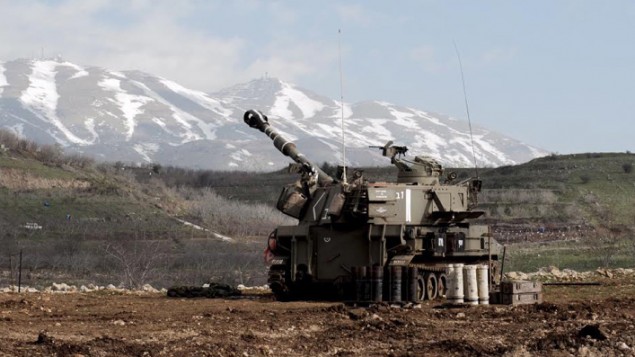
F150128IDF01-e1422508122867-635x357Israeli artillery on the Lebanon border, January 28, 2015 (Photo credit: IDF Spokesperson)

Tunnel construction was said to be continuing around the clock, using primitive means rather than advanced machinery in order to avoid detection by Israeli surveillance.

A senior Israeli intelligence official said last week that Hezbollah has built up a massive arsenal of rockets and other advanced weapons in Shi’ite villages of southern Lebanon, warning civilians would be at risk if war breaks out.

According to the official, Hezbollah has an estimated 100,000 short-range rockets capable of striking northern Israel, several thousand missiles that can reach Tel Aviv and central Israel and hundreds more that can strike the entire country.

Most of the weapons have been transferred to Lebanon through war-torn Syria, coming from Hezbollah’s key allies, the Syrian government and Iran, he said.

The official showed reporters satellite photos of what Israeli intelligence believes are Hezbollah positions in dozens of Shiite villages in southern Lebanon.

The photos were marked with dozens of red icons, signaling what are believed to be missile launchers, arms depots, underground tunnels and command posts.

The official, who spoke on condition of anonymity under military guidelines, said an estimated 200 villages have been turned into “military strongholds.”

One photo showed the village of Muhaybib, with a population of around 1,000 people and 90 buildings, of which more than a third had been marked as Hezbollah assets. In the larger village of Shaqra, with some 4,000 people, Israeli intelligence identified Hezbollah targets in around 400 out of some 1,200 buildings.

The army refused to allow publication of the images.

If war breaks out and Hezbollah fires missiles at Israel, these buildings will be targeted by Israel’s air force, the official said, adding that Israel would give civilians time to evacuate.

Israel and Hezbollah fought a month-long war in 2006 that killed some 1,200 Lebanese, including hundreds of civilians, and 160 Israelis and caused heavy damage to Lebanon’s infrastructure.

Though another Israel-Hezbollah war is always possible, analysts say the group has no interest in renewing hostilities while it is busy fighting alongside President Bashar Assad’s forces against rebels trying to topple him in Syria, including the forces of Islamic State.

Hezbollah leader Hassan Nasrallah warned Friday that the Islamic State posed an existential threat to Lebanon and said his organization may soon be required to call for a general mobilization to fight the group.

“Now is the time for everyone to enlist, anyone who can take part,” Nasrallah told senior organization commanders in a speech. “The danger that threatens us is an existential threat similar to 1982,” he added, referring to the Lebanon War and the Israeli military invasion of Lebanon.

The Hezbollah chief vowed to “use all our strength and all our capabilities to cope with extremist groups.

“In the next phase we may declare general mobilization to all people,” he said.

US and Hizballah coordinate spy drone flights over Qalamoun, share US combat intelligence

May 23, 2015

US and Hizballah coordinate spy drone flights over Qalamoun, share US combat intelligence, DEBKAfile, May 23, 2015

U.S._special_forces_operating_recon_drones_in_Lebanon_5.15Reconnaissance drone operated by US special forces in Lebanon

How do Obama’s repeated commitments to Israel’s security square with close US military and intelligence cooperation with an organization whose vow to destroy Israel is backed by 100,000 missiles – all pointed south?

************************

Another strange pair of bedfellows has turned up in one of the most critical Middle East battlefields: the United States is helping Hizballah, Iran’s Lebanese surrogate, in the battle for control of the strategic Qalamoun Mountains. DEBKAfile’s intelligence sources disclose that a US special operations unit, stationed at the Hamat air base on the coast of northern Lebanon, is directing unarmed Aerosonde MK 4.7 reconnaissance drone intelligence-gathering flights over the Qalamoun Mt arena, 100 km to the west.

Washington set up the base originally in line with an assurance to Beirut of military assistance for the next three years to counter any threatened invasion by extremist elements.

However, it turns out that the data the US drones pass to Lebanese army general staff in Beirut goes straight to Hizballah headquarters – and on to the Iranian officers in Syria running Bashar Assad’s war effort.

The Aerosonde MK 4.7 can stay aloft for 10 to 12 hours at a stretch at an altitude of 4.5 km. It functions day or night, equipped with an advanced laser pointer capability. It is capable of carrying ordnance but US sources say they the aircraft in Lebanon are unarmed.

Since Hizballah is also operating Ababil-3 surveillance drones of its own over Qalamoun, coordination had become necessary between the American team and the Shiite group.  The consequence is that for the first time, the US military is working directly with an internationally-designated terrorist organization – a development with earthshaking ramifications for Israel’s security. This partnership has in fact become a game-changer for the worse in terms of Israel’s security ties with the US and has caused an upheaval in its military and intelligence disposition in the region, in at least six respects:

1. To counter US-Hizballah intelligence collaboration, Israel is obliged to reshuffle the entire intelligence mechanism it maintains to protect its northern borders with Lebanon and Syria.

2.  Israel finds itself forced to monitor the progress of the US special unit’s interface with Hizballah, its avowed enemy.

3.  Israel can no longer trust American intelligence coming in from Lebanon because it is likely tainted by Hizballah sources.

4.  Hizballah is gaining firsthand insights into the operating methods of US special operations forces, which Israel’s methods strongly resemble and must therefore revamp.

5. The Hizballah terrorist group is winning much needed prestige and enhanced status in the region from its collaboration with the US.

6. Hizballah’s Ababil drones are in fact operated by the hostile Iranian Revolutionary Guards, which leaves Israel with no option but to overhaul from top to bottom the intelligence-gathering systems employed by its surveillance drones to track Iranian movements in the region.

At the Washington Adas Israel synagogue Friday, May 22, President Barack Obama wearing a kipah “forcefully” objected to suggestions that policy differences between his administration and the Israeli government signaled his lack of support for the longtime US ally.

This raises a question: How do Obama’s repeated commitments to Israel’s security square with close US military and intelligence cooperation with an organization whose vow to destroy Israel is backed by 100,000 missiles – all pointed south?

Some 250 Hizballah dead in Qalamoun battle. Nasrallah pushes Lebanese army to enter Syrian war

May 13, 2015

Some 250 Hizballah dead in Qalamoun battle. Nasrallah pushes Lebanese army to enter Syrian war, DEBKAfile, May 13, 2015

Hezbollah-Qalamoun_15.8.14Hizballah fighter on Mt. Qalamoun

Amid Hizballah’s rising war losses, its leader Hassan Nasrallah strongly urged the Lebanese chief of staff Gen. Jean Kahwagi to send his troops into battle over the strategic Qalamoun Mountain, alongside Hizballah and the Syrian army, DEBKAfile’s military sources disclose. Nasrallah argued that the time had come for the Lebanese army to take a hand in the fighting, since the Syrian rebels led by Al Qaeda’s Syrian arm, the Nusra Front, were shelling the eastern Beqaa Valley of Lebanon from their Syrian strongholds on the mountain that sits athwart the Syrian-Lebanese border.  Thousands of jihadis, he said, were seizing land around the northeastern Lebanese villages of Arsal and Nahleh.

Another of Nasrallah’s demands was for Gen. Kahwagi to bring out the Lebanese army’s heavy artillery to shell rebel Qalamoun concentrations, positions and moving vehicles, because they endangered Lebanese national security.

The Lebanese general gave the Hizballsah chief a flat no. He declared the Lebanese army would not “slip” into any war inside the Syrian area of Qalamoun where Hizballah and the Syrian army are currently fighting jihadis, but added: “The army is ready to confront any assault on Lebanese sovereignty and push back any infiltration by militants.”

Tuesday, May 12, in Beirut, US Ambassador David Hale interceded in the argument: “I would say that ISIS posed no threat to Lebanon until Hizballah went into the war in Syria and that provided the magnet that drew these terrorists here.”

Listing the American weapons reaching Beirut of late, as Hellfire missiles fired from helicopters against ground targets, precision guided missiles and howitzers, the ambassador said firmly: “This is exactly what they (the Lebanese army) need to target this particular terrorism phenomenon.”

DEBKAfile’s military and counter-terrorism sources don’t believe that the Lebanese army chief will be able to hold out for long against the gradual ISIS and Nusra slide into his country. At the moment, the intruders are mostly fleeing Islamists, driven by the Syrian army and Hizballah from their mountain positions and out of the eastern Lebanese border districts close to the battle front.

But although the Syrian army and Hizballah are claiming to have taken strategic hills in the volatile border region last week, the battle is far from over and does not appear to be anywhere near a clear resolution.

Even when Syria and Hizballah do achieve a local gain here or there, fresh ISIS and Nusra forces keep on pouring back – mostly from the north – to constantly open up new battlefronts on the Qalamoun mountains. Their commanders have already grasped that no one will stop them slipping back and forth between Syria and Lebaon – both to escape Syrian and Hizballah fire and meanwhile to hit Hizballah’s rear strongholds in the Lebanese Beqaa.

Hizballah’s death toll in battle is soaring disastrously – at least 250 reported in the last few days, including 9 senior commanders.

Most military and intelligence experts agree that, as time goes by, however hard they try, the United States and Lebanese army will not be able to stem the jihadists’ spillover into the Beqaa Valley.

Lebanon: IDF in pre-emptive action at Shebaa Farms

April 27, 2015

Lebanon: IDF in pre-emptive action at Shebaa Farms, DEBKAfile, April 27, 2015

Israeli air and ground forces are reported by Lebanese sources Monday to be conducting preventive counter-terror action around the disputed Shabaa Farms area north of the Golan. Large IDF ground forces are scouring the area, with air force jets, drones and helicopters cruising overhead. Machine gun fire is heard occasionally. Other Lebanese sources report low-flying Israeli jets over South Lebanon.

Hizballah copycats Hamas’ terror tunnels for Lebanese-Galilee border. No IDF solutions yet

April 21, 2015

Hizballah copycats Hamas’ terror tunnels for Lebanese-Galilee border. No IDF solutions yet, DEBKAfile, April 20, 2015

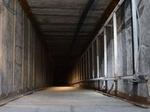
Gaza-Terror-Tunnels_4.15A Hamas terror tunnel – a model for Hizballah

Anxiety about the new terror tunnels they sense Hamas is excavating under their feet is no longer confined to Israelis living in proximity to the Gaza Strip, or the soldiers serving there. Israel’s northern borderland dwellers, who can see Hizballah’s yellow flags in from their balconies, have the same concerns. Their reports of mysterious underground explosions are confirmed by thousands of Israeli troops conducting field exercises in the neighborhood. The soldiers attest to heavy earthmoving equipment, explosions, burrowing, and shaking ground on the Lebanese side of the border, giving the area the appearance of a huge subterranean building site.

The Lebanese Shiite Hizballah group, Iran’s Lebanese surrogate, has clearly taken a leaf out of its Palestinian ally, Hamas’ book, for a fully mobilized terror tunnel project against northern Israel. Its manpower, including engineering units, is working under the guidance of Iranian Revolutionary Guards officers to sink a large network of tunnels leading under the border into Galilee. They are working efficiently and at top speed with the aid of modern Western-made earthmoving equipment and foreign professionals paid top dollar to manage the project.

Israel seems to be curiously passive in the face of its enemy’s ambitious enterprise. Only last week, the Defense Ministry’s Political Coordinator Amos Gilad denied any knowledge of terrorist tunnels reaching Israel from Lebanon.

However, Brig. Gen. Moni Katz, commander of the IDF’s Division 91, which is responsible for security of the Galilee region, told a different story: “To me it is obvious that the other side is busy digging tunnels. I don’t need intelligence to tell me this. Intuition is enough. There is no denying that this is what they are up to. Can I say they have completed a tunnel?” The general went on to reply: “I must assume they have. I can’t prove it or say for sure a tunnel has crossed into our territory. But my basic premise is that this is so and it is up to us to make plans to fit this case.”

Putting those plans into practice – which would necessitate destroying the tunnels either before they were built or at their entry-points – faces four major difficulties:

1. Close surveillance and first-class intelligence are required to keep track of hostile tunnel projects starting from the planning stage, the recruitment of manpower, the acquisition of engineering technology and equipment and registering the quantity of earth displaced and removed from the underground burrow.

2.  The digging process, which sound sensors should have no difficulty in detecting, is a relatively short and irregular process which can just as easily be camouflaged by surface activities.

3.  Locating a finished tunnel at the stage when it is still unused and relatively quiet calls for pinning down a number of variables, such as the type of soil, the depth, length, breadth and lining material used in building the tunnel, humidity, weather conditions on the surface as well as its environment, whether urban or rural.

4.  Locating such a tunnel – even when it is already in operational use by an enemy – poses another set of difficulties. In combat conditions, electronic listening devices would be drowned out by the fire and explosions of battle and, in the confusion of war, enemy troops would be hard to intercept as they moved in and out the tunnels.

A glance at the map shows that the danger of tunnel warfare should also be taken into account on Israel’s eastern front – where it would just as hard to detect as in the north and the southwest: The Arab populations inhabiting the West Bank and the Israeli side of the border – only hundreds of meters apart – are similar enough to keep counter-terrorism authorities on a high level of alert for the construction of tunnel links between the two territories.

Perhaps a succession of military chiefs should be held accountable for letting the tunnel terror peril develop to its current proportions. But it must also be said that no silver bullet has so far been invented to counter this primitive vehicle of terror, including the methods tried till now, such as buried microphones, optical fibers sensitive to seismic tremors, deep trenches along the border and an assortment of off-beat inventions.

In the view of our military analysts, any solutions would have to vary from sector to sector, adapted to the military and topographical features in each case and an intelligence assessment of the level of risk involved in counteraction. This effort would have to be directed by an interdepartmental, interagency administration directly answerable to the prime minister or defense minister.