Posted tagged ‘Lebanon’

Lebanese Columnist Warns: Any Hizbullah Aggression Against Israel Will Be Disastrous For Lebanon More Than Anyone Else

April 3, 2017

Lebanese Columnist Warns: Any Hizbullah Aggression Against Israel Will Be Disastrous For Lebanon More Than Anyone Else, MEMRI, April 3, 2017

In an article titled “Does Hizbullah Threaten Israel or Us” in the  English-language Saudi daily Arab News, Lebanese columnist Diana Moukalled commented on the recent escalation in Hizbullah Secretary-General Hassan Nasrallah’s threats against Israel, including his threat to target Israel’s nuclear reactor in Dimona.[1] She assessed that this escalation in Nasrallah’s rhetoric is an attempt to make up for Hizbullah’s military losses in Syria and to garner popular support in light of the decline in Hizbullah’s and Iran’s global standing. She also noted that his threat to target the reactor is irresponsible because thousands of Palestinian and Israeli civilians live near it. Noting that Iran often uses Lebanon as an arena for its “adventures,” she warned that the current political climate might prompt Iran and Hizbullah to renew their aggression against Israel – which would be catastrophic for Lebanon, even more so than in previous confrontations.

The following are excerpts from her article:[2]

Diana Moukalled (image: twitter.com/dianamoukalled)

“Israel has reacted to recent statements by Hezbollah leader Hassan Nasrallah with a mixture of mockery and cynicism, as he said Hezbollah was ready to bomb the Dimona nuclear reactor or ammonia tanks. Israeli websites reported military discussions indicating that Israel believes Hezbollah is facing a dilemma over aid and funds due to the fighting in Syria.

“In the past, Israel dealt more seriously and carefully with Hezbollah threats and movements, but this has seemingly changed. I am in no way praising Israel, an occupying racist state, or minimizing its danger as an aggressor. Rather, this is an attempt to understand the whirlwind of rhetoric recently launched by Nasrallah, which affects Lebanese, Palestinians and others living mere kilometers from the Dimona reactor.

“Everyone, primarily Hezbollah, knows that the results of any war or military action against Israel will be catastrophic. Nasrallah may have learned this lesson, since the southern front with Israel has been calm since the end of the last war 11 years ago.

“As such, escalating rhetoric to target nuclear reactors — near to which thousands of Palestinian and Israeli civilians live, and would be harmed by substantial radioactive fallout — is at the very least irresponsible and no more than a popular mobilization attempt.

“But these empty slogans seem more necessary today than ever, as Nasrallah’s words seem to be an attempt to rebuild a combat position against Israel and make up for Hezbollah’s losses in Syria. This approach seems logical given the view that rapid political developments and the international consensus around Syria will lead to Hezbollah’s exit from the country. This would result in an Iranian response wherever it can do so.

“In a realistic characterization of current politics, now is not the time to make decisions, but to make a show of force and assemble cards to be presented while waiting for a clearer understanding of US regional policy. Continued escalation against Iran and its influence in Syria may lead to Tehran and Hezbollah reverting to a policy of confrontation, including against Israel. Where better than Lebanon as a gateway for new Iranian adventures?

“But the situation is not as it was during the 2006 war, as Israel says its response will be massive against Hezbollah and Lebanon if Hezbollah takes military action against it. This threat includes Israel’s preparedness to target all Lebanese territory. Lebanese President Michel Aoun’s comments that Hezbollah’s weapons complement the role of the army serve as a pretext for Israel to target the army as well.

“The appropriate conditions to target Hezbollah will come soon, but Israel is in no rush for military action as it is monitoring Hezbollah’s financial, moral and military depletion in Syria, amid Arab hostility toward Hezbollah, compared with support in 2006, due to its regional role at Iran’s behest. Any threat posed by Hezbollah will affect Lebanese before anyone else, and more severely than in previous wars and crises.”

____________________________

[1] In a February 16, 2017 address aired on Al-Mayadeen TV, Nasrallah called on Israel “not just to move the ammonia facility out of Haifa, but to dismantle the nuclear plant in Dimona,” saying: “They know what will become of them and of their [Zionist] entity if missiles hit that plant.” See MEMRI TV Clip No. 5896, “Hizbullah Secretary-General Nasrallah Threatens Missile Attack on Israeli Ammonia Facilities and Dimona Nuclear Plant,” February 16, 2017.

[2] Arab News (Saudi Arabia), February 26, 2017.

World Shrugs as Hizballah Prepares Massive Civilian Deaths

March 21, 2017

World Shrugs as Hizballah Prepares Massive Civilian Deaths, Investigative Project on Terrorism, Noah Beck, March 21, 2017

Like the terror group Hamas, Hizballah knows that civilian deaths at the hands of Israel are a strategic asset, because they produce diplomatic pressure to limit Israel’s military response. Hizballah reportedly went so far as offering reduced-price housing to Shiite families who allowed the terrorist group to store rocket launchers in their homes.

********************************

Hizballah leader Hassan Nasrallah recently warned Israel that his Iran-backed terror group could attack targets producing mass Israeli casualties, including a huge ammonia storage tank in Haifa, and a nuclear reactor in Dimona.

Also last month, Tower Magazine reported that, since the beginning of the Syrian civil war, Iran provided Hizballah with a vast supply of “game-changing,” state-of-the art weapons, despite Israel’s occasional airstrikes against weapons convoys.

In a future conflict, Hizballah has the capacity to fire 1,500 rockets into Israel each day, overwhelming Israel’s missile defense systems. Should such a scenario materialize, Israel will be forced to respond with unprecedented firepower to defend its own civilians.

Hizballah’s advanced weapons and the systems needed to launch them reportedly are embedded across a staggering 10,000 locations in the heart of more than 200 civilian towns and villages. The Israeli military has openly warned about this Hizballah war crime and the grave threats it poses to both sides, but that alarm generated almost no attention from the global media, the United Nations, or other international institutions.

Like the terror group Hamas, Hizballah knows that civilian deaths at the hands of Israel are a strategic asset, because they produce diplomatic pressure to limit Israel’s military response. Hizballah reportedly went so far as offering reduced-price housing to Shiite families who allowed the terrorist group to store rocket launchers in their homes.

But if the global media, the UN, human rights organizations, and other international institutions predictably pounce on Israel after it causes civilian casualties, why are they doing nothing to prevent them? Hizballah’s very presence in southern Lebanon is a flagrant violation of United Nations Security Council resolution 1701, which called for the area to be a zone “free of any armed personnel, assets and weapons” other than the Lebanese military and the U.N. Interim Forces in Lebanon (UNIFIL).

The resolution also required Hizballah to be disarmed, but the terror group today has an arsenal that rivals that of most armies. Hizballah possesses an estimated 140,000 missiles and rockets, and reportedly now can manufacture advanced weapons in underground factories that are impervious to aerial attack.

“Israel must stress again and again, before it happens, that these villages [storing Hizballah weapons] have become military posts, and are therefore legitimate targets,” said Yoram Schweitzer, senior research fellow at Israel’s Institute for National Security Studies (INSS).

Meir Litvak, director of Tel Aviv University’s Alliance Center for Iranian Studies, agrees, adding that global attention would “expose Hizballah’s hypocrisy in its cynical use of civilians as… human shields.”

Even a concerted campaign to showcase Hizballah’s war preparation is unlikely to change things, said Eyal Zisser, a senior research fellow at the Moshe Dayan Center for Middle Eastern and African Studies. Hizballah exploits the fact that “the international community is too busy and…weak to do something about it,” Zisser said. All of “these talks and reports have no meaning. See what is happening in Syria.”

Israel has targeted Hizballah-bound weapons caches in Syria twice during the past week. Syria responded last Friday by firing a missile carrying 200 kilograms of explosives, which Israel successfully intercepted.

If Hizballah provokes a war, Israel can legitimately attack civilian areas storing Hizballah arms if the Israel Defense Forces (IDF) first attempts to warn the targeted civilians to leave those areas, Litvak said. But “it will certainly be very difficult and will look bad on TV.”

While Sunni Arab states are generally united against the Shiite Iranian-Hizballah axis, Litvak, Zisser, and Schweitzer all agreed that Israel could hope for no more than silent support from them when the missiles fly.

Indeed, the “Sunni Arab street” is likely to be inflamed by the images of civilian death and destruction caused by Israel that international media will inevitably broadcast, further limiting support for Israel from Iran’s Sunni state foes.

Rather perversely, the Lebanese government has embraced the very terrorist organization that could cause hundreds of thousands of Lebanese civilian deaths by converting residential areas into war zones. “As long as Israel occupies land and covets the natural resources of Lebanon, and as long as the Lebanese military lacks the power to stand up to Israel, [Hizballah’s] arms are essential, in that they complement the actions of the army and do not contradict them,” President Michel Aoun told Egyptian television last month. Hizballah, he said, “has a complementary role to the Lebanese army.”

Aoun’s declaration means that Lebanon “takes full responsibility for all of Hizballah’s actions, including against Israel, and for their consequences to Lebanon and its entire population, even though the Lebanese government has little ability to actually control the organization’s decisions or policy,” said INSS Senior Research Fellow Assaf Orion.

MK Naftali Bennett, a veteran of Israel’s 2006 war with Hizballah, believes that Lebanon’s official acceptance of Hizballah and its policy of embedding military assets inside residential areas removes any constraints on Israeli targeting of civilian areas. “The Lebanese institutions, its infrastructure, airport, power stations, traffic junctions, Lebanese Army bases – they should all be legitimate targets if a war breaks out,” he said. “That’s what we should already be saying to them and the world now.”

In a future war, Hizballah is certain to try bombarding Israeli civilian communities with missile barrages. Israel, in response, will have to target missile launchers and weapons caches surrounded by Lebanese civilians.

But it need not be so. Global attention on Hizballah’s abuses by journalists and diplomats could lead to international pressure that ultimately reduces or even prevents civilian deaths.

Those truly concerned about civilians do not have a difficult case to make. Hizballah has shown a callous disregard for innocent life in Syria.

It helped the Syrian regime violently suppress largely peaceful protests that preceded the Syrian civil war in 2011. Last April, Hizballah and Syrian army troops reportedly killed civilians attempting to flee the Sunni-populated town of Madaya, near the Lebanese border. In 2008, its fighters seized control of several West Beirut neighborhoods and killed innocent civilians after the Lebanese government moved to shut down Hizballah’s telecommunication network.

Hizballah terrorism has claimed civilian lives for decades, including a 1994 suicide bombing at Argentina’s main Jewish center that killed 85 people . As the IDF notes, “Since 1982, hundreds of innocent civilians have lost their lives and thousands more have been injured thanks to Hizballah.”

If world powers and the international media genuinely care about avoiding civilian casualties, they should be loudly condemning Hizballah’s ongoing efforts – in flagrant violation of a UN resolution – to cause massive civilian death and destruction in Lebanon’s next war with Israel.

Lieberman: If Syria targets our aircraft again, we’ll destroy its air defens…

March 19, 2017

Defense minister warns Assad regime after it unsuccessfully tried to shoot down IAF fighter jets on Friday night by firing an S-200 missile at it; ‘We have no interest in interfering in the Syrian civil war or clashing with the Russians, but we won’t hesitate to defend Israel’s security,’ Lieberman says.

Yoav Zitun|Published:  19.03.17 , 11:44

Source: Ynetnews News – Lieberman: If Syria targets our aircraft again, we’ll destroy its air defens…


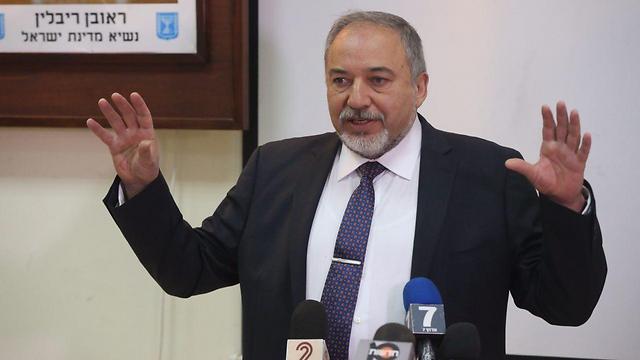
Defense Minister Avigdor Lieberman threatened Sunday to destroy Syria’s air defense apparatus if it targets Israeli fighter jets again after the Assad regime tried to shoot down Israeli Air Force (IAF) planes over the weekend.

“We have no interest in interfering in the Syrian civil war, not for nor against (President Bashar) Assad, and we have no interest in clashing with the Russians,” Lieberman clarified during a visit to the IDF induction center.

“Our main problem is with the transfer of advanced weapons from Syria to Lebanon. That is why every time we identify an attempt to smuggle game-changing weapons, we will act to thwart it. There will be no compromise on this issue,” the defense minister stressed.

Lieberman at the IDF induction center (Photo: Motti Kimchi)

Lieberman at the IDF induction center (Photo: Motti Kimchi)

He added that “if the IDF does choose to act, there is a real reason for it.”

Israeli Arrow anti-aircraft missiles were used to intercept a Syrian S-200 missile fired at IAF jets that returned to Israeli territory after attacking targets in Syria on Friday night.

“Next time, if the Syrian aerial defense apparatus acts against our planes, we will destroy it,” Lieberman said. “We won’t hesitate. Israel’s security is above everything else; there will be no compromise.”

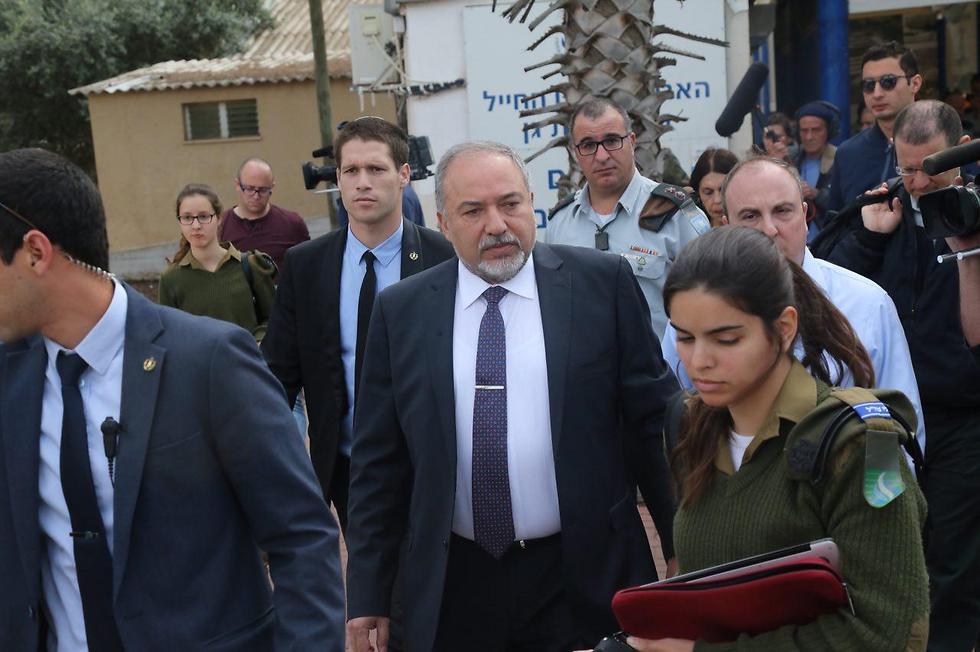
Lieberman at the IDF induction center (Photo: Motti Kimchi)

Lieberman at the IDF induction center (Photo: Motti Kimchi)

Similarly, he said, the IDF will respond to any rocket fire coming from the Gaza Strip “with force.”

“We’ll cut down Hamas’s capabilities, we’re not willing to tolerate any provocation,” Lieberman said. “We won’t take money from the Israeli taxpayer to invest in electricity and water for the strip, while they are investing their money in tunnels.”

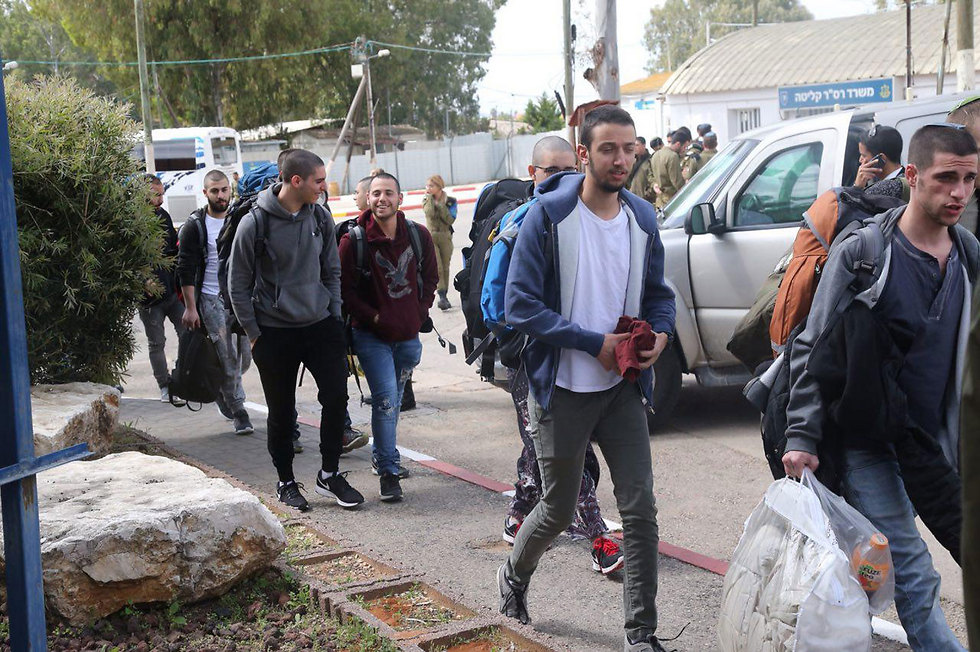
New recruits at the IDF induction center (Photo: Motti Kimchi)

New recruits at the IDF induction center (Photo: Motti Kimchi)

The defense minister also addressed his ongoing feud with Education Minister Naftali Bennett over disparaging remarks made by Rabbi Yigal Levinstein about women in the IDF. Lieberman called on the rabbi to resign and threatened to halt Defense Ministry recognition of the rabbi’s pre-army preparatory yeshiva, which angered Bennett.

“The IDF presents a variety of options—from Caracal (a co-ed battalion) to the Haredi Nahal (for ultra-Orthodox soldiers). Everyone has a place,” Lieberman determined. “This sweeping attack against women is unreasonable. We’ve tried to avoid friction with Levinstein. We’ve forgiven him twice before (for similar comments) and dragged our feet on this. A third time is too much.”

Lieberman added that Rabbi Levinstein will face a disciplinary hearing, in accordance with a legal opinion in the Defense Ministry.

(Translated and edited by Yaara Shalom)

In-House Hizballah Missile Factories Could Add to Massive Arms Buildup

March 17, 2017

In-House Hizballah Missile Factories Could Add to Massive Arms Buildup, Investigative Project on Terrorism, Yaakov Lappin, March 17, 2017

This does not mean Hizballah is seeking a conflict with Israel now, but it does mean that should a new war erupt in the future, Israel’s civilian population will face unprecedented threats.

Israel’s defense establishment is making its own preparations accordingly, based on the understanding that this Iranian agent has developed into a full-fledged terrorist army.

*********************************

A recent report saying that Iran constructed underground missile factories in Lebanon for Hizballah would, if accurate, indicate a disturbing boost in the Shi’ite terror organization’s ability to self-produce weapons.

Already, the Israeli defense establishment sees Hizballah as a powerful and radical army rather than a ‘mere’ terror organization due to its deep and sophisticated weaponry (which surpasses that of most states), and its hierarchical command structure.

An ability to manufacture destructive rockets and missiles would mean that the militant Islamist Lebanese-Shi’ite organization is no longer entirely reliant on arms trafficking from its patron Iran and ally, the Assad regime in Syria.

The report, made available by the Middle East Media Research Institute (MEMRI), was published in the Kuwaiti daily Al-Jarida. It cites an aide to the commander of Iran’s Islamic Revolutionary Guards Corps (IRGC) as its source. The IRGC’s Quds Force is an elite unit that runs Iran’s extensive overseas operations to arm, finance, and strengthen Iran’s regional proxies.

According to the Kuwaiti report, the IRGC built the arms-making facilities more than 50 meters underground and fortified them against air strikes before handing control of them over to Hizballah three months ago.

The report is well within the realm of the possible, Ely Karmon, a Hizballah expert and a senior research scholar at the International Institute for Counter-Terrorism in Herzliya told the Investigative Project on Terrorism. He pointed to a 2015 statement made by the IRGC’s Aerospace Force commander, Brigadier General Amir Ali Hajizadeh, boasting that Tehran has provided “Syria, Iraq, Palestine and the Lebanese Hizballah resistance group with the needed know-how to produce missiles.”

“The IRGC’s Aerospace Force has developed to a stage in the field of missile industries that it can mass-produce different types of short- and mid-range missiles,” Hajizadeh said.

Assessing the latest Kuwaiti report, Karmon said that it is “possible that these Hizballah military factories are in the Quseyr area in Syria, and not in Lebanon.” Quseyr is an area of western Syria near Lebanon which has come under Hizballah control in recent years after being seized from Sunni rebel organizations.

Israel bombed targets in the area in the past, Karmon noted, likely as part of Israel’s covert program to selectively disrupt of Hizballah’s force build-up.

In November, Hizballah paraded its heavy weaponry in Quseyr – including tanks, armored personnel carriers, artillery guns, and missile launchers.

The Kuwaiti report also claimed that “a special department has been established at the IRGC’s Imam Hossein University [in Tehran] to train Lebanese and other experts, and hundreds of experts have already been trained… The manufacture of the missiles does not take place in one factory; different parts are built in different factories and then assembled together.”

The missile factories reportedly can produce surface-to-surface missiles with a range of over 500 kilometers – in other words, capable of hitting anywhere in Israel – surface-to-sea missiles, perhaps intended to hit Israeli ships and Israel’s offshore gas rigs in the Mediterranean Sea, armed drones, anti-tank missiles, and other weapons. The production sites can also be used to make machine guns, mortars, and anti-aircraft guns.

Since the end of the 2006 war with Israel, Hizballah stockpiled an arsenal totaling 120,000 missiles – one of the largest of its kind in the world. The vast majority of these arms were manufactured in Iran and Syria and smuggled into Lebanon. A growing number are guided rockets and missiles, which Hizballah could use to try to use to overcome Israeli air defenses and target sensitive targets.

Iranian weapons transfers continue regardless of whether Hizballah has access to its own missile factories. Israeli Prime Minister Benjamin Netanyahu provided details on “the ongoing Iranian attempt to transfer weapons, advanced weapons, to Hizballah, via Syria,” when he visited Russian President Vladimir Putin in Moscow earlier this month.

Reports say that Israel targeted such weapons again overnight, triggering Syrian surface-to-air missile fire at Israeli jets. At least one of those missiles reportedly was intercepted by Israel’s Arrow defense system.

Hizballah also is training elite terror cells to infiltrate Israel during the next war, and to temporarily ‘conquer’ northern Israeli communities in a bid to demoralize Israelis.

These preparations, it is safe to assume, are being closely monitored by Israel.

Hizballah’s deep involvement fighting for the Assad regime in Syria for four years also has boosted its power. The best form of training is combat itself, and its operatives have been exposed to Iranian commanders and technology on the battlefields of Syria.

Meanwhile, back in Lebanon, Hizballah has embedded the vast majority of its bases, rocket launchers, and command posts in civilian regions, including a massive maze of underground tunnels and subterranean compounds.

Yet all is not well in Hizballah’s camp despite its clear and growing power. Hizballah is facing a dramatic economic crisis due to a shortage of cash flow from Iran, which itself has not yet received all of the funds it was expecting to get after signing the nuclear deal.

Hizballah’s expenses are not only military and terrorist. They include many civilian and political activities in Lebanon, for which it is now struggling to pay. Additionally, the fact that it has sustained more than 1,500 casualties in Syria has demoralized sections of the traditional Lebanese Shi’ite support base.

Nevertheless, Hizballah is pushing to build up its massive offensive capabilities against Israel.

It seeks more accurate rockets and missiles, while its leader Hassan Nasrallah has repeatedly threatened to strike Israeli strategic targets such as ships carrying industrial ammonia to the Israeli city of Haifa, and Israel’s nuclear reactor in Dimona.

This does not mean Hizballah is seeking a conflict with Israel now, but it does mean that should a new war erupt in the future, Israel’s civilian population will face unprecedented threats.

Israel’s defense establishment is making its own preparations accordingly, based on the understanding that this Iranian agent has developed into a full-fledged terrorist army.

Kuwaiti Daily: Missile, Arms Factories Built By IRGC In Lebanon Have Recently Been Handed Over To Hizbullah

March 14, 2017

Kuwaiti Daily: Missile, Arms Factories Built By IRGC In Lebanon Have Recently Been Handed Over To Hizbullah, MEMRI, March 14, 2017

The Kuwaiti daily Al-Jarida reported on March 11, 2017, citing an aid to Mohammad Ali Jafari, commander of the Iranian Revolutionary Guards Corps (IRGC), that Iran established facilities for manufacturing missiles and other weapons in Lebanon and has recently handed them over to the management and oversight of Hizbullah. According to the daily’s source, the facilities are more than 50 meters underground and heavily shielded against aerial attacks. He also clarified that various parts of the missiles are manufactured in different factories and then assembled together.

The following is a translation of the report:[1]

The Al-Jarida report

With Iran facing growing pressures from the Donald Trump administration and the Israeli government under Binyamin Netanyahu, an aid to the IRGC commander told Al-Jarida that Iran has built factories [for manufacturing] missiles and [other] weapons in Lebanon and has recently turned them over to Hizbullah. In response to statements by Iranian Defense Minister Hossein Dehghan several days ago – who said that Hizbullah is capable of manufacturing missiles [that can] hit any part of Israel [but] gave no details or explanations – a knowledgeable source who wished to remain anonymous said that, after Israel destroyed an Iranian arms factory in Sudan several years ago that had supplied arms to Hizbullah, and after [Israel also] bombed an arms convoy that was intended to reach Hizbullah via Syria, the IRGC launched a project for establishing arms factories in Lebanon [itself]. [The source] also claimed that a special department has been established at the IRGC’s Imam Hossein University [in Tehran] to train Lebanese and other experts, and that hundreds of experts have already been trained.

“According to the source, the factories are more than 50 meters underground, and above them are several layers of shielding so that Israeli planes cannot hit them. Moreover, manufacture of the missiles does not take place in one factory; different parts are built in different factories and then assembled together. He added that the transfer of the factories to Hizbullah’s [management] was gradual but that they have been under full Hizbullah management and oversight for three months now.

“The source stressed that Hizbullah is able to manufacture several kinds of missiles, some with a range of over 500 km, including surface-to-surface and surface-to-sea missiles; torpedoes launched from light high-speed boats; spy drones and [attack] drones armed with weapons and rockets; anti-tank missiles, and fast armored boats. He clarified that weapons produced in these plants have been used in the Syria war and were proved to be effective. Anti-tank missiles managed to destroy car bombs that targeted Hizbullah fighters. He [also] noted that Hizbullah manufactures cannon, machine guns, anti-aircraft guns, mortars, and various [other] missiles and bullets, especially armor-piercing ones…”

_____________________________

[1] Al-Jarida (Kuwait), March 11, 2017.

The Significance, Ramifications, And Messages Of Hizbullah’s Show Of Military Force In Al-Qusayr, Syria

January 4, 2017

The Significance, Ramifications, And Messages Of Hizbullah’s Show Of Military Force In Al-Qusayr, Syria, MRMRI, Yael Yehoshua*, January 3, 2016

On November 13, 2016, Hizbullah marked its annual Martyr Day by holding its first military parade in a Syrian town, Al-Qusayr, which Hizbullah took over in 2013 following a long and bloody battle with rebel forces, and which has since become the main symbol of the organization’s involvement in the Syria war alongside the Assad regime. The parade featured hundreds of fighters in military uniforms, tanks, U.S.-made M113 armored personnel carriers, cannon, machine guns, and an armored regiment. Also marching was the Al-Radwan division, comprising some 10,000 fighters from Hizbullah’s “intervention forces” and “special forces” fighting in Syria, which constitute the spearhead of the organization in the country.[1]

By holding this parade at this time and at this location, Hizbullah was informing its rivals, locally and in the region – that is, political players in Lebanon, the Syrian rebels and their Arab supporters, and the West and Israel – that it is now a powerful cross-border military force that can control areas outside Lebanon’s borders. The parade did indeed cause a tremendous stir among Hizbullah supporters, as well as among the organization’s opponents.

This paper will review the significance and ramifications of the parade in Al-Qusayr and the messages that it sent.
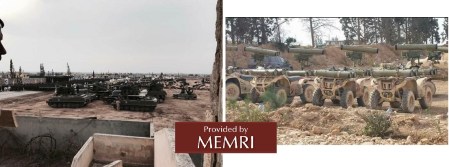
1295aPhotos from the parade. Arabipress.org, November 13, 2016; Addiyar.com, November 14, 2016
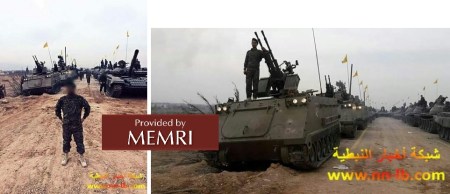
1295bPhotos from the parade. Nn-lb.com, November 13, 2016

Hizbullah Underlines Its Presence On Syrian Soil

Hizbullah’s holding the parade on Syrian soil, particularly in Al-Qusayr, is a symbolic yet highly significant act showing the organization’s control of part of Syrian territory. Al-Qusayr is the jewel in the crown of Hizbullah’s  military involvement in Syria and is seared into the memories of the Syrian rebels as an arena in which they were defeated by Hizbullah in 2013 after a bitter battle that lasted weeks and involved many losses on both sides. Moreover, Al-Qusayr is also Hizbullah’s gateway into Syria. After capturing it from the rebels, Hizbullah emptied it of its residents and turned it into a center for its headquarters and into a staging area for its fighters arriving from Lebanon, from which they leave for other battle fronts in Syria.

Also, holding the parade on Syrian soil as opposed to Lebanese soil is a blatant attempt by Hizbullah to highlight its presence in Syria and signal that this presence has become a known, established and certain fact. It may also reflect Hizbullah’s view of Al-Qusayr and its surroundings as its own military territory, and not as Syrian territory – with no consideration whatsoever for Syria’s sovereignty or for Lebanon’s position on this. [2] Hizbullah deputy secretary general Na’im Qassem hinted at this when he said, several days after the parade: “We are in Syria, and we do not need to give any explanation or justification for this. We stand alongside the Syrian army and the Syrian state.”[3]

Qassem’s statements were backed up by statements by Lebanese Army Gen. (ret.) Amin Hatit, who is close to Hizbullah: “Hizbullah’s presence in Syria is something basic… As far as we are concerned, there is no difference between Al-Qusayr and South [Lebanon].”[4]

By holding it on its Martyr Day, Hizbullah also intended the parade to convey a message to the Shi’ite public in Lebanon, which supports Hizbullah and is the source of its political power and its fighters, that despite its losses Hizbullah has remained strong. For Lebanese Shi’ites, many of whom have been killed and wounded in the past four years of Hizbullah’s fighting in Syria, and particularly in the ongoing battle for Aleppo, the parade was meant to boost morale and signal that the losses had not been in vain but had only further strengthened the organization and made it possible for it to become a regional power.

Hizbullah’s Transition From A Resistance Force To A Quasi-Regular Army

Hizbullah’s demonstration of its military strength by parading hundreds of its soldiers with tanks, cannon, machine guns, and so on also reflected its wish to send the message that it was now a well-trained and well-armed force, with new units, resembling an experienced regular army, and was no longer a resistance militia waging guerilla warfare against Israel.

This upgrade of its military and deterrence capabilities is the result of its military experience in Syria fighting the anti-regime rebels. In this context, Lebanese daily newspapers quoted Na’im Qassem making statements about Hizbullah’s military capability. The Lebanese Al-Mudun daily quoted Qassem as saying: “Hizbullah has added expertise, fighting capability, and military capabilities. This force is becoming more powerful and more developed, into something greater than resistance and less than a regular army.”[5] The Al-Safir daily quoted him as saying: “Now we have a trained army and the resistance is no longer based on methods of guerilla warfare. We are better armed and better trained, and we have advanced professional knowledge.”[6] It should be noted that an official Hizbullah communique denied that Qassem had called Hizbullah an army.[7]

It appears that Hizbullah’s show of strength at this time was because of achievements in the field by both it and its camp, the resistance axis. These achievements included the strengthening of Hizbullah, the Syrian army, and the militias that have been operating alongside the Syrian army since the beginning of Russia’s military involvement in Syria over a year ago along with the upsurge in the political status of Syrian President Bashar Al-Assad in the Arab world and in the West, and the bolstering of Iran’s regional and international status because of its increased military presence in Iraq and Syria and in the wake of the nuclear agreement and the election of the Hizbullah ally Michel Aoun to the Lebanese presidency.


Hizbullah As A Cross-Border Regional Force

Alongside the messages it sent locally, the parade was aimed at letting the region know that Hizbullah is a cross-border military force that is not bound by any particular territory and does not recognize the Syria-Lebanon border, or other borders between Middle East states, set by the Sykes-Picot agreement.

Hizbullah and its sponsor, Iran, which itself is striving to spread its Islamic Revolution and “Rule of the Jurisprudent” doctrine, do not consider geographic borders to be significant, and are deepening their penetration of many countries in the region. This approach is expressed by the military involvement of Iran and its agents in Syria, Iraq, and Yemen, and by Hizbullah’s complete military control of part of Syrian soil, including the Al-Qusayr region.

The military parade sent a message not only to the rebels in Syria, but also to their sponsors in the Arab and Muslim world – Saudi Arabia, Qatar, and Turkey – underlining that the resistance axis in Syria has the upper hand, and that Hizbullah will not hesitate to show its power anywhere it needs to in order to subjugate its opponents. On this matter, Lebanese Army Gen. (ret.) Amin Hatit said: “Had Hizbullah wanted to send a message to Lebanon, it would have held the demonstration there, not in Syria, and what it did in Al-Qusayr is a message to the region.”[8]

In an interview with the Iranian website Tasnim, which is close to Iran’s Islamic Revolutionary Guard Corps (IRGC), Qassem said: “If we want to look [at this] realistically, we see that Hizbullah has become a regional power. The way in which Hizbullah is confronting both the Zionist enemy and the takfiriyyoun [i.e. the Salafi-jihadi organizations]… shows that the organization is a regional power, and the changes in the region are proof of that.”[9]

Also, Nasser Qandil, editor of the pro-Syria Lebanese daily Al-Bina and an Assad associate, wrote in a November 16, 2016 article titled “Hizbullah – The New Middle East Army” that the organization is a cross-border force and that the borders between countries mean nothing to it. He stated that Hizbullah has become the “Middle East Army” because of its military capabilities and because it is a military force that crosses borders, and that it has achieved this by virtue of the popular organizations in the region that assist it, which comprise approximately a million fighters spread across the Middle East. These forces share its wars and its positions, and see Hizbullah secretary-general Hassan Nasrallah as a leader “with special status and as a source of authority for the wars in the Middle East.” He added that in actuality Hizbullah “has torn up Sykes-Picot” by transforming the areas of Syria that border Lebanon’s east and northeast into a “direct and vital continuation of the resistance.”

In this context, Qandil added that as Israel’s military strength and Saudi Arabia’s economic and political strength were waning, and as Al-Qaeda was failing, and as the U.S. was more preoccupied with domestic affairs and Russia was concerned about neutralizing other regional forces such as Turkey, “Hizbullah and the network of its allies is developing, becoming like a soft-[power] state that lives in the bosom of several countries. [Hizbullah] is not a rival [to the states on whose soil it exists], but complements them, living and developing at their consent as a deterrent force and as added strategic value. Thus, this force is becoming the most important fact emerging with the beginning of the 21st century… and no force in existence can threaten the growth of this new army of the Middle East that is deployed from Lebanon to Afghanistan, and from Aleppo to Bab Al-Mandeb.”[10]


Hizbullah As An Independent Force Operating Outside Lebanese Laws And Institutions

The Al-Qusayr military parade has great significance also vis-à-vis Lebanon. Hizbullah’s control in the Al-Qusayr region erases the Lebanon-Syria border and creates a single large, contiguous swath of territory from Syria to the northern Beqa’a, one of its strongholds in Lebanon, without the Lebanese government’s agreement and under harsh criticism from various political elements in that country.[11]

By holding the parade, Hizbullah has again proven, to Lebanon and to the entire world, that it is not subject to Lebanon’s laws and institutions, but that it operates according to its own interests and the interests of Iran and the resistance axis. As far as it is concerned, its presence in Syria depends solely on it, not on any decision by the Lebanese state. On this, Qassem said: “We stand alongside the Syrian army and the Syrian state, and without our intervention in Syria, the terrorists would enter every place in Lebanon. The issue of our involvement in Syria is no longer under discussion by Lebanese circles.”[12]

This message was discordant to Hizbullah’s opponents within Lebanon, who expressed harsh criticism of the Al-Qusayr parade. Ashraf Rifi, justice minister in Lebanon’s interim government, a bitter enemy of Hizbullah, said that this parade sends a message threatening Lebanon’s sovereignty. He tweeted: “Hizbullah has blatantly shown its military strength in occupied Syria… What will ‘the strong president’ [Michel Aoun] say about the armed militia that has become an army that is participating in the occupation of Syria, and dividing and killing its people?” He added that “Lebanon is in danger” and called on all the forces opposing the Iranian sponsorship of Lebanon to act together “to save Lebanon that Hizbullah has exploited with shari’a backing and has turned into a platform in service of Iran’s plans.”[13]

Other criticism came from Ali Al-Husseini, in his column in the Lebanese daily Al-Mustaqbal, associated with the March 14 Forces: “It is odd that this parade was held at the same time as preparations were being carried out by the Lebanese army for [Lebanon’s November 22] Independence Day… The message to Lebanon is that Hizbullah is an independent force that is not subjugate to the laws of the Lebanese state and does not want [Lebanon] to be independent… Hizbullah has established itself as an occupier and has declared Al-Qusayr and other regions [in Syria] to be under its control and its aegis from now on, and declared that negotiation on them in the future will be only with [Hizbullah] and according to its conditions.”[14]


Hizbullah As A Deterrent Force In Lebanon’s Internal Politics

Hizbullah’s parade, which also came several weeks after its ally Michel Aoun was elected Lebanon’s president,[15] and at the height of consultations for the establishment of a new government headed by Sa’ad Al-Hariri, head of the Al-Mustaqbal stream, was also a way of flexing its muscles at various forces in Lebanon’s political arena, particularly at President Aoun and his party which are still considered Hizbullah allies. This show of strength was aimed at reiterating that the organization had military power and that it would not agree to any changes to the political balance of power that were not in its favor, and would also not allow its weapons to be touched.

While Aoun’s election was considered a victory for Hizbullah and for the March 8 Forces that it heads, there is, according to reports in the Lebanese media, great apprehension in Hizbullah and in the March 8 Forces that Aoun will end his sweeping support for the resistance, and will moderate his stance, compromise, and lean more towards the center than he has in the past, and will show neutrality towards both the March 14 Forces and the March 8 Forces.

The cooperation between Aoun (who represents the majority of Christians in the country after forming an alliance with the Christian Lebanese Forces party led by Samir Geagea) and Al-Hariri (who represents the majority of Sunnis) – cooperation which led to Aoun’s election and to the appointment of Al-Hariri to establish the next government – is also of concern to the Shi’ite Hizbullah. Its main fear stems from the possibility of shifts in the political power balance in the country, because Aoun’s alliance with Hizbullah foe Geagea has created a powerful, cohesive Christian group that has shared out the government portfolios among its members, at the expense of the other Christian parties who belong to the March 8 Forces – and Aoun is likely to prioritize this powerful Christian group over his alliance with Hizbullah and his support for the resistance.

These apprehensions also increased following visits by Saudi and Qatari emissaries to Aoun, following which the latter promised that Saudi Arabia will be the first stop on his visits to Arab countries, and in light of his statement, as part of his wish to establish Lebanon as an independent actor, that Lebanon under his leadership would “adopt an independent policy and will not be subjugated to anyone.”[16]


Hizbullah As An Anti-Israel Deterrent Force From Both Lebanese And Syrian Territory

Hizbullah also used the parade to convey a message about its position on a war against Israel. In light of its military involvement in Syria fighting the rebels alongside the Assad regime, Hizbullah was accused by elements in and out of Lebanon of abandoning the path of resistance against Israel, and of having become an accessory to the Iranian plan to eliminate the Sunni presence in Syria. In response, with the parade, Hizbullah sought to clarify that establishing its might in Syria was part of the plan of the resistance that serves its war against Israel and intensifies its anti-Israel deterrence. On this topic, Na’im Qassem said that upgrading Hizbullah’s capabilities and transforming it into a real military force “is sufficient to deter the Israeli enemy.”[17]

That the parade was an attempt by Hizbullah to demonstrate its strength to Israel was also expressed by the fact that the main element marching in it was from the Al Radwan division, revealed here for the first time. According to a Lebanese source,[18] this division was thought up by the late Hizbullah chief of staff ‘Imad Mughniyeh, who was assassinated in 2008, and comprises some 10,000 fighters trained at Hizbullah bases specifically built for this purpose in Al-Qusayr. The division was initially established to invade Israel’s Galilee during the next conflict there, but is right now fighting the rebels in Syria and gaining combat experience, and Hizbullah considers it its spearhead in Syria. Having fighters from this division marching in the parade is a message to Israel that the Al-Radwan division, which it considers a deterring force against Israel, is complete and ready for action against it at a moment’s notice.

‘Abdallah Kamah wrote on the Lebanese website Alhadathnews.net: “At a time when the warriors of the Al-Radwan [division] are fighting and gaining combat experience in Syria, they see the Galilee as their strategic goal. In order to achieve this goal, we must prepare for a war [with Israel], which ‘Imad Mughniyeh had said ‘would be different from those that came before it.’ This difference opens the door to adopt new [combat] methods, because this campaign will not be the same as in the past, when it was conducted according to a scenario where the enemy invades and the resistance ambushes and charges, or fires rockets from groves and using mobile, manually-operated, ground-based launchers. Moreover, the next war, as Hizbullah showed yesterday, will be more offensive than defensive, and will include armored vehicles entering the occupied Upper Galilee.”[19] It should be mentioned in this context that in a February 2011 speech marking the third anniversary of Mughniyeh’s assassination, Hizbullah Secretary-General Hassan Nasrallah threatened Israel, and warned that in the next conflict he would order his men to take over the Galilee.[20]

Moreover, by holding the parade on Syrian soil, Hizbullah challenged Israel’s opposition to the establishment of Hizbullah forces in Syria, specifically in the Golan Heights. Increasing its presence in the Syrian Golan is part of the organization’s plan to expand the arena of conflict with Israel from southern Lebanon to the Golan Heights, and transform them into a single front that transcends political borders. Back in January 2016, Nasrallah stated that Hizbullah will no longer recognize either the rules of combat with Israel or the separation between the South Lebanon and Golan Heights fronts.[21] In May 2016, Ibrahim Al-Amin, head of the board of directors of the Lebanese daily Al-Akhbar, which is close to Hizbullah, stated that the organization had established a resistance infrastructure in the Syrian Golan Heights with the help of local residents.[22]

In an article published a few days after the parade, the political editor of the Lebanese daily Al-Safir implied that that one of the reasons Hizbullah is establishing itself in Syria is to open an additional front against Israel in the Golan Heights: “The weapons displayed by Hizbullah [at the parade] are weapons that [regular] armies have, and this is a clear message to Israel that the arena for every future campaign will absolutely not be limited to certain Lebanese borders and to a local population that either does or does not support [the resistance], but will rather be an arena that is more energetic, deeper, and broader – strategically, geographically, and militarily.”[23]

*Yael Yehoshua is Vice President for Research and Director of MEMRI Israel


[1] For more on the military parade, see MEMRI Special Dispatch No. 6677, Special Dispatch No. 6677, Hizbullah Military Parade In Syrian Town Of Al-Qusayr: Tanks, Cannon, And Machine Guns, November 14, 2016. It should be noted that the Lebanese army denied claims that the M113 APCs and other military equipment in the parade belonged to it. Al-Nahar (Lebanon), November 15, 2016.

[2] Al-Mudun (Lebanon), November 16, 2016.

[3] Al-Safir (Lebanon), November 16, 2016.

[4] Al-Nahar (Lebanon), November 14, 2016.

[5] Al-Mudun (Lebanon), November 16, 2016.

[6] Al-Safir (Lebanon), November 16, 2016.

[7] Alahednews.com, November 16, 2016.

[8] Al-Nahar (Lebanon), November 14, 2016.

[9] Tasnim (Iran), November 22, 2016.

[10] Al-Bina (Lebanon), November 16, 2016.

[11] For more on Lebanese criticism of Hizbullah’s involvement in the fighting in Syria, see MEMRI Inquiry & Analysis No. 980, Lebanon Openly Enters Fighting In Syria, June 13, 2013; Special Dispatch No. 6383, Lebanese Writer: Hizbullah Is No Longer A Resistance Organization, But An Occupier And Target For Resistance, April 12, 2016; Inquiry & Analysis No. 1147, Lebanese Elements Furious Over Hizbullah’s Activity In Golan, Shebaa Farms, Critical Of Nasrallah’s Statements About Uniting Lebanese, Syrian Resistance Fronts, March 11, 2016.

[12] Al-Safir (Lebanon), November 16, 2016.

[13] Twitter.com/Ashraf_Rifi, November 14, 2016.

[14] Al-Mustaqbal (Lebanon), November 15, 2016.

[15] See MEMRI Inquiry & Analysis No. 1276, Al-Hariri’s Choice Of Hizbullah Ally Aoun For Lebanese Presidency Is Another March 14 Forces Concession To Pro-Iran Axis, October 28, 2016.

[16] Al-Safir (Lebanon), November 12, 2016; Al-Akhbar (Lebanon), November 26, 2016.

[17] Al-Mudun (Lebanon), November 16, 2016.

[18] For example, Alhadathnews.net, November 15, 2016.

[19] Alhadathnews.net, November 15, 2016.

[20] Al-Akhbar (Lebanon), February 17, 2011. See MEMRI Special Dispatch No. 6051, The Emergence Of ‘Galilee Force’ – Palestinian Forces Fighting Alongside Syrian Regime, May 20, 2015.

[21] For Lebanese criticism of Nasrallah’s statement, see MEMRI Special Dispatch No. 5994, Lebanese Elements Furious Over Hizbullah’s Activity In Golan, Shebaa Farms; Slam Nasrallah’s Statements About Uniting Lebanese, Syrian Resistance Fronts, March 10, 2015; For more on Hizbullah and Iranian IRGC activity in the Syrian Golan on the Israeli border, see MEMRI Inquiry & Analysis No. 1138, Following Killing Of Hizbullah Operative Jihad Mughniyah, New Information Comes To Light Regarding Hizbullah, Iranian Activity In Syrian Golan On Israeli Border, January 28, 2015; MEMRI Daily Brief No. 1146, From The Mediterranean to the Golan, Iran Builds Active Front And Direct Military Presence On Israel’s Border To Deter Israel And Further Ideology Of Eliminating The Zionist Regime, February 16, 2015.

[22] For more on Hizbullah’s activity in the Golan, see MEMRI Special Dispatch No. 6039, Board Chairman Of Pro-Hizbullah Lebanese Daily: Hizbullah Has Established Resistance Infrastructure In Syrian Golan In Cooperation With Locals, April 30, 2015.

[23] Al-Safir (Lebanon), November 16, 2016.

Israel’s First Project with Trump

December 9, 2016

Israel’s First Project with Trump, Front Page MagazineCaroline Glick, December 9, 2016

firstproject

Originally published by the Jerusalem Post

[R]ecently Hezbollah commander Hassan Nasrallah bragged, “We’re open about the fact that Hezbollah’s budget, its income, its expenses, everything it eats and drinks, its weapons and rockets are from the Islamic Republic of Iran.”

******************************

Israeli officials are thrilled with the national security team that US President-elect Donald Trump is assembling. And they are right to be.

The question now is how Israel should respond to the opportunity it presents us with.

The one issue that brings together all of the top officials Trump has named so far to his national security team is Iran.

Gen. (ret.) John Kelly, whom Trump appointed Wednesday to serve as his secretary of homeland security, warned about Iran’s infiltration of the US from Mexico and about Iran’s growing presence in Central and South America when he served as commander of the US’s Southern Command.

Gen. (ret.) James Mattis, Trump’s pick to serve as defense secretary, and Lt.-Gen. (ret.) Michael Flynn, whom he has tapped to serve as his national security adviser, were both fired by outgoing President Barack Obama for their opposition to his nuclear diplomacy with Iran.

During his video address before the Saban Forum last weekend, Prime Minister Binyamin Netanyahu said that he looks forward to discussing Obama’s nuclear Iran nuclear deal with Trump after his inauguration next month. Given that Netanyahu views the Iranian regime’s nuclear program – which the nuclear deal guaranteed would be operational in 14 years at most – as the most serious strategic threat facing Israel, it makes sense that he wishes to discuss the issue first.

But Netanyahu may be better advised to first address the conventional threat Iran poses to Israel, the US and the rest of the region in the aftermath of the nuclear deal.

There are two reasons to start with Iran’s conventional threat, rather than its nuclear program.

First, Trump’s generals are reportedly more concerned about the strategic threat posed by Iran’s regional rise than by its nuclear program – at least in the immediate term.

Israel has a critical interest in aligning its priorities with those of the incoming Trump administration.

The new administration presents Israel with the first chance it has had in 50 years to reshape its alliance with the US on firmer footing than it has stood on to date. The more Israel is able to develop joint strategies with the US for dealing with common threats, the firmer its alliance with the US and the stronger its regional posture will become.

The second reason it makes sense for Israel to begin its strategic discussions with the Trump administration by addressing Iran’s growing regional posture is because Iran’s hegemonic rise is a strategic threat to Israel. And at present, Israel lacks a strategy for dealing with it.

Our leaders today still describe Hezbollah with the same terms they used to describe it a decade ago during the Second Lebanon War. They discuss Hezbollah’s massive missile and rocket arsenal.

With 150,000 projectiles pointed at Israel, in a way it makes sense that Israel does this.

Just this week Israel reinforced the sense that Hezbollah is more or less the same organization it was 10 years ago when – according to Syrian and Hezbollah reports – on Tuesday Israel bombed Syrian military installations outside Damascus.

Following the alleged bombing, Defense Minister Avigdor Liberman told EU ambassadors that Israel is committed to preventing Hezbollah from transferring advanced weapons, including weapons of mass destruction, from Syria to Lebanon.

The underlying message is that having those weapons in Syria is not viewed as a direct threat to Israel.

Statements like Liberman’s also send the message that other than the prospect of weapons of mass destruction or precision missiles being stockpiled in Lebanon, Israel isn’t particularly concerned about what is happening in Lebanon.

These statements are unhelpful because they obfuscate the fact that Hezbollah is not the guerrilla organization it was a decade ago.

Hezbollah has changed in four basic ways since the last war.

First, Hezbollah is no longer coy about the fact that it is an Iranian, rather than Lebanese, organization.

Since Iran’s Revolutionary Guards founded Hezbollah in Lebanon in 1983, the Iranians and Hezbollah terrorists alike have insisted that Hezbollah is an independent organization that simply enjoys warm relations with Iran.

But today, with Hezbollah forming the backbone of Iran’s operations in Syria, and increasingly prominent in Afghanistan and Iraq, neither side cares if the true nature of their relationship is recognized.

For instance, recently Hezbollah commander Hassan Nasrallah bragged, “We’re open about the fact that Hezbollah’s budget, its income, its expenses, everything it eats and drinks, its weapons and rockets are from the Islamic Republic of Iran.”

What our enemies’ new openness tells us is that Israel must cease discussing Hezbollah and Iran as separate entities. Israel’s next war in Lebanon will not be with Hezbollah, or even with Lebanon. It will be with Iran.

This is not a semantic distinction. It is a strategic one. Making it will have a positive impact on how both Israel and the rest of the world understand the regional strategic reality facing Israel, the US and the rest of the nations of the Middle East.

The second way that Hezbollah is different today is that it is no longer a guerrilla force. It is a regular army with a guerrilla arm and a regional presence. Its arsenal is as deep as Iran’s arsenal.

And at present at least, it operates under the protection of the Russian Air Force and air defense systems.

Hezbollah has deployed at least a thousand fighters to Iraq where they are fighting alongside Iranian forces and Shi’ite militia, which Hezbollah trains. Recent photographs of a Hezbollah column around Mosul showed that in addition to its advanced missiles, Hezbollah also fields an armored corps. Its armored platforms include M1A1 Abrams tanks and M-113 armored personnel carriers.

The footage from Iraq, along with footage from the military parade Hezbollah held last month in Syria, where its forces also showed off their M-113s, makes clear that Hezbollah’s US platform- based maneuver force is not an aberration.

The significance of Hezbollah’s vastly expanded capabilities is clear. Nasrallah’s claims in recent years that in the next war his forces will stage a ground invasion of the Galilee and seek to seize Israeli border towns was not idle talk. Even worse, the open collaboration between Russia and Iran-Hezbollah in Syria, and their recent victories in Aleppo, mean that there is no reason for Israel to assume that Hezbollah will only attack from Lebanon. There is a growing likelihood that Hezbollah will make its move from Syrian territory.

The third major change from 2006 is that like Iran, Hezbollah today is much richer than it was before Obama concluded the nuclear deal with the ayatollahs last year. The deal, which canceled economic and trade sanctions on Iran, has given the mullahs a massive infusion of cash.

Shortly after the sanctions were canceled, the Iranians announced that they were increasing their military budget by 90%. Since Hezbollah officially received $200 million per year before sanctions were canceled, the budget increase means that Hezbollah is now receiving some $400m. per year from Iran.

The final insight that Israel needs to base its strategic planning on is that a month and a half ago, Hezbollah-Iran swallowed Lebanon.

In late October, after a two-and-a-half-year fight, Saad Hariri and his Future Movement caved to Iran and Hezbollah and agreed to support their puppet Michel Aoun in his bid for the Lebanese presidency.

True, Hariri was also elected to serve as prime minister. But his position is now devoid of power.

Hariri cannot raise a finger without Nasrallah’s permission.

Aoun’s election doesn’t merely signal that Hariri caved. It signals that Saudi Arabia – which used the fight over Lebanon’s presidency as a way to block Iran’s completion of its takeover of the country – has lost the influence game to Iran.

Taken together with Saudi ally Egyptian President Abdel Fattah al-Sisi’s announcement last week that he supports Syrian President Bashar Assad’s remaining in power, Aoun’s presidency shows that the Sunnis have accepted that Iran is now the dominant power in Iraq, Syria and Lebanon.

This brings us back to Hezbollah’s tank corps and the reconstruction of the US-Israel alliance.

After the photos of the US-made armored vehicles in Hezbollah’s military columns were posted online, both Hezbollah and the Lebanese Armed Forces insisted that the weapons didn’t come from the LAF.

But there is no reason to believe them.

In 2006, the LAF provided Hezbollah with targeting information for its missiles and intelligence support. Today it must be assumed that in the next war, the LAF, and its entire arsenal will be placed at Hezbollah-Iran’s disposal. In 2016 alone, the US provided the LAF with $216m. in military assistance.

From Israel’s perspective, the most strategically significant aspect of Hezbollah-Iran’s uncontested dominance over all aspects of the Lebanese state is that while they control the country, they are not responsible for it.

Israeli commanders and politicians often insist that the IDF has deterred Hezbollah from attacking Israel. Israel’s deterrence, they claim, is based on the credibility of our pledge to bomb the civilian buildings now housing Hezbollah rockets and missiles in the opening moments of the next conflict.

These claims are untrue, though. Since Hezbollah- Iran are not responsible for Lebanon despite the fact that they control it through their puppet government, Iranian and Hezbollah leaders won’t be held accountable if Israel razes south Lebanon in the next war. They will open the next war not to secure Lebanon, but to harm Israel. If Lebanon burns to the ground, it will be no sweat off their back.

The reason a war hasn’t begun has nothing to do with the credibility of Israel’s threats. It has to do with Iran’s assessment of its interests. So long as the fighting goes on in Syria, it is hard to see Iran ordering Hezbollah to attack Israel. But as soon as it feels comfortable committing Hezbollah forces to a war with Israel, Iran will order it to open fire.

This then brings us back to the incoming Trump administration, and its assessment of the Iranian threat.

Trump’s national security appointments tell us that the 45th president intends to deal with the threat that Iran poses to the US and its interests.

Israel must take advantage of this strategic opening to deal with the most dangerous conventional threat we face.

In our leaders’ conversations with Trump’s team they must make clear that the Iranian conventional threat stretches from Afghanistan to Israel and on to Latin America and Michigan. Whereas Israel will not fight Iran in Iraq and Afghanistan, or in the Americas, it doesn’t expect the US to fight Iran in Lebanon. But at the same time, as both allies begin to roll back the Iranian threat, they should be operating from a joint strategic vision that secures the world from Iran’s conventional threat.

And once that it accomplished, the US and Israel can work together to deal with Iran’s nuclear program.

Palestinians: The ‘Wall of Shame’

November 28, 2016

Palestinians: The ‘Wall of Shame’, Gatestone InstituteKhaled Abu Toameh, November 28, 2016

“The equation facing the Palestinian factions is clear: Hand over the terrorists and there will be no wall. The Palestinians have proven that they are unable to take security matters into their own hands in this camp.” — Lebanese security official.

These anti-Palestinian practices are regularly ignored by the international community, including mainstream media and human rights organizations, whose obsession with Israel blinds them to Arab injustice. A story without an anti-Israel angle is not a story, as far as they are concerned

Typically, Western journalists and human rights activists do not even bother to report or document cases of Arab mistreatment of Arabs. This abandonment of professional standards is why apartheid laws targeting Palestinians in several Arab countries are still unknown to the international community.

The Lebanese authorities also say that they decided to build the wall after discovering several tunnels in the vicinity of Ain al-Hilweh, used to smuggle weapons and terrorists into and out of the camp.

The new wall will not solve the real problem — namely the failure to absorb the refugees and grant them citizenship. Palestinians living in Arab countries are denied citizenship (with the exception of Jordan) and a host of basic rights.

Now is the time for the international community to apply pressure to the Arab countries to start helping their Palestinian brothers by improving their living conditions and incorporating them into these countries.

The refugee problem will end the day their leaders stop lying to them and confront them with the truth, basically that there will be no “right of return” and that the time has come for them to move on with their lives


It is no secret that Arab countries have long mistreated their Palestinian brothers and sisters, governing them with inhumane laws and imposing severe restrictions on their public freedoms and basic rights. Building a wall around a Palestinian community to prevent terrorists from entering or leaving, however, has raised the bar on such infringements.

This is precisely what is happening in Lebanon these days. The construction of a security wall around Ain al-Hilweh, the largest Palestinian refugee camp (with a population of nearly 120,000), has drawn sharp criticism from Palestinians and revived memories of the abuse they regularly receive at the hands of their Arab brethren.

The Lebanese authorities say the Palestinians have left them no choice but to build the controversial concrete wall. The Palestinians, they say, refuse to cooperate against terrorists who have established bases within their camps. Yet that problem raises the question: “What has Lebanon done in the past half-century or so to help the Palestinians who fled to that country?” The answer: “Nothing.”

In fact, among all Arab countries, Lebanon has been arguably the worst in its treatment of the Palestinians. Palestinian refugees in Lebanon are denied access to adequate housing and certain categories of employment. According to Amnesty International: “Over half of Palestinian refugees live in decaying and chronically overcrowded camps and discriminatory practices are permitted under personal status laws and nationality laws.”

These anti-Palestinian practices are regularly ignored by the international community, including the mainstream media and human rights organizations, whose obsession with Israel blinds them to Arab injustice. While, every now and then, an organization does publish a report on the misery endured by Palestinians in Arab countries, these bodies rarely follow up on their work, thus creating the impression that they are doing so only for the sake of protocol.

As such, the plight of the Palestinians in many Arab countries continues to be a taboo, as far as the international community is concerned. Typically, Western journalists and human rights activists do not even bother to report or document cases of Arab mistreatment of Arabs. This abandonment of professional standards is why apartheid laws targeting Palestinians in several Arab countries are still unknown to the international community. Even when Western journalists and human rights advocates do hear about these violations, they prefer to look the other way. A story without an anti-Israel angle is not a story, as far as they are concerned.

So what is going on in Lebanon, and why are so many Palestinians furious with the Lebanese authorities?

Until a few years ago, the population of Ain al-Hilweh camp was 70,000. But the influx of refugees fleeing the civil war in Syria, since 2011, has increased the camp population to nearly 120,000. It turns out that many of these new “refugees” are actually terrorists fleeing from Syria and Iraq.

2077A street celebration in Lebanon’s Ain al-Hilweh camp, July 2015. (Image source: Geneva Call/Flickr)

Ain al-Hilweh, like most of the camps in Lebanon, has always been a major headache for the Lebanon. It seems, however, that the Lebanese government has had enough.

For years, the Lebanese authorities, for whom the camp is “off-limits,” have been trying, unsuccessfully, to clean the camp of its hundreds of terrorists.

Lebanese security forces steer clear of the refugee camps in an attempt to avoid friction with the Palestinians living there. This evasion has allowed the camps to become hotbeds for various jihadi groups and terrorists who pose a threat not only to the national security of Lebanon, but to Palestinians themselves and neighboring Arab countries such as Jordan, Egypt and Syria (not to mention Israel).

Alarmed by this heightened threat, the Lebanese authorities recently began building a concrete wall around Ain al-Hilweh, sparking a wave of denunciations from Palestinians. The Palestinians claim that the new wall, which will be completed in 15 months, will turn the camp into a big open-air prison. They refer to it as the “Wall of Shame.” Their main argument is that it is disgraceful that any Arab country would build a wall surrounding a refugee camp at a time when Palestinians are asking the world to condemn Israel for building a security fence to prevent terror attacks against Israelis from the West Bank.

Camp residents claim that the Lebanese authorities have misled them concerning the construction of the wall. According to the residents, the authorities led them to believe that it was to be a small fence on the outskirts of parts of the camp and not a massive concrete wall surrounding the camp.

The Lebanese security authorities have chosen to call the new barrier the “Wall of Protection” — stressing that it is mainly intended to prevent terror attacks against Lebanon and stop the camps from becoming bases for terrorists and criminals. The authorities say that if anyone is to blame for the construction of the wall, it is the Palestinians themselves, who have refused to cooperate with the Lebanese government against the terrorists. “The goal is to prevent terrorists from infiltrating the camp,” explained a Lebanese security official. “The equation facing the Palestinian factions is clear: Hand over the terrorists and there will be no wall. The Palestinians have proven that they are unable to take security matters into their own hands in this camp.”

The Lebanese authorities also say that they decided to build the wall after discovering several smuggling tunnels in the vicinity of Ain al-Hilweh. These tunnels, they say, are being used to smuggle weapons and terrorists into and out of the camp.

Representatives of Ain al-Hilweh and other Palestinians have been holding marathon meetings with Lebanese government officials in the past few weeks to persuade them to halt the construction of the wall. The Palestinians in Ain al-Hilweh are now threatening that if the Lebanese government does not cancel the project, they will seek the intervention of other Arab, and also Western, countries, as well as the United Nations.

Notably, the Palestinian Authority (PA) leadership in the West Bank has not joined in the efforts to persuade the Lebanese government to drop the idea of building a wall around the camp. This avoidance probably springs from the PA leadership and its president, Mahmoud Abbas, being well aware that Ain al-Hilweh and other refugee camps in Lebanon have fallen into the hands of their enemies, namely Hamas, Islamic Jihad, Islamic State and Al-Qaeda.

The “Wall of Shame” appears particularly to bother Hamas leader Khaled Mashaal. Last week, he telephoned a number of Lebanese officials, including Prime Minister Tammam Salam and Parliament Speaker Nabih Berri, to warn about the consequences of the construction of the wall. Mashaal, who is based in Qatar and enjoys a luxurious life most Palestinians can barely dream of, urged the Lebanese government to halt construction if the wall and said that the wall jeopardized the lives of Palestinian refugees and would have “negative repercussions.”

Hamas’s spokesman in Lebanon, Ra’fat Murra, dismissed Lebanon’s security concerns for building the wall. He warned that the wall would turn the camp into an isolated enclave and exacerbate tensions between Palestinians and Lebanese. Murra, however, expressed readiness to cooperate with the Lebanese authorities in apprehending and handing over wanted terrorists who had found shelter inside Ain al-Hilweh.

Protests against the wall reached their peak when hundreds of Palestinians (and some Lebanese) took to the streets of the nearby city Sidon, in southern Lebanon, calling on the government to stop construction immediately. The protesters warned that the wall would further increase tensions between Palestinians and Lebanese, and further reduce the quality of life for the camp residents.

Lebanon may be justified in building a security wall around the Palestinian refugee camp. Without a doubt, Ain al-Hilweh and other camps have become hubs for terror groups and criminals, and Lebanon has every right to combat terrorism. Yet, Lebanon needs to come up with ways to assimilate, rather than alienate, the Palestinians. Furthermore, this is a problem that extends beyond Lebanon’s borders. The same applies to the camps in the West Bank, Gaza Strip and Syria and Jordan.

The continued mistreatment of Palestinians at the hands of Lebanon and other Arab countries is totally unjustified. The new wall, complete with watchtowers, that is being erected around Ain al-Hilweh may stop some terrorists from infiltrating the camp, but it will not solve the real problem — namely the failure to absorb the refugees and grant them citizenship. In point of fact, Palestinians living in Arab countries are denied citizenship (with the exception of Jordan) and a host of basic rights.

Now is the time for the international community to apply pressure to the Arab countries to start helping their Palestinian brothers by improving their living conditions and incorporating them into these countries. Holding Palestinians in refugee camps for more than six decades is deadly counterproductive. The camps become sanctuaries for terrorists who pose a threat to the national security and stability in these Arab countries. There is no reason why a Palestinian living in Lebanon or Egypt or Kuwait should be banned from purchasing his or her own home.

Moreover, Arab states’ lies concerning the return of refugees to former homes inside of Israel, so long a staple fed to the refugees, have far outlived their usefulness. The refugee problem will end on the day their leaders stop lying to them and confront them with the truth, basically that there will be no “right of return” and that the time has come for them to move on with their lives.

If the lies do not end, the day will come when these countries will be forced to place all the refugees behind walls and fences — a move not likely to enhance stability in these countries. Ain al-Hilweh should serve as a wake-up call to all those Arabs who continue to subject Palestinians to apartheid laws and practices.

Hezbollah has U.S. armored personnel carriers. But how did they get them?

November 18, 2016

Hezbollah has U.S. armored personnel carriers. But how did they get them?

November 16

Source: Hezbollah has U.S. armored personnel carriers. But how did they get them? – The Washington Post

Jordanian Armed Forces M113 armored personnel carriers attack a simulated invasion force during a mission readiness exercise at the JAF’s Joint Training Center on Jan. 17. (Sgt. Youtoy Martin/U.S. Army)

Over the weekend images surfaced online of a Hezbollah parade in Qusair, Syria, featuring U.S. armored personnel carriers affixed with antiaircraft guns. The images prompted a flurry of speculation about the vehicles’ origin and whether the group had pilfered the stocks of the U.S.-supplied Lebanese military.

The armored personnel carrier, known as the M113, is one of the United States’ most ubiquitous armored vehicles and has been in service since the 1960s. The tracked semi-rhombus-shaped vehicle comes in numerous variants and can be outfitted to carry troops and artillery; its chassis was even used as the basis for a nuclear-missile carrier. It has appeared in every major U.S. conflict since the Vietnam War and is used by U.S. police departments and dozens of others countries’ militaries around the world.

https://twitter.com/tobiaschneider/status/797881849850695680?ref_src=twsrc%5Etfw

As a prominent political and military entity in Lebanon, Hezbollah’s possession of the vehicles could support the theory floated by the defense analyst Tobias Schneider, who tweeted that the personnel carriers were probably taken from the Lebanese Armed Forces, a major recipient of U.S. military aid.

Over the summer, the Lebanese military took possession of dozens of pieces of artillery, armored vehicles, semiautomatic grenade launchers and 1,000 tons of ammunition — all worth about $50 million — as part of the United States’ ongoing efforts to bolster the country’s capacity to fight extremists. The shipment, overseen by the Pentagon and the State Department, brought the amount of U.S. military aid sent to Lebanon in 2016 to $221 million, according to U.S. Ambassador Elizabeth H. Richard.

While Lebanese smugglers have helped move weapons and ammunition to opposition groups in Syria, cases of Lebanese military equipment appearing in the conflict have been rare. In a tweet, the Lebanese military denied that the M113s were taken from its stocks, a claim backed up by a State Department official, who spoke on the condition of anonymity to discuss the issue.

“The Lebanese military has publicly stated that the M113s depicted online were never part of their equipment roster,” the official said. “Our initial assessment concurs: The M113s allegedly in Hezbollah’s possession in Syria are unlikely to have come from the Lebanese military. We are working closely with our colleagues in the Pentagon and in the Intelligence Community on to resolve this issue.”

After comparing the “structual analysis of the vehicles in the picture,” Pentagon spokesman Chris Sherwood said that the Pentagon had ruled out the possiblity of Hezbollah taking the M113s from the Lebanese Armed Forces.

Closely aligned with Iran and Syria, Hezbollah has been fighting alongside Syrian government troops since the beginning of the conflict.

The Hezbollah M113s appear to be an older variant, and U.S. officials said they are inclined to believe that vehicles came from the disintegration of the Southern Lebanese Army, or SLA. The SLA was an Israeli-allied and supplied Christian militia that fought during the Lebanese civil war. Its military equipment was ultimately absorbed by Hezbollah in the early 2000s when Israel withdrew from southern Lebanon.

In 1985, Israel supplied 20 M113s to the SLA, according to arms transfer data provided by the Stockholm International Peace Research Institute. From 1984 to 1996, Israel provided more than 130 armored vehicles, tanks and artillery pieces to the SLA, according to the data. Another possibility, as pointed out by Schneider in subsequent tweets, is that Hezbollah took them from Syria’s recently renamed al-Qaeda affiliate, formerly known as Jabhat al-Nusra. It is unclear where al-Nusra got its M113s.

U.S. equipment falling into the hands of extremist groups and regional opponents has been a recurring theme in the Middle East and southwest Asia for the past 15 years as American wares have been distributed wholesale to those willing to fight for U.S. causes. Armored vehicles, weapons, night-vision devices and body armor have been diverted from places such as Iraq, Afghanistan, Syria, Saudi Arabia and Yemen, subsequently showing up on battlefields throughout the region.

The post has been updated to reflect a comment from the Pentagon.

Lebanese Insist Syrian Refugees Go Home, Now

September 20, 2016

By: JNi.Media Published: September 20th, 2016

Source: The Jewish Press » » Lebanese Insist Syrian Refugees Go Home, Now

Syrian refugees and migrants pass through Slovenia, October 23, 2015
Photo Credit: Wikipedia commons

Lebanese Prime Minister Tammam Salam on Monday warned that his country was in “serious danger” to the point of facing collapse under the ongoing rush of Syrian refugees, the Daily Star reported Tuesday. Salam said the burden is straining Lebanon’s already struggling economy and infrastructure, to the point where it is threatening their very stability.

Speaking in NY on the occasion of the 71st session of the United Nations General Assembly (UNGA) on the global refugee crisis, Salam said: “My country is in serious danger. What the Lebanese have done by harboring one million and a half Syrians for a population of four million is unprecedented. What the Lebanese have done by spending close to 15 billion dollars they do not have in three years to serve the displaced Syrian population is unprecedented.”

Salam insisted that the UN “draft within three months a detailed logistical mapping of the return in safety and dignity of the Syrians now in Lebanon to Syria, specifying transportation needs, departure locations, and all associated costs.” Salam suggested that “raising the financing required for this plan should be started immediately. This will allow, when circumstances permit, a swift implementation.”

As of March 31, 2016, Lebanon is hosting 1,048,275 registered refugees from Syria, 53% of whom are children, according to the United Nations High Commissioner for Refugees.  The Lebanese government chose not to establish camps for Syrian citizens fleeing the civil war into Lebanon, and they have settled instead throughout country. Most of the newcomers rent lodging in about 1,700 towns and villages, but an estimated 18% live in squatter communities near the border.

According to the Euro-Mediterranean Human Rights Monitor, the Lebanese government is making it difficult for Syrian refugees to renew their residency permits, and as a result, according to Shelter Working Group-Lebanon, the number of households in which all members are legally in the country has dropped from 58% in 2014 to 29% in 2015. The same NGO has reported that refugee households living below the poverty line increased from 49% in 2014 to 70% in 2015. The percentage of refugee households with debt jumped from 70% in 2013 to 89% in 2015.