Posted tagged ‘Jordan’

Islamic State video claims to show burning death of Jordanian pilot

February 3, 2015

Islamic State video claims to show burning death of Jordanian pilot, Washington PostAbby Ohlheiser, February 3, 2015

The Islamic State released a video on Tuesday that purports to show Jordanian pilot Lt. Muath al-Kaseasbeh being burned alive by his captors.

According to a release from the SITE monitoring group, which follows militant Web sites, the 22-minute video, titled “Healing of the Believers’ Chests,” was released on social media even as Jordan struggled to learn his fate.

The Islamic State released a video over the weekend that appeared to show the beheading of Kenji Goto, a Japanese journalist.

The video did not mention Kaseasbeh. However, the Islamic State had previously said it would kill both Kaseasbeh and Goto if Jordan failed to meet a Thursday deadline to release an Iraqi woman convicted of a role in 2005 bombings that killed 60 people in Jordan’s capital, Amman.

The pilot was captured by the Islamic State in December, after his plane crashed in Syria during a bombing run. Although the Islamic State claimed that it had shot down his plane, U.S. Navy Cmdr. Lisa Brackenbury, a Central Command spokeswoman, said in December that while “a thorough investigation will be conducted, this was an aircraft crash and not the result of enemy action.”

Late last year, the Islamic State posted social media images of Kaseasbeh, surrounded by masked militants, as his captors pulled him from a body of water.

According to the SITE, the video shows “media footage of Jordan’s involvement in the U.S.-led coalition against [the Islamic State]” Then, the video shows Kaseasbeh, with a black eye, “discussing Jordan’s operation in a news-style monologue.” The video then juxtaposes images of the pilot surrounded by militants, and images of the aftermath of bombings.

“At the end of the video, al-Kasasibah stands inside of a cage and is burned alive by fighters,” SITE writes.


White House Struggles To Distinguish Between The Islamic State and Taliban Prisoner Swaps

January 30, 2015

White House Struggles To Distinguish Between The Islamic State and Taliban Prisoner Swaps, Jonathan Turley’s Blog, Jonathan Turley, January 30, 2015

(President Humpty Dumpty:

‘When I use a word,’ Humpty Dumpty said, in rather a scornful tone, ‘it means just what I choose it to mean — neither more nor less.’

‘The question is,’ said Alice, ‘whether you can make words mean so many different things.’

‘The question is,’ said Humpty Dumpty, ‘which is to be master — that’s all.’

Hence, Islam is the religion of peace and terrorists aren’t terrorists. Will all of the king’s horses and all of the king’s men be able to put him back together again?– DM)

bergdahl
150124201815-nr-dnt-harlow-sajida-al-rishawi-explainer-00001707-large-169

The White House again seems to be struggling with barriers of both language and logic as many raise comparisons between the controversial Bergdahl swap and the effort this week of Jordan to swap a terrorist for one of its downed pilots with Islamic State. During a week where one of the five Taliban leaders released by the Administration has been found trying to communicate with the Taliban, the Jordanian swap has reignited the criticism of the swap for Army Sgt. Bowe Bergdahl, which violated federal law and released Taliban leaders with long and bloody records. The White House seems to be trying to argue that the Taliban are not terrorists in direct contradiction to its prior position that they are indeed terrorists. It shows the fluidity of these terms and how the government uses or withdraws designations as terrorists to suit its purposes. The familiarities between Islamic State (IS) and the Taliban appear to be something in the eye of beholder or, to quote a certain former president, “It depends on what the meaning of the word ‘is’ is.”

As a refresher, the Taliban has long been viewed as terrorists, even when they were in power. They have destroyed religious sites, art, and in one of the most infamous acts in modern history, blew up the giant ancient Buddhas at Bamiyan.The United Nations and human rights groups have documented a long list of civilian massacres and bombings carried out by the Taliban. One report described “15 massacres” between 1996 and 2001. The UN estimates that the Taliban were responsible for 76% of civilian casualties in Afghanistan in 2009, 75% in 2010 and 80% in 2011. The Human Rights Watch estimates that “at least 669 Afghan civilians were killed in at least 350 armed attacks, most of which appear to have been intentionally launched at non-combatants.” This includes the widespread use of suicide belts. The Taliban has always had a close alliance with al Qaeda.

That record was put into sharp relief with the swap for Bergdahl with ties to terrorism including one who was the head of the Taliban army, one who had direct ties to al-Qaeda training operations, and another who was implicated by the United Nations for killing thousands of Shiite Muslims. While we have always said that we do not negotiate with terrorists, we not only negotiated for Bergdahl but gave them what they wanted.

20051114181303

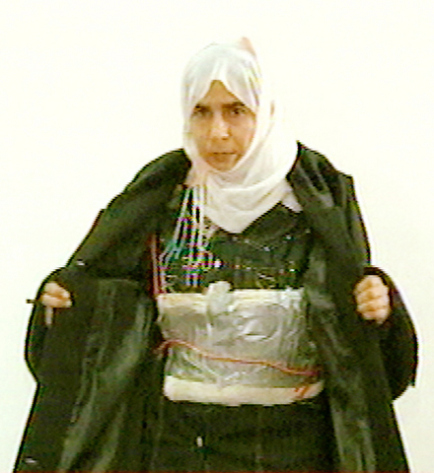
The Jordanian swap raised the same obvious concerns. Many have objected, for good reason, to the idea of releasing Sajida al-Rishawi, who participated with her husband in a terrorist attack on a wedding party at the luxury Radisson hotel in the Jordanian capital of Amman on Nov. 9, 2005. al-Rishawi hoped to be welcomed to paradise by walking into a wedding of 300 people enjoying a family gathering with children and murdering them in cold blood. Her husband’s bomb went off but not her bomb. It goes without saying that she is a hero to the murderous Islamic State for her effort to kill men, women, and children at a wedding.

The swap appears in part the result of pressure from Japan to secure the release of one of its citizens. In my view, such a propose swap was disgraceful. al-Rishawi is as bad as it gets as a terrorist. To yield to terrorists who engage in weekly demonstrations of beheading unarmed captives is morally wrong and practically suicidal. Just as the West is funding this terrorist organization through millions of ransom payments, the exchange of a terrorist only fuels their effort to capture and torture more Western captives.

This brings us back to the White House. When asked about the proposed swap with Islamic State, the White House was aghast. White House spokesman Eric Schultz stated “Our policy is that we don’t pay ransom, that we don’t give concessions to terrorist organizations. This is a longstanding policy that predates this administration and it’s also one that we communicated to our friends and allies across the world.”

The media understandably sought guidance on why the swap with Bergdahl was the right thing to do (despite the flagrant violation of federal law) while the swap for the pilot was not. The White House acknowledged that the Taliban are still on a terrorist list but then tried to rehabilitate the organization into something else. The White House is now referring to the Taliban as an “armed insurgency.” It notes that the Taliban are not listed by the State Department as a terrorist organization. However, they are listed as one of the “specially designated global terrorist” groups by the Department of the Treasury. Indeed, they have been on that list since 2002. Worse yet, the statement from the White House came in the same week that the Taliban claimed responsibility for killing three U.S. contractors.

John Earnest tried to thread the needle by explaining “They do carry out tactics that are akin to terrorism, they do pursue terror attacks in an effort to try to advance their agenda.” He seems to struggle to explain what is terrorist attacks and what are attacks “akin to terrorism.” Most people view suicide belts and civilian massacres to be a bit more than “akin to terrorism.”

Earnest also note that, while the Taliban has links to al Qaeda, they “have principally been focused on Afghanistan.” However, “Al Qaeda is a terrorist organization that has aspirations that extend beyond just the border between Afghanistan and Pakistan.” That is diametrically opposed to the position of the Administration in claiming sweeping powers to strike targets around the world against any forces linked to al Qaeda and many who have few such links. Indeed, while referencing to the authorization to attack al Qaeda, the Administration attacked Islamic State, which was actively fighting with al Qaeda.

The spin of the White Hosue also ignores the role of the Taliban-aligned Haqqani network in holding Bergdahl, a well-known terrorist group.

There are obviously arguments to make for the Bergdahl swap (though I find little compelling in the arguments that justify the violation of federal law by the White House). However, the argument must acknowledge that we negotiated with a group of hostage taking terrorists and we need to address the implications of that fact. Alternatively, if the White House now believes that the Taliban is no longer a terrorist organization, it needs to take it off its listing of such groups (a listing that subjects people to criminal charges for material support or assistance with the group). It cannot have it both ways and call it a terrorist group unless such a label is inconvenient.

ISIS capture of Jordanian pilot puts US and Jordan in conflicting dilemmas, may be pivotal to anti-terror war

December 25, 2014

ISIS capture of Jordanian pilot puts US and Jordan in conflicting dilemmas, may be pivotal to anti-terror war, DEBKAfile, December 25, 2014

F-16_down_Syria_24.12.14A Jordanian air force F-16 downed over Syria

DEBKAfile’s military and intelligence sources add that Middle East military and aviation control centers are quite sure that the Jordanian warplane was hit by an ISIS missile, while making low passes over the terrorist organization’s Syrian headquarters at Raqqa in violation of the pilot’s orders.

*****************

The US military is going to great lengths to deny any evidence that ISIS shot down the Jordanian Air Force F-16 which came down Wednesday, Dec. 24 over the northern Syrian town of Raqaa. First Lieutenant Muath al-Kasaesbeh, aged 27, was the first Arab pilot to be taken prisoner by the Islamic State. The US Central Command statement said: “We can say with certainty that it was an aircraft crash and the plane was not downed by ISIL as was claimed by the terrorist organization.”

This contradicted an earlier statement by the Jordanian Information Minister Mohammad Momani that the plane had crashed after being hit by a ground-air missile. DEBKAfile’s military and intelligence sources add that Middle East military and aviation control centers are quite sure that the Jordanian warplane was hit by an ISIS missile, while making low passes over the terrorist organization’s Syrian headquarters at Raqqa in violation of the pilot’s orders.

The Jordanians are making intense efforts to deter the jihadis from harming 1st Lt. Kasaesbeh.The Hashemite Kingdom’s armed forces warned that “IS and its supporters would be held responsible for the pilot’s safety and his life.”

The pilot belongs to the Bedouin tribe of Bararsha near Kerak in southern Jordan, which boasts several army generals. They and the tribal chiefs are bringing all their influence to bear to obtain his release.

American military is joining the effort to save the Jordanian pilot – from different motives, which are geared more to sustaining the goals and tactics pursued by the US and the coalition in the war on the Islamic State.
Thursday, Central Command chief Gen. Lloyd J. Austin, who is in charge of US and coalition operations in Iraq and Syria, released a long communiqué praising Jordan for its military actions in the battle, adding: “We will not tolerate ISIL’s attempts to misrepresent or exploit this unfortunate aircraft crash for its own purposes.”

The US general’s message was designed to reassure Jordanian Air Force pilots and dissuade them from dropping out of the coalition air campaign for fear of being shot down by an ISIS missile. The three other Arab coalition members, Saudi Arabia, Bahrain and the United Arab Emirates, must also be kept from quitting.

The share of the four Arab air forces in the war is too weighty to forfeit.

ISIS leader Abu Bakr Al Baghdadi has not doubt calculated his stake in keeping the Jordanian pilot alive and at risk to scare fellow Arab pilots from continuing to take part in US-led bombing missions against his forces.

Furthermore, the Bararsha, like other South Jordanian Bedouin tribes, is known around the region for producing fierce fighters and their relentless pursuit of blood revenge.

Al Baghdadi may opt to avoid antagonizing them for this reason, as well as in the hope of a tangible benefit: ISIS is already using the smuggling routes of southern Jordan as channels to the groups his organization has planted in Sinai, Egypt and eastern Libya. He may decide to go one better and build an alliance with those very tribes behind the backs of the Americans and Jordan’s Abdullah II.

Such an eventuality would add a new dimension to the war on the Islamist terrorists.

US-led warplanes cut through to ISIS targets in Syria & Iraq over Israel

December 2, 2014

US-led warplanes cut through to ISIS targets in Syria & Iraq over Israel, DEBKAfile, December 2, 2014

Flights over Israel

All US and European coalition strike and surveillance flights against ISIS forces in Syria and Iraq under Operation Inherent Resolve have been reaching their targets through the skies of Israel and Jordan, US, European and civilian monitors of global air force movements report. The bodies engaged in minute-by-minute observations of the movements of military strike and refueling craft across the world have released detailed images mapping those routes. They reveal that US and European warplanes are refueling at two points over the Mediterranean Sea before entering Israeli airspace.

They are using two corridors (see attached map) which run over central and northern Israel.

In the first, US planes reach high altitudes over an area just north of Tel Aviv and head east to pass over Jordan to reach Iraq. They are focusing of late on striking ISIS-Al Qaeda-occupied sites in the Anbar Province of western Iraq and the Euphrates basin.

The Islamists have taken to hiding newly established bases in the dense river bank vegetation, from where they are almost impossible to detect by military and spy satellites.

The second US air corridor runs over Haifa Bay, then east over the Jezreel Valley and thence to Hama at the southern tip of the Golan, where the Israeli, Jordanian and Syrian borders converge. The next lap takes the assault fleet into eastern Syria to strike ISIS forces at Abu Kemal and Deir A-Zor and other locations on Syria’s eastern border with Iraq.

The US air force turned to the Israeli route to Syria after Jordan’s King Abdullah declined to provide access over his realm to coalition warplanes bent on striking jihadist targets in Syria. He only permitted them to fly over his kingdom to Iraq, with permission from Baghdad.

Neither Washington, Jerusalem nor Amman are willing to confirm or deny that these trajectories are being used for reaching ISIS targets in Syria and Iraq – although several military websites have made such data public with detailed maps.

The US and Israel have opted for reticence out of three considerations:

1. Reluctance to reveal that Israel and Jordan are partners in Operation Inherent Resolve;

2. Equally embarrassing would be the disclosure that the use of their air space was subject to the permission of the Israeli and Jordanian governments;

3. The scale of the operation also needs to be kept under wraps: US air strikes are managed from three commands: US Central Command in Tampa, Florida; its forward command at the US Al Udeid Air Base in Qatar; and NATO Headquarters in Brussels, which coordinates US and European air operations with the Middle East air forces taking part in the mission against ISIS.

DEBKAfile’s military sources note that, notwithstanding the broad scale of the coalition air offensive against ISIS, to which 20 countries are contributing more than 200 aircraft, its achievements are unimpressive to say the least.

Although official communiqués refer to scores of air strikes (55 at the end of last week), less than 10 strikes per day are actually taking place. This is far below the intensity required for re-tilting the military balance against the Islamists.

The only noteworthy gain to come out of this grand offensive is the decision taken by ISIS leader Abu Bakr Al-Baghdad to draw a line against expanding his territorial conquests in Syria and Iraq in order to save his organization from further losses from US and allied air strikes. He has determined to focus now on stabilizing and shoring up his gains. ISIS has thus shifted from a strategy of expansion to one of defense.

Terror finance trial plaintiffs: Arab Bank records show funds were transferred to Hamas

August 15, 2014

Terror finance trial plaintiffs: Arab Bank records show funds were transferred to Hamas

By YONAH JEREMY BOB, FRANK G. RUNYEON 08/15/2014 01:57

One of the lead plaintiffs’ lawyers said evidence would show that the bank required “all employees to donate 5 percent of their salaries” to the second intifada.

via Terror finance trial plaintiffs: Arab Bank records show funds were transferred to Hamas | JPost | Israel News.


Peace flags are reflected on the Arab Bank window during anti-wardemonstration in Rome. Photo: REUTERS
 

Plaintiffs told the jury in the Arab Bank terror financing trial on Thursday that “you will see bank records in black and white that say ‘Hamas’” as proof the bank knew it was being used to fund terrorism.

One of the lead plaintiffs’ lawyers, Mark Werbner said that evidence would show that the bank required “all their employees to donate 5 percent of their salaries” to the second intifada.

The plaintiffs allege that Arab Bank, Jordan’s sovereign bank with branches in 30 countries, facilitated massive transfer of funds to Hamas leaders and institutions, as well as to the families of imprisoned Hamas members and suicide bombers, via Saudi Arabia and Hezbollah’s al-Shahid Foundation.

It is alleged that Arab Bank knew the transfered funds were not solely related to terrorists and terrorist groups, but used in attacks – a charge that the Jordanian institution denies.

Werbner added that the funds that passed through the bank “is the oxygen that feeds these kinds of organizations.”

Tab Turner, another plaintiff’s lawyer, said that the evidence would show “millions, literally millions” of dollars “flowed right down the middle of Madison Avenue.”

Turner also said that the applicable US anti-terrorism financing law on the issue says, “thou shalt not provide financial services to foreign terrorist organizations.”

He accused the bank of serving “as the paymaster” for an alleged terror-funding Saudi Arabia-related committee.

Aside from the accusations, the plaintiffs displayed photographs, bank records, bank letters and internal memoranda to prove their case while opening with a description of a March 28, 2001, terrorist attack connected to the case, and allegedly to the bank.

Werbner said that the bank had not made a mistake but that “it was a choice.”

He added that the bank assisted with terror financing because it was “the ideology of the bank,” which made public statements characterizing Israel as the enemy.

The plaintiffs outlined payments from the bank to 24 suicide bombers’ families, 145 operatives families and 11 living operatives, 92.5% of which were paid in cash.

They mentioned advertisements in newspapers asking for martyrs’ families to come to the bank to collect payment.

Shand Stephens, representing the bank, said, “our hearts go out to the victims,” but that “we’re not here with Hamas as a defendant,” distinguishing the bank as having no knowledge that funds were being wired through it to terrorists.

He added that the plaintiffs unfairly argued that “every neighbor knew every neighbor” and that the bank, which conducts millions of transactions a year, genuinely did not know that terrorists were the recipients of the funds.

Stephens, in trying to humanize the bank, noted that the brother of bank chairman Sabih al-Masri was killed in a terrorist attack – without making a direct link to the case.

Rather than the emotional underpinnings of the case, the defense lawyers highlighted that the technical workings of the bank’s compliance systems checked watch-lists for electronic fund transfers.

The case has massive diplomatic implications.

A critical issue, which brought the US State Department, Justice Department and Treasury Department to loggerheads over what official US policy should be, is an April 2013 sanctions order imposed by a New York federal court which significantly penalized the bank for refusing to disclose key documents that the plaintiffs said they need to prove their case.

The bank had refused to turn over certain documents, saying it could incur criminal sanctions from Jordan and Lebanon for violating bank secrecy laws, but a lower US court rejected this rationale.

Arab Bank maintained its claim that the transfers were made with no knowledge of wrongdoing at the time – despite the terrorism-connected persons the transfers were made to, including Hamas leader Ismail Haniyeh, arch-terrorist commanders (now deceased) Salah Shehada and Ahmed Jabari, and Hamas founder Ibrahim al-Muqadama.

Iraq’s Lessons for the Jordan Valley

June 29, 2014

Iraq’s Lessons for the Jordan ValleyEvelyn Gordon

@EvelynCGordon 06.27.2014 – 12:20 PM

via Iraq’s Lessons for the Jordan Valley « Commentary Magazine.

If Israeli-Palestinian peace talks weren’t already dead, the Iraqi army’s collapse in the face of the radical Sunni group ISIS might well have killed them. After all, one of the key disagreements that emerged during the nine months of talks was over Israel’s military presence in the Jordan Valley, which Israel insisted on retaining and the Palestinians adamantly opposed.

The Obama administration’s proposed solution was to let Israeli troops remain for a few years and then replace them with U.S.-trained Palestinian forces, perhaps bolstered by international troops. But as Israeli officials bluntly told officials in Washington earlier this week, if U.S.-trained Iraqi soldiers weren’t willing to fight ISIS to protect their own country, why should anyone think U.S.-trained Palestinian soldiers in the Jordan Valley would be willing to fight fellow Arabs to protect Israel? And with a well-armed, well-funded jihadist army having taken over large swathes of Syria and Iraq and now even threatening Jordan (ISIS seized the main Iraq-Jordan border crossing just this week), how can anyone confidently assert such fighting won’t be necessary?

U.S. officials responded by setting up a straw man: They passionately defended General John Allen, the man responsible for both security training in Iraq and drafting U.S. security proposals for Israeli-Palestinian talks, as if Israel’s main concern were Allen’s competence. But Allen’s competence is irrelevant. The real issue is that no matter how competent the trainer is, no amount of training can produce a functional army if soldiers lack the will to fight. U.S.-trained Iraqi Sunnis aren’t willing to fight ISIS to protect their Shi’ite-dominated government. U.S.-trained Palestinian Authority forces weren’t willing to fight Hamas to retain control of Gaza in 2007. And international troops have repeatedly proven unwilling to fight to protect anyone else’s country.

This isn’t exactly news. Prior to the 1967 Six-Day War, when Egypt demanded that UN peacekeepers leave Sinai so Egyptian troops could mass on Israel’s border unimpeded, the UN tamely complied. UN peacekeepers stationed in south Lebanon since 1978 have never lifted a finger to stop Hezbollah’s cross-border attacks. Nor is this problem unique to Israel. As the Washington Post reported in January, the UN has sent record numbers of peacekeepers to Africa in recent years, and African regional groups have contributed additional thousands, yet these troops “have failed to prevent fresh spasms of violence.” Indeed, they are frequently ordered explicitly not to fight unless they themselves are attacked–rendering them useless at protecting the people they’re ostensibly there to protect.

But even without such orders, how many soldiers really want to die in a far-off country in a quarrel that isn’t theirs? I can’t blame a Fijian for being unwilling to die to prevent rocket fire from Lebanon on Kiryat Shmona; why should he consider that worth his life? And for the same reason, it’s hard to imagine any non-Israeli force in the Jordan Valley thinking it’s worth their lives to stop, say, ISIS from marching on Tel Aviv. Only Israeli troops would consider that worth fighting and dying for. And that’s without even considering the fact that ISIS already has a Palestinian contingent, so any attempt to attack Israel through the territory of a Palestinian state could count on enthusiastic local support.

As even left-wing Haaretz columnist Ari Shavit admitted this week, it was one thing to propose leaving the Jordan Valley back when the eastern front appeared to pose no threat. But it’s quite another now, when ISIS poses a serious threat.

In a region as volatile as the Middle East is today, the idea that Israel should abandon defensible borders in exchange for “peace” with a state that could collapse as suddenly as Syria and Iraq both have is folly. And anyone who thinks U.S.-trained or international forces can replace defensible borders should take a long, hard look at the Iraqi army’s collapse.