Posted tagged ‘Jihad’

IDF Northern Cdr.: ‘Hezbollah Likely Has Tunnels’

October 29, 2014

IDF Northern Commander: ‘Hezbollah Likely Has Terror Tunnels’After playing down threat, IDF acknowledges likelihood of attack tunnels from Lebanon, warning ‘can’t use Iron Dome there.’

By Ari Yashar

First Publish: 10/29/2014, 2:08 PM

via IDF Northern Cdr.: ‘Hezbollah Likely Has Tunnels’ – Defense/Security – News – Arutz Sheva.


Hezbollah terrorists (file)

Hezbollah terrorists (file)
Reuters

A senior IDF commander on Wednesday acknowledged to Galei Tzahal (IDF Radio) that the Iran-proxy terror group Hezbollah in Lebanon has likely dug terror tunnels into Israel.

IDF Northern Commander Maj. Gen. Yair Golan equivocated by noting on Hamas’s use of terror tunnels, saying “we have no positive information meaning that there are tunnels. The situation is not similar to what there was around the Gaza Strip,” reports Reuters.

“That said, this idea of going below ground is not foreign to Lebanon and is not foreign to Hezbollah and so we have to suppose as a working assumption that there are tunnels. These have to be looked for and prepared for,” revealed Golan.

Golan in August responded to northern citizens, who reported hearing digging sounds under their homes and seeing cement mixers and construction trucks carting out earth on the Lebanese side under the cover of greenhouse structures, by saying the IDF hadn’t found Hezbollah terror tunnels – yet.

While the IDF has been playing down the northern tunnel threat, IDF sources have reported to Arutz Sheva that the army is covertly conducting an investigation of the threat.

The usage of similar attack tunnels by Syrian rebels in their fight against President Bashar Assad in rocky terrain similar to that found along the Israeli-Lebanese border has proven the feasibility of a Hezbollah tunnel attack.

“We won’t be able to use Iron Dome”

Golan warned that with Hezbollah’s rocket arsenal – thought to be ten times more powerful than that of Hamas – and the high elevations and inclinations, “we will not be able to provide the umbrella that was provided in the south by Iron Dome.”

“We and Hezbollah are conducting a kind of mutual-deterrence balance. There is no absolute deterrence. Each side has its pain threshold, its restraint threshold, which when passed prompt it to take action,” assessed Golan.

The statements comes after Hezbollah terrorists wounded two IDF soldiers earlier in the month with explosives set along the border. Security sources warned Israel may be in danger of “losing control” of the Lebanese border, after one IDF source caused a panic last month by warning Hezbollah could hypothetically invade parts of the Galilee for “several hours.”

While Israel this month asked the UN to demand the disarmament of Hezbollah following the explosive attack, instead, a UN envoy met with Hezbollah’s deputy leader.

American and Arab officials likewise revealed this week that US President Barack Obama’s administration has been cozying up to Hezbollah, along with Iran and Hamas, by providing intelligence information and using backdoor communication channels.

Israel’s Security and Unintended Consequences

October 23, 2014

Israel’s Security and Unintended Consequences, Gatestone InstituteRichard Kemp, October 26, 2014

(Please see also Terror attack by vehicle in Jerusalem – 3-month old baby killed — DM)

Would General Allen — or any other general today — recommend contracting out his country’s defenses if it were his country at stake? Of course not.

The Iranian regime remains dedicated to undermining and ultimately destroying the State of Israel. The Islamic State also has Israel in its sights and would certainly use the West Bank as a point from which to attack, if it were open to them.

There can be no two-state solution and no sovereign Palestinian Arab state west of the Jordan, however desirable those things might be. The stark military reality is that Israel cannot withdraw its forces from the West Bank.

Fatah leaders ally themselves with the terrorists of Hamas, and, like Hamas, they continue to reject the every existence of the State of Israel.

If Western leaders actually want to help, they should use all diplomatic and economic means to make it clear to the Palestinians that they will never achieve an independent and sovereign state while they remain set on the destruction of the State of Israel.

When in 1942 American General Douglas MacArthur took command of the defense of Australia against imminent Japanese invasion, one of the plans he rejected was to withdraw and fight behind the Brisbane line, a move that would have given large swathes of territory to the Japanese.

Instead, he adopted a policy of forward defense: advancing northwards out of Australia to attack the Japanese on the island of New Guinea. MacArthur then went on to play a pivotal role in the defeat of the Japanese empire.

At the end of last year, during the Israeli-Palestinian negotiations involving U.S. Secretary of State John Kerry, another extremely able and widely respected American General, John Allen, drew up a plan progressively to withdraw Israeli forces from the West Bank and hand over Israel’s forward defense to a combination of Palestinian Arab forces, international monitors and technology.

Given the range of existential threats emanating from, or through, the West Bank today, known and unknown threats that will develop tomorrow, and the exceptional geographical vulnerability of the State of Israel, such a proposal is blatantly untenable. No other country would take risks with the lives of its people and the integrity of its territory by contracting out their defenses in this way — nor should it.

753General Douglas MacArthur (left) strongly believed in forward defense. General John Allen (right) also believes in forward defense — but for U.S. forces only, not for the Israel’s military defending its borders.

Britain, for example, where no such existential threats exist, even refuses to adopt the EU’s Schengen arrangements, which would hand over the security of UK borders to Poland, Slovakia, Hungary, Spain, Italy and its other European neighbors. It is a long-standing opt-out that looks wiser by the day as international jihadist aggression against the West increases.

General MacArthur would never have recommended the “Allen Plan.” MacArthur, however, was not then under the same political pressure as General Allen. If he had been, he would have repulsed it. In 1934, as Army Chief of Staff, he argued against President Franklin D. Roosevelt’s intention to cut drastically the Army’s budget with such vehemence that he vomited on the steps of the White House as he was leaving.

Would General Allen – or any other general today – recommend a similar plan to his own president, if it were not Israel’s security, but the security of the United States, that was at stake? Of course he would not.

Indeed, U.S. generals unsuccessfully argued the opposite course of action when U.S. President Barack Obama decided on a total withdrawal of US forces from Iraq in 2011, a move that made inevitable the resurgence of large-scale violent jihad.

General Allen is now leading the American and allied forward defensive operations against the Islamic State in Syria and Iraq [ISIS]. In the face of what he has defined as a “clear and present danger to the US,” he is not recommending withdrawal of American forces back into the continental United States and reliance on Arab forces, peacekeepers and technology to protect U.S. interests. The reverse, in fact, is true.

The reverse is also true for the forward defensive operations of the U.S. and its Western allies against violent jihad in Yemen, Pakistan, Afghanistan, Mali, Somalia and elsewhere. All are significant threats to the West, yet none is as immediate and dangerous as the threat to Israel from an undefended West Bank.

Despite the determination of so many in the West erroneously to view the Israel-Palestine conflict as a mere territorial dispute that could be settled if only the so-called “occupation” ended, the forward defensive measures necessary for other Western nations are necessary for Israel as well. The stark military reality is that Israel cannot withdraw its forces from the West Bank — either now or at any point in the foreseeable future.

For those willing to see with clarity and speak with honesty, that conclusion has been obvious for many years. It is even more obvious, perhaps, for leaders with direct responsibility — such as General MacArthur had in Australia in 1942 — than for those who do not have to live with the consequences of their actions — such as General Allen in Israel in 2013.

Recent events have made this reality even more certain. Through incessant rocket fire and the construction of a sophisticated tunnel system to abduct and massacre Israeli civilians on a large scale, Hamas has just delivered another powerful object lesson in the consequences of IDF withdrawal.

Fatah leaders may take a somewhat different stance for international consumption, but they ally themselves with the proscribed terrorists of Hamas. And, like Hamas, in reality they continue to reject the very existence of the State of Israel. They apparently continue to want only a one-state solution: Arab rule from the river to the sea, with the ethnic cleansing of the Jews that would follow.

They are consistently encouraged in this intent, both wittingly and unwittingly, by Western nations, particularly in Europe. Not least by Sweden’s commitment in September to support a unilateral Palestinian state, the UK Parliament’s recent vote for the same thing, and similar moves across Europe that are likely in the coming weeks and months.

Especially with such encouragement, there is no possibility that Palestinian Arab political leaders’ rejection of the Jewish State will modify in the foreseeable future. The launch pad that an IDF-free West Bank would provide for attacks against Israel is so dangerous it makes even Gaza look about as threatening as Switzerland.

The external threats are at least as serious as those from within the West Bank. Despite the wishful thinking of many Western leaders and the alluring grins from Tehran, the Iranian regime remains dedicated to undermining and ultimately destroying the State of Israel. By funding and fomenting violence, Iran’s leadership will continue to exploit the Palestinian Arab populations in both Gaza and the West Bank to these ends.

Those who are currently arguing for Israeli military withdrawal from the West Bank and the establishment of a sovereign state must have missed the war General Allen is fighting against the Islamic State [IS] and their jihadist bedfellows across the border in Syria. The Islamic State also has Israel in its sights and would certainly use the West Bank as a point from which to attack, if it were open to them. In the hands of international monitors and Palestinian Arab forces, the West Bank would be wide open to them.

We have only to look at the reaction to aggression of almost all international peacekeepers over the decades to know they would not last five minutes. And we have only to look at the performance of the battle-hardened Syrian and Iraqi armies when confronted by Islamic State fighters to know how long Palestinian Arab forces would withstand such aggression, whether by infiltration or frontal assault.

Whatever happens to the Islamic State in the future, this resurgent Islamist belligerence is not a flash in the pan. On the contrary, it has been building for decades, and President Obama, UK Prime Minister David Cameron and other world leaders acknowledge it as a generational struggle.

This means that for Israel, as far as the West Bank is concerned, both the enemy within and the enemy without are here to stay. And if the IDF has no choice but to remain in the West Bank to defend Israel, there can be no two state solution and no sovereign Palestinian Arab state west of the Jordan, however desirable those things might be.

Nor can there be a one-state solution with democratic rights for all because that would spell the end of the one and only democratic and Jewish state and the beginning of a new autocracy and the next exodus of the Jews.

For those who do not want that to happen, the harsh reality is continuation of the status quo. But the status quo can be significantly improved, by gradual and progressive increases to PA autonomy in the West Bank, to the point where a state exists in virtually all aspects other than military security. That progress can only be achieved through low-key bilateral negotiations with concessions from both sides. It cannot be achieved by Kerry-like peace processes that demand big sweeping strokes to deliver groundbreaking, legacy-delivering announcements.

Nor can such progress be achieved in the face of a Western world that reflexively condemns every move Israel makes and encourages the Palestinian Arabs to believe that the fantasy of a two-state solution or a one-state solution on their terms can become a reality in the foreseeable future.

As so often in the paradoxical world of geopolitics, the well-meaning actions and words of national leaders and international organizations have unintended consequences. For the Israel-Palestine situation, the unintended consequences of Western actions are to deprive Palestinian Arabs of increased freedom and prosperity and to undermine the security of the only stable, liberal democratic state in the Middle East. If the West actually wants to help, its leaders need to face up to this unpalatable truth rather than continue to delude the Palestinian people as well as themselves.

Instead, Western leaders should use all available diplomatic and economic means to make it clear to the Palestinians that they will never achieve an independent and sovereign state while they remain set on the destruction of the State of Israel and while they continue to brainwash future generations to believe in that goal.

PA official warns of consequences if US vetoes UN bid

October 22, 2014

PA official warns of consequences if US vetoes UN bid

Saeb Erekat says ‘occupied Palestinian state’ will dismantle PA and revert to PLO, join hundreds of international bodies

By Stuart Winer and Avi Issacharoff

October 22, 2014, 4:51 pm

via PA official warns of consequences if US vetoes UN bid | The Times of Israel.


Saeb Erekat, chief Palestinian negotiator (photo credit: Issam Rimawi/Flash90/File)

Top Palestinian Authority official Saeb Erekat has threatened that if the US vetoed the PA’s bid to gain a United Nations-backed timetable for an Israeli withdrawal from the West Bank, they would apply for membership in hundreds of international bodies as citizens of an occupied state in its own right.

Erekat wrote in a position paper released Tuesday that the Palestinians would seek to join some 522 organizations, protocols, and treaties, a move aimed at gaining further recognition for a Palestinian state.

PA President Mahmoud Abbas, as the leader of “the occupied Palestinian state,” would then demand that Israel fulfill all its obligations as an occupying power, Erekat added, hinting that the PA itself would cease to function as an administrative body, leaving Israel to pick up the slack.

Erekat predicted that as a result, the Palestine Liberation Organization would remain the sole legitimate representative of the Palestinian people.

“The occupied state of Palestine will continue to be a member of various international and regional organizations,” he noted.

Elections would also be held for the Palestinian presidency and National Council but during the interim period the PLO would effectively seize power.

“Before the elections there will be elections for the PLO’s executive committee with the participation of Hamas and Islamic Jihad, and the executive committee will become the temporary government for the occupied Palestinian state and the National Council will be considered the parliament of the Palestinian people,” he said.

Since the collapse of US-led peace talks with Israel in April, the Palestinians have been pursuing a new diplomatic path to independence through the United Nations and other international organizations and treaties.

The Palestinians won the status of nonmember observer state in the UN in 2012.

Israel has voiced vehement opposition to the Palestinian Authority’s bid to seek international recognition independently of peace talks, with Prime Minister Benjamin Netanyahu warning this week that unilateral moves would “bring about a further deterioration in the situation – something none of us want.”

On Tuesday UN Secretary-General Ban Ki-moon also warned Israel and the Palestinians against taking unilateral steps. Ban challenged the leaders to rise to the occasion and display the “courage and vision” needed to overcome their differences and negotiate a comprehensive peace agreement that leads to the establishment of a viable and independent Palestinian state.

Palestinian statehood was given a boost this month after both Sweden and Britain made symbolic moves toward recognizing the state.

During his inaugural speech on October 3 Swedish Prime Minister Stefan Lofven said that his country would recognize the Palestinian state, although no formal date for the move has been set. Two weeks later the British parliament held a symbolic vote in favor of recognizing Palestine.

Ministers wallop Kerry for linking stalled peace talks to rise of Islamic State

October 17, 2014

Ministers wallop Kerry for linking stalled peace talks to rise of Islamic State

Naftali Bennett says ‘someone will always blame the Jew’;

Gilad Erdan accuses US secretary of state of not understanding region

By Joshua Davidovich October 17, 2014, 2:44 pm

via Ministers wallop Kerry for linking stalled peace talks to rise of Islamic State | The Times of Israel.


Head of the Jewish Home party, Naftali Bennett, smiles during a party conference on September 10 (photo credit: Flash90)

Head of the Jewish Home party, Naftali Bennett, smiles during a party conference on September 10 (photo credit: Flash90)

S Secretary of State John Kerry came under fire from right-wing Israeli politicians Friday after saying that the Israeli Palestinian conflict was fueling the spread of Islamic terror in the Middle East.

Economy Minister Naftali Bennett indicated that Kerry was using an anti-Semitic canard and Communications Minister Gilad Erdan accused the top US diplomat of showing an unprecedented lack of understanding of the Middle East.

Speaking at an event marking the Muslim holiday of Eid al-Adha at the State Department Thursday, Kerry said it was “imperative” to restart stalled Israeli-Palestinian talks, since the conflict was helping the Islamic State recruit new members.

“There wasn’t a leader I met with in the region who didn’t raise with me spontaneously the need to try to get peace between Israel and the Palestinians, because it was a cause of recruitment and of street anger and agitation that they felt –- and I see a lot of heads nodding –- they had to respond to,” he told gathered diplomats.

“People need to understand the connection of that. And it has something to do with humiliation and denial and absence of dignity,” he added.

Writing on Facebook, Bennett, who heads the nationalist Jewish Home party, a major coalition member, linked to an article about Kerry’s remarks, commenting in Hebrew that “Even when a British Muslim beheads a British Christian, someone will always blame the Jew.”


Gilad Erdan on July 8, 2013. (photo credit: Flash 90)

Gilad Erdan on July 8, 2013. (photo credit: Flash 90)


Likud minister Erdan, thought to be Prime Minister Benjamin Netanyahu’s pick to become Interior Minister, also blasted Kerry on Facebook, asking sarcastically whether anybody truly believes Islamic State fighters would put down their arms if Israeli-Palestinian talks were restarted.

“I actually respect Kerry and his efforts, but every time he breaks new records of showing a lack of understanding of our region and the essence of the conflict in the Middle East I have trouble respecting what he says,” he wrote in Hebrew.

Jewish Home MK Ayelet Shaked also expressed dismay over the statement.

This is not the first time Kerry has been criticized by members of Israel’s ruling coalition.

In January, Defense Minister Moshe Ya’alon was quoted calling Kerry “inexplicably obsessive” and “messianic” in his efforts to coax the two sides into a peace agreement. Ya’alon said Kerry has “nothing to teach me about the conflict with the Palestinians.

“All that can ‘save us’ is for John Kerry to win a Nobel Prize and leave us in peace,” Israeli daily Yedioth Ahronoth quoted him saying at the time.


John Kerry, right, meeting with Moshe Ya'alon in Jerusalem in May, 2013. (photo credit: US State Department)


Those comments sparked a mini diplomatic crisis between Jerusalem and Washington, with the State Department calling the comments “offensive and inappropriate” and Ya’alon issuing an apology.

Relations between Washington and Jerusalem, which counts the US as its most important ally, have hit regular road bumps over the last several years and the administrations have aired differences over peace talks, settlement building, Iran’s nuclear program and other issues.

PLO Thumbs Nose at US, Will Introduce Resolution to ‘End Occupation’

October 17, 2014

PLO ignores US threat of aid cut and within weeks will introduce resolution to ‘end occupation’ in UN Security Council

By: Lori Lowenthal Marcus

Published: October 17th, 2014

via The Jewish Press » » PLO Thumbs Nose at US, Will Introduce Resolution to ‘End Occupation’.


UN Security Council
UN Security Council
Photo Credit: Wikimedia


Despite repeated requests by the U.S. administration to refrain from doing so, the PLO will go forward this month with its threatened introduction of a resolution into the UN Security Council. The resolution will demand the “end of Israeli occupation.”

A draft of the resolution obtained by AFP calls for the “full withdrawal of Israel, the occupying power, from all of the Palestinian territory occupied since 1967, including East Jerusalem, as rapidly as possible and to be fully completed within a specified timeframe, not to exceed November 2016.”

PLO Secretary General Yasser Abed Rabbo said that despite intense pressure, his organization decided Wednesday, Oct. 15, to push ahead with the UN initiative.

“The political council of the PLO decided during its meeting last night… to go to the UN Security Council with the aim of getting a resolution passed to end the Israeli occupation in the Palestinian territories… by the end of this month,” Abed Rabbo said at a news conference in Ramallah, according to the Maan Palestinian Arab news site.

The U.S. is fully expected to veto the resolution, but it is worth watching to see if the U.S. will follow through on its threats to cut U.S. aid to the Palestinian Arabs. The U.S. just announced an additional $212 million in aid for Gaza.

Abbas Denies Clairvoyance but Promises No Gaza Violence for 2 Years

October 17, 2014

Abbas promises donors the impossible, as the donors smile and continue pouring in the aid money.

By: Lori Lowenthal Marcus

Published: October 17th, 2014

via The Jewish Press » » Abbas Denies Clairvoyance but Promises No Gaza Violence for 2 Years.


Acting leader of the PA Mahmoud "I'm no psychic" Abbas.
Acting leader of the PA Mahmoud “I’m no psychic” Abbas.
Photo Credit: Issam Rimawi/Flash90


Despite humbly admitting to U.S. Secretary of State John Kerry that he is “not a psychic,” acting Palestinian Authority leader Mahmoud Abbas told the U.S. diplomat that “during this year and next year there won’t be any type of clashes.”

Abbas gave this astonishing reassurance to Kerry who, along with representatives of other donor nations, had expressed concerns about the ceasefire which ended this summer’s 50 day conflict between the Hamas-led Gaza Strip and Israel.

The concerns were raised in the context of donor aid pledged to rebuild areas of Gaza which suffered serious damage during the conflict.

The pledge made by Abbas was intended to assure the donors that their money would not simply go up in smoke during the next round of fighting triggered by Hamas rockets and terror tunnels into Israel.

“We told them we are responsible for the ceasefire,” Abbas told Arab businessmen at his headquarters in Ramallah, according to the Palestinian Arab Maan news site.

Really? The PA hasn’t even been capable of stopping Gazan violence against PA members, how will they stop Hamas from committing violence towards Israel?

Not only is Abbas promising to stop all violence towards Israel, he’s also promising his careful oversight regarding how and where the billions of dollars of aid money is spent.

“We informed the whole world that the government will take charge of the issue of aid and no one else,” Abbas added, “and it will send them to the correct addresses.”

Next we can expect Abbas to assure the donors that the money spent will be put in the ground and grow new money, which will be tended by tiny green men with radar antennas instead of ears. The donor nations, including the U.S., will dutifully report this back to their nations’ leaders in the hopes of persuading them to provide even more aid money.

Never mind that the Palestinian Authority is even less trustworthy than Hamas when it comes to honesty and financial integrity.

Iran Arms Palestinians for New War with Israel

October 17, 2014

Iran Arms Palestinians for New War with Israel

Ayatollah: ‘Fighting the Zionist regime is a war of destiny

Ali KhameneiAli Khamenei / APBY: Adam Kredo Follow @Kredo0October 16, 2014 4:25 pm

via Iran Arms Palestinians for New War with Israel | Washington Free Beacon.


Ali Khamenei / AP

Iranian Supreme Leader Ayatollah Ali Khamenei promised increased support for Palestinian terrorists and urged them to stockpile arms in anticipation of a new war on Israel, according to public comments made Thursday following his meeting with members of the Palestinian Islamic Jihad (PIJ) terror group.

“Fighting the Zionist regime [Israel] is a war of destiny,” Khamenei said after a meeting with PIJ’s secretary general, according to Iran’s semi-official Fars News Agency.

Khamenei instructed Palestinians to “intensify their fight against the Israeli regime” and vowed that Iran would continue to arm Palestinian terrorists in both the Gaza Strip and West Bank, according to Fars.

All Palestinian terrorists groups—with Iran’s support—should rearm and prepare for another war with Israel, Khamenei said.

“The resistance movements in Palestine should boost their preparedness day by day and reinforce their power resources inside Gaza,” Khamenei was quoted as saying Thursday, less than two months after Israel launched an intense several week war against Hamas militants in the Gaza Strip.

Khamenei maintained that the most recent war with Israel, in which thousands of terror rockets were dropped on the Jewish people, marked the start of the “divine promise” of destroying the Jewish state.

The supreme leader also discussed the importance of arming terrorists in the West Bank, which is controlled by the more moderate Fatah Party.

Iran said in late August, days after the last war officially ended, that Tehran had stepped up arm shipments to the West Bank.

“The enemy should feel the same worries in the West Bank as it does in Gaza,” Khamenei said on Thursday, adding that Tehran will continue its support for the Palestinian “resistance.”

“The Islamic Republic and the Iranian people are proud of your victory and resistance, and hope that the back-to-back triumphs of resistance groups will continue until final victory,” he was quoted as saying.

PIJ Secretary General Ramazan Abdullah thanked Khamenei for Iran’s ongoing support for terrorism against Israel.

“Definitely, the victory was achieved with the assistance of the Islamic Republic,” Abdullah was quoted as saying by Fars following his meeting with Khamenei in Tehran. “Without Iran’s strategic and efficient help, resistance and victory in Gaza would have been impossible.”

Iran’s “arming” of the Palestinian factions in the West Bank has been “strategic and effective,” according to Abdullah, who also noted that Tehran’s support has “re-energized the Palestinian fighters and raised their spirit,” according to Fars.

Additionally, Iran on Thursday sent a plane of what it claimed is humanitarian aid and food to the Palestinians. The aid was said to be delivered via Egypt, according to Fars.

“The society has dispatched aid packages, including tents, blankets, food, and medical products worth $890,000 to Gaza,” the Iranian Red Crescent announced on Thursday.

As the Obama administration contemplates extending nuclear talks with Iran through the November deadline, sources on Capitol Hill are warning that there is no way to stem Iran’s support for terrorism.

The potential extension of talks through November, which already marked the second deadline for progress in the negotiations, has experts and lawmakers worried that the Obama administration will concede to Tehran’s demands that it be permitted to enrich uranium.

“With the Obama administration poised to extend nuclear talks with Tehran once again, it’s business as usual for the Iranian regime, which continues to brazenly fund and incite terrorism across the Middle East,” said one senior congressional aide who works on foreign policy issues. “Almost a year of negotiations has only served to boost Iran’s economy, embolden its leaders, and buy Iran more time to continue its quest for nuclear weapons.

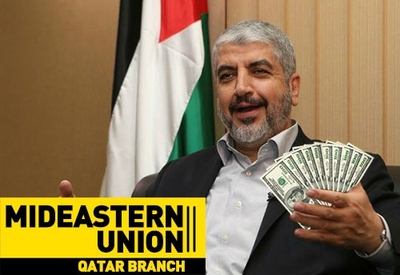
Guest Column: The Road from Qatar to the Gaza Strip

October 16, 2014

Guest Column: The Road from Qatar to the Gaza Strip, The Investigative Project on Terrorism, Reuven Berko, October 15, 2014

1073

Throughout its history, Hamas, like ISIS, has been committed to the concept of the global caliphate, which it plans to help construct by creating its own Islamic emirate on the ruins of the State of Israel.

****************

In a recent speech, Israeli Ambassador to the United Nations Ron Prosor mentioned the central role of Qatar in supporting international terrorist organizations. Money flowing from Qatar to Hamas, for example, paid for the terrorist attack tunnels dug from the Gaza Strip under the security fence into Israeli territory, and for the thousands of rockets fired at Israeli civilian targets in both the distant and recent past. In response, State Department spokesperson Marie Harf rushed to Qatar’s defense, claiming it had an important, positive role in finding a solution for the Israeli-Palestinian conflict.

Qatar’s funding for Islamist terrorist organizations all over the world is an open secret known to every global intelligence agency, including the CIA. It was exposed by Wikileaks, which clearly showed that funds from Qatar were transferred to al-Qaida. Qatar also funds the terrorist movements opposing the Assad regime in Syria, such as the Al-Nusra Front, encourages anti-Egyptian terrorism in the Sinai Peninsula and within Egypt itself, and is involved in Islamic terrorism in Africa and other locations. It accompanies its involvement in terrorism targeting Israel and Egypt (through the Muslim Brotherhood) with vicious and inflammatory propaganda on its Al-Jazeera TV channel.

Qatar also spends millions of dollars supporting the Islamic Movement in Israel, a branch of the Muslim Brotherhood headed by Sheikh Ra’ed Salah. The Islamic Movement is responsible for ongoing acts of provocation on the Temple Mount and in Judea and Samaria, and incites the entire Islamic world against Israel, claiming that the Jews are trying to destroy the Al-Aqsa mosque and replace it with the Jewish Temple. The incitement continued even as the Islamic Movement’s sister movement, Hamas, fired rockets at Jerusalem and endangered both the mosques on the Temple Mount and Jerusalem’s sites sacred to Judaism, Christianity and Islam.

As Qatar’s representative, the Islamic Movement, which has not yet been outlawed in Israel, contributed to Hamas what it could during Operation Protective Edge by instigating riots, blocking roads and seeking to foment a third intifada which, according to the plan, would be joined by Israeli Arabs to augment the deaths of thousands of Israelis killed by rockets and the mass murders through the attack tunnels planned for the eve of the Jewish New Year.

In his recent UN speech, Israeli Prime Minister Benjamin Netanyahu rebutted Palestinian Authority President Mahmoud Abbas’ accusations of Israeli “genocide” of the Palestinian people. He reminded his audience of Hamas’ use of Gazan civilians as human shields and of the rockets fired to attack specifically civilian Israeli targets. Unfortunately, he did not mention the Hamas charter, which calls for the murder of all the Jews. The fact that Abbas now heads a national consensus government in which Hamas is a full partner commits him to the slaughter of the Jewish people – a true genocide – and it is to the disgrace of the international community that such an individual was permitted to address the UN instead of being tried for war crimes.

In fact, the similarities between Hamas and ISIS are clearly stated in the Hamas charter, which defines Hamas as part of the Muslim Brotherhood’s global Islamic movement. One of its objectives is to fight “infidel Christian imperialism” and its Zionist emissaries in Israel in order to impose the Sharia, Islamic religious law, on the world. According to the charter’s paragraph 7, Hamas’ intention is to slaughter every Jew, as ordered by Muhammad and those who accept his legacy. That is the basis for the threat issued by ISIS “Caliph,” Abu Bakr al-Baghdadi, that under his leadership, Islam will “drown America in blood.”

Throughout its history, Hamas, like ISIS, has been committed to the concept of the global caliphate, which it plans to help construct by creating its own Islamic emirate on the ruins of the State of Israel. Since its founding, Hamas has attacked Israel and murdered thousands of its citizens exactly as ISIS has attacked and murdered “infidels.” They share the same slogans, with “There is no god but Allah” and “Allah, Prophet Muhammad” inscribed on their flags and headbands. Hamas terrorists have blown themselves up in Israel’s coffee shops, hotels, restaurants, buses, malls and markets, wherever there are large concentrations of civilians. The way Hamas executed suspected collaborators during the final days of Operation Protective Edge bore the hallmarks of the al-Qaida execution of Daniel Pearl and the ISIS beheading of James Foley and others.

In the decades during which Hamas has carried out a continual series of deadly terrorist attacks against Israel, wearing the same “Allah, Prophet, Muhammad” headbands as ISIS terrorists, the international community rarely voices its support for Israel, or takes into account that by defending itself Israel also defends the West, which has failed to understand that “political Islam” inspired by the Muslim Brotherhood was setting up shop in the free world’s backyard and that the ticking bomb was set to go off sooner than expected. The West has not clearly condemned Qatar for openly supporting Hamas and its terrorist activities against Israel or demanded that it stop.

While Israel responded to Hamas’ rocket attacks on civilian targets to keep thousands, if not tens of thousands, of Israeli civilians from being killed, the international community demanded “proportionality.” That requirement kept Israel from responding as it should have and encouraged Hamas to fire ever more rockets at “military targets” such as Tel Aviv and Jerusalem. When Israel built its security fence to keep Hamas suicide bombers from infiltrating into Israeli territory to blow themselves up in crowds of civilians, the international community opposed it, rushed to embrace the Palestinians’ vocabulary of “racism” and “apartheid,” and willingly played into the hands of Hamas and Abbas. This reaction occurred although Israel is the only truly democratic country in the Middle East, where Jews and Arabs can live in peace without “apartheid.”

Today President Obama says he “underestimated” the threat posed by ISIS, while Israel has been warning the world of extremist military Islam for at least a decade, as Netanyahu warned the world of a nuclear Iran in his UN speech.

The international community has been curiously silent about the genuine apartheid in the Arab states neighboring Israel. There, descendants of the original 1948 Palestinian refugees, by now in their fourth generation, still live in refugee camps, do not have citizenship, and are excluded from jobs and social benefits. Israel, however, absorbed hundreds of thousands of Jewish refugees, many of them destitute, who fled Europe and were expelled from the Arab countries when the state was founded, and were given citizenship and enjoy full rights, as do the Arabs who remained in Israel after the War of Independence.

Israel, which has nothing against the Palestinian people, would like to see the Gaza Strip rebuilt for both humanitarian reasons and to give Hamas something to lose. Radical Islamic elements around the globe, however, including Hamas, ISIS, al-Qaida, the Al-Nusra Front and Hizballah, all financed by Qatar, do not want to see the Israeli-Palestinian conflict resolved. They all have the same global agenda, based on fueling the conflict to unite Islam around it, under their leadership.

Therefore, Qatar continues to support global Islamic terrorism. On Sept. 13, Qatar paid the Al-Nusra Front a ransom of $20 million to free abducted UN soldiers from Fiji. The world praised Qatar for its philanthropy, but in effect, it was a brilliant act of manipulation and fraud, both filling the Al-Nusra Front’s coffers and representing itself as the Fijians’ savior. Qatar is using the same underhanded trick in the Gaza Strip. After sending Hamas millions of dollars to fund its anti-Israeli terrorist industry, itpledged $1 billion to help rebuild the Gaza Strip during last weekend’s conference in Cairo.

While the world hopes Operation Protective Edge was the last round of Palestinian-Israeli violence, senior Hamas figures reiterate their position of gearing up to fight Israel again. Not one Hamas leader is willing to agree to a full merger with the Palestinian Authority to establish a genuine unified Palestinian leadership. Hamas rejects even the idea of disarming or demilitarization as part of an agreement to rebuild the Gaza Strip and promote the peace process. Unfortunately, no one has suggested it as a pre- condition for any U.S. dollars that will be contributed to the reconstruction of Gaza.

All that is left now is to hope that the billions of dollars poured into the Gaza Strip for its rebuilding will be accompanied by the disarmament of Hamas and the establishment of an honest mechanism for overseeing the money and materials Egypt and Israel allow into the Gaza Strip. It is imperative that they not be diverted to rebuild Hamas’ terrorist infrastructure and tunnels, or to bribe UNRWA officials to look the other way, as has happened so often in the past. There is every indication that only Hamas and Qatar know whether there is anything to justify that hope.

Dr. Reuven Berko has a Ph.D. in Middle East studies, is a commentator on Israeli Arabic TV programs, writes for the Israeli daily newspaper Israel Hayom and is considered one of Israel’s top experts on Arab affairs.

Iranian Speaker: Stop focusing on ‘trivial matters’ like centrifuges

October 15, 2014

Iranian Speaker: Stop focusing on ‘trivial matters’ like centrifuges

US rejects Tehran, Moscow’s suggestion to extend deadline for nuclear talks; ‘There is still time to get this done, if everybody can make the decisions they need to,’ says State Department official.

ReutersLatest Update: 10.15.14, 14:09 / Israel News

via Iranian Speaker: Stop focusing on ‘trivial matters’ like centrifuges – Israel News, Ynetnews.

US nuclear negotiators should stop focusing on Iran’s number of centrifuges and should push for a deal, which could help build confidence between Iran and the coalition of countries fighting against Islamic State militants, a senior Iranian politician said on Wednesday.

“This is something like a trivial matter and we should not bargain over trivial matters,” Iran’s Parliament Speaker Ali Larijani, formerly Iran’s top nuclear negotiator, told a news conference in Geneva. “This is not going to be useful, this is not going to solve any real problems.”

The confidence-building Larijani said, could also help in efforts to combat the Islamic State. And while there is no natural, direct link between discussions over Iran’s nuclear infrastructure and the struggle against Islamic State fighters, Larijani said, that the discussions “can be linked because there is confidence to be built here.”

‘Deal can still be reached by deadline’

A US State Department official said Wednesday world powers and Iran were not discussing extending the November 24 deadline for reaching an accord over Tehran’s nuclear program, adding there was still time to strike a deal.

However, the State Department official said there were still some significant gaps in negotiating positions on Iran’s uranium enrichment program: “We don’t know if we’ll be able to get to an agreement, we very well may not.”

The official spoke ahead of a meeting on Wednesday between US Secretary of State John Kerry, Iranian Foreign Minister Mohammad Javad Zarif and European Union foreign policy chief Catherine Ashton in Vienna.

Kerry, Ashton and Zarif in nuclear talks (Photo: Reuters)

“We’re not talking about extension or anything like that in the room. We’re talking about getting this done by the 24th (of November),” the US official said.

Iran and the six major powers – the United States, France, Germany, China, Russia and Britain – aim to end a decade-old dispute over Tehran’s nuclear program by a self-imposed November 24 deadline. The talks are centred on curbing Iran’s atomic activities in exchange for a lifting of sanctions hurting its economy.

One of Iran’s chief negotiators, Deputy Foreign Minister Abbas Araqchi, last week raised the possibility that the talks could be extended, and Russian Foreign Minister Sergei Lavrov on Tuesday said the deadline date was not “sacred”.

“I’m sure that a compromise is possible,” said Lavrov, during a visit to Paris where he met US Secretary of State John Kerry on Tuesday.

“I can’t guarantee you that it would be reached by November 24. This date is not sacred,” he told Russian television. “We are striving to reach a result before this date, but I’m sure that the main thing is not artificial schedules but the essence of the agreements. That is the main thing for us.”

But the State Department official said: “There is still time to get this done. There’s enough time to get the technical work done, to get the political agreement … if everybody can make the decisions they need to.”

“We keep chipping away … In places gaps have narrowed, but the Iranians have some fundamental decisions to make.”

Kerry said in Paris on Tuesday he did not believe that reaching a lasting accord within six weeks was out of reach, although he noted that many issues remained to be resolved.

Iran rejects Western allegations that it is seeking nuclear weapons capability, but has refused to halt uranium enrichment, and has been hit with US, EU and UN Security Council sanctions as a result.

Iranian Foreign Minister Mohammad Javad Zarif said the sides “might need more time” to discuss the issues and potential solutions, Iran’s ISNA news agency reported on Wednesday.

“We are reviewing all the possible solutions to end the disputes. The fact that there are eye-catching disputes, does not mean they cannot be resolved,” it quoted Zarif as saying after meeting Ashton in Vienna on Tuesday, where they will hold talks with Kerry on Wednesday.

“We have not reached a common conclusion yet, but I think it can be reached if there is a political will,” he added.

The danger of Obama’s strategy of linking Iran and ISIS for Israel.

October 15, 2014

The danger of Obama’s strategy of linking Iran and ISIS for Israel.AuthorBy Barry Shaw October 14, 2014

via The danger of Obama’s strategy of linking Iran and ISIS for Israel..


The danger of Obama's strategy of linking Iran and ISIS for Israel

In fifty days of Gaza conflict, Israel launched 5500 precision air strikes against terror targets. In 70+ days the US launched less than 400 strikes in Iraq and Syria against ISIS. Why?

It’s not lack of planes and fire power. It’s a lack of political will, despite all the rhetoric of having to degrade and defeat the Islamic State rampage and mayhem.

Despite Obama’s late decision to launch air strikes he has only tickled the enemy. He could do more. He won’t. He doesn’t want to. What is the reason for this procrastination?

Part of the reason for Obama’s reticence in attacking ISIS with more force seems to be contained in a think tank policy document he commissioned entitled

The Iran Project. Iran and its Neighbors. Regional Implications for US Policy of a Nuclear Agreement.”

Experts who signed off on this document include Thomas Pickering, Brent Scowcroft, Daniel Kurtzer, Nicholas Platt, and Zbigniew Brzezinski.

The document mistakenly sees the possibility of using ISIS to drive Iran and Israel closer together in a common cause. This misguided strategic fantasy is described thus, “If ISIS were to continue to progress, Israel and Iran might find themselves with a common enemy.”

The dream of bringing Iran and Israel together seems so devoutly to be wished by the Obama Administration that it surmounts any political reality to facts on the ground.

Could this be the reason that America has not applied the full measure of air power at its disposal in killing and driving back ISIS?

US president is cynically allowing thousands to be slaughtered in front of our eyes for a strategy that will never happen

If it is, it’s dangerous and false thinking. It appears as if the US president is cynically allowing thousands to be slaughtered in front of our eyes for a strategy that will never happen.

Does he, or his experts, really think that Iran and Israel will join his feckless coalition out of joint fear of ISIS? If so, he is dead wrong.

In contrast to President Obama’s recent statements, the document does call ISIS a state of sorts. “ISIS is no longer just aterrorist group but represents a hybrid state/non-state threat.”

The top strategic experts explain themselves thus,“In parts of the territory it now controls, ISIS exercises akind of governance: it collects revenue, executes brutal Islamist law, has apolice force, andcontrols a jihadist conventional army.”

The only force that is bravely standing and confronting ISIS on the ground are the Kurds, and yet Obama is still not arming them directly. He should. Instead, the documents points to the US Administration playing a double game by recruiting not only Iran but also Tehran’s ally Assad to fight against ISIS;

Syrian forces should be urged by Tehran to attack ISIS directly in Syria. Syrian military commanders, security personnel, and top government officials should be motivated to avoid an ISIS victory.”

However you read this, the Administration think tank policy document is calling on the White House to back an Iranian, Assad, even Hezbollah coalition to fight ISIS in Syria.

A nuclear agreement with Iran runs through the document. It is the center piece of a US Middle East policy. At parts it reads like an illusion world of smoke and mirrors. “A nuclear agreement could help the United States and its allies find common ground with Iran for a creative response to ISIS, although the United States must avoid seeming to ally itself with the Shi’a and thereby enhance the appeal of radicals to Sunnis.”

It is hard to comprehend a policy in which the ISIS threat is seemingly put off until after the signing of a nuclear agreement with Iran on the supposition that it will make for closer buddies between the rival states in the region. As if Saudi Arabia and Erdogan would link arms with Ayatollahs and Assad to defeat ISIS. If only! Putting off a strong direct attack on ISIS until after a nuclear deal with Iran is dangerous wishful thinking, not foreign policy.

The mixing of two unrelated issues, a nuclear deal with Iran and the threat of ISIS, leads to a muddling Middle East strategy. The dangers implied here is that it is impossible to defeat ISIS without a nuclear deal, and from that stems the desire to rush through a nuclear deal in order to solve the ISIS issue.

“The degradation and defeat of ISIS presents an opportunity for America to work even-handedly with the nations of the region to achieve a common goal. Cooperation with Iran would thus take place within a larger regional grouping that should include the Gulf States and Turkey in addition to the Government of Iraq.”

The reason this is doomed to failure is in the description of the nuclear deal that the Administration is trying to reach. It talks of “limiting” the Iranian program, “lengthening” the time for Iran to reach nuclear breakout, and “reducing” the risk that Iran “might” acquire nuclear weapons. It does not talk of stopping Iran’s march to a nuclear weapon.

Israel sees ISIS creeping closer to its border. It can visibly see the Al-Nusra terror group on the Golan Heights. ISIS is not far away, and the document states the threat for Israel;

“The ‘Islamic State’ declared an end tothe 1916 British and French-imposed Sykes—Picot borders, and announced that its next goal would be to free Palestine.”

This threat would give Israel a justification to get into the fight. If it did, it is more likely to assist the Kurds than get into bed with Iran, as the document wrongly suggests. Albeit indirectly arming and trained the brave Kurds, before the ISIS threat becomes a face-to-face confrontation for Israel, could become a necessity for Israel.

There is a case to be made for Israel to arm the Kurds, particularly in Iraq. The Kurds are as close to America and sympathetic to Israel’s plight in a radical region. They are more democratically minded than other players in the region. They have proven themselves to be the only courageous fighters on the ground in Iraq.

Israel sees convergence of interests with Saudi Arabia, Jordan, and Egypt over the growing threat of the ISIS brand of Islamic terror. As happened with its conflict against Hamas and Islamic Jihad in Gaza, it is reasonable to assume that these countries will turn a blind eye to Israel arming the Kurds.

Israel looks on the Kurds with great sympathy, but it could do more. Helping them overcome their confrontation with ISIS would be one way for Israel to demonstrate to the world what a small, but courageous and just, coalition can achieve in a regional war against radical Islamic terror.

As the document states, “if allowed to consolidate its control over large parts of Syria and Iraq, ISIS would also represent a terrorist threat to the American homeland.”