Posted tagged ‘Israeli security’

The Iran-Hamas-Hezbollah Connection

November 8, 2017

The Iran-Hamas-Hezbollah Connection, Gatestone InstituteKhaled Abu Toameh, November 8, 2017

Hamas has already stated repeatedly that it has absolutely no intention of laying down its weapons as promised for the “reconciliation” agreement with the Palestinian Authority.

****************************

Now that the Iranians have sole control over Lebanon, their eyes are set on the Gaza Strip.

Hamas, for its part, is thirsting for Iranian resources. Hamas knows that it will have to pay a price.

Iran and Hezbollah are working with Hamas to establish a “joint front” against Israel.

The Lebanese Prime Minister, Saad Hariri, has had enough. Last week, Iran finalized its takeover of Lebanon when Hariri resigned, and reportedly fled to Saudi Arabia.

Hariri, denouncing Hezbollah and its Iranian backers, said he feared for his life. Hariri has good reason to be afraid of Hezbollah, the powerful Shia terror group and Iranian proxy that effectively controls Lebanon.

Indications show that Iran and Hezbollah are also planning to extend their control to the Gaza Strip. Iran already provides Hamas with financial and military aid. It is precisely the support of Iran that has enabled Hamas to hold in power in the Gaza Strip for the past 10 years. It is also thanks to Iran that Hamas and Palestinian Islamic Jihad, another major terror group in the Gaza Strip, are in possession of thousands of missiles and rockets. It is Iranian money that allows Hamas and Palestinian Islamic Jihad to continue digging terror tunnels under the border with Israel.

Relations between Iran and Hamas have grown stronger in the past few weeks. Last month, a senior Hamas delegation visited Tehran to attend the funeral of the father of the senior Iranian security official, Qasem Soleimani. A few weeks earlier, another senior Hamas delegation visited Tehran to brief Iranian leaders on the latest developments surrounding the “reconciliation” agreement reached between Hamas and Mahmoud Abbas’s Palestinian Authority (PA).

It was the first time senior Hamas officials visited Iran since relations between the two sides became strained in 2011. That year, Iran suspended its ties with Hamas over the latter’s refusal to support Syria’s dictator, Bashar Assad, against his opponents in its civil war. The sudden rapprochement between Hamas and Iran has raised concerns among Abbas and his Palestinian Authority officials regarding Hamas’s sincerity in implementing the “reconciliation” agreement. President Abbas and his officials wonder why Hamas rushed into arms of Iran immediately after reaching the “reconciliation” accord under the auspices of the Egyptian authorities.

Iran and Hezbollah are no fans of Abbas and the Palestinian Authority. Abbas is terrified that Hamas is trying to bring Iran and its Hezbollah proxy into the Gaza Strip.

Abbas and his PA are eager to return to the Gaza Strip, but the presence of Iran there creates a serious problem. Like Hariri, Abbas would have good reason to fear for his life if Hamas brings the Iranians and Hezbollah into the Gaza Strip.

Abbas’s fear is also not unjustified. Earlier this week, a senior Hamas official, Musa Abu Marzouk, disclosed that his movement and Hezbollah were working towards strengthening their relations. “Relations between Hamas and Hezbollah were never cut off,” Abu Marzouk stated.

“We have ongoing contacts and understandings. But we preferred to keep them away from the spotlight. Hamas and Hezbollah are in one line in the fight against Israel, and we coordinate our positions regarding the Palestinian cause. Hamas will continue to cooperate with resistance groups that support the Palestinian resistance.”

The alliance between Hamas and Hezbollah is a direct result of the renewed relations between Iran and Hamas. With the help of Hezbollah, Iran has managed to take control of large parts of Syria. With the help of Hezbollah, Iran already controls Lebanon. Now that the Iranians have sole control over Lebanon, their eyes are set on the Gaza Strip. They know that the only way to access the Gaza Strip is through the Hamas door. Iran wants to see Hezbollah inside the Gaza Strip. Hamas, for its part, is thirsting for Iranian resources. Hamas knows that it will have to pay a price: allowing Iran and Hezbollah to set foot in the Gaza Strip. Judging from the remarks of Abu Marzouk, Hamas appears to be happy to pay the price.

Hariri, Abbas and many Sunni Arab countries, such as Saudi Arabia, felt betrayed by the Obama Administration’s policy of détente towards Iran — a policy that emboldened the Iranians and gave them a green light to meddle in the internal affairs of Arab countries to try to establish, as they seem to have done, a “Shiite Crescent” from Persia through Yemen and now Lebanon, clear to the Mediterranean Sea.

The Sunni Arabs are apparently particularly worried about the nuclear deal signed between the Obama Administration and Iran. They feel that the Obama Administration’s attempt to appease the Iranians has emboldened the country that is the world’s leading sponsor of terrorism. Iran has since taken advantage of the nuclear deal to threaten and try to terrorize America, its friends and its Arab allies.

Abbas has multiple reasons to be worried about the Hamas-Hezbollah alliance. Here is another one: a recent meeting in Beirut between Hamas leader Saleh Arouri and Hezbollah chief Hassan Nasrallah was yet another sign of Hamas’s effort to pave the way for Iran and Hezbollah to infiltrate the Gaza Strip and meddle in the internal affairs of the Palestinians.

A recent meeting in Beirut between Hamas leader Saleh Arouri (left) and Hezbollah chief Hassan Nasrallah (right) was another sign of Hamas’s effort to pave the way for Iran and Hezbollah to infiltrate the Gaza Strip. (Image source: Hezbollah via Al Manar)

Hamas has already stated repeatedly that it has absolutely no intention of laying down its weapons as promised for the “reconciliation” agreement with the Palestinian Authority. Hamas is prepared to cede to PA President Mahmoud Abbas limited civilian control of the Gaza Strip, but has been clear that it will never dismantle its security apparatus or military wing. Hamas wants to bring the Iranians and Hezbollah into the Gaza Strip to counterbalance pressure from Abbas and Egypt and other countries to disarm and hand control over to Abbas. If Abbas ever returns to the Gaza Strip, he will find himself sitting not only with Hamas, but also with Iran and Hezbollah, who consider him a traitor and puppet in the hands of Israel and the US.

Alarmed by the rapprochement between Hamas and Hezbollah and Iran, Saudi Arabia earlier this week summoned Abbas for urgent talks in Riyadh. The Saudis have been following with concern the visits by Hamas leaders to Iran and Hezbollah, and are worried that Abbas may face the same fate as Hariri.

Abbas may well wish to steer clear of the Gaza Strip: Iran and Hezbollah are working with Hamas to establish a “joint front” against Israel. Hamas’s decision to tilt towards Iran and Hezbollah discloses the truth: it is not headed towards moderation and pragmatism, but the very opposite. This does not bode well for the current Trump Administration’s efforts to achieve peace in the Middle East.

Without stopping Iran and Hezbollah from spreading their influence and control to the Gaza Strip and Arab countries, the prospects of peace seem rather dim. In fact, the prospects of war seem pretty close, as Iran, Hezbollah, Hamas and Palestinian Islamic Jihad meet in the middle to discuss their plans for war against Israel. Failing to stop Iran and Hezbollah would mean that Abbas may soon find themselves hiding with Hariri in Saudi Arabia.

Khaled Abu Toameh, an award-winning journalist, is based in Jerusalem.
Israel’s Financial War on Terror Led to Global Shift in Targeting Money

November 6, 2017

Israel’s Financial War on Terror Led to Global Shift in Targeting Money, Washington Free Beacon, November 6, 2017

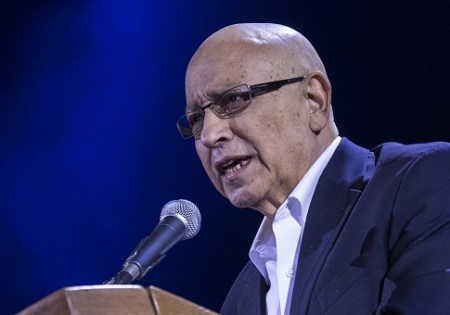
Former director of the Mossad, and leader of Harpoon, Gen. Meir Dagan / Getty Images

Israel’s government waged financial warfare on terror groups like Hamas and Hezbollah, which became a model for most states battling terrorism today, according to members of a once secret Israeli task force called Harpoon.

The operations ranged from financial operations that caused terrorist groups to lose tens of millions from bad investments, to commando raids on banks linked to the funding of suicide bombings, to targeted assassinations of terror group financiers.

“Harpoon showed the world that there must constantly be new angles to attack terrorist groups and infrastructure,” said Nitsana Darshan-Leitner, coauthor with Samuel M. Katz of a new book, Harpoon: Inside the Covert War Against Terrorism’s Money Masters, to be published Tuesday.

“The Israeli task force realized ahead of everyone else that money was the oxygen for the terrorist networks and you could badly damage them by choking it off,” she said.

Beginning in the late 1990s and early 2000s, Israel, led by Gen. Meir Dagan, a commando veteran who later headed the Mossad intelligence service for nine years, combined old and new spy methods to squeeze the finances of terror groups like Hamas and Hezbollah and the regimes and paymasters behind them. The operations greatly reduced the deadly suicide and rocket attacks used by both groups against the Jewish state.

Dagan advocated targeting terrorist financing as a top priority. He died of cancer last year, and the book highlights the major role he played in leading Israel’s covert war against terrorists and supporters like Iran.

Harpoon was first formed in the early 2000s and was a task force made up of spies, bankers, lawyers, tax officials, and others who used new and innovative ways, along with many traditional intelligence techniques, to attack terrorists’ financial networks.

The task force also worked with nongovernment organizations to bring lawsuits against Middle East banks linked to deadly terror attacks.

A former Harpoon member said in an interview the task force proved to doubters that financial counterterrorism can be a strategic weapon in the fight against terrorism. Harpoon was one Dagan’s many significant legacies, said the former official who spoke on condition of anonymity.

One of Harpoon’s early operations involved a covert raid on the residence of a Palestinian moneychanger in the West Bank city of Ramallah in 2003. Operatives obtained the Palestinian financier’s laptop and records that revealed extensive links to terror groups. The Israelis would learn that most of the well-organized terrorist groups like Hamas, Palestinian Islamic Jihad, and Hezbollah had set up intricate financing and funding systems for their operations.

The West Bank operation was followed a year later by Operation Green Lantern, one of Harpoon’s most successful operations. Israeli spies and commandos raided a Palestinian branch of the Arab Bank, one of the largest financial institutions in the Middle East, and obtained account information on 390 accounts linked to terror funding for Hamas and Palestinian Islamic Jihad.

At the time, Israel was being rocked by a wave of deadly suicide bombings. The Arab Bank would eventually be linked by Israeli intelligence to a dozen suicide bombings and terrorist attacks.

Other financial intelligence exposed a money trail from Iran to Hezbollah, the Lebanese-based terrorist group that was used to fund a series of suicide bus bombings in Jerusalem.

“Dagan wanted terrorists to look for money instead of targets,” the authors wrote. “Dagan didn’t give a damn about the international outcry; he knew that American outrage would dissipate.”

The George W. Bush administration at first opposed the financial attacks, fearing it would destabilize the Palestinian and Lebanese economies. Eventually, however, both the Bush and Obama administrations adopted their own aggressive methods to target and stop terrorist funding streams.

Against Hezbollah, financial warfare played a major role in Israel’s 2006 summer war in southern Lebanon. Harpoon identified an unspecified number of banks that were being used to fund Hezbollah’s forces. The banks were hit with 500-pound bombs dropped by Israeli air force F-16s and F-15s in secret raids.

The raids proved very effective tools for putting the bank buildings into ruins and destroying an estimated $100 million in currency, along with damaging banking computers. “Two weeks after the IAF’s targeting of the banks, Hezbollah sued for a cease-fire. They had run out of cash,” Darshan-Leitner and Katz wrote.

Among the many disclosures of Israeli intelligence activities in the book, which the authors say were reviewed by Israeli security services prior to publication, are:

  • A Harpoon undercover operation caused Palestine Liberation Organization chief Yasser Arafat to lose $100 million in an Israeli-directed investment scheme. The PLO chief who died in 2004 was found to have embezzled some $326 million from the PLO.
  • Master Hezbollah terrorist Imad Mughniyeh, responsible for killing scores of Americans, was blown up in a secret operation in 2008 using a bomb planted in the headrest of a vehicle bomb in Damascus, Syria.
  • A Hezbollah financier in Lebanon, Salah Ezzedine, lost some $1 billion in an intelligence operation that caused a major financial disruption for Hezbollah.
  • The U.S. Drug Enforcement Agency worked with Harpoon to counter Hezbollah drug trafficking in South America.
  • Harpoon-provided intelligence to the Treasury Department led to sanctions imposed on Hezbollah’s financing entities in 2006.
  • Israel ran an agent inside a bank used by Hezbollah, the Lebanese Canadian Bank, until the agent was uncovered by Iranian-trained counterspies.
  • Israeli agents conducted a hit on Hamas financier Mahmoud al Mabhouh in Dubai in 2010 that sent a message to the terror group that its financiers were a major target.
  • Mossad planned but never carried out an operation to discredit former International Atomic Energy Agency director Mohamed El Baradei that would have planted money in his bank account that appeared to come from Iran.

Former CIA director Michael Hayden said Dagan’s Harpoon served as a model for U.S. counterterrorism financing programs.

“Meir was a wonderful intelligence partner, incredibly creative in learning about and dealing with threats to Israel,” Hayden said. “We here in the United States also learned the great power of financial steps to disable and dissuade our adversaries.”

Dagan faced bureaucratic resistance to making financial counterterrorism a top priority. Officials within both the Israeli military and intelligence communities opposed a heavy reliance on financial warfare, preferring more traditional spy and military means to kill terrorists and their leaders.

The Poland-born Dagan overcame the opposition through both the force of his personality and his ties to senior Israeli leaders, including the late Ariel Sharon.

“The issue was do you follow the money or obstruct the money,” the former Israeli official said of the innovative approach.

Under Dagan, the Israelis succeeded in learning about the financial support networks that are needed for nearly all terrorist operations.

For example, Hamas suicide bombers were being recruited for attacks with promises of lifelong payments to their families. Harpoon operations were able to disrupt those payments and in so doing undermined Hamas’s ability to find people willing to blow themselves in attacks.

Darshan-Leitner, who worked with some Harpoon officials in a legal group in Tel Aviv called Shurat HaDin, said Harpoon sent the message that there would be no safe, white-collar jobs in terror groups. “If you helped finance the attacks, you were going to become every bit as big of a target as the bomb makers and gunmen themselves,” she said in an email.

Harpoon operations placed intense pressure on the international finance systems that in turn sent the message that anyone taking part in the terror funding pipeline at any stage and place would be targeted.

“In time, every western state came to adopt Harpoon’s strategy in the field of counterterrorism,” Darshan-Leitner said. “It really proved to be one of the most successful and disruptive Israeli start-ups of them all.”

Aggressive financial counterterrorism was highlighted in March 2016 by the U.S. special operations raid that killed ISIS finance minister Abd al-Rahman Mustafa al Qaduli. The Pentagon said his death was a severe blow to the terror group’s ability to conduct operations both inside and outside of Iraq and Syria.

The former Harpoon team member said if Dagan were still heading Mossad his new focus would be on applying similar innovative ways to target terrorists’ use of new social media. “People will complain about violating First Amendment rights but this is an arena that is being used to create terrorists,” he said.

Darshan-Leitner agrees. For example, new means are needed to thwart the recent trend in terror attacks, like the vehicle ramming attacks, highlighted by the deadly terrorist ramming in New York that killed six people.

Western security services must become more effective at countering terror attacks using innovative methods, novel technologies, and creative strategies like those of the Harpoon task force, said Darshan-Leitner. “Israel’s security services, operating on the frontline constantly, were compelled to innovate new tactics like targeting terror finances and eliminating the money men.”

“Just as the terror groups continue to adapt, to transform and to surprise, Western intelligence agencies and law enforcement need to evolve, startle and innovate at a fast pace right along with them.”

After Dagan retired in 2011, he spoke out against using military force against Iran as a way to stop Tehran’s nuclear program. As Mossad chief, however, Dagan likely oversaw the aggressive operation that resulted in the mysterious murders of several Iranian nuclear scientists who were assassinated in daring operations inside Iran. The operations are presumed to be targeted Israeli covert operations although the government has denied any links to the attacks.

New Report Calls Hezbollah World’s “Most Powerful” Terrorist Organization on the Planet

November 2, 2017

New Report Calls Hezbollah World’s “Most Powerful” Terrorist Organization on the Planet, Iran News Update, November 1, 2017

INU -A report released this week by a group of former senior military officials and diplomats, many of them from NATO member states, concluded that Hezbollah, The Shia terrorist movement in Lebanon that is affiliated with Iran, has become the “most powerful non-state armed force on the planet.”

Members of the independent High-Level Military Group (HLMG) include Iraq war veteran US Lt. General Michael D. Barbero, General Klaus Dieter Neumann, former commander of the German armed forces, Lord Richard Dannatt, former commander of the British armed forces, and Lt. General Kamal Davar, the former head of India’s Defense Intelligence Agency. Their report asserted that Hezbollah now represents “a threat that few countries, much less sub-state organizations, on the globe can mount.”

The report warns that war with Israel is “inevitable,” and warned that it is certain to be “more violent and destructive” than previous conflicts. It has been reported that Hezbollah has been withdrawing its forces from Syria in recent weeks, and transferring them toward Israel’s borders on the Golan Heights.

“Israeli intelligence estimates put the number of projectiles in Hezbollah’s possession today at well over 100,000,” the report, titled “Hezbollah’s Terror Army: How To Prevent A Third Lebanon War,” said. “The majority of these are short-range rockets, but thousands have a much larger range, up to 150 miles and more.”

HLMG’s report points out that Hezbollah’s participation in the defense of the Iranian-backed Syrian dictator Bashar al-Assad improved the organization’s “ability to maneuver and carry out relatively large-scale ground attacks at the scale of company or battalion level.”

Further, the report emphasized that Iran played a decisive role in strengthening Hezbollah’s capabilities. “The upgrade in Hezbollah capabilities is one discernible result of Iran and Hezbollah’s ongoing project to equip the latter with more accurate longer-range missiles, so as to be able to more effectively menace Israel,” it said, and continued, “Hezbollah embeds its military assets among the Lebanese civilians it claims to protect, holds Lebanese politics and questions of war and peace hostage to its Iranian-led regional military imperatives, and has infiltrated Lebanese state organs, including the army, to utilize them for its aims.”

However, the report explained that “the international environment has changed since the previous war, and a defensive assault on Hezbollah, a terror organization now strongly associated with Bashar al-Assad’s regime in Syria, will generate full support not only from the United States, but likely also from other Western countries, in addition to tacit but increasing support from the Sunni Arab world.”

The report concluded by saying, “Hezbollah’s strategic concept, coupled to the gains Iran has made regionally … mean that Israeli decision makers are firm in the belief that they will have to respond with overwhelming force and at great speed to any escalation forced upon them.”

Terror tunnel bingo

November 1, 2017

Terror tunnel bingo, Israel National News, Jack Engelhard, October 31, 2017

Will there be parades in Gaza and Ramallah for the terrorist who committed bloodshed in Manhattan today?

Only we regret. I get it, we’re Jewish. We are supposed to be different. We are supposed to be better.

Maybe, as I’ve written elsewhere, we should be worse once in a while, and then maybe they’d leave us alone.

[T]o borrow from Patton: 

“No bastard ever won a war by dying for his country. You won it by making the other poor dumb bastard die for his country.”

****************************

A few days ago the Israelis found yet another terror tunnel leading into Israeli territory and thinking it was empty, blew it to smithereens. Turns out that there were people still inside busy as beavers, terrorists from Hamas and Islamic Jihad. So the blast, bingo, eliminated them too, about 20 of them, half sent directly to their 72 virgins, the other half injured. 

I get conflicting numbers between the naked and the dead, but within Israel there’s a larger conflict going on even as we speak.

First, the world’s leading Islamic terrorist, Mahmoud Abbas, left his EU and US- funded multi-million dollar bunker to proclaim his outrage.

The Israelis, he said with a straight face, have no right to use deadly force against terrorists. Jews have no right to protect themselves…and according to that line of depraved thinking, New Yorkers are likewise open season as we saw from Tuesday’s ramming and shooting attack in Manhattan.

That is not news. We expect that from the man behind the Klinghoffer and Munich Olympics massacres.

But it is news when the IDF seems to explain that it never intended to hurt anyone. This has sparked controversy as it amounts to an apology.

Since when do we – meaning any sovereign nation – apologize for killing the enemy?

In fact it is a command that when he comes to kill you – which is what these tunnels are all about – you are to get up early and kill him first. In every other country, that’s a good day when even by accident you’ve taken out your attackers. Lucky shot.

But this is Israel and Israel is Jewish and old habits die slowly. Jews always apologize.

Some may remember Tom Wolfe’s “Radical Chic” article in New York Magazine. That was about a group of Black Panther types who attended Leonard Bernstein’s big shindig to celebrate Black Power. The (Liberal) Jews at the same soiree were blamed for everything – and apologized for everything. Everything!

Never mind that from the start the Jews were at the forefront of the Civil Rights Movement.

So now there’s a flap within Benjamin Netanyahu’s cabinet. One says that the IDF was wrong to apologize; the other says, leave the IDF alone.

Criticism against the IDF will never come from me. But I must say this; the response comes across as pathetic…an uncalled for justification in the fog of war.

Sorry for what? Do they apologize to us? They give out candy and build statues to their murderers. They celebrate after they kill.

Sorry we got to them before they got to us?

Will there be parades in Gaza and Ramallah for the terrorist who committed bloodshed in Manhattan today?

Only we regret. I get it, we’re Jewish. We are supposed to be different. We are supposed to be better.

Maybe, as I’ve written elsewhere, we should be worse once in a while, and then maybe they’d leave us alone.

Or take it from our Book of Deuteronomy– “Your eye shall not pity them.”

Then came this British journalist who sprang this over coffee: “Must say, the Israelis have become awfully militaristic.”

The evidence, I explained, proves otherwise. But if so, it’s about damn time. I’ll take militaristic any day against 2,000 years of sitting-duck passivity.

Yes, I will take militaristic whenever it is between them and us.

Or to borrow from Patton:

“No bastard ever won a war by dying for his country. You won it by making the other poor dumb bastard die for his country.”

Secret Egyptian-Hamas bid to rush through Gaza crossings handover to Palestinian Authority

November 1, 2017

Secret Egyptian-Hamas bid to rush through Gaza crossings handover to Palestinian Authority, DEBKAfile, October 31, 2017

DEBKAfile’s US sources disclose additionally that there is nothing to the reports published in Israel in the last few days that the Trump administration is on the point of presenting Israel with a new Israeli-Palestinian peace plan. Senior US officials in Washington told our sources that no such plan exists. They say that Middle East leaders, who are talking about it, including Prime Minister Binyamin Netanyahu, are fully aware of this, but are using the non-existent US peace plan as a pretext for turning down or delaying projects they deem undesirable.

The only real project engaging Trump’s Middle East envoy Jason Greenblatt at present is the establishment of joint Israel-Palestinian industrial zones in Judea and Samaria.

******************************

Egyptian intelligence and Hamas security agencies are in an overnight effort to rush through the Gaza crossings’ handover to the Palestinian Authority by Wednesday morning, Nov. 1, even if only as a token step. This is reported by DEBKAfile.

To distract attention, they put out a statement earlier Tuesday pretending that the transfer had been postponed from Tuesday to Nov. 15 in consideration of the high military tension generated around Gaza by the IDF’s destruction of a Jihad Islami terror tunnel on Monday.

Our military sources report that the latest Egyptian-brokered Palestinian unity steps are shrouded in secrecy, which Israel, too, is preserving. Therefore, there is no information about a Palestinian Authority security contingent reaching the Gaza Strip on Tuesday. Neither is there any word about this contingent obtaining permission to travel from Bethlehem through Israel and gaining entry to the territory through the Erez crossing. This contingent may still make the journey overnight under cover of dark – either through Israel or Egypt – barring another last-minute change of plan.

If they go ahead, the transfer itself will take some days.

Egyptian and Hamas officials are confident that the Jihad Islami won’t act Tuesday night on its threat to wreak vengeance on Israel for blowing up its terror tunnel in an explosion that left 11 operatives dead.

DEBKAfile’s US sources disclose additionally that there is nothing to the reports published in Israel in the last few days that the Trump administration is on the point of presenting Israel with a new Israeli-Palestinian peace plan. Senior US officials in Washington told our sources that no such plan exists. They say that Middle East leaders, who are talking about it, including Prime Minister Binyamin Netanyahu, are fully aware of this, but are using the non-existent US peace plan as a pretext for turning down or delaying projects they deem undesirable.

The only real project engaging Trump’s Middle East envoy Jason Greenblatt at present is the establishment of joint Israel-Palestinian industrial zones in Judea and Samaria.

Hamas Rejoins Iran’s Terrorist Axis

October 26, 2017

Hamas Rejoins Iran’s Terrorist Axis, Investigative Project on Terrorism, Yaakov Lappin, October 26, 2017

(Please see also, The Iran-Hamas Plan to Destroy Israel. — DM)

One immediate result of the Iranian-Hamas reconciliation is the new Hamas outpost being built in Lebanon.

Lebanon is under the firm control of Iran’s proxy, Hizballah. It is now seeing the arrival of Hamas members who have set up a new command center. From there, Hamas could set up terrorist cells in the West Bank.

Hamas’ new presence in Lebanon could also be used to create a rocket-firing base, or cross-border terror cells operating from Lebanon, with Hizballah’s and Iran’s approval.

******************************

Hamas is deepening its ties with Iran and its radical Shi’ite axis. Iranian cash is once again expected to fund Gaza’s war preparations and arms build-up program.

Before the 2011 outbreak of the war in Syria, Sunni Hamas and Shi’ite Iran were united by their goal to destroy Israel. Iran helped arm and fund Hamas’ terrorist-guerilla army in Gaza.

But the two fell out after finding themselves on opposite sides of the sectarian fence in the bloody Syria war. Iran, largely through its Lebanese proxy Hizballah, has committed troops and weapons to prop up dictator Bashar Al-Assad.

Now, out of cash and isolated, Hamas is in search of backing from a major regional power, and it is returning to Iran’s orbit.

The Iranians have been indicating that past fall-outs are history, and that Hamas will get all of the help it needs to prepare for future war against Israel. Israel’s intelligence community is closely monitoring these developments.

The Islamic Republic will grant Hamas “all assistance that it requests,” a senior Iranian official told the Lebanon-based Al Mayadin TV network, according to Israel’s Ynet website.

“Relations with Iran are excellent and Iran is the largest supporter of the [Hamas armed wing] Izz Al-Din Kassam Brigades with money and arms,” Hamas’ chief in Gaza, Yehya al-Sinwar said.

“The relationship today is developing and returning to what it was in the old days,” Sinwar told Reuters.

“This will be reflected in the resistance [against Israel] and in the agenda to achieve the liberation,” he said. “Liberation” is a reference to Hamas’ ideological long-term commitment to destroy Israel and replace it with a Palestinian-Islamist state.

One immediate result of the Iranian-Hamas reconciliation is the new Hamas outpost being built in Lebanon.

Lebanon is under the firm control of Iran’s proxy, Hizballah. It is now seeing the arrival of Hamas members who have set up a new command center. From there, Hamas could set up terrorist cells in the West Bank.

Hamas’ new presence in Lebanon could also be used to create a rocket-firing base, or cross-border terror cells operating from Lebanon, with Hizballah’s and Iran’s approval.

One of the Hamas members seen in Beirut recently is its No. 2 man, Saleh Al-Arouri. He has been responsible for remotely setting up terrorist cells in the West Bank. Until recently, Al-Arouri operated out of Hamas’ headquarters in Turkey.

Al-Arouri has been appointed Hamas deputy leader. He took part in a senior Hamas delegation to Iran earlier this month.

Those ties with Iran are one reason why Israel’s cabinet rejected recognition of a fledgling Hamas-Fatah unity government. Israel will not recognize the new Palestinian government until Hamas agrees to give up its weapons, recognize Israel, and cut links with Tehran.

“Our presence in Iran is the practical denial of the third precondition — cutting ties with Iran,” Arouri said. “Undoubtedly, the Palestinian resistance forces will never give up… their arms,” he was quoted by Reuters as saying.

Iran’s Supreme Leader, Ayatollah Khamenei, praised Hamas’ stance. Khamenei’s representative congratulated Hamas “for declaring that you will not set your weapons aside,” according to the semi-official Fars news agency.

Renewed Iranian support probably will take the form of suitcases of cash entering Gaza via smuggling tunnels.

Some tunnels linking Gaza to the Sinai Peninsula remain, though many others have been demolished by Egypt.

Iranian know-how in producing rockets, RPGs, mortars, and drones will also, once again, be used to train Hamas engineers, who are in charge of Hamas’ domestic weapons industry.

Iranian guerilla combat doctrines, which already have influenced Hamas greatly, could also reappear in Gaza, in updated forms.

Iran might also try to smuggle materials to make weapons into Gaza via small fishing boats.

Hamas has been open and frank about its intentions in renewing Iranian sponsorship. A senior Hamas official said it was about securing “Iranian financial and logistical support,” according to the Agence France-Presse.

Hamas’ new relationship with Iran will displease Sunni Arab countries who, like Israel, view the Iranians and their regional destructive behavior as a top threat.

But this is a risk Hamas’ leadership is prepared to take in its quest to replenish cash supplies for its military and terrorist operations.

Hamas’s isolation – the force that drove it into Iran’s arms – is also what caused it to enter a reconciliation agreement with its arch Palestinian rival, Fatah.

Seeking to avoid a collapse of its regime in Gaza due to dwindling cash and energy resources, and under pressure from Palestinian Authority President Mahmoud Abbas, who had been reducing Gaza’s electricity flow, Hamas decided to feign compromise with Fatah.

This is a short-term tactical move designed to serve the longer-term radical vision. Both Hamas and Iran would like to eventually use the Palestinian reconciliation to depose Fatah from power in the West Bank.

Hamas can be expected to use the coming years to build up its political power in the West Bank, Fatah’s home turf, and then try to take it over through elections. Hamas’s end goal is to create two armed fronts against Israel – from Gaza and the West Bank – with Iran creating the third and most potent third front from Lebanon, in the form of Hizballah.

Hamas and Iran still have their differences, but Hamas’s new leadership, and its distress stemming from isolation, have led it firmly back into Iran’s orbit. So long as Egypt remains under a government that is hostile to Islamists and jihadists, Hamas will continue to see Iran as its state backer, despite the Shi’ite-Sunni divide.

Meanwhile, a senior Hamas member with a history of funneling tens of millions of dollars from Iran to the organization’s military wing has recently been unveiled as a new top-level overseas liaison, according to Israel’s Kan television news service.

Maher Salah, a senior Hamas financier, recently appeared at a Turkish rally for the deceased Egyptian former Muslim Brotherhood leader Mohammed Mahdi Akef, in which he eulogized Akef as one who “loved jihad fighters and the jihad for Allah.”

The U.S. Treasury Department sanctioned Salah, together with Al-Arouri, in 2015.

“The fate of your country is to pass from the world,” Salah said, addressing Israeli Prime Minister Benjamin Netanyahu. “The fate of your kingdom is to be eliminated. I promise him that his country will not live to celebrate 100 years.”

Salah could use his ties in Iran to restart large-scale terrorist financing efforts.

The Gaza Strip is the quietest it has been in 30 years, and Hamas today remains deterred by Israel’s military might.

But its recent actions and statements show that Hamas is exploiting the ceasefire to gear up for long-term and destructive conflict with Israel. It is returning to Iran’s fold to help it in this effort.

Yaakov Lappin is a military and strategic affairs correspondent. He also conducts research and analysis for defense think tanks, and is the Israel correspondent for IHS Jane’s Defense Weekly. His book, The Virtual Caliphate, explores the online jihadist presence.

The Iran-Hamas Plan to Destroy Israel

October 23, 2017

The Iran-Hamas Plan to Destroy Israel, Gatestone InstituteKhaled Abu Toameh, October 23, 2017

Abbas and the Egyptians were probably naïve to think that Hamas would disarm and allow Abbas loyalists to deploy in the Gaza Strip after the signing of the “reconciliation” agreement. It is possible that some of the Hamas leaders had lied to Abbas and the Egyptians by hinting that Hamas would give up security control of the Gaza Strip.

The Egyptians, who played a major role in brokering the Hamas-Fatah deal, are also believed to be worried about Iran’s renewed meddling in the internal affairs of the Palestinians. Both the Palestinian Authority and Egypt see the visit of the Hamas delegation to Iran as a serious setback to the “reconciliation” agreement and as a sign that Hamas is not sincere about implementing the accord.

********************************

Iran’s goal in this move? For Hamas to maintain and enhance its preparation for war against Israel.

Iran’s message to Hamas: If you want us to continue providing you with financial and military aid, you must continue to hold on to your weapons and reject demands to disarm.

Iran wants Hamas to retain its security control over the Gaza Strip so that the Iranians can hold onto another power base in the Middle East, as it does with Hezbollah in Lebanon.

In a historic reawakening, Iran is once again meddling in the internal affairs of the Palestinians. This does not bode well for the future of “reconciliation” between Hamas and Palestinian Authority’s Fatah faction run by President Mahmoud Abbas.The re-emergence of Iran, as it pursues its efforts to increase its political and military presence in the region, does not bode well for the future of stability in the Middle East.

The Iranians are urging Hamas to hold on to its weapons in spite of the recent “reconciliation” agreement signed between Hamas and Fatah under the auspices of Egypt. Iran’s goal in this move? For Hamas to maintain and enhance its preparation for war against Israel.

A high-level Hamas delegation headed by Saleh Arouri, deputy chairman of Hamas’s “political bureau,” traveled to Tehran last week to brief Iranian leaders on the “reconciliation” deal with Fatah. During the visit, Iranian leaders praised Hamas for resisting demands (by Fatah) to disarm and relinquish security control over the Gaza Strip.

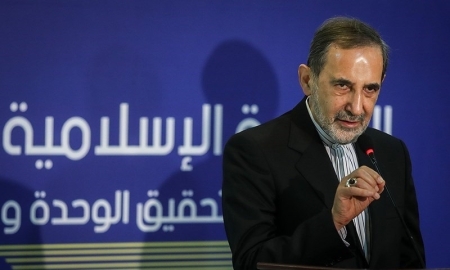
“We congratulate you on your refusal to abandon your weapons, an issue that you consider as a red line,” Ali Velayati, a senior Iranian politician and advisor to Leader of the Islamic Revolution Ayatollah Khamenei, told the visiting Hamas officials. “The Palestinian cause is the most important cause of the Islamic world, and after all this time you remain committed to the principle of resistance against the Zionists despite all the pressure you are facing.”

During the visit of a high-level Hamas delegation to Iran last week, Ali Velayati (pictured above in 2016), a senior Iranian politician and advisor to Supreme Leader Ayatollah Ali Khamenei, told the visiting Hamas officials: “We congratulate you on your refusal to abandon your weapons…” (Image source: Hamed Malekpour/Wikimdia Commons)

Arouri and his colleagues rushed to Tehran to seek the support of the Iranian regime in the wake of demands by Abbas that Hamas allow the Palestinian Authority to assume security control over the Gaza Strip. The “reconciliation” agreement stipulates nothing about the need for Hamas to disarm, and Hamas officials have stressed during the past two weeks that they have no intention of laying down their weapons or dismantling their security apparatus in the Gaza Strip.

Hamas views the demand to disarm as part of an Israeli-American “conspiracy” designed to eliminate the Palestinian “resistance” and thwart the “reconciliation” accord with Abbas’s Fatah. Hamas’s refusal to disarm is already threatening to spoil the “reconciliation.”

Arouri was quoted during his visit to Tehran as saying that Hamas “will not backtrack on the option of defending the Palestinian people.” He specified that the “reconciliation” agreement with Fatah would not affect the weapons of the Palestinian “resistance,” including Hamas. Hamas, he added, will “confront the Israeli-American conspiracy through national unity and reconciliation and by continuing the resistance. The Palestinian resistance forces will always stick to their weapons and will not lay them down.”

Hamas also sees the visit of its top officials to Tehran as a rejection of Israel’s demand that it cut off its ties with Iran. Hamas officials say they continue to see their relations with Iran as “strategic and significant,” especially in wake of Tehran’s financial and military aid to their movement in the Gaza Strip.

By aligning itself with Iran, Hamas is also seeking to resist any demand that it abandon its ideology and charter, which call for the destruction of Israel and oppose any peace process between Israelis and Palestinians.

Iranian officials apparently do not like Mahmoud Abbas and the Palestinian Authority and are not keen on seeing them return to the Gaza Strip. Iran considers Abbas a “traitor” because his Palestinian Authority conducts security coordination with Israel in the West Bank and claims that it is committed to a “peace process” with Israel. This position goes against Iran’s wish to destroy the “Zionist entity.”

Abbas, for his part, has always considered Iran a threat to his regime as well as to stability in the region. In the past, he has criticized Iran for “meddling” in the internal affairs of the Palestinians by supporting Hamas and Palestinian Islamic Jihad in the Gaza Strip.

Earlier this year, the Palestinian Authority strongly condemned Iran after a senior Iranian official accused Abbas of waging war in the Gaza Strip on behalf of Israel. The official’s statement came in response to a series of punitive measures imposed by Abbas on the Gaza Strip.

Abbas’s spokesman, Nabil Abu Rudaineh, accused Iran of meddling in the internal affairs of the Palestinians and some Arab countries. He said that Iran’s actions “encouraged divisions” among the Palestinians. “Iran must stop feeding civil wars in the Arab world,” he said. “Iran must stop using rhetoric that only serves Israel and the enemies of the Arabs.”

Abbas and the Palestinian Authority are now convinced that Iran is working towards foiling the “reconciliation” agreement with Hamas. They believe that Iran invited the Hamas leaders to Tehran to pressure them not to lay down its weapons.

Abbas and the Egyptians were probably naïve to think that Hamas would disarm and allow Abbas loyalists to deploy in the Gaza Strip after the signing of the “reconciliation” agreement. It is possible that some of the Hamas leaders had lied to Abbas and the Egyptians by hinting that Hamas would give up security control of the Gaza Strip.

The Egyptians, who played a major role in brokering the Hamas-Fatah deal, are also believed to be worried about Iran’s renewed meddling in the internal affairs of the Palestinians. Both the Palestinian Authority and Egypt see the visit of the Hamas delegation to Iran as a serious setback to the “reconciliation” agreement and as a sign that Hamas is not sincere about implementing the accord.

Some Palestinian Authority and Hamas officials have recently claimed that Israel was not happy with their “reconciliation” agreement and was doing its utmost to foil it. The truth, however, is that it is Iran and Hamas that are working to thwart the agreement by insisting on maintaining the status quo in the Gaza Strip. Iran’s message to Hamas: If you want us to continue providing you with financial and military aid, you must continue to hold on to your weapons and reject demands to disarm.

What is in it for Iran? Iran wants Hamas to retain its security control over the Gaza Strip so that the Iranians can hold onto another power base in the Middle East.

Iran wants Hamas to continue playing the role of a proxy, precisely as Hezbollah functions in Lebanon.

The last thing Iran wants is for the Palestinian Authority security forces to return to the Gaza Strip: that would spoil Tehran’s plans to advance its goal of destroying Israel.

Iran’s continued support for Hamas stems not out of love for either Hamas or the Palestinians, but from its own interest in consolidating its presence in the Middle East.

Many Palestinians see the “successful” visit of the Hamas officials to Tehran as a major setback for efforts to end the 10-year-long Hamas-Fatah dispute. Similarly, the Egyptians are now wary of the sudden rapprochement between Iran and Hamas and are beginning to ask themselves whether they have been duped by Hamas. An Israeli delegation that visited Cairo on the eve of the signing of the Hamas-Fatah deal is said to have warned the Egyptians that the “reconciliation” would not work unless Hamas disarms and severs its ties with Iran. However, the Egyptians reportedly failed to listen to the Israeli warning.

As for Israel, the US and other Western parties, the lesson to be drawn from the renewal of ties between Hamas and Iran is that Hamas has not changed one iota.

Contrary to delusional hopes, discussed on the heels of the “reconciliation” agreement in Cairo and based on lies and thin air, Hamas is not headed toward moderation and pragmatism. By openly supporting Hamas, Iran is once again demonstrating that it aims to fan the fire in the Middle East and continue to sabotage any prospects for peace.

Khaled Abu Toameh, an award-winning journalist, is based in Jerusalem.
US in agreement with Israel on PA-Hamas reconciliation

October 19, 2017

US in agreement with Israel on PA-Hamas reconciliation, Israel National News, Uzi Baruch, October 19, 2017

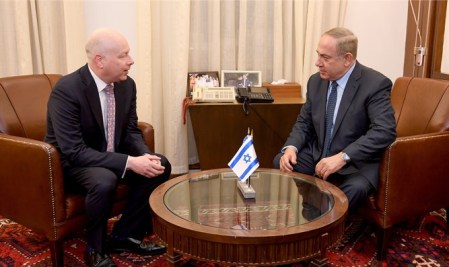
Netanyahu and GreenblattMati Shtern, US Embassy, Tel Aviv

US Special Envoy to the Middle East Jason Greenblatt on Wednesday issued a statement regarding the Palestinian Authority’s (PA) recent reconciliation agreement with the Hamas terror group.

“All parties agree that it is essential that the Palestinian Authority be able to assume full, genuine, and unhindered civil and security responsibilities in Gaza and that we work together to improve the humanitarian situation for Palestinians living there,” Greenblatt said.

“The United States reiterates the importance of adherence to the Quartet principles: any Palestinian government must unambiguously and explicitly commit to nonviolence, recognize the State of Israel, accept previous agreements and obligations between the parties – including to disarm terrorists – and commit to peaceful negotiations.

“If Hamas is to play any role in a Palestinian government, it must accept these basic requirements.”

Education Minister Naftali Bennett (Jewish Home) said, “I thank Special Envoy Jason Greenblatt and the US government for their clear message: A Palestinian government must disarm all terror organizations and recognize the State of Israel.”

“I emphasize our government’s stance: The State of Israel will not negotiate with a Palestinian government dependent on the Hamas terror organization, until Hamas disarms, recognizes Israel, and returns to Israel captured citizens and the bodies of fallen Israeli soldiers.”

Israel’s Diplomatic-Security Cabinet on Tuesday decided that it will not negotiate with a PA-Hamas unity government should it be established, and will not maintain contact with a PA government which rests on Hamas support.

In an announcement released by the Prime Minister’s Office, a number of Israeli conditions necessary for negotiations with a PA resting on Hamas were outlined, including adherence to the Quartet conditions.

Additional conditions included the return of soldiers’ bodies and civilians being held in Gaza to Israel, complete security control of the PA over Gaza, and the prevention of smuggling and Hamas terror infrastructure in Judea and Samaria.

The cabinet also demanded that Hamas cut ties with Iran, and announced that it will allow the flow of humanitarian aid and supplies to Gaza only through the PA and the bodies established for this purpose.

Israel tries to balance Iran strategy between Trump and Putin

October 17, 2017

Israel tries to balance Iran strategy between Trump and Putin, DEBKAfile, October 17, 2017

(Please see also, Iran Plays Chess, We Play Checkers. — DM)

Israeli Defense Minister Avigdor Liberman with Russian Defense Minister Sergey Shoygu, at the Yad Vashem holocaust memorial museum in Jerusalem, on October 17, 2017. Photo by Hadas Parush/FLASH90 *** Local Caption *** יד ושם
רוסיה
שר ההגנה הרוסי
סרגיי שויגו
שר הביטחון
אביגדור ליברמן
ראש הממשלה

The Israeli defense minister is due to fly to Washington Wednesday, Oct. 18, for talks with US Defense Secretary Jim Mattis. Netanyahu’s National Security Adviser Meir Ben-Shabat goes on ahead to meet his US counterpart Gen. H.R. McMaster.

However, as seen from Moscow – and possibly Jerusalem too – the Trump administration is more to blame than any other actor operating in the Middle East for Iran’s deepening grip on Syria, US actions starkly contradicting the president’s fiery rhetoric against the Islamic Republic and all its actions.

***********************************

Israel’s leaders stressed to Russian Defense Minister Sergey Shoigu the importance of thwarting Iran’s military entrenchment in Syria. But can’t expect much from Moscow – any more than Washington.  

Visiting Russian Defense Minister Sergey Shoigu heard Tuesday, Oct. 17, from Prime Minister Binyamin Netanyahu and his counterpart, Avigdor Lieberman that Israel would not stand for Iran and Hizballah making Syria their forward operational base against Israel, and would act to prevent their military entrenchment along the Syrian-Israeli border.

This was not news to the Russian minister, on his first visit to Israel since his appointment five years ago. The Kremlin has heard this mantra time and time and again and the visitor must have wondered what his Israeli hosts expected him to do. Both Shoigu and his boss, President Vladimir Putin, would also prefer not to see Iran dug deep militarily in Syria. So oddly enough, Moscow and Jerusalem could find a sliver of common ground for cooperating in both Syria and Iraq, but for their different viewpoints. While the Russians are practical enough to live with a strong Iranian military presence in Syria so long as it serves their interests, Israel is flatly against Iran or its proxies’ proximity to its borders as a grave peril to its national security.

The Israeli defense minister is due to fly to Washington Wednesday, Oct. 18, for talks with US Defense Secretary Jim Mattis. Netanyahu’s National Security Adviser Meir Ben-Shabat goes on ahead to meet his US counterpart Gen. H.R. McMaster.

However, as seen from Moscow – and possibly Jerusalem too – the Trump administration is more to blame than any other actor operating in the Middle East for Iran’s deepening grip on Syria, US actions starkly contradicting the president’s fiery rhetoric against the Islamic Republic and all its actions.

Since late September, the US has been drawing down most of its positions in eastern Syria, opening the door for Hizballah to walk in and for pro-Iranian Iraqi militias to take control of the Syrian-Iraqi border. This has made Tehran the strategic gift of its coveted land bridge to the Mediterranean.

Shoigu arrived in Tel Aviv on the day, Monday, Oct. 16, on which pro-Iranian militias under the command of a Revolutionary Guards general, Qassem Soleimani, swept the Iraqi oil center of Kirkuk out of the hands of America’s allies, the Kurdish Peshmerga, a leading light in the US-led coalition for fighting the Islamic State.

If Trump meant what he said about beating down the Revolutionary Guards, why did he not stop them from taking Kirkuk?

In contrast to the Kirkuk debacle, the US-backed SDF Syrian Kurdish-Arab force said Tuesday that the Islamic State’s Syrian capital of Raqqa had fallen after a bitter four-month battle. The Kurdish YPG militia raised its flag over the municipal stadium and chanted victory slogans from vehicles driving through the streets.

DEBKAfile’s sources report that when word of the victory reached the White House, Brett McGurk, President Trump’s special envoy for the global coalition versus ISIS, set out from Washington to Raqqa

But that operation was the exception – not the rule. In Iraq, Washington stood by as the Revolutionary Guards called the shots against the Kurds.

For weeks, Moscow has been asking Washington to explain what it is up to on the Syrian and Iraqi warfronts and has come up empty. Israeli visitors are unlikely to fare much better when they put the same question to top Trump administration officials, even taking into account the profound difference in the relationship between Jerusalem and Washington compared with Moscow and Jerusalem.


Put Iran back on the defensive

October 13, 2017

Put Iran back on the defensive, Israel Hayom, Amnon Lord, October 13, 2017

Iran’s Supreme Leader Ayatollah Ali Khamenei | Photo: Reuters

A recent interview with Brig. Gen. (ret.) Uzi Eilam, former director of the Atomic Energy Commission at the Prime Minister’s Office, has all but slipped under everyone’s radar.

During the interview, Eilam let it slip that in early 2015, when the fight against the nuclear deal with Iran was in full gear, he traveled to Washington to lobby support for the deal among Democratic senators and congressmen. Recently, we also learned that former National Security Adviser Uzi Arad and former Israeli Consul General in New York Alon Pinkas are part of a campaign by the left-wing Jewish lobby group J Street, which purports to be pro-Israel, to preserve the deal.

If the 2015 deal is so good, why is Prime Minister Benjamin Netanyahu so eager to amend it? And why did he so vehemently oppose it to begin with? If the deal is solid, why do the moderate Sunni states such as Egypt and Saudi Arabia oppose it? Why is U.S. President Donald Trump against it? Does the Israeli public really have to trust the judgment of former defense and diplomatic officials?

The truth is that it is quite bewildering that experts continue to insist on sticking to the deal when, two years in, the results are clear: Iran has massively infiltrated Syria and a new threat to Israel has emerged from the north. Those who supported the agreement apparently failed to fully understand its implications, or they knowingly covered up then-President Barack Obama’s rapprochement attempts with Iran at Israel’s expense.

Meanwhile, the Iranians have successfully taken over not only Damascus and Beirut, but also Iraq, Yemen and the Bab el Mandab Strait, a strategic waterway between Yemen on the Arabian Peninsula and Djibouti and Eritrea in the Horn of Africa. A senior intelligence official told me a month ago that there was a clear link between the approval of the nuclear agreement in July 2015 and the Russian invasion of Syria two months later. If anything, there is no doubt that Obama’s policy and the nuclear agreement paved the way for an Iranian-Russian takeover of the war-torn country.

The Israeli media all but ignored Obama’s moves over Iran. The Israeli and American intelligence agencies conducted effective warfare to sabotage the secret networks through which Iran built its nuclear program, but Obama vetoed these efforts, effectively terminating cyber warfare against Iran and lending international legitimacy to the Islamic republic’s nuclearization effort – efforts by a nation that has openly and repeatedly announced its clear intention to annihilate the State of Israel.

Above all, the nuclear agreement lifted the economic sanctions the international community had imposed on Iran. These sanctions, imposed due to American and Israeli pressure, had pushed into a corner, isolated it and placed it under constant international pressure. Obama freed Iran from this yoke and all but launched a campaign that delegitimized Israel, its government and its leader. Yet all of it was covered up by senior Israeli security officials and the Israeli media.

If Trump makes good on his threat and decertifies the nuclear deal, it will be the first step toward rectifying the situation and putting Iran back on the defensive. This would benefit Israel by pushing back the threat of an armed conflict on the northern border.

At this time, the effort to change the 2015 agreement in a way that prevents Iran from pursuing nuclear armament within eight years should be clear to the intelligence and security sages who are so supportive of the deal. North Korea barreled through two nuclear agreements negotiated by Wendy Sherman, the chief American negotiator with Iran, and emerged as a menacing nuclear threat.

Between the cabinet and the battlefield

The meeting between Netanyahu and Russian President Vladimir Putin in August, the massive military exercise in the northern sector in early September, the strike on a chemical weapons facility near Damascus last month, and defense officials’ publicly-voiced concerns about Iran’s military entrenchment in Syria, all made various pundits catch a whiff of napalm in the morning. But contrary to the perceived rise in security tensions in recent weeks, the IDF believes that chances of a flare-up on the Lebanese-Syrian front are waning.

One can argue about the scope of the strategic impact the Russian-Iranian alliance has on Israel. American analysts, who understood early on where Obama was heading with respect to Iran, believe the Russian-Iranian axis is very bad news for the United States as well as for Israel.

But the IDF has a different assessment, at least for the foreseeable future, according to which the Russian presence in Syria is deferring a potential conflict. Moreover, the Iranian presence in Syria appears less menacing when Revolutionary Guard soldiers are replaced by random Shiite militias.

The military says its multi-year work plan continues to evolve according to the dynamic map of threats from the north and it rejects claims that it is leading the IDF down the wrong path. According to a report by the Foreign Affairs and Defense Committee’s Subcommittee on the Defense Doctrine, which is an important intellectual venture led by Yesh Atid MK Ofer Shelah, the preparatory work done by the IDF to compose the multi-year work plan and its implementation so far are indeed impressive.

Nevertheless, even the apparently flattering report alludes to the fact that 11 years after the Second Lebanon War, the ground forces have yet to fully stabilize, while the Israeli Air Force has undergone a tremendous process of reinforcement. This is the military arm decision-makers continue to rely on, in conjunction with the IDF’s special forces, at the moment of truth.

Still, a critical review of the report reveals a serious problem that has not been resolved in Israel’s political reality: the interface between the political leadership and the IDF. The report criticizes the political echelon, saying it fails to provide the military with clear, written instructions and objectives. This makes it difficult for the military to adapt, outline its operational plans and build its strength.

Committees and cabinet meetings will not bring salvation. The IDF’s senior echelon must consider the fact that cabinet ministers cannot serve as a collective commander of the IDF’s operations in wartime. The cabinet was designed to supervise military moves, and while it can be called upon to decide on various operational alternatives before and during a conflict, it is up to military commanders to assume operational responsibility. The desire by lawmakers who see themselves as military experts to be involved to the point of making the military’s decisions for it is very unhealthy.

But there is one thing that can be expected from the political echelon: a decision on the strategic concept with respect to Hezbollah. Is Lebanese infrastructure a legitimate target in a potential future war, or is the IDF required to surgically deal only with Hezbollah elements? The answer to this question is not as simple as the hawks in the government would have the public believe.