Israel has been consulting the US on its retaliation for the salvo of nearly 200 Iranian missiles launched against it this month, narrowing down targets to Iran’s Islamic Revolutionary Guard Corps and its volunteer paramilitary force. There is a third, more indirect, goal: encouraging regime change.
Benjamin Netanyahu, the Israeli prime minister, hinted as much in a video statement, billed as an address to the Iranian people, several days before Iran’s missile attack. The speech in English was perhaps aimed at western countries, and the Iranian opposition, which is based abroad, critics said.
“Don’t let a small group of fanatic theocrats crush your hopes and your dreams … The people of Iran should know – Israel stands with you,” Netanyahu declared.
“When Iran is finally free – and that moment will come a lot sooner than people think – everything will be different.”
Netanyahu hopes that Israel’s future airstrikes will help to weaken the Islamic Revolutionary Guard Corps (IRGC) and the Basij paramilitary force, two pillars of the Islamic regime that have been instrumental in putting down mass protests against it.
The IRGC is both an elite military force and a dominant presence in Iran’s economy, while the Basij, a loyalist militia regularly used as foot soldiers, has branches across the country.
“They’re planning to hit them hard,” a western official said this week of Israel’s plan, adding that this could encourage Iran’s opposition.
A realist, Netanyahu would not believe that one wave of airstrikes, or even several, would topple the regime by encouraging a popular uprising.
But some in Israel’s leadership, including the far-right coalition ministers who support harsh action against Iran, believe that this is a defining moment that can change the power balance in a region that feels caught between the US and Israel on the one hand, and Iran and its “axis of resistance” on the other.
That view has been reinforced by the rapid decapitation of Hezbollah, Iran’s most powerful asset among the network of proxies and allies it had cultivated for decades to counter Israel.
Firas Maksad, senior fellow with the Middle East Institute think tank, said: “The Biden administration and the Israelis have come to a general understanding that the first stage of Israeli response will be limited to military and the IRGC and Basij, and they will stay away from nuclear and oil facilities. Going after the Basij and IRGC will, some hope, put further strain on the relationship between them and the people.”
Although the US may also not believe that the Islamic regime in Iran could be immediately threatened by a popular revolt, it may have indulged the idea to persuade Israel not to strike nuclear and oil facilities.
The US wants to avoid attacks on these assets for fear of escalation: either Tehran accelerating its enrichment of uranium to create a nuclear bomb, or to lash out against oilfields in the region, driving up prices before next month’s presidential election and giving Donald Trump, the Republican candidate, more fodder for his campaign.
Any attack by Israel is also likely to draw further reaction from Iran. “That needs to be thought of as the first salvo,” Maksad said. “There will be an Iranian response and that will put us past the elections in the US. At that point, Netanyahu will have more flexibility to respond in a more expansive way.”
Israel’s recent successes against Hezbollah in Lebanon, including sabotage attacks that reduced the Shia group’s fighting strength and airstrikes that have killed key figures, including Hassan Nasrallah, its leader, could embolden the hawkish ideologues in Netanyahu’s governing coalition to further expand the war against its arch-enemy.
“I would be surprised if the wider security apparatus are on board for that – it’s an impossibility for Israel to have that level of success,” Sanam Vakil, Chatham House’s Middle East and North Africa program director, said.
Opponents of Khamenei’s repressive Islamic regime far outweigh its conservative supporters. Turnout in parliamentary elections and a presidential election this year registered record lows and calls for boycotts, two years after the repression of mass protests against the treatment of women.
The trend may point to a growing conviction among Iranians that regime change, and not reform, is required, but few would welcome it at the behest of a foreign power, analysts say. And Iran, feeling threatened, could crack down pre-emptively on any signs of dissent.
Yahya Sinwar spent two decades in Israeli prisons studying the country and trying to identify its weaknesses before emerging to assemble a powerful militia dedicated to toppling it.
Yahya Sinwar, the Hamas leader who was killed by Israeli forces, spent two decades in Israeli prisons studying the country and trying to identify its weaknesses before emerging to assemble a powerful militia dedicated to toppling it.
That mission culminated on Oct. 7 last year, when at his command Hamas led the deadliest attack in Israel’s more than 75-year history. It triggered a war with Israel in Gaza, and now Lebanon, that has upended the Middle East, reignited the Palestinian cause and left more than 40,000 people dead.
Israel vowed to hunt down the wiry and silver-haired Sinwar after the Oct. 7 attacks that killed 1,200 people and left 250 people held hostage, and his death fulfills one of Israel’s main goals of the Gaza war. For more than a year, he evaded the Israeli military, hiding in underground tunnels from where he directed Hamas’s war effort. On Thursday, Israeli officials announced his Wednesday death.
“I prefer to be a fighter among the army and soldiers, and I will die as a fighter,” Sinwar told a Palestinian news website in 2011.
Sinwar’s ascension, which took the group in an even more violent direction, followed a years-long internal struggle over how Hamas should achieve its political and military ambitions. A hardliner, Sinwar believed Israeli and Palestinian civilian deaths were necessary to destabilise Israel.
He launched the attacks last year in the hope that Iran and Hezbollah militants in Lebanon would join the fighting. But those allies initially offered only limited help, with Iran-backed Hezbollah firing rockets at Israel in tit-for-tat exchanges that began the day after the Hamas attacks from Gaza. In April, after the death of an Iranian general in Damascus, Iran launched around 300 missiles and drones at Israel in retaliation for the killing.
Israel this fall launched an air-and-ground campaign against U.S.-designated terrorist group Hezbollah, killing its leader Hassan Nasrallah in Lebanon as it sought to deter attacks into its north. Iran, in response, fired some 200 missiles at Israel, an assault to which Israel has promised to respond. The escalating conflict has left the region on the brink of all-out war.
Sinwar was detained by Israel in 1988, and later told Israeli interrogators that he strangled a suspected Palestinian collaborator, according to a transcript of his confession.
Later convicted, he devoted his time in prison to getting to know Israeli society. He learned Hebrew, watched Israeli news and read books on Jewish history. He was released in 2011 in a prisoner exchange in which Israel gave up more than 1,000 Palestinian prisoners for one Israeli soldier.
Sinwar once said that what Israel considers its strength – that most Israelis serve in the army and soldiers hold a special status in society – was a weakness that could be exploited. One of the goals of the Oct. 7, 2023, attacks was to capture Israeli soldiers who could be traded for Palestinian prisoners. What became clear later was that Sinwar could also use them as insurance to keep himself alive.
But he ultimately miscalculated how Israel would respond to the unprecedented attacks, as Israeli Prime Minister Benjamin Netanyahu vowed to destroy Hamas and dismantle its military. While Israel engaged in talks to free hostages, Netanyahu gave priority to a military campaign against Hamas that eventually led to Sinwar’s killing.
The war has wiped out much of Hamas’s top leadership, including Sinwar, Haniyeh and military commander Mohammed Deif in July.
Netanyahu hasn’t presented a plan for who should govern Gaza after the war. He has ruled out Washington’s proposal that the Palestinian Authority, which runs parts of the West Bank, be put in charge of the enclave.
Some Arab states have pushed for Hamas to retain a role in governing the strip to avert an insurgency by the group’s remaining fighters. Sinwar could be succeeded by his deputy in Gaza, Khalil al-Hayya, who has represented Hamas in ceasefire negotiations with Israel, or by former Hamas leader, Khaled Meshaal.
Sinwar launched the Oct. 7 attacks in part over frustration with the paralysis in the long-running Israeli-Palestinian conflict and the fading global diplomatic importance of the Palestinian cause. The atrocities in southern Israel and subsequent destruction wrought in Gaza have undoubtedly refocused attention back on the issue.
Sinwar grew up in a refugee camp in Khan Younis in Gaza, the son of refugees who fled what is now Israel during the 1948 war with Arab states. In the 1980s, Sinwar became close to the founder of Hamas, Sheikh Ahmed Yassin, and worked with his mentor to hunt Palestinian informants suspected of collaborating with Israel. The internal police force was a forerunner to Hamas’s military wing, the Izz ad-Din al-Qassam Brigades.
During a series of interrogations after his 1988 detention and charge, Sinwar explained how he rounded up a suspected Palestinian collaborator with Israel while the man was in bed with his wife, according to a transcript of his confession.
He blindfolded the Palestinian, called Ramsi, and drove him to an area with a freshly dug grave before strangling him with a scarf known as a kaffiyeh, a symbol of the Palestinian cause.
“I was sure that Ramsi knew he deserved to die for what he did,” Sinwar said in his confession.
Sinwar’s reputation as one of the founders of Hamas and as its chief enforcer immediately propelled him through the hierarchy of Hamas prison inmates.
By the mid-1990s, Sinwar was already the most important Hamas prisoner held by Israel, according to Ehud Ya’ari, an Israeli broadcast journalist who interviewed him in prison. “It was not in question at all that he was the guy in charge,” said Ya’ari.
While Sinwar had a reputation as a violent enforcer, he also had a more cerebral, academic side. He hand wrote hundreds of pages of his thoughts and conclusions upon reading Jewish and Zionist history, demonstrating a curiosity about his enemy that stunned Israelis who met him at the time, Ya’ari added.
He also penned a coming-of-age novel about life in Gaza and a nonfiction book about his experience setting up Hamas’s internal police force.
In 2004, he appeared to develop neurological problems, speaking unclearly and struggling with walking. Doctors examined him, finding an abscess in the brain, and rushed him to hospital for surgery. After a successful operation, Sinwar returned to prison and thanked the doctors for saving his life. He also spent hours in conversation with one of his jailers.
Following his exchange in 2011, Sinwar quickly rose through Hamas’s political leadership. He became Hamas’s leader in Gaza in 2017 and for a time signalled to Israel that he was seeking a long-term quiet in the conflict between the militants and the Israeli military.
“The truth is that a new war is in no one’s interest,” Sinwar told an Italian journalist writing in 2018 in an Israeli daily.
But he became increasingly frustrated with Hamas’s diplomatic isolation, and began to deepen relations with Israel’s arch-enemy Iran and its proxy Hezbollah.
In the months leading up to Oct. 7, the anti-Israel allies discussed ways that they could attack their joint enemy. But while Iran’s proxies have attacked Israel and U.S. forces in the Middle East since the start of the war in Gaza, Tehran and its allies have for the most part avoided an all-out escalation, a decision that frustrated Sinwar.
Once the war began, Sinwar knew that success for Hamas would depend on him surviving and outlasting Israel, forcing a permanent ceasefire that would leave Hamas intact.
For a time, Sinwar believed that he might emerge victorious. His messages to his Hamas colleagues and ceasefire mediators became increasingly confident, even grandiose, according to Arab ceasefire mediators. During negotiations for a temporary pause in fighting earlier in the war, he urged Hamas’s political leadership outside Gaza not to make concessions and to push for a permanent end to the war.
Sinwar believed high civilian casualties in Gaza would create worldwide pressure on Israel to stop the war, according to messages he sent to mediators. But even as the U.S. repeatedly pushed the two sides to agree to a ceasefire, Israel proposed conditions that would likely have led to Hamas’s demise, and Sinwar dug in.
At the end of July, Israel assassinated Haniyeh in Tehran, and Sinwar was officially elevated to run the broader group, his de facto role since the war began.
In September, Hamas raised the stakes, suggesting it had killed six high-profile hostages, including an Israeli-American, amid Israeli military pressure in Gaza. The group threatened to kill more hostages if Israel tried to rescue others, illustrating how much pressure Sinwar was under. The hostages were a valuable bargaining chip to force a ceasefire, but he was also willing to kill some of them as leverage over Israel’s government to force a deal.
Ultimately, Israel’s intelligence and military capabilities proved too much for Sinwar.
In a message to Hezbollah before he was killed, the Hamas leader thanked the Shia militant group for its support and invoked a 7th-century battle in Karbala, Iraq, where the grandson of the Prophet Muhammad was slain, causing a schism in Islam.
“We have to move forward on the same path we started,” Sinwar wrote to Hezbollah. “Or let it be a new Karbala.”
For more than a year, Israeli soldiers scoured the scorched earth of Gaza in search of Yahya Sinwar, who was thought to be hiding in a vast tunnel network. Then, by pure chance, they found him.
For more than a year, Israeli soldiers scoured the scorched earth of Gaza in search of the leader of Hamas, Yahya Sinwar, who was thought to be hiding in a vast tunnel network. Then, by chance, they found him.
Late on Wednesday in the southern city of Rafah, trainee Israeli troops from the 828th Battalion, a mixture of novice soldiers and reservists, spotted three suspicious figures moving “home to home on the run”, the military said.
The soldiers fired on the group, apparently wounding one of them, who fled alone into a building. They sent in a small drone in pursuit, and through its camera saw a figure sitting among debris, his face covered by a scarf, who hurled a stick at it in defiance.
Deciding it was too dangerous to enter, they called in tank fire instead. The building was hit by two 120mm shells, with shrapnel scything across the upper floors.
When the trainee soldiers piloted a drone back into the wreckage, they discovered something remarkable.
Entombed in the rubble was a body. The head was partially shattered, the face covered in ash, but the corpse was instantly recognisable: it was Israel’s No 1 enemy. His lips slightly parted in death, Sinwar, 61, was given away by his distinctive ears.
Even though it looked exactly like him, it seemed scarcely believable that the troops would stumble across the leader of Hamas in the middle of a city repeatedly cleared by the Israel Defence Forces over months of heavy fighting. Soldiers from the 450th infantry battalion were ordered to storm the building for a closer look.
Wearing gloves to protect the forensic evidence, they took pictures of the corpse, wearing combat fatigues, and sent them to the Israeli police. Specifically, they needed to get images of his yellowing teeth.
Using a wooden stick, they pushed back the man’s upper lip to reveal an identifiable gap between his front incisors. Investigators had the Hamas leader’s DNA from the 22 years he spent in Israeli jails. “We had Sinwar’s dental data on file, and the match was clear,” Aliza Raziel, head of the police’s Forensic Identification Division, said, describing it as “one of the most significant moments this year”.
The seismic discovery was quickly communicated up the chain of command until, in the skies above Israel, two of its most senior security officials held an impromptu meeting in a military helicopter to assess the information. Examining classified documents spread out on a makeshift table, Herzi Halevi, Israel’s top general, and Ronen Bar, head of Shin Bet, the domestic intelligence agency, pored over the details of Sinwar’s apparent assassination.
At the same time, grisly photos of Sinwar’s corpse were leaked online, forcing the IDF to issue a statement. By this stage they were confident enough to assert with a “high” degree of confidence that Sinwar was dead. Four hours later, the military issued a simple message on social media: “Eliminated: Yahya Sinwar.”
Unlike the planned assassination of Hassan Nasrallah, the leader of Hezbollah, in Beirut last month, it appears that Sinwar’s demise owed much more to luck than design. Releasing drone footage of Sinwar’s last moments, Rear Admiral Daniel Hagari, the IDF spokesman, confirmed the soldiers “identified him as a terrorist in a building” but did not know who it was.
“We fired on the building and went in to search. We found him with a flak jacket and a gun and 40,000 shekels [pounds 8,200],” he added.
Sinwar began terrorising the people of Gaza in the 1980s, when as head of the al-Majd, the morality police of Hamas, he was responsible for murdering suspected Palestinian collaborators and torturing those accused of supposed sins such as homosexuality or indulging in vices such as alcohol, drugs and fornication.
As rumours spread in Gaza of his demise, Palestinians expressed tentative hope that his death would mark the beginning of the end of the war, after another bloody day in which 28 people were killed in an Israeli airstrike on a school in Jabalia in the north.
Displaced from his home, Osama al-Kafarna, 43, now living in Khan Yunis, blamed both Sinwar for starting the war and Israel for its retributive, year-long campaign that has left more than 42,000 dead, according to the Hamas-run health ministry.
“Israel has always accused Sinwar of being the one who obstructs the deal, but now after his death we hope that we will not hear more lies from Israel and the war will end as soon as possible,” he said.
For Israelis and Palestinians alike, Sinwar’s death is a decisive moment. At least 97 hostages remain unaccounted for, 33 of whom are believed to be dead. And it remains unclear how Israel intends to quash the radical Sunni ideology that fuels Hamas.
“We’ve closed the account with the arch murderer Sinwar,” said Einav Zangauker, the mother of the hostage Matan Zangauker and one of the most vocal campaigners for a ceasefire, in a video statement. “But now, more than ever, the lives of my son Matan and the other hostages are in tangible danger.”
Israel had claimed that Sinwar had been hiding in tunnels under Gaza, using hostages as human shields. Hagari said he had been “running away” before he died but Hamas will try to paint him as a martyr, defiant to the last.
Binyamin Netanyahu, the Israeli prime minister, addressed the nation in a speech intended to capture the history of the moment. “Evil has been delivered a blow,” he said, before adding: “But our task is not yet complete.”
The cleverness of the Mossad never ceases to amaze me…
Disclosing details of alleged Mossad operation, sources tell Washington Post detonation signal was an encrypted message that required double-button press to reveal contents
The signal that detonated thousands of Hezbollah pagers last month was an encrypted message that required users to hold the devices with both hands, maximizing the chances of causing debilitating injuries, sources said in a Saturday report.
An alleged Israeli operation blew up pagers and walkie-talkies used by the Lebanese terror group on September 17 and 18, kicking off an ongoing series of Israeli airstrikes that have dealt immense blows to Hezbollah, including the killing of its leader, Hassan Nasrallah.
Israeli, US, and Middle Eastern officials estimate that up to 3,000 Hezbollah members were killed or injured by the pagers, as well as an unknown number of civilians, the Washington Post reported on Saturday.
The Post report — which cited Israeli, Arab, and American security officials, politicians and diplomats, as well as Lebanese sources close to Hezbollah, all of them anonymous — said the pagers were made in Israel and conceived by the Mossad spy agency.
After Mossad officials revealed the capability to elected officials on September 12 and the operation was allegedly okayed by Prime Minister Benjamin Netanyahu’s cabinet, thousands of Hezbollah operatives got a message telling them they had received an encrypted message that required pressing two buttons — effectively forcing them to use both hands, and to be injured in both hands when the blasts occurred as they pushed the buttons.
“You had to push two buttons to read the message,” one official explained, so that the blast would likely “wound both their hands,” rendering the user “incapable to fight.”
The report also revealed that hundreds of booby-trapped walkie-talkies — which were detonated a day later — had been used by Hezbollah since 2015, providing Israel continued real-time access into the terror group’s communications for many years before the devices were weaponized in a more literal way.
Hezbollah had purchased pagers to avoid Israeli communications surveillance. Earlier this year, a sales pitch convinced the group to buy large-battery AR924 pagers from Apollo, a known Taiwanese brand.
The contact came from a woman who had in the past been a Middle East sales agent for Apollo and who was trusted by Hezbollah. Officials declined to reveal her identity. According to the Washington Post report, she had set up her own company to sell pagers under the Apollo brand.
Previous media reports tracked down a woman called Cristiana Bársony-Arcidiacono, the CEO of Budapest-based BAC Consulting, which the Taiwanese trademark holder of the pagers said was responsible for manufacturing the devices.
Among the touted advantages of the pagers was their waterproof design and a large battery that enabled months of use without charging.
The terror group bought 5,000 devices and manufacture was outsourced. Unknown to Hezbollah — and apparently Apollo and the saleswoman — they were assembled in Israel with a small amount of explosive added to each battery.
The pagers were eventually distributed to what the report described as Hezbollah’s “mid-level fighters and support personnel” in February.
The tiny explosives in the pagers and the walkie-talkies were concealed in a way that taking apart the device — or even X-raying it — could not reveal the danger to Hezbollah members, who readily embraced the Israeli-designed and -manufactured gadgets, sources told the Post. Israeli officials assess that some of the devices did in fact undergo such examinations, the report said.
The existence of the pager setup was only revealed to senior Israeli cabinet members on September 12, when Netanyahu held a meeting with security advisers about dealing with Hezbollah, the Israeli officials said.
US officials said that Washington was not told about the pagers or the discussions about exploding them.
Alongside using the pagers, Israeli officials also discussed targeting Hezbollah leader Nasrallah, whose movements and location Israel had known for years despite his furtive lifestyle, officials said.
Killing Nasrallah was expected to lead to an open war with Hezbollah and, possibly, Iran. In addition, the US had been pushing Nasrallah to agree to a ceasefire in Lebanon that would satisfy Israel’s demand that Hezbollah withdraw its fighters from border areas.
US and Middle Eastern officials said that while Israel had supported the US plan, Nasrallah refused, insisting that a halt in the fighting only come after a ceasefire in Gaza.
On September 17, the signal was sent to detonate the pagers and a message in Arabic appeared on their screens reading, “You received an encrypted message.”
When the operators pressed the two required buttons to read the message, the pagers exploded. Less than 60 seconds later, the Post reported, thousands of other pagers also exploded even without the pair of buttons being used.
The following day, hundreds of Hezbollah walkie-talkies also exploded, causing deaths and injuries.
Nasrallah was killed on September 27 in a massive attack on his Beirut bunker.
The fighting with Hezbollah began when the Iran-backed terror group started to launch cross-border rocket and drone fire last October 8, one day after Palestinian terror group Hamas led a devastating attack on Israel that opened the ongoing war in the Gaza Strip. Hezbollah has since carried out near-daily attacks in support of Hamas.
The fighting has also drawn in direct rocket barrages from Iran. Last week the Islamic Republic fired around 200 rockets at Israel, causing some damage, though most were either intercepted or hit open areas.
One of the apparent targets of the barrage was Mossad headquarters near Tel Aviv.
Ben Artzi pointed to a series of impending disasters as divine punishment for nations that oppose Israel. “Their countries will be destroyed by floods, earthquakes, volcanic eruptions, and fire.”
A mystical rabbi has warned that nations and leaders seeking to harm Israel will face divine retribution, with floods, earthquakes, and other natural disasters signaling the beginning of the prophesied Gog and Magog war and the imminent arrival of the Messiah.
In a YouTube video released on Tuesday, Israeli Kabbalah Rabbi Nir Ben Artzi delivered a fiery message aimed at those who he claims are trying to disrupt the people and state of Israel. “The Master of the Universe will destroy these nations,” he proclaimed, warning that leaders who target the Israel Defense Forces, harm Israeli citizens, or desecrate the Holy Land will be met with catastrophic consequences. “Even now, He is destroying them. The entire world is in chaos, as foretold in Gog and Magog.”
Ben Artzi pointed to a series of impending disasters as divine punishment for nations that oppose Israel. “Their countries will be destroyed by floods, earthquakes, volcanic eruptions, fire and brimstone, and severe winds. The presidents and heads of these countries will perish; they will not live,” he said, adding that their downfall will be witnessed by all through media coverage. “This is the beginning of the revelation of the Messiah so that they will no longer disturb Israel.”
Artzi’s prominence in the country
Ben Artzi is a well-known figure in Israel’s spiritual and mystical community, gaining prominence through his prophetic messages and teachings that blend Kabbalistic mysticism with interpretations of modern-day events. His sermons often focus on the role of Israel in global affairs and frequently touch on apocalyptic themes. Over the years, he has amassed a significant following while also attracting criticism for his controversial predictions and outspoken style.
He emphasized that the current global turmoil is not coincidental but rather part of a divine plan to protect Israel. “You don’t know it yet, but the whole world that opposes the State of Israel will face a flood,” Ben Artzi warned. “The destruction of nations is already unfolding, and it will only intensify.”
His latest remarks have sparked debate among some viewers, though Ben Artzi’s followers have rallied behind his statements, believing them to be a sign of divine protection for Israel. “From now on, the presidents and leaders of these countries will die,” he said, referring to those who have sought to undermine Israel. “This marks the start of a new era, one that will see the emergence of the Messiah.”
In a historic and high-stakes operation, Israel’s Air Force has successfully eliminated Hezbollah Secretary-General Hassan Nasrallah, marking a critical milestone in the ongoing conflict. Brig. Gen. Amichai Levin, commander of Hatzerim Air Force Base, confirmed the strategic importance of this mission during a joint interview with Lt. Col. M, commander of the elite 69th “Hammers” Squadron, responsible for executing the strike.
Despite the complex situation on the northern front, Levin stressed that Israel remains focused on three main objectives: returning hostages held by Hamas, dismantling the terrorist organization, and ensuring the safe return of northern residents. “The base, the squadron, and the entire Israeli Air Force (IAF) continue to operate intensively in Gaza, but separating the northern front from Gaza is essential to achieving these goals,” Levin stated.
The elimination of Nasrallah, who had long orchestrated Hezbollah’s activities against Israel, is being hailed as a game-changer for the entire region. According to Levin, “Nasrallah’s death will have a profound impact that extends beyond Lebanon’s borders. This operation moves us closer to our war objectives, sending a clear message to all those who threaten Israel.”
The mission was a culmination of years of intelligence gathering and operational planning. It showcased the exceptional coordination between the IDF’s Military Intelligence Directorate and the Air Force. “The intelligence we received was of the highest caliber. Without such precise information, an operation of this magnitude would not have been possible,” said Levin. “It also highlighted the Air Force’s initiative, audacity, and determination.”
Lt. Col. M, the 37-year-old commander of the 69th Squadron, revealed the depth of personal connection many of his team members have with the northern front. M’s family, including his wife’s relatives, were among the thousands evacuated from kibbutzim near the Lebanese border, placing the mission into even sharper focus for the squadron.
The operation took place in the heart of Beirut, targeting Nasrallah’s stronghold in the Dahiya district. “We knew exactly who we were going after, and we made sure everything went according to plan,” M said. He detailed how the mission involved a diverse formation of pilots, from seasoned veterans to younger members, flying together to ensure its success. “There were no hitches neither in the intelligence aspect, nor in the planes or the execution itself. It was flawless.”
M described the emotional aftermath of the mission, sharing the profound sense of accomplishment that came after landing back in Israel. “We gave three hugs: one to the aircrews, realizing we had just completed something historic; one to our technical officer, whose family has been directly affected by Hezbollah’s violence; and the third, of course, to my wife.”
Levin also underscored the importance of deception and strategy to ensure that Nasrallah remained unaware of the strike until it was too late. “Keeping the target stable and preventing any early warning to Hezbollah was a major challenge, but we’ve refined these techniques over time with the help of some of our brightest young officers.”
While the mission was a significant blow to Hezbollah, both Levin and M stressed that Israel’s work is far from over. The northern front remains volatile, with continued rocket fire from Hezbollah, and the threat from Hamas in Gaza persists. “We still have a long road ahead. The hostages are still in Gaza, and Hamas has yet to be dismantled. But Nasrallah’s death brings us closer to securing Israel’s borders and ensuring the safety of our people,” said Levin.
Despite the operational success, Levin also addressed questions about the protests that rocked Israel in 2023, some of which involved reservists from the 69th Squadron. He was quick to emphasize that these events do not reflect any lack of commitment from the squadron’s personnel. “Let there be no doubt about their dedication to Israel. Many of those involved in the protests are the same people who have flown countless missions, risking their lives for the country,” Levin remarked.
As Israel continues its campaign on multiple fronts, the elimination of Nasrallah stands as a testament to the capabilities of the Israeli Air Force and the unity of purpose among its military forces. The mission not only struck a major blow to Hezbollah but also demonstrated Israel’s unwavering resolve to defend its people.
Israel’s Air Force will continue its relentless pursuit of peace and security. With each operation, the IDF gets closer to achieving its objectives, ensuring a brighter future for Israel and its citizens.
The mission may be over, but the fight for Israel’s security continues.
The UN continued its shameful tradition vis-à-vis Israel with an emergency session held yesterday in order to denounce Trump’s declaration of recognition of Jerusalem as Israel’s capital, and demanding that the US rescind the President’s decree.
Outrageously and absurdly, it was Yemen who called for the debate on the grounds that the declarations “threatens peace”. This is Yemen which is embroiled in a civil war with tens of thousands of casualties, not to mention massive human rights violations. I guess they would know what peace looks like?
Yemen: “This is a serious threat to stability, peace, and security in the region and the world.”
You can't make this stuff up department: At UN, Yemen ambassador, whose country is simply disintegrating before the world's eyes, says US decision on Jerusalem is serious threat to peace in the region and the world.
Ahead of the debate US Ambassador Nikki Haley responded to the UN in kind, issuing threats of “taking names” of those who will vote against the US, in order to reconsider the aid that the US gives them:
At the UN we're always asked to do more & give more. So, when we make a decision, at the will of the American ppl, abt where to locate OUR embassy, we don't expect those we've helped to target us. On Thurs there'll be a vote criticizing our choice. The US will be taking names. pic.twitter.com/ZsusB8Hqt4
— Archive: Ambassador Nikki Haley (@AmbNikkiHaley) December 19, 2017
“I like the message that Nikki sent yesterday at the United Nations, for all those nations that take our money and then they vote against us at the Security Council, or they vote against us potentially at the assembly,” Trump said, commenting on US Ambassador Nikki Haley’s statement to UN member states in which she warned of possible retaliation should they support a resolution criticizing Washington’s decision.
And then the debate and the vote took place – and it was more shameful and outrageous (there’s that word again. I just can’t help it when it comes to the UN) than I expected. Here is the final tally:
Final tally of votes at UN debate on Trump’s Jerusalem declaration
I am disgusted at the United Kingdom, but despite Theresa May’s pro-Israel reputation the Foreign Office does not fully represent her views. And maybe her reputation is not as well-deserved as we think. I expected no better from Germany and France, but it was interesting that the Czech Republic, Poland and Hungary chose to abstain rather than vote with the EU block, as well as Latvia and Romania.
Australia and Canada, traditionally two of Israel’s strongest Western allies, hardly covered themselves in glory when they abstained – which is almost as bad as a vote in favour of the resolution.
As to the action on the floor itself, here are some of the speeches against the resolution.
Here is Israel’s Ambassador Danny Danon, and I am pleased that he mentioned the outrageous (again) UN Security council Resolution 2334, which was NOT vetoed at the behest of former President Barack Obama, which denounced all Israeli presence in Judea and Samaria and denied any Jewish connection to those areas and to Jerusalem. Here are some highlights:
Addressing the General Assembly, Ambassador Danny Danon harshly criticized the countries supporting the resolution at the urging of the Palestinian Authority and the Palestine Liberation Organization.
“Those who support today’s resolution are like puppets pulled by the strings of the Palestinian puppet masters,” said Ambassador Danon. “You are like marionettes forced to dance while the Palestinian leadership looks on with glee.”
Danon noted the recent rocket attacks from Gaza and went on to say that “violence and terror must never be tolerated.” He pointed out that “if this body were really united for peace, it would pass a resolution condemning Palestinian violence.”
Earlier in his address, Ambassador Danon displayed a coin from the year 67 CE that was minted during the Jewish revolt against the Romans. Replicas of the coin had been distributed to the UN ambassadors before the vote.
“On this coin is written ‘Freedom of Zion,’ Danon said. “It proves the ancient connection of Jews to Jerusalem. No UNESCO declaration, no empty speeches, no General Assembly resolution will ever drive us from Jerusalem.”
Thank you, Mr. President. In this meeting, I will not use Council’s time to address where a sovereign nation might decide to put its embassy, and why we have every right to do so. I will address a more appropriate and urgent concern.
This week marks the one-year anniversary of the passage of Resolution 2334. On that day, in this Council, in December 2016, the United States elected to abstain, allowing the measure to pass. Now it’s one year and a new administration later. Given the chance to vote again on Resolution 2334, I can say with complete confidence that the United States would vote “no.” We would exercise our veto power. The reasons why are very relevant to the cause of peace in the Middle East.
On the surface, Resolution 2334 described Israeli settlements as impediments to peace. Reasonable people can disagree about that, and in fact, over the years the United States has expressed criticism of Israeli settlement policies many times.
But in truth, it was Resolution 2334 itself that was an impediment to peace. This Security Council put the negotiations between Israelis and the Palestinians further out of reach by injecting itself, yet again, in between the two parties to the conflict.
By misplacing the blame for the failure of peace efforts squarely on the Israeli settlements, the resolution gave a pass to Palestinian leaders who for many years rejected one peace proposal after another. It also gave them encouragement to avoid negotiations in the future. It refused to acknowledge the legacy of failed negotiations unrelated to settlements. And the Council passed judgment on issues that must be decided in direct negotiations between the parties.
If the United Nations’ history in the peace efforts proves anything, it is that talking in New York cannot take the place of face-to-face negotiations between the regional parties. It only sets back the cause of peace, not advance it.
As if to make this very point, Resolution 2334 demanded a halt to all Israeli settlement activity in East Jerusalem – even in the Jewish Quarter of the Old City. This is something that no responsible person or country would ever expect Israel would do. And in this way, Resolution 2334 did what President Trump’s announcement on Jerusalem as the capital of Israel did not do: It prejudged issues that should be left in final status negotiations.
Given the chance today, the United States would veto Resolution 2334 for another reason. It gave new life to an ugly creation of the Human Rights Council: the database of companies operating in Jewish communities. This is an effort to create a blacklist, plain and simple. It is yet another obstacle to a negotiated peace. It is a stain on America’s conscience that we gave the so-called BDS movement momentum by allowing the passage of Resolution 2334.
To the United Nations’ shame, this has been a disproportionately hostile place for the Middle East’s most enduring democracy.
The United States refuses to accept the double standard that says we are not impartial when we stand by the will of the American people by moving our US embassy, but somehow the United Nations is a neutral party when it consistently singles out Israel for condemnation.
For decades, Israel has withstood wave after wave of bias in the UN and its agencies. The United States has often stood beside Israel. We did not on December 23, 2016. We will not make that mistake again.
This week marks the one year anniversary of a significant setback for Middle East peace. But the United States has an undiminished commitment to helping bring about final status negotiations that will lead to lasting peace.
Our hand remains extended to both parties. We call on all countries that share this commitment to learn the hard lessons of the past and work to bring Israel and the Palestinian people in good faith to the peace table.
Thank you, very much.
The United States exercised its veto (which it refused to do with Resolution 2334) in order to defeat the resolution. Ms. Haley explained the reason for the veto (at the same link above, scroll down the page):
I have been the proud Representative of the United States at the United Nations for nearly a year now. This is the first time I have exercised the American right to veto a resolution in the Security Council. The exercise of the veto is not something the United States does often. We have not done it in more than six years. We do it with no joy, but we do it with no reluctance.
The fact that this veto is being done in defense of American sovereignty and in defense of America’s role in the Middle East peace process is not a source of embarrassment for us; it should be an embarrassment to the remainder of the Security Council.
As I pointed out when we discussed this topic 10 days ago, I will once again note the features of the President’s announcement on Jerusalem that are most relevant here. The President took great care not to prejudge final status negotiations in any way, including the specific boundaries of Israeli sovereignty in Jerusalem. That remains a subject to be negotiated only by the parties. That position is fully in line with the previous Security Council resolutions.
The President was also careful to state that we support the status quo regarding Jerusalem’s holy sites, and we support a two-state solution if that’s what the parties agree to. Again, these positions are fully consistent with the previous Security Council resolutions.
It is highly regrettable that some are trying to distort the President’s position to serve their own agendas.
What is troublesome to some people is not that the United States has harmed the peace process – we have, in fact, done no such thing. Rather, what is troublesome to some people is that the United States had the courage and honesty to recognize a fundamental reality. Jerusalem has been the political, cultural, and spiritual homeland of the Jewish people for thousands of years. They have had no other capital city. But the United States’ recognition of the obvious – that Jerusalem is the capital and seat of the modern Israeli government – is too much for some.
First, some have threatened violence on the street, as if violence would somehow improve the prospects of peace.
Now today, buried in diplomatic jargon, some presume to tell America where to put our embassy. The United States’ has a sovereign right to determine where and whether we establish an embassy. I suspect very few Member States would welcome Security Council pronouncements about their sovereign decisions. And I think of some who should fear it.
It’s worth noting that this is not a new American position. Back in 1980, when Jimmy Carter was the American President, the Security Council voted on Resolution 478, which called upon diplomatic missions to relocate from Jerusalem. The United States did not support Resolution 478.
In his remarks, then-Secretary of State Ed Muskie said the following: “The draft resolution before us today is illustrative of a preoccupation which has produced this series of unbalanced and unrealistic texts on Middle East issues.”
Specifically, regarding the provision on diplomatic missions in Jerusalem, Secretary Muskie said this: “In our judgment, this provision is not binding. It is without force. And we reject it as a disruptive attempt to dictate to other nations. It does nothing to promote a resolution of the difficult problems facing Israel and its neighbors. It does nothing to advance the cause of peace.”
That was in 1980. It is equally true today. The United States will not be told by any country where we can put our embassy.
Buried even deeper in the jargon of this resolution is the accusation that the United States is setting back the prospects of peace in the Middle East. That is a scandalous charge. Those who are making it should consider that it only harms the very Palestinian people they claim to speak for. What does it gain the Palestinian people for their leaders to throw up roadblocks to negotiations?
A “peace process” that is damaged by the simple recognition that Jerusalem is the capital of Israel is not a peace process; it is a justification for an endless stalemate. What does it gain the Palestinian people for some of their leaders to accuse the United States of being hostile to the cause of peace? It gains them nothing, but it risks costing them a great deal.
The United States has done more than any other country to assist the Palestinian people. By far. Since 1994, we have given over $5 billion to the Palestinians in bilateral economic assistance, security assistance, and humanitarian assistance.
The United Nations Relief and Works Agency for Palestinian Refugees operates schools and medical facilities throughout the region. It is funded almost entirely by voluntary contributions. Last year, the United States voluntarily funded almost 30 percent of UNRWA’s budget. That’s more than the next two largest donors combined. And it’s vastly more than some of the members of this Council that have considerable financial resources of their own.
I’ll be blunt: When the American people see a group of countries whose total contributions to the Palestinian people is less than one percent of UNRWA’s budget – when they see these countries accuse the United States of being insufficiently committed to peace – the American people lose their patience.
I have been to the Palestinian refugee camps the United States supports with their contributions. I have met with men, women, and children. I have advocated on their behalf. I can tell you that their leaders do them no favors by being more open to abandoning peace negotiations than to doing the hard work of seeing them to completion.
The United States has never been more committed to peace in the Middle East. We were committed to it before the President announced our recognition of Jerusalem as the capital of Israel, and we’re committed to it today.
What we witnessed here today in the Security Council is an insult. It won’t be forgotten. It’s one more example of the United Nations doing more harm than good in addressing the Israeli-Palestinian conflict.
Today, for the simple act of deciding where to put our embassy, the United States was forced to defend its sovereignty. The record will reflect that we did so proudly. Today, for acknowledging a basic truth about the capital city of Israel, we are accused of harming peace. The record will reflect that we reject that outrageous claim.
For these reasons, and with the best interests of both the Israeli and the Palestinian people firmly in mind, the United States votes no on this resolution.
Thank you.
Israel will remain eternally grateful to the United States, led by President Donald Trump and so excellently represented by Ambassador Nikki Haley.
Here is Prime Minister Binyamin Netanyahu thanking the US for its support:
Israel completely rejects this preposterous resolution. Jerusalem is our capital. Always was, always will be. pic.twitter.com/0FcCtWJTvk
I do appreciate the fact that a growing number of countries refused to participate in this theater of the absurd. So I appreciate that, and especially I want to again express our thanks to @POTUS Trump and Ambassador Haley, for their stalwart defense of Israel and of the truth.
And Danny Danon reminded us of another shameful and outrageous resolution 42 years ago: the equating of Zionism with racism. Just as that resolution was rescinded 16 years later, so too will all these other shameful debates and resolutions end up in the trash can.
I have no doubt that the day will come when the entire international community will finally recognize Jerusalem as the eternal capital of the State of Israel. 4/4
Last week we were cheering on the State Department, that bastion of anti-Israel attitudes in every American administration, for telling the PLO that their mission was to be closed due to their non-engagement in the “peace process” and for their threats to bring Israeli officials before the International Criminial Corut.
in response to Tillerson’s notification, the PLO lashed out as the US. Abbas and his advisers launched an all-out assault against President Donald Trump and his team of Middle East envoys led by his son-in-law and senior adviser Jared Kushner and his senior negotiator Jason Greenblatt.
Secretary of State Rex Tillerson and President Donald Trump
PLO-controlled media outlets published a flood of stories which trafficked in antisemitic conspiracy theories against Trump and his Jewish American advisors. The PLO media renewed its allegations that Kushner, Greenblatt and US Ambassador David Friedman are more loyal to Israel than to the US.
Abbas’s media outlets also escalated their criticism of Saudi Arabia, Egypt and the UAE for their focus on combating Iranian aggression. These regimes are selling the Palestinians down the river, the PLO outlets have proclaimed, as Abbas’s flacks have insisted that the PLO will not accept any regional peace.
Relations between Arab states and Israel, the PLO insists, cannot be fostered so long as Israel fails to capitulate to all of the PLO’s demands.
In commentary published at the Gatestone Institute website, Palestinian commentator Bassam Tawil alleges that the Palestinian rejection of the requirements of US law and its assaults against the Trump administration and Sunni Arab states may serve as a pretext for another Palestinian terror campaign against Israel, which will be justified as a response to an American-Israeli-Saudi-Egyptian plot against the Palestinians.
Given that the US is a superpower and the largest state financier of the PA, not to mention the foundation of the PLO’s claim to legitimacy on the world stage, the US might have been expected to respond harshly to the PLO’s threats and slanders. But then, that isn’t the State Department’s way of doing things with the PLO.
…
Saturday, The Hill online newspaper reported that the State Department had changed its mind. It is no longer interested in following the law. Instead, it has rewritten the law. Now, it’s fine for the PLO to operate in Washington while trampling US law. It just needs to pretend it isn’t doing what it is doing.
According to the State Department spokesman who revealed State’s about face to the media, the PLO mission can continue to operate, but its operations must be “related to achieving a lasting, comprehensive peace between the Israelis and Palestinians.”
And if they aren’t, well, under this new interpretation of the law, the State Department can pretend it hasn’t noticed.
…
By empowering the PLO to continue to breach US law – with the full expectation of continuing to receive US assistance to the tune of more than $500 million a year – the US has made itself a laughingstock. Neither Hamas nor the PLO will take the US seriously. Any pressure the US attempts to apply toward the PLO to moderate its stand toward Israel will be ignored by Abbas and his cronies in the PLO and Hamas alike.
The Palestinians have taken the Trump administration’s measure. By beating a hasty retreat from its initial decision to stand with the law against the PLO, the State Department has told the PLO that the Trump administration is a paper tiger, at best.
…
The Trump administration will do nothing against them. Instead, in the face of this contemptuous slap in the face to the US, Vice President Mike Pence will travel to Ramallah next month and have his picture taken with Abbas the “moderate” leader and peace partner.
This then brings us to the second question of how surrendering to PLO threats will influence the US’s regional position. As Tawil reported, Al Quds, a Palestinian paper that reflects the views of Abbas and his associates, blasted the Arab League for focusing on Iran at its most recent foreign ministers’ meeting in Cairo.
…
For more than a generation, the State Department, and through it US Middle East policy as a whole, have been captivated by the myth that nothing can happen in the Middle East without Israel first capitulating to PLO demands.
…
By reversing course on closing the PLO mission, and groveling to the threatening PLO, the State Department made a laughingstock of the US and President Trump. The decision to reverse course should itself be reversed, in accordance with US law and in the interest in restoring what it is still possible to restore of US credibility in the Middle East.
There is still a chance for the Untied States to recover its credibility – by moving its embassy to Jerusalem. All it needs is for Donald Trump to refuse to sign the waiver which permits the embassy to remain where it is. Will he refuse to sign and thus move the embassy at last? The media is rife with reports and rumours that Vice President Mike Pence is going to make the fateful announcement on Wednesday – but given the State Department’s record, can we actually rely on this happy event taking place? I’m not so sure. From Arutz Sheva’s account:
Will President Donald Trump fulfill his campaign promise of moving the US embassy in Israel from Tel Aviv to Jerusalem, as recent reports citing unnamed administration officials claim? Or will the president settle with a symbolic move of recognizing Jerusalem as Israel’s capital, as other senior sources have claimed?
Last week, a number of unnamed senior US and Israeli officials were cited in reports claiming that the Trump administration is planning on finally implementing 1995 law requiring the executive branch to relocate the US embassy from Tel Aviv to Jerusalem, and to recognize Jerusalem as Israel’s undivided capital.
Other reports claimed that the White House was not planning an embassy move in the near future, but was poised to declare that it recognized Jerusalem as Israel’s capital.
While White House officials publicly refused to verify the claims, officials in Jerusalem have noted the timing of Vice President Mike Pence’s comments at the 70th anniversary of the United States General Assembly vote on Resolution 181, endorsing the establishment of a Jewish state.
The Palestinians, as expected, have reverted to form and are issuing threats in all directions:
Palestinian President-for-life Mahmoud Abbas has called on the leaders of eight Arab and other nations to intervene with Trump to prevent the embassy move. As with the closure of the PLO offices, the Palestinians threatened to abandon the peace process – which is surely the most cynical move ever made given that the only reason the peace process has stalled is because of the refusal of the Palestinians themselves to accept a Jewish presence anywhere in the Middle East:
Abbas “warned categorically that taking such a step would lead to the destruction of the peace process and would bring the region into an uncontrollable situation,” according to his spokesperson Nabil Abu Rudeineh.
Mahmoud Abbas, President for life
On Wednesday Abbas ordered his foreign minister to demand the Arab League and the Organization of Islamic Cooperation hold emergency sessions regarding the possible US measures.
On Friday, a delegation from the Palestinian Authority reportedly met with presidential adviser Jared Kushner to warn that if the White House announces the relocation of the US Embassy from Tel Aviv to Jerusalem, or if Trump makes remarks acknowledging Jerusalem as Israel’s capital, this would mark the end of the peace process, according to Israeli news reports.
Any such steps “will kill the negotiations,” the PA delegation — which included Majed Faraj and Saeb Erekat, senior officials close to Abbas — told Kushner, Hadashot news reported.
Hamas is still determined to remain relevant (even while begging Fatah to take over the running of the Gaza strip), and has threatened another intifada if the US recognizes Jerusalem as Israel’s capital.
Caroline Glick had plenty to say about this as well in her article “From Amman to Jerusalem“. She starts by reminding us of a diplomatic incident that almost spiralled out of control, which King Abdullah did nothing to quell:
Five months ago, 28 year old Ziv Moyal, an Israeli security officer at Israel’s embassy in Amman, was stabbed in his apartment by a Jordanian assailant, whom he shot and killed.
Moyal also accidentally killed his Jordanian landlord, who was present on the scene.
In the immediate aftermath of the incident, incited by the state-controlled media, the Jordanian public was whipped into an anti-Israel frenzy. In short order, a mob surrounded the embassy, to which Moyal and another 20 Israeli diplomats fled immediately after the shooting.
Violent demonstrations outside the Israeli embassy in Amman
For 24 hours, those Israeli diplomats, led by Ambassador Einat Schlein were besieged.
Despite the fact that they are barred from doing so under the Vienna Convention, Jordanian authorities demanded to interrogate Moyal. By refusing to enable the diplomats to safely return to Israel until Moyal submitted to questioning, they effectively held Schlein and her colleagues hostage.
Jordan is still playing its duplicitous game:
But Jordan isn’t interested in ending the crisis it deliberately precipitated.
On Thursday, Reuters quoted a Jordanian diplomatic source saying that a new Israeli ambassador “will not be welcome in Jordan until a due legal process takes its course [against Moyal] and justice is served.”
So, unless Israel criminally prosecutes its diplomat who was attacked in his home by a terrorist, Jordan will continue to breach its peace treaty with Israel and bar the Israeli embassy from operating in Amman.
Jordan’s latest round of diplomatic war against Israel took place while Abdullah was in Washington on a “working visit.”
And here is where this story ties in with the State Department, the Trump administration and recognition of Jerusalem as Israel’s capital:
According to the Jordanian media – which he controls – Abdullah is devoting significant time in his meetings with senior administration and Congressional officials to attacking Israel.
Specifically, Abdullah is lobbying against President Donald Trump’s intention to move the US embassy to Jerusalem, in accordance with US law.
…
According the Times of Jordan, Abdullah told senior US lawmakers that “moving the embassy… could be potentially exploited by terrorists to stoke anger, frustration and desperation in order to spread their ideologies.”
Jordanian King Abdullah meets with American VP Mike Pence
During his visit, Abdullah also met with Pence, Secretary of State Rex Tillerson and Trump’s national security adviser, H.R. McMaster.
Although Jordanian media reports of those visits did not include information regarding the possible move of the US embassy, it stands to reason that Abdullah made similar points to Pence, Tillerson and McMaster.
It can only be hoped that Abdullah’s warnings were rebuked by his American interlocutors.
Because, if terrorists are motivated to act in the wake of a US decision to move the embassy, Jordan will hold a significant share of the blame.
Glick reveals more of the nasty side of Jordanian politics, including a deep-seated antisemitism (stoked by the media with the encouragement of the elites), which can clearly be seen in the following story:
Last March, for instance, Abdullah rejected the US’s extradition request for Hamas terrorist and mass murderer Ahlam Tamimi, the mastermind of the 2001 Sbarro bombing in Jerusalem.
Fifteen people, including eight children were murdered in the attack. Tamimi selected the Sbarro pizzeria as her target because of the large number of children who frequented the eatery during summer vacation.
She was sentenced to 16 life-in-prison sentences, but was released in Israel’s exchange of Hamas terrorists for captive IDF sergeant Gilad Schalit in 2011. Upon her release, she moved to Amman where Abdullah gave her the red carpet treatment. In her new home, Tamimi hosts a show on Hamas’s television station. She uses her platform to incite terrorism and indoctrinate her viewers to aspire to murder Israelis, as she did.
Several of Tamimi’s victims at Sbarro were American citizens, including 15-year-old Malki Roth and 31-year-old Shoshana Judy Greenbaum.
Greenbaum was five months pregnant when her body was blown apart.
The vile terrorist Ahlam Tamimi who murdered 15 Israelis in the Sbarro bombing – publicly thanks Jordan’s judiciary and leaders for getting her off the hook with the FBI and the US Department of Justice – though the pursuit continues [Source]
By harboring Tamimi, Abdullah tells his subjects they are right to hate Israelis and to work toward Israel’s destruction.
Arnold and Frimet Roth, the parents of Malki Roth who was murdered in that terror attack, have been relentless in following Tamimi’s doings and pulling every string, contact every diplomat and politician possible, in order to have her extradited – all to no avail so far. You can follow their endeavors at their blog This Ongoing War.
Returning to Caroline Glick’s article:
This brings us to the question of Trump’s possible decision to move the US embassy in Israel to Israel’s capital.
By having his media spew a constant diet of genocidal antisemitism, Abdullah is all but guaranteeing that the terrorism he warns of will occur if Trump enforces US law and moves the embassy. So he is not speaking as a worried friend when he tells his American hosts of the dire consequences of moving the embassy. He is threatening them with an outcome for which he will have significant responsibility.
One of the reasons Abdullah feels comfortable making the argument that moving the embassy will provoke terrorism is because that is the argument that has been used successfully to block the transfer of the US embassy to Israel in the past.
But, in October, we received a clear indication that these Chicken Little warnings are untrue.
In October, Trump overruled Secretary of Defense James Mattis, Tillerson and McMaster, and chose not to tell Congress that Iran was in compliance of the nuclear deal the Iranians were breaching. Supporters of the nuclear deal in the administration and outside of it warned that such a move would have a deeply destabilizing impact on the region and endanger the US.
As the past three months have shown, those warnings were entirely wrong.
The world did not explode after Trump rejected the received wisdom of the foreign policy establishment in Washington. Instead, the US’s Sunni-Arab allies have been empowered to join forces to combat Iran. Economically and diplomatically, Iran is far more isolated globally today than it was three months ago.
…
… if Trump disregards Abdullah’s threats posing as warnings, and disregards the advice of Abdullah’s many friends in Washington, and moves the US embassy to Jerusalem, the sky will not fall. By recognizing the basic fact that Jerusalem is and always will be Israel’s capital, Trump will give himself the ability to develop Middle East policies that are similarly grounded in reality.
Unfortunately, the State Department did not follow through on Trump’s new strategy. They blinked in the face of Palestinian threats of violence, and retracted their threat to close down the PLO offices.
Will they blink again when it comes to moving the US Embassy to Jerusalem? I fear they will but am prepared to be pleasantly surprised.
In the crazy world of Middle East wars, politics and shifting alliances, it is hardly surprising that relations between Israel and Saudi Arabia are warming up from their deep freeze. In fact this is an alliance (“friendship” is too strong a word to use) that has been revving in the background for quite some time, ever since the rise of ISIS and more importantly, the tailwind given to Iran by our “friends” in the Obama administration and their European allies through the JCPOA, aka the Iran nuclear deal.
In the interim there has been some political upheaval in the kingdom, with princes and heirs to the throne being replaced at an eye-watering pace. The newest heir to the throne is determined to drag the medieval country into the 21st century, by whatever means:
(CNN)Saudi Arabia’s Prince Mohammed bin Salman, first in line to inherit the throne from his 81-year-old father, is not a patient man. The 32-year-old is driving a frenetic pace of change in pursuit of three goals: securing his hold on power, transforming Saudi Arabia into a very different country, and pushing back against Iran.
Mohammed Bin Salman, Crown Prince of Saudi Arabia
In the two years since his father ascended the throne, this favorite son of King Salman bin Abdulaziz has been spectacularly successful at achieving the first item on his agenda. He has become so powerful so fast that observers can hardly believe how brazenly he is dismantling the old sedate system of family consensus, shared privilege and rigid ultraconservatism.
In the process, however, MBS, as the crown prince is known, is making a lot of enemies.
…
Much of the prince’s agenda is laudable and long overdue. He has no interest in democratic reforms, but he does want to introduce social reforms, and is making some progress on that front. That, too, is making him enemies among the old guard.
He has vowed to improve the status of women, announcing that the ban on women driving will be lifted next year, and limiting the scope of the execrable “guardianship” system, which treats women like children, requiring permission from male guardians for basic activities. He has also restrained the despised religious police. And just last month he called for a return to a “moderate Islam open to the world and all religions,” combating extremism and empowering its citizens.
On the economic front, bin Salman wants to reinvent an economy that became complacent from fantastic oil riches — only to see oil prices crash — and bring it into the 21st century with his ambitious Vision 2030 plan.
But the prince’s revolutionary changes require, above all, making sure he remains in charge, and he is letting nothing stand in his way.
The prince is not bluffing. That became startlingly clear last Sunday, when he unexpectedly ordered the arrest of some of Saudi Arabia’s most powerful men.
Read it all, it makes for a thrilling read, even though this is not fiction but real life with very real and dangerous potential consequences if it fails.
Meanwhile, the latest pronouncements and actions emanating from Saudi Arabia give us pause for a cautious hope, though with each country having an influence on the next, there is always the danger of a domino effect, or maybe we should call it the dangers of unforeseen consequences.
Saudi Arabian Foreign Minister Adel al-Jubeir on Thursday called on the Hezbollah terrorist organization to disarm, warning the group that regional efforts were underway to oust them from the Lebanese government.
At a press conference in the Saudi capital of Riyadh, al-Jubeir denounced Hezbollah as “a tool of the Iranian Revolutionary Guards” and “a first-class terrorist organization used by Iran to destabilize Lebanon and the region.”
Saad Hariri, (former?) PM of Lebanon
“Hezbollah has kidnapped the Lebanese system,” he said.
Al-Jubeir added that “consultations and coordination between peace-loving countries and Lebanon-loving countries are underway to try to find a way that would restore sovereignty to Lebanon and reduce the negative action which Hezbollah is conducting in Lebanon.”
The minister’s remarks came as the kingdom rejected accusations that Lebanese Prime Minister Saad Hariri was being detained in Riyadh following his shock resignation earlier this month.
The Hezbollah terror group has raised its alert status across Lebanon, fearing threat of attack by Israel and other nations, Kuwaiti newspaper Al Rai reported Saturday.
The news came amid a political crisis between Beirut and Saudi Arabia, sparked by Lebanese Prime Minister Saad Hariri’s surprise resignation. Hariri cited Iran and Hezbollah’s meddling in the region as the reason he was stepping down. The November 4 resignation broadcast from the Saudi capital is widely believed to have been engineered by the Gulf kingdom.
…
The Kuwaiti paper further reported that Hezbollah leaders have instructed a halt to arms shipments sent to the group from Iran through war-torn Syria.
Israel is widely believed to have carried out airstrikes on advanced weapons systems in Syria — including Russian-made anti-aircraft missiles and Iranian-made missiles — as well as Hezbollah positions, though it rarely officially confirms such attacks.
In August a former air force chief said Israel carried out dozens of airstrikes on weapons convoys destined for the Lebanese terror group over the past five years.
Al-Jubeir warned Friday that there will be no stability in Lebanon unless Hezbollah disarms.
The resignation of Saudi-aligned Hariri has thrown Lebanon into turmoil and raised concerns that the country could be dragged into a battle for regional supremacy between Saudi Arabia and Iran.
Indeed Israel has been watching Syria’s actions carefully and taking defensive action where necessary. On Sunday the IDF fired on Syrian targets fortifying positions near the demilitarized zone Golan heights:
The IDF fired upon Syrian army positions Sunday evening near the Israeli border in the Golan Heights on Sunday, the IDF spokesperson’s office reported.
IDF in a military exercise near the Syrian border
Syrian forces had been working to fortify a military outpost in the buffer zone, in violation of ceasefire agreements, and an IDF tank fired deterring shots in response.
A similar incident occurred on Saturday, when an IDF tank fired a warning shell near Syrian forces after identifying a Syrian army-built outpost in the demilitarized zone between Syria and Israel, similarly contrary to ceasefire agreements.
According to the IDF, the outpost was located close to the Druse village of Hader on the Syrian-controlled side of the Golan Heights.
Earlier this month, following intense fighting in the village, the IDF said it was willing to provide assistance and prevent the capture of the Druse village by anti-regime forces.
Meanwhile Israel is continuing its humanitarian assistance to Syrian refugees. For the first time ever, the IDF permitted Israeli TV Channel 2 News to film the crossing of some refugees, and one Syrian mother of a sick child said “All Syrians want to come to Israel” – a mind-boggling statement considering that Israel and Syria have been deadly enemies since Israel’s establishment and even before:
Extraordinary footage showing Syrian mothers crossing into Israel with their sick children for medical care was broadcast by Israel’s Hadashot news (formerly Channel 2) on Sunday after the Israel Defense Force (IDF) permitted the channel to film for the first time operations part of its ongoing policy of providing care for civilians and select combatants injured in the country’s raging civil war.
In interviews accompanying the footage, several Syrian mothers expressed deep gratitude to Israel for providing medical assistance and said that many Syrians living near the border no longer view Israel as the enemy, while another said that “all Syrians” would come to Israel if given the opportunity.
“Israel was thought of as the enemy… Now that you are helping us, most [on the Syrian side of the Golan Heights] are with you. They love Israel. They see the true face… the reality,” one mother said.
Another added that the real enemies are “Islamic State, Hezbollah, Bashar [Assad]. They’re all the same.”
“I wish we could stay here for good,” another interviewee told the reporter. “I’d be the first to cross [if the border were open]” she said, adding that “all of Syria would follow me. All the civilians left in Syria would come.”
Read their heart-breaking stories of abuse, murder, executions and more at the hands of the various Syrian factions and the regime.
“After Daesh, Iran,” Liberman tweeted on Saturday, referring to the Islamic State by its Arabic name. “[Late Egyptian President] Anwar Sadat was a brave leader, who went against the stream and paved the way for other Arab leaders to recognize the importance of strategic ties with Israel.”
Defense Minister Avigdor Liberman looking through binoculars during a visit to the Israel’s northern border, November 14, 2017. Ariel Hermoni/Ministry of Defense)
“40 years after his historic visit to Israel, I call on leaders in the region to follow the path of President Sadat, come to Jerusalem and open a new chapter, not just in terms of Israel’s relations with the Arab world, but for the whole region,” Liberman wrote.
Sadat famously flew to Jerusalem ahead of signing the Camp David peace deal with Israel, the first Arab leader to do so. Sadat was later assassinated for his actions.
“The Middle East today needs, more than anything else, a coalition of moderate states against Iran. The coalition against Daesh has finished its work, after Daesh, Iran,” Liberman wrote in remarks that appeared to be directed in part at Saudi Arabia.
Saudi Arabia has in recent days stepped up its efforts to counteract Iran and its proxies in Yemen, and the Hezbollah terror group in Lebanon.
According to the Turkish Anadolu news agency, reported here, the Grand Mufti of Saudi Arabia, Abdul Aziz al Sheikh, has issued a quite remarkable religious ruling. Answering a question on TV about the Palestinian Arab riots over Temple Mount last July, he didn’t merely denounce Hamas as a “terror organisation”.
Much more significantly he actually issued a fatwa, or religious ruling, forbidding war against the Jews; and he said that fighting against Israel was inappropriate.
How can this be anything other than highly significant?
With a religious fatwa coming on the heels of a Saudi realignment as well as their internal political upheaval, it is probably good news – we will just have to be patient, to wait and see:
We can all obviously see the politics behind this. Saudi Arabia is in the fight of its life with Iran, to which end it has forged tacit and not-so-tacit alliances with Israel as well as the US. The new, reformist Crown Prince Mohammed bin Salman has not only supported this alliance with Israel but, more remarkably, has said that now is the time for the kingdom to get rid of Wahhabi extremism and revert to “what we followed – a moderate Islam open to the world and all religions”.
… the fact that the Prince made such a statement about now getting rid of extremism, in public, followed by this fatwa from the Grand Mufti, in public, surely suggests that the tectonic plates might just be beginning to shift within the heartland of Sunni fundamentalism.
Too good to be true? Just more smoke and mirrors? Of no more significance than a temporary alliance of expediency? Maybe. Nevertheless, a religious statement goes beyond politics. Neither the Prince nor the Grand Mufti needed to open up the religious issue in public at all. Watch this space, eh.
I’m sure the Israeli authorities are proceeding with caution. כבדהו וחשדהו is what they say in Hebrew: Literally: respect him and suspect him. Verify and justify.
Deputy Chief Minister Mohammad Mahmood Ali of India’s Telangana said that witnessing the “Jews’ atrocities against Palestinians” makes one “understand why Hitler carried out the massacre of Jews.”
“In Hitler’s words, wherever Jews lived, they created conflict,” he said.
*********************************
TEL AVIV – Palestinian martyrs will not stop fighting for Palestine until it is completely purged of the Jews, a senior religious adviser to Palestinian Authority President Mahmoud Abbas declared at a recent conference held in India.
Other Arab diplomats – including Syria’s Ambassador to India – accused Israel of “genocide” against the Palestinians and said Hitler’s motive for killing Jews was thus understandable.
The aim of the October 29 conference, which took place in the southern Indian city of Hyderabad, was to express solidarity between Indians and Palestinians, MEMRI reported. In addition to Palestinian officials, the day-long conference was attended by delegates and ambassadors from Iraq, Syria, Saudi Arabia, Jordan, Egypt and Yemen, among others.
Chief Sharia Justice and religious affairs adviser to Abbas, Mahmoud Al-Habbash, made a speech in which he declared, “Every Palestinian will continue the struggle till the complete freedom of Palestine.”
“Those who started the movement for the freedom of Palestine took a pledge, while leaving this world, from the next generation that it will continue this struggle until the land … is purified of the impious existence of Jews,” he said.
“Yasser Arafat, Amin Al-Hussein, and many martyrs like them fought for the freedom of Palestine till the last breath of their lives,” he added.
Habbash continued by slamming Britain for its role in the establishment of the State of Israel.
“Britain is responsible for Israel’s occupation supremacy on Palestinian land,” he said. “This year, on November 2, 2017, the British government is celebrating 100 years of the Balfour Declaration. The world of humanity should condemn this.”
Habbash extolled the United Nations for giving “Palestine” full status.
He also said Israel was “stunned by the Intifada movement of Palestinian youths.”
“It cannot bear the stones of Palestinian youths. Allah will help Palestinians, will deliver them justice,” he added.
Syrian Ambassador Riad Kamil Abbas also addressed the conference, saying that the fight against Bashar Assad’s regime was also a fight “against Palestine.”
“Syria considers the Palestinian problem its own problem, and that of the Arab world. Those who have conspired against Palestinians are the same people who are active against Syria,” he said.
He added that Israel’s “atrocities” towards the Palestinians were “a crime against humanity, genocide.”
Abbas added that the Islamic State terror group was created by the West.
Iraqi Ambassador Fakhri Hassan Al-Issa told the conference: “Iraq has always been a supporter of the Palestinian cause and has been supporting international efforts against Israel’s cruel occupation to succeed.”
Deputy Chief Minister Mohammad Mahmood Ali of India’s Telangana said that witnessing the “Jews’ atrocities against Palestinians” makes one “understand why Hitler carried out the massacre of Jews.”
“In Hitler’s words, wherever Jews lived, they created conflict,” he said.
The conference organizers – part of an NGO called the Indo-Arab League – offered free land for a Palestinian consulate in the city. According to Indo-Arab League Chairman Syed Vicaruddin, the consulate will help strengthen “relations between India and Palestine and facilitate Muslims wanting to visit Al-Aqsa mosque in Jerusalem.” Vicaruddin also announced a cultural hall to be established “in memory of Palestinian martyrs.”
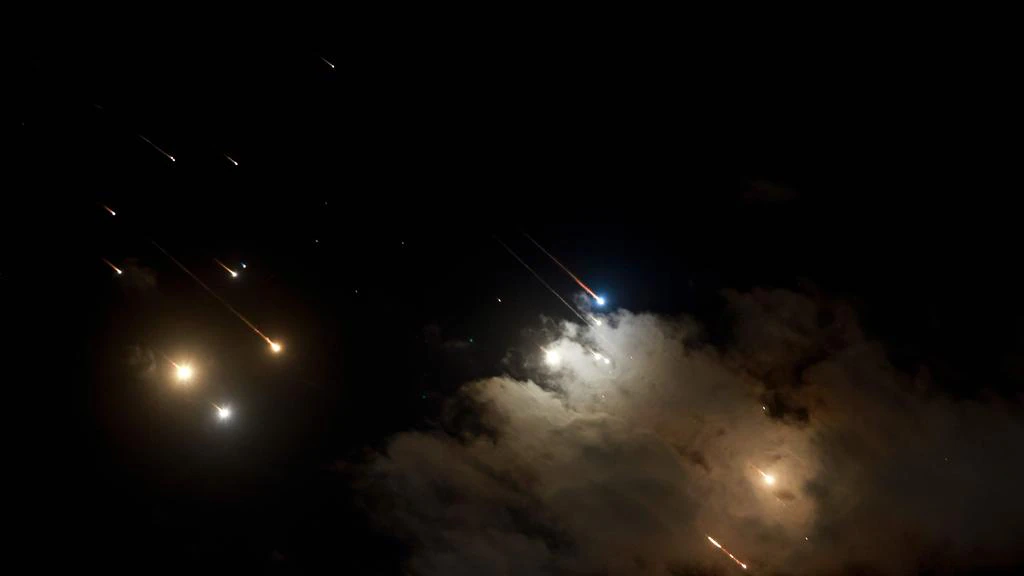
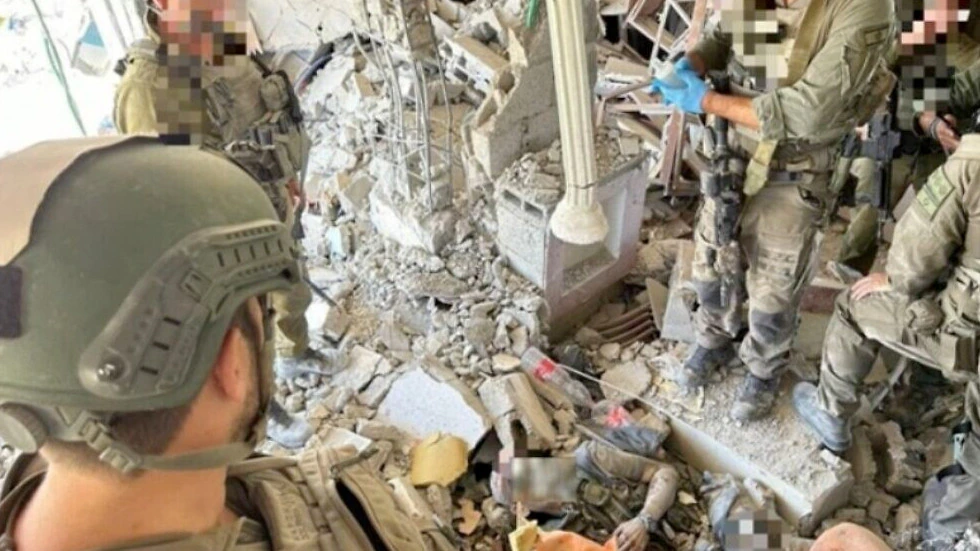




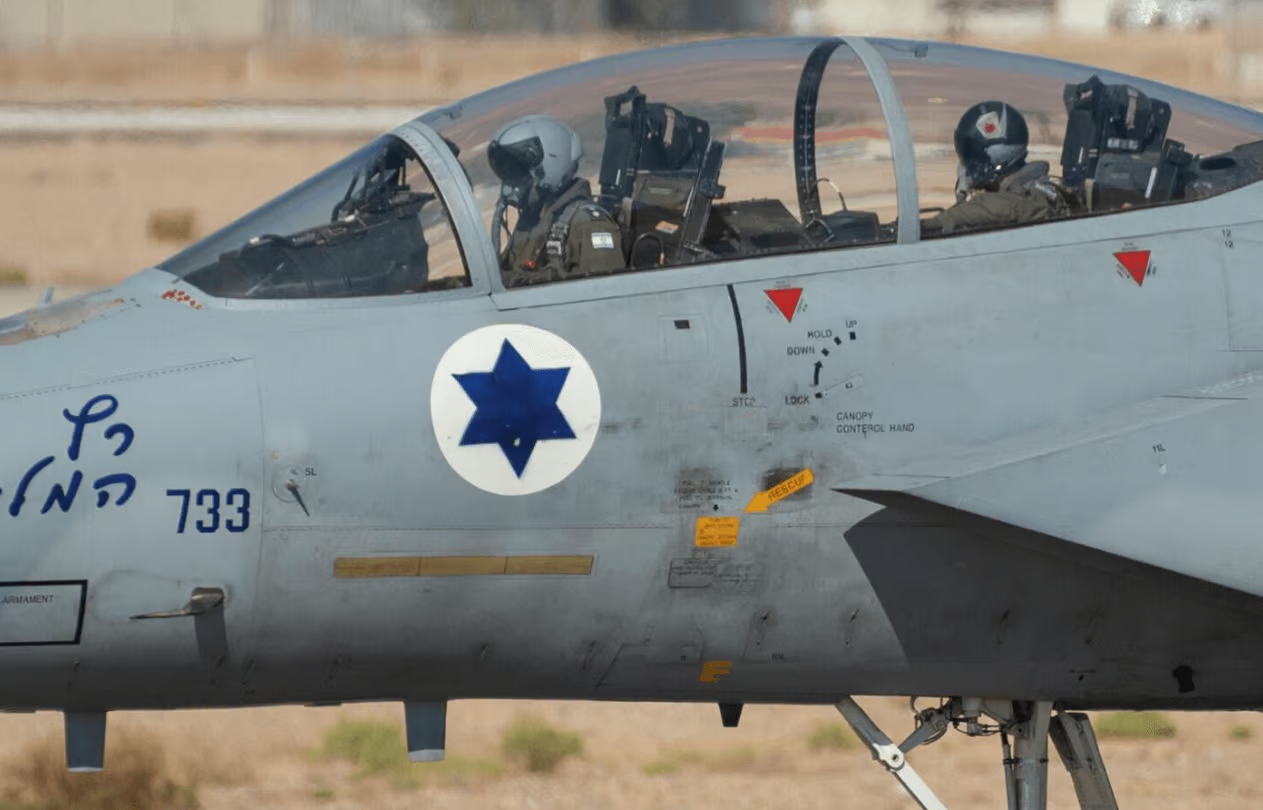
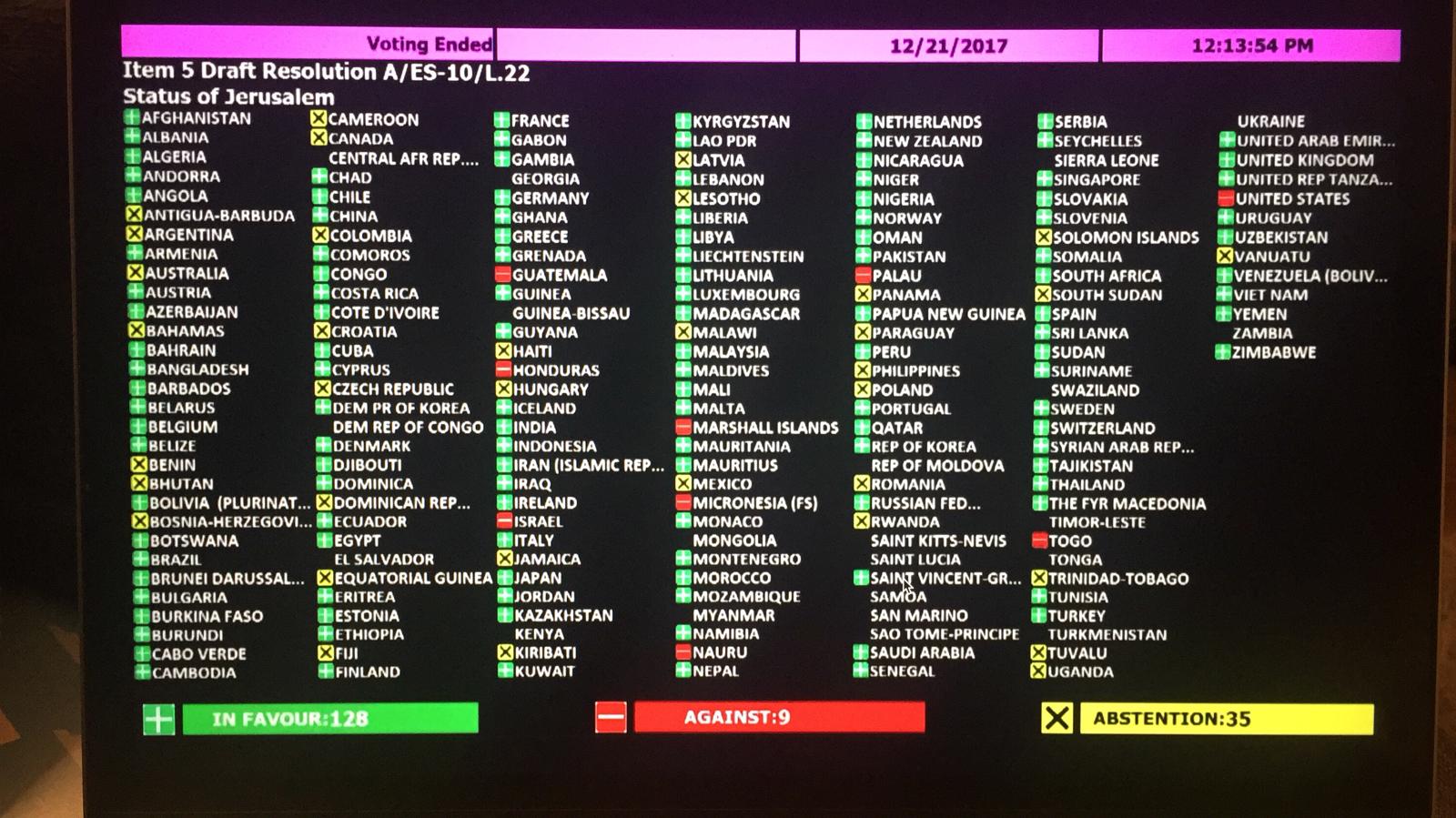


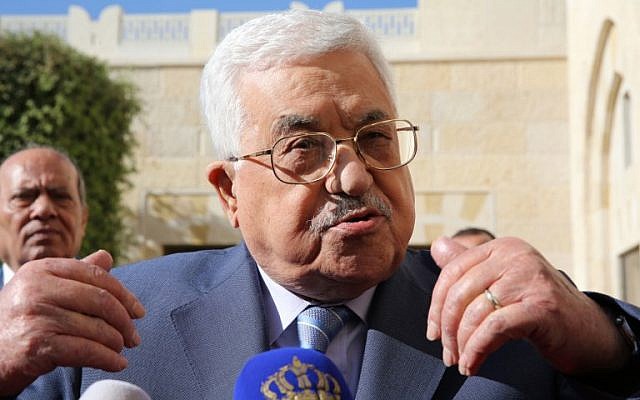

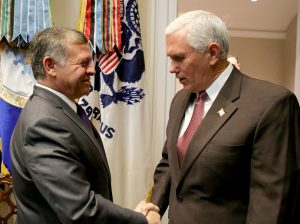
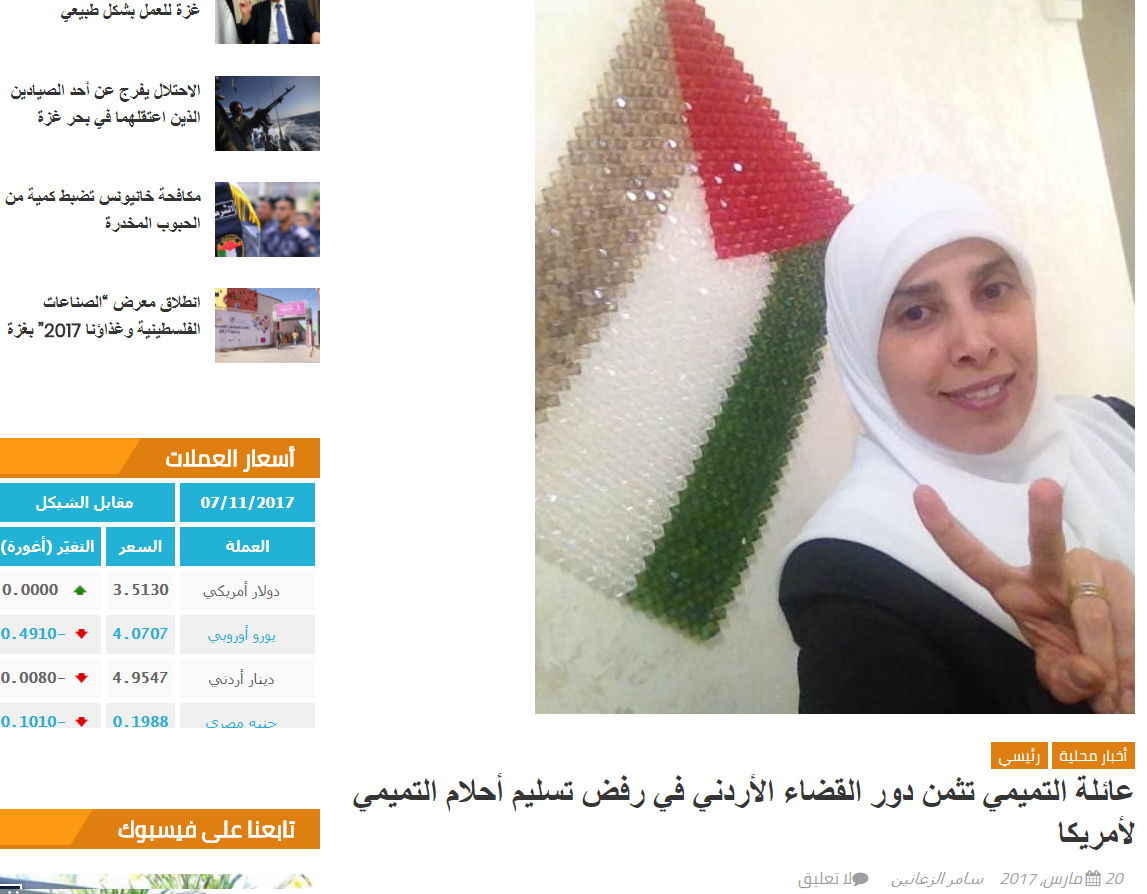

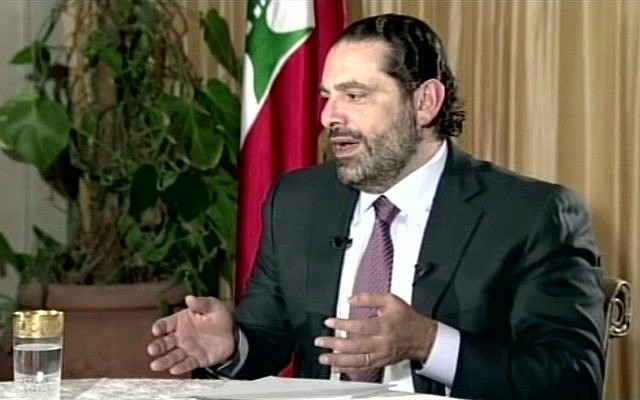

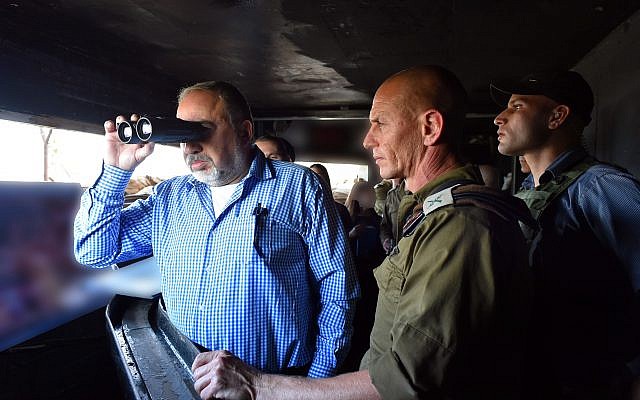





 anneinpt
 artaxes
 danmillerinpanama
 davidking1530
 Peter Hofman
 Joseph Wouk
 Peter
Peter Louisiana Steve
 WarSclerotic
Recent Comments