Posted tagged ‘Islamic slaughter’

Putin congratulates Assad on liberating Palmyra, says Russia to aid in demining ancient city

March 28, 2016

Putin congratulates Assad on liberating Palmyra, says Russia to aid in demining ancient city

Published time: 27 Mar, 2016 15:15 Edited time: 27 Mar, 2016 21:14

Source: Putin congratulates Assad on liberating Palmyra, says Russia to aid in demining ancient city — RT News

Russian President Vladimir Putin has congratulated Syrian President Bashar Assad on retaking the ancient city of Palmyra from Islamic State terrorists. Putin stressed the importance of preserving the UNESCO World Heritage Site.
Read more

A view of the central part of modern Palmyra. © Mikhail Voskresenskiy

In a telephone conversation with the Syrian president, Vladimir Putin congratulated his counterpart on retaking the city of Palmyra from terrorists and noted the importance of preserving this unique historic site for world culture,” Kremlin spokesman Dmitry Peskov said Sunday.

Putin once again stressed that despite the withdrawal of the bulk of Russia’s military contingent from Syria, Russia’s forces will continue to help the Syrian authorities in their anti-terrorist efforts,” he added.

“Assad highly valued the help Russian air forces have provided and underlined that such successes as regaining Palmyra would have been impossible without Russia’s support,” Peskov said.

On Sunday, the Syrian Army retook the historic city of Palmyra from Islamic State (IS, formerly ISIS/ISIL), which had occupied it since last May. Russian warplanes were providing heavy support from the air.

The Russian Air Force has made 40 flights over the area of the Syrian city of Palmyra in the last 24 hours, hitting 117 targets and killing over 80 militants, the Russian Center for Reconciliation in Syria said Sunday.

Putin also held a phone call with UNESCO head Irina Bokova on Sunday. Peskov said Putin told Bokova that “representatives of the Russian contingent will participate in the demining of the ancient city.

READ MORE: Palmyra ‘not just an archaeological site but a symbol of Syria’ – UNESCO

The two agreed that UNESCO, Russia and Syria will soon take the necessary steps to evaluate the damage to the historic site and map out a “plan of restoring what can still be restored,” Peskov added.

According to the Kremlin spokesman, Bokova thanked Putin for Russia’s contribution and confirmed UNESCO’s readiness to cooperate.

While summarizing the results of Russia’s five-month anti-terror campaign in Syria earlier in March, Putin expressed hope that Palmyra would soon be returned to the Syrian people. On March 18, Russia’s military said that the groundwork had been laid for defeating IS in Palmyra.

Read more

© Mikhail Voskresenskiy

At that time, the Syrian Army had already taken control of all dominant heights and major roads around the city, and the terrorists’ logistical support had also been cut off, according to Sergey Rudskoy, chief of the Russian General Staff’s main operations department.

Palmyra shows Damascus strategy more effective than US-led efforts in Syria – Assad

Calling the Syrian Army’s liberation of Palmyra an “important achievement,” Assad told a delegation of French parliamentarians visiting Syria on Sunday that the victory is “new evidence” that the strategy being pursued by Damascus and its allies is effective, according SANA, Syria’s state news agency.

He also pointed out that the strategy’s success is especially apparent when compared to that of the US-led coalition, which involves more than 60 countries, but has achieved very little since its establishment one and a half years ago, for which he blamed a lack of seriousness in fighting terrorism.

The US-led coalition launched its air campaign in Syria in September of 2014 without permission from the Syrian government. Damascus has repeatedly called the intervention ineffective, saying it has failed to weaken terrorists in the region.


EXCLUSIVE – Top Gazan Terrorist: Only A Matter of Time Before ‘Big Operation’ in Eilat

March 28, 2016

Top Gazan Terrorist: Only a Matter of Time Before ‘Big Operation’ in Southern Israel

By Breitbart Jerusalem

27 Mar 2016

Source: EXCLUSIVE – Top Gazan Terrorist: Only A Matter of Time Before ‘Big Operation’ in Eilat

David Silverman/Newsmakers/Getty

TEL AVIV – It is only a matter of time before the Islamic State’s branch in the Egyptian Sinai carries out a “big operation” in the Israeli resort town of Eilat and other parts of southern Israel, a leading Islamic State-allied militant claimed in an exclusive interview.

Abu al-Ayna al-Ansari, a Salafist movement senior official in the Gaza Strip, made the claim in a pre-recorded, hour-long interview to air in full on Sunday on “Aaron Klein Investigative Radio,” the popular weekend talk radio program broadcast on New York’s AM 970 The Answer and NewsTalk 990 AM in Philadelphia. Klein doubles as Breitbart’s senior investigative reporter and Jerusalem bureau chief.

Ansari is a well-known Gaza Salafist jihadist allied with Islamic State ideology. During the interview with Klein, Ansari seemed to be speaking as an actual IS member, repeatedly using the pronoun “we” when referring to IS and even making declarations on behalf of IS.

IS has been reluctant to officially declare its presence in Gaza for fear of a Hamas crackdown, but the group is known to be active in the coastal enclave and Ansari is a suspected IS leader. IS-aligned militants have taken responsibility for recent rocket fire from Gaza aimed at Israel.

Klein asked Ansari about IS’s capabilities inside Israel.

Ansari replied:

Israel and the United States are at the top of the list of the targets of the Islamic State. The Islamic State educates its people that Israel and the United States are the leaders of the infidels and we believe that Israel should be disappeared.

As for the question about the cells, I cannot give you any details but there is no doubt that the Islamic State keeps working on creating its infrastructure and cells all around the world. And I can confirm that the Wilayat Sinai, the Egyptian branch of the Islamic State that is operating in the Sinai, will be the pioneers in this confrontation with Israel or what is called Israel.

And I can confirm that it is only a question of time when there will be a big operation in Eilat and in the south of Israel. The Wilayat Sinai will be the ones responsible for the confrontation with Israel.

The Jerusalem Post, which also reported on Klein’s interview, noted Col. Yehuda Cohen, the commander of the Israel Defense Forces’ Sagi Brigade operating on the border with Egypt, warned in September that the Islamic State in Egypt will likely eventually attempt terrorist attacks against Israel.

“In the end it must be remembered this organization was formed by terrorists that dream of a terror attack against Israel, and it will come. It’s clear that there will be a terror attack against Israel, I believe that it will happen during my tenure,” Cohen told Israel’s Army Radio at the time.

“I teach my people to expect it to come tomorrow, to always be ready for it. When it happens, my doctrine is that we must strike a very strong blow at the same point and ensure that there are zero successful actions for the enemy,” he said, referring to the IDF.

U.S. at Easter: When Christians Are Slaughtered, Look the Other Way

March 27, 2016

U.S. at Easter: When Christians Are Slaughtered, Look the Other Way, Gatestone InstituteRaymond Ibrahim, March 27, 2016

♦ “Over 500 Christian villagers were slain in one night.” — Emmanuel Ogebe, Nigerian human rights lawyer, March 2, 2016.

♦ What Christians in Nigeria are experiencing is a live snapshot of what millions of Christians and other non-Muslims have experienced since the seventh century, when Islam “migrated” to their borders: violence, persecution, enslavement, and the destruction of churches.

♦ The Obama Administration refuses to associate Boko Haram — an organization that defines itself in purely Islamic terms — with Islam, just as it refuses to associate the ISIS with Islam.

♦ In all cases, the Obama Administration looks the other way, while insisting that the jihad is a product of “inequality,” “poverty” and “a lack of opportunity for jobs” never of Islamic teaching.

Boko Haram, the Nigerian Islamic extremist group, has killed more people in the name of jihad than the Islamic State (ISIS), according to the findings of a new report. Since 2000, when twelve Northern Nigerian states began implementing or more fully enforcing Islamic sharia law, “between 9,000 to 11,500 Christians” have been killed. This is “a conservative estimate.”

In addition, “1.3 million Christians have become internally displaced or forced to relocate elsewhere,” and “13,000 churches have been closed or destroyed altogether.” Countless “thousands of Christian businesses, houses and other property have been destroyed.”

The report alludes to a number of other factors that connect the growth of the Nigerian jihad to the growth of the global jihad. The rise of anti-Christian, Islamic supremacism

“did not emerge in Northern Nigeria until the 1980s, when Nigerian scholars and students returned from Arabic countries influenced by Wahhabi and Salafist teaching. Each year, thousands of West African Muslims get free scholarships to pursue their studies in the Sunni Arab countries; this has had a major impact on Nigerian culture.”

This “major impact” is not limited to Nigeria. Saudi Arabia annually spends over $100 billion disseminating “Wahhabi and Salafist teaching” — or what growing numbers of Muslims refer to as “true Islam”. They also do so through European mosques and those in the United States. Behind the radicalization of ISIS, Boko Haram, and Lone Wolf Muslims, stand America’s best Muslim friends and allies.

Another important finding from the report is that,

“Not just radical Islam, Boko Haram being the most notable example, but also Muslim Hausa-Fulani herdsmen and the Northern Muslim political and religious elite are also major actors of targeted violence towards the Christian minority.”

Most recently, on March 2, Nigerian human rights lawyer Emmanuel Ogebe sent an email saying: “I arrived Nigeria a few days ago to investigate what appears to be the worst massacre by Muslim [Hausa-Fulani] herdsmen… Over 500 Christian villagers were slain in one night.”

Similarly, according to a West African source, “Once Boko Haram is defeated, the problem will not be solved. Christians living under Sharia law are facing discrimination and marginalization and have limited to no access to federal rights.”

The report finally finds that much of the anti-Christian violence derives from the historical “migration of Muslims into non-Muslim territories in northern Nigeria to promote the Islamic religious and missionary agenda in all parts of northern Nigeria.” In other words, what Christians in Nigeria are experiencing is a live snapshot of what millions of Christians and other non-Muslims have experienced since the seventh century, when Islam “migrated” to their borders: violence, persecution, enslavement, and the destruction of churches.

All of these findings contradict the Obama Administration’s official narrative concerning the unrest in Nigeria. For years, the administration refused to list Boko Haram — which has slaughtered more Christians and “apostates” than even ISIS — as a terrorist organization. It finally did so in November 2013, after several years of pressure from lawmakers, human rights activists, and lobbyists.

1529For years, the Obama Administration refused to list Boko Haram — which has slaughtered more Christians and “apostates” than even ISIS — as a terrorist organization. It finally did so in November 2013, after several years of pressure. Pictured above: Boko Haram leader Abubakar Shekau (center).

Even so, the Obama Administration refuses to associate Boko Haram — an organization that defines itself in purely Islamic terms — with Islam, just as it refuses to associate the ISIS with Islam. Although Boko Haram and its allies have yet to miss a year when they do not bomb or burn several churches during the Christmas or Easter celebrations, on Easter Day, 2012, after the organization had murdered 39 Christian worshippers, U.S. Assistant Secretary of State for African Affairs Johnnie Carson said: “I want to take this opportunity to stress one key point and that is that religion is not driving extremist violence” in the Muslim-majority north.

So what is? The administration attributes to Boko Haram the same motivation it attributes to the Islamic State — or as President Bill Clinton once memorably put it in a reference to Boko Haram’s murder campaign: “inequality” and “poverty” are “what’s fueling all this stuff.”

That assessment is similar to the Obama Administration’s claim that “a lack of opportunity for jobs” is what created ISIS; or CIA John Brennan’s claim that the jihadi ideology the world over is “fed a lot of times by, you know, political repression, by economic, you know, disenfranchisement, by, you know, lack of education and ignorance, so there — there are a number of phenomena right now that I think are fueling the fires of, you know, this ideology.”

Appeasing the jihadis has been the administration’s policy, or in the words of Clinton’s advice to the Nigerian government: “[I]t is almost impossible to cure a problem based on violence with violence.” Countless decapitated Christian heads later, when Nigerian forces killed 30 Boko Haram members in a particularly powerful offensive carried out in May 2013, Reuters reported that U.S. Secretary of State John Kerry “issued a strongly worded statement” to the Nigerian president: “We are … deeply concerned,” he said, “by credible allegations that Nigerian security forces are committing gross human rights violations, which, in turn, only escalate the violence and fuel extremism” from Boko Haram.

Christian life in Muslim-majority areas of Nigeria is merely a microcosm of Christian life in Muslim-majority nations around the world. Christians are being persecuted and killed, their churches banned, burned or bombed. Thanks to Saudi petrodollars, the men behind the persecution are almost always “influenced by Wahhabi and Salafist teaching,” and include not just “extremists,” but also the “political and religious elite.” In all cases, the Obama Administration looks the other way, while insisting that the jihad is a product of “inequality,” “poverty” and “a lack of opportunity for jobs” never of Islamic teaching.

Before our eyes: Syria’s Battle for Palmyra in latest RT reports (VIDEOS)

March 26, 2016

Before our eyes: Syria’s Battle for Palmyra in latest RT reports (VIDEOS)

Published time: 26 Mar, 2016 06:36

Source: Before our eyes: Syria’s Battle for Palmyra in latest RT reports (VIDEOS) — RT News

© Joseph Eid / AFP

Syrian army is close to regaining full control of the ancient city of Palmyra. Check out some of RT’s exclusive footage and battleground reports on how Islamic State (IS, previously ISIS/ISIL) militants are being pushed from the UNESCO heritage site.

Fierce fighting rages on

RT’s agency Ruptly’s latest video footage shows units of the Syrian Arab Army (SAA) battling IS militants in and around Palmyra on Friday. The historical ruins of Palmyra are clearly visible from the position of Syrian mortar crews.

READ MORE: Syrian Army retakes historic citadel from ISIS continuing advance on Palmyra – state media

In the latest update, Syria state TV said that troops have regained control of the Syriatel hill near Palmyra’s castle and are a step closer to retaking the whole city, which has been under Islamic State control since last May.

Russia helping with air sorties

Russian warplanes offered crucial support to the Syrian forces on the ground this week by carrying out 41 sorties and destroying 146 terrorist targets from Tuesday to Thursday, Russia’s Defense Ministry said.

READ MORE: Russian Air Force carried out 41 sorties to support Syrian army’s Palmyra offensive

One of the stories that stood out was a report on Russian Special Operations Forces officer who called a strike onto himself when he was compromised and surrounded by IS militants near Palmyra. Thanks to the brave actions of this officer and others, Russian military planes have been able to pinpoint IS targets with precision – something absolutely crucial in the circumstances.

ISIS pillage of Palmyra

A Russian TV crew captured a striking footage of Palmyra revealing the damage endured under IS occupation. The iconic 2,000-year-old Arch of Triumph was blown up by the jihadists in October 2015.

READ MORE: Striking drone footage shows what remains of Palmyra after ISIS pillage

Good win or bad win? US undecided

The US government still seems on the fence on whether or not the ancient city should be liberated from the hands of Islamic State by Syrian President Bashar Assad’s forces. Only when pressed by reporters did the State Department call IS “probably a greater evil” than President Assad.

READ MORE: US State Dept fails to say if ISIS must be pushed out of Palmyra or not

Bomb traps danger 

The Syrian army is very close to retaking control of the whole city, but it fears that IS militants have hidden bombs at ancient sites. Before more information can be gathered, the troops will not know when to expect a full-scale offensive against IS.

IS has used this tactic in the past. Also, the extremist group has carried out brutal executions at historical parts of the city by binding individuals to ancient columns and blowing them up.

RT crews remain on battlefront

The RT crew was one of the few that filmed the fighting in Palmyra, offering an exclusive look into the progress of Syrian soldiers in pushing out Islamic State fighters.

READ MORE: RT EXCLUSIVE: ISIS position in Palmyra up-close, RT 1st intl TV crew to follow Syrian Army assault

The conditions they faced while on the ground were extremely dangerous. RT’s Lizzie Phelan and her team risked their lives to report from a position with direct sight of Islamic State militants.

Just meters from where the crew was filming, a mortar landed next to their car. Shrapnel injured one of the Syrian Army soldiers.

Jordan’s king accuses Turkey of sending terrorists to Europe

March 26, 2016

Jordan’s king accuses Turkey of sending terrorists to Europe #Abdullah’sWar Abdullah tells US politicians that radicals are being ‘manufactured in Turkey… as part of Turkish policy’

Last update:
Saturday 26 March 2016 9:20 UTC

Source: Jordan’s king accuses Turkey of sending terrorists to Europe | Middle East Eye

Jordan’s king, Abdullah, and the Turkish president, Recep Tayyip Erdogan (AFP)

King Abdullah of Jordan accused Turkey of exporting terrorists to Europe at a top level meeting with senior US politicians in January, the MEE can reveal.

The king said Europe’s biggest refugee crisis was not an accident, and neither was the presence of terrorists among them: “The fact that terrorists are going to Europe is part of Turkish policy and Turkey keeps on getting a slap on the hand, but they are let off the hook.”

Asked by one of the congressmen present whether the Islamic State group was exporting oil to Turkey, Abdullah replied: ”Absolutely.”

Abdullah made his remarks during a wide-ranging debriefing to Congress on 11 January, the day a meeting with the US president, Barack Obama, was cancelled.

The White House was forced to deny that Obama snubbed one of America’s closest allies in the Middle East, attributing the cancellation to “scheduling conflicts,” although Obama and Abdullah met briefly at Andrews Air Force Base a day later.

Present at the meeting in Congress were the chairmen and members of the Senate Intelligence, Foreign Relations and Armed Services committees, including Senators John McCain and Bob Corker, and Senators Mitch McConnell and Harry Reid, the Senate Majority and Minority leaders respectively.

According to a detailed account of the meeting seen by MEE, the king went on to explain what he thought was the motivation of Turkey’s president, Recep Tayyip Erdogan.

Abdullah said that Erdogan believed in a “radical Islamic solution to the region”.

He repeated: “Turkey sought a religious solution to Syria, while we are looking at moderate elements in the south and Jordan pushed for a third option that would not allow a religious option.”

The king presented Turkey as part of a strategic challenge to the world.

“We keep being forced to tackle tactical problems against ISIL [the Islamic State group] but not the strategic issue. We forget the issue [of] the Turks who are not with us on this strategically.”

He claimed that Turkey had not only supported religious groups in Syria, and was letting foreign fighters in, but had also been helping Islamist militias in Libya and Somalia.

Abdullah claimed that “radicalisation was being manufactured in Turkey” and asked the US senators why the Turks were training the Somali army.

The king invited the US politicians present to ask the presidents of Kosovo and Albania about the Turks.

Abdullah said that both countries were begging Europe to include them, before Erdogan did.

Abdullah was supported in his remarks by his foreign minister, Nasser Judeh, who said that the Albanian president (Bujar Nishani) was a Catholic married to a Muslim, and that that was a model which should be protected in a Muslim majority country.

Judeh said that when the Russian bombing campaign prevented Turkey from establishing safe zones in northern Syria to stop refugees from coming to Turkey, “Turkey unleashed the refugees onto Europe”.

Both Judeh and Abdullah bridled at the $3bn deal offered by Europe to Turkey, noting that Turkey had only 2m Syrian refugees out of a population of 70m, whereas Jordan was facing “a bigger problem proportionally”.

Jordan and Turkey are officially allies. The Turkish prime minister, Ahmed Davutoglu, cancelled an official visit to Jordan after the latest bomb attack in Turkey, which on 13 March killed 34 people in Ankara.

The Kurdish Freedom Falcons (TAK), an offshoot of the PKK, or Kurdistan Workers’ Party, claimed responsibility for the bombing.

The postponed visit is due to take place this weekend and Davutoglu will be mindful that Abdullah told senators that Turkey was using the Kurds as an “excuse” for its policies in Syria.

Galip Dalay, research director at Al Sharq Forum and senior associate fellow on Turkey and Kurdish Affairs at Al Jazeera Center for Studies, said it was wrong to portray Turkey as having a strategic goal of establishing an Islamist government in Syria.

He said: “Turkey did its best in the first eight months of the Syrian crisis to find a political solution to the crisis, which would have included [Syrian President] Bashar Assad. Back then, Turkey was criticised in the region and the West for being too soft on the Assad regime and being too optimistic about the possibility of reform. When it became clear, after eight months of arduous attempts, that Assad had no intention of initiating a political and democratic process to meet the demands of the protestors, Turkey threw its weight behind the opposition.”

Dalay said that the claim Turkey was buying oil from the Islamic State group was a Russian fabrication concocted by Moscow after Turkey shot down the Russian fighter. “Turkey is not the only one saying there is no evidence to support this claim. The United States said it too.”

The Turkish government would not comment officially on Abdullah’s reported remarks on 11 January. But a senior Turkish source accused the king of becoming “the spokesman for Bashar al-Assad”.

He said the portrait emerging from these remarks was not one of a king speaking but of a “Western journalist with a fuzzy state of mind and little familiarity with the region”.

He said: “Turkey is definitely carrying out an intense struggle against Daesh [a reference to the Islamic State group]. Bombings take place in Turkey, not in Jordan. When this is the case, groundless accusations by King Abdullah are totally unacceptable.

“Moreover, his tackling of the Daesh issue with such unfounded information also raises the question about whether Jordan could play a meaningful role in the fight against Daesh.”

He said the king’s claims that IS was selling oil to Turkey were not only absurd but showed that Abdullah did not have the slightest idea about what was going on in Syria.

“The king’s statements and accusations against Turkey are not the first. Unfortunately, all of his allegations are the same as the slanders frequently expressed by the Assad regime.

“It would be to Jordan’s and the region’s interest if Jordan, as a friend of Turkey, were to work for a strategic cooperation with a strategic power like Turkey, instead of acting like the spokesperson of Assad.”

So agreeable: Hillary Clinton nods almost non-stop during roundtable

March 25, 2016

So agreeable: Hillary Clinton nods almost non-stop during roundtable, Washington Free Beacon via You Tube, March 24, 2016


Addressing terrorism: what’s the plan?

March 25, 2016

Addressing terrorism: what’s the plan? Sharyl Attkisson, March 24, 2016

Obama and Raul

[W]e’ve been convinced that we’re disallowed from taking most any action that would be logical or effective in protecting ourselves. That’s not to argue that all or even one of these specific measures should be taken. But the fact is, more Americans can probably cite the list of things we won’t do; it would be helpful for us to understand what we will do.

********************

In early 2014, I was in a small meeting with a high-ranking Obama administration official who was involved in counterterrorism. When asked, he made several candid assertions:

  • Al-Qaeda was never on the run. The President’s terrorism experts never told him it was. They were mystified by his 2012 campaign claims that seemed to the contrary.
  • Al-Qaeda and related terrorists had vastly expanded to other nations and grown more powerful during President Obama’s tenure.
  • The wave of terrorist violence had spread from the Mideast to North Africa and would next hit Europe, then the U.S. The official said this matter-of-factly, with no visible sense of urgency or distress, as if a fait accompli.
  • The terrorists, he acknowledged, had a better and more developed strategy than did the U.S. In fact, he said the U.S. did not have a strategy for addressing the terrorist threat.

In the two years since that conversation, the official’s predictions about terror spreading to Europe and then the U.S. have come to pass. ISIS has emerged as a driving force. And most Americans would say there’s still no discernible plan.

The debates over securing the border and tightening the screening of immigrants are an outgrowth of the absence of a national plan. In order to feel a sense of security, Americans need to believe there’s a cohesive strategy with stated goals and explicit tactics. We don’t need to know all the fine points. Sensitive tactical details, for example, should be protected. But we should be able to understand how our leaders are using their authority and our billions of tax dollars to protect us. What’s the plan?

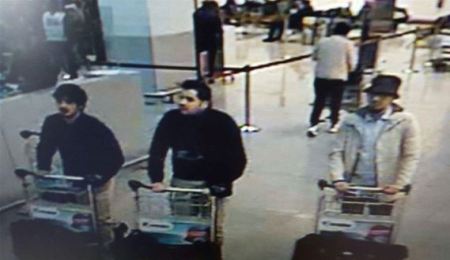
Brussels_suspects_CCTV-1March 2016 Brussels terrorist suspects

n the defense of this (or any) administration, it’s the most difficult plan to devise. It’s hard to imagine a more daunting task than defeating terrorist fighters who play by no rules; while the U.S. is bound by ethics, politics, guidelines and international agreements. And there’s little disincentive for Islamic extremists to join the jihad. After all, what’s the worst that can happen to these barbaric fighters who may come from primitive and destitute circumstances? They get captured by the U.S. and get a better way of life: three meals a day, a roof over their head, a shirt on their back, security, interrogation that promises not to get too tough, free health care and American advocates who will fight to make sure they have recreation, literature and religious expression.

Yet the academic and military discussions about strategy to date have been a source of confusion rather than clarity. The administration may say it’s not changing strategy while the military says it is. At best, the expressed “battle plans” are piecemeal. We’re working to retake cities we already once controlled…but walked away from? Then what? What’s the plan?

President_of_the_United_States_Barack_Obama_making_a_call_in_a_sensitive_compartmented_information_facility_SCIF-1-768x512President Obama in a sensitive compartmented information facility (SCIF)

The conundrum evokes complaints from Vietnam War-era soldiers who said they never really knew what they were doing. They would battle to the death to take a village or a hill, then be ordered to simply walk away from it a few days later, relinquishing it back to the enemy. What was the plan?

It reminds me of the border. While some politicians claim the southern U.S. border is secure, federal and local law enforcement who are there say that couldn’t be farther from the truth. They insist there’s no will or leadership from Washington to bring the border under control, and no strategy to do so. In fact, the only strategy they can verbalize, when asked, is the one they infer: to be as lax as possible in policing the border and enforcing immigration law. What’s the plan?

We’re left with presidential candidates who have attempted to put plan to paper. Because of her experience and knowledge, Hillary Clinton may seem best positioned to verbalize a clear strategy. Yet as secretary of state, her own miscalculations arguably hastened the rise of ISIS from the ashes of Libya. Her emails from the time confirm that she took the lead in aggressively pursuing the poorly-conceived ouster of Libyan dictator Muammar Ghaddafi without foreseeing the vacuum it would create. In its wake: the tragedy of Benghazi, and the transformation of Libya into a new proving ground for Islamic extremists. It doesn’t inspire confidence that a Clinton leadership would competently address what she failed to foresee as a top Obama official. On the other hand, it could be argued that mistakes of the past provide important lessons for those open to learning from them.

Hillary_Clinton_official_Secretary_of_State_portrait_cropHillary Clinton as secretary of state

There’s little doubt that, left its own devices, the world’s strongest military and best intelligence structure could do much better. But they’re hampered by the growing list of what we won’t do.

We won’t secure our southern border that FBI and Homeland Security officials have warned terrorists seek to exploit.

We won’t tighten up visa and immigration security because of the special interests who would cry racism.

We won’t send more terrorists captured in the field to Guantanamo Bay, lest we be criticized.

We won’t question detainees harshly to get information; that’s viewed as inhumane.

We won’t bomb targets in a way that may hurt a civilian or destroy assets. Obviously, the enemy has thus learned to live and work among civilians.

We’re told to report suspicions by the same authorities that view suspicion as racist.

In short, we’ve been convinced that we’re disallowed from taking most any action that would be logical or effective in protecting ourselves. That’s not to argue that all or even one of these specific measures should be taken. But the fact is, more Americans can probably cite the list of things we won’t do; it would be helpful for us to understand what we will do.

It’s an arduous question. But answering it is under the purview of our chosen leaders. What’s the plan?

Share

An Islamic Apocalypse in Brussels

March 24, 2016

An Islamic Apocalypse in Brussels, Front Page MagazineRaymond Ibrahim, March 24, 2016

gh

[The] spread of Islam by arms is a religious duty upon Muslims in general … Jihad must continue to be done until the whole world is under the rule of Islam … Islam must completely be made over before the doctrine of jihad [warfare to spread Islam] can be eliminated.

**************************

Islamic jihad struck Brussels Tuesday morning—first at Brussels Airport and then at a metro station 400 meters from EU headquarters—leaving at least 34 people dead and 230 injured.

It was an apocalyptic scene according to survivors, “with blood and dismembered bodies everywhere,” even “thrown in to the air.”  One man recalled the “horror. I saw at least seven people dead. There was blood. People had lost legs. You could see their bodies but no legs.”

Witnesses heard the attackers yelling in Arabic moments before the bombs—one of which contained nails—detonated.  Other jihadi trademarks—including an unexploded suicide vest and a Kalashnikov rifle beside the body of a slain terrorist—were found.  Islam’s ancient war tactic of blending in with non-Muslims was also implemented.

Horrific as the attack is, its inspiration and Western responses to it are all too typical—meaning, as I opined last year after the Paris massacre, “many more such attacks and worse will continue.  Count on it.”

First, as happened on 9/11, Muslims around the world—those unnamed millions the media refer to as “ISIS supporters”—celebrated, including by once again handing out candy and shouting Islam’s victory war cry, “Allahu Akbar.” Yes, that ancient Islamic hate was back in the air and rampant on social media.  “We are not just clapping, but we are happy again. We are smiling, we are laughing and we are joyful like it’s a day of celebration,” tweeted one ISIS sympathizer.  Another wrote: “#Brussels, if you continue your war against the religion of Allah then this is our response.”  Another wrote: “What a beautiful day today.  F*** Belgium.” Yet another wrote, “A lot of duas [Muslim prayers] were answered today.”

Still, most Muslim sympathizers were quick to portray their bloodlust as a product of grievances against the West: “the most common remark under the hashtag was ‘You declared war against us and bombed us, and we attack you inside your homeland.’ Another popular reaction from ISIS supports on Twitter was that the Brussels attacks were intended to avenge the Muslims’ blood that was spilled in Mosul in a series of airstrikes by the Western coalition over the weekend.”

Meanwhile, and as usual, in its communiques to fellow Muslims, ISIS articulated the attack through a distinctly Islamic paradigm.  It even signaled the attack with the words, “We have come to you with slaughter”—an assertion based on the Muslim prophet Muhammad’s words to a non-Muslim tribe that refused to submit to Islam: “I have come to you with slaughter.”

If this assertion is not clear enough concerning the intent and mission of Muhammad—and those who seek to follow him—another canonical assertion attributed to him and regularly quoted by jihadis, including over a decade ago in the opening paragraph of al-Qaeda’s “Declaration of War against Americans,” has the prophet saying:

I have been sent with the sword between my hands to ensure that no one but Allah is worshipped—Allah who put my livelihood under the shadow of my spear and who inflicts humiliation and scorn on those who disobey my commandments (The Al Qaeda Reader, p.12).

Unfortunately, this one aspect—that Islamic scripture clearly, plainly, and unequivocally promotes violence against all who refuse to submit to Allah—is the very same aspect most vehemently denied by Western elites.   Already, as always happens after an Islamic terror attack in the West, the talking heads are warning against “rampant Islamophobia” and abacklash against Muslims.  Media are hosting professional liars, like Ramadan Foundation’s Muhammad Shafiq, who insists that “terrorism is forbidden in Islam” (even though the Koran calls on Muslims to terrorize those who resist Islam, e.g., 3:151 and 8:12).

Still, due to these growing numbers of jihadi attacks on Western soil, increasing numbers of politicians are responding with tough—but ultimately meaningless—words: “We are at war,” responded French Prime Minister Manuel Valls.  “We have been subjected for the last few months in Europe to acts of war.”

This is true.  But just like George W. Bush’s famous “war on terrorism”—a war on a method not its motivation—Valls doesn’t indicate who “we are at war” with, even though the most elemental step in winning a war is to “know your enemy.”

One of the few American political aspirants who need not revise his tone in light of this attack is Donald Trump.  Over two months ago, he said “Go to Brussels. Go to Paris. Go to different places. There is something going on and it’s not good, where they want Shariah law.… You go to Brussels — I was in Brussels a long time ago, 20 years ago, so beautiful, everything is so beautiful — it’s like living in a hellhole right now.”

This latest terror strike in Europe will likely reignite the refugee debate, which, while important, also minimizes the significance of the issue.  The common denominator between all these recent terror strikes throughout the West is not that the culprits were all refugees but rather that they were all Muslim.  Many terror attacks were homegrown. Muslim citizens of America were responsible for Fort Hood (13 murdered), Boston Marathon (four murdered), Chattanooga (four murdered), and most recently San Bernardino (14 murdered).

Of course, Europe could have spared itself if only it would’ve looked to the plight of non-Muslim minorities living in Muslim majority nations.  As far back as 2012, after Western supported jihadi/freedom fighters were unleashed on Assad’s formerly stable Syria, intentionally displacing hundreds of thousands of Christians, the Syrian Christian archbishop correctly predicted “the jihadis will not stop here [Middle East], the war will spread to Europe.”  Four years later and the war has certainly begun.

Consider the 2010 massacre at the Our Lady of Salvation Church in Baghdad.  Armed jihadis stormed the church during Sunday worship service, opened fire indiscriminately at the Christian worshipers, before detonating their suicide vests.  At least fifty-eight Christian worshippers, including many women and children, were murdered, and nearly 100 wounded—many, like in Brussels, losing their arms or legs (see here for GRAPHIC pictures).  If the Brussel jihadis used nails in their bombs, the Baghdad church jihadis wore vests “filled with ball bearings to kill as many people as possible.”

Now, if Brussels—or New York, or London, or Madrid, ad infinitum—was really “intended to avenge the Muslims’ blood that was spilled in Mosul in a series of airstrikes,” as aggrieved Muslims regularly claim—then one must ask:  why are immensely weak, outnumbered, ostracized, and politically disenfranchised Christian minorities living in the Muslim world, who are wholly incapable of hurting any Muslim, also being terrorized and slaughtered, to the point of genocide?

The answer should be clear.  So long as Islam calls for jihad against those who reject Allah and his prophet, so long will attacks like Brussels (and the countless before it) continue.  Before the age of political correctness, the Encyclopaedia of Islam put it this way:

[The] spread of Islam by arms is a religious duty upon Muslims in general … Jihad must continue to be done until the whole world is under the rule of Islam … Islam must completely be made over before the doctrine of jihad [warfare to spread Islam] can be eliminated.

This is the one ugly fact that few want to accept, much less act on—and understandably so, for the ramifications are immense.

Gingrich: When will our leaders realize we are at war?

March 24, 2016

Gingrich: When will our leaders realize we are at war? Fox News via You Tube, March 23, 2016


ISIS, oil & Turkey: RT films trove of jihadist docs detailing illegal trade with Ankara (EXCLUSIVE)

March 24, 2016

ISIS, oil & Turkey: RT films trove of jihadist docs detailing illegal trade with Ankara (EXCLUSIVE)

Published time: 24 Mar, 2016 03:00 Edited time: 24 Mar, 2016 05:12

Source: ISIS, oil & Turkey: RT films trove of jihadist docs detailing illegal trade with Ankara (EXCLUSIVE) — RT News

Islamic State documents, including invoices, which militants abandoned while retreating in haste. / RT

An RT Documentary crew filming in northern Syria has seen Islamic State (IS, ISIS/ISIL) documents abandoned by retreating terrorists and found by the Kurds that, along with captured IS recruits, provide a stunning insight into the alleged Turkey-IS oil trade links.

Shortly after the outbreak of the Syrian war, IS became a game-changer in Iraq and, in particular, Syria. Beheadings on camera, mass killings, and enslavement, as well as apparent connections to the Paris and Brussels attacks had become synonymous with the terror group, giving it wide publicity.

Running a viable militant organization with such remarkable capabilities would be impossible without some logistical and financial support from the outside.

Turkey, which has been actively engaged in the Syrian war since the outset, has repeatedly denied claims that it is aiding IS. However, while Ankara insists that it is the jihadist group’s sworn enemy, facts on the ground often tell a different story.

RT has spoken to several witnesses who were involved in Islamic State’s trade activities and accessed the terror group’s documents, which provide insight into how and where foreign militants enter Syria to join the terrorist “state.”

Abandoned buildings used by ISIS militants in northern Syria.

Detailed oil invoices

The RT Documentary team did most of its filming in the town of Shaddadi, located in the Syrian province Hasakah, which has been partly overrun by IS jihadists. Following the liberation of Shaddadi, which is home to some 10,000 people, RT filmed Kurdish soldiers walking around what used to be the homes of IS fighters and examining piles documents that had been left behind.

Some of the files seized at the scene turned out to be detailed invoices used by IS to calculate daily revenues from their oil fields and refineries, as well as the amount of oil extracted there. All the documents had Islamic State’s symbol at the top.

Example of an Islamic State invoice specifying the quantity of oil sold.

The files showed that “IS has kept very professional records of their oil business,” said the author of the new RT Documentary on Islamic State filmed in northern Syria, who chose to remain anonymous for security reasons.

Every invoice included the name of the driver, the vehicle type driven, and the weight of the truck, both full and empty, as well as the agreed upon price and invoice number.

One of the discovered invoices dated 11 January, 2016, says that IS had extracted some 1,925 barrels of oil from Kabibah oil field and sold it for $38,342.

IS oil goes to Turkey – IS fighters come via Turkey

RT spoke to local residents who had been forced to work in the IS oil industry about what it was like working at the terrorist-controlled oil refinery and where the extracted oil was sold.

The locals attested that “the extracted oil was delivered to an oil refinery, where it was converted into gasoline, gas and other petroleum products. Then the refined product was sold,” the RT documentary’s author said. “Then intermediaries from Raqqa and Allepo arrived to pick up the oil and often mentioned Turkey.”

Important information revealing the connection between IS and Turkey was provided by a Turkish militant previously captured by the Kurds. The IS recruit said on camera that the terrorist group does, in fact, sell oil to Turkey.

“Without even us asking the fighter directly, he admitted that the reason why it was so easy for him to cross the Turkish border and join IS was, in part, due to the fact that Turkey also benefited. When asked how, he said that Turkey gets something out of it – something such as oil.”

RT was also able to speak with a Kurdish soldier in the area, who displayed a collection of passports he had gathered from the dead bodies of IS fighters. The documentary crew’s exclusive footage shows the documents of several jihadists who had come from all over the world, including countries such as Bahrain, Libya, Kazakhstan, Russia, Tunisia, and Turkey.

Passports belonging to Islamic State fighters bearing stamps from Istanbul, Turkey.

Most of these foreign fighters seemed to have come via Turkey, as all of their passports contained entry stamps issued at Turkish border checkpoints.

A YPG member also provided some photos that were retrieved from a USB drive allegedly belonging to future IS militants. One photo showed three men standing in front of the Obelisk of Theodosius, known today as Sultanahmet Meydani, a famous landmark in Istanbul. The next photo showed the three among other fellow militants somewhere in Syria – all armed and equipped.

One of the IS fighters that RT interviewed revealed that there had been no border guards waiting for them when they crossed from Turkey into Syria.

Islamist propaganda printed in Istanbul

Turkey’s logistical support for extremist fighters trying to overthrow Syrian President Bashar Assad’s government, or at least its non-interference with their cross-border movements, has been widely reported, but little has been said about the ideological support coming from Turkish soil.

Among the documents left behind by the terrorists at an IS-run hospital, RT’s crew discovered an Islamist propaganda leaflet printed in Arabic titled “How to wage a perfect battle against the criminal Assad’s regime,” which described ways to combat the Syrian government.

Curiously, the brochure was printed in Turkey, with the cover openly displaying the postal address and phone number of an Istanbul printing house, supplemented by Facebook contacts.

Cover of an Islamist, anti-Assad propaganda leaflet printed in Istanbul, Turkey.

“Many of the people spoke about the connection with Turkey. Turkey is the direct neighbor of IS. If it was willing to close the ‘connection’ between Turkey and IS, the terrorist organization could no longer survive,” the author of the RT documentary said, recalling interviews with Kurds and captured IS recruits. “If IS would stop receiving weapons, new recruits, food, and other help from Turkey, then IS would lose a big sponsor.”

Turkey benefits from Islamic State because the terrorist group provides it with cheap oil and is fighting both Syria’s government and Kurdish population. This is an opinion shared by both Kurds and their mortal enemies from the jihadist organization. The IS documents obtained by RT may provide additional evidence revealing the dirty game being played by the government of Turkish President Recep Tayyip Erdogan in Syria.