Posted tagged ‘Islamic Jihad’

Iran escalates threats, vows to shower Israel with ‘Shahab’ missiles

January 22, 2015

Iran escalates threats, vows to shower Israel with ‘Shahab’ missiles

via Iran escalates threats, vows to shower Israel with ‘Shahab’ missiles – Middle East – Jerusalem Post.


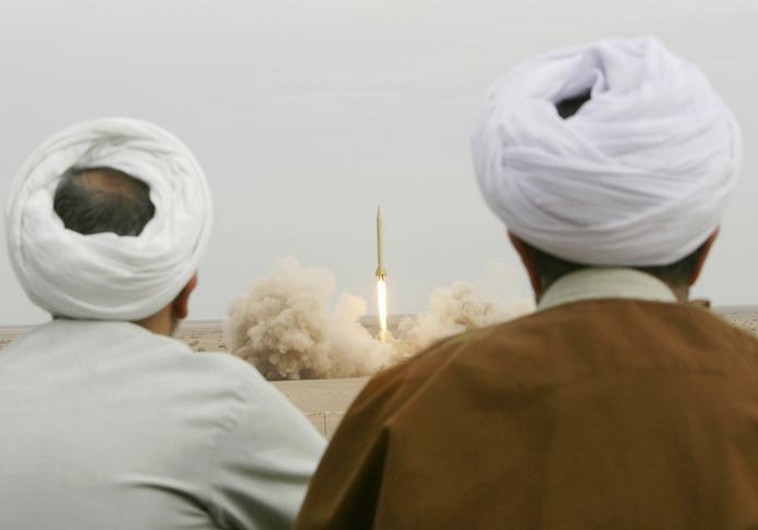
Iranian clerics watch the firing of missile of Shahab 3 during a war game near the holy city of Qom

Iranian clerics watch the firing of a Shahab-3 missile during a war game in a desert near the city of Qom. (photo credit:REUTERS)


Iranian clerics watch the firing of a Shahab-3 missile during a war game in a desert near the city of Qom. (photo credit:REUTERS)

Senior Iranian military officials on Thursday continued to threaten “crushing responses” against Israel for the death of a top Revolutionary Guards officer in an airstrike on the Syrian side of the Golan Heights earlier this week.

The attack also killed senior Hezbollah operatives, among them the son of the late arch-terrorist Imad Mughniyeh.

Brigadier General Hossein Salami, the second-in-command in the Revolutionary Guards, told Iranian state media on Thursday that his troops are capable of firing Shahab-3 missiles on Israel.

“[Israel] should be waiting for crushing responses,” Salami is quoted as saying.

The Iranian officer said that the Golan attack was an attempt to “change the balance of power in Syria” and help “the takfirist,” a reference to the Islamist elements working to topple the government of Tehran’s key ally, President Bashar Assad.

“[The Golan strike] was the reflection of numerous defeats that both Americans and Israelis have suffered in their current strategies,” he said.

“They have seen IRGC’s reactions before, and [therefore] they are worried, and they will witness destructive thunderbolts in practice,” he said.

Hamas Commander Deif to Hezbollah Leader Nasrallah: “Let’s fight Israel together”

January 22, 2015

Hamas Commander Deif to Hezbollah Leader Nasrallah: “Let’s fight Israel together”

The head of Hamas’ military wing signed a letter of condolence sent to Hezbollah’s Secretary General after the eliminations in Syria.

Jan 22, 2015, 04:00 PM | Gal Cohen

via Israel News – Hamas Commander Deif to Hezbollah Leader Nasrallah: “Let’s fight Israel together” – JerusalemOnline.


Photo Credit: Channel 2 News

Five months after the elimination attempt targeting the head of Hamas’ military wing, Mohammed Deif sent a message from hiding in Gaza and expressed his condolences regarding the attack that killed senior level Hezbollah officials, according to a report from Hezbollah’s television station.

Deif sent condolences to Hezbollah Secretary Genral Hassan Nasrallah following the elimination of senior level officials in his terror organization by Israel.  “We must unite our forces against the Zionist enemy and its allies,” Deif wrote to Nasrallah.

“Israel is the real enemy of the Islamic State and all guns should be pointed in its direction,” the Hamas terrorist added.  “We must carry out the next act together, so there will be crossfire throughout the occupied land.”

Sources close to Hezbollah said that earlier this week, the decision was made to respond to the attack in Syria that killed six senior level officials of the terror organization.  According to the report, the decision to respond was accepted by the joint resistance forces in Iran, Syria, and Hezbollah. 

Photo Credit: Channel 2 News/AP

According to the sources, the IDF’s attack did not weaken the terror organization in the Golan and did not disconnect the activities of Hezbollah from Rosh Ha-Nikra to Syria.  They claim Israel’s actions will not prevent the terror organization’s fighters from invading the Galilee in the next confrontation with the IDF.  

Iran, for its part, also addressed Israel’s actions.  Tehran admitted that one of their generals was killed in the incident and said they are committed to responding to the “Israeli aggression.”  An Iranian news site said “following the Zionist attack against the opposition in Syria, General Allahdadi, a former commander of the Iranian Revolutionary Guards, was killed along with Jihad Mughniyeh and three others, who were in the same car.”  An Iranian official added that “the resistance will respond forcefully at the right place and time to this terrorist attack.” 

CNN: Pentagon Pushing for Evacuation of US Embassy in Yemen Before Situation Worsens

January 22, 2015

CNN: Pentagon Pushing for Evacuation of US Embassy in Yemen Before Situation Worsens

by Edwin Mora21 Jan 2015Washington, DC

via CNN: Pentagon Pushing for Evacuation of US Embassy in Yemen Before Situation Worsens – Breitbart.


WASHINGTON — Obama’s State Department wants to keep the U.S. Embassy in Yemen’s capital open for as long as possible, but the Pentagon is pushing for an evacuation before the current situation worsens.

CNN made that revelation on Tuesday citing an unnamed U.S. official with direct knowledge of the evacuation planning.

“The military is aware the State Department wants to keep the embassy open as long as possible, the official said, noting that it’s a valuable tool to monitor Al Qaeda in Yemen,” revealed CNN. “But behind the scenes the Pentagon is pressing the point that if an evacuation becomes necessary they want to do it before the chaos in Sanaa descends into a ‘non permissive environment,’ akin to combat.”

An unnamed defense official told NBC News that the embassy is “not at risk,” adding that the Shiite Muslim Houthi fighters sympathetic to Iran “do not pose a risk to Americans.”

Iran is considered a major state sponsor of terrorism by the United States.

CNN reported on Wednesday that al-Qaeda, a Sunni jihadist group, is expected to benefit from the Houthi takeover of “government buildings, the main airport and a share of power” in Sanaa.

Al-Qaeda’s Yemeni branch is considered a “significant threat” by the United States.

The decision to evacuate State personnel and other Americans in Yemen ultimately lies within the State Department.

Unnamed defense officials “stressed that an evacuation would be ordered if Americans come under serious threat,” noted NBC News.

Roughly 100 U.S. Marines are providing security at the U.S. Embassy in Sanaa.

CNN reported that the Pentagon is prepared to evacuate Americans if necessary.

Two U.S. Navy warships, the USS Iwo Jima and the USS Fort McHenry, were reportedly moved into the Red Sea late on Monday as the Pentagon prepared to evacuate Americans from Yemen if asked to do so by the State Department.

The two Navy amphibious ships were moved “because they will be in the best position if asked,” by the State Department to remove Americans from the embassy, the U.S. official told CNN.

According to the official, the evacuation of “several hundred Americans” from the embassy would be complex and could take several days to carry out.

“Nobody should think this would be easy,” the official told CNN.

U.S. Embassy vehicle was fired upon on Tuesday in the Yemeni capital of Sanaa where U.S.-backed government security forces are clashing with Houthi rebels.

That same day, Houthi fighters reportedly stormed the presidential palace in Sanaa.

Yemeni security forces mounted a brief resistance before relinquishing control of the palace. Yemeni President Abdu Rabu Mansour is reportedly being held captive by the Houthi rebels.

Inside the Fight against ISIS in Iraq

January 21, 2015

Inside the Fight against ISIS in Iraq

January 21, 2015 by Victor Soehngen

via Inside the Fight against ISIS in Iraq | FrontPage Magazine.


Kurdish Brigadier General Qadir points to a plume of smoke that emerged immediately following a US airstrike on an ISIS target. Kirkuk, Iraq (Victor Soehngen).

Amongst the wheat fields of Iraq’s Fertile Crescent, the battle for the nation’s future and the safety of the Kurdistan regional capital of Erbil, continues to rage.

In this sector of the 650-mile Kurdish front Against ISIS (or its Arabic acronym- DAESH, as it is referred to locally) the fight is close quarters, intimate, and fought between relatively small groups of men. The terrain is wide, open, and grassy with features Americans would associate more with the state of Nebraska than with Iraq.

Just a few days ago this area was completely under the control of DAESH militants. They had taken over peoples homes, held local women captive for months, and implemented their own brand of Sharia Law. That just changed due to the brave actions of the Kurdish Peshmerga (with the help of closely coordinated US airstrikes) who liberated the town of Makhmour and several neighboring villages.

I met with the commander of Peshmerga forces in the area, General Najad, who candidly explained the situation from the Kurdish point of view. Holding a BA in political science and his masters in Foreign Policy, the general spoke (in English) with an air that was as much statesman as it was field commander. He was understandably busy; men under his command just retook 6 villages each with 25-30 ISIS fighters in them over the last 48 hours.

When asked if US airstrikes were helping his forces on the ground, his leathered and serious face produced a child like grin. “They have taken out their heavy weapons.” He went on to explain that DAESH has proven to be deadly accurate with artillery, armor, and mortars alike. Is that because some of its members had specialized military training or had experience from foreign armies? He simply replied, “I don’t know, no prisoners have been taken.”

Obama Not Doing Enough

When asked about whether or not he felt that President Obama was doing enough to help the Kurdish people, Najad pointed out how large and powerful America is and how (comparatively) small the fight is here. “If Mr. Obama really wanted to, DAESH could be destroyed in days,” he told me. That is a feeling I heard echoed up and down the front. One Peshmerga Sgt. told me in broken English plainly, “Bush good for Kurdistan, Obama bad,” adding a thumb up and thumb down sign to illustrate his point.

Historically, US support for the Kurds has been erratic going all the way back to the days when the Shah of Iran was Iraq’s greatest threat. The CIA worked with the Iranians at the time to arm the Kurdish rebels against the government in Baghdad, but after Iraq and Iran signed the Algiers Agreement in 1975, support ceased. To make matters worse, as the Iraqi army renewed its campaign to exterminate the (now almost defenseless) Kurds, the Shah denied them access to escape to Iran. For our part, the US under the Carter Administration did nothing to intervene. When asked about the crisis, Henry Kissinger famously quipped, “covert action should not be confused for missionary work.”

The Kurds Have Two Friends: The Mountains and the United States of America

Although temporarily soured, US-Kurdish relations would have a major turn around under the first Bush Administration. Not only did the US-led coalition blunt Saddam Hussein’s territorial ambitions, but Bush Senior also helped implement “Operation Southern Watch,” the no-fly zone that protected the Kurdish region from the feared chemical attacks for the next 12 years. This relationship was only to grow stronger when George W. Bush’s administration ordered Operation Iraqi Freedom (in which the Kurds were actively involved).

These are not things the Kurdish people have forgotten. The Bush family is spoken of more highly here than in west Texas. For the Kurds, who are literally surrounded by enemies on all sides, it is comforting to know you have a friend in the strongest military power on earth. More so than other allies, they have enthusiastically worked with US special operation units and have been strong advocates of democracy in a region not known for its free principles. Maybe because of their simple and good-hearted nature, the Kurds have always been a people who appreciate action over talk. After all the work previous administrations have done to create such a strong alliance, it would be very unwise for the current administration to use hot air and half measures to lose one of its only strong allies in the region.

The Flag of ISIS Flew Proudly in the Distance

Back on the front line, the General provided me with a military escort and allowed me to tour villages still being contested with ISIS. Aliawa, Geheba, Jewerla — these small hamlets are little know even amongst Kurds and would probably mean nothing to an American, but this is where the modern war on terror is playing out. Populated with not more than 100 people per village (mostly by wheat farmers and their families), these villages are of both a strategic importance for the Kurdistan Regional Government (KRG) and ISIS.

To begin with, they’re less than 50 miles from the regional capital of Erbil, which has served as an impromptu refugee camp for thousands of Christians, Yazidis, and other minorities seeking safety behind the Peshmerga line. Beyond that, they sit near a major crossroads between DAESH-occupied Mosul and the contested area around Kirkuk.

I first visited the village of Aliawa, where I met with Captain Ziryan and a small group of 20-25 soldiers. Theirs was the unit that just reclaimed the village — and the ISIS fighters did not leave without a fight. The captain took me to a house where two mornings prior he led a group of men in to a fierce firefight with eight militants who were lying in wait for them. Pools of blood were still damp on the floor where the Captain said he personally shot one of them who came charging down the stairs firing in either a last ditch effort at escape or suicide. Three more were killed in the house, while four others managed to escape, speeding away in a lightly armored pickup truck over the open expanse to the next ISIS-controlled village.

This is the type of combat that has come to characterize the fight against DAESH, at least along the Kurdish Front. They were able to achieve remarkable success fighting “symmetrically” at first — that is to say, using relatively conventional tactics to capture and control territory. However, as air strikes, numerical superiority, and the dogged determination of its adversaries begin to prevail against it, a serious question arises: Will we start to see ISIS begin returning to the tactics of one of its predecessors, Al Qaida?

If the fighting method DAESH has been using most recently is evidence of anything, then all signs point to yes.

When I visited the commander of the last Kurdish-controlled village before ISIS took control of the territory, buildings still smoldered in the aftermath of a US airstrike and the smell of burnt gasoline from destroyed enemy trucks lingered in the air. Colonel Shabak met me in traditional Kurdish style; sitting cross-legged on the floor and with a piping hot cup of tea waiting. When I asked him point blank what supplies he believed that America could offer him that would help most on the ground, he did not hesitate: “Military engineers to help train us against the bombs.” By that, of course, he meant specialized training in IED detection.

He told me that when DAESH first attacked, it used heavy weapons, even Abrams tanks (recently seized from an Iraqi brigade in nearby Mosul), but as American and European airstrikes have degraded its capability to utilize these weapons, the open plains of this territory have left small groups of militants defending increasingly isolated “island” villages that scatter the open countryside every few kilometers.

As the Peshmerga is “systematically” over running these positions one by one (with infantry, light armor, and air strikes), ISIS fighters are doing what the Kurdish officers are telling me they have been seeing up and down the front: They are littering roads, fields, and neighborhoods with IEDs. This has been slowing the advance of Kurdish forces and is perhaps evidence that the now highly visible ISIS might soon be shrinking in to a more shadowy, subversive role.

A role that is all too familiar for US military personnel, who spent years fighting that type of fight in the region.

The shrinking of ISIS will obviously not happen overnight. DAESH still occupies large swaths of territory, the recapturing of which will take the consolidated effort of several unlikely bedfellows. In much of the land that it occupies, there is a genuine support base amongst some of the populace, mostly old Ba’ath Party loyalists and Sunni Arabs who felt ostracized by Malaki’s government in Baghdad. In addition, the militants still have an arsenal at their disposal — an arsenal that, mind you, would put dozens of legitimate armies to shame — and they don’t appear to be giving up anytime soon.

Yet sipping tea with a Peshmerga Colonel on the front line, I couldn’t help but think that ISIS commanders, in this region at least, might just have bitten off more than they can chew.

Analysis: Former al Qaeda operative freed, sent home to Qatar

January 20, 2015

Analysis: Former al Qaeda operative freed, sent home to Qatar, Long War Journal, David Weinberg, January 20, 2015
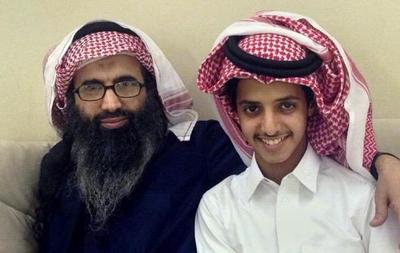
Ali-Marri-thumb-400x253-5476Ali Saleh Kahlah al Marri, back in Qatar with his youngest son. Photo provided to the Peoria Journal Star by al Marri’s family.

Editor’s Note: For more on Qatar’s track record in fighting terrorism, see Dr. Weinberg’s report for the Foundation for Defense of Democracies’ Center on Sanctions & Illicit Finance, Qatar and Terror Finance, Part 1: Negligence.

The US government’s decision to repatriate al Marri to Qatar is a curious one, to say the least.

According to The Guardian (UK), al Marri’s nephew revealed that upon arrival in Doha, his uncle “was greeted by representatives from the Qatari interior and foreign ministries” and is now in “high spirits.” He thanked Qatari officials for exerting “tremendous efforts” for his uncle’s release.

********************

Editor’s Note: For more on Qatar’s track record in fighting terrorism, see Dr. Weinberg’s report for the Foundation for Defense of Democracies’ Center on Sanctions & Illicit Finance, Qatar and Terror Finance, Part 1: Negligence.

Ali Saleh Kahlah al Marri, an admitted former al Qaeda operative, has been released from a American jail and permitted to return home to Qatar.

No formal statement has been released yet by either government, but it is being reported that al Marri’s release was the result of a bilateral agreement between the Qatari and American governments. According to the US Bureau of Prisons, a prisoner with the same name and estimated age (ID number 12194-026) was freed on Friday.

Additionally, a source from al Marri’s family told the Qatari press he was recently released and arrived in Doha Saturday. Soon afterwards, the story was confirmed by Agence France Presse (AFP), which spoke to al Marri’s nephew.

This followed statements by two of his former attorneys that he was expected to be released within days. And photographs have been posted on social media that reportedly show al Marri coming home to his children for the first time in over a decade. A Kuwaiti newspaper posted video of a man identified as al Marri at the airport in Doha bumping noses with male relatives and kissing his mother’s feet.

An al Qaeda sleeper agent

Ali Saleh Kahlah al Marri was at one point the only enemy combatant detained on US soil. According to the terms of a plea deal he accepted in 2009, al Marri “was instructed by Khalid Sheikh Mohammed to enter the United States no later than September 10, 2001” and to await further instructions. Mohammed, also known as KSM, was serving at the time as the chief of al Qaeda’s external operations and is considered the mastermind of 9/11 attacks. According to the FBI in 2009, “Ali al-Marri was an al-Qaeda ‘sleeper’ operative working on U.S. soil.”

President George W. Bush indicated that the US intelligence community believes al Marri discussed various targets with KSM, including “water reservoirs, the New York Stock Exchange, and United States military academies.” Bush also described him as “a present and grave danger to US national security.”

The plea bargain accepted by al Marri acknowledged that his computer’s search history included research on “various cyanide substances” according to “the method taught by al Qaeda for manufacturing cyanide gas,” as well as research on “dams, waterways and tunnels in the United States, which is also consistent with al Qaeda attack planning regarding the use of cyanide gases”. The plea deal also noted that “between 1998 and 2001” he “attended various training camps because he wished to engage in jihad”.

In other court documents, US officials alleged that KSM chose al Marri to be an al Qaeda sleeper agent because he had a family and would therefore be less likely to attract suspicion. He was pulled over in a routine traffic stop two days after 9/11 when a police officer saw al Marri’s son standing up in the moving car’s back seat.

Al Marri was then briefly arrested on an old warrant for driving under the influence and raised authorities’ suspicions when he paid his $300 bail out of a briefcase full of bundles of hundred dollar bills. Al Marri would later acknowledge receiving these funds from an al Qaeda financial facilitator in the United Arab Emirates, Mustafa Hawsawi, whom KSM had instructed him to visit. Soon afterwards, al Marri was detained again when law enforcement officials confirmed a telephone at his home had been used to contact Hawsawi, whom they had already connected to one of the 9/11 hijackers.

Hawsawi was captured alongside KSM in early March 2003 and then held in the CIA’s controversial detention and interrogation program before being transferred to Guantanamo, where he remains in detention.

Reason for release unclear

Al Marri’s release seems to be the end result of a process set in motion by President Obama during his first month in office.

Al Marri had been held for years under solitary confinement at the Navy Brig in Charleston, South Carolina. But President Obama directed the government to reconsider his case in parallel to reviewing all the cases of detainees held at Guantanamo. The president ordered the Defense Department to transfer al Marri to the custody of the Justice Department, which would try him in a civilian court.

However, it is unclear as to why the United States released al Marri now. Taking into consideration what the judge called al Marri’s “unacceptable” treatment by the military, al Marri was sentenced to only an additional eight years and four months in prison in late October 2009. His sentence had already been reduced from fifteen years to account for his time in custody of the military. That would have meant a release in early 2018. The reasons for Al Marri’s early departure from prison have not been made public. He may have received credit for prior time served in civilian jails and possibly also for good behavior.

The Journal Star newspaper in Peoria, Illinois, where al Marri was living in 2001, reports that he was “was spirited out of the United States on Friday [Jan. 16], two days before he was scheduled to be released from a maximum security prison” in Florence, Colorado. The paper elaborated that “the move was unknown to his attorney Andrew Savage of Charleston, S.C., who had met with his client just one day before.”

Initially, it was unclear whether or not the US government had negotiated ground rules with the Qatari government to justify his repatriation there. However, a Qatari-owned Arabic news outlet based in London, al-Araby al-Jadeed, quotes sources close to al Marri’s family claiming that his release was the result of a bilateral agreement between the two governments.

Even if the United States did reach some sort of prior understanding about the terms of his release, Doha has violated these sorts of commitments in the past.

Qatar’s negligent record

The US government’s decision to repatriate al Marri to Qatar is a curious one, to say the least.

Ali al Marri’s brother, Jarallah Saleh Kahlah al Marri, was detained at the Afghanistan-Pakistan border shortly after 9/11 and subsequently held at Guantanamo. According to a leaked threat assessment prepared by Joint Task Force – Guantanamo (JTF-GTMO), Jarallah al Marri also spent time at al Qaeda training camps and was suspected of seeking to transfer $10,000 in operational funds to his brother at KSM’s direction. He was released back to Doha’s supervision in 2008.

The Qatari government violated a pledge to Washington on how it would handle Jarallah al Marri. He was repatriated based on an explicit, written commitment from Qatar that he would not be allowed to leave the country. Qatar even promised to notify Washington immediately if he merely tried to do so.

And yet Washington found out from British authorities that they had arrested Jarallah al Marri on charges of visa fraud, after he had been permitted to leave Qatar not once but twice without mention from the Qatari government. The US ambassador in Doha at the time concluded that the decision to let Jarallah travel was “almost certainly” a decision that involved Qatar’s attorney general, who outrageously contended he “was bound only by signed judicial assistance agreements and not diplomatic notes”.

At least once Qatar also withheld cooperation from the United States on the case of Ali al Marri himself. A leaked US cable from October 2008 stated that Qatar’s attorney general “decline[d] our judicial request on Ali al-Marri,” specifically refusing to honor “a long-standing request for banking records” involving him.

More broadly, Qatar has been labeled a permissive jurisdiction for terror finance by the US Treasury Department. It is home to several individuals on US or UN blacklists who allegedly provided high-level funding to al Qaeda. Local authorities have refused to charge the suspected al Qaeda financiers with a crime.

And the last time Qatar promised to keep an alleged senior terrorist operative “under control,” that individual showed up several years later on Treasury sanctions announcements as having again transferred hundreds of thousands of dollars to al Qaeda’s senior leadership abroad.

Received as a hero

Ali al Marri’s reception in Qatar so far should raise additional concerns in the counterterrorism community. The Qatari government has given no public sign it plans to supervise his activities, nor has it indicated disapproval of his prior al Qaeda role. It is unlikely he will face further charges in Qatari court, and he is not currently being detained.

Worse, al Marri is being received as a returning hero.

Abdulrahman al Nuaymi has been blacklisted by the US and UN on charges of terror finance yet enjoys legal impunity in Qatar. Al Nuaymi welcomed the news of Al Marri’s release on his Twitter account, while also minimizing any suggestion of wrongdoing on al Marri’s part.

“Praise Allah, Brother Ali Saleh Kahlah al-Marri has been released and returned to his country and his people after thirteen years in the prisons of global injustice (America),” a post on al Nuaymi’s Twitter feed reads.

Al Nuaymi is not the only one celebrating al Marri’s return. According to The Guardian (UK), al Marri’s nephew revealed that upon arrival in Doha, his uncle “was greeted by representatives from the Qatari interior and foreign ministries” and is now in “high spirits.” He thanked Qatari officials for exerting “tremendous efforts” for his uncle’s release.

Similarly, the editor-in-chief of one of Qatar’s main newspapers, al-Arab, proclaimed in Arabic on Twitter: “We thank Allah for his favor in returning Brother Ali Saleh Kahlah al-Marri, who was detained by America. Our congratulations to him and to his family, and many thanks to all those who followed his case and worked for his return.”

Another major Qatari paper, al-Sharq, covered his release without polemics, but it also elided any mention of al Marri’s plea bargain or its contents, including his admitted connection to al Qaeda and plotting against civilian targets. In fact, the story did not even note that he was accused of involvement with al Qaeda, instead simply stating that he was detained in the US in the aftermath of 9/11.

Only one of two articles by the Qatari-owned UK outlet al-Araby al-Jadeed included some limited details from al Marri’s plea bargain, but the article quoted Qatar’s former minister of justice basically dismissing those admissions as a means to an end for al Marri to get released. The paper also quoted the head of Qatar’s state-controlled National Human Rights Commission, who revealed that his group had been pushing US officials for years for Ali al Marri’s immediate release.

If this collective amnesia is reflective of how the Qatari authorities feel, Doha will likely give al Marri free rein, viewing him more as a victim than an admitted terrorist agent who plotted mass attacks against civilians for the sake of jihad. This risk seems especially acute given that a Twitter account appearing to belong to his brother, Jarallah, recently lavished praise upon Osama bin Laden and repeatedly publicized a fundraising campaign for Syria that was shut down after allegedly serving as a financial conduit for the Al Nusra Front, al Qaeda’s official branch in Syria.

During her confirmation hearings before the Senate Foreign Relations Committee, the current US envoy to Doha, Ambassador Dana Shell Smith, pledged that if confirmed she would monitor the so-called Taliban Five “continuously” at “the very top of my list of priorities.” The Taliban Five is a group of senior Taliban leaders who were exchanged for Sgt. Bowe Bergdahl last year. Qatar helped broker the swap.

Smith testified she would work “every morning when I wake up, every night when I go to sleep, to reassess whether these people [the Taliban Five] pose any threat whatsoever, to our national security.”

Smith may wish to add the al Marri brothers to the list of jihadists she monitors.
 

Iran Promises ‘Crushing Response’ to Israeli Strike

January 20, 2015

Iran Promises ‘Crushing Response’ to Israeli Strike

Strike killed six Iranian agents, five Hezbollah members

BY Adam Kredo
January 20, 2015 5:00 am

via Iran Promises ‘Crushing Response’ to Israeli Strike | Washington Free Beacon.


Lebanese Hezbollah supporters shout slogans as they march during Ashoura day in Beirut’s southern suburbs, Lebanon, Tuesday, Dec. 6, 2011 / AP

Iran on Monday promised that Hezbollah would deliver “crushing response” to the Israeli attack over the weekend, which killed six Iranian agents, including a top-level commander, and five Hezbollah members.

“The experience of the past shows that the resistance current will give a crushing response to the Zionist regime’s terrorist moves with revolutionary determination and in due time and place,” Ali Shamkhani, the secretary of Iran’s Supreme National Security Council (SNSC), was quoted as saying.

The Israeli strike came just days after Hezbollah leader Hassan Nasrallah declared that the terror group was preparing for a war in Israel’s northern Galilee region.

It also occurred just a week after Iranian military leaders announced that they are operating missile sites in Syria, which potentially include a nuclear facility.

Senior Iranian and Hezbollah commanders were likely planning a sophisticated invasion of Israel’s northern border in the weeks before they were killed by an Israeli airstrike over the weekend, according to Major General Eyal Ben Reuven, the former deputy head of the Israeli Defense Forces Northern Command.

The accuracy of Israel’s strike and the high-level nature of those Iranian and Hezbollah commanders killed indicates planning for a militant incursion into Israel’s northern region, according to Reuven, who said the airstrike shows a “very high level of intelligence” on Israel’s part.

The high-level nature of the Iranian and Hezbollah operatives targeted by Israel suggests that an attack on Israel was imminent, according to Reuven, who handled top intelligence in the region during his time serving in the IDF.

“If the highest level of Hezbollah commanders were in the Golan Heights and the high level of Iranians, it means that their idea, [what] they’re planning could be a kind of operation, an act against Israel on a high level,” Reuven said during a conference call Monday organized by the Israel Project (TIP). “It’s significant, the high level of this meeting, of this reconnaissance of the Iranians and Hezbollah.”

“It says something about what they plan, what kind of operation they planned,” he added. “If Israel has intelligence that says there is a kind of operation on the way to act against Israel, I think Israel would have a legitimate [reason] to do all we can to prevent it.”

The strike that killed these 11 militants was “very, very professional,” according to Reuven, and would require “very, very high level intelligence” and “very accurate” targeting information.

Iran quickly confirmed that one of its top commanders had been killed in the strike, according to Farsi language reports.

Multiple state-controlled Iranian news agencies confirmed that Iranian Revolutionary Guard Corps (IRGC) Brigadier General Mohammad Ali Allahdadi had been killed by “a military helicopter of the Zionist regime during a visit to the ‘Quneitra’ region of Syria.”

“As a result of this crime, this heroic general along with several members of Hezbollah reached martyrdom,” the Iranian Students News Agency (ISNA) wrote in a Persian language report independently translated for the Washington Free Beacon by the Foundation for Defense of Democracies (FDD).

Allahdadi had been sent to Syria by top Iranian commanders “so that he could combat the Zionist regime in Lebanon and Syria,” according to the Iranian media.

The IRGC official press organ also confirmed the death in a statement published by Iranian news outlets.

“Brigadier General Mohammad Ali Allahdadi was of the brave, devoted, and wise commanders of the Islamic Revolutionary Guard Corps whose effective contributions during the Holy Defense (the Iran-Iraq War) and after during his Commanding of the Al-Ghadir IRGC unit of Yazd province will always be enduring and inspiring to the generation of today and tomorrow of the Islamic nation,” read the IRGC communiqué also issued in Farsi.

The IRGC claimed that Allahdadi was in Syria to help embattled leader Bashar al-Assad combat “terrorists” there.

Allahdadi also helped in “neutralizing the atrocities and conspiracies [of] this Zionist-terrorist sedition in Syria’s geography,” according to the IRGC.

The IRGC went on to lash out at Israel for “violating the airspace of the country of Syria” and accused the Jewish state of emboldening terrorists affiliated with the Islamic State (IS), which is battling against Assad.

Israel’s actions against Iran and Syria are being “planned” along with “the cooperation [of] the heads of the White House and the occupying regime of Quds [Jerusalem],” the IRGC said in its statement.

Information about the other Iranians killed remains minimal at this point. Conflicting reports have emerged about whether the top militant killed, Abu Ali Tabatabai, was officially working on behalf of Iran or Hezbollah.

Tabatabai had been linked to Iran’s Al Radwan Special Operations Units, which is known to conduct combat operations, according to TIP.

“His presence would have suggested, and probably indicates, operations aimed at overrunning Israeli border towns,” TIP reported in an email to reporters.

The Hezbollah members killed include Mohammed Issa, a senior Hezbollah figure closely tied to Iran, and Jihad Mughniyeh, Hezbollah’s leading figure in the Golan Heights area near Israel’s border with Syria.

Behnam Ben Taleblu, an Iran expert and researcher for FDD, told the Free Beacon that Iran is expected to boost its presence in Syria and increase its support for Hezbollah.

“Given Iran’s heightened resolve and dedication to keeping Assad in power, we can expect the Islamic Republic to continue, if not deepen its commitment to the Assad regime and Hezbollah by way of such mercenaries,” he said.

Taleblu also noted that Iran continues to blame the rise of IS (also known as ISIL or ISIS) on America and Israel.

“The notion contained in the IRGC’s communiqué in the aftermath of the death of Commander Mohammad Ali Allahdadi, that the Islamic State (or DAESH, in Persian and Arabic) is linked to Israel and the U.S. is a common one promoted by the Islamic Republic’s hardline political elite and regime media,” he explained.

“Beyond narrative, this false linkage underscores an analytical shortcoming, Iran’s military and political class have failed to attribute agency to the Islamic State, be it in Syria or Iraq, and by claiming they are Western agents, misread and misdiagnosed the violent sectarian milieu that was growing in Iraq and Syria before the group’s emergence last summer,” he said.

ISIS Ultimatum to Japan: $200 Million or Execution of Two Japanese Citizens

January 20, 2015

The Islamic State wants to punish Japan for spending $200 million on the war against ISIS.

By: Tzvi Ben-Gedalyahu

Published: January 20th, 2015

via The Jewish Press » » ISIS Ultimatum to Japan: $200 Million or Execution of Two Japanese Citizens.


ISIS executioner flanked by his next two victims.
Photo Credit: screenshot

The Islamic State (ISIS) has released a video in which it demands $200 million from the Japanese government to save the lives of two its citizens being held hostage.

The ransom matches the same sum of money that Japanese Prime Minister Shinzo Abe pledged last week for non-military assistance to countries fighting the ISIS.

“Should we leave terrorism or weapons of mass destruction to spread in this region, the loss imparted upon the international community would be immeasurable,” said Abe, who by coincidence or not is visiting in Israel at the time ISIS posted its ultimatum.

The hostages were identified as journalist Kenji Goto Jogo and private military contractor Haruna Yukawa, who traveled to Syria for unknown reasons.

The audio in the video, which YouTube has banned, features a British-accented man, probably the same barbarian who beheaded other hostages.

He said to Japan in the video, “You have proudly donated $100 million to kill our women and children, to destroy the homes of the Muslims.” The actual amount was $200 million, which the ISIS badly needs to funds is operations in the wake of falling revenues from the plunge in the price of oil, on which it has depended for revenues.

The ISIS has attracted members from all over the world, including Japan. An Israeli official has said that nine Japanese citizens have joined the ranks of the ISIS

Iron Dome Deployed in North, Border Farms on War Footing

January 19, 2015

Farmers at northern border ordered off their fields. UNIFIL, Israeli and Lebanese soldiers on high alert.

By: Tzvi Ben-Gedalyahu

Published: January 19th, 2015

via The Jewish Press » » Iron Dome Deployed in North, Border Farms on War Footing.


Iron Dome system seen being transported at an undisclosed location in the north Monday night.
Iron Dome system seen being transported at an undisclosed location in the north Monday night. 

The IDF reportedly moved Iron Dome anti-missile systems to defend northern communities Monday night in the wake of Hezbollah threats to punish Israel for Sunday’s spectacular counter-terror bombing raid that killed approximately a dozen Hezbollah and Iranian Revolutionary Guards fighters.

The IDF told The Jewish Press, “We do not confirm or deny movements” of the Iron Dome systems, although the military previously has announced their redeployment against rockets from Gaza.

A picture of the Iron Dome being transported was posted on social media, but its location could not be verified.

Farmers in Metulla, which is smack on the northern border, were ordered off their fields by the IDF in SMS messages sent out Monday morning. Farmer Chaim Hod was quoted by Yediot Acharonot as saying that he and is workers began pruning apples tress at 6 a.m. and were ordered away from the orchards by mid-morning.

Several Metulla farms are located at the border, beyond a barbed wire fence, and are off-limits to anyone except the farmers and the IDF.

Reserve units stationed along the Lebanese border are on high alert, and several leaves of absence for regular soldiers have been cancelled.

Increased patrols were observed on both sides of the border, with UNIFIL, Lebanese and Israeli troops keeping an eye out for any suspicious activity.

UNIFIL troops are using night goggle and binoculars, according to sources quoted by the Beirut Daily Star.

Israel soldiers were seen patrolling the streets of Metulla, but civilians on both sides of the border do not seem concerned,

Hod said he actually feels safer when he sees both UNIFIL and Israeli soldiers beefing up patrols, and a Lebanese construction worker told the Star, “We are not afraid. As you see we are continuing construction work just a few kilometers from the Israelis.”

IDF Chief of Staff Benny Gantz said, “The IDF is prepared, tracking all developments, and ready to act as needed.” The air strike highlights the excellent level of Israeli intelligence operations, which are the key to carrying out counter-terror strikes and make Hezbollah leader Hassan Nasrallah think twice and three times every time he moves.

As in the past, Israel warned Lebanon that it will be held responsible for any attacks by Hezbollah, which controls southern Lebanon and is an influential part of the fragile government.

The threat of a fierce Israeli retaliation to any Hezbollah aggression is a strong deterrent. Hezbollah has fallen into growing disfavor in strife-torn Lebanon because it has brought the war in Syria into Lebanon by fighting rebels to the Assad regime. Lebanese hate Israel but a devastating retaliation by the IDF to Hezbollah rockets would make the terrorist army and party even more unwanted.

Below is a video of the aftermath of the attack on Hezbollah and Iranian commanders, as seen in a telecast from southern Lebanon.


Europe Offers Israel the Peace of the Dead

January 19, 2015

Europe Offers Israel the Peace of the Dead

January 19, 2015 by Kenneth Levin

via Europe Offers Israel the Peace of the Dead | FrontPage Magazine.


As parliaments in more and more European nations vote to recognize “Palestine,” European politicians insist they are doing so to promote the objective of an independent Palestinian state living in peace beside a secure Israel. But both the declared aims of Palestinian leaders and the pattern of European policy vis-a-vis Israel and the Palestinians give the lie to European averments of benign intent.

Neither party of the divided Palestinian leadership has, to say the least, demonstrated an interest in peace with Israel. Hamas, now controlling Gaza and enjoying extensive popularity in the West Bank, openly trumpets its objective not only to destroy Israel but to annihilate all the world’s Jews. The Palestinian Authority under Mahmoud Abbas repeatedly insists it will never recognize Israel’s legitimacy as the national homeland of the Jewish people and will never give up its demand for implementation of the so-called “right of return” of millions of descendants of Palestinian refugees to Israel – thereby demographically destroying the Jewish state. In the same vein, it conveys it will never sign an end of conflict agreement with Israel no matter what territorial concessions the latter offers.

Palestinian Authority media, mosques and schools, like those of Hamas, incessantly indoctrinate their audiences in the message that the Jews are colonial usurpers and their presence, and their state, must be expunged, that Palestinians who attack and kill Israeli civilians are heroes, and that it is the responsibility of all to emulate those heroes in the struggle for Israel’s annihilation. Abbas, like Arafat before him, has made clear his goal in seeking recognition of “Palestine” by European nations and by others is to force the establishment of a Palestinian state without any bilateral agreement with Israel that would require Palestinian foreswearing of additional claims against the Jewish state.

While declaring its support for a two-state solution, European leaders, in promoting their parliaments’ recognition of “Palestine,” are actually advancing the Palestinian leadership’s goal of a single, Muslim Arab, state comprised of the West Bank, what is now Israel, and Gaza. But then, the policies of the European nations have long been to advance the Palestinian agenda and to undermine any possibility of a genuine, durable two-state agreement. Consider the issues touched on below, what stance on them would be taken by those truly dedicated to achieving a viable two-state accord, and what stances European nations have actually taken:

1) Palestinian insistence on the “right of return” obviously precludes an agreement that allows for Israel’s continued existence. Any genuine peace would require whatever resettlement there is of Palestinian refugees and their descendants to take place within the territories allotted to the Palestinians. If the Europeans were truly interested in a two state solution, they would insist that some of the largesse they now lavish on the Palestinians be dedicated to creating decent, permanent housing for those Palestinians residing in “refugee camps” within areas already under Palestinian control. But they have not done so.

2) The United Nations Relief and Works Agency (UNRWA) has provided for Palestinian refugees and their descendants for sixty-five years. Every other refugee population in the post-World War II era has been cared for by another UN organ, the United Nations High Commissioner for Refugees (UNHCR). In addition, with all other refugee populations, whose total numbers over the decades have been orders of magnitude greater than the Palestinian number, “refugee” is defined as an individual actually displaced by hostilities or related events, not his or her descendants as well. The special status accorded the Palestinians has obviously been orchestrated by the Arab states and their allies to use as a permanent weapon in the fight for Israel’s annihilation.

Were Palestinian refugees defined in the manner of all other refugees, they would now number at most less than 50,000 and Israel might even entertain offering those individuals the option of return in the context of a peace settlement. But the Europeans continue to support and generously fund the unique UN treatment of Palestinian “refugees” and continue to help Palestinian leaders wield this cudgel against Israel’s continued survival.

Moreover, UNHRW schools, often employing Hamas-affiliated and PA-affiliated teachers, contribute to the indoctrination of Palestinian children in the cause of pursuing Israel’s annihilation, and UNHRW facilities have served as recruiting, training and logistical centers for Hamas and other Palestinian terror organizations. Yet this, too, has elicited virtually no objection, or curtailment of support, from European nations.

3) As noted, PA media, mosques and schools are focused on indoctrinating their audiences in anti-Israel and anti-Jewish hatred and on the necessity of pursuing Israel’s destruction. Yet many of the relevant PA institutions enjoy European financial support.

4) The PA provides extensive financial support to the families of Palestinian terrorists- both of those killed and of those imprisoned by Israel – and the European states have done little to prevent the use of European funds for this purpose.

5) Genuinely moderate Palestinian voices, those who would support a viable two-state solution, are an endangered lot. After twenty years of indoctrination by PA and Hamas media, mosques and schools, the great majority of Palestinians, according to opinion polls, support anti-Israel violence and the objective of Israel, and its Jews’, annihilation. What moderates remain in the territories are either cowed into silence by the PA and Hamas, or are subject to harassment, assault and arbitrary arrest. This has been the fate, for example, of Palestinian journalists who have dared to report on PA corruption or to question PA policies that preclude a peaceful settlement with Israel. European nations have done virtually nothing to come to the aid of Palestinian moderates, to support the different, often genuinely peace-promoting, course they seek to advance, or even to pressure the PA to end its abuse of them.

6) European states directly finance a plethora of anti-Israel NGO’s, including NGO’s that openly call for Israel’s destruction. (The proliferation and broadened reach of such organizations, particularly in the wake of the openly anti-Semitic, ironically titled, 2001 “World Conference Against Racism” in Durban, has been most extensively chronicled by Gerald Steinberg’s “NGO Monitor.”)

7) Areas Israel has not already ceded to the Palestinians – either via agreement, as in Areas A and B now governed by the PA, or unilaterally, as in Israel’s withdrawal from Gaza – have the status in international law of disputed territory. UN Security Council Resolution 242, unanimously passed in the fall of 1967, calls for the negotiation of new “secure and recognized boundaries,” and the authors of 242 argued that the pre-1967 lines were merely armistice lines, were indefensible, and left Israel vulnerable to future aggression. Yet many European states insist on referring to those lands as Palestinian, precluding the negotiated agreement on boundaries envisioned in Resolution 242 and seeking to deprive Israel of defensible borders.

In a similar vein, European states routinely attack any Israeli construction in the disputed territories. One can argue that creating such facts on the ground does prejudice ultimate agreement on the land’s disposition. But the same European states are not only silent on no less prejudicial Palestinian building in the disputed areas but actually support and fund it. Since Palestinian construction has largely been focused on reinforcing claims to areas that would leave Israel more strategically vulnerable, European states are in this manner as well working against the Jewish state’s achieving an agreement that would provide it with defensible borders.

8) The recognition of “Palestine” by European parliaments obviously violates prior endorsement by European states and the European Union of agreements calling for resolution of the Israeli-Palestinian conflict via bilateral negotiations. At the same time, in a further demonstration of shameless European anti-Israel hypocrisy, Europe threatens measures against Israel if it does not re-engage in bilateral negotiations with the Palestinians. In fact, it is Israel that has most sought to advance such negotiations and the Palestinians that have shunned them. It is Israel that has – in, for example, 2000, 2001, and 2008 – made repeated concrete offers of a territorial settlement and the Palestinians that have rejected all of them without providing any counter-offers. Rather, they have sought to pursue an agenda of advancing their cause – the cause of replacing Israel – by means other than bilateral negotiations, as in their seeking recognition of “Palestine” by European states and international bodies. And the Europeans at once help them move forward on their alternative path while excoriating Israel for ostensibly rejecting direct negotiations.

For all the self-righteous doubletalk from Europe about seeking to promote a peace that will serve both the Palestinians and the Jewish state, what the Europeans are promoting by their actions is the exterminationist agenda of the Palestinian leadership and reeks of age-old, murderous European anti-Jewish bias.

Kenneth Levin is a psychiatrist and historian and author of The Oslo Syndrome: Delusions of a People under Siege.

War unlikely, but some Hezbollah response certain, experts say after strike

January 19, 2015

War unlikely, but some Hezbollah response certain, experts say after strike

Lebanese group will need to retaliate, but launching a large scale attack on Israel too risky at this point, some say

By Mitch Ginsburg January 19, 2015, 12:01 am

via War unlikely, but some Hezbollah response certain, experts say after strike | The Times of Israel.

n February 16, 1992 an Israeli Apache helicopter tracked the car of Hezbollah leader Abbas Moussawi and released a missile, killing him, his wife, his son, and four other people. It was reportedly Israel’s first assassination by helicopter.

The operation was not fully planned. It had begun as intelligence work and had morphed, hastily, into a targeted killing.

It is still unclear whether this is what happened in the town of Mazrat Amal near Quneitra Sunday, when an Israeli helicopter was said to have attacked a convoy of senior Iranian and Hezbollah leaders, killing the son of Imad Mughniyeh, Hezbollah’s slain commander of military operations; Mohammed Issa, a Hezbollah commander responsible for the organization’s operations in Syria and Iraq; and Ali Reza al-Tabatabai, an Iranian adviser to Hezbollah, among others, according to reports.

“I don’t think this was a targeted killing,” said Prof. Shlomo Shpiro, the head of the political studies department at Bar-Ilan University and a senior researcher at the Begin-Sadat Center for Strategic Studies.

Instead, he said, it appeared to be a preventative move, meant to thwart a developing attack. “The Golan Heights is flammable enough without this sort of thing,” he said.


An illustrative photo of an Israel Air Force Apache helicopter, taken on December 25, 2014 at Hatzerim Air Base in Israel (photo credit: AP Photo/ Tsafrir Abayov)

He suggested that the senior Hezbollah commanders may have been on an officer’s patrol — a pre-operation reconnaissance — and said the situation was akin to the Syrian fighter jet that crossed into Israeli air space, a threat too near and too grave to ignore.

Indeed, a “Western security source” quoted widely in Israeli media after the attack said Hezbollah commander Jihad Mughniyeh had been planning attacks on the Golan and even “had a few in the chamber.”

Much of the initial focus of the attack surrounded Mughniyeh, the son of former top commander Imad Mughniyeh, who was reportedly killed in an Israeli operation in 2008. Jihad Mughniyeh was close to Hezbollah head Hassan Nasrallah and had reportedly been given command of Hezbollah forces on the Syrian Golan Heights last year.

An Arab affairs commentator on Channel 10 news called him “a computer kid,” raised in the best schools, who had no real command capacity.

Yoram Schweitzer, head of the INSS think tank’s program on terrorism and low intensity conflict and a former head of the army’s counter international terror section, said he was “operationally involved” in Hezbollah’s action on the Syrian border.


Jihad Mughniyeh sits during a memorial service for his father Imad in his hometown of Tair Debba, south Lebanon on Sunday, Feb. 17, 2008. (photo credit: AP/Tara Todras-Whitehill)

Later, though, it became clear that among the nine killed, perhaps the largest Hezbollah death toll since 2006 at the hands of Israel, were Tabatabai and Muhammad Issa, commanders with far more experience.

Shpiro said there was “no doubt” that Hezbollah would respond. He doubted, though, that the response would come in the form of a missile barrage on central Israel, which would mean war, or a deadly attack against innocent Jews abroad.

In 1992, after the Mussawi assassination, Hezbollah bombed the Israeli embassy in Argentina, killing 29 people; two years later, the organization struck again, killing 85 more people at the Jewish AMIA building in Buenos Aires.

“I did not have sufficient awareness to the degree of the possible response in Argentina, a matter that would have led, it stands to reason, to a second thought about the decision to undertake the mission,” the head of military intelligence at the time, Maj. Gen. (ret) Uri Saguy, told Yedioth Ahronoth in 2009.


Hezbollah head Hassan Nasrallah speaking in southern Beirut on November 3, 2014 (photo credit: AP Photo/ Hussein Malla)

Shpiro, a longtime Hezbollah scholar, said Hezbollah had recently condemned the Paris attack against the journalists of Charlie Hebdo; he doubted a Buenos Aires-like response was in the cards.

“The war is in the media,” he said, submitting that the organization would likely be looking for retaliation away from Europe, “in our region,” that would outdo the Islamic State and have “the legitimacy of the muqawama,” or resistance.

Schweitzer, too, said that he did not expect a brazen response. A strong retaliation from within Lebanon is “the most dangerous for the organization,” he said, because it could lead to a new front, which Hezbollah is not interested in at this point.

After several failed attempts to avenge the killing of Imad Mughniyeh, who was reportedly killed by Israel in Damascus in 2008, and now the killing of his son, Hezbollah has an array of potential responses, and “even if the organization does respond immediately,” Schweitzer said, “they keep careful count of these sort of things.”