Posted tagged ‘Islam’

Turkey: Blockade on Gaza must be removed

June 23, 2016

Turkish Foreign Minister: Removal of Gaza siege remains a demand for reconciliation agreement The Turkish Foreign Minister stated today that Ankara will not back down from its demand to lift the blockade on Gaza.

Jun 23, 2016, 1:50PM

Source: Turkey: Blockade on Gaza must be removed | JerusalemOnline

Turkish President Recep Tayyip Erdoğan (archives) Photo Credit: Reuters/Channel 2 News

Turkish Foreign Minister Mevlut Cavusoglu declared today (Thursday) that his country will not back down from the condition it set for the signing of an reconciliation agreement- the lifting of the siege on Gaza.

Cavusoglu’s statement comes after it was reported by Turkish news agencies that the two sides have reached a compromise, according to which Israel will allow Turkish aid for building hospitals and restoring infrastructures into the Gaza Strip. It was also reported that all shipments will be channeled through the Israeli port of Ashdod before entering Gaza.

According to the reports, the reconciliation agreement between the countries is expected to become official on Sunday. However, Cavusoglu’s statement today is expected to change the understandings that were agreed upon so far because Israel has never agreed to lift the blockade in the past.

Israeli control of West Bank fostering global terror, Abbas tells EU

June 23, 2016

Israeli control of West Bank fostering global terror, Abbas tells EU Addressing parliament in Brussels, PA leader backs peace bids, accuses Israel of turning territories into an ‘open-air prison,’ repeats hoax story of rabbi calling for poisoning Palestinian wells

By Tamar Pileggi

June 23, 2016, 2:45 pm

Source: Israeli control of West Bank fostering global terror, Abbas tells EU | The Times of Israel

President of the Palestinian Authority Mahmoud Abbas delivers a speech at the European Union Parliament in Brussels on June 23, 2016. (AFP / JOHN THYS)

In an appeal to the European Union on reaching a two-state solution to the conflict with Israel, Palestinian Authority President Mahmoud Abbas on Thursday said an end to Israeli presence in the West Bank and East Jerusalem would eradicate terrorism across the globe.

Speaking to European Parliament lawmakers, Abbas also underscored Ramallah’s support for a two-state solution as outlined in the current French peace plan and the 2002 Arab Peace Initiative, and pleaded with EU lawmakers to save Palestinians from Israeli “provocations,” including what he said were calls by rabbis to poison Palestinians’ water — repeating a hoax story.

 “We are against terrorism, in whatever form it may take, and whoever carries it out,” Abbas told members of the European Parliament to a resounding applause.

“Once the occupation ends, terrorism will disappear, there will be no more terrorism in the Middle East, or anywhere else in the world,” he said.

Speaking a day after his Israeli counterpart Reuven Rivlin spoke in the same venue and rejected the French multilateral peace push, Abbas rebuffed the possibility of reaching an interim peace agreement with Israel as an exercise in pointlessness.

“We reject any suggestion of temporary borders or an interim agreement because it’s a waste of time and does not lead anywhere,” he said.

“We favor a two-state solution based on the 1967 borders with East Jerusalem as the capital, and the solution will be based on the Arab Peace Initiative that was approved in 2002 with no changes to it,” Abbas said. “Our hands are extended with a desire for peace, we have the political will to achieve peace.”

An international conference aimed at resurrecting the stalled peace talks, to be held later as part of the French plan, must include a “set schedule for negotiations and the implementation of decisions, and constitute a mechanism for the implementation and monitoring of the decisions, as happened in the negotiations with Iran,” he said.

The Palestinian leader went on to condemn Israel’s “never-ending provocations” and “fascist policies,” and pointed as proof to sharp criticism of Israel’s current leadership made recently by former prime minister Ehud Barak and former defense minister Moshe Ya’alon.

Israel, Abbas charged, has started three wars in Gaza and killed thousands of people in the process. Since 1967, the PA leader continued, Israel has imprisoned over 1 million Palestinians.

“Israel has “turned our country into an open-air prison,” Abbas told EU lawmakers. “You are our friends, help us.”

In his address, Abbas also touched on the persistent Israeli accusations of Palestinian incitement, saying he was willing to re-start the Tripartite Committee on Incitement watchdog group to monitor calls for violence on either side, a move Israel has consistently rejected.

He called for the EU to join the joint US- Israeli-Palestinian commission.

While Israel typically accuses Palestinian officials of encouraging violence against Israelis, Abbas claimed that rabbis in Israel had recently called for the poisoning of Palestinian water supplies to murder Palestinians.

“The Israelis are doing this as well… certain rabbis in Israel have said very clearly to their government that our water should be poisoned in order to have Palestinians killed,” he said, repeating an anti-Semitic canard.

A story reported in the Turkish press earlier in June claimed a rabbi had made such a call, leading to denunciations by the Palestine Liberation Organization, though the story was quickly debunked.

Abbas went on to press EU lawmakers on why Israel was “free to act with impunity” and was not held accountable under international law.

“Why is international law not being applied in the case of Israel?” he asked to applause by MEP lawmakers.

The European Union has been pressing hard to get the stalled Middle East peace process back on track based on a two-state solution.

EU foreign ministers on Monday backed a French initiative to call an international conference on the Middle East aimed at restarting Israeli-Palestinian talks, which have been deadlocked since 2014.

On Wednesday Rivlin addressed the EU parliament, saying the French plan was doomed to fail and suffered from “very fundamental faults.

Like other international initiatives to reach a peace agreement, the president said the plan’s inflexible “all or nothing” approach to the implementation of a two-state solution ignores the total lack of trust between Israelis and Palestinians.

Rivlin urged EU nations to instead show patience and facilitate trust-building measures between Israel and the Palestinians.

Later Thursday, President Reuven Rivlin was set to meet with EU Commission President Jean-Claude Juncker and foreign affairs chief Federica Mogherini.

Abbas met with Mogherini earlier in the day, and told a press conference he had doubts about Israel’s commitment to peace

“If Israel wanted peace with its Arab neighbors, it must end its control over our people and home country first by withdrawing from our lands and acknowledging the rights of our people, which also has a significant interest for Israel as it would be possible then to apply the Arab Peace Initiative in accordance with the Beirut conference of 2002,” Abbas said.

Earlier in the day, Rivlin’s office said Abbas had spurned an attempt to broker a sit-down between the two while in Brussels.

Iraqi Cleric Al-Kubeisi: ISIS Controlled by Netanyahu; Al-Baghdadi Stupid, Can’t Be Held Accountable

June 21, 2016

Iraqi Cleric Al-Kubeisi: ISIS Controlled by Netanyahu; Al-Baghdadi Stupid, Can’t Be Held Accountable, MEMRI-TV via YouTube, June 21, 2016

The blurb beneath the video states,

In a recent TV interview, Sunni Iraqi cleric Sheikh Ahmad Al-Kubeisi said that ISIS was an asset in the hands of Netanyahu, who “holds the remote control” and “gives orders to all the rulers of America, Europe, and elsewhere” and that the Jews are the masters of the land today. Al-Kubeisi further said that his fatwa ruling that people killed fighting ISIS were martyrs did not apply to the mostly-Shiite militia Popular Mobilization Units, because they “are killing Muslims just because they are Sunnis.” Asked about Abu Bakr Al-Baghdadi, he said that he was “so stupid that when he was detained in Camp Bucca… they used him as a scarecrow and then chucked him into the garbage.” The interview aired on the Iraqi Sumaria TV channel on June 11, 2016.

FBI, DOJ Release Full Transcript of Orlando Shooter’s 911 Call

June 20, 2016

FBI, DOJ Release Unredacted Transcript of Orlando Shooter’s 911 Call

BY:
June 20, 2016 4:47 pm

Source: FBI, DOJ Release Full Transcript of Orlando Shooter’s 911 Call

The Justice Department on Monday afternoon released the full, unredacted transcript of a call between Orlando terrorist Omar Mateen and 911 operators on the night of the mass shooting after an earlier version of the transcript omitted the words “Islamic State” and the name of ISIS leader Abu Bakr al-Baghdadi.

The Justice Department made the decision to release the complete transcript after public pressure from Republican leaders and a number of media organizations.

Mateen, who killed 49 people and wounded 53 others on June 12 at a gay nightclub in Orlando, made a 50 second call to 911 at about 2:35 a.m. during the massacre. He pledged allegiance to ISIS leader Abu Bakr al-Baghdadi during the call.

“I pledge allegiance to Abu Bakr al-Baghdadi may God protect him [in Arabic], on behalf of the Islamic State,” the unredacted transcript reads.

The original FBI release said, “I pledge allegiance to [omitted] may God protect him [in Arabic], on behalf of [omitted].”

The old version also described three crisis calls made the night of the shooting that showed Mateen told a negotiator to stop bombing Iraq and Syria, a reference to efforts by a U.S.-led coalition to defeat ISIS’s core in both countries.

“There is some vehicle outside that has some bombs, just to let you know. You people are going to die, and I’m gonna ignite it if they try to do anything stupid,” Mateen told authorities, according to the transcript.

House Speaker Paul Ryan (R., Wis.) said the decision by the FBI and Justice Department to redact Mateen’s pledge to ISIS was “preposterous.”

“We know the shooter was a radical Islamist extremist inspired by ISIS,” Ryan said in a statement. “We also know he intentionally targeted the LGBT community. The administration should release the full, unredacted transcript so the public is clear-eyed about who did this, and why.”

The Justice Department called the uproar about the omissions in the original transcript “an unnecessary distraction” before reversing course and directing the FBI to release the complete version.

“Unfortunately, the unreleased portions of the transcript that named the terrorist organizations and leaders have caused an unnecessary distraction from the hard work that the FBI and our law enforcement partners have been doing to investigate this heinous crime,” both organizations said in a statement.

Attorney General Loretta Lynch had told NBC’s Chuck Todd on Sunday, “What we’re not going to do is further proclaim this man’s pledges of allegiance to terrorist groups, and further his propaganda. We are not going to hear him make his assertions of allegiance [to ISIS].”

The Orlando massacre has turned into a heated debate in Washington about how to appropriately respond.

Most Republican lawmakers have argued that the terrorist attack proves greater urgency is needed to defeat ISIS and enhance counterterrorism efforts. Democrats have pressed for gun control legislation in response to the shooting and are calling it a hate crime targeting the LGBT community.

Obama Administration Admits Iran Worked on Nuclear Weapons

June 20, 2016

The Obama Administration says two radioactive particles found at Parchin prove Iran was working on nuclear weapons, at least in the past.

By: Hana Levi Julian

Published: June 20th, 2016

Source: The Jewish Press » » Obama Administration Admits Iran Worked on Nuclear Weapons

The Parchin military complex
Photo Credit: Institute for Science and International Security

The Obama Administration has belatedly come to the realization that Iran really was working on a nuclear weapon of mass destruction, just as Israeli and other intelligence sources said prior to the signing of the nuclear pact with Tehran in 2015. Current and former government officials told the Wall Street Journal that the administration has concluded radioactive particles discovered last year were tied to an Iranian nuclear weapons program.

Two man-made uranium particles discovered in soil samples at the Parchin facility southeast of Tehran by the United Nations International Atomic Energy Agency were too small to confirm exactly what kind of nuclear weapons work took place at the site. But they were big enough to make it clear that nuclear weapons-related activity was indeed going on there.

Iranian explanations for their presence — chemical storage for use in developing conventional weapons — were not supported by the evidence of satellite imagery and test results.

The issue was raised in an article written by Jay Solomon for the Wall Street Journal, in which the Obama administration was said to have underlined the discovery mentioned in a 16-page December 2015 report by the IAEA indisputably points to an Iranian weapons program, contradicting denials by Tehran.

On Saturday an Iranian government spokesman in fact denied uranian was found at Parchin, WSJ reported, adding the spokesman quoted a 2005 IAEA report that found no “unusual activities” there.

The terms of the pact signed by Iran with the six world powers last July required Tehran to address the evidence compiled by the IAEA showing that Iran had a program to create a nuclear weapon of mass destruction until at least 2003. Iranian officials repeatedly denied the charge.

In exchange for suspending its nuclear technology activities for a 10-year period, Iran would receive the $150 billion that had been held in frozen assets in addition to international sanctions being rolled back.

Now that Iran is receiving all those benefits, however, Tehran’s lies are also becoming clear. And the critics of the deal who were opposing it from the start are citing this latest news as confirmation that opposition of the deal was justified, and that Obama didn’t go far enough in his demands that Iran come clean on its nuclear activities before lifting sanctions in January.

Evidence of the man-made uranium that was found at Parchin has only low levels of fissionable isotopes, according to WSJ. But this can be used as a substitute for weapons-grade materials in the development of nuclear bombs and can also be used as a component in a neutron initiator — a triggering device for a nuclear weapon, WSJ reported.

But now the IAEA is blocked from any further investigation of the Parchin site, thanks to the deal signed last year. And although the deal forces Iran to allow the agency access to “all” suspected nuclear technology sites, that does not include Iranian military sites — where the weaponry is most likely to be developed.

ISRAEL to build a massive underground wall on Gaza border to block Hamas tunnels and terrorists from access to Israel

June 20, 2016

ISRAEL to build a massive underground wall on Gaza border to block Hamas tunnels and terrorists from access to Israel

Source: ISRAEL to build a massive underground wall on Gaza border to block Hamas tunnels and terrorists from access to Israel

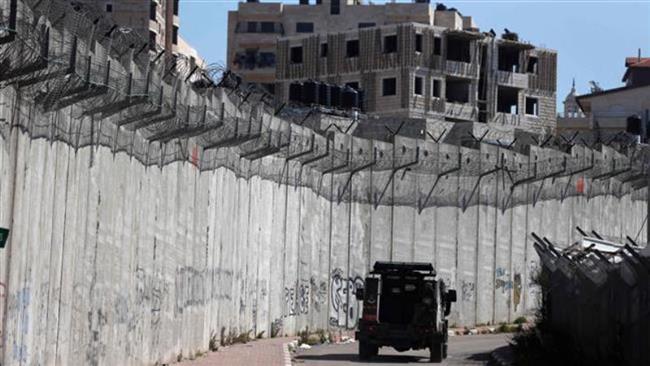
Israel is planning to build a massive concrete wall which will extend below ground along the Gaza Strip border, Yedioth Ahronoth newspaper has revealed. The barrier is aimed at combating the threat posed by Hamas tunnels crossing into the country from Gaza.

RT  Similar to the “West Bank barrier” or security fence that Israel began building in 2002 to separate Israelis from violent Palestinians in Judea and Samaria, this newest wall is intended to protect Israelis living along or near the border from infiltration via terror tunnels as well as defend against cross-border fire.

The wall, which will stretch along the 96km (60 mile) border around the Gaza Strip, will extend several dozen meters below the ground, and will also be present above the ground. It is estimated to cost US$568 million. The costly plan – aimed at tackling Hamas terror tunnels – was cleared for publication by Israel’s military censor, according to Ynet, a website affiliated with Yedioth Ahronoth.

The wall will be the third defense system of its kind to be erected along the border. The first 60km (37 mile) barrier was constructed in 1994, following the Oslo Accords. The second was built following Israel’s decision to disengage from Gaza in 2005. However, neither system proved successful in combating the threat of attack tunnels.

Israel’s plan comes after two Hamas tunnels spanning from Gaza to Israel were discovered in April and May. Hamas has confirmed it is building tunnels, and residents in southern Israel communities bordering Gaza have reported hearing digging sounds under their homes, i24 reported.

Hamas has previously used tunnels to avoid or carry out attacks, store weapons, and enter Israel. It says, however, that the tunnels are needed to defend against Israeli fire.

Meanwhile, Foreign Policy reported in March that Israel is building an ‘Underground Iron Dome,’ a system that could detect and destroy cross-border tunnels. The government has spent more than $250 million on the project since 2004, according to Israel’s Channel 2 TV station.

The Thursday report comes just one day after a senior Defense Ministry official said that Israel has “no desire to rule over Gaza, and as long as there is no alternative government there, we have no business being there…but on the other hand, we cannot conduct a constant war of attrition.”

“Therefore the next conflict has to be the last conflict in terms of Hamas ruling the Strip. We are not looking for an adventure, but a confrontation with Hamas is inevitable. It is an ongoing and growing threat and we need to be prepared for it,” he added.

In February, Israeli Prime Minister Benjamin Netanyahu vowed to build barriers to “defend ourselves against wild beasts.”

“We are preparing a multi-year project to encircle Israel with a security fence, to defend ourselves in the Middle East as it is now, and as it is expected to be,” Netanyahu said in a statement at the time.

“At the end, in the State of Israel, as I see it, there will be a fence that spans it all,” he added. “I’ll be told, ‘This is what you want, to protect the villa?’ The answer is yes. Will we surround all of the State of Israel with fences and barriers? The answer is yes. In the area that we live in, we must defend ourselves against the wild beasts.”

NETHERLANDS RAMADAN PASSION

June 20, 2016

Roni Stoker

Published on Jun 16, 2016

12 – 13 JUNE 2016. ALMERE, HAARLEM, NETHERLANDS, NOS JOURNAAL,
Violent actions of Muslim youths (especially of North African origin) toward persons and property belong to the Ramadan tradition in the Netherlands, as much as the Mathãus Passion of J.S. Bach to the days before Easter.


Christine Tasin i Paris speaks to the murder of the policeman

June 20, 2016

Published on Jun 19, 2016

Vlad Tepesblog

H/T https://ejbron.wordpress.com/

“Selling a House to a Jew is a Betrayal of Allah”

June 20, 2016

Selling a House to a Jew is a Betrayal of Allah”

by Khaled Abu Toameh

June 20, 2016 at 5:00 am

Source: “Selling a House to a Jew is a Betrayal of Allah”

  • The renewed campaign against Palestinians suspected of selling real estate to Jews is also part of the belief that the entire land is Muslim-owned, and no Muslim is entitled to give up even one inch of it to a non-Muslim. In other words, it is forbidden for a Muslim to sell his home or land to a Jew or Christian. This would be the nail in the coffin of any Palestinian leader who attempts to make any territorial compromise as part of a peace agreement with Israel.
  • This campaign has raised fears that Palestinians may resume extrajudicial executions of suspected land dealers.
  • “The land dealers should know that they would not be able to avoid earthly and life punishment. Not only will they not be buried in Islamic cemeteries, but their entire families will also be punished and it would be forbidden to marry or to deal in any way with their family members.” — Palestinian National Work Commission in Jerusalem.
  • This campaign undermines Palestinians’ long-standing claim that Jews “illegally seize” Arab-owned houses and land in Jerusalem. It seems that rather than illegal seizure, Jews have been paying willing Arabs cold hard cash for the properties.

A Palestinian Muslim who commits the “crime” of selling property to Jews should not expect to be buried in an Islamic cemetery. Marriage to local Palestinians will no longer be an option for this criminal’s family members, and any weddings the family makes will have no guests attending.

Both the living and the dead, then, will pay the price for such “treason.”

This is only a sampling of the punitive measures that will now be faced by Palestinian residents of Jerusalem who are involved in real estate transactions with Jews.

The latest measures were recently announced by a group of Palestinian activists in east Jerusalem, as part of a renewed campaign against Palestinians who are found guilty of selling a home or plot of land to a Jewish individual or organization.

The campaign, which has received the blessing of senior Palestinian Authority (PA) and Hamas officials, comes in the context of Palestinian efforts to thwart Israeli efforts to “Judaize” Jerusalem. It is also part of the belief that the entire land is Muslim-owned and no Muslim is entitled to give up even one inch of it to a non-Muslim. In other words, it is forbidden for a Muslim to sell his home or land to a Jew or Christian.

This campaign has raised fears that Palestinians may resume extrajudicial executions of suspected land dealers.

Although the activists behind the campaign did not openly call for the execution of Palestinians involved in real estate transactions with Jews, past experience shows that “suspects” are often kidnapped and killed by their own people.

Between 1996 and 1998, at least eight Palestinians suspected of selling property to Jews or serving as middlemen in such transactions were abducted and killed by Palestinian activists.

Palestinians consider the selling of homes or land to Jews an act of high treason. Palestinian Authority laws and fatwas (Islamic religious decrees) prohibit Palestinians from selling land to “any man or judicial body corporation of Israeli citizenship, living in Israel or acting on its behalf.”

In 2009, a Palestinian Authority court in Hebron sentenced Anwar Breghit, 59, to death for selling land to Israelis. While the sentence was never carried out, it achieved its aim: to deter others from engaging in similar transactions with Jews.

In 2014, PA President Mahmoud Abbas issued an executive order that amended sections of the penal code related to real estate transactions, and increased punishments for selling land to “hostile countries” and their citizens. Abbas’s decision came following reports that Palestinians had sold houses in Jerusalem’s Silwan neighborhood to Jews.

In 2014, following reports that Palestinians had sold houses in Jerusalem’s Silwan neighborhood (pictured above) to Jews, Palestinian Authority President Mahmoud Abbas issued an executive order that amended sections of the penal code related to real estate transactions, and increased punishments for selling land to “hostile countries” and their citizens. (Image source: Wikimedia Commons/Gilabrand)

Yet this sell-to-Jews-get-murdered equation is nothing new. In 1998, Amnesty International documented the pattern: “Torture of those accused of “collaboration” with Israel or selling land to Israelis appeared to be systematic,” the report said.

“Unlawful killings, including possible extrajudicial executions, continued to occur. Three land dealers were found dead during May [1998] after [PA] Justice Minister Freih Abu Meddein, announced that the Palestinian Authority would begin applying a Jordanian law which provided for the death penalty for those accused of selling land to Jews.”

Last week, a Palestinian group, the National Work Commission in Jerusalem, issued yet another warning to Palestinians suspected of involvement in real estate transactions with Jews. In a leaflet distributed in east Jerusalem, the group called for a religious, economic and social boycott of the suspected real estate dealers and their families.

“We call for additional measures to renounce and besiege the brokers and weak people among Palestinians in Jerusalem. We call for a total boycott of these people on all levels — social and economic — and to refrain from dealing with them in trade or purchases or sales or participating in their joys and sorrows and in any religious, national or cultural event. The land dealers should know that they would not be able to avoid earthly and life punishment. Not only will they not be buried in Islamic cemeteries, but their entire families will also be punished and it would be forbidden to marry or to deal in any way with their family members.”

The group, which consists of scores of Palestinian political activists and prominent figures from east Jerusalem, also threatened to post photos and personal details of the land dealers on social media. In addition, the group called on Arab countries to ban the entry of any Palestinian found guilty of involvement in real estate transactions with Jews.

This threat came only days after several Palestinian families from the Old City of Jerusalem launched a similar campaign targeting Palestinians suspected of involvement in real estate deeds with Jews. The families signed what they called “The Document of the Jerusalem Pledge and Its Covenant,” to prevent real estate transactions with Jews.

The document states that any Palestinian caught selling a house or land to Jews would be considered “out of the national ranks and a traitor to Allah and his Prophet.” It too warned that those who defy the ban would be deprived of a prayer at a mosque upon his or her death and would not be buried in an Islamic cemetery. The families called on the Palestinian Authority and other Palestinian factions and institutions to take all measures to “chase out the collaborators and those who cover up for them, and expose them and shame them regardless of their influence and status.”

Mustafa Abu Zahra, a prominent Palestinian businessman from Jerusalem and one of the engineers of the document, called on the Palestinian Authority to “deter” anyone who thinks of selling of facilitating the sale of Arab-owned property to Jews.

Another Palestinian official, Najeh Bkeirat, who played a major role in the drafting of the document, claimed that Israel was seeking to “empty the Old City of Jerusalem from its native residents as it is already doing in Haifa, Jaffa and Acre.”

The renewed campaign against Palestinians suspected of selling real estate to Jews would be the nail in the coffin of any Palestinian leader who attempts to make any territorial compromise as part of a peace agreement with Israel. The stakes are very, very high: betrayal of Allah and Prophet Mohammed are at issue.

“This document constitutes a message of warning to the Palestinian Authority and its negotiators that they must not give up one grain of the soil of Jerusalem and the land of Palestine,” explained Palestinian columnist Ghassan Mustafa Al-Shami. “The document also represents a message to all the Palestinian national factions that they must take all the measures to pursue anyone who dares to think of selling Jerusalem and West Bank lands and houses, and that they should be put on trial for treason.”

Finally, this campaign undermines Palestinians’ long-standing claim that Jews “illegally seize” Arab-owned houses and land in Jerusalem. It seems that rather than illegal seizure, Jews have been paying willing Arabs cold hard cash for the properties. By endorsing such campaigns, the Palestinian Authority leadership is once again shooting itself not only in the foot, but also in the head.

Strategic Outlook for Saudi Arabia and Iran

June 20, 2016

Strategic Outlook for Saudi Arabia and Iran

by Shmuel Bar

June 20, 2016 at 4:30 am

Source: Strategic Outlook for Saudi Arabia and Iran

  • In Saudi Arabia, Mohammad bin Salman’s “Vision 2030” is totally identified with his leadership. If it succeeds, he will harvest the praise; on the other hand, many in the Saudi elite will latch on to any sign of failure of his policies in order to block his ambitions.
  • Mohammad bin Salman’s social-political agenda to broaden the power base of the regime to include the young and educated — and to a great extent relatively secular or moderate — will certainly be seen by the Wahhabi clerics and the tribal social conservatives as geared towards reducing their control over the populace and hence their weight in the elite.
  • Another serious risk is that the economic plan entails reducing the Saudi welfare state. The economic and social fallout of weaning the Saudis away from entitlements will be exploited by domestic opposition elements and by Iran.
  • In Iran, the electoral process within the Assembly showed what was not evident during the parliamentary elections held in February, namely that even a formal preeminence of moderates does not and cannot influence the decision making of the Iranian regime and that Khamenei succeeds to pull the strings despite seemingly democratic procedures.
  • After having won the chairmanship of the Assembly, Jannati delivered a speech demanding total loyalty to Khamenei, which can be considered as targeting the moderates.

Following the announcement of Saudi Arabia’s “Vision 2030” Economic Plan by Deputy Crown Prince Muhammad bin Salman on April 25, King Salman announced a reshuffling of the government. The reshuffling was clearly orchestrated by the Deputy Crown Prince and reflects his agenda. This shuffle probably is not the last word even in the near term; the changes in the government strengthen the political position of Mohammad bin Salman, because the new ministers owe him their posts, and through them he will strengthen his hold on the levers of government, especially in the economic sphere. His next step may be to move to neutralize Prince Mitab bin Abdullah, the minister in charge of the Saudi Arabian National Guard (SANG) and a close ally of Crown Prince Mohammad bin Nayef. He could do this by absorbing SANG into the Ministry of Defense.

Such a step would probably not sit well with many of the members of the royal family; however, if Mohammad bin Salman takes such a step, it will only be with the consent of his father, King Salman, and none would actively oppose him. Such a step would have significant ripple effects; international influence in Saudi Arabia has focused for decades on acquiring sectorial influence in the various centers of power of the Kingdom – the different factions of the royal family, the business sector, the army, the SANG etc. The continuing concentration of power in the hands of Mohammad bin Salman will reduce the political relevance of many of these assets of international players and they will be obliged to restructure their connections and sources of information on the politics and economic decision making of the Kingdom.

Farther down the road — in our assessment not in the short term — King Salman may appoint his son to the position of Prime Minister – a title that he presently holds himself. Such a promotion would pave the way for Mohammad bin Salman to depose the Crown Prince, Mohammad bin Nayef, to be appointed as the next Crown Prince and to succeed his father. A possibility exists — though in our assessment it is not likely in the near future — that the King will even abdicate and pass the reins of the Kingdom to his son after he has been duly appointed as Crown Prince. These scenarios will be a disappointment to policy-shapers in Washington who prefer — or at least feel more comfortable with Mohammad bin Nayef. This too will call for a significant shift in the international disposition towards the Saudi regime; development of channels of influence with Mohammad bin Salman and his confidantes, adapting to a new and unfamiliar paradigm of decision-making in the Kingdom and coping with Mohammad bin Salman’s not-typically-Saudi regional policies towards Iran and other threats.

Mohammad bin Salman’s “Vision 2030” is totally identified with his leadership. If it succeeds, he will harvest the praise; on the other hand, many in the Saudi elite will latch on to any sign of failure of his policies in order to block his ambitions. However, none of them will actively attempt to disrupt Mohammad bin Salman’s plans; such a power struggle could precipitate the end of the rule of the al-Saud family and the very existence of the Saudi state, and they are aware that either they “hang together or they hang separately”. The risks to the regime from the economic reform process, however, do not necessarily come from proactive efforts to disrupt it. Mohammad bin Salman’s social-political agenda to broaden the power base of the regime to include the young and educated — and to a great extent relatively secular or moderate — will certainly be seen by the Wahhabi clerics and the tribal social conservatives as geared towards reducing their control over the populace and hence their weight in the elite. Another serious risk is that the economic plan entails reducing the Saudi welfare state. The economic and social fallout of weaning the Saudis off entitlements will be exploited by domestic opposition elements and by Iran.

Saudi Prince Mohammed bin Salman meets with U.S. Secretary of State John Kerry in Riyadh, Saudi Arabia, on May 7, 2015. (Image source: U.S. State Department)

The changes in the Saudi Oil Ministry reflect Mohammad bin Salman’s strategic policy of using Saudi oil to minimize Iran’s economic and political profits from the lifting of sanctions, even at the expense of Saudi profit from its oil. This policy has broad support in the Saudi elite, with the possible exception of some of the government oil bureaucracy and the oil-related business community. But the latter do not have the power to derail the regime’s priorities in this regard. Therefore, we are likely to see a continuation of the Saudi policy of high production, willingness to offer attractive deals in order to undercut Iranian overtures to existing Saudi markets, and a high level of sensitivity to any threats to the oil industry. The chances of Iranian retaliation for the Saudi economic warfare are high. These could take the shape of cyber-attacks on installations inside Saudi Arabia, or terrorist attacks (including rocket attacks) against pipelines, refineries and other installations, and even attacks – without taking responsibility — on Saudi oil shipping inside the Persian Gulf or — more likely further away from the theater. Such attacks may normally be seen as providing Iran plausible deniability from the point of view of international law, but they will be attributed to Iran by the Saudi regime, that will see itself as obliged to react. Therefore, in the current state of relations between Saudi Arabia and Iran, and assuming that the chances of rapprochement are slim, the chances of actual limited military conflict between Iran and Saudi Arabia remain.

* * *

The Islamic State has come under increasing military pressure in both Iraq and Syria in recent weeks, and it is likely to lose territory. Yet this will not make Iraq more united or stable, nor will it bring the civil war in Syria any closer to an end. Iran’s influence in Iraq will grow, while the Sunnis will see the US as Iran’s enabler. The Islamic State will try to respond to its losses by launching major terror attacks in the West. The Islamic State lacks the manpower to defend all the Iraqi and Syrian territory it has occupied since 2014. Consequently, its strategy consists first and foremost of defending strategically or symbolically important assets, primarily al-Raqqah, Fallujah and Mosul, as well as key supply routes. In addition, it is compensating for its defeats by carrying out lethal terror attacks in Syria and Iraq in order to demonstrate that while these regimes can, with foreign backing, regain territory, they cannot defend their citizens.

The military successes against the Islamic State will entail a number of long-range problematic political implications: exacerbation of the Sunni-Shiite conflict in Iraq and in the region in general, strengthening Iranian influence on the back of American military power, increased animosity towards the US, and widening the gap between the Baghdad government and the Kurds. The Islamic State will eventually be pushed out of Fallujah, thanks to the American support. Once the Islamic State is pushed out of Fallujah and perhaps out of Mosul, Shiite militias will move in to exact their revenge. Fallujah will again be a fertile ground for Sunni radicalism and a new Sunni insurgency in the area is almost inevitable; the Sunni populace will probably rebel again under some successor of the Islamic State and Fallujah will have to be “liberated” again. Furthermore, the American airstrikes in support of the Shiite ground offensive will strengthen the image of the US as enabler of the Iranian takeover of Iraq and as responsible for Shiite atrocities. Atrocities committed in Fallujah by the Shiite militias under American auspices will give pause to the plans for initiating an offensive on Mosul.

The Iraqi political system which the Americans constructed is on the verge of final collapse. The stalemate over the election of a new cabinet and “popular” demonstrations staged by Muqtada al-Sadr are indicative of the inherent failure of the Iraqi political system. While al-Sadr had proven that he can paralyze the government and the Parliament, he cannot become the solution. He has helped to demolish an already dysfunctional political system, but his sources of political influence draw on the very factors that made that system dysfunctional: sectarianism, a politicized military, use of “popular” violence to challenge democratic procedures, involvement of religious authorities in the democratic process, involvement of external actors (particularly Iran) and the implicit threat of armed militias. Since the current crisis derives from the power struggle within the Shiite community, it will hinge to a great degree on Iran. It may escalate to a Shiite civil war, and such a scenario would probably draw Iran to intervene directly, or to encourage a Shiite military commander to stage a coup and establish military rule, then pledge his allegiance to Iranian Supreme Leader Khamenei. We assess that the US, under the current administration, would probably acquiesce to “Pax Iranica” in Iraq, but the more influence any settlement would accord Iran, the more it would be unacceptable to the Gulf States, and they would use their influence with the Sunnis and the Kurds to block it, inter alia, by increasing support of radical Sunni groups in the country.

The cause of Kurdish independence is gaining momentum; all the Kurdish factions seem to be dedicated to holding a referendum on Kurdish independence before the elections in the US in order to create a fait accompli for the next administration. The issue of independence, however, is linked to the demand of the new PUK-Gorran alliance for parliamentary elections and for the inclusion of mixed Arab-Kurdish areas that the Peshmerga seized from the Islamic State in those elections and in the independence referendum. (Foremost of these areas are the oil-rich area of Kirkuk, the provinces of Nineveh, Diyala, and Salah ad-Din and the regional capital of Mosul that is still in the hands of the Islamic State). If the Kurdish Region succeeds in annexing these areas, it will also signify a watershed event in the process of the breakup of Iraq.

Turkey and Iran will both oppose these plans and the current US administration will not lend its support to a move that, in essence, proves the failure of its Iraq policy and signals the breakup of Iraq. Specifically, the prize of Kirkuk for the Kurdish state would be prodigious; the Baghdad government has halted the export of oil produced by its oil company in Kirkuk to Turkey in retaliation for the KRG’s independent oil exports. If Kirkuk Province joins the Kurdish Region, the KRG would presumably be able to take control of Kirkuk’s oil and resume its export to Turkey or — if the PUK-Gorran alliance comes to power in the KRG — to opt for the Iranian offer of export through Iran to the Persian Gulf.

Turkey views the Raqqa offensive in Syria with great concern. The American connection with the Kurdish YPG, which is viewed in Ankara as an extension of the PKK, is seen as yet another indication of the US inching towards support of an independent Kurdistan — the chronic nightmare of Turkey. Furthermore, if the Islamic State is pushed out of al-Raqqa and surrounding areas by the YPG, these areas will come under the control of Syrian Kurdistan (Rojava). Even before such a scenario emerges, the Islamic State’s priority of defending its regional capital, Raqqa will probably bring it to redeploy its forces now deployed in the Jarablus-Azaz Corridor, the stretch of land along the Syrian-Turkish border which separates the eastern Kurdish territory from the western enclave around the town of Afrin, north of Aleppo. The withdrawal of Islamic State forces from this corridor would tempt the YPG to launch an offensive westward from Jarablus in order to link up with the Afrin enclave. Such a prize would be a far greater achievement for the YPG than the capture of the non-Kurdish Raqqa area, and it would probably prefer it. If the YPG indeed takes such a step, it is likely to precipitate Turkish intervention, turning Turkey — a NATO member — into an active participant in the Syrian civil war against a party that is allied with both the US and Russia.

* * *

In Iran, Despite the hopes of the moderate camp, the hardliner 90-year-old Ayatollah Ahmad Jannati was elected (May 24) as head of the Assembly of Experts, after having gained 55 of 88 votes. This nomination does not bode well for President Rouhani’s future, should he insist on implementing deeper liberalizing reforms.

More than anything else, Ayatollah Jannati’s election highlights the Supreme leader’s grip on power. Ayatollah Khamenei did his best to help Jannati’s election by delivering his directives to some members of the Assembly. The electoral process within the Assembly showed what was not evident during the parliamentary elections held in February, namely that even a formal preeminence of moderates does not and cannot influence the decision making of the Iranian regime, and that Khamenei pulls the strings despite seemingly democratic procedures. The Assembly of Experts is rather formal and ceremonial body, unlike the Majles, however its role might become crucial at some circumstances, should the Assembly be summoned to nominate the following leader in the event of Khamenei’s death.

Ahmad Jannati, is important by virtue of what he epitomizes as a symbol rather than by his current political capacity, which won’t persist long, given his age. He has been serving as secretary of the Guardian Council since 1992, and in this capacity was instrumental in consolidating Khamenei’s power and, in all elections, was responsible for weeding out “undesirable” candidates to the Majles and Assembly of Experts. After having won the chairmanship of the Assembly, Jannati delivered a speech demanding total loyalty to Khamenei, which can be considered as targeting the moderates. Jannati is not alone with this mindset: his respective first and second deputies are hardliners: Mohammad Kermani and Mahmoud Shahroudi. The latter served for many years as the head of the judiciary, is close to Khamenei and is mentioned as a potential successor to Khamenei. This casting of the Assembly of Experts highlights that Khamenei is preparing to guarantee his ideological legacy and the ideological continuity of the regime after his death.

The election of Jannati was even more conspicuous in the light of the corresponding withdrawal of the chief candidate of the moderates, who they had hoped would serve as an ally within the regime — former President Hashemi Rafsanjani. Rafsanjani decided to withdraw from the electoral competition under pressure by the hardliners, including attacks on his children, his daughter, Faezah and his son, Mehdi.

On May 28, Ali Larijani was elected as the speaker of the Majles for the third term. Larijani is considered a hardliner; for over 30 years, he has been a confidant of Supreme Leader Ali Khamenei. His brother Sadeq Larijani is chief of the judiciary, and his other brothers have played important roles in diplomacy and government affairs. A veteran of the Islamic Revolutionary Guard Corps (IRGC), Larijani is also the son of Grand Ayatollah Hashem Amoli and son-in-law to prominent Islamic ideologue Morteza Motahhari. The moderate conservative politician Ali Motahhari is his brother-in-law. Given this multifaceted background, he has been able to establish strong, longstanding ties with both the military and the clergy, and with different factions in the Majles, with the exception of former president Mahmoud Ahmadinejad, who became Larijani’s nemesis. During Ahmadinejad’s second term, Larijani openly confronted him.

By contrast, Larijani is considered close to President Hassan Rouhani. During the nuclear negotiations, Larijani contained anti-Rouhani moves in the legislature and got the Majles to ratify the agreement. However, it must be clear that he did this not because he is Rouhani’s ally, but because he was ordered to carry out this mission by the Supreme Leader. Hence, Larijani will remain supportive of Rouhani, but only on the condition that the latter complies with the wishes of the Supreme Leader. If Larijani decides to stand for office, he may leverage his position in the Majles and his status with the Supreme Leader to whittle away at Rouhani’s popularity.

In the meantime, the Majles will be more supportive of Rouhani. Out of the 80 Majles members who opposed the nuclear agreement, fewer than a dozen remain. None of them is high profile, and their low numbers prevent them from establishing a bloc of their own, as they did in the previous parliament. Instead, they will have to operate within a “Principlists” bloc that is dominated by more moderate “Principlist” figures. This means that the remaining hardliners will be less likely to stage the theatrics that were so successful in challenging the government during the last Majles, particularly through their repeated summoning of various ministers to answer questions; and the impeachment of the minister of science, technology and higher education. Their absence will lead to a calmer parliamentary environment, more focused on addressing the serious economic issues Iran faces such as unemployment, reform of the banking sector, and the steep economic slowdown. This notwithstanding, one should bear in mind that the above scenario is confined to the functioning of the Majles vis-à-vis Rouhani, whereas the real chances of success of his program depend on other foci of power.

Dr. Shmuel Bar is a senior research fellow at the Samuel Neaman Institute for National Policy Studies at the Technion in Haifa, Israel, and a veteran of Israel’s intelligence community.