Posted tagged ‘Iraq’

Is it a ‘war’? An ‘armed conflict’? Why words matter in the U.S. fight vs. the Islamic State.

October 8, 2014

Is it a ‘war’? An ‘armed conflict’? Why words matter in the U.S. fight vs. the Islamic State, Washington PostKaren DeYoung, October 7, 2014

(The teachings of “international law” are amorphous; meanings depend largely on who interprets it and why. See also  Humpty Dumpty: “”When I use a word,” Humpty Dumpty said, in rather a scornful tone, “it means just what I choose it to mean—neither more nor less.” “The question is,” said Alice, “whether you can make words mean so many different things.”  “The question is,” said Humpty Dumpty, “which is to be master—that’s all.” — DM)

When is a war not a war? Does it matter, when a bomb is dropped or a missile launched, whether it’s called “counterterrorism,” or “armed conflict,” or “hostilities”?

Actually, it does — especially to a president who has said he wants to keep American military action within the bounds of U.S. and international law, and to administration officials who have spent countless hours in recent weeks parsing the language used to describe operations in Syria.

It matters to the American people, who have said in surveys that they favor airstrikes against Islamic State militants in both Syria and Iraq but aren’t much interested in fighting another Middle East ground war. It also matters to Congress, which has not authorized a war since World War II but may decide to approve this specific “use of military force.”

For civilians on the ground, the likelihood of being hit by a U.S. airstrike may be different under President Obama’s narrow guidelines for non-war counterterrorism than under broader international rules governing “armed conflict.” And European allies, several of which have joined U.S. air operations in Iraq, remain uncertain of the international legal justification for military action in Syria.

The administration’s definition of what it is doing has continued to evolve in recent weeks. As government lawyers struggle to provide the president with maximum flexibility under both domestic and international law, the results at times have seemed both inconsistent and confusing.

When Obama announced on Sept. 10 that he had authorized offensive U.S. military action, he emphasized the potential threat the Islamic State posed to the U.S. homeland and said his objective was to “degrade and ultimately destroy” the group. Neither the president nor White House briefers who provided additional context for his remarks mentioned a request by the government of Iraq to conduct airstrikes in Syria.

Yet that request is now cited as a key international legal underpinning for the strikes that began on Sept. 22. It is not clear when it was initially made. On Sept. 23, U.S. Ambassador to the United Nations Samantha Power referred to an Iraqi letter sent to the U.N. secretary general three days earlier reporting an appeal to the United States to “lead international efforts to strike ISIL sites and military strongholds in Syria in order to end the continuing attacks on Iraq.”

Power cited the U.N. Charter’s recognition of the legitimacy of using force for both individual and collective self-defense. She did not mention the objective of destroying the Islamic State, also known as ISIL and ISIS.

The day after Obama’s nationwide address, CNN asked Secretary of State John F. Kerry whether the United States was at war with the Islamic State. That was the “wrong terminology,” Kerry said. “What we are doing is engaging in a very significant counterterrorism operation.”

Three days later, on CBS’s “Face the Nation,” Kerry called such semantic debates “a waste of time.” But, he said, “If people need a place to land . . . yes, we’re at war with ISIL.”

Obama, who has said in the past that the United States is “at war with al-Qaeda,” seemed to disagree when asked the war question about the Islamic State on CBS’s “60 Minutes” on Sept. 28.

“This is not America against ISIL,” he said. “This is America leading the international community to assist a country [Iraq] with whom we have a security partnership with, to make sure that they are able to take care of their business.”

When reporters asked the Pentagon press secretary, Rear Adm. John F. Kirby, on Tuesday whether the U.S. military was “at war with ISIL,” his response was succinct. “Yes, yes,” Kirby said.

Administration lawyers, seeking outside advice, have discussed the Iraq and Syria operations with a number of former officials. “We have encouraged them . . . to clarify publicly their legal theories under both domestic and international law,” said a participant in some of those closed-door discussions who would only discuss a private meeting on the condition of anonymity.

‘Armed conflict’ vs. ‘war’

International law, which uses the words “armed conflict” instead of “war,” applies whether states are fighting each other or against “non-state actors,” such as terrorist groups, although terrorists by definition do not follow the rules.

The law recognizes the possibility of civilian casualties. But governments cannot intentionally target civilians, and any action putting civilians at risk must be proportionate to the importance of the military objective.

In guidelines for lethal counterterrorism action he outlined last year, Obama imposed the narrower standard of “near certainty” that there would be no civilian casualties. But “that was then and this is now,” said John B. Bellinger III, State Department legal counsel in the George W. Bush administration. “I mean that seriously. When they were coming up with all those rules a year ago, they thought the terrorist threat was heading in one direction. Now it seems to be a completely different direction.”

Amid reports of civilian casualties from U.S. strikes in Syria — which the Pentagon said it had not confirmed — administration officials said the “near certainty” standard applied only “outside areas of active hostilities,” based on “among other things, the scope and intensity of the fighting,” said a senior administration official who spoke on the condition of anonymity about legal conclusions.

“We consider Iraq and Syria to be ‘areas of active hostilities,’ based on what we are seeing on the ground right now,” the official said. “This is not the same as a determination that an armed conflict is taking place in the country at issue.” Nevertheless, the official said, the administration has chosen to comply with laws applicable to armed conflict where possible civilian casualties are concerned.

But “in international law, there is only one concept — an armed conflict, or not,” said one former senior administration official who spoke on the condition of anonymity to candidly describe the administration’s quandary. The United States, the former official said, now recognizes something in between — a new category of “a hot battlefield, or an area of active hostilities.”

The administration has also said its actions are a legal response to the threat because Syria is “unwilling or unable” to fight the Islamic State itself. Naz Modirzadeh, founding director of the Harvard Law School Program on International Law and Armed Conflict, called that concept an example of “folk international law.”

Established law, she wrote Thursday on the Lawfare blog, includes no such distinction for violations of sovereignty.

The role of Congress

Under the Vietnam-era War Powers Resolution, the president must notify Congress whenever he sends U.S. forces into “hostilities” and must withdraw them after 60 days unless lawmakers agree.

Obama observed the requirement when launching U.S. military operations in Libya in the spring of 2011 but then adopted what critics called an elastic definition in deciding that the situation did not constitute “hostilities” that put U.S. military personnel at risk, and thus was not subject to the deadline.

In Iraq and Syria, Obama sent the notifications but has said he does not need congressional approval, because U.S. actions are separately justified by the president’s constitutional authority as commander in chief and the 2001 Authorization for Use of Military Force (AUMF) against al-Qaeda and its associates.

Last year, Obama proposed narrowing, and ultimately repealing, the al-Qaeda measure as outdated in an era in which that organization’s core leadership had been “decimated” and new, independent terrorist threats were emerging. Although he pledged to consult Congress on new authorizations for new threats, and some legislation was proposed, nothing had happened by the time the Islamic State took over vast territory in both Syria and Iraq.

The Islamic State and al-Qaeda have mutually and publicly rejected any association with each other. But the administration has said the once-rejected AUMF is valid, because the Islamic State is rooted in an al-Qaeda-linked group born in Iraq a decade ago.

Turkey, the Kurds and Iraq: The Prize and Peril of Kirkuk

October 7, 2014

Turkey, the Kurds and Iraq: The Prize and Peril of Kirkuk, Stratfor, Reva Bhalla, October 7, 2014

Turkey cannot be comfortable with the idea that Kirkuk is in the hands of the Iraqi Kurds unless Ankara is assured exclusive rights over that energy [oil] and the ability to extinguish any oil-fueled ambitions of Kurdish independence.

***************

In June 1919, aboard an Allied warship en route to Paris, sat Damat Ferid Pasha, the Grand Vizier of a crumbling Ottoman Empire. The elderly statesman, donning an iconic red fez and boasting an impeccably groomed mustache, held in his hands a memorandum that he was to present to the Allied powers at the Quai d’Orsay. The negotiations on postwar reparations started five months earlier, but the Ottoman delegation was prepared to make the most of its tardy invitation to the talks. As he journeyed across the Mediterranean that summer toward the French shore, Damat Ferid mentally rehearsed the list of demands he would make to the Allied powers during his last-ditch effort to hold the empire together.

He began with a message, not of reproach, but of inculpability: “Gentlemen, I should not be bold enough to come before this High Assembly if I thought that the Ottoman people had incurred any responsibility in the war that has ravaged Europe and Asia with fire and sword.” His speech was followed by an even more defiant memorandum, denouncing any attempt to redistribute Ottoman land to the Kurds, Greeks and Armenians, asserting: “In Asia, the Turkish lands are bounded on the south by the provinces of Mosul and Diyarbakir, as well as a part of Aleppo as far as the Mediterranean.” When Damat Ferid’s demands were presented in Paris, the Allies were in awe of the gall displayed by the Ottoman delegation. British Prime Minister David Lloyd George regarded the presentation as a “good joke,” while U.S. President Woodrow Wilson said he had never seen anything more “stupid.” They flatly rejected Damat Ferid’s apparently misguided appeal — declaring that the Turks were unfit to rule over other races, regardless of their common Muslim identity — and told him and his delegation to leave. The Western powers then proceeded, through their own bickering, to divide the post-Ottoman spoils.

Under far different circumstances today, Ankara is again boldly appealing to the West to follow its lead in shaping policy in Turkey’s volatile Muslim backyard. And again, Western powers are looking at Turkey with incredulity, waiting for Ankara to assume responsibility for the region by tackling the immediate threat of the Islamic State with whatever resources necessary, rather than pursuing a seemingly reckless strategy of toppling the Syrian government. Turkey’s behavior can be perplexing and frustrating to Western leaders, but the country’s combination of reticence in action and audacity in rhetoric can be traced back to many of the same issues that confronted Istanbul in 1919, beginning with the struggle over the territory of Mosul.

The Turkish Fight for Mosul

Under the Ottoman Empire, the Mosul vilayet stretched from Zakho in southeastern Anatolia down along the Tigris River through Dohuk, Arbil, Alqosh, Kirkuk, Tuz Khormato and Sulaimaniyah before butting up against the western slopes of the Zagros Mountains, which shape the border with Iran. This stretch of land, bridging the dry Arab steppes and the fertile mountain valleys in Iraqi Kurdistan, has been a locus of violence long before the Islamic State arrived. The area has been home to an evolving mix of Kurds, Arabs, Turkmen, Yazidis, Assyro-Chaldeans and Jews, while Turkish and Persian factions and the occasional Western power, whether operating under a flag or a corporate logo, continue to work in vain to eke out a demographic makeup that suits their interests.

mosul-vilayet

At the time of the British negotiation with the Ottomans over the fate of the Mosul region, British officers touring the area wrote extensively about the ubiquity of the Turkish language, noting that “Turkish is spoken all along the high road in all localities of any importance.” This fact formed part of Turkey’s argument that the land should remain under Turkish sovereignty. Even after the 1923 signing of the Treaty of Lausanne, in which Turkey renounced its rights to Ottoman lands, the Turkish government still held out a claim to the Mosul region, fearful that the Brits would use Kurdish separatism to further weaken the Turkish state. Invoking the popular Wilsonian principle of self-determination, the Turkish government asserted to the League of Nations that most of the Kurds and Arabs inhabiting the area preferred to be part of Turkey anyway. The British countered by asserting that their interviews with locals revealed a prevailing preference to become part of the new British-ruled Kingdom of Iraq.

The Turks, in no shape to bargain with London and mired in a deep internal debate over whether Turkey should forego these lands and focus instead on the benefits of a downsized republic, lost the argument and were forced to renounce their claims to the Mosul territory in 1925. As far as the Brits and the French were concerned, the largely Kurdish territory would serve as a vital buffer space to prevent the Turks from eventually extending their reach from Asia Minor to territories in Mesopotamia, Syria and Armenia. But the fear of Turkish expansion was not the only factor informing the European strategy to keep northern Iraq out of Turkish hands.

The Oil Factor

Since the days of Herodotus and Nebuchadnezzar, there have been stories of eternal flames arising from the earth of Baba Gurgur near the town of Kirkuk. German explorer and cartographer Carsten Niebuhr wrote in the 18th century: “A place called Baba Gurgur is above all remarkable because the earth is so hot that eggs and meat can be boiled here.” The flames were in fact produced by the natural gas and naphtha seeping through cracks in the rocks, betraying the vast quantities of crude oil lying beneath the surface. London wasted little time in calling on geologists from Venezuela, Mexico, Romania and Indochina to study the land and recommend sites for drilling. On Oct. 14, 1927, the fate of Kirkuk was sealed: A gusher rising 43 meters (around 140 feet) erupted from the earth, dousing the surrounding land with some 95,000 barrels of crude oil for 10 days before the well could be capped. With oil now part of the equation, the political situation in Kirkuk became all the more flammable.

The British mostly imported Sunni Arab tribesmen to work the oil fields, gradually reducing the Kurdish majority and weakening the influence of the Turkmen minority in the area. The Arabization project was given new energy when the Arab Baath Socialist Party came to power through a military coup in 1968. Arabic names were given to businesses, neighborhoods, schools and streets, while laws were adjusted to pressure Kurds to leave Kirkuk and transfer ownership of their homes and lands to Arabs. Eviction tactics turned ghastly in 1988 under Saddam Hussein’s Anfal campaign, during which chemical weapons were employed against the Kurdish population. The Iraqi government continued with heavy-handed tactics to Arabize the territory until the collapse of the Baathist regime in 2003. Naturally, revenge was a primary goal as Kurdish factions worked quickly to repopulate the region with Kurds and drive the Arabs out.

ethnic-composition-of-kirkuk

Even as Kirkuk, its oil-rich fields and a belt of disputed territories stretching between Diyala and Nineveh provinces have remained officially under the jurisdiction of the Iraqi central government in Baghdad, the Kurdish leadership has sought to redraw the boundaries of Iraqi Kurdistan. After the Iraqi Kurdish region gained de facto autonomy with the creation of a no-fly zone in 1991 and then formally coalesced into the Kurdistan Regional Government after the fall of Saddam Hussein, Kurdish influence gradually expanded in the disputed areas. Kurdish representation increased through multi-ethnic political councils, facilitated by the security protection these communities received from the Kurdish peshmerga and by the promise of energy revenues, while Baghdad remained mired in its own problems. Formally annexing Kirkuk and parts of Nineveh and Diyala, part of the larger Kurdish strategy, would come in due time. Indeed, the expectation that legalities of the annexation process would soon be completed convinced a handful of foreign energy firms to sign contracts with the Kurdish authorities — as opposed to Baghdad — enabling the disputed territories to finally begin realizing the region’s energy potential.

Then the unexpected happened: In June, the collapse of the Iraqi army in the north under the duress of the Islamic State left the Kirkuk fields wide open, allowing the Kurdish peshmerga to finally and fully occupy them. Though the Kurds now sit nervously on the prize, Baghdad, Iran, local Arabs and Turkmen and the Islamic State are eyeing these fields with a predatory gaze. At the same time, a motley force of Iran-backed Shiite militias, Kurdish militants and Sunni tribesmen are trying to flush the Islamic State out of the region in order to return to settling the question of where to draw the line on Kurdish autonomy. The Sunnis will undoubtedly demand a stake in the oil fields that the Kurds now control as repayment for turning on the Islamic State, guaranteeing a Kurdish-Sunni confrontation that Baghdad will surely exploit.

The Turkish Dilemma

The modern Turkish government is looking at Iraq and Syria in a way similar to how Damat Ferid did almost a century ago when he sought in Paris to maintain Turkish sovereignty over the region. From Ankara’s point of view, the extension of a Turkish sphere of influence into neighboring Muslim lands is the antidote to weakening Iraqi and Syrian states. Even if Turkey no longer has direct control over these lands, it hopes to at least indirectly re-establish its will through select partners, whether a group of moderate Islamist forces in Syria or, in northern Iraq, a combination of Turkmen and Sunni factions, along with a Kurdish faction such as Kurdistan Regional Government President Massoud Barzani’s Kurdistan Democratic Party. The United States may currently be focused on the Islamic State, but Turkey is looking years ahead at the mess that will likely remain. This is why Turkey is placing conditions on its involvement in the battle against the Islamic State: It is trying to convince the United States and its Sunni Arab coalition partners that it will inevitably be the power administering this region. Therefore, according to Ankara, all players must conform to its priorities, beginning with replacing Syria’s Iran-backed Alawite government with a Sunni administration that will look first to Ankara for guidance.

However, the Turkish vision of the region simply does not fit the current reality and is earning Ankara more rebuke than respect from its neighbors and the West. The Kurds, in particular, will continue to form the Achilles’ heel of Turkish policymaking.

In Syria, where the Islamic State is closing in on the city of Kobani on Turkey’s border, Ankara is faced with the unsavory possibility that it will be drawn into a ground fight with a well-equipped insurgent force. Moreover, Turkey would be fighting on the same side as a variety of Kurdish separatists, including members of Turkey’s Kurdistan Workers’ Party, which Ankara has every interest in neutralizing.

Turkey faces the same dilemma in Iraq, where it may unwittingly back Kurdish separatists in its fight against the Islamic State. Just as critical, Turkey cannot be comfortable with the idea that Kirkuk is in the hands of the Iraqi Kurds unless Ankara is assured exclusive rights over that energy and the ability to extinguish any oil-fueled ambitions of Kurdish independence. But Turkey has competition. Iraqi President Jalal Talabani’s Patriotic Union of Kurdistan is not willing to make itself beholden to Turkey, as did Barzani’s Kurdistan Democratic Party, while financial pressures continue to climb. Instead, the Patriotic Union of Kurdistan is staying close to Iran and showing a preference to work with Baghdad. Meanwhile, local Arab and Turkmen resistance to Kurdish rule is rising, a factor that Baghdad and Iran will surely exploit as they work to dilute Kurdish authority by courting local officials in Kirkuk and Nineveh with promises of energy rights and autonomy.

This is the crowded battleground that Turkey knows well. A long and elaborate game of “keep away” will be played to prevent the Kurds from consolidating control over oil-rich territory in the Kurdish-Arab borderland, while the competition between Turkey and Iran will emerge into full view. For Turkey to compete effectively in this space, it will need to come to terms with the reality that Ankara will not defy its history by resolving the Kurdish conundrum, nor will it be able to hide within its borders and avoid foreign entanglements.

Turkey, the Kurds and Iraq: The Prize and Peril of Kirkuk is republished with permission of Stratfor.”

Changing only our rules of engagement won’t help much – Updated October 6th

October 6, 2014

Changing only our rules of engagement won’t help much – Updated October 6th, Dan Miller’s Blog, October 6, 2014

(The rather “defeatist” views expressed here are mine and do not necessarily reflect those of Warsclerotic. — DM)

I posted this article from Israel Hayom at Warsclerotic, of which I am an editor. The article argues that to fight the Islamic State we need to change our rules of engagement. The parenthetical comment at the top of the Warsclerotic post is mine and is reproduced below.

(Could the U.S. and her allies put effective boots on the ground, or have the boots and the nation become too multiculturally damaged to do what needs to be done? More than the rules of war needs to change.

When the U.S. responded to the Russian supplied, trained and initially led North Korean invasion on June 25, 1950, we had been at peace for only five years. We were tired and wanted peace to continue but war came to us unexpectedly; it should have been expected. Our peacetime boots were badly supplied, trained and, more often than not, led. Some but not enough officers and senior noncoms had experienced war and knew what to do. Very few in the lower enlisted ranks had or did and “bug out” became a much used phrase. The NK troops had been hardened in combat, were adequately supplied, well trained and well led. Those who did not fight were executed. They pushed us back nearly to Pusan. By mid-September, we had more better led and trained troops; they had also become very angry at the NK troops, and intense anger is a powerful force multiplier. The NK tide was reversed, for a couple of years.

Were we now to try to put green boots on the ground to do what is necessary against well trained, led and financed Islamic troops, a  majority  of the public would oppose it and it would be politically unpopular. Were we to put boots on the ground anyway, they would likely need to undergo lengthy and deadly immersion-style baptism by fire. There would be substantial casualties and the opposition would increase.

Should we do it anyway if only the rules of engagement change? Can we, or is that now a fantasy? — DM)

Can the Obama Nation field a well trained, led and supplied contingent, of adequate size, to defeat the “non-Islamic” Islamic State, its cohorts and friends? Or are we too multicultural and decadent? Is our multicultural focus more on such nonsense as, for only one example, “gender equality” in the military than on winning wars?

I have few if any concerns about real gender equality. Kurdish women fighting against the Islamic State have disabused me of most that I once had. Please watch the video embedded below. One of the commanders was asked why she joked and smiled when around her troops. She answered, “I have to in order to keep their morale high.” That is a statement one would expect from a seasoned and competent commander.

However, when politically correct gender “equality” means that military training and other standards are lowered so that young ladies can serve, it becomes gender inequality and diminishes the effectiveness of our military. It would be only slightly less absurd, and only slightly less dangerous — to them and to those around them — to send such green “boots” on the ground into combat wearing high heel shoes and carrying only their purses.

Compare the Kurdish women fighters to this specimen of our deranged, multicultural and politically correct society:

Back to the Korea “police action:” President Truman had served in World War I as an artillery battery commander and rose to colonel in the reserves. Although a far from perfect Commander in Chief, he knew more about war than Obama could ever learn. Obama has no desire to learn; the “smartest person” in any room, He commonly ignores advice from those who have learned. Truman knew about the need for good military discipline, Obama has very little discipline himself and does not.

We fared poorly during the June 25 through mid-September period in South Korea. Could we now expect green boots on the ground to do even as well if plucked from a peaceful, multicultural environment and sent to fight against the Islamic State, et al, no less brutal than were the North Korean and later Chinese forces? Is there sufficient reason to try, now, even though our “kinetic activity” can not be successful with air power alone?

Do we even know the enemy, when Obama and others continue to refer to Islam as the “Religion of Peace” and praise its contributions to American culture? From Obama’s 2014 Eid Greeting:

While Eid marks the completion of Ramadan, it also celebrates the common values that unite us in our humanity and reinforces the obligations that people of all faiths have to each other, especially those impacted by poverty, conflict, and disease.

In the United States, Eid also reminds us of the many achievements and contributions of Muslim Americans to building the very fabric of our nation and strengthening the core of our democracy. [Emphasis added.]

When the Islamic State is erroneously deemed non-Islamic? When we continue to label Islamic terrorism at home as “workplace violence?” When, shortly after the recent Oklahoma beheading by an Islamist, Obama sends a special messenger from the White House to deliver a belated note of thanks to the mosque he attended for “helping rebuild the Moore community after a destructive tornado tore through the city in 2013.” [Emphasis added.]

Your service is a powerful example of the powerful roots of the Abrahamic faiths and how our communities can come together with shared peace with dignity and a sense of justice,” President Barack Obama said.

The Imam, the leader of the prayer service, stated during his sermon that the Muslim faith has been called a “cancer that needs to be cut off from the American society.

It seems unlikely, at best, that we — or at least too many of us — know the enemy that cannot be named.

According to the linked Israel Hayom article,

Islamic State is not an organization that can be defeated with slow, uncertain, limited action. It cannot be defeated without “boots on the ground.” It is imperative to hit them with force; with waves of growing intensity. They must be attacked continuously, without breaks, without cease-fires and with the utmost determination. [Emphasis added.]

I agree, and wish that we could field a fighting force of that caliber to move quickly and effectively, before too many get clobbered and before we have to bring them all home, many in body bags. We seem less able to do that now than we were during the opening months of the “police action” in Korea. Since we can’t defeat the Islamic State, et al, with “slow, uncertain, limited action,” can we dispatch boots in the tens of thousands to do the job effectively? For the reasons suggested above, that seems even less likely.

Unfortunately, fantasy now trumps reality; until that changes, we should not send green boots into combat; we have few others to send. We. Are. Screwed.


Iran Orders Elite Troops: Lay Off U.S. Forces in Iraq

October 6, 2014

Iran Orders Elite Troops: Lay Off U.S. Forces in Iraq, Daily BeastEli Lake, October 6, 2014

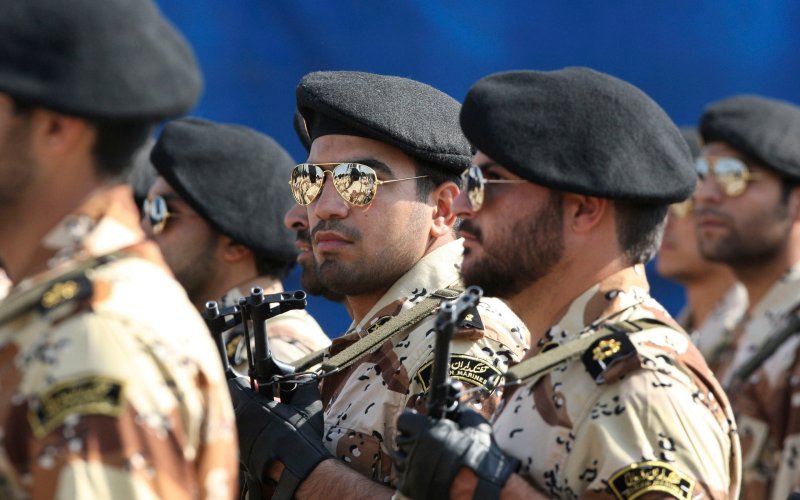
Quds forcesVahid Salemi/AP

U.S. intelligence officials tell The Daily Beast that the apparent Iranian decision not to target American troops inside Iraq reflects Iran’s desire to strike a nuclear bargain with the United States and the rest of the international community before the current negotiations expire at the end of November.

“They are not going after Americans,” one senior U.S. intelligence official told The Daily Beast familiar with the recent assessments. “They want the nuclear talks to succeed and an incident between our guys and their guys would not be good for those talks.”

******************

The last time Iranian and American forces were in Iraq, the two sides quietly fought each other. Now Iran’s Quds Force officers in Iraq are purposely leaving the Americans alone.

Pay no attention to the Shi’ite militias threatening to kill U.S. troops in Iraq. The elite Iranian forces backing those militias have been ordered not to attack the Americans.

That’s the conclusion of the latest U.S. intelligence assessment for Iraq. And it represents a stunning turnaround for Iran’s Quds Force, once considered America’s most dangerous foe in the region.

U.S. intelligence officials tell The Daily Beast that the apparent Iranian decision not to target American troops inside Iraq reflects Iran’s desire to strike a nuclear bargain with the United States and the rest of the international community before the current negotiations expire at the end of November.

“They are not going after Americans,” one senior U.S. intelligence official told The Daily Beast familiar with the recent assessments. “They want the nuclear talks to succeed and an incident between our guys and their guys would not be good for those talks.”

The Quds Force, named for the Arabic word for Jerusalem, are believed to have hundreds of troops in Iraq. As the primary arm of the Iranian state that supports allied terrorist organizations, their operatives worried Obama’s predecessor so much that the Treasury Department began sanctioning its members in 2007 for sabotaging the government of Iraq. The U.S. military accused the Quds Force of orchestrating cells of terrorists in Iraq. In 2012, Wired magazine dubbed Quds Force leader Qassem Suleimani the most dangerous person on the planet. In 2013, the New Yorker arrived at a similar conclusion, and claimed he has “directed Assad’s war in Syria.”

More recently, the Treasury Department has accused the Quds Force of international heroin trafficking and conducting terrorism and intelligence operations against the Afghanistan government. That’s why it’s so extraordinary that the Quds Force would be perceived to be laying off U.S. forces in Iraq.

But in some ways, the assessment is not surprising. Both Iran and the United States share a common enemy in the Islamic State of Iraq and al-Sham (ISIS). In late August, U.S. airpower and Iranian-backed militias broke the ISIS siege on the town of Amerli. Suleimani, the commander of the Quds Force, was photographed in Amerli, after the town was liberated from ISIS.

The latest assessments from the U.S. intelligence community also interpret Iran’s behavior in part as linked to the ongoing negotiations between Iran, the United States, the United Kingdom, France, Germany, Russia and China.

A U.S. intelligence official said the Quds Force behavior was the equivalent of a confidence building measure, a diplomatic term that refers to a concession offered to improve the atmosphere of negotiations. (Iran had already offered to play a more “active role” in the regional fight against ISIS, in exchange for nuclear concessions.)

The latest U.S. nuclear proposal to Iran would be favorable to the Islamic Republic and allow Iran to keep many of its declared centrifuges so long as they were disconnected from one another. Iran’s declared facilities in Qom and Natanz use a centrifuge process to enrich uranium into nuclear fuel.

The latest U.S. assessment also undercuts the public warnings from Iranian backed militias in Iraq that are doing much of the fighting now against ISIS.

Last month, the three largest Shiite militias told President Obama not to send ground troops into Iraq. But because the Quds Force is so instrumental in funding, training and in some cases providing strategic direction to these militias, it would suggest these public warnings were merely idle boasts.

To date, the Pentagon acknowledges that there are more than 1,600 U.S. forces inside Iraq, but these forces do not engage in combat missions, according to the Defense Department. Instead, the U.S. presence in Iraq is to advise Iraqi and Kurdish forces, assess the state of those forces and protect U.S. facilities inside Iraq.

Earlier this month in New York, Iran’s foreign minister Javad Zarif said the presence of foreign forces inside Iraq “creates domestic opposition and domestic resentment.” But in response to a question about the Shi’ite militias’ warnings against the United States, he also stressed that Iran did not support “anything that would complicate the situation” in Iraq..

The recent public warnings from groups like the Mahdi Army and the Asa’ib al-Haq were reminiscent of Iraq between 2006 and 2009. That’s when Shiite militias, working closely with Iran’s Quds Force, placed the sophisticated improvised bombs on routes traveled by U.S. forces. In the later years of the conflict, American forces captured what they said were dozens of Quds Force operatives working inside Iraq.

Exactly how long this informal Quds Force truce lasts is anyone’s guess. But Kimberly Kagan, the president of the Washington-based Institute for the Study of War and a one-time adviser to Gen. David Petraeus, cautioned that this alliance of convenience could break down quickly. “Without a doubt, Iranian backed elements have declared their intention many times in the past to attack the U.S. inside Iraq,” she said. “Whether or not those elements have immediate intentions to attack the United is irrelevant. They are declared enemies of the United States.”

That said, Kagan added that she believed “The Iranians do have a short term interest in being on their best behavior during these nuclear negotiations.” Those negotiations are set to expire at the end of November.

The rules of war need to change

October 5, 2014

The rules of war need to change, Israel Hayom, Dan Margalit, October 5, 2014

(Could the U.S. and her allies put effective boots on the ground, or have the boots and the nation become too multiculturally damaged to do what needs to be done? More than the rules of war needs to change.

When the U.S. responded to the Russian supplied, trained and initially led North Korean invasion on June 25, 1950, we had been at peace for only five years. We were tired and wanted peace to continue but war came to us unexpectedly; it should have been expected. Our peacetime boots were badly supplied, trained and, more often than not, led. Some but not enough officers and senior noncoms had experienced war and knew what to do. Very few in the lower enlisted ranks had or did and “bug out” became a much used phrase. The NK troops had been hardened in combat, were adequately supplied, well trained and well led. Those who did not fight were executed. They pushed us back nearly to Pusan. By mid-September, we had more better led and trained troops; they had also become very angry at the NK troops, and intense anger is a powerful force multiplier. The NK tide was reversed, for a couple of years.

Were we now to try to put green boots on the ground to do what is necessary against well trained, led and financed Islamic troops, a  majority  of the public would oppose it and it would be politically unpopular. Were we to put boots on the ground anyway, they would likely need to undergo lengthy and deadly immersion-style baptism by fire. There would be substantial casualties and the opposition would increase.

Should we do it anyway if only the rules of engagement change? Can we, or is that now a fantasy? — DM)

The enlightened world must pummel Islamic State into a pulp. This cancer needs to be excised, leaving no metastases behind. If the world is soft, the way most greasy, petit-bourgeois masses tend to be, it will soon learn that these horrifying decapitations are in fact prompting thousands of new volunteers to join the ranks of Islamic State. A toothless war will come back to bite us like a boomerang. It will weaken the good guys.

*****************

It was clear from the very beginning that the cruelest most terrible terror organization since the Khmer Rouge would not fold in the face of a flimsy, ill-timed attack by a few American, British and French jets. The possible addition of Australia, Canada and some Arab states — it is not yet clear where Turkey stands — to the coalition will not scare them either. On the contrary — Islamic State group draws its power from its image of extremist outlaws who will never compromise. At this point, refusing to surrender, the Islamic State group had no choice but to decapitate another innocent British national — Alan Henning — who only wanted to do good in this world.

The same fate awaits the next Westerner in line — an American by the name of Peter Kassig, who even converted to Islam to try to save his own life. But the murderers will not let up. Jihadi John is already sharpening his knife.

All this is happening because Islamic State is not an organization that can be defeated with slow, uncertain, limited action. It cannot be defeated without “boots on the ground.” It is imperative to hit them with force; with waves of growing intensity. They must be attacked continuously, without breaks, without cease-fires and with the utmost determination.

The day of Yom Kippur, regardless of the Jewish holiday, was a turning point in the war against Islamic State. They were bombed, yet immediately resumed decapitating prisoners. The reality has become one of walking on the edge; of all or nothing-style fighting. There can be no compromise; there can be no cease-fire. You are either with us or against us.

The enlightened world must pummel Islamic State into a pulp. This cancer needs to be excised, leaving no metastases behind. If the world is soft, the way most greasy, petit-bourgeois masses tend to be, it will soon learn that these horrifying decapitations are in fact prompting thousands of new volunteers to join the ranks of Islamic State. A toothless war will come back to bite us like a boomerang. It will weaken the good guys.

It will not be an easy victory. In the West, there are those who are afraid and who prefer to shut their eyes tight as part of a head-in-the-sand policy. There are those who are truly indifferent. There are bleeding hearts who find partial justification for the Islamist decapitations. One of them wrote an article blaming the Western violence for the rise of Islamic State. Others, at the U.N. of course, wondered whether bombing Islamic State targets would be in line with international law, or whether it could be a violation of Syrian sovereignty.

The hypocrisy is still benefiting the terrorists’ side. In our regional conflict, Hamas fires rockets indiscriminately at Jewish populations without prior warning, and the IDF, before retaliating (with much more force, granted), warns every Gazan to leave their homes to avoid getting hurt. Who gets blamed by the U.N.? Of course it is Israel, which warns the enemy, and not Hamas which fires in every civilian direction.

If, however, the familiar indifference doesn’t trip up the West, Islamic State will be vanquished and forever disgraced. Furthermore, the rules of war and international law will be amended in order to allow democracies to effectively defend themselves. The existing rules are good for guiding conflicts between enlightened nations. But these days, with Islamic State and its ilk dominating the scene, the enlightened world will have to allow itself to fight in a more resolute, effective manner if it doesn’t want to be defeated by Islamic terror.

At the end of the tunnel, a significant overhaul of the rules of war awaits.

Islamic State reportedly on Baghdad’s outskirts after week of victories

October 4, 2014

Islamic State reportedly on Baghdad’s outskirts after week of victories, Sydney Morning Herald, Mitchell Prothero, October 14, 2014

A diplomat in Irbil, the capital of the autonomous Kurdistan region, said an IS  presence in Abu Ghraib would put Baghdad International Airport within artillery range of the militants.

The airport is a key lifeline for Western embassies and holds a joint operations centre staffed by US military advisers.

***********************

Irbil, Iraq: Islamic State militants have taken control of key cities in Iraq’s western province of Anbar and have begun to besiege one of the country’s largest military bases in a weeklong offensive that’s brought them within artillery range of Baghdad.

IS,  also known as ISIS, and its tribal allies have dominated Anbar since a surprise offensive last December, but this week’s push was particularly worrisome, because for the first time this year Islamist insurgents were reported to have become a major presence in Abu Ghraib, the last Anbar town on the outskirts of the capital.

“Daash is openly operating inside Abu Ghraib,” according to an Iraqi soldier, who used the common Arabic term for IS . “I was at the 10th Division base there two days ago, and the soldiers cannot leave or patrol,” he said, asking that he be identified only as Hossam “Daash controls the streets.”

Hundreds of kilometres to the west, IS  forces continued their push into the Syrian Kurdish city of Kobane, where it appeared unlikely that Turkey would intervene to stop the advance. Kurdish officials from the town said the Turkish government had yet to respond to their pleas for weapons, and reports from the Turkish-Syrian border said there was no evidence Turkey was preparing to take action.

A diplomat in Irbil, the capital of the autonomous Kurdistan region, said an IS  presence in Abu Ghraib would put Baghdad International Airport within artillery range of the militants.

“We know they have captured substantial numbers of 155mm howitzers,” said the diplomat, whose country is participating in the US-led anti-IS coalition.

“These have a range of about [30 kilometres] and if they are able to hold territory in Abu Ghraib then the concern they can shell and ultimately close [the airport] becomes a grave concern.”

The airport is a key lifeline for Western embassies and holds a joint operations centre staffed by US military advisers.

Anbar is a predominantly Sunni Muslim province that remains deeply suspicious of the Shiite-dominated government in Baghdad, and IS has pressed to expand its control there since last winter’s initial offensive. In the past week, the militants have scored a string of other victories in the province.


Jen Psaki on withdrawal from Afghanistan

October 3, 2014

Jen Psaki on withdrawal from Afghanistan, You Tube, October 2, 2014

(Please see also Obama’s Ex-CIA Chief Slams White House for ‘Hesitation and Half Steps’ — DM)

Obama’s Peace Process for Iraq, Syria and the Islamic State begins [Caution: includes satire]

October 2, 2014

Obama’s Peace Process for Iraq, Syria and the Islamic State begins [Caution: includes satire], Dan Miller’s Blog, October 2, 2015

Obama was heard to remark during a recent presidential golf game,

“Israel is a terrorist war criminal. It won’t even yield to my reasonable demands for a two state solution with my beloved Palestinians, whose children and other innocent civilians it relishes murdering. However, Iraq, Syria, ISIL, etc. are humanitarians and will recognize that I am like them, as I lead them to peace through the Light of My true wisdom and greatness.”

FINALLY, He has a plan!

His best plan yet!

Obama functions at His very best with no intelligence. Intelligence would imperil His domestic and foreign priorities and perhaps even His brilliant world view.

I don’t think the problem is Obama’s inattentiveness. It’s not the demands of his golf game. It’s not his incessant fundraising. It’s his worldview. [Not satire.]

(The video is not satire)

The first Peace Process phase

In Iraq and now in Syria, Obama is trying to appear less humanitarian. It’s the initial focus of His Peace Process (PP), through which He plans to arrange a three state solution among the Non-Islamic Islamic State, its cohorts, friends and associates, Iraq and Syria. During His initial PP phase, He intends to gain credibility with and empathy from the Islamic State, et al. Accordingly, He has lifted His rules of engagement, previously intended to minimize civilian casualties, when striking forces of the Islamic State, et al.

The White House revealed on Tuesday that its usually strict rules of engagement, intended to prevent civilian casualties of US airstrikes, have been relaxed in the current offensive against the Islamic State and other radical Islamist groups. [Emphasis added.]

National Security Council spokeswoman Caitlin Hayden told Yahoo News in an email that a much-publicized statement last year by President Barack Obama that US drone strikes would only be carried out if there is a “near certainty” of no civilian injuries would not apply to the US campaign against jihadi forces in Syria and Iraq.

Hayden wrote that the “near certainty” rule was intended “only when we take direct action ‘outside areas of active hostilities,’ as we noted at the time.

“That description — outside areas of active hostilities — simply does not fit what we are seeing on the ground in Iraq and Syria right now,” she continued, but added that the strikes, “like all US military operations, are being conducted consistently with the laws of armed conflict, proportionality and distinction.”

The statement came after reports that a dozen civilians, including women and children, were killed on September 23 after an errant Tomahawk cruise missile hit a house in the village of Kafr Daryan, in Syria’s Idlib province, believed to be a stronghold of al-Qaeda-linked militants. [Emphasis added.]

In a briefing to the House Foreign Affairs Committee last week, Syrian rebel commanders described scenes of devastation as the bodies of women and children were pulled from the beneath the rubble of the destroyed building, which was apparently being used as a shelter for displaced civilians. [Emphasis added.] [Not satire.]

It’s His most clever strategy yet, and only Obama could devise it: by showing the Islamic State, et al, that He agrees with their strategy of maximizing casualties, both combatant and civilian, Obama will easily convince them of the benefits of the true peace and security His PP will provide.

When asked whether, during the next Gazan conflagration, Israel should adopt His modified rules of engagement, Obama was heard to mumble at the 15th hole, “That’s entirely different. Hamas does not threaten My popularity in My country.” State Department spokesperson Jen Psaki hinted at much the same in August:

US State Department Spokesperson Jen Psaki delivered an unusually strong condemnation of an Israeli strike near a Gaza school being used as a shelter in Rafah, saying that the US was “appalled” by the “disgraceful shelling outside an UNRWA school. [Emphasis added.]

The shelling, which left 10 people dead according to Palestinian reports, drew harsh condemnations worldwide, including from the United Nations, London and elsewhere, amid growing international criticism of the 27-day-long operation. [Emphasis added.]

The IDF issued a statement saying that forces had targeted three Palestinian Islamic Jihad terrorists on board a motorcycle in vicinity of an UNRWA school in Rafah, and added that “the IDF is reviewing the consequences of this strike.”

However, the US said that the presence of combatants did not justify targeting areas near the school. [Emphasis added.]

. . . .

Before the reports of the latest strike came in, senior White House adviser and Obama confidant Valerie Jarrett addressed the ongoing violence on CBS’s Face the Nation Sunday morning.

Describing the conflict as “a devastating situation,” Jarrett asserted that “Israel absolutely has the right to defend itself, and we are Israel’s staunchest ally.”

At the same time, she added that “you also can’t condone the killing of all of these innocent children,” referring to the hundreds of civilian casualties reported in Gaza over the course of the past three weeks. [Emphasis added.] [Not satire.]

Neither Psaki nor Jarrett mentioned Obama’s popularity at home expressly. However, increasing civilian (mainly Muslim) casualties in Iraq and Syria, and demanding that Israel do even more to engage in strictly proportionate kinetic actions against Hamas Islamists, are both calculated to increase Obama’s popularity at home. This twofer is consistent with an address prepared for Him by my confidential White House informant, The Really Honorable I.M. Totus:

Israel’s actions have been disgracefully disproportionate and must stop. If they do not cease before I leave for my much needed family vacation at Martha’s Vineyard on August 9th, my red line will have been crossed and upon my return I may issue an Angry Executive Decree chastising Israel. Here is what Israel has done and what it must stop doing:

Israel has used WMDs (Weapons Minimizing Death and Destruction) including “Iron Dome,” warning sirens and shelters to thwart missile attacks. The Palestinians in Gaza have no even remotely comparable WMDs: They have no Iron Domes, their tunnels — clearly dug as air-raid shelters — have been destroyed maliciously and their air-raid sirens often can not be used due to Israel’s inhumane refusal to furnish electricity. They are therefore forced to use civilians, including small children, to guard their missile sites. They do so in the forlorn hope that Israel will take pity on them and refrain from attacking. Merciless Israel continues to attack, wantonly and intentionally wasting the precious lives of many innocent Palestinians. [Emphasis added.] [Satire.]

Second PP phase

Unlike the Obama Nation and its splendid coalition of the unwilling, the Islamic State, et al, have no aircraft. Nor have they any WMDs comparable to the Iron Dome used by wickedly ferocious Israel. Despite that, airstrikes have done little to diminish their effectiveness.

As of Tuesday, the U.S. and its coalition partners had conducted nearly 310 air attacks on Islamic terrorist targets, more than 230 in Iraq and 76 in Syria, a Pentagon spokesman said.

And while the air campaign has forced the terrorists to change their tactics, “We still believe ISIL remains a very potent force,” Admiral John Kirby told reporters on Tuesday. [Emphasis added.]

“Yes, they’ve changed some of their tactics, there’s absolutely no question about that, in response to the pressure that we put them under, but that doesn’t make them less dangerous or less potent over time,” Kirby said. [Emphasis added.] [Not satire.]

Accordingly, during the second phase of His PP strategy, Obama will cease all air strikes. He will also require Iraqi, coalition and any U.S. boots on the ground to use only stolen or abandoned weapons, ammunition and vehicles. As the photo provided below clearly shows, Islamic State, et al, forces have little more than rocks for weapons and that is not fair. Neither is forcing them to steal the few they do have, vigorously punished under Sharia law.

islamic-state-stoning-from-dabiq-magazine-ip_0 (1)

Additionally, all lethal weapons heretofore provided to those fighting disproportionately will now be provided only to the Islamic State, et al. Obama will make it perfectly clear that, in return, non-Islamic freedom fighters must read their rights under Sharia law (to be drafted by Attorney General Holder) to all whom they intend to execute. If convenient, the notification must be read in languages they are believed able to understand.

These steps will level the playing field and help the non-Islamic Islamic State, et al, to understand that Obama is the Messiah of true Peace, Virtue and Understanding based on true Islamic values under Sharia law, as recently articulated in a letter signed by one hundred and twenty-six moderate Islamists (not satire). They may even accept Him as the Mahdi, an honor greater even than His highly regarded and equally well deserved Nobel Peace Prize.

Third PP phase

With the realistic understanding of His life, His universe and everything which Obama will thus give to them, they will follow Him anywhere He may lead, particularly from well behind. They will jump, shout with joy and fire our their rifles into the air when He receives His second Nobel PP prize.

Conclusions

According to Reuters, Obama met with Israeli Prime Minister Netanyahu at the White House on October 1st — the same day that His new rules of engagement increasing civilian casualties in Iraq and Syria were announced.

Even as Netanyahu pressed Obama over Iran in White House talks, the president urged the Israeli leader to help find ways to prevent Palestinian civilian casualties like those inflicted in the recent Gaza war between Israel and Hamas militants.

. . . .

While Netanyahu put the emphasis on Iran, Obama was quick to focus on the bloody 55-day Gaza conflict, which ended in August with no clear victor. This followed the collapse of U.S.-sponsored peace talks between Israel and Palestinians in April. [Not satire]

“Iran? Nukes? What’s wrong with that,” Obama didn’t ask. He probably knows that a nuke deal allowing the Islamic Republic of Iran to get (or to keep) nukes will enhance His popularity ratings if Iran doesn’t actually use them until He leaves office in January of 2017, in accordance with His informal understanding with the Islamic Republic. And to Him, that’s what matters. When He leaves office, anything bad that happens will be somebody else’s fault, as He will be quick to point out.

Anne in PT, my favorite Israeli blogger, wrote a serious article about Obama’s hypocrisy titled Hypocrisy as demonstrated by the White House. She began,

In this post I want to highlight the brazen double standards and utter screaming hypocrisy demonstrated by that ill-mannered hostile man who stands at the head of Israel’s ostensible best friend, America. [Not satire.]

She then does so, clearly and well. I had considered writing a similar article but didn’t have the stomach for it. Therefore, I tried to write this bit of satire instead.

Muslim Leaders Sign Letter Against ISIS, But Endorse Sharia

October 1, 2014

Muslim Leaders Sign Letter Against ISIS, But Endorse Sharia, Clarion ProjectRyan Mauro, October 1, 2014

(Abdullah Bin Bayyah is among the “moderate” Islamists signing the letter. He was noted favorably in Obama’s September 24, 2014 address to the UN General Assembly. — DM)

Islamic-State-Stoning-From-Dabiq-Magazine-IP_0A picture of a the sharia punishment of stoning from the Islamic State’s Dabiq magazine (Issue #2)

A published letter to the Islamic State (ISIS)  signed by 126 international Muslim leaders and scholars, including top American leaders, is getting major press for rebutting the theological arguments behind the actions of Islamic State. Unfortunately, the same letter endorsed the goal of the Islamic State of rebuilding the caliphate and sharia governance, including its brutal hudud punishments.

Point 16 of the letter states, “Hudud punishments are fixed in the Qu’ran and Hadith and are unquestionably obligatory in Islamic Law.” The criticism of the Islamic State by the scholars is that the terrorist group is not “following the correct procedures that ensure justice and mercy.”

The Muslim “moderates” who signed the letter not only endorsed the combination of mosque and state; they endorsed the most brutal features of sharia governance as seen in Iran, Saudi Arabia and elsewhere.

An example of a hudud punishment is the death penalty for apostates (Muslims who leave Islam). The letter does not dispute or oppose that. It says that labeling Muslims as apostates is only permissible when an individual “openly declares disbelief.”

The signatories are not condemning the execution of apostates, only how the Islamic State is deciding who qualifies as an apostate.

Point 7 states that Islam forbids the killing of diplomats, journalists and aid workers, but it comes with a very important exception.

“Journalists—if they are honest and of course are not spies—are emissaries of truth, because their job is to expose the truth to people in general,” it reads.

This is actually an endorsement of targeting journalists that Muslims feel are unfair. Islamists, including Islamic State supporters, often claim that the journalists they kill are propagandists and/or spies, meeting the letter’s standards.

Point 22 of the letter states, “There is agreement (ittifaq) among scholars that a caliphate is an obligation upon the Ummah. TheUmmah has lacked a caliphate since 1924 CE. However, a new caliphate requires consensus from Muslims and not just from those in a small corner of the world.”

A caliphate is a pan-Islamic government based on sharia; virtually all Islamic scholars agree that this objective requires the elimination of Israel. It is also fundamentally (and by definition) expansionist.

Again, the “moderate” signatories endorse the principles of the Islamic State and other jihadists but criticize their implementation.

Point 5 states, “What is meant by ‘practical jurisprudence’ is the process of applying Shari’ah rulings and dealing with them according to the realities and circumstances that people are living under.”

It continues, “Practical jurisprudence [fiqh al-waq’i] considers the texts that are applicable to peoples realities at a particular time, and the obligations that can be postponed until they are able to be met or delayed based on their capabilities.”

This is an endorsement of the Islamist doctrine of “gradualism.” This is an incremental strategy for establishing sharia governance, supporting jihad and advancing the Islamist cause.

The Islamic Circle of North America (ICNA), whose leader is a signatory of the letter, preaches this concept in its own publications. An ICNA teaching guide published by the Clarion Project preaches gradualism as its strategy for implementing sharia governance and resurrecting the caliphate.

ICNA’s manual directs Muslims to use deception and infiltrate the government. The gradualist strategy is part of a jihad that includes war with the ultimate goal of conquering the world.

A weakness in the letter is the vague terminology that gives room for terrorist groups like Hamas to justify their violence.

For example, point 8 states that “Jihad in Islam is defensive war. It is not permissible without the right cause, the right purpose and without the right rules of conduct.”

The letter goes into detail about these qualifications in order to condemn the tactics of the Islamic State, but the terms of a “defensive war” are not spelled out. All Islamist terrorists consider their attacks “defensive.”

Muslim-American activist Michael Ghouse pointed out the need for clarification in a conversation with me about the letter. He said:

“Define the right cause. Is fighting against India in Kashmir a jihad? Was the war between Iraq and Iran two decades ago a jihad? This group needs to continue to update these situations to let the common Muslim know what is right and what is wrong, lest he commits himself to the jihad.

Islamists regularly redefine words like “clear disbelief,” “democracy,” “justice,” “peace” and “terrorism” on their own terms. The use of subjective language like “innocents,” “mistreat,” “defensive” and “rights” leave much room for interpretation.

This is what enabled a terrorism-supporting cleric named Sheikh Abdullah Bin Bayyah to sign the letter. He is linked to the Muslim Brotherhood, has called for attacks on U.S. soldiers in Iraq, supports Hamas and seeks the destruction of Israel.

The Islamist leaders behind the anti-Islamic State letter are still endorsing Islamic sharia law, which is oppressive and incompatible with Western values. The implementation of sharia is what drives all Islamic extremism.

The letter also utilizes Islamist thinkers that formed the intellectual foundation for today’s extremism. For example, it cites Ibn Taymiyyah. Terrorism expert Atto Barkindo writes, “Some scholars suggest there is probably no other Islamic theologian, medieval or otherwise, who has had as much influence on radical political ideology of Islam as Ibn Taymiyya.” This includes the leaders of Al Qaeda.

Ghouse told the Clarion Project that sharia as encoded by such scholars, needs revising. “Classical texts that are referred to in the list are part of the problems,” Ghouse said. “We need to make a commitment to question and revise the exegeses of the Ulemas [scholars] like Ibn-Kathir, Ibn Taymiyyah, Maududi, Hassna al-Banna and others. We cannot equate them to Quran and Hadith.”

The letter does make a much-needed rebuttal to the murdering of diplomats, noncombatants, labeling of Yazidis as apostates, attacks on Christians, forced conversions and torture. It states that Arab Christians are exceptions to the “rulings of jihad” because of “ancient agreements that are around 1400 years old.”

The letter also does tries to persuade Muslims to reject the Islamic State because of its tactics and procedures; however, it reinforces the Islamist basis of those actions.

Far from proving that the Muslim-American signatories are “moderate,” the letter actually exposes them as Islamist extremists because of their endorsements of sharia governance, its brutal hudud punishments and the resurrection of the caliphate.

These 18 leaders include:

ISIS to open its first consulate in Istanbul

October 1, 2014

ISIS to open its first consulate in Istanbul

Published on Monday, 29 September 2014 09:36

via AWDNews – ISIS to open its first consulate in Istanbul.


The so-called Islamic State in Iraq and Syria (ISIS) intends to inaugurate its first diplomatic mission in Istanbul in order to provide consular services for all who wish to join the extremist group in Iraq, reported Turkish daily Aydinlik as saying.

Abu-Omar Al-Tunisi, the ISIS de facto head of foreign relations issued a statement, saying that the Islamic Caliphate is determined to launch its first diplomatic mission in a friendly and Muslim country. He further noted that the ISIS hopes that the bilateral relations with Ankara will witness more developments under the aegis of newly-elected president Recep Tayyip Erdoğan.

ISIS also claims that its consulate in Istanbul will pay the hospital bills of all wounded Islamist militants who traveled to turkey to receive medical treatment.

CHP (Republican People’s Party) , a leading Turkish opposing party issued a communique condemning Turkish government decision to allow ISIS to open a legal diplomatic office  in Çankaya – the central and elegant metropolitan district of the city of Istanbul.

Earlier, the Turkish Prime Minster Ahmet Davutoglu acknowledged that Turkish diplomats, kidnapped by ISIS militants when Mosul, Iraq’s second largest city was seized in early-June, were released in a prisoner exchange deal with ISIS.

The Turkish government spokesperson said on Sunday in a press conference that nearly 50 Islamist merciless detainees including a family of a prominent warlord were set free in a swap deal and in return, all Turkish hostages were released and reunited with their families. The government spokesman reiterated that he is not authorized to neither confirm nor reject reports about the probable opening of ISIS consulate in Istanbul.

The Turkish omnipotent president in an interview with government-run TRT news channel dismissed many reports alleging that his government is keen to establish a formal relation with ISIS, the hardline organization which controls vast swaths of northern and western Iraq and also neighboring Syrian provinces but in a same time, he blatantly advocated the prison exchange deal with the infamous ultra-Islamist militants.

“ we shouldn’t be remiss in  understanding the great and risky mission  our intelligence service accomplished in a meticulous prison exchange deal , thus we are sorry for those corrupt politicians criticizing us for negotiating with militants for the sake of securing the release of our brave diplomats” said the populist Turkish leader  during Sunday night interview with TRT.


Source:

http://www.el-balad.com/1164680