Posted tagged ‘Iraq war’

Analysis: Arabs see US-trained anti-Islamist force as only fit to ‘play paintball’

August 6, 2015

Analysis: Arabs see US-trained anti-Islamist force as only fit to ‘play paintball’, Jerusalem PostAriel Ben Solomon, August 6, 2015

ShowImage (7)AN ISIS member rides on a rocket launcher in Raqqa in Syria two months ago. (photo credit:REUTERS)

The deal with Iran and the cooperation with Iranian forces against Islamic State, include “Shi’ite militias that are no less criminal.”

*********************

The Arab world perceives the dramatic failure of the small US-trained Syrian rebel force as a further indication that it cannot be a reliable ally against the Iran led Shi’ite axis.

A US defense official, who spoke to Reuters on condition of anonymity, said on Tuesday that at least five Syrian rebels it has trained are believed to have been captured by the Nusra Front.

That followed an attack by the Nusra Front on Friday thought to have killed one member of the so-called “New Syrian Forces,” in what would be their first battlefield casualty.

The incidents underscore the extreme vulnerability of the New Syrian Forces, a still tiny group estimated to number less than 60, who only deployed to the battlefield in recent weeks.

The Pentagon is far behind on its goals to train around 5,000 fighters a year.

Kirk Sowell, principal of Uticensis Risk Services, a Middle East-focused political risk firm, who closely follows Arab media summed it up this way on Twitter: “Pentagon: Arab media are laughing at you.”

Sowell posted a broadcast by pro-opposition Orient News, which expressed astonishment as to why the US would send in a force of only 50 to 60 fighters to help destroy Islamic State.

Aymenn Jawad al-Tamimi, a fellow at the Middle East Forum who closely follows Islamist opposition groups in Syria and Iraq, told The Jerusalem Post that “for many Sunni Arabs and Syrian Sunni Arab rebels in particular, this train-and-equip program has had no credibility from the outset.”

This is because the notion of fighting Islamic State while ignoring regime forces does not make sense for them, said Tamimi.

“US policymakers’ sense of reality on the ground is seriously in question with the apparent failure to anticipate a clash with the Nusra Front, which has a notable presence in the Azaz district into which the force of 50-60 men was inserted,” he continued.

Since the US has targeted Nusra Front in air strikes it is not surprising that the group would view a US backed group as a threat, he said.

Middle East researcher Ali Bakir, who also writes for Arab publications, told the Post on Wednesday that “no one in the Arab world takes this program seriously; I mean you would need around 50 to 60 people to play paintball but definitely not to fight Islamic State.”

“There is a profound general perception in the Arab world that the Obama administration is no less responsible than Iran and Russia in the Syrian crisis,” he said.

The deal with Iran and the cooperation with Iranian forces against Islamic State, include “Shi’ite militias that are no less criminal.”

This situation is increasingly seen in the Arab world as siding with the Shi’ites at the expense of the vast majority of Muslims, he asserted.

The US administration is more concerned about not jeopardizing the Iran deal than helping the Syrian people, Bakir added.

Morning Joe panel blasts Obama on Iran speech as condescending small ball

August 6, 2015

Morning Joe panel blasts Obama on Iran speech as condescending small ball, Washington Free Beacon via You Tube, August 6, 2015


Obama gives ISIS ally veto power over US air strikes on ISIS

August 3, 2015

Obama gives ISIS ally veto power over US air strikes on ISIS, Front Page Magazine, Daniel Greenfield, August 3, 2015

turkey-2erdoganwhitehouse

The war against the JayVee team that has captured large chunks of Syria, Iraq and Libya is going really well. Secretary of State John Kerry and White House Minister of Information Mohammed Saeed al-Sahaf assure us that the un-Islamic terrorist group whose name must not be mentioned will shortly be crushed.

Meanwhile Obama keeps trying to negotiate with the Taliban, the other group of misogynistic mass-murdering Islamists he had vowed to defeat back in his first term.

The administration is celebrating a coup in finally getting Turkey to get on board and allow the US to use an air force base for air strikes on ISIS. But as Commander Dyer points out, there’s a slight problem.

1.  The Obama administration refuses to define a territorial or operational objective.

2.  U.S. forces aren’t sure whom they’ll be allowed to shoot at.

Well it’s not like we need to know what we’re fighting for or how we’re going to fight. The important thing is that Obama got a crazy Islamist dictator who built himself a billion dollar palace while terrorizing his people to agree to let the US use an air force base.

As long as he gets to decide who we bomb.

The US Air Force could use the Incirlik air force base in Turkey but had to allow Turkish oversight of the targets it would strike in Syria and Iraq from Incirlik.

That is a slight tiny problem because the Turkish regime loves terrorists almost as much as Iran and has a history of secret ties to ISIS.

According to the Guardian on 25 July, a U.S.-led raid on an ISIS compound in May 2015 unearthed a treasure trove of documentation on this connection.  Turkish middlemen have been funding ISIS for months, to the tune of millions of dollars, by buying oil from the guerrillas – implicitly with the knowledge and support of the Turkish government.

The Jerusalem Post reported one Islamic State member said Turkey, a member of NATO, provided funds for the terrorist group.

“Turkey paved the way for us. Had Turkey not shown such understanding for us, the Islamic State would not be in its current place. It [Turkey] showed us affection. Large [numbers] of our mujahedeen received medical treatment in Turkey,” said the man, who was not identified.

The topic of Turkey’s involvement with ISIS remains controversial and has led to a conflict between Turkish law enforcement, which tried to expose government weapons shipments, and the Erdogan regime.

Even Joe Biden said it not long ago, before being forced to apologize.

So Obama has given an ally of ISIS oversight of US air strikes against ISIS. And it gets even more schizophrenic because the US is now involved with the PKK, a Kurdish Marxist liberation group, which Turkey is bombing.

So yes, the war will be won any day. Meanwhile Pakistan will be hosting peace talks with the Taliban. You know, the country which was pretending to be our ally while harboring Osama bin Laden.

Don’t worry. I’m sure the Caliph of ISIS probably isn’t living in a mansion in downtown Istanbul. Yet.

Dispatch from Iraq: the Stealth Iranian Takeover Becomes Clear

August 1, 2015

Dispatch from Iraq: the Stealth Iranian Takeover Becomes Clear, PJ Media via Middle East Forum, Jonathan Spyer, July 31, 2015

1484A Shi’a militia billboard in Baghdad

Close observation of the militias, their activities, and their links to Tehran is invaluable in understanding what is likely to happen in the Middle East following the conclusion of the nuclear agreement between the P5 + 1 powers and Tehran.

The genius of the Iranian method is that it is not possible to locate a precise point where the Iranian influence ends and the “government” begins. Everything is entwined. This pro-Iranian military and political activity depends at ground level on the successful employment and manipulation of religious fervor. This is what makes the Hashed fighters able to stand against the rival jihadis of ISIS.

The deal itself proves that Iran can continue to push down this road while paying only a minor price, so why change? Expect further manifestations of the Tehran formula in the Middle East in the period ahead.

****************

In late June, I traveled to Iraq with the purpose of investigating the role being played by the Iranian-supported Shia militias in that country.

Close observation of the militias, their activities, and their links to Tehran is invaluable in understanding what is likely to happen in the Middle East following the conclusion of the nuclear agreement between the P5 + 1 powers and Tehran.

An Iranian stealth takeover of Iraq is currently under way. Tehran’s actions in Iraq lay bare the nature of Iranian regional strategy. They show that Iran has no peers at present in the promotion of a very 21st century way of war, which combines the recruitment and manipulation of sectarian loyalties; the establishment and patient sponsoring of political and paramilitary front groups; and the engagement of these groups in irregular and clandestine warfare, all in tune with an Iran-led agenda.

With the conclusion of the nuclear deal, and thanks to the cash about to flow into Iranian coffers, the stage is now set for an exponential increase in the scale and effect of these activities across the region.

So what is going on in Iraq, and what may be learned from it?

Power in Baghdad today is effectively held by a gathering of Shia militias known as the Hashed al-Shaabi (Popular Mobilization). This initiative brings together tens of armed groups, including some very small and newly formed ones. However, its main components ought to be familiar to Americans who remember the Iraqi Shia insurgency against the U.S. in the middle of the last decade. They are: the Badr Organization, the Asaib Ahl al-Haq, the Kataeb Hizballah, and the Sarayat al-Salam (which is the new name for the Mahdi Army of Muqtada al-Sadr).

All of these are militias of long-standing. All of them are openly pro-Iranian in nature. All of them have their own well-documented links to the Iranian government and to the Revolutionary Guards Corps.

1559Shia militiamen are becoming a fixture of daily life in the Iraqi capital.

The Hashed al-Shaabi was founded on June 15, 2014, following a fatwa by venerated Iraqi Shia cleric Ali al-Sistani a day earlier. Sistani called for a limited jihad at a time when the forces of ISIS were juggernauting toward Baghdad. The militias came together, under the auspices of Quds Force kingpin Qassem Suleimani and his Iraqi right-hand man Abu Mahdi al-Muhandis.

Because of the parlous performance of the Iraqi Army, the Shia militias have become in effect the sole force standing between ISIS and the Iraqi capital.

Therein lies the source of their strength. Political power grows, as another master strategist of irregular warfare taught, from the barrel of a gun. In the case of Iraq, no instrument exists in the hands of the elected government to oppose the will of the militias. The militias, meanwhile, in their political iteration, are also part of the government.

In the course of my visit, I travelled deep into Anbar Province with fighters of the Kataeb Hizballah, reaching just eight miles from Ramadi City. I also went to Baiji, the key front to the capital’s north, accompanying fighters from the Badr Corps.

1469Asaib Ahl al-Haq fighters operating in Baiji in June

In all areas, I observed close cooperation between the militias, the army, and the federal police. The latter are essentially under the control of the militias. Mohammed Ghabban, of Badr, is the interior minister. The Interior Ministry controls the police. Badr’s leader, Hadi al-Ameri, serves as the transport minister.

In theory, the Hashd al-Shaabi committee answers to Iraqi Prime Minister Haider al Abadi. In practice, no one views the committee as playing anything other than a liaison role. The real decision-making structure for the militias’ alliance goes through Abu Mahdi al Muhandis and Hadi al-Ameri, to Qassem Suleimani, and directly on to Supreme Leader Ali Khamenei.

No one in Iraq imagines that any of these men are taking orders from Abadi, who has no armed force of his own, whose political party (Dawa) remains dominated by former Prime Minister Nouri al-Maliki and his associates, and whose government is dependent on the military protection of the Shia militias and their political support. When I interviewed al-Muhandis in Baiji, he was quite open regarding the source of the militias’ strength: “We rely on capacity and capabilities provided by the Islamic Republic of Iran.”

1482Iraqi militia leader Abu Mahdi al-Muhandis (right) with Iranian Quds Force commander Qassem Suleimani

The genius of the Iranian method is that it is not possible to locate a precise point where the Iranian influence ends and the “government” begins. Everything is entwined. This pro-Iranian military and political activity depends at ground level on the successful employment and manipulation of religious fervor. This is what makes the Hashed fighters able to stand against the rival jihadis of ISIS. Says Major General Juma’a Enad, operational commander in Salah al-Din Province: “The Hashed strong point is the spiritual side, the jihad fatwa. Like ISIS.”

So this is Tehran’s formula. The possession of a powerful state body (the IRGC’s Quds Force) whose sole raison d’etre is the creation and sponsorship of local political-military organizations to serve the Iranian interest. The existence of a population in a given country available for indoctrination and mobilization. The creation of proxy bodies and the subsequent shepherding of them to both political and military influence, with each element complementing the other. And finally, the reaping of the benefit of all this in terms of power and influence.

This formula has at the present time brought Iran domination of Lebanon and large parts of Syria, Iraq, and Yemen. Current events in Iraq form a perfect study of the application of this method, and the results it can bring. Is Iran likely to change this winning formula as a result of the sudden provision of increased monies resulting from the nuclear deal? This is certainly the hope of the authors of the agreement. It is hard to see on what it is based.

The deal itself proves that Iran can continue to push down this road while paying only a minor price, so why change? Expect further manifestations of the Tehran formula in the Middle East in the period ahead.

Jordan launches war on ISIS in Iraq, Turkish warplanes hit ISIS in Syria. US, Israel involved in both ops

July 24, 2015

Jordan launches war on ISIS in Iraq, Turkish warplanes hit ISIS in Syria. US, Israel involved in both ops, DEBKAfile, July 24, 2015

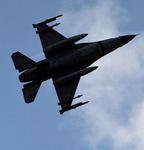
ISIS_24.7.15F-16 warplane in action against ISIS

The Middle East woke up Friday, July 24, to two new full-fledged wars launched by Jordan and Turkey for cutting down the Islamic State of Iraq and the Levant as is forces advanced on their borders. The United States and Israel are involved in both campaigns. Jordanian armored, commando and air forces are already operating deep inside Iraq, while Friday morning, Turkey conducted its first cross-border air strike against ISIS targets in Syria. Clashes between Turkish troops and Islamic fighters erupted at several points along the border. Both governments also conducted mass arrests of suspected Islamists. The Jordanian police picked up ISIS adherents, while 5,000 Turkish police detained 250 Islamist and outlawed Kurdish PKK suspects in Istanbul, Ankara, Izmir and Saniurta. Jordan Friday shut down its only border crossing with Iraq.

Earlier this week, Turkey permitted US warplanes to us the Incirlik air base in the south for bombing missions against ISIS, and Israel handed over to Jordan 16 Cobra combat helicopters and assured Jordan of air force cover for its anti-ISIS operation.

Read more about this new chapter in the war on ISIS in the DEBKAfile report of Thursday, July 23.

In the first publicized Israeli military hardware transaction with an Arab nation, Israel has handed over “around 16 Cobra” combat helicopters in support of Jordan’s war on the Islamic State. This was confirmed Thursday, July 23, by a US official close to the transfer. It was also the first time US-Jordanian-Israeli military cooperation in the struggle against ISIS was publicly disclosed.

“These choppers are for border security,” said the unnamed US official.DEBKAfile’s military and counter-terror sources disclose that the Cobras are needed for a large-scale Jordanian aerial-commando operation launched in the western Iraqi province of Anbar, which borders on the Hashemite Kingdom. This operation is designed to carve out a security belt tens of kilometers deep inside Iraq as a barrier against Islamic State’s encroachment.

Amman approached Washington for combat helicopters to back the operation and was told that the US is short of these items and would turn Israel to pitch in. The US first provided mechanical overhauls for the aircraft before they were incorporated free of charge in Jordan’s existing Cobra fleet.

The transfer was announced while US Defense Secretary Ashton Carter was touring the Middle East. He arrived in Amman Tuesday, July 21,after talks in Israel, and visited Baghdad unannounced Thursday, July 23 for an update on the war on ISIS

The mounting Islamist threat to Jordan is coming now from two directions – the Iraqi province of Anbar and  Syria. ISIS forces have grabbed positions in southern Syria near the intersection of the Jordanian, Iraqi and Syrian borders. They have also moved up to the eastern Syrian town of Abu Kamal on the Iraqi border and, since mid-May, have gradually detached small groups from the captured central Syrian town of Palmyra and quietly built up positions in the south near Jabal Druze.

This buildup has been tracked by US, Jordanian and Israeli surveillance.

The Islamist domestic threat to the Hashemite Kingdom is no less acute. Jihadist sleeper cells have been planted in Jordan ready to strike strategic targets for a reign of terror to coincide with the onset of external Islamic State attacks staged from Iraq and Syria.

Our military sources report that US-Israeli-Jordanian cooperation is channeled through the US Central Command Forward-Jordan from its headquarters north of Amman. It is staffed by US, British, Jordanian, Saudi and Israeli officers working together to defeat ISIS.

US Defense Secy to visit Iraqi Kurdistan after Baghdad

July 24, 2015

US Defense Secy to visit Iraqi Kurdistan after Baghdad, DEBKAfile, July 24, 2015

US Defense Secretary Ashton Carter plans to visit Irbil, capital of the semi-autonomous Kurdish Republic of Iraq, before he leaves Iraq. He will hold talks with the KRG president Massoud Barazani and other Kurish leaders. DEBKAfile: The main purpose of his talks in Irbil is to determine whether the US will provide the peshmerga with heavy weapons, including warplanes and combat helicopters, for grappling with Islamic State’s assaults on their doors. Obama has until now turned down Kurdish requests for this hardware, mainly because of Iranian and Iraqi objections. The Kurds maintain that their army is the only effective force fighting in the field capable of routing ISIS.

Israel gives Jordan 16 Cobra helicopters to fight ISIS – with US approval

July 23, 2015

Israel gives Jordan 16 Cobra helicopters to fight ISIS – with US approval, DEBKAfile, July 23, 2015

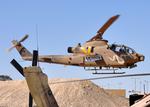
IAF_CobraCobra combat helicopter

In the first publicized Israeli military hardware transaction with an Arab nation, Israel has handed over “around 16 Cobra” combat helicopters in support of Jordan’s war on the Islamic State. This was confirmed Thursday, July 23, by a US official close to the transfer. It was also the first time US-Jordanian-Israeli military cooperation in the struggle against ISIS was publicly disclosed.

“These choppers are for border security,” said the unnamed US official. DEBKAfile’s military and counter-terror sources disclose that the Cobras are needed for a large-scale Jordanian aerial-commando operation launched in the western Iraqi province of Anbar, which borders on the Hashemite Kingdom. This operation is designed to carve out a security belt tens of kilometers deep inside Iraq as a barrier against Islamic State’s encroachment.

Amman approached Washington for combat helicopters to back the operation and was told that the US is short of these items and would turn Israel to pitch in. The US first provided mechanical overhauls for the aircraft before they were incorporated free of charge in Jordan’s existing Cobra fleet.

The transfer was announced while US Defense Secretary Ashton Carter was touring the Middle East. He arrived in Amman Tuesday, July 21,after talks in Israel, and visited Baghdad unannounced Thursday, July 23 for an update on the war on ISIS

The mounting Islamist threat to Jordan is coming now from two directions – the Iraqi province of Anbar and  Syria. ISIS forces have grabbed positions in southern Syria near the intersection of the Jordanian, Iraqi and Syrian borders. They have also moved up to the eastern Syrian town of Abu Kamal on the Iraqi border and, since mid-May, have gradually detached small groups from the captured central Syrian town of Palmyra and quietly built up positions in the south near Jabal Druze.

This buildup has been tracked by US, Jordanian and Israeli surveillance.

The Islamist domestic threat to the Hashemite Kingdom is no less acute. Jihadist sleeper cells have been planted in Jordan ready to strike strategic targets for a reign of terror to coincide with the onset of external Islamic State attacks staged from Iraq and Syria.

Our military sources report that US-Israeli-Jordanian cooperation is channeled through the US Central Command Forward-Jordan from its headquarters north of Amman. It is staffed by US, British, Jordanian, Saudi and Israeli officers working together to defeat ISIS.

US-Israeli-Egyptian mobile sensor-fence projects to block further ISIS Mid East expansion

July 10, 2015

US-Israeli-Egyptian mobile sensor-fence projects to block further ISIS Mid East expansion, DEBKAfile, July 10, 2015

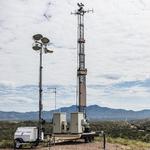
mobile_surveillance_sensor_towers7.15A US mobile surveillance sensor tower

US counter-terror experts are overseeing a lightning operation for setting up mobile sensor towers and electronic fences in Tunisia, Egypt, Jordan and Israel in a desperate bid to seal their borders off against the fast-moving impetus of the Islamic State of Iraq and the Levant – ISIS, or at least slow it down. This reign of terror is spreading out from Iraq and Syria and creeping into southern Jordan, the Israeli Negev, and Egyptian Sinai, then on to Libya and over to Tunisia and Algeria, covering a distance of 4,000 km.

When President Abdel-Fatteh El-Sisi saw his army had not repelled the ISIS Sinai affiliate’s offensive in North Sinai as it went into its second week – controlling only the main highway from El Arish to Cairo via Bardawil Lake – he turned to Washington with an urgent request to ship over mobile surveillance sensor towers and American crews to operate them. His plan is to string them across the Sinai Peninsula and along Egypt’s borders with Libya and Sudan in a last-chance bid to block the constant influx of reinforcements and weapons to ISIS fighters reaching Sinai from Libya, through the Egyptian borde,r and from Iraq, through southern Jordan and the Israeli Negev.

The State Department acceded to the Egyptian request and has submitted the application worth $100 million for congressional approval.

The application states: “This procurement is intended for Egyptian Border Guard Forces, which currently lack any remote detection capability along unpatrolled areas of Egypt’s borders.” Libya, Sudan and Sinai are specified. The application goes on to explain: “The system would provide an early warning capability to allow for faster response times to mitigate threats to the border guards and the civilian population.”

DEBKAfile’s counter-terror and intelligence sources disclose that Egypt already has one set of American mobile sensor towers. They were installed on the 193 km long banks of the Suez Canal more than a year ago and have kept ISIS terrorists from reaching those banks and firing missiles at passing ships to block the waterway, like the RPG attack of Sept. 5, 2013.

The sensor towers have proved effective so long as the various terrorist groups, such as ISIS, were deterred from directly attacking American facilities by tactical considerations of their own, such as a preference for those systems rather than a large-scale army forces to police the Suez zone, which would physically impede the convoys carrying men and arms from Libya into Egypt.

The drivers of these convoys stop over at Suez and Port Suez to rest up before carrying on with the long drive to their destinations in Sinai. Scattering the mobile sensor towers in areas unpatrolled by Egyptian troops would expose the American operators to ISIS attacks and abductions. So while solving one problem, they may well generate another. In any case they won’t make the ISIS threat go away.

Whereas Egypt asked for mobile sensors, Tunisia is to have a new, permanent fence with electronic warning stations along its route. Our counter-terror experts point out that, however effective this system is, it can’t promise Tunisia hermetic protection against terrorist encroachment.

ISIS has at least two ways of getting around the fence barrier:

1. Landing by sea. The gunman who massacred 39 tourists on the Soussa beach on June 26 landed from the Mediterranean by speedboat.

2. Circumventing the fence through the meeting point of the Tunisian-Libyan-Algerian borders. That point will not be enclosed. Tunisia may be reached through western Algeria where the border is wide open.

The second electronic fence the United States is providing will run down 30 km of the border between Israel and Jordan from Timna to Eilat. It is a joint project, which has become necessary to curb ISIS movements from southern Jordan through the Israeli Negev and onto Egyptian Sinai and the Gaza Strip.

America’s latest failure in Syria

July 8, 2015

America’s latest failure in Syria, Washington Post, The Editorial Board, July 7, 2015

(Another mild WP Editorial Board Op Ed critical of Obama’s foreign policies (please see also, The U.S. response to Iran’s cheating is a worrying omen.) This WaPo editorial does not suggest any linkage between Obama’s opposition to attacks on the Iran-supported Syrian regime and his efforts to get a nuke “deal” with Iran.– DM)

IN MAY 2014, President Obama promised a new U.S. effort to train and equip moderate Syrian rebel forces. The next month, the administration asked Congress for $500 million to fund the effort, with the aim of deploying 5,000 U.S.-backed fighters a year for three years. Numerous analysts quickly pointed out two big flaws in the plan: The new force was too small to make a significant difference on Syria’s multi-sided battlefield, and the administration was hamstringing it by insisting that it target only the Islamic State and not the regime of Syrian President Bashar al-Assad. As so often in his handling of Syria, Mr. Obama dismissed proposals for a more robust approach.

Now, once again, the president is reaping the consequences of his half-measures. On Tuesday, Defense Secretary Ashton B. Carter reported the pitiful result of the training program: After a year, he told the Senate Armed Services Committee, just 60 Syrians were enlisted. Meanwhile, Gen. Martin Dempsey, chairman of the Joint Chiefs of Staff, testified that Israel and Jordan “very much believe [in] the possibility” that the Assad regime could soon collapse, touching off “a foot race” of al-Qaeda and Islamic State forces “converging on Damascus.”

Since the United States has failed to train or support a moderate Syrian force capable of countering the extremists, it has no ready way to prevent that disaster. “I won’t sit here today and tell you that I have the answer to that,” Gen. Dempsey told the committee.

The latest U.S. failure in Syria is particularly striking because, as Mr. Obama emphasized in an appearance Monday at the Pentagon, the foundation of his policy in Iraq and Syria is to train local forces that the United States can support. The president conceded that “this aspect of our strategy was moving too slowly”; in fact, it has failed in both countries. According to Mr. Carter, the 3,500 U.S. personnel deployed in Iraq since last year had trained just 8,800 Iraqi army and Kurdish militia soldiers. Just 1,300 Sunni tribesmen have been recruited, though Mr. Carter said such Sunni forces were essential to retaking cities captured by the Islamic State.

Administration officials have a penchant for blaming Iraqi and Syrian Sunnis for lacking the “will” to fight, without considering why that might be. A couple of the principal reasons are the product of Mr. Obama’s policies. Sunni leaders don’t trust the United States to defend them against the Iranian-backed Shiite militias that operate in concert with the Iraqi government. They wonder why the White House still refuses to deploy Special Operations forces advisers or tactical air controllers to the front lines with Iraqi units, even though, as Gen. Dempsey testified, that “would make them more capable.”

Syrian Sunni fighters want to join a force that will take on the Assad regime as well as the Islamic State, but the Obama administration won’t even commit to defending the fighters it is training if they are subjected to the regime’s signature “barrel bomb” attacks. “That decision will be faced when we introduce fighters into the field,” Mr. Carter told the Senate panel. Unless Mr. Obama is prepared to make a more decisive commitment to training and defending U.S.-allied forces, there won’t be many of them.

Is Obama Supporting a Shiite ISIS?

June 12, 2015

Is Obama Supporting a Shiite ISIS?, Front Page Magazine, Daniel Greenfield, June 12, 2015
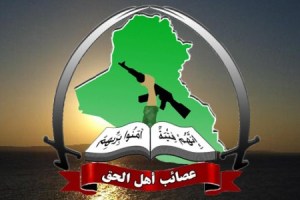
Asaib-ahl-alhaq_logo-450x300Asaib Ahl al-Haq logo.

Obama had campaigned vocally against the Kyl-Lieberman Amendment which designated Iran’s Revolutionary Guard, the hidden force behind Asaib Ahl al-Haq and much of the Shiite terrorist infrastructure, a terrorist organization. He had accused its sponsors of “foolish saber rattling.”

While we focused on ISIS, its Shiite counterparts were building their own Islamic State by burrowing from within to hollow out the Iraqi institutions that we had put into place. ISIS is a tool that Iran is using to force international approval of its takeover of Iraq and its own nuclear program.

Like ISIS, its Shiite counterparts envision an apocalyptic struggle in which the other branch of Islam will be destroyed, along with all non-Muslims, leading to regional and global supremacy. Iraq is only one of the battlefields on which this war is being fought and Obama’s inept mix of appeasement and regime change, abandoning allied governments while aiding enemy terrorists has helped make it possible.

*********************

Staff Sgt. Ahmed Altaie was the last American soldier to come home from Iraq. His body was turned over by Asaib Ahl al-Haq or The League of the Righteous; a Shiite terrorist group funded and trained by Iran.

Altaie had been kidnapped, held for ransom and then killed.

It was not Asaib Ahl al-Haq’s only kidnapping and murder of an American soldier. A year after Altaie’s kidnapping, its terrorists disguised themselves as Americans and abducted five of our soldiers in Karbala. The soldiers were murdered by their Shiite captors after sustained pursuit by American forces made them realize that they wouldn’t be able to escape with their hostages.

Asaib Ahl al-Haq’s obsession with American hostages was a typically Iranian fixation. Iran’s leaders see the roots of their international influence in the Iran hostage crisis. Its terrorist groups in Lebanon had abducted and horrifically tortured Colonel William R. Higgins and William Francis Buckley.

Higgins had been skinned alive.

Most Americans have never heard of Asaib Ahl al-Haq, sometimes referred to as the Khazali Network after its leader, even though it has claimed credit for over 6,000 attacks on Americans. Its deadliest attacks came when the Democrats and their media allies were desperately scrambling to stop Bush from taking out Iran’s nuclear program. Asaib Ahl al-Haq’s ties to Iran were so blatant that the media could not allow it to receive the kind of coverage that Al Qaeda did for fear that it might hurt Iran.

Obama had campaigned vocally against the Kyl-Lieberman Amendment which designated Iran’s Revolutionary Guard, the hidden force behind Asaib Ahl al-Haq and much of the Shiite terrorist infrastructure, a terrorist organization. He had accused its sponsors of “foolish saber rattling”.

Nancy Pelosi joined the Democratic Party’s pro-Iranian turn, rejected a vote on the amendment and sneered that if the kidnapping and murder of American soldiers was “a problem to us and our troops in Iraq, they should deal with it in Iraq.” Earlier that year, she had visited Syria’s Assad to stand with him against President Bush even while Assad was aiding the terrorists massacring American soldiers.

Once Obama took power, coverage of the war was scaled down so that Americans wouldn’t realize that the rising power of ISIS and Asaib Ahl al-Haq were already making a mockery of his withdrawal plans.

But Asaib Ahl al-Haq was not merely an anti-American terrorist group; it was an arm of the Shiite theocracy. As a Shiite counterpart to what would become ISIS, it had most of the same Islamic goals.

While Obama was patting himself on the back for the end of the Iraq War and gay rights, Asaib Ahl al-Haq was throwing those men and women it suspected of being gay from the tops of buildings.

When buildings weren’t available, it beat them to death with concrete blocks or beheaded them.

Its other targets included shelters for battered women, which the Islamist group deemed brothels, men who had long hair or dressed in dark clothing. And even while its Brigades of Wrath were perpetrating these atrocities, Obama and the Shiite Iraqi government embraced the murderous terrorist group.

Qais al-Khazali, the leader of Asaib Ahl al-Haq, and his brother Laith al-Khazali along with a hundred other members of the terror group were freed during Obama’s first year in office. (But to provide equal aid and comfort to the other side, Obama also freed the future Caliph of ISIS in that same year.)

“We let a very dangerous man go, a man whose hands are stained with US and Iraqi blood. We are going to pay for this in the future,” an unnamed American officer was quoted as saying. “This was a deal signed and sealed in British and American blood.”

“We freed all of their leaders and operatives; they executed their hostages and sent them back in body bags.”

The releases were part of Obama’s grand strategy of reconciliation for Iraq. The miserable reality behind the upbeat language was that Obama was handing over Iraq to ISIS, Iran and its Shiite militias.

Last year, Maliki had made Asaib Ahl al-Haq and other Shiite terror groups into the Sons of Iraq that were to protect and defend Baghdad. Asaib Ahl al-Haq and its leader were now the Iraqi security forces. The Shiite death squads were in charge even while they continued carrying out ISIS-style massacres.

Obama belatedly decided to respond to ISIS, but his war strategy depends on Asaib Ahl al-Haq.

Officially his strategy is to provide training and air support for the Iraqi military. But the Iraqi military’s Shiite officers conduct panicked retreats in the face of ISIS attacks while abandoning cities and equipment. The goal of these retreats is to make Asaib Ahl al-Haq and other Shiite militias into the only alternative to ISIS for the United States. Even though he pays lip service to Sunni and Kurdish resistance to ISIS, Obama shows that he has accepted Iran’s terms by refusing to arm and support them.

While we focused on ISIS, its Shiite counterparts were building their own Islamic State by burrowing from within to hollow out the Iraqi institutions that we had put into place. ISIS is a tool that Iran is using to force international approval of its takeover of Iraq and its own nuclear program.

An Iraqi official last year was quoted as saying that Asaib Ahl al-Haq’s men give orders to the police and military. “Before they were just around, now they are high-ranking officers in the military.”

Some defense experts wonder if the Iraqi military even exists. The bulk of the forces in Tikrit were Shiite Jihadists and they are armed with American weapons that they receive from the Iraqi government. Asaib Ahl al-Haq boss Qais al-Khazali claims that soldiers and Shiite militia members both wear Iraqi military uniforms.

The capture of Tikrit became an opportunity for the Shiite terrorist groups and Qasem Soleimani, their Iranian terror boss, to boast about their victory and loot and terrorize the local Sunni residents.

Obama’s official plan to arm and train the Iraqi military and security forces is a dead end because like the mythical moderate Syrian rebels, they are fronts for moving money and weapons to Jihadists. We are arming ghost armies and funding fake political institutions and the money and weapons end up going to bands of Islamic terrorists, militias and guerrillas that are actually calling the shots.

By aiding Shiite militias in Iraq and Sunni militias in Syria, we’re backing both sides of an Islamic civil war.

Obama turned over Iraq to the Shiites and then backed the Muslim Brotherhood’s efforts to force the Shiites out of power in Syria. The Sunni-Shiite civil wars tearing the region apart were caused by those two decisions. His solution to the wars is to continue backing the same forces responsible for them.

Despite assorted denials, Obama’s real ISIS strategy is to have Iran do the fighting for him in Iraq.

But Obama is backing one ISIS against another ISIS. Why is a Shiite Islamic state that kidnaps and kills Americans, throws gays off buildings and massacres women better than a Sunni Islamic state that does the same things? Not only is the Obama strategy morally dubious, but it’s also proven to be ineffective.

The rise of ISIS has helped Iran tighten its hold on Shiite areas in Iraq and Syria. Iran does not need to beat ISIS. Its interests are best served by maintaining a stalemate in which ISIS consolidates Sunni areas while Iran consolidates Shiite areas. The more Obama aids Iran and its terrorist forces as a counterweight to ISIS, the more Iran sees keeping ISIS around as being vital to its larger strategy.

By aiding Iran, Obama is really aiding ISIS.

Despite depending on our air support, Asaib Ahl al-Haq and its leaders are threatening to attack American planes and soldiers making it clear that they view the fight against ISIS and for Assad as part of a larger struggle for achieving Iran’s apocalyptic Shiite ambitions for the region and the world.

Iran’s Supreme Leader, Ayatollah Ali Khamenei recently gave a speech in which he warned that, “We must prepare the country’s conditions, the region’s conditions, and, Allah willing, the world’s conditions for the reappearance [of Imam Mahdi] will spread justice.”

Like ISIS, its Shiite counterparts envision an apocalyptic struggle in which the other branch of Islam will be destroyed, along with all non-Muslims, leading to regional and global supremacy. Iraq is only one of the battlefields on which this war is being fought and Obama’s inept mix of appeasement and regime change, abandoning allied governments while aiding enemy terrorists has helped make it possible.