Posted tagged ‘Iran’

‘Messing’ with Israel

April 7, 2015

‘Messing’ with Israel, Israel Hayom, Elliott Abrams, April 7, 2015

(“If you like your country you can keep it.” Even if Obama’s phrasings were not ambiguous, and they are, he could not be trusted. Moreover, since Obama’s talking points about the “once in a lifetime deal” and those of his Iranian counterparts are very different, there is no way of knowing now whether there will be a deal, whether the U.S. Congress will block it, or what it will be. — DM)

In his lengthy interview with Thomas Friedman of The New York Times, President Obama makes many statements about Israel’s security and how the proposed deal with Iran enhances it. These words from the interview are key:

“I have to respect the fears that the Israeli people have,” he added, “and I understand that Prime Minister Netanyahu is expressing the deep-rooted concerns that a lot of the Israeli population feel about this, but what I can say to them is: Number one, this is our best bet by far to make sure Iran doesn’t get a nuclear weapon, and number two, what we will be doing even as we enter into this deal is sending a very clear message to the Iranians and to the entire region that if anybody messes with Israel, America will be there.”

What does “messes with Israel” mean? No one has the slightest idea. The president unfortunately uses this kind of diction too often, dumbing down his rhetoric for some reason and leaving listeners confused. Today, Iran is sending arms and money to Hamas in Gaza, and has done so for years. Is that “messing with Israel?” Iran has tried to blow up several Israeli embassies, repeating the successful attack it made on Israel’s embassy in Buenos Aires in 1992. Fortunately Israel has foiled the more recent plots, but is attempting to bomb Israeli embassies “messing with Israel?” Iranian Revolutionary Guards, along with Hezbollah troops, are in southern Syria now near the Golan. Is that “messing with Israel?” And what does the president mean by “America will be there?” With arms? With bandages? With the diplomatic protection his administration is now considering removing at the United Nations?

Later in the interview, the president says this:

“Now, what you might hear from Prime Minister [Benjamin] Netanyahu, which I respect, is the notion, ‘Look, Israel is more vulnerable. We don’t have the luxury of testing these propositions the way you do,’ and I completely understand that. And further, I completely understand Israel’s belief that given the tragic history of the Jewish people, they can’t be dependent solely on us for their own security. But what I would say to them is that not only am I absolutely committed to making sure that they maintain their qualitative military edge, and that they can deter any potential future attacks, but what I’m willing to do is to make the kinds of commitments that would give everybody in the neighborhood, including Iran, a clarity that if Israel were to be attacked by any state, that we would stand by them. And that, I think, should be … sufficient to take advantage of this once-in-a-lifetime opportunity to see whether or not we can at least take the nuclear issue off the table.”

This is not much help. For one thing, the president says “attacked by any state,” presumably leaving out Hamas and Hezbollah, and for that matter the Islamic State group and al-Qaida. One has to assume he means “attacked by Iran,” but what does “we would stand by them” mean? It doesn’t add much to “America will be there.” There will be no conventional war between Israel and any Arab state in the foreseeable future, so Hezbollah is the most likely problem and is presumably excluded from the president’s formulation. What Israel worries about today is a nuclear attack by Iran or a terrorist group like Hezbollah to which Iran has given the bomb. No doubt that qualifies as “messing with Israel,” but were that to occur what exactly would “America will be there” and “stand by them” mean? Take in refugees from the destroyed State of Israel after the nuclear attack on it? The president’s language about “commitment” suggests that he may envision a formal defense commitment by the United States to Israel. Israel has not wanted such a treaty because it has always said it wants to defend itself, not have Americans dying to defend it. That position has served the U.S.-Israel relationship well for 67 years. Should it really be changed now, and would that really help Israel? What would the value of such a commitment be? To ask the question another way, are not Poles and Estonians wondering right now about the value of their membership in NATO, if Mr. Putin “messes” with them?

There were other problems in the interview, such as this language:

“There has to be the ability for me to disagree with a policy on settlements, for example, without being viewed as … opposing Israel. There has to be a way for Prime Minister Netanyahu to disagree with me on policy without being viewed as anti-Democrat, and I think the right way to do it is to recognize that as many commonalities as we have, there are going to be strategic differences. And I think that it is important for each side to respect the debate that takes place in the other country and not try to work just with one side. … But this has been as hard as anything I do because of the deep affinities that I feel for the Israeli people and for the Jewish people. It’s been a hard period.”

“You take it personally?” Friedman asked.

“It has been personally difficult for me to hear … expressions that somehow … this administration has not done everything it could to look out for Israel’s interest — and the suggestion that when we have very serious policy differences, that that’s not in the context of a deep and abiding friendship and concern and understanding of the threats that the Jewish people have faced historically and continue to face.”

“Respect the debate?” “Personally difficult?” This is the White House whose high officials called the prime minister of Israel a “chickens—” and a “coward,” in interviews meant to be published — not off the record. And the officials who said those things remain in place; no effort was ever made to identify and discipline them.

But the deeper problem is that the reassurances the president is offering to Israel … are simply not reassuring. Iran is already, right now, while under sanctions that are badly hurting its economy, spending vast amounts of money and effort to “mess with Israel.” This administration’s reaction has been to seek a nuclear deal that will give Iran more economic resources to dedicate to its hatred and violence against Israel, but will in no way whatsoever limit Iran’s conventional weapons and its support for terrorism.

Several times in this interview the president went out of his way to suggest that he fully understands Israel’s security problems, but the full text suggests that he does not — because he believes that his statements that “if anybody messes with Israel, America will be there” and would “stand by them” actually solve any of those problems. Time alone undermines the value of those statements, because he will not be president in 22 months. The words he used are sufficiently vague to undermine their value as well. It is hard to believe that many Israelis will be reassured by the interview, especially if they read the Iranian press and see what, in their own interviews, Iranian officials are claiming they got out of the new nuclear agreement.

Obama Nukes Own Iran Deal in NPR Interview

April 7, 2015

Obama Nukes Own Iran Deal in NPR Interview

by Joel B. Pollak7 Apr 2015

via Obama Nukes Own Iran Deal in NPR Interview – Breitbart.

President Barack Obama has granted an interview to National Public Radio in an attempt to sell the Iran “framework” to a skeptical public. In the process, he compares the agreement to a real-estate deal–a poor analogy for a man who called his own last property purchase deal “boneheaded” after involving indicted (now convicted) bag Chicago man Tony Rezko. Obama also provided at least five big reasons that Congress–whose opposition is growing–should reject the Iran deal.

1. Iran could have a nuclear weapon after 12 years. Obama volunteers to NPR’s Steve Inskeep “that in year 13, 14, 15, they [Iran] have advanced centrifuges that enrich uranium fairly rapidly, and at that point the breakout times would have shrunk almost down to zero.” Obama argues that would be better than the current breakout time of 2-3 months and that the world would at least know more about the Iranian nuclear program when it did detonate a nuclear weapon.

2. Obama admits the Iranian regime is not going to change. At the outset, Obama says that “this is a good deal if you think Iran’s open to change.” Later, however, in dismissing Israeli Prime Minister Benjamin Netanyau’s demand that a final deal include Iranian recognition of Israel’s right to exist, Obama says that would preclude a deal “unless the nature of the Iranian regime completely transforms.” By his own standard–Iranian openness to change–the deal is dead on arrival.

3. Obama admits Iran will not stop supporting terrorism. Obama admits that sanctions relief will allow Iran to keep funding terror throughout the region and the world. However, he says, Iran does that anyway, even under significant financial pressure. Amazingly, Obama actually offers the example of North Korea as a country that causes mischief despite being isolated. North Korea is the best example of why a nuclear deal like the Iran framework has no chance of success.

4. Russia could stop the UN Security Council from inspecting Iran. The fact that Russia holds a veto on the UN Security Council means that it can effectively protect Iran from international inspections. Obama says he is “trying to design” a system in which nuclear inspectors from the International Atomic Energy Agency (IAEA) do not have to report to the Security Council. The problem? Russia is one of the P5+1 powers. (Obama admits the problem is not yet “resolved.”)

5. There is no way to resolve differences over sanctions. Iran only came to the negotiating table, Obama admits, because of international sanctions (which he opposed, but for which he now takes credit). Yet Iran claims the deal will include an immediate end to sanctions, while Obama says that sanctions will only be lifted later. And Obama acknowledges that he needs Russia’s support to “snap-back” sanctions if Iran violates the deal–a problem for reasons described above.

French fact sheet differs from US on Iran’s centrifuge use, R&D

April 7, 2015

French fact sheet differs from US on Iran’s centrifuge use, R&D

Raising new questions, internal Paris document seen by Times of Israel also shows discrepancies over sanctions relief, inspectors’ access

By Times of Israel staff April 7, 2015, 3:28 pm

via French fact sheet differs from US on Iran’s centrifuge use, R&D | The Times of Israel.


Fact is nobody knows what the real facts are, but still a deal of the century.

it is a freak show


French government fact sheet on the Iran framework deal, which has not been made public by Paris but which has been seen by The Times of Israel, provides for Iran to gradually introduce the use of advanced centrifuges to enrich uranium after 12 years, in contrast to the US official parameters, which make no such specific provision.

The use of the more advanced IR-2 and IR-4 centrifuges, as permitted according to the French fact sheet, would enable Iran to more rapidly accumulate the highly enriched uranium needed to build nuclear weapons, accelerating its breakout time to the bomb.

The French fact sheet also specifies that Iran will be allowed to continue R&D work on the advanced IR-4, IR-5, IR-6 and IR-8 centrifuges, the last of which can enrich uranium at 20-times the speed of Iran’s current IR-1 centrifuges, whereas the American parameters are less specific.

Differences between the texts issued by Paris and Washington also extend to the question of inspection and supervision of Iran’s activities, with the French document indicating that the IAEA, the International Atomic Energy Agency, will be able to visit any suspect site in Iran — so-called “anywhere, anytime” access — whereas the US document is less far-reaching.

The two documents also differ in their terminology as regards the scale and timing of sanctions relief as the deal takes effect.

From left, Head of Mission of the People's Republic of China to the European Union Hailong Wu, French Foreign Minister Laurent Fabius, German Foreign Minister Frank Walter Steinmeier, European Union High Representative Federica Mogherini, Iranian Foreign Minister Javad Zarifat, Russian Deputy Political Director Alexey Karpov, British Foreign Secretary Philip Hammond and US Secretary of State John Kerry arrive in Lausanne, Switzerland, Thursday, April 2, 2015, after the United States, Iran and five other world powers on Thursday announced an understanding outlining limits on Iran's nuclear program. (AP Photo/Brendan Smialowski, Pool)

Ever since the framework agreement was announced last week, the various parties have set out sometimes sharply differing accounts of what has been agreed, provoking escalating controversy and criticism over a deal that President Barack Obama has hailed as historic and Israel’s Prime Minister Benjamin Netanyahu has warned is “very bad” and paves Iran’s path to the bomb.

The Iranian Foreign Ministry on Friday issued its own fact sheet, which differs starkly with the official American parameters and with the French fact sheet seen by The Times of Israel.

Six key discrepancies between the US and Iranian documents, some of them at the very heart of the framework agreement announced in Lausanne, Switzerland, last Thursday, were highlighted by an Israeli expert on Saturday.

Iranian Foreign Minister Mohammad Javad Zarif claimed earlier on Saturday that, under the deal, Iran has the right to continue working on more of the advanced IR-8 centrifuges. “Some said Iran can have no R&D, but we now have the right to develop IR-8, which has 20x the output of IR-1,” he said.

The Israeli government on Monday issued a series of demands intended to transform the non-signed framework agreement into a more reasonable deal by the scheduled June 30 deadline, and asked 10 key questions about the terms, several of which related to the emerging discrepancies between the various players’ accounts of what was decided in Lausanne.

Hours later, in two interviews with Israeli television stations, Ben Rhodes, a senior adviser to Obama, quashed the notion that the final deal would be markedly more stringent on Iran than the terms of the framework agreement, declaring that the deal as it now stands meets the US’s “core objectives.

“We believe that this is the best deal that can emerge from these negotiations,” Rhodes said.

Verifying Iran Nuclear Deal Not Possible, Experts Say

April 6, 2015

Verifying Iran Nuclear Deal Not Possible, Experts Say

Past Iranian cheating to be codified by future accord

BY:
April 6, 2015 5:00 am

via Verifying Iran Nuclear Deal Not Possible, Experts Say | Washington Free Beacon.


Despite promises by President Obama that Iranian cheating on a new treaty will be detected, verifying Tehran’s compliance with a future nuclear accord will be very difficult if not impossible, arms experts say.

“The Joint Comprehensive Plan of Action will not be effectively verifiable,” said Paula DeSutter, assistant secretary of state for verification, compliance, and implementation from 2002 to 2009.

Obama said Saturday that the framework nuclear deal reached in Switzerland would provide “unprecedented verification.”

International inspectors “will have unprecedented access to Iran’s nuclear program because Iran will face more inspections than any other country in the world,” he said in a Saturday radio address.

“If Iran cheats, the world will know it,” Obama said. “If we see something suspicious, we will inspect it. So this deal is not based on trust, it’s based on unprecedented verification.”

But arms control experts challenged the administration’s assertions that a final deal to be hammered out in detail between now and June can be verified, based on Iran’s past cheating and the failure of similar arms verification procedures.

A White House fact sheet on the outline of the future agreement states that the new accord will not require Iran to dismantle centrifuges, or to remove stockpiled nuclear material from the country or convert such material into less dangerous fuel rods.

The agreement also would permit continued nuclear research at facilities built in violation of the Nuclear Non-Proliferation Treaty (NPT), which Iran signed in 1970 but has violated repeatedly since at least the early 2000s.

The centerpiece for verifying Iranian compliance will be a document called the Additional Protocol of the International Atomic Energy Agency (IAEA), according to the White House.

However, the State Department’s most recent report on arms compliance, made public in July, states that Iran signed an IAEA Additional Protocol in 2003 but “implemented it provisionally and selectively from 2003 to 2006,” when Tehran stopped complying altogether.

“The framework claims that Iran will once again execute an Additional Protocol with IAEA,” said William R. Harris, an international lawyer who formerly took part in drafting and verifying U.S. arms control agreements. “This might yield unprecedented verification opportunities, but can the international community count on faithful implementation?”

Harris also said Iran could cheat by shipping secretly built nuclear arms to North Korea, based on published reports indicating Iran co-financed North Korea’s nuclear tests, and that Iranian ballistic missile test signals reportedly showed “earmarks” of North Korean guidance systems.

“So what would prevent storage of Iranian nuclear weapons at underground North Korean sites?” he asked. “If there is to be full-scope inspection in Iran, the incentives for extraterritorial R&D and storage increase.”

U.S. intelligence agencies, which will be called on to verify the agreement, also have a spotty record for estimating foreign arms programs. After erroneously claiming Iraq had large stocks of weapons of mass destruction, the intelligence community produced a 2007 National Intelligence Estimate that falsely concluded that Iran halted work on nuclear weapons in 2003.

The IAEA, in a restricted 2011 report, contradicted the estimate by stating that Iran continued nuclear arms work past 2003, including work on computer modeling used in building nuclear warheads.

White House officials who briefed reporters last week on the new framework agreement said the key to verification of the future pact will be the new IAEA protocol. The protocol will provide greater access and information on the Iranian nuclear program, including its hidden and secret sites, they said.

The nuclear facilities at Fordow, an underground facility where centrifuges will be removed, and Natanz, another major centrifuge facility, were both built in violation of the NPT and will not be dismantled.

Additionally, the nuclear facility at Parchin, where Iran is believed to have carried out most of its nuclear weapons work, is not mentioned in any of the fact sheets by name.

The sole reference to Iran’s work on nuclear arms is the reference in the fact sheet to a requirement that Iran address “the possible military dimensions” of its nuclear program.

Officials who briefed reporters also said that under the new agreement inspectors would have access to Iran’s nuclear “supply chain”—the covert system used to circumvent global sanctions and procure materials and equipment.

DeSutter, the former State Department arms verification official, said the transparency measures announced after talks in Lausanne, Switzerland, on Thursday at best could detect quantitative excesses at known locations, but not secret illegal activities, like those that Iran carried out on a large scale in violation of its obligations under the NPT.

The transparency regime for the new deal also will “undermine the already challenging verifiability of the Nuclear Nonproliferation Treaty by legitimizing Iran’s illegal enrichment and reprocessing programs,” DeSutter said.

Thomas Moore, former professional staff member of the Senate Foreign Relations Committee who specialized in arms control matters, also said Iran’s past cheating on the NPT makes verifying a new agreement nearly impossible.

Iran, in its statement on the framework, also denied it would sign a new IAEA protocol. Tehran said of the protocol that it will be implemented on a “voluntary and temporary basis” for transparency and confidence-building.

The imprecise language is a sign “Iran is keeping its weapon option open but refuses required openness to confirm it no longer wants one,” Moore said.

“Iran would not divert centrifuges or the material they make from a declared site,” Moore said. “Rather, it will instead cheat at an undeclared site.”

Because Iran will not ratify the new protocol, the IAEA will be unable to verify the completeness and correctness of Iran’s declarations, Moore said, both declared and undeclared materials and activities.

Iran is already the single most IAEA-inspected nation in the world and additional IAEA inspections are not expected to be better, although Iran’s nuclear expertise will grow, he added.

“The deal is silent on Iran’s actual military dimensions, except to the extent that its supporters claim the IAEA will be able to verify the absence of a weapons program in Iran. They won’t,” Moore said.

“Contrary to the imprecise political rhetoric, this deal does not yet contain the ‘most intrusive’ inspections ever tried,” he said.

David S. Sullivan, a former CIA arms verification specialist and also a former Senate Foreign Relations Committee arms expert, said confirming Iran’s compliance with new nuclear obligations will be difficult.

“U.S. national technical means of verification is always difficult, fraught with the political process of monitoring, collecting, analyzing, and [achieving] consensus on usually ambiguous evidence of cheating that opponents are trying to hide,” Sullivan said.

“These difficulties are even greater for the UN’s IAEA, which is a multinational political agency.”

Past cheating by Iran, confirmed as recently as July 2014 raised questions about why there are negotiations with Tehran, Sullivan said.

“Why are we negotiating for a new agreement, when existing Iranian NPT violations remain in effect, ongoing, and unresolved, suggesting that Iran is unlikely to comply with any new agreement?” Sullivan said.

“Iran alarmingly is officially within three months of having nuclear warheads, according to the international negotiators, and is therefore about to become another nuclear-armed North Korea,” he said, noting that Pyongyang also cheated on the NPT and now has nuclear-tipped missiles.

By not requiring Iran to correct past violations of the NPT, the new agreement will in effect codify its current cheating. “The negotiations started as an attempt to stop Iran’s nuclear weapons program, but now they have legitimized it,” Sullivan said

Can and should Israel destroy Iran’s nuclear facilities?

April 5, 2015

Can and should Israel destroy Iran’s nuclear facilities? Dan Miller’s Blog, April 5, 2015

(The views expressed in this article are mine and do not necessarily reflect those of Warsclerotic or any of its other editors. — DM)

It has been suggested that Israel should seriously consider destroying Iranian nuclear facilities, but Israeli officials obviously haven’t said, and won’t say, if, how or when she might.

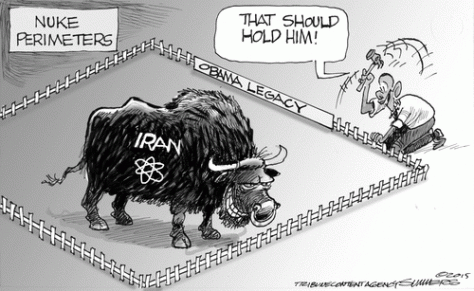
Iran fenced in

Speaking to Arutz Sheva Friday, Professor Efraim Inbar, who heads the Begin-Sadat Center for Strategic Studies, said the deal had realized Israel’s worst fears by leaving Iran’s nuclear program essentially intact.

The Islamic Republic’s nuclear program has been granted “legitimacy” by the agreement, which still allowed it to continue enriching uranium and to maintain a reactor capable of producing enriched plutonium, he said. “And that’s what worries Israel, that they (Iran) will be able within a short time frame to reach a nuclear bomb.”

“I hold the view that the only way to stop Iran in its journey to a nuclear bomb is through military means,” Inbar maintained, suggesting that “Israel needs to seriously consider striking a number of important nuclear facilities” to head off the threat.

On March 28, former U.S. Ambassador Bolton said that it should be done.

The P5+1 nuclear “deal,” proudly announced by President Obama on April 2nd, is a sham. There is no “deal,” and public announcements by Iran and Obama cast it in very different lights. According to Iran, all sanctions will be lifted immediately when an agreement is reached on or before June 30th. According to Obama, sanctions relief will be gradual and based on Iran’s compliance with invasive inspections and other conditions. Even National Public Radio (NPR) has pointed out differences. NPR observed that, according to Iran,

all sanctions relief – U.N., EU and U.S. – would be immediate. It was unequivocal. It stated that Iran under the deal was free to pursue industrial scale enrichment to fuel its own reactors – unequivocal. It stated that Iran was unhindered in its ability to conduct centrifuge R&D.

Iran has also emphasized that its intention to destroy Israel is non-negotiable, and the Obama Administration has rejected any efforts to make Iran recognize Israel’s right to exist, on the ground that

“This is an agreement that is only about the nuclear issue,” State Department spokeswoman Marie Harf told reporters on Friday night, according to Fox News. “This is an agreement that doesn’t deal with any other issues, nor should it.” [Emphasis added.]

Israeli Prime Minister Netanyahu has said that Israel’s right to exist is non-negotiable.

Iran is very unlikely to retreat from its perception of the “deal,” Obama is very likely to retreat in Iran’s favor, and Israel is very unlikely to retreat from its perceptions about Iran, the “deal” or Israel’s right to exist.

What should Israel do?

In Martin Archer’s novel Islamic War, which I reviewed here, Israel dispatched elderly, large and substantially refurbished remove controlled aircraft, full of high explosives, from Somalia to half dozen nuclear facilities operated by hostile nations. They flew circuitous routes at varying altitudes to avoid detection until it was too late to stop them. Over a period of weeks, they crashed into and destroyed their targets, amid speculation about who had done it and why. Israel was not suspected. Would that have been possible then? Now? I don’t know.

It has been reported that Saudi Arabia has given Israel clearance to use her airspace for an attack on Iran’s nuclear facilities.

Fox News reports that US Defense sources claim the Saudis are conducting tests on their air defense systems after giving Israel permission to to enter a narrow corridor to shorten the distance to attack Iran.

The testing would make sure that Saudi jets don’t get scrambled when Israel entered Saudi airspace. Once the IAF planes complete their mission and exit Saudi airspace, Saudi defenses would go back online again. [Emphasis added.]

Might Saudi Arabia, Egypt and perhaps other Gulf States go beyond not interfering with an Israeli attack to provide air support and other help? They seem to be as displeased with the “deal” as Israel is.

Assuming that Israel is not overly concerned about being identified as the attacker and is willing to act alone, she might:

Detonate one or more high-altitude atomic bombs to emit sufficient electromagnetic pulses (EMP) to fry all above-ground Iranian electronics. That would substantially disable Iranian above-ground command and control facilities as well as other communications, hence diminishing (but not eliminating) the possibility of counter-strikes by Iran and/or its proxies. Perhaps she has other, non-nuclear, means of generating EMPs; she hasn’t said.

Immediately thereafter, drop whatever suitable bombs she may have on all Iranian military and nuclear facilities. Does Israel have bunker-buster bombs? Probably not of U.S. manufacture, but that does not mean that she has not developed her own. It would be surprising if she had not.

Obama and other “leaders of the free world” would complain and the U.N. would emit fits of angry censures. However, that happens with great frequency in any event, and would be an insufficient reason for Israel to commit national suicide through inaction against Iran.

I am no “military expert” and would appreciate any comments on the suggestions I have made as well as any other suggestions anyone might care to offer.

Egypt sends large naval-marine force to Bab el-Mandeb

April 5, 2015

Egypt sends large naval-marine force to Bab el-Mandeb , DEBKAfile, April 5, 2015

(Please see also, Khamenei sends Iranian navy to Bab el-Mandeb Straits. Iran arms store for Hamas bombed in Libya. — DM)

DEBKAfile’s military sources report that Egypt Sunday transferred war ships and marine forces as reinforcements for securing the Bab el-Mandeb Strait against Iranian-backed Houthi control. Egypt now deploys six warships and at least 1,000 marines at the vital shipping gateway.

Egypt will defend its Gulf allies “if we have to,” said President Abdel-Fatteh Al-Sisi Saturday night after a meeting of the Supreme Council of the Armed Forces. He stresse that Bab Al-Mandab Strait was a national security issue for Egypt and Arab countries. Arab national security would only be protected by Arab countries, said the president.

Egypt has closely monitored the civil war in Yemen, especially since the Saudi-led Operation Decisive Storm began to end the Iranian-backed Houthi rebellion. The disruption of shipping in the Bab el-Mandeb Strait would directly affect traffic, including energy shipments, to and from the Gulf and Far East through Egypt’s Suez Canal.

Iran sends Hamas massive aid to rebuild tunnels – report

April 5, 2015

Iran sends Hamas massive aid to rebuild tunnels – report, DEBKAfile, April 5, 2015

Iran has transferred tens of millions of dollars to Hamas’s military wing in Gaza to help it rebuild the tunnels destroyed in last summer’s conflict with Israel, the Sunday Telegraph reports. In an intense effort to restore the Palestinian extremists’ military capabilities, Iran is also funding new missile supplies to replenish the stocks used up in bombing Israeli towns and villages. Hamas capabilities were seriously degraded by Israel’s Operation Protective Edge last summer which ended in a ceasefire.

Cartoon of the day

April 5, 2015

Via Freedom is just another word, April 5, 2015

Iran fenced in

Report: Israeli Jet Struck Weapons Depots in Libya

April 4, 2015

Report: Israeli Jet Struck Weapons Depots in Libya, Israel National News, Gil Ronen, April 4, 2015

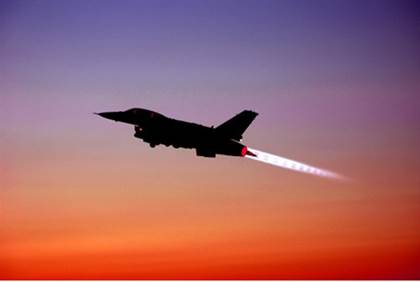
img373532IAF F-16 IAF Website

Al Watan added that Egypt allowed the Israeli jet to pass through its airspace en route to southern Libya.

********************

Arab news sources reported at week’s end that an unidentified jet believed to be Israeli destroyed warehouses in southern Libya that held weapons bought by Iran for Hamas.

According to the reports in Al Watan and other news outlets, the warehouses were completely destroyed. The weapons that were inside them had allegedly been purchased by Iran, by means of weapons dealers in Sudan and Chad, and were supposed to be smuggled to Hamas through Egypt, by means of the smuggling tunnels between Sinai ands Gaza.

The destruction of the weapons stores in southern Libya was carried out in coordination with the Egyptian security and intelligence apparatuses, the reports claimed.

Al Watan added that Egypt allowed the Israeli jet to pass through its airspace en route to southern Libya.

The Lausanne deal: Exercise in spin and counter-spin

April 4, 2015

The Lausanne deal: Exercise in spin and counter-spin, DEBKAfile, April 4, 2015

Iranian_Fact_Sheet_3.4.15Iran’s counters US fact sheet on Lausanne deal

Hours after Washington published a “fact sheet” in Lausanne Thursday, April 2 – which enumerated “the parameters of the agreed framework” hammered out by the US world powers and Iran – Tehran countered with its own version the next day, after the lead Iranian negotiator Foreign Minister Mohammed Javad Zarif, dismissed the American accounting as “spin.”

The Iranian version departs substantially from President Barack Obama’s assurance of “a deal that meets our core objections,” and statement,: “There is no way Iran can get around it to build a bomb or produce plutonium at its Arak plan…verification mechanisms built into the agreed framework will ensure that if Iran cheats, the world will know it.”

Tehran’s version had two objects: 1) To refute Obama’s presentation of the outcome of the Lausanne talks, and 2) To show the Iranian people how successful its negotiating team had been in defending its national interest.

DEBKAfile reports that the battle of versions, fought just hours after both sides claimed victory in the diplomatic contest played out at Lausanne, makes it obvious that the gaps between the world powers and Iran are far wider than admitedt. They could not even find a common definition of what if anything was achieved in the talks: “a framework deal” in US terms; or “a package of solutions leading up to a future Comprehensive Plan of Joint Action” – in Iranian parlance.

The gaps on such key issues as enrichment, sanctions, research and development, means of verifying compliance (described by Obama as intrusive”) could no longer be papered over after Tehran issued its version. It was a short document and here are its main points:

Iran’s version of the Lausanne deal

  • Iran’s nuclear program including enrichment will continue.
  • None of Iran’s nuclear facilities or related activities will be stopped or shut down or suspended and activities will continue at Natanz, Fordow, Isfahan and Arak.
  • There is no confirmation of Obama’s claim that the Arak plant will not be allowed to produce plutonium. The Iranians say: The Arak heavy water research reactor will remain – enhanced and updated with re-modifications as a joint international project. In addition to decreasing the amount of plutonium production, the efficiency of the Arak reactor will be increased significantly.
  • After the implementation of the Comprehensive Plan of Joint Action, all the UN Security Council resolutions will be revoked, and all the multilateral economic and financial sanctions of the EU and the unilateral ones of the US (which are detailed) immediately removed.
  • After the preparatory phase and the start of Iran’s nuclear-related implementation work, all the sanctions will be automatically annulled on a single specified day. Furthermore, all P5-1 members are committed to restrain from imposing new nuclear-related sanctions.
  • There is no word in the entire Iranian document on inspections of any kind, which counters the “verification mechanisms built into the agreed framework” referred to by President Obama.
    Instead, the Iranian version says that violations “by any one party” will have “predetermined mechanisms of response.”
  • Sanctions were ruled out by the previous point.

The devil is in the equivocations

According to the US version, Iran’s preparatory work must include the de-tuning of Fordow and Arak, reducing the Natanz centrifuges down to 6,000, with 5,000 working, uranium stocks reduced from 10,000 kilos to 300 and the Additional Protocol activated.

Iran’s version:

  • Fordow will be converted into an advanced nuclear and physics center and keep more than 1,000 centrifuges – in line with the US perception except for the word “more.” But then Iran adds …and all relating infrastructure, out of which two centrifuge cascades will be in operation.
  • The Iranian version also agrees up to a point with the US assertion that 5,000 machines will continue enriching 3.67 percent grade uranium at Natanz. But this too is qualified: Additional machines will not be disabled but held ready to replace any that are damaged – contrary to the US version which places them under IAEA supervision or dismantled.
  • Iran will continue its research and development of advanced centrifuges and the initiation and completion phases of the process for IR-4, IR-5, IR-6 and IR-8 centrifuges during the 10-year period of the Comprehensive Plan of Action.
  • It is claimed by Washington that the new deal binds Iran to stop developing or holding advanced centrifuges (that would speed up uranium enrichment many times over.)
  • Iran will implement the Additional Protocol on a voluntary and temporary basis for the sake of transparency and confidence-building.

A non-binding package

  • The Islamic Republic of Iran declares formally that the package contained in the solutions necessary to attaining the Comprehensive Plan of Joint Action agreed with the P5+1 countries, China, Russia, France, the United States, England and Germany, “does not have legal binding” and will only provide a “conceptual guide for calibrating and assessing the Comprehensive Plan. On these grounds the drafting of this plan will begin in the near future.”
  • The Iranian document ends by saying: “It is far too early to tell if the compromises will survive the next final negotiating round, or review by Washington and Tehran. The timing of sanctions relief remains unresolved, for example, and already the two sides are describing it in different terms.”