Posted tagged ‘Iran’

Saudi Journalist: Iran – Not Israel – Is The Gulf States’ No. 1 [Enemy]

March 11, 2016

Saudi Journalist: Iran – Not Israel – Is The Gulf States’ No. 1, MEMRI, March 11, 2016

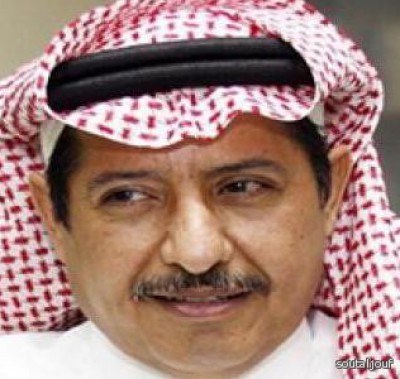
On March 8, 2016, Saudi journalist Muhammad Aal Al-Sheikh wrote in his column in the Saudi daily Al-Jazirah that today, Iran is the No. 1 enemy of Saudi Arabia and the Gulf countries, supplanting the historical enemy Israel. Any citizen of the Gulf who disagrees with this assessment, he added, is a traitor.

Arguing that Iran is exploiting the Palestinian issue as a pretext for “infiltrating deep into the Arab world, shredding its Arab fabric, and dragging Arab society into supporting its expansionary plan,” he emphasized that the Palestinians should expect no salvation from Iran. He also warned the Gulf Shi’ites that they were mere pawns for Iran, which was using them to promote Persian national aspirations.

Below are translated excerpts from Aal Al-Sheikh’s column:[1]

27120Muhammad Aal Al-Sheikh (image: Kn19.com)

“The Persian enemy is Enemy No. 1, and the Zionist enemy is [only] Enemy No. 2. We must present this truth directly, flattering no one, to all those [who try] to extort us with the tale that Israel is the Arabs’ Enemy No. 1 and that Iran supports us on the Palestinian issue. This tale could still be true vis-à-vis the Arabs to the north [of the Arabian Peninsula], and in Egypt, because Israel threatens [Egypt] and its security and stability. But as for the [Saudi] kingdom and the Gulf states, it is Iran, not Israel, that tops the list of the enemies and the dangers that lie in wait for us, face us and threaten us. Iran is exploiting the issue of the Palestinians and the liberation [of Palestine] as a pretext for infiltrating deep into the Arab [world], shredding its Arab fabric, and dragging Arab [society] into supporting its expansionary plan.

“It is true that the Palestinian issue has throughout history been the No. 1 Arab cause, and liberating Jerusalem from the yoke of the Israeli occupation has doubtless been the No. 1 issue for us, with nothing more important. However, at this time, and in light of the Persian ambition that the extremist Muslim Iranian government is backing with all its resources and for which it is mobilizing all its forces and capabilities, the Persian enemy takes priority – and must take priority – over the Israeli danger.

“For example, when [former Iraqi president] Saddam [Hussein] invaded Kuwait, occupied its territory, expropriated its sovereignty, and annexed it to Iraq, Kuwait’s Enemy No. 1, and the No. 1 enemy of the [rest of] our  Gulf countries, was not Israel but Saddam’s Iraq. Furthermore, I am not ashamed to say that anyone in the Gulf, particularly among the Kuwaitis, who prioritized liberating Palestine over liberating Kuwait from the claws of the Iraqi occupier was considered a clear traitor. The Lebanese need to realize this, as do the Egyptians and the Palestinians…

“I do not think that any reasonable Gulf resident would consider the danger [posed by] the Zionist enemy to be greater than [that posed by] the Persian enemy. The Palestinians, Lebanese, and Syrians, whose land is wholly or partially occupied by Israel, are expecting us – for whatever reasons and excuses – to be courteous towards them and to prioritize the Israeli danger over that posed by the Persian enemy. They are delusional.

“Moreover, let me say this bluntly: Any citizen of any of the five Gulf states who prioritizes the Israeli danger over that of the Persian enemy, whether from a pan-Arab or an Islamist perspective, is sacrificing his homeland, its security, its stability and perhaps its very existence for his neighbor’s cause. By any national standard, this is absolute treason.

“This issue has to do with our very existence, and there is no bargaining over it or dismissing or neglecting it. It is a matter on which the Gulf residents, whether Sunni or Shi’ite, agree equally. I know that for a minority among the ordinary Gulf Shi’ites, sectarian affiliation is the most important factor, and they place it above national affiliation. To them I say: The Persians have no interest in sect or even in religion. What really interests them is utilizing [your] sectarian [affiliation] as a lure to mobilize you against your homeland, as a fifth column. Take, for example, the Arabs of the Ahwaz [district in Iran].[2] Although they are Twelver Shi’ites, they are oppressed and excluded [in their own homeland], and the Persians are eradicating their [Arab] identity and with it their human rights. The regions [of Iran] where they live are the least developed and have the highest rates of poverty and unemployment – [even though] they are [the country’s] richest in natural resources. Were sect and faith important [to the Persians], they would not be fighting the [Ahwazi] identity and heritage and forcing [the Ahwazis] to assimilate into a Persian identity, and would not be stopping them from speaking their language [Arabic], the language of the Koran… The [Persians’] goal and purpose is to [advance] the Persian race’s control [in the region] and to establish a Persian empire with Baghdad as its capital – as a Persian religious scholar said in a documented press release…”[3]


Endnotes:

[1] Al-Jazirah (Saudi Arabia), March 8, 2016.

[2] On recent Arab efforts to promote the cession of Ahwaz from Iran, see MEMRI Inquiry & Analysis No.1233,

MPs In Gulf Countries Urge Recognition Of Ahwaz Province In Iran As Occupied Arab Country, March 9, 2016.

[3] Possibly a reference to a March 2015 statement by Ali Younesi, advisor to Iranian President Hassan Rohani, in which he said that Iran is now again an empire and its capital is Iraq. See MEMRI Special Dispatch No. 5991, Advisor To Iranian President Rohani: Iran Is An Empire, Iraq Is Our Capital; We Will Defend All The Peoples Of The Region; Iranian Islam Is Pure Islam – Devoid Of Arabism, Racism, Nationalism, March 9, 2015.

Biden urged Israel: “accept the US aid package proposal”

March 9, 2016

Obama’s administration is determined to send billions of dollars to Israel A key goal of the US Vice President was exerting pressure on the Israeli government following the impasse of negotiations on a package of security assistance. The Vice President urged Israel to receive less money than it demands.

Mar 9, 2016, 8:45PM Idan Cohen

Source: Biden urged Israel: “accept the US aid package proposal” | JerusalemOnline.com

Photo Credit: Channel 2 News

Biden gave a speech today (Wednesday) in which he claimed that “We helped bolster Israel’s security more than any other administration in History. We have raised our security cooperation in military intelligence fields to unprecedented levels. We have insured Israel has the most advanced weapons including one of the most effective missile defense system in the world. At the same time, we are struggling to increase our missile defense capabilities because of the threat from North Korea.”

“It does not mean we do not disagree, but you never need to doubt that the US has Israel’s back. We are committed to making sure that Israel can defend itself against all serious threats and maintain its qualitative edge with a quantity sufficient to maintain that. It’s critical because Israel lives in a very tough and changing neighborhood,” Biden Added.

Biden has also referred to Iran: “if they will break the deal, we will act.” Regarding the Islamic State terrorist organization, Biden said that “they are losing ground every day.”

Iranian State Television Flaunts Anti-Israel Ballistic Missile Launches

March 9, 2016

Iranian State Television Flaunts Anti-Israel Ballistic Missile Launches

BY:
March 9, 2016 1:45 pm

Source: Iran | Missile | Israel

For the second day in a row, Iranian state television has broadcast propaganda videos that show the launch of several ballistic missiles with anti-Israel intent.

A video released Tuesday shows the inside of an underground tunnel used for launching the missiles. It features an Israeli flag painted on the ground which Islamic Revolutionary Guard Corps, or IRGC, members are meant to walk over on their way to launch.

Wednesday’s video shows another two missiles labeled with “Israel must be wiped off the Earth” in Hebrew. Persian-language media headlines included the Hebrew message in order to emphasize the IRGC’s anti-Israel intentions. The missiles were reportedly precision-guided Qadr missiles that put Israel within striking range.

Amir Ali Hajizadeh, commander of the IRGC aerospace division, said that the tests were meant to intimidate Israel.

“The reason we designed our missiles with a range of 2,000 km (1,200 miles) is to be able to hit our enemy the Zionist regime from a safe distance,” Hajizadeh said. “Israel is surrounded by Islamic countries and it will not last long in a war. It will collapse even before being hit by these missiles.”

Iranian officials have brushed off the launches as part of their national defense capabilities, arguing that they are not in violation of the nuclear agreement implemented in January. The nuclear deal will free Iran from ballistic missile restrictions in eight years.

However, the tests do stand in violation of United Nations Security Council Resolution 2231, which states that Iran should not partake in “any activity related to ballistic missiles designed to be capable of delivering nuclear weapons.”

Speaking in Jerusalem Wednesday, Vice President Joe Biden said that the U.S. would “act” if Iran violated the nuclear deal and would keep an eye on threatening conventional military activity.

“There is no need to doubt that the United States has Israel’s back,” Biden said.


Iran Breaks With Arab States in Backing Hezbollah

March 9, 2016

Iran Breaks With Arab States, Continues Backing Hezbollah Iran blames Jews for forcing Arab states to designate Hezbollah as terrorist group

BY:
March 9, 2016 11:40 am

Source: Iran Breaks With Arab States in Backing Hezbollah

Read also :

Obama Administration: A UN Resolution That Would Divide Israel And Jerusalem Is Back In Play

Iranian leaders publicly broke ranks this week with major Arab Gulf nations in a series of statements criticizing these regional powers for formally designating Hezbollah as a terrorist organization.

The Gulf Cooperation Council, or GCC, a regional governing coalition comprised of Saudi Arabia, the United Arab Emirates, Qatar, Oman, Kuwait, and Bahrain, announced last week that it is formally designating the Lebanese militant group Hezbollah a terrorist organization.

The GCC joins the United States, Israel, Canada, and a host of other nations in labeling Hezbollah a terrorist organization. These nations, including Saudi Arabia, have already taken steps to blacklist organizations and individuals associated with Hezbollah.

The decision by the coalition of Arab states to go after Hezbollah has sparked outrage in Iranian government, which is now claiming that “Zionists” secretly orchestrated the GCC’s effort.

Regional experts view Iran’s pushback as a sign that Tehran’s ongoing support for extremist groups has made it a pariah among other Arab nations, which have expressed concern Iran will spend the billions of dollars it received as part of the recent nuclear agreement to fund Hezbollah’s terror activities.

“No doubt the move was made upon an order by the Zionists and the sworn enemies of Islam and Great Prophet Mohammad,” said Major Gen. Hassan Firouzabadi, the Iranian Armed Forces chief of staff, according to Iran’s state-controlled press.

Iranian leaders vowed to continue its support for Hezbollah, which is responsible for killing Israelis and Americans in terror attacks.

“Despite efforts by the House of Saud [Saudi Arabia] and its regional and trans-regional allies, Hezbollah’s deep-seated position will remain intact,” Firouzabadi said. “It will not shift the balance of power in the region. It will not help the Zionists extend their grip on the occupied Palestinian territories.”

Sadeq Larijani, the head of Iran’s judiciary system, also blamed Jewish interests for the GCC’s latest move.

“The resistance movement of Hezbollah in Lebanon protects the integrity of Arabs and Muslims against the Zionist regime,” Larijani said Monday.

Iran’s foreign ministry also took aim at the GCC, specifically Saudi Arabia, which has had poor relations with Iran since its embassy in Tehran was burned down in January. Jaberi Ansari, the spokesman for Iran’s foreign ministry, accused the Arab states of aligning with “the occupiers of Palestine.”

“Certain Arab countries are against the Hezbollah resistance movement,” Ansari said. “The movement represents the efforts and ideals of Muslim nations for independence, freedom, justice, and integrity. Hezbollah stands against the Israeli oppression, occupation, racism, and terrorism.”

“Those who are behind the move are knowingly or unknowingly undermining the interests of the Muslim nations,” Ansari claimed.

Regional experts described the verbal conflict between Iran and the GCC as a sign that Hezbollah is becoming increasingly toxic on the international stage.

“It’s getting harder for Iran to defend Hezbollah on the world stage,” Jonathan Schanzer, a former terrorism finance analyst at the U.S. Treasury Department, told the Washington Free Beacon. “The United States, Israel, Canada, France, Saudi Arabia, Bahrain, UAE, Qatar, Kuwait, the Netherlands, New Zealand, the UK, the EU and Australia have all designated the group, in some form, as a terrorist organization—and it’s increasingly clear that their concerns have increasingly less to do with Hezbollah’s terrorist activities against Israel, and more to do with the group’s global footprint.”

The nuclear deal helped to fuel the GCC’s designation of Hezbollah, according to Schanzer, who serves as vice president of research at the Foundation for Defense of Democracies.

“Ironically, had Iran not signed the nuclear deal, it’s unclear whether the recent terrorist designations would have taken place,” Schanzer said. “But with Iran set to receive $100 billion in sanctions relief, one major concern is that Hezbollah will receive a significant portion of those funds for the purpose of terrorist attacks and other activities that would further destabilize the Middle East.”

“With Iran no longer under sanctions, the world is more alarmed about the activities of this Iranian proxy than ever before,” he said.

Hezbollah leader Hassan Nasrallah also slammed the GCC over the weekend, saying in a video message that Saudi Arabia and its allies in the coalition are losing credibility.

Ralph Peters on US-Iran Relations: ‘I Hate To Say This, But We’ve Lost This One’

March 9, 2016

Ralph Peters on US-Iran Relations: ‘I Hate To Say This, But We’ve Lost This One’

BY:
March 9, 2016 11:33 am

Source: Ralph Peters | Iran

Lieutenant Colonel Ralph Peters responded Wednesday to the Iranian launch of a ballistic missile that had ‘Israel must be wiped out’ written on it, saying that the Obama administration has positioned America as the perpetual loser in U.S.-Iran relations.

“Our president and the secretary of state have painted themselves into a very dangerous corner in which whatever we do or fail to do, we’re the losers,” Peters said.

Iranian hardliners who launched the missile are out to prove that they hold power both inside Iran post-parliamentary elections and on the global stage post-nuclear agreement, he said.

“This is the Revolutionary Guards and hardliners showing everybody who is still in charge, because, elections not withstanding, the people who hold the guns hold the power,” Peters said.

He said that the launch violates a U.N. Security Council resolution and shows that Iran is “rubbing it in” America’s face that they can “do whatever they want” after the nuclear deal because of the Obama administration’s weakness. As an example, Peters referenced the detention and “torment” of 10 U.S. sailors by Iran’s Islamic Revolutionary Guard Corps, after which Secretary of State John Kerry thanked the Iranians for their cooperation.

“They can do whatever they want now because this terribly flawed nuclear deal was front-loaded with benefits for Iran, and the benefits we get, if we get them, are spread out over the long-term,” Peters said.

He said that the economic ties Iran is now forging are difficult to sanction even if Obama wanted to punish Iran for the missile launch.

“Even if President Obama decided to abrogate that bad nuclear deal and resurrect sanctions against Iran, it wouldn’t work because Iran has been flooded with European and global corporations signing contracts right and left,” Peters said.

In all, he said, the outlook for a strong U.S. role in relations with Iran is dim.

“I hate to say this about my country, but we’ve lost this one,” Peters said.

Peters is known for his blunt assessments of the Obama administration’s foreign policy. In the past, he has called Obama a “total pussy” on live television.

Revolutionary Guards: ‘Iran has 10 times more missiles than Hezbollah’s 100,000’

March 9, 2016

Revolutionary Guards: ‘Iran has 10 times more missiles than Hezbollah’s 100,000’

Source: Revolutionary Guards: ‘Iran has 10 times more missiles than Hezbollah’s 100,000’ – Middle East – Jerusalem Post

A MILITARY truck carrying a missile and a picture of Iran’s leader Ayatollah Ali Khamenei drives in a parade marking the anniversary of the Iran-Iraq war in Tehran. (photo credit:REUTERS)

Deputy commander of the Iranian Revolutionary Guards said on Wednesday that Israel’s “collapse” was near and that it had ten times more missiles than Hezbollah’s 100,000.

“The Zionist regime will collapse in the near future. When Hezbollah has stockpiled over 100,000 missiles, it means Iran has tens of times more than that. Iran is in possession of different classes of missiles, and this power is unstoppable,” said Brigadier General Hossein Salami, Fars News Agency reported.

“We have a large stockpile of ballistic missiles in different ranges. They are ready to hit enemies and targets from different parts of the country,” he said on the second day of IRGC missile tests.

Salami asserted that international sanctions on the country boosted the domestic production of missiles.

Brigadier General Amir Ali Hajizadeh, commander of the IRGC’s aerospace division, said on Wednesday that the country’s missiles fired during drills are “Iran-made and belong to the Palestinian, Lebanese, Syrian and Iraqi nations, as well as all the oppressed people of the world.”

Separately, the spokesman for Iran’s atomic energy agency, Behrouz Kamalvandi, said the country needs nine nuclear power plants in the next 10 years for its energy needs, the official IRNA news agency reported.

He estimated that between 8 to 12 percent of the country’s electricity should be generated by nuclear power and there is a good possibility for the construction of two new power plants.

In the post-sanction era the idea has been warmly received, noting that there are a number of countries competing for the opportunity, asserted the Iranian official.

Iran Accuses U.S. Of Breaching Nuke Deal

March 4, 2016

Iran Accuses U.S. Of Breaching Nuke Deal Obama administration dismisses criticism

BY:
March 3, 2016 1:40 pm

Source: Iran Accuses U.S. Of Breaching Nuke Deal

Senior Iranian officials this week accused the Obama administration of failing to uphold its end of the nuclear agreement, saying that the Islamic Republic has not been given full access to international banking tools.

The Iranian leaders “lashed out” at the United States in their comments and maintained that the Islamic Republic continues to have many disagreements with the Obama administration, according to remarks published in the country’s state-controlled media.

“Our differences with the U.S. have remained in place,” Iranian Foreign Minister Javad Zarif, a key figure in the nuclear discussions, said Wednesday in front of reporters in Tehran.

“They have not been resolved yet,” Zarif added, explaining that the implementation of the nuclear deal has not soothed relations between Washington and Tehran.

The comments come on the heels of an election in Iran that ushered in a large number of hard-line candidates who hold anti-American views. The Obama administration has declined to comment on the outcome.

The speaker of Iran’s parliament, Ali Larijani, also accused the U.S. of failing to uphold the nuclear agreement.

“After the deal, Iran fully implemented its end of the bargain. Unfortunately, other parties are yet to fully commit themselves to the deal and reciprocate,” Larijani said Wednesday during a meeting in Tehran with Romania’s foreign minister.

Larijani took aim at the United States and other Western governments for not moving quickly enough to grant Iran access to international banks and other markets.

This “delayed compliance” by the West has prevented Iran from moving forward “with its policies and plans to normalize and expand economic, trade, and banking ties with its international partners,” Larijani said, according to the state-controlled Fars News Agency.

When asked to comment on the rhetoric, a State Department official told the Washington Free Beacon that Iran’s comments are misleading and that the U.S. has upheld all of its responsibilities under the deal.

“In exchange for the [International Atomic Energy Agency]-verified completion of Iran’s nuclear steps, we have taken all of the necessary steps to lift the nuclear-related sanctions we committed to lift on Implementation Day,” the official said.

Final vote tallies published following last Friday’s election in Iran show that a large number of hard-line candidates won seats in Iran’s parliament and on its powerful Assembly of Experts, which will install the next Ayatollah.

Obama administration officials continue to tell reporters that they are reserving judgment until more is known about the election results.

While regional experts do not expect the election to spark greater moderation in Tehran, those elected support the nuclear deal, particularly the $150 billion received in sanctions relief.

“The recent elections solidify the support for the deal in the Islamic Republic. Even though the candidate field was rigged, the results were a clear signal that the majority of Iranians approve of the nuclear agreement and expect improvements to their economic situations from it,” said Amir Toumaj, an Iran expert at the Foundation for Defense of Democracies.

“The most prominent radical members of parliament who opposed the agreement and impeded President [Hassan] Rouhani’s economic policies were voted out, and the radicals who have seats in the next parliament generally support the deal,” Tourmaj said. “The parliament results, however, are far from clear, as roughly 20 percent of seats will go to runoffs due in April. Rouhani can find a more cooperative parliament to pass his economic policies, though it wouldn’t necessarily be smooth sailing.”

Some U.S. lawmakers also expressed concern about the elections.

“Until Iran stops being the world’s biggest state sponsor of terrorism, militarily propping up Assad the butcher in Syria, and spreading violence and instability throughout the Middle East, all this talk about ‘reformers’ taking hold in Tehran seems premature,” Sen. Mark Kirk (R., Ill.), a vocal opponent of the Iranian regime, told the Free Beacon earlier this week. “What’s more, some newly-elected ‘reformers’ seem anything but moderate, such as Kazim Jalali, who called for the death penalty against leaders of the Green Movement in 2011.”

North Korea’s Nuclear Missile Threat: Very Bad News

February 29, 2016

North Korea’s Nuclear Missile Threat: Very Bad News

by Peter Pry and Peter Huessy

February 29, 2016 at 5:30 am

Source: North Korea’s Nuclear Missile Threat: Very Bad News

  • A careful technical reading of the DoD report clearly confirms that North Korea can strike the U.S. mainland with nuclear missiles right now. But the casual or non-expert reader can get the false impression that President Obama was right to assert that there is no nuclear missile threat from North Korea.
  • Given this overwhelming evidence of North Korea’s ability to strike the U.S. mainland, how strange that most major news outlets have never reported that North Korea already has nuclear-armed missiles that can strike the U.S.
  • The DoD report was inexplicably silent about North Korea’s current nuclear and missile capability, which could kill millions of Americans in an EMP attack — as warned by both the 2004 and 2008 Congressional EMP Commission reports.
  • The EMP Commission and the authors of this article believe that North Korea tested what the Russians call a Super-EMP weapon.
  • It is time to stop wishful thinking — that everything is fine, that diplomacy will work — and to face reality.
  • Space-based missile defenses will offer a realistic prospect of rendering nuclear missile threats obsolete, thus neutralizing the growing nuclear missile threats to the U.S. from North Korea, Iran, China, and Russia.

The mainstream media and their stable of “experts” consistently underestimate North Korea’s missile and nuclear weapon capabilities. The gap between how the media report on the North Korean nuclear missile threat and the reality of the threat has become so wide as to be dangerous.

In the aftermath of North Korea’s latest nuclear test on January 6, 2016, for instance, and its launch of a mock satellite on February 7, 2016, the American people were told that North Korea has not miniaturized a nuclear warhead for delivery by missile nor could the missile strike the U.S. with any accuracy.

Mirren Gidda, for example, writing in Newsweek, inexplicably claims “International experts doubt that North Korea has manufactured nuclear weapons small enough to fit on a missile.”

Yet this commonplace assertion that North Korea does not have nuclear-armed missiles is simply untrue.

Eight years ago, in 2008, the CIA’s top East Asia analyst publicly stated that North Korea had successfully miniaturized nuclear warheads for delivery on its Nodong medium-range missile. This capability indicates that the Nodong is able to strike South Korea and Japan, or, if launched off a freighter, even the United States.[1]

In 2009, European intelligence agencies at NATO headquarters also told the media that North Korea’s Nodong missiles were armed with nuclear warheads.[2]

In 2011, the Director of the Defense Intelligence Agency (DIA), Lt. General Ronald Burgess, testified before the Senate Armed Services Committee that North Korea has weaponized its nuclear devices into warheads for arming ballistic missiles.[3]

And as it turned out, North Korea achieved a long-range missile capability to strike the U.S. at least as early as 2012, according to testimony of administration officials before Congress. North Korea’s accomplishment occurred a bare two years outside of the fifteen-year “safe” window promised by the CIA in 1995.

In February and March of 2015, former senior national security officials of the Reagan and Clinton administrations warned that North Korea and Iran should be regarded as capable of delivering by satellite a small nuclear warhead to make an EMP attack against the United States.

In numerous articles that should have made media headlines — by Dr. William Graham (President Reagan’s Science Advisor, Administrator of NASA, and Chairman of the Congressional EMP Commission), Ambassador R. James Woolsey (President Clinton’s Director of Central Intelligence), Ambassador Henry Cooper (former Director of the Strategic Defense Initiative), and Fritz Ermarth (former Chairman of the National Intelligence Council) — have gone largely ignored by much of the media.[4]

On April 7, 2015, at a Pentagon press conference, Admiral William Gortney, Commander of North American Aerospace Defense (NORAD), responsible for protecting the U.S. from long-range missiles, warned that the intelligence community assesses North Korea’s KN-08 mobile ICBM could strike the U.S. with a nuclear warhead.

And on October 8, 2015, Gortney again warned the Atlantic Council: “I agree with the intelligence community that we assess that they [North Koreans] have the ability, they have the weapons, and they have the ability to miniaturize those weapons, and they have the ability to put them on a rocket that can range the [U.S.] homeland.”[5]

Given this overwhelming evidence of North Korea’s ability to strike the U.S., how strange that network and cable television and most major news outlets have never informed the American public that North Korea already has nuclear-armed missiles that can strike the United States.

Just weeks prior to North Korea’s fourth illegal nuclear test of an alleged hydrogen bomb on January 6, 2016, and prior to North Korea’s second successful orbiting of a satellite a month later, the Department of Defense (DoD) finished, in late 2015, a report to Congress. The report, which was not released to the public prior to the recent 2016 North Korean tests, appeared to be low-balling the North Korean nuclear missile threat.

The DoD report — finally released on February 12, 2016 — acknowledges that North Korea does indeed have a mobile ICBM: the KN-08. It is armed with a nuclear warhead that “likely would be capable” of striking the U.S. mainland, but “current reliability as a weapon system would be low” because the KN-08 has not been flight-tested.

Such hedging language about the KN-08 echoes repeated past assurances by the Obama Administration to the American people that North Korea does not yet have a miniaturized nuclear missile warhead, and cannot deliver on its threats to strike the United States.

The earlier DoD report from 2015 had also downplayed the North Korean nuclear missile threat by comforting readers that, “The pace of its progress will also depend, in part, on how much aid it can acquire from other countries.” Yet the DoD report is replete with evidence that North Korea is in fact receiving copious aid from Russia and China — including Golf-class ballistic missile submarines and an SS-N-6 submarine-launched ballistic missile from Russia.

Kim Jong Un, the “Supreme Leader” of North Korea, supervises the April 22 test-launch of a missile from a submerged platform. (Image source: KCNA)

The DoD report from 2015 also acknowledges that North Korea is developing another system for a nuclear strike on the U.S., delivered by satellite; but also notes that the system currently lacks “a reentry vehicle.” However, a nuclear EMP attack delivered by satellite requires no reentry vehicle.

In short, the DoD report was inexplicably silent about North Korea’s current nuclear and missile capability, which, if used, could kill millions of Americans in an EMP attack — as warned by both the 2004 and 2008 Congressional EMP Commission reports.

A careful technical reading of the DoD report clearly confirms the very bad news that North Korea can strike the U.S. mainland with nuclear missiles right now. But the casual or non-expert reader can get the false impression from the report, as no doubt was intended, that President Obama was right to assert that there is no nuclear missile threat from North Korea. As one newspaper article on the DoD report declared in its headline, “Pentagon: North Korea Lacks Technology For Anti-U.S. Nuclear Strike.”

When not downplaying the missile and nuclear developments in North Korea, media reports tended to also discover benign North Korean motives for their missile and nuclear tests or technical arguments designed to lessen their import. One BBC report quoted Andrea Berger, for instance, from the Royal United Services Institute in London, who assured everyone that North Korea “wants a peace treaty with the USA” but “seems to believe that it will not be taken seriously until it can enter talks on this issue with sizeable military strength.”

The New York Times also echoed other analyses, claiming, “Although North Korea can learn much about the technology to build ballistic missiles from satellite launches, putting a satellite into orbit does not guarantee an ability to deliver a nuclear warhead on an intercontinental ballistic missile.”

The New York Times then further diminished the North Korean threat by commenting, “North Korea has never tested a ballistic-missile version of its Unha-series rockets. [And] after four nuclear tests by the North, Western analysts were still unsure whether the country had mastered the technology to build a warhead small enough to mount on a long-range missile” or “survive the intense heat while re-entering the atmosphere, as well as a guidance system capable of delivering a warhead close to a target.”[6]

North Korea’s H-Bomb

The dominant media assessment of North Korea’s nuclear test also followed the same “minimalist” pattern as its coverage of North Korea’s satellite-launch missile test.

The most common assumption by critics downplaying North Korea’s test was that the bomb was no more than 10 kilotons in strength and thus not anywhere near as advanced as a hydrogen bomb, as the North Korean’s claimed, nor appreciably different from previous North Korean tests.

Again, the conventional wisdom missed the real news. Let us explain.

Henry Sokolski, of the National Proliferation Education Center (NPEC), and Dr. Peter Vincent Pry, the Executive Director of the Congressional EMP Task Force, a former top staffer on the House Armed Services Committee, a former CIA analyst, and the co-author of this essay, both said “Not so fast.”

First, U.S. intelligence on North Korea is not perfect. Second, the test could very well have been what is known as a “boosted fission weapon” (which such experts as former Secretary of the Air Force and Reagan’s Deputy National Security Adviser Tom Reed believes it was),[7] rather than a primitive fission atomic bomb.

Remember, the U.S. and other intelligence services have not detected uranium or plutonium (A-Bomb fuels) in any of the North Korean tests, but they have detected tritium (H-Bomb fuel) in at least one. A boosted weapon could explain this anomaly.

One Rand analyst also thinks the test might have been of a boosted fission weapon, and uses a different seismic model that gives a test yield of 50 kilotons (KT) and not the 6-10 KT reported by South Korea and widely used by press reporting on the issue.

What Sokolski implies is that North Korea may be getting help from Russia or China, a possibility that changes the framework of how we in the U.S. have traditionally approached and dealt with proliferation of nuclear weapons, particularly the possible sophistication of nuclear threats from aspirant states.

If North Korea and Iran are getting help from Russia or China, as retired U.S. Northcom Commander General (Retired) Charles Jacoby agrees they are,[8] and do not have to rely only on their indigenous capabilities, their nuclear and missile programs at any time could be more advanced than is commonly thought. There is also the possibility that such advanced technology could be sold to other rogue regimes or by all of them to each other.

North Korea could, in fact, already have the H-Bomb. Everyone assumes that the North Korean test was not an H-Bomb because the seismic signal indicates that the yield was too low for an H-Bomb.

But North Korea could very well have conducted a “decoupled” nuclear test. In a decoupled test, the nuclear explosion is in a large cavern filled with shock-absorbing materials to reduce the seismic signal and conceal the true yield of the test. North Korea would not need help from Russia or China to do a decoupled test. It is both easy and well within North Korea’s capabilities.

A decoupled test could reduce the seismic signal by more than 10-fold. Thus, a test that looks like 10 kiloton yield in the seismic signal could have had a yield of 100 KT. Also, a 50 KT seismic signal could really have been a 500 KT test. Such high yields are in H-Bomb territory.

Alternatively, North Korea could be testing only the primary or first stage of a much more powerful two-stage H-Bomb.

In the last decades of the Cold War this is what the U.S. did to comply with the Threshold Test Ban Treaty (TTBT). The U.S. rarely tested its H-Bombs to full yield — both to comply with the TTBT and because if anything went wrong with a warhead, the problem would most likely be in the first stage.

After the July 1974 Threshold Test Ban Treaty (TTBT)[9] between the USA and the USSR, the U.S. never tested a nuclear weapon of more than 150 kilotons. Most tests were far below the 150 kiloton level and many were below 10 kilotons. And the U.S. has not tested to any yield in the past twenty years because component testing suffices even for America’s most powerful nuclear weapons.

Can the U.S. get away with this because its scientific knowledge is so much better than that of other nations? Russia, China, Britain, and France are not testing their H-Bombs either, as such testing is not necessary to be confident the bombs work. Israel developed the H-Bomb without testing it. South Africa was on the way to doing so, without testing, when it dismantled its arsenal under pressure from the Reagan administration.

Pakistan and India claim to have tested H-Bombs; many of the “instant experts” dismissing the North Korean threat, however, also insist Pakistan and India are not being truthful because the test yields were like North Korea’s recent test, also supposedly “too low.”

Most “experts” cannot believe that North Korea and Pakistan could duplicate what the superpowers have done and reinvent the H-Bomb. None appears to remember that critical design information for thermonuclear weapons was leaked by a magazine, The Progressive, when it published the article. “The H-bomb Secret.”[10]

The Carter administration, losing its case in the U.S. Supreme Court, objected to, but failed to stop, its publication. And “The H-Bomb Secret” is but just one example of copious critical design information for nuclear weapons that has been leaked, stolen, or foolishly declassified.

The EMP Commission and the authors of this article believe that North Korea tested what the Russians call a Super-EMP weapon. It better explains all the data.

Super-EMP Nuclear Warhead

The EMP Commission warned in its 2004 report, that “Certain types of relatively low-yield nuclear weapons can be employed to generate potentially catastrophic EMP effects over wide geographic areas, and designs for variants of such weapons may have been illicitly trafficked for a quarter-century.”

A Super-EMP weapon is designed to produce gamma rays, not a big explosive yield. So a Super-EMP weapon is consistent with all the North Korean tests, including low yield tests, such as the first 3 KT test, and two other suspected North Korean tests. Those were sub-kiloton yet also showed evidence of traces of tritium.

Because a Super-EMP weapon is low-yield, and not designed for blast effects, it can be easily tamped when tested. That possibility could account for America’s inability to detect any plutonium or uranium from North Korea’s tests.

One design of a Super-EMP weapon, of Russian origin, is virtually a pure fusion weapon, so that after an explosive test, there would be little or no plutonium or uranium to detect. As a Super-EMP weapon is, essentially, a very low-yield H-Bomb, it would be consistent with North Korea’s claim.

North Korea’s two successful satellite launches — of the KSM-3 in 2012 and the KSM-4 in 2016 — both look like tests of a Fractional Orbital Bombardment System (FOBS). The FOBS, a Soviet-era secret weapon, would, like a satellite, launch a warhead into low-earth orbit. The FOBS could therefore disguise a nuclear EMP attack as a peaceful space launch. It would conceal the intended target because its flight path masked that information. FOBS would also have allowed the Soviets to attack the United States from over the South Pole, the opposite direction from which U.S. early-warning radars and missile-interceptors, under the North American Aerospace Defense Command (NORAD), are oriented, both during the Cold War and today.[11]

North Korea’s KSM-3 satellite orbits the Earth at precisely at the right trajectory and altitude for making a surprise nuclear EMP attack on the United States — practicable only if the North Koreans have a warhead small enough for delivery by satellite, as a Super-EMP warhead would be.

North Korea has also flown a Nodong medium-range ballistic missile (MRBM) over Japan at an altitude consistent with a potential EMP attack.

Russian experts, one Chinese military commentator, and South Korea’s military intelligence all claim that North Korea has Super-EMP warheads. If we follow the rules for “all sources analysis,” this data should not be ignored.

In November 1999, the North Korea Advisory Group of the U.S. Congress reported that they were convinced that North Korea was developing nuclear weapons, despite the 1994 Agreed Framework deal with the United States, under which North Korea promised to not build such weapons. At the time, the Clinton Administration claimed no such work was being done by the North Koreans.[12] Yet we now know the Advisory Group was right, and the Clinton Administration wrong.

Implications for the Nuclear Missile Threat from Iran

The late Israeli Prime Minister Yitzhak Rabin warned us that it was a terrible mistake to hold talks with North Korea in Beijing in 1994 in an effort to persuade North Korea to stop missile exports to the Middle East.[13]

Rabin said that instead of trying to solve the problem, “North Korea tried to fool Israel. North Korea demanded $1 billion to stop the sales.” At the same time, according to Rabin, North Korea received hundreds of millions of dollars from Iran to produce missiles with longer ranges, threatening not only America’s Middle East allies but allies elsewhere, once the North Koreans received financial help from Iran’s mullahs.

The bottom line is that North Korea and Iran are strategic partners who cooperate on missile technology and probably nuclear technology. As both receive help from Russia and China, it is time to stop wishful thinking — that everything is fine, that diplomacy will work — and to face reality.

North Korea has nuclear-armed missiles that threaten the U.S. mainland — right now. Defending our homeland from that threat is an imperative, including protecting our full electrical grid, other critical infrastructures and of course our cities. And if North Korea has such a capability, how close is Iran to such weaponry?

The mainstream media must face these facts and start reporting that North Korea has nuclear-armed missiles that threaten the United States — right now. Defending the homeland now, including its critical electrical grid, from a nuclear EMP attack is imperative.

What should the United States therefore do?

First, the President should declare that a nuclear EMP attack on the United States is an existential threat to the American people and would warrant an all-out retaliatory response.

The President should prevent North Korea from further developing its long-range nuclear missile capabilities and capabilities to perform EMP attacks. The U.S. could surgically destroy — on the launchpad — any North Korean space-launch vehicle (SLV) or long-range missile prior to launch, or shoot down any SLV or long-range missile launch, including North Korea’s KSM-3 and KSM-4 satellites.

The administration should also provide support to, and work in close consultation with, the newly re-established Congressional EMP Commission. Their primary goal should be to protect DoD assets, military critical infrastructures, and the civilian electric grid that provides 99% of the electric power needed to sustain DoD power-projection capabilities.

The Congress also should immediately pass the Critical Infrastructure Protection Act (CIPA), which passed the House unanimously and now awaits action in the Senate. CIPA empowers the Department of Homeland Security to work with the utilities, State governments and emergency planners at all levels of government, to develop plans to protect and recover the national electric grid and other civilian critical infrastructures from an EMP attack.

Finally, the next President should revive President Ronald Reagan’s vision of the Strategic Defense Initiative (SDI) and develop and deploy space-based missile defenses. Space-based missile defenses will offer a realistic prospect of rendering nuclear missile threats obsolete, thus neutralizing the growing nuclear missile threats to the United States from North Korea, Iran, China, and Russia.

Dr. Peter Vincent Pry is Executive Director of the EMP Task Force on National and Homeland Security, a Congressional Advisory Board, and served in the Congressional EMP Commission, the Congressional Strategic Posture Commission, the House Armed Services Committee, and the CIA. Peter Huessy is President of Geostrategic Analysis, Senior Defense Consultant to the Mitchell Institute of the Air Force Association, and teaches nuclear deterrent policy at the US Naval Academy.


[1] Interview with CIA East Asia Division Chief Arthur Brown by Ruriko Kubota and Yosuke Inuzke, “DPRK Has Produced Small-Type Nuclear warheads,” Sankei Shimbun, Tokyo: October 1, 2008.

[2] “Spy Agencies Believe North Korea Has Nuke Warheads,” Agence France Presse, March 31, 2009.

[3] Lt. General Ronald Burgess, Director, Defense Intelligence Agency, “Worldwide Threat Assessment: Statement before the Committee on Armed Services, U.S. Senate,” Washington, D.C.: March 14, 2011 and “North Korea Nukes Might Fit On Missiles, Aircraft,” Global Security Newswire: NTI, March 14, 2011.

[4] “Experts: Iran Now A Nuclear-Ready State, Missiles Capable Of Hitting US” Newsmax (February 1, 2015); “When Iran Goes Nuclear,” Washington Times (March 2, 2015), and Ambassador Henry Cooper and Dr. Peter Vincent Pry, “The Threat To Melt The Electric Grid,” Wall Street Journal (April 30, 2015); Ambassador Henry Cooper, “North Korea’s H-Bomb–And Iran’s?” Family Security Matters (January 12, 2016).

[5] Admiral William Gortney, Commander, North American Aerospace Command, “Protecting the Homeland,” remarks at the Atlantic Council, October 7, 2015.

[6] The New York Times apparently does not understand that an EMP strike delivered with a nuclear warhead does not re-enter the atmosphere nor is accuracy particularly an issue. Detonated thirty to seventy kilometers high roughly over the center of the eastern seaboard of the United States would be sufficient; and “Why Does the New York Times So Hate Missile Defense?“, Gatestone Institute, June 11, 2013.

[7] Personal Conversation with Secretary Tom Reed by Peter Huessy, February 9, 2016 at the Institute of World Politics.

[8] Author’s Conversation with General (Retired) Charles Jacoby at Real Clear Defense forum on ballistic missile defense issues, February 9, 2016.

[9] Treaty between the United States of America and the Union of Soviet Socialist Republics on the Limitation of Underground Nuclear Weapon Tests (and Protocol Thereto) (TTBT). BUREAU OF ARMS CONTROL, VERIFICATION, AND COMPLIANCE Signed at Moscow July 3, 1974. Entered into force December 11, 1990.

[10] United States of America v. Progressive, Inc., Erwin Knoll, Samuel Day, Jr., and Howard Morland, 467 F. Supp. 990 (W.D. Wis. 1979), was a lawsuit brought against The Progressive magazine by the United States Department of Energy (DOE) in 1979. A temporary injunction was granted against The Progressive to prevent the publication of an article by activist Howard Morland that purported to reveal the “secret” of the hydrogen. Though the information had been compiled from publicly available sources, the DOE claimed that it fell under the “born secret” clause of the Atomic Energy Act of 1954.

[11] In Air Power Australia, “The Soviet Fractional Orbital Bombardment System Program“, Technical Report APA-TR-2010-0101 by Miroslav Gyurosi, January 2010.

[12] North Korea Advisory Group, Report to the Speaker, November 1999.

[13] The talks between Israel and North Korea were held in June 1993; see NTI-Jerusalem Post 18 Dec 1994, page 2, Rabin: “Earlier Talks with North Korea over missiles were a Major Mistake.”
Iran: $7,000 to every terror family

February 25, 2016

Iran: $7,000 to every terror family Foreign Ministry publishes condemnation after Iran promises to pay families of Palestinian terrorists.

 By Matt Wanderman
First Publish: 2/24/2016, 8:57 PM

Source: Iran: $7,000 to every terror family – Defense/Security – News – Arutz Sheva

Members of Iran’s Basij paramilitary force march in Tehran
Reuters

The Foreign Ministry has declared that “Israel condemns the Iranian ambassador to Lebanon’s announcement that his country will financially support Palestinian terrorists and their families.”

The official statement explained, “This is additional proof of Iran’s deep involvement in supporting terror against Israel. After the agreement with the world powers, Iran is allowing itself to continue being a central player in international terror.”

The Iranian ambassador to Lebanon, Mohammad Fateh Ali, recently announced that his country would pay $7,000 to the family of any terrorist killed in the recent wave of terror, and an additional $30,000 to any family whose house was destroyed in response. Fateh Ali made his statement during a press conference in Beirut and further called on Lebanon too join the fight against Israel, promising: “the martyrs’ blood will release the entire Palestine, from the river to the sea”

Also today, Defense Minister Moshe Ya’alon (Likud) accused the Islamic Republic of embedding “sleeper cells” in the US and Europe. He warned that these cells are gathering weapons and intelligence, and recruiting new members to carry out terror attacks.

“The Iranian regime through the Iranian Revolutionary Guard corps is building a complex terror infrastructure including sleeping cells that are stockpiling arms, intelligence and operatives and are ready to act on order including in Europe and America,” Ya’alon said during an official visit to Cyprus.

Last summer a Cypriot court convicted a Lebanese-Canadian man of planning to carry out terror attacks against Israeli targets in Cyprus. The man belonged to the terror group Hebzollah, which Iran supports.

Great Power Realignment – To Russia?

February 20, 2016

Great Power Realignment – To Russia?

by Shoshana Bryen February 20, 2016 at 5:00 am

Source: Great Power Realignment – To Russia?

  • As the Russians insist that the Assad government is the only legitimate government, all anti-Assad fighters — ISIS, al Qaeda-related, or U.S.-backed or Turkish-backed “moderates” — are, by definition, terrorists.
  • Russian — and in particular Syrian — tactics are appalling. Washington would rather not be associated with them, but has a horror of the vacuum that might emerge if Assad is swept aside. Mainly, the U.S. has hung its hat on the International Syria Support Group. The U.S. is muddled, as usual, without a clear goal, clear allies or fixed positions beyond support for a “political process.”
  • The U.S. is looking less and less relevant, as historic Great Powers do what they have historically done best — fight for their national interests as they define them. President Obama appears to be conceding the lead to Russia and Russian aims.

The shelling of Syrian soldiers by the Turkish military is one more step back into Great Power politics — historic Turkish-Russian enmity played out over Kurds and Syrians. The U.S. appears to believe 21st century wars cannot be won by military force and that battling parties can be induced to set aside their national and religious aims for a negotiated “peace.” Meanwhile, the parties to the conflict are using their armies to pursue victory.

Last week, Turkey attacked Kurdish fighters who were struggling to connect Kurdish territory in northern Iraq with a Kurdish enclave in northern Syria along the Turkish border. The Kurds, backed by Russian air power, want to oust Turkish-backed Syrian rebels from the Azaz region, in order to create contiguous territory from northern Iraq to Syrian Kurdistan, and prevent the Syrian rebels from being resupplied by Turkey. The net effect is to boost Kurdish-Russian cooperation; to provide relief for Assad’s army in the north; to increase Turkey’s hostility toward Russia; and possibly to put Turkey on a collision course with the U.S. — if Ankara believes its position in NATO will protect it from Russian fallout. (It should be noted that although Turkish troops attacked Syrians, they stayed clear of threatening Russia directly.)

The U.S. has urged both Turkey and the Kurds to decrease hostilities, but Turkey dismissed U.S. calls for a ceasefire. Attacks on the Kurds continued as Turkey began to fire on Syrian forces, and Turkey’s President Tayyip Recep Erdogan did not rule out a ground attack inside Syria.

The history is Sunni Muslim Ottomans vs. Orthodox Christian Russians, beginning in 1568. The Armenian genocide, Russian massacres in Chechnya and Dagestan, and the desire for revenge on both sides of the Russian invasion of Afghanistan are just recent occurrences. The Kurds, oppressed by the Ottomans and then the Turks, had believed the U.S. would be their sponsor, both in Iraq and in the larger region claimed as Kurdistan. But for the non-jihadist and non-anti-Assad Kurds, anti-Turkish Russians are an equally compelling ally. Hence last week’s Russian air strikes against Turkish allies on behalf of the Kurds.

To drive home the public relations point, the Russian media outlet RT ran a long article Sunday on the economic collapse of Northern Iraq (also known as Iraqi Kurdistan). The article focused on corruption, Turkey’s control of Kurdish oil and how the Kurds feel abandoned by the West as well as by Baghdad.

Where is the U.S. in this? Muddled, as usual, without a clear goal, clear allies or fixed positions beyond support for a “political process.”

The U.S. regards some Kurdish groups as terrorists, but agrees with Russia that the Kurds are an ally against ISIS. Closer U.S.-Russia cooperation means less American patience for Turkey. Russian — and in particular Syrian — tactics are appalling. Washington would rather not be associated with them, but has a horror of the vacuum that might emerge if Assad is swept aside. Mainly, the U.S. has hung its hat on the International Syria Support Group (ISSG), which last met in Munich on February 11 and 12.

The ISSG is a mélange that includes Britain, China, Egypt, France, Germany, Iran, Iraq, Italy, Jordan, Lebanon, Oman, Russia, Saudi Arabia, Turkey, the UAE, the U.S., the Arab League, the EU and the UN. The Assad government, the Kurds, and various Syrian rebel groups are not included, and Russia vetoed the participation of U.S. allies Australia and Japan.

Like any large group with disparate aims, the ISSG has no leverage, and while demanding the “cessation of hostilities” and delivery of humanitarian aid to Syrian civilians, it did not condemn attacks against ISIS and the Nusra Front. The ISSG also did not mention halting Russian bombing raids on Aleppo. The communiqué produced on February 12, at the end of the meeting, called for plans and reports, and made unenforceable demands that all parties live up to UN Resolutions on the table. It called for:

The reaching of agreement within six months on a political transition plan that establishes credible, inclusive and non-sectarian governance and sets a schedule and process for drafting a new constitution, free and fair elections, pursuant to the new constitution, to be held within 18 months and administered under supervision of the United Nations, to the satisfaction of the governance and to the highest international standards of transparency and accountability, with all Syrians, including members of the diaspora, eligible to participate.

U.S. President Barack Obama, perhaps sensing futility, called Vladimir Putin last weekend. The Kremlin’s report of the phone call posits the U.S. and Russia getting closer — although, it appears, on Russia’s terms.

According to reports, President Obama pushed for humanitarian aid and a halt to Russian bombing of “moderate opposition groups.” The Russian president said his forces would bomb only “terrorists,” emphasizing “the importance of creating a united anti-terrorist front while giving up double standards,” according to Putin’s spokesman. As the Russians insist that the Assad government is the only legitimate government, all anti-Assad fighters — ISIS, al Qaeda-related, or U.S.-backed or Turkish-backed “moderates” — are, by definition, terrorists.

According to the Kremlin, Mr. Obama “emphasized the need to establish close working contacts” between Russian and U.S. military officials to fight the Islamic State “and other terrorist organizations.” For the U.S. military to move toward closer working contacts with the Russian military implies political as well as military coordination, regardless of American distaste for Russian/Syrian tactics.

The White House readout of the call sounded as if a different conversation had taken place. The readout started with Ukraine, not Syria, stressing, “full implementation of the Minsk agreements by all parties” and local elections in the Donbass region. The readout noted as well the need for a strong international response to North Korea’s missile launch and, oh yes, the “necessity of taking steps to foster productive discussions between representatives of the Syrian opposition and regime under United Nations auspices, principally by reducing violence and addressing the urgent humanitarian needs of the Syrian people.” There was no mention of Obama asking Putin to refrain from bombing Aleppo.

U.S. President Barack Obama, perhaps sensing futility, called Russian President Vladimir Putin last weekend. The Kremlin’s report of the phone call posits the U.S. and Russia getting closer — although, it appears, on Russia’s terms. (Image source: Kremlin.ru)



The U.S. is looking less and less relevant, as historic Great Powers do what they have historically done best — fight for their national interests as they define them. President Obama appears to be conceding the lead to Russia and Russian aims.

ISIS will continue to come under attack by the U.S. and its allies, but Russia will continue to roll up the non-ISIS opposition, including groups the U.S. had supported. Assad is breathing easier. Iran is viewing the Shiite Crescent as a done deal, and Hezbollah can be assured of Iranian resupply. The Kurds will try to strengthen their territorial gains while Sunni Syrian civilians will continue to flee the Assad/Russian/Iranian assault.

The end result may be “peace,” but of the Machiavellian sort. “Peace,” Machiavelli wrote, is the set of conditions imposed by the winner on the loser of the last war. The Turks and the Russians understand him. The Americans? Perhaps not so much.

Shoshana Bryen is Senior Director of the Jewish Policy Center.