Posted tagged ‘Iran – Syria war’

Moscow acts to oust Iran from Syria, bombs ISIS

January 21, 2017

Moscow acts to oust Iran from Syria, bombs ISIS, DEBKAfile, January 21, 2017

4-3ISIS suicide bombers at Deir ez-Zour

Although Vladimir Putin’s spokesman spoke reservedly Saturday, Jan. 21, about Donald Trump’s inauguration as US president the day before – It would be “an illusion” to expect Russian-US ties to be “free of disagreement” – Moscow’s actions in Syria were clearly designed to meet the new US president more than half way.

Trump in his inauguration speech pledged to wipe radical Islamist terrorism “off the face of the earth.”

His words were still reverberating when Russian long-range Tu-22M3 bombers flying in from bases in Russia smashed Islamic State targets in the eastern Syrian province of Deir ez-Zour the next day. The bombers hit ISIS base camps, weapons stockpiles and armored vehicles, covered overhead by Russian fighter jets from their Syrian air base at Hmeimim. After the sortie, the Tupolev bombers flew home.

DEBKAfile’s military and intelligence sources interpret the heavy Russian bombardment of ISIS as one of several signals Putin is sending out of his willingness to go the extra mile for a common effort with Trump to root ISIS and all its works out of the Middle East.

The Russians stepped in massively when, after holding out for many months of siege and assault at the important provincial town of Deir ez-Zor,, Syrian government forces were about to fold and the town and air base fall to ISIS.

Last Wednesday, Russian transport helicopters flew hundreds of Syrian troops to relieve them: Two brigades from the 15th Infantry Division, belonging to the elite Republic Guard, were lifted out of the northern Qamishli region.  When the Syrian lines were still in danger, the Russian helicopters turned around and flew back with members of the Lebanese Hizballah’s elite Radwan Force, to bolster the Syrian stand and save Deir ez-Zour.

For Putin, the injection of Hizballah into a major Syrian battle came at an awkward moment in terms of his diplomatic strategy on the eve of the Syrian peace conference that opens in Astana, Kazakhstan, Sunday, Jan. 23, under his joint sponsorship with Turkish President Tayyip Erdogan.

The Russian leader had already give his co-sponsor a commitment to initiate a resolution at Astana demanding the withdrawal of all pro-Iranian militias from Syria, including Hizballah. This aimed at pacifying Syrian opposition groups, but was also meant to demonstrate to President Trump that Moscow would be a strong partner in the war on ISIS while also ready to clip Iran’s wings and influence in the affairs of Syria and Lebanon.

At the same time, Russian war strategists appreciate the urgency of averting the fall of Deir ez-our and its air base to the Islamists. This catastrophe would negatively impact the entire campaign against the terrorist organization on its three main fronts, Mosul, Raqqa and Palmyra, and count as ISIS’ biggest victory in the past year.

Iran threatens the Syria ceasefire effort

January 17, 2017

Iran threatens the Syria ceasefire effort, American ThinkerHeshmat Alavi, January 17, 2017

(Please see also, Mystery blasts in Damascus: Syria accuses Israel. “DEBKAfile’s military and intelligence sources disclose that the regime has reached an awkward crossroads. The Russians have taken charge of the Syrian war and no longer bother to consult with the Syrian president or Iran on its conduct. They are deeply immersed in preparing the Syrian peace conference they are sponsoring which is scheduled to open at Astana, Kazakhstan on Jan. 23.” — DM)

Following nearly six years of bloody warfare and an atrocious takeover of Aleppo by the Russia-Iran-Assad axis, the world has finally reached a relatively reliable settlement in this war-ravaged country. Unfortunately, Iran continues to pose a serious threat to this yet shaky and fledgling settlement.

Russia, replacing the United States, has become the main counterparty involved in the ceasefire talks with the Syrian opposition and its ally, Turkey.

Considering the lame-duck season between November 8th and January 20th before the new U.S. president-elect takes the helm at the White House, these efforts to establish a lasting ceasefire — and hopefully tangible peace — in Syria need to be respected by the international community. This is especially true since the Syrian opposition have blessed this campaign, directly engaging Russia and Turkey.

The new Russia-Turkey relationship has also led to actions against Daesh (ISIS/ISIL) targets in Syria.

“Turkish warplanes and artillery have struck Daesh targets in Syria, killing 22 of the group’s terrorists, while Russian aircraft hit terrorists near the Daesh-controlled town of al-Bab,” reports indicate citing Turkish military officials.

In addition to Turkey, the Syrian opposition also enjoys the support of a majority of its neighbors and Middle East countries, all believing Assad’s departure is key to reach a true political solution for this crisis that has taken the lives of nearly half a million and displaced over 11 million Syrians inside the country and abroad.

The dilemma, however, lies in the fact that Iran and its slate of proxy groups are erecting barriers in the path of establishing true ceasefire and peace conditions. Tehran is in full-speed mode to disrupt the entire process, as the mullahs in Iran seek nothing but the Syrian opposition’s all-out annihilation and to completely repaint the country’s social fabric in favor of Assad, ultimately maintaining his regime in power.

The Lebanese Hizb’allah, perhaps the main Iran-backed proxy entity, is feeling the heat following the latest developments in relation to Syria. Hizb’allah desperately relies on a land route from Iran to northern Lebanon to maintain the ongoing flow of support from Tehran.

“Sources in Lebanon told the London-based pan-Arab daily Al-Arab that Hezbollah has rejected the Russia-Turkey-mediated ceasefire agreement for the Syrian civil war,” algemeiner reported.

The Lebanese Hizb’allah, known to be fighting in Syria on behalf of Assad as its army has dwindled during the years, is furious over the fact that Ankara has demanded all foreign fighters depart Syria even prior to any discussion of a possible diplomatic solution.

To add insult to injury for Hizb’allah, and Tehran for that matter, is the fact that Moscow has discussed Ankara’s demands with the mullahs, meaning that the Kremlin supports the measure and is seeking an all-out diplomatic solution. This is completely against Iran’s domination and destructive policy to derail the peace process.

Such a turn of events would be the final nail in the coffin for Iran as it continues to rely on foreign recruits and the Hizb’allah to provide the ground forces necessary in Syria.

This is especially significant considering the fact that dissent inside Iran regarding the regime’s participation in the war in Syria is growing.

“On December 16th, 2016, the fans of Foolad Khuzestan B F.C chanted slogans against the dictator Assad in support of Syrians and the people of Aleppo during the football match,” opposition National Council of Resistance of Iran (NCRI) website reported.

The NCRI is a conglomerate of Iranian opposition organizations, including the People’s Mojahedin Organization of Iran (PMOI/MEK), advocating democratic regime change.

Videos posted on the internet show demonstrations inside Iran demanding the regime stop meddling in Syria and plunging billions to shore up the faltering Bashar Assad regime, and actually think of the Iranian people’s needs and demands.

Iranian Supreme Leader Ali Khamenei has comissioned the Revolutionary Guards to pursue his lethal policy in Syria, resulting in horrific death and destruction across the Levant.

As long as the IRGC and its proxy militias, including the Hizb’allah, remain on Syrian soil, this country will never witness peace and tranquility. The IRGC is a major threat to any campaign to bring an end to the mayhem devastating this land.

The IRGC deserves to be designated as a terrorist organization, being Iran’s main leverage to export terrorism abroad.

It is also high time for the international community to call for the very eviction of Iran, the IRGC and all of Tehran’s proxy elements from Syria.


Mystery blasts in Damascus: Syria accuses Israel

January 13, 2017

Mystery blasts in Damascus: Syria accuses Israel, DEBKAfile, January 13, 2017

syrian_iaf_attack_13-1-17

Some unknown hand struck into the heart of that regime in the space of a few hours – not once, but twice.The Assad regime used its standard scapegoat, Israel, for covering up embarrassing and inexplicable occurrences.

However, DEBKAfile’s military and intelligence sources disclose that the regime has reached an awkward crossroads. The Russians have taken charge of the Syrian war and no longer bother to consult with the Syrian president or Iran on its conduct. They are deeply immersed in preparing the Syrian peace conference they are sponsoring which is scheduled to open at Astana, Kazakhstan on Jan. 23.

If Moscow coordinates its Syrian strategy with anyone, it is Turkish President Tayyip Erdogan, but even then only to a limited extent.

***************************

There were two unclaimed explosions in Damascus overnight Thursday and early Friday (Jan.12-13) – one at an officers club in Damascus and the second at Mezzeh airport, which Syria alleged was the work of the new Israeli S-35 stealth aircraft firing across the border from a point over the Sea of Galilee.

There was no claim to either of the attacks.

The standard Israeli policy of striking any Iranian arms shipments for Hizballah in Lebanon when they cross through Syria would not longer be applicable to any such air strike, if indeed one was launched..

The Lebanese Shiite Hizballah deploys 9,000 elite fighters in Syria to fight for Bashar Assad. Its Iranian arms supplies no longer need to risk being trucked through Syria to Lebanon; they can be delivered directly to Hizballah bases in Syria without exposure to Israel air strikes.

Indeed, should the pro-Iranian Hizballah decide to go back to shooting missiles at Israel – or using Iranian-supplied unconventional weapon – it has new launching pads readily available in Syria from those very bases. They are located in the Qalamoun mountains in western Syria and at Zabadani, a Syrian ghost town near the Damascus-Beirut highway, which the Lebanese terror group has made its military center.

Both would be obvious targets for Israel to attack rather than Damascus’ Mezzeh airport.

Tehran, having grasped from bitter experience that Mezzeh is under close surveillance by Israeli intelligence, no longer uses its facilities. Instead Iran flies arms shipments for Hizballah to Beirut by commercial aircraft, which Israel prefers not to attack, or overland through Iraq to northwestern Syria, where the consignments are picked up and transferred to Lebanon by sea.

So if an Israeli F-35 air strike on the Damascus airport should be confirmed, its target would not have been Iranian and Hizballah military supplies. Mezzeh is the site of a sterile zone set aside for the exclusive use of President Bashar Assad, his family and his top military and intelligence chiefs. It also houses laboratories for developing and manufacturing unconventional weapons, as well serving as the main command center for the 4th Division, whose Republican Guard unit protects the president, his family and members of the ruling caste.

In the first attack, a suicide bomber blew himself up Thursday night at the officers’ club in the heavily policed Kafra Sousa district of Damascus. At least ten people were killed and dozens injured. Located there are the homes of many Assad loyalists in the security and military establishments, as well as top secret facilities.

The ability of a suicide bomber to penetrate one of the most heavily secured locations in Damascus and blow up at an exclusive regime watering hole raises questions about the inner workings of the Assad regime.

Some unknown hand struck into the heart of that regime in the space of a few hours – not once, but twice.The Assad regime used its standard scapegoat, Israel, for covering up embarrassing and inexplicable occurrences.

However, DEBKAfile’s military and intelligence sources disclose that the regime has reached an awkward crossroads. The Russians have taken charge of the Syrian war and no longer bother to consult with the Syrian president or Iran on its conduct. They are deeply immersed in preparing the Syrian peace conference they are sponsoring which is scheduled to open at Astana, Kazakhstan on Jan. 23.

If Moscow coordinates its Syrian strategy with anyone, it is Turkish President Tayyip Erdogan, but even then only to a limited extent.

The Syrian ruler and Iran, after being sidelined by the Russians, are following their example. Both have taken to holding their cards close to their vests and operating under in close secrecy.

In an attempt to pierce the resulting aura of mistrust spreading over the staunch Iranian-Syrian alliance, Ali Shamkhani, Secretary of the Supreme National Security Council of Iran and one of supreme leader Ayatollah Ali Khamenei’s closest confidants, was sent to Damascus Sunday, Jan 8, to find out what is going on there

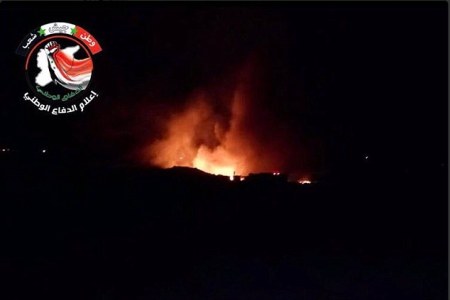
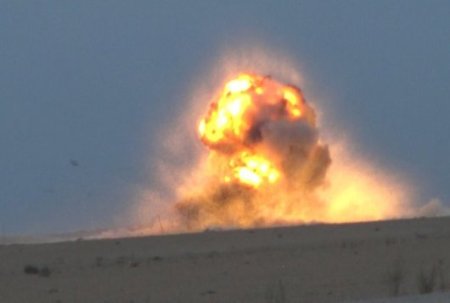
The mystery deepened further Friday morning, when Syrian state media ran photos of a big blaze – which may or may not be authentic – to illustrate the alleged Israeli attack on Mezzeh airport.

Resistance Axis Opponents Enraged At Photos Of Qods Force Commander Qassem Soleimani In Aleppo: The Photos Are Proof Of Iranian Expansion In Syria, Are Reminiscent Of Nazi Generals Strolling Through Cities They Destroyed

January 5, 2017

Resistance Axis Opponents Enraged At Photos Of Qods Force Commander Qassem Soleimani In Aleppo: The Photos Are Proof Of Iranian Expansion In Syria, Are Reminiscent Of Nazi Generals Strolling Through Cities They Destroyed, MEMRI, January 4, 2017

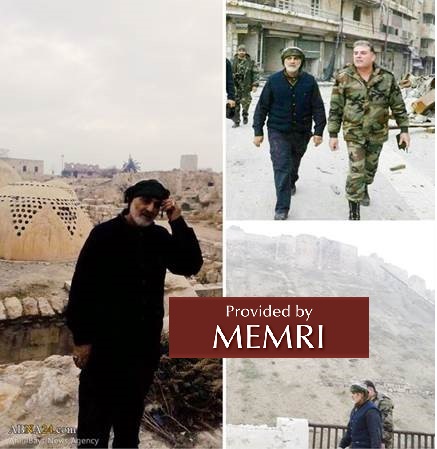
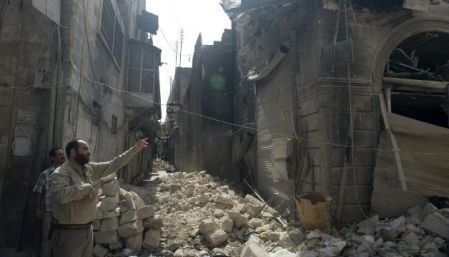
Several days after the Syrian regime and its allies retook eastern Aleppo, one of the Syrian opposition’s main remaining strongholds, with siege and heavy bombardment, the Iranian press published photos of Qassem Soleimani, the commander of Iran’s Qods Force, which is part of the Islamic Revolutionary Guard Corps (IRGC), as he toured the ruined city, including the medieval citadel at its center.

The photos enraged opponents of the resistance axis, which is headed by Iran and the Syrian regime. They perceived the photos as proof that Aleppo is now occupied by Iran and a signal that Iran is also aiming to occupy other cities in Arab countries, particularly in the Gulf. Articles in the Arab press, especially in the Gulf, called Soleimani a “modern-day Hitler,” and argued that the world is not stopping him, just as it had not stopped Hitler and other mass murderers in modern history.

6728aSoleimani tours Aleppo (Qasemsoleimani.ir, December 16, 2016)

Following are excerpts from major reactions in the Arab press to the photos of Soleimani in Aleppo:

Iran Is Signaling Its Intent To Occupy More Cities In The Middle East

Hamad Al-Majed, a Saudi columnist for the London-based daily Al-Sharq Al-Awsat, wrote: “The well-known photo of the Gen. Qassem Soleimani arrogantly walking the empty streets of Aleppo that his forces destroyed and whose residents they killed and expelled… is a massive propaganda message that Iran has leaked to the media, and holds within it thousands [more] messages. It is as if Soleimani, a military peacock arrogant over his victories, is muttering: ‘Yesterday we liberated Baghdad and the other Iraqi cities, and after that Sana’a [in Yemen], and after that we took over Beirut [in Lebanon], and today we are liberating Aleppo. It is only a matter of time before [we] dismantle the other cities in Syria, and then, sooner or later, you will see me strolling through the rubble of other Arab cities in the Middle East…”[1]

‘Ali Al-Husseini, a columnist for the Lebanese daily Al-Mustaqbal, which is affiliated with pro-Saudi and anti-Assad elements in Lebanon, wrote: “Two days ago, the Iranian expansion plan was revealed, [which has now] reached Aleppo after [reaching the Syrian cities of] Al-Qusayr, Al-Zabadani, and Madaya, [occupied by Hizbullah]. [What revealed this plan was] IRGC [Qods Force] commander Qassem Soleimani, who emerged strolling the neighborhoods of Aleppo that reek of destruction, witnessed the killing of children, and are littered with the bodies of dead residents. There is no doubt that this was a painful picture for residents of the city…

“With the aid and assistance of [Afghani, Pakistani, and Iraqi] mercenaries, Soleimani yesterday stepped on the body parts and in the blood of Aleppo residents, and also on the emotions of its orphaned children. This photo birthed, in their souls, a desire for vengeance, and a dream to return [to Aleppo] with fire in their eyes…”[2]

Arabs Should Awaken And Act – Because Iran Poses A Danger To The Gulf States

Saleh Al-Sheikhi, a columnist for the Saudi daily Al-Watan, called on Arabs to awaken and act, in light of what is perceived as an Iranian takeover of yet another Arab city. He wrote: “Two days ago, I stood for nearly an hour, no less, looking at the photo of Iranian commander Qassem Soleimani strolling through the streets of Aleppo – which are no longer streets but ruins and piles of rubble. I struggled, no less, to put out of my mind my visions of Soleimani’s false dreams about strolling through cities in the Gulf [countries]… I searched out society’s reaction to this shocking photo, and what I found was sad: [Instead of reactions to this photo, I found reactions to] Sheikh ‘Abdallah Al-Suwailem, [who,] with all the esteem in which I hold him and his colleagues, has launched an argument that is out of place, with his statement that a sexual relationship between family members who are prohibited from marrying each other is less [grave] than abandoning [the commandment] of prayer. This [statement of his] opinion triggered thousands of debates, tweets, recriminations, gossip, and widespread debates that preoccupied the public.

“Qassem Soleimani is strolling through Syria with his eye on the other Arab capitals – while Sheikh ‘Abdallah Al-Suwailem is arguing with the public on the issue of abandoning morning prayers and sexual relations between relatives who may not marry! If we do not act now and feel our important national responsibility, then when will we act?”[3]

Soleimani Is A “Modern-Day Hitler”; The World Is Not Stopping Him – Just As It Did Not Stop Hitler At The Time

Some resistance axis opponents called Soleimani a “modern-day Hitler,” and argued that the world is not acting to help the Syrian people, just as it did not act to help victims of other massacres throughout modern history. Lebanese MP Muhammad Kabbara, of the Al-Mustaqbal party, stated: “History will show that what happened in Aleppo has surpassed the myths of the Nazi crematoria. The coming generations will never forget that the Persians, Russians, and the Assad regime were the ones who conducted massacres in Aleppo. They will never forget the sight of the modern-day Hitler, Qassem Soleimani, touring, and gloating over, the ill-fated neighborhoods of Aleppo in the company of an officer from Assad’s [army].”[4]

Amr Hamzawy, a former Egyptian MP and a columnist for the London-based daily Al-Quds Al-Arabi, wondered: “Why does the world leave the Syrian people on its own to be massacred by the dictator Bashar Al-Assad, and by Russia and Iran, which sponsor him? Because our evil world only knows how to massacre the weak while turning them into the perpetual victims of criminals and tyrants…

“Any serious action to save Syrians from slaughter would be contrary to the norm in our world, [which kept silent in light of] the massacres of Armenians and Jews in Europe; the extermination of 27 million in the former Soviet Union during WWII, [and] the dropping of two atomic bombs on Japan on the pretext of ending World War II… Any true effort by those who monopolize the industries of weapons, killing, and bloodshed to stop the Syrian massacre would be a bizarre deviation from their past policy and conduct.

“In the late 1930s, didn’t the governments of Britain, France, and the Soviet Union make it possible for the Nazis to spread murder and destruction across several parts of Eastern Europe to avoid a fight, and out of concern for their own interests? Didn’t Hitler emerge due to global disregard for his first crimes, and [didn’t] U.S. neutrality cause him to carry out further attacks and crimes?… Don’t the photos of Nazi generals in areas destroyed by their weapons in Soviet cities… remind you of the photos of Soleimani in Aleppo a few days ago?…”[5]


Endnotes:


[1] Al-Sharq Al-Awsat (London), December 20, 2016.

[2] Al-Mustaqbal (Lebanon), December 18, 2016.

[3] Al-Watan (Saudi Arabia), December 19, 2016.

[4] Al-Mustaqbal (Lebanon), December 18, 2016.

[5] Al-Quds Al-Arabi (London), December 20, 2016.

The sorrow and the pity in Syria

December 21, 2016

The sorrow and the pity in Syria, Washington Times

(Please see also, Lies and Hypocrisy over Aleppo. — DM)

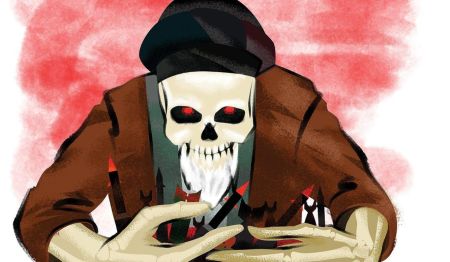
iraninsyriaIllustration on Iran’s future role in Syria by Linas Garsys/The Washington Times

ANALYSIS/OPINION:

Over the last five years, Syria has been descending into a hell on Earth. Over the last four months, the lowest depths of the inferno have been on display in Aleppo, an ancient city, once among the most diverse and dynamic in the Middle East. On Friday, in the final press conference of his presidency, Barack Obama addressed this still-unfolding humanitarian and strategic catastrophe.

“So with respect to Syria,” he said, “what I have consistently done is taken the best course that I can to try to end the civil war while having also to take into account the long-term national security interests of the United States.”

An estimated 500,000 dead, 11 million displaced, millions more living in fear, sorrow and pitiful poverty, Iranian forces backed by Russian forces occupying the heart of the Arab world — yet no-drama Mr. Obama remains so casual, so confident that the decisions he’s made were “the best” and, what’s more, that he made them “consistently.” Is refusing to change one’s mind as conditions worsen and policies fail really a virtue?

To bolster his case, the president emphasized that he has spent lots of time — “if you tallied it up, days and weeks” — attending meetings on Syria. “We went through every option in painful detail with maps,” he said, “and we had our military and we had our aid agencies and we had our diplomatic teams, and sometimes, we’d bring in outsiders who were critics of ours.” Imagine that: painful detail, maps, aid agencies, even critical outsiders.

Count me among those not convinced. In 2011, during that hopeful moment known as the Arab Spring, peaceful protesters took to the streets of Damascus. The dynastic dictator Bashar Assad responded brutally. Before long, a civil war was ignited.

Mr. Obama’s top advisers recommended assisting non-Islamist and nationalist rebels — not with the proverbial boots on the proverbial ground but with secure communications devices, money, weapons and training. Mr. Obama rejected that advice. He had done the math: Mr. Assad, a member of the Alawite minority, hadn’t enough loyal troops to prevail against Syria’s insurgent Sunni majority. So the fall of the Assad regime had to be both inevitable and imminent.

What that failed to take into account: Iran’s theocrats would send in foreign Shia fighters, including those of Hezbollah, their Lebanese proxy, all under the leadership of their Islamic Revolutionary Guard Corps. Vladimir Putin also would deploy forces in support of the Assad regime. We can surmise his reasons: to have a Mediterranean port for his navy; to re-establish Russia’s influence in the Middle East; to show the world that, unlike Mr. Obama, he does not abandon his friends; to diminish American credibility and prestige.

Mr. Obama’s response was, as it so often is, mainly rhetorical. He warned Mr. Putin that he was stepping into a quagmire. He proclaimed, as so he often does, that there can be “no military solution.”

The Russian president, a product of the KGB rather than the faculty lounge, knew that was nonsense. In the Middle East, the law of the jungle trumps international law every time.

Having accused President George W. Bush of overreach, Mr. Obama adopted a policy that might be called underreach. He decided not to enforce the “red line” he had declared against Mr. Assad’s use of chemical weapons. He decided not to eliminate Mr. Assad’s air power, which would have ended the barrel-bombing of civilians. He wasn’t even willing to help establish “safe zones” where innocent Syrians might stand a chance to defend themselves.

I know: Mr. Obama saw his mission as ending wars and certainly not risking additional American entanglements. And he is among those who believe that the projection of American power generally does more harm than good.

Not mutually exclusive is the theory that he had a specific goal in mind: to bring Iran’s rulers into a strategic partnership with the United States. To achieve that, he had to demonstrate that he respected what he has called their “equities” in Syria. Were he to take action against Mr. Assad, the Islamic republic’s envoys might walk away from the table where they were negotiating the nuclear weapons deal Mr. Obama envisioned as his great foreign policy legacy.

The president has been nothing if not “consistent” in his pursuit of detente with Iran’s Islamic revolutionaries. In all likelihood, that is what explains his decision, just after taking office, to turn a blind eye to the clerical regime’s ruthless repression of the Green Movement that took to the streets of Iranian cities following a rigged presidential election in 2009.

History will record that these efforts failed. Nixon went to China. Mr. Obama will not be going to Iran — or to Syria, which Iran intends to incorporate into its version of a caliphate (which Shia call an “imamate”).

Aleppo,” U.S. Ambassador Samantha Power said last week at the U.N., “will join the ranks of those events in world history that define modern evil, that stain our conscience decades later. Halabja, Rwanda, Srebrenica, and, now, Aleppo. To the Assad regime, Russia, and Iran, your forces and proxies are carrying out these crimes.”

She went on to ask: “Are you truly incapable of shame? Is there literally nothing that can shame you? Is there no act of barbarism against civilians, no execution of a child that gets under your skin?”

Would it be unfair to suggest that the answers to these questions should have been apparent to her and the president years ago? Had that been the case, perhaps they would have formulated different policies and implemented a different course of action. Or perhaps not.

Iranian Commander Who Killed Americans Tours Syria, Violating International Travel Ban

December 19, 2016

Iranian Commander Who Killed Americans Tours Syria, Violating International Travel Ban, Washington Free Beacon, , December 19, 2016

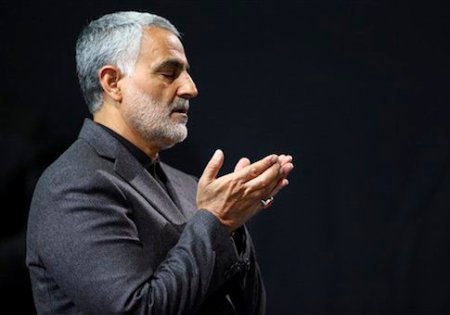
CORRECTS SPELLING OF NAME TO SOLEIMANI - In this photo released by an official website of the office of the Iranian supreme leader, commander of Iran's Quds Force, Qassem Soleimani, prays in a religious ceremony at a mosque in the residence of Supreme Leader Ayatollah Ali Khamenei, in Tehran, Iran, Friday, March 27, 2015. Iran's Foreign Minister Mohammad Javad Zarif sought Friday to reassure the six world powers conducting nuclear power talks in Switzerland, saying the negotiations remained focused on sealing a deal. (AP Photo/Office of the Iranian Supreme Leader)

Qassem Soleimani,  (AP Photo/Office of the Iranian Supreme Leader)

Multiple sources who spoke with the Washington Free Beacon about the matter disclosed that the Obama administration is taking a soft approach with Iran, including not enforcing sanctions, in order to preserve the nuclear deal and diplomacy with Tehran, which has threatened repercussions for any new sanctions.

Soleimani’s visit to Syria is viewed as a sign that Iran is not worried about facing repercussions for its continued military presence in Syria in support of embattled leader Bashar al-Assad.

Iran has breached international laws for some time without facing consequences. The Obama administration repeatedly assured Congress it would enforce sanctions on Iran when lawmakers expressed doubt about the viability of the Iran nuclear deal.

********************************

A top Iranian commander responsible for the deaths of Americans was photographed touring the war-torn city of Aleppo in Syria over the weekend, in violation of a United Nations travel ban that the Obama administration swore to enforce while selling the landmark nuclear deal with Iran to Congress, according to multiple sources and photographs.

Iranian Quds Force Commander Qasem Soleimani—a top general who leads Iranian militants across the globe and is directly responsible for the death of Americans—was recently photographed touring Aleppo in a demonstration of Iran’s waxing influence in Syria and disregard for international resolutions barring such behavior. Soleimani’s presence in Syria is a direct violation of the United Nations resolution governing the nuclear deal.

Soleimani’s visit coincided with moves by the terror group Hezbollah, which is controlled by Iran, to establish its own claim in Syria, according to regional reports and footage.

Iran’s public presence in Syria has not been met with action by the Obama administration, which has come under increasing pressure in recent weeks to explain why it is not enforcing current sanctions against Iran. Soleimani continues to direct Iranian forces in both Iraq and Syria and has long been sanctioned for the murder of U.S. citizens.

Mutliple sources who spoke with the Washington Free Beacon about the matter disclosed that the Obama administration is taking a soft approach with Iran, including not enforcing sanctions, in order to preserve the nuclear deal and diplomacy with Tehran, which has threatened repercussions for any new sanctions.

Soleimani’s visit to Syria is viewed as a sign that Iran is not worried about facing repercussions for its continued military presence in Syria in support of embattled leader Bashar al-Assad.

Iran has breached international laws for some time without facing consequences. The Obama administration repeatedly assured Congress it would enforce sanctions on Iran when lawmakers expressed doubt about the viability of the Iran nuclear deal.

The absence of consequences for Iran’s behavior has paved the way for Hezbollah to stake it own claim in Syria, according to congressional and foreign policy insiders who told the Free Beacon that the Obama administration is working behind the scenes to prevent any new sanctions against Iran.

“The Obama administration has been working overtime to prevent any U.S. official from doing anything new to punish the butchers of Syria, because they know that would force them to take action against Iran, and then Iran would walk away from the deal,” said one veteran insider who consults with Congress on the issue. “Now they’re ignoring even old sanctions against the Iranians. They’ll do anything to keep the Iranians in the deal for just a couple more weeks, so they can blame the inevitable collapse on Trump.”

A senior congressional aide apprised of the situation said the administration would continue to turn a blind eye to blatant violations in order to preserve diplomacy with Iran.

“This administration’s refusal to enforce sanctions explicitly allowed under the nuclear deal is not only cowardice—it’s dangerous,” said the aide. “What does it say about U.S. leadership when a terrorist like General Soleimani—someone with American blood on his hands—can freely travel to the ground zero of genocide in Syria without penalty? President Obama knows his nuclear deal is on thin ice, so he’s willing overlook blatant sanctions violations like this one even if it means more carnage in Aleppo.”

A second senior congressional source warned that refusal to enforce sanctions was empowering Iran’s radical regime, which has increasingly taken hold in Iraq as well, where the U.S. military has been accused of training Iranian-backed militias.

“The outgoing Obama administration struck a Faustian bargain with Iran, the world’s biggest state sponsor of terrorism, and Soleimani, head of the IRGC terrorist organization that’s responsible for the death of many hundreds of Americans, continues to do victory laps throughout the Middle East” the source said. “Unless the Trump administration changes course, this short-sighted Iran policy cannot and will not end well.”

Troops in Aleppo, as well as an Iranian reporter, have been spotted raising Hezbollah’s flag in recent days, calling into question the Obama administration’s claim that it has been working to constrain the terror group.

Michael Rubin, a former Pentagon adviser and expert on radical regimes, told the Free Beacon that Iran sees the nuclear deal as a vehicle to advance its regional aspirations.

“For Obama, diplomacy’s goal was to affirm his brilliance,” Rubin said. “For Iran’s leadership, it was an asymmetric warfare tactic meant to distract from a continuous geopolitical goal.”

“Red lines matter. Over 25 years, both Republicans and Democrats signaled to Iran about what they were,” Rubin explained. “Obama, however, believed himself wiser than Reagan, Clinton, and Bush—at least that’s what the man in the mirror told him every morning. Once Iran realized there were no real red lines, it concluded it could bust sanctions with impunity. Soleimani is the personification of that conclusion.”

The State Department conceded on Monday that Soleimani’s visit to Syria violated United Security Council resolutions government the nuclear deal, but would not lay out steps meant to address the behavior.

“We do intend to consult with our partners on the security council about how to address our concerns with this,” State Department Spokesman John Kirby said during a press briefing. “We’ve long said that Iran needs to choose whether it’s going to play a positive role in helping peacefully resolve conflicts, such as in Syria, or whether it will choose to prolong them. And you’re absolutely right, his travel was a violation.”

Update 3:05 P.M.: This post has been updated to reflect comment from the State Department.

Aleppo’s Fall Signals Rise of Emboldened Radical Shi’ite Axis

December 16, 2016

Aleppo’s Fall Signals Rise of Emboldened Radical Shi’ite Axis, Investigative Project on Terrorism, Yaakov Lappin, December 16, 2016

1918-1

Recent sweeping gains by the pro-Assad alliance in Aleppo signal the rise of an emboldened Iranian-led radical Shi’ite axis. The more this axis gains strength, territory, weapons, and influence, the more likely it is to threaten regional and global security.

Ideologues in Iran have formulated a Shi’ite jihadist vision which holds that the Iranian Islamic revolution must take control of the entire Muslim world. Losing the Assad regime to Sunni rebels, many of them backed by Tehran’s Gulf Arab state archenemies, would have represented a major setback to Iran’s agenda.

This same ideological agenda also calls for the eventual annihilation of Israel, the toppling of Sunni governments, and intimidating the West into complying with Iran’s schemes.

Supreme Leader Ayatollah Khamenei and Tehran’s military elites, in the form of the Islamic Republican Guards Corps (IRGC), use the current regional chaos to promote these goals.

In Syria, Iran has mobilized tens of thousands of Shi’ite militia fighters from all over the Middle East, as well as those from Hizballah in Lebanon, and sent them to do battle with Sunni rebel organizations to help save the Assad regime.

As the Shi’ite axis wages a sectarian war against Sunnis moderate groups and jihadists, it mobilizes and arms its proxies, and moves military assets into Syria, gaining a growing influence that can be used for bellicose purposes in the not too distant future.

The conquest of east Aleppo is a victory for the wider, transnational Iranian-led alliance, of which the Damascus regime is but one component. The Assad regime is composed and led by Syria’s minority Alawite population, which makes up just 11 percent of Syrians (Alawites are seen as an offshoot of Shia Islam).

A look at the order of battle assembled in Aleppo reveals that the war in Syria is not a civil conflict by any measure. In addition to Assad regime forces sent to fight Sunni rebels, such as the Fourth Division, Syrian army special forces, and paramilitary units, there is also the Iranian-backed Hizballah, which has transformed itself into a regional Shi’ite ground army, deployed across Syria and Lebanon.

These are joined by Shi’ite Iraqi Kataib Hizballah militia, Afghan Shi’ite militia groups, and Iranian military personnel on the ground in Syria, all of whom receive the assistance of massive Russian air power.

The large scale, indiscriminate airstrikes and shelling in places like Aleppo resulted in mass slaughter and ethnic cleansing of many Sunni civilians, producing the largest humanitarian catastrophe and refugee crisis in the 21st century. Such extreme war crimes will be sure to produce a new generation of radical recruits for ISIS and al-Qaida.

The IRGC’s Quds Force, under the command of Qassem Suleimani, orchestrates the entire ground war effort. Suleimani is very close to the Iranian supreme leader.

The Quds Force uses Syria as a transit zone to traffic advanced weapons from Iranian and Syrian arms factories to the Hizballah storehouses that pepper neighboring Lebanon.

Hizballah has amassed one of the largest surface to surface rocket and missile arsenal in the world, composed of over 100,000 projectiles, all of which are pointed at Israeli cities.

According to international media reports, Israel recently launched two strikes in the one week, targeting attempts to smuggle game-changing weapons to Lebanon.

Syrian dictator Basher Assad owes his survival to Iran and Hizballah, and their military presence in Syria should continue and expand further.

Assad regime and Hizballah representatives boast of this fact in recent statements highlighted by the Middle East Media Research Institute (MEMRI).

“The power-balances will change not only in Syria but in the entire region,” said Hizballah Executive Council Chairman Hashem Safi Al-Din.

“Syria’s steadfastness, and the support from its allies, have shifted the regional and international balance [of power], said Assad political adviser Bouthaina Sha’aban. “The recent developments in the international arena are bringing the countries of the region face to face with a new world.

If it takes western Syria with Russian air support, the Shi’ite axis victors will likely turn their sights on seizing southern Syria, near the Israeli border. To accomplish that, they will need to do battle with an array of Sunni rebels that now control that area (groups that include ISIS-affiliates). If successful, the axis could be tempted to build bases of attack throughout Syria against Israel, a development that would certainly trigger Israeli defensive action, as has reportedly occurred in the past.

The same pattern repeats itself in Iraq, where Iran-backed militias are moving in on Mosul, and could later be used to threaten Iraq’s Sunnis, and in Yemen, where Iranian-armed Houthi rebels control large swaths of the country, and are currently at war with a Saudi-led military coalition. The Houthis also threaten international oil shipping lanes and have fired on the U.S. Navy using Iranian-smuggled missiles.

In this way, the fundamentalist Iranian coalition gains a growing foothold.

Iran’s ballistic missile program, which is developing long-range strike capabilities that could place Europe in range, and its temporarily dormant nuclear program, represents investments that would make the Shi’ite axis more powerful than any Sunni Islamist camp.

Defense officials in Israel and in pragmatic Sunni states will watch for the danger that Iran will use its presence, proxies, and bases in Syria and Iraq to wage a Shi’ite jihad that extends well beyond the battlegrounds there.

The Iranian coalition can also lure armed Sunni groups into its orbit as well, as it has done in the past with the Palestinian Hamas terrorist regime in Gaza.

While the Israeli defense establishment has no desire to be dragged into Syria’s conflict, Jerusalem has indicated that it would act to remove any Iranian-Hizballah base it detects in Syria that is designed to launch attacks on Israel, and would not tolerate the trafficking of advanced weapons to Hizballah.

Few events illustrate more clearly how an ascendant Shi’ite jihadist axis is redrawing the map of the region than a recent military parade held by Hizballah in the western Syrian town of Al-Qusayr, which it conquered from the rebels in 2013.

According to an assessment by the Tel Aviv-based Meir Amit Intelligence and Terrorism Information Center, that parade featured Soviet-made tanks, American armored personnel carriers, artillery guns, anti-aircraft guns, and powerful truck-mounted rocket launchers with an estimated range of between 90 to 180 kilometers. “It is clear that state-owned capabilities, some of them advanced, were delivered to Hizballah, which is a terrorist organization,” the Intelligence and Terrorism Information Center said in its report.

Hizballah, like the Assad regime and armed groups in Iraq and Yemen, is a component of an international axis whose battles against ISIS have managed to dupe some decision makers into believing that they are stabilizing forces. In actuality, the Shi’ite jihadists are as radical as their Sunni jihadist counterparts – albeit more tactically prudent – and are far better armed and better organized.

Russian role in Aleppo’s fall impacts US politics

December 16, 2016

Russian role in Aleppo’s fall impacts US politics, DEBKAfile, December 16, 2016

aleppo-damage_9-15

The Putin factor comes in handy for the latest tactic in a series pursued since the November 8 election, for delegitimizing Trump’s victory and negating his fitness to reach the White House.

This campaign may resonate strongly on America’s future policy and position as a world power, because it is designed to block Trump’s path to a deal with Putin for resolving the Syrian conflict. The Obama administration has no wish to see the new president succeed where it failed for nearly six years.

********************************

Aleppo’s fall to the Assad regime with the surrender Thursday, Dec. 15, of the Syrian rebel forces locked in a corner of the eastern districts was the most disastrous military and strategic setback to befall the Obama administration for two years. It started evolving in September 2015, when Russia stepped up its military intervention in the Syria war and rescued Bashar Assad.

When Aleppo succumbed to the Russian-backed government army and its allies, Iran, Hizballah and fellow Shite militias, it did not fall alone.  It brought down the entire architecture of US-backed positions in northern Syria. The US had invested in and trained local groups, such as the Syrian Kurdish militia and the rebel Free Syrian Army, as the bedrock for its policy and interests in the conflict. Those groups have melted away.

The acknowledged overlords of northern Syria today are Russian President Vladimir Putin and Turkish President Recep Tayyip Erdogan, who can claim the Aleppo victory. Bashar Assad and Iran are reduced to playing second fiddle. But whereas the Al Qods chief Iranian general Qassem Soleimani commands pro-Iranian forces in the region, America has been divested of all its military assets and has no real say in the next chapter of the horrific war.

Hence US Secretary of State John Kerry’s despairing appeal Thursday in a press briefing to bring the bloodshed and suffering to an end: “We can’t have another Srebrenica” – a reference to the Serbian slaughter of 8,000 Bosnian Serbs in 1985 – he said.

Kerry has toiled tirelessly for a diplomatic solution to the dreadful Syrian war, but his appeal falls on senses hardened by the many Srebrenicas perpetrated in more than five years of conflict. Hundreds of thousands of civilians and soldiers have been slaughtered – according to an unofficial estimate up to a million – and many subjected to chemical warfare. The secretary can’t count on the Kremlin to relent and so, even after the last Syrian rebels and their families are out of Aleppo, the killing will go on.

In Washington, 10,000 kilometers away, the Aleppo calamity is being dished up as a political tool. The claim was heard Thursday that the “same Vladimir Putin” who sponsored the atrocities in Aleppo, also interfered in the US presidential election by sending hackers to influence the results in favor of Donald Trump. The claim is touted by Obama administration spokesmen and the Democratic Party, whose candidate Hillary Clinton lost the election. It appears to be fodder for a Democratic party drive building up for the president-elect’s impeachment even before he is sworn in as president on Jan. 20.

The Putin factor comes in handy for the latest tactic in a series pursued since the November 8 election, for delegitimizing Trump’s victory and negating his fitness to reach the White House.

This campaign may resonate strongly on America’s future policy and position as a world power, because it is designed to block Trump’s path to a deal with Putin for resolving the Syrian conflict. The Obama administration has no wish to see the new president succeed where it failed for nearly six years.

Putin will have no qualms about capitalizing on Washington’s preoccupation with its internal power struggle and will build up as many gains in Syria as he can before Donald Trump takes over. Obama’s threat Friday, Dec. 12, to retaliate for Russia’s efforts to influence the presidential election will just provoke the Russian president to move faster and more determinedly in his grab for more assets in Syria.

Israel’s First Project with Trump

December 9, 2016

Israel’s First Project with Trump, Front Page MagazineCaroline Glick, December 9, 2016

firstproject

Originally published by the Jerusalem Post

[R]ecently Hezbollah commander Hassan Nasrallah bragged, “We’re open about the fact that Hezbollah’s budget, its income, its expenses, everything it eats and drinks, its weapons and rockets are from the Islamic Republic of Iran.”

******************************

Israeli officials are thrilled with the national security team that US President-elect Donald Trump is assembling. And they are right to be.

The question now is how Israel should respond to the opportunity it presents us with.

The one issue that brings together all of the top officials Trump has named so far to his national security team is Iran.

Gen. (ret.) John Kelly, whom Trump appointed Wednesday to serve as his secretary of homeland security, warned about Iran’s infiltration of the US from Mexico and about Iran’s growing presence in Central and South America when he served as commander of the US’s Southern Command.

Gen. (ret.) James Mattis, Trump’s pick to serve as defense secretary, and Lt.-Gen. (ret.) Michael Flynn, whom he has tapped to serve as his national security adviser, were both fired by outgoing President Barack Obama for their opposition to his nuclear diplomacy with Iran.

During his video address before the Saban Forum last weekend, Prime Minister Binyamin Netanyahu said that he looks forward to discussing Obama’s nuclear Iran nuclear deal with Trump after his inauguration next month. Given that Netanyahu views the Iranian regime’s nuclear program – which the nuclear deal guaranteed would be operational in 14 years at most – as the most serious strategic threat facing Israel, it makes sense that he wishes to discuss the issue first.

But Netanyahu may be better advised to first address the conventional threat Iran poses to Israel, the US and the rest of the region in the aftermath of the nuclear deal.

There are two reasons to start with Iran’s conventional threat, rather than its nuclear program.

First, Trump’s generals are reportedly more concerned about the strategic threat posed by Iran’s regional rise than by its nuclear program – at least in the immediate term.

Israel has a critical interest in aligning its priorities with those of the incoming Trump administration.

The new administration presents Israel with the first chance it has had in 50 years to reshape its alliance with the US on firmer footing than it has stood on to date. The more Israel is able to develop joint strategies with the US for dealing with common threats, the firmer its alliance with the US and the stronger its regional posture will become.

The second reason it makes sense for Israel to begin its strategic discussions with the Trump administration by addressing Iran’s growing regional posture is because Iran’s hegemonic rise is a strategic threat to Israel. And at present, Israel lacks a strategy for dealing with it.

Our leaders today still describe Hezbollah with the same terms they used to describe it a decade ago during the Second Lebanon War. They discuss Hezbollah’s massive missile and rocket arsenal.

With 150,000 projectiles pointed at Israel, in a way it makes sense that Israel does this.

Just this week Israel reinforced the sense that Hezbollah is more or less the same organization it was 10 years ago when – according to Syrian and Hezbollah reports – on Tuesday Israel bombed Syrian military installations outside Damascus.

Following the alleged bombing, Defense Minister Avigdor Liberman told EU ambassadors that Israel is committed to preventing Hezbollah from transferring advanced weapons, including weapons of mass destruction, from Syria to Lebanon.

The underlying message is that having those weapons in Syria is not viewed as a direct threat to Israel.

Statements like Liberman’s also send the message that other than the prospect of weapons of mass destruction or precision missiles being stockpiled in Lebanon, Israel isn’t particularly concerned about what is happening in Lebanon.

These statements are unhelpful because they obfuscate the fact that Hezbollah is not the guerrilla organization it was a decade ago.

Hezbollah has changed in four basic ways since the last war.

First, Hezbollah is no longer coy about the fact that it is an Iranian, rather than Lebanese, organization.

Since Iran’s Revolutionary Guards founded Hezbollah in Lebanon in 1983, the Iranians and Hezbollah terrorists alike have insisted that Hezbollah is an independent organization that simply enjoys warm relations with Iran.

But today, with Hezbollah forming the backbone of Iran’s operations in Syria, and increasingly prominent in Afghanistan and Iraq, neither side cares if the true nature of their relationship is recognized.

For instance, recently Hezbollah commander Hassan Nasrallah bragged, “We’re open about the fact that Hezbollah’s budget, its income, its expenses, everything it eats and drinks, its weapons and rockets are from the Islamic Republic of Iran.”

What our enemies’ new openness tells us is that Israel must cease discussing Hezbollah and Iran as separate entities. Israel’s next war in Lebanon will not be with Hezbollah, or even with Lebanon. It will be with Iran.

This is not a semantic distinction. It is a strategic one. Making it will have a positive impact on how both Israel and the rest of the world understand the regional strategic reality facing Israel, the US and the rest of the nations of the Middle East.

The second way that Hezbollah is different today is that it is no longer a guerrilla force. It is a regular army with a guerrilla arm and a regional presence. Its arsenal is as deep as Iran’s arsenal.

And at present at least, it operates under the protection of the Russian Air Force and air defense systems.

Hezbollah has deployed at least a thousand fighters to Iraq where they are fighting alongside Iranian forces and Shi’ite militia, which Hezbollah trains. Recent photographs of a Hezbollah column around Mosul showed that in addition to its advanced missiles, Hezbollah also fields an armored corps. Its armored platforms include M1A1 Abrams tanks and M-113 armored personnel carriers.

The footage from Iraq, along with footage from the military parade Hezbollah held last month in Syria, where its forces also showed off their M-113s, makes clear that Hezbollah’s US platform- based maneuver force is not an aberration.

The significance of Hezbollah’s vastly expanded capabilities is clear. Nasrallah’s claims in recent years that in the next war his forces will stage a ground invasion of the Galilee and seek to seize Israeli border towns was not idle talk. Even worse, the open collaboration between Russia and Iran-Hezbollah in Syria, and their recent victories in Aleppo, mean that there is no reason for Israel to assume that Hezbollah will only attack from Lebanon. There is a growing likelihood that Hezbollah will make its move from Syrian territory.

The third major change from 2006 is that like Iran, Hezbollah today is much richer than it was before Obama concluded the nuclear deal with the ayatollahs last year. The deal, which canceled economic and trade sanctions on Iran, has given the mullahs a massive infusion of cash.

Shortly after the sanctions were canceled, the Iranians announced that they were increasing their military budget by 90%. Since Hezbollah officially received $200 million per year before sanctions were canceled, the budget increase means that Hezbollah is now receiving some $400m. per year from Iran.

The final insight that Israel needs to base its strategic planning on is that a month and a half ago, Hezbollah-Iran swallowed Lebanon.

In late October, after a two-and-a-half-year fight, Saad Hariri and his Future Movement caved to Iran and Hezbollah and agreed to support their puppet Michel Aoun in his bid for the Lebanese presidency.

True, Hariri was also elected to serve as prime minister. But his position is now devoid of power.

Hariri cannot raise a finger without Nasrallah’s permission.

Aoun’s election doesn’t merely signal that Hariri caved. It signals that Saudi Arabia – which used the fight over Lebanon’s presidency as a way to block Iran’s completion of its takeover of the country – has lost the influence game to Iran.

Taken together with Saudi ally Egyptian President Abdel Fattah al-Sisi’s announcement last week that he supports Syrian President Bashar Assad’s remaining in power, Aoun’s presidency shows that the Sunnis have accepted that Iran is now the dominant power in Iraq, Syria and Lebanon.

This brings us back to Hezbollah’s tank corps and the reconstruction of the US-Israel alliance.

After the photos of the US-made armored vehicles in Hezbollah’s military columns were posted online, both Hezbollah and the Lebanese Armed Forces insisted that the weapons didn’t come from the LAF.

But there is no reason to believe them.

In 2006, the LAF provided Hezbollah with targeting information for its missiles and intelligence support. Today it must be assumed that in the next war, the LAF, and its entire arsenal will be placed at Hezbollah-Iran’s disposal. In 2016 alone, the US provided the LAF with $216m. in military assistance.

From Israel’s perspective, the most strategically significant aspect of Hezbollah-Iran’s uncontested dominance over all aspects of the Lebanese state is that while they control the country, they are not responsible for it.

Israeli commanders and politicians often insist that the IDF has deterred Hezbollah from attacking Israel. Israel’s deterrence, they claim, is based on the credibility of our pledge to bomb the civilian buildings now housing Hezbollah rockets and missiles in the opening moments of the next conflict.

These claims are untrue, though. Since Hezbollah- Iran are not responsible for Lebanon despite the fact that they control it through their puppet government, Iranian and Hezbollah leaders won’t be held accountable if Israel razes south Lebanon in the next war. They will open the next war not to secure Lebanon, but to harm Israel. If Lebanon burns to the ground, it will be no sweat off their back.

The reason a war hasn’t begun has nothing to do with the credibility of Israel’s threats. It has to do with Iran’s assessment of its interests. So long as the fighting goes on in Syria, it is hard to see Iran ordering Hezbollah to attack Israel. But as soon as it feels comfortable committing Hezbollah forces to a war with Israel, Iran will order it to open fire.

This then brings us back to the incoming Trump administration, and its assessment of the Iranian threat.

Trump’s national security appointments tell us that the 45th president intends to deal with the threat that Iran poses to the US and its interests.

Israel must take advantage of this strategic opening to deal with the most dangerous conventional threat we face.

In our leaders’ conversations with Trump’s team they must make clear that the Iranian conventional threat stretches from Afghanistan to Israel and on to Latin America and Michigan. Whereas Israel will not fight Iran in Iraq and Afghanistan, or in the Americas, it doesn’t expect the US to fight Iran in Lebanon. But at the same time, as both allies begin to roll back the Iranian threat, they should be operating from a joint strategic vision that secures the world from Iran’s conventional threat.

And once that it accomplished, the US and Israel can work together to deal with Iran’s nuclear program.
“Syrian 5th Corps” is new Shiite foreign legion

December 4, 2016

“Syrian 5th Corps” is new Shiite foreign legion, DEBKAfile, December 4, 2016

fifth_corps

The new Shiite foreign legion or international brigade presents a major headache for Syria’s neighbors, Turkey, Lebanon, Jordan and Israel. It provides a cover for Iran and Hizballah to sneak troops right up to their borders. Whenever this happened in the past, Israel and Jordan pushed back hard. But this will be more difficult once the Fifth Corps is set up as an integral part of the Syrian army.

***************************

Syria and its allies came closer than ever to taking Aleppo on Friday, Dec. 2, when they captured the Tariq al-Bab district to gain control of 60 percent of the rebel-held eastern part of the city.

Drawing on the lessons of this success, the winning forces have begun building a military outfit modeled on the format of the victorious coalition. It is designated the “Fifth Corps” of the Syrian army, but DEBKAfile’s military and intelligence sources can identity the new unit as the framework for an international Shiite brigade or foreign legion.

It is the brainchild of the Iranian Revolutionary Guards’ Gen. Qassem Soleimani, commander of Iranian Mid East operations, who is in Iraq at present, supervising the Shiite militias on the Mosul front. However, his officers are overseeing its construction of the new military legion. It is composed of the remnants of the Syrian army’s First and Second Corps, which took a bad beating in the five years of conflict, the Hizballah expeditionary force in Syria and the Shiite militias which Tehran imported from Iraq, Afghanistan and Pakistan to fight for Bashar Assad.

The new framework aims to field 50,000 to 70,000 fighting men.

Its command structure is already taking shape in a form that is new for the Syrian army and indeed any other fighting force in the region. Syrian, Hizballah and foreign Shiite officers will make up this command, but not direct their own forces, only mixed units composed of Iranian, Syrian, Shiite and Hizballah servicemen.

It will be the first Shiite army or foreign legion ever seen in the Middle East.

An oblique reference to the novel force came from a Hizballah source this week who said: “The Fifth Corps is an important turning-point for the ties between allied forces within the same axis – Syria, Iran, Russia and Hizballah.”

Russia? DEBKAfile’s sources have heard no hint of the Russians joining the new Shiite legion. But Hizballah has been spreading reports in the past fortnight about its deepening ties with Russian officers, mainly on the Aleppo front, and their supposed appreciation of the Lebanese Shiites’ fighting prowess.

The Syrian high command has meanwhile moved forward on the new scheme with a decision this week to send the entire next class of military recruits to the new Fifth Corps.

The new Shiite foreign legion or international brigade presents a major headache for Syria’s neighbors, Turkey, Lebanon, Jordan and Israel. It provides a cover for Iran and Hizballah to sneak troops right up to their borders. Whenever this happened in the past, Israel and Jordan pushed back hard. But this will be more difficult once the Fifth Corps is set up as an integral part of the Syrian army.

Western and Arab observers following the Syrian war believe that, as soon as they finish off the rebels in Aleppo, the new foreign legion’s forces will turn south to repeat the exercise there with Russian support.

The Russian bombardment of rebel concentrations outside the southern towns of Jasim and Daraa Sunday, Nov. 27, was seen a message from Moscow to Jerusalem and Amman that southern Syria is now in line for the next battle.