Posted tagged ‘Iran secret deals’

According To Iranian Officials, Obama Administration Gave Unwritten Consent In The Nuclear Talks And In The JCPOA Negotiations For Iran To Develop Ballistic Missiles With A Range Of Only 2,000 km – That Is, Capable Of Striking Israel But Not Europe

February 3, 2017

According To Iranian Officials, Obama Administration Gave Unwritten Consent In The Nuclear Talks And In The JCPOA Negotiations For Iran To Develop Ballistic Missiles With A Range Of Only 2,000 km – That Is, Capable Of Striking Israel But Not Europe, MEMRI, A. Savyon and Yigal Carmon and U. Kafash*, February 2, 2017

“Likewise, the Zionist regime is the most important enemy of Iran in the regionregion, and is less than 1,200 km away. Therefore, short- and medium-range missiles are sufficient to strike U.S. bases near Iran, and long-range missiles are sufficient to strike the occupied territories [Israel]. The diagram shows several of these American bases and [also] the missiles that are counting [down] to the moment [when they will be able to] strike them.”

*********************

Introduction

On January 30, 2017, U.S. sources announced that Iran had conducted a failed test of a new ballistic missile, the Khorramshahr. According to reports, the missile exploded after a 965-km flight.[1] Both Iranian Foreign Minister Zarif (on January 31) and Defense Minister Dehghan (on February 1) stressed that Iran “asks permission from no one in the matter of its defense program.”[2]

It should be emphasized that contrary to statements by Iranian regime spokesmen who say that Iran’s missile program is defensive, missiles with a 2,000-km range are strictly offensive and strategic. This is why Iran has faced constant demands to stop developing them.

In the years that preceded the U.S.-Iran nuclear talks, Iran developed ballistic missiles with ranges of 2,500-5,000 km that threaten Europe and even the U.S.

Dr. Hassan Abbasi, theoretician of Iran’s Islamic Revolutionary Guards Corps (IRGC) and director of the IRGC Center for Borderless Security Doctrinal Analysis, said in 2004: “We have a strategy drawn up for the destruction of Anglo-Saxon civilization and for the uprooting of the Americans and the English.

“Our missiles are now ready to strike at their civilization, and as soon as the instructions arrive from Leader [Ali Khamenei], we will launch our missiles at their cities and installations… And because of Khatami’s policies and dialogue between the civilizations, we have been compelled to freeze our plan… and now we are [again] about to carry out the program… The global infidel front is a front against Allah and the Muslims, and we must make use of everything we have at hand to strike at this front, by means of our suicide operations or by means of our missiles.”[3]

The London-based Saudi daily Al-Sharq Al-Awsat also reported, on June 14, 2004, that the Shihab 4 and Shihab 5 long-range missile projects had been revived, on orders from Iranian Supreme Leader Ali Khamenei.[4]

It should be noted that a December 14, 2013 report on Iran’s missile program published by the IRGC-affiliated Mehr news agency immediately following the Geneva Agreement provided details on the various Shihab models. According to the report, Shihab 3D missiles, with a range of 2,200-3,000 km, “can easily reach the occupied territories [Israel]… and cover their entire area.” The report also stated that the Shihab 4 has a range of 3,000 km and the ability to launch satellites into orbit, and that “very little information” has been published about the Shihab 5. The diagrams in the article also feature a Shihab 6 model.[5]

U.S. Approves Iranian Development Of Missiles With A Range Of Only 2,000 km – That Is, Capable Of Reaching Israel

However, after U.S.-Iran negotiations began, and at the end of their first stage, in Geneva in November 2013, Iranian officials began reporting that Iran’s missile program for missiles with ranges above 2,000 km was being restricted.

Thus, for example, immediately after the interim agreement was reached in Geneva, on December 10, 2013, and in reference to it, IRGC commander Mohammad Ali Jafari said that Iran is capable of producing missiles with a range of over 2,000 km but that Khamenei had restricted the IRGC to a 2,000-km range: “We want to increase the range of the IRGC’s missiles, but despite this, the Leader [Khamenei] has restricted us to a range of 2,000 km. We have the capability to increase the range of our missiles, and our missiles should obviously reach Israel… The regime’s red lines were not crossed during the nuclear talks with the P5+1 [Group] and in the Geneva Agreement.”[6]

Indeed, IRGC commanders stressed that the most important thing for the regime was missiles capable of striking Israel; see, for example, comments by IRGC Aerospace and Missile Division director Amir Ali Hajizadeh, who said following a 2016 missile launch: “For us, Israel’s evil is totally clear, and the 2,000-kilometer range of our missiles [is intended] to confront the distant Zionist regime.”[7]

Extensive quotes regarding the Iranian regime’s explicit intent to target Israel with its missiles can be found in MEMRI Inquiry & Analysis No. 1135, Iranian IRGC Missile Unit Commanders: We’ve Developed 2,000-km Range Missiles And Equipped Hizbullah With 300-km Range Missiles; Fars News Agency: Israel’s Illusions About Its Natural Gas Fields Will Be Buried In The Mediterranean, December 3, 2014, and Special Dispatch No. 6349, Iran Launches Long-Range Missiles Emblazoned With Slogan: ‘Israel Should Be Wiped Off The Face Of The Earth’, March 16, 2016.
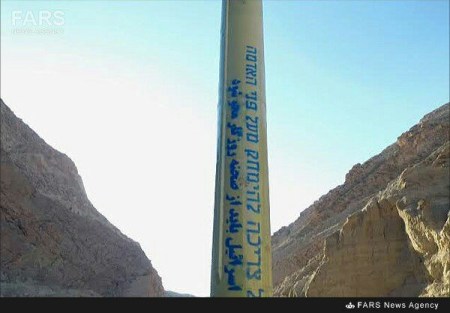
1298aIranian missile emblazoned with the slogan ‘Israel Should Be Wiped Off The Face Of The Earth” (Fars, Iran, March 9, 2016)

On November 17, 2014, the IRGC-affiliated Tasnim news agency posted a diagram explaining that Iran “makes do” with a range of 2,000 km, which it considers “desirable” and which covers all of Israel: “On the Firing Line – The commanders of the army of the Islamic Republic [of Iran] have said several times that with its attainment of long-range missiles with a range of up to 2,000 km, Iran has arrived at the range ceiling that it considers desirable, and that ‘in the meantime’ there is no need to increase this range. Although the U.S. is 11,000 km from Iran, in recent years it has approached the borders of Iran, [and therefore] its military bases, equipment, and forces are a target for Iran’s missiles.

“Likewise, the Zionist regime is the most important enemy of Iran in the region, and is less than 1,200 km away. Therefore, short- and medium-range missiles are sufficient to strike U.S. bases near Iran, and long-range missiles are sufficient to strike the occupied territories [Israel]. The diagram shows several of these American bases and [also] the missiles that are counting [down] to the moment [when they will be able to] strike them.”[8]

Additionally, Defense Minister Hossein Dehghan said on August 18, 2015 in response to a reporter’s question on the manufacture of missiles with a range greater than 2,000 km: “We do not produce missiles with ranges greater than 2,000 km.”[9]

Is U.S. Permission For Iran To Develop Missiles With Ranges Up To 2,000 km – Which Reach Israel – A Secret Annex Of The JCPOA, Or Simply Unwritten Consent?

In statements, IRGC officials hinted that restrictions on the range of Iranian missiles so that they reach Israel but not Europe were part of the Iran deal. Thus, for instance, IRGC commander Mohammad Ali Jafari referred to the IRGC’s November 2, 2015 consent to UN Security Council Resolution 2231, saying: “One of the points in this resolution was the matter of restrictions, which some military elements feared. Therefore, we held meetings in [Iran’s] Supreme National Security Council, and also went to the Leader [Khamenei]. The [Iranian] negotiating team told the Westerners that we do not agree to these restrictions. They [the Westerners] said that these issues must be included in the resolution. Even when I met with the Leader, he said that there were no restrictions on developing defensive capabilities. The only restriction relates to nuclear missiles, which, obviously, we never wanted.”[10]

The next day, on November 3, 2015, Iranian Army chief of staff Hassan Firouzabadi referred to Jafari’s remarks, saying: “I confirm statements by the IRGC commander that Iran’s missile activity is not restricted. We will follow two restrictions: The first is mentioned in the JCPOA, in the matter of no nuclear planning, and the second is the range of 2,000 km, which has already been noted previously by all elements in Iran.”[11]

It should be noted that the Hebrew version of this news, which IRIB published on November 4, 2015 explicitly mentioned, in both the headline and the text, that the JCPOA allows Iran to possess ballistic missiles of a range of 2,000 km. The Hebrew news item read:

Firouzabadi: The Nuclear Agreement Promises Iran Missiles With 2,000-km Range

“The chief of staff of Iran’s armed forces, Maj.-Gen. Hassan Firouzabadi, stressed that the state, under orders from the general commander [i.e. Khamenei] of the IRGC, undertakes, inter alia, to restrict nuclear planning, but that it is entitled to produce missiles with a range of 2,000 km.

“Firouzabadi made these statements yesterday (Tuesday) to a group of Islamic regime leaders and officials, and referred to [statements by] the IRGC general commander emphasizing that Iran would commit to the sections of the nuclear agreement with the West that include a restriction on nuclear planning, and that in addition, Iran is entitled to possess missiles with a range of 2,000 km.”[12]

These statements indicate that although the permission given to Iran to develop missiles capable of striking Israel is likely not a secret annex of the JCPOA, it still constitutes unwritten consent that is an integral part of the nuclear deal. It is convenient for both sides not to publish this understanding in written form – for Iran because it rejects any public reference to its missile program, which it defines as defensive but is in fact offensive; and for the Obama administration, because there would be repercussions if it were to be revealed that it had given Iran permission to develop missiles capable of striking Israel.

It should be noted that UN Security Council Resolution 2231 (2015) constitutes an additional concession by the Obama administration to Iran, in comparison with the previous resolution 1929 (2010). This concession has two components:

One, UNSCR 1929 banned Iran from conducting any activity concerning missiles capable of carrying nuclear warheads, while UNSCR 2231 replaced the word “capable,” which refers to objective specifications, with the word “intended,” which concerns fluid political matters.

Two, while UNSCR 1929 banned Iran from conducting any missile activity, UNSCR 2231 rescinds this ban.

Following Iran’s May 9, 2016 missile test, which took place after the JCPOA’s Implementation Day – and which embarrassed the Obama administration – IRGC Aerospace and Missile Division director Amir Ali Hajizadeh said: “The Americans are telling [us]: ‘Don’t talk about missile affairs, and if you conduct a test or maneuver, don’t mention it.'”[13]

*A. Savyon is Director of MEMRI’s Iran Media Project; Y. Carmon is President of MEMRI; U. Kafash is a Research Fellow at MEMRI.


[1] Foxnews.com, January 30, 2017.

[2] Yjc.ir, January 31, 2017; Tasnim (Iran), February 1, 2017.

[3] Shargh (Iran), June 5, 2004; Al-Sharq Al-Awsat (London), May 28, 2004. Also see MEMRI Inquiry & Analysis No. 181, The Internal Debate in Iran: How to Respond to Western Pressure Regarding Its Nuclear Program, June 17, 2004; MEMRI Special Dispatch No. 723, Iran’s Revolutionary Guards Official Threatens Suicide Operations: ‘Our Missiles Are Ready to Strike at Anglo-Saxon Culture… There Are 29 Sensitive Sites in the U.S. and the West…’, May 28, 2004; and MEMRI TV Clip No. 252, Iranian Revolutionary Guard Official In Tehran University Lecture (Part II): We Plan To Target US Nuclear Warheads On US Soil; Should Take Over England, May 22, 2004.

[4] A military source in the Iranian Defense Ministry stated: “In a meeting last week with Revolutionary Guards commanders, Khamenei said that Israel was planning to attack Iran’s nuclear installations and the Iranian military soon, and therefore defense and military preparedness should be boosted as soon as possible. Khamenei stressed that the increase in petroleum prices allowed Iran to allocate a larger budget to its military projects. [Iran’s] Ministry of Defense received $1 billion to resume its Shihab 4 and Shihab 5 project. It is known that in the past, Iran conducted an experiment with Shihab 3 missiles whose range is 1,200 kilometers [and which can reach Israel], but [President] Khatami halted the project of the Shihab 4, whose range is 2,800 [which covers Western Europe], and the Shihab 5, whose range is 4,900-5,300 km [and which can reach the U.S.], because he thought it was a project incompatible with Iran’s strategic interests and defense needs.” Al-Sharq Al-Awsat (London), June 14, 2004.

[5] Mehrnews.com, December 14, 2013.

[6] ISNA (Iran), December 10, 2013.

[7] Fars (Iran), March 9, 2016. See MEMRI Special Dispatch No. 6349, Iran Launches Long-Range Missiles Emblazoned With Slogan: ‘Israel Should Be Wiped Off The Face Of The Earth’, March 16, 2016.

[8] Tasnim (Iran), April 17, 2014. See MEMRI Inquiry & Analysis No. 1135, Iranian IRGC Missile Unit Commanders: We’ve Developed 2,000-km Range Missiles And Equipped Hizbullah With 300-km Range Missiles; Fars News Agency: Israel’s Illusions About Its Natural Gas Fields Will Be Buried In The Mediterranean, December 3, 2014.

[9] Yjc.ir, August 18, 2015.

[10] Fars (Iran), November 2, 2015.

[11] Mashregh (Iran), November 3, 2015.

[12] Hebrew.irib.ir, November 4, 2015.

[13] See MEMRI Special Dispatch No. 6430, IRGC Aerospace And Missile Force Commander: The Americans Are Telling Us ‘Don’t Talk About Missile Affairs, And If You Conduct A Test… Don’t Mention It’, May 15, 2016.
Iran Demands ‘Compensation’ for U.S. Breach of Nuke Deal

January 11, 2017

Iran Demands ‘Compensation’ for U.S. Breach of Nuke Deal, Washinton Free Beacon, , January 10, 2017

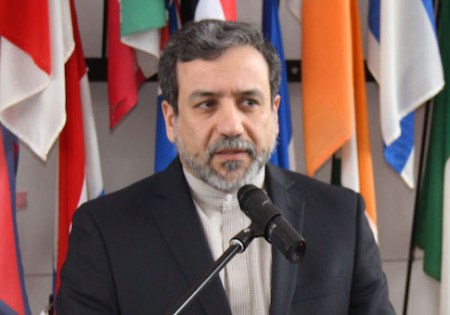
Abbas Araqchi, Iran's deputy foreign minister for legal and international affairs and top nuclear negotiator, meets the press in Vienna, Austria, on Feb. 24, 2015, after talking with International Atomic Energy Agency chief Yukiya Amano on Tehran's nuclear program. (Kyodo) ==Kyodo

Abbas Araqchi, Iran’s deputy foreign minister for legal and international affairs and top nuclear negotiator. (Kyodo)

The call for further compensation comes just days after the Obama administration was forced to admit that it had been providing Iran with around $700 million in assets every month since the nuclear deal was approved.

*******************************

Iran is demanding further “compensation” from the United States following claims America violated the nuclear agreement by passing new sanctions on the Islamic Republic, according to comments by senior Iranian officials following meetings with the Obama administration in Vienna.

The demand for further concessions by the Obama administration comes on the heels of reports that the United States has deflated the total amount of cash, gold, and other assets provided to the Islamic Republic during the past several years. The sum is believed to be in excess of $10 billion.

Iran has threatened to retaliate against the United States in recent weeks following the passage late last year by Congress of the Iran Sanctions Act, or ISA, which will continue to economically penalize Iran for the next 10 years.

The call for further compensation comes just days after the Obama administration was forced to admit that it had been providing Iran with around $700 million in assets every month since the nuclear deal was approved.

Ahead of a series of meetings Tuesday with senior U.S. officials, Iranian Deputy Foreign Minister Abbas Araqchi again accused the United States of violating the nuclear agreement and demanded compensation for the purported breach.

“The extension of the ISA is a breach of the U.S. obligations under the Joint Comprehensive Plan of Action (JCPOA) and must be compensated in an effective way,” Araqchi was quoted as telling reporters in Vienna.

The latest meetings about the nuclear deal were orchestrated by Iranian officials, who remain angry about the passage of new sanctions.

Araqchi made clear on Monday that Tehran is “serious” about retaliating against the United States for its passage of new sanctions, stating the Islamic Republic has already made moves to restart contested work on nuclear powered submarines and other weapons.

The Washington Free Beacon reported on Monday that official estimates about the amount of money awarded to Iran by the Obama administration are actually higher than previously known.

A State Department official told the Free Beacon that it would not prejudge its meetings with Iran when asked if further concessions are on the table.

“While we are not going to prejudge the outcome of any meeting, we will discuss ongoing implementation of the JCPOA as we always do,” the official said.

The total worth of the cash, assets, gold, and bullion given to Iran is in excess of $10 billion, according to Bahram Ghasemi, the spokesman for Iran’s Foreign Ministry.

“I will not speak about the precise amount,” Ghasemi was quoted as saying in Persian language reports independently translated for the Free Beacon.

The $10 billion figure is actually a “stingy” estimate, Ghasemi claimed, adding that the cash and gold sent by Washington to Iran’s Central Bank was subsequently “spent.”

“This report is true but the value was higher,” Ghasemi was quoted as saying.

“After the Geneva conference and the resulting agreement, it was decided that $700 million dollars were to be dispensed per month” by the United States, according to Ghasemi. “In addition to the cash funds which we received, we [also] received our deliveries in gold, bullion, and other things.”

Will Team Trump Air Obama’s Iran Secrets?

November 21, 2016

Will Team Trump Air Obama’s Iran Secrets? Power Line, Paul Mirengoff, November 21, 2016

For years, Republicans and conservatives have charged that President Obama has shielded embarrassing intelligence and other information regarding Iran in order to limit opposition to the Iran nuclear deal and Obama’s conciliatory approach to Tehran. The charge seems well-founded. After all, it took Sens. Tom Cotton and Rep. Mike Pompeo to discover secret side agreements attached to the nuclear deal.

Eli Lake suggests that the Trump administration may well stop covering for the mullahs. Certainly, as Lake argues, Trump’s early high level personnel picks suggest so.

Trump’s nominee for CIA Director is none other than Mike Pompeo. Not only did he and Sen. Cotton uncover side deals to the nuclear agreement, he also pressed hard for answers about the cash payments the U.S. delivered to the mullahs in exchange for the release of hostages.

Pompeo wrote to Attorney General Lynch asking for answers as to how the cash payments were approved by the Justice Department. Lynch stonewalled him. Perhaps Jeff Sessions will be more cooperative.

Mike Flynn is the other key appointment for purposes of airing Obama’s Iran secrets. Lake points out that in 2011 General Flynn ran a team at the Office of the Director of National Intelligence that reviewed the troves of material captured in the 2011 Osama bin Laden raid.

Under Obama, only a small fraction of these documents have been declassified and released. After he retired from the military, Flynn charged that the disclosures were selective.

Flynn noted, for example, that some documents captured in the bin Laden raid show a much tighter relationship between Iran and al-Qaeda than previously disclosed. In The Field of Fight: How We Can Win the Global War Against Radical Islam and Its Allies (written with Micheal Ledeen), Flynn states: “One letter to bin Laden reveals that al-Qaeda was working on chemical and biological weapons in Iran.”

Given Obama’s desire to deal with Iran and, indeed, for a rapprochement, you can see why the administration shielded such intelligence. Given the well-deserved contempt by Pompeo and Flynn for Obama’s Iran policy, you can see why they might want relevant facts to come to light. As a general matter, these are facts the public has a right to know.

If such facts are made public, Obama won’t have much standing to complain. Lake reminds us:

Obama himself in 2008 campaigned against the sitting president’s policies on waterboarding and enhanced interrogation. One of the first things his government did when he took office was to declassify and release the legal memos that justified and revoked these practices.

It looks like the Republicans are about to return the favor.

Obama Admin Secretly Facilitated Iranian Ballistic Missile Program

October 4, 2016

Obama Admin Secretly Facilitated Iranian Ballistic Missile Program, Washington Free Beacon, , October 4, 2016

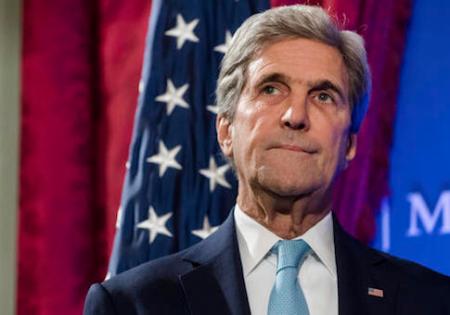
U.S. Secretary of State John Kerry smiles during a speech on the future of "Transatlantic Relations" during an event hosted by The German Marshall Fund (GMF) and the U.S. Mission to the EU at Concert Noble in Brussels, Tuesday, Oct. 4, 2016. Kerry is in Brussels for a two-day conference, hosted by the EU, with the participation of over 70 countries to discuss the current situation in Afghanistan. (AP Photo/Geert Vanden Wijngaert)

U.S. Secretary of State John Kerry smiles during a speech on the future of “Transatlantic Relations” during an event hosted by The German Marshall Fund (GMF) and the U.S. Mission to the EU at Concert Noble in Brussels, Tuesday, Oct. 4, 2016. AP Photo/Geert Vanden Wijngaert

The Obama administration misled journalists and lawmakers for more than nine months about a secret agreement to lift international sanctions on a critical funding node of Iran’s ballistic missile program, as part of a broader “ransom” package earlier this year that involved Iran freeing several U.S. hostages, according to U.S. officials and congressional sources apprised of the situation.

The administration agreed to immediately lift global restrictions on Iran’s Bank Sepah—a bank the Treasury Department described in 2007 as the “linchpin of Iran’s missile procurement”–eight years before they were to be lifted under last summer’s comprehensive nuclear agreement. U.S. officials initially described the move as a “goodwill gesture” to Iran.

The United States also agreed to provide Iran $1.7 billion in cash to release or drop charges against 21 Iranians indicted for illegally assisting Tehran. Full details of this secret agreement were kept hidden from Congress and journalists for more than nine months, multiple sources told theWashington Free Beacon.

State Department officials who spoke to the Free Beacon now say the United States “already made” the decision to drop U.S. sanctions, but declined to address multiple questions aimed at clarifying the discrepancy between past and current explanations for dropping international sanctions.

The Free Beacon first reported on these terms in January, including the dropping of international sanctions on Bank Sepah.

State Department officials told the Free Beacon at the time that the settlement with Iran, including the $1.7 billion cash award, was “not related” to “the release of the U.S. citizens from Iran.”

U.S. officials last week confirmed to the Wall Street Journal that in fact the dropping of sanctions on Bank Sepah “was part of a package of tightly scripted agreements” surrounding the release of the U.S. citizens from Iran.

When asked about the discrepancies between these statements, a State Department official would not elaborate, instead telling the Free Beacon, “The U.S. government had already made the determination that it would remove Bank Sepah from our domestic Specially Designated Nationals and Blocked Persons List on Implementation Day, which was outlined clearly in the JCPOA [nuclear deal] itself in July 2015.”

“We made this determination after a careful review of the activity of all individuals and entities—including Bank Sepah—that would be removed from the SDN list,” the official explained. “Although we removed Bank Sepah from the U.S. SDN list, Bank Sepah will continue to be cut off from the U.S. financial system and its funds under U.S. jurisdiction will remain blocked. Furthermore, we have the ability to quickly reimpose additional U.S. sanctions if Bank Sepah or any other entity engages in activities that remain sanctionable.”

The Free Beacon was not the only publication that was provided with misleading information by the Obama administration.

U.S. officials told Al Monitor in late January that the move to cancel international sanctions on Bank Sepah at the United Nations was undertaken by Venezuela without U.S. action.

“We already made the decision to delist this bank as part of U.S. secondary sanctions as part of the nuclear deal,” the official added, claiming the United States only agreed “not to oppose the delisting at the U.N., which Iran very much wanted.”

Senior Iranian officials said in January that the $1.7 billion payment and delisting of Bank Sepah were part of the agreement to free U.S. hostages, a charge the Obama administration denied at the time.

“The annulment of sanctions against Iran’s Bank Sepah and reclaiming of $1.7mln of Iran’s frozen assets after 36 years showed that the U.S. doesn’t understand anything but the language of force,” Mohammad Reza Naqdi, commander of Iran’s Basij Volunteer Force, told Iran’s state-controlled press in early February.

Senior congressional sources apprised of the matter told the Free Beacon that these latest revelations provide further proof of the administration’s intentional bid to deceive the public about its dealings with Iran.

“Facts are facts, no matter how much the administration tries to hide them,” said one senior congressional aide involved in investigating the matter. “Journalists and Members of Congress are on the trail and have already uncovered so much, including the cash payment of almost $2 billion to the world’s largest state sponsor of terrorism as a ransom for four American hostages. The truth, no matter how disturbing it is, will continue to come out.”

“This should eliminate any remaining doubt that the administration paid a ransom to Iran,” said another source familiar with the issue. “Why else would they keep Congress and the American people in the dark about this unprecedented concession? President Obama’s continued capitulation to the Iranian regime is a hazard to our national security.”

Another source who serves as a senior adviser to Congress and is familiar with the administration’s thinking told the Free Beacon that the Obama administration misled the public to avoid sparking outrage over its decision to drop sanctions on the top funder of Iran’s ballistic missile program.

“The Obama administration couldn’t tell the American public that it had just unleashed Iran’s ballistic missile program as one part of an enormous ransom extracted by Iran,” the source said. “So instead they ran to friendly reporters to misleadingly boast about how successful their diplomacy was, while they were bribing Iran with billions of dollars and military concessions to stay at the table.”

The Foundation for Defense of Democracies, a Washington, D.C.-based think tank, described the administration’s move as putting Iran’s ballistic missile program “back in business.”

“It represents a unilateral dismantling of the international ballistic missile embargo against the Islamic Republic,” FDD wrote in a recent policy analysis. “Iran’s preferred missile-financing bank is back in business.”

Iran has test fired multiple ballistic missiles since the nuclear deal was implemented, despite international restrictions on this type of activity.

Another Day, Another Secret Obama Side Deal with Iran

September 30, 2016

Another Day, Another Secret Obama Side Deal with Iran, Center for Security Policy, September 30, 2016

409742601

Source: National Review

According to a September 30 Wall Street Journal article, the Obama administration signed a secret agreement with Iran to lift U.N. sanctions from two Iranian banks — Bank Sepah and Bank Sepah International — that helped finance Iran’s ballistic-missile program. U.S. and Iranian officials signed this deal on January 17, 2016, the same day Iran released four U.S. prisoners.

U.S officials in January said the prisoners were swapped for the release of seven Iranian prisoners by the U.S. and the removal of 21 persons — mostly Iranian nationals — from an INTERPOL wanted list for violating U.S. laws barring transfers of WMD technology and weapons to Iran.

The American people and Congress did not learn until August that the U.S. prisoners were not allowed to leave Iran until a planeload of $400 million in cash sent by the United States had landed in Iran. This payment — and two more over the next month — has been strongly condemned by Republican congressmen as U.S. ransom payments to a state sponsor of terror.

Commenting on the $400 million cash payment to Iran, the prisoner swap and the lifting of sanctions from the Iranian banks, a senior U.S. official told the Journal, “The timing of all this isn’t coincidental. Everything was linked to some degree.”

The Journal also quoted unnamed Obama officials who justified lifting sanctions against the two Iranian banks to “harmonize the U.N. sanctions list with the U.S.’s” and because “Washington believed Iran had earned more sanctions relief because Tehran had been implementing the terms of the nuclear agreement.” The Obama administration lifted U.S. sanctions against Bank Sepah and Bank Sepah International in July 2015. The U.N. Security Council voted to lift these sanctions on January 17, 2016.

This suggests the removal of sanctions against the Iranian banks was part of a broad ransom agreement to free U.S. prisoners held by Iran.

The secret agreement to lift sanctions against the Iranian banks also violated U.N. Security Council Resolution 2231, passed in July 2015 which endorsed the JCPOA. This resolution stipulated that U.N. missile-related sanctions against Iran would remain in place for eight years. In addition, lifting sanctions against the two banks broke promises to Congress by Obama officials that the nuclear deal would only lift nuclear-related sanctions against Iran and that U.N. missile sanctions would remain in place for eight years.

The secret deal to lift missile sanctions against the Iranian banks joins a long list of secret JCPOA side deals that the Obama administration illegally withheld from the U.S. Congress and the American people. These include allowing Iran to inspect itself for nuclear weapons work; the dumbing down of IAEA Iran reports; exemptions granted to Iran on its JCPOA obligations so it would receive $150 billion in sanctions relief; sending Iran planeloads of $1.7 billion in cash to free four imprisoned Americans; and an agreement allowing Iran to construct advanced centrifuges in 2027. One has to wonder how many more secret side deals have yet to be disclosed.

I argue in my new book on the Obama administration’s nuclear diplomacy with Iran is national-security fraud. This latest secret side deal is more compelling evidence of this.

Rosen: Clear deception by Rhodes, Obama administration to sell Iran nuclear deal

May 7, 2016

Rosen: Clear deception by Rhodes, Obama administration to sell Iran nuclear deal, Fox News via YouTube, May 7, 2016

Dangerous illusions about Iran

March 10, 2016

Dangerous illusions about Iran, Israel Hayom, Elliott Abrams, March 10, 2016

Last year’s Iran nuclear agreement was sold with several powerful arguments, and among the most important were these: that the agreement would strengthen Iranian “moderates” and thus Iran’s external conduct, and that it would allow us unparalleled insight into Iran’s nuclear program.

Both are now proving to be untrue, but the handling of the two differs. The “moderation” argument is being proved wrong but the evidence is simply being denied. The “knowledge” argument is being proved wrong but the fact is being met with silence. Let’s review the bidding.

The idea that the nuclear agreement was a reward for Iran’s “moderates” and would strengthen them is a key tenet of the defense of the agreement. If Iran remains the bellicose and repressive theocracy of today when the agreement ends and Iran is free to build nukes without limits, we have entered a dangerous bargain. It is critical that Iran change, so defenders of the agreement adduce evidence that it has. And the new evidence is Iran’s recent elections. Those elections were a great victory for “moderates” and hard-liners, it is said, and they help to prove that the nuclear deal was wise.

The problem here is that those elections were anything but a victory for Iran’s reformers. As Mehdi Khalaji wrote about the Assembly of Experts election, “If one understands ‘reformist’ as a political figure who emerged during the reform movement of the late 1990s and is associated with the parties and groups created at that time, then neither the candidates on the ‘reformist’ list nor the winners of Tehran’s sixteen assembly seats can credibly be called by that name.” To take one of the examples Khalaji cites, Mahmoud Alavi ran on what has been called a reformist ticket but he “is the current intelligence minister, and Supreme Leader Ali Khamenei appointed him as head of the military’s Ideological-Political Organization from 2000 to 2009.” Khalaji concludes that “no new prominent reformists won seats, and the proportion of hardliners remained the same.”

Ray Takeyh and Reuel Gerecht draw a stark conclusion: This year’s elections “spelled the end of Iran’s once-vivacious reform movement” which has simply been crushed by the regime. “The electoral cycle began with the usual mass disqualification of reformers and independent-minded politicians,” they remind us. I’d cite another fact: that reformers of past election years, presidential candidates Mir-Hossein Mousavi and Mehdi Karoubi, have remained under house arrest for five years now, during the entire Rouhani presidency, demonstrating the true fate of reformers of even a mild variety.

What’s the point of the “reformist” charade? As Takeyh and Gerecht note, “Foreigners don’t have to confess that they are investing in an increasingly conservative and increasingly strong theocracy; rather, they are aiding ‘moderates’ at the expense of hardliners.” But this charade has in fact worked well, producing headline after headline in the Western media about “reformist” victories. You can fool most of the people some of the time, or at least most of the people who have a strong desire to be fooled — because they wish to protect the nuclear deal and its authors.

Iran’s conduct certainly suggests radicalization rather than moderation, and the past weeks have seen repeated ballistic missile tests. Ballistic missiles are not built and perfected in order to carry 500 pound “dumb” bombs; they are used to carry nuclear weapons. So Iran’s continued work on them suggests that it has never given up its nuclear ambitions, not even briefly for the sake of appearances.

The American response has been anemic, even pathetic; we threaten to raise the issue at the United Nations. Two missiles were test-fired today, with the phrase “Israel must be wiped out” written on them. These tests violate U.N. Security Council resolutions, but the American reaction is cautious: a speech, a debate in New York, perhaps some sanctions, but nothing that could possibly lead Iran to undo the nuclear deal. Because Iran knows that this will be the Obama administration’s reaction, expect more and more ballistic missile tests. Expect more conduct like the interception, capture, and humiliation of American sailors in the Gulf. Expect more Iranian military action throughout the region.

Some moderation.

The head of CENTCOM, Gen. Lloyd Austin, put it this way: “We see malign activity, not only throughout the region, but around the globe as well. … We’ve not yet seen any indication that they intend to pursue a different path. The fact remains that Iran today is a significant destabilizing force in the region. … Some of the behavior that we’ve seen from Iran of late is certainly not the behavior that you would expect to see from a nation that wants to be taken seriously as a respected member of the international community.”

Are we now, to turn to the second matter, gaining unparalleled insight into the Iranian nuclear program? Is this one of the achievements of the agreement? On the contrary, it seems. As the Associated Press put it, “The four Western countries that negotiated with Iran — the U.S., Britain, France and Germany — prefer more details than were evident in last month’s first post-deal [International Atomic Energy Agency] report. In contrast, the other two countries — Russia and China — consider the new report balanced, while Iran complains the report is too in-depth. IAEA chief Yukiya Amano feels he has struck the right balance, considering Iran is no longer in violation of U.N. and agency demands to curb its nuclear program. His report was much less detailed than pre-nuclear deal summaries.”

Much less detailed? Sure, because the U.N. Security Council resolutions under which the IAEA provided the detail, are gone, wiped out by the nuclear deal. The IAEA’s February 26 report was its first since the nuclear deal went into effect, and lacked details on matters such as uranium stockpiles, production of certain centrifuge parts, and progress by Iran toward meeting safeguard obligations. The Obama administration has wavered, sometimes saying there was enough detail, but then demanding more. The deal was sold, in part, as a way of providing transparency, but that does not appear to be accurate: it may in fact legitimize opacity. Earlier this week came a remarkable exchange between a reporter and State Department spokesman John Kirby, who defended the degree of knowledge we have.

Kirby said, “So we now know more than we’ve ever known, thanks to this deal, about Iran’s program.” The reporter, Matt Lee of AP, asked “How much near-20% highly enriched uranium does Iran now have?” Kirby replied, “I don’t know.” To which Lee noted, “You don’t know because it’s not in the IAEA report.”

So, the bases on which the nuclear agreement with Iran was sold appear to be crumbling. Moderates are not gaining power, Iran is not moderating its behavior, and we know less rather than more about what it is actually doing in its nuclear program. Some of those conclusions are denied by the administration and by credulous portions of the press, and others are ignored. But all those verbal games will not make us any safer.

From “Pressure Points” by Elliott Abrams. Reprinted with permission from the Council on Foreign Relations.

Iran Threatens to Walk Away From Nuke Deal After New Missile Test

March 8, 2016

Iran Threatens to Walk Away From Nuke Deal After New Missile Test, Washington Free Beacon, March 8, 2016

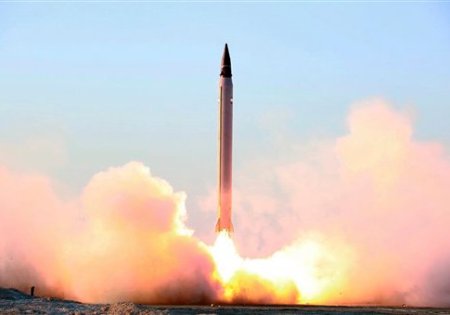
FILE - This file picture released by the official website of the Iranian Defense Ministry on Sunday, Oct. 11, 2015, claims to show the launching of an Emad long-range ballistic surface-to-surface missile in an undisclosed location. Iran tested a ballistic missile again in November 2015, a U.S. official said Dec. 8, describing the second such test since this summerís nuclear agreement. The State Department said only that it was conducting a "serious review" of such reports. The test occurred on Nov. 21, according to the official, coming on top of an Oct. 10 test Iran confirmed at the time. The official said other undeclared tests occurred earlier than that, but declined to elaborate. The official wasnít authorized to speak on the matter and demanded anonymity. (Iranian Defense Ministry via AP)

FILE – This file picture released by the official website of the Iranian Defense Ministry on Sunday, Oct. 11, 2015, claims to show the launching of an Emad long-range ballistic surface-to-surface missile in an undisclosed location. Iran tested a ballistic missile again in November 2015, a U.S. official said Dec. 8, describing the second such test since this summerís nuclear agreement. The State Department said only that it was conducting a “serious review” of such reports. The test occurred on Nov. 21, according to the official, coming on top of an Oct. 10 test Iran confirmed at the time. The official said other undeclared tests occurred earlier than that, but declined to elaborate. The official wasnít authorized to speak on the matter and demanded anonymity. (Iranian Defense Ministry via AP)

Iranian leaders now say that they are poised to walk away from the deal if the United States and other global powers fail to advance the Islamic Republic’s “national interests.”

*************************

Iran on Tuesday again threatened to walk away from the nuclear agreement reached last year with global powers, hours after the country breached international agreements by test-firing ballistic missiles.

Iran’s most recent ballistic missile test, which violates current U.N. Security Council resolutions, comes a day after the international community’s nuclear watchdog organization disclosed that it is prohibited by the nuclear agreement from publicly reporting on potential violations by Iran.

Iranian leaders now say that they are poised to walk away from the deal if the United States and other global powers fail to advance the Islamic Republic’s “national interests.”

“If our interests are not met under the nuclear deal, there will be no reason for us to continue,” Abbas Araqchi, Iran’s deputy foreign minister, warned during remarks delivered to a group of Iranian officials in Tehran.

“If other parties decide, they could easily violate the deal,” Araqchi was quoted as saying by Iran’s state-controlled media. “However, they know this will come with costs.”

Araqchi appeared to allude to the United States possibly leveling new economic sanctions as a result of the missile test. The Obama administration moved forward with new sanctions earlier this year as a result of the country’s previous missile tests.

Iran’s latest missile test drew outrage from longtime regime critics on Capitol Hill.

“The administration’s response to Iran’s new salvo of threatening missile tests in violation of international law cannot once again be, it’s ‘not supposed to be doing that,’” Sen. Mark Kirk (R., Ill.) said in a statement. “Now is the time for new crippling sanctions against Iran’s Islamic Revolutionary Guard Corps, Ministry of Defense, Aerospace Industries Organization, and other related entities driving the Iranian ballistic missile program.”

House Majority Leader Kevin McCarthy (R., Calif.) warned that the nuclear agreement has done little to moderate Iran’s rogue behavior.

“Far from pushing Iran to a more moderate engagement with its neighbors, this nuclear deal is enabling Iran’s aggression and terrorist activities,” McCarthy said in a statement. “Sanctions relief is fueling Iran’s proxies from Yemen to Iraq to Syria to Lebanon. Meanwhile, Khamenei and the Iranian regime are acting with impunity because they know President Obama will not hold them accountable and risk the public destruction of his nuclear deal, the cornerstone of the president’s foreign policy legacy.”

McCarthy went on to demand that the Obama administration step forward with new sanctions as punishment for the missile test.

Meanwhile, the U.S. State Department had difficulty Monday explaining why the nuclear agreement limits public reporting by the International Atomic Energy Agency, or IAEA, on potential deal violations by Iran.

Yukiya Amano, the IAEA’s chief, disclosed on Monday that his agency is no longer permitted to release details about Iran’s nuclear program and compliance with the deal. The limited public reporting is a byproduct of the nuclear agreement, according to Amano.

When asked about these comments again Tuesday, a State Department official told the Free Beacon that the IAEA’s reports would continue to provide a complete picture of Iran’s nuclear program, though it remains unclear if this information will be made publicly available.

“There isn’t less stringent monitoring or reporting on Iran’s nuclear program,” the official said. “The IAEA’s access to Iran’s nuclear program and its authorization to report on it has actually expanded. It’s a distortion to say that if there is less detail in the first and only post-Implementation Day IAEA report then that somehow implies less stringent monitoring or less insight into Iran’s nuclear program.”

While the IAEA “needs to report on different issues” under the final version of the nuclear agreement, the agency continues to provide “a tremendous amount of information about Iran’s current, much smaller nuclear program,” the source maintained.

The IAEA’s most recent February report—which was viewed by nuclear experts as incomplete and short on detail—“accurately portrays the status of Iran’s nuclear program,” including its efforts to uphold the nuclear deal, the official added.

“We expect this professional level of reporting to continue in the future,” the official said.

IAEA: Iran Nuke Deal Limits Public Reporting on Possible Violations

March 7, 2016

IAEA: Iran Nuke Deal Limits Public Reporting on Possible Violations, Washington Free Beacon, , March 7, 2016

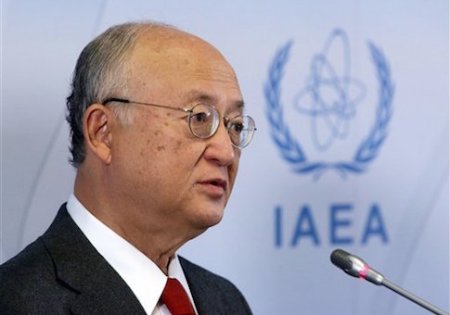
Director General of the International Atomic Energy Agency, IAEA, Yukiya Amano of Japan addresses the media during a news conference after a meeting of the IAEA board of governors at the International Center in Vienna, Austria, Monday, March 7, 2016. (AP Photo/Ronald Zak)

Director General of the International Atomic Energy Agency, IAEA, Yukiya Amano of Japan addresses the media during a news conference after a meeting of the IAEA board of governors at the International Center in Vienna, Austria, Monday, March 7, 2016. (AP Photo/Ronald Zak)

The head of the international community’s nuclear watchdog organization disclosed Monday that certain agreements reached under the Iran nuclear deal limit inspectors from publicly reporting on potential violations by the Islamic Republic.

Yukiya Amano, chief of the International Atomic Energy Agency, or IAEA, which is responsible for ensuring Iran complies with the agreement, told reporters that his agency is no longer permitted to release details about Iran’s nuclear program and compliance with the deal.

Amano’s remarks come on the heels of a February IAEA oversight report that omitted many details and figures related to Iran’s nuclear program. The report sparked questions from outside nuclear experts and accusations from critics that the IAEA was not being transparent with its findings.

Amano disclosed in response to questions from reporters that the last report was intentionally vague because the nuclear agreement prohibits the IAEA from publishing critical data about Iran’s program that had been disclosed by the agency in the past.

“The misunderstanding is that the basis of reporting is different,” Amano said. “In the previous reports, the bases were the previous [United Nations] Security Council Resolutions and Board of Governors. But now they are terminated. They are gone.”

Most U.N. measures pertaining to Iran—including its military buildup and illicit work on nuclear technology—were removed following the nuclear agreement, which essentially rewrote the organization’s overall approach to the country.

The IAEA, which operates under the U.N. umbrella, must now follow the new resolutions governing the implementation of the nuclear pact, Amano said.

“These two resolutions and the other resolutions of the Security Council and Board are very different,” he said. “And as the basis is different, the consequences are different.”

Amano said that going forward, the agency would only release reports that are consistent with the most recent Security Council resolutions on Iran, meaning that future reports are likely to impact the international community’s ability to determine if Iran is fully complying with its end of the agreement.

Last month’s report was viewed as particularly significant because it allowed the nuclear agreement to proceed to its implementation stage. However, the dearth of information in it has angered some experts.

The latest report “provides insufficient details on important verification and monitoring issues,” Olli Heinonen, the IAEA’s former deputy director general, stated in a policy brief.

“The report does not list inventories of nuclear materials and equipment or the status of key sites and facilities,” Heinonen said in his analysis, which was published by the Foundation for Defense of Democracies. “Without detailed reporting, the international community cannot be sure that Iran is upholding its commitments under the nuclear deal.”

The IAEA’s latest report also failed to disclose information about Iran’s stockpiles of low-enriched uranium, which is supposed to be significantly reduced as part of the nuclear deal.

Additional information about Iran’s nuclear centrifuges, the machines responsible for enriching uranium, also was withheld by the IAEA.

Other critics accused the Obama administration of misleading Congress during negotiations over the deal. White House officials maintained at the time that the agreement would provide increased transparency into Iran’s nuclear endeavors.

“When nuclear negotiations began in late 2013, the administration asked Congress to stand down on pressuring the Iranians, and promised to force the Iranians to dismantle significant parts of their nuclear program if Congress gave negotiators space,” Omri Ceren, an official with The Israel Project, which works with Congress on the Iran issue, wrote in an analysis sent to reporters on Monday.

“U.S. negotiators eventually caved on any demands that would have required the destruction of Iran’s uranium infrastructure, and instead went all-in on verification and transparency: Yes, the Iranians would get to keep what they’d built, and yes, their program would eventually be fully legal, but the international community would have full transparency into everything from uranium mining to centrifuge production to enriched stockpiles,” Ceren explained.

However, “now Amano has revealed that the nuclear deal gutted the ability of journalists and the public to have insight into Iran’s nuclear activities,” he said. “In critical areas, it’s not even clear that the IAEA has been granted the promised access.”

US bows to Russian demand to keep Assad in office. Israel follows suit

December 16, 2015

US bows to Russian demand to keep Assad in office. Israel follows suit, DEBKAfile, December 16, 2015

kerry-meets-putin-moscow_15.12.15

After two tries, US Secretary of State John Kerry finally turned President Barack Obama away from his four-year insistence that Bashar Assad must go, as a precondition for a settlement of the Syrian conflict. Tuesday, night, Dec. 15, the Secretary announced in Moscow: “The United States and our partners are not seeking so-called regime change.”

After Kerry’s first try, Obama still stuck to his guns. He said in Manilla on Nov.19 that he didn’t believe the civil war in Syria “will end while the dictator remains in power.”

Almost a month went by and then, Tuesday night, after a day of dickering with Foreign Minister Sergei Lavrov culminating in a joint conference with Putin at the Kremlin, Kerry confirmed this evolution in US policy. The focus now, he said, is “not on our differences about what can or cannot be done immediately about Assad.” Rather, it is on facilitating a peace process in which “Syrians will be making decisions for the future of Syria.”

Rather, it is on facilitating a peace process in which “Syrians will be making decisions for the future of Syria.”

This statement brought Washington in line with Moscow’s demand for the Syrian president’s future to be determined by his own people.

This statement brought Washington in line with Moscow’s demand for the Syrian president’s future to be determined by his own people.

On this demand, Iran’s Ayatollah Ali Khamenei is even more obdurate than Putin.

DEBKAfile’s Middle East sources wonder about the measure of freedom the Syrian people can expect while it is clamped firmly in a military vice by Russia, Iran and Hizballah. However, this was of no immediate concern to the big power players. Washington’s surrender to the Russian and Iranian line on Assad’s future was offered in the short-term hope of progress at the major international conference on the Syrian question taking place in New York Friday.

Another major US concession – this one to Tehran – was scarcely noticed.

Earlier Tuesday, the UN nuclear watchdog’s 35-nation board in Vienna closed its investigation into whether Iran sought atomic weapons, opting to back the international deal with Tehran rather than dwell on Iran’s past activities.

This motif of going forward toward the future rather than dwelling on the past was a repeat of the argument for keeping Assad in power. It provided an alibi for letting Tehran get away with the suspicion of testing a nuclear detonation at its Parchin military complex, without forfeiting sanctions relief, by the simple device of denying access to UN nuclear agency monitors to confirm those suspicions.

In a single day, the Obama administration handed out certificates of legitimacy to the Syrian dictator, who is responsible for more than a quarter of a million deaths, and to Iran’s advances toward a nuclear weapon.

These epic US policy reversals carried three major messages:

1. The Obama administration has lined up behind Putin’s Middle East objectives which hinge on keeping Bashar Assad in power.

2. Washington endorses Russia’s massive military intervention in Syria, although as recently as last month Obama condemned it as doomed to failure.

3. The US now stands behind Iran – not just on the Syrian question – but also on the existence of an Iranian-Syrian-Hizballah alliance, based on a solid land bridge from Iran and the Gulf up to the Mediterranean coast under Russian military and political protection and influence.

Even more surprising were the sentiments heard this week in Jerusalem.

Our military and intelligence sources cite officials urging the government to accept the American policy turnaround. In some military circles, senior voices were heard commenting favorably on Assad’s new prospects of survival in power, or advising Israel to jump aboard the evolving setup rather than obstructing it.

Those same “experts” long claimed that Assad’s days were numbered. They were wrong then and they are wrong now.

Israel was forced to yield on the Iranian nuclear program, but its acceptance of the permanence of Assad and the indefinite presence in Syria of his sponsors, Iran and Hizballah, will come at a high price for Israel in the next conflict.