Posted tagged ‘Iran Scam’

McCain: Failed Korea Nuke Negotiators Now Bringing You Iran Talks

November 24, 2014

McCain: Failed Korea Nuke Negotiators Now Bringing You Iran Talks, National ReviewMichael Auslin, November 24, 2014

Halifax — As news spreads that the failed Iranian nuclear talks require a second extension, this time for seven-months, U.S. officials at an international security conference here essentially admitted that North Korea was now a nuclear power, underscoring the failure of decades of high-level diplomacy. Yet the White House is doubling-down on its equally suspect negotiations with Tehran.

General Charles H. Jacoby, outgoing commander of U.S. Northern Command and NORAD, told the Halifax International Security Forum that he was treating North Korea as a “practical threat” due to its nuclear and ballistic missile capability that could potentially reach the U.S. homeland. Jacoby did not specify whether this meant that North Korea’s missiles and nukes were an operational threat, nor how he had changed NORAD’s operating posture, if at all. Admiral Cecil Haney, commander of U.S. Strategic Command (in control of all of America’s nuclear weapons), refused to answer whether he also considered Pyongyang a practical threat, but noted that he wanted more focus on trying to understand North Korean dictator Kim Jong-un. The generals’ comments came just weeks after General Curtis Scaparotti, commander of U.S. Forces Korea, testified before Congress that he believed Pyongyang could build a nuclear warhead and mount it on a ballistic missile.

There is little doubt that America’s policy towards North Korea has failed, and that Pyongyang has played Democratic and Republican administrations alike, promising concessions, making agreements, and playing for time. Time enough to be close to a nuclear break out, which may be imminent. When Pyongyang mates a functional nuclear warhead with a reliable long-range or intercontinental ballistic missile, then two things will happen: first, the nuclear balance in Asia will tip, second, the Iranians will be opening their checkbooks immediately for access to both technologies. Above all, Japan will begin thinking seriously about either dramatically expanding its strike capabilities or maybe even its own nuclear deterrent. After all, given that two decades of American diplomacy resulted in a rogue regime with nukes, how much can the U.S. nuclear umbrella be trusted? Will Washington really be willing to trade Los Angeles for Tokyo? Our ally won’t admit it publicly, but highly doubts it.

To paraphrase: Diplomacy has consequences. Unfortunately, it seems that Washington doesn’t quite get that. Instead, the dialogue dependency trap continues to ensnare our top officials, who convince themselves that talking is always better than the opposite, that rationality and self-interest will ultimately win out. That’s probably true, but the Obama administration’s problem (like the Bush administration’s) is that they don’t understand North Korean concepts of self-interest. Hence, an Asia about to get much more dangerous.

The real dangers of our failed diplomacy were summed up by Senator John McCain in Halifax, who bluntly stated that the North Koreans have nuclear weapons and delivery systems. “It’s a wake up call,” said McCain, who topped it off by looking at the greater danger of Iran. “The same people who negotiated with North Korea are now negotiating with the Iranians,” McCain explained, likely referring to Acting Deputy Secretary of State and Under Secretary of State for Political Affairs Wendy Sherman. Sherman, who is lead negotiator for the flailing Iranian talks, was the point person for talks with the North Koreans back in the Clinton administration, under Madeleine Albright. If McCain is right, then expect years more of failed negotiations and a nuclear Iran sometime this decade or next.

The Many Iranian Obstacles in the Way of a Strong Nuclear Deal

November 23, 2014

The Many Iranian Obstacles in the Way of a Strong Nuclear Deal, The Atlantic, November 23, 2014

(Assuming an eventual bad nuke deal, will the U.S. Congress be able to kill it? In a reasonably bipartisan fashion?– DM)

I just want this much‘I just want this much enriched uranium’ (Reuters)

It will be near-impossible, especially after the immigration debate, to sell the Republican-controlled Congress on whatever Iran deal Obama negotiates. But the Democrats won’t be an easy sell, either.

***********

The other day I fell into conversation with a very smart congressman named Ted Deutch, a Democrat from Florida, about his minimum requirements for an Iran nuclear deal. Deutch, who sits on the House Foreign Affairs Committee, is—like a large number of Democrats—fairly-to-very dubious about the possibility of a true breakthrough with Iran, and fairly-to-very worried about the consequences of a bad deal. (It seems likely, at this moment at least, that the Iran talks will be extended for several more months.)

Democrats such as Deutch will need to be convinced by the Obama administration that it hasn’t been outplayed by Iran. If an accord is eventually reached, and if Obama cannot convince the Democrats that he has delivered to them the toughest possible deal, then Congress will do everything in its power to undo the agreement. The Republicans, of course, are itching to subvert an Obama-negotiated deal, and Democratic support will be important to them as they make their case.

As I’ve written previously, I support a diplomatic solution to the challenge posed by the Iranian nuclear program because such a solution could theoretically achieve, without bloodshed, what a military strike might not achieve with bloodshed. But as I outline in this column, I don’t believe that either the diplomatic solution, or a solution that requires crushing sanctions and the credible threat of force, are overly likely to neutralize this threat. (And yes, it is a threat. An Iran with nuclear weapons would pose an acute challenge to pro-American moderates across the Middle East, and to the cause of nuclear non-proliferation, in particular in the world’s most volatile region. And it would pose a genocidal threat to Israel; please see, in case you haven’t read it yet, John Kerry’s condemnation of Iranian Supreme Leader Ayatollah Khamenei’s recently tweeted nine-point plan for Israel’s destruction.)

(One more parenthetical: Of course the Iranian regime wants a nuclear capability. Iran is surrounded by enemies—imagined, in some cases, but real, in others—and it is completely rational for Iran’s leaders to want to deter these enemies with nuclear weapons. Its leaders see what happened to Saddam Hussein and Muammar Qaddafi, who didn’t have nuclear weapons. And these leaders also have pretensions of empire, by the way.)

The goal of a deal is to make it as hard as possible for Iran to reach the nuclear threshold. Deutch’s analysis focuses on three potential weaknesses. The first is the notion that any agreement to curtail Iranian uranium-enrichment activities would one day expire. “I worry about a time-limited deal, one which remains in place for a 10- or 15-year term,” he said. “What happens after that period? Does Iran then have a free path to a bomb?”

The answer is, yes, Iran would have a free path to the bomb. Ten or 15 or even 20 years might seem like a long time in the U.S., but the people of the Middle East are patient. Any agreement that contains an expiration date is an inadequate agreement, because it will, in essence, grant Iran time-delayed permission to build nuclear weapons.

Deutch’s second concern relates to sanctions relief: “I don’t want to see the Iranian economy prematurely bolstered.” A legitimate fear on the part of skeptics is that the U.S. will agree to lift the most biting sanctions now in place before guaranteeing real progress in the deconstruction of Iran’s nuclear program. “The third issue,” Deutch went on to say, “concerns our ability to access any enrichment, research, or military sites.” He makes the point that the Iranian regime had kept hidden from the world at least two uranium-enrichment facilities, at Natanz and Fordow. “We need access to sites like Parchin which have military dimensions and which the Iranians prohibited us from seeing. If we can’t become comfortable in our knowledge about what they’re doing in nuclear-weapons development, then I’m not comfortable with a deal.”

It seems unlikely that the Iranians will share with the West the true scope of their nuclear-weapons development work. And unfortunately, it seems as if the West is willing to let Iran slide on this important issue. From Reuters:

World powers are pressing Iran to stop stonewalling a U.N. atomic bomb investigation as part of a wider nuclear accord, but look likely to stop short of demanding full disclosure of any secret weapon work by Tehran to avoid killing an historic deal.

Officially, the United States and its Western allies say it is vital that Iran fully cooperate with a U.N. nuclear agency investigation if it wants a diplomatic settlement that would end the sanctions severely hurting its oil-based economy. …

A senior U.S. official stressed that the powers had not changed their position on Iran’s past activities during this week’s talks: “We’ve always said that any agreement must resolve the issue to our satisfaction. That has not changed.”

Privately, however, some officials acknowledge that Iran may never be prepared to admit to what they believe it was guilty of: covertly working in the past to develop the ability to build a nuclear-armed missile—something it has always denied.

Deutch’s position on the matter of Iranian concealment is not particularly hawkish for his party. He is fairly representative of a broad swath of Democratic thinking and, in fact, on important issues he scans less hawkish than the (putatively) most important Democrat, Hillary Clinton. Given what Clinton told me in an interview over the summer, I can’t imagine that she’s overjoyed by reports coming out of the nuclear talks this week. “I’ve always been in the camp that held that they did not have a right to enrichment,” she said. “Contrary to their claim, there is no such thing as a right to enrich. This is absolutely unfounded. There is no such right. I am well aware that I am not at the negotiating table anymore, but I think it’s important to send a signal to everybody who is there that there cannot be a deal unless there is a clear set of restrictions on Iran. The preference would be no enrichment. The potential fallback position would be such little enrichment that they could not break out. So, little or no enrichment has always been my position.”

It will be near-impossible, especially after the immigration debate, to sell the Republican-controlled Congress on whatever Iran deal Obama negotiates. But the Democrats won’t be an easy sell, either.

Iran: Inspectors may access suspect nuclear site

November 23, 2014

Iran: Inspectors may access suspect nuclear site, Times of Israel, November 22, 2014

(Why not Parchin? Please see also, West seen easing demands on Iran atom bomb ‘mea culpa’ in deal. — DM)

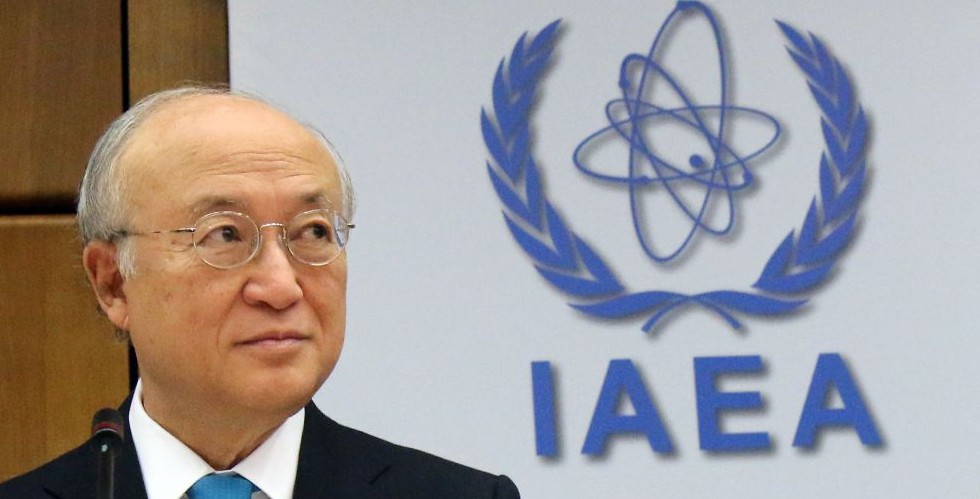
Austria-Iran-Nuclear_Horo-e1401748045152Yukiya Amano of Japan, director general of the International Atomic Energy Agency (IAEA) awaits the board of governors meeting at the International Center in Vienna, Austria, Monday, June 2, 2014. (photo credit: AP/Ronald Zak)

IAEA says ‘large-scale, high-explosive experiments’ may have been conducted at the Marivan military base.

As well as Marivan, IAEA inspectors are also interested in the Parchin military base, where they suspect tests that could be applied to a potential nuclear site have been carried out.

Iran has so far denied access to Parchin.

********************

TEHRAN, Iran – Tehran is ready to allow nuclear inspectors access to its Marivan military site, an Iranian official said Saturday, a facility long suspected of being used to develop explosive weapons.

The declaration comes as Iran and six world powers hold talks in Vienna to reach a lasting agreement on Tehran’s disputed nuclear program before November 24.

Such a deal, after 12 years of rising tensions, is aimed at easing fears that Tehran will develop nuclear weapons under the guise of its civilian activities — an ambition the Islamic Republic has always fiercely denied.

The Marivan site, close to the Iraqi border, was mentioned in a 2011 report by the International Atomic Energy Agency (IAEA) on Iran’s alleged pursuit of nuclear weapons.

The UN agency suggested at the time that “large scale high explosive experiments” may have been carried out at the complex.

Britain, China, France, Russia, the United States and Germany have been locked in talks with Iran since February after an interim accord gave it some relief from economic sanctions in return for nuclear curbs.

“We are ready to allow the IAEA controlled access to the Marivan site,” Behrouz Kamalvandi, spokesman for Iran’s Atomic Energy Organisation, was quoted as saying by the IRNA news agency.

He said the IAEA’s view of Marivan was based on “false” information.

IAEA spokeswoman Gill Tudor said the watchdog “will discuss the offer” with Tehran.

“The situation regarding a visit to the Marivan region is not as simple as that conveyed by Iran,” she told AFP.

As well as Marivan, IAEA inspectors are also interested in the Parchin military base, where they suspect tests that could be applied to a potential nuclear site have been carried out.

Iran has so far denied access to Parchin.

Exclusive: Cornered but unbound by nuclear pact, Israel reconsiders military action against Iran

November 22, 2014

Exclusive: Cornered but unbound by nuclear pact, Israel reconsiders military action against Iran, Jerusalem Post,  Michael Wilner, November 22, 2014

( “By framing the deal as fundamentally flawed, regardless of its enforcement, Israel is telling the world that it will not wait to see whether inspectors do their jobs as ordered.” )

Israeli official cites “sunset clause” in proposed comprehensive deal, which guarantees Iran a path into the nuclear club and may corner Israel into war.
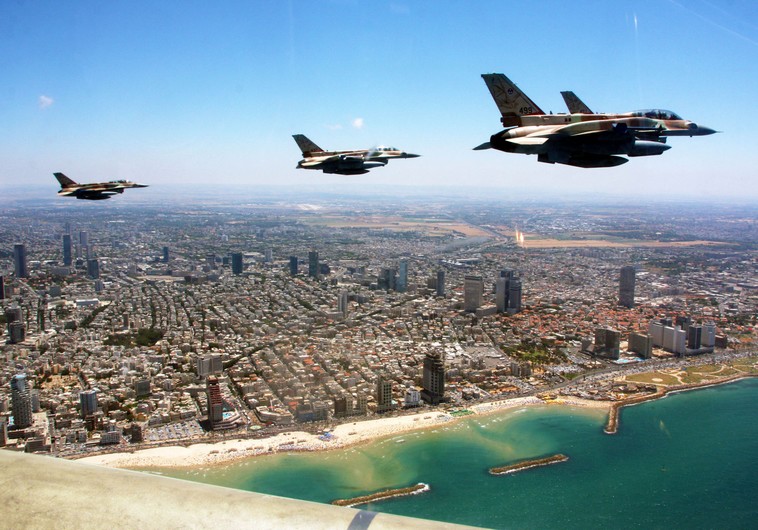
IAF pix Israel Air Force planes fly over Tel Aviv. . (photo credit:IDF SPOKESPERSON’S UNIT)

[M]ore than any single enforcement standard or cap included in the deal, Israel believes the Achilles’ heel of the proposed agreement is its definitive end date – the sunset clause.

“You’ve not dismantled the infrastructure, you’ve basically tried to put limits that you think are going to be monitored by inspectors and intelligence,” said the official, “and then after this period of time, Iran is basically free to do whatever it wants.”

***************

WASHINGTON —  Historic negotiations with Iran will reach an inflection point on Monday, as world powers seek to clinch a comprehensive deal that will, to their satisfaction, end concerns over the nature of its vast, decade-old nuclear program.

But sharing details of the deal under discussion with The Jerusalem Post on the eve of the deadline, Israel has issued a stark, public warning to its allies with a clear argument: Current proposals guarantee the perpetuation of a crisis, backing Israel into a corner from which military force against Iran provides the only logical exit.

The deal on the table

World powers have presented Iran with an accord that would restrict its nuclear program for ten years and cap its ability to produce fissile material for a weapon during that time to a minimum nine-month period.

Should Tehran agree, the deal may rely on Russia to convert Iran’s current uranium stockpile into fuel rods for peaceful use. The proposal would also include an inspection regime that would attempt to follow the program’s entire supply chain, from the mining of raw material to the syphoning of that material to various nuclear facilities across Iran.

Israel’s leaders believe the best of a worst-case scenario, should that deal be reached, is for inspections to go perfectly and for Iran to choose to abide by the deal for the entire decade-long period.

But “our intelligence agencies are not perfect,” an Israeli official said. “We did not know for years about Natanz and Qom. And inspection regimes are certainly not perfect. They weren’t in the case in North Korea, and it isn’t the case now – Iran’s been giving the IAEA the run around for years about its past activities.”

“What’s going to happen with that?” the official continued. “Are they going to sweep that under the rug if there’s a deal?”

On Saturday afternoon, reports from Vienna suggested the P5+1 – the US, United Kingdom, France, Russia, China and Germany – are willing to stop short of demanding full disclosure of any secret weapon work by Tehran.

Speaking to the Post, a senior US official rejected concern over limited surveillance capabilities, during or after a deal.

“If we can conclude a comprehensive agreement, we will have significantly more ability to detect covert facilities – even after its duration is over – than we do today,” the senior US official said. “After the duration of the agreement, the most intrusive inspections will continue: the Additional Protocol – which encompasses very intrusive transparency, and which Iran has already said it will implement – will continue.”

But compounding Israel’s fears, the proposal Jerusalem has seen shows that mass dismantlement of Iran’s nuclear infrastructure – including the destruction, and not the mere warehousing, of its parts – is no longer on the table in Vienna.

“Iran’s not being asked to dismantle the nuclear infrastructure,” the Israeli official said, having seen the proposal before the weekend. “Right now what they’re talking about is something very different. They’re talking about Ayatollah Khamenei allowing the P5+1 to save face.”

Officials in the Netanyahu government are satisfied that their ideas and concerns have been given a fair hearing by their American counterparts. They praise the US for granting Israel unprecedented visibility into the process.

But while those discussions may have affected the talks at the margins, large gaps – on whether to grant Iran the right to enrich uranium, or allow it to keep much of its infrastructure – have remained largely unaddressed.

“It’s like the chemical weapons deal in Syria,” the official said. “They didn’t just say: Here, let’s get rid of the stockpile and the weapons, but we will leave all the plants and assembly lines.”

‘Sunset clause’

Yet, more than any single enforcement standard or cap included in the deal, Israel believes the Achilles’ heel of the proposed agreement is its definitive end date – the sunset clause.

“You’ve not dismantled the infrastructure, you’ve basically tried to put limits that you think are going to be monitored by inspectors and intelligence,” said the official, “and then after this period of time, Iran is basically free to do whatever it wants.”

The Obama administration also rejects this claim. By e-mail, the senior US administration official said that, “‘following successful implementation of the final step of the comprehensive solution for its duration, the Iranian nuclear program will be treated in the same manner as that of any non-nuclear weapon state party to the NPT – with an emphasis on non-nuclear weapon.”

“That has in no way changed,” the American official continued, quoting the interim Joint Plan of Action reached last year.

But the treatment of Iran as any other signatory of the Nuclear Non-Proliferation Treaty –189 countries are members, including Iran – would allow Tehran to ultimately acquire “an industrial-sized capability,” the Israelis say. “The breakout times [to a nuclear weapon] will be effectively zero.”

Israel and world powers seek to maximize the amount of time they would have to identify non-compliance from a nuclear deal, should Iran choose to defy its tenets and build a bomb.

But in the deal under discussion in Vienna, Iran would be able to comply with international standards for a decade and, from Israel’s perspective, then walk, not sneak, into the nuclear club.

“You’ve not only created a deal that leaves Iran as a threshold nuclear power today, because they have the capability to break out quickly if they wanted to,” the Israeli official contended. “But you’ve also legitimized Iran as a military nuclear power in the future.”

From the moment this deal is clinched, Israel fears it will guarantee Iran as a military nuclear power. There will be no off ramp, because Iran’s reentry into the international community will be fixed, a fait accompli, by the very powers trying to contain it.

“The statement that says we’ve prevented them from having a nuclear weapon is not a true statement,” the Israeli official continued. “What you’ve said is, you’re going to put restrictions on Iran for a given number of years, after which there will be no restrictions and no sanctions. That’s the deal that’s on the table.”

Revisiting the use of force

Without an exit ramp, Israel insists its hands will not be tied by an agreement reached this week, this month or next, should it contain a clause that ultimately normalizes Iran’s home-grown enrichment program.

On the surface, its leadership dismisses fears that Israel will be punished or delegitimized if it disrupts an historic, international deal on the nuclear program with unilateral military action against its infrastructure.

By framing the deal as fundamentally flawed, regardless of its enforcement, Israel is telling the world that it will not wait to see whether inspectors do their jobs as ordered.

“Ten, fifteen years in the life of a politician is a long time,” the Israeli said, in a vague swipe against the political directors now scrambling in Vienna. “In the life of a nation, it’s nothing.”

Prime Minister Benjamin Netanyahu has threatened the use of force against Iran several times since 2009, even seeking authorization from his cabinet in 2011. Iran’s program has since grown in size and scope.

According to his aides, the prime minister’s preference is not war, but the continuation of a tight sanctions regime on Iran’s economy coupled with a credible threat of military force. Netanyahu believes more time under duress would have led to an acceptable deal. But that opportunity, in his mind, may now be lost.

Whether Israel still has the ability to strike Iran, without American assistance, is an open question. Quoted last month in the Atlanticmagazine, US officials suggested that window for Netanyahu closed over two years ago.

But responding to claims by that same official, quoted by Jeffrey Goldberg, over Netanyahu’s courage and will, the Israeli official responded sternly: “The prime minister is a very serious man who knows the serious responsibility that rests on his shoulders. He wouldn’t say the statements that he made if he didn’t mean them.”

“People have underestimated Israel many, many times in the past,” he continued, “and they underestimate it now.”
West seen easing demands on Iran atom bomb ‘mea culpa’ in deal

November 22, 2014

West seen easing demands on Iran atom bomb ‘mea culpa’ in deal, Reuters via Yahoo News, Fredrik Dahl and Louis Charbonneau, November 22, 20014

(The past indicates what the future will bring. Since Iran continues to refuse to acknowledge its past efforts to get nukes, and even to permit inspections to determine what it did and is doing now, there is no  reason to assume — or even to hope — that it will permit effective future inspections of its efforts to get and  use nukes. — DM}

Iran has made clear that it is not an issue it is ready to budge on. “PMD [possible military dimensions] is out of question. It cannot be discussed,” an Iranian official said.

IAEA Director General Yukiya Amano this week said Iran had again failed to provide explanations needed for the inquiry, making clear it has made scant headway in recent months.

**********

VIENNA (Reuters) – World powers will press Iran to cease stonewalling a U.N. atomic bomb investigation as part of a wider nuclear accord, but will likely stop short of demanding full disclosure of any secret weapon work by Tehran to avoid killing an historic deal.

Officially, the United States and its Western allies say it is vital that Iran fully addresses the concerns of the U.N. nuclear agency if it wants a diplomatic settlement that would end sanctions severely hurting its oil-based economy.

“Iran’s previous activities have to come to light and be explained,” a senior Western diplomat said.

Privately, however, some officials acknowledge that Iran would probably never admit to what they believe it was guilty of: covertly working in the past to develop the means and expertise needed to build a nuclear-armed missile.

Iran denies this and says its nuclear program is peaceful.

The six powers face a delicate balancing act: Israel and hawkish U.S. lawmakers – wary of any rapprochement with old foe Iran – are likely to pounce on a deal if they believe it is too soft on Tehran’s alleged nuclear arms activity.

A senior Western official said the six would try to “be creative” in coming up with a formula that would satisfy demands by those who want Iran to come clean about any atomic bomb research and those who say it is unrealistic to expect the country to openly acknowledge it.

The outcome could also affect the standing of the International Atomic Energy Agency (IAEA), which for years has been trying to investigate what it calls the possible military dimensions (PMD) of Iran’s nuclear program.

While the global powers – the United States, France, Germany, Russia, China and Britain – seek to persuade Iran to scale back its uranium enrichment program to lengthen the timeline for any bid to assemble nuclear arms, the IAEA is investigating possible research on designing an actual bomb.

The aim is to reach a comprehensive solution to end a 12-year nuclear dispute by a Nov. 24 deadline, though diplomats say it is more likely that the negotiations will be extended.

If an eventual accord does not put strong pressure on Iran to increase cooperation with the IAEA by making it a condition for some sanctions relief, it may hurt its future credibility, according to some diplomats accredited to the agency.

“You don’t want to undermine the integrity of the IAEA,” one said.

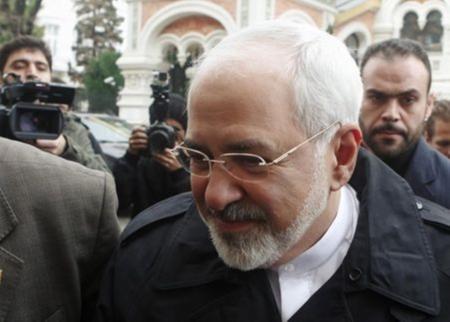
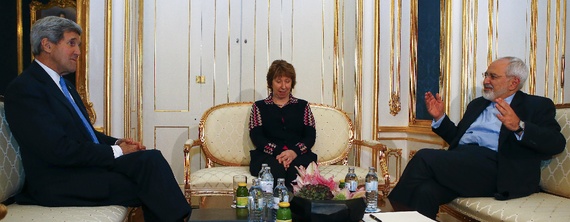
2014-11-22T141622Z_1_LYNXNPEAAL04H_RTROPTP_2_IRAN-NUCLEARIranian Foreign Minister Mohammad Javad Zarif arrives at the Iranian embassy for lunch with former European Union foreign policy chief Catherine Ashton in Vienna November 18, 2014. REUTERS/Heinz-Peter Bader

The IAEA issued a report in 2011 with intelligence information indicating concerted activities until about a decade ago that could be relevant for developing nuclear bombs, some of which the U.N. agency said may be continuing.

“SIMPLY IRRELEVANT”

Iran has made clear that it is not an issue it is ready to budge on. “PMD is out of question. It cannot be discussed,” an Iranian official said.

IAEA Director General Yukiya Amano this week said Iran had again failed to provide explanations needed for the inquiry, making clear it has made scant headway in recent months.

“I believe the PMD issue is not a deal-breaker even though it probably should be,” another Western official said. The official added that many inside the IAEA and Western governments shared concerns about the deadlocked investigation and felt uneasy about compromising on the issue.

Iran denies ever harboring any nuclear bomb ambitions and its supreme leader, Ayatollah Ali Khamenei, has issued a religious decree against atomic weaponry.

Because of this, experts say, it is virtually impossible for the Iranian leadership to make any “mea culpa” about activity geared toward developing nuclear bombs.

Another reason Tehran might be reluctant to admit to any wrongdoing is that it could later be used as a justification for Iran’s enemies to attack it out of “self-defense”.

As a result, the powers are weighing how hard to press it.

A U.S. official said it was “a fine line” that needs to be walked on PMD. The six want to make sure the Iranians address the issue to some extent, but do not want to hit them so hard with it that they feel like they will lose face.

Experts differ on whether Iran must come completely clean: some argue it is necessary to ensure that any such work has since been halted but others say this can be achieved without a “confession”.

The new Congress will not kill a bad nuke deal with Iran

November 16, 2014

The new Congress  will not kill a bad nuke deal with Iran, Dan Miller’s Blog, November 16, 2014

(I wrote this article in response to an article posted today at Warsclerotic titled GOP poised to dash Obama’s Iran hopes | TheHill. — DM)

A bad nuke deal with Iran seems likely to be approved by the P5+1 negotiators under Obama’s guidance. It will be disastrous. However, if it is signed and Obama tries to implement it, there will be little if anything the Congress can do about it, even if it wants to, until January of 2017 — which will likely be too late. Even if it is not too late in 2017 it may or may not happen, depending on who is our President and who controls Congress.

I have written extensively about the Iran Scam and Obama’s untruths and obfuscations concerning it. I did so most recently in a semi-satirical article titled To get a nuke deal with Iran Obama and the Islamist world demonize Israel. Please read at least the Iran Scam article; to repeat here the points made there would make this post far too long.

According to an article titled GOP poised to dash Obama’s Iran hopes,

Sen. Lindsey Graham (R-S.C.) took to the Senate floor on Thursday to ask for unanimous consent to schedule a vote on a bill that would give Congress final approval over any deal, or else reinstate tough sanctions on Iran.

Democratic Sen. Chris Murphy (Conn.) quickly rejected the request, arguing that scheduling a vote on the deal would be “premature at this point.” He said it would “send a fairly chilling message” that U.S. officials at the table with Iran did not have full authority to negotiate an agreement.

But when Republicans take control of the Senate, they could move to pass that bill, or push legislation from Senate Foreign Relations Chairman Bob Menendez (D-N.J.) and Sen. Mark Kirk (R-Ill.) which would reinstate sanctions if Iran violates any deal.

Their bill also pledges military support for Israel if it decides to strike Iran’s nuclear facilities, which it has threatened to do.

. . . .

The president has already threatened to veto the legislation, but doing so would be politically risky. The bill already enjoys the support of 60 senators, including 16 Democrats, and there is sweeping support for a similar bill in the House.

A deal that’s not supported by Congress or seen as weak could also hurt the 2016 Democratic presidential nominee, especially if it fails to prevent Iran from obtaining nuclear weapons capabilities.

Obama has displayed utter disdain for the Congress and constitutional processes. He will most likely continue to do so, in spades, when the new Republican dominated Congress is seated in January. The perceptions of the author of the linked article are excessively optimistic, as suggested below.

As a lame duck President, Obama has little if anything to lose. Any impact on the 2016 elections of a bad nuke deal with Iran may well not be of substantial importance to Obama and, to the extent that it is, He will probably use His ample opportunities to “Gruber” – to obfuscate and lie effectively — about the facts and their consequences substantially to diminish any adverse impact of His actions on those elections.

There’s more here about Obama, Gruber and Grubering, which Obama continues to do with at least modest success.

As the Obama administration did from the beginning and continues to do with the ObamaCare debacle, it will “Gruber” the facts and  consequences of a nuke deal in presenting it to the Congress and the public. Should the next Congress nevertheless pass a bill which He does not like, He will veto it as He has promised to do. To override a veto requires the affirmative vote of two thirds of both houses under Article 1, Section 7, of the Constitution. Even in the unlikely event that an Obama veto is overridden, there is no reason to assume that He will apply the new law as Congress intends.

Congressional attempts to defund administration efforts to implement an agreement with Iran seem unlikely to work: multiple other governmental functions, facially unconnected with the matter, would still have to be funded. The parameters of their funding would have to be extraordinarily tight to avoid fund shifting. Even then, the Obama administration has shown itself to be extraordinarily adept at fund shifting regardless of congressional intent as reflected in seemingly clear statutory language.

Even were U.S. Sanctions – the only sanctions on which the Congress has any significant impact – to be reinstated, their enforcement would be up to the Obama administration, not the Congress. The administration would likely refuse to enforce them, as it has multiple times with other Federal laws of which Obama does not approve. Were the Congress or other interested parties to succeed in getting judicial review, the process would be long and the results uncertain until the Supreme Court granted and exercised review. That process could easily take years. In addition, it remains questionable whether the Congress, its representatives or anyone else would even have standing to initiate judicial action.

At the Federal level, legal actions cannot be brought simply on the ground that an individual or group is displeased with a government action or law. Federal courts only have constitutional authority to resolve actual disputes (see Case or Controversy). Only those with enough direct stake in an action or law have “standing” to challenge it. A decision that a party does not have sufficient stake to sue will commonly be put in terms of the party’s lacking “standing”. For Supreme Court decisions focusing on the “standing” issue, see, e.g., County of Riverside v. McLaughlin, 500 U.S. 44 (1991),Northeastern Fla. Chapter of the Associated Gen. Contractors v. City of Jacksonville, 508 U.S. 656 (1993) and Lujan v. Defenders of Wildlife, 504 U.S. 555 (1992). [Emphasis added.]

In any event Germany, Iran’s most substantial commercial partner and others who now deal with Iran, as well as Iran itself, have enjoyed substantial sanctions relief for long enough that the process is broken to the point that U.S. efforts to revive useful sanctions would likely be ineffective. According to an article at FARS News Agency, an Iranian source, posted on November 16th,

Chairman of the Iranian parliament’s National Security and Foreign Policy Commission Alaeddin Boroujerdi said imposing sanctions against Tehran is an already failed policy.

“The sanctions imposed on Iran are a failed policy; the sanctions tool has never been able to make the Iranian nation withdraw from its righteous positions,” Boroujerdi said in a meeting with new Italian Ambassador to Tehran Mauro Conciatori on Sunday. [Emphasis added.]

Sanctions have only resulted in ample financial loss for the European industrial and trade companies,” he added. [Emphasis added.]

The article claiming that a Republican controlled Congress can dash Obama’s hopes for a nuke deal with Iran also suggests that it can pledge “military support for Israel if it decides to strike Iran’s nuclear facilities.” It can certainly do that. However, just as the Obama administration has refused to enforce or simply ignored aspects of other legislation, it can refuse to enforce or simply ignore that pledge as well.

With the exception of a possible — but far from certain — prompt and effective Israeli military attack on Iran’s nuke facilities, the mess has gone too far for effective action. Israel, which rarely brags about what she can or intends to do, has quite properly been rather coy about the resources she can use against Iran. So have possible allies in the Middle East concerning such help as they may be willing and able to provide. However, Israel probably has substantial electromagnetic pulse (EMP) capabilities which could be used to damage Iran’s command and control facilities substantially.

The attack could be carried out using a nuclear warhead detonated after launch by one of Israel’s Jericho III missiles at high-altitude over north central Iran.

EMP affects computers and other electronics and would disrupt critical infrastructure that relies on electronics and electricity, such as communications, transportation, and other networks.

The burst would create “no blast or radiation effects on the ground,” the article stated.

“Coupled with cyber-attacks, Iranians would not know it happened except for a massive shutdown of the electric power grid, oil refineries, and a transportation gridlock,” the article said.

“Food supply would be exhausted and communication would be largely impossible, leading to economic collapse. Similarly, the uranium enrichment centrifuges in Fordo, Natanz, and widely scattered elsewhere, would freeze for decades.”

Iran more than likely also has substantial EMP capabilities, so unless Israel uses her own first, and sooner than Iran anticipates, it will be too late.

Summary and Conclusions

Sanctions may well have prompted Iran to agree to discuss a nuke deal with P5+1. However, the negotiations have done little beyond diminishing those sanctions to the point of ineffectiveness, while giving Iran ample time, incentive and opportunity to continue research on, and implementation of, its nuke plans. If preventing Iran from continuing its development of nukes had been the objective, or even a substantial  objective, Iran’s military facilities and advances on nuke development would have been central to any “interim agreement.” Far from being central, they were not even peripheral.

Obama and Iran nukes

From the beginning, as contended herehere, here and elsewhere, the “Grubered” interim agreement and White House Summary of it have given Iran every possible advantage and shielded its military facilities from effective scrutiny.

Some elections have consequences. Obama’s 2012 election had very unfortunate consequences. However, the 2014 elections will probably have few if any beneficial consequences with respect to the Iran Scam and come January 2017 it will probably be too late should effective action then be attempted.

If, as seems likely, a nuke deal with Iran, good for Iran and bad for the most of the rest of world is signed, it now appears that the only possible effective solution with a decent chance of success will be prompt military action by Israel, in conjunction with her temporary and therefore uncertain allies in the Middle East which are opposed to Iranian nukes.

I am well aware of the possible adverse consequences of such a strike, including extreme actions that Russia and her allies might take in response. However, the possibility of mutually assured destruction worked in the past and should work again. Russia, et al, unlike Iran, are not compelled by a barbaric religion to bring to the world Armageddon and the arrival of the Twelfth Imam. They want power, not death. If they and their enemies are obliterated, their current power and hopes of increasing it would be destroyed along with them.

Iranian Speaker: Stop focusing on ‘trivial matters’ like centrifuges

October 15, 2014

Iranian Speaker: Stop focusing on ‘trivial matters’ like centrifuges

US rejects Tehran, Moscow’s suggestion to extend deadline for nuclear talks; ‘There is still time to get this done, if everybody can make the decisions they need to,’ says State Department official.

ReutersLatest Update: 10.15.14, 14:09 / Israel News

via Iranian Speaker: Stop focusing on ‘trivial matters’ like centrifuges – Israel News, Ynetnews.

US nuclear negotiators should stop focusing on Iran’s number of centrifuges and should push for a deal, which could help build confidence between Iran and the coalition of countries fighting against Islamic State militants, a senior Iranian politician said on Wednesday.

“This is something like a trivial matter and we should not bargain over trivial matters,” Iran’s Parliament Speaker Ali Larijani, formerly Iran’s top nuclear negotiator, told a news conference in Geneva. “This is not going to be useful, this is not going to solve any real problems.”

The confidence-building Larijani said, could also help in efforts to combat the Islamic State. And while there is no natural, direct link between discussions over Iran’s nuclear infrastructure and the struggle against Islamic State fighters, Larijani said, that the discussions “can be linked because there is confidence to be built here.”

‘Deal can still be reached by deadline’

A US State Department official said Wednesday world powers and Iran were not discussing extending the November 24 deadline for reaching an accord over Tehran’s nuclear program, adding there was still time to strike a deal.

However, the State Department official said there were still some significant gaps in negotiating positions on Iran’s uranium enrichment program: “We don’t know if we’ll be able to get to an agreement, we very well may not.”

The official spoke ahead of a meeting on Wednesday between US Secretary of State John Kerry, Iranian Foreign Minister Mohammad Javad Zarif and European Union foreign policy chief Catherine Ashton in Vienna.

Kerry, Ashton and Zarif in nuclear talks (Photo: Reuters)

“We’re not talking about extension or anything like that in the room. We’re talking about getting this done by the 24th (of November),” the US official said.

Iran and the six major powers – the United States, France, Germany, China, Russia and Britain – aim to end a decade-old dispute over Tehran’s nuclear program by a self-imposed November 24 deadline. The talks are centred on curbing Iran’s atomic activities in exchange for a lifting of sanctions hurting its economy.

One of Iran’s chief negotiators, Deputy Foreign Minister Abbas Araqchi, last week raised the possibility that the talks could be extended, and Russian Foreign Minister Sergei Lavrov on Tuesday said the deadline date was not “sacred”.

“I’m sure that a compromise is possible,” said Lavrov, during a visit to Paris where he met US Secretary of State John Kerry on Tuesday.

“I can’t guarantee you that it would be reached by November 24. This date is not sacred,” he told Russian television. “We are striving to reach a result before this date, but I’m sure that the main thing is not artificial schedules but the essence of the agreements. That is the main thing for us.”

But the State Department official said: “There is still time to get this done. There’s enough time to get the technical work done, to get the political agreement … if everybody can make the decisions they need to.”

“We keep chipping away … In places gaps have narrowed, but the Iranians have some fundamental decisions to make.”

Kerry said in Paris on Tuesday he did not believe that reaching a lasting accord within six weeks was out of reach, although he noted that many issues remained to be resolved.

Iran rejects Western allegations that it is seeking nuclear weapons capability, but has refused to halt uranium enrichment, and has been hit with US, EU and UN Security Council sanctions as a result.

Iranian Foreign Minister Mohammad Javad Zarif said the sides “might need more time” to discuss the issues and potential solutions, Iran’s ISNA news agency reported on Wednesday.

“We are reviewing all the possible solutions to end the disputes. The fact that there are eye-catching disputes, does not mean they cannot be resolved,” it quoted Zarif as saying after meeting Ashton in Vienna on Tuesday, where they will hold talks with Kerry on Wednesday.

“We have not reached a common conclusion yet, but I think it can be reached if there is a political will,” he added.

US considers new, softened nuclear offer to Iran

September 26, 2014

US considers new, softened nuclear offer to Iran

Compromise being weighed would allow Tehran to keep half of its centrifuges in exchange for various checks and balances

By George Jahn September 26, 2014, 10:11 am

via US considers new, softened nuclear offer to Iran | The Times of Israel.

As expected but faster than I thought

Illustrative photo of centrifuges enriching uranium (photo credit:
US Department of Energy/Wikimedia Commons)
 

UNITED NATIONS (AP) — The US is considering softening present demands that Iran gut its uranium enrichment program in favor of a new proposal that would allow Tehran to keep nearly half of the project intact while placing other constraints on its possible use as a path to nuclear weapons, diplomats told The Associated Press.

The initiative, revealed late Thursday, comes after months of nuclear negotiations between Iran and six world powers that have failed to substantially narrow differences over the future size and capacity of Tehran’s uranium enrichment program. Iran insists it does not want atomic arms but the West is only willing to lift nuclear-related sanctions if Tehran agrees to substantially shrink enrichment and other activities that Iran could turn toward making such weapons.

The US, which fears Tehran may enrich to weapons-grade level used to arm nuclear warheads, ideally wants no more than 1,500 centrifuges left operating. Iran insists it wants to use the technology only to make reactor fuel and for other peaceful purposes and insists it be allowed to run at least the present 9,400 machines.

The tentative new US offer attempts to meet the Iranians close to half way on numbers, said two diplomats who demanded anonymity because their information is confidential. They said it envisages letting Iran keep up to 4,500 centrifuges but would reduce the stock of uranium gas fed into the machines to the point where it would take more than a year of enriching to create enough material for a nuclear warhead.

That, they said, would give the international community enough lead time to react to any such attempt.

The diplomats emphasized that the proposal is only one of several being discussed by the six powers — the US, Russia, China, Britain, France and Germany — and has not yet been formally submitted to the Iranians.

Other ideas also include letting Iran have more than 1,500 machines but removing or destroying much of the infrastructure needed to make them run — wiring, pipes used to feed uranium gas and other auxiliary equipment.


A meeting at the P5+1 talks with Iran at UN headquarters in Vienna, on July 3, 2014 (photo credit: AFP/Joe Klamar)

A meeting at the P5+1 talks with Iran at UN headquarters in Vienna,
on July 3, 2014 (photo credit: AFP/Joe Klamar)


Both ideas would allow the Iranians to claim that they did not compromise on vows that they would never emasculate their enrichment capabilities, while keeping intact American demands that the program be downgraded to a point where it could not be quickly turned to making bombs.

The new proposals reflect Washington’s desire to advance the talks ahead of a November 24 deadline that was extended from July. The current round began a week ago on the sidelines of the UN General Assembly, leading to speculation that foreign ministers of the negotiating nations would join in the talks. But the diplomats said that was no longer planned because of the lack of substantial progress.

The fates of a reactor under construction near the city of Arak and of an underground enrichment facility at Fordo are also contentious issues. The US and its Western allies want the reactor converted to reduce to a minimum its production of plutonium, an alternate pathway to nuclear arms. And they insist that the Fordo plant be shuttered or used for something else than enrichment because it is fortified and thought to be impervious to air attacks.

Iran Begins Arming Palestinian Terrorists

August 29, 2014

Iran Begins Arming Palestinian Terrorists

Promises ‘the annihilation of the Zionist regime’

BY:
August 28, 2014 6:20 pm

via Iran Begins Arming Palestinian Terrorists | Washington Free Beacon.


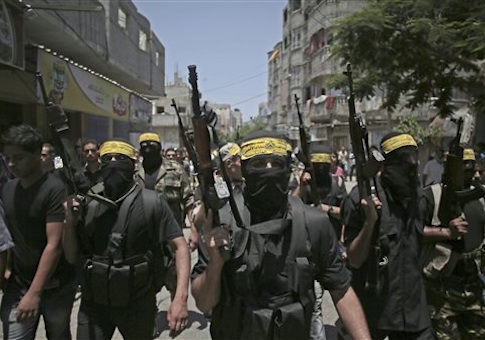
Masked Palestinian militants march with guns / AP

 Iranian military leaders say that they have begun weapons deliveries to Palestinian terrorists in the West Bank and elsewhere in the region after months of promising increased military support for Israel’s enemies, according to regional reports.

A top Iranian military commander confirmed that weapon shipments to the West Bank have already begun and that more will be sent to other “Palestinian resistance groups.”

“Arming the West Bank has started and weapons will be supplied to the people of this region,” Brigadier General Mohammad Reza Naqdi, the commander of Iran’s volunteer Basij force told the state-run Fars News Agency on Wednesday.

The announcement was made after weeks of inflammatory statements from Iranian leaders threatening war on Israel and promising to rearm Palestinian militants such as Hamas so that they can continue their war on the Jewish state.

The military leader also confirmed what has long been suspected by Israeli intelligence agencies: That Iran is responsible for training and arming Hamas with highly advanced rockets that were used to penetrate deep into Israeli territory during the most recent conflict.

Much of the arms Hamas deployed “were the products of the Islamic Republic of Iran,” Fars reported Naqdi as saying.

Iran is arming terrorists in the more moderate West Bank of Israel—as opposed to the Hamas-run Gaza Strip—because attacks on Israel from this area will ensure “the annihilation of the Zionist regime.”

“The Zionists should know that the next war won’t be confined to the present borders and the Mujahedeen will push them back,” Naqdi said.

An Iranian General this week vowed to launch a surprise attack on Israel in retaliation for an Israeli drone that was reportedly shot down near an Iranian nuclear site.

Anger at the incident has also prompted Tehran to step up its military support for Palestinian terrorists.

“We will accelerate arming the West Bank and we think that we are entitled to give any response (to the recent aggression) which we deem appropriate,” Brigadier General Amir Ali Hajizadeh, commander of Iran’s Revolutionary Guards Corps’ (IRGC) Aerospace Force, was quoted as saying on Monday.

Iran also is considering military force, according to Hajizadeh.

The IRGC claims to have shot down the Israeli drone with a surface to air missile. It lashed out at Israel in vitriolic terms in a statement issued earlier in the week.

“This mischievous attempt once again made the adventurous nature of the Zionist regime more evident and added another black page to the dark record of this fake and warmongering regime, which is full of crimes and wickedness,” the IRGC said in its statement.

Iran has been promising to arm Palestinian terrorist for weeks as the most recent conflict between Israel and Hamas escalated.

“The West Bank must be armed like Gaza,” Iranian Supreme Leader Ayatollah Ali Khamenei said in late July. He echoed these comments on Twitter.

Iran also has boasted of its past arming of Hamas terrorists.

“Today, the fighters in Gaza have good capabilities and can meet their own needs for weapons,” an Iranian lawmaker reportedly stated on television in July. “But once upon a time, they needed the arms manufacture know-how and we gave it to them.”

Iran tells UN nuclear chief no talks on missiles

August 17, 2014

Iran tells UN nuclear chief no talks on missiles

Head of IAEA meet with Iranian FM Zarif, President Rouhani to push for progress in a long-running investigation into suspected atomic bomb research

by Tehran.News Agencies Latest Update: 08.17.14, 16:19 / Israel News

via Iran tells UN nuclear chief no talks on missiles – Israel News, Ynetnews.

Iranian President Hassan Rouhani told the visiting head of the UN nuclear watchdog on Sunday that Tehran will not discuss its long-range missile program as part of talks aimed at resolving a decade-long nuclear dispute, official media reported.

UN nuclear agency chief Yukiya Amano said Sunday’s visit to Tehran was useful and that he was very glad to hear a firm commitment from Iran to resolve all outstanding issues through cooperation between the two sides.

Amano’s trip came ahead of an Aug. 25 deadline for Iran to provide information relevant to the International Atomic Energy Agency’s (IAEA) inquiry into what it calls the possible military dimensions of the country’s disputed nuclear programme.

“Iran’s missile power is not negotiable in any level under any pretext,” Rouhani told Amano, the official IRNA news service reported.

The president added, however, that Iran is prepared to cooperate with the IAEA’s probe into whether its civilian nuclear program has a military component, “since there is no room for using a weapon of mass destruction in Iran’s defense doctrine.”

“This has been a short visit, but a useful one,” Amano said in Tehran after talks with President Hassan Rouhani and other senior Iranian officials, according to a statement issued by the IAEA in Vienna.

The state TV report Sunday said Amano landed in Tehran late Saturday. It said Amano also will visit with Iran’s Foreign Minister Mohammad Javad Zarif and the head of its own nuclear agency.

Amano’s visit comes as world powers continue to negotiate with the Islamic Republic for a permanent deal over its contested nuclear program. Those talks face a November deadline after an interim deal was struck last year.

The West fears Iran’s nuclear program could allow it to build nuclear weapons. Iran says its program is for peaceful purposes.

The visit – announced by the IAEA on Friday – will be Amano’s first to Iran this year and the third since 2012.

Western officials say Iranian clarifications of the IAEA’s concerns would also advance efforts by six world powers to negotiate an end to a decade-old standoff over Tehran’s atomic activities, suggesting some sanctions relief may depend on it.

With major gaps remaining over the permissible future scope of Iran’s uranium enrichment programme, the talks between Iran and the United States, France, Germany, China, Britain and Russia were in mid-July extended until Nov. 24.

Iran says it is enriching uranium to generate electricity, and not to accumulate fissile material for a potential atomic bomb, as the West suspects.

Tehran rejects such suspicions as based on false and fabricated information from its enemies but has promised, since pragmatist Hassan Rouhani became president in mid-2013, to work with the Vienna-based UN agency to clear them up.

Under a phased cooperation pact hammered out late last year, an attempt to jumpstart the long-stalled IAEA investigation, Iran agreed in May to implement five nuclear transparency measures by Aug. 25, two of which directly dealt with the nuclear bomb inquiry.

However, so far there have been no public indications of any movement by Iran on the agreed steps.

A brief statement issued by the U.N. agency on Friday said, without elaborating: “The director general of the IAEA … will visit Iran for meetings on Aug. 17 with Iranian leaders and senior officials. The visit is part of the efforts to advance dialogue and cooperation between the agency and Iran.”

Nuclear intelligence

Diplomatic sources told Reuters in late July that the IAEA – which is tasked with preventing the spread of nuclear weapons in the world – was concerned about Iran’s lack of engagement with the investigation.

They said there was still time for Iran to meet its commitments, noting that Tehran had occasionally waited until the last minute to make concessions in the past.

But the slow pace of cooperation may reinforce an impression in the West about continuing Iranian reluctance to give the IAEA the information and access to sites and people that it says it needs for its investigation.

“Unless Iran addresses the IAEA’s concerns … the chance is reduced of successfully negotiating a long term nuclear agreement between the (six powers) and Iran,” the Institute for Science and International Security think-tank said this month.

After years of what the West saw as Iranian stonewalling, Iran as a first step in May gave the IAEA information it had requested about its reasons for developing Exploding Bridge Wire detonators. These can be used to set off an atomic explosive device but Iran says they are for civilian use.

Tehran agreed to clarify two other issues by late August – concerning alleged work on explosives and computer studies related to calculating nuclear explosive yields.

They were among 12 specific areas listed in an IAEA report issued in 2011 with a trove of intelligence indicating a concerted weapons programme that was halted in 2003 – when Iran came under increased international pressure. The intelligence also suggested some activities may later have resumed.

The Associated Press and Reuters contributed to this report