Posted tagged ‘Iran sanctions’

Iran Faces Stricter Sanctions in Bipartisan House, Senate Bills

March 25, 2017

Iran Faces Stricter Sanctions in Bipartisan House, Senate Bills, Washington Free Beacon, March 25, 2017

Getty Images

Menendez told Reuters the bipartisan group “assiduously worked” to ensure the bill does not violate the Iranian nuclear pact enacted last year. The bill only applies to Iran’s non-nuclear activities.

**********************************

Legislation introduced Thursday in the House and Senate by a bipartisan group of lawmakers would hit Iran with tougher sanctions for the ongoing development of its ballistic missile program.

While Washington focused on the health care saga in the House, the chairman of the Senate Foreign Relations Committee, Sen. Bob Corker (R., Tenn.), quietly introduced a new bill that would impose mandatory sanctions on individuals involved with Iran’s ballistic missile program.

The legislation would expand terrorism-related sanctions to include the Islamic Revolutionary Guard Corps, Tehran’s elite military force. The bill would codify sanctions announced by the Treasury Department last month that applied to anyone tied to Iran’s support for terrorism.

The bill has support from more than a dozen senators, including Democratic co-sponsors Ben Cardin (Md.), Robert Menendez (N.J.), Bob Casey (Pa.), and Chris Coons (Del.). Republican backers include Sens. Marco Rubio (Fla.), Tom Cotton (Ark.), James Risch (Idaho), and Dan Sullivan (Alaska).

Menendez told Reuters the bipartisan group “assiduously worked” to ensure the bill does not violate the Iranian nuclear pact enacted last year. The bill only applies to Iran’s non-nuclear activities.

The bill is expected to pass through the Senate given its broad support.

The chairman and ranking member of the House Foreign Affairs Committee, Ed Royce (R., Calif.) and Eliot Engel (D., N.Y.), introduced a similar bill late Thursday in the lower chamber.

Like the Senate version, the House legislation would target individuals and entities involved in Iran’s ballistic missile development, including foreign companies and banks.

A staffer with the House Foreign Affairs Committee told the Washington Free Beacon on Friday that the legislation’s strong bipartisan support would likely propel it to the House floor. Majority Leader Kevin McCarthy (R., Calif.) and Minority Whip Steny Hoyer (D., Md.) are both cosponsoring the bill.

The staffer, who asked not to be named, said the bill was introduced in response to a recent committee hearing that detailed Tehran’s ongoing development of missiles capable of carrying nuclear weapons.

“Under the cover of a deeply-flawed nuclear deal, Iran has accelerated its ballistic missile development,” Royce said in a statement Thursday. “These tests—carried out in defiance of the U.N. Security Council—are aimed at perfecting the delivery system for a nuclear warhead.”

Both bills were introduced ahead of the annual conference in D.C. by the American Israel Public Affairs Committee, which begins Sunday. Iran has not commented on the bills, but has said in the past that any U.S. sanctions are a violation of the nuclear agreement.

The White House said in February it was “putting Iran on notice” before unveiling sanctions against 25 entities and individuals in Iran who have ties to terrorist groups, including Hezbollah. The sanctions were in response to a Jan. 29 missile test by Iran. Tehran immediately threatened retaliation.

Time for Trump to Release Full Details of the Iran Nuclear Deal

February 4, 2017

Time for Trump to Release Full Details of the Iran Nuclear Deal, PJ MediaRoger L Simon, February 3, 2017

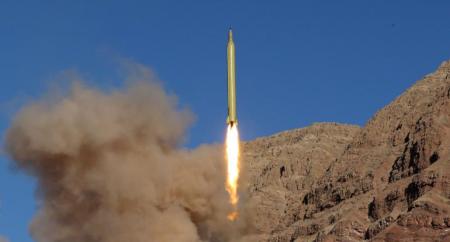
iranianmissileA ballistic missile is launched and tested in an undisclosed location, Iran, March 9, 2016. REUTERS/Mahmood Hosseini/TIMA

Does anyone know what’s really in the Iran nuclear deal with all its unpublished side agreements and secret verbal pledges?

Certainly not the American public, on whose behalf it was putatively negotiated. And probably not most, if not all, members of Congress who were bypassed in its negotiation and “signing” in a manner that doesn’t seem remotely constitutional.

Despite the yeoman efforts of Jay Solomon, Omri Ceren and others, the full extent of the deal is still a mystery. We don’t know in anywhere near full detail what Obama and Kerry, with the aid and comfort of wannabe fiction writer Ben Rhodes, hath wrought, though we do—pace Solomon, Ceren, etc.—have some sense that where compromises were made they almost universally favored Iran. Obama, for reasons again mysterious, seemed desperate to get a deal.

We also know that Iran has already broken at least one U.N. resolution:

The Khorramshahr medium-range ballistic missile flew 600 miles before exploding, in a failed test of a reentry vehicle, officials said. Iran defense minister Brigadier Gen. Hossein Dehqan said in September that Iran would start production of the missile.

U.N. resolution 2231 — put in place days after the Iran nuclear deal was signed — calls on the Islamic Republic not to conduct such tests. However, this is at least Iran’s second such test since July. The resolution bars Iran from conducting ballistic missile tests for eight years and went into effect July 20, 2015

Some Iranian officials claim that Obama & Co. gave them verbal permission during the negotiations to test missiles up to 2000 kilometers, enough to reach Israel, but not Europe. That’s nauseating, if true. Again, we don’t know, although we do know the Iranians insist they will continue with their tests.

Trump, however, has responded properly and forcefully by imposing new sanctions on 13 Iranian people and a dozen of their companies. He made his views evident to all in, unsurprisingly, a tweet: “Iran is playing with fire – they don’t appreciate how ‘kind’ President Obama was to them. Not me!” Via his national security adviser General Flynn, he further made clear that “nothing’s off the table.”

But most importantly, are the Iranians also breaking the original nuclear deal? Well, we don’t know because, as noted, we don’t know what it is. Not only that, as many have reported and PJM’s Michael Ledeen predicted quite some time ago, neither side has actually signed the deal in the first place. So it may not even exist. It’s a tree growing unseen in the wilderness or, perhaps more accurately, one of those Hollywood-style “verbal agreements”—enforceable only when opportune. It’s maximum plausible deniability all around.

That means nothing really happened. In the end, Iran can do anything it wants, or can get away with, in the nuclear realm just as it obviously believes it can do anything it wants in the missile launching realm.

Perhaps I’m missing something, but what reason could there be, at this point, not to release the so-called terms of this so-called deal—other than the embarrassment of the officials involved? America has a right to know what has been done in its behalf. Instead of BS transparency, we need real transparency. So do the citizens of many others countries that are in the crosshairs of the newly-enriched (by us) Iran with its expansionist goals that have been brutally apparent since this imaginary signing in Syria, Lebanon, Yemen and who knows where else.

The time is long since past for the complete details of this quondam deal to be released. I suspect they would be more than a little disturbing. Do it, Mr. President.

Guest Column: Washington Finally Designates Iran’s Revolutionary Guard Corps

February 4, 2017

Guest Column: Washington Finally Designates Iran’s Revolutionary Guard Corps, Investigative Project on Terrorism, Raymond Tanter and Edward Stafford, February 3, 2017

1962

The U.S. Treasury Department announced sanctions Friday on a host of Iranian companies and individuals as terrorists. It is a welcome development, which hopefully sends a signal to Tehran to rein in its global terror support, ballistic missile testing, and oppression of its people.

The action targets people and entities involved in procuring technology and/or materials to support Iran’s ballistic missile program, as well acting for or on behalf of, or providing support to, Iran’s Islamic Revolutionary Guard Corps (IRGC)-Qods Force.

The Iranian entities operate like a network out of Lebanon. It is the base of Hizballah (Party of God), an IRGC proxy, which was designated in 1997, but the IRGC was not designated.

Friday’s sanctions could help liberal democracy grow in Iran by showing Iranians that their leadership would face consequences for violating civil liberties at home and international relations norms abroad.

Per the Iranian Constitution (See Articles 107, 110), Iran is a theocratic dictatorship. Its parliament is under the sway of the Supreme Leader and other ayatollahs who select themselves. There is no such thing as a separation of powers by an independent authority.

Iran’s military is subordinated to the IRGC, which also controls most of the economy. Electoral results that do not satisfy the leadership are ignored and protests of anti-democratic governmental action are ruthlessly and systematically suppressed.

In the aftermath of the 2009 presidential elections, the Greens and the National Council of Resistance of Iran (NCRI) led protests. There is evidence the NCRI continues to exist despite facing heavy persecution. But the Greens have faded away, with their leaders Mir Hossein Mousavi and Mehdi Karroubi under house arrest in Tehran, subject to the whims of Supreme Leader Ayatollah Khamenei.

It appears as if Iran’s leaders face few domestic consequences for their illiberal and anti-democratic rule; so, to paraphrase Burke, the fewer consequences from within, the more needed from without.

Candidates for Designation

A 2015 study by Israel’s Meir Amit of the Intelligence and Terrorism Information Center, Portrait of Qasem Soleimani, commander of the Iranian Islamic Revolutionary Guards Corps’ Qods Force, provides ample evidence of the IRGC’s role in fomenting global terrorism.

Starting in 2012, the IRGC recruited several thousand Shi’ite volunteer fighters from among Afghan refugees living in Iran. The IRGC also cultivated terrorist networks in the Golan Heights. These activities morphed into terrorism on Aug. 20, 2015, when local forces, including Hizballah operatives supported and supplied by the IRGC, fired four rockets at Israel from the Syrian-controlled Golan Heights. Two hit Israeli territory in the Upper Galilee and two fell in the Golan.

Last April, Hizballah with the backing of the IRGC, began building new military installations in Syria, according to a report from the Foundation for Defense of Democracies. These appear to be geared toward a future, conventional war with Israel, but they offered Hizballah a venue from which it can launch strikes against northern Israeli cities.

Deliberately targeting civilians is a textbook example of terrorism. During this same time, the IRGC helped Hizballah operate complex weapons rockets that increased Hizballah’s ability to target Israeli cities.

A study published last fall by Iranian specialist Alireza Jafarzadeh and his colleagues shows how Iran fuels the Syrian civil war by placing the IRGC on the ground and transporting some Afghan refugees living in Iran to fight in Syria. The IRGC combined its troops and those of surrogates on the ground in terrorist assaults on civilians in places like Aleppo, Syria. This combination of forces on land with Syrian airstrikes proved to be a toxic mix of terrorism: “Syria is our 35th province, and is a strategic province for us,” Mehdi Taeb, a former commander of IRGC intelligence said in 2013. Because Taeb retains influence in the IRGC, his statements were and are indicative of the depth of the IRGC commitment to Syrian regime capabilities to conduct terrorism against civilians:

“If the enemy attacks us and seeks to take Syria or Khuzestan [an Iranian province], our priority would be to keep Syria, because if we keep Syria, we can retake Khuzestan. But if we lose Syria, we cannot keep Tehran.”

These three studies show the IRGC meets the legal criteria for an FTO designation. They are: 1) It must be a foreign organization; 2) engage in terrorist activity or terrorism, or retain the capability and intent to engage in terrorist activity or terrorism; and 3) the organization’s terrorist activity or terrorism must threaten the security of U.S. nationals or the national security (national defense, foreign relations, or the economic interests) of the United States).

To designate an organization or individual, there must be evidence they threaten the United States’ national security, foreign policy, or economy. The studies cited show that the IRGC is a threat to U.S. national security interests.

As evidence of congressional interest in designation, on Friday, MSNBC reported a bipartisan letter to President Trump in favor of sanctions against the IRGC. In addition,The Iranian Revolutionary Guard Corps (IRGC) Terrorist Designation Act” was introduced in the House and Senate in January. These identical bills emphasize that the IRGC meets the criteria for designation as a foreign terrorist organization under U.S. law.

“If a foreign organization looks like a terror group, operates like a terror group, and supports terrorism, then it should be called for what it is–a foreign terrorist organization,” said House co-sponsor Michael McCaul, R-Texas. “As obvious as that seems, for years the IRGC has been allowed to operate clandestinely using front companies and illicit networks to evade formal designation.”

Fellow Texas Republican and Senate co-sponsor Ted Cruz added that, by designating IRGC as a foreign terror organization, the U.S. would be “signaling to financial institutions and companies who facilitate or conduct business with the IRGC that they may be held liable.”

The Way Forward

Regarding the executive branch, President Trump made excellent choices for his national security team—Secretary of State Rex Tillerson; Defense Secretary James Mattis; National Security Adviser, Mike Flynn; Homeland Security Secretary, John Kelly; Director of National Intelligence, Dan Coats; and Director of Central Intelligence, Mike Pompeo.

These talented officials need not sing from the same songbook, that is, they need not agree. But it is important that their views be taken into account in the interagency process. That said, consider two major benefits of designation their consultation might produce.

First, tagging the IRGC would give succor to democratic forces within Iran by imposing costs on anti-democratic ones, including those who lead the IRGC. The IRGC leader Qasem Soleimani, who goes virtually unchallenged, would be weakened. A weaker Soleimani could give rise to splits within the regime and place Iran on its back foot. Now, Tehran can spend money abroad on Afghan fighters, Hizballah in Lebanon and Syria, Hamas in Gaza, and ignore unmet economic needs of the population.

Second, designating the IRGC sends a strong signal to the Arab Gulf States, led by Saudi Arabia: Washington is serious about regime change in Tehran. Prince Turki al Faisal, former Saudi intelligence chief, spoke to a group of Iranian dissidents in Paris in July 2016. Although he was not then in the government, Prince Turki remains an influential player in Riyadh.

A crowd of over 100,000 Iranian oppositionists chanted in Farsi that they wanted regime change in Iran. Prince Turki spoke to the dissidents in Arabic, saying he also wanted to see regime change in Tehran. This remark brought the house down.

In a subsequent brief conversation with Tanter, Turki said that designating the IRGC would be a good start toward unraveling of the Iranian regime.

The bottom line is that designation could help bring liberal democracy to Iran by weakening the grip of its key repressive institution—the Islamic Revolutionary Guard Corps and its proxies like Hizballah.

Trump slaps sanctions on Iran over missile test

February 3, 2017

Trump slaps sanctions on Iran over missile test, Washington Times, Dave Boyer, February 3, 2017

rockettheboatIn this Dec. 29, 2016, photo, released by the semi-official Iranian Students News Agency (ISNA), a long-range S-200 missile is fired in a military drill in the port city of Bushehr, on the northern coast of Persian Gulf, Iran.

The Trump administration hit Iran with new sanctions Friday, one day after President Trump said he had put Tehran “on notice” for testing a missile.

The Treasury Department announced sanctions against 13 individuals and 12 entities.

Speaker Paul D. Ryan said the “swift and decisive response proves that our new administration is serious about holding the Iranian regime accountable for its illicit behavior.”

Iran’s latest ballistic missile test was a flagrant violation of U.N. Security Council resolutions,” the Wisconsin Republican said. “I applaud President Trump for imposing new sanctions to crack down on Tehran’s dangerous ballistic missile program and support for terrorism across the globe.”

House Foreign Affairs Committee Chairman Ed Royce, California Republican, said Iran’s action poses “a direct threat to the United States and our allies.”

“I’m glad the administration is taking long-overdue steps to hold the regime accountable,” Mr. Royce said. “I look forward to working with the administration to build on these designations, push back against Iran’s destructive policies, and promote stability in the Middle East.”

Some of those on the sanctions list are based in the United Arab Emirates, Lebanon and China. The penalties were imposed under existing authority that had been issued by then-President Barack Obama. A bipartisan group of senators had urged Mr. Trump in a letter Thursday to take action against Iran.

“Iranian leaders must feel sufficient pressure to cease deeply destabilizing activities, from sponsoring terrorist groups to continued testing of ballistic missiles,” the lawmakers wrote. “Full enforcement of existing sanctions and the imposition of additional sanctions on Iran for its ballistic missile program are necessary.”

Iran tested a missile Sunday. On Wednesday, White House national security adviser Mike Flynn said the Trump administration was putting Iran “on notice,” calling the missile test “provocative.”

The missile launch was followed by Iran-backed Houthi militants’ deadly attack this week on a Saudi naval vessel in the Red Sea.

Mr. Trump told reporters Thursday that he wasn’t ruling out the prospect of military action against Tehran.

“Nothing’s off the table,” the president said.

Iran’s Foreign Minister Javad Zarif said on Twitter that the Iranian government was “unmoved” by Mr. Trump’s warnings.

“We’ll never initiate war,” Mr. Zarif said. “We will never use our weapons against anyone, except in self-defense. Let us see if any of those who complain can make the same statement.”

Ali Akbar Velayati, a top aide to Iran leader Ayatollah Ali Khamenei, said Thursday that Iran will continue to test ballistic missiles and “not ask any country for permission in defending itself.”

“This is not the first time that an inexperienced person has threatened Iran,” he said. “Iran is the strongest power in the region and has a lot of political, economic and military power. America should be careful about making empty threats to Iran.”

Mr. Trump said Friday that Iran is “playing with fire.”

“They don’t appreciate how ‘kind’ President Obama was to them,” he said on Twitter. “Not me!”

Mr. Obama signed an agreement with other world powers in 2015 to lift economic sanctions against Iran in exchange for limits on Tehran’s nuclear program and regular international inspections.

Mr. Trump has called it a bad deal and says he wants to renegotiate parts of it.

US Lawmakers Promise Iranian Opposition that there will be Tougher Laws on Iran

January 28, 2017

US Lawmakers Promise Iranian Opposition that there will be Tougher Laws on Iran, Iran News Update, January 28, 2017

unnamed-2

A bipartisan group of US lawmakers have promised the Iranian Opposition that they will press for tougher sanctions on the Iranian Regime. The House members made this pledge to the Organization of Iranian-American Communities (OIAC) on Tuesday. 

The OIAC is allied with the Iranian dissident group Mujahedin-e-Khalq (MEK)  and advocates for a “democratic, secular and non-nuclear government”, and overthrowing the  “religious dictatorship” in Iran.

Republican Congresswoman Ileana Ros-Lehtinen called for an expansion of the sanctions against Iran’s Islamic Revolutionary Guard Corps (IRGC), which were not removed during the nuclear deal.

She said: “It is time that we put the tools that we have created to use, broadening our sanctions so that they include IRGC-controlled businesses and subsidiaries. We must target the (Iranian) regime at every turn, not only enforcing the sanctions that have been too long neglected, but expanding their scope whenever and wherever possible.”

The lawmakers also want to stop IRGC-affiliated companies from buying US-made passenger planes, which would likely be used to ship weapons, troops and even money to terrorist cells.

Democratic Congressman Brad Sherman co-sponsored a bill to require the Trump administration to report any signs of Iran using US-made aircraft for “illicit military or other activities” which would violate the terms of the 2015 nuclear deal.

He said: “We need an ironclad system that makes sure (any newly-acquired planes with American technology) are not used for military or terrorist purposes (by Iran).”

During his campaign, Trump promised to renegotiate the Iranian Nuclear Deal- unlike his Republican opponents, Ted Cruz and Marco Rubio, who promised to “rip up” the deal, on their first day in office- but has not made steps towards it yet.

Sherman also wanted to prevent US banks from loaning Iran any money to pay for new planes.

Republican Congressman Dana Rohrabacher called for increased political pressure against the Iranian despots, especially to protect the human rights of the people living there.

He said: “One strategy is to help pro-democracy movements who would replace the mullahs. I’m willing to help the Azeris, Baluch and Kurds, who are not part of the Persian majority, to create a situation where you have autonomous regions similar to the states of the United States so that those people’s rights will feel secure as well.”

Democratic Congressman Eliot Engel explained that he wanted to help the Iranian dissidents who were previously exiled to Camp Liberty in Iraq, but have since been safely relocated to Albania.

He noted that they still have not received the money from the sale of their property in Iraq; an estimated $50 million left at Camp Liberty and $500 million at Camp Ashraf. This money is needed to help them make a new life, without handouts.

He said: “As all of their expenses in Albania are paid by MEK, they need their money to be returned as soon as possible. So, I urge Iraq, which the United States has helped for so many years, to honour its commitment to return the money to MEK.”

Re-isolate Iran now

January 27, 2017

Re-isolate Iran now, Israel Hayom, David M. Weinberg, January 27, 2017

In fact, the U.S. and Israel should reach an accord on a basket of responses to Iranian violations and aggressions, including the placement of a military option against Iran’s nuclear program back on the table.

Trump and Netanyahu must together promulgate an approach for combating the malign influence and hegemonic ambitions of Iran.

*********************************

Prime Minister Benjamin Netanyahu has made it clear that one of the top items on his agenda for consultation with U.S. President Donald Trump in Washington next month is countering Iranian aggression. With good reason. The net result of the Joint Comprehensive Plan of Action has been to foster Iran’s rise to regional hegemon.

While the JCPOA suspended a part of Iran’s nuclear weapons program for a few years, the ayatollahs see it as providing time to advance their centrifuge capability and regional sway.

In a Hoover Institution paper published this month, Professor Russell Berman and Ambassador Charles Hill call Iran a “de facto Islamic caliphate,” and the Islamic Revolutionary Guard Corps an “Iranian expeditionary force for invading strategic Arab spaces.”

They call former President Barack Obama’s declared goal — of finding and bolstering so-called moderates in Tehran via the JCPOA — an “illusion.” Iran is not a polity of moderates and hard-liners, they write. It is a revolutionary theocracy masquerading as a legitimate state actor. So the first thing Trump must do is recognize the consistently hostile character of the regime.

Alas, Obama was obsessed from the advent of his presidency with making nice to Iran, and was willing to subordinate much of American foreign policy in service of that goal. He sent many secret letters to Supreme Leader Ayatollah Ali Khamenei that recognized the prerogatives of the Islamic republic and foreswore regime change. He cut funding to anti-regime groups and abandoned Iranian moderates during the early days of the Green Revolution in 2009, after the regime fixed an election. He effectively conceded Syria as within Iran’s sphere of influence.

In his penetrating book, “The Iran Wars: Spy Games, Bank Battles, and the Secret Deals That Reshaped the Middle East,” Wall Street Journal reporter Jay Solomon exposes the money trail that accompanied this strategic sellout to Iran. In exchange for talking, Obama gave the Iranians hundreds of millions of dollars monthly, stabilizing their economy. And in the end, Obama offered Iran a deal that legalized full-blown uranium, plutonium, and ballistic missile work on a timeline, and did not force the country to disclose its previous nuclear cheating. The deal also released roughly a hundred billion dollars to Iran; had American officials traveling to drum up business for Iran; and removed restrictions on a range of Iranian terrorists.

Along the way, the administration abandoned the powerful sanctions leverage it had over Iran. Solomon chronicles the ramp-up of severe banking sanctions on Iran that were having a disastrous impact on the Iranian economy. “Iran’s economy was at risk of disintegrating, the result of one of the most audacious campaigns in the history of statecraft. The country was months away from running short on hard currency. The budget had a $200 billion black hole. And the U.S. Treasury Department had made sure Iran had no way to recover. Iranian ships and airplanes were not welcome beyond Iran’s borders, and oil revenue was frozen in overseas accounts.”

And then, behold, Obama backed off. Administration officials all of a sudden claimed that tightening the noose on the Iranian economy would cause the sanctions policy to collapse! And Secretary of State John Kerry was sent to cut a sweet deal with Iran; a deal that squandered — and then reversed — a decade’s worth of effort to constrain Iran.

Now Trump must act to constrain Iran all over again.

Over the past year, Iran has intensified a pattern of aggression and increased its footprint across the region. Iranian advisers with Shiite militias from as far away as Afghanistan have flooded Syria, giving Tehran a military arc of influence stretching to the Mediterranean.

Khamenei says that Iran’s massive military presence (alongside Hezbollah) in Syria is a supreme security interest for the regime — a front line against Israel — and that Iran has no plans to leave.

This has grave implications for Israel. Netanyahu must demand of Trump (and Putin) to include the removal of all foreign forces, especially Iran, in any future agreement regarding Syria. This will be very difficult — especially since Russia has just signed a long-term agreement to greatly enlarge its military presence in Syria, including the port in Tartus and air base in Latakia.

Iran, too, is aggressively expanding its naval presence in the Red Sea region and eastern Mediterranean. Since 2011, it has been sending warships through the Suez Canal, and has used maritime routes to send arms shipments to Hizballah and Hamas. (Israel has intercepted five of these armament ships.) And in the Strait of Hormuz, IRGC speedboats have repeatedly engaged in provocative encounters with American warships, including the conduct of surprise live rocket fire exercises in proximity to U.S. Navy vessels.

Then there is Iranian terrorism. IRGC agents have been caught planning attacks on Israeli, American, British and Saudi targets in Kenya. Over the past five years, Iranian agents were exposed while planning to attack Israeli diplomats in Azerbaijan, Cyprus, Georgia, India, Nigeria, Thailand and Turkey. Hezbollah operatives supported by Iran carried out the bus bombing of Israeli tourists at the Burgas airport.

Also: The detailing of Iranian terrorism in Arab countries such as Egypt, Jordan and Saudi Arabia could fill this entire newspaper.

Then there is Iran’s ballistic missile program. In December, U.S. Senator Ted Cruz sent a seven-page letter to three senior officials of the Obama administration, detailing his well-founded concerns that North Korea and Iran might be working together on developing nuclear missiles. (Not surprisingly, the Obama officials never answered.)

Cruz’s basic question was: Why does Iran, having promised not to make nuclear weapons, continue to pour resources into developing long-range ballistic missiles, including numerous missile tests this past year? If not for nuclear weapons, then for what?

The intrepid analyst Claudia Rosett continually has raised the suspicion that North Korea’s nuclear program is secretly doubling as a nuclear backshop for Iran. It’s very possible that the $1.7 billion in air-freighted cash that Obama granted Iran is being used to finance nuclear weapons and missile research in North Korea. It’s even possible that Iran may be bold enough to buy warheads from North Korea.

Only Washington can stop this, by re-isolating and pressuring Iran. Netanyahu should travel to Trump with a comprehensive plan to influence U.S. policy toward Iran, as well as plans for joint action against Tehran.

This should include an end to the secrecy surrounding many sections of the JCPOA. All side agreements should be disclosed relating to Iranian technology acquisitions, raw material quantities, uranium and plutonium enrichment levels, sanctions relief and financial transfers. Loopholes and exceptions made surreptitiously by Obama should be closed.

Penalties should be set firmly in place for Iran’s prohibited missile programs. (Such penalties do not exist in the JCPOA or in U.N. Security Council Resolution 2231.)

U.S. and Israeli resources should be pooled, in a renewed and formal U.S.-Israel agreement, to uncover and eliminate any undisclosed sites within Iran connected to nuclear weapons technology; to counter Iranian terror threats across the region; and to subvert any Iranian bases in Syria and Lebanon.

In fact, the U.S. and Israel should reach an accord on a basket of responses to Iranian violations and aggressions, including the placement of a military option against Iran’s nuclear program back on the table.

Trump and Netanyahu must together promulgate an approach for combating the malign influence and hegemonic ambitions of Iran.

Sanctioned Iranian Airlines Ferrying Illicit Weapons to Tehran

January 24, 2017

Sanctioned Iranian Airlines Ferrying Illicit Weapons to Tehran, Washington Free Beacon, January 24, 2017

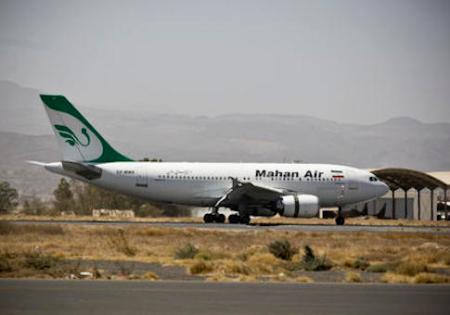
A plane from the Iranian private airline, Mahan Air lands the international airport in Sanaa, Yemen, Sunday, March 1, 2015. The first direct flight from Iran to the rebel-held Yemeni capital arrived, Sunday, an Airbus 310 carrying Iranians including aid workers from the Iranian Red Crescent as Yemen's Shiite rebels formalize ties with the regional Shiite powerhouse. The rebels, who overran the capital, Sanaa, last September, are widely believed to have support from Iran, a claim they frequently denied. (AP Photo/Hani Mohammed)

A plane from the Iranian private airline, Mahan Air lands the international airport in Sanaa, Yemen, Sunday, March 1, 2015.  (AP Photo/Hani Mohammed)

Boeing and Airbus should be paying close attention to the situation developing in Ukraine, according to one senior congressional adviser, who told the Free Beacon that the Trump administration would take sanctions enforcement more seriously than the Obama administration. The two airlines could find themselves ensnarled in sanctions violations if they move forward with deals to sell plans to Iran, the source said.

***********************************

Two airlines sanctioned by the United States for enabling Iran’s global terrorist operations appear to have played a central role in moving illicit missile components from Ukraine to the Islamic Republic, according to information obtained by the Washington Free Beacon.

Ukrainian authorities confirmed this week they had seized a shipment of missile system components bound for Iran, which could put the Islamic Republic in violation of international bans prescribed under the nuclear agreement.

Video of the seizure show Ukrainian authorities uncovering 17 boxes of missile parts bound for Iran and meant to be used in its Fagot anti-tank guided missile system.

Sources familiar with the incident told the Free Beacon that the airlines involved in this illicit activity have long been sanctioned by the United States for providing support to Iran’s global terror network. The reversal of longstanding economic sanctions on Iran provided under the nuclear agreement has boosted this activity and strengthened Iran’s illicit weapons pipeline, according to these sources.

Iran’s use of commercial airlines to import weapons has been well documented over the years. This latest incident could complicate efforts by global airplane manufacturers Boeing and Airbus to complete landmark deals with the Islamic Republic that are fiercely opposed by many in Congress.

The Free Beacon disclosed late last year that Iran secretly has been using commercial aircraft to smuggle weapons to terrorists supporting Syrian President Bashar al-Assad in that country’s bloody civil war. Many of the commercial planes flown by Iran were originally sold by the United States and later repurposed by Iran for use by its Air Force and Revolutionary Guard Corps, or IRGC, sources said.

“Iran was caught red-handed trying to import military hardware, including infrared guided anti-tank missiles,” Rep. Peter Roskam (R., Ill.), a vocal opponent of Boeing’s efforts to sell new planes to Iran, told the Free Beacon. “This is yet another example of the Islamic Republic using commercial aircraft for military purposes. Airbus and Boeing cannot claim ignorance on this—the Regime’s behavior is on full display before the world.”

The exposure of this illicit network in Ukraine demonstrates that Iran continues to use commercial airlines as cover for its movement of arms and other illicit materials, sources said.

The weapons were found onboard planes operated by Ukraine’s UM Airlines, which officially partners with Iran’s Mahan Air. The United States has sanctioned both carriers for providing support to Iran’s terror network, including the transportation of weapons and resources to the terror group Hezbollah, an Iranian proxy group.

Business between UM and Mahan reached its highest levels following the Iran nuclear agreement, when the Obama administration lifted longstanding economic sanctions on Iran. Removing the sanctions paved the way for the airline partnership and the multi-billion dollar trade deals between Iran, Boeing, and Airbus.

Mahan officially entered the Ukrainian marketplace in 2016 and now partners with UM on daily flights into Tehran.

While the removal of sanctions under the Iran deal helped to legalize business ties possible between the two airlines, they continue to carry out illicit activities, as highlighted by the missile shipment discovered this week.

Experts say there is no way to know how much illegal activity the two carriers have engaged in during their partnership.

“Authorities in Ukraine should be commended for seizing the weapons shipment, but when Ukraine asks the United States for economic and military assistance, the least it could do is not allow airlines, sanctioned for their support of the Assad regime and the IRGC, to operate from their soil,” Boris Zilberman, a regional expert and deputy director of congressional relations at the Foundation for Defense of Democracies, told the Free Beacon.

Boeing and Airbus should be paying close attention to the situation developing in Ukraine, according to one senior congressional adviser, who told the Free Beacon that the Trump administration would take sanctions enforcement more seriously than the Obama administration. The two airlines could find themselves ensnarled in sanctions violations if they move forward with deals to sell plans to Iran, the source said.

“No one is surprised that the Iranians are running weapons literally any way they can. Not even the Obama administration ever claimed that Iran stopped using civilian airlines like Iran Air for military uses,” said the source, who works with Congress on sanctions enforcement issues. “If I was Boeing or Airbus, I’d be worried about a knock on the door from Trump administration sanctions enforcers sooner rather than later.”

A State Department official was not able to provide information as to whether the missile discovery violates international agreements governing the nuclear deal.

“We’ve seen these reports but we do not have any further comment at this time,” the official said.

Emails and phone calls to the Ukrainian embassy in Washington, D.C., seeking comment were not answered.

Iran Demands ‘Compensation’ for U.S. Breach of Nuke Deal

January 11, 2017

Iran Demands ‘Compensation’ for U.S. Breach of Nuke Deal, Washinton Free Beacon, , January 10, 2017

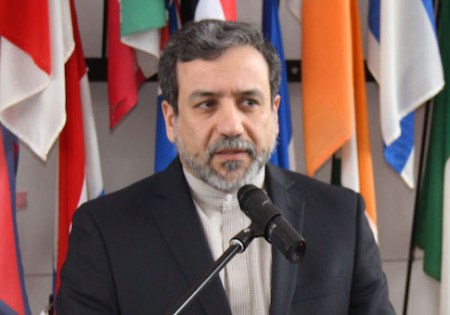
Abbas Araqchi, Iran's deputy foreign minister for legal and international affairs and top nuclear negotiator, meets the press in Vienna, Austria, on Feb. 24, 2015, after talking with International Atomic Energy Agency chief Yukiya Amano on Tehran's nuclear program. (Kyodo) ==Kyodo

Abbas Araqchi, Iran’s deputy foreign minister for legal and international affairs and top nuclear negotiator. (Kyodo)

The call for further compensation comes just days after the Obama administration was forced to admit that it had been providing Iran with around $700 million in assets every month since the nuclear deal was approved.

*******************************

Iran is demanding further “compensation” from the United States following claims America violated the nuclear agreement by passing new sanctions on the Islamic Republic, according to comments by senior Iranian officials following meetings with the Obama administration in Vienna.

The demand for further concessions by the Obama administration comes on the heels of reports that the United States has deflated the total amount of cash, gold, and other assets provided to the Islamic Republic during the past several years. The sum is believed to be in excess of $10 billion.

Iran has threatened to retaliate against the United States in recent weeks following the passage late last year by Congress of the Iran Sanctions Act, or ISA, which will continue to economically penalize Iran for the next 10 years.

The call for further compensation comes just days after the Obama administration was forced to admit that it had been providing Iran with around $700 million in assets every month since the nuclear deal was approved.

Ahead of a series of meetings Tuesday with senior U.S. officials, Iranian Deputy Foreign Minister Abbas Araqchi again accused the United States of violating the nuclear agreement and demanded compensation for the purported breach.

“The extension of the ISA is a breach of the U.S. obligations under the Joint Comprehensive Plan of Action (JCPOA) and must be compensated in an effective way,” Araqchi was quoted as telling reporters in Vienna.

The latest meetings about the nuclear deal were orchestrated by Iranian officials, who remain angry about the passage of new sanctions.

Araqchi made clear on Monday that Tehran is “serious” about retaliating against the United States for its passage of new sanctions, stating the Islamic Republic has already made moves to restart contested work on nuclear powered submarines and other weapons.

The Washington Free Beacon reported on Monday that official estimates about the amount of money awarded to Iran by the Obama administration are actually higher than previously known.

A State Department official told the Free Beacon that it would not prejudge its meetings with Iran when asked if further concessions are on the table.

“While we are not going to prejudge the outcome of any meeting, we will discuss ongoing implementation of the JCPOA as we always do,” the official said.

The total worth of the cash, assets, gold, and bullion given to Iran is in excess of $10 billion, according to Bahram Ghasemi, the spokesman for Iran’s Foreign Ministry.

“I will not speak about the precise amount,” Ghasemi was quoted as saying in Persian language reports independently translated for the Free Beacon.

The $10 billion figure is actually a “stingy” estimate, Ghasemi claimed, adding that the cash and gold sent by Washington to Iran’s Central Bank was subsequently “spent.”

“This report is true but the value was higher,” Ghasemi was quoted as saying.

“After the Geneva conference and the resulting agreement, it was decided that $700 million dollars were to be dispensed per month” by the United States, according to Ghasemi. “In addition to the cash funds which we received, we [also] received our deliveries in gold, bullion, and other things.”

Iranian Commander Who Killed Americans Tours Syria, Violating International Travel Ban

December 19, 2016

Iranian Commander Who Killed Americans Tours Syria, Violating International Travel Ban, Washington Free Beacon, , December 19, 2016

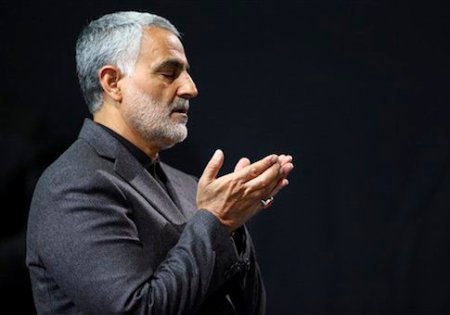
CORRECTS SPELLING OF NAME TO SOLEIMANI - In this photo released by an official website of the office of the Iranian supreme leader, commander of Iran's Quds Force, Qassem Soleimani, prays in a religious ceremony at a mosque in the residence of Supreme Leader Ayatollah Ali Khamenei, in Tehran, Iran, Friday, March 27, 2015. Iran's Foreign Minister Mohammad Javad Zarif sought Friday to reassure the six world powers conducting nuclear power talks in Switzerland, saying the negotiations remained focused on sealing a deal. (AP Photo/Office of the Iranian Supreme Leader)

Qassem Soleimani,  (AP Photo/Office of the Iranian Supreme Leader)

Multiple sources who spoke with the Washington Free Beacon about the matter disclosed that the Obama administration is taking a soft approach with Iran, including not enforcing sanctions, in order to preserve the nuclear deal and diplomacy with Tehran, which has threatened repercussions for any new sanctions.

Soleimani’s visit to Syria is viewed as a sign that Iran is not worried about facing repercussions for its continued military presence in Syria in support of embattled leader Bashar al-Assad.

Iran has breached international laws for some time without facing consequences. The Obama administration repeatedly assured Congress it would enforce sanctions on Iran when lawmakers expressed doubt about the viability of the Iran nuclear deal.

********************************

A top Iranian commander responsible for the deaths of Americans was photographed touring the war-torn city of Aleppo in Syria over the weekend, in violation of a United Nations travel ban that the Obama administration swore to enforce while selling the landmark nuclear deal with Iran to Congress, according to multiple sources and photographs.

Iranian Quds Force Commander Qasem Soleimani—a top general who leads Iranian militants across the globe and is directly responsible for the death of Americans—was recently photographed touring Aleppo in a demonstration of Iran’s waxing influence in Syria and disregard for international resolutions barring such behavior. Soleimani’s presence in Syria is a direct violation of the United Nations resolution governing the nuclear deal.

Soleimani’s visit coincided with moves by the terror group Hezbollah, which is controlled by Iran, to establish its own claim in Syria, according to regional reports and footage.

Iran’s public presence in Syria has not been met with action by the Obama administration, which has come under increasing pressure in recent weeks to explain why it is not enforcing current sanctions against Iran. Soleimani continues to direct Iranian forces in both Iraq and Syria and has long been sanctioned for the murder of U.S. citizens.

Mutliple sources who spoke with the Washington Free Beacon about the matter disclosed that the Obama administration is taking a soft approach with Iran, including not enforcing sanctions, in order to preserve the nuclear deal and diplomacy with Tehran, which has threatened repercussions for any new sanctions.

Soleimani’s visit to Syria is viewed as a sign that Iran is not worried about facing repercussions for its continued military presence in Syria in support of embattled leader Bashar al-Assad.

Iran has breached international laws for some time without facing consequences. The Obama administration repeatedly assured Congress it would enforce sanctions on Iran when lawmakers expressed doubt about the viability of the Iran nuclear deal.

The absence of consequences for Iran’s behavior has paved the way for Hezbollah to stake it own claim in Syria, according to congressional and foreign policy insiders who told the Free Beacon that the Obama administration is working behind the scenes to prevent any new sanctions against Iran.

“The Obama administration has been working overtime to prevent any U.S. official from doing anything new to punish the butchers of Syria, because they know that would force them to take action against Iran, and then Iran would walk away from the deal,” said one veteran insider who consults with Congress on the issue. “Now they’re ignoring even old sanctions against the Iranians. They’ll do anything to keep the Iranians in the deal for just a couple more weeks, so they can blame the inevitable collapse on Trump.”

A senior congressional aide apprised of the situation said the administration would continue to turn a blind eye to blatant violations in order to preserve diplomacy with Iran.

“This administration’s refusal to enforce sanctions explicitly allowed under the nuclear deal is not only cowardice—it’s dangerous,” said the aide. “What does it say about U.S. leadership when a terrorist like General Soleimani—someone with American blood on his hands—can freely travel to the ground zero of genocide in Syria without penalty? President Obama knows his nuclear deal is on thin ice, so he’s willing overlook blatant sanctions violations like this one even if it means more carnage in Aleppo.”

A second senior congressional source warned that refusal to enforce sanctions was empowering Iran’s radical regime, which has increasingly taken hold in Iraq as well, where the U.S. military has been accused of training Iranian-backed militias.

“The outgoing Obama administration struck a Faustian bargain with Iran, the world’s biggest state sponsor of terrorism, and Soleimani, head of the IRGC terrorist organization that’s responsible for the death of many hundreds of Americans, continues to do victory laps throughout the Middle East” the source said. “Unless the Trump administration changes course, this short-sighted Iran policy cannot and will not end well.”

Troops in Aleppo, as well as an Iranian reporter, have been spotted raising Hezbollah’s flag in recent days, calling into question the Obama administration’s claim that it has been working to constrain the terror group.

Michael Rubin, a former Pentagon adviser and expert on radical regimes, told the Free Beacon that Iran sees the nuclear deal as a vehicle to advance its regional aspirations.

“For Obama, diplomacy’s goal was to affirm his brilliance,” Rubin said. “For Iran’s leadership, it was an asymmetric warfare tactic meant to distract from a continuous geopolitical goal.”

“Red lines matter. Over 25 years, both Republicans and Democrats signaled to Iran about what they were,” Rubin explained. “Obama, however, believed himself wiser than Reagan, Clinton, and Bush—at least that’s what the man in the mirror told him every morning. Once Iran realized there were no real red lines, it concluded it could bust sanctions with impunity. Soleimani is the personification of that conclusion.”

The State Department conceded on Monday that Soleimani’s visit to Syria violated United Security Council resolutions government the nuclear deal, but would not lay out steps meant to address the behavior.

“We do intend to consult with our partners on the security council about how to address our concerns with this,” State Department Spokesman John Kirby said during a press briefing. “We’ve long said that Iran needs to choose whether it’s going to play a positive role in helping peacefully resolve conflicts, such as in Syria, or whether it will choose to prolong them. And you’re absolutely right, his travel was a violation.”

Update 3:05 P.M.: This post has been updated to reflect comment from the State Department.

Iran Vows Nuclear Retaliation for U.S. Breach of Deal

December 14, 2016

Iran Vows Nuclear Retaliation for U.S. Breach of Deal, Washington Free Beacon, , December 14, 2016

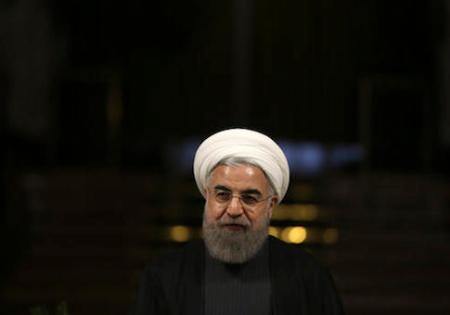
Iranian President Hassan Rouhani speaks in a news briefing after his meeting with his Slovenian counterpart Borut Pahor at the Saadabad palace in Tehran, Iran, Tuesday, Nov. 22, 2016. (AP Photo/Vahid Salemi)

Iranian President Hassan Rouhani  (AP Photo/Vahid Salemi)

“But the Obama administration counted on Iran waiting until the next president before revealing the game, and the Iranians sprung the trap early,” the source added. “So now the administration will do everything it can to look the other way and get through the next few weeks, so they can blame the inevitable collapse on Trump.”

***************************

Senior Iranian officials vowed on Wednesday to continue moving forward with nuclear weapons work and other banned activities as retaliation against the United States for breaching last year’s nuclear accord, according to reports in the country’s state-controlled media.

Iranian leaders instructed the country’s atomic energy organization to move forward with sensitive nuclear work, including the construction of nuclear-powered ships and submarines.

Further provocative actions will be announced in the coming days, according to these Iranian leaders, who described the country’s actions as revenge for recent moves by the U.S. Congress to extend sanctions on Iran, a move the Islamic Republic claims is a breach of the nuclear deal.

Iran’s latest moves have not elicited concern from Obama administration officials, who continue to pursue a series of measures meant to decrease international pressure on Tehran and provide it with greater financial resources.

“Considering that the US administration has ignored and delayed compliance with its undertakings under the [nuclear agreement] and given the recent extension of the Iran Sanctions Act (ISA) that had already been declared as a violation of the nuclear deal by the Islamic Republic of Iran… the Atomic Energy Organization of Iran is ordered to develop the country’s peaceful nuclear program within the framework of the Islamic Republic of Iran’s international undertakings as defined in the following missions,” Iranian President Hassan Rouhani wrote in a letter Tuesday to the country’s top nuclear agency.

Iran will move forward with a “plan for designing and building propulsion systems to be used in marine transportation in cooperation with scientific and research centers,” according to Rouhani’s letter.

It also will engage in the “production of fuel for nuclear propulsion systems,” Rouhani wrote.

This is the first in a range of responses planned by Tehran, according to Ali Akbar Velayati, a senior aide to Iran’s Supreme Leader Ali Khamenei.

The renewed nuclear work is “the first but not the last measures to be taken by Iran,” Velayati was quoted as saying on Wednesday.

Iran’s announcement did not draw a sharp response from Obama administration officials, who declined to say whether the nuclear work would constitute a breach of the deal.

“This announcement itself does not constitute a violation,” State Department spokesman John Kirby told reporters. “I think there’s a lot we just don’t know. I mean, this announcement just got made. There’s a lot we don’t know about it and what it means. And so I think we’d have to reserve some judgment here about the degree to which this could present any kind of problem.”

Kirby expressed faith in international nuclear inspectors, telling reporters that they would likely catch a breach of the deal.

Michael Rubin, a former Pentagon adviser and expert of rogue regimes, told the Washington Free Beacon that Iran is using the renewal of sanctions as an excuse to ramp up its illicit research activities

“The JCPOA [Joint Comprehensive Plan of Action], which they have never officially signed, was a gift made possible by Obama’s ego and Kerry’s naiveté,” Rubin said. “If they disagree with the United States, they can follow a legal process to pursue that but the fact that they are having a temper tantrum shows their insincerity. Especially because no new sanctions have been applied to Iran. After all, the U.S. president can waive any sanctions so long as Iran complies with its commitments.”

One senior foreign policy consultant who has worked with Republican and Democratic offices in Congress on the issue told the Free Beacon that Iran always planned to breach the deal once it received promised economic relief.

“The Iran deal was deliberately structured to prevent American leaders from pressuring Iran. Kerry and his Iranian counterparts wrote the deal so that Iran would get most of the benefits immediately, so that they could blackmail American lawmakers by threatening to costlessly walk away, which is exactly what they’re doing,” the source said.

“But the Obama administration counted on Iran waiting until the next president before revealing the game, and the Iranians sprung the trap early,” the source added. “So now the administration will do everything it can to look the other way and get through the next few weeks, so they can blame the inevitable collapse on Trump.”