Posted tagged ‘IDF’

IDF Northern Cdr.: ‘Hezbollah Likely Has Tunnels’

October 29, 2014

IDF Northern Commander: ‘Hezbollah Likely Has Terror Tunnels’After playing down threat, IDF acknowledges likelihood of attack tunnels from Lebanon, warning ‘can’t use Iron Dome there.’

By Ari Yashar

First Publish: 10/29/2014, 2:08 PM

via IDF Northern Cdr.: ‘Hezbollah Likely Has Tunnels’ – Defense/Security – News – Arutz Sheva.


Hezbollah terrorists (file)

Hezbollah terrorists (file)
Reuters

A senior IDF commander on Wednesday acknowledged to Galei Tzahal (IDF Radio) that the Iran-proxy terror group Hezbollah in Lebanon has likely dug terror tunnels into Israel.

IDF Northern Commander Maj. Gen. Yair Golan equivocated by noting on Hamas’s use of terror tunnels, saying “we have no positive information meaning that there are tunnels. The situation is not similar to what there was around the Gaza Strip,” reports Reuters.

“That said, this idea of going below ground is not foreign to Lebanon and is not foreign to Hezbollah and so we have to suppose as a working assumption that there are tunnels. These have to be looked for and prepared for,” revealed Golan.

Golan in August responded to northern citizens, who reported hearing digging sounds under their homes and seeing cement mixers and construction trucks carting out earth on the Lebanese side under the cover of greenhouse structures, by saying the IDF hadn’t found Hezbollah terror tunnels – yet.

While the IDF has been playing down the northern tunnel threat, IDF sources have reported to Arutz Sheva that the army is covertly conducting an investigation of the threat.

The usage of similar attack tunnels by Syrian rebels in their fight against President Bashar Assad in rocky terrain similar to that found along the Israeli-Lebanese border has proven the feasibility of a Hezbollah tunnel attack.

“We won’t be able to use Iron Dome”

Golan warned that with Hezbollah’s rocket arsenal – thought to be ten times more powerful than that of Hamas – and the high elevations and inclinations, “we will not be able to provide the umbrella that was provided in the south by Iron Dome.”

“We and Hezbollah are conducting a kind of mutual-deterrence balance. There is no absolute deterrence. Each side has its pain threshold, its restraint threshold, which when passed prompt it to take action,” assessed Golan.

The statements comes after Hezbollah terrorists wounded two IDF soldiers earlier in the month with explosives set along the border. Security sources warned Israel may be in danger of “losing control” of the Lebanese border, after one IDF source caused a panic last month by warning Hezbollah could hypothetically invade parts of the Galilee for “several hours.”

While Israel this month asked the UN to demand the disarmament of Hezbollah following the explosive attack, instead, a UN envoy met with Hezbollah’s deputy leader.

American and Arab officials likewise revealed this week that US President Barack Obama’s administration has been cozying up to Hezbollah, along with Iran and Hamas, by providing intelligence information and using backdoor communication channels.

Is Hezbollah preparing large assault on Israel?

October 22, 2014

Is Hezbollah preparing large assault on Israel? Al-MonitorBen Caspit, October 21, 2014

An Israeli soldier stands guard at a check point near the Lebanese-Israeli border, southern LebanonAn Israeli soldier stands guard at a checkpoint near the Lebanese-Israeli border, Oct. 8, 2014. (photo by REUTERS/Baz Ratner

This assessment is based on the possibility that Iran will indeed reach an agreement with the West by November or January — an agreement that’s good for Tehran, allowing it to preserve its nuclear capability as well as the potential for a fast break — within a matter of months — toward a bomb. Such an agreement, the senior minister told me, will set Iran free from all the shackles and brakes that have restrained it thus far. We think that it might consider siccing Hezbollah on Israel.

***********************

Stirring the pot of threats Israel is facing from Iran’s nuclear program began with a speech Prime Minister Benjamin Netanyahu delivered Oct. 19 at a dedication ceremony of a new road named after the late Prime Minister Yitzhak Shamir. The next day, Minister for Intelligence Affairs Yuval Steinitz published his own statement, which came out a day after The New York Times published his op-ed. He was joined by Foreign Minister Avigdor Liberman, who evoked the cliche, “If you want to shoot, shoot; don’t talk.”

At the same time, the Israeli media (Yedioth Ahronoth) addressed this matter with questions raised by security officials who wondered “what awoke Netanyahu in terms of the Iranian issue.” The queries were raised on behalf of top Israel Defense Forces (IDF) officials who did not quite agree with the pessimistic forecasts provided by Netanyahu and his senior ministers to the effect that the world powers, chief among them the United States, were about to reach a “capitulation agreement” with Tehran on its nuclear program.

The New York Times later published an article answering this question: It reported that US President Barack Obama was contemplating reaching an agreement with Iran that would not consist of totally lifting the sanctions but only suspending them. Such a move, the newspaper said, lies within the president’s purviews, allowing him not to seek the approval of the Congress (as opposed to lifting the sanctions). Thus, the president will be able to bypass the intractable Congress, which may or may not endorse a “bad” deal with Iran. It is believed that this information reached Israeli intelligence officials before being published in the Times, which is what set off Netanyahu, Liberman and Steinitz.

Following a talk I held Oct. 20 with a senior minister from the diplomatic-security Cabinet, further details came to light. As we discussed the possibility of early elections in Israel, the minister made a surprising comment, noting that a war in the north was more likely to break out before new elections were held. Some of Israel’s top Cabinet ministers estimate that Hezbollah and Iran are fast approaching a fateful watershed, which might prompt them to drag Israel into another confrontation, far broader than the previous ones. This assessment is based on the possibility that Iran will indeed reach an agreement with the West by November or January — an agreement that’s good for Tehran, allowing it to preserve its nuclear capability as well as the potential for a fast break — within a matter of months — toward a bomb. Such an agreement, the senior minister told me, will set Iran free from all the shackles and brakes that have restrained it thus far. We think that it might consider siccing Hezbollah on Israel.

This information comes amid many previous reports regarding the marked change in Hezbollah policy in terms of its conduct along the confrontation line with Israel — to wit, the Israeli-Lebanese border as well as the Golan Heights sector, into which Hezbollah has been infiltrating little by little. Lately, the Lebanese Shiite organization has claimed responsibly for attempted terrorist attacks in the Golan Heights, for the first time in many years. Hezbollah no longer hides behind proxy “subcontractors.” It is no longer ambiguous nor does it try to go under the radar. On the contrary, it operates openly against Israel, publicly acknowledging its responsibility. It seems to have gained a great deal of confidence and is no longer apprehensive of an unexpected conflagration vis-a-vis the IDF.

What this means is that the era of Israel’s deterrence in the north is over. Achieved after the Second Lebanon War in 2006, this deterrence lasted more than eight years. Its remnants remain noticeable on the ground, but according to all indications Hezbollah has lost its brakes and its restraint and has started looking for a confrontation instead of running away from one. Until lately, most Israeli intelligence elements estimated that Hezbollah was unready to open a second front against Israel, given that it is up to its neck in the war in Syria and now in the fighting in north Lebanon. While this assessment has yet to be officially scrapped, the voices coming from top political officials in Jerusalem nevertheless point to a plausible possibility of another war with Hezbollah in the coming months.

The organization’s militants openly carry out patrols along the border. Its presence in friction-prone areas has been beefed up considerably. It is now engaged in planning and executing micro-guerrilla warfare against the IDF also on the Golan sector, while setting new rules of deterrence: Any Israeli activity that crosses Hezbollah’s “red line” will be met by an appropriate response.

As for the question whether the heavy fighting in Lebanon has not burned out Hezbollah capabilities, the senior minister told me: “On the contrary; it has gained confidence and operational experience. Now it can fight like any other state military, employing forces on a division scale or even broader, relying on intel, airborne vehicles, etc.” And there’s something else: The Israeli performance during Operation Protective Edge apparently did not impress Hezbollah. Even the threats made in recent weeks by senior Israeli officials such as chief of staff Benny Gantz and Defense Minister Moshe Ya’alon, namely that “Israel will knock Lebanon back 70 or 80 years” in the event of a confrontation with the IDF, make no special impression on Hezbollah.

Are we on the way to an all-out confrontation in the north? There’s no need to scurry for shelter just yet. Such a confrontation would result in casualties and devastation at proportions we have never witnessed to date. This time around, Israel, too, will sustain heavy casualties and great devastation in view of the fact that Hezbollah’s rocket capabilities are much more improved than those of Hamas. The Iron Dome missile defense system will not provide an effective and complete response to curb the rocket offensive on Tel Aviv and its environs. The last thing the blazing Middle East needs right now is an Armageddon between Israel and Hezbollah, which might also draw Syria, and possibly Iran, either overtly or covertly.

We must also bear in mind that there is another possibility, whereby Jerusalem is trying to create a warmongering spin to heat up the atmosphere, to wield pressure on the world powers to toughen their positions vis-a-vis Iran. Or maybe Jerusalem just wants to scare Israelis who are starting to move toward a socioeconomic agenda, thus making it harder for Netanyahu to get re-elected.

The truth could be composed of a colorful mosaic consisting of all the existing possibilities. In every truth there is a grain of spin, and vice versa. And yet, the possibility of a very hot winter in the north exists more than it has.


Iran Arms Palestinians for New War with Israel

October 17, 2014

Iran Arms Palestinians for New War with Israel

Ayatollah: ‘Fighting the Zionist regime is a war of destiny

Ali KhameneiAli Khamenei / APBY: Adam Kredo Follow @Kredo0October 16, 2014 4:25 pm

via Iran Arms Palestinians for New War with Israel | Washington Free Beacon.


Ali Khamenei / AP

Iranian Supreme Leader Ayatollah Ali Khamenei promised increased support for Palestinian terrorists and urged them to stockpile arms in anticipation of a new war on Israel, according to public comments made Thursday following his meeting with members of the Palestinian Islamic Jihad (PIJ) terror group.

“Fighting the Zionist regime [Israel] is a war of destiny,” Khamenei said after a meeting with PIJ’s secretary general, according to Iran’s semi-official Fars News Agency.

Khamenei instructed Palestinians to “intensify their fight against the Israeli regime” and vowed that Iran would continue to arm Palestinian terrorists in both the Gaza Strip and West Bank, according to Fars.

All Palestinian terrorists groups—with Iran’s support—should rearm and prepare for another war with Israel, Khamenei said.

“The resistance movements in Palestine should boost their preparedness day by day and reinforce their power resources inside Gaza,” Khamenei was quoted as saying Thursday, less than two months after Israel launched an intense several week war against Hamas militants in the Gaza Strip.

Khamenei maintained that the most recent war with Israel, in which thousands of terror rockets were dropped on the Jewish people, marked the start of the “divine promise” of destroying the Jewish state.

The supreme leader also discussed the importance of arming terrorists in the West Bank, which is controlled by the more moderate Fatah Party.

Iran said in late August, days after the last war officially ended, that Tehran had stepped up arm shipments to the West Bank.

“The enemy should feel the same worries in the West Bank as it does in Gaza,” Khamenei said on Thursday, adding that Tehran will continue its support for the Palestinian “resistance.”

“The Islamic Republic and the Iranian people are proud of your victory and resistance, and hope that the back-to-back triumphs of resistance groups will continue until final victory,” he was quoted as saying.

PIJ Secretary General Ramazan Abdullah thanked Khamenei for Iran’s ongoing support for terrorism against Israel.

“Definitely, the victory was achieved with the assistance of the Islamic Republic,” Abdullah was quoted as saying by Fars following his meeting with Khamenei in Tehran. “Without Iran’s strategic and efficient help, resistance and victory in Gaza would have been impossible.”

Iran’s “arming” of the Palestinian factions in the West Bank has been “strategic and effective,” according to Abdullah, who also noted that Tehran’s support has “re-energized the Palestinian fighters and raised their spirit,” according to Fars.

Additionally, Iran on Thursday sent a plane of what it claimed is humanitarian aid and food to the Palestinians. The aid was said to be delivered via Egypt, according to Fars.

“The society has dispatched aid packages, including tents, blankets, food, and medical products worth $890,000 to Gaza,” the Iranian Red Crescent announced on Thursday.

As the Obama administration contemplates extending nuclear talks with Iran through the November deadline, sources on Capitol Hill are warning that there is no way to stem Iran’s support for terrorism.

The potential extension of talks through November, which already marked the second deadline for progress in the negotiations, has experts and lawmakers worried that the Obama administration will concede to Tehran’s demands that it be permitted to enrich uranium.

“With the Obama administration poised to extend nuclear talks with Tehran once again, it’s business as usual for the Iranian regime, which continues to brazenly fund and incite terrorism across the Middle East,” said one senior congressional aide who works on foreign policy issues. “Almost a year of negotiations has only served to boost Iran’s economy, embolden its leaders, and buy Iran more time to continue its quest for nuclear weapons.

IDF Ups Presence Near Sinai Border Amid Heightened Tensions

October 5, 2014

IDF Ups Presence Near Sinai Border Amid Heightened Tensions, Israel National News, Tova Dvorin, October 5, 2014

(Beheadings? They must not be Islamic. — DM)

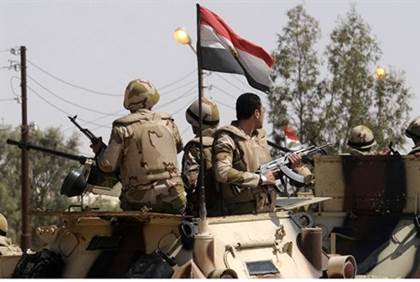
Egyptian security personnelEgyptian security personnel Reuters

An additional reason behind the deployment is the number of ISIS ‘copycat’ attacks in the peninsula, he added – noting that beheaded bodies have been found ‘continually’ in the Al-Arish area over the past several weeks.

********************

Southern Command deployed in response to heightened tensions between Egypt, Sinai terror groups. ‘We don’t take risks,’ officer explains.

The IDF’s Southern Command has reinforced its forces along Israel’s southern border, a senior IDF officer revealed Sunday, due to rising unrest in the Sinai Peninsula

On Thursday, the Egyptian Army eliminated a major terror leader in the peninsula, the head of the ISIS-linked Ansar Bayt Al-Maqdis group.

Mohamed Abu Shatiya, who took part in the kidnapping of seven Egyptian soldiers in Sinai last year, died during fighting with the army south of Rafah, on the border with Gaza.

Terror attacks in Egypt have eased over the past month as the military squeezes their hideouts in the sparsely inhabited peninsula, analysts have noted – and could ease even further with the elimination – but IDF officials told Walla! News Sunday that the extra deployment is a necessary precaution.

“The Egyptian Army has raised the volume on its terror crackdown, and they in turn have increased their efforts to harm Egypt,” the officer stated.

An additional reason behind the deployment is the number of ISIS ‘copycat’ attacks in the peninsula, he added – noting that beheaded bodies have been found ‘continually’ in the Al-Arish area over the past several weeks.

Thus, the IDF has “decided not to take unnecessary risks,” he said, for fear that members of Ansar Bayt Al-Maqdis will turn to attacking Israeli targets in an attempt to destabilize the region. The group has claimed responsibility in the past for several rocket attacks that targeted the Israeli resort city of Eilat.

The Southern Command has increased its posts along the Gaza-Egypt border near Rafah, commanders in the field said, adding that the Egyptian Army “faces significant challenges.”

But more than just the regional threat of Ansar Bayt al-Maqdis, the source added, the deployment is also to fend off an increase in infiltrations from Gaza.

Last week, two separate infiltration attempts were apprehended along the same border. One suspect was armedthe other was not.

“Palestinians who have despaired of the situation in Gaza are jumping across the border with a knife, hoping to be arrested by the IDF,” the source said. “We do not take a risks; in our view, such intrusion is taken as an attempted attack.”

Hamas Says IDF Didn’t Destroy All Terror Tunnels

October 3, 2014

Hamas Says IDF Didn’t Destroy All Terror Tunnels

Hamas spokesperson tells terror group’s journal it remains committed to armed conflict – despite Cairo truce talks with Israel.

By Ari Yashar

First Publish: 10/3/2014, 11:32 AM

via Hamas Says IDF Didn’t Destroy All Terror Tunnels – Defense/Security – News – Arutz Sheva.


IDF forces find Hamas terror tunnel (file)

IDF forces find Hamas terror tunnel (file)
Flash 90

Hamas spokesperson Mushir Al-Masri said on Thursday night that his terrorist organization, despite returning to truce talks with Israel in Cairo in the last week of October, still remains fully committed to armed conflict.

“The ‘resistance’ is the basis for the clash with Israel. Only through the ‘resistance’ can victory and liberation (i.e. the occupation of Israel by Hamas – ed.) be accomplished,” Al-Masri told the Hamas journal Al-Risala in Gaza, reports Walla!.

The spokesperson continued by saying “there is no doubt that Gaza succeeded in achieving victory by the nation standing firm and the courage of the ‘resistance,’ which surprised the enemy on land, sea and air.”

Al-Masri concluded with a troubling pronouncement, saying “the enemy did not succeed in stopping the rocket fire, and also didn’t succeed in destroying the military tunnels.”

The latter reference to tunnels, if true, would seem to confirm concerns that while the IDF destroyed all of the terror tunnels leading into Israel that it found, which numbered over 30, others may remain hidden and unknown.

The statement also may refer to numerous reports indicating that Hamas’s “military wing,” the Al-Qassam Brigades, as well as the Islamic Jihad terror group, have already restarted construction on the terror tunnels. In fact, video evidence shows that the renewed digging of the tunnels started even minutes after the ceasefire on November 26.

Despite the pledge to continue armed conflict and the lingering threat of tunnel attacks targeting Israeli civilians, Israel confirmed it has allowed 500 residents of Gaza to pray on the Temple Mount – something Jews are forbidden from doing by the Jordanian Waqf (Islamic trust) – this Saturday for Eid al-Adha, which celebrates Abraham’s “sacrifice of Ishmael” in an appropriation of the original Torah story.

Al-Masri also hinted strongly several days ago that his group may be on the verge of sealing a terrorist swap deal with Israel, which would see hundreds of jailed terrorists released in exchange for the bodies of fallen soldiers Hadar Goldin and Oron Shaul hy”d.


Gazans Speak Out: Hamas War Crimes

September 25, 2014

Gazans Speak Out: Hamas War Crimes

by Mudar Zahran

September 19, 2014 at 5:00 am

via Gazans Speak Out: Hamas War Crimes.

If Hamas does not like you for any reason all they have to do now is say you are a Mossad agent and kill you.” — A., a Fatah member in Gaza.

“Hamas wanted us butchered so it could win the media war against Israel showing our dead children on TV and then get money from Qatar.” — T., former Hamas Ministry officer.

“They would fire rockets and then run away quickly, leaving us to face Israeli bombs for what they did.” — D., Gazan journalist.

“Hamas imposed a curfew: anyone walking out in the street was shot. That way people had to stay in their homes, even if they were about to get bombed. Hamas held the whole Gazan population as a human shield.” — K., graduate student

“The Israeli army allows supplies to come in and Hamas steals them. It seems even the Israelis care for us more than Hamas.” — E., first-aid volunteer.

“We are under Hamas occupation, and if you ask most of us, we would rather be under Israeli occupation… We miss the days when we were able to work inside Israel and make good money. We miss the security and calm Israel provided when it was here.” — S., graduate of an American university, former Hamas sympathizer.

While the world’s media has been blaming Israel for the death of Gazan civilians during Operation Protective Edge, this correspondent decided to speak with Gazans themselves to hear what they had to say.

They spoke of Hamas atrocities and war crimes implicating Hamas in the civilian deaths of its own people.

Although Gazans, fearful of Hamas’s revenge against them, were afraid to speak to the media, friends in the West Bank offered introductions to relatives in Gaza. One, a renowned Gazan academic, who spoke on condition of anonymity, said that as soon as someone talked to a Western journalist, he was immediately questioned by Hamas and accused of “communicating with the Mossad”. “Hamas makes sure that the average Gazan will not talk to Western journalists — or actually any journalists at all,” he said, continuing:

“Hamas does not want the truth about Gaza to come out. Hamas terrorizes and kills us just like Daesh [ISIS] terrorizes kills Iraqis. Hamas is a dictatorship that kills us. The Gazans you see praising Hamas on TV are either Hamas members or too afraid to speak against Hamas. Few foreign [Western] journalists were probably able to report what Gazans think of Hamas.”

When asked what Gazans did think of Hamas, he said:

“The same as Iraqis thought of Saddam before he was toppled. He still won by 90-something percent in the presidential elections. If Hamas falls today in Gaza, people here will do what Iraqis did to Saddam’s statue after he fell. But even though Western journalists may not have been able to speak freely with Gazans, they still need a story to send to their editor by the end of the day. So it is just easier and safer for them to stick to the official line.”

“What was that,” I asked: “‘Blame Israel’?”

“I don’t know about that,” he said. “More like, ‘Never blame Hamas!’. Hamas was making a ‘statement’: Opposing Hamas Means Death. Hamas is a dictatorship that kills us.”

M., a journalist, confirmed his view. “I do not believe any of the people Hamas killed in the last weeks were Israeli spies,” he said. “Hamas has killed many people for criticizing it, and claimed they were traitors working for Israel during the war.”

That conversation took place four weeks before Hamas killed 21 alleged “Israeli Mossad agents.”

D, a store owner, said:

“There were two major protests against Hamas during the third week of the war. When Hamas fighters opened fire at the protesters in the Bait Hanoun area and the Shijaiya, five were killed instantly. I saw that with my own eyes. Many were injured. A doctor at Shifa hospital told me that 35 were killed at both protests. He went and saw their bodies at the morgue.”

To verify those reports, I spoke to a second Gazan academic, who holds a PhD. from a Western university, who stated:

“Hamas did kill protesters, no doubt about that. But we could not confirm how many were actually killed. If I have to guess, the number was more than reported. I am confident that not all of the 21 men Hamas killed on August 22 were collaborating with Israel. Hamas killed those men because it was weakened by Israel’s attacks and felt endangered. So it went on a ‘Salem Witch-Hunt.’ They arrested everyone who opposed them and had to make a few examples to scare people from standing against Hamas. Hamas’s tactic worked. Now Gazans are afraid to talk against Hamas even in front of their own family members. Gazans are probably afraid to criticize Hamas even in their sleep!”

As already reported by the award-winning journalist, Khaled Abu Toameh, Hamas killed one of its leaders, Ayman Taha, and blamed Israel for it.

Asked about Abu Toameh’s report, S., a Gazan political activist said:

“Taha was already in Hamas’s jail before Israeli operations started. Hamas imprisoned him and tortured him because he was critical of its radical policies. He had warned Hamas not to cooperate with Qatar and Iran. Eye-witnesses said they saw Hamas militants bring him alive into the yard of Shifa hospital in Gaza and shoot him dead. They kept mutilating his body in front of viewers and little children and left it on the hospital’s yard for a few hours before allowing the staff to take it to the morgue.”

A., a Fatah member in Gaza, spoke over Skype — fearful that Hamas was intercepting phone lines:

“Even before the Israeli operation began, Hamas rounded up 400 of our members and other political-opposition figures. I would not be surprised if Hamas kills them all and then claims they were killed in an Israeli bombing. Hamas already beheaded a man known for opposing its views on the 22nd day of the war, then reported on its Facebook page that he was caught sending intelligence information to Israel. If Hamas does not like you for any reason, all they have to do now is claim you are a Mossad agent and kill you.”

S. a medical worker, said:

“The Israeli army sends warnings to people [Gazans] to evacuate buildings before an attack. The Israelis either call or send a text message. Sometimes they call several times to make sure everyone has been evacuated. Hamas’s strict policy, though, was not to allow us to evacuate. Many people got killed, locked inside their homes by Hamas militants. Hamas’s official Al-Quds TV regularly issued warnings to Gazans not to evacuate their homes. Hamas militants would block the exits to the places residents were asked to evacuate. In the Shijaiya area, people received warnings from the Israelis and tried to evacuate the area, but Hamas militants blocked the exits and ordered people to return to their homes. Some of the people had no choice but to run towards the Israelis and ask for protection for their families. Hamas shot some of those people as they were running; the rest were forced to return to their homes and get bombed. This is how the Shijaiya massacre happened. More than 100 people were killed.”

Another Gazan journalist, D., said:

“Hamas fired rockets from next to homes. Hamas was running from one home to another. Hamas lied when it claimed it was shooting from non-populated areas. To make things even worse for us, Hamas would fire from the balconies of homes and try to drag the Israelis into door-to-door battles and street-to-street fights — a death sentence for all the civilians here. They would fire rockets and then run away quickly, leaving us to face Israeli bombs for what they did. They are cowards. If Hamas militants are not afraid of dying, why do they run after they fire rockets from our homes? Why don’t they stay and die with us? Are they afraid to die and go to heaven? Isn’t that what they claim they wish?”


Hamas boasted that Palestinian civilians were killed while Hamas’s terrorists remained alive, hiding in their underground bunkers and tunnels. (Image source: Hamas video screenshot)
 

K, another graduate student at an Egyptian university who had gone to Gaza to see his family but was unable to leave after the war started, said on July 22:

“When people stopped listening to Hamas orders not to evacuate and began leaving their homes anyway, Hamas imposed a curfew: anyone walking out in the street was shot without being asked any questions. That way Hamas made sure people had to stay in their homes even if they were about to get bombed. God will ask Hamas on judgment day for those killers’ blood.”

I asked him if Hamas used people as “human shields.” He said: “Hamas held the entire Gazan population as a human shield. My answer to you is yes.”

Palestinian Authority President Mahmoud Abbas told the press on September 6 that Hamas had killed 120 Fatah members who broke the curfew.

T., a former Hamas Ministry officer, said: “Hamas fires from civilian areas for a good reason: The Israelis call the civilians and give them ten minutes to evacuate. This gives Hamas time to fire another rocket and run away.”

Why, I asked, did Hamas not allow people to evacuate?

“Some people say Hamas wants civilians killed in order to gain global sympathy, but I believe this is not the main reason. I think the reason is that if all the people were allowed to evacuate their homes, they all would have ended up in a certain area in Gaza. If that happened, it would have made the rest of Gaza empty of civilians, and the Israelis would have been able to hit Hamas without worrying about civilians in all those empty areas. Hamas wanted civilians all over the place to confuse the Israelis and make their operations more difficult.”

S., a Gazan businessman, said:

“The cease-fire Hamas agreed to carried the same conditions the Egyptians and the Israelis offered during the second week of the war — after only 160 Gazans had been killed. Why did Hamas have to wait until 2,200 were killed, and then accept the very same offer? Hamas has blackmailed the world with the killed Gazan civilians to make itself look like a freedom fighter against an evil Israel. Hamas showed Gazans that it could not care less for their blood and their children. And why should Hamas care? Its leaders are either in mansions in Qatar or villas in Jordan. Mashaal [Khaled Mashaal, the head of Hamas] is in Qatar, Mohammad Nazzal is in Jordan and Abu Marzouk is in Cairo: why should they want a ceasefire? Everyone here in Gaza is wondering why Hamas rejected so many ceasefires. Hamas knows it will not defeat Israel’s army, so why did it continue fighting? The answer is simple: Hamas wanted us butchered so it could win the media war against Israel by showing our dead children on TV and then get money from Qatar.”

I asked S. if other Gazans shared his view. He said,

“Gazans are not stupid. We are now telling Hamas: Either you bring victory and liberate Palestine as you claim, or simply leave Gaza and maybe give it back to the Palestinian Authority or even Israel — or even Egypt! We have had enough of Hamas’s hallucinations and promises that never come true.”

O., a researcher who lives in Gaza Strip’s second largest city, Khan Younis, said:

“Most of us see Hamas as too radical and too stubborn, especially the way it was refusing ceasefires offered from Israel. They even refused a 24-hour ceasefire during the third week of the war. They denied us even 24 hours of quiet to bury the dead. Even some Hamas loyalists here are asking why Hamas refused several ceasefires and made us suffer. Hamas did this on purpose because Hamas is a slave to Qatar. Qatar wants the war to go on because it is a terrorist Islamist country, and Hamas wants more of us dead to appease its masters in Qatar. Let’s be realistic, Hamas is in a bad shape now. Israel destroyed most tunnels; that is why Hamas had to join the ceasefire talks in Cairo. Were the Israelis’ hits to Hamas not so painful, Hamas would not be negotiating in the first place. At the same time, Hamas is asking Israel for the impossible, like an open seaport and an airport. Israel would never allow that, and Hamas knows this, but Hamas might just be buying time by throwing out these demands. You have to keep in mind that Hamas is not concerned with our conditions as Gazans. After all it is our children who are dying, not the children of Hamas’s leaders. Hamas is weak now, and I believe it lost most of its tunnels. Israel’s Iron Dome destroyed so many of their rockets before they landed in Israel; that is why Hamas is being ruthless with Gazans. When Hamas locks people inside homes about to be bombed, when it kills people protesting against it and when it executes alleged traitors without even a trail, these are war crimes.”

A report by the Washington Institute, released in July, also reports that most Gazans are not happy with Hamas’s governance.

“It is true,” said A., a teacher. “I do not know a single Gazan who is pro-Hamas at the moment, except for those on its payroll. Hamas maintains its control here through a military dictatorship, just like North Korea. People will be killed if they protest. Even Gazans living abroad fear to criticize Hamas because Hamas will take revenge on their relatives who are here.”

M., a Gazan television producer, stated:

“Of course I am against Israel and I want it out of Gaza and out of the West Bank, but I still believe Hamas is more of a threat to the Palestinian people. Hamas took over Gaza by killing us [Palestinians] and throwing our young men from high buildings. That is what Hamas is about: murder and power. Hamas is also delusional. Its leaders refused the Egyptian cease-fire proposal, they got hit hard by the Israelis, and then when the war stopped, they declared victory. Even the prophet Muhammad, peace be upon him, admitted it when he lost Ohoud war [A war in which pagan Arabs defeated Muhammad’s army and in which Muhammad was almost killed]. Hamas lives in its own fantasy world. Hamas wanted the dead bodies to make Israel look ugly. The media has exerted a huge pressure on Israel for every dead Gazan. In that sense, Hamas’s tactic has worked, and we have seen more Western tolerance of Hamas, especially in Europe. Of course Hamas doesn’t care if we all die so long as it achieves its goals. We are not going to accept living under Hamas any longer. Even if there is calm, and the firing stops, we are going to still be under Hamas’s mercy, where all basic living standards are considered luxuries. Hamas is just buying time by going to the ceasefire talks. Hamas does not want a ceasefire.”

When asked why that was, he said, “Ask Qatar’s Sheikh, not me. He is Hamas’s god who gives them billions and tells them what to do. May God curse Qatar!”

A first-aid volunteer, E., said that Hamas militants had confiscated 150 truckloads of humanitarian supplies the day before. He said the supplies were donated by charities in the West Bank and that their delivery was facilitated by the IDF. He commented: “This theft angers all of us [Gazans]. The Israeli army allows supplies to come in, and Hamas steals them. It seems even the Israelis care for us more than Hamas.”

Another aid worker, A., confirmed that Hamas steals the humanitarian supplies given to Gaza. “They [Hamas] take most of it, sell it to us, and just give us the stuff they do not want.”

A Gazan mosque’s imam said that the most precious aid item Hamas stole was water. “Gazans are thirsty and Hamas is stealing the water bottles provided to us for free and selling them at 20 Israeli shekels [approximately $5] for the big bottle and 10 Israeli shekels for the small one.”

H., who did not want his profession to be mentioned, lost one of his legs in an Israeli raid. I asked him who he thought was responsible for his injury. He stated:

“Hamas was. My father received a text-message from the Israeli army warning him that our area was going to be bombed, and Hamas prevented us from leaving. They said there was a curfew. A curfew, can you believe that? I swear to God, we will take revenge on Hamas. I swear to God I will stand on my other foot and fight against Hamas. Even if Israel leaves them alone, we will not. What had my two-year-old nephew done to be killed under the rubble of our home so Khaled Mashaal [Hamas leader based in Qatar] could be happy? We want change at any cost. I am not claiming the Israelis are innocent, but I know Hamas has fired rockets from every residential spot in Gaza. If that was not hiding behind civilians, then it was stupidity and recklessness. Nobody who is normal, in his right mind, in Gaza supports Hamas. People have lost parents, children and friends, and have nothing more to lose. I believe if given the chance and the weapons, they will stand against Hamas.”

K., a Gazan school teacher agreed:

“When Hamas starts caring for our children we will start caring for Hamas. Hamas has one policy, to attack Israel; so Israel attacks back, and gets us killed and Hamas then gets more money from Arabs and Erdogan [Turkey’s president]. My son has autism; he cannot handle the sounds of rockets and bombs landing. Why would I support Hamas, which causes this suffering to him? Gazans have had enough of Hamas, any claims that we love Hamas is just propaganda. A recent poll indicates that most of us support Hamas; this is not true, except maybe in the West Bank where they have not yet lived under Hamas rule. I cannot accuse the polling center of fabricating the poll, but my safest explanation for the result is that Gazans polled are too afraid to give their true opinions of Hamas. Hamas watches everything here. Most Gazans now have to deal with the aftermath of the war. Almost 300,000 Gazans are now homeless and Hamas is not providing them with anything. So why would they or their extended families have any love for Hamas? Would there be any common sense to that? Most Gazans are angry at Hamas, and most of us would love to see them replaced by any other force.”

Despite all Hamas has done to Gazans, they do not seem to hold much love — or less hatred — for Israel.

S., a graduate of an American university and a former Hamas sympathizer, warned:

“Don’t get fooled. Gazans are not in love with Israel yet, but they do not want to fight Israel anymore. We do not want to embrace Israel; we just want to live normally without wars. We want to live and work in Israel like we used to. We are under Hamas occupation, and if you ask most of us, we would rather be under Israeli occupation, instead. I would welcome Netanyahu to rule Gaza so long as Hamas leaves, and I think most Gazans feel the same way. We miss the days when we were able to work inside Israel and make good money, we miss the security and calm Israel provided when it was here, but politically speaking, we just think of it as the better of two evils: Israel and Hamas.”

M., who lost his 11 year old daughter in an Israeli bombing said: “I will not forgive either Hamas or Israel for losing my daughter. If you ask me if I hate Israelis, my answer would be no, but do I love them? Of course not. There is too much blood between us, but I can only hope someday we both will move on and heal our wounds.”

When asked what he would do if he were in Israel’s place, being attacked non-stop by Hamas, he responded: “I do not care if both Israel and Gaza burn in hell.”

F., a Gazan physician, said:

“I wish Israel never existed, but as it does not seem to be going away, I would rather be working in Israel like I used to before the first Intifada, not fighting it. Hamas sympathizers, apologists and appeasers should be ashamed of themselves for supporting a terrorist organization that has butchered civilians, Israeli and Palestinian. Apparently a group of Israelis is working on bringing Hamas leader Khaled Mashaal to trial in the International Criminal Court. But perhaps the world should consider putting all the Hamas leaders on trial for crimes against the Gazan people.”

Israel must prepare for third Lebanon war

September 17, 2014

Israel must prepare for third Lebanon war, Al MonitorBen Caspit, September 16, 2014

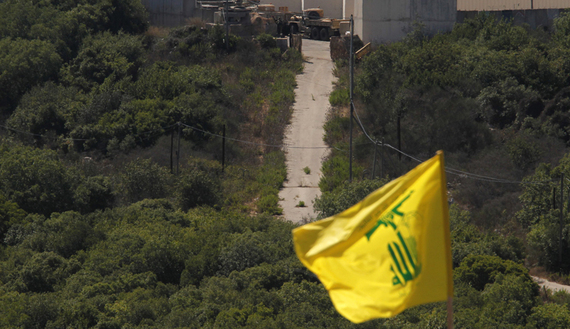
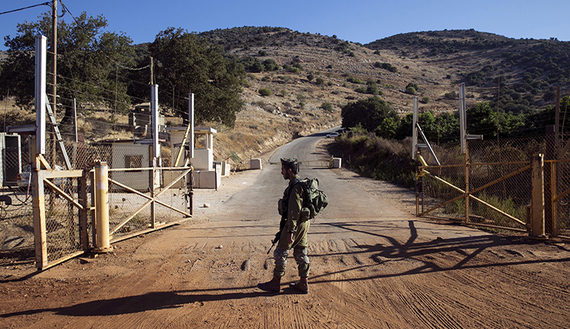
Israeli soldiers and trucks are seen from the southern Lebanese village Marwaheen, as a Hezbollah flag flutters during a protest in solidarity with Palestinian people in Gaza near the Lebanese-Israeli borderIsraeli soldiers and trucks are seen from the southern Lebanese village Marwaheen, as a Hezbollah flag flutters near the Lebanese-Israeli border, July 25, 2014. (photo by REUTERS/Ali Hashisho)

Israel must prepare for an eventual third Lebanon war, where it will be confronted with much stronger and more organized forces, perhaps equivalent in equipment to other Arab armies, capable of penetrating Israeli territory.

*****************

Not since the War of Independence, which broke out one day after Israel’s establishment was proclaimed in October 1947, has the sovereignty of the Jewish state been in such real peril. During that war, communities and territories frequently exchanged hands. Once the campaign stabilized and the picture became clearer, the Green Line was born. To date, this remains the only recognized international border between Israel and its Arab surroundings.

Since 1948 until today — over 66 years — none of Israel’s enemies posed a real threat to its territorial integrity. No Israeli community has ever been conquered nor have military raids into the country been carried out. The only exception occurred during the 1973 Yom Kippur War, when the Egyptian and Syrian armies mounted a surprise invasion. However, the areas they seized had been conquered by Israel during the 1967 Six-Day War and were beyond the Green Line.

Israel’s defense doctrine is predicated on one patently clear and solid principle: Warfare should be shifted into the enemy’s territory as quickly as possible. This principle stems from reality’s constraints: Israel is a tiny state, whose width in some areas does not exceed 10 miles. As a result, it doesn’t have the luxury of conducting campaigns in its own territory. This principle has been upheld throughout the state’s existence. Israel’s wars have always been conducted in the enemy’s territory.

When a senior officer from the Northern Command of the Israel Defense Forces (IDF) briefed reporters on Sept. 14, he dropped a journalistic bombshell. During the next round of hostilities between Israel and Hezbollah, the officer said, it is possible that Hezbollah will take over an Israeli community or carry out a land grab for a certain period of time. Intimations to this effect had been previously heard here and there (including in my article for Al-Monitor from August 2013). Yet, when this topic starts dominating the headlines in Israel, it constitutes a watershed. The IDF is well aware of the fact that Hezbollah may have changed its warfare doctrine and that it has accumulated more self-confidence, knowledge and fighting experience. The organization is now able to carry out an armed and violent raid into Israel, relying on a force consisting of a “few dozen to several hundred combatants,” as the officer put it.

A serious coalition crisis is currently raging in Israel between Prime Minister Benjamin Netanyahu and Finance Minister Yair Lapid. The linchpin of the dispute is the 2015 state budget, and more specifically, the defense budget. The events of Operation Protective Edge have shaken Israel’s self-confidence. For the first time, Israel encountered an aggressive and proactive Hamas, which repeatedly incurred into its communities in a bid to “shift the war into its territory.”

There’s no way the IDF can deploy all along the country’s borders, from the north (Hezbollah) to the Golan Heights (the al-Qaeda-affiliated Jabhat al-Nusra) to the Egyptian border (Ansar Bayt al-Maqdis) and Gaza (Hamas and Islamic Jihad).

A foreign military force that wants to raid an enemy territory along a vast and winding border will always manage to find the most vulnerable point where the defense contingency is small.

This is Israel’s greatest concern ahead of a “third Lebanon war.” Nobody knows when it will break out, yet everyone is sure it eventually will. To date, Hezbollah has adopted a fairly simple warfare doctrine. Based on massive rocket fire at the Israeli home front that aims to disrupt life, deal a blow to the economy and inflict casualties, it is combined with guerrilla warfare against the IDF in mountainous terrain — either forested or built up — using its weapons of choice: antitank fire, powerful improvised explosive devices and ambushes. That’s the name of the game when guerilla forces are pitted against a regular army.

From now on, however, it’s a whole different ball game. Israeli military officials emphasize that while Hezbollah is indeed preoccupied in Syria and northern Lebanon and is deployed along a vast sector and is bleeding profusely, it is nevertheless well organized and trained. It is also being run prudently and sensibly, gathering military experience and self-confidence. According to Israeli sources, Hezbollah is training its commando forces to make a surprise incursion into Israel, take over a community (such as a kibbutz or a moshav — a cooperative community — or even a small town like Shlomi). It will try to inflict as much damage as possible and hold out for as long as possible, taking hostages that will allow its troops to pull back safely home into Lebanon.

The current Israeli assessment is that Hezbollah’s Secretary-General Hassan Nasrallah has no reason for the moment to be caught up in another confrontation with Israel. On the other hand, he continues his organization’s long-term massive buildup, while improving its capabilities and training, and stockpiling means that will allow him, in the next round, to stage a different kind of warfare, the likes of which we have yet to see. According to a senior Israeli source, Hezbollah is already as strong as any other regular Arab army. Its ORBAT (Order of Battle), according to one of the intelligence officials I spoke with, is bigger than Jordan’s, even at the time when it was considered Israel’s bitter rival. For all intents and purposes, Hezbollah operates like a regular army. It is building intelligence capabilities. Equipped with unmanned airborne vehicles, it also has surveillance stations and manages a modern communications network.

Next time, to have its victory photo and an unprecedented psychological achievement, it will try, as noted, to seize an Israeli community. If that were the case, it would be a first since 1948. This could seriously compromise the sense of security among Israelis, crushing the Jewish-Israeli population in the northern Galilee and causing much greater damage to Israelis living there than what Hamas’ incursion attempts during Operation Protective Edge did to the residents of the Gaza periphery.

The IDF is bracing for such an eventuality. The battle over the defense budget illustrates the degree of seriousness that Netanyahu attaches to the “growing security challenges around us,” as he put it on Sept. 15. My sources indicate that there is already talk in security circles about significantly expanding elite units such as YAMAM (a highly trained counterterrorism police unit) and deploying them in war-prone areas by way of “first responders.”

When it comes to events such as those described above, whereby an organization such as Hezbollah or Hamas is trying to infiltrate Israel, intelligence and time are of the enormous essence. During Operation Protective Edge, all of the IDF’s top-notch infantry units were dispatched to the communities in the Gaza periphery. They deployed across the border fence, charging every territorial compartment with regard to which there was a warning about a possible ”tunnel assault.” Back then, it worked. Hamas terrorists scored no significant success in their operations against Israeli communities. However, they did inflict significant losses to the IDF during its engagements with Israeli troops. When it comes to a much longer and far more complicated front, will the IDF also succeed against a semi-military organization such as Hezbollah that’s much more powerful than Hamas?

Meanwhile, on Sept. 14, the Counterterrorism Bureau issued a travel advisory ahead of the upcoming Jewish holiday season. In addition to all the usual warnings, the travel advisory to Western Europe came as a surprise. There’s a threat — the statement read — that Islamic State (IS) terrorists will carry out attacks against Jewish or Israeli objectives in the countries from which they originally set out to join IS ranks. We’re talking about countries such as Belgium, France, Sweden, Great Britain and others.

This travel advisory took flak from different directions. Terrorist threats exist also in Israel and the United States. In fact, they exist almost anywhere around the globe, a well-versed Israeli source told me. We, of all people, who get upset whenever the Europeans or Americans issue a travel advisory about Israel, need to be more sensitive and realize that not everything merits an official travel advisory.

Either way, the number of Israeli tourists visiting their favorite European capitals during the Jewish holidays of Rosh Hashanah, Yom Kippur and Sukkoth is not expected to plummet. Even Beyonce’s two evenings of concerts in Paris saw thousands of Israeli spectators. Israeli tourists read those travel advisories, file them away in their mind and take off. From their standpoint, danger is an inherent part of their normal existence.

This is What Happens When You Attack Israel

September 17, 2014

For too long the media and international community have been preaching that “Palestinians” bear no responsibility for the consequences of their decisions and they are passive victims of the conflict.

By: Shalom Bear
Published: September 17th, 2014

via The Jewish Press » » This is What Happens When You Attack Israel.


A Gaza building, reportedly used by Hamas, destroyed by the IDF on August 26, 2014.
Photo Credit: Emad Nassar/Flash90
 

Leftwing websites love to play up the photos of destruction of Gaza. The poor, suffering, innocent “Palestinians”, victims of Israeli aggression and collective punishment, are their front page stories.

Their bottom line is always the same, the Gazans (or the “Palestinians”) are not responsible for their actions and decisions; they’re passive victims of the conflict.

But it’s not true.

Even before their violent takeover of Gaza, Hamas received the largest block of votes in Gaza, giving them the majority, in fact Hamas secured 76 out of 132 seats – that’s 58% – in the Palestinian Authority’s parliament.

The people of Gaza, knowing full well the genocidal charter of Hamas, voted Hamas in. There’s no getting around that.

It’s both immoral and patronizing to say Gaza’s residents (or the Arabs in Judea and Samaria) voted Hamas in because Hamas’s social programs are more important to them than Hamas’s plans for genocide.

It is now well documented that the destruction in Gaza by the IDF was limited to areas that Hamas was using to attack Israel, whether it be for their command centers, missile silos, terror tunnels, or terrorist positions. For the most part, areas that were not involved in the fighting emerged from the war mostly unscathed.

Even within terror-infested neighborhoods, there are buildings that were hit, and buildings that weren’t.

Owners of many of the hit buildings were profiting from Hamas, charging them rent and receiving payment for letting Hamas store their weapons there, build terror tunnels entrances underneath their homes, or to set up rocket launchers in their orchards and backyards.

Unfortunately, there were also other civilian locations which Hamas illegally decided to use during the war, to attack Israel from.

The problem is that the international community refuses to report on the Arab civilian’s complicity and collusion with the terrorists, preferring to always portray them as the innocent victims, stuck in a situation out of their control.

Last week a Hamas official accidentally let it slip that Gazans are not letting Hamas back into their homes.

So much for the myth of the innocent and oppressed Gazans who can’t stand up to Hamas.

What was missing until now was any incentive for the Gazans to stand up to Hamas.

After all, the media and the UN teach them that there are absolutely no consequences to their actions – so why not let part of your house be converted into a missile silo to wipe out the Jews.

But now, the Gazans have learned an important life lesson. If you participate in any way in the genocidal attempt to destroy Israel, there are significant consequences to your actions.

The media should keep showing these photos of the destruction in Gaza.

Some day, the Gazans and the Arabs in Judea and Samaria will demand the right to vote from their leaders in the Palestinian Authority and Hamas.

They will once again need to decide whether they want the corrupt terrorists to take over, or if they want the ruthless terrorists to take over.

Unfortunately, a poll right after the war showed that Hamas was more popular than ever.

But perhaps, just perhaps, with a little retrospection, they’ll look at these pictures from Gaza and say, “We want a third option.”

Mortar shell fired from Gaza at Israel

September 16, 2014

Mortar shell fired from Gaza at Israel, Times of IsraelStuart Winer, September 16, 2014

(Whoops? — DM)

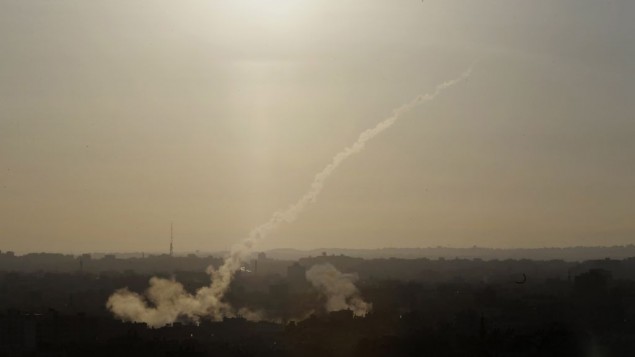
Mideast-Israel-Palest_Horo-59-635x357A rocket is fired from Gaza City towards Israel, Saturday, August 9, 2014. (illustrative photo credit: AP/Dusan Vranic)

Hamas denies it launched projectile; IDF searching for impact site in the Eshkol Region.

A mortar shell was fired from the Gaza Strip towards Israel on Tuesday evening, the Israel Defense Forces confirmed, the first since a ceasefire agreement between Israel and Hamas on August 26.

The Red Alert rocket warning system did not sound and the IDF said it was searching for the impact point that was believed to be somewhere near the border fence in the Eshkol Regional Council.

Army Radio reported that Eshkol residents heard an explosion nearby. However, Ynet reported that the rocket may have landed near the fence inside the Gaza Strip.

No injuries or damage were reported.

Hamas denied that it was responsible for the launch.

The fire came hours after Defense Minister Moshe Ya’alon said he did not think Hamas would resume rocket fire on Israel.

Eshkol Regional Council head Haim Yallin said that it was still unclear whether the launch was part of a Hamas training session gone wrong, or whether it was directed at Israel, Ynet reported.

“We will not accept sporadic fire at our communities,” he added. “Israel’s leadership will evaluate how it chooses to protect its residents. We expect the government to act to bring quiet to the region.”

On Monday, the Code Red siren sounded near the Gaza Strip in what the IDF said was a false alarm.

Gaza border towns came under daily rocket fire over the course of a seven-week conflict between Israel and Hamas that ended when the two sides agreed to an Egyptian-brokered ceasefire. Some 4,600 rockets and projectiles were fired at Israel during the 50-day conflict.

The deal called for an immediate end to hostilities and easing of restrictions on movement of personnel and goods through the crossings into Gaza that Israel controls.

(UPDATE: According to Israel National News, the IDF has confirmed

that a mortar shell fired from Gaza and landed on the Israeli side of the security fence, in the first such attack by Gaza terrorists since the ceasefire went into effect on August 26.

There have been mixed reports on the precise nature of the projectile fired, with Channel 10 saying the attack was a mortar shell as opposed to a rocket; likewise, IDF spokesperson Lt. Col. Peter Lerner labeled it a mortar shell on the IDF’s official Twitter feed. However, nearly all other major Israeli media sources have identified it as a rocket attack.

No “color red” warning siren was sounded prior to the rocket which was fired around 6:30 p.m., and which caused no damage or injuries.

— DM)

Poll: Hamas Would Rule Judea and Samaria in New Elections

September 2, 2014

Hamas won the war in political terms, but that won’t stop Kerry.

By: Tzvi Ben-GedalyahuPublished: September 2nd, 2014

via The Jewish Press » » Poll: Hamas Would Rule Judea and Samaria in New Elections.


Hamas’ Ismail Haniyeh would replace Abbas chairman of the Palestinian Authority if elections were held today.
Photo Credit: Abed Rahim Khatib / Flash 90


Hamas would win election in Judea and Samaria and well as Gaza and Ismail Haniyeh would defeat Mahmoud Abbas if elections were held today, according to a new poll conducted by the Palestinian Center for Policy and Survey Research.

Before the war in Gaza, Abbas had a 12 point margin over Haniyeh, 53 percent against 41 percent.

The new survey was carried out on the last day of the war and during the first four days of last week’s cease-fire. If elections were held today, Haniyeh would trounce Abbas by a 2-1 margin, with 61 percent support of the voters as opposed to only 32 percent for Abbas.

The pollster, Khalil Shikaki, said that Abbas probably will recoup some of his losses because Hamas’ popularity previously fell after battles after mini-wars with Israel, but a 2-1 gap will be hard to overcome.

More worrisome, the poll revealed that 86 percent of the respondents think that Hamas should resume rocket attacks on Israel if the partial blockade is not completely lifted, and only 15 percent think that Hamas should be dis-armed after all sanctions are lifted.

In addition, 72 percent of Arabs in Judea, Gaza and Samaria support the Hamas strategy of using arms to attack Israelis in Judea and Samaria.

An overwhelming majority of 79 percent believe that Hamas won the war.

Hamas has not enjoyed such high support in Judea and Samaria since 2006, shortly after it ousted Abbas’ Fatah faction from Gaza in a bloody terrorist militia war.


To a certain extent, Abbas’ propaganda machine is directly responsible for Hamas’ overwhelming support. Years of demonizing Israel and Jews in the school system and in Palestinian Authority media has produced the desired effect of widespread hate and distrust of Israel and Jews.

False, malicious and twisted reporting have convinced Arabs in Judea and Samaria that the “occupation” is the cause of all or their problems, and a recent on-the-street survey by a Canadian living in Israel discovered that most Arabs that Israel carried out a “holocaust” in Gaza. Most of those interviewed also are ignorant of the Holocaust or think that the numbers of those butchered by the Nazi was grossly exaggerated, as seen in the video below.

Last month, the Israel Security Agency (Shin Bet) announced that a Hamas network, directed from Turkey, was planning a coup to overthrow Abbas. Haaretz reported Tuesday that a partial transcript of the investigation revealed that the plan actually was to wait for the Palestinian Authority to collapse and then take over power.

However, Hamas propaganda has consistently tried to undermine the Abbas regime, and every terrorist attack in Judea and Samaria weakens Abbas’ image that he is able to provide security.

Abbas has made a Frankenstein out of the “Peace Process,” demanding everything and accepting no compromise. The longer he cannot come up with the goods, the more his popularity falls. His only hope to force Israel to agree to impossible demands, such as allowing mass immigration of millions of so-called “refugees” and giving up land to connect Gaza with Judea and Samaria, is to go to the United Nations and the International Court. That process, which would provide doubtful result but in any case could take years, and the Arab street has lost its patience.

If U.S. Secretary of State John Kerry still thinks he can fall out of the clouds with his precious peace process, which has proved to be a war process, he will have a hard time pretending that Hamas is not in the picture.