Posted tagged ‘Hezbollah’

Mystery blasts in Damascus: Syria accuses Israel

January 13, 2017

Mystery blasts in Damascus: Syria accuses Israel, DEBKAfile, January 13, 2017

syrian_iaf_attack_13-1-17

Some unknown hand struck into the heart of that regime in the space of a few hours – not once, but twice.The Assad regime used its standard scapegoat, Israel, for covering up embarrassing and inexplicable occurrences.

However, DEBKAfile’s military and intelligence sources disclose that the regime has reached an awkward crossroads. The Russians have taken charge of the Syrian war and no longer bother to consult with the Syrian president or Iran on its conduct. They are deeply immersed in preparing the Syrian peace conference they are sponsoring which is scheduled to open at Astana, Kazakhstan on Jan. 23.

If Moscow coordinates its Syrian strategy with anyone, it is Turkish President Tayyip Erdogan, but even then only to a limited extent.

***************************

There were two unclaimed explosions in Damascus overnight Thursday and early Friday (Jan.12-13) – one at an officers club in Damascus and the second at Mezzeh airport, which Syria alleged was the work of the new Israeli S-35 stealth aircraft firing across the border from a point over the Sea of Galilee.

There was no claim to either of the attacks.

The standard Israeli policy of striking any Iranian arms shipments for Hizballah in Lebanon when they cross through Syria would not longer be applicable to any such air strike, if indeed one was launched..

The Lebanese Shiite Hizballah deploys 9,000 elite fighters in Syria to fight for Bashar Assad. Its Iranian arms supplies no longer need to risk being trucked through Syria to Lebanon; they can be delivered directly to Hizballah bases in Syria without exposure to Israel air strikes.

Indeed, should the pro-Iranian Hizballah decide to go back to shooting missiles at Israel – or using Iranian-supplied unconventional weapon – it has new launching pads readily available in Syria from those very bases. They are located in the Qalamoun mountains in western Syria and at Zabadani, a Syrian ghost town near the Damascus-Beirut highway, which the Lebanese terror group has made its military center.

Both would be obvious targets for Israel to attack rather than Damascus’ Mezzeh airport.

Tehran, having grasped from bitter experience that Mezzeh is under close surveillance by Israeli intelligence, no longer uses its facilities. Instead Iran flies arms shipments for Hizballah to Beirut by commercial aircraft, which Israel prefers not to attack, or overland through Iraq to northwestern Syria, where the consignments are picked up and transferred to Lebanon by sea.

So if an Israeli F-35 air strike on the Damascus airport should be confirmed, its target would not have been Iranian and Hizballah military supplies. Mezzeh is the site of a sterile zone set aside for the exclusive use of President Bashar Assad, his family and his top military and intelligence chiefs. It also houses laboratories for developing and manufacturing unconventional weapons, as well serving as the main command center for the 4th Division, whose Republican Guard unit protects the president, his family and members of the ruling caste.

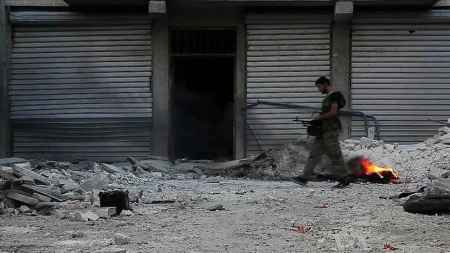
In the first attack, a suicide bomber blew himself up Thursday night at the officers’ club in the heavily policed Kafra Sousa district of Damascus. At least ten people were killed and dozens injured. Located there are the homes of many Assad loyalists in the security and military establishments, as well as top secret facilities.

The ability of a suicide bomber to penetrate one of the most heavily secured locations in Damascus and blow up at an exclusive regime watering hole raises questions about the inner workings of the Assad regime.

Some unknown hand struck into the heart of that regime in the space of a few hours – not once, but twice.The Assad regime used its standard scapegoat, Israel, for covering up embarrassing and inexplicable occurrences.

However, DEBKAfile’s military and intelligence sources disclose that the regime has reached an awkward crossroads. The Russians have taken charge of the Syrian war and no longer bother to consult with the Syrian president or Iran on its conduct. They are deeply immersed in preparing the Syrian peace conference they are sponsoring which is scheduled to open at Astana, Kazakhstan on Jan. 23.

If Moscow coordinates its Syrian strategy with anyone, it is Turkish President Tayyip Erdogan, but even then only to a limited extent.

The Syrian ruler and Iran, after being sidelined by the Russians, are following their example. Both have taken to holding their cards close to their vests and operating under in close secrecy.

In an attempt to pierce the resulting aura of mistrust spreading over the staunch Iranian-Syrian alliance, Ali Shamkhani, Secretary of the Supreme National Security Council of Iran and one of supreme leader Ayatollah Ali Khamenei’s closest confidants, was sent to Damascus Sunday, Jan 8, to find out what is going on there

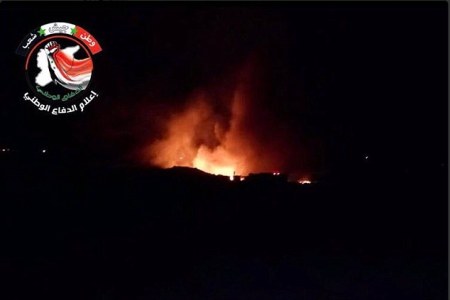
The mystery deepened further Friday morning, when Syrian state media ran photos of a big blaze – which may or may not be authentic – to illustrate the alleged Israeli attack on Mezzeh airport.

The Significance, Ramifications, And Messages Of Hizbullah’s Show Of Military Force In Al-Qusayr, Syria

January 4, 2017

The Significance, Ramifications, And Messages Of Hizbullah’s Show Of Military Force In Al-Qusayr, Syria, MRMRI, Yael Yehoshua*, January 3, 2016

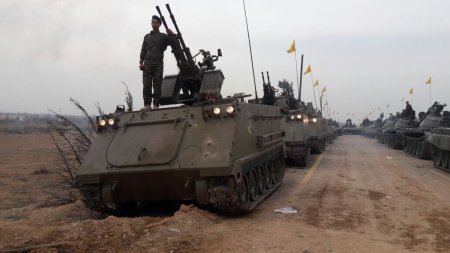
On November 13, 2016, Hizbullah marked its annual Martyr Day by holding its first military parade in a Syrian town, Al-Qusayr, which Hizbullah took over in 2013 following a long and bloody battle with rebel forces, and which has since become the main symbol of the organization’s involvement in the Syria war alongside the Assad regime. The parade featured hundreds of fighters in military uniforms, tanks, U.S.-made M113 armored personnel carriers, cannon, machine guns, and an armored regiment. Also marching was the Al-Radwan division, comprising some 10,000 fighters from Hizbullah’s “intervention forces” and “special forces” fighting in Syria, which constitute the spearhead of the organization in the country.[1]

By holding this parade at this time and at this location, Hizbullah was informing its rivals, locally and in the region – that is, political players in Lebanon, the Syrian rebels and their Arab supporters, and the West and Israel – that it is now a powerful cross-border military force that can control areas outside Lebanon’s borders. The parade did indeed cause a tremendous stir among Hizbullah supporters, as well as among the organization’s opponents.

This paper will review the significance and ramifications of the parade in Al-Qusayr and the messages that it sent.
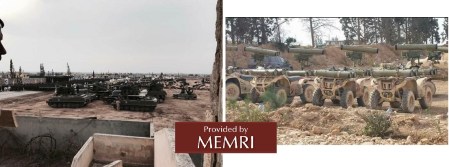
1295aPhotos from the parade. Arabipress.org, November 13, 2016; Addiyar.com, November 14, 2016
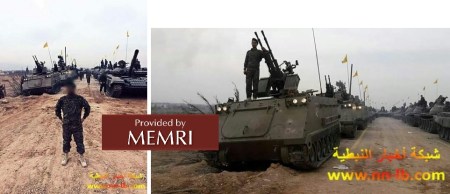
1295bPhotos from the parade. Nn-lb.com, November 13, 2016

Hizbullah Underlines Its Presence On Syrian Soil

Hizbullah’s holding the parade on Syrian soil, particularly in Al-Qusayr, is a symbolic yet highly significant act showing the organization’s control of part of Syrian territory. Al-Qusayr is the jewel in the crown of Hizbullah’s  military involvement in Syria and is seared into the memories of the Syrian rebels as an arena in which they were defeated by Hizbullah in 2013 after a bitter battle that lasted weeks and involved many losses on both sides. Moreover, Al-Qusayr is also Hizbullah’s gateway into Syria. After capturing it from the rebels, Hizbullah emptied it of its residents and turned it into a center for its headquarters and into a staging area for its fighters arriving from Lebanon, from which they leave for other battle fronts in Syria.

Also, holding the parade on Syrian soil as opposed to Lebanese soil is a blatant attempt by Hizbullah to highlight its presence in Syria and signal that this presence has become a known, established and certain fact. It may also reflect Hizbullah’s view of Al-Qusayr and its surroundings as its own military territory, and not as Syrian territory – with no consideration whatsoever for Syria’s sovereignty or for Lebanon’s position on this. [2] Hizbullah deputy secretary general Na’im Qassem hinted at this when he said, several days after the parade: “We are in Syria, and we do not need to give any explanation or justification for this. We stand alongside the Syrian army and the Syrian state.”[3]

Qassem’s statements were backed up by statements by Lebanese Army Gen. (ret.) Amin Hatit, who is close to Hizbullah: “Hizbullah’s presence in Syria is something basic… As far as we are concerned, there is no difference between Al-Qusayr and South [Lebanon].”[4]

By holding it on its Martyr Day, Hizbullah also intended the parade to convey a message to the Shi’ite public in Lebanon, which supports Hizbullah and is the source of its political power and its fighters, that despite its losses Hizbullah has remained strong. For Lebanese Shi’ites, many of whom have been killed and wounded in the past four years of Hizbullah’s fighting in Syria, and particularly in the ongoing battle for Aleppo, the parade was meant to boost morale and signal that the losses had not been in vain but had only further strengthened the organization and made it possible for it to become a regional power.

Hizbullah’s Transition From A Resistance Force To A Quasi-Regular Army

Hizbullah’s demonstration of its military strength by parading hundreds of its soldiers with tanks, cannon, machine guns, and so on also reflected its wish to send the message that it was now a well-trained and well-armed force, with new units, resembling an experienced regular army, and was no longer a resistance militia waging guerilla warfare against Israel.

This upgrade of its military and deterrence capabilities is the result of its military experience in Syria fighting the anti-regime rebels. In this context, Lebanese daily newspapers quoted Na’im Qassem making statements about Hizbullah’s military capability. The Lebanese Al-Mudun daily quoted Qassem as saying: “Hizbullah has added expertise, fighting capability, and military capabilities. This force is becoming more powerful and more developed, into something greater than resistance and less than a regular army.”[5] The Al-Safir daily quoted him as saying: “Now we have a trained army and the resistance is no longer based on methods of guerilla warfare. We are better armed and better trained, and we have advanced professional knowledge.”[6] It should be noted that an official Hizbullah communique denied that Qassem had called Hizbullah an army.[7]

It appears that Hizbullah’s show of strength at this time was because of achievements in the field by both it and its camp, the resistance axis. These achievements included the strengthening of Hizbullah, the Syrian army, and the militias that have been operating alongside the Syrian army since the beginning of Russia’s military involvement in Syria over a year ago along with the upsurge in the political status of Syrian President Bashar Al-Assad in the Arab world and in the West, and the bolstering of Iran’s regional and international status because of its increased military presence in Iraq and Syria and in the wake of the nuclear agreement and the election of the Hizbullah ally Michel Aoun to the Lebanese presidency.


Hizbullah As A Cross-Border Regional Force

Alongside the messages it sent locally, the parade was aimed at letting the region know that Hizbullah is a cross-border military force that is not bound by any particular territory and does not recognize the Syria-Lebanon border, or other borders between Middle East states, set by the Sykes-Picot agreement.

Hizbullah and its sponsor, Iran, which itself is striving to spread its Islamic Revolution and “Rule of the Jurisprudent” doctrine, do not consider geographic borders to be significant, and are deepening their penetration of many countries in the region. This approach is expressed by the military involvement of Iran and its agents in Syria, Iraq, and Yemen, and by Hizbullah’s complete military control of part of Syrian soil, including the Al-Qusayr region.

The military parade sent a message not only to the rebels in Syria, but also to their sponsors in the Arab and Muslim world – Saudi Arabia, Qatar, and Turkey – underlining that the resistance axis in Syria has the upper hand, and that Hizbullah will not hesitate to show its power anywhere it needs to in order to subjugate its opponents. On this matter, Lebanese Army Gen. (ret.) Amin Hatit said: “Had Hizbullah wanted to send a message to Lebanon, it would have held the demonstration there, not in Syria, and what it did in Al-Qusayr is a message to the region.”[8]

In an interview with the Iranian website Tasnim, which is close to Iran’s Islamic Revolutionary Guard Corps (IRGC), Qassem said: “If we want to look [at this] realistically, we see that Hizbullah has become a regional power. The way in which Hizbullah is confronting both the Zionist enemy and the takfiriyyoun [i.e. the Salafi-jihadi organizations]… shows that the organization is a regional power, and the changes in the region are proof of that.”[9]

Also, Nasser Qandil, editor of the pro-Syria Lebanese daily Al-Bina and an Assad associate, wrote in a November 16, 2016 article titled “Hizbullah – The New Middle East Army” that the organization is a cross-border force and that the borders between countries mean nothing to it. He stated that Hizbullah has become the “Middle East Army” because of its military capabilities and because it is a military force that crosses borders, and that it has achieved this by virtue of the popular organizations in the region that assist it, which comprise approximately a million fighters spread across the Middle East. These forces share its wars and its positions, and see Hizbullah secretary-general Hassan Nasrallah as a leader “with special status and as a source of authority for the wars in the Middle East.” He added that in actuality Hizbullah “has torn up Sykes-Picot” by transforming the areas of Syria that border Lebanon’s east and northeast into a “direct and vital continuation of the resistance.”

In this context, Qandil added that as Israel’s military strength and Saudi Arabia’s economic and political strength were waning, and as Al-Qaeda was failing, and as the U.S. was more preoccupied with domestic affairs and Russia was concerned about neutralizing other regional forces such as Turkey, “Hizbullah and the network of its allies is developing, becoming like a soft-[power] state that lives in the bosom of several countries. [Hizbullah] is not a rival [to the states on whose soil it exists], but complements them, living and developing at their consent as a deterrent force and as added strategic value. Thus, this force is becoming the most important fact emerging with the beginning of the 21st century… and no force in existence can threaten the growth of this new army of the Middle East that is deployed from Lebanon to Afghanistan, and from Aleppo to Bab Al-Mandeb.”[10]


Hizbullah As An Independent Force Operating Outside Lebanese Laws And Institutions

The Al-Qusayr military parade has great significance also vis-à-vis Lebanon. Hizbullah’s control in the Al-Qusayr region erases the Lebanon-Syria border and creates a single large, contiguous swath of territory from Syria to the northern Beqa’a, one of its strongholds in Lebanon, without the Lebanese government’s agreement and under harsh criticism from various political elements in that country.[11]

By holding the parade, Hizbullah has again proven, to Lebanon and to the entire world, that it is not subject to Lebanon’s laws and institutions, but that it operates according to its own interests and the interests of Iran and the resistance axis. As far as it is concerned, its presence in Syria depends solely on it, not on any decision by the Lebanese state. On this, Qassem said: “We stand alongside the Syrian army and the Syrian state, and without our intervention in Syria, the terrorists would enter every place in Lebanon. The issue of our involvement in Syria is no longer under discussion by Lebanese circles.”[12]

This message was discordant to Hizbullah’s opponents within Lebanon, who expressed harsh criticism of the Al-Qusayr parade. Ashraf Rifi, justice minister in Lebanon’s interim government, a bitter enemy of Hizbullah, said that this parade sends a message threatening Lebanon’s sovereignty. He tweeted: “Hizbullah has blatantly shown its military strength in occupied Syria… What will ‘the strong president’ [Michel Aoun] say about the armed militia that has become an army that is participating in the occupation of Syria, and dividing and killing its people?” He added that “Lebanon is in danger” and called on all the forces opposing the Iranian sponsorship of Lebanon to act together “to save Lebanon that Hizbullah has exploited with shari’a backing and has turned into a platform in service of Iran’s plans.”[13]

Other criticism came from Ali Al-Husseini, in his column in the Lebanese daily Al-Mustaqbal, associated with the March 14 Forces: “It is odd that this parade was held at the same time as preparations were being carried out by the Lebanese army for [Lebanon’s November 22] Independence Day… The message to Lebanon is that Hizbullah is an independent force that is not subjugate to the laws of the Lebanese state and does not want [Lebanon] to be independent… Hizbullah has established itself as an occupier and has declared Al-Qusayr and other regions [in Syria] to be under its control and its aegis from now on, and declared that negotiation on them in the future will be only with [Hizbullah] and according to its conditions.”[14]


Hizbullah As A Deterrent Force In Lebanon’s Internal Politics

Hizbullah’s parade, which also came several weeks after its ally Michel Aoun was elected Lebanon’s president,[15] and at the height of consultations for the establishment of a new government headed by Sa’ad Al-Hariri, head of the Al-Mustaqbal stream, was also a way of flexing its muscles at various forces in Lebanon’s political arena, particularly at President Aoun and his party which are still considered Hizbullah allies. This show of strength was aimed at reiterating that the organization had military power and that it would not agree to any changes to the political balance of power that were not in its favor, and would also not allow its weapons to be touched.

While Aoun’s election was considered a victory for Hizbullah and for the March 8 Forces that it heads, there is, according to reports in the Lebanese media, great apprehension in Hizbullah and in the March 8 Forces that Aoun will end his sweeping support for the resistance, and will moderate his stance, compromise, and lean more towards the center than he has in the past, and will show neutrality towards both the March 14 Forces and the March 8 Forces.

The cooperation between Aoun (who represents the majority of Christians in the country after forming an alliance with the Christian Lebanese Forces party led by Samir Geagea) and Al-Hariri (who represents the majority of Sunnis) – cooperation which led to Aoun’s election and to the appointment of Al-Hariri to establish the next government – is also of concern to the Shi’ite Hizbullah. Its main fear stems from the possibility of shifts in the political power balance in the country, because Aoun’s alliance with Hizbullah foe Geagea has created a powerful, cohesive Christian group that has shared out the government portfolios among its members, at the expense of the other Christian parties who belong to the March 8 Forces – and Aoun is likely to prioritize this powerful Christian group over his alliance with Hizbullah and his support for the resistance.

These apprehensions also increased following visits by Saudi and Qatari emissaries to Aoun, following which the latter promised that Saudi Arabia will be the first stop on his visits to Arab countries, and in light of his statement, as part of his wish to establish Lebanon as an independent actor, that Lebanon under his leadership would “adopt an independent policy and will not be subjugated to anyone.”[16]


Hizbullah As An Anti-Israel Deterrent Force From Both Lebanese And Syrian Territory

Hizbullah also used the parade to convey a message about its position on a war against Israel. In light of its military involvement in Syria fighting the rebels alongside the Assad regime, Hizbullah was accused by elements in and out of Lebanon of abandoning the path of resistance against Israel, and of having become an accessory to the Iranian plan to eliminate the Sunni presence in Syria. In response, with the parade, Hizbullah sought to clarify that establishing its might in Syria was part of the plan of the resistance that serves its war against Israel and intensifies its anti-Israel deterrence. On this topic, Na’im Qassem said that upgrading Hizbullah’s capabilities and transforming it into a real military force “is sufficient to deter the Israeli enemy.”[17]

That the parade was an attempt by Hizbullah to demonstrate its strength to Israel was also expressed by the fact that the main element marching in it was from the Al Radwan division, revealed here for the first time. According to a Lebanese source,[18] this division was thought up by the late Hizbullah chief of staff ‘Imad Mughniyeh, who was assassinated in 2008, and comprises some 10,000 fighters trained at Hizbullah bases specifically built for this purpose in Al-Qusayr. The division was initially established to invade Israel’s Galilee during the next conflict there, but is right now fighting the rebels in Syria and gaining combat experience, and Hizbullah considers it its spearhead in Syria. Having fighters from this division marching in the parade is a message to Israel that the Al-Radwan division, which it considers a deterring force against Israel, is complete and ready for action against it at a moment’s notice.

‘Abdallah Kamah wrote on the Lebanese website Alhadathnews.net: “At a time when the warriors of the Al-Radwan [division] are fighting and gaining combat experience in Syria, they see the Galilee as their strategic goal. In order to achieve this goal, we must prepare for a war [with Israel], which ‘Imad Mughniyeh had said ‘would be different from those that came before it.’ This difference opens the door to adopt new [combat] methods, because this campaign will not be the same as in the past, when it was conducted according to a scenario where the enemy invades and the resistance ambushes and charges, or fires rockets from groves and using mobile, manually-operated, ground-based launchers. Moreover, the next war, as Hizbullah showed yesterday, will be more offensive than defensive, and will include armored vehicles entering the occupied Upper Galilee.”[19] It should be mentioned in this context that in a February 2011 speech marking the third anniversary of Mughniyeh’s assassination, Hizbullah Secretary-General Hassan Nasrallah threatened Israel, and warned that in the next conflict he would order his men to take over the Galilee.[20]

Moreover, by holding the parade on Syrian soil, Hizbullah challenged Israel’s opposition to the establishment of Hizbullah forces in Syria, specifically in the Golan Heights. Increasing its presence in the Syrian Golan is part of the organization’s plan to expand the arena of conflict with Israel from southern Lebanon to the Golan Heights, and transform them into a single front that transcends political borders. Back in January 2016, Nasrallah stated that Hizbullah will no longer recognize either the rules of combat with Israel or the separation between the South Lebanon and Golan Heights fronts.[21] In May 2016, Ibrahim Al-Amin, head of the board of directors of the Lebanese daily Al-Akhbar, which is close to Hizbullah, stated that the organization had established a resistance infrastructure in the Syrian Golan Heights with the help of local residents.[22]

In an article published a few days after the parade, the political editor of the Lebanese daily Al-Safir implied that that one of the reasons Hizbullah is establishing itself in Syria is to open an additional front against Israel in the Golan Heights: “The weapons displayed by Hizbullah [at the parade] are weapons that [regular] armies have, and this is a clear message to Israel that the arena for every future campaign will absolutely not be limited to certain Lebanese borders and to a local population that either does or does not support [the resistance], but will rather be an arena that is more energetic, deeper, and broader – strategically, geographically, and militarily.”[23]

*Yael Yehoshua is Vice President for Research and Director of MEMRI Israel


[1] For more on the military parade, see MEMRI Special Dispatch No. 6677, Special Dispatch No. 6677, Hizbullah Military Parade In Syrian Town Of Al-Qusayr: Tanks, Cannon, And Machine Guns, November 14, 2016. It should be noted that the Lebanese army denied claims that the M113 APCs and other military equipment in the parade belonged to it. Al-Nahar (Lebanon), November 15, 2016.

[2] Al-Mudun (Lebanon), November 16, 2016.

[3] Al-Safir (Lebanon), November 16, 2016.

[4] Al-Nahar (Lebanon), November 14, 2016.

[5] Al-Mudun (Lebanon), November 16, 2016.

[6] Al-Safir (Lebanon), November 16, 2016.

[7] Alahednews.com, November 16, 2016.

[8] Al-Nahar (Lebanon), November 14, 2016.

[9] Tasnim (Iran), November 22, 2016.

[10] Al-Bina (Lebanon), November 16, 2016.

[11] For more on Lebanese criticism of Hizbullah’s involvement in the fighting in Syria, see MEMRI Inquiry & Analysis No. 980, Lebanon Openly Enters Fighting In Syria, June 13, 2013; Special Dispatch No. 6383, Lebanese Writer: Hizbullah Is No Longer A Resistance Organization, But An Occupier And Target For Resistance, April 12, 2016; Inquiry & Analysis No. 1147, Lebanese Elements Furious Over Hizbullah’s Activity In Golan, Shebaa Farms, Critical Of Nasrallah’s Statements About Uniting Lebanese, Syrian Resistance Fronts, March 11, 2016.

[12] Al-Safir (Lebanon), November 16, 2016.

[13] Twitter.com/Ashraf_Rifi, November 14, 2016.

[14] Al-Mustaqbal (Lebanon), November 15, 2016.

[15] See MEMRI Inquiry & Analysis No. 1276, Al-Hariri’s Choice Of Hizbullah Ally Aoun For Lebanese Presidency Is Another March 14 Forces Concession To Pro-Iran Axis, October 28, 2016.

[16] Al-Safir (Lebanon), November 12, 2016; Al-Akhbar (Lebanon), November 26, 2016.

[17] Al-Mudun (Lebanon), November 16, 2016.

[18] For example, Alhadathnews.net, November 15, 2016.

[19] Alhadathnews.net, November 15, 2016.

[20] Al-Akhbar (Lebanon), February 17, 2011. See MEMRI Special Dispatch No. 6051, The Emergence Of ‘Galilee Force’ – Palestinian Forces Fighting Alongside Syrian Regime, May 20, 2015.

[21] For Lebanese criticism of Nasrallah’s statement, see MEMRI Special Dispatch No. 5994, Lebanese Elements Furious Over Hizbullah’s Activity In Golan, Shebaa Farms; Slam Nasrallah’s Statements About Uniting Lebanese, Syrian Resistance Fronts, March 10, 2015; For more on Hizbullah and Iranian IRGC activity in the Syrian Golan on the Israeli border, see MEMRI Inquiry & Analysis No. 1138, Following Killing Of Hizbullah Operative Jihad Mughniyah, New Information Comes To Light Regarding Hizbullah, Iranian Activity In Syrian Golan On Israeli Border, January 28, 2015; MEMRI Daily Brief No. 1146, From The Mediterranean to the Golan, Iran Builds Active Front And Direct Military Presence On Israel’s Border To Deter Israel And Further Ideology Of Eliminating The Zionist Regime, February 16, 2015.

[22] For more on Hizbullah’s activity in the Golan, see MEMRI Special Dispatch No. 6039, Board Chairman Of Pro-Hizbullah Lebanese Daily: Hizbullah Has Established Resistance Infrastructure In Syrian Golan In Cooperation With Locals, April 30, 2015.

[23] Al-Safir (Lebanon), November 16, 2016.
Hezbollah using US weaponry in Syria: senior Israeli military officer

December 22, 2016

Hezbollah is using US weaponry in Syria, according to a senior Israeli military officer

Reuters

(By Ori Lewis; editing by Jeffrey Heller)

Source: Hezbollah using US weaponry in Syria: senior Israeli military officer – Business Insider

TEL AVIV (Reuters) – Israel has informed the United States that Lebanese Hezbollah fighters in Syria are using U.S. armored personnel carriers originally supplied to the Lebanese Army, a senior Israeli military officer said on Wednesday.

The U.S. State Department said last month that the American embassy in Beirut was working to investigate images on social media purporting to show Hezbollah, which supports President Bashar al-Assad, displaying U.S. military equipment in Syria.

Those images were widely reported to have been of U.S.-made M113 armored personnel carriers, which the State Department said were extremely common in the region.

In an intelligence briefing to foreign reporters in Tel Aviv, the senior officer showed a photograph of military vehicles, which he said included U.S.-made armored personnel carriers (APCs), along a road.

“These APCs are of the Hezbollah, while fighting in Syria, that they took from the Lebanese armed forces,” he said in English, describing the guerrilla group as dominant in Lebanon.

shia militia M113 APC

An M113 armored personnel carrier in the possession of Iraqi Shia militias.

“We shared this information with other countries, including the U.S. of course, and I can even say that we recognized these specific APCs with some specific parameters that we know … these were given to the Lebanese armed forces. It’s not an assumption,” said the officer, who under the rules of the briefing could not be identified by name, rank or position.

Western diplomatic sources have said the APCs were delivered to the Lebanese Army by the United States as part of a program to equip that force.

The officer made no comment about when the APCs would have been supplied to the Lebanese Army.

The officer said Hezbollah has 8,000 fighters in Syria where more than 1,700 of the group’s combatants have been killed since 2011.

Israel and Hezbollah, which the officer said has 30,000 members, half of them combatants, last fought a war in 2006.


Aleppo’s Fall Signals Rise of Emboldened Radical Shi’ite Axis

December 16, 2016

Aleppo’s Fall Signals Rise of Emboldened Radical Shi’ite Axis, Investigative Project on Terrorism, Yaakov Lappin, December 16, 2016

1918-1

Recent sweeping gains by the pro-Assad alliance in Aleppo signal the rise of an emboldened Iranian-led radical Shi’ite axis. The more this axis gains strength, territory, weapons, and influence, the more likely it is to threaten regional and global security.

Ideologues in Iran have formulated a Shi’ite jihadist vision which holds that the Iranian Islamic revolution must take control of the entire Muslim world. Losing the Assad regime to Sunni rebels, many of them backed by Tehran’s Gulf Arab state archenemies, would have represented a major setback to Iran’s agenda.

This same ideological agenda also calls for the eventual annihilation of Israel, the toppling of Sunni governments, and intimidating the West into complying with Iran’s schemes.

Supreme Leader Ayatollah Khamenei and Tehran’s military elites, in the form of the Islamic Republican Guards Corps (IRGC), use the current regional chaos to promote these goals.

In Syria, Iran has mobilized tens of thousands of Shi’ite militia fighters from all over the Middle East, as well as those from Hizballah in Lebanon, and sent them to do battle with Sunni rebel organizations to help save the Assad regime.

As the Shi’ite axis wages a sectarian war against Sunnis moderate groups and jihadists, it mobilizes and arms its proxies, and moves military assets into Syria, gaining a growing influence that can be used for bellicose purposes in the not too distant future.

The conquest of east Aleppo is a victory for the wider, transnational Iranian-led alliance, of which the Damascus regime is but one component. The Assad regime is composed and led by Syria’s minority Alawite population, which makes up just 11 percent of Syrians (Alawites are seen as an offshoot of Shia Islam).

A look at the order of battle assembled in Aleppo reveals that the war in Syria is not a civil conflict by any measure. In addition to Assad regime forces sent to fight Sunni rebels, such as the Fourth Division, Syrian army special forces, and paramilitary units, there is also the Iranian-backed Hizballah, which has transformed itself into a regional Shi’ite ground army, deployed across Syria and Lebanon.

These are joined by Shi’ite Iraqi Kataib Hizballah militia, Afghan Shi’ite militia groups, and Iranian military personnel on the ground in Syria, all of whom receive the assistance of massive Russian air power.

The large scale, indiscriminate airstrikes and shelling in places like Aleppo resulted in mass slaughter and ethnic cleansing of many Sunni civilians, producing the largest humanitarian catastrophe and refugee crisis in the 21st century. Such extreme war crimes will be sure to produce a new generation of radical recruits for ISIS and al-Qaida.

The IRGC’s Quds Force, under the command of Qassem Suleimani, orchestrates the entire ground war effort. Suleimani is very close to the Iranian supreme leader.

The Quds Force uses Syria as a transit zone to traffic advanced weapons from Iranian and Syrian arms factories to the Hizballah storehouses that pepper neighboring Lebanon.

Hizballah has amassed one of the largest surface to surface rocket and missile arsenal in the world, composed of over 100,000 projectiles, all of which are pointed at Israeli cities.

According to international media reports, Israel recently launched two strikes in the one week, targeting attempts to smuggle game-changing weapons to Lebanon.

Syrian dictator Basher Assad owes his survival to Iran and Hizballah, and their military presence in Syria should continue and expand further.

Assad regime and Hizballah representatives boast of this fact in recent statements highlighted by the Middle East Media Research Institute (MEMRI).

“The power-balances will change not only in Syria but in the entire region,” said Hizballah Executive Council Chairman Hashem Safi Al-Din.

“Syria’s steadfastness, and the support from its allies, have shifted the regional and international balance [of power], said Assad political adviser Bouthaina Sha’aban. “The recent developments in the international arena are bringing the countries of the region face to face with a new world.

If it takes western Syria with Russian air support, the Shi’ite axis victors will likely turn their sights on seizing southern Syria, near the Israeli border. To accomplish that, they will need to do battle with an array of Sunni rebels that now control that area (groups that include ISIS-affiliates). If successful, the axis could be tempted to build bases of attack throughout Syria against Israel, a development that would certainly trigger Israeli defensive action, as has reportedly occurred in the past.

The same pattern repeats itself in Iraq, where Iran-backed militias are moving in on Mosul, and could later be used to threaten Iraq’s Sunnis, and in Yemen, where Iranian-armed Houthi rebels control large swaths of the country, and are currently at war with a Saudi-led military coalition. The Houthis also threaten international oil shipping lanes and have fired on the U.S. Navy using Iranian-smuggled missiles.

In this way, the fundamentalist Iranian coalition gains a growing foothold.

Iran’s ballistic missile program, which is developing long-range strike capabilities that could place Europe in range, and its temporarily dormant nuclear program, represents investments that would make the Shi’ite axis more powerful than any Sunni Islamist camp.

Defense officials in Israel and in pragmatic Sunni states will watch for the danger that Iran will use its presence, proxies, and bases in Syria and Iraq to wage a Shi’ite jihad that extends well beyond the battlegrounds there.

The Iranian coalition can also lure armed Sunni groups into its orbit as well, as it has done in the past with the Palestinian Hamas terrorist regime in Gaza.

While the Israeli defense establishment has no desire to be dragged into Syria’s conflict, Jerusalem has indicated that it would act to remove any Iranian-Hizballah base it detects in Syria that is designed to launch attacks on Israel, and would not tolerate the trafficking of advanced weapons to Hizballah.

Few events illustrate more clearly how an ascendant Shi’ite jihadist axis is redrawing the map of the region than a recent military parade held by Hizballah in the western Syrian town of Al-Qusayr, which it conquered from the rebels in 2013.

According to an assessment by the Tel Aviv-based Meir Amit Intelligence and Terrorism Information Center, that parade featured Soviet-made tanks, American armored personnel carriers, artillery guns, anti-aircraft guns, and powerful truck-mounted rocket launchers with an estimated range of between 90 to 180 kilometers. “It is clear that state-owned capabilities, some of them advanced, were delivered to Hizballah, which is a terrorist organization,” the Intelligence and Terrorism Information Center said in its report.

Hizballah, like the Assad regime and armed groups in Iraq and Yemen, is a component of an international axis whose battles against ISIS have managed to dupe some decision makers into believing that they are stabilizing forces. In actuality, the Shi’ite jihadists are as radical as their Sunni jihadist counterparts – albeit more tactically prudent – and are far better armed and better organized.

Making Sense of the Mess in Syria

December 6, 2016

Making Sense of the Mess in Syria, Front Page MagazineAri Lieberman, December 6, 2016

syriamess

The vacillating and pusillanimous policies pursued by the Obama administration have enabled the Russians and Iranians to fill the void. Meanwhile, as Syria’s death toll nears 500,000 and its migrants – some with radical Islamic connections – continue to stream into Europe, it is clear that the nation state of Syria, Balkanized after five years of brutal conflict, is no more.

***********************

On July 30, 1970 a squadron of Israeli air force F-4E Phantoms and Mirages laden with bombs and missiles took off from their airbase in Sinai and flew westward toward Egypt. Their target was an Egyptian radar station.

The action occurred during the height of the War of Attrition between Israel and Egypt. The Egyptians were faring badly and their armed forces had suffered a series of public humiliations at the hands of the Israel Defense Forces. As a consequence, the Soviets stepped into the fray to save their client state and deployed 10,000 military personal and technical experts to the theater. The Soviets also assumed full control of Egypt’s air defenses. Surface-to-air missile batteries were manned by Soviet personnel and Soviet piloted MiG 21Js – the Soviet Union’s latest MiG-21 variant – patrolled Egyptian airspace. A direct clash between the Soviet Union and Israel was inevitable.

As the Israeli fighters zeroed in on their target, 16 Soviet MiGs moved in to intercept. In the melee that followed, five MiGs were shot down for no Israeli losses. The remaining 11 MiGs beat a hasty retreat. The Soviets were simply no match for the seasoned Israeli pilots.

The clash brought regional tensions – already heightened after one year of near constant border clashes – to a boiling point but neither side wanted an escalation. A ceasefire was eventually brokered by the superpowers and tensions deescalated.

Russia’s present military deployment in Syria is not dissimilar to its deployment in Egypt 46 years ago but the chances of an Israeli-Russian aerial clash today is virtually nil. There are some salient differences between the two circumstances. Israel and Russia are no longer bitter enemies and currently maintain cordial relations. Lines of communications between the two nations are good. Potential misunderstandings – to the extent that any exist – are channeled through liaisons to prevent accidental confrontations.

But war can best be summed up as organized chaos and given the clutter over the skies of Syria, with Russian, Israeli, Turkish and Coalition aircraft all operating within the confines of a limited space, mishaps are certainly possible. The Russians maintain formidable air defenses in Syria and Israel views them warily.

Underscoring this, last week IAF fighter jets launched two strikes in Syria, one targeting ISIS, in which four ISIS terrorists were killed and the second, targeting a Hezbollah weapons convoy and a Syrian military compound just outside Damascus. Though the Israelis have understandably remained moot on the specifics of the latter attack, according to published sources, Israeli fighters launched a number of Israeli made Popeye air-to-surface missiles from Lebanese airspace at a facility housing elements of Syria’s 4th Armored Division as well as a Hezbollah-bound weapons convoy traveling along the Beirut-Damascus highway.

Israel cognizant of Russia’s S-400 and S-300 air defense platforms in Syria opted to circumvent the possibility of an accidental confrontation by launching its attack from Lebanese airspace. It should be noted that the S-400s were deployed by the Russians last year following the downing of a Russian Su-24 by a Turkish F-16. The move was meant to serve as a deterrent to Turkey and no hostile intent was directed at Israel. Additionally, the term “Lebanese airspace” is a rather generous term that implies that Lebanon is a fully sovereign nation. In reality, Lebanon is sovereign in name only, having been swallowed whole by Hezbollah, Iran’s genocidal Shia proxy.

Israel’s interest in Syria is limited to ensuring that game-changing weapons of strategic import don’t fall into the hands of Hezbollah. Thus, on several occasions, Israeli fighter jets have launched successful interdicting operations aimed at destroying sophisticated weaponry – including SA-22 anti-aircraft missiles, Scud D ballistic missiles and Yakhont cruise missiles – clandestinely shipped from Iran via Syria.

A secondary goal is to ensure that border areas remain free of Hezbollah, Iranian and ISIS influence. In January 2015, an Israeli airstrike liquidated 12 senior Hezbollah and Iranian Revolutionary Guard Corps operatives, including an IRGC general, who were reconnoitering the border near Israel’s Golan Heights for future operations against the Jewish State.

Russia, which has a much broader interest in Syria, understands Israel’s concerns and has no interest in needlessly antagonizing the Israelis. Syria has been under Soviet and now Russia’s sphere of influence since the early 1950s and Russia is intent on maintaining its air and naval bases in Syria. To that end, it is keen on maintaining Assad’s hold on power, or for that matter, any Assad replacement that commits to friendly relations with Moscow and continued Russian military presence.

Russia is also looking to project military power and reassert its role as a superpower. The high profile deployment of a sizable Russian fleet in the Eastern Mediterranean, which includes the Russian aircraft carrier and Cold War relic, Admiral Kuznetsov, represents part of this strategy. However, it appears that the Kuznetsov has been a bit of an embarrassment for Putin.

On November 14, a carrier-based MiG-29K crashed while attempting a failed landing on the Kuznetsov. The carrier was encountering problems with its arrestor cables and the MiG crashed while circling and waiting for repairs. Just three weeks later, a Russian Navy Su-33 encountered a similar fate while attempting a landing on the Kuznetsov. Recent Satellite imagery taken of the Russian air base at Khmeimim, near Latakia, shows rows of Su-33 and MiG-29K carrier-based aircraft parked alongside Russian land-based fighter jets indicating that the Russians have given up on the notion of launching strikes from the Kuznetsov.

While the Israelis and Russians maintain clear strategies and objectives for Syria, under Obama, the U.S. strategy in Syria can best be described as befuddled and lacking any clear direction. The U.S. had initially called for Assad’s unconditional departure but seems to have backed away from that position and now calls for an orderly transition of power, seemingly giving Assad some wiggle room.

Obama had threatened to use military force if Assad employed poison gas against his own people but back peddled on that position as well. In late 2015 it was revealed that the Obama administration spent an astonishing $500 million to train four or five Free Syrian Army rebels, clearly demonstrating that Obama’s policy on Syria represents nothing short of a farcical tragic comedy.

The Obama administration had initially ignored the ISIS menace and its current pinprick military campaign against the terror group is utilizing but a fraction of America’s military strength. Finally, while the Obama administration has publicly sought to end Syria’s civil war peacefully, its transfer of billions in cash to the Islamic Republic has only served to fuel the fire. There is no doubt that this cash has been utilized to pay the salaries of Iran’s mercenary forces in Syria, Lebanon, Yemen and Iraq.

The vacillating and pusillanimous policies pursued by the Obama administration have enabled the Russians and Iranians to fill the void. Meanwhile, as Syria’s death toll nears 500,000 and its migrants – some with radical Islamic connections – continue to stream into Europe, it is clear that the nation state of Syria, Balkanized after five years of brutal conflict, is no more.

Intel: Iran Using Commercial Planes to Smuggle Weapons to Terrorists

November 24, 2016

Intel: Iran Using Commercial Planes to Smuggle Weapons to Terrorists, Washington Free Beacon, November 24, 2016

(Please see also, Israel: Iran is smuggling weapons to Hezbollah on commercial flights  — DM)

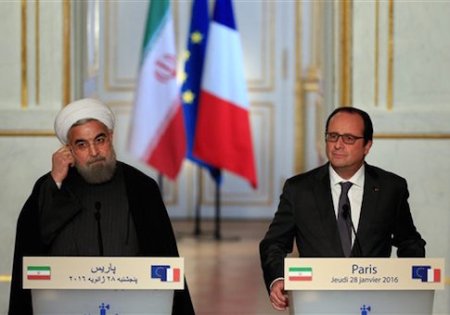
France's President Francois Hollande, right, and Iranian President Hassan Rouhani give a press conference, at the Elysee Palace, in Paris, Thursday, Jan. 28, 2016. Iran Air has signed a deal to buy 118 aircraft from Airbus in the first of an expected host of commercial deals expected to be announced during the visit of Iranian President Hassan Rouhani to Paris. (AP Photo/Thibault Camus)

France’s President Francois Hollande, right, and Iranian President Hassan Rouhani give a press conference, at the Elysee Palace, in Paris, Thursday, Jan. 28, 2016. Iran Air has signed a deal to buy 118 aircraft from Airbus in the first of an expected host of commercial deals expected to be announced during the visit of Iranian President Hassan Rouhani to Paris. (AP Photo/Thibault Camus)

The Obama administration has given clearance to Western airline manufacturers to sell planes to Iran at the same time the Islamic Republic is using commercial airliners to smuggle weapons and other illicit arms to Hezbollah terrorists in Lebanon, according to new intelligence and congressional communications obtained by the Washington Free Beacon.

The disclosure of this new intelligence, which shows that Iran has been using its commercial airline company to smuggle advanced weaponry to Hezbollah and terrorists operating in Syria, has placed renewed focus on a congressional inquiry that has been stymied by Obama administration officials since early October.

Senators, led by Sen. David Perdue (R., Ga.), have been pushing Obama administration officials to explain why they are helping airline manufacturers Boeing and AirBus sell planes to Iran, despite clear evidence that Tehran is using its commercial airline as cover for its continued terrorist operations across the region.

As with multiple other congressional investigations into the Obama administration’s efforts to roll back economic sanctions and conduct secret dealings with Iran, officials have stonewalled Perdue, refusing to answer key questions about the motivation for aiding Tehran’s pursuit of planes that could be used to further its terrorist enterprise.

This new intelligence comes just days after the Obama administration approved a second license for AirBus, a French company, to pursue even more sales with Iran.

The Free Beacon recently disclosed that several American-made planes are currently being flown by Iran’s Air Force, while other jets are being used in its commercial sector to smuggle arms.

Perdue on Wednesday accused the Obama administration of facilitating Iran’s terrorist operations by signing off on the multi-billion dollar deals to sell Iran planes, according to a letter sent to the Treasury Department, which oversees such sales, and obtained by the Free Beacon.

The senator chided the department for ignoring his initial Oct. 6 request for information, describing this lack of response as “troubling.”

“While I find your lack of a response to our last letter troubling, I would not that the issue surrounding commercial aircraft usage for illicit purposes by the Iranian regime has now expanded, given new intelligence information alleging that Iran has indeed been using Mahan Air — a commercial airline that is currently subject to U.S. and UN sanctions — to smuggle weapons and ammunition to Hezbollah in Lebanon,” Perdue writes.

New intelligence unearthed by the Israelis and disseminated to United Nations Security Council members in an “urgent letter” shows that Iran has been using Mahan Air to smuggle a large quantity of arms into Lebanon, where they are then transferred to Hezbollah, which remains committed to destroying the Jewish state.

“These planes fly directly to the airport in Lebanon or Damascus and from there the weapons are transferred on the ground to Hezbollah,” according to the letter sent by Israeli officials to U.N. Security Council members.

This includes weapons, ammunition, and missile technology to Hezbollah, which is placed inside suitcases and placed on Mahan’s commercial flights.

The intelligence further shows that Hezbollah now has about 12,000 missiles hidden underground in Lebanon, or “more than 17 times the number of missiles it possessed 10 years ago, and more than the European NATO allies have above the ground,” according to Perdue’s letter.

The intelligence appears to confirm fears by many in Congress that the easing of airline sales to Iran by the Obama administration will directly fuel Tehran’s global terrorist operation, according to the senator.

“This report confirms precisely the fear we expressed in our October 6 letter: that Iran continues to use commercial aircraft to smuggle weapons and ammunition in violation of UN Security Council Resolution 2231 to support its terrorist proxies,” Perdue wrote, referring to the UN resolution currently governing last year’s comprehensive nuclear deal with Iran.

“We are rightly concerned that Iran may continue to do so with the new commercial aircraft it purchases from Boeing and Airbus, as permitted by the U.S. Treasury Department,” the letter stated.

Despite this intelligence, the Obama administration continues to sign off on and endorse these sales to Iran.

“I was also disturbed to see that Airbus, one of the companies seeking licenses for the sale of commercial aircraft to the government of Iran, was just awarded a second license from U.S. Office of Foreign Asset Control (OFAC) to sell up to 118 jets to Iran,” Perdue wrote. “To echo the concerns of our last letter, what, if any, end-use monitoring controls can you guarantee will follow this license to ensure that these aircraft are not used to further support Iran’s terrorist proxies or support for the Assad regime in Syria?”

One senior congressional aide familiar with the matter told the Free Beacon that the Obama administration’s permissive attitude towards Tehran has only emboldened its bad behavior.

“The sanctions relief President Obama agreed to has allowed Iran to ramp up support for its destructive ambitions,” the source said. “Given this recent discovery by [Israeli U.N.] Ambassador Danon, President Obama and Congress shouldn’t wait to see what this rogue nation has planned for this massive increase in commercial aircraft.”

“It’s been nearly a year since the implementation of President Obama’s nuclear deal and we’ve seen Iran become increasingly aggressive in its support of terrorism,” the source noted. “In fact, Iran is still the number one state sponsor of terrorism. If this isn’t a symptom of a failed deal, what is?”

Two Hizballah brigades deployed to Aleppo

November 20, 2016

Two Hizballah brigades deployed to Aleppo, DEBKAfile, November 20, 2016

hezbollaonparade

The two Hizballah brigades carry both American and Russian weaponry. DEBKAfile’s military sources report: The motorized rifle brigade is armed with American armored personnel carriers and tanks, whereas the Light Brigade carries Russian arms. Some of the units use both American and Russian hardware, like the Russian ZPU-2 anti tank guns which are mounted on US M113 APCs.

****************************

Hizballah this week transferred two brigades of some 5,000 fighters to the Aleppo front to bolster the Assad regime’s concentrated push to finally rout the rebels who have been holding out year after year in the eastern half of the ravaged city. Indiscriminate Syrian air strikes continue.

The new spearhead is made up of Hizballah’s heavy motorized rifle brigade of tanks and heavy weapons and its light commando brigade, which is trained to operate behind enemy lines. Their arrival brings the total number of Hizballah fighters in Syria to 15,000.

Russian military sources say that, after Aleppo is won for Bashar Assad, the two Lebanese Shiite brigades will turn to Idlib province in the north, to tackle the largest concentration in the country of Al Qaeda’s Syrian arm, the Nusra Front.

The two Hizballah brigades carry both American and Russian weaponry. DEBKAfile’s military sources report: The motorized rifle brigade is armed with American armored personnel carriers and tanks, whereas the Light Brigade carries Russian arms. Some of the units use both American and Russian hardware, like the Russian ZPU-2 anti tank guns which are mounted on US M113 APCs.

Sunday, Nov. 14, on the day that Hizballah started moving the two brigades to the Aleppo front, its propaganda machine released to the Arab media images of a military parade in Qusayr, in the Qalamoun mountain range of western Syria, showing Hizballah troops marching with American hardware. The parade, according to our sources, was faked, the point being to show the world that the Iranian proxy was amply supplied with American equipment.

Assad rewarded Hizballah for capturing Qusayr three years ago by allowing the Iranian proxy to turn the ghost town into a military center. Several workshops for recycling captured weapons for reuse in battle were set up there. (In the same way, the IDF recycled the masses of Russian weapons taken booty from Arab armies in the 60s and 70s.)

Another project was the creation and arming of the Light Brigade modeled on the Iranian Revolutionary Guards special operations units. They are equipped with highly adaptable “jihad-mobiles” which are designed to move in all-terrain and all-weather conditions to take the enemy by surprise from the rear. The the battle of Aleppo sees their first operation in the Syrian war.

Like Syrian special forces units, the Hizballah Light Brigade drives Russian UAZ Patriot-SUV pickup trucks on which are mounted Kord heavy machine guns and AGS-17 grenade launchers. These vehicles are equipped with automatic filters adapted for combat in arid desert conditions to overcome difficulties in vision and breathing.

Hezbollah has U.S. armored personnel carriers. But how did they get them?

November 18, 2016

Hezbollah has U.S. armored personnel carriers. But how did they get them?

November 16

Source: Hezbollah has U.S. armored personnel carriers. But how did they get them? – The Washington Post

Jordanian Armed Forces M113 armored personnel carriers attack a simulated invasion force during a mission readiness exercise at the JAF’s Joint Training Center on Jan. 17. (Sgt. Youtoy Martin/U.S. Army)

Over the weekend images surfaced online of a Hezbollah parade in Qusair, Syria, featuring U.S. armored personnel carriers affixed with antiaircraft guns. The images prompted a flurry of speculation about the vehicles’ origin and whether the group had pilfered the stocks of the U.S.-supplied Lebanese military.

The armored personnel carrier, known as the M113, is one of the United States’ most ubiquitous armored vehicles and has been in service since the 1960s. The tracked semi-rhombus-shaped vehicle comes in numerous variants and can be outfitted to carry troops and artillery; its chassis was even used as the basis for a nuclear-missile carrier. It has appeared in every major U.S. conflict since the Vietnam War and is used by U.S. police departments and dozens of others countries’ militaries around the world.

https://twitter.com/tobiaschneider/status/797881849850695680?ref_src=twsrc%5Etfw

As a prominent political and military entity in Lebanon, Hezbollah’s possession of the vehicles could support the theory floated by the defense analyst Tobias Schneider, who tweeted that the personnel carriers were probably taken from the Lebanese Armed Forces, a major recipient of U.S. military aid.

Over the summer, the Lebanese military took possession of dozens of pieces of artillery, armored vehicles, semiautomatic grenade launchers and 1,000 tons of ammunition — all worth about $50 million — as part of the United States’ ongoing efforts to bolster the country’s capacity to fight extremists. The shipment, overseen by the Pentagon and the State Department, brought the amount of U.S. military aid sent to Lebanon in 2016 to $221 million, according to U.S. Ambassador Elizabeth H. Richard.

While Lebanese smugglers have helped move weapons and ammunition to opposition groups in Syria, cases of Lebanese military equipment appearing in the conflict have been rare. In a tweet, the Lebanese military denied that the M113s were taken from its stocks, a claim backed up by a State Department official, who spoke on the condition of anonymity to discuss the issue.

“The Lebanese military has publicly stated that the M113s depicted online were never part of their equipment roster,” the official said. “Our initial assessment concurs: The M113s allegedly in Hezbollah’s possession in Syria are unlikely to have come from the Lebanese military. We are working closely with our colleagues in the Pentagon and in the Intelligence Community on to resolve this issue.”

After comparing the “structual analysis of the vehicles in the picture,” Pentagon spokesman Chris Sherwood said that the Pentagon had ruled out the possiblity of Hezbollah taking the M113s from the Lebanese Armed Forces.

Closely aligned with Iran and Syria, Hezbollah has been fighting alongside Syrian government troops since the beginning of the conflict.

The Hezbollah M113s appear to be an older variant, and U.S. officials said they are inclined to believe that vehicles came from the disintegration of the Southern Lebanese Army, or SLA. The SLA was an Israeli-allied and supplied Christian militia that fought during the Lebanese civil war. Its military equipment was ultimately absorbed by Hezbollah in the early 2000s when Israel withdrew from southern Lebanon.

In 1985, Israel supplied 20 M113s to the SLA, according to arms transfer data provided by the Stockholm International Peace Research Institute. From 1984 to 1996, Israel provided more than 130 armored vehicles, tanks and artillery pieces to the SLA, according to the data. Another possibility, as pointed out by Schneider in subsequent tweets, is that Hezbollah took them from Syria’s recently renamed al-Qaeda affiliate, formerly known as Jabhat al-Nusra. It is unclear where al-Nusra got its M113s.

U.S. equipment falling into the hands of extremist groups and regional opponents has been a recurring theme in the Middle East and southwest Asia for the past 15 years as American wares have been distributed wholesale to those willing to fight for U.S. causes. Armored vehicles, weapons, night-vision devices and body armor have been diverted from places such as Iraq, Afghanistan, Syria, Saudi Arabia and Yemen, subsequently showing up on battlefields throughout the region.

The post has been updated to reflect a comment from the Pentagon.

Al-Hariri’s Choice Of Hizbullah Ally Aoun For Lebanese Presidency Is Another March 14 Forces Concession To Pro-Iran Axis

October 28, 2016

Al-Hariri’s Choice Of Hizbullah Ally Aoun For Lebanese Presidency Is Another March 14 Forces Concession To Pro-Iran Axis, MEMRI, E.B. Picali and Y. Yehoshua, October 28, 2016

Introduction

On October 31, 2016, the Lebanese parliament will convene and is expected to vote in Free Patriotic Movement leader and Hizbullah ally Michel Aoun as president of Lebanon; he is Hizbullah’s sole candidate. The move follows a deal struck between Aoun and former Lebanese prime minister Sa’d Al-Hariri, leader of the Sunni Al-Mustaqbal stream, under which Aoun, if elected, will assign Al-Hariri the task of forming the next government.

This move by Al-Hariri has significant implications for the intra-Lebanese political arena and for the regional power balance. Therefore it has encountered criticism both within and outside Lebanon. This move represents a surrender by the March 14 Forces, headed by Al-Mustaqbal, to Hizbullah’s will, and reinforces the position of Hizbullah’s patron Iran at the expense of Saudi Arabia.

The following report reviews Al-Hariri’s decision, the reactions it has encountered, and what it means for Lebanon and the region.

Hizbullah Ally Aoun Expected To Be Chosen President

On October 31, 2016, the Lebanese parliament will hold its 46th presidential selection session since Michel Suleiman’s term ended two-and-a-half years ago.  That session is expected to choose Free Patriotic Movement leader Michel Aoun, who is an ally of Hizbullah, as president. Aoun’s selection will end a two-and-a-half-year presidential vacuum that resulted from disagreement over Suleiman’s successor from among the country’s opposing streams – primarily Al-Mustaqbal, led by Sa’d Al-Hariri, and Hizbullah, which together with Aoun stymied the formation of the quorum that is necessary to elect a president. The breakthrough in the talks over the selection of a president came when Al-Hariri and Aoun reached an agreement under which Al-Hariri would support Aoun’s presidential candidacy and in return Aoun would task Al-Hariri with forming the new government, which would be a national unity government as stipulated in the agreement.[1] This constitutes an Al-Hariri surrender to Hizbullah, which sought an Aoun presidency. It should be mentioned that Al-Hariri’s support for an overt Hizbullah ally is not unprecedented; a year ago, Al-Hariri announced his support for another ally of Hizbullah, and of Syrian president Bashar Al-Assad, Suleiman Frangieh, for the post of Lebanese president.[2]

Al-Hariri announced his support for Aoun in an October 20, 2016 speech, saying that by supporting him he was aiming to save Lebanon from dangerous leadership and economic crises which could, in turn, lead to a new civil war.[3]

Two days later, on October 22, Hizbullah secretary-general Hassan Nasrallah announced that his party’s MPs, who had been boycotting presidential selection sessions, as had MPs from other parties including Aoun’s own Change and Reform bloc, would be attending the October 31 session and would be choosing Aoun.  Nasrallah added that Hizbullah had no objections to Al-Hariri’s serving as prime minister in the new government.

These statements by Al-Hariri and Nasrallah pave Aoun’s path to the presidential palace, even though obstacles and uncertainty remain, both in Lebanon and in the region, in this matter.

Various Lebanese Elements Oppose Aoun’s Appointment As President

The opposition to Aoun’s appointment comes mainly from Lebanese parliamentary speaker Nabih Berri, and from Suleiman Frangieh, who is running against Aoun in the presidential race. Both Berri and Frangieh are March 8 Forces members and open Hizbullah allies. Berri even announced that he would not be part of the government that would be established under the Al-Hariri-Aoun deal, and questioned the deal’s future, saying that it had been arrived at by two sides only, without taking into account the country’s main political elements, himself among them. Druze leader and centrist bloc member Walid Jumblatt, who is another major Lebanese political figure, has not yet expressed a position on this matter, but it is thought that he will back Aoun.

On the other side as well, some in Al-Hariri’s Al-Mustaqbal party and in the March 14 Forces in general   oppose this deal. Immediately after Al-Hariri’s October 20 announcement of support for Aoun, another former prime minister, Fouad Al-Siniora, the head of the Al-Mustaqbal party, (a component of Al-Hariri’s broader Al-Mustaqbal stream) announced that he would not join Al-Hariri in backing Aoun for president. Al-Siniora was joined by other party members, including parliamentary vice president Farid Makari, MPs Ahmad Fatfat and Ammar Houri, Telecommunications Minister Boutros Harb of the March 14 Forces, and March 14 Forces secretary-general Fares Souaid.

Along with the opposition to an Aoun presidency within the Al-Mustaqbal party, other Sunni public figures also objected to the deal, among them Justice Minister Ashraf Rifi, former director-general of the Lebanese Internal Security Forces and a former Al-Hariri supporter. Last year, Rifi harshly attacked Al-Hariri for his support for Hizbullah and Syrian regime ally Suleiman Frangieh. On October 22, 2016, two days after Al-Hariri’s announcement of his support for Aoun as president, Rifi organized an anti-Aoun protest in Tripoli called “Proud Tripoli Rejects the Candidate of Iranian Patronage.” The next day, October 23, a convoy of vehicles from Akkar in the north of the country made its way to Rifi’s home in Tripoli bearing posters of him and expressing support for his position on this matter. It should be mentioned that in the past year, Rifi has gradually chipped away at overall Lebanese Sunni support for Al-Hariri, as evidenced by his party’s landslide victory over Al-Hariri’s party in the mayoral elections in Tripoli, the city with the largest Sunni concentration in the country.

Many in the Al-Mustaqbal party, the March 14 Forces, and the Sunni public who oppose the Al-Hariri-Aoun deal see Al-Hariri’s support for Aoun as yet another concession to Hizbullah and the pro-Iran axis that backs it, and to Hizbullah as an armed state within a state.[4] They accuse Al-Hariri, inter alia, of seeking to become prime minister by selling out Sunni interests and the political legacy of his father Rafiq Al-Hariri, whose 2005 assassination, when Syria was the real power in Lebanon, is thought to have been carried out by five senior Hizbullah officials.

Addressing critics of his deal, Al-Hariri explained his support for Aoun as well as his previous support for Frangieh: “I am willing to take the risks a thousand times over, just as I am willing to risk myself, my people, and my political future, to defend Lebanon and its people.”[5]

Al-Hariri’s Choice Of Aoun Is A Political Victory For Hizbullah

Al-Hariri’s move to support the Hizbullah candidate and ally Aoun has major implication for the internal Lebanese political arena. It constitutes another successful attempt by Hizbullah to impose its wishes there and a further weakening of the country’s main Sunni force, the Al-Mustaqbal party. This triumph for Hizbullah comes at a time when it is mostly preoccupied outside of Lebanon’s borders, primarily with fighting alongside the Assad regime in Syria, as well as elsewhere in the Arab world as a proxy of Iran. The organization has fortified its position within Lebanon by virtue of its network of political alliances in the country, as well as by virtue of the quantity of weapons in its possession.

Ibrahim Al-Amin, head of the board of directors of the Lebanese daily Al-Akhbar and a known Hizbullah supporter, argued that the March 14 Forces, including the Al-Mustaqbal stream, show “the symptoms of card-game addicts,” who delude themselves that they can win and are “unwilling to give up” even when it is clear that it is Hizbullah who is actually directing events on the ground.[6]

At the same time, Hizbullah’s success in pushing its own candidate through is also a result of the political weakness of its rivals, particularly the Hariri-led Al-Mustaqbal stream, who wants the premiership at nearly any cost in order to strengthen his own political status in the country and perhaps his economic status as well.

An Aoun presidency does not mean that the issues contributing to the vast schism between the sides in Lebanon will be resolved, among them the disarming of Hizbullah as demanded by the March 14 Forces – Aoun opposes the organization’s disarmament.[7] As president, Hizbullah ally Aoun would be in charge of a number of security and military portfolios, aggravating the tension between the sides and jeopardizing the army’s independence .

Additionally, the Al-Hariri-Aoun deal does not guarantee that Al-Hariri will actually succeed in forming a government, because of the opposition he faces both inside and outside Lebanon. The deal with Aoun could also harm Al-Hariri’s status among his traditional Sunni support base, thus weakening him in the upcoming spring 2017 parliamentary elections.

An Aoun Presidency: Ramifications For The Regional Power Balance – Down With Saudi Arabia, Up With Iran

Since Lebanon’s future depends on the regional political balance, with Iran, Syria, and Saudi Arabia the patrons of various local Lebanese political players, Al-Hariri’s move has regional ramifications. His surrender to Hizbullah’s wishes reflects the strengthening of Iran, which has exploited the Syrian civil war to deepen its penetration of the region and of Lebanon in particular. Electing the Hizbullah presidential candidate Aoun will definitely serve future pro-Iran interests in Lebanon at the expense of Sunni interests in Lebanon, and also at the expense of Saudi Arabia, which views itself as the protector of these interests.

Saudi Arabia has previously backed Al-Hariri’s past substantial political moves even if these moves haven’t always served Saudi political interests in Lebanon or elsewhere. It is still unclear whether his deal with Aoun has Saudi support, and the Lebanese press has published conflicting reports on the matter. As yet, there has been no official Saudi comment on this, but recent articles in the Saudi press indicate a lack of support for Al-Hariri’s deal with Aoun. However, following a lengthy Saudi silence, Saudi Gulf Affairs Minister Thamer Sabhan, who visited Beirut on October 27 said that his country would not intervene in the selection of Lebanon’s president and would support the president chosen by the Lebanese.[8]

There were also reports in the Lebanese press noting that Al-Hariri’s political status in Lebanon is declining, and that the Saudis no longer consider him the sole representative of the Sunnis in Lebanon, but only one such representative.

It should be noted that in previous years, Saudi Arabia, as the leader of the Sunni world, played a key role in the selection of Lebanese presidents, as did Syria, which together with Hizbullah’s patron Iran represented the resistance axis. Al-Hariri’s choosing Aoun for president without full Saudi backing reflects a decline in Saudi influence in Lebanon, and in Saudi Arabia’s regional status in general. In this context, a report in the Lebanese daily Al-Safir, a known supporter of the resistance axis, claims that Egypt was involved in promoting Aoun’s prospects for the presidency.[9] A possible inference from this report is that Egypt is attempting to step into Saudi Arabia’s shoes in Lebanon in an attempt to restore its status in the Arab world, and particularly in the Sunni world.

Articles in the daily Al-Akhbar, known for its pro-Hizbullah line, addressed the regional implications of Al-Hariri’s gambit and gloated that the move reflected Saudi Arabian weakness. Al-Akhbar columnist Ghassan Saoud wrote that an Aoun presidency would be a manifestation of “Hizbullah’s ability to break the international will, and the Saudi will.”[10]

However, Ibrahim Al-Amin wrote in an Al-Akbar editorial that wars in the Arab region created a reality that was forcing the March 14 Forces to see the choice of Lebanese president differently, and that they needed to realize that the Saudis can no longer help them. As he usually does, he concluded his piece with implied threats, stating: “Anyone who does not want anarchy in Lebanon has no alternative but to choose Aoun for president.”[11]


*E. B. Picali is a research fellow at MEMRI; Y. Yehoshua is Vice President for Research And Director of MEMRI Israel


Endntoes:

[1] One of the main political players pushing for an Aoun presidency is Samir Geagea, chairman of the Lebanese Forces. In January 2016, after a long period of talks, Geagea and Aoun, formerly bitter Christian political rivals, agreed that Geagea would support Aoun’s presidential bid. One of the main reasons behind Geagea’s decision to do so was Al-Hariri’s previous support for the presidential candidacy of Suleiman Frangieh – a fierce rival of Geagea who had been accused of killing several members of the Frangieh family during the country’s civil war.

[2] Similarly, in 2008, during another presidential interregnum, the March 14 Forces and Al-Hariri were forced to make concessions to Hizbullah, which was included in the newly formed Fouad Siniora government; this took place at the Doha conference. The most important concession won by the Hizbullah-led March 8 Forces, as stipulated in the government guidelines, was the legitimation of the Resistance (which allowed Hizbullah to operate as an independent armed force within Lebanon). Hizbullah also received enough cabinet seats to veto any government decision, and Hizbullah subsequently used this veto power against Al-Hariri’s government in 2011. Hizbullah obtained these concessions following the leadership vacuum, the lengthy Hizbullah siege on central Beirut, and the violent events of May 7, 2008.

[3] Al-Mustaqbal (Lebanon), October 21, 2016.

[4] See MEMRI Inquiry & Analysis Series Report No. 1092, Al-Mustaqbal Losing Ground As Representative Of Lebanese Sunnis, May 19, 2014.

[5] Al-Mustaqbal (Lebanon), October 21, 2016.

[6] Al-Akhbar (Lebanon), October 24, 2016.

[7] In an interview with Al-Akhbar, Lebanese Foreign Minister Gebran Bassil, who is Aoun’s son-in-law and heads the Change and Reform bloc founded by Aoun, said that Free Patriotic Movement, to which the Change and Reform bloc belongs, supports Hizbullah’s retention of its weapons. Al-Akhbar(Lebanon), October 22, 2016.

[8] Al-Watan (Saudi Arabia), October 28, 2016.

[9] Al-Safir (Lebanon), October 25, 2016.

[10] Al-Akhbar (Lebanon), October 27, 2016.

[11] Al-Akhbar (Lebanon), October 24, 2016.

Miami: Three Hizballah operatives busted for laundering $500,000 of cocaine money for Colombian cartel

October 13, 2016

Miami: Three Hizballah operatives busted for laundering $500,000 of cocaine money for Colombian cartel, Jihad Watch,

(Please see also, Venezuela, Iran, USA and Narco-Terrorism. — DM

Hizballah is a wholly owned and operated subsidiary of the Islamic Republic of Iran. Iran has repeatedly declared its intention to destroy the United States, as you can read about in detail in my book The Complete Infidel’s Guide to Iran (Regnery). Hizballah working with the drug cartel kills two birds with one stone: drugs weaken and destroy Americans, and sap American resources in largely futile anti-drug efforts, and the cash Hizballah earns in working with the drug cartel goes for more jihad against the U.S.

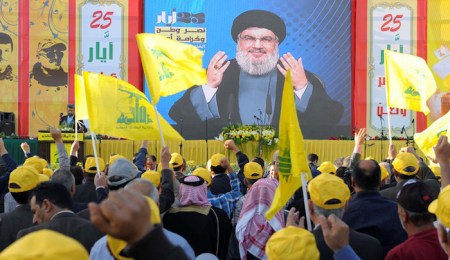
People watch Lebanon's Hezbollah leader Sayyed Hassan Nasrallah as he appears on a screen during a live broadcast to speak to his supporters at an event marking Resistance and Liberation Day, in Bekaa valley May 25, 2016. The event is to commemorate the 16th anniversary of Israel's withdrawal from southern Lebanon. REUTERS/Hassan Abdallah - RTSFWSN

People watch Lebanon’s Hezbollah leader Sayyed Hassan Nasrallah as he appears on a screen during a live broadcast to speak to his supporters at an event marking Resistance and Liberation Day, in Bekaa valley May 25, 2016. The event is to commemorate the 16th anniversary of Israel’s withdrawal from southern Lebanon. REUTERS/Hassan Abdallah – RTSFWSN

“State: Hezbollah-linked group laundered drug money through Miami banks,” by David Ovalle, Miami Herald, October 11, 2016:

Three men suspected of laundering cocaine money for the Colombian cartel have been busted after agents say they illegally moved $500,000 into Miami banks through a series of complicated financial transactions stretching from Australia to Europe.

That’s not uncommon in Miami, but the trio’s background is: They are suspected associates of the Middle Eastern terror group Hezbollah.

The main player is Mohammad Ahmad Ammar, 31, who was living in Medellín, Colombia. He was quietly booked into a Miami-Dade jail last week to face state felony money laundering charges in a case that underscores increased law-enforcement scrutiny on the role of Middle Eastern terror groups who use financial networks in Latin America to earn untold millions off drug profits.

Along with Ammar, two other Hezbollah associates are facing charges charges in the same case. One of them is in custody in Paris, while the other is on the lam, possibly in Lebanon or Nigeria.

The DEA investigated the case along with the the South Florida Money-Laundering Strike Force, a group of federal and state investigators that recently helped bust 22 people suspected in a large run connected to Mexican kingpin Joaquín “El Chapo” Guzmán.

“Drug dealers, potential terrorists and money launderers should all get the message that Miami-Dade County is not the place to do your dirty business,” Miami-Dade State Attorney Katherine Fernandez Rundle said in a statement.

The involvement of radical Islamic terrorist groups in Latin American is not new but has increased in recent years, according to federal law enforcement and security experts.

In November 2012, a congressional report on border security noted that Latin America has “become a money laundering and major fundraising center” for Hezbollah, the Shiite Muslim group classified as a terrorist organization by the U.S. government. The group, based in Lebanon, has been a key ally of Syrian dictator Bashar Assad in the bloody war that has decimated the country for the past five years.

“The notion of terrorist groups, especially Islamists using Latin America as place for money laundering, drug trafficking and other nefarious trades — it’s been known for some time now,” Jerry Haar, a Latin America expert at Florida International University, said in an interview.

In February, the U.S. Drug Enforcement Administration announced a “significant enforcement activity” against people connected with Hezbollah, The DEA’s efforts in “Operation Cassandra” came after the U.S. Department of Treasury announced sanctions against Hezbollah’s financiers, whom they the believe are capable of earning $400 million a year from drug trafficking and money laundering.

Exactly how much of money generated from laundering drug money is used directly to fund terror attacks is unknown. Many of those business associates such as Ammar “are more concerned with generating cash than religious or political doctrine” — though they readily send money back to their handlers in the Middle East, according to an arrest warrant.

Hezbollah-related arrests stemming from Latin American have popped up before in South Florida.

In 2008, a Lebanese man named Chekri Harb was arrested and convicted as part of a large-scale Colombian cocaine ring. U.S. authorities did not name Hezbollah in charging documents, but Colombian security officials described him as having links to the group.

Federal agents in 2010 arrested three South Florida businessmen accused of exporting video games and other electronic products to a shopping mall in Paraguay that allegedly served as a front to Hezbollah. They wound up being convicted of non-terrorism-related charges.

The lawless area at the borders of Paraguay, Brazil and Argentina has long been identified by the U.S. as a hotspot for money launderers who send their money back to the Middle East.

The latest Miami case was a spinoff from the DEA investigation into Colombian cocaine operations that netted dozens of trafficking and money-laundering arrests. In custody in Miami is Ammar, described in court documents as a Hezbollah associate whose job was to launder money for the Colombian cocaine operation known as La Oficina, or The Office, an off-shoot of the notorious Medellín cartel.

He was known to launder money through Holland, Spain, the United Kingdom, Australia and Africa, according to an arrest warrant. Ammar is charged with eight felonies, including money laundering and conspiracy to launder money; court records do not list a defense attorney.

According to court documents, his father is a well-connected Hezbollah associate living in Los Angeles, where the younger Ammar was arrested last month.

Also facing charges is Ghassan Diab, another purported Hezbollah associate based in Nigeria. According to court documents, Diab is related to a “high-ranking member of Hezbollah who has access to numerous international bank accounts.” He remains on the loose, possibly in Nigeria or Lebanon.

The third man facing charges is Hassan Mohsen Mansour, another Hezbollah associate with dual Lebanese and Canadian citizenship. He is in custody in Paris, and is facing a separate but similar federal money-laundering prosecution in South Florida.

The 42-page arrest warrant reads like a plot out of a international spy thriller, detailing a complicated web of encrypted communications between players in far-flung countries — some of them secretly working as informants — and murky financial transactions on six different continents.

A confidential source first tipped of Miami DEA agents to Ammar in early 2014, introducing him a second confidential informant who secretly recorded their meetings.

The second informant eventually asked Ammar to help him launder $250,000 worth of Australian dollars that was netted from cocaine sales. The task: Move the money to banks in Miami, where it could be moved later to Colombia or used by Colombian traffickers in South Florida.

Ammar was not aware, however, that the money was actually DEA cash and the Miami accounts were set up by the feds.

Using encrypted communications, Ammar enlisted the help of Mansour in Paris, who contacted a source in Australia (who by coincidence, happened to be an informant for the police there) to pick up the cash.

The money was deposited into an account in Dubai in the United Arab Emirates — where the anything-goes banking system remains out of reach of U.S. authorities. It was then then broken up and moved through a sham company called Al Haitham Exhibition and Conference Organizers, which purports to organize events but authorities believe is simply a front for money laundering.

From there, the money was cashed out and disappeared, according to an arrest warrant by DEA agent Kenneth Martin and state prosecutor Jared Nixon.

Back in Miami, the bank accounts set up by the DEA soon began receiving the money in chunks from obscure companies with names like “Tropical Trading” and “Khofo International.” To make them look like legitimate business, phony invoices were sent by Diab for nebulous goods or “payment for shipment.”

After the first deal went through successfully, Ammar soon admitted to the DEA informant that he was working with La Oficina, the chief cartel in Medellin, the warrant said.

In September 2014, another deal to launder $250,000 was struck. The Australian cash was sent to the events company in Dubai, with a note that it was for the purchase of a four-carat diamond ring head for Majorca, Spain. Through more bogus companies, some of the money was eventually transferred into the DEA’s Miami bank accounts; one transaction was disguised as payment for 50-kilogram bags of white rice.

Throughout the undercover operation, Ammar made admissions of interest to investigators, according to the warrant, including that he knew two brothers who worked for Avianca airlines who could smuggle in cocaine to Miami.

He also boasted that his family was well connected with Hezbollah, and inquired if the informant would be interested in helping smuggle 150 kilograms of cocaine from Costa Rica to the Netherlands.