Posted tagged ‘Hezbollah’

Hezbollah shows off ‘advanced tunnel network’ on Israeli border

May 23, 2015

Hezbollah shows off ‘advanced tunnel network’ on Israeli border, Times of IsraelTamar Sharon and AP, May 23, 2015

(“Quick Watch” video at link.– DM)

According to the [Israeli intelligence] official, Hezbollah has an estimated 100,000 short-range rockets capable of striking northern Israel, several thousand missiles that can reach Tel Aviv and central Israel and hundreds more that can strike the entire country.

********************

Hezbollah has built a vast network of advanced tunnels along the border with Israel for us in a future war, using them to conceal tens of thousands of rockets aimed at the Jewish state, a Lebanese newspaper with ties to the Lebanese terror group reported on Friday.

In a series of articles published over the weekend, the daily As-safir examined Hezbollah’s preparations for war against Israel, painting a picture of a military force highly prepared for conflict, both in terms of equipment and of infrastructure.

It should be noted that As-safir, a mouthpiece for the Shiite organization, is neither an objective nor necessarily a credible news source. The accuracy of its claims cannot be verified.

According to the reports, based on a tour of Hezbollah facilities given to the newspaper, the group has built a sprawling underground array of tunnels, bunkers and surveillance outposts along the border with Israel, which it is manning at peak readiness for battle.

The tunnels are said to be highly-advanced, with durable concrete, a 24-hour power supply via underground generators, a ventilation system to prevent damp from damaging military equipment and a web of secondary escape shafts in case of attack. The tunnels are said to be housing tens of thousands of rockets ready for launch, themselves wrapped in protective materials in order to preserve them.

The paper reported that Hezbollah was constantly surveying the Israeli border area with electronic equipment as well as observation posts equipped with night-vision technology.

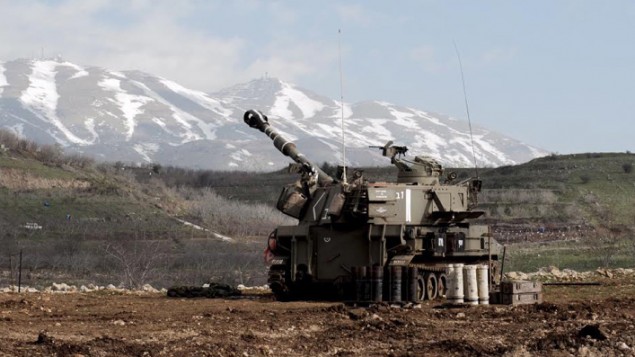
F150128IDF01-e1422508122867-635x357Israeli artillery on the Lebanon border, January 28, 2015 (Photo credit: IDF Spokesperson)

Tunnel construction was said to be continuing around the clock, using primitive means rather than advanced machinery in order to avoid detection by Israeli surveillance.

A senior Israeli intelligence official said last week that Hezbollah has built up a massive arsenal of rockets and other advanced weapons in Shi’ite villages of southern Lebanon, warning civilians would be at risk if war breaks out.

According to the official, Hezbollah has an estimated 100,000 short-range rockets capable of striking northern Israel, several thousand missiles that can reach Tel Aviv and central Israel and hundreds more that can strike the entire country.

Most of the weapons have been transferred to Lebanon through war-torn Syria, coming from Hezbollah’s key allies, the Syrian government and Iran, he said.

The official showed reporters satellite photos of what Israeli intelligence believes are Hezbollah positions in dozens of Shiite villages in southern Lebanon.

The photos were marked with dozens of red icons, signaling what are believed to be missile launchers, arms depots, underground tunnels and command posts.

The official, who spoke on condition of anonymity under military guidelines, said an estimated 200 villages have been turned into “military strongholds.”

One photo showed the village of Muhaybib, with a population of around 1,000 people and 90 buildings, of which more than a third had been marked as Hezbollah assets. In the larger village of Shaqra, with some 4,000 people, Israeli intelligence identified Hezbollah targets in around 400 out of some 1,200 buildings.

The army refused to allow publication of the images.

If war breaks out and Hezbollah fires missiles at Israel, these buildings will be targeted by Israel’s air force, the official said, adding that Israel would give civilians time to evacuate.

Israel and Hezbollah fought a month-long war in 2006 that killed some 1,200 Lebanese, including hundreds of civilians, and 160 Israelis and caused heavy damage to Lebanon’s infrastructure.

Though another Israel-Hezbollah war is always possible, analysts say the group has no interest in renewing hostilities while it is busy fighting alongside President Bashar Assad’s forces against rebels trying to topple him in Syria, including the forces of Islamic State.

Hezbollah leader Hassan Nasrallah warned Friday that the Islamic State posed an existential threat to Lebanon and said his organization may soon be required to call for a general mobilization to fight the group.

“Now is the time for everyone to enlist, anyone who can take part,” Nasrallah told senior organization commanders in a speech. “The danger that threatens us is an existential threat similar to 1982,” he added, referring to the Lebanon War and the Israeli military invasion of Lebanon.

The Hezbollah chief vowed to “use all our strength and all our capabilities to cope with extremist groups.

“In the next phase we may declare general mobilization to all people,” he said.

US and Hizballah coordinate spy drone flights over Qalamoun, share US combat intelligence

May 23, 2015

US and Hizballah coordinate spy drone flights over Qalamoun, share US combat intelligence, DEBKAfile, May 23, 2015

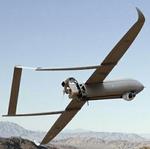
U.S._special_forces_operating_recon_drones_in_Lebanon_5.15Reconnaissance drone operated by US special forces in Lebanon

How do Obama’s repeated commitments to Israel’s security square with close US military and intelligence cooperation with an organization whose vow to destroy Israel is backed by 100,000 missiles – all pointed south?

************************

Another strange pair of bedfellows has turned up in one of the most critical Middle East battlefields: the United States is helping Hizballah, Iran’s Lebanese surrogate, in the battle for control of the strategic Qalamoun Mountains. DEBKAfile’s intelligence sources disclose that a US special operations unit, stationed at the Hamat air base on the coast of northern Lebanon, is directing unarmed Aerosonde MK 4.7 reconnaissance drone intelligence-gathering flights over the Qalamoun Mt arena, 100 km to the west.

Washington set up the base originally in line with an assurance to Beirut of military assistance for the next three years to counter any threatened invasion by extremist elements.

However, it turns out that the data the US drones pass to Lebanese army general staff in Beirut goes straight to Hizballah headquarters – and on to the Iranian officers in Syria running Bashar Assad’s war effort.

The Aerosonde MK 4.7 can stay aloft for 10 to 12 hours at a stretch at an altitude of 4.5 km. It functions day or night, equipped with an advanced laser pointer capability. It is capable of carrying ordnance but US sources say they the aircraft in Lebanon are unarmed.

Since Hizballah is also operating Ababil-3 surveillance drones of its own over Qalamoun, coordination had become necessary between the American team and the Shiite group.  The consequence is that for the first time, the US military is working directly with an internationally-designated terrorist organization – a development with earthshaking ramifications for Israel’s security. This partnership has in fact become a game-changer for the worse in terms of Israel’s security ties with the US and has caused an upheaval in its military and intelligence disposition in the region, in at least six respects:

1. To counter US-Hizballah intelligence collaboration, Israel is obliged to reshuffle the entire intelligence mechanism it maintains to protect its northern borders with Lebanon and Syria.

2.  Israel finds itself forced to monitor the progress of the US special unit’s interface with Hizballah, its avowed enemy.

3.  Israel can no longer trust American intelligence coming in from Lebanon because it is likely tainted by Hizballah sources.

4.  Hizballah is gaining firsthand insights into the operating methods of US special operations forces, which Israel’s methods strongly resemble and must therefore revamp.

5. The Hizballah terrorist group is winning much needed prestige and enhanced status in the region from its collaboration with the US.

6. Hizballah’s Ababil drones are in fact operated by the hostile Iranian Revolutionary Guards, which leaves Israel with no option but to overhaul from top to bottom the intelligence-gathering systems employed by its surveillance drones to track Iranian movements in the region.

At the Washington Adas Israel synagogue Friday, May 22, President Barack Obama wearing a kipah “forcefully” objected to suggestions that policy differences between his administration and the Israeli government signaled his lack of support for the longtime US ally.

This raises a question: How do Obama’s repeated commitments to Israel’s security square with close US military and intelligence cooperation with an organization whose vow to destroy Israel is backed by 100,000 missiles – all pointed south?

Some 250 Hizballah dead in Qalamoun battle. Nasrallah pushes Lebanese army to enter Syrian war

May 13, 2015

Some 250 Hizballah dead in Qalamoun battle. Nasrallah pushes Lebanese army to enter Syrian war, DEBKAfile, May 13, 2015

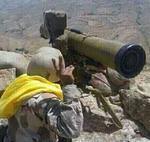
Hezbollah-Qalamoun_15.8.14Hizballah fighter on Mt. Qalamoun

Amid Hizballah’s rising war losses, its leader Hassan Nasrallah strongly urged the Lebanese chief of staff Gen. Jean Kahwagi to send his troops into battle over the strategic Qalamoun Mountain, alongside Hizballah and the Syrian army, DEBKAfile’s military sources disclose. Nasrallah argued that the time had come for the Lebanese army to take a hand in the fighting, since the Syrian rebels led by Al Qaeda’s Syrian arm, the Nusra Front, were shelling the eastern Beqaa Valley of Lebanon from their Syrian strongholds on the mountain that sits athwart the Syrian-Lebanese border.  Thousands of jihadis, he said, were seizing land around the northeastern Lebanese villages of Arsal and Nahleh.

Another of Nasrallah’s demands was for Gen. Kahwagi to bring out the Lebanese army’s heavy artillery to shell rebel Qalamoun concentrations, positions and moving vehicles, because they endangered Lebanese national security.

The Lebanese general gave the Hizballsah chief a flat no. He declared the Lebanese army would not “slip” into any war inside the Syrian area of Qalamoun where Hizballah and the Syrian army are currently fighting jihadis, but added: “The army is ready to confront any assault on Lebanese sovereignty and push back any infiltration by militants.”

Tuesday, May 12, in Beirut, US Ambassador David Hale interceded in the argument: “I would say that ISIS posed no threat to Lebanon until Hizballah went into the war in Syria and that provided the magnet that drew these terrorists here.”

Listing the American weapons reaching Beirut of late, as Hellfire missiles fired from helicopters against ground targets, precision guided missiles and howitzers, the ambassador said firmly: “This is exactly what they (the Lebanese army) need to target this particular terrorism phenomenon.”

DEBKAfile’s military and counter-terrorism sources don’t believe that the Lebanese army chief will be able to hold out for long against the gradual ISIS and Nusra slide into his country. At the moment, the intruders are mostly fleeing Islamists, driven by the Syrian army and Hizballah from their mountain positions and out of the eastern Lebanese border districts close to the battle front.

But although the Syrian army and Hizballah are claiming to have taken strategic hills in the volatile border region last week, the battle is far from over and does not appear to be anywhere near a clear resolution.

Even when Syria and Hizballah do achieve a local gain here or there, fresh ISIS and Nusra forces keep on pouring back – mostly from the north – to constantly open up new battlefronts on the Qalamoun mountains. Their commanders have already grasped that no one will stop them slipping back and forth between Syria and Lebaon – both to escape Syrian and Hizballah fire and meanwhile to hit Hizballah’s rear strongholds in the Lebanese Beqaa.

Hizballah’s death toll in battle is soaring disastrously – at least 250 reported in the last few days, including 9 senior commanders.

Most military and intelligence experts agree that, as time goes by, however hard they try, the United States and Lebanese army will not be able to stem the jihadists’ spillover into the Beqaa Valley.

Qalamoun battle is do-or-die for Bashar Assad, Hassan Nasrallah and Iran’s Gen. Soleimani

May 9, 2015

Qalamoun battle is do-or-die for Bashar Assad, Hassan Nasrallah and Iran’s Gen. Soleimani, DEBKAfile, May 9, 2015

(??????????? — DM)

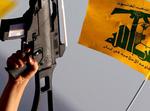
Qalamoun_battle_5.15Hizballah flag aloft in Qalamoun battle

President Obama has just lately adopted a plan some members of his National Security Council put forward: It is to get the Iranians moving on the nuclear deal by applying a painful prod in the form of a wedge in the Revolutionary Guards (IRGC) leadership. IRGC chief Gen. Ali Jafari is being elevated as a “moderate” and the “good guy” of the regime, while Gen. Soleimani, the Al Qods chief, who orchestrates IRGC’s external subversive operations, is fingered as the “bad guy.’

*****************

Two contenders are locked in a fateful contest to win the strategic Qalamoun Mts. on the Syrian-Lebanese border: The Syrian army and its Hizballah ally are fighting tooth and nail against the opposition Army of Conquest, which is spearheaded by Nusra Front, Al Qaeda’s Syrian branch. This battle has all of a sudden attained the proportions of a critical regional contest, which poses dire consequences for the Iran-Syrian-Hizballah alliance at large and its three prime movers, Syrian President Bashar Assad, Hizballah leader Hassan Nastrallah, and their overall commander, Iran’s Gen. Qassem Soleimani, head of the Al Qods Brigades.

With so much hanging in the balance, it is no wonder that Hizballah issued confused communiqués on the battle, until Nasrallah interceded Tuesday, May 5 to say: “We have not issued a statement, and we will not issue a statement. When we launch a (Qalamoun) operation, it will be obvious to everyone.”

The operation is, however, already in full flight. Neither Nasrallah nor anyone else can predict its outcome for sure, because a radical, unforeseen shift has taken place in the balance of strength. For the first time in nearly five years of Syrian civil war, the United States has lined up with Saudi Arabia, Turkey, Qatar and the UAE to give the Syrian opposition heavy weapons. Had they been supplied earlier, the war might have ended sooner and many of the hundreds of thousands of victims might have been saved.

Also, after a long silence, senior Obama administration spokesmen were finally willing to blast the Assad regime for his heinous war crimes.

Friday, May 8, three senior spokesmen confirmed as “strong and credible” the reports that the Syrian army had reverted to the use of chemical weapons. They were Robert Malik, US ambassador to the Hague-based Organization for the Prohibition of Chemical Weapons, US Undersecretary of State Antony Nlnken and US ambassador to the UN Samantha Power.

They were willing to “disclose” a fact – long common knowledge in the region – that the Syrian army had retained a part of its chemical stockpile. This disclosure exposed the much-acclaimed US-Russian accord concluded by Secretary of State John Kerry and Foreign Minister Sergei Lavrov at the end of 2013, forcing Assad to surrender his chemical arsenal, as a more or less dead letter.

On the heels of the US accusation, PCWU international inspectors revealed that traces of sarin and VX nerve agents were found in Syria last December and in January.

The new Obama administration’s diplomatic offensive against Assad came as the Qalamoun showdown attained momentous proportions, after two weeks of heavy Syrian military war reverses in the north. The sharp US edge was also directed at Gen. Soleimani, who is responsible for Iran’s supply of chorine-filled barrel bombs dropped by the Syrian air force on civilians in rebel-held areas.

Washington has refocused its attention on Syrian-Iranian chemical warfare out of two broader considerations:

1. Iran’s cavalier contempt for the international accords and treaties banning chemical weapons raises tough questions about Tehran’s credibility and trustworthiness for upholding the comprehensive nuclear accord currently in negotiation with the Six Powers. Can Iran be trusted to honor any commitment to allow the “intrusive inspections” of its nuclear sites, which President Barack Obama has pledged as the underpinning of any accord?

2.  President Obama has just lately adopted a plan some members of his National Security Council put forward: It is to get the Iranians moving on the nuclear deal by applying a painful prod in the form of a wedge in the Revolutionary Guards (IRGC) leadership. IRGC chief Gen. Ali Jafari is being elevated as a “moderate” and the “good guy” of the regime, while Gen. Soleimani, the Al Qods chief, who orchestrates IRGC’s external subversive operations, is fingered as the “bad guy.’

Jafary is also to receive economic incentives for accepting the nuclear accord, while denouncing Soleimani, leading light of Iran’s military interventions in Iraq, Syria and Yemen, may have the added benefit of forcing Tehran to pull in its horns in those conflicts.

Time will tell whether this tactic is effective. As matters stand in May 2015, it is hoped that undercutting Soleimani’s repute will impinge on the level of Iranian military involvement in Syria, Iraq and Yemen. A decision by Tehran to downscale its military support for the Syrian and Hizballah armed forces may undo them in the battle of Qalamoun. This defeat will seriously undermine Assad, Nasrallah and Soleimani. And so the Syrian opposition and its backers have all the more reason to push hard to win this fateful encounter.

Cartoonists are Controversial and Murderers are Moderate

May 5, 2015

Cartoonists are Controversial and Murderers are Moderate, Front Page Magazine, Daniel Greenfield, May 5, 2015

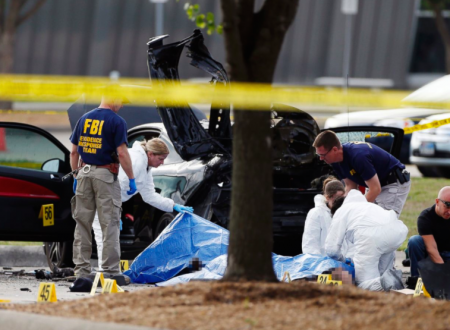
garland1-450x330

[I]f you believe the media, cartoonists are more controversial than killers. A former Muslim sketching a cartoon of Mohammed is bigoted, but justifying attacks on Jews is moderate. Plotting to overthrow the United States and replace it with an Islamic theocracy is right up the alley of your local civil rights group, but a cartoon contest threatens the nation and all of creation by bringing down the wrath of men who spent their time at moderate and Muslim organizations which only occasionally support terrorism.

****************

Controversial, intolerant and provocative. Mainstream media outlets broke out these three words to describe the “Draw the Prophet” contest, the American Freedom Defense Initiative and Pamela Geller.

While the police were still checking cars for explosives and attendees waited to be released, CNN called AFDI, rather than the terrorists who attacked a cartoon contest, “intolerant.” Time dubbed the group “controversial.” The Washington Post called the contest, “provocative.”

Many media outlets relied on the expert opinion of the Southern Poverty Law Center, a multi-million dollar mail order scam disguised as a civil rights group, which had listed AFDI as a hate group. Also listed as hate groups were a number of single author blogs, including mine, a brand of gun oil and a bar sign.

The bar sign, which hangs outside a bar seven miles outside Pittsburgh, appears to be made out of metal and plastic. It is reportedly unaware that it is a hate group and has made no plans to take over America.

The SPLC’s inability to conduct even the most elementary fact checking did not stop news networks from inviting its talking head on to suggest that AFDI got “the response that they — in a sense — they are seeking.” Neither CNN nor MSNBC were impolitic enough to mention that no AFDI supporter had used its materials to plan a killing spree, while at least one of SPLC’s supporters had done just that.

But being “controversial” and “provocative” has nothing to do with who is doing the shooting. It’s a media signal that the target shouldn’t be sympathized with. The Family Research Council, which was shot up by a killer using the SPLC’s hate map, is invariably dubbed “intolerant.” The SPLC, which targeted it, is however a “respected civil rights group” which provides maps to respected civil rights gunmen.

A contest in which Bosch Fawstin, an ex-Muslim, drew a cartoon of a genocidal warlord is “controversial” and “provocative,” while the MSA, which has invited Sheikh Khalid Yasin, who has inspired a number of terrorists, including apparently one of the Mohammed contest attackers, is a legitimate organization that is only criticized by controversial, intolerant and provocative Islamophobes.

Khalid Yasin has held such controversial and provocative views as claiming that the US created AIDS, that gays should be stoned to death and that women should be beaten. But the mosques and MSAs that he has appeared at have not been described as controversial, intolerant and provocative for inviting him.

Elton Simpson, the first gunman, attended the Islamic Community Center of Phoenix. The mosque was listed as being controlled by the Muslim Brotherhood’s North American Islamic Trust front group.

The Muslim Brotherhood holds such controversial and provocative views as “waging Jihad” against American infidels, “raising a Jihadi generation that pursues death” and “destroying the Western civilization from within.” Despite these extremely provocative and intolerant views, the Muslim Brotherhood is usually described by the media as a “moderate” group.

The Brotherhood’s American arm believes in launching a “Grand Jihad” to Islamize America. Its final phase calls for “Seizing power to establish their Islamic Nation” in the United State.

Some might say this is a slightly more controversial activity than drawing cartoons of a dead warlord.

The Islamic Community Center of Phoenix featured an appearance by Lauren Booth, a convert to Islam employed by Iran, who has been photographed with the leader of Hamas, and holds such controversial and provocative views, as the Boston Marathon bombing being faked and attacks on Jews being justified as “a frustrated backlash.

Some might say Booth’s views are controversial, provocative and intolerant. And that the gunman’s mosque was intolerant for inviting her. But don’t expect the media to call out terrorist intolerance.

Booth came as part of a fundraising effort for the Muslim Legal Fund of America, which funded the defense for Islamic Jihad boss Sami al-Arian and aided some of the terrorists involved in the provocative and controversial Fort Dix terror plot to “kill as many soldiers as possible.”

If the two Mohammed cartoon gunmen had survived, the Muslim Legal Fund of America might be having Lauren Booth spout Jewish conspiracies to fundraise on their behalf.

But if you believe the media, cartoonists are more controversial than killers. A former Muslim sketching a cartoon of Mohammed is bigoted, but justifying attacks on Jews is moderate. Plotting to overthrow the United States and replace it with an Islamic theocracy is right up the alley of your local civil rights group, but a cartoon contest threatens the nation and all of creation by bringing down the wrath of men who spent their time at moderate and Muslim organizations which only occasionally support terrorism.

Cartoons can be provocative, but the only people inspired to kill over them, are killers. No one took a shot at Gary “Punching Up” Trudeau, despite decades of mocking conservatives. None of the assorted arts projects that involve defiling and mocking the sacred symbols of Christianity and Judaism resulted in gunmen in body armor trying to storm a cartoon competition. And yet it keeps happening with Islam.

Satire exposes sociopaths and sociopathic ideologies. And it’s the very attack on the “controversial” and “provocative” contest that shows why exposing them is so important.

Elton Simpson had already been on the radar of the FBI. He should have been in jail, but Judge Mary H. Murguia, a Clinton appointee who has been bandied about as a possible Obama Supreme Court nominee, chose to believe a claim by his public defender that when he was taped talking about Jihad, it might have meant “an internal struggle to maintain faith,” instead of killing non-Muslims.

Simpson had said that Allah loves those who fight non-Muslims, that Jihadists go to paradise and stated, “I’m tellin’ you man. We gonna make it to the battlefield… it’s time to roll.”

But that was just too ambiguous for Judge Murguia, who wrote, “It is true that the Defendant had expressed sympathy and admiration for individuals who “fight” non-Muslims as well as his belief in the establishment of Shariah law, all over the world including in Somalia. What precisely was meant by “fighting” whenever he discussed it, however, was not clear.”

“Neither was what the Defendant meant when he stated he wanted to get to the ‘battlefield’ in Somalia,” she added.

If nothing else, events like these help clarify the question of just what “fighting” non-Muslims involves, and whether it’s an internal struggle to maintain faith or an external struggle waged with assault rifles.

Satire helps expose the idiocy and absurdity of our betters, whether it’s Gary Trudeau or Judge Murguia. Every act of Islamic terror discredits them and their dishonest worldview even further. And they know it.

We cannot fight Islamic terrorism until we deal with it and we cannot deal with it as long as we are burdened by a political establishment that frantically censors any mention of its existence or its agenda.

The two gunmen did not attack the cartoon event simply because they were offended, but because they believed that their religion gave them a mandate to impose Islamic law on Americans. Until we deal with this supremacist reality, any effort to fight Islamic terrorists will be futile and will ultimately fail.

The Mohammed cartoons are so vital because they expose the theocracy at the heart of Islamic terrorism. When Muslim terrorists attack cartoonists, they’re not fighting our foreign policy; they are killing and dying to impose the foreign policy of the Muslim Brotherhood and its numerous daughter groups, such as Al Qaeda, Hamas and ISIS, on us.

The controversial and provocative cartoonists go into battle with pencils in their hands. The terrorists come with body armor and assault rifles. This clash is what real political dissent looks like.

The cartoonists believe in the controversial, intolerant and provocative idea that America should not be a theocracy. But the only people who should be provoked by that provocative idea are the Jihadists who want to impose a theocracy on America and the useful idiots lying and denying on their behalf.

Hizballah terror attack on Golan stokes face-off between Israel and the Syrian-Hizballah alliance

April 27, 2015

Hizballah terror attack on Golan stokes face-off between Israel and the Syrian-Hizballah alliance, DEBKAfile, April 27, 2015

Israel over SyriaAlleged Israeli air strikes over Syria

Last week, the Obama administration managed to hold back the clash threatening to blow up opposite Yemen by the US, Saudi and Egyptian navies against an Iran convoy. Washington is likely to lean hard on Israel and Tehran to make sure that the current sparring does not run out of control and explode into a military showdown.

If this happened, Tehran would likely refuse to sign the nuclear deal which is nearing conclusion with the world powers led by the US.

*********************

According to Arab media, Israeli executed its third strike against Syrian and Hizballah targets in the Qalamoun area on the Syrian Lebanese border Sunday night, April 26 – shortly after Hizballah attempted to plant an explosive device near an Israeli Golan military post.

But then, Monday morning, anonymous Israeli sources improbably attributed this air strike to possible Syrian opposition action by the Al Qaeda’s Nusra Front.

Hizballah was meanwhile identified as responsible for the thwarted bomb attack on the Israeli Sheita military post guarding the northern Golan border with Syria. “Four terrorists placed an explosive on a fence near Majdel Shams. The air force thwarted the attack, killing all four,” a military spokesman said.
On the face of it, Israel’s purported third air strike over Syrian territory in five days, this time targeting the Wadi a-Sheikh and Al Abasiya regions of the Qalamoun mountains, was in retaliation for the thwarted Hizballah attack on the Golan.

However, DEBKAfile’s military sources give the exchange of blows a different slant: It is more likely to be the onset of a systematic Israeli campaign to wipe out Syrian-Hizballah military bases repositioned on the mountain range as depots and launching-pads for firing long-range missiles into Israel from Syrian territory.

A clue to this objective was offered Sunday night by Defense Minister Moshe Ya’alon in a firm statement that Israel would not permit Iran to arm Hizballah with advanced weapons. He did not explicitly admit to the air strikes of last Wednesday and Saturday,which were reported by Arab TV stations to have hit surface-to-surface missile depots on Qalamoun. But he nearly gave the game away. He accused Iran of trying to arm Hizballah with advanced weapons by every possible route. “We will not allow the delivery of sophisticated weapons to terrorist groups, Hizballah in particular… or allow Hizballah to establish a terror infrastructure on our borders with Israel,” the minister said, adding: “We know how to lay hands on anyone who threatens Israeli citizens, along our borders or even far from them.”

In a previous report, DEBKAfile disclosed that Syrian and Hizballah forces were on the point of conducting an offensive, under Iranian Revolutionary Guards officers, to flush Syrian rebels out of their last remaining pockets on the mountain slopes in order to clear the Syrian-Lebanese highway link for troop and arms convoys between the two countries.

We also reported that Hizballah had already relocated substantial military manpower and missile stocks from northern Lebanon to an enclave it now controlled on the Syrian Qalamoun mountains.

The anonymous sources’ attribution of Sunday night’s air strike to the Nusra Front sounded more like a lame cover story than a serious supposition. The Syrian opposition has never managed to use air power against the armies of Assad and Hizballah. Nusra did capture a few fighter-bombers from the enemy, but never acquired the technical infrastructure, ordnance or trained pilots to fly them.

This improbable theory would in any case contradict the warning message Israel was clearly addressing to Damascus and Hizballah that any violations of Israel’s red lines on their part would be met with action to knock over their military set-up on their shared border, section by section – even at the risk of a showdown with Iran in the Syrian arena.

Israel’s destruction of the Qalamoun war machine would have four far-reaching ramifications:

1. It would impair the Syrian army’s capabilities and strike at the heart of the Assad regime.

2. It would give a strong leg up to the Syrian opposition, especially Al Qaeda’s Nusra Front, which is emerging as the strongest and most effective paramilitary force in the Syrian opposition camp.

3. It would curtail the transformation of the Qalamoun Mts. into Hizballah’s most important forward base of attack against Israel.

It is hard to see Tehran standing by if the sparring escalates further and Israel continues to punch away at the Islamic Republic’s two most valuable strategic assets. Direct action by Iran would not be its style. Tehran would rather put the Syrian army and Hizballah up to stepping up its campaign of terror against Israel, possibly by expanding the arena across two borders into Lebanon and Israel itself.

Last week, the Obama administration managed to hold back the clash threatening to blow up opposite Yemen by the US, Saudi and Egyptian navies against an Iran convoy. Washington is likely to lean hard on Israel and Tehran to make sure that the current sparring does not run out of control and explode into a military showdown.

If this happened, Tehran would likely refuse to sign the nuclear deal which is nearing conclusion with the world powers led by the US.

IDF Eliminates Terror Cell Planting Bomb on Syrian Border

April 26, 2015

IDF Eliminates Terror Cell Planting Bomb on Syrian Border, Israel National News, Kobi Finkler, Ari Yashar, April 26, 2016

IDF forces on Sunday night eliminated a terrorist cell as it was trying to place an explosive on the Israeli-Syrian border on the Golan Heights.

Reportedly four terrorists were killed in the incident; no IDF soldiers were wounded in the exchange.

A senior IDF source said that an army surveillance patrol located the terrorists who had arrived at the border from Syria, and tracked them as they advanced.

When they reached the border and placed an explosive on it, IAF aircraft fired missiles at them, taking out every single terrorist member of the cell.

The IDF reports that the incident took place on Israeli territory just east of the security barrier.

The last security incident involving an attempted border bombing similar to this one took place last March, when an explosive was placed on the border. As a result of the explosion, an IDF paratrooper officer was critically wounded.

Earlier on Sunday Defense Minister Moshe Ya’alon (Likud) warned that Israel will strike Iranian attempts to smuggle advanced weapons to the Hezbollah terrorist organization in Lebanon, following Arab reports that an IAF airstrike the day before took out a Scud missile depot in Syria transferring weapons to Hezbollah.

According to the reports in Arabic media, a Scud depot in the Qalamoun mountain region rife with smuggling to Hezbollah was targeted, after a weapons convoy was hit last Wednesday.

“Iran continues to try and arm Hezbollah, even in these very days, and it hopes to equip the Lebanese terrorist organization with advanced and precise weapons,” said Ya’alon. “We won’t allow Iran and Hezbollah to establish a terrorist infrastructure on our border with Syria, and we will know to put our hands on all those who threaten citizens of Israel, along all our borders and even far from them.”


Arab sources report Israel air strikes against Syrian-Hizballah missile bases, Hizballah arms convoys. DEBKAfile: Hizballah secret airstrip possible target

April 25, 2015

Arab sources report Israel air strikes against Syrian-Hizballah missile bases, Hizballah arms convoys. DEBKAfile: Hizballah secret airstrip possible target, DEBKAfile, April 25, 2015

Hizbullah_has_constructed_an_airstrip_in_the_northern_Bekaa_Valley_24.4.15Hizballah’s first drone airstrip in Beqaa Valley

Unofficial sources in Syria and Lebanon, cited by the Arab TV channels Al Jazeera and Al Arabiya, reported Saturday, April 25, that the Israeli Air Force struck Hizballah and Syrian military targets in the Qalamoun mountains on the Syrian-Lebanese border from Wednesday, April 22, to Friday night April 24. There is no official word on these reports from Israel or Syria.

In the Wednesday attack, one person was said to have been killed.

The picture taking shape from these reports shows the targets to have been the 155th, 65th and 92nd Brigades of the Syrian army and Hizballah, two Hizballah arms convoys and Syrian long-range missile bases or batteries.

DEBKAfile’s military sources add that it is hardly credible that Israeli air raids spread over three days went unnoticed by the Syrian and Lebanese media. The Arab TV reports if confirmed may therefore be exaggerated in scope.

Friday, our own sources reported that Syrian and Hizballah forces under Iranian Revolutionary Guards officers were fighting to flush out the last rebel pockets on the strategic Qalamoun mountains, to clear the highway to Lebanon for unhindered military movements – most importantly, the weapons and personnel flowing regularly across the border between the two allies.

In past reports, DEBKAfile disclosed that Hizballah had transferred the bulk of its personnel and a large store of missiles from northern Lebanon to a protected enclave in Qalamoun under its control. The Iranian-backed Lebanese militia calculated that this base would be safer from Israeli attack than in Lebanon. And, in the event of war, Israel would be obliged to extend its front to Syria. According to Western intelligence sources, long-range missiles are part of the store Hizballah relocated to the Syrian mountains, whence they can be aimed at Israel.

The putative Israeli air strikes this week would therefore have aimed at thwarting Hizballah’s scheme to set up another war base in the Syrian-Lebanese mountains area.

Another likely target would be Hizballah’s first air strip for drones established in the northern Lebanese Beqaa Valley south of Hermel.

Jane’s, a British publication specializing in military affairs, this week ran satellite images showing the airstrip to be 670 m long and 20 m wide, too short for most transport aircraft, excepting the Iranian Revolutionary Guards short take-off An-74T-200 transports, which carry arms for Hizballah – although landing with a load on this mountain strip would be considered dangerous. The runway was apparently built to accommodate drones, such as the Ababil-3 and Shahed-129 types which Iran has delivered to Hizballah.

Hizballah copycats Hamas’ terror tunnels for Lebanese-Galilee border. No IDF solutions yet

April 21, 2015

Hizballah copycats Hamas’ terror tunnels for Lebanese-Galilee border. No IDF solutions yet, DEBKAfile, April 20, 2015

Gaza-Terror-Tunnels_4.15A Hamas terror tunnel – a model for Hizballah

Anxiety about the new terror tunnels they sense Hamas is excavating under their feet is no longer confined to Israelis living in proximity to the Gaza Strip, or the soldiers serving there. Israel’s northern borderland dwellers, who can see Hizballah’s yellow flags in from their balconies, have the same concerns. Their reports of mysterious underground explosions are confirmed by thousands of Israeli troops conducting field exercises in the neighborhood. The soldiers attest to heavy earthmoving equipment, explosions, burrowing, and shaking ground on the Lebanese side of the border, giving the area the appearance of a huge subterranean building site.

The Lebanese Shiite Hizballah group, Iran’s Lebanese surrogate, has clearly taken a leaf out of its Palestinian ally, Hamas’ book, for a fully mobilized terror tunnel project against northern Israel. Its manpower, including engineering units, is working under the guidance of Iranian Revolutionary Guards officers to sink a large network of tunnels leading under the border into Galilee. They are working efficiently and at top speed with the aid of modern Western-made earthmoving equipment and foreign professionals paid top dollar to manage the project.

Israel seems to be curiously passive in the face of its enemy’s ambitious enterprise. Only last week, the Defense Ministry’s Political Coordinator Amos Gilad denied any knowledge of terrorist tunnels reaching Israel from Lebanon.

However, Brig. Gen. Moni Katz, commander of the IDF’s Division 91, which is responsible for security of the Galilee region, told a different story: “To me it is obvious that the other side is busy digging tunnels. I don’t need intelligence to tell me this. Intuition is enough. There is no denying that this is what they are up to. Can I say they have completed a tunnel?” The general went on to reply: “I must assume they have. I can’t prove it or say for sure a tunnel has crossed into our territory. But my basic premise is that this is so and it is up to us to make plans to fit this case.”

Putting those plans into practice – which would necessitate destroying the tunnels either before they were built or at their entry-points – faces four major difficulties:

1. Close surveillance and first-class intelligence are required to keep track of hostile tunnel projects starting from the planning stage, the recruitment of manpower, the acquisition of engineering technology and equipment and registering the quantity of earth displaced and removed from the underground burrow.

2.  The digging process, which sound sensors should have no difficulty in detecting, is a relatively short and irregular process which can just as easily be camouflaged by surface activities.

3.  Locating a finished tunnel at the stage when it is still unused and relatively quiet calls for pinning down a number of variables, such as the type of soil, the depth, length, breadth and lining material used in building the tunnel, humidity, weather conditions on the surface as well as its environment, whether urban or rural.

4.  Locating such a tunnel – even when it is already in operational use by an enemy – poses another set of difficulties. In combat conditions, electronic listening devices would be drowned out by the fire and explosions of battle and, in the confusion of war, enemy troops would be hard to intercept as they moved in and out the tunnels.

A glance at the map shows that the danger of tunnel warfare should also be taken into account on Israel’s eastern front – where it would just as hard to detect as in the north and the southwest: The Arab populations inhabiting the West Bank and the Israeli side of the border – only hundreds of meters apart – are similar enough to keep counter-terrorism authorities on a high level of alert for the construction of tunnel links between the two territories.

Perhaps a succession of military chiefs should be held accountable for letting the tunnel terror peril develop to its current proportions. But it must also be said that no silver bullet has so far been invented to counter this primitive vehicle of terror, including the methods tried till now, such as buried microphones, optical fibers sensitive to seismic tremors, deep trenches along the border and an assortment of off-beat inventions.

In the view of our military analysts, any solutions would have to vary from sector to sector, adapted to the military and topographical features in each case and an intelligence assessment of the level of risk involved in counteraction. This effort would have to be directed by an interdepartmental, interagency administration directly answerable to the prime minister or defense minister.

COLUMN ONE: The diplomatic track to war

April 3, 2015

COLUMN ONE: The diplomatic track to war, Jerusalem Post, Caroline Glick, April 4, 2015
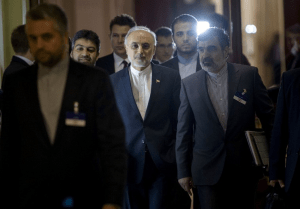
Iran negotiationsIran negotiations. (photo credit:REUTERS)

No one trusts Washington when Obama claims that he is committed to the security of Israel and the US’s Sunni allies in the region.

Iran is far more powerful than the PLO. But the Americans apparently believe they are immune from the consequences of their leaders’ policies. This is not the case for Israel or for our neighbors. We lack the luxury of ignoring the fact that Obama’s disastrous diplomacy has brought war upon us. Deal or no deal, we are again about to be forced to pay a price to maintain our freedom.
********************

Through their nuclear diplomacy, Obama and his comrades started the countdown to war.

The world powers assembled at Lausanne, Switzerland, with the representatives of the Islamic Republic may or may not reach a framework deal regarding Iran’s nuclear program. But succeed or fail, the disaster that their negotiations have unleashed is already unfolding. The damage they have caused is irreversible.

US President Barack Obama, his advisers and media cheerleaders have long presented his nuclear diplomacy with the Iran as the only way to avoid war. Obama and his supporters have castigated as warmongers those who oppose his policy of nuclear appeasement with the world’s most prolific state sponsor of terrorism.

But the opposite is the case. Had their view carried the day, war could have been averted.

Through their nuclear diplomacy, Obama and his comrades started the countdown to war.

In recent weeks we have watched the collapse of the allied powers’ negotiating positions.

They have conceded every position that might have placed a significant obstacle in Iran’s path to developing a nuclear arsenal.

They accepted Iran’s refusal to come clean on the military dimensions of its past nuclear work and so ensured that to the extent UN nuclear inspectors are able to access Iran’s nuclear installations, those inspections will not provide anything approaching a full picture of its nuclear status. By the same token, they bowed before Iran’s demand that inspectors be barred from all installations Iran defines as “military” and so enabled the ayatollahs to prevent the world from knowing anything worth knowing about its nuclear activities.

On the basis of Iran’s agreement to ship its stockpile of enriched uranium to Russia, the US accepted Iran’s demand that it be allowed to maintain and operate more than 6,000 centrifuges.

But when on Monday Iran went back on its word and refused to ship its uranium to Russia, the US didn’t respond by saying Iran couldn’t keep spinning 6,000 centrifuges. The US made excuses for Iran.

The US delegation willingly acceded to Iran’s demand that it be allowed to continue operating its fortified, underground enrichment facility at Fordow. In so doing, the US minimized the effectiveness of a future limited air campaign aimed at significantly reducing Iran’s nuclear capabilities.

With this broad range of great power concessions already in its pocket, the question of whether or not a deal is reached has become a secondary concern. The US and its negotiating partners have agreed to a set of understanding with the Iranians. Whether these understandings become a formal agreement or not is irrelevant because the understandings are already being implemented.

True, the US has not yet agreed to Iran’s demand for an immediate revocation of the economic sanctions now standing against it. But the notion that sanctions alone can pressure Iran into making nuclear concessions has been destroyed by Obama’s nuclear diplomacy in which the major concessions have all been made by the US.

No sanctions legislation that Congress may pass in the coming months will be able to force a change in Iran’s behavior if they are not accompanied by other coercive measures undertaken by the executive branch.

There is nothing new in this reality. For a regime with no qualms about repressing its society, economic sanctions are not an insurmountable challenge. But it is possible that if sanctions were implemented as part of a comprehensive plan to use limited coercive means to block Iran’s nuclear advance, they could have effectively blocked Iran’s progress to nuclear capabilities while preventing war. Such a comprehensive strategy could have included a proxy campaign to destabilize the regime by supporting regime opponents in their quest to overthrow the mullahs. It could have involved air strikes or sabotage of nuclear installations and strategic regime facilities like Revolutionary Guards command and control bases and ballistic missile storage facilities. It could have involved diplomatic isolation of Iran.

Moreover, if sanctions were combined with a stringent policy of blocking Iran’s regional expansion by supporting Iraqi sovereignty, supporting the now deposed government of Yemen and making a concerted effort to weaken Hezbollah and overthrow the Iranian-backed regime in Syria, then the US would have developed a strong deterrent position that would likely have convinced Iran that its interest was best served by curbing its imperialist enthusiasm and setting aside its nuclear ambitions.

In other words, a combination of these steps could have prevented war and prevented a nuclear Iran. But today, the US-led capitulation to Iran has pulled the rug out from any such comprehensive strategy. The administration has no credibility. No one trusts Obama to follow through on his declared commitment to prevent Iran from becoming a nuclear power.

No one trusts Washington when Obama claims that he is committed to the security of Israel and the US’s Sunni allies in the region.

And so we are now facing the unfolding disaster that Obama has wrought. The disaster is that deal or no deal, the US has just given the Iranians a green light to behave as if they have already built their nuclear umbrella. And they are in fact behaving in this manner.

They may not have a functional arsenal, but they act as though they do, and rightly so, because the US and its partners have just removed all significant obstacles from their path to nuclear capabilities. The Iranians know it. Their proxies know it. Their enemies know it.

As a consequence, all the regional implications of a nuclear armed Iran are already being played out. The surrounding Arab states led by Saudi Arabia are pursuing nuclear weapons. The path to a Middle East where every major and some minor actors have nuclear arsenals is before us.

Iran is working to expand its regional presence as if it were a nuclear state already. It is brazenly using its Yemeni Houthi proxy to gain maritime control over the Bab al-Mandab, which together with Iran’s control over the Straits of Hormuz completes its maritime control over shipping throughout the Middle East.

Israel, Jordan, Egypt, Saudi Arabia, Sudan and Eritrea, and their global trading partners will be faced with the fact that their primary maritime shipping route to Asia is controlled by Iran.

With its regional aggression now enjoying the indirect support of its nuclear negotiating partners led by the US, Iran has little to fear from the pan-Arab attempt to dislodge the Houthis from Aden and the Bab al-Mandab. If the Arabs succeed, Iran can regroup and launch a new offensive knowing it will face no repercussions for its aggression and imperialist endeavors.

Then of course there are Iran’s terror proxies.

Hezbollah, whose forces now operate openly in Syria and Lebanon, is reportedly active as well in Iraq and Yemen. These forces behave with a brazenness the likes of which we have never seen.

Hamas too believes that its nuclear-capable Iranian state sponsor ensures that regardless of its combat losses, it will be able to maintain its regime in Gaza and continue using its territory as a launching ground for assaults against Israel and Egypt.

Iran’s Shiite militias in Iraq have reportedly carried out heinous massacres of Sunnis who have fallen under their control and faced no international condemnation for their war crimes, operating as they are under Iran’s protection and sponsorship. And the Houthis, of course, just overthrew a Western-backed government that actively assisted the US and its allies in their campaign against al-Qaida.

For their proxies’ aggression, Iran has been rewarded with effective Western acceptance of its steps toward regional domination and nuclear armament.

Hezbollah’s activities represent an acute and strategic danger to Israel. Not only does Hezbollah now possess precision guided missiles that are capable of taking out strategic installations throughout the country, its arsenal of 100,000 missiles can cause a civilian disaster.

Hezbollah forces have been fighting in varied combat situations continuously for the past three years. Their combat capabilities are incomparably greater than those they fielded in the 2006 Second Lebanon War. There is every reason to believe that these Hezbollah fighters, now perched along Israel’s borders with Lebanon and Syria, can make good their threat to attack and hold fixed targets including border communities.

While Israel faces threats unlike any we have faced in recent decades that all emanate from Western-backed Iranian aggression and expansionism carried out under a Western-sanctioned Iranian nuclear umbrella, Israel is not alone in this reality. The unrolling disaster also threatens the moderate Sunni states including Jordan, Egypt, Saudi Arabia, Kuwait and the United Arab Emirates. The now regional war in Yemen is but the first act of the regional war at our doorstep.

There are many reasons this war is now inevitable.

Every state threatened by Iran has been watching the Western collapse in Switzerland.

They have been watching the Iranian advance on the ground. And today all of them are wondering the same thing: When and what should we strike to minimize the threats we are facing.

Everyone recognizes that the situation is only going to get worse. With each passing week, Iran’s power and brazenness will only increase.

Everyone understands this. And this week they learned that with Washington heading the committee welcoming Iran’s regional hegemony and nuclear capabilities, no outside power will stand up to Iran’s rise. The future of every state in the region hangs in the balance. And so, it can be expected that everyone is now working out a means to preempt and prevent a greater disaster.

These preemptive actions will no doubt include three categories of operations: striking Hezbollah’s missile arsenal; striking the Iranian Navy to limit its ability to project its force in the Bab al-Mandab; and conducting limited military operations to destroy a significant portion of Iran’s nuclear installations.

Friday is the eve of Passover. Thirteen years ago, Palestinian terrorists brought home the message of the Exodus when they blew up the Seder at Netanya’s Park Hotel, killing 30, wounding 140, and forcing Israel into war. The message of the Passover Haggada is that there are no shortcuts to freedom. To gain and keep it, you have to be willing to fight for it.

That war was caused by Israel’s embrace of the notion that you can bring peace through concessions that empower an enemy sworn to your destruction. The price of that delusion was thousands of lives lost and families destroyed.

Iran is far more powerful than the PLO. But the Americans apparently believe they are immune from the consequences of their leaders’ policies. This is not the case for Israel or for our neighbors. We lack the luxury of ignoring the fact that Obama’s disastrous diplomacy has brought war upon us. Deal or no deal, we are again about to be forced to pay a price to maintain our freedom.