In interviews, Zeinab and Mohammed Jawad Nasrallah speak of how Israeli strikes damaged morale in Hezbollah terror group, say father was noticeably ‘no longer with us’
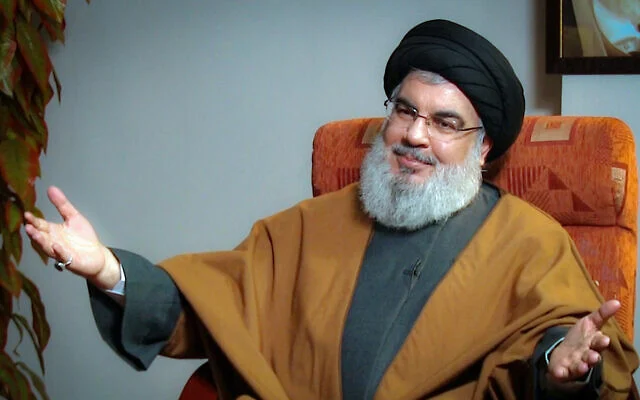
Hezbollah chief Hassan Nasrallah became depressed and was emotionally changed by Israel’s exploding pager attack on his operatives as well as by strikes that decimated the group’s leadership, his family told Lebanese media.
His son said Nasrallah was noticeably no longer the same man, and his daughter revealed that he cried after the beeper attack.
Nasrallah’s son, daughter, and three grandchildren spoke to Al-Manar television for interviews that were broadcast on Friday.
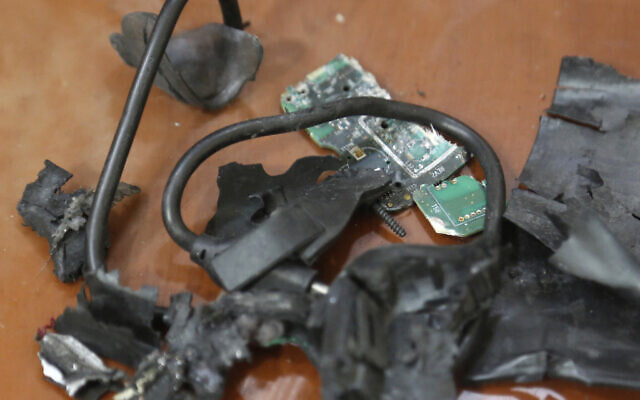
On September 17, 2024, thousands of pagers used by Hezbollah across Lebanon suddenly exploded, killing dozens of operatives and maiming thousands, marking the beginning of Israel’s escalation against the terror group after almost a year of persistent Hezbollah rocket fire that displaced some 60,000 residents of the north, and was met with Israeli airstrikes.
The pagers, laced with explosives, were detonated via an encrypted message that required users to hold the devices with both hands, maximizing the likelihood of the subsequent blast causing debilitating injuries.
Over the next several weeks, Israeli airstrikes pounded Hezbollah, wiping out almost all of its leaders — including Nasrallah himself — and depleting the Iran-backed terror group’s fighting abilities. A ceasefire was eventually reached at the end of November.
Nasrallah’s daughter Zeinab Nasrallah told Al-Manar that she called her mother the day after the beeper explosions to find out how her father had reacted.
“She told me that he cried,” Zeinab Nasrallah said, according to an English translation of her comments on the site.
Son Mohammed Jawad Nasrallah said that his father sank into a serious depression after a July airstrike killed Hezbollah military commander Fuad Shukr in his Beirut apartment, and then the beeper attacks.
Everyone who met him said “he is no longer with us,” Jawad Nasrallah recalled.
In addition, Israel’s relentless bombing campaign, once the conflict escalated into open war, had a profound effect on the Hezbollah leader, and directly impacted the terror group’s morale, Nasrallah said.
He also said that his father was aware of the danger he faced, but apparently had dropped his guard and become less cautious than he had in the past about evading a possible Israeli strike against him.
Ten days after the beeper attack, Israel killed Nasrallah in a massive bombing of his Beirut underground bunker. He had led the terror group for three decades.
Last December, two former Mossad agents spoke to CBS’s 60 Minutes about the beeper operation, with one of them asserting that the veteran Hezbollah leader saw pagers exploding and injuring people who were right next to him in his bunker.
“Nasrallah — when we operated the beeper operation — just next to him in the bunker several people had a beeper receiving the message. And in his own eyes, he saw them collapsing.”
Asked how he knew that, the agent said, “It’s a strong rumor.”
Two days after the attack, Nasrallah gave a speech.
“If you look at his eyes, he was defeated,” the agent said in accented English. “He already lose the war. And his soldier look at him during that speech. And they saw a broken leader.”
Last week, Mossad chief David Barnea described the beeper operation as a “turning point” in the fight in Lebanon.
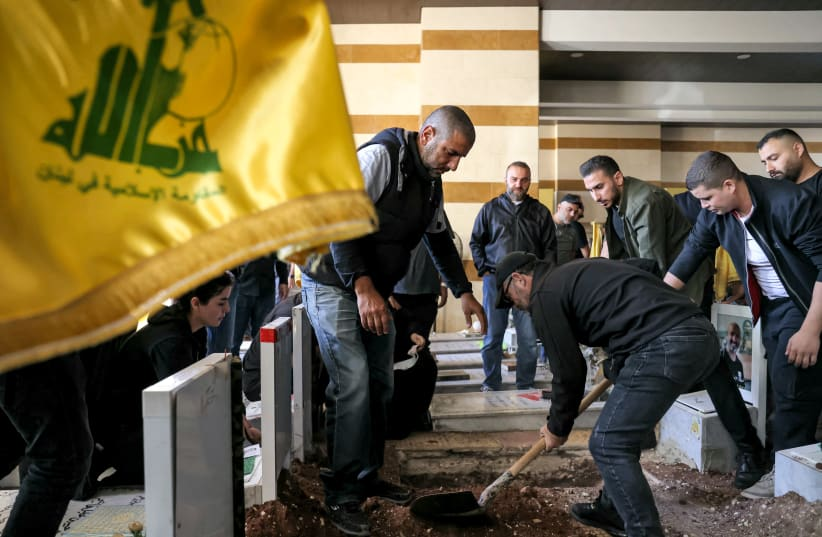
Nasrallah was buried last week in a Beirut funeral ceremony. As the funeral began at the Camille Chamoun Sports City Stadium, Lebanon’s biggest sports arena, Israeli warplanes flew at low altitude over Beirut.
The beeper attacks, swiftly attributed to Israel, came as Israel began to step up a counteroffensive against Hezbollah, which began striking Israel the day after the allied Palestinian terror group Hamas’s October 7, 2023, attack.
Some 1,200 people in Israel, mostly civilians, were killed in the Hamas onslaught, and 251 were taken hostage, sparking the war in Gaza.
A complex, three-phase ceasefire with Hamas began last month, though its future is unclear, as only the first stage has been completed.
After over a year of launching aerial attacks against northern Israel, Hezbollah has reportedly begun to crack as the Iran-backed terror group has experienced a wave of desertions, sources told the Arabic independent online newspaper Elaph in a report published Sunday.
Hezbollah’s membership was reportedly shaken after pager explosions saw 1000s of its members wounded, its leadership eliminated in Israeli airstrikes, including Hezbollah head Sayyed Hassan Nasrallah, and now an Israeli ground operation into southern Lebanon.
Those defecting, according to the source, are not reporting when summoned by senior terrorists and not waiting in their assigned locations. Other terrorists have reportedly fled to Syrian territory with their families, attempting to avoid any confrontation with Israel at close range.
Trying to survive its members’ abandonment, sources told Elaph that the terror group has begun sending reinforcements to southern Lebanon to confront Israeli soldiers.
As a result of combatants abandoning their posts, Hezbollah is now reportedly struggling to communicate with its men on the ground. There are also fears that the defections, now mainly a phenomenon in southern Lebanon, will spread to terrorists throughout the country, the source claimed.
The confrontations on the southern border and escape by Hezbollah combatants have reportedly left the group struggling to recruit new terrorists to fuel its fight against Israel.
Hezbollah’s attacks on Israel
Hezbollah began firing on Israel only a day after Hamas’s October 7 massacre in southern Israel – forming part of Iran’s ‘Axis of Resistance.’ In addition to some soldiers, the rocket fire has killed a number of civilians, including 12 Druze children in Majdal Shams, and forced tens of thousands of Israelis to evacuate their homes.
The constant fire and increasing civilian toll eventually pushed the war cabinet to expand the goals of the Israel-Hamas War to include the safe return of Israel’s northern residents.
The ground operations, which were not without controversy from Israel’s Western allies and the United Nations, have seen numerous Hezbollah structures destroyed – including tunnels that would have enabled the terror group to reenact their own October 7 attacks in the North.
Israel has been consulting the US on its retaliation for the salvo of nearly 200 Iranian missiles launched against it this month, narrowing down targets to Iran’s Islamic Revolutionary Guard Corps and its volunteer paramilitary force. There is a third, more indirect, goal: encouraging regime change.
Benjamin Netanyahu, the Israeli prime minister, hinted as much in a video statement, billed as an address to the Iranian people, several days before Iran’s missile attack. The speech in English was perhaps aimed at western countries, and the Iranian opposition, which is based abroad, critics said.
“Don’t let a small group of fanatic theocrats crush your hopes and your dreams … The people of Iran should know – Israel stands with you,” Netanyahu declared.
“When Iran is finally free – and that moment will come a lot sooner than people think – everything will be different.”
Netanyahu hopes that Israel’s future airstrikes will help to weaken the Islamic Revolutionary Guard Corps (IRGC) and the Basij paramilitary force, two pillars of the Islamic regime that have been instrumental in putting down mass protests against it.
The IRGC is both an elite military force and a dominant presence in Iran’s economy, while the Basij, a loyalist militia regularly used as foot soldiers, has branches across the country.
“They’re planning to hit them hard,” a western official said this week of Israel’s plan, adding that this could encourage Iran’s opposition.
A realist, Netanyahu would not believe that one wave of airstrikes, or even several, would topple the regime by encouraging a popular uprising.
But some in Israel’s leadership, including the far-right coalition ministers who support harsh action against Iran, believe that this is a defining moment that can change the power balance in a region that feels caught between the US and Israel on the one hand, and Iran and its “axis of resistance” on the other.
That view has been reinforced by the rapid decapitation of Hezbollah, Iran’s most powerful asset among the network of proxies and allies it had cultivated for decades to counter Israel.
Firas Maksad, senior fellow with the Middle East Institute think tank, said: “The Biden administration and the Israelis have come to a general understanding that the first stage of Israeli response will be limited to military and the IRGC and Basij, and they will stay away from nuclear and oil facilities. Going after the Basij and IRGC will, some hope, put further strain on the relationship between them and the people.”
Although the US may also not believe that the Islamic regime in Iran could be immediately threatened by a popular revolt, it may have indulged the idea to persuade Israel not to strike nuclear and oil facilities.
The US wants to avoid attacks on these assets for fear of escalation: either Tehran accelerating its enrichment of uranium to create a nuclear bomb, or to lash out against oilfields in the region, driving up prices before next month’s presidential election and giving Donald Trump, the Republican candidate, more fodder for his campaign.
Any attack by Israel is also likely to draw further reaction from Iran. “That needs to be thought of as the first salvo,” Maksad said. “There will be an Iranian response and that will put us past the elections in the US. At that point, Netanyahu will have more flexibility to respond in a more expansive way.”
Israel’s recent successes against Hezbollah in Lebanon, including sabotage attacks that reduced the Shia group’s fighting strength and airstrikes that have killed key figures, including Hassan Nasrallah, its leader, could embolden the hawkish ideologues in Netanyahu’s governing coalition to further expand the war against its arch-enemy.
“I would be surprised if the wider security apparatus are on board for that – it’s an impossibility for Israel to have that level of success,” Sanam Vakil, Chatham House’s Middle East and North Africa program director, said.
Opponents of Khamenei’s repressive Islamic regime far outweigh its conservative supporters. Turnout in parliamentary elections and a presidential election this year registered record lows and calls for boycotts, two years after the repression of mass protests against the treatment of women.
The trend may point to a growing conviction among Iranians that regime change, and not reform, is required, but few would welcome it at the behest of a foreign power, analysts say. And Iran, feeling threatened, could crack down pre-emptively on any signs of dissent.
The cleverness of the Mossad never ceases to amaze me…
Disclosing details of alleged Mossad operation, sources tell Washington Post detonation signal was an encrypted message that required double-button press to reveal contents
The signal that detonated thousands of Hezbollah pagers last month was an encrypted message that required users to hold the devices with both hands, maximizing the chances of causing debilitating injuries, sources said in a Saturday report.
An alleged Israeli operation blew up pagers and walkie-talkies used by the Lebanese terror group on September 17 and 18, kicking off an ongoing series of Israeli airstrikes that have dealt immense blows to Hezbollah, including the killing of its leader, Hassan Nasrallah.
Israeli, US, and Middle Eastern officials estimate that up to 3,000 Hezbollah members were killed or injured by the pagers, as well as an unknown number of civilians, the Washington Post reported on Saturday.
The Post report — which cited Israeli, Arab, and American security officials, politicians and diplomats, as well as Lebanese sources close to Hezbollah, all of them anonymous — said the pagers were made in Israel and conceived by the Mossad spy agency.
After Mossad officials revealed the capability to elected officials on September 12 and the operation was allegedly okayed by Prime Minister Benjamin Netanyahu’s cabinet, thousands of Hezbollah operatives got a message telling them they had received an encrypted message that required pressing two buttons — effectively forcing them to use both hands, and to be injured in both hands when the blasts occurred as they pushed the buttons.
“You had to push two buttons to read the message,” one official explained, so that the blast would likely “wound both their hands,” rendering the user “incapable to fight.”
The report also revealed that hundreds of booby-trapped walkie-talkies — which were detonated a day later — had been used by Hezbollah since 2015, providing Israel continued real-time access into the terror group’s communications for many years before the devices were weaponized in a more literal way.
Hezbollah had purchased pagers to avoid Israeli communications surveillance. Earlier this year, a sales pitch convinced the group to buy large-battery AR924 pagers from Apollo, a known Taiwanese brand.
The contact came from a woman who had in the past been a Middle East sales agent for Apollo and who was trusted by Hezbollah. Officials declined to reveal her identity. According to the Washington Post report, she had set up her own company to sell pagers under the Apollo brand.
Previous media reports tracked down a woman called Cristiana Bársony-Arcidiacono, the CEO of Budapest-based BAC Consulting, which the Taiwanese trademark holder of the pagers said was responsible for manufacturing the devices.
Among the touted advantages of the pagers was their waterproof design and a large battery that enabled months of use without charging.
The terror group bought 5,000 devices and manufacture was outsourced. Unknown to Hezbollah — and apparently Apollo and the saleswoman — they were assembled in Israel with a small amount of explosive added to each battery.
The pagers were eventually distributed to what the report described as Hezbollah’s “mid-level fighters and support personnel” in February.
The tiny explosives in the pagers and the walkie-talkies were concealed in a way that taking apart the device — or even X-raying it — could not reveal the danger to Hezbollah members, who readily embraced the Israeli-designed and -manufactured gadgets, sources told the Post. Israeli officials assess that some of the devices did in fact undergo such examinations, the report said.
The existence of the pager setup was only revealed to senior Israeli cabinet members on September 12, when Netanyahu held a meeting with security advisers about dealing with Hezbollah, the Israeli officials said.
US officials said that Washington was not told about the pagers or the discussions about exploding them.
Alongside using the pagers, Israeli officials also discussed targeting Hezbollah leader Nasrallah, whose movements and location Israel had known for years despite his furtive lifestyle, officials said.
Killing Nasrallah was expected to lead to an open war with Hezbollah and, possibly, Iran. In addition, the US had been pushing Nasrallah to agree to a ceasefire in Lebanon that would satisfy Israel’s demand that Hezbollah withdraw its fighters from border areas.
US and Middle Eastern officials said that while Israel had supported the US plan, Nasrallah refused, insisting that a halt in the fighting only come after a ceasefire in Gaza.
On September 17, the signal was sent to detonate the pagers and a message in Arabic appeared on their screens reading, “You received an encrypted message.”
When the operators pressed the two required buttons to read the message, the pagers exploded. Less than 60 seconds later, the Post reported, thousands of other pagers also exploded even without the pair of buttons being used.
The following day, hundreds of Hezbollah walkie-talkies also exploded, causing deaths and injuries.
Nasrallah was killed on September 27 in a massive attack on his Beirut bunker.
The fighting with Hezbollah began when the Iran-backed terror group started to launch cross-border rocket and drone fire last October 8, one day after Palestinian terror group Hamas led a devastating attack on Israel that opened the ongoing war in the Gaza Strip. Hezbollah has since carried out near-daily attacks in support of Hamas.
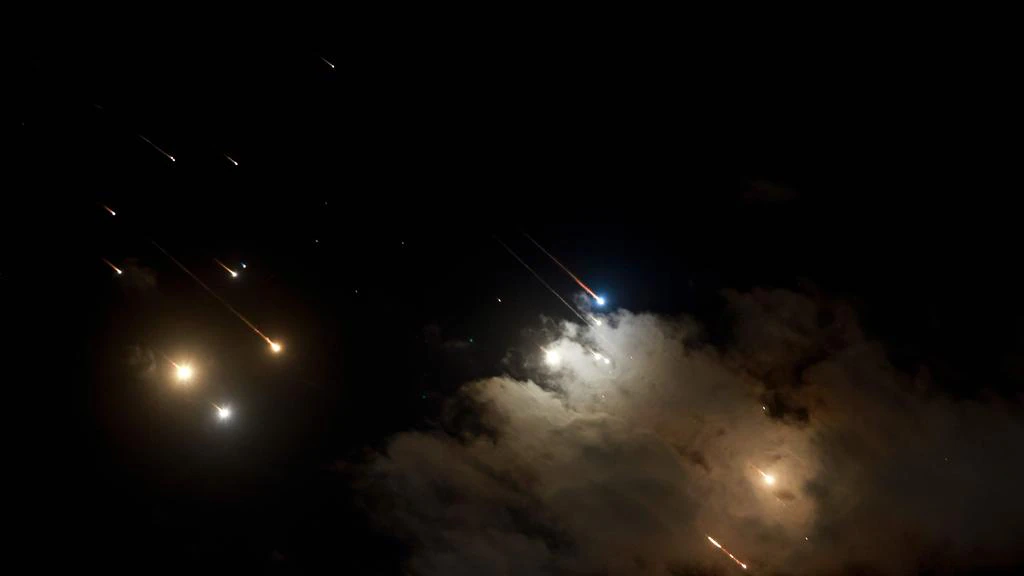
The fighting has also drawn in direct rocket barrages from Iran. Last week the Islamic Republic fired around 200 rockets at Israel, causing some damage, though most were either intercepted or hit open areas.
One of the apparent targets of the barrage was Mossad headquarters near Tel Aviv.
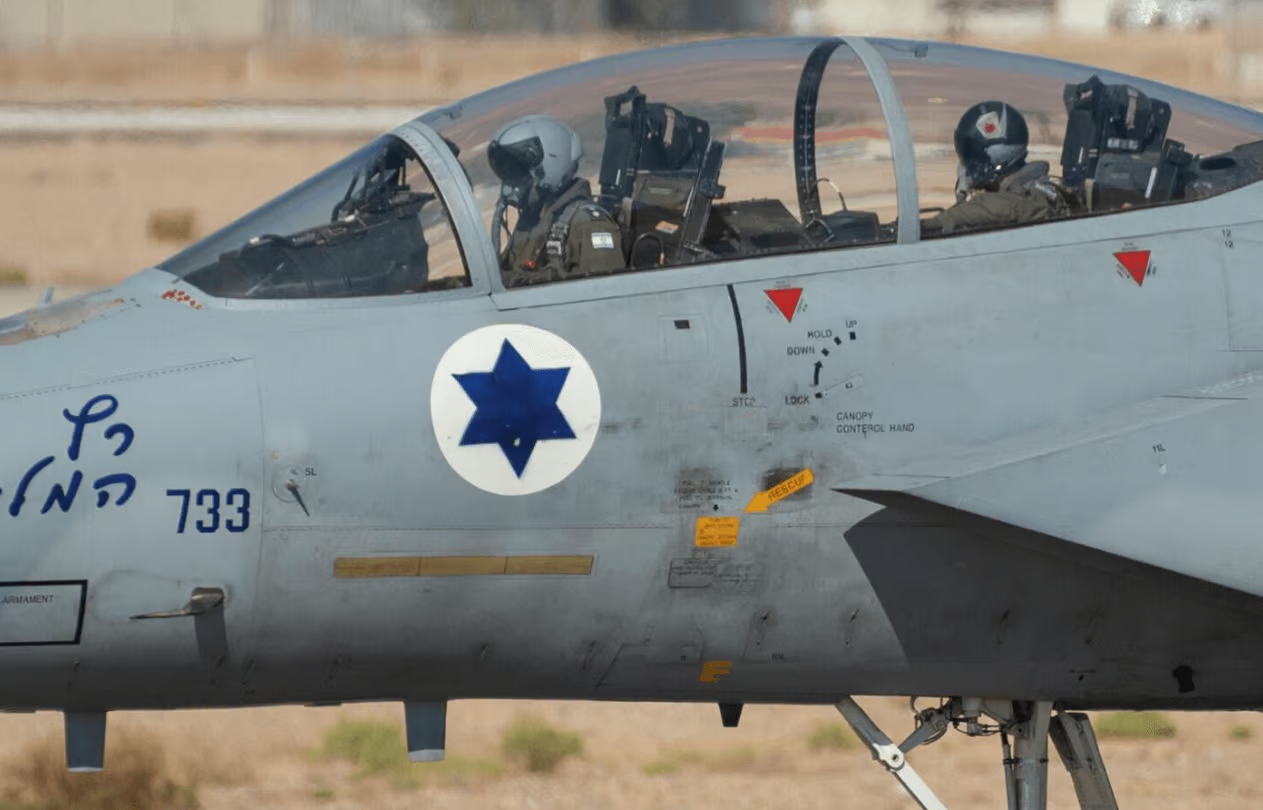
In a historic and high-stakes operation, Israel’s Air Force has successfully eliminated Hezbollah Secretary-General Hassan Nasrallah, marking a critical milestone in the ongoing conflict. Brig. Gen. Amichai Levin, commander of Hatzerim Air Force Base, confirmed the strategic importance of this mission during a joint interview with Lt. Col. M, commander of the elite 69th “Hammers” Squadron, responsible for executing the strike.
Despite the complex situation on the northern front, Levin stressed that Israel remains focused on three main objectives: returning hostages held by Hamas, dismantling the terrorist organization, and ensuring the safe return of northern residents. “The base, the squadron, and the entire Israeli Air Force (IAF) continue to operate intensively in Gaza, but separating the northern front from Gaza is essential to achieving these goals,” Levin stated.
The elimination of Nasrallah, who had long orchestrated Hezbollah’s activities against Israel, is being hailed as a game-changer for the entire region. According to Levin, “Nasrallah’s death will have a profound impact that extends beyond Lebanon’s borders. This operation moves us closer to our war objectives, sending a clear message to all those who threaten Israel.”
The mission was a culmination of years of intelligence gathering and operational planning. It showcased the exceptional coordination between the IDF’s Military Intelligence Directorate and the Air Force. “The intelligence we received was of the highest caliber. Without such precise information, an operation of this magnitude would not have been possible,” said Levin. “It also highlighted the Air Force’s initiative, audacity, and determination.”
Lt. Col. M, the 37-year-old commander of the 69th Squadron, revealed the depth of personal connection many of his team members have with the northern front. M’s family, including his wife’s relatives, were among the thousands evacuated from kibbutzim near the Lebanese border, placing the mission into even sharper focus for the squadron.
The operation took place in the heart of Beirut, targeting Nasrallah’s stronghold in the Dahiya district. “We knew exactly who we were going after, and we made sure everything went according to plan,” M said. He detailed how the mission involved a diverse formation of pilots, from seasoned veterans to younger members, flying together to ensure its success. “There were no hitches neither in the intelligence aspect, nor in the planes or the execution itself. It was flawless.”
M described the emotional aftermath of the mission, sharing the profound sense of accomplishment that came after landing back in Israel. “We gave three hugs: one to the aircrews, realizing we had just completed something historic; one to our technical officer, whose family has been directly affected by Hezbollah’s violence; and the third, of course, to my wife.”
Levin also underscored the importance of deception and strategy to ensure that Nasrallah remained unaware of the strike until it was too late. “Keeping the target stable and preventing any early warning to Hezbollah was a major challenge, but we’ve refined these techniques over time with the help of some of our brightest young officers.”
While the mission was a significant blow to Hezbollah, both Levin and M stressed that Israel’s work is far from over. The northern front remains volatile, with continued rocket fire from Hezbollah, and the threat from Hamas in Gaza persists. “We still have a long road ahead. The hostages are still in Gaza, and Hamas has yet to be dismantled. But Nasrallah’s death brings us closer to securing Israel’s borders and ensuring the safety of our people,” said Levin.
Despite the operational success, Levin also addressed questions about the protests that rocked Israel in 2023, some of which involved reservists from the 69th Squadron. He was quick to emphasize that these events do not reflect any lack of commitment from the squadron’s personnel. “Let there be no doubt about their dedication to Israel. Many of those involved in the protests are the same people who have flown countless missions, risking their lives for the country,” Levin remarked.
As Israel continues its campaign on multiple fronts, the elimination of Nasrallah stands as a testament to the capabilities of the Israeli Air Force and the unity of purpose among its military forces. The mission not only struck a major blow to Hezbollah but also demonstrated Israel’s unwavering resolve to defend its people.
Israel’s Air Force will continue its relentless pursuit of peace and security. With each operation, the IDF gets closer to achieving its objectives, ensuring a brighter future for Israel and its citizens.
The mission may be over, but the fight for Israel’s security continues.
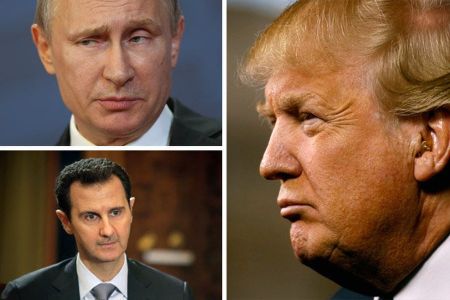
Israel has quietly warned the Trump administration that if this combined hostile force moves any closer, the IDF will have no option but to step in to push it back. Clearly, the understandings reached between presidents Donald Trump and Vladimir Putin were not holding up in this sector.
The next few days are therefore fraught with three critical uncertainties: (a) Will ISIS persevere in its westward movement, or be halted by military counteraction? (b) Will the Syrian army, Hizballah and pro-Iranian forces push forward from Beit Jinn to Quneitra and Israel’s Golan border? Or will they be stopped? And (c) Will the Trump-Putin understandings hold water, or will they be scuttled by (a) and (b)?
*****************************
While openly blaming Syria (and Russia) for giving ISIS free rein, US quietly rebukes Moscow for not reining in the pro-Iranian push towards Israeli border.
“The Syrian regime has failed to prevent the resurgence of ISIS on their own soil,” said British Maj. Gen. Gedney, deputy commander of Strategy and Support for the US-backed coalition to defeat the Islamic State terror group. And even in areas where Syrian forces have intensified their efforts against ISIS, progress has been, at best, fleeting, he said. “We’ve got no intention to operate in areas that are currently held by the [Assad] regime.”
DEBKAfile places the coalition general’s comments against the backdrop of the quiet deal struck earlier this month between Presidents Donald Trump and Vladimir Putin. That conversation charted a division of labor in the Syrian arena to avoid clashes between their forces. It was understood that Russia would reciprocate for US consent to abstain from operating west of the Euphrates (in Assad-ruled domains) by curbing Turkish, Iranian and Hizballah operations, especially in border regions.
Gedney’s comments, while only directly referring to ISIS, also coincided Wednesday with the fall of the Beit Jinn enclave in one of those operations.<
He went on to say that a “limited numbers of ISIS militants… seem to be moving with impunity through regime-held territory,” and pointed to a new concentration outside the US al-Tanf post in the Syrian-Jordanian-Iraqi border triangle. “We’ve clearly seen a lot of operations by pro-regime forces, Russian-backed Syrian forces over to the east of the [Euphrates] river,” Gedney said. “We’ve questioned the effectiveness of some of those operations.” Syria and Russia must do more to wipe out ISIS in areas still controlled by the regime, US officials insist.
The US-led coalition is clearly pressing for a decision as to who will assume responsibility for dealing with this rising ISIS threat. DEBKAfile’s sources note that, alongside this question, is the one the US is implicitly addressing to the Russians regarding another terrorist threat: This one is posed by the fall of Beit Jinn opposite an IDF outpost in the foothills of Mount Hermon to a combined Syrian-Hizballah-militia force under the command of Iranian Revolutionary Guards officers. At the moment, this combined force stands 11km from the Israeli border and appears to be poised to continue its victorious momentum for an assault on the Quneitra pocket on the doorstep of Israeli Golan, unless it is stopped.
Israel has quietly warned the Trump administration that if this combined hostile force moves any closer, the IDF will have no option but to step in to push it back. Clearly, the understandings reached between presidents Donald Trump and Vladimir Putin were not holding up in this sector.
The Trump-Putin understanding was first revealed on Dec. 22 in DEBKA Weekly 783 (for subscribers) and the DEBKA Files ILTV show on Dec. 25. According to our exclusive sources, that understanding was sealed in a long telephone conversation on the Syrian question between the two presidents on Dec. 14.
Until now, it was understood in Washington and Jerusalem that Russia would reciprocate for US consent to abstain from operating west of the Euphrates (in Assad-ruled domains) by curbing Turkish, Iranian and Hizballah operations. Their deal hinged on two major points:
The war on ISIS in eastern Syria. A joint war room run by Russian and US-backed Kurdish YPG militia officers was to be established to deploy troops for blocking the westward movement of ISIS forces. (Hence Gen. Gedney’s complaint about this continuing movement.)
Russia and the US would team up to thwart military operations by Iran, Hizballah and Turkey in areas controlled by the Assad regime, especially in proximity to Syria’s borders with Turkey, Israel and Jordan. On this point, Washington undertook to warn the Turks off their plans to invade northwestern Syria and seize control of Idlib province, whereas Moscow was to have instructed Damascus, Tehran and Hizballah to desist from military activity on those borders. This point has likewise gone by the board.
According to DEBKAfile’s military sources, Moscow claims that Putin’s commitment to Trump was met by withholding Russian air support from the disputed Syrian-Hizballah operations. But, in actual fact, the Iranian-commanded force circumvented the Russians and their deal with the Americans by fighting for Beit Jinn without Russian air support and winning the day without its help. This was more than a tactical victory to throw in Israel’s face; it set up a new reality in Syria, whereby Iran and Hizballah can cock a snoot at Moscow, its air cover and its deals with the Americans and go forward to win battles regardless and without Russian help.
The next few days are therefore fraught with three critical uncertainties: (a) Will ISIS persevere in its westward movement, or be halted by military counteraction? (b) Will the Syrian army, Hizballah and pro-Iranian forces push forward from Beit Jinn to Quneitra and Israel’s Golan border? Or will they be stopped? And (c) Will the Trump-Putin understandings hold water, or will they be scuttled by (a) and (b)?
Two significant military events were reported early Saturday, Dec. 2, by Arab and Russian sources – neither of them officially confirmed. The first was an Israeli airborne missile attack on the Syrian army’s 1st Division’s ammunition dump near Al-Kiswah 14km southwest of Damascus and 50km from the Golan. The target was identified as an Iranian military base which the BBC reported on Nov. 10 to be under construction in the Syrian military compound at Al-Kiswah. DEBKAfile’s military sources refuted the BBC report.
Other sources reported that the Israeli target early Saturday was a Hizballah position near the Syrian 1st Division’s 91st Brigade base in the same area. Syrian military sources and Arab social media released videos showing Syrian air defense intercepting some of the Israeli missiles while others hit the target. Some sources claimed they were launched from Lebanese air space. A short time later, the Syrian army announced that units of its 7th armored division and the 42nd brigade of its 4th division had just launched an offensive on the Beit Jinn pocket on Mount Hermon a little more than 4km away from IDF positions on the mount. A Druze village is located inside this enclave. The Syrian military statement omitted to mention the fact that Hizballah forces are spearheading this attack.
In the crazy world of Middle East wars, politics and shifting alliances, it is hardly surprising that relations between Israel and Saudi Arabia are warming up from their deep freeze. In fact this is an alliance (“friendship” is too strong a word to use) that has been revving in the background for quite some time, ever since the rise of ISIS and more importantly, the tailwind given to Iran by our “friends” in the Obama administration and their European allies through the JCPOA, aka the Iran nuclear deal.
In the interim there has been some political upheaval in the kingdom, with princes and heirs to the throne being replaced at an eye-watering pace. The newest heir to the throne is determined to drag the medieval country into the 21st century, by whatever means:
(CNN)Saudi Arabia’s Prince Mohammed bin Salman, first in line to inherit the throne from his 81-year-old father, is not a patient man. The 32-year-old is driving a frenetic pace of change in pursuit of three goals: securing his hold on power, transforming Saudi Arabia into a very different country, and pushing back against Iran.
Mohammed Bin Salman, Crown Prince of Saudi Arabia
In the two years since his father ascended the throne, this favorite son of King Salman bin Abdulaziz has been spectacularly successful at achieving the first item on his agenda. He has become so powerful so fast that observers can hardly believe how brazenly he is dismantling the old sedate system of family consensus, shared privilege and rigid ultraconservatism.
In the process, however, MBS, as the crown prince is known, is making a lot of enemies.
…
Much of the prince’s agenda is laudable and long overdue. He has no interest in democratic reforms, but he does want to introduce social reforms, and is making some progress on that front. That, too, is making him enemies among the old guard.
He has vowed to improve the status of women, announcing that the ban on women driving will be lifted next year, and limiting the scope of the execrable “guardianship” system, which treats women like children, requiring permission from male guardians for basic activities. He has also restrained the despised religious police. And just last month he called for a return to a “moderate Islam open to the world and all religions,” combating extremism and empowering its citizens.
On the economic front, bin Salman wants to reinvent an economy that became complacent from fantastic oil riches — only to see oil prices crash — and bring it into the 21st century with his ambitious Vision 2030 plan.
But the prince’s revolutionary changes require, above all, making sure he remains in charge, and he is letting nothing stand in his way.
The prince is not bluffing. That became startlingly clear last Sunday, when he unexpectedly ordered the arrest of some of Saudi Arabia’s most powerful men.
Read it all, it makes for a thrilling read, even though this is not fiction but real life with very real and dangerous potential consequences if it fails.
Meanwhile, the latest pronouncements and actions emanating from Saudi Arabia give us pause for a cautious hope, though with each country having an influence on the next, there is always the danger of a domino effect, or maybe we should call it the dangers of unforeseen consequences.
Saudi Arabian Foreign Minister Adel al-Jubeir on Thursday called on the Hezbollah terrorist organization to disarm, warning the group that regional efforts were underway to oust them from the Lebanese government.
At a press conference in the Saudi capital of Riyadh, al-Jubeir denounced Hezbollah as “a tool of the Iranian Revolutionary Guards” and “a first-class terrorist organization used by Iran to destabilize Lebanon and the region.”
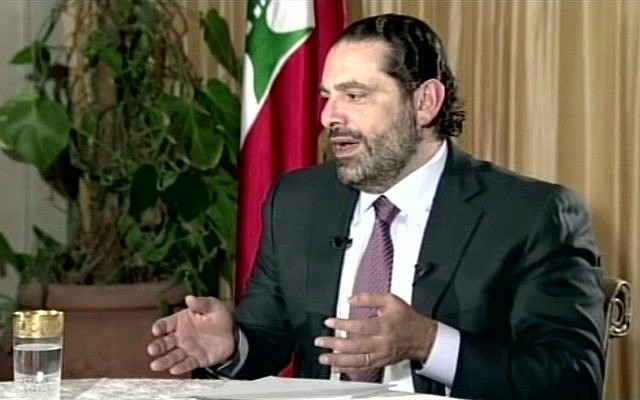
Saad Hariri, (former?) PM of Lebanon
“Hezbollah has kidnapped the Lebanese system,” he said.
Al-Jubeir added that “consultations and coordination between peace-loving countries and Lebanon-loving countries are underway to try to find a way that would restore sovereignty to Lebanon and reduce the negative action which Hezbollah is conducting in Lebanon.”
The minister’s remarks came as the kingdom rejected accusations that Lebanese Prime Minister Saad Hariri was being detained in Riyadh following his shock resignation earlier this month.
The Hezbollah terror group has raised its alert status across Lebanon, fearing threat of attack by Israel and other nations, Kuwaiti newspaper Al Rai reported Saturday.
The news came amid a political crisis between Beirut and Saudi Arabia, sparked by Lebanese Prime Minister Saad Hariri’s surprise resignation. Hariri cited Iran and Hezbollah’s meddling in the region as the reason he was stepping down. The November 4 resignation broadcast from the Saudi capital is widely believed to have been engineered by the Gulf kingdom.
…
The Kuwaiti paper further reported that Hezbollah leaders have instructed a halt to arms shipments sent to the group from Iran through war-torn Syria.
Israel is widely believed to have carried out airstrikes on advanced weapons systems in Syria — including Russian-made anti-aircraft missiles and Iranian-made missiles — as well as Hezbollah positions, though it rarely officially confirms such attacks.
In August a former air force chief said Israel carried out dozens of airstrikes on weapons convoys destined for the Lebanese terror group over the past five years.
Al-Jubeir warned Friday that there will be no stability in Lebanon unless Hezbollah disarms.
The resignation of Saudi-aligned Hariri has thrown Lebanon into turmoil and raised concerns that the country could be dragged into a battle for regional supremacy between Saudi Arabia and Iran.
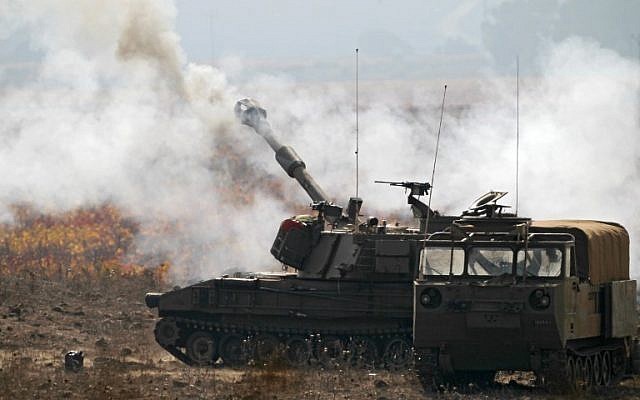
Indeed Israel has been watching Syria’s actions carefully and taking defensive action where necessary. On Sunday the IDF fired on Syrian targets fortifying positions near the demilitarized zone Golan heights:
The IDF fired upon Syrian army positions Sunday evening near the Israeli border in the Golan Heights on Sunday, the IDF spokesperson’s office reported.
IDF in a military exercise near the Syrian border
Syrian forces had been working to fortify a military outpost in the buffer zone, in violation of ceasefire agreements, and an IDF tank fired deterring shots in response.
A similar incident occurred on Saturday, when an IDF tank fired a warning shell near Syrian forces after identifying a Syrian army-built outpost in the demilitarized zone between Syria and Israel, similarly contrary to ceasefire agreements.
According to the IDF, the outpost was located close to the Druse village of Hader on the Syrian-controlled side of the Golan Heights.
Earlier this month, following intense fighting in the village, the IDF said it was willing to provide assistance and prevent the capture of the Druse village by anti-regime forces.
Meanwhile Israel is continuing its humanitarian assistance to Syrian refugees. For the first time ever, the IDF permitted Israeli TV Channel 2 News to film the crossing of some refugees, and one Syrian mother of a sick child said “All Syrians want to come to Israel” – a mind-boggling statement considering that Israel and Syria have been deadly enemies since Israel’s establishment and even before:
Extraordinary footage showing Syrian mothers crossing into Israel with their sick children for medical care was broadcast by Israel’s Hadashot news (formerly Channel 2) on Sunday after the Israel Defense Force (IDF) permitted the channel to film for the first time operations part of its ongoing policy of providing care for civilians and select combatants injured in the country’s raging civil war.
In interviews accompanying the footage, several Syrian mothers expressed deep gratitude to Israel for providing medical assistance and said that many Syrians living near the border no longer view Israel as the enemy, while another said that “all Syrians” would come to Israel if given the opportunity.
“Israel was thought of as the enemy… Now that you are helping us, most [on the Syrian side of the Golan Heights] are with you. They love Israel. They see the true face… the reality,” one mother said.
Another added that the real enemies are “Islamic State, Hezbollah, Bashar [Assad]. They’re all the same.”
“I wish we could stay here for good,” another interviewee told the reporter. “I’d be the first to cross [if the border were open]” she said, adding that “all of Syria would follow me. All the civilians left in Syria would come.”
Read their heart-breaking stories of abuse, murder, executions and more at the hands of the various Syrian factions and the regime.
“After Daesh, Iran,” Liberman tweeted on Saturday, referring to the Islamic State by its Arabic name. “[Late Egyptian President] Anwar Sadat was a brave leader, who went against the stream and paved the way for other Arab leaders to recognize the importance of strategic ties with Israel.”
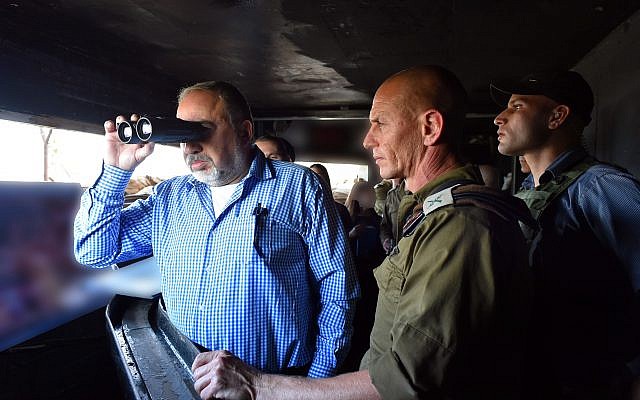
Defense Minister Avigdor Liberman looking through binoculars during a visit to the Israel’s northern border, November 14, 2017. Ariel Hermoni/Ministry of Defense)
“40 years after his historic visit to Israel, I call on leaders in the region to follow the path of President Sadat, come to Jerusalem and open a new chapter, not just in terms of Israel’s relations with the Arab world, but for the whole region,” Liberman wrote.
Sadat famously flew to Jerusalem ahead of signing the Camp David peace deal with Israel, the first Arab leader to do so. Sadat was later assassinated for his actions.
“The Middle East today needs, more than anything else, a coalition of moderate states against Iran. The coalition against Daesh has finished its work, after Daesh, Iran,” Liberman wrote in remarks that appeared to be directed in part at Saudi Arabia.
Saudi Arabia has in recent days stepped up its efforts to counteract Iran and its proxies in Yemen, and the Hezbollah terror group in Lebanon.
According to the Turkish Anadolu news agency, reported here, the Grand Mufti of Saudi Arabia, Abdul Aziz al Sheikh, has issued a quite remarkable religious ruling. Answering a question on TV about the Palestinian Arab riots over Temple Mount last July, he didn’t merely denounce Hamas as a “terror organisation”.
Much more significantly he actually issued a fatwa, or religious ruling, forbidding war against the Jews; and he said that fighting against Israel was inappropriate.
How can this be anything other than highly significant?
With a religious fatwa coming on the heels of a Saudi realignment as well as their internal political upheaval, it is probably good news – we will just have to be patient, to wait and see:
We can all obviously see the politics behind this. Saudi Arabia is in the fight of its life with Iran, to which end it has forged tacit and not-so-tacit alliances with Israel as well as the US. The new, reformist Crown Prince Mohammed bin Salman has not only supported this alliance with Israel but, more remarkably, has said that now is the time for the kingdom to get rid of Wahhabi extremism and revert to “what we followed – a moderate Islam open to the world and all religions”.
… the fact that the Prince made such a statement about now getting rid of extremism, in public, followed by this fatwa from the Grand Mufti, in public, surely suggests that the tectonic plates might just be beginning to shift within the heartland of Sunni fundamentalism.
Too good to be true? Just more smoke and mirrors? Of no more significance than a temporary alliance of expediency? Maybe. Nevertheless, a religious statement goes beyond politics. Neither the Prince nor the Grand Mufti needed to open up the religious issue in public at all. Watch this space, eh.
I’m sure the Israeli authorities are proceeding with caution. כבדהו וחשדהו is what they say in Hebrew: Literally: respect him and suspect him. Verify and justify.
While the European Union, including Germany, designated Hizballah’s military wing as a terrorist entity, Germany allows Hizballah’s political wing to operate freely. The U.S., Canada, and the Netherlands designate Hizballah as a terrorist organization entirely. Even senior Hizballah officials have noted the futility in distinguishing between its political and military wings, acknowledging that Hizballah is a hierarchical organization with a clear chain of command. The organization’s terrorist and military wings answer to its senior leadership and political echelons, including Iran – its primary sponsor.
**********************************
Hizballah terrorists are exploiting Germany’s refugee policy and entered the country as part of the recent wave of Middle East migrants, according to the Jerusalem Post’s review of a German intelligence report released this month.
“Since mid-2015 there are increased indications of fighters from Shi’ite militias entering Germany as legal refugees,” the report says, and “roughly 50% [of the fighters] show a direct connection to Hezbollah.”
A growing number of Hizballah operatives are settling in the North Rhine-Westphalia region, the report says. The region hosts the Imam-Mahdi Center – a traditional hub for Hizballah operatives. The report also cites a growing and open Hamas presence in North Rhine-Westphalia, despite Germany’s terrorist designation of the Palestinian organization, where Hamas supporters exploit Germany to “collect funds” and “recruit new members to spread their propaganda.”
There are roughly 950 Hizballah members throughout Germany, according to a 2014 Berlin intelligence report summarized by the Jerusalem Post. Though the number of Hizballah supporters is believed to be far higher in Germany than listed in the report.
Radical Islamists are “the greatest danger to Germany…Germany is on the spectrum of goals for Islamic terrorists,” said Hans-Georg Maassen, president of Germany’s domestic intelligence agency – the Federal Office for the Protection of the Constitution (BfV).
Hizballah operatives serve as senior employees of a German government-funded theater project aimed to assist refugees in the country, a 2016 Berliner Zeitung daily report said.
For example, German prosecutors allege that Haidar Syed-Naqfi was ordered to identify Jewish and Israeli institutions in Germany and other Western European countries for potential terrorist attacks. He allegedly monitored the headquarters of a Jewish newspaper in Berlin and identified several Israel supporters. German authorities believe his preparations were “a clear indication of an assassination attempt.”
Between July 2015 and July 2016, Iran’s Revolutionary Guards Corps’ (IRGC) al-Quds Force paid Syed-Naqi more than $2,200.
While the European Union, including Germany, designated Hizballah’s military wing as a terrorist entity, Germany allows Hizballah’s political wing to operate freely. The U.S., Canada, and the Netherlands designate Hizballah as a terrorist organization entirely. Even senior Hizballah officials have noted the futility in distinguishing between its political and military wings, acknowledging that Hizballah is a hierarchical organization with a clear chain of command. The organization’s terrorist and military wings answer to its senior leadership and political echelons, including Iran – its primary sponsor.
Israel’s strategic situation took several steps back in the first week of the New Year, chiefly: The US pulled back from E. Syria under Russian threat, allowing Iran to move in.
In just one week, the dire perils, which many military and political experts warned against for years, are suddenly looming on Israel’s northern border.
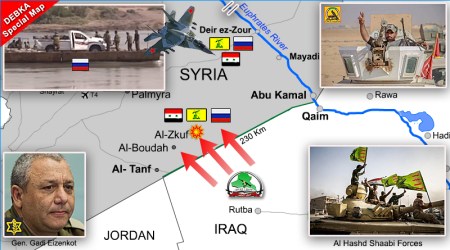
From Sept.15-17, Syrian and Hizballah forces crossed the Euphrates to the eastern bank on pontoon bridges provided by Russia.
Last Saturday, Sept. 16, Russian jets bombed the US-backed Syrian Defense Forces (SDF) in the Deir ez-Zour region, as a warning against their obstructing the eastward impetus of those Syrian and Hizballah units.
On Monday, Sept. 18, US Marines began blowing up buildings at the Zaqaf military base in eastern Syria and then retreating to the Jordanian border. The US set up Zaqaf early this year in the Syrian Desert as a barrier against this very Syrian/Hizballah crossing to impede their advance to the Syrian-Iraqi border.
The following day, on the heels of the US withdrawal, Hizballah troops took charge of the Zaqaf base.
On Wednesday, Sept. 19, the Iraqi Hashd Al-Sha’abi (Popular Mobilization Units – PMU) crossed into Syria and linked up with the Syrian-Hizballah force. The PMU is under the direct command of Gen. Qassam Soleimani, head of Iranian military operations in Syria and Iraq.
Iran, through its Iraqi, Lebanese and other foreign Shiite pawns, is now in control of 230km of the Syrian border, from Abu Kamal (still held by ISIS) in the north, to Al Tanf in the Syrian-Iraqi-Jordanian border triangle in the south – where, too, US and coalition special forces have begun packing up ready to exit.
Iran in recent years imported some 20,000 Afghan and Pakistani Shiite fighters to reinforce the Syrian army and Hizballah in their battles for Bashar Assad. The new Iraq arrivals boost that figure by tens of thousands and more are coming in all the time.
On Thursday, Sept. 21, the growing disconnect between Moscow and Washington over Syria suddenly erupted into an open breach with a crude threat from the Kremlin: “Russia has officially informed the United States via a special communications channel that Russian forces will strike immediately US-backed forces if they attack or shell Syrian or Russian task forces operating near the Deir Ez-Zour city. Any attempts at shelling from the areas where the militants of the Syrian Democratic Forces are based will be immediately curbed. Russian forces will suppress firing points in these areas using all means of destruction.”
A threat of this degree of ruthlessness has not been encountered in the Middle East for decades, it may recall Moscow’s threat to Israel in 1956 to end its invasion of the Sinai without delay or else…
Where do these menacing steps leave Israel?
The US has washed its hands of central and southeastern Syria.
Russia is wholly, unreservedly and openly in lockstep with the Syrian army, Iran and Hizballah in all their objectives in the war-torn country, and moreover, willing to threaten any pro-American entity with total military punishment. Is this an indirect message to Israel too?
Iraqi Shiite forces are surging into Syria; they have given Tehran the gift of control of a 230km segment of the border.
And what does the IDF chief of staff, Lt. Gen. Gady Eisenkott have to say about all this? In an interview to Israeli media as recently as Wednesday, Sept. 19, when it was all happening, he said: “If Iran does entrench itself in Syria, that will be bad news for the entire region, including the moderate Sunni camp, and even more for the countries of Europe.”
He went on to explain: “That is why we have given the Iranian threat and halting its expanding influence very high priority as an issue to be dealt with.”
Gen. Eisenkott underlined the IDF’s focus as being to prevent [Israel’s foes] from obtaining weaponry, i.e. missiles – of high targeting precision.
The trouble is that, while the IDF focuses on this objective, commendable in itself, Russia and Iran are focusing and in full flight on a far wider-ranging goal, the precise and systematic deepening of Iran’s military presence in Syria. Iran and Hizballah have already established military commands at Arnaba just 6 km from Israel’s Golan border.
Yet the IDF chief is still talking about this as an untoward event that may – or may not – come some time in the future.






 anneinpt
 artaxes
 danmillerinpanama
 davidking1530
 Peter Hofman
 Joseph Wouk
 Peter
Peter Louisiana Steve
 WarSclerotic
Recent Comments