Posted tagged ‘Hamas’

Hizballah lists targeted Israeli “nuclear sites”

March 4, 2017

Hizballah lists targeted Israeli “nuclear sites”, DEBKAfile, March 3, 2017

targetshizballah_480eng

Our military and counterterrorism sources draw a straight line from Hizballah’s latest stance and the newfound aggressiveness displayed this week by the Palestinian extremist Hamas which rules the Gaza Strip.

****************************

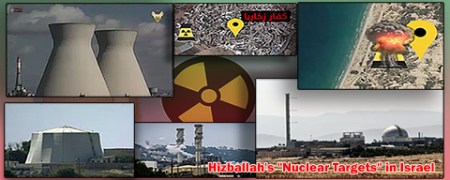
Hizballah’s latest round of threats against Israel reached a new peak Thursday, March 2, with the release of a videotape claiming to expose nine locations allegedly tied to the production and assembly of Israel’s nuclear weapons, DEBKAfile reports. The Lebanese Shiite terror organization said it possessed precise missiles for wiping out Israel’s nuclear infrastructure and attached addresses to all its targets.

Five locations topped the list, starting with the nuclear reactors at Dimona in southern Israel and Nahal Soreq on the Mediterranean coast. “Revealed” next are three secret locations for the production, assembly and storage of nuclear missiles and warheads. Kfar Zacharia near Beit Shemesh in the Jerusalem Hills, defined as the main depot for the Jericho Series I, II and III, of three-stage ballistic missiles, which can reach ranges of up to 6,000 km.

Two others were a factory in Beer Yaakov near the central Israeli town of Ramleh, the alleged production site for nuclear warheads; and the “Galilee Wing-20” plant at the Tefen Industrial Park, 17km from the town of Carmiel, a facility where the Rafael Advanced Defense System Authority was said to mount nuclear warheads on ballistic missiles and prepare them for launching.

The video stresses that Hizballah now possesses precise missiles able to pinpoint and destroy every single facility.

Just two weeks ago, Nasrallah “advised” Israel in an aggressive speech, to dismantle its large ammonia tank in Haifa and the nuclear reactor in Dimona before they were hit by Hizballah rockets and caused massive casualties. He and his associates have repeatedly warned in recent weeks that their Lebanese terrorist group has acquired weapons capable of deterring Israel as well as the capability to catch Israeli intelligence unawares by “surprises.”

In previous articles, DEBKAfile accounted for the heightened bellicosity of Hizballah’s leaders by the permission Bashar Assad recently granted Hizballah to launch missiles against Israel from Syrian soil as well as from Lebanon.

Our military and counterterrorism sources draw a straight line from Hizballah’s latest stance and the newfound aggressiveness displayed this week by the Palestinian extremist Hamas which rules the Gaza Strip.

Thursday, March 2, Hamas spokesmen stated that the group would no longer exercise restraint in responding to the heavy Israeli air and artillery strikes that are conducted in retaliation for rocket fire from the Gaza Strip. Henceforth, it would conduct a policy of “military position for military position” – meaning that for every Hamas position destroyed by Israel, the Palestinian extremists would swipe at a comparable Israeli military site.

The new Hamas posture challenged Defense Minister Avigdor Lieberman”s strategy of holding the Hamas government of Gaza responsible for any attacks coming from the Palestinian enclave – whether the work of Hamas or the extremist Salafis running loose there.

On Feb. 27, the Israeli Air Force smashed five Hamas targets in the northern, central and southern regions of the enclave after a rocket from Gaza exploded in Israel. The IDF did not respond to the rocket fired subsequently at the Hof Ashkelon region. But then, after a round of fire from Gaza to shoot up IDF military engineering equipment, the IDF knocked over two small Hamas look-out positions in the north.

Hamas had in fact given the defense minister an ultimatum:  either exercise restraint, or continue the policy of massive retaliations for every rocket coming from the Gaza Strip – at the risk of a fresh round of fighting with Hamas. Lieberman appears to have settled for the first option for the time being.

Media Misfeasance Exposed in “Eyeless in Gaza” Documentary

March 4, 2017

Media Misfeasance Exposed in “Eyeless in Gaza” Documentary, Investigative Project on Terrorism, Noah Beck, March 3, 2017

2021

Hamas operatives burst into the Associated Press (AP) Gaza bureau during the 2014 war with Israel, angered by a picture shot by an AP photographer. Gunmen threatened the AP staff, which never reported the incident.

The incident shows that Hamas can control what journalists report, and what they don’t, former AP Middle East reporter Matti Friedman says in a new documentary, “Eyeless in Gaza.”

Producer Robert Magid’s 50-minute film, which is screening via pay-per-view online, examines the flaws and challenges in reporting on the 50-day war.

Magid said he wanted to “set the record straight and provide context,” after being appalled at news coverage that ignored Hamas’ practice of launching rockets from civilian areas. That omission allowed the media to push a false narrative that “Israel was callous in their bombing.”

The sullied moral image of Israel that emerged from the media’s biased coverage sparked public outrage and anti-Semitism. “Muslims will crush the Jews as they did in Khyber 14 centuries ago,” protestors in the film shout. Another says: “I see the Jews in Israel as total Nazis.”

Reporters routinely failed to show the history leading up to the conflict or how Hamas instigated it. Magid provides viewers with some brief historical context: Israel expelled 10,000 of its own citizens from the Gaza Strip in 2005 and offered the Palestinians their first chance at self-rule. But Hamas took over the territory and turned it into an Islamist terror state, rather than a model for responsible self-rule and peaceful coexistence with Israel.

Viewers see how attack tunnels exemplify Hamas’s policy of diverting public resources to pursue terrorism. Israel allows high-quality cement into Gaza in response to the humanitarian need to rebuild damaged buildings, only to discover the same cement being used to build massive underground tunnels whose only purpose is to target Israelis. Each tunnel costs about $3 million, and an Israeli military spokesman interviewed in the film estimates $100 million in resources were diverted.

Despite Israel’s unprecedented efforts to minimize Gaza’s civilian casualties, the film shows how Hamas works to maximize them.

“The Israeli army called me, they asked me to leave Al-Sajaeya,” says one Gazan. “We stayed at home because Al Aksa and Al Quds [Hamas] radio stations told us ‘Don’t leave your homes, it’s rumors.’ We remained in our homes, but when we saw the bombs pouring on us, we miraculously got out…Five of my brothers’ sons were killed, and the houses destroyed.”

The Israel Defense Forces (IDF) went to great lengths to spare civilians, issuing warnings by leaflets, SMS messages, the “roof knock” technique, and social media. Col. Richard Kemp, the former commander of British forces in Afghanistan, notes in the film “the immense efforts that the IDF took when fighting in this very challenging environment, to minimize the number of civilian deaths [even though] Hamas used human shields virtually constantly. They deliberately site their weapon systems, and their fighters among the civilian population.”

“Eyeless in Gaza” shows the underreported perspective of Israelis trying to survive Hamas rocket attacks, including a huge explosion on a populated beach, and people racing to shelters with just 15 seconds to reach them. Israel’s Iron Dome defense system is no silver bullet: “10 percent [of] rockets…could hit you,” notes Tal Inbar, head of the Space Research Center at the Fisher Institute for Air and Space Strategic Studies in Herzliya. “And…if the enemy is firing thousands of rockets…10 percent…is quite a lot.” Even intercepted rockets can still cause shock and injuries from falling shrapnel.

Kneejerk global condemnations of Israel triggered by a lopsided casualty count resulted, at least in part, from the media’s failure to cover the true nature of the mass casualty-threat facing Israel. Hamas launched thousands of rockets at schools, hospitals, and densely packed Israeli neighborhoods, demonstrating the group’s intent to kill many thousands of civilians. Hamas failed only because Israel had invested billions in a rocket defense system and Israelis regularly scurried to bomb shelters despite the disruption to their lives.

Former Russia Today correspondent Harry Fear, who calls himself “one of the most Palestinian-sympathizing journalists in the world,” notes that Palestinians “rejected cease fires, which could have saved…thousands of lives…”

Fearing violent retribution from Hamas, journalists engaged in collective self-censorship, he told Magid. Just about all foreign correspondents witnessed Palestinian war crimes without reporting them. “Rockets were being fired consistently from densely populated areas,” he said. He was expelled from Gaza after reporting on Twitter such fire.

An Indian television crew aired footage of Palestinian terrorists firing rockets from civilian areas only after it had left Gaza. Its report, shown in “Eyeless in Gaza,” notes that the rocket fire “will obviously have serious consequences… for those who live here, should Israel choose to retaliate.”

Hamas’ intimidation of journalists produces flawed, misleading coverage, as Friedman elaborates: “Most of the work of the international media in Gaza is done not by western journalists … but by local Palestinians from Gaza: fixers, translators, reporters, photographers … their families are in Gaza, and they’re not going to get Hamas angry. And because these people largely shape the coverage, that ends up having a very significant effect.”

Fear decries the limits to free speech in Gaza, citing a 2014 poll indicating that 80 percent of Palestinian journalists exercise self-censorship for fear of retribution.

Similarly, Friedman says in the film, “I understand why reporters censor themselves … in Gaza. What I don’t understand is why the news organizations haven’t made clear the restrictions under which they operate in Gaza, so that news consumers can understand that they are seeing a warped picture.”

The intimidation can be worse for Palestinian journalists. Ayman Al Aloul describes his imprisonment and torture by Hamas after he refused to stop writing about Gaza’s extreme poverty, and Hamas’ failed economic policies. “They started beating me and cursing at me. When I went back inside [my cell], I feared someone would be sent to end my life… I was scared they would say, ‘He died from cold or hunger.’ I was really scared.”

While the Western media and United Nations Human Rights Council obsessively harp on any alleged Israeli human rights violation, it completely ignored Al Aloul’s case.

Conflicts that receive far less media attention than the Israeli-Palestinian conflict, despite being exponentially bloodier, also have been neglected, thanks to the media’s obsession with Israel. The film notes that, since 2011, nearly half a million people have been killed or wounded in Syria, compared to about 2,000 in Gaza. “160,000 Palestinians lived in Yarmouk prior to 2011. [Because of] Syrian…bombing and starvation policies, there are now 18,000.”

Thus, campus protesters who routinely accuse Israel of “genocide” and “massacre” are either grossly misinformed (at least in part because of media bias) or simply anti-Semitic.

UN Relief and Works Agency (UNRWA) spokesperson Chris Gunness acknowledges a double standard by the media and Arab governments’ in terms of attention given to the plight of Palestinians in Syria versus Gaza. But when asked why UNRWA failed to condemn Egypt’s security-motivated destruction of thousands of homes along the Gaza border, he says only, “we are not mandated to work in Egypt.”

Friedman notes, “If Israel did 1 percent of that, of course the international community would be in an uproar. I think people aren’t interested in Arabs in general, or what Arabs do to each other. I think they’re basically interested … in the actions of Jews. And that’s why Egypt can destroy entire neighborhoods [bordering] Gaza, as it did recently, and the world kind of yawns. That I think proves that … the story being told here by the international media is not a story about current events. It’s a story about something else. It’s a morality play starring a familiar villain [the Jews].”

This hostile paradigm explains the failure of Western media to report on the anti-Semitic nature of the Hamas charter, which blames all of the world’s woes – including every major war and revolution, and even the Holocaust – on the Jews, while calling for their annihilation, Friedman says in “Eyeless in Gaza.”

“If you say that Hamas is anti-Semitic, if you quote their charter, if you look too closely at exactly what their goals are, and who they are, then it would disrupt the narrative, according to which Israel is an aggressor, and the Palestinians are passive victims who have reasonable goals,” Friedman says.

Nevertheless, the media’s failure to include critical facts like those exposed in “Eyeless in Gaza” encourages terrorist groups like Hamas to embrace tactics intended to maximize civilian casualties. The resulting global condemnation of Israel for Gazan deaths only encourages Hamas to jeopardize civilians in the next round of violence.

As “Eyeless in Gaza” highlights, the kind of journalism that covered the 2014 war in Gaza distorted the truth, abetted a terrorist group, and strengthened the party most responsible for Gaza’s misery and ongoing hostilities with Israel. For more on the film, click here.

The Lessons of the Hamas War

March 3, 2017

The Lessons of the Hamas War, Front Page MagazineCaroline Glick, March 3, 2017

hamas-3

Originally published by the Jerusalem Post

Sunni regimes, led by Egypt under President Abdel Fattah al-Sisi, the Saudi regime and the United Arab Emirates, were shocked to discover that the Obama administration was siding with their enemies against them.

If Israel went into the war against Hamas thinking that the Obama administration would treat it differently than it treated the Sunni regimes, it quickly discovered that it was mistaken. From the outset of the battle between Hamas and Israel, the Obama administration supported Hamas against Israel.

America’s support for Hamas was expressed at the earliest stages of the war when then-secretary of state John Kerry demanded that Israel accept an immediate cease-fire based entirely on Hamas’s terms. This demand, in various forms, remained the administration’s position throughout the 50-day war.

Netanyahu asked Sisi for help in blunting the American campaign for Hamas. Sisi was quick to agree and brought the Saudis and the UAE into an all-but-declared operational alliance with Israel against Hamas.

************************************

The State Comptroller’s Report on Operation Protective Edge, Israel’s war with Hamas in the summer of 2014, is exceedingly detailed. The problem is that it addresses the wrong details.

Israel’s problem with Hamas wasn’t its tactics for destroying Hamas’s attack tunnels. Israel faced two challenges in its war with Hamas that summer. The first had to do with the regional and global context of the war. The second had to do with its understanding of its enemy on the ground.

War between Hamas and Israel took place as the Sunni Arab world was steeped a two-pronged existential struggle. On the one hand, Sunni regimes fought jihadist groups that emerged from the Muslim Brotherhood movement. On the other, they fought against Iran and its proxies in a bid to block Iran’s moves toward regional hegemony.

On both fronts, the Sunni regimes, led by Egypt under President Abdel Fattah al-Sisi, the Saudi regime and the United Arab Emirates, were shocked to discover that the Obama administration was siding with their enemies against them.

If Israel went into the war against Hamas thinking that the Obama administration would treat it differently than it treated the Sunni regimes, it quickly discovered that it was mistaken. From the outset of the battle between Hamas and Israel, the Obama administration supported Hamas against Israel.

America’s support for Hamas was expressed at the earliest stages of the war when then-secretary of state John Kerry demanded that Israel accept an immediate cease-fire based entirely on Hamas’s terms. This demand, in various forms, remained the administration’s position throughout the 50-day war.

Hamas’s terms were impossible for Israel. They included opening the jihadist regime’s land borders with Israel and Egypt, and providing it with open access to the sea. Hamas demanded to be reconnected to the international banking system in order to enable funds to enter Gaza freely from any spot on the globe. Hamas also demanded that Israel release its terrorists from its prisons.

If Israel had accepted any of Hamas’s cease-fire terms, its agreement would have constituted a strategic defeat for Israel and a historic victory for Hamas.

Open borders for Hamas means the free flow of armaments, recruits, trainers and money to Gaza. Were Hamas to be connected to the international banking system, the jihadist regime would have become the banking center of the global jihad.

The Obama administration’s support for Hamas was not passive.

Obama and Kerry threatened to join the Europeans in condemning Israel at the UN. Administration officials continuously railed against IDF operations in Gaza, insinuating that Israel was committing war crimes by insisting that Israel wasn’t doing enough to avoid civilian casualties.

As the war progressed, the administration’s actions against Israel became more aggressive. Washington placed a partial embargo on weapons shipments to Israel.

Then on July 23, 2014, the administration took the almost inconceivable step of having the Federal Aviation Administration ban flights of US carriers to Ben-Gurion Airport for 36 hours. The flight ban was instituted after a Hamas missile fell a mile from the airport.

The FAA did not ban flights to Pakistan or Afghanistan after jihadists on the ground successfully bombed airplanes out of the sky.

It took Sen. Ted Cruz’s threat to place a hold on all State Department appointments, and Canada’s Conservative Party government’s behind-the-scenes diplomatic revolt to get the flight ban rescinded.

The government and the IDF were shocked by the ferocity of the administration’s hostility. But to his great credit, Prime Minister Benjamin Netanyahu surmounted it.

Netanyahu realized that Hamas is part of the Muslim Brotherhood nexus of jihad and also supported by Iran. As a result the Egyptians, Saudis and UAE rightly view it as a major enemy. Indeed, Egypt was in a state of war with Hamas in 2014. Gaza serves as the logistical base of the Salafist forces warring against the Egyptian military.

Netanyahu asked Sisi for help in blunting the American campaign for Hamas. Sisi was quick to agree and brought the Saudis and the UAE into an all-but-declared operational alliance with Israel against Hamas.

Since the Egyptians were hosting the cease-fire talks, Egypt was well-positioned to blunt Obama’s demand that Israel accept Hamas’s cease-fire terms.

In a bid to undermine Egypt, Obama and Kerry colluded with Hamas’s state sponsors Turkey and Qatar to push Sisi out of the cease-fire discussions. But due to Saudi and UAE support for Sisi and Israel, the administration’s attempts to sideline the Egyptians failed.

The cease-fire terms that were adopted at the end of the war contained none of Hamas’s demands. Israel had won the diplomatic war.

It was a strange victory, however. Netanyahu was never able to let the public know what was happening.

Had he informed the public, the knowledge that the US was backing Hamas would have caused mass demoralization and panic. So Netanyahu had to fight the diplomatic fight of his life secretly.

The war on the ground was greatly influenced by the diplomatic war. But the war on the ground was first and foremost a product of the nature of Hamas and of the nature of Hamas’s relationship with the PLO.

Unfortunately, the Comptroller’s Report indicates that the IDF didn’t understand either. According to the report, in the weeks before the war began, the then-coordinator of government activities in the territories, Maj.-Gen. (res.) Eitan Dangot, told the security cabinet that the humanitarian situation in Gaza was at a crisis point and that hostilities were likely to break out if Israel didn’t allow humanitarian aid into the Strip.

On Wednesday we learned that Dangot’s view continues to prevail in the army. The IDF’s intelligence chief, Maj.-Gen. Herzi Halevi, told the Knesset’s Foreign Affairs and Defense Committee that Israel must send humanitarian aid to Gaza to avert a war.

There is truth to the IDF’s position. Hamas did in fact go to war against Israel in the summer of 2014 because it was short on supplies.

After Sisi overthrew the Muslim Brotherhood regime in Egypt the previous summer, he shut Egypt’s border with Gaza because Gaza was the logistical base of the insurgency against his regime. The closed border cut off Hamas’s supply train of everything from antitank missiles to cigarettes and flour.

The problem with the IDF’s view of Hamas is that providing aid to Gaza means supplying Hamas first and foremost. Every shipment into Gaza strengthens Hamas far more than it serves the needs of Gaza’s civilian population. We got a good look at Hamas’s contempt for the suffering of its people during Protective Edge.

After seeing the vast dimensions of Hamas’s tunnel infrastructure, the then-OC Southern Command, Maj.-Gen. Sami Turgeman, told reporters that Hamas had diverted enough concrete to its tunnel project to build 200 kindergartens, two hospitals, 20 clinics and 20 schools.

Moreover, the civilian institutions that are supposed to be assisted by humanitarian aid all serve Hamas. During the war, three soldiers from the IDF’s Maglan unit were killed in southern Gaza when they were buried in rubble of a booby-trapped UNRWA clinic.

The soldiers were in the clinic to seal off the entry shaft of a tunnel that was located in an exam room.

Hamas had booby trapped the walls of the clinic and detonated it when the soldiers walked through the door.

All of the civilian institutions in Gaza, including those run by the UN, as well as thousands of private homes, are used by Hamas as part of its war machine against Israel.

So any discussion of whether or not to allow humanitarian aid into Gaza is not a humanitarian discussion. It is a discussion about whether or not to strengthen Hamas and reinforce its control over the population of Gaza.

This brings us to the goals of the war in Gaza in 2014. At the time, the government debated two possible endgames.

The first was supported by then-justice minister Tzipi Livni. Livni, and the Left more generally, supported using the war with Hamas as a means of unseating Hamas and restoring the PLO-controlled Palestinian Authority to power in the area.

There were four problems with this notion. First, it would require Israel to reconquer Gaza.

Second, the Obama administration would never have agreed to an Israeli conquest of Gaza.

Third, Israel doesn’t have the forces to deploy to Gaza to retake control of the area without rendering its other borders vulnerable.

The final problem with Livni’s idea is that the PLO is no better than Hamas. From the outset of the war, the PLO gave Hamas unqualified support. Fatah militias in Gaza manned the missile launchers side by side with Hamas fighters. PLO chief Mahmoud Abbas represented Hamas at the cease-fire talks in Cairo. He led the political war against Israel in the West. And he financed Hamas’s war effort. Throughout the war Abbas sent a steady stream of funds to Gaza.

If PLO forces were returned to Gaza, they would behave precisely as they behaved from 2000 until Hamas kicked them out in 2007. That is, they would have acted as Hamas’s full partners in their joint war against Israel.

The second possible endgame involved a long-term strategy of defeating Hamas through attrition. This was the goal the government ended up partially adopting. The government ordered the IDF to destroy as much of Hamas’s missile arsenal as possible and to destroy its offensive tunnels into Israel. When the goals had been achieved to the point where the cost of opposing Obama grew greater than the battle gains, Netanyahu agreed to a cease-fire.

For the attrition strategy to have succeeded, the cease-fire would have only been the first stage of a longer war. For the attrition strategy to work, Israel needed to refuse to resupply Hamas. With its missile arsenal depleted and its tunnels destroyed, had Israel maintained the ban on supplies to Gaza, the residents would have revolted and Hamas wouldn’t have had the option of deflecting their anger onto Israel by starting a new war.

The IDF unfortunately never accepted attrition as the goal. From the Comptroller’s Report and Halevi’s statement to the Knesset this week, it appears the General Staff rejected attrition because it refuses to accept either the nature of Hamas or the nature of the PLO. Immediately after the cease-fire went into force, the General Staff recommended rebuilding Gaza and allowing an almost free flow of building supplies, including concrete, into Hamas’s mini-state.

The Comptroller’s Report is notable mainly because it shows that nearly three years after Protective Edge, official Israel still doesn’t understand what happened that summer. The problem with Hamas was never tactical. It was always strategic. Israel won the diplomatic battle because it understood the correlation of its strategic interests with those of the Sunni regimes.

It lost the military battle of attrition because it permitted Hamas to resupply.
Light at the end of the tunnel

March 1, 2017

Light at the end of the tunnel, Israel Hayom, Boaz Bismuth, March 1, 2017

It should be noted, however, that those who praised Prime Minister Benjamin Netanyahu, then-Defense Minister Moshe Ya’alon and then-IDF Chief of Staff Lt. Gen. Benny Gantz at the time for their restraint during the unfolding events, which staved off embroilment in all-out war in Gaza and kept Hamas in power for fear of a worse replacement, are the ones now criticizing them.

*********************************

In the fight against Hamas and other terrorist organizations, decisions always have to be made: Should maximum force be used to win the fight in one week, despite the chaos likely to ensue as a result; or should Israel try to end the campaign taking into account the international community, Arab countries, the many civilian lives at stake, and the need for stability?

A decision has to be made, because you can’t have both.

In Israel, another factor must always be considered. The IDF is a unique army: On the one hand, it has to go to war to protect Israeli civilians; on the other hand, it knows in advance that any campaign of this sort also entails fighting for its reputation and defending itself against critical reports, from home or abroad. This has become part of the routine.

Operation Protective Edge was not a failure. The IDF did not lose. It even met its given objectives. With that, we would have preferred a quick “knockout.” Israel has the necessary superiority, weaponry and military to defeat a terrorist organization like Hamas and its satellites in less than 51 days. It should be noted, however, that those who praised Prime Minister Benjamin Netanyahu, then-Defense Minister Moshe Ya’alon and then-IDF Chief of Staff Lt. Gen. Benny Gantz at the time for their restraint during the unfolding events, which staved off embroilment in all-out war in Gaza and kept Hamas in power for fear of a worse replacement, are the ones now criticizing them.

We heard the pundits explain to us on Tuesday that the most notable part of the state comptroller’s report is that the Netanyahu-led government did not examine diplomatic alternatives to the military campaign in Gaza. Has so much time passed? Could it be we have already forgotten why we were fighting? Perhaps we have forgotten the abduction of the three boys and their execution at the hands of Hamas terrorists, which was ordered by the group’s leadership in Gaza?

Anyway, the mention of diplomatic alternatives is amusing. With whom would we engage diplomatically? With Ismail Haniyeh in 2014, or maybe today with his successor, Yahya Sinwar, who is even more of a militant extremist? Don’t take our word for it, go and ask the Egyptians or even our neighbors in the Palestinian Authority what they think of the diplomatic alternative Hamas offers the Middle East. If anyone wants to insult Yahya Sinwar, ask him what “diplomatic alternative” he proposes.

Israeli society does not like wars, even if it is very proud of its army. It does not like terror, it does not like Hamas and Hezbollah, and it also does not like grieving for fallen sons and daughters. However, what it likes the least are attempts to harm its “sacred cow,” the IDF. Israeli society sees this comptroller’s report as nothing more than self-pity and self-flagellation.

Yes, self-criticism is essential. The IDF examines itself after every operation and mission. With that, our desire today to perform an X-ray on everything we do is, in retrospect, hurting the army. It undermines the decision makers and mostly handicaps future operational capability.

In hindsight, a report that strives to fix things can actually do more harm than good. Fateful decisions are made by a small handful of people, unless of course we have decided to return to the days of ancient Greece. Moreover, who can say that decisions made by broader forums are necessarily better or more successful?

The underground tunnel threat was never existential. Indeed, Hamas could have had its victory image had it been able to carry out a deadly attack, via one of those tunnels, inside an Israeli border community. The terrorist organization could have also acquired that coveted image if the Iron Dome defense system had not intercepted the barrage of missiles fired at us from Gaza. Israel reasoned that the missile threat was greater than the tunnel threat, and provided a response which proved to the world that in Israel missiles protect civilians, while in Gaza civilians protect missiles.

Regardless, things have changed. Before the comptroller’s report was even published, Israel had displayed its answer to the missiles from Gaza. According to reports, it also has an answer to the tunnel threat. Hamas’ national projects are on the verge of bankruptcy.

Before the report was ever published, we already understood there was a light at the end of the tunnel. This light is not a diplomatic alternative, but a decisive victory over Hamas, if and when it makes the grave mistake of trying to harm us again.

Hamas on Tuesday claimed that it emerged victorious from Operation Protective Edge, but that is certainly not because of its performance on the field of battle. It is more because of the report.

​The next war: Hizballah tunnels, pocket drones

February 27, 2017

The next war: Hizballah tunnels, pocket drones, DEBKAfile, February 27, 2017

(Until January 20th, Israel had to deal with the anti-Israel Obama administration. Had Israel killed Hamas rather than allowing it to live and recover, U.S. policy toward Israel would have been even worse. Remember the complaints about Israel’s “disproportionate” response to Hamas rockets? With a pro-Israel president in Washingon, it seems reasonable to hope that the “no-winners, no-losers doctrine” military doctrine will quickly atrophy and die. — DM)

threatshamashizballah480eng

After years of denial, the IDF is now ready to admit that Hizballah has built two kinds of tunnel running from Lebanon under the border into Israel. One type is meant as a pathway for Hizballah Radwan Force commandos to infiltrate northern Israel and seize Galilee villages, in an area up to the Mediterranean town of Nahariya. The other type will be crammed with hundreds of kilos of explosives for remote detonation.

For Israel, this no-winners, no-losers doctrine has saved the radical Palestinian Hamas from ever having to hoist a white flag. It caused the IDF’s two successful anti-terror Gaza wars of Dec.2008-Jan. 2009 and July-Aug. 2006 to be stopped halfway through. The troops were left to cool their heels until the government decided how to proceed. In both conflicts, the troops were ordered to stop fighting in mid-operation and pull back behind the border. Although the second operation managed to halt Hamas’ long rocket barrage from the Gaza Strip and allow Israelis living within range normal lives, Hamas was left in belligerent mode.

***************************

Leaks from the State Comptroller’s report, due out Tuesday, Feb. 28, have sparked a storm of recriminations among the politicians and generals who led the IDF’s 2014 operation, which ended nearly a decade of constant Palestinian rocket fire on southern Israel. The argument centers on how the security cabinet headed by Prime Minister Binyamin Netanyahu and the military, led then by defense minister Moshe Yaa’lon and former Chief of Staff Lt. Gen. Benny Gantz, prepared for and grappled with the threat of terror tunnels. A cabinet member, the hawkish education minister, Naftali Bennett, accuses them of falling down on the job.  They charge him with going after political capital.

DEBKAfile’s military sources take exception to the furious focus on a past war – the post mortem  of any conflict will always pick at faults – when the new menaces staring Israel in the face should be at the forefront of the national discourse.

Some of the most striking examples are noted here:

1. President Bashar Assad has just informed Iran that he is willing to place Syrian territory at the disposal of the Revolutionary Guards and Hizballah for shooting missiles into Israel.

Israel’s policy of non-intervention in Syria’s six-year civil war has therefore become a boomerang. Hizballah has been allowed to relocate a second strategic missile arsenal to the Qalamoun Mountains in Syria, after procuring advanced weapons systems from Iran, and gaining combat skills on the Syrian battlefield. The Shiite terrorist group has learned out to fight alongside a regular big-power military force, such as the Russian army.

It is therefore not surprising to hear Hizballah leader Hassan Nasrallah bragging confidently about his ability to vanquish Israel.

So what is Israel doing to counter this peril? Not much. From time to time, the IDF mounts an air strike against a weapons arsenal or missile depot in Syria. That has as much effect on the military threat building up in Syria as the tit-for-tat air strikes against Hamas in the Gaza Strip.

How was Hizballah allowed to attain a capability for shooting thousands of rockets a day at Israeli cities from two countries? Why were the air strikes staged over Syria not directed against Hizballah’s rocket depots in Lebanon?

Many words have been poured out over the Hamas tunnels from the Gaza Strip., but what about Hizballah’s tunnels from Lebanon? After years of denial, the IDF is now ready to admit that Hizballah has built two kinds of tunnel running from Lebanon under the border into Israel. One type is meant as a pathway for Hizballah Radwan Force commandos to infiltrate northern Israel and seize Galilee villages, in an area up to the Mediterranean town of Nahariya. The other type will be crammed with hundreds of kilos of explosives for remote detonation.

How are Israel’s army strategists addressing this threat?

One answer came a few days ago from Maj. Gen Yoel Strick, commander of the home command, who is about to step into his new appointment as OC Northern Command.

He recently disclosed a plan to evacuate entire locations which are potentially on the front line of a conflict with Hizballah. He is aware of the shock effect on the country, which abides by the national ethos of never retreating before an enemy. But he also argues that the only way the IDF can effectively fight Hizballah invaders and eject them from Israeli soil is to keep civilians out of the way of the battle.

4. On Thursday, Feb. 23, an Israel Air Force fighter knocked down a miniature unmanned flying object over the Mediterranean coast of the Gaza Strip. It is already obvious that drones of one type or another, including the cheap and easily available quadcopter pocket drone, will serve the enemy in any future war, in large numbers.

When scores of pocket drones loaded with explosives are lofted, some may be shot down by Israeli warplanes and air defense systems, but some will escape and drop on target, because they are too small to be detected by the radar of air defense systems like Iron Dome and blown out of the sky.

Nevertheless, Israel can address these dangers, provided its generals embrace a major change of strategy, or doctrine. It is incumbent on the IDF to discard the doctrine which holds that modern wars can never end in a straight victory or defeat. This preconception has ruled the thinking of Israeli generals in the 11 years since the 2006 Lebanon war, although it is alien to the Middle East conflict environment.

Take, for example, the Syrian civil war. The Russian, Syrian, Iranian and Hizballah’s armies have clearly won that war and preserved a victorious Assad in power.

In Yemen, too, the Saudi army and its Gulf allies are fighting to win the war against the Houthi rebels but falling short of victory, notwithstanding their superior Western armaments.

In 2014, the Islamic State beat the Iraqi army and captured vast swathes of Iraq and Syria. The jihadists are still holding onto most of this territory – even against US-backed military efforts three years later. They will do so until they are vanquished on the battlefield.

For Israel, this no-winners, no-losers doctrine has saved the radical Palestinian Hamas from ever having to hoist a white flag. It caused the IDF’s two successful anti-terror Gaza wars of Dec.2008-Jan. 2009 and July-Aug. 2006 to be stopped halfway through. The troops were left to cool their heels until the government decided how to proceed. In both conflicts, the troops were ordered to stop fighting in mid-operation and pull back behind the border. Although the second operation managed to halt Hamas’ long rocket barrage from the Gaza Strip and allow Israelis living within range normal lives, Hamas was left in belligerent mode.

Because of this doctrine, Hizballah, like Hamas, feels free to build up its arsenal ready for the next war. Iran’s Lebanese proxy watches the IDF withholding action for containing its buildup. Certain that Israeli generals won’t be fighting for victory, Hizballah and Hamas have always felt they were in no danger of being wiped out.

Hamas, therefore, chose the tactic of inflicting maximum damage and casualties on Israel, without fear of major reprisals. Hence, in the early 2000s, the Palestinian terrorists ruling Gaza began shooting primitive Qassam rockets at Israeli civilian locations, moving on over the years to more advanced missiles, followed by terror tunnels and are now building an air force of exploding pocket drones.

If State Comptroller Joseph Shapiro had addressed those present and future threats when he exposed the mishandling of the tunnels of 2014, his report would have served an important security and national purpose. But since he confined himself to determining who said what to whom – and why – his report is just a platform for political bickering.

How Israel Would Become Palestine

February 20, 2017

How Israel Would Become Palestine, The Jewish PressFred Maroun, February 19, 2017

israel-palestine-flag

If Israel annexes the West Bank, the Jewish majority in Israel would be reduced immediately from 75% to between 56% and 57%, and the Arab minority in Israel would double from 21% to between 40% and 41%.

While Jews would retain a clear majority immediately after annexation, the Arabs’ influence on government would increase dramatically. Arab parties have been kept out of every governing coalition in Israel’s history, but the continuation of that practice would be almost impossible when Arabs represent 40% to 41% of the population. It would require that all Jewish parties, from left to right, always agree to work together after every election; sooner or later, that Jewish-only coalition would break up.

There is not much that is uncertain in this common-sense scenario resulting from annexation of the West bank, other than how long it would take to unravel. The end result is that Israel, which would likely be renamed Palestine, would no longer be a Jewish state by any definition of the term.

*********************************

The idea of Israel annexing the West Bank was tentatively endorsed by Israeli President Reuven Rivlin who insisted that if this occurred, Palestinians living in the West Bank must be given Israeli citizenship. US President Donald Trump signaled that he is willing to accept a one-state solution, and Israeli Prime Minister Benjamin Netanyahu’s lack of response to Trump indicates that he is not opposed to it either.

Based on the Jewish Virtual Library, in Israel, as of January 2017, “The Jewish population makes up 6,450,000 (74.8%); 1,796,000 (20.8%) are Arabs; and, those identified as ‘others’ (non-Arab Christians, Baha’i, etc) make up 4.4% of the population (384,000 people)”. Based on the Jerusalem Post, “Current estimates of the West Bank population, according to Israeli, Palestinian and US numbers, put the number of Palestinians at anywhere between 2.7 and 2.9 million.”

If Israel annexes the West Bank, the Jewish majority in Israel would be reduced immediately from 75% to between 56% and 57%, and the Arab minority in Israel would double from 21% to between 40% and 41%.

While Jews would retain a clear majority immediately after annexation, the Arabs’ influence on government would increase dramatically. Arab parties have been kept out of every governing coalition in Israel’s history, but the continuation of that practice would be almost impossible when Arabs represent 40% to 41% of the population. It would require that all Jewish parties, from left to right, always agree to work together after every election; sooner or later, that Jewish-only coalition would break up.

As Arab parties negotiate to be included in governing coalitions, some of their priorities would become government policy. Arab policies that are outright anti-Zionist would be rejected at first, but other priorities would have to be accepted.

One of the first priorities to be demanded by Arab parties is likely to be the immigration into Israel of relatives of Israeli Arab citizens, including some Palestinian refugees residing in Arab countries and some Palestinians residing in Gaza. This would have the effect of further increasing the size of the Arab minority, which would lead to even more Arab clout in the government.

Other Arab demands would have to be met, including immigration of more Palestinian refugees into Israel and the annexation of Gaza. Eventually, Arab parties would be able to govern with little or no Jewish representation. As Arabs control the Israeli government, they would eliminate laws that discriminate against them, including the unlimited Jewish right of return, perhaps even replacing it with an unlimited Palestinian “right of return”.

There is not much that is uncertain in this common-sense scenario resulting from annexation of the West bank, other than how long it would take to unravel. The end result is that Israel, which would likely be renamed Palestine, would no longer be a Jewish state by any definition of the term.

New Hamas Leader, a Vicious Killer, Portends New Rounds of Violence

February 16, 2017

New Hamas Leader, a Vicious Killer, Portends New Rounds of Violence, Investigative Project on Terrorism, Yaakov Lappin, February 16, 2017

1978

The election of Yehya Sinwar to lead Hamas in Gaza represents the completion of a lengthy takeover by the terror movement’s military wing at the expense of the political wing, and it could signal a more imminent confrontational path with Israel than previously thought.

The Izzadin Al-Kassam Brigades gradually have been pushing aside Hamas’s political wing, seeing it as an impediment to its jihadist war efforts against Israel.

Sinwar and his military wing comrades want to reestablish their alliance with Iran and boost a tactical partnership with ISIS in the Sinai Peninsula.

His rise likely means that Hamas and Iran will grow close once again, after years of turmoil over their opposing stances on the Syrian war.

In fact, Sinwar’s rise to power is being described by veteran analyst Pinhas Inbari as Iran’s taking back the reigns to Gaza, which stemmed from Iranian concerns over a more hardline policy from the United States after President Donald Trump’s election.

Inbari does not believe Sinwar’s appointment was even based on elections, saying the results came from pressure by Hamas’s military wing on the political wing, and that the development is “Iran’s way of conveying a message before the Trump-Netanyahu talks” that took place Wednesday.

Sinwar, who served 22 years in an Israeli prison for murdering Palestinians he accused of being Israeli collaborators, is a trigger-happy senior Hamas member who does not hesitate to shoot dead Gazans he perceives as being disloyal.

He was released from prison during the 2011 Schalit prisoner swap with Israel, and quickly rejoined his comrades in the military wing, under the command of Muhammad Def, who were feverishly preparing rocket attacks, and tunneling into Israel.

Sinwar ordered the execution a year ago of a Gaza City Hamas battalion commander, Mahmoud Eshtwi, who was seen as being too open and critical towards his superiors.

According to a recent report by Israel’s Coordinator of Government Activities in the Territories, Sinwar and his brutal track record are associated with an end to the “ijma” (consensus) manner in which Hamas once made strategic decisions, and the beginning of an internal Hamas dictatorship.

That could spell trouble for the Palestinian Authority, which Sinwar views as a foe, and which Hamas continuously seeks to topple in the West Bank. It could spell problems for Hamas’s other neighbors as well, like Egypt and Jordan, both of which have their own domestic Islamist and jihadist problems.

Brutal murders of any who fail to toe the party line under Sinwar could turn into a violent routine throughout the Gaza Strip, the Coordinator of Government Activities in the Territories report said.

Traditionally, Hamas’s Shura Council included the military and political wings as well as the Hamas overseas politburo. Ismael Haniyeh – Sinwar’s predecessor – moves into this position formerly held by Khaled Mashaal.

But Sinwar, a charismatic and dominant figure, has been working to undermine this system. Backed by Hamas’s “chief of staff,” Muhammed Def, and high ranking leader Marwan Issa, who acted as a ‘bridge’ between the two wings, Sinwar and his wing took over tasks such as Hamas police appointments, according to Israeli assessments. Sinwar headed a kind of Hamas defense ministry before being ‘elected.’

One of his key goals is to apply the idea that the military wing spent too much time listening to the political wing, leading to a failure in achievements against Israel.

Sinwar did not consult with the political wing before having the Gaza City battalion commander murdered and he will likely not consult with it when he moves to establish closer bonds with Tehran.

And yet, even an extreme a figure as Sinwar will have to take reality into account when it comes to his options against Israel.

Since the end of the 2014 conflict with Israel, it seems reasonable to assume that the Israel Defense Forces (IDF) may be working on a new combat doctrine together with the Shin Bet domestic intelligence agency against the terrorist regime in Gaza.

If such a change has occurred in the Israeli defense establishment, in the event of a new conflict, Israel could seek to destroy the military wing. That would be a dramatic shift from the older goals of containment and deterrence.

This potential change in doctrine may have been hinted at in comments made on occasion by Defense Minister Avigdor Liberman, who said, for example, last year, that Israel would destroy Hamas “completely” in the next war, though Jerusalem would not be the one to initiate hostilities.

The old rules, by which Hamas could initiate controlled escalations, and was free to deescalate when it accomplished its goals, appear to be gone, and it’s reasonable to assume Sinwar is aware of the risks to his regime.

Israel’s recent breakthroughs in tunnel detection capabilities, precision air power, and revamping of the Armored Corps, together with enhanced ground forces combat training, all mean that a mistake by Sinwar could prove to be the most costly to date for Hamas in Gaza.

The art of the ‘no deal’ with the PA

February 14, 2017

The art of the ‘no deal’ with the PA, Israel Hayom, Ruthie Blum, February 14, 2017

Meanwhile, even Fatah and Hamas can’t bury the hatchet, other than literally, in the backs of one another’s operatives. But the one thing the two terrorist groups do share is a mutual antipathy to Israel and the aim to eradicate the Jewish state. The author of “The Art of the Deal” and his secretary of state will learn this soon enough, if they don’t know it already. In any case, the appointment of world-renowned expert in Islamic terrorism Sebastian Gorka as deputy assistant to the president is a sign that they want to be told the truth. Let us hope that Netanyahu feels welcome and comfortable enough during his visit in Washington to do the same.

****************************

There is much speculation about Israeli Prime Minister Benjamin Netanyahu’s upcoming meeting at the White House with U.S. President Donald Trump. Typically, rather than waiting to hear the outcome of Wednesday’s deliberation, Israelis have been analyzing a conversation that has yet to take place, and weighing in on the extent to which the Jewish state can count on the new administration in Washington to embrace the policies of the Israeli government, and on the level of personal chemistry that emerges between the two leaders.

The assumption is that the Joint Comprehensive Plan of Action — the nuclear deal reached between Iran and world powers in July 2015 — will be on the agenda, and that the issue of achieving a two-state solution between Israel and the Palestinian Authority will be raised. The second topic includes several directly related issues, such as the possibility of the relocation of the U.S. Embassy in Israel from Tel Aviv to Jerusalem, and the newly passed Judea and Samaria Settlement Regulation Law, which retroactively grants permits to a number of outposts on privately owned Palestinian land.

Whatever the upshot of the meeting, however, one thing is certain: The Trump administration will not be able to broker an agreement that resolves the Palestinian-Israeli conflict, no matter how talented, smart or well-intentioned Jared Kushner — the president’s son-in-law who is purportedly being charged with this task — may be.

The charade in which Netanyahu has participated since he announced his conditional support for Palestinian statehood in a televised address to the nation in June 2009, is that there is a “solution” to the ongoing war waged by the Arabs in Judea and Samaria, Gaza and east Jerusalem against the very existence of the Jewish state. Netanyahu knows better than anybody else that this is as much an exercise in rhetoric as it is in futility. He is fully aware that the only way for peace to be possible is for the Palestinians to oust their corrupt and evil leaders in Fatah and Hamas and — in striving for the freedom and prosperity they have been denied by the honchos in Ramallah and Gaza City — emulate Israeli society.

If such a day ever comes, no more than five minutes will be required for the sides to agree on the technicalities — maybe 10, if the negotiators get stuck in traffic on the way to the table.

The same holds true for Iran, which is why the JCPOA was not flawed due to the wording of its clauses, but rather to the fact that the mullah-led regime in Tehran had no intention of reaching any genuine agreement with the “infidels” it wishes to annihilate. Its goal was not to have international sanctions lifted in order to get on with the business of improving the economic lot of the Iranian people. It simply wanted a more unfettered path to obtaining nuclear weapons with which to impose its hegemony on the Middle East and force the rest of the world to capitulate to its Islamist will.

Meanwhile, even Fatah and Hamas can’t bury the hatchet, other than literally, in the backs of one another’s operatives. But the one thing the two terrorist groups do share is a mutual antipathy to Israel and the aim to eradicate the Jewish state. The author of “The Art of the Deal” and his secretary of state will learn this soon enough, if they don’t know it already. In any case, the appointment of world-renowned expert in Islamic terrorism Sebastian Gorka as deputy assistant to the president is a sign that they want to be told the truth. Let us hope that Netanyahu feels welcome and comfortable enough during his visit in Washington to do the same.

Will Trump back Israel in the next war?

February 10, 2017

Will Trump back Israel in the next war? Israel Hay0m, Ruthie Blum, February 10, 2017

Analysts on both sides of the Atlantic Ocean — and of the political spectrum — have been scrutinizing every syllable uttered by members of the new administration in Washington to determine whether U.S. President Donald Trump is as good a friend to the Jewish state as Israeli Prime Minister Benjamin Netanyahu hopes.

So far, four issues have been discussed and debated ad nauseam: U.S. Ambassador to the U.N. Nikki Haley’s pronouncement that her government would not abandon Israel at the world body, as the Obama administration did when it enabled the passage of Security Council Resolution 2234, which deemed all Jewish presence beyond the 1949 Armistice Lines illegal; the nomination of David Friedman — a settlements sympathizer who supports relocating the American Embassy from Tel Aviv to Jerusalem — as U.S. ambassador to Israel; a recent Trump administration warning that Israeli settlement construction could be potentially harmful to peace negotiations toward Palestinian statehood (the “two-state solution”); and the omission of any mention of Jews in the statement issued by the administration on International Holocaust Remembrance Day.

Where the bigger picture is concerned, Israel is observing Team Trump’s behavior toward Iran, telling Tehran that its saber-rattling and ballistic missile tests will incur serious consequences; imposing new sanctions on the mullah-led regime; and openly weighing the designation of the Islamic Revolutionary Guard Corps as a terrorist organization.

But the one question that has not been raised is how the Trump administration will respond when Israel is forced to go to war, yet again, with Hamas in Gaza and/or with Hezbollah in Lebanon.

Middle East experts have been predicting, albeit cautiously, that neither scenario is likely in the near future, due to the internal difficulties each terrorist group is currently experiencing. Hezbollah is deeply entrenched in the Syrian civil war, and has already lost many of its men in the fighting. Hamas is suffering from a loss of income, as a number of European countries begin to reconsider the process of transferring cash earmarked for the rehabilitation of Gaza, which ends up paying for the rebuilding and enhancement of tunnel and rocket infrastructure.

Recent developments indicate, however, that more serious military action — in addition to retaliatory IDF moves following errant or aimed fire on Israel from just beyond its southern and northern borders — may be unavoidable.

This week, a Haifa court ordered the temporary closure of the city’s 12,000-ton ammonia tank, pending further discussion on Sunday. This was after the municipality requested that it be shut down completely, following a report indicating that in any explosion, tens of thousands of people in the area would be killed. And since Hezbollah Secretary General Hassan Nasrallah threatened in February to attack it, residents of the region have been living in fear.

Meanwhile, over the past few days, Hezbollah has been engaging in a crowd-funding campaign on social media hashtagged “Money for jihad is a must,” with a video appeal featuring fighters and clerics asking people to donate to the “resistance.”

Though this is clearly a result of the organization’s dwindling resources, caused by its extended stint in Syria, Nasrallah’s deputy, Naim Qassem, said in an interview with the Lebanese newspaper Al-Binaa that the group’s message to Israel remains the same: “We are willing to pay the price of the conflict. Are you?”

Hamas, too, has been busy threatening Israel online. In a new music video — titled “Zionist, You Will Die in Gaza” — the terrorist organization that reigns supreme in the enclave lodged between Israel and Egypt warns, “A rocket will come to you, Zionist, wherever you live. You will die sleeping, awake or on the mountain. I will make you drink from the glass of death; what a bitter taste.”

It would appear, then, that war is on the horizon.

During Operation Protective Edge, Israel’s battle against Hamas in Gaza in the summer of 2014, then-President Barack Obama said that though the Jewish state had a right to defend itself, it should exercise “restraint.”

In a meeting at his New York office with Jewish journalists during the U.S. presidential primaries, Trump was asked whether he agreed with the statement — made by Democratic hopeful Bernie Sanders to the editorial board of the Daily News — that Israel had used “disproportionate force” in Gaza.

“When missiles are being shot into your country, I don’t know what ‘disproportionate force’ is supposed to mean,” he replied.

It is a matter of when — not if — this attitude in relation to Israel and its enemies is put to the test. So far, Netanyahu, who will be convening with Trump on Wednesday in the White House, has good reason to believe that Obama’s successor will pass it with flying colors.

What Is the Muslim Brotherhood?

February 8, 2017

What Is the Muslim Brotherhood? Gatestone InstituteThomas Quiggin, February 8, 2017

Islamists are those who have the desire to “impose any interpretation of Islam over society by law.” A variety of groups ascribe to the Islamist objective of imposing their politicized beliefs on others. Included in these are ISIS, al-Qaeda and Hizb ut-Tahrir. However, the largest and best organized of all the Islamist groups is the Muslim Brotherhood. They are the well-spring from which the Islamist ideology flows.

***************************

A variety of groups ascribe to the Islamist objective of imposing their politicized beliefs on others. Included in these are ISIS, al-Qaeda and Hizb ut-Tahrir. However, the largest and best organized of all the Islamist groups is the Muslim Brotherhood. It is the well-spring from which the Islamist ideology flows.

The founder of the Muslim Brotherhood, Hassan al-Banna, stated that “It is in the nature of Islam to dominate, not to be dominated, to impose its law on all nations and to extend its power to the entire planet.”

A bill, introduced by Senator Ted Cruz, to have the Muslim Brotherhood designated as a terrorist group would have far-reaching impact, and be the single greatest blow stuck against Islamist extremism in the USA.

The Muslim Brotherhood operating in the U.S. made it clear that “their work in America is a kind of grand jihad in eliminating and destroying the Western civilization from within and ‘sabotaging’ its miserable house by their hands and the hands of the believers so that it is eliminated and God’s religion is made victorious over all other religions.”

The North Atlantic Islamic Trust, according to former FBI Agent Robert Stauffer, “served as a financial holding company for Muslim Brotherhood-related groups.” This money was wired into the U.S. from countries such as Saudi Arabia, Kuwait, Afghanistan, Egypt, Malaysia and Libya.

Muslims living in the United States likely have little to fear from the Trump Administration and the 115th Congress. By contrast, Islamists living in the United States have grounds to be worried.

A bill introduced by Senator Ted Cruz to have the Muslim Brotherhood designated as a terrorist group could have far-reaching implications, many of which have received little public attention. The bill, if acted upon, would be the single greatest blow stuck against Islamist extremism in the USA. It would also have far reaching impact in Canada and elsewhere.

Islamists are those who have the desire to “impose any interpretation of Islam over society by law.” A variety of groups ascribe to the Islamist objective of imposing their politicized beliefs on others. Included in these are ISIS, al-Qaeda and Hizb ut-Tahrir. However, the largest and best organized of all the Islamist groups is the Muslim Brotherhood. They are the well-spring from which the Islamist ideology flows. The founder of the Muslim Brotherhood, Hassan al-Banna, stated that “It is in the nature of Islam to dominate, not to be dominated, to impose its law on all nations and to extend its power to the entire planet.”

2254-1The emblem of the Muslim Brotherhood, and its founder, Hassan al-Banna.

The Muslim Brotherhood operating in the United States made it clear that:

“their work in America is a kind of grand jihad in eliminating and destroying the Western civilization from within and ‘sabotaging’ its miserable house by their hands and the hands of the believers so that it is eliminated and God’s religion is made victorious over all other religions.”

The producer of the memorandum from which this statement is derived was Mohamed Akram (A.K.A. Mohammad Akram Al-Adlouni). He is now the Secretary General of al-Quds International, the international think tank of the Muslim Brotherhood.

Today, according to a 2015 report, Mohammed Akram Adlouni is the General Secretary of the Al Quds International Foundation, a Special Designated Global Terrorist entity, accused by the U.S. Treasury Department of financing Hamas. The Treasury Department notes:

“Hamas’s leadership runs all of the foundation’s affairs through Hamas members who serve on the Board of Trustees, the Board of Directors, and other administrative committees. All documents, plans, budgets, and projects of Al-Quds are drafted by Hamas officials. Several senior Hamas officials, including Specially Designated Global Terrorists Musa Abu-Marzuq and Usama Hamdan, served on Al-Quds’ Board of Trustees. Representatives at an Al-Quds conference were told to consider themselves unofficial ambassadors for Hamas in their respective countries.”

The chairman of the board of trustees of the Al Quds International Foundation is identified as Qatar-based Yusuf al-Qaradawi, the spiritual leadership figure of the Muslim Brotherhood. Qaradawi is the subject of an Interpol Red Notice.

The Senate Bill – S.68

Senate Bill S.68, would not only have the effect of designating the Muslim Brotherhood as a terrorist entity, but it would also list three Muslim Brotherhood front groups: The Council for American Islamic Relations (CAIR), the Islamic Society of North America (ISNA) and the North American Islamic Trust (NAIT).

CAIR has already been identified as a Muslim Brotherhood front organization, founded to advance the cause of Hamas, and it was listed as a terrorist entity by the United Arab Emirates in 2014. CAIR functions as the public relations and legal arm of the Muslim Brotherhood and it regularly launches lawsuits against those who speak out against extremist Islam. Its designation as a terrorist group would severely damage the interests of the Muslim Brotherhood and Hamas.

ISNA was the first of the major Muslim Brotherhood groups formed out of the Muslim Student Association (MSA), itself formed by Muslim Brotherhood adherents. Its loss would undermine the Muslim Brotherhood on multiple levels.

The Major Impact

The most important issue in Bill S.68 may be the inclusion of the NAIT – the North American Islamic Trust. Formed in 1973, it can fairly described as a waqf, which is the Islamic finance equal to a trust or endowment fund.

The property and cash holdings of the NAIT have never been made completely clear. CAIR itself stated that the NAIT holds the title of some 27% of the 1200 mosques in the USA. The NAIT website states that it “holds the title of approximately 300 properties.” This means that the Muslim Brotherhood controls a large number of mosques and other properties in the U.S. where the message of the Brotherhood is spread.

Former FBI Agent Robert Stauffer led a 1980s investigation into the NAIT, including its role in the ideological takeover of moderate mosques. At that time, he assessed that the ISNA received millions of dollars from the NAIT, which he says “served as a financial holding company for Muslim Brotherhood-related groups.” This money was wired into the U.S. from countries such as Saudi Arabia, Kuwait, Afghanistan, Egypt, Malaysia and Libya.

Like CAIR and ISNA, NAIT would have its assets frozen if it is designated as a terrorist group. This would include property such as real estate, as well as cash and other assets held in bank accounts. The responsibility for this would mainly fall to the Department of the Treasury, the Justice Department and the integrated inter-agency strategy known as National Money Laundering Strategy (NMLS).

In addition to stripping the Muslim Brotherhood of its assets, Bill S.68 would also have the effect of silencing the extremist voice of the Muslim Brotherhood in the U.S., along with its extensive network of collaborators. The financial inflow from other countries would be stopped (think Saudi Arabia, Qatar and Turkey), while funding to Muslim Brotherhood front groups in other countries would be halted as well (think Canada).

This bill would be a most helpful first step in countering what seems to be on the part of many a purposeful global jihad.