Posted tagged ‘Hamas’

Hamas: Israel is escalating the situation to influence Cairo truce talks

August 19, 2014

Hamas: Israel is escalating the situation to influence Cairo truce talks

By YASSER OKBI/ MAARIV HASHAVUA08/19/2014 18:50

Sami Abu Zuhri says Hamas not behind rockets that broke cease-fire and prompted IDF strikes;

Hamas warns: If Netanyahu doesn’t understand diplomatic language, we will force him to understand.

via Hamas: Israel is escalating the situation to influence Cairo truce talks | JPost | Israel News.


Sami Abu-Zuhri Photo: REUTERS

Hamas denied firing rockets at Israel on Tuesday afternoon in violation of a cease-fire that was supposed to have remained in place until midnight.

The IDF stated that three rockets were fired from the Strip despite the truce – two landing in the Beersheba area and one landing in Netivot.

The attacks, the first rocket strikes on Israel in some six days, prompted the IDF to respond with attacks on the Gaza Strip.

There was no immediate claim of responsibility for the attack, which the military said caused no casualties or damage. Sami Abu Zuhri, a spokesman for Hamas, said it had no knowledge of any rockets being fired.

Hamas accused Israel of escalating the situation in order to influence cease-fire negotiations in Cairo.

According to reports in Gaza, the IDF struck in Shejayia, in the Beit Lahiya area and in eastern Rafah. Two children were reported to have been moderately injured in the IAF strikes.

Prior to the firing of the rockets from Gaza toward Beersheba and Netivot, hundreds of Palestinian families vacated their homes in north and east Gaza and went to UNRWA facilities.

Hamas warned that if Prime Minister Binyamin Netanyahu “doesn’t understand the message from the people of Gaza in diplomatic language in Cairo, we know the way that will force him to understand.”

Hamas spokesman Husam Badran accused Israel of sabotaging the talks, saying that the Jewish state was placing obstacles on every issue. “If we don’t reach an agreement that serves the interests of the Palestinians, all options are open.”

Senior Hamas official Izzat a-Rishek, a member of the Palestinian delegation to Cairo, said that “our people’s struggle will not stop with this truce or any other. The struggle will continue until we achieve the goals of the people and fulfill the dream of elections and national independence.”

Reuters contributed to this report.

Stop Mowing the Lawn; Start Salting the Earth

August 19, 2014

Why Israel should not consider a ceasefire and should instead continue its incursion in Gaza.

By: Alex VanNess

Published: August 19th, 2014

via The Jewish Press » » Stop Mowing the Lawn; Start Salting the Earth.


Photo Credit: Miriam Alster/FLASH90
 

[Editor: This article is being published less than an hour after Hamas once again broke the ceasefire during negotiations with Israel]

A rickety ceasefire has been reached in Gaza and Egyptian officials are despairingly attempting to broker a long-term comprehensive truce between Israel and Hamas. Discussion regarding a truce centered on various security arrangements in exchange for trade access to the Gaza Strip. Israel hoped to ensure that Hamas would be unable to rebuild its rocket arsenal and military capabilities, while Hamas wants the Israeli blockade of goods and people into Gaza lifted.

However, we have seen this same song and dance several times before. Every few years since Israel’s unilateral withdrawal in 2005, Israel is goaded into an incursion against Hamas, only to back off after a few weeks when international pressure mounts.

In 2006, Israel launched Operation Summer Rains in response to numerous rocket attacks and the abduction of Corporal Gilad Shalit by Palestinian militants. In both 2008 and 2012, Israel launched operations into Gaza to stop increases rocket attacks by Hamas and to eliminate smuggling routes used by Palestinian militants. Today, Operation Protective Edge was launched to quell Hamas’s rocket attacks and destroy its tunnel networks.

Once truces have been reached and Israel withdraws, Hamas uses the calm to rebuild its terrorist infrastructure and launches further attacks into Israel, forcing Israel to respond with more large-scale incursions. This routine has become so regular, Israeli officials have even come to refer to this practice as “mowing the grass.”

Many Israeli’s believe that they will never completely eliminate their enemies; so, the practice of mowing the grass is seen as a necessary act at degrading Hamas’ abilities to launch attacks and keep them off-balance. However, if we are judging by history, every time Hamas rebuilds their infrastructure, they are stronger than they were previously.

The blockade on Gaza was imposed after the openly anti-Semitic terrorist organization Hamas, – founded solely for the purpose of destroying Israel and killing Jews – was democratically elected to take over governance of the region in 2006. Hamas utilized tunnels to smuggle weapons, equipment, and information into the region, in order to attack Israelis. Interest in eliminating the smuggling tunnels led to the various incursions. However, each incursion became more difficult than the last. Tunnel systems have been growing more complex, weapons have become more advanced, and the Hamas militants are becoming more battle hardened.

When the 2012 cease-fire was brokered by then-Secretary of State Hillary Clinton, one of the concessions in the cease-fire agreement involved the easing of a blockade on building materials and other dual-use goods that Israel had place on Gaza.

Clinton’s interest in a speedy cessation of the violence, as well as a quick ‘win’ for the administration led her to foolishly take Hamas leaders at their word as they pledged to use the building materials for schools and homes. Instead, Hamas lied and the materials were used to build a complex labyrinth of tunnels; including one just outside of the Kibbutz Nir Am were a terrorist plot on the Kibbutz was thwarted.

The administrations interest in a hasty end to the violence led to a situation that disregarded Israel’s security needs. This recent incursion has surprised Israel. The size, quantity, and complex nature of the tunnels; as well as the discovery of large stockpiles of rockets, explosive devices, and the equipment needed to kidnapping scores of Israeli’s was far beyond all of their intelligence estimates.

Hamas is not interested in helping the Palestinians better their lives. Hamas is a terrorist entity with absolutely no interest in anything other than fulfilling their goal of destroying Israel – a goal they will gladly pursue on the backs of dead Palestinians. With a new cease-fire agreement, especially one calling for lifted blockades; we will only see more terror tunnels and future incursions into Gaza.

The stated goal of Israel’s incursion is the elimination of Hamas’ terror infrastructure, allowing Israeli residents in the area to live in safety without constant indiscriminate terror. If Israel does not stop Hamas now, the next time Israel launches an incursion into Gaza it will most likely be as a response to a terror plot, like the one planned on Kibbutz Nir Am, which was successful.

Additionally, now is the best time to quash Hamas, as they are unlikely to get any help from their allies. The Egyptian government is no longer a friend to Hamas after the Egyptian military overthrew the Muslim Brotherhood government. ISIS has destabilized the Middle East and has left Hamas’ allies unable to come to their aid.

Operation Protective Edge has allowed Israel to eliminate a large portion of Hamas’s tunnels and seize scores of weaponry. Along with a lack of assistance from their allies, Hamas is now at its most vulnerable. It is imperative that Israel continues their incursion and rejects any long-term truce that does not involve the complete elimination of Hamas and its infrastructure.

Ceasefire Broken Again + Update

August 19, 2014

By: Jewish Press News Briefs

Published: August 19th, 2014

via The Jewish Press » » Ceasefire Broken Again.


The IDF reports that 3 rockets from Gaza landed in the Be’er Sheva area. The rockets landed in an open area. No injuries were reported.

Residents of Be’er Sheva heard the loud explosions.

The rocket alert sirens did not go off.


Photo Credit: Asher Schwartz


3:53pm @LTCPeterLerner

IDF Confirmed: 3 rockets launched from #Gaza hit the Be’er Sheva area in southern #Israel. No injuries reported.


Presumably the rockets indicate that Hamas is unhappy with the progress of the negotiations in Cairo.


Update

Police sappers reach site of rocket impact

Police sappers are at one of the rocket impact sites near Beersheba, a spokesperson says on Twitter. No injuries or damage were reported in the incident, which effectively broke the ceasefire between Israel and Hamas.

Hamas says it’s unaware of the rocket fire.

‘For calm, Israel must do as we say’ — Hamas

Hamas spokesperson in the Gaza Strip Mushir al-Masry says, “If Israel wants calm it must accede to the demands and rights of the Palestinians.”

Hamas officials Sami Abu Zuhri (right) and Mushir Al-Masri in Gaza (photo credit: AP/Hatem Moussa)

The announcement comes a couple hours after the breaking of the ceasefire, when rockets from Gaza exploded near Beersheba. No Palestinian group has claimed the fire.

Hamas says 2 kids injured in airstrikes

Two children were reported injured in Israeli airstrikes near Rafah, Hamas’s Health Ministry spokesperson says. There is no indication of the extent of their injuries.

Hamas spokesman hinted at rockets before launch

Shortly before the launch of rockets at Israel, Hamas spokesman Fawzi Barhoum hinted at more rocket fire, saying: “If Netanyahu doesn’t understand … the language of politics in Cairo, we know how to make him understand.”

– AP

No Gazans reported hurt in Israeli airstrikes

No Palestinians have been injured thus far in the 10 Israeli airstrikes on the Gaza Strip, Hamas’s Al-Aqsa Radio reports.

False alarm in Eshkol region

Channel 2 says that its previous report of a rocket fired at the Eshkol region was a false alarm.

Rocket hits Eshkol region after sirens sound

After sirens go off in the Eshkol region of southern Israel, at least one rocket is reported to have exploded in an open area, causing no injury or damage.

The projectile was the fourth fired from the Gaza Strip at Israel in recent hours.

IDF hit 10 targets in Gaza, Channel 2 says

The IDF has thus far struck 10 terror targets in the Gaza Strip in the first Israeli strikes since rockets hit southern Israel, breaking the ceasefire earlier this afternoon, Channel 2 military correspondent Roni Daniel says.

Israel strikes north Gaza, local media say

Gaza news agencies report that Israel is firing at open areas in northern Gaza Strip and at Gaza waters, near the coast.

PM recalls delegates from Cairo talks

The prime minister and defense minister have instructed the Israeli delegation at the Cairo talks to return to Israel because of the ceasefire violation by Hamas, Israel Radio says citing diplomatic sources.

IDF begins strikes on Gaza Strip

The IDF says it’s currently targeting terror sites across the Gaza Strip in response to the rockets fired in the past hour at the southern city of Beersheba, breaking the 24-hour truce extension agreed upon last night.

There are no immediate reports from Gaza concerning the strikes.

Reports of explosions near Ashdod, Ashkelon

There are unconfirmed reports of explosions near the southern cities of Ashdod and Ashkelon. They come shortly after rockets were fired at Beersheba, breaking the ceasefire, and Israel instructed the IDF to retaliate.

There is no immediate confirmation of the reports, and no sirens have gone off in either city.

Rockets are ‘grave violation’ — PM spokesman

Prime Minister Benjamin Netanyahu’s spokesperson Mark Regev calls the rocket attack an hour ago a “grave and direct violation of the ceasefire to which Hamas committed itself.” He notes on Twitter that is the “eleventh ceasefire that Hamas has either rejected or violated.”

There is still no word from Hamas about the rocket fire, nor have any Palestinian groups taken responsibility.

PM orders IDF to hit Gaza after rocket fire

Israeli officials say that after Hamas violated the ceasefire by launching rockets at the southern city of Beersheba, Prime Minister Benjamin Netanyahu instructed the IDF to attack terror targets in Gaza, Haaretz reporter Barak Ravid tweets.

IDF will retaliate, security official says

An Israeli security source says that the IDF will retaliate against Gaza for the rockets fired minutes ago at southern Israel, Channel 10′s military correspondent Alon Ben David reports.

Three rockets launched from Gaza at Israel

Three rockets were fired at Israel from the Gaza Strip, an IDF spokesman says. Many civilians reported hearing large explosions near Beersheba.

The launches are the first since the truce between Israel and Hamas was announced, midnight of Wednesday last week.

The rockets fell in open areas outside the city and caused no injuries or damage.

No sirens were sounded after the rockets were launched.

http://www.timesofisrael.com/day-43-israel-confirms-truce-extended-by-24-hours-at-egypts-request/


Update: Israel Denies It Agreed to Large-Scale Concessions

August 19, 2014

Israel waited 12 hours to deny an agreement.

Abbas talked with Mashaal while Shin Bet busted coup plot.

By: Tzvi Ben-GedalyahuPublished: August 19th, 2014

via The Jewish Press » » Update: Israel Denies It Agreed to Large-Scale Concessions.


Mahmoud Abbas and Hamas leader Khaled Mashaal, the terrorist on the left.
Photo Credit: Mohammed al-Hums / Flash 90
 

Israel denied Tuesday morning that it has agreed to large-scale concession to Hamas and stated that no final agreement has been reached.

Egypt announced shortly before midnight Monday that the five-day cease-fire is being extended for another 24 hours.

Palestinian Authority chairman Mahmoud Abbas traveled to Qatar Monday to talk with Hamas’ top dog Khaled Mashaal at almost the same time Israeli security officials announced they busted a Hamas plot to carry out terrorist attacks from Judea, Samaria and eastern Jerusalem and then stage a coup to oust Abbas from power in Ramallah.

Palestinian Authority and Egyptian sources managed to convince media Monday night that a final agreement was in the works. Shortly before the five-day cease-fire was to expire, Hamas, as usual, denied that there was an agreement and blamed Israel for the failure to come to terms for a longer-term truce.

The 24-hour extension indicates that all sides are close to agreeing to the main points of a longer-term truce.

One thing that is for sure is that the truce will be dangerous for all sides, including Abbas but except for Hamas.

Abbas wants to exploit the unity government with Hamas to promote his aim of peacefully doing away with Israel piece by piece. His problem is that Hamas wants to get rid of Abbas, not through peace and not piece by piece.

Israel wants peace and quiet for its citizens and has surrendered its previous condition for peace that Hamas, Islamic Jihad and other terrorists must surrender their weapons before any agreement can be made.

Prime Minister Binyamin Netanyahu and Defense Minister Moshe Ya’alon Monday night again threatened to deliver another heavy blow to Hamas if attacks on Israel resume.

They apparently figure that the heavy bombing of terrorist targets in Gaza during the war was enough to keep Gaza terrorists in their place, even if they hold onto their rockets, anti-tank missiles and other advanced weapons that include anti-aircraft missiles that can take down a commercial airline.

Israel reportedly has promised Hamas that the permitted fishing zone will be doubled to six nautical miles and that border crossings on land will be opened. Contrary to the libel of the “siege,” Israel has operated the Kerem Shalom crossing on a daily basis except when Hamas rocket fire endangered security personnel and truck drivers.

Egypt also has agreed to keep open the crossing at the Rafah border.

Israel was said to have  nodded its head in approval to allow Hamas to build and operate a deep-sea port and to resume delivery of “dual-purpose” materials, such as cement, which was used to build tunnels for terror. International supervisors would make sure the dual-purpose materials are earmarked for peaceful purposes, but once Hamas gets its hands on the cement, or fertilizer that can be used for explosives, it is nearly impossible to keep track.

Israel’s denial on Tuesday of the concessions was not official and was attributed to “sources,” leaving open the possibility that negotiators from Jerusalem indeed agreed to concessions but then changed their minds after Hamas balked. Alternatively, Israel simply may have been holding its cards close to the chest to see if Hamas is willing to stop its usual game of agreeing in private and then undermining the agreement by going public with more demands.

Enter Mahmud Abbas, whose security forces are supposed to be deployed in Gaza to maintain peace, if Hamas agrees.

Qatar gave Hamas $100 million for terrorist activities, such as building tunnels, Israel’s U.N. Ambassador Ron Prosor told the United Nations Monday.

Hamas is a threat to Abbas as well as it is to Egypt and Israel. The Israel Security Agency (Shin Bet) revealed on Monday that it busted a huge Hamas terrorist network that had been set up in eastern Jerusalem, Judea and Samaria to stage terrorist attacks on Israelis and de-stabilize the Palestinian Authority to pave the way to oust Abbas and replace him with Hamas leader Mohammed Deif.

Abbas, in a gross understatement Tuesday, said that the plot is “serious.” He is learning, as Israel knows, that playing cards with Hamas is harmful to his life.

Everyone has a lot to lose with the truce agreement that is taking shape. Hamas would lose control of Gaza but regain a new lease on life. Egypt and Israel would lose the opportunity for the time being, to wipe Hamas off the face of the earth. Abbas would face the threat of a rejuvenated Hamas undermining his position of power.

They also have everything to lose if there is no agreement. Hamas would lose an opportunity to gain some respect in the international community, which it would exploit to undermine Abbas and crawl its way back into a position where it can attack Israel.

Egypt would lose its position of power and face the unwanted presence of European and American officials forcing themselves on the scene and taking charge of negotiations and even supervision of borders.

Israel would end up with having made concessions that would be the basis for further surrenders in the next round of negotiations

No one really know what pressures Netanyahu is facing from the Obama administration, but it is a fair presumption that Washington is buying off the Prime Minister with promises to make sure the Palestinian Authority does not go to the International Criminal Court with claims of war crimes against Israel.

If an agreement is not signed tonight, a cease-fire might continue on a de facto basis.

If a truce is signed, it will give U.S. Secretary of State John Kerry an opportunity to make things worse and try again to help Abbas create the Hamas-Fatah Palestinian Authority as a country.

Whether there is or is not an agreement, everyone has a rough ride ahead.

Hamas and Islamic Jihad fully control UN agency for “Palestinian” “refugees”

August 18, 2014

Hamas and Islamic Jihad fully control UN agency for “Palestinian” “refugees”

Robert Spencer Aug 18, 2014 at 11:18am

via Hamas and Islamic Jihad fully control UN agency for “Palestinian” “refugees” : Jihad Watch.


Hamas’ takeover of the UNRWA institutions and UNRWA staff should set off alarms regarding the possibility of funding given by donor countries — primarily the United States — finding its way to financing the salaries of Hamas and Islamic Jihad activists.” Yep.

“Report: Hamas Jihad fully controls UN agency for Palestinians refugees,” World Tribune, August 17, 2014:


WASHINGTON — Hamas and Islamic Jihad have effectively captured the United Nations agency to care for Palestinian refugees, a report said.

The Center for Near East Policy Research asserted that Hamas and Jihad controlled the UN Refugee and Works Agency in the Gaza Strip. In a report, the U.S.-based center said Hamas operatives were in control of UNRWA’s labor union and that refugee camps served as a recruiting ground for Islamist fighters.

“Over the years, UNRWA has become a convenient surrogate for terrorist organizations, led by Hamas, which unrestrictedly dominates the UNRWA workers union, and its men — along with educators from the Islamic Jihad and other groups — are the ones who educate generations of descendants of Palestinian refugees about the values of jihad against Israel and all infidels,” the report, titled “The UNRWA-Hamas Axis,” said.

Author Jonathan Halevi, a leading Israeli analyst on Palestinian affairs, cited the discovery of rocket caches in several UNRWA schools during the Hamas war with Israel in July and August 2014. Halevi also said Hamas built an attack tunnel from a UN health clinic and boobytrapped the facility.

The report said the UNRWA union has been under control of Hamas operative Suheil Al Hindi, who won a landslide victory in elections in 2012. The 11,500 employees gave Hamas all 11 seats in UNRWA’s teachers’ union and 14 out of 16 seats in the employees and service sectors.

“Al Hindi, who in the past also headed the teachers’ sector at UNRWA, does not hide his affinity for the Hamas organization and takes part in overt political activities as its representative,” the report, released in August 2014, said. “In his capacity and as a supervisor of student summer camps, Al Hindi has a tremendous impact on the UNRWA education system and the contents taught in it.”

“UNRWA’s management is well aware, at least since 2004, of the fact that Suheil Al Hindi, who headed the UNRWA teachers sector, is a senior Hamas activist who supports jihad against Israel and suicide bombings,” the report said.

Another leading Hamas figure in UNWRA was identified as Issa Abdul Hadi Al Batran. The report said the 41-year-old Al Batran has been a senior member of Hamas’ Izzedin Kassam military wing. In 2009, Al Batran was fired after he was seriously injured when a bomb developed for Hamas prematurely exploded.

Other leading insurgents employed by UNRWA included Awad Al Qiq, a principal at a UN school as well as head of Jihad’s weapons production unit. Said Siyam served as a teacher for UNWRA for 23 years until he became Hamas interior minister.

“Despite being a well-known senior activist in Hamas, UNRWA did not take steps to remove him [Siyam] from its ranks,” the report said.

In all, dozens of Hamas military commanders were said to have begun as employees for UNRWA. The report said Jihad also infiltrated the UN agency.

“Hamas’ takeover of the UNRWA institutions and UNRWA staff should set off alarms regarding the possibility of funding given by donor countries — primarily the United States — finding its way to financing the salaries of Hamas and Islamic Jihad activists,” the report said.

Hamas in West Bank ‘planned to topple Palestinian Authority’

August 18, 2014

Hamas in West Bank ‘planned to topple Palestinian Authority’

By YAAKOV LAPPIN 08/18/2014 17:23

Shin Bet says plot was orchestrated by Hamas overseas headquarters located in Turkey, and centered on a string of mass casualty terror attacks on Israeli targets; 93 suspects arrested so far.

via Hamas in West Bank ‘planned to topple Palestinian Authority’ | JPost | Israel News.
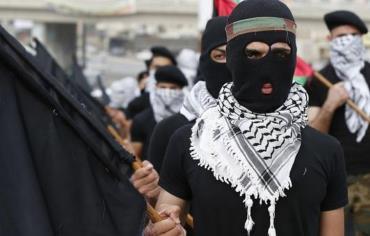
 

Hamas operatives in Gaza. Photo: REUTERS
 

A large-scale Hamas terrorist formation in the West Bank and Jerusalem planned to destabilize the region through a series of deadly terror attacks in Israel and then topple the Fatah-ruled Palestinian Authority, the Shin Bet said Monday.

The plot was orchestrated by the Hamas overseas headquarters located in Turkey, and centered on a string of mass casualty terror attacks on Israeli targets, the Shin Bet added.

The end goal was to destabilize the Palestinian territories and use the instability to carry out a military coup, overthrowing the government of PA President Mahmoud Abbas.

The Hamas infrastructure relied on support from cells in neighboring Jordan, and on couriers who delivered terrorist finances, totaling at least two million shekels, which were used to purchase weapons and homes that were used as hideouts, according to the investigation.

Ninety three Hamas members are in Israeli custody, and 46 have been questioned by the Shin Bet so far. Security forces plan to indict some 70 suspects. The investigation began in May, and is ongoing, security sources said.

Some 600,000 shekels have been seized by the Shin Bet, as well as 30 firearms, seven rocket launchers, and large amounts of ammunition. Security sources stressed that the plot was uncovered at an early stage.

The Shin Bet named senior Hamas leader Salah Al-Aruri, who is currently based in Turkey, as the mastermind behind the terrorist infrastructure.

Al-Aruri, originally from the village of Arura near Ramallah, spent years in prison for terrorism offenses, and left the region in March 2010, as part of an agreement with Israel. He has since served as the head of the West Bank sector in Hamas’s overseas wing.

According to the investigation, the plot began in 2010, as Al-Aruri was driven to the Allenby Border Crossing after agreeing to leave, following his release from prison.

In the car, Al-Aruri recruited his driver, Riad Nasser, another senior Hamas West Bank figure, the Shin Bet added.

Nasser, a resident of the Palestinian village of Dir Kadis, near Ramallah, was allegedly appointed by Al-Aruri as the local commander of the entire West Bank Hamas infrastructure.

Nasser served multiple prison sentences for terrorist offenses in previous years, and was taken into administrative detention in December 2013. The Shin Bet began questioning him on May 27 over his alleged involvement in the setting up of large numbers of terrorist cells.

“This infrastructure stretched from Jenin in the north to Hebron in the south. It is one the biggest we’ve seen in Judea and Samaria since Hamas’s formation in 1987,” a senior Shin Bet source, responsible for securing the Jerusalem district, told reporters on Monday. “They planned to carry out a coup and topple the Palestinian Authority,” he added.

A second Shin Bet source said the investigation serves as a warning over Hamas’s designs to replace the Palestinian Authority.

The infrastructure’s local nerve center was in Ramallah, where the PA is based, but cells branched out throughout 46 Palestinian cities, towns and villages.

Khaled Mashaal, Hamas’s overseas wing leader in Qatar, was aware of the plot, the sources said, though there was no involvement from Hamas in Gaza.

“The terrorists planned to undermine security, and launch a third intifada. They planned disturbances in the Temple Mount to rile the Palestinian masses. They were waiting for talks between the Israel and PA to collapse,” the source said.

During questioning, Riad Nasser allegedly said all of the operatives worked according to a plan devised by Al-Aruri designed to lead to a collapse of the PA’s rule.

According to Al-Ariri’s plan, a number of major terror attacks in Israel cause sufficient instability to facilitate a Hamas coup.

Hamas recruited many members, including students and academics, particularly those studying chemistry and engineering.

The terror cells allegedly kept in contact with Hamas member in Jordan, including Uda Zaharan, who originally hails from the village of Abu Mash’al in the West Bank, and who moved to Zarka, Jordan, in 2006. Zaharan allegedly maintained a system of couriers connecting various Hamas branches in Turkey, Jordan, and the West Bank, and transferred hundreds of thousands of dollars via multiple smuggling runs to operatives in the West Bank.

Additional suspects in custody include Majdi Mafarja, from the Palestinian town of Bet Likia , who holds a doctrate in computing. Security sources described Mafarja as representative of “a new generation of Hamas members,” adding that he is “highly intelligent” and fluent in computer programing.

Mafarja was sent by Hamas to Malaysia, where he trained in message encryption and computer hacking, the Shin Bet said. He was arrested on May 22.

Saleh Brakat, an Israeli citizen from Bet Safafa in east Jerusalem, was arrested on July 1 for allegedly transferring operational messages from Hamas in Jerusalem to members of the terror organization who are overseas. Brakat is active in Hamas’s Da’wa system, a civilian outreach network that offers social services to Palestinians.

Mahmoud Abu Daoud, of Hebron, was arrested on July 1 on suspicion of setting up terror cells that specialized in various attacks. He allegedly set up cells for for kidnappings, others for bombings, and shooting attack cells.

Muhammad Kafia, a resident of Beitunia, near Ramallah, heads a Hamas student cell at Abu Dis University. He was arrested on June 27, and turned over 19 automatic rifles and five handguns, security forces said.

Yahya Ata, a resident of Dir Abu Masha’al, near Ramallah was arrested on June 28 on suspicion of being recruited by Al-Arurir to set up a terror cell.

“The exposure of this infrastructure, one of the largest we have encountered, underlines the high danger posed by Hamas’s overseas headquarters,” the Shin Bet said in a statement.

The investigation uncovered deep ties between Hamas operatives in Turkey and operatives in Judea and Samaria, as well as Hamas’s strategy to topple the Palestinian Authority, it added. Some of the planned attacks were meant to take place in recent weeks, during Israel’s war with Hamas in Gaza, in order to open a second front of fighting, the intelligence agency added.

Fmr. Israel Navy Chief: A Gaza Seaport Would Be an Iranian Seaport

August 18, 2014

Fmr. Israel Navy Chief: A Gaza Seaport Would Be an Iranian Seaport

VIDEO August 17, 2014 11:29 am

via Fmr. Israel Navy Chief: A Gaza Seaport Would Be an Iranian Seaport VIDEO | Jewish & Israel News Algemeiner.com.


F.r Israel Navy chief, Vice Admiral (Ret.)
Eliezer Marom Photo: Wikipedia
 

Allowing Hamas to open a Gaza seaport would only serve to allow Iran direct access to rearm the Islamic terror group, the former chief of the Israeli Navy told Israeli Army radio Sunday.

“Let’s say an Iranian ship docked at Gaza Port for a visit. We know that Iranian military vessels smuggle munitions nearly every time they hoist anchor. But, because this is a military craft, we can’t inspect it,” Vice Admiral (Ret.) Eliezer Marom, stressed.

“And thus, without even noticing, we’ve established an Iranian port two hours away from Ashdod,” Marom said, and pointed out that, “Israel security doctrine is that we are responsible for security on all crossings…”

“The security challenge would be immense, and it would be very difficult for us to keep an eye on things,” he said.

However, Hamas representatives to indirect talks with Israel in Cairo over extending a cease-fire set to end at midnight Monday night, demanded a seaport, “or the talks were off,” Army radio reported.

Noting that the issue of securing such a port has been in discussion for two decades, Marom pointed out that he was in the original team that was tasked with offering the government solutions to the thorny issue, but said at the time that “we had very few answers.”

Also on Sunday, Prime Minister Benjamin Netanyahu told cabinet members that “security needs of the State of Israel,” were paramount for representatives at indirect talks with Hamas in Cairo.

“Only if there is a clear response to our security needs will we agree to reach understandings. In the past month Hamas has taken a severe military blow,” the PM said.

“We destroyed its network of tunnels that it took years to dig. We intercepted the rockets that it had massed in order to carry out thousands of deadly strikes against the Israeli home front. And we foiled the terrorist attacks that it tried to perpetrate against Israeli civilians – by land, sea and air,” according to Netanyahu.

Watch a recent interview with Marom, in which he discusses Israel’s chief maritime threats, including from underwater vehicles:

‘If Hamas renews fire, Israel will respond with full force’

August 18, 2014

If Hamas renews fire, Israel will respond with full force’

Israel is prepared for potential resumption of Gaza fighting, with five-day cease-fire set to expire at midnight on Monday

Israeli officials: If fire at Israel is not renewed, it is possible we will enter a state of calm without an agreement.

Mati Tuchfeld, Daniel Siryoti and Israel Hayom Staff

via Israel Hayom | ‘If Hamas renews fire, Israel will respond with full force’.


IDF troops on the Gaza border are prepared for the potential renewal of fighting
 

With the five-day cease-fire set to expire at midnight on Monday, Israel is preparing for the possibility Hamas will renew rocket fire.

“If the fire [from Gaza] resumes, Israel will respond with full force,” a senior Israeli official said. “If fire at Israel is not renewed, it is possible we will enter a state of calm without an agreement. Patience is necessary. The operation is not over and it could take more time. The greater the resilience of the public, the more we will be able to achieve.”

Egypt is trying to prevent a collapse of the indirect cease-fire talks being held in Cairo. Egyptian and Palestinian media outlets reported that Egypt has proposed that the sides declare a permanent cease-fire and that talks on a long-term arrangement resume next month. These talks would reportedly deal with all matters on the table, including Hamas’ demand for an airport and seaport in Gaza and Israel’s demand for the return of the remains of fallen soldiers Hadar Goldin and Oron Shaul.

Meanwhile, Israel has lifted some the restrictions that were put in place in Gaza during Operation Protective Edge. On Sunday, Israel permitted Gaza fishermen to go back to work and fish up to three nautical miles from the Gaza coastline.

At the start of Sunday’s cabinet meeting, Prime Minister Benjamin Netanyahu said, “We are in the midst of a combined military and diplomatic campaign. From the first day, the Israeli delegation to Cairo has worked under clear instructions: Insist on the security needs of the State of Israel. Only if there is a clear response to our security needs will we agree to reach understandings.

“In the past month, Hamas has taken a severe military blow. We destroyed its network of tunnels that it took years to dig. We intercepted the rockets that it had massed to carry out thousands of deadly strikes against the Israeli homefront. And we foiled the terrorist attacks that it tried to perpetrate against Israeli civilians — by land, sea and air.

“If Hamas thinks that it can cover up its military loss with a diplomatic achievement, it is mistaken. If Hamas thinks that continued sporadic firing will cause us to make concessions, it is mistaken. As long as quiet is not restored, Hamas will continue to take very harsh blows. If Hamas thinks that we cannot stand up to it over time, it is mistaken.”

Hamas spokesman Sami Abu-Zuhri issued a quick response, saying, “Netanyahu is throwing dust in the eyes of the Israeli public, because he is afraid Israelis will be furious when they find out the real results of the campaign. The Palestinian resistance forces caused hundreds of deaths and injuries in the Israeli army.”

Numerous cabinet ministers are calling for Israel to show no flexibility toward Hamas. International Relations, Intelligence and Strategic Affairs Minister Yuval Steinitz (Likud) said Israel must insist on the demilitarization of Gaza. Steinitz said a seaport or airport in Gaza would be nothing more than “duty free for rockets.” Economy and Trade Minister Naftali Bennett (Habayit Hayehudi) called for an end to the talks in Cairo.

“The situation in which we bite our nails while we wait for an answer from a murderous terrorist organization must stop,” Bennett said. “We must immediately stop the negotiations with Hamas and take our own destiny in our hands with a simple formula: humanitarian — yes, terror — no.”

As usual, the various Palestinian groups were not on the same wavelength on Sunday, and divisions were also evident within Hamas itself. Arab media outlets reported that chief Palestinian Authority negotiator Saeb Erekat met in Doha over the weekend with Hamas leader Khaled Mashaal and urged him to accept the Egyptian cease-fire proposal.

The Al-Hayat newspaper reported that the U.S. has agreed to serve as a guarantor that Israel will uphold what has been agreed to in Cairo. The report also said the Egyptian cease-fire proposal has won the support of U.N. Secretary-General Ban Ki-moon.

Hamas and Islamic Jihad officials are saying that the demilitarization of Gaza is not in the cards.

“We will not agree to give up weapons which we use for self-defense,” Islamic Jihad official Khaled al-Batesh said. “It would be preferable to return from Cairo without an agreement than with a humiliating agreement that in effect represents a surrender agreement.”

A Hamas official threatened, “The next campaign against the Zionist enemy will be held inside the Zionist entity, on the lands of Ashkelon.”

Obama’s Hubris is His Undoing

August 18, 2014

Contentions Obama’s Hubris is His Undoing

Jonathan S. Tobin | @tobincommentary 08.17.2014 – 8:00 PM

via Obama’s Hubris is His Undoing « Commentary Magazine.


Historians will have the rest of the century to unravel the mess that is the Barack Obama presidency. While they can explore these years of foreign policy disaster and domestic malaise at leisure, the rest of us have 29 more months to see just how awful things can get before he slides off to a lucrative retirement. But those who want to start the post-mortem on this historic presidency would do well to read Jackson Diehl’s most recent Washington Post column in which he identifies Obama’s hubris as the key element in his undoing.

As our Pete Wehner wrote earlier today, the president’s reactions to what even Chuck Hagel, his less-than-brilliant secretary of defense, has rightly called a world that is “exploding all over” by blaming it all on forces that he is powerless to control. As Pete correctly pointed out, no one is arguing that the president of the United States is all-powerful and has the capacity to fix everything in the world that is out of order. But the problem is not so much the steep odds against which the administration is currently struggling, as its utter incapacity to look honestly at the mistakes it has made in the past five and half years and to come to the conclusion that sometimes you’ve got to change course in order to avoid catastrophes.

As has been pointed out several times here at COMMENTARY in the last month and is again highlighted by Diehl in his column, Obama’s efforts to absolve himself of all responsibility for the collapse in Iraq is completely disingenuous. The man who spent the last few years bragging about how he “ended the war in Iraq” now professes to have no responsibility for the fact that the U.S. pulled out all of its troops from the conflict.

Nor is he willing to second guess his dithering over intervention in Syria. The administration spent the last week pushing back hard against Hillary Clinton’s correct, if transparently insincere, criticisms of the administration in which she served, for having stood by and watched helplessly there instead of taking the limited actions that might well have prevented much of that country — and much of Iraq — from falling into the hands of ISIS terrorists.

The same lack of honesty characterizes the administration’s approach to the Israel-Palestinian conflict and the nuclear negotiations with Iran, two topics that Diehl chose not to highlight in his piece.

Obama wasted much of his first term pointlessly quarreling with Israel’s government and then resumed that feud this year after an intermission for a re-election year Jewish charm offensive. This distancing from Israel and the reckless pursuit of an agreement when none was possible helped set up this summer’s fighting. The result is not only an alliance that is at its low point since the presidency of the elder George Bush but a situation in which the U.S. now finds itself pushing the Israelis to make concessions to Hamas as well as the Palestinian Authority, a state of affairs that guarantees more fighting in the future and a further diminishment of U.S. interests in the region.

On Iran, Obama wasted years on feckless engagement efforts before finally accepting the need for tough sanctions on that nation to stop its nuclear threat. But the president tossed the advantage he worked so hard to build by foolishly pursuing détente with Tehran and loosening sanctions just at the moment when the Iranians looked to be in trouble.

On both the Palestinian and the Iranian front, an improvement in the current grim prospects for U.S. strategy is not impossible. But, as with the situation in Iraq, it will require the kind of grim soul-searching that, as Diehl points out, George W. Bush underwent in 2006 before changing both strategy and personnel in order to pursue the surge that changed the course of the Iraq War. Sadly, Obama threw away the victory he inherited from Bush. If he is to recover in this final two years in office the way Bush did, it will require the same sort of honesty and introspection.

But, unfortunately, that seems to be exactly the qualities that are absent from this otherwise brilliant politician. Obama is a great campaigner — a talent that is still on display every time he takes to the road to blame Republicans for the problems he created — and is still personally liked by much of the electorate (even if his charms are largely lost on conservative critics such as myself). But he seems incapable of ever admitting error, especially on big issues. At the heart of this problem is a self-regard and a contempt for critics that is so great that it renders him incapable of focusing his otherwise formidable intellect on the shortcomings in his own thinking or challenging the premises on which he has based his policies.

Saying you’re wrong is not easy for any of us and has to be especially hard for a man who has been celebrated as a groundbreaking transformational figure in our history. But that is exactly what is required if the exploding world that Obama has helped set in motion is to be kept from careening even further out of control before his presidency ends. The president may think he’s just having an unlucky streak that he can’t do a thing about. While it is true that America’s options are now limited (largely due to his mistakes) in Syria and Iraq, there is plenty he can do to prevent things from getting worse there. It is also largely up to him whether Iran gets a nuclear weapon or Hamas is able to launch yet another war in the near future rather than being isolated. But in order to do the right things on these fronts, he will have to first admit that his previous decisions were wrong. Until he shed the hubris that prevents him from doing so, it will be impossible.

Report: US exerting pressure on ICC not to open war crimes probe against Israel

August 18, 2014

Report: US exerting pressure on ICC not to open war crimes probe against Israel

By JPOST.COM STAFF08/18/2014 15:09

The Guardian’ quotes lawyers and former court officials as saying that western pressure has influenced decision not to open probe;

ICC probe reportedly among issues being discussed at Cairo cease-fire talks.

via Report: US exerting pressure on ICC not to open war crimes probe against Israel | JPost | Israel News.


International criminal court Photo: REUTERS
 

The US and other western powers have exerted pressure on the International Criminal Court at the Hague to prevent a war crimes probe of Israel’s operation in the Gaza Strip, The Guardian reported on Monday, quoting former court officials.

During Operation Protective Edge, the Palestinian Authority has threatened to request that the court look into allegations that the civilian deaths in Gaza during the IDF’s operation constitute a war crime.

According to the report, the issue is among the matters being discussed at cease-fire talks in Cairo.

Palestinians requested that the court probe Israel for war crimes in 2009 , following Operation Cast Lead, however that request came before the Palestinians were recognized as a non-member observer state at the United Nations in 2012.

The ICC itself is divided on whether or not it has jurisdiction to probe the matter based on the 2009 request, or whether a new request would have to be submitted, according to The Guardian. The Palestinian factions would have to agree on submitting a new request, a difficult task, as Hamas would also be opening itself up to a war crimes inquiry.

The Guardian reported that western pressure has prevented the ICC from taking the view that the 2009 request gives the court jurisdiction to open a war crimes investigation into Israel’s actions.

Both current ICC prosecutor, Fatou Bensouda, and Luis Moreno Ocampo, who was prosecutor at the time of the 2009 Palestinian declaration, argue that a new Palestinian request would have to be made to allow the court to open an investigation. However, The Guardian quoted another former official of the court as saying, “They are trying to hide behind legal jargon to disguise what is a political decision, to rule out competence and not get involved.”

The French lawyer representing the Palestinians, Gilles Devers, was quoted by The Guardian as saying that “there is enormous pressure not to proceed with an investigation. This pressure has been exerted on Fatah and Hamas, but also on the office of the prosecutor.

“In both cases, it takes the form of threats to the financial subsidies, to Palestine and to the International Criminal Court,” he added.


