Posted tagged ‘Hamas’

Abbas Calls on Arab States to Attack Hamas

March 28, 2015

Abbas Calls on Arab States to Attack Hamas, Israel National News,  Ari Yashar, March 28, 2015

(Unlikely, but what would Obama say? — DM)

574415Mahmoud Abbas Reuters

Abbas urges ‘same policy’ of Yemen airstrikes to be used by Arab League in ‘Palestine,’ after his adviser calls for ‘iron’ blow to Hamas.

Palestinian Authority (PA) Chairman Mahmoud Abbas used the platform of the Arab League summit in Sharm el-Shekh, Egypt, this Saturday to attack his “unity partner” Hamas, making a subtle call for the Arab states to take military action against the Gaza-based Muslim Brotherhood offshoot.

Speaking at the 26th summit in the southern Sinai peninsula, Abbas made reference to the campaign of airstrikes launched last Thursday by Saudi Arabia and other Arab countries against Iran-backed Shi’ite Houthi rebelsin Yemen – the Houthis have overthrown the government while rapidly expanding their control.

“I hope that the Arab countries will take the same policy they employed in Yemen for all Arab countries suffering from internal conflict – like Palestine, Syria, Libya and Iraq,” Abbas said according to Yedioth Aharonot, in an open jab at Hamas in Gaza.

Making Abbas’s comments calling for military intervention in “Palestine” all the more pointed is the fact that just two days earlier, Abbas’s adviser on Religious and Islamic Affairs Mahmoud Al-Habbash, who also serves as PA Supreme Sharia (Islamic law) Judge, made similar remarks.

Al-Habbash urged the Arab countries to take action and strike Hamas with an “iron fist,” in an open call for military intervention.

Hamas and the PA signed a unity deal last April, which has done little to damper the enmity raging between the rivals ever since Hamas violently seized control of Gaza in 2007 – the most obvious example of the how the deal has not changed tensions was when Hamas tried to stage a coup against the PA in Judea and Samaria last year.

Responding to Al-Habbash, Hamas said the comment is “a dangerous and not nationalist call.”

Abbas’s call for Arab intervention comes after Arab foreign ministers meeting in Egypt last Thursday declared the establishment of a joint Arab military force, reportedly meant to rapidly respond to security threats to Arab nations.

Arab League secretary-general Nabil al-Arabi was assigned with coordinating the details with the chiefs of staff of the various Arab armies within one month, so as to work out the logistics of establishing the new force.

Pres Obama Dismisses Questions About Netanyahu’s Election Win – Cavuto

March 20, 2015

Pres Obama Dismisses Questions About Netanyahu’s Election Win – Cavuto, via You Tube, March 19. 2015


Israelis prepare to vote; Palestinians prepare to fight

March 17, 2015

Israelis prepare to vote; Palestinians prepare to fight, The Gatestone InstituteKhaled Abu Toameh, March 16, 2015

For some Palestinians, the election is not about removing Netanyahu from power. Rather, it is about removing Israel from the face of the earth and replacing it with an Islamist empire.

Kerry’s statement about the revival of the peace process shows that he remains oblivious to the reality in the Middle East, particularly with regards to the Palestinians.

Kerry is ignoring the fact that the Palestinians are today divided into two camps; one that wants to destroy Israel through terrorism and jihad and another that is working hard to delegitimize and isolate Israel with the hope of forcing it to its knees.

As Kerry was talking about the revival of the peace process, Hamas announced that it has completed preparations for the next confrontation with Israel.

Abbas will come to the talks with the same demands he and his predecessor have made over the past two decades, namely a full Israeli withdrawal to the pre-1967 lines. And when Israel does not accept all his demands, he will again walk out and demand international intervention to impose a solution on Israel.

Talk about the resumption of the peace process is nothing but a silly joke.

As Israeli voters head to the ballot boxes to elect their new representatives, Palestinians say they are preparing for another war with Israel.

The preparations came even as US Secretary of State John Kerry and some Israeli candidates, especially Zionist Camp leaders Isaac Herzog and Tzipi Livni, continue to talk about the need to revive the Israeli-Palestinian peace process after the election.

For some Palestinians, the election is not about removing Likud leader Binyamin Netanyahu from power. Rather, it is about removing Israel from the face of the earth and replacing it with an Islamist empire.

The next Israeli government will face a two-pronged attack on the Palestinian front — one from the Gaza Strip, where Hamas and Islamic Jihad say they have just completed preparations for the next conflict with Israel, and another from the West Bank, where the Palestinian Authority (PA) says it is determined to pursue its “diplomatic war” against Israel in the international arena.

On the eve of the election, Kerry expressed hope that Israelis will elect a government that “meets the hope for peace.”

Kerry’s statement about the revival of the peace process shows that he remains oblivious to the reality in the Middle East, particularly with regards to the Palestinians.

Kerry is ignoring the fact that the Palestinians are today divided into two camps; one that wants to destroy Israel through terrorism and jihad, and another that is working hard to delegitimize and isolate Israel in the international community with the hope of forcing it to its knees.

Hamas and Islamic Jihad continue to scoff at Kerry’s talk about the resumption of the peace process. The two groups, which control the 1.7 million Palestinians of the Gaza Strip, actually have other plans for the post-election era. Their main plans center around preparing for the next war with Israel.

983Israel’s Prime Minister Binyamin Netanyahu (left) and Hamas leader Ismail Haniyeh (right, in blue shirt).

As Kerry was talking about the revival of the peace process, Hamas’ armed wing, Izaddin al-Qassam, announced that it has completed preparations for the next confrontation with Israel.

These preparations, according to the group, include the reconstruction of Hamas military bases and training centers that were destroyed during the last war, known as Operation Protective Edge. The group says that it has not only rebuilt the destroyed sites, but has also set up new military posts, especially along the border with Israel.

Of course, when Hamas talks about “military bases,” it is also referring to the underground tunnels that it is hoping to use in the next conflict to infiltrate Israel.

Some of the bases are located only a few hundred meters away from the border with Israel, such as the Yarmouk and Palestine posts. Hamas says that the decision to build the military bases so close to the Israeli border is aimed at sending a message of defiance to Israel.

Islamic Jihad also does not seem to be impressed with the recent talk about the resumption of the peace process between Palestinians and Israelis.

Earlier this month, Islamic Jihad too unveiled its preparations for war, by inviting journalists on a tour of its tunnels inside the Gaza Strip.

“We’re on our highest level of alert to counter any attack. We’re used to the occupation breaking its ceasefires,” senior Islamic Jihad commander Abu al-Bara told Agence France Press. “It’s a war that never ends. We’re ready to go to another level against the Zionist occupation and carry out actions we’ve never done before.”

Meanwhile, the Palestinian Authority is also preparing for a confrontation with Israel, albeit one of a different nature.

The PA says it is determined to pursue its effort to seek worldwide support for imposing a solution on Israel. It is hoping to do so with the help of the United Nations, the European Union, the Obama Administration and some Arab countries.

In order to achieve its goal, the Palestinian Authority is currently waging a massive campaign in the international arena whose goal is to delegitimize, isolate and weaken Israel to a point where it would be forced to succumb and make far-reaching concessions, such as a full withdrawal to the pre-1967 lines.

PA President Mahmoud Abbas will find it almost impossible to return to the negotiating table with Israel now that he has told his people that the Palestinians’ next step is to file “war crime” charges against Israel with the International Criminal Court (ICC). Abbas’s aides have even set a date for the filing of the first anti-Israel case with the ICC: April 1.

Even if Abbas does return to the negotiating table — under heavy pressure from the Americans and Europeans — he would be doing so not in order to achieve an agreement with Israel, but to try to show the world that Israel does not want peace.

Abbas will come to the talks with the same demands he and his predecessor have made over the past two decades, namely a full Israeli withdrawal to the pre-1967 lines. When Israel does not accept all his demands, he will again walk out and demand international intervention to impose a solution on Israel. And while he would be waging his diplomatic campaign, Hamas and Islamic Jihad would resume their terror attacks against Israel from the Gaza Strip.

Under the current circumstances, where some Palestinians continue to seek the destruction of Israel and others are unable to make any concessions for peace, any talk about the resumption of the peace process is nothing but a silly joke.

Activist Ayaan Hirsi Ali Denounces Anti-Semitism on Campuses as New Film Debuts

March 15, 2015

Activist Ayaan Hirsi Ali Denounces Anti-Semitism on Campuses as New Film Debuts, Breitbart, Dr. Susan Berry, via Counter Jihad Report, March 14, 2015

(Please see also, Column One: Israel’s next 22 months. To what extent do Obama’s relations with Israel reflect the anti-Israel views noted in the two video clips? To what extent will the anti-Israel views noted in the video clips become increasingly pervasive as our college kids get older and come to hold positions of power?– DM)

ayaan-hirsi-ali-ap

Somali-born free speech and women’s rights activist Ayaan Hirsi Ali gave the keynote address at a sold-out event in Boston Wednesday that centered on rising anti-Semitism on college campuses in North America.


Hirsi Ali’s address, and a panel featuring a rabbi and three student activists, followed the premiere of a new Jerusalem U film titled Crossing the Line 2: The New Face of Anti-Semitism on Campus, which can be viewed in its entirety online. The film demonstrates how anti-Israel activities on college and university campuses are being organized to alienate and intimidate those who support Israel, and how reasonable criticism of Israel “crosses the line” into anti-Semitism.

As a press release about the Boston event notes, Hirsi Ali said the film demonstrates how students are being “misled.” Denouncing “virulent anti-Semitism” on college campuses, she asserted, “The least we can do is boycott, divest, and sanction campuses that compromise academic freedom.”

Excerpts of Hirsi Ali’s address are as follows:

It is appalling that only seventy years from the Holocaust, crowds in Europe chant, “Hamas, Hamas, Jews to the gas.” It is even more appalling that 10,000 soldiers in Paris are needed to protect Jewish sites. That is the continent that promised never again. The men and women who were in the concentration camps, who are tattooed, some are still here. And it is happening again.

Watching Crossing the Line 2: the New Face of Anti-Semitism on Campus was like having a bucket of ice water being poured over my head. I saw the film last week. And I watched it again last night. And I couldn’t sleep. The more we pretend that this is happening somewhere far away, the more hopeless and helpless we feel. But this is not happening far away. This is happening on American campuses, British campuses, Canadian campuses. The filmmakers who made this film made it because it is important that we listen to this message while it is at a smaller stage.

I have a different acronym for BDS. They call themselves Boycott, Divestment, and Sanctions. I call them Bully, Deceive, and Sabotage. Bully, Deceive, and Sabotage the only society that is free in the Middle East. BDS. On campus, if you care about issues like justice and injustice, we really need to show it. You need to do it. Where is the BDS movement against the Islamic State? Where on campuses is the BDS movement against Saudi Arabia? The Iranian regime, who for decades have promised to wipe Israel off the map, who are developing a bomb. And there’s no BDS movement against them on campus. Why? Last year in Nigeria, 200 girls were kidnapped. They were sold into slavery. There was no BDS movement against Boko Haram.

“Anti-Israel activities on campus cause students today to feel embarrassed to be pro-Israel, or could even lead them to hold negative opinions about Israel” said Amy Holtz, president of Jerusalem U, in a statement in the press release. “Raising awareness of this growing problem is crucial. We made this film in order to give students the knowledge to differentiate between education and intimidation, debate and hate. They must be able to identify when it is ‘Crossing the Line.’”

Hamas’ revamped naval commandos could pose a problem for Israel

March 14, 2015

Hamas’ revamped naval commandos could pose a problem for Israel, Ynet News, Alex Fishman, March 14, 2015

Although all unit members were killed during last summer’s infiltration attempt at Zikkim, Hamas viewed this as a massive achievement and subsequently trained a new force whose role will be to carry out mass attacks on the Israeli home front.

Palestinian Islamist organization Hamas has completed the reconstruction of its naval commando force, consisting of dozens of trained divers, in order to hit strategic sites, Israeli and others’, in the Mediterranean Sea.

With the development of its underwater unit, Hamas aims to compensate for the failure of the offensive tunnels from the Gaza Strip, which it rules, which were supposed to reach into Israel. From just a handful, the force has grown into many dozens of fighters trained to strike the Israeli home front via abductions and killings.

Hamas’s operational approach sees the naval commandos as one long “tunnel”, extending from Gaza in Israel’s south to Rosh Hanikra in the north, through which it could hit any target along the entire Israeli coast. These could be strategic objectives such as power plants, coal terminals, gas rigs and so on. However, using Operation Protective Edge as a model, it seems that Hamas is training its commandos to create a continuous shockwave for Israeli society through the mass murder of civilians and soldiers.

Hamas diversHamas’ infiltration attempt at Zikim during Protective Edge (Photo: IDF)

The Israeli defense establishment sees the strengthening of Hamas’ underwater activity – through the establishment of a large and professional commando unit – as one of the main lessons Hamas took from last summer’s conflict.

The Hamas commandos’ successful penetration a kilometer deep within Israeli territory, near Kibbutz Zikkim, is one of the organization’s major achievements during the 50 days of fighting, as this was the only time when Hamas special unit members managed to infiltrate Israel. If not for Israeli intelligence, it is likely the commando unit would have been able to penetrate the community or a nearby IDF base and carry out the mass murder it wanted.

Earlier this week, Egyptian newspaper “Al-Akhbar” reported that the creation of the naval commando unit was intended to harm Egypt’s facilities in the Mediterranean. The Egyptians, who have signed a gas deal with Israel, are worried about damage to the Tethys Sea group’s installation, while accusing Hamas of conducting sea-based attacks on Egyptian naval forces.

In November 2014, an Egyptian patrol boat was attacked as it conducted an operation against smuggling from the Gaza Strip. The attack was carried out by three rubber boats in the Egyptian Delta, near the port of Damietta. The perpetrators seized control of the ship, killed 13 Egyptian soldiers and hoisted the Islamic State flag.

The Egyptians blamed Hamas for supporting and being party to attacks of this kind, and significantly changed the security measures on their ships. Even the commands to open fire have changed, and the Egyptians shoot to destroy Gazan fishing boats that approach them without prior coordination.

In light of the accusations, Hamas leader Mahmoud Zahar was quick to issue a denial in the Al-Quds newspaper, saying that Hamas was not planning to wave underwater warfare in the area.

It was until Operation Pillar of Defense in November 2012 that the Hamas naval force was viewed as amateurish. But since that operation, Hamas was been working on setting up a large professional unit – its people were sent abroad for training, most likely to Iran, and it procured military-grade diving equipment.

During last summer’s infiltration at Zikkim, Israel registered the use of military standard systems, which prevent bubbles from surfacing during a dive. Hamas also has a small underwater craft, known as a “scooter”, for individual divers, and has even published pictures of them for propaganda purposes. It appears that following the collapse of diving tourism in Sinai, the club owners were happy to sell some advanced diving equipment.

The training of the reinvigorated commando unit is largely reminiscent of the training for elite units in conventional armies, including the ability to withstand physical and mental pressure that is customary within professional naval commando units in the region.

The defense establishment and the IDF are preparing for an increased threat from this underwater force. It should be noted that during Protective Edge, this unit only sustained partial damage, and in any future conflict its infiltration efforts will be a force to be reckoned with for Israel.

Bad Lefty Idea Of The Week: Ally With Al-Qaeda

March 14, 2015

Foreign Policy Elite MEME OF THE WEEK: Accept ‘Moderate’ Al-Qaeda

How they learned to love Islamic terror.

By Patrick Poole

March 13, 2015 – 10:55 am

via Bad Lefty Idea Of The Week: Ally With Al-Qaeda | PJ Tatler.


As I’ve said here at PJ Media repeatedly, there are some ideas so profoundly stupid that they can only be taken seriously inside the political-media-academic bubble that stretches along the Washington, D.C.-New York-Boston corridor. These typically populate my annual year-end “National Security ‘Not Top 10′” review.

Such is the case with this week’s foreign policy “smart set” MEME OF THE WEEK: we need to accept “moderate” al-Qaeda in order to defeat “hardline” ISIS.

Understand, this is a continuation of a popular theme amongst the foreign policy “smart set.” See the “moderate Muslim Brotherhood,” which just a month ago declared all-out jihad on the Egyptian government. Or the New York Times, pitching “moderate” elements of the Iranian regime. Or current CIA director “Jihad” John Brennan calling for the U.S. to build up Hezbollah “moderates.” Or hapless academics proclaiming the “mellowing” of Hamas. Or the so-called “vetted moderate” Syrian rebel groups that, as I have reported here, regularly fight alongside ISIS and al-Qaeda and have even defected to those terror groups.

So why are the foreign policy elites now having to talk about engaging “moderate” al-Qaeda, of all things?

Because all of those previous “moderate” engagement efforts have ended in disaster. But rather than abandon the whole “moderate” theme, the foreign policy community seems intent to double-down on failure by continuing to move the “moderate” line.

First out of the gate this week was an article in Foreign Affairs by Harvard’s Barak Mendelsohn, “Accepting Al-Qaeda: The Enemy of the United States’ Enemy,” that argues:

Since 9/11, Washington has considered al-Qaeda the greatest threat to the United States, one that must be eliminated regardless of cost or time. After Washington killed Osama bin Laden in 2011, it made Ayman al-Zawahiri, al Qaeda’s new leader, its next number one target. But the instability in the Middle East following the Arab revolutions and the meteoric rise of the Islamic State of Iraq and al-Sham (ISIS) require that Washington rethink its policy toward al-Qaeda, particularly its targeting of Zawahiri. Destabilizing al-Qaeda at this time may in fact work against U.S. efforts to defeat ISIS.

Here’s how Foreign Affairs, published by the Council on Foreign Relations, billed this conventional wisdom:

There are several problems with Mendelsohn’s thesis. One problem that he barely acknowledges is that al-Qaeda is still a declared enemy and an active threat to the United States. They have said repeatedly that they intend to kill U.S. citizens and have continued to plot to do so. The enemy of my enemy can still also be my enemy.

A second pragmatic problem with trying to use Jabhat al-Nusra, al-Qaeda’s official affiliate in Syria, as a tool against ISIS is that the relationship between the two groups is constantly evolving. Not long ago, ISIS and Nusra were comrades-in-arms. Despite their present falling-out, within recent months they still occasionally worked together: in August they joined forces to attack Lebanese border checkpoints; in September they were engaged in joint operations around Qalamoun. And Nusra appears more interested in wiping out the U.S.-backed “vetted moderate” groups and fighting the Assad regime than going head-to-head with ISIS.

Thus, it is considerably more likely that ISIS and al-Qaeda will engage in some form of reconciliation than al-Qaeda falling into the U.S. foreign policy orbit and serving as an anti-ISIS proxy in Syria.

So what drives the folly of the foreign policy “smart set”? Mostly it is the hubris that only they comprehend the vast and constantly changing complexity of international affairs, but also it is their added belief that their pals in the administration can harness this “smart set” omniscience to manipulate global events to a predicted end.

That rarely, if ever, happens. Just witness the Obama administration’s foreign policy disaster in Syria.

Mendelsohn has not been alone this week in calling for greater “acceptance” of al-Qaeda. Yesterday, the Wall Street Journal published Yaroslav Trofimov’s “Al-Qaeda a lesser evil? Syria war pulls U.S., Israel apart,” where he makes the following case:

MOUNT BENTAL, Golan Heights — This mountaintop on the edge of the Israeli-controlled Golan Heights offers a unique vantage point into how the complexities of the Syrian war raging in the plains below are increasingly straining Israel’s ties with the U.S.

To the south of this overlook, from which United Nations and Israeli officers observe the fighting, are the positions of the Nusra Front, the Syrian branch of al-Qaeda that the U.S. has targeted with airstrikes.

Nusra Front, however, hasn’t bothered Israel since seizing the border area last summer — and some of its severely wounded fighters are regularly taken across the frontier fence to receive treatment in Israeli hospitals.

To the north of Mount Bental are the positions of the Syrian government forces and the pro-Iranian Shiite militias such as Hezbollah, along with Iranian advisers. Iran and these militias are indirectly allied with Washington in the fight against Islamic State in Iraq. But here in the Golan, they have been the target of a recent Israeli airstrike. Israel in recent months also shot down a Syrian warplane and attacked weapons convoys heading through Syria to Hezbollah.

It would be a stretch to say that the U.S. and Israel are backing different sides in this war. But there is clearly a growing divergence in U.S. and Israeli approaches over who represents the biggest danger — and who should be seen, if not as an ally, at least as a lesser evil in the regional crisis sparked by the dual implosion of Syria and Iraq.

Trofimov’s argument boils down to: “Accept al-Qaeda! See, the Israelis are doing it!!!”

Needless to say, Trofimov’s article quickly received praise from the foreign policy “smart set,” including the Washington Post’s Jackson Diehl and The Century Foundation’s Michael Hanna:

A couple thoughts on this. First, some have treated the report of Israelis helping injured Nusra fighters in the Golan as some breaking game-changing news, but in fact Vice News reported on this back in December.

Secondly, I reported from the Golan here at PJ Media back in September 2013, and I even stood on Mount Bental and looked over the ruins of Quneitra while fighting raged across the border. And yet, that perspective didn’t help me magically see al-Qaeda as some lesser evil that we needed to engage or accept.

Thirdly, and I know this will strike some as heresy, the Israelis are not infallible and have seen this approach literally blow up on them. Take, for instance, the January 2009 Wall Street Journal article, “How Israel helped spawn Hamas“:

Surveying the wreckage of a neighbor’s bungalow hit by a Palestinian rocket, retired Israeli official Avner Cohen traces the missile’s trajectory back to an “enormous, stupid mistake” made 30 years ago.

“Hamas, to my great regret, is Israel’s creation,” says Mr. Cohen, a Tunisian-born Jew who worked in Gaza for more than two decades. Responsible for religious affairs in the region until 1994, Mr. Cohen watched the Islamist movement take shape, muscle aside secular Palestinian rivals and then morph into what is today Hamas, a militant group that is sworn to Israel’s destruction.

Instead of trying to curb Gaza’s Islamists from the outset, says Mr. Cohen, Israel for years tolerated and, in some cases, encouraged them as a counterweight to the secular nationalists of the Palestine Liberation Organization and its dominant faction, Yasser Arafat’s Fatah. Israel cooperated with a crippled, half-blind cleric named Sheikh Ahmed Yassin, even as he was laying the foundations for what would become Hamas. Sheikh Yassin continues to inspire militants today; during the recent war in Gaza, Hamas fighters confronted Israeli troops with “Yassins,” primitive rocket-propelled grenades named in honor of the cleric. […]

When Israel first encountered Islamists in Gaza in the 1970s and ’80s, they seemed focused on studying the Quran, not on confrontation with Israel. The Israeli government officially recognized a precursor to Hamas called Mujama Al-Islamiya, registering the group as a charity. It allowed Mujama members to set up an Islamic university and build mosques, clubs and schools. Crucially, Israel often stood aside when the Islamists and their secular left-wing Palestinian rivals battled, sometimes violently, for influence in both Gaza and the West Bank.

“When I look back at the chain of events I think we made a mistake,” says David Hacham, who worked in Gaza in the late 1980s and early ’90s as an Arab-affairs expert in the Israeli military. “But at the time nobody thought about the possible results.”

“Nobody thought about the possible results.” Yeah, there’s a lot of that going around.

I should note that this is not the first time that the foreign policy “smart set” has taken a run at the “engaging moderate al-Qaeda” meme. In January 2014, Foreign Affairs published an article titled “The Good and Bad of Ahrar al-Sham” which contended that the U.S. needed to “befriend” the Syrian jihadist group Ahrar al-Sham as some kind of counter to more extreme jihadist groups, like ISIS and Jabhat al-Nusra. The precedent they cited was the U.S. failure to designate the Taliban (!!!) after 9/11.

Mind you, at the time they wrote this one of Ahrar al-Sham’s top leaders was a lieutenant for al-Qaeda head Ayman al-Zawahiri who openly declared himself a member of al-Qaeda. After most of their leadership was wiped out in a bombing in September, they gravitated closer to the jihadist groups they were supposed to counter and their positions have been bombed by the U.S. – much to the consternation of other “vetted moderate” rebel groups.

The article was originally subtitled “An al-Qaeda affiliate worth befriending”:
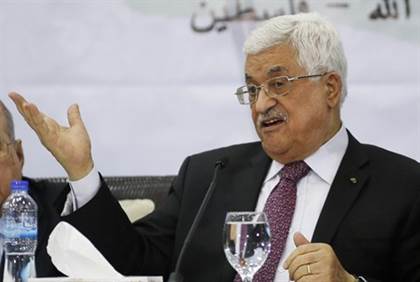
Obama Gives Sisi the Netanyahu Treatment

March 12, 2015

Obama Gives Sisi the Netanyahu Treatment, Commentary Magazine, March 11, 2015

[O]ne of the major changes that took place on President Obama’s watch was a conscious decision to downgrade relations with Cairo, a nation that his predecessors of both parties had recognized as a lynchpin of U.S. interests in the region. The current weapons supply squeeze is not only a blow to the efforts of a nation that is actually willing to fight ISIS and other Islamist terrorists; it’s a statement about what it means to be an American ally in the age of Obama.

******************************

In a Middle East where Islamist terror groups and the Iranian regime and its allies have been on the offensive in recent years, the one bright spot for the West in the region (other, that is, than Israel) is the way Egypt has returned to its old role as a bulwark of moderation and opposition to extremism. The current government led by former general Abdel Fattah el-Sisi has clamped down on Hamas terrorists and has been willing to deploy its armed forces to fight ISIS in Libya while also clamping down on a Muslim Brotherhood movement that seeks to transform Egypt into another Islamist state. Yet despite this, the Obama administration is unhappy with Egypt. Much to Cairo’s consternation, the United States is squeezing its government on the military aid it needs to fight ISIS in Libya and Sinai terrorists. As the Israeli government has already learned to its sorrow, the Egyptians now understand that being an ally of the United States is a lot less comfortable position than to be a foe like Iran.

The ostensible reason for the holdup in aid is that the Egyptian government is a human-rights violator. Those concerns are accurate. Sisi’s government has been ruthless in cracking down on the same Muslim Brotherhood faction that was running the country until a popular coup brought it down in the summer of 2013. But contrary to the illusions of an Obama administration that hastened the fall of Hosni Mubarak and then foolishly embraced his Muslim Brotherhood successors, democracy was never one of the available options in Egypt.

The choice in Egypt remains stark. It’s either going to be run by Islamists bent on taking the most populous Arab country down the dark road of extremism or by a military regime that will keep that from happening. The obvious Western choice must be the latter, and Sisi has turned out to be an even better ally than Washington could have dreamed of, as he ensured that the Brotherhood would not return to power, took on Hamas in Gaza, and even made public calls for Muslims to turn against religious extremists.

But rather than that endearing him to the administration, this outstanding record has earned Sisi the Netanyahu treatment. Indeed, like other moderate Arab leaders in the Middle East, Sisi understands that President Obama has no great love for his country’s allies. Besotted as he is by the idea of bringing Iran in from the cold, the American government has allied itself with Tehran in the conflicts in both Iraq and Syria. He also understands that both of those ongoing wars were made far worse by the president’s dithering for years, a stance that may well have been motivated by a desire to avoid antagonizing Iran by seeking to topple their Syrian ally.

But those issues notwithstanding, one of the major changes that took place on President Obama’s watch was a conscious decision to downgrade relations with Cairo, a nation that his predecessors of both parties had recognized as a lynchpin of U.S. interests in the region. The current weapons supply squeeze is not only a blow to the efforts of a nation that is actually willing to fight ISIS and other Islamist terrorists; it’s a statement about what it means to be an American ally in the age of Obama.

As the Times of Israel reported:

On Monday Sisi was asked what he and the other Arab allies thought of U.S. leadership in the region. It is hard to put his response in words, mainly due to his prolonged silence.

“Difficult question,” he said after some moments, while his body language expressed contempt and disgust. “The suspending of US equipment and arms was an indicator for the public that the United States is not standing by the Egyptians.”

It turns out that although the American administration recently agreed to provide the Egyptian Air Force with Apache attack helicopters; it has been making it increasingly difficult for Cairo to make additional military purchases.

For example, the U.S. is delaying the shipment of tanks, spare parts and other weapons that the army desperately needs in its war against Islamic State.

This development raises serious questions not only about U.S.-Egyptian relations but the administration’s vision for the region.

This is, after all, a time when the administration is going all out to make common cause with Iran, an open enemy that is currently the leading state sponsor of terrorism in the world. President Obama is pursuing a diplomatic arrangement that will strengthen the Iranian regime and guarantee the survival of a nuclear program that moderate Arabs see as being as much of a threat to them as it is to Israel or the West.

The Egyptians understand that Washington isn’t interested in their friendship. Nor is the administration particularly supportive of Cairo’s efforts to rein in Hamas or to fight ISIS. Indeed, the Egyptians are now experiencing the same sort of treatment that has heretofore been reserved for the Israelis. That’s especially true in light of the arms resupply cutoff against Israel Obama ordered during last summer’s war in Gaza.

Despite flirting with Russia, Egypt may, like Israel, have no real alternative to the United States as an ally. Perhaps that’s why Obama takes it for granted. But if the U.S. is serious about fighting ISIS as opposed to just talking about it, Washington will have to start treating Egypt and its military as a priority rather than an embarrassment.

Islamic State’s Actions Against Jordan And Egypt Reveal Its Overall Plan

March 11, 2015

Islamic State’s Actions Against Jordan And Egypt Reveal Its Overall Plan

By Missing Peace

via Islamic State’s Actions Against Jordan And Egypt Reveal Its Overall Plan | Missing Peace | missingpeace.eu | EN.

Ansar Bayt al-Maqdis squad in Sinai desert

Ansar Bayt al-Maqdis squad in Sinai desert


Egypt responded swiftly to Islamic State’s beheading of 21 Egyptian Christian Coptic men in Libya on Sunday. President Abdel Fatah al-Sisi ordered his airforce to bomb the Islamic State stronghold Derna in eastern Libya. The airstrikes were directed at Islamic State camps, training sites, and weapon depots where as many as 50 Islamic State terrorists were killed. Libya’s air force also participated.

Egyptian state television aired footage of fighter planes leaving the hangar with “Long live Egypt” emblazoned on their tails. This was followed by night-vision aerial footage showing explosions. The Egyptian government requested targeting support from the U.S. to no avail.

The Egyptian Coptic Christian victims were among thousands of unemployed Egyptians who had been forced to seek employment in Libya. Unemployment in Egypt had risen from 8.9 percent to 13 percent since the ouster of President Mubarak in 2011.

Islamic State released a video that showed the gruesome killings. The Coptic Christians were marched to a beach, forced to kneel, and then beheaded.

One of the terrorists stood with a knife in his hand and said: “Safety for you crusaders is something you can only wish for; we will conquer Rome, by the will of Allah.”

Israeli and international media reported after the strike that Egypt has now joined the fight against Islamic State and that Egypt has become a target for Islamic State.

In fact, as Western Journalism reported on February 5th, Egypt has been waging war on the Islamic State since December 2014, when Al Qaeda affiliate Ansar Bayt al-Maqdis in Sinai pledged allegiance to Islamic State and changed its name to Wilayat Sinai (Sinai Province). Shortly afterward, violence in Sinai escalated significantly; and scores of Egyptian security personnel were killed in well-organized terrorist attacks. In one of these attacks, an army helicopter was downed by a surface-to-air missile that had been smuggled into Sinai from Libya.

The new Islamic State Branch also uses beheadings to intimidate Egyptian security personnel. Last year, the group beheaded four citizens who were accused of spying for the Mossad.

Islamic State has obviously decided to attack Egypt in an attempt to further destabilize the country. By baiting Egypt at its weakest point – the porous border with Libya – Islamic State compels President al-Sisi to move forces, diluting the effectiveness of the whole.

This aggravates the situation because Egypt is already challenged by keeping Sinai in check and safeguarding the crucial Nile Delta.

The security situation in Sinai has deteriorated significantly since the army removed the Muslim Brotherhood from power. Tourists traveling from Taba in Sinai to Eilat in Israel told Western Journalism that free traffic has become impossible in the Sinai Peninsula. The army only allows tourists to visit the coastal plain and Jebel Musa, the mountain Christians believe is the spot where the Ten Commandments were given to the people of Israel. Cars are only allowed to travel in convoys accompanied by army vehicles.

Israeli tourism to Sinai has nearly come to a complete standstill, Israeli security officers told Western Journalism. Israeli tourists now stay in Taba just over the border with Israel.

Islamic State is not strong enough yet to take over Egypt, but that’s not the goal of its latest actions. The group is clearly trying to destabilize Jordan and Egypt. The latest IS campaign started with the provocation of Jordan. King Abdullah decided to start Jordan’s own air campaign against Islamic State after Jordanian pilot Moaz al-Kasasbeh was burned alive. Egypt has now been similarly drawn in.

The Jihadist group is trying to destabilize both countries and to inspire the Muslim Brotherhood to rise up against the regimes in both Jordan and Egypt. Both countries face huge economic problems and struggle to contain the rise of Islamism.

Experts fear the air campaign against Islamic State will be answered by a sharp increase in terrorist attacks in both Jordan and Egypt. When Egypt and Jordan descend into chaos, it will be easier for Islamic State to expand its power base and to enlarge its territory. This clearly echoes the situation that developed in Syria and Iraq.

The group has a clear vision of what the end game will be. What is happening in Egypt and Jordan has everything to do with the ultimate goal of destroying the State of Israel. The group has already set up camp in Sinai close to Israel’s southern border. Islamic State’s presence along the long western border with Jordan would be a huge challenge for the IDF and would inspire Palestinian terrorist groups.

Expanding Islamic State presence in Libya serves another goal of the organization: The group wants to expand its influence in North Africa and to use Libya as a gateway to Europe. Islamic State operatives have already taken control of two important Libyan cities and a large part of the Mediterranean coast. They are moving toward oil facilities and are slowly infiltrating the capital, Tripoli.

The British newspaper The Telegraph reported that Islamic State plans to send its forces to North Africa, where they will try to sail across the Mediterranean posing as refugees. To oversee Islamic State operations in Libya and North Africa, the IS leadership has appointed an emir for Tripoli, the Tunisian Abu Talha, and one for west Libya, the Yemeni Abu al-Barra el-Azdi.

The recent terror attacks in France and Denmark are also connected to Islamic State’s plan for Europe. Both attacks revealed the goals of the organization in Europe. The first goal is to undermine European society to the point that they will lose the resolve to fight to uphold Western values and will accept Islamic domination. The second goal is to chase the Jews out of Europe.

It would be a mistake not to take the stated threats and goals of Islamic State seriously. Although the group does not have the means to conquer Israel and southern Europe at this moment, the organization has proven that it acts with a strategic purpose and can advance its goals.

The recent actions against Egypt and Jordan should serve as another warning to the West: Airstrikes alone are not sufficient to defeat Islamic State. It is highly doubtful, however, that this warning will be heeded. In an interview with MSNBC, State Department, Spokeswoman Marie Harf said “ The U.S. cannot win the war with Islamic State by killing them. We cannot kill our way out of this war”, she said. Harf also claimed that Muslims are attracted to Jihad because of poverty and a lack of jobs.

This article first appeared on Western Journalism in the United States

Palestinian forces detain 500 Hamas West Bankers, to thwart coup and Abbas assassination plot

March 10, 2015

Palestinian forces detain 500 Hamas West Bankers, to thwart coup and Abbas assassination plot, DEBKAfile, March 10, 2015

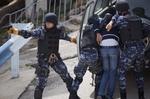
security_forces_in_the_West_Bank_Hamas__10.3.15Palestinian security forces detain Hamas activists

[O]ur sources also reveal that the PA chairman has asked Netanyahu through back-channels for a secret rendezvous somewhere in Europe. He proposed avoiding prominent capitals like London, Paris or Berlin, but meeting at a smaller venue for the sake of confidentiality.

Abbas also insisted that this meeting must be concealed from Washington, especially from Secretary of State John Kerry.

The Israeli prime minister has turned him down – and not just because the Palestinian request finds him in the middle of a tough race for re-election.

*********************

Acting on direct orders from Palestinian Authority Chairman Mahmoud Abbas, Palestinian special forces raided the nine PA-ruled towns of the West Bank in the past 48 hours and detained 500 Hamas suspects, DEBKAfile’s military sources report. Abbas ordered the operation after discovering that Hamas had been hatching a plot for some weeks to stage an armed insurrection against the Palestinian Authority, starting in one of the Palestinian towns – possibly even the PA capital of Ramallah. They would assassinate him in the process of the coup.

Of late, Abbas has kept his distance from Ramallah and his seat of government and spends most of his time traveling in foreign countries, especially Arab capitals, where he feels safer under the protection of foreign security services than he does at home.

The wave of detentions from Sunday to Tuesday (March 9-10) is the most extensive the Palestinian Authority has ever conducted against Hamas’ West Bank cells. Not only prominent figures and known terror activists were taken into custody but also new figures.

Abbas ordered the operation amid a serious dilemma over his personal security.

Before him were reports presented by Palestinian Intelligence chief Maj. Gen. Majed Faraj revealing the preparations in train for his assassination, an event that would signal mass riots orchestrated by Hamas and Jihad Islami, leading up to the seizure of government from the Palestinian Authority – much as they did in the Gaza Strip.

At the same time, Abbas does not entirely trust Palestinian security services or their ability to safeguard him and his regime in Ramallah.

He therefore turned to Israel, touching off an IDF response that had nothing to do with Israel’s forthcoming general election on March 17 – as government opponents have claimed.

The 3,000 IDF soldiers plus 10,000 reservists called up this week were not posted on the West Bank to practice anti-riot tactics for putting down Palestinians disturbances against Jewish settlements – as reported. They were placed on the ready in case it was necessary to go into Palestinian towns and save them from being overrun by the radical Hamas and Jihad Islami.

The Israeli troops also rehearsed a possible scenario that might ensue from the murder of Mahmoud Abbas.

In view of the highly sensitive security situation on the West Bank, Prime Minister Binyamin Netanyahu accompanied by Defense Minister Moshe Ya’alon, paid a rare visit to the IDF’s Judea-Samaria command headquarters Tuesday, March 10, to inspect these preparations.

It was the Hamas conspiracy to seize power in Ramallah that prompted Ya’alon’s enigmatic remark that were it not for preemptive military operations, central Israel might now be under missile and mortar attack.

DEBKAfile’s military sources add that way the Palestinian issue has become a football for kicking around Israel’s election campaign, making it hard to penetrate the fog of anti-government propaganda and establish what is really going on.

For example, Netanyahu is being presented by his rivals as having agreed at a former stage in US-brokered peace negotiations with the Palestinians to withdraw to behind the 1967 lines. They have picked out one of the many papers drawn up by the Americans and discarded in the course of the negotiations – this one was written by a Shiite Iraqi academic in Oxford University and was never approved either by Israel or the Palestinians.

Turning to the real events afoot today, our sources also reveal that the PA chairman has asked Netanyahu through back-channels for a secret rendezvous somewhere in Europe. He proposed avoiding prominent capitals like London, Paris or Berlin, but meeting at a smaller venue for the sake of confidentiality.

Abbas also insisted that this meeting must be concealed from Washington, especially from Secretary of State John Kerry.

The Israeli prime minister has turned him down – and not just because the Palestinian request finds him in the middle of a tough race for re-election.

U.S. Generals: Israeli Military Restraint Bolstered Hamas

March 9, 2015

U.S. Generals: Israeli Military Restraint Bolstered Hamas

Report rejects American adoption of Israeli level of restraint

BY:
March 9, 2015 5:00 am

via U.S. Generals: Israeli Military Restraint Bolstered Hamas | Washington Free Beacon.


Israel’s military restraint during the conflict in Gaza last summer “unintentionally empowered Hamas” by allowing the terror group to distort international law and secure a public relations victory by exploiting the media, according a task force of retired U.S. generals.

The task force also warned that Hamas’ disinformation strategy could be replicated against the U.S. military and advised the U.S. government to institute a plan to combat similar media campaigns in the future.

“Hamas supported false claims against the [Israel Defense Forces] by distorting stories and images to serve the organization’s narrative, and by manipulating stories in the international media,” said the Gaza Conflict Task Force in a report commissioned by the Jewish Institute for National Security Affairs and released on Monday.

The report, titled “The 2014 Gaza War: Observations and Implications for U.S. Military Operations,” concluded that Hamas was not aiming for a military victory but instead put Gaza’s civilians at risk in order to increase casualties and damage the global standing of the Israel Defense Forces.

The main goal, according to the report, was to build international pressure on Israel.

“Hamas proved very effective at exploiting images of civilian deaths, particularly children, to gain international sympathy to their cause and a high degree of international opposition to the Israeli cause,” said the report. “Further, Hamas was effective at not allowing access to their more brutal and illegal actions, beyond what they published themselves as part of their internal intimidation efforts.”

According to the task force, the techniques used by Hamas “represent an evolution in unconventional warfare, and will probably be imitated and improved upon by America’s enemies.”

The report recommended that the United States should institute a “whole-of government approach” to countering such efforts.

“The U.S. government and military must come to grips with the increased importance and use of the information domain in war,” said the task force. “They must develop effective countermeasures to this enemy advantage, as it threatens to exploit a strategic vulnerability for the United States and its allies.”

One issue that Hamas exploited in Gaza, according to the report, was the lack of clarity between international laws of war and military policy.

The task force argued that the IDF exceeded the Laws of Armed Conflict by using restraint during times when it was legally unnecessary. This created a precedent that could open Israeli civilians up to increased risk, according to the report.

“Unless there is a clear demarcation between law and policy-based restraints on the use of combat power, raising standards in one instance—even if done as a matter of national policy and not as the result of legal obligation—risks creating a precedent to which military forces will likely be expected to adhere in the future,” said the report.

“We do not believe the Israeli level of restraint should be considered the standard for U.S. armed forces in future conflicts,” the report concluded

The task force, which traveled to Israel while conducting the assessment, included General Charles Wald, Lieutenant General William B. Caldwell IV, Lieutenant General Richard Natonski, Major General Rick Devereaux, and Major General Mike Jones.