Posted tagged ‘Hamas’

Obama Admin Under Pressure for Lax Approach to Terror Financers

May 10, 2016

Obama Admin Under Pressure for Lax Approach to Terror Financers Treasury Dept. pressed to cut off foreign funders of terror

BY:
May 10, 2016 5:00 am

Source: Obama Admin Under Pressure for Lax Approach to Terror Financers

The Obama administration is facing criticism over what some lawmakers say is an overly permissive attitude toward terrorism financing by foreign nations, according to new congressional communication obtained by the Washington Free Beacon that presses U.S. officials to hold these nations accountable for enabling terror.

Congressional sources and experts accused the administration of going soft on Middle Eastern allies such as Qatar that are known to be chief financiers of global terrorism movements like al Qaeda and Hamas, according to conversations with sources.

The permissive environment has allowed these countries to continue receiving vast amounts of U.S. taxpayer aid while facilitating the transfer of money to rogue terror entities, some of which are currently designated by the United States as global terrorists, according to these sources.

Some Obama administration officials welcome Qatar’s role as an emissary to these terrorist groups, according to conversations described by sources to the Free Beacon.

In the latest bid to force the administration to crack down on this behavior, Sen. Mark Kirk (R., Ill.) petitioned the Treasury Department on Tuesday to adopt a more aggressive stance against Qatar’s terror financing, according to a letter sent to the administration and obtained by the Free Beacon.

Qatar, which is home to a major U.S. military base, has benefited from billions of dollars in arms deals with America. Yet it also enjoys close relations with Hamas, which has received billions of dollars in support from Qatar.

Kirk is pressing the administration to use its leverage to force Qatar to break ties with its global terror allies. The senator also is requesting that the administration outline the steps it has taken to stop this behavior.

“For over a decade, the Qatari government has displayed leniency and negligence toward individuals who support and finance ISIS, its predecessor Al-Qaeda in Iraq (AQI), and other terrorist groups,” Kirk wrote in a letter to Treasury Secretary Jack Lew. “If Qatar’s permissiveness continues, it will further fuel terrorism both regionally and worldwide.”

“I therefore urge the Administration to press the Qatari government to stop the operations of terrorism supporters and financiers within its territory, and to comply fully with” international agreements mandating that Qatar cut all ties with terror financiers, Kirk wrote.

“To this day, terrorist financiers—including those designated by the United States and the United Nations—continue to enjoy such impunity in Qatar,” Kirk notes in the letter.

While the Obama administration has admitted Qatar continues to fund terrorism, critics such as Kirk maintain that officials have done little to rectify the situation.

David Cohen, former treasury undersecretary for terrorism and financial intelligence, acknowledged in a 2014 speech that at least two Qatari terror funders have yet to be prosecuted by the government.

Several other supporters of al Qaeda also have been designated as terrorists by the United States but appear to still be operating with immunity in Qatar, according to information disclosed by Kirk.

At least one of the individuals, Khalifa Muhammad Turki al-Subaiy, was caught raising money online as recently as April of this year.

“I am disturbed to see the Qatari Government has apparently taken no significant action against” these funders, Kirk wrote. “Indeed, both terrorist financiers reportedly remain at large.”

“Unless the United States convinces all of our coalition partners, including Qatar, to do all they can to eliminate sources of terrorist financing, our collective efforts will continue to address the symptoms of international terrorism without effectively dealing with one of its root causes,” Kirk wrote.

Jonathan Schanzer, a former terrorism finance analyst at the Treasury Department, told the Free Beacon that there are some U.S. officials who approve of Qatar’s actions.

“Remarkably, some officials have told me that they like having Qatar serve as an intermediary between the U.S. and jihadi groups,” Schanzer said.

“Qatar has long used its hosting of crucial U.S. military facilities as a means to offset the fact that it is also host to terrorist figures from Hamas, the Taliban, and a range of jihadist groups in Syria,” Schanzer explained. “Successive administrations have accepted this situation and refuse to demand that Doha change its policies. Similarly, successive administrations have refused to demand that Qatar bring known financiers to justice who have found shelter on Qatari soi

Iran’s Plans to Control a Palestinian State

May 9, 2016

Iran’s Plans to Control a Palestinian State, Gatestone Institute, Khaled Abu Toameh, May 9, 2016

(Please see also, Op-Ed: Trump’s “peace through strength”  for  USA also applies to Israel. — DM)

♦ The Iran nuclear deal, marking its first anniversary, does not appear to have had a calming effect on the Middle East.

♦ Iran funnels money to Hamas and Islamic Jihad because they share its desire to eliminate Israel and replace it with an Islamic empire. The Iranian leaders want to see Hamas killing Jews every day, with no break. Ironically, Hamas has become too “moderate” for the Iranian leadership because it is not doing enough to drive Jews out of the region.

♦ More Palestinian terror group leaders may soon perform the “pilgrimage” to their masters in Tehran. If this keeps up, the Iranians themselves will puppeteer any Palestinian state that is created in the region.

The Iran nuclear deal, marking its first anniversary, does not appear to have had a calming effect on the Middle East. The Iranians seem to be deepening their intervention in the Israeli-Palestinian conflict in general and in internal Palestinian affairs in particular.

This intervention is an extension of Iran’s ongoing efforts to expand its influence in Arab and Islamic countries, including Iraq, Yemen, Syria and Lebanon and some Gulf states. The nuclear deal between Tehran and the world powers has not stopped the Iranians from proceeding with their global plan to export their “Islamic Revolution.” On the contrary, the general sense among Arabs and Muslims is that in the wake of the nuclear deal, Iran has accelerated its efforts to spread its influence.

Iran’s direct and indirect presence in Iraq, Syria, Yemen and Lebanon has garnered some international attention, yet its actions in the Palestinian arena are still ignored by the world.

That Iran provides financial and military aid to Palestinian groups such as Hamas and Islamic Jihad has never been a secret. In fact, both the Iranians and the Palestinian radical groups have been boasting about their relations.

Iran funnels money to these groups because they share its desire to eliminate Israel and replace it with an Islamic empire. Like Hezbollah in Lebanon and the Houthis in Yemen, Hamas and Islamic Jihad agreed to play the role of Tehran’s proxies and enablers in the Israeli-Palestinian conflict.

1162 (1)Iran used to funnel money to Hamas and Islamic Jihad because they share its desire to eliminate Israel and replace it with an Islamic empire. Relations between Iran and Hamas foundered a few years back, when Hamas leaders refused to support the Iranian-backed Syrian dictator, Bashar Assad. Pictured above: Hamas leader Khaled Mashaal (left) confers with Iranian “Supreme Leader” Ali Khamenei, in 2010. (Image source: Office of the Supreme Leader)

But puppets must remain puppets. Iran gets nasty when its dummies do not play according to its rules. This is precisely what happened with Hamas and Islamic Jihad.

Relations between Iran and Hamas foundered a few years back over the crisis in Syria. Defying their masters in Tehran, Hamas leaders refused to declare support for the Iranian-backed Syrian dictator, Bashar Assad. Things between Iran and Hamas have been pretty bad ever since.

First, the Assad government closed down Hamas offices in Damascus. Second, Assad expelled the Hamas leadership from Syria. Third, Iran suspended financial and military aid to Hamas, further aggravating the financial crisis that the Gaza-based Islamist movement had already been facing.

Islamic Jihad got it next. Iranian mullahs woke up one morning to realize that Islamic Jihad leaders have been a bit unfaithful. Some of the Islamic Jihad leaders were caught flirting with Iran’s Sunni rivals in Saudi Arabia and other Gulf countries. Even worse, the Iranians discovered that Islamic Jihad was still working closely with their erstwhile allies in the Gaza Strip, Hamas.

Iran had had high hopes for Islamic Jihad replacing Hamas as Tehran’s darling, and major proxy in the Palestinian arena. But here were Islamic Jihad leaders and activists working with their cohorts in Hamas, in apparent disregard of Papa Iran.

The mullahs did not lose much time. Outraged by Islamic Jihad’s apparent disloyalty, Iran launched its own terror group inside the Gaza Strip: Al-Sabireen (The Patient Ones). This group, which currently consists of several hundred disgruntled ex-Hamas and ex-Islamic Jihad members, was meant to replace Islamic Jihad the same way Islamic Jihad was supposed to replace Hamas in the Gaza Strip — in accordance with Iran’s scheme.

Lo and behold: it is hard to get things right with Iran. Al-Sabireen has also failed to please its masters in Tehran and is not “delivering.” Palestinian sources in the Gaza Strip say that Iran has realized that the investment in Al-Sabireen has not been worthwhile because the group has not been able to do anything “dramatic” in the past two years. By “dramatic,” the sources mean that Al-Sabireen has neither emerged as a serious challenger to Islamic Jihad or Hamas, and has not succeeded in killing enough Israelis.

So Iran has gone running back to its former bedfellow, Islamic Jihad.

For now, Iran is not prepared fully to bring Hamas back under its wings. Hamas, for the Iranians, is a “treacherous” movement, thanks to its periodic temporary ceasefires with Israel. The Iranian leaders want to see Hamas killing Jews every day, with no break. Ironically, Hamas has become too “moderate” for the Iranian leadership because it is not doing enough to drive Jews out of the region.

That leaves Iran with the Islamic Jihad.

In a surprise move, the Iranians this week hosted Islamic Jihad leader Ramadan Shalah and senior officials from his organization, in a renewed bid to revive Islamic Jihad’s role as the major puppet of Tehran in the Gaza Strip. Islamic Jihad officials said that the visit has resulted in the resumption of Iranian financial aid to their cash-strapped organization. As a result of the rift between Islamic Jihad and Iran, the Iranians are said to have cut off nearly 90% of their financial aid to the Palestinian terror organization.

Some Palestinians, such as political analyst Hamadeh Fara’neh, see the rapprochement between Iran and Islamic Jihad as a response to the warming of relations between Hamas and Turkey. The Iranians, he argues, are unhappy with recent reports that suggested that Turkey was acting as a mediator between Hamas and Israel.

Other Palestinians believe that Iran’s real goal is to unite Islamic Jihad and Al-Sabireen so that they would become a real and realistic alternative to Hamas in the Gaza Strip.

Whatever Iran’s intentions may be, one thing is clear: The Iranians are taking advantage of the nuclear deal to move forward with their efforts to increase their influence over some Arab and Islamic countries. Iran is also showing that it remains very keen on playing a role in the Israeli-Palestinian conflict — one that emboldens radical groups that are bent on the destruction of Israel and that share the same values as the Islamic State terror group.

Iran’s latest courtship of Islamic Jihad is yet another attempt by the mullahs to deepen their infiltration of the Palestinian arena by supporting and arming any terror group that strives to smash Israel. For now, it seems that Hamas’s scheme is working, largely thanks to the apathy of the international community, where many believe that Iran has been declawed by the nuclear deal.

But more Palestinian terror group leaders may soon perform the “pilgrimage” to their masters in Tehran. If this keeps up, the Iranians themselves will puppeteer any Palestinian state that is created in the region. Their ultimate task, after all, is to use this state as a launching pad to destroy Israel. And the Iranians are prepared to fund and arm any Palestinian group that is willing to help achieve this goal.

Op-Ed: Trump’s “peace through strength” for USA also applies to Israel

May 8, 2016

Op-Ed: Trump’s “peace through strength” for USA also applies to Israel, Israel National News, Ted Belman, May 8, 2016

(A problem with “make them an offer they will refuse” is that they may accept it, make more demands and then renege on the original deal. History suggests that such an outcome is more likely than not. Israel would then be more endangered than if the offer had not been made. As the author suggests, Israel is not likely to survive a “two state solution” and peace through strength is the only viable solution.– DM)

The next American president may decide to dictate a solution, pressure Israel as the only party that can be pressured, and an Israeli response that is responsive and defensive could lose the day.

A recent article titled Time for an Israeli strategy for the next American administration, galvanized me to write a response. I did not agree with the strategy set out and normally would not have made mention of the article except that it was written by Eric Mandel.

Not only is he the director of MEPIN™ which is read by members of Congress, their foreign policy advisers, members of the Knesset, and journalists, he is also the Northeast Co-Chair of StandWithUs, an international organization dedicated to educating the public about Israel, while fighting the BDS movement. His views and policy prescriptions should not be ignored.

He argues that “Israel must begin to think differently, actively show that it is trying to be the partner for peace, and demonstrate that it will manage the situation instead just playing defense.” I believe that Israel is just doing that. Netanyahu always says that he is ready for negotiations without pre-conditions and Naftali Bennett is pushing for an improvement to the economic conditions for both Arab Israelis and Arabs in Judea and Samaria. Mandel thinks they aren’t doing enough.

He fears that pressure will build on Israel to make moves toward peace. He argues that Israel should take the initiative for peace rather than to be resistant to it.

Better judgment is needed going forward, and the excuse that Bibi must manage his fragile 61-seat coalition by placating the hard right doesn’t cut it anymore. Israel, for the foreseeable future, needs America diplomatic and security support.

The next American president may decide to dictate a solution, pressure Israel as the only party that can be pressured, and an Israeli response that is responsive and defensive could lose the day.

He is too much of a defeatist for me. He obviously believes in the two-state solution, no matter what the arguments against it, are.

ut to be fair to him, he has a clear-eyed view of what Israel is up against.

If the next president is a Democrat, you will hear growing calls for a balanced “even-handed” approach to the Israel-Palestinian conflict. The Bernie Sanders Democrats are on the ascendancy, and will be casting a large shadow on the party for the next generation.

In today’s progressive parlance, even-handed does not necessarily mean support for two states for two peoples.

Rather, it means to many of the “Palestinian Lives Matter” Democrats, two Palestinian states – one in what now comprises Israel within the 1949 armistice line, and one in the West Bank and Gaza. Too many well-meaning people have been hijacked by the BDS movement, being misled into believing that if Israel just left the West Bank, peace would break out. Nothing could be farther from the truth.

He recommends that Israel, “Take to the offensive, put some plans down on the table as soon as there is a new administration, work with them, and then actively manage the situation and expectations.” One can’t argue with this except that he suggests the wrong plans to be put forward.

Some ideas: Announce a readiness for an Israeli settlement freeze beyond the land swap areas (6%) in exchange for Palestinian, Arab League, UN recognition of a Jewish State as envisioned by UNGA Resolution 181, the end of the (Arab) right of return, and acceptance of a totally demilitarized Judea and Samaria. Offer conditional recognition of a Palestinian state for a signed end of conflict agreement.

Consider convening an Israeli summit of the nation’s security and military leaders, past and present, to discuss the maximum land offer to the Palestinians that won’t endanger Israeli security interests. Put Bogie Ya’alon in charge, as he is one of the very few members of the government respected by much of the opposition. Other than the Jordan River Valley and the settlement blocs, there is much to discuss that would not endanger Israel.

There is nothing new in suggesting that we offer a settlement freeze outside the settlement blocs. My opposition to doing so is that even if the quid quo pro is that the world accepts our building in the blocs, we would end up holding the rest of the land on trust for the Palestinians should they ever decide to take it. But in exchange for this offer, he wants recognition as a Jewish state by Palestinians, Arab League and the UN. He also wants them to recognize that the area will be demilitarized and that there will be no refugee return to Israel. He knows that these demands won’t be accepted but thinks there is value in making the offer.

I disagree. Time, and again, Israel makes offers subject to caveats, only to find out that the world accepts the offerings and ignores the caveats. For example, Netanyahu, under great pressure, offered a two states for two peoples, solution providing the Palestinian state be demilitarized and Israel be recognized as a Jewish state. Not only did Obama minimize the demilitarization to a few years only but he ignored R 242 and called for a solution based on ’67 lines. The upcoming French resolution will offer even less to Israel.

Far better to work to convince the next US administration, especially one led by Trump, to abandon the Two State Solution (TSS) for something more workable and equitable (in Israel’s eyes) and which will bring us closer to peace. Trump is now embracing Reagan’s policy of peace through strength. Time to apply the same policy to the Israel/Arab conflict and support and strengthen Israel to achieve peace.

As for the basket case of Hamas’ Gaza, offer a seaport in exchange for demilitarization with acceptance of all previous agreements. It won’t happen, but it may smooth the way for the Turkish-Israeli rapprochement that both nations need and want.

Nothing new here. Israel would gladly lift the blockade, not just allow a sea port, in exchange for these things. Turkey is demanding a seaport without these things. Israel should not capitulate to Turkey without them.

He is realistic enough to say:

These conciliatory steps are all conditional; nothing will be given up if the Palestinians remain intransigent or if Israeli security is seen to be compromised.

The Palestinian Authority in all likelihood would not accept any of this, but that is not the point. The goal is to change the dynamic going forward, putting Israel on the diplomatic offensive to blunt the pro-BDS movement, and create a situation for an improved relationship with the American people, who do not understand why Israel is building in communities in the West Bank. America should simultaneously pressure the Gulf Cooperation Council to move towards a more public relationship with Israel, as Jordan, Egypt, Turkey and Morocco now have.

The diplomatic offensive he calls for, is basically to convince the world that we are ready to capitulate. The American people don’t need convincing of the rightness of our cause and conduct.. 70% of them support Israel, many of whom want Israel to retain Judea and Samaria.

Better still, we should mount a diplomatic offensive to convince the world that the TSS is not a prescription for peace, that Israel has the only right to Judea and Samaria, that the Arabs and the BDS movement they finance, want the destruction of Israel not the creation of a Palestinian state and for a lasting peace Israel must remain in control of J&S forever.

He wants to convince America that Israel is making “painful compromises for a lasting peace”. The problem is that the more painful the compromises, the less lasting the peace.

Israel’s Tunnel-Detection Success Poses Hard Choice for Hamas

May 6, 2016

Israel’s Tunnel-Detection Success Poses Hard Choice for Hamas, Investigative Project on Terrorism, Yaakov Lappin, May 6, 2016

1523

In late March, we reported that pressure was building within the Hamas-run Gaza Strip, which could lead to a new round of fighting with Israel.

In recent days, violence out of Gaza has indeed escalated significantly, and the trigger has been a succession of breakthroughs in the Israel Defense Forces’ (IDF) ability to detect cross-border assault tunnels that threaten Israel’s south.

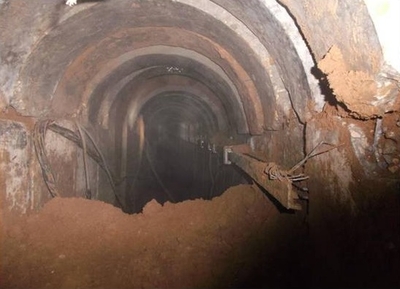
On Thursday morning, the IDF announced that it had found a tunnel 30 meters (98 feet) underground that reached into southern Israel, not far from where the IDF used new breakthrough technology to locate another tunnel in April.

Realizing it is about to lose its most prized offensive weapon against Israel – the ability to inject murder squads in Israeli territory though tunnels – Hamas’s military wing decided to do something it has not done in almost two years. It began a succession of cross-border mortar attacks in the vicinity, with a view to disrupting the detection work, and more importantly, to signal to Israel that Hamas is willing to risk war over its tunnel program.

Hamas’s attacks began on Tuesday with small arms fire and a mortar attack on IDF unit near southern Gaza carrying out engineering tunnel detection work. It escalated on Wednesday, as units came closer to locating the tunnel, resulting in multiple mortar attacks, and Israeli retaliatory tank and air strikes.

By Thursday morning, the IDF located its latest tunnel, sending home the message to Hamas’s military wing that the days in which it could dig subterranean structures under the border into Israel are drawing to a close.

Hamas persisted in mortar attacks, which at this stage appear to be missing Israeli forces deliberately, sparking yet more tank and Air Force replies by Israel.

“We view this technological, intelligence, and operational effort as a success. We can say that this tunnel is a violation of our sovereignty,” a senior IDF source said on Thursday.

According to the source, Hamas’s attempts to tell Israel to stop destroying its tunnel program are in vain.

“We are determined to continue with these efforts, and understand that we must focus in these areas,” he added.

Looking ahead, two principal scenarios could unfold in the coming days and weeks. The first possibility is that Hamas’s military wing does not back down from its so-called red line, and continues to back up its call for Israel to cease tunnel-detection work with cross-border fire. In such a scenario, Israel would be hard-pressed to contain a resumption of the reality that existed in the south prior to the 2014 conflict with Hamas. A resulting security escalation would rapidly grow in scope, and the IDF would quickly have to implement plans to destroy the military wing’s offensive capabilities.

This development would result in a major new conflict, which could end with only Hamas’s political wing remaining intact, as well as the Islamist regime’s domestic police force.

Unlike previous rounds of fighting, Israel this time may be determined to destroy Hamas’s 20,000-strong military wing, including the 5,000-member Nuhba elite force (which is trained to cross into Israel via the tunnels).

In essence, Hamas needs to choose between backing down from its stance on Israel’s tunnel detection, and watching its trump card blow away, or risk the existence of its military wing.

Should it choose the latter, it would comply with the wishes of Hamas’s political wing, which is less eager to provoke a military confrontation with Israel so soon after the 2014 war.

“Operation Protective Edge” was the most intensive conflict ever experienced by Hamas.

The two-month war left a deep imprint on Hamas. It challenged Hamas to a far greater extent than any previous military clash with Israel since Hamas seized power in Gaza in 2007. It was exposed to the most sustained and accurate Israeli firepower in its history, and lost more of its operatives in battle than any previous time (although it had also never achieved this level of capabilities before 2014). Hamas is still in the midst of rebuilding its rocket arsenals, rebuilding tunnels, and constructing drones, as well as assembling a naval terrorist intrusion unit. Gaza’s long suffering civilian population, under the grip of its Islamist jihadist rulers, may not wish to stomach a new war so soon.

The fact that, until now, Hamas has not fired a single projectile or bullet at Israel indicates that it understood that Israel is not prepared to seek containment as a response to ongoing cross-border fire.

These factors could be enough to deter Hamas from continuing to escalate the situation further.

The coming days will reveal what Hamas chooses. None of its options are attractive. Ultimately, its choice is between fighting for its tunnels, and risking its existence as an Islamist fighting force, complete with brigades, battalions, and command and control capabilities, thousands of rockets, and many thousands of anti-tank missiles and RPGs, or backing down.

Iran reconciles with Islamic Jihad: DEBKAfile sources

May 6, 2016

Iran reconciles with Islamic Jihad: DEBKAfile sources, DEBKAfile, May 6, 2016

The full renewal of aid came after Iran, under Hizballah pressure,  partially renewed the support in March. Hizballah is interested in maintaining its close ties with Islamic Jihad in order to ensure influence on Palestinian affairs and a foothold in Gaza.

**************************

After a two-year rift between Islamic Jihad and Iran that resulted in the halting of Tehran’s military and financial aid to the terrorist organization, a reconciliation agreement was reached this week between the two sides in the Iranian capital, DEBKAfile‘s sources report. The dispute began when Islamic Jihad refused to back Iran’s policy of support for Syrian President Bashar Assad, and rejected Iran’s request to send members of the organization in Syria and Lebanon to fight alongside pro-Iranian militias in Syria.

The reconciliation was reached when Islamic Jihad leader Ramadan Shalah arrived in Tehran with a large delegation from the organization’s leadership and met Iran’s supreme leader Ayatollah Ali Khamenei.

The renewal of Iran’s financial aid to Islamic Jihad was announced during the meeting.

DEBKAfile: The main mediator between the two sides was the leadership of Hizballah in Lebanon. The full renewal of aid came after Iran, under Hizballah pressure,  partially renewed the support in March. Hizballah is interested in maintaining its close ties with Islamic Jihad in order to ensure influence on Palestinian affairs and a foothold in Gaza.

During a public appearance in Tehran, Islamic Jihad leader Shalah said “defending Palestine is defending Islam.” In other words, Iran, not ISIS, is the defender of Islam.

‘Tunnel war’ heralds Hamas-IDF next clash

May 6, 2016

‘Tunnel war’ heralds Hamas-IDF next clash, DEBKAfile, May 6, 2016

NahalOz_Tunnel_480_Kotert

The IDF and Hamas are engaged in another round of warfare both above and below ground. The two sides are exchanging fire in the Gaza border area while the IDF continues its operations to locate the terror tunnels of the Hamas military wing. The IDF did the correct thing on Thursday by declaring areas near Gaza with suspected  tunnels as “closed military zones”, amid concern that Hamas has already infiltrated into Israeli territory, even as training exercises. It is also important that the IDF is maintaining secrecy on the technological tools being used to locate the tunnels.

The exchanges of fire between the IDF and Hamas in the Gaza border area during the last few days have rattled the terrorist organization, making it fire mortar shells, rockets and light weapons at IDF forces in the area. The firing that intensifies each time that the troops approach a tunnel is helping the IDF locate the openings of the tunnels.

More than a year after the end of “Operation Protective Edge” in 2014, which was supposed to eliminate the threat of tunnels to southern Israel and restore calm among citizens, the Israeli government finally ordered the Defense Ministry and the IDF to listen to the complaints of Gaza border area residents, and to what was happening beneath the ground.

The noises from underground that were recorded over the last few months by frightened residents in the area’s communities and the shaking of the ground at night left no doubt that the digging was taking place nearby. In order to eradicate in  order to end the tunnel threat. IDF experts tested hundreds of devices, ideas, methods and means from various fields of research, including some that could be defined as bizarre.  Many new tunnels were been discovered with the help of hitherto untested technologies.

This with the human sources of intelligence like Mohammad Atauna, a commander in the Hamas tunnel network whose capture by Israeli intelligence was published on Thursday, could lead to the elimination of the tunnels in the coming days and weeks. All of these developments have made it clear to the heads of the military wing of Hamas, the Izzudin al-Qassam brigades, among whom only some follow the orders of the Hamas leadership and its political wing, that their biggest strategic asset, the tunnels, may disappear in the very near future. Whether the process takes a month or six months, it should now be very obvious to them that in the very near future the majority of the underground Hamas infrastructure will be destroyed, whether by explosives or flooding.

Since the heads of the Hamas military wing invested most of their budget and efforts in the digging, fortification and reinforcement of the tunnels that they planned to use to invade and attack Israel, the destruction of the underground network may have three main results:

1. In the coming days, the Hamas military wing may lash out in a desperate attempt to land a major blow against Israel. It is expected to be significantly weakened by the IDF operations in the near future but regain strength in the long term.

2. The military wing of Hamas will suffer a major defeat in the battle for popular support. The dire economic situation in Gaza that is partially due to the diversion of resources to the tunnels and other military means will weaken support among the public.

3. These developments will bring about a change in the balance of forces in Gaza that will benefit the political wing and weaken the military wing.

Under these circumstances, the desire by the head of the Izzuddin al-Qassam brigades, Mohammed Deif, who was seriously injured but is still alive and kicking, to get revenge against Israel has not been forgotten in IDF command in Tel Aviv and at the Prime Minister’s Office in Jerusalem. The assessment in Israel’s intelligence community is that in the coming days he will use all the means at his disposal, with or without the permission of the political wing, and just before his last tunnels are discovered, in an attempt to launch a strike to deal a powerful and painful blow to Israel.

In the meantime, on Thursday, the IDF continued its preparations to bombard Hamas from the ground and the air as the terrorist organization’s mortar shelling increases.

Gaza ramps up mortar barrage to defend tunnels

May 5, 2016

Netanyahu assembles Cabinet as Gaza spins out of control Mortar fire on soldiers unearthing attack tunnels continues, IAF responds with airstrikes. PM calls an emergency meeting to set policy.

By Ari Yashar

First Publish: 5/5/2016, 5:10 PM / Last Update: 5/5/2016, 7:02 PM

Source: Gaza ramps up mortar barrage to defend tunnels – Defense/Security – News – Arutz Sheva

In light of the deteriorating security situation on the security border with Gaza, Prime Minister Binyamin Netanyahu on Thursday decided to call an emergency Cabinet meeting to set policy for the volatile region.

Netanyahu called a Cabinet meeting for Thursday evening to be attended by IDF Chief of Staff Gadi Eizenkot, but later the meeting was postponed to Friday morning.

In the meeting, ministers and security officials are to try and hash out a policy for IDF activities on the Gaza security border as it heats up.

Shortly afterward the call for the meeting, Khalil al-Haya, a senior Hamas politburo member, claimed that a truce to end the current outbreak of fighting on the Gaza border has been reached with Israel, thanks to the help of Egypt, Qatar and the UN.

The statement comes despite the fact that a ceasefire is currently supposed to be in effect after having been reached between Israel and the Hamas terrorist organization in August 2014, ending Operation Protective Edge.

Three separate Hamas mortar attacks were launched at roughly two hour intervals by Gazan terrorists on IDF soldiers near the security border in southern Gaza on Thursday.

A mortar shell was launched at the soldiers around 7 p.m.; fortunately no one was wounded.

Roughly two hours earlier two mortars rounds were fired by the terrorists, likewise wounding no one. The IDF responded to the two with tank fire.

The Israeli Air Force (IAF) then responded to the mortars by launching airstrikes in southern Gaza. At least four Hamas terror targets were said to be hit in the strikes.

According to Palestinian media a Gazan woman was killed in the Israeli response.

The first mortar attack of the day came as two mortar shells were fired at soldiers working near the border to unearth Hamas’s terror tunnel network, which runs underneath the border to facilitate attacks inside sovereign Israeli territory.

Thursday’s attacks followed at least six mortar attacks in the previous two days, but the terrorists were unable to prevent Israel from unearthing a new Hamas terror tunnel on Thursday morning.

In yet another blow to the terrorists it was revealed on Thursday that a senior Hamas terrorist was captured by Israel, and he revealed extensive information regarding the terror tunnels.

10 Mortar Attacks in Two Days by Gaza Terrorists Betray Hamas Fears of Tunnel Discoveries [video]

May 5, 2016

Gaza terrorists continued to fire mortar rounds at southern Israel for a third day in a row, after IDF soldiers discovered another attack tunnel.

By: Hana Levi Julian

Published: May 5th, 2016

Source: The Jewish Press » » 10 Mortar Attacks in Two Days by Gaza Terrorists Betray Hamas Fears of Tunnel Discoveries

The Hamas military website ‘Al Qassam’ claims this tank is firing shells at Gaza. But the colors on the tank resemble those of the flag of the Palestinian Authority, so the claim is questionable at best. Perhaps these fighters were part of the group aiming the shells at southern Israel instead…
Photo Credit: Al Qassam

For the third day in a row, Gaza terrorists continued to shell southern Israel on Thursday afternoon.

The tenth mortar attack in two days was fired at southern Israel at about 4:45 pm, again targeting the IDF soldiers as they operating along the security fence in southern Gaza.

No injuries were reported, and an IDF tank fired back in the direction of the mortar fire.

The ninth and tenth attacks came after the IDF announced the discovery of a second cross-border attack tunnel penetrating into Israel territory from Gaza.

Moments ago mortar rounds were fired at forces during operational activity adjacent to the security fence in the southern Gaza Strip,” said the IDF Spokesperson in a statement.

“No injuries have been reported. An IDF tank responded and fired towards the threat.”

A Hamas terrorist involved in the terror organization’s tunnel network was also arrested in a combined IDF and Shin Bet (Israel Security Agency) operation, according to a brief statement late Thursday afternoon by the intelligence agency.

Shin Bet gleans vast tunnel data from Hamas member

May 5, 2016

Shin Bet gleans vast tunnel data from Hamas member, Jerusalem Post, Yaakov Lappin, May 5, 2016

(Video at the link. — DM)

The Shin Bet Intelligence agency announced on Thursday that it had obtained a treasure trove of information after capturing a Hamas member who snuck into Israel with the intention of killing Israelis in April.

Mahmoud Atauna, 29, of Jabaliya in Gaza, was arrested on April 16 after infiltrating Israel. He was in possession of two knives, and during subsequent questioning, “it emerged that he intended to murder soldiers or civilians that he happened to encounter in Israeli territory,” said the Shin Bet.

The investigation also resulted in much information being gleaned about Hamas’s tunnel activities, the agency added. Atauna was involved in the military wing’s activities, including planting bombs against IDF forces, and mostly, in tunnel activities during recent years.

“Atauna told his interrogators much about the physical features of tunnels in northern Gaza, about techniques used by Hamas in digging them, and the use of private homes and institutions by Hamas, from which it digs the tunnels. He also provided information on the means and materials Hamas uses,” the Shin Bet said.

“During questioning, Atauna pointed to many digging centers, and to tunnel shafts that are supposed to serve the Nuhba (Hamas’s elite unit) operatives for attacks during fighting with Israel,” it stated.

“Atauna said Hamas set up a network of tunnels branching out in Gaza for the passage of fighters and weapons. The tunnel network includes waiting rooms and has showers and dining tables, to improve the living conditions of Hamas fighters,” according to the Shin Bet.

The Izzadin Al-Kassam member provided the names of “many operatives who worked with him in the eastern battalion of Hamas’s northern brigade, and received information on the use of hospitals and civilians for the storage of weapons.” The investigation also revealed that Atauna’s home was a storage center for many weapons, including bombs, assault rifles, and suicide bomb vests, which he was supposed to distribute before a conflict broke out.

“Atauna is one of a series of military Hamas members who are under Shin Bet investigation at this time, and these investigations have revealed a lot of internal information on Hamas’s activities in tunnels,” the Shin Bet said.

Southern District prosecutors have charged the suspect at the Beersheva District Court.

IDF exposes another terror tunnel from Gaza

May 5, 2016

Mortars fired at Israel after IDF locates another terror tunnel stretching under security fence This morning, it was cleared for publication that the IDF discovered another tunnel that penetrates into Israel from Gaza. At 2:30pm, two mortar shells exploded in the Eshkol Regional Council. There were no causalities. The IDF responded with tank fire.

May 5, 2016, 3:15PM Becca Noy

Source: IDF exposes another terror tunnel from Gaza | JerusalemOnline

image description
Work near the tunnel Photo Credit: IDF Spokesperson’s Unit/Channel 2 News

It was cleared for publication today (Thursday) that a 28-meter (around 90 feet) deep tunnel was located under the security fence. The tunnel apparently leads into Israel. IDF officials stated that this is a violation of Israel’s sovereignty. Hours later, mortar shells were fired into the Eshkol Regional Council. Two falls were located in the area. The IDF responded with tank fire.

“Threats don’t deter Hamas and we will continue operating in light of the present violation of our sovereignty,” Israeli Defense Minister Moshe Ya’alon stated today. “Since Hamas fired, we responded and we will continue to respond to any Hamas provocation so that an escalation won’t occur and Hamas won’t continue firing.”

The tunnel was located after the IDF increased its activities in the area, while combining technological, operational and intelligence tools in order to quash the tunnel threat. The IDF is currently investigating the tunnel, which will be mapped before it is destroyed.

Yesterday, the Israeli Air Force targeted several terror targets near the Palestinian city of Rafah in Gaza, after Hamas fired a number of mortar shells at IDF forces that were operating along the border in order to detect the tunnels. No soldiers were injured due to the mortar fire. IDF tanks also responded by returning fire.

image description
The tunnel, today Photo Credit: IDF Spokesperson’s Unit/Channel 2 News

“Don’t test our patience,” threatened Hamas, after the situation along the border spiraled yesterday. The terrorist organization claimed that it is deciding on how to respond to the “Israeli escalation in Eastern Gaza.”