Posted tagged ‘Golan Heights’

Iran’s Islamic Revolutionary Guards now opposite Israeli troops on 1967 ceasefire line in Golan Heights

March 12, 2017

Iran’s Islamic Revolutionary Guards now opposite Israeli troops on 1967 ceasefire line in Golan Heights, Jihad Watch

(Please see also, Iranians at the gate. — DM)

Israeli Prime Minister Benjamin Netanyahu has stated:

The threat of Shia Islamic terror is directed not only against us, but against the region and the entire world.

Perhaps Israel, more than any other nation, fully understands what “radical Islamic terrorism” is, and its primary goal of obliterating Israel.

“We do not want to see Shia Islamic terrorism led by Iran step in to replace Sunni Islamic terrorism,” Mr Netanyahu told the Russian President.

Iran continues attempts to destroy the Jewish state. They speak of this openly and write this in black and white in their newspapers.

Iran is now in a strategic position to try to destroy Israel directly (instead of through its proxies) as it expands its Shia base into Iraq and Syria.

Netanyahu could also not be clearer in his message that replacing Sunni terrorism with Shia terrorism is counterintuitive. Netanyahu is right about the global danger of mainstream Shia and Sunni terrorism, which is normalized in all too many Islamic states, not just in the Islamic State.

Netanyahu also once stated:

Islamic terrorism is inundating the world and inciting millions in many countries, from Jakarta to Africa to California.

“Iranian Revolutionary Guards opposite Israeli troops on 1967 ceasefire line in Golan Heights as tensions mount,” by Lizzie Dearden, Independent, March 10, 2017:

Benjamin Netanyahu has accused Iran of using the Syrian civil war to “gain a foothold to fight Israel” amid fears over Iranian troops stationed along the border with the occupied Golan Heights.

Tehran is supporting Bashar al-Assad with deployments of the Revolutionary Guards (IRGC), Basij militia and funding to allied militias including Hezbollah.

The IRGC are now reported to be present in Syrian-government controlled territory along the 1967 ceasefire line in the Golan Heights, which has seen months of Israeli air strikes met with rockets fired towards the Israel Defence Forces (IDF).

Brigadier General Mohammad-Reza Naghdi, a commander in Iran’s Basij force, was pictured surveying the border, while a Shia paramilitary group has formed a “Golan Liberation Brigade”.

Harakat Hezbollah al-Nujaba, an Iraqi force backed by Iran, is “ready to take action to liberate Golan” from Israeli occupation, according to spokesman quoted by Iranian state media this week.

The deployments have made the Iranian government a major power broker in the Syrian civil war, meeting with Russian and Turkish representatives at ceasefire talks in Astana, Kazakhstan.

In a meeting with Vladimir Putin on Thursday, the Israeli Prime Minister said that any truce must not allow the continued presence of Iranian forces in Syria.

“We do not want to see Shia Islamic terrorism led by Iran step in to replace Sunni Islamic terrorism,” Mr Netanyahu told the Russian President.

“Iran continues attempts to destroy the Jewish state. They speak of this openly and write this in black and white in their newspapers.

“Today, we have our own country and our army, and we can defend ourselves. But I want to say that the threat of Shia Islamic terror is directed not only against us, but against the region and the entire world.”

He told reporters Iran was “arming itself and its forces against Israel including from Syria territory and is, in fact, gaining a foothold to continue the fight against Israel”.

After the meeting, the Israeli Prime Minister said the removal of Iranian forces from Syria were vital to “prevent misunderstandings”.

“I made it clear that regarding Syria, while Israel is not opposed that there should be an agreement there, we strongly oppose the possibility that Iran and its proxies will be left with a military presence in Syria under such an agreement,” Mr Netanyahu added.

A statement released by the Kremlin said he and Mr Putin discussed “joint efforts to combat international terrorism” and examined areas of bilateral cooperation.

Two years ago, Israel and Russia agreed to coordinate military actions over Syria in order to avoid accidentally trading fire but the risk of skirmishes is increasing as pro-Assad forces fight for more territory in the Golan Heights….

Iron Dome intercepts two rockets over Golan

September 17, 2016

Iron Dome intercepts two rockets over Golan For the first time ever, the anti-missile system is used operationally in the Golan Heights. The rockets were ‘strays.’

Orli Harari,
17/09/16 21:01

Source: Iron Dome intercepts two rockets over Golan – Defense/Security – News –

Iron Dome system

Flash 90

The Iron Dome anti-missile system intercepted two missiles or mortar shells fired from Syria Saturday afternoon at the Israeli Golan Heights. The interceptions – the system’s first ever in the Golan Heights – were reportedly successful.

No one was hurt and no damage was caused.

Sources in the security establishment estimated that the rockets or mortar shells were “strays” from the civil war in Syria and that they were not intended to hit Israel.

A warning siren did not go off, but the IDF said that this was because the Iron Dome radar predicted that the missiles’ trajectory would not carry them into Israeli territory.

This is the tenth time in the past two weeks that mortar shells or rockets are fired in Israel’s direction from Syria. In the previous incidents, the mortar shells exploded inside Israeli territory, in “open spaces”.

The Head of the Golan Regional Council, Eli Malka, said after the incident that he “trusts that the IDF is doing all that is needed to bring to a minimum the strays that hit the Golan Heights”.

“The Golan residents and the numerous travelers who are flocking to the recreational and leisure sites in the Golan are making no changes in their plans”, he said.


US issues travel advisory warning for the Golan Heights

September 15, 2016

US Embassy issues travel advisory warning for the Golan Heights following mortar fire Following the recent mortar fire into the Israeli controlled Golan Heights; the US Embassy has issued a travel advisory warning to the area. US federal employees are forbidden from traveling north of Route 87 and east of Route 918.

Sep 15, 2016, 3:50PM

Rachel Avraham

Source: US issues travel advisory warning for the Golan Heights – World News | JerusalemOnline

Photo Credit: Reuters/Channel 2 News

In the wake of mortars being constantly fired into the Israeli controlled Golan Heights due to the fighting in recent days between the Syrian Army and rebel forces in the town of Quneitra, the American Embassy “urges US citizens to carefully consider and possibly defer travel to that area until the situation stabilizes.” The US government has forbidden federal employees from traveling north of Route 87 and east of Route 918 in the “Israeli occupied Golan Heights.”

“The United States Embassy continues to closely monitor the security situation and advises US citizens to visit the website of the Government of Israel’s Home Front Command for further emergency preparedness guidelines,” the American Embassy stated in a recent press release. “Recent events underscore the importance of situational awareness. We remind you to be aware of your surroundings at all times, to monitor the media and to follow the directions of emergency responders.”

Mortar fire from Syria fell 15 kilometers inside Israel

September 8, 2016

Mortar fire from Syria fell 15 kilometers inside Israel A mortar shell that was fired from Syria into Israel yesterday apparently reached the farthest inside the Jewish state since the beginning of the Syrian Civil War. Israeli officials believe that it was spillover from the fighting in Syria.

Sep 8, 2016, 10:39AM

Rachel Avraham

Source: Mortar fire from Syria fell 15 kilometers inside Israel – Middle East | JerusalemOnline

Photo Credit: CBN

Yesterday, a mortar shell exploded in an open area in the Northern Golan Heights and the IDF had announced that it was a spillover from the fighting within Syria. However, it was revealed this morning that it landed 15 kilometers from the Syrian-Israeli border, which means that it reached the furthest inside Israel out of any Syrian mortar shell that landed in the Jewish state since the Syrian Civil War began.

It is said to be an artillery shell with a 100 millimeter diameter that fortunately did not hit a populated area even though it was shot from a long distance. This is the second time this week a mortar shell landed at a distance from the border fence unlike on previous occasions in recent months. Israeli officials appraised that even though the mortar was fired from a significant distance, it was still a spillover from the Syrian Civil War that was caused by the inaccurate firing of the Syrian organizations.

 Patriot Missiles Launched at Drone Over Golan Heights

July 17, 2016

By: David Israel

Published: July 17th, 2016

Source: The Jewish Press » » Patriot Missiles Launched at Drone Over Golan Heights


WOW , 2 patriot missiles fired for one freaking drone  and still not a confirmation of a hit !!

That raises questions i suppose, are these patriots from a surplus dump ?

Photo Credit: 0404.co.il

A Syrian drone that penetrated Israeli territory in the central Golan Heights was shot down successfully by two patriot ground to air missiles fired from a base in northern Israel, the IDF Spokesperson’s office reported Thursday evening.

Update: The IDF has no confirmation yet if it successfully shot down the drone.

Iran’s army chief takes command in Syria

May 2, 2016

Iran’s army chief takes command in Syria, DEBKAfile, May 2, 2016

Iranian ground forces commander

Israel must be prepared for the possibility that the Iranian chief of staff will personally take charge of the deployment of Iranian, Syrian and Hizballah forces along Syria’s border with the Golan Heights.

*********************

The chief of staff of the Iranian military, Maj. Gen. Hassan Firouzabadi, arrived in Damascus on April 30 to assume direct command of the Iranian, Syrian and Hizballah forces fighting in Syria, DEBKAfile’s military and intelligence sources report. His arrival showed Iran has significantly stepped up its military involvement in Syria.

Sources close to Iranian supreme leader Ayatollah Ali Khamenei said May 1 in Tehran that the general arrived in Damascus “to personally supervise the battles and the borders that were determined.” The sources did not specify which battles he would command or who had set the borders. They also did not say whether the borders referred to those of the war raging in Syria, or the country’s sovereign borders.

According to DEBKAfile’s sources in Moscow and Tehran, just as Russian President Vladimir Putin and his country’s military command see the current offensive by Russian, Iranian, Syrian and Hizballah forces around Aleppo as the climax of the Russian military intervention, the Iranians see the battle  for Aleppo as pivotal for the future of Syrian President Bashar Assad’s regime, as well as Tehran’s standing in Damascus.

Tehran also believes that the battle around Syria’s largest city will play a major role in determining all of the country’s borders, not just its northern one.

Our sources report that there are sharp differences between Moscow and Tehran on this point. It seems that the main role of Maj. Gen. Firouzabadi will be to ensure that immediately after the capture of Aleppo, his country’s forces will focus their operations on other areas of Syria where Iran, not Russia, has strategic interests.

One example of such an area is southern Syria, which borders both Israel and Jordan.

In other words, Israel must be prepared for the possibility that the Iranian chief of staff will personally take charge of the deployment of Iranian, Syrian and Hizballah forces along Syria’s border with the Golan Heights.

Until now, Israel’s government and military command had believed that it was possible to secure the northern border though understandings with Putin. But now, that assessment has been proven to be mistaken with the arrival of the Iranian general in Damascus, and Tehran’s announcement that Firouzabadi will deal with the issue of borders, among others.

DEBKAfile’s military sources point out that another main reason for the dispatch of the chief of staff is the fact that Iran has sent large forces from elite units of its standing army to Syria during the last month. It is the first time in Iran’s modern history that its standing army forces have been sent to fight beyond the country’s borders.

Over the past few weeks, the arrival of Iran’s 65th Airborne Brigade of the Special Forces-NOHED brigade drew particular attention.

Our sources report that this brigade will serve as the spearhead of the Iranian, Syrian and Hizballah assault on rebel positions in Aleppo.

According to the understandings reached by the Russian and Iranian general staffs, there is a clear division of responsibility between the forces of the two sides in the campaign. The Russian air force and heavy artillery will strike the rebel bases and positions in and around the city, while the Iranians, Syrians and Hizballah advance on the ground. After those forces surround the rebels in Aleppo, they will launch an all-out attack.

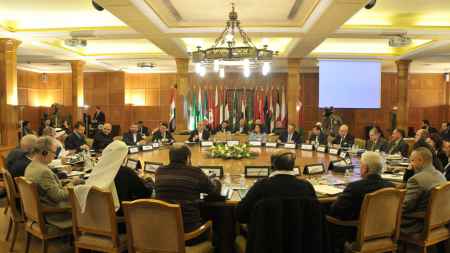
Muslim Countries Slam Israel—For Protecting them

April 28, 2016

Muslim Countries Slam Israel—For Protecting them, Front Page MagazineP. David Hornik, April 28, 2016

OIC

On Tuesday the Organization of Islamic Cooperation held an “emergency,” “extraordinary” meeting in Jeddah, Saudi Arabia.

The OIC includes violence-wracked countries and failed states like Syria, Iraq, Yemen, Libya, Afghanistan, Nigeria, and others, as well as severely poor and dysfunctional countries like Burkina Faso, Somalia, Bangladesh, and others. Not a single one of the organization’s 57 countries is a frontrunner in terms of freedom and prosperity, and most are far below that level.

But the topic of Tuesday’s “emergency meeting” was that on April 17 Israeli prime minister Benjamin Netanyahu said that: “Israel will never withdraw from the Golan Heights.”

The meeting’s final communiquéCondemns strongly Israel, the occupying power, and its macabre acts to change the legal status, demographic composition, and institutional structure of the occupied Syrian Golan.” It also “expresses unconditional support for the legitimate right of the Syrian people to restore their full sovereignty on the occupied Syrian Golan.”

The Arab League—whose 22 member states make up a sizable chunk of the OIC—had already weighed in on Netanyahu’s words on April 21, calling for a special criminal court to be set up and put Israel on trial for the transgression.

The Golan was controlled by Syria from 1948 to 1967, during which time Syrian gunners often fired at the Israeli communities below and forced their residents to sleep in bomb shelters. Israel captured the Golan from Syria in the 1967 Six Day War—and fortunately, since then, has kept it and developed it.

Today, with Syria devolved into Hobbesian war and fragmentation, the Heights are all the more strategically vital to Israel, and the idea of trading them for “peace” has—at least in the Israeli discourse—died a well-deserved death. The Golan, by the way, constitutes less than 1 percent of Syrian territory, and Syria’s loss of it almost 50 years ago is the least of its problems.

But there is further irony in the Arab League’s and the OIC’s reactions to Netanyahu’s words.

At present, Israel is engaged in tight strategic cooperation with two of its neighbors—Egypt and Jordan—against ISIS, one of the two most dangerous of the entities now fighting it out in Syria. More broadly, according to numerous reports, as well as hints dropped by Israeli and some Arab leaders, Israel and Sunni Arab states—led by Saudi Arabia—are also working together against the Iranian axis, the second of the two most threatening forces now operating in Syria.

Not only, then, do the Arab and Muslim countries as corporate bodies denounce Israel as a “macabre” criminal even as it acts as a crucial ally of not a few of these countries. They also react with outrage to the very Israeli policy—retaining the Golan—that keeps Israel strong in the face of the threats emanating from Syrian territory.

The signers of Tuesday’s communiqué in Jeddah know that there no longer exists a “Syrian people” to which sovereignty on the Golan could be restored. Some of the signers also know that a strong Israel is now one of the guarantors of their survival; and more specifically, that Israel’s presence on the Golan helps shield Jordan from imminent peril.

That Netanyahu’s words about keeping the Golan continue to spark fierce denunciations, then, reflects something deeper: an ongoing, profound antipathy to Israeli—that is, Jewish—control of any land in what is seen as, by rights, a Muslim domain. From that standpoint, even for Israel to hold onto a sliver of what used to be Syria, won in a defensive war almost half a century ago, is intolerable.

That same antipathy was on display earlier this month when seven Arab countries—including Egypt—got UNESCO to pass a particularly vicious resolution negating any Jewish connection to Judaism’s most sacred sites in Jerusalem, declaring them exclusively Muslim sites, and going so far as to accuse Israel of “planting Jewish fake graves in…Muslim cemeteries.” (Among the “yea” votes: France, Spain, and Sweden.)

These rhetorical eruptions suggest that, despite the growing behind-the-scenes collaborations, Israel remains very far from being accepted and legitimized in the region. Its best bet is to keep building its power, which gets some of its neighbors to deal with it pragmatically and rationally.

As for the Arab and Muslim countries, their continuing hang-up with the geographically tiny Jewish state, and repeated displays of ganging up on it in righteous fury, are unedifying and linked to their inability to tackle their real problems.

Report: Israel hunting chemical-armed ISIS terrorists in Golan

April 28, 2016

Report: Israel hunting chemical-armed ISIS terrorists in Golan, Israel National News, Ari Soffer, April 28, 2016

Isl St in SyriaISIS terrorist in Syria (file)Reuters

Israeli intelligence officials are concerned that an ISIS terrorist cell operating in the southern Golan Heights – along the border with Israel – has obtained chemical weapons.

According to a Channel 10 report, Israel is hunting the cell, located on the Syrian side of the border, amid fears the jihadists have imminent plans to use the chemical weapons in their possession.

The report added that the jihadists are not believed to be planning on using the chemical agents against Israel, but against their enemies inside Syria, of which there are no shortages. ISIS in Syria is currently fighting a multi-pronged war against the Assad regime, rival jihadists from Al Qaeda, other Syrian rebels, and, in northern Syria, against Kurdish forces.

Nevertheless, the prospect of an apocalyptic Islamist terrorist group possessing chemical weapons along Israel’s borders has naturally raised serious concerns in Jerusalem.

The Assad regime was supposed to destroy its massive chemical weapons arsenal under a Russian-brokered deal, but UN inspectors believe Damascus maintained reserves of nerve agents and other deadly chemical weapons. Fears have also been repeatedly raised of jihadists seizing chemical and even biological weapons depots from former regime positions.

Why Israel Should Keep the Golan Heights

April 27, 2016

Why Israel Should Keep the Golan Heights, American ThinkerSteve Postal, April 27, 2016

On Sunday, April 17, Israeli Prime Minister Benjamin Netanyahu (“Bibi”) convened a cabinet meeting on the Golan Heights stating that the “time has come for the international community to finally recognize that the Golan Heights will remain under Israel’s sovereignty permanently.” He spoke these words from Ma’aleh Gamla, next to the ruins of the historic Gamla, a Judean city to which the Romans laid siege in 67 CE during the Great Revolt (also known as the First Jewish/Roman War) (66-73 CE). In this battle, Roman soldiers slaughtered 4,000 Jews, while another 5,000 perished having “thrown themselves down” a ravine to their deaths in either an attempt to flee or in a mass suicide (Josephus, The Wars of the Jews, 4:1:9:80).

Bibi’s statements at Gamla followed reports that the United States and Russia were working on a draft peace resolution to the Syrian Civil War that would label the entire Golan Heights as Syrian territory. On April 19, U.S. State Department John Kirby stated “The US position on the issue is unchanged…Those territories are not part of Israel and the status of those territories should be determined through negotiations.” The Organization of Islamic Cooperation (OIC), the Arab League, Syria, and Germany rejected Netanyahu’s comments.

Despite most of the world seemingly poised to throw Israel under the bus over this issue, Israel should continue to assert its sovereignty over the Golan. Israel has a stronger claim to the Golan than Syria does, the Golan is of essential strategic value to Israel and the free world, and given increased threats and development of the land, that value has only appreciated.

Israel has a Stronger Claim to the Golan than Syria

Israel gained control of two-thirds of the Golan Heights following Syria’s defeat in the 1967 Six-Day War. (Israel later applied Israeli law to these territories in a de-facto annexation in 1981.) Syria gained independence in 1945. Before that, the Golan was part of the French Empire (1923-1945), jointly administered between the British and French Empires (1917-1923) and part of the (Turkish) Ottoman Empire for approximately 400 years preceding 1917. So, Syria had control of the Israeli-administered part of the Golan for 22 years (1945-1967), while Israel has had it for 49 years (1967 to the present). Israel has a stronger claim to the Israeli-controlled part of the Golan, given that it has been Israeli longer than it has been Syrian.

The Great Strategic Value of the Golan…

Enemies of Israel, both past and present, have used the high elevation of the Golan Heights against her. The ancient, pre-Arab Assyrian Empire literally looked down on ancient northern kingdom of Israel from the Heights. Assyria’s conquest of Israel in 722 BCE was launched from the Golan.

Fast-forward almost 2,700 years, and the Golan served similar aims for Israel’s enemies. Prior to the 1967 Six-Day War, modern Syria, like ancient Assyria, held the high ground over Israel from the Heights. (See cross-section and topographical maps on page 6 and 18, here). This topography enabled Syria to shell Israeli towns with ease, and sponsor Fatah fedayeen attacks from the Golan. Since gaining parity in elevation with the Syrians following the Six-Day War, the Syria/Israel border has been largely quiet. Given the many other conflicts in the Middle East, some of which I list here, that is a good thing for the world as well as Israel.

…Has Only Appreciated Given Current Threats

Israel’s (and the free world’s) enemies have grown stronger, and closer in proximity to Israel since the outbreak of the Syrian Civil War. Therefore, giving up the Golan would be foolish, and would most likely result in it being controlled by forces hostile to Israel and the West. The Islamic State and other jihadist groups, in addition to forces aligned with Syrian government (including Hizb’allah and the Iranian Revolutionary Guards (IRG)) are all vying for territory adjacent to the Israeli-controlled Golan Heights (see map). On April 22, the Islamic State captured the Salam al Jawlan Dam, approximately 17 miles away from Gamla. This victory puts the Islamic State closer to Israel than Tijuana, Mexico is to San Diego, California.

Hizb’allah has increased its presence in Syria in the past few years. During the Syrian Civil War, Israel killed Hizb’allah commanders/arch-terrorists Imad Mughniyeh in Quneitra (a town in the Syrian-controlled part of the Golan) and Samir Kuntar right outside of Damascus, in addition to six Hizb’allah fighters in Quneitra. A January 2016 article estimated that Hizb’allah has 8,000 troops in Syria. Hizb’allah is reportedly building a fortified base in Syria housing long-range missiles to use to attack Israel in a future war. Syria has also supplied Hizb’allah with tanks to create an armored division. Despite anti-smuggling efforts by Israel, Hizb’allah currently has between 100,000 to 130,000 rockets total (dispersed in Lebanon and Syria) that are more guided and precise, in addition to up to 12 Yakhont anti-ship cruise missiles with which to strike Israel. Hizb’allah is also preparing to invade Israel in a future war. If Israel relinquishes the Golan, there is a greater risk that Israel would be fighting Hizb’allah in both Lebanon and the Heights. On the other hand, Israel’s retention of its share of the Heights would serve as a strategic advantage in a future war.

Iran has also expanded its presence in Syria, not only through its proxy Hizb’allah. In January 2015, Israel reportedly killed an Iranian Revolutionary Guards (IRG) general on the Syrian side of the Golan, while in October 2015 the Islamic State killed a senior IRG commander in Aleppo. In October 2015, the Wall Street Journal estimated that approximately 20,000 foreign Shiite fighters were fighting in Syria, backed by Iran and Hizb’allah. These include Afghanis. Since the onset of the Syrian Civil War, Iran is increasingly encouraging its citizens, including those of Afghani origin, to buy property in Syria in strategic places, including Homs and Damascus. Just as Iran transferred populations to settle Lebanon in the 1980s during the creation of Hizb’allah, it is now aiding its people in settling Syria. Rather than seeing Iran as a stabilizing force in the region in the fight against the Islamic State, most Israelis, including Israeli Defense Minister Moshe Ya’alon, and Americans alike see Iran as an increasingly destabilizing force. Israel and the world need the Golan to balance against growing Iranian hegemony.

Water Remains a Vital Concern

Giving the Golan to Syria would once again place Israel’s enemies in a position to threaten its water supply via border skirmishes and diversion of water, as Syria did in the 1950s and during the War over Water (1964-1967). Israel relies on Lake Kinneret/the Sea of Galilee as the source of a significant amount of its water, and of its National Water Carrier.

The Golan is now an Integral Part of the Israeli Economy

Israel has developed the Golan to be a vital part of its economy that produces goods and services for both Israel and the world, including several wineries, a brewery, a mineral water distribution company, and a ski resort on Mt. Hermon. It also contains vast lands for agriculture, meat, and dairy production. Israelis and world travelers travel to the Golan for tourism, and about 20,000 Israelis live there. The Golan is also thought to contain a great amount of oil and natural gas deposits. Once tapped into, these resources could make Israel more energy self-sufficient, as well as provide the West with reliable sources of energy. It doesn’t make sense that Israel would uproot all of this only to hand the land over to its sworn enemies.

Israel is the Protector of the Golan’s Rich Archaeological Sites

The Golan also contains several archeological sites greatly cherished by the free world. Many of these sites date back to Antiquity and are painstakingly excavated and safeguarded by Israel, including: Gamla, Hippos/Sussita, Katzrin Ancient Village, the ruins of the Byzantine Christian monastery at Kursi, Nimrod Fortress, Um el-Kanatir, and the ancient Stonehenge-like monument Gilgal Refaim. If these sites were no longer protected by Israel, they could find themselves in the hands of a jihadist group like the Islamic State, which destroyed world-renowned archeological sites like the Temple of Ba’al, Jonah’s Tomb, and the ancient ruins of Nimrud and Nineveh.

To Whom Would Israel Give the Golan Back?

On a practical level, it is difficult for Israel to return the Golan to Syria because Syria effectively no longer exists. It is unlikely that the world powers will succeed in reconstructing Syria as it was before the civil war. The Islamic State controls about half of the country in the east, and pockets in the west. The Kurds control most of the north. The Syrian government doesn’t even control all that remains, with opposition forces (including jihadist groups) and Druze maintaining autonomous regions in the west.

Since the Syrian government does not control all of Syria, it cannot guarantee that other groups won’t use the Golan against Israel. But asking the Syrian government to guarantee such a thing, even if Syria were intact, is ridiculous. Syria is Israel’s historic archenemy, and has supported and harbored jihadist groups such as Fatah, Hamas, Hizb’allah, and the Iranian Revolutionary Guards (IRG).

Conclusion

Several Israeli politicians have opposed the prospect of increased Iranian and Hizb’allah presence in Syria following a future peace deal, and believe that these two pose a greater threat given their capabilities than the Islamic State. But purging Iran and Hizb’allah from Syria in a peace deal is a pipe dream given Syria’s alliances with Iran and Hizb’allah, Russia’s alliance with Iran, and the United States’ détente with Iran. Unless the goal of a Syrian peace deal is to open up yet another jihadist front against Israel, any final deal should preserve the right of Israel to retain its two-thirds of the Golan Heights. Enshrining this right in international law would strengthen the security of Israel and the free world. Continued Israeli sovereignty in the Golan is of great strategic value to Israel and the West, especially in these troubled times.


IDF Eliminates Terror Cell Planting Bomb on Syrian Border

April 26, 2015

IDF Eliminates Terror Cell Planting Bomb on Syrian Border, Israel National News, Kobi Finkler, Ari Yashar, April 26, 2016

IDF forces on Sunday night eliminated a terrorist cell as it was trying to place an explosive on the Israeli-Syrian border on the Golan Heights.

Reportedly four terrorists were killed in the incident; no IDF soldiers were wounded in the exchange.

A senior IDF source said that an army surveillance patrol located the terrorists who had arrived at the border from Syria, and tracked them as they advanced.

When they reached the border and placed an explosive on it, IAF aircraft fired missiles at them, taking out every single terrorist member of the cell.

The IDF reports that the incident took place on Israeli territory just east of the security barrier.

The last security incident involving an attempted border bombing similar to this one took place last March, when an explosive was placed on the border. As a result of the explosion, an IDF paratrooper officer was critically wounded.

Earlier on Sunday Defense Minister Moshe Ya’alon (Likud) warned that Israel will strike Iranian attempts to smuggle advanced weapons to the Hezbollah terrorist organization in Lebanon, following Arab reports that an IAF airstrike the day before took out a Scud missile depot in Syria transferring weapons to Hezbollah.

According to the reports in Arabic media, a Scud depot in the Qalamoun mountain region rife with smuggling to Hezbollah was targeted, after a weapons convoy was hit last Wednesday.

“Iran continues to try and arm Hezbollah, even in these very days, and it hopes to equip the Lebanese terrorist organization with advanced and precise weapons,” said Ya’alon. “We won’t allow Iran and Hezbollah to establish a terrorist infrastructure on our border with Syria, and we will know to put our hands on all those who threaten citizens of Israel, along all our borders and even far from them.”