Posted tagged ‘Gaza’

Trump: Israel would ‘be the leader’ of strike on Iran if nuclear talks fall apart

April 14, 2025

Hmmm…

US president adds, however, that Washington will make the decisions; Netanyahu’s cabinet secretary says PM was surprised that direct US-Iran talks are slated for coming weekend

10 April 2025
https://www.timesofisrael.com/trump-israel-would-be-the-leader-of-strike-on-iran-if-nuclear-talks-fall-apart/

US President Donald Trump said Wednesday that Israel would take a leading role in a potential military strike on Iran along with the US if upcoming nuclear talks don’t succeed.

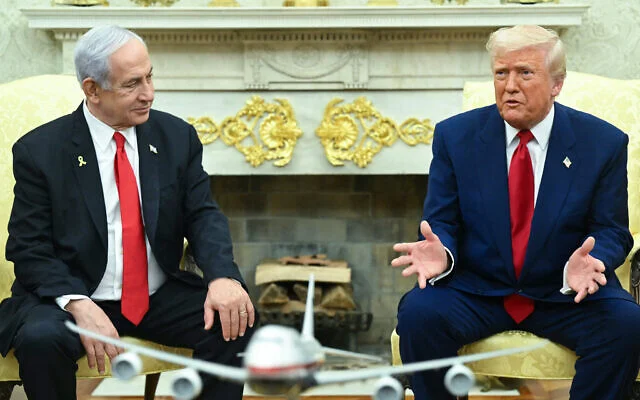
The remark came two days after Trump appeared to blindside Prime Minister Benjamin Netanyahu by announcing alongside him at the White House that direct US-Iran talks on curbing Tehran’s nuclear program would take place this coming Saturday, a timing that Netanyahu’s cabinet secretary said Wednesday had taken Jerusalem by surprise.

Asked by reporters in the Oval Office on Wednesday whether he would use military means against Iran if the latter doesn’t agree to a nuclear deal, Trump responded: “If it requires military, we’re going to have military.”

“Israel will obviously be very much involved in that — it’ll be the leader of that,” he said, in what appeared to be the first time he’s explicitly threatened an Iranian strike by Israel, let alone one led by the Jewish state.

But he appeared to partially walk back the comment in his next breath. “But nobody leads us. We do what we want to do.”

He said the US would “absolutely” use military force against Iran if necessary, and that he has a timeline for how long the diplomatic effort would last, though he didn’t specify. Reports have said Trump is giving the process two months.

“I can’t really be specific. But when you start talks, you know if they’re going along well or not… The conclusion would be when I think they’re not going along well.”

The US president said that Saturday’s slated summit in Oman was the “start” of a process. His envoy to the Middle East, Steve Witkoff, is slated to represent the US, while Iran will be represented by its Foreign Minister Abbas Araghchi. Trump has said the talks will be direct, while Iran has said they will be through a mediator.

“We have a little time, but we don’t have much time because we’re not going to let them have a nuclear weapon,” Trump said. “We’re going to let them thrive. I want them to thrive. I want Iran to be great. The only thing they can’t have is a nuclear weapon. They understand that. The people are so incredible in Iran. They’re so smart… They’re in a rough situation, rough regime… The leaders understand: I’m not asking for much. They can’t have a nuclear weapon. ”

“I was a little bit surprised because when the election was rigged, I figured that they would get the weapon, because with me, they were broke,” he claimed, citing sanctions..

Witkoff may end up holding off on traveling to Oman on Saturday if Iran refuses to hold direct talks with him in Muscat, The Washington Post reported.

US officials have been insisting that the negotiations will be direct, having argued that indirect talks aren’t as effective.

“We won’t be played for fools,” a Trump administration official was quoted as saying, arguing that what is needed to break through the deep mistrust on both sides is a “full-fledged discussion” and a “meeting of minds.”

Witkoff would even be willing to travel to Tehran if invited, two administration officials told the Post. One of the officials speculated that Trump’s decision to announce the talks alongside Netanyahu in the Oval Office on Monday was to keep the premier in check and preempt Israeli criticism.

Trump is more eager to engage in diplomacy than bombing, the officials told the Post.

Saturday surprise

Meanwhile, Cabinet Secretary Yossi Fuchs acknowledged that Netanyahu was caught off guard by Trump’s announcement of the direct talks this weekend.

Speaking with the Kol Berama radio station, Fuchs insisted that Netanyahu had known in advance about the planned US negotiations with Iran, but “he did not know the talks will take place on Saturday.”

“There is a close connection between the president and the prime minister. The president’s team competes over who loves Israel the most,” said Fuchs.

In a cabinet meeting Wednesday night, Netanyahu reportedly told ministers that Israel had had advance knowledge of the US talks with Iran, with Washington having asked Jerusalem what it would consider to be a good deal.

The Kan public broadcaster cited an Israeli source as saying that Netanyahu answered that a good proposal would be similar to one that led to the dismantlement of Libya’s nuclear program, and added that time for diplomacy was limited.

Netanyahu convened the cabinet to discuss his recent trips to Hungary and the United States, with a focus on the US. The premier called on Monday for the forum to convene, immediately after he finished his meeting with Trump, The Times of Israel has learned.

The Trump meeting contained a series of unwelcome surprises for Netanyahu even beyond the Iran talks, namely on the lack of immediate tariff relief and on tensions over Turkey, with Trump praising its President Recep Tayyip Erdogan, a staunch Israel critic who has close Hamas ties.

Only cabinet ministers were invited to the cabinet meeting. Security chiefs, including Shin Bet chief Ronen Bar as well as the heads of the IDF and the Mossad, were not invited, according to Hebrew media outlets. The Kan public broadcaster cited an unnamed source as asserting this was due to the diplomatic, non-security nature of the meeting.

Netanyahu also met CIA Director John Ratcliffe in Jerusalem on Wednesday, his office said, adding that Mossad chief David Barnea was also present.

Efforts to settle a dispute over Iran’s nuclear program, which it says is purely for civilian use but which Western countries see as a precursor to an atomic bomb, have ebbed and flowed for more than 20 years without resolution.

Trump withdrew from a 2015 deal between Iran and six world powers — the US, Russia, China, France, Britain and Germany — during his first term of office in 2018, and also imposed stiff sanctions. Iran responded by dropping some of its commitments to the deal, known as the Joint Comprehensive Plan of Action.

Iran, which is sworn to Israel’s destruction, denies seeking a nuclear weapon, but it has ramped up its enrichment of uranium to 60 percent purity, which has no application beyond nuclear weapons, and has obstructed international inspectors from checking its nuclear facilities.

International talks to bring both countries back to the deal have stalled.

The US issued fresh sanctions on Iran on Wednesday, with the Treasury Department saying that the measures targeting five Iran-based entities and one person based in Iran were imposed due to their support of Iran’s nuclear program with the aim of denying Tehran a nuclear weapon.
Netanyahu Says Iran Deal Must Include Blowing Up and Dismantling Nuclear Sites

April 14, 2025

There’s no way any deal including blowing stuff up will be agreed to by the Iranians.

Israeli leader calls for Libya-style disarmament ahead of U.S.-Iran talks in Oman.

10 April 2025

https://israfan.com/p/netanyahu-iran-deal-libya-model

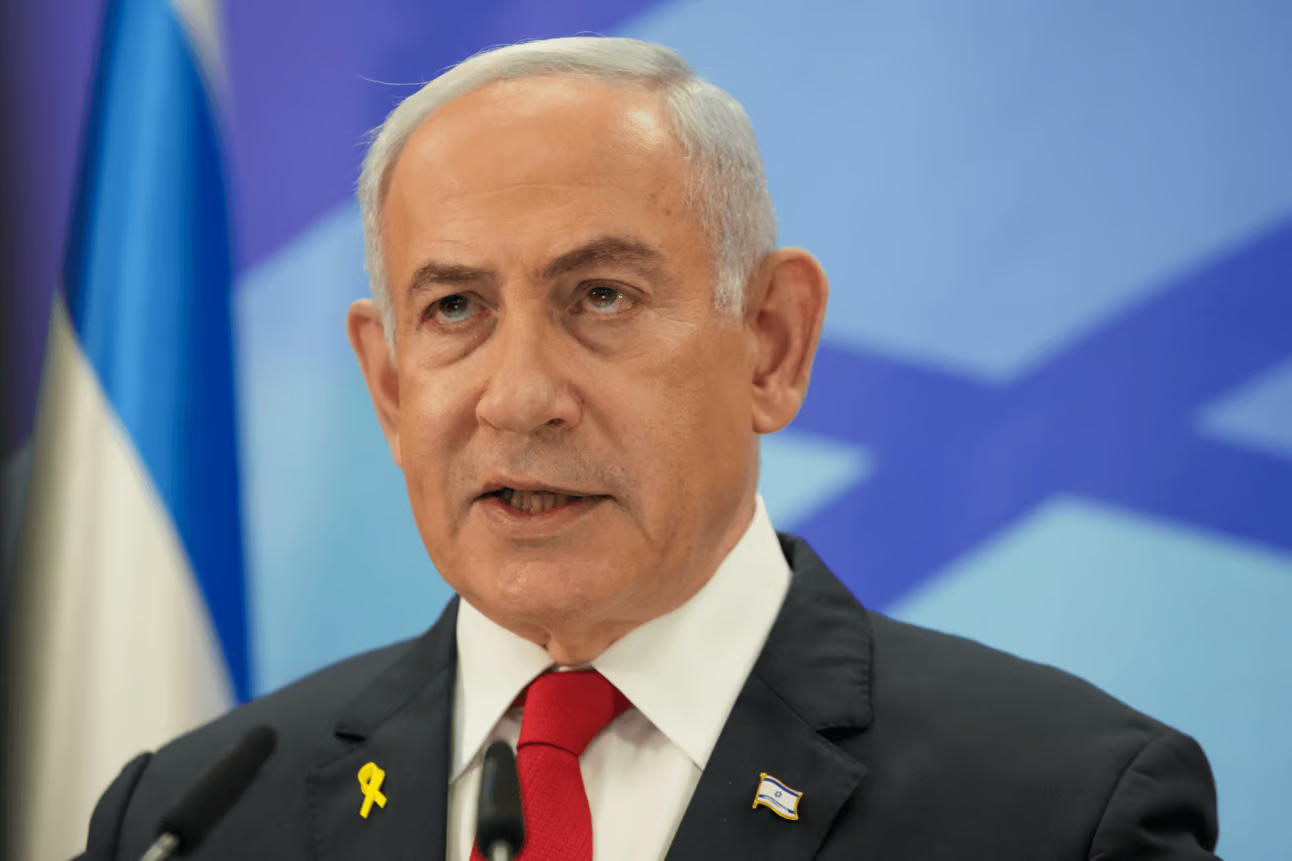
Israeli Prime Minister Benjamin Netanyahu has issued a firm warning regarding any future nuclear agreement with Iran, stating that only a Libya-style disarmament approach would be acceptable. Speaking Tuesday just before departing Washington, Netanyahu emphasized that Iran’s nuclear program must be physically dismantled and destroyed under direct American supervision.

“We agree that Iran will not have nuclear weapons,” Netanyahu declared. “This can be done by agreement, but only if this agreement is Libyan-style: They go in, blow up the installations, dismantle all of the equipment under American supervision and carried out by America this would be good.”

The remarks come ahead of renewed nuclear talks between Iran and the United States, set to begin Saturday in Muscat, Oman. While President Trump described the negotiations as “direct,” Iran insists they will be indirect, facilitated through mediators.

Trump, speaking alongside Netanyahu in the Oval Office on Monday, underscored his administration’s uncompromising stance: “Iran cannot have a nuclear weapon. If it can be done diplomatically in a full way, the way it was done in Libya, I think that would be a good thing.”

Netanyahu also highlighted several other strategic discussions held with Trump, including the ongoing war against Hamas in Gaza. He reiterated Israel’s dual objectives: “We are determined to eliminate Hamas, and at the same time, we are determined to return all of our hostages.”

Addressing critics, Netanyahu said: “The president looked at me and told the journalists who were present ‘This man is working constantly to free the hostages.’ I hope that this shatters the lie… that I don’t care. I do care, and we will be successful.”

Netanyahu also disclosed discussions on the future of the Gaza Strip, revealing that Israel is in dialogue with several countries about accepting Palestinian civilians. “In the end, this is what needs to happen,” he said.

The prime minister voiced concern about Turkey’s intentions to establish military bases in Syria, which he warned would threaten Israel. “We oppose this and are working against it,” he told Trump.

Finally, Netanyahu praised Trump’s economic diplomacy, stating that Israel would work to eliminate its trade deficit with the United States. “This is the little that we can do for the U.S. and its president, who does so much for us.”

Describing the visit as “very warm,” Netanyahu hinted that more developments are forthcoming: “There were additional things that you will hear about later.”

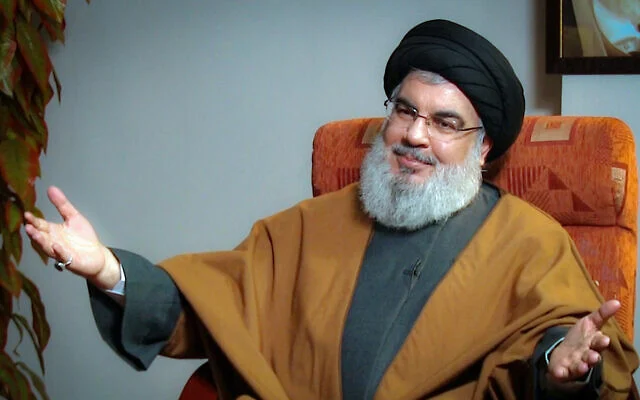
Nasrallah’s children say he cried after pager attack and fell into depression

March 7, 2025

Hahaha!

2 March 2025

In interviews, Zeinab and Mohammed Jawad Nasrallah speak of how Israeli strikes damaged morale in Hezbollah terror group, say father was noticeably ‘no longer with us’

https://www.timesofisrael.com/nasrallahs-children-say-he-cried-after-pager-attack-and-fell-into-depression/

Hezbollah chief Hassan Nasrallah became depressed and was emotionally changed by Israel’s exploding pager attack on his operatives as well as by strikes that decimated the group’s leadership, his family told Lebanese media.

His son said Nasrallah was noticeably no longer the same man, and his daughter revealed that he cried after the beeper attack.

Nasrallah’s son, daughter, and three grandchildren spoke to Al-Manar television for interviews that were broadcast on Friday.

On September 17, 2024, thousands of pagers used by Hezbollah across Lebanon suddenly exploded, killing dozens of operatives and maiming thousands, marking the beginning of Israel’s escalation against the terror group after almost a year of persistent Hezbollah rocket fire that displaced some 60,000 residents of the north, and was met with Israeli airstrikes.

The pagers, laced with explosives, were detonated via an encrypted message that required users to hold the devices with both hands, maximizing the likelihood of the subsequent blast causing debilitating injuries.

Over the next several weeks, Israeli airstrikes pounded Hezbollah, wiping out almost all of its leaders — including Nasrallah himself — and depleting the Iran-backed terror group’s fighting abilities. A ceasefire was eventually reached at the end of November.

Nasrallah’s daughter Zeinab Nasrallah told Al-Manar that she called her mother the day after the beeper explosions to find out how her father had reacted.

“She told me that he cried,” Zeinab Nasrallah said, according to an English translation of her comments on the site.

Son Mohammed Jawad Nasrallah said that his father sank into a serious depression after a July airstrike killed Hezbollah military commander Fuad Shukr in his Beirut apartment, and then the beeper attacks.

Everyone who met him said “he is no longer with us,” Jawad Nasrallah recalled.

In addition, Israel’s relentless bombing campaign, once the conflict escalated into open war, had a profound effect on the Hezbollah leader, and directly impacted the terror group’s morale, Nasrallah said.

He also said that his father was aware of the danger he faced, but apparently had dropped his guard and become less cautious than he had in the past about evading a possible Israeli strike against him.

Ten days after the beeper attack, Israel killed Nasrallah in a massive bombing of his Beirut underground bunker. He had led the terror group for three decades.

Last December, two former Mossad agents spoke to CBS’s 60 Minutes about the beeper operation, with one of them asserting that the veteran Hezbollah leader saw pagers exploding and injuring people who were right next to him in his bunker.

“Nasrallah — when we operated the beeper operation — just next to him in the bunker several people had a beeper receiving the message. And in his own eyes, he saw them collapsing.”

Asked how he knew that, the agent said, “It’s a strong rumor.”

Two days after the attack, Nasrallah gave a speech.

“If you look at his eyes, he was defeated,” the agent said in accented English. “He already lose the war. And his soldier look at him during that speech. And they saw a broken leader.”

Last week, Mossad chief David Barnea described the beeper operation as a “turning point” in the fight in Lebanon.

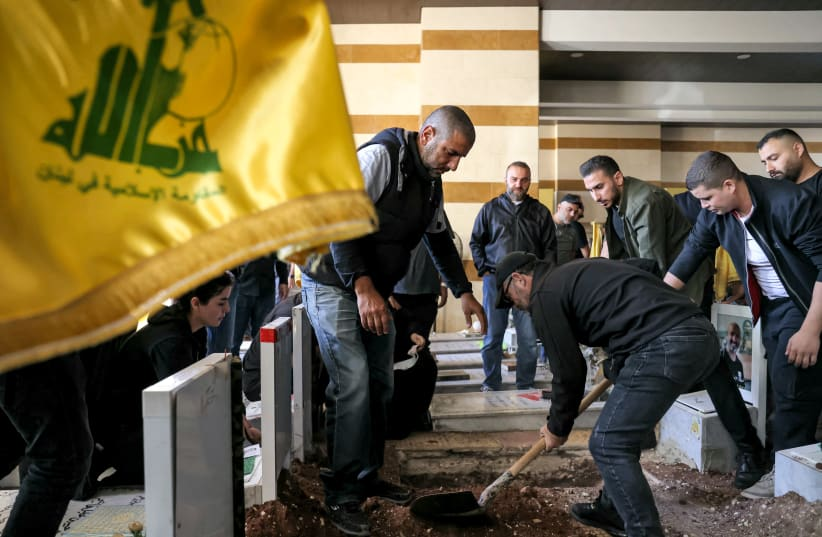
Nasrallah was buried last week in a Beirut funeral ceremony. As the funeral began at the Camille Chamoun Sports City Stadium, Lebanon’s biggest sports arena, Israeli warplanes flew at low altitude over Beirut.

The beeper attacks, swiftly attributed to Israel, came as Israel began to step up a counteroffensive against Hezbollah, which began striking Israel the day after the allied Palestinian terror group Hamas’s October 7, 2023, attack.

Some 1,200 people in Israel, mostly civilians, were killed in the Hamas onslaught, and 251 were taken hostage, sparking the war in Gaza.

A complex, three-phase ceasefire with Hamas began last month, though its future is unclear, as only the first stage has been completed.

Hezbollah beginning to crack: Wave of desertions threatens Lebanese terror group – report

October 31, 2024

Hezbollah beginning to crack: Wave of desertions threatens Lebanese terror group – report

29 October 2024

https://www.jpost.com/middle-east/article-826395

After over a year of launching aerial attacks against northern Israel, Hezbollah has reportedly begun to crack as the Iran-backed terror group has experienced a wave of desertions, sources told the Arabic independent online newspaper Elaph in a report published Sunday.

Hezbollah’s membership was reportedly shaken after pager explosions saw 1000s of its members wounded, its leadership eliminated in Israeli airstrikes, including Hezbollah head Sayyed Hassan Nasrallah, and now an Israeli ground operation into southern Lebanon.

Those defecting, according to the source, are not reporting when summoned by senior terrorists and not waiting in their assigned locations. Other terrorists have reportedly fled to Syrian territory with their families, attempting to avoid any confrontation with Israel at close range.

Trying to survive its members’ abandonment, sources told Elaph that the terror group has begun sending reinforcements to southern Lebanon to confront Israeli soldiers. 

As a result of combatants abandoning their posts, Hezbollah is now reportedly struggling to communicate with its men on the ground. There are also fears that the defections, now mainly a phenomenon in southern Lebanon, will spread to terrorists throughout the country, the source claimed.

The confrontations on the southern border and escape by Hezbollah combatants have reportedly left the group struggling to recruit new terrorists to fuel its fight against Israel.

Hezbollah’s attacks on Israel

Hezbollah began firing on Israel only a day after Hamas’s October 7 massacre in southern Israel – forming part of Iran’s ‘Axis of Resistance.’ In addition to some soldiers, the rocket fire has killed a number of civilians, including 12 Druze children in Majdal Shams, and forced tens of thousands of Israelis to evacuate their homes. 

The constant fire and increasing civilian toll eventually pushed the war cabinet to expand the goals of the Israel-Hamas War to include the safe return of Israel’s northern residents. 

The ground operations, which were not without controversy from Israel’s Western allies and the United Nations, have seen numerous Hezbollah structures destroyed – including tunnels that would have enabled the terror group to reenact their own October 7 attacks in the North.

Yahya Sinwar studied Israel in mission to destroy it

October 18, 2024

Yahya Sinwar spent two decades in Israeli prisons studying the country and trying to identify its weaknesses before emerging to assemble a powerful militia dedicated to toppling it.

https://www.theaustralian.com.au/business/the-wall-street-journal/yahya-sinwar-studied-israel-in-mission-to-destroy-it/news-story/076c7dcbd1e9fb41c04596abfc57ba01

Yahya Sinwar, the Hamas leader who was killed by Israeli forces, spent two decades in Israeli prisons studying the country and trying to identify its weaknesses before emerging to assemble a powerful militia dedicated to toppling it.

That mission culminated on Oct. 7 last year, when at his command Hamas led the deadliest attack in Israel’s more than 75-year history. It triggered a war with Israel in Gaza, and now Lebanon, that has upended the Middle East, reignited the Palestinian cause and left more than 40,000 people dead.

Israel vowed to hunt down the wiry and silver-haired Sinwar after the Oct. 7 attacks that killed 1,200 people and left 250 people held hostage, and his death fulfills one of Israel’s main goals of the Gaza war. For more than a year, he evaded the Israeli military, hiding in underground tunnels from where he directed Hamas’s war effort. On Thursday, Israeli officials announced his Wednesday death.

“I prefer to be a fighter among the army and soldiers, and I will die as a fighter,” Sinwar told a Palestinian news website in 2011.

Sinwar, who for years led Hamas in Gaza, took full control of the US-designated terrorist organisation in August after Israel killed its political leader, Ismail Haniyeh, in Iran.

Sinwar’s ascension, which took the group in an even more violent direction, followed a years-long internal struggle over how Hamas should achieve its political and military ambitions. A hardliner, Sinwar believed Israeli and Palestinian civilian deaths were necessary to destabilise Israel.

He launched the attacks last year in the hope that Iran and Hezbollah militants in Lebanon would join the fighting. But those allies initially offered only limited help, with Iran-backed Hezbollah firing rockets at Israel in tit-for-tat exchanges that began the day after the Hamas attacks from Gaza. In April, after the death of an Iranian general in Damascus, Iran launched around 300 missiles and drones at Israel in retaliation for the killing.

Israel this fall launched an air-and-ground campaign against U.S.-designated terrorist group Hezbollah, killing its leader Hassan Nasrallah in Lebanon as it sought to deter attacks into its north. Iran, in response, fired some 200 missiles at Israel, an assault to which Israel has promised to respond. The escalating conflict has left the region on the brink of all-out war.

Sinwar was detained by Israel in 1988, and later told Israeli interrogators that he strangled a suspected Palestinian collaborator, according to a transcript of his confession.

Later convicted, he devoted his time in prison to getting to know Israeli society. He learned Hebrew, watched Israeli news and read books on Jewish history. He was released in 2011 in a prisoner exchange in which Israel gave up more than 1,000 Palestinian prisoners for one Israeli soldier.

Sinwar once said that what Israel considers its strength – that most Israelis serve in the army and soldiers hold a special status in society – was a weakness that could be exploited. One of the goals of the Oct. 7, 2023, attacks was to capture Israeli soldiers who could be traded for Palestinian prisoners. What became clear later was that Sinwar could also use them as insurance to keep himself alive.

But he ultimately miscalculated how Israel would respond to the unprecedented attacks, as Israeli Prime Minister Benjamin Netanyahu vowed to destroy Hamas and dismantle its military. While Israel engaged in talks to free hostages, Netanyahu gave priority to a military campaign against Hamas that eventually led to Sinwar’s killing.

The war has wiped out much of Hamas’s top leadership, including Sinwar, Haniyeh and military commander Mohammed Deif in July.

Netanyahu hasn’t presented a plan for who should govern Gaza after the war. He has ruled out Washington’s proposal that the Palestinian Authority, which runs parts of the West Bank, be put in charge of the enclave.

Some Arab states have pushed for Hamas to retain a role in governing the strip to avert an insurgency by the group’s remaining fighters. Sinwar could be succeeded by his deputy in Gaza, Khalil al-Hayya, who has represented Hamas in ceasefire negotiations with Israel, or by former Hamas leader, Khaled Meshaal.

Sinwar launched the Oct. 7 attacks in part over frustration with the paralysis in the long-running Israeli-Palestinian conflict and the fading global diplomatic importance of the Palestinian cause. The atrocities in southern Israel and subsequent destruction wrought in Gaza have undoubtedly refocused attention back on the issue.

Sinwar grew up in a refugee camp in Khan Younis in Gaza, the son of refugees who fled what is now Israel during the 1948 war with Arab states. In the 1980s, Sinwar became close to the founder of Hamas, Sheikh Ahmed Yassin, and worked with his mentor to hunt Palestinian informants suspected of collaborating with Israel. The internal police force was a forerunner to Hamas’s military wing, the Izz ad-Din al-Qassam Brigades.

During a series of interrogations after his 1988 detention and charge, Sinwar explained how he rounded up a suspected Palestinian collaborator with Israel while the man was in bed with his wife, according to a transcript of his confession.

He blindfolded the Palestinian, called Ramsi, and drove him to an area with a freshly dug grave before strangling him with a scarf known as a kaffiyeh, a symbol of the Palestinian cause.

“I was sure that Ramsi knew he deserved to die for what he did,” Sinwar said in his confession.

Sinwar’s reputation as one of the founders of Hamas and as its chief enforcer immediately propelled him through the hierarchy of Hamas prison inmates.

By the mid-1990s, Sinwar was already the most important Hamas prisoner held by Israel, according to Ehud Ya’ari, an Israeli broadcast journalist who interviewed him in prison. “It was not in question at all that he was the guy in charge,” said Ya’ari.

While Sinwar had a reputation as a violent enforcer, he also had a more cerebral, academic side. He hand wrote hundreds of pages of his thoughts and conclusions upon reading Jewish and Zionist history, demonstrating a curiosity about his enemy that stunned Israelis who met him at the time, Ya’ari added.

He also penned a coming-of-age novel about life in Gaza and a nonfiction book about his experience setting up Hamas’s internal police force.

In 2004, he appeared to develop neurological problems, speaking unclearly and struggling with walking. Doctors examined him, finding an abscess in the brain, and rushed him to hospital for surgery. After a successful operation, Sinwar returned to prison and thanked the doctors for saving his life. He also spent hours in conversation with one of his jailers.

Following his exchange in 2011, Sinwar quickly rose through Hamas’s political leadership. He became Hamas’s leader in Gaza in 2017 and for a time signalled to Israel that he was seeking a long-term quiet in the conflict between the militants and the Israeli military.

“The truth is that a new war is in no one’s interest,” Sinwar told an Italian journalist writing in 2018 in an Israeli daily.

But he became increasingly frustrated with Hamas’s diplomatic isolation, and began to deepen relations with Israel’s arch-enemy Iran and its proxy Hezbollah.

In the months leading up to Oct. 7, the anti-Israel allies discussed ways that they could attack their joint enemy. But while Iran’s proxies have attacked Israel and U.S. forces in the Middle East since the start of the war in Gaza, Tehran and its allies have for the most part avoided an all-out escalation, a decision that frustrated Sinwar.

Once the war began, Sinwar knew that success for Hamas would depend on him surviving and outlasting Israel, forcing a permanent ceasefire that would leave Hamas intact.

For a time, Sinwar believed that he might emerge victorious. His messages to his Hamas colleagues and ceasefire mediators became increasingly confident, even grandiose, according to Arab ceasefire mediators. During negotiations for a temporary pause in fighting earlier in the war, he urged Hamas’s political leadership outside Gaza not to make concessions and to push for a permanent end to the war.

Sinwar believed high civilian casualties in Gaza would create worldwide pressure on Israel to stop the war, according to messages he sent to mediators. But even as the U.S. repeatedly pushed the two sides to agree to a ceasefire, Israel proposed conditions that would likely have led to Hamas’s demise, and Sinwar dug in.

At the end of July, Israel assassinated Haniyeh in Tehran, and Sinwar was officially elevated to run the broader group, his de facto role since the war began.

In September, Hamas raised the stakes, suggesting it had killed six high-profile hostages, including an Israeli-American, amid Israeli military pressure in Gaza. The group threatened to kill more hostages if Israel tried to rescue others, illustrating how much pressure Sinwar was under. The hostages were a valuable bargaining chip to force a ceasefire, but he was also willing to kill some of them as leverage over Israel’s government to force a deal.

Ultimately, Israel’s intelligence and military capabilities proved too much for Sinwar.

In a message to Hezbollah before he was killed, the Hamas leader thanked the Shia militant group for its support and invoked a 7th-century battle in Karbala, Iraq, where the grandson of the Prophet Muhammad was slain, causing a schism in Islam.

“We have to move forward on the same path we started,” Sinwar wrote to Hezbollah. “Or let it be a new Karbala.”

Eliminated: How Israel killed the Hamas mastermind of terror, Yahya Sinwar

October 18, 2024

For more than a year, Israeli soldiers scoured the scorched earth of Gaza in search of Yahya Sinwar, who was thought to be hiding in a vast tunnel network. Then, by pure chance, they found him.

https://www.theaustralian.com.au/world/the-times/most-wanted-man-eliminated-how-israel-killed-the-hamas-mastermind-of-terror-yahya-sinwar/news-story/8800ee91ef3932d057c24e564e4a732d

For more than a year, Israeli soldiers scoured the scorched earth of Gaza in search of the leader of Hamas, Yahya Sinwar, who was thought to be hiding in a vast tunnel network. Then, by chance, they found him.

Late on Wednesday in the southern city of Rafah, trainee Israeli troops from the 828th Battalion, a mixture of novice soldiers and reservists, spotted three suspicious figures moving “home to home on the run”, the military said.

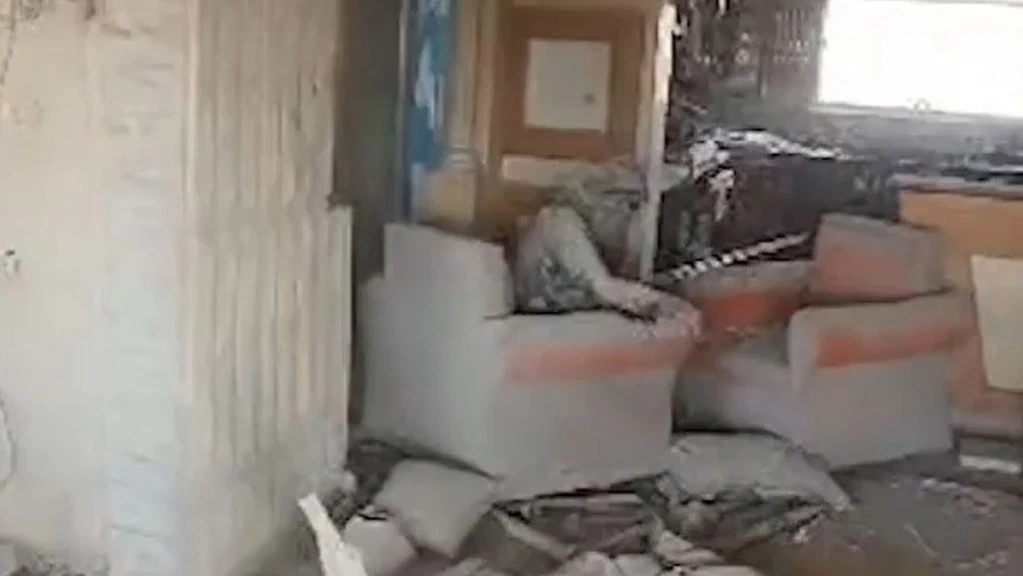
The soldiers fired on the group, apparently wounding one of them, who fled alone into a building. They sent in a small drone in pursuit, and through its camera saw a figure sitting among debris, his face covered by a scarf, who hurled a stick at it in defiance.

Deciding it was too dangerous to enter, they called in tank fire instead. The building was hit by two 120mm shells, with shrapnel scything across the upper floors.

When the trainee soldiers piloted a drone back into the wreckage, they discovered something remarkable.

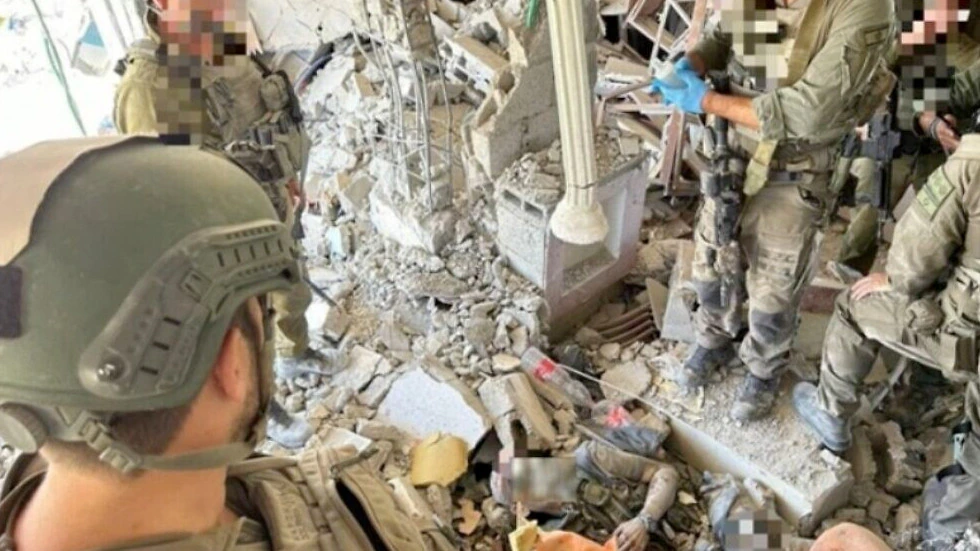
Entombed in the rubble was a body. The head was partially shattered, the face covered in ash, but the corpse was instantly recognisable: it was Israel’s No 1 enemy. His lips slightly parted in death, Sinwar, 61, was given away by his distinctive ears.

Even though it looked exactly like him, it seemed scarcely believable that the troops would stumble across the leader of Hamas in the middle of a city repeatedly cleared by the Israel Defence Forces over months of heavy fighting. Soldiers from the 450th infantry battalion were ordered to storm the building for a closer look.

Wearing gloves to protect the forensic evidence, they took pictures of the corpse, wearing combat fatigues, and sent them to the Israeli police. Specifically, they needed to get images of his yellowing teeth.

Using a wooden stick, they pushed back the man’s upper lip to reveal an identifiable gap between his front incisors. Investigators had the Hamas leader’s DNA from the 22 years he spent in Israeli jails. “We had Sinwar’s dental data on file, and the match was clear,” Aliza Raziel, head of the police’s Forensic Identification Division, said, describing it as “one of the most significant moments this year”.

The seismic discovery was quickly communicated up the chain of command until, in the skies above Israel, two of its most senior security officials held an impromptu meeting in a military helicopter to assess the information. Examining classified documents spread out on a makeshift table, Herzi Halevi, Israel’s top general, and Ronen Bar, head of Shin Bet, the domestic intelligence agency, pored over the details of Sinwar’s apparent assassination.

At the same time, grisly photos of Sinwar’s corpse were leaked online, forcing the IDF to issue a statement. By this stage they were confident enough to assert with a “high” degree of confidence that Sinwar was dead. Four hours later, the military issued a simple message on social media: “Eliminated: Yahya Sinwar.”

Unlike the planned assassination of Hassan Nasrallah, the leader of Hezbollah, in Beirut last month, it appears that Sinwar’s demise owed much more to luck than design. Releasing drone footage of Sinwar’s last moments, Rear Admiral Daniel Hagari, the IDF spokesman, confirmed the soldiers “identified him as a terrorist in a building” but did not know who it was.

“We fired on the building and went in to search. We found him with a flak jacket and a gun and 40,000 shekels [pounds 8,200],” he added.

Sinwar began terrorising the people of Gaza in the 1980s, when as head of the al-Majd, the morality police of Hamas, he was responsible for murdering suspected Palestinian collaborators and torturing those accused of supposed sins such as homosexuality or indulging in vices such as alcohol, drugs and fornication.

As rumours spread in Gaza of his demise, Palestinians expressed tentative hope that his death would mark the beginning of the end of the war, after another bloody day in which 28 people were killed in an Israeli airstrike on a school in Jabalia in the north.

Displaced from his home, Osama al-Kafarna, 43, now living in Khan Yunis, blamed both Sinwar for starting the war and Israel for its retributive, year-long campaign that has left more than 42,000 dead, according to the Hamas-run health ministry.

“Israel has always accused Sinwar of being the one who obstructs the deal, but now after his death we hope that we will not hear more lies from Israel and the war will end as soon as possible,” he said.

For Israelis and Palestinians alike, Sinwar’s death is a decisive moment. At least 97 hostages remain unaccounted for, 33 of whom are believed to be dead. And it remains unclear how Israel intends to quash the radical Sunni ideology that fuels Hamas.

“We’ve closed the account with the arch murderer Sinwar,” said Einav Zangauker, the mother of the hostage Matan Zangauker and one of the most vocal campaigners for a ceasefire, in a video statement. “But now, more than ever, the lives of my son Matan and the other hostages are in tangible danger.”

Israel had claimed that Sinwar had been hiding in tunnels under Gaza, using hostages as human shields. Hagari said he had been “running away” before he died but Hamas will try to paint him as a martyr, defiant to the last.

Binyamin Netanyahu, the Israeli prime minister, addressed the nation in a speech intended to capture the history of the moment. “Evil has been delivered a blow,” he said, before adding: “But our task is not yet complete.”

The Air Force Team Behind the Operation to Eliminate Hassan Nasrallah

October 7, 2024

My bolding in article.

A pivotal mission marks a turning point in the conflict, impacting Hezbollah and the future of the Middle East.

30 September 2024

https://israfan.com/p/air-force-eliminates-hassan-nasrallah

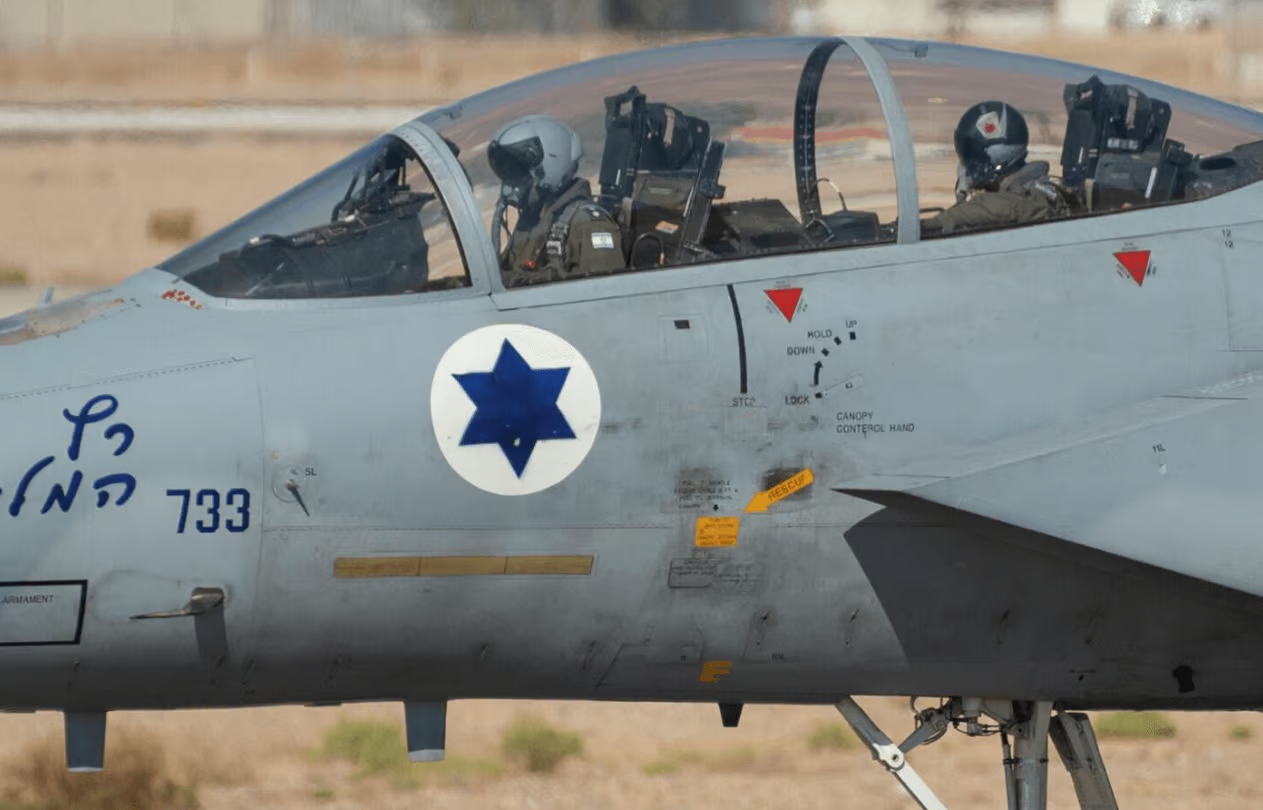
In a historic and high-stakes operation, Israel’s Air Force has successfully eliminated Hezbollah Secretary-General Hassan Nasrallah, marking a critical milestone in the ongoing conflict. Brig. Gen. Amichai Levin, commander of Hatzerim Air Force Base, confirmed the strategic importance of this mission during a joint interview with Lt. Col. M, commander of the elite 69th “Hammers” Squadron, responsible for executing the strike.

Despite the complex situation on the northern front, Levin stressed that Israel remains focused on three main objectives: returning hostages held by Hamas, dismantling the terrorist organization, and ensuring the safe return of northern residents. “The base, the squadron, and the entire Israeli Air Force (IAF) continue to operate intensively in Gaza, but separating the northern front from Gaza is essential to achieving these goals,” Levin stated.

The elimination of Nasrallah, who had long orchestrated Hezbollah’s activities against Israel, is being hailed as a game-changer for the entire region. According to Levin, “Nasrallah’s death will have a profound impact that extends beyond Lebanon’s borders. This operation moves us closer to our war objectives, sending a clear message to all those who threaten Israel.”

The mission was a culmination of years of intelligence gathering and operational planning. It showcased the exceptional coordination between the IDF’s Military Intelligence Directorate and the Air Force. “The intelligence we received was of the highest caliber. Without such precise information, an operation of this magnitude would not have been possible,” said Levin. “It also highlighted the Air Force’s initiative, audacity, and determination.”

Lt. Col. M, the 37-year-old commander of the 69th Squadron, revealed the depth of personal connection many of his team members have with the northern front. M’s family, including his wife’s relatives, were among the thousands evacuated from kibbutzim near the Lebanese border, placing the mission into even sharper focus for the squadron.

The operation took place in the heart of Beirut, targeting Nasrallah’s stronghold in the Dahiya district. “We knew exactly who we were going after, and we made sure everything went according to plan,” M said. He detailed how the mission involved a diverse formation of pilots, from seasoned veterans to younger members, flying together to ensure its success. “There were no hitches neither in the intelligence aspect, nor in the planes or the execution itself. It was flawless.”

M described the emotional aftermath of the mission, sharing the profound sense of accomplishment that came after landing back in Israel. “We gave three hugs: one to the aircrews, realizing we had just completed something historic; one to our technical officer, whose family has been directly affected by Hezbollah’s violence; and the third, of course, to my wife.”

Levin also underscored the importance of deception and strategy to ensure that Nasrallah remained unaware of the strike until it was too late. “Keeping the target stable and preventing any early warning to Hezbollah was a major challenge, but we’ve refined these techniques over time with the help of some of our brightest young officers.”

While the mission was a significant blow to Hezbollah, both Levin and M stressed that Israel’s work is far from over. The northern front remains volatile, with continued rocket fire from Hezbollah, and the threat from Hamas in Gaza persists. “We still have a long road ahead. The hostages are still in Gaza, and Hamas has yet to be dismantled. But Nasrallah’s death brings us closer to securing Israel’s borders and ensuring the safety of our people,” said Levin.

Despite the operational success, Levin also addressed questions about the protests that rocked Israel in 2023, some of which involved reservists from the 69th Squadron. He was quick to emphasize that these events do not reflect any lack of commitment from the squadron’s personnel. “Let there be no doubt about their dedication to Israel. Many of those involved in the protests are the same people who have flown countless missions, risking their lives for the country,” Levin remarked.

As Israel continues its campaign on multiple fronts, the elimination of Nasrallah stands as a testament to the capabilities of the Israeli Air Force and the unity of purpose among its military forces. The mission not only struck a major blow to Hezbollah but also demonstrated Israel’s unwavering resolve to defend its people.

Israel’s Air Force will continue its relentless pursuit of peace and security. With each operation, the IDF gets closer to achieving its objectives, ensuring a brighter future for Israel and its citizens.

The mission may be over, but the fight for Israel’s security continues.

Israeli jets strike third Palestinian terror tunnel

January 14, 2018

Israeli jets strike third Palestinian terror tunnel, DEBKAfile, January 14, 2018

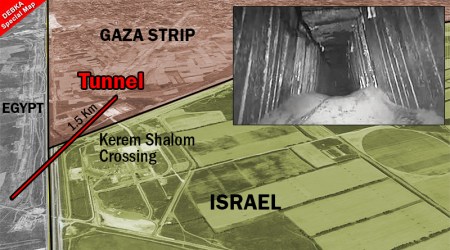
The Israel air strike Saturday night, Jan. 13, in the southern Gaza Strip was aimed at a terror tunnel running 180m into Israel that Hamas was building under the Kerem Shalom crossing through which convoys of goods pass from Israel to the Gaza Strip. It also ran into Egyptian territory under the Rafah border between Gaza and Sinai. This was disclosed early Sunday by the IDF spokesman. He noted that Israeli fighters hit the tunnel at the Gaza end. Work to finish its demolition continued Sunday. The new tunnel ran under the gas and heavy oil pipelines through which Israel supplies the Gaza Strip population with fuel.

This was the third Palestinian terror tunnel Israel had discovered and destroyed in the Gaza Strip in recent months. Hamas and the Iranian-backed Islamic Jihad were responsible for the first two.

DEBKAfile adds: Clearly the IDF has been able to develop the technology for detecting and destroying the terror tunnels, so robbing Palestinians of one of their prime weapons of terror against Israel. Hamas will also have understood that Israel gave Egypt prior warning of its air strike Saturday night. This prompted the night curfew Cairo imposed on northern Sinai including the Rafah region an hour earlier. The tunnel network is also Hamas’ main conduit for smuggling arms and combatants into and out of the Gaza Strip through Sinai. Now that the Gaza Strip is under total land blockade, the Palestinian terrorist group faces hard options: Accept Egyptian and Fatah terms for reconciliation, launch a massive rocket attack on Israel, or call on the help of its allies Iran and Hizballah for action to break the blockade and deliver funds and weapons that can overwhelm the IDF and its new anti-tunnel technology.

The end of an era

January 4, 2018

The end of an era, Israel Hayom, Dr. Reuven Berko, January 3, 2018

Most of the Palestinians in Judea, Samaria, and the Gaza Strip are waking up. The sparsely attended “days of rage” Hamas and the PA initiated over the issue of Jerusalem signal a disappointing finale because the city used to be an issue that would light up both the Palestinians and Arab nations.

The Gazans are sick of Hamas, and in Judea and Samaria they are tired of the corruption in the PA, and once again an interim government devoted to economic issues that would have Israel’s blessing is being discussed. Some reject the militant candidates for Abbas’ position (Majid Faraj and Mohammed Dahlan) as representatives of the same old organizational approach and would prefer Salam Fayyad, who has already proven his ability to make the vision of a flourishing Palestinian society a reality. That might work well for us.

*******************************

In the late 1990s, author and political commentator Fouad Ajami published his book “The Dream Palace of the Arabs: A Generation’s Odyssey,” in which he laid out the failures in the worldviews of Arab leaders and their self-criticism as the reason for their lack of achievement.

Two decades later, as 2017 was drawing to a close, the Palestinians’ dream palace sustained three serious blows in quick succession. First, U.S. President Donald Trump declared that the U.S. recognizes Jerusalem as the capital of Israel. This was followed by the Likud Central Committee’s decision to annex the settlements and the Jordan Valley. Finally, the Knesset passed a law that removes the teeth from any future peace deal involving Jerusalem (by requiring a special majority of 80 MKs to vote in favor of handing any part of the city over to any foreign government).

If the Palestinians were to look at them in a sober light, they would see that the U.N. resolutions that followed Trump’s announcement were meaningless. In light of the continuing historic drama that began with the landmark Balfour Declaration, the U.N. resolutions condemning Trump’s announcement carried no operative significance and merely served as a faint echo of the detached institution’s fading anti-Israelism.

The latest provocations from Hamas are not a lust for battle, but an expression of how desperate and lost – operatively, politically, and ideologically – the organization is. This beaten and battered group made an immense investment in missiles and attack tunnels, at a heavy cost to its people. These have become a pointless burden. Hamas is currently in a political situation in which the world is sick of Islamism, and the entities that aid and abet it (Qatar, Iran, and Turkey) are bogged down in their own domestic troubles.

The Palestinian Authority is at the end of an era. PA President Mahmoud Abbas is trying fruitlessly to use a diplomatic atmosphere that is hostile to Israel to wring concessions out of it, while simultaneously avoiding direct negotiations with Israel or recognizing it as a Jewish state. The PA is wasting time trying to paint Israel as an apartheid state through a South Africa-style boycott movement, while continuing to coordinate on security because it is afraid of Hamas.

The Israeli convoy is moving on while the PA is gritting its teeth over absurd demands (Jerusalem as the Palestinian capital and a “right of return” for Palestinian refugees), not realizing the effect the processes at work in the world are having on their delusional dreams. Indeed, Islamist terrorism, the Iranian threat, the breakdown of many countries in the region, the masses of Muslim refugees into sinking Europe, the persecution of Christians in the Middle East – these are the factors that have sidelined the Palestinian problem, which was never the cause of the regional unrest.

As these developments take place, Abbas is claiming that the U.S. is sponsoring an Israeli strategy to eradicate the Palestinians and their irrefutable right to kill off the peace process. A range of voices in Fatah and the Popular Front for the Liberation of Palestine and Hamas – responded to Trump’s declaration and Israel’s decision about Jerusalem and the settlements with the language of a declaration of war that demands that they revoke any recognition of Israel and the peace process and resume resistance (the armed struggle).

Most of the Palestinians in Judea, Samaria, and the Gaza Strip are waking up. The sparsely attended “days of rage” Hamas and the PA initiated over the issue of Jerusalem signal a disappointing finale because the city used to be an issue that would light up both the Palestinians and Arab nations.

The Gazans are sick of Hamas, and in Judea and Samaria they are tired of the corruption in the PA, and once again an interim government devoted to economic issues that would have Israel’s blessing is being discussed. Some reject the militant candidates for Abbas’ position (Majid Faraj and Mohammed Dahlan) as representatives of the same old organizational approach and would prefer Salam Fayyad, who has already proven his ability to make the vision of a flourishing Palestinian society a reality. That might work well for us.

Palestinians: Where Have They Gone?

December 26, 2017

Palestinians: Where Have They Gone? Gatestone Institute, Shoshana Bryen, December 26, 2017

(Please see also, The night the UNRWA stole Xmas. — DM)

American funding for UNRWA is problematic itself because the organization is inextricably intertwined with Hamas in Gaza and Hezbollah in Lebanon. This may be the right time to review the number of Palestinian “refugees” in the world and the world’s obligation to them.

Ten years ago, in a forum on Capitol Hill, then-Rep. Mark Kirk called for an international audit of UNRWA. Kirk admitted he was unsuccessful, despite such accounting anomalies as a $13 million entry for “un-earmarked expenses” in an audit conducted by UNRWA’s own board.

Palestinians are the only “refugee” group that hands the status down through generations, which is why they are governed by UNRWA; all other refugees are under the care of the UN High Commissioner for Refugees, which has a mandate to settle refugees so they can become citizens of new countries.

Palestinian refugees are a slippery population — but when 285,535 of them go missing from a small country such as Lebanon, it should raise eyebrows.

UNRWA in Lebanon reports on its website that 449,957 refugees live under its protection in 12 camps, but a survey by Lebanon’s Central Administration of Statistics, together with the Palestinian Central Bureau of Statistics, could only find 174,535. The Lebanese government said the others “left.” Okay, maybe they did — Lebanon constrained them viciously, so it would make some sense. What does NOT make sense, then, is the UN giving UNRWA a budget based on nearly half a million people when, in fact, there are far fewer than a quarter of a million. Who is paying and who is getting the money?

We are and they are.

The UNRWA website shows a budget of $2.41 billion combined for FY 2016 and 2017. The U.S. provides more than $300 million to UNRWA annually, about one-quarter of the total. In August 2017, UNRWA claimed a deficit of $126 million. A former State Department official said the budget shortfalls are chronic but that “the funds seemed eventually arrive” after pressing others for more money — some of that additional money is from the U.S.

American funding for UNRWA is problematic itself because the organization is inextricably intertwined with Hamas in Gaza and Hezbollah in Lebanon; see herehere and here. And specifically for Lebanon, the connection goes as far back as 2007. But stay with the “floating” population problem for a moment.

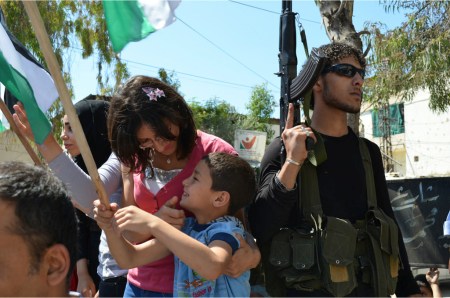
A July 2015 street celebration in Lebanon’s Ain al-Hilweh camp, which is administered by UNRWA. (Image source: Geneva Call/Flickr)

The huge discrepancy in Lebanon suggests that UNRWA may have trouble counting refugees in the West Bank, Jordan, Gaza, and Syria as well. (We’ll give them a pass on Syria for now.) The problem is not new, but that Palestinian agencies were running the census may help the United States overcome its own long-term obstinacy when it comes to counting and paying.

Ten years ago, a forum on Capitol Hill, then-Rep. Mark Kirk called for an international audit of UNRWA. Kirk admitted he was unsuccessful in generating demand among his colleagues despite such accounting anomalies as a $13 million entry for “un-earmarked expenses” in an audit conducted by UNRWA’s own board. An amendment to the 2006 Foreign Assistance Act had called for $2 million in additional funds for UNRWA, specifically for an investigation of finances, but the amendment was withdrawn at the request of the State Department.

As a Senator, Kirk offered an amendment calling for the State Department to provide two numbers to Congress: the number of Palestinians physically displaced from their homes in what became Israel in 1948, and the number of their descendants administered by the UNRWA. The State Department denounced the amendment, saying:

“This proposed amendment would be viewed around the world as the United States acting to prejudge and determine the outcome of this sensitive issue.”

Far from prejudging the outcome, a review of the number of Palestinian “refugees” in the world and the world’s obligation to them would provide an honest basis from which to make policy.

In 1950, the UN defined Palestinian “refugees” as people displaced from territory that had become Israel after having lived there for two years or more — this is distinct from every other population of refugees that must be displaced from their long-term homes. Furthermore, Palestinians are the only “refugee” group that hands the status down through generations, until there is a resolution of the status of the original group — which is why they are governed by UNRWA; all other refugees are under the care of the UN High Commissioner for Refugees (UNHCR), which has a mandate to settle refugees so they can become citizens of new countries. UNRWA, naturally, produces the only population of refugees that grows geometrically over time rather than declining as the original refugees die and their children are no longer stateless. (See Vietnamese refugee resettlement for an example of how this works for others.)

The original population of refugees was estimated at 711,000 in 1950. Today, there appear to be 30-50,000 original refugees remaining, and UNRWA claims to care for 4,950,000 of their descendants. But 285,000 of them appear to have disappeared from Lebanon.

It has long been understood that there is an undercount of deaths in UNRWA refugee camps — to admit a death means UNRWA loses that member in the accounting for the international community. It also wreaks havoc with Palestinian insistence that there are 6 million refugees (not UNRWA’s 5 million) and that a million people are not registered, but should still have a “right of return” to homes their parents, grandparents or great-grandparents claim to have had inside the borders of Israel.

The numbers game also exists with people who do not live in refugee camps. The Palestinian Authority counts as residents 400,000 Palestinians who have lived abroad for over a year, and according to Deputy Palestinian Interior Minister Hassan Illwi, more than 100,000 babies born abroad are registered as West Bank residents — both in contravention of population-counting norms. Jerusalem Palestinians are double-counted – once as Palestinian Authority residents and once as Israeli Palestinians. The PA, furthermore, claims zero net out-migration; Israeli government statistics differ.

How many Palestinians would there be in these territories if a proper census was taken? How many “refugees” would disappear from UNRWA rolls as they did in Lebanon? How might that affect the budget?

Can we please find out?

Shoshana Bryen is Senior Director of the Jewish Policy Center.