Posted tagged ‘Free Syrian Army’

Exclusive: Obama Cuts Funds for the Syrian Rebels He Claims to Support

January 27, 2015

Exclusive: Obama Cuts Funds for the Syrian Rebels He Claims to Support, Daily Beast, January 27, 2015
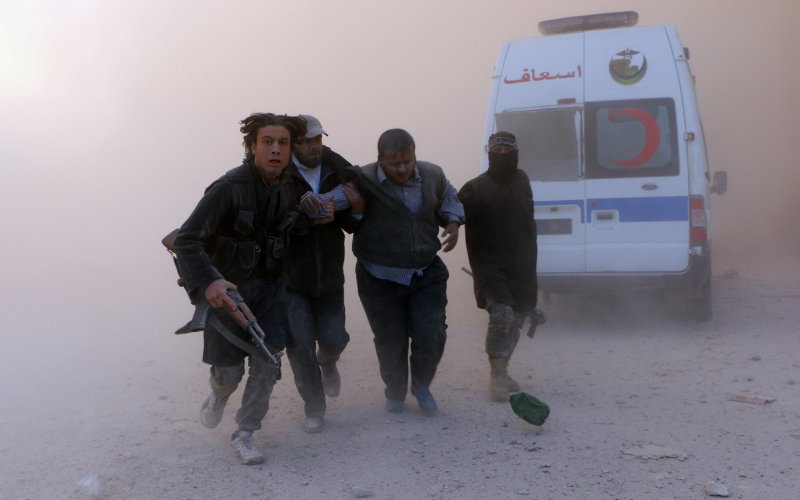
1422366030311.cachedFadi al-Halabi/AFP/Getty

LOST CAUSE?

Even the favored secular militias groomed to fight ISIS have seen their funding cut in half.

GAZIANTEP, Turkey — In the past several months many of the Syrian rebel groups previously favored by the CIA have had their money and supplies cut off or substantially reduced, even as President Obama touted the strategic importance of American support for the rebels in his State of the Union address.

The once-favored fighters are operating under a pall of confusion. In some cases, they were not even informed that money would stop flowing. In others, aid was reduced due to poor battlefield performance, compounding already miserable morale on the ground.

From afar, the U.S.-approved and partially American-armed Syrian “opposition” seems to be a single large, if rather amorphous, organization. But in fact it’s a collection of “brigades” of varying sizes and potentially shifting loyalties which have grown up around local leaders, or, if you will, local warlords. And while Washington talks about the Syrian “opposition” in general terms, the critical question for the fighters in the field and those supporting them is, “opposition to whom?” To Syrian President Assad? To the so-called Islamic State, widely known as ISIS or ISIL? To the al Qaeda affiliate, Jabhat al Nusra?

That lack of clarity is crippling the whole effort, not least because of profound suspicions among rebel groups that Washington is ready to cut some sort of deal with Assad in the short or medium term if, indeed, it has not done so already. For Washington, the concern is that the forces it supports are ineffectual, or corrupt, or will defect to ISIS or Nusra—or all of the above.

Republican lawmakers in D.C. are at their boiling point over the Obama administration’s anti-ISIS strategy, whether it is a failure to establish a no-fly zone in Syria, or unreliability with the issue of aid, or the Pentagon’s promised train and equip plan for the Syrian rebels.

“This strategy makes Pickett’s Charge appear well thought out,” said Sen. Lindsey Graham of South Carolina, referring to the poorly-planned and futile Confederate assault at Gettysburg. “We’re about to train people for certain death.”

In late October, al Qaeda’s Jabhat al Nusra routed American-backed militias in the northwest Syrian province of Idlib.

As a direct result, four of the 16 U.S.-approved brigades operating in the northern part of the country had their funding cut off and have been dropped from the list of “ratified” militias, say a State Department official and opposition sources. Since December, the remaining 12 brigades in the region have seen shortfalls or cuts in promised American assistance.

Syrian rebel sources who spoke on condition of anonymity say the 7thDivision, which is affiliated with the Syria Revolutionaries Front and aligned to the Free Syrian Army, has not received salaries from the CIA in months, although the State Department has maintained food shipments to the unit.

The secular Harakat al-Hazm, the most favored of the U.S.-backed brigades and one of the very few to be supplied with TOW anti-tank missiles, has seen a severe cutback in the monthly subsidy for its nearly 4,000 fighters. It is now receiving roughly 50 percent of the salaries it was receiving before. Weapon shipments arrived recently but commanders are nervous about whether future ones will come through. And the Farouq Brigade, a militia formed originally by moderate Islamist fighters based in the city of Homs, is getting no money for salaries at the moment.

CIA officials tell rebel commanders that unspecified “other funders” have ordered the cuts, or that Langley just doesn’t have the resources any longer. “What are the fighters meant to do?” complains one rebel commander. “They have families to feed.” Another says, “The idea that they don’t have the money is insulting. I don’t believe this—it is a political decision.”

Syrian rebel groups and their Washington, D.C. allies argue that CIA funding cuts —explained and unexplained—create relative advantages for extremist groups like al Nusra and ISIS, even as the president heralds the rebels as America’s on-the-ground-partners in the campaign to defeat the self-proclaimed Islamic State.

“It’s not just that the administration is failing to deliver on committed resources, it’s that they aren’t even communicating with formerly affiliated battalions regarding the cutoff,” says Evan Barrett, a political advisor to the Coalition for a Democratic Syria, a Syrian-American opposition umbrella group. “This puts our former allies in an incredibly vulnerable position, and ensures that groups like al Nusra will be able to take advantage of their sudden vulnerability in the field.”

The Obama administration says publicly that its support of moderate rebel brigades is not waning: the State Department continues to dispense non-lethal aid, the Pentagon supplies weapons, and the CIA pays salaries to brigades affiliated with the umbrella organization known as the Free Syrian Army. A CIA spokesman declined to comment for this story.

Privately, U.S. officials concede there have been funding changes. But American intelligence sources insist this is not a reflection of any shift in CIA strategy. They talk about “individual case-by-case shut offs” that are the consequences of brigades collapsing or failing to perform. And these sources dispute suggestions there’s an overall decrease in CIA subsidies, saying they are not giving up on the Syrian rebels—even though the Syrian rebels in the north of the country in the vicinity of the Turkish border increasingly believe this to be true. (Those in the south, near the Jordanian border and Damascus, may fare better.)

A State Department official told The Daily Beast that “the CIA has more money now than before and the State Department pie has not shrunk,” but confirms there has been some cutting off and cutting down. The official cited the “poor performance” of rebel brigades in Idlib last October as a primary reason.

When they were up against al Nusra, this official said, “they didn’t fight hard enough.” Several moderate brigades failed to come to the assistance of the Syria Revolutionaries Front, in particular, because they disapproved of its leader, who has been widely accused of corruption. The ease with which al Nusra was able to pull off its offensive angered U.S. officials—as did American-supplied equipment falling into jihadist hands.

That anger was compounded when the members of some U.S.-backed rebel groups actually defected to al Nusra during the offensive. One senior U.S. official admitted that some brigades have been “getting too close for our liking to al Nusra or other extremists.”

On Christmas Day armed groups formed an alliance for the defense of besieged rebel-held areas in Aleppo, where Assad had launched a major offensive to encircle them. Al-Jabha al-Shamiyya (Shamiyya Front), as the operational alliance is called, includes not only hardline Salafist factions from the groups known as the Islamic Front but more moderate brigades like the Muslim-Brotherhood-linked Mujahideen Army and Harakat Nour al-Din al-Zenki, which also has received TOW anti-tank missiles from Washington in the past.

Although al Nusra was not invited to join formally, it coordinates with the Shamiyya Front via the so-called Aleppo Operations Room, a joint headquarters for armed factions. It’s an arrangement that Washington does not like at all.

Aleppo-based rebels say they have no choice but to work with al Nusra and the Islamic-Front-aligned factions that are among the strongest armed groups in the war-torn city. Without them Assad’s forces would overwhelm the rebels.

“What do the Americans expect us to do?” asks a commander in the operations room. “Al Nusra is popular here. It is a perilous time for us—Assad is pushing hard.”

Syrian rebel sources who spoke on condition of anonymity say the 7th Division, which is affiliated with the Syria Revolutionaries Front and aligned to the Free Syrian Army, has not received salaries from the CIA in months, although the State Department has maintained food shipments to the unit.

The secular Harakat al-Hazm, the most favored of the U.S.-backed brigades and one of the very few to be supplied with TOW anti-tank missiles, has seen a severe cutback in the monthly subsidy for its nearly 4,000 fighters. It is now receiving roughly 50 percent of the salaries it was receiving before. Weapon shipments arrived recently but commanders are nervous about whether future ones will come through. And the Farouq Brigade, a militia formed originally by moderate Islamist fighters based in the city of Homs, is getting no money for salaries at the moment.

CIA officials tell rebel commanders that unspecified “other funders” have ordered the cuts, or that Langley just doesn’t have the resources any longer. “What are the fighters meant to do?” complains one rebel commander. “They have families to feed.” Another says, “The idea that they don’t have the money is insulting. I don’t believe this—it is a political decision.

For the Syrian rebels, uncertainties over funding changes by the CIA add doubt to already high skepticism over American policy toward the war in Syria. That skyrocketed when the Obama administration failed to enforce in 2013 its “red line” against Assad’s alleged use of chemical weapons, and the skepticism has merely grown since.

On the ground, the combatants say they suffer from the Obama administration’s inconsistency and argue that all too often they are being left out to dry, like some Syrian version of the Bay of Pigs, but much, much bloodier.

In the coffee shops of the Turkish border town Gaziantep last week, Syrians gathered on the safer side of the frontier listened incredulously as State Department spokesperson Jen Psaki insisted, “We maintain our belief that al Assad has lost all legitimacy and must go.” It was the first such inflexible anti-Assad statement for weeks from a senior U.S. official.

But that wasn’t what they’d heard from President Obama in his State of the Union address a few days before. Gone was the rhetoric of 2013 when he said he had “no doubt that the Assad regime will soon discover that the forces of change cannot be reversed, and that human dignity cannot be denied.” Instead, last Tuesday Obama spoke about the administration’s so-called train-and-equip plan to build a force that will target ISIS, and he made vague noises about helping Syria’s moderate opposition.

Those moderates are precisely the men and women on the ground who feel that bit by bit they are being abandoned.

Already, nearly four months after Secretary of State John Kerry announced the plan to train and equip Free Syrian Army units, Kurdish Peshmerga, and Iraqi Shia militiamen as anti-ISIS forces, the project appears to be facing major hurdles.

U.S. Senators emerged grim-faced last week from a classified briefing on the train-and-equip mission, with some of them predicting disaster from a Pentagon program that will train too few fighters and too slowly to make a difference.

At its best, Republican senators argue, it’s not going to work. At its worst, it will lead to the mass slaughter of the trained rebels.

“This strategy makes Pickett’s Charge appear well thought out,” said Sen. Lindsey Graham of South Carolina, referring to the brave but futile Confederate assault at Gettysburg. “We’re about to train people for certain death.”

The number of recruits required for a “strategic change in momentum is years away,” said Graham. “The concept of training an army that will be subject to slaughter by two enemies, not one, is militarily unsound,” and “if the first recruits you train get wiped out, it’s going to make it hard to recruit.”

Sen. Jeanne Shaheen, a Democrat who emerged from the same classified briefing, was tight-lipped: “I think we have a lot to do, and a lot of questions to answer.”

In Syria, few rebel fighters want to join a force focused only on ISIS. They argue that Assad is responsible for considerably more deaths among them and their extended families than ISIS, which is able to draw defectors from their ranks because it pays much higher salaries to its fighters and because it is able to exploit distrust of American intentions towards the Syrian revolution.

U.S. officials now acknowledge difficulties recruiting from insurgent ranks, conceding it is a serious challenge finding enough recruits willing to put off fighting the Assad regime.

So American officials recruiting for the train and equip mission are now hoping to fish in the pool of rebel fighters from eastern Syria who disbanded, quit the war and fled to Turkey when ISIS established control of the cities of Raqqa and Deir ez-Zor. The U.S. officials say the anti-ISIS force in Syria will have to be smaller than envisaged initially, but they are hoping early victories on the ground will convince more people to enlist.

Our enemies are on the ballot today as well and remember, they have a vote.

November 4, 2014

Our enemies are on the ballot today as well and remember, they have a vote. LTC Allen B. West (U.S. Army, ret.), November 4, 2014

(Not even the force of Obama’s character, honed during his time as a community organizer, is degrading or destroying the Islamic State. Is he is the one for whom IS had been waiting?– DM)

isis_flag-300x180

[T[his is what happens when you have a cast of amateurs masquerading as national security experts or advisors — such as Susan Rice, Dan Pfeiffer or Ben Rhoades. This is what happens when you have a truly inept Secretary of Defense in Chuck Hagel, and a lack of trust and belief in the combined experience of the senior U.S. military generals. And all comes back to the desk of Valerie Jarrett.

*********************

Today is the critical 2014 midterm Election Day and I won’t beleaguer you with many posts today, but here’s something about which we need be aware.

As President Obama touted, his policies are on the ballot today – but I haven’t heard any candidates or incumbents discussing his foreign policies at length.

Obama’s solution to the ISIS crisis was to arm the Free Syrian Army — we have written often about how that is a flawed strategy. As former Commandant of the Marine Corps General James T. Conway stated, it didn’t have a snowball’s chance in hell of succeeding — and it only took three months, from August 8th, for that prediction to come to fruition.

As reported by the UK Guardian, “The U.S. plan to rally proxy ground forces to complement its air strikes against ISIS militants in Syria is in tatters after jihadis ousted Washington’s main ally from its stronghold in the north over the weekend. The attack on the Syrian Revolutionary Front (SRF) by the al-Qaida-aligned Jabhat al-Nusra came after weeks of clashes between the two groups around the city of Idlib, which has remained one of the last bastions of regime control in northern Syria throughout the civil war. Militants overran the command center of the SRF’s leader, Jamal Maarouf, in Deir Sonbol in a humiliating rout that came as U.S. and Arab air forces continued to attack ISIS in the Kurdish town of Kobani, 300 miles east, in an effort to prevent the town from falling.”

This represents the utter failure of strategy based on rhetoric, rather than the implementation of a sound strategy. Barack Hussein Obama truly believed that talk is the best means to evade a crisis — not realizing that the enemy has a vote.

We have never launched a full-scale air campaign against ISIS aimed to degrade and destroy the Islamic terrorist enemy. We continue to witness ISIS operating on multiple fronts conducting offensive operations — something we discussed here – and their main effort versus supporting efforts.

The Guardian says, “the defeat of Maarouf is a serious blow to the U.S. strategy of building a proxy coalition against Isis. It comes amid a groundswell of anger at the U.S. strikes across the opposition-held north, which have done nothing to slow the intensity of attacks from Bashar al-Assad’s air force, especially in Aleppo. “We thought the Americans were going to help us,” said an SRF spokesman. “But not only have they abandoned us, they have been helping the tyrant Bashar instead. We will move past this betrayal and get back to Jebel al-Zawiya [the group’s heartland], but it is going to take some time.”

So much for that faux alliance and promise from Obama.

According to the Guardian, “a survivor from one of the Syrian bombed refugee camps, Haithem Ahmed, who fled with his family to Turkey, said the Syrian regime had been emboldened by the U.S. attacks on a common enemy and was acting with increasing impunity. “It is obvious that the U.S. is supporting Assad,” he said. “Don’t bother trying to argue with me or anyone else about it. They are aiding the war against us. Their leaders are weak and they are liars.”

In addition, we failed to realize that the forces of Jabhat al-Nusra and ISIS have bonded in an alliance — something we also reported on here. The al-Nusra front, which was supposed to be fighting against the Assad regime, decided to turn against the Free Syria Army forces, the SRF, to take away any ground options of Obama.

So Obama’s intent of outsourcing to the FSA is truly a non-viable option – as a matter of fact, it’s the option that has been degraded and destroyed. Obama’s decision not to attack ISIS but rather just support the free Syrian elements to defend their territories has been a disaster.

Confusion abounds in the Obama administration, as the Guardian reports “the U.S. defense secretary, Chuck Hagel, is reported to have warned national security adviser Susan Rice of a blowback among opposition communities in northern Syria because U.S. strategy against Assad has not been clearly defined.”

Ladies and gents, this is what happens when you have a cast of amateurs masquerading as national security experts or advisors — such as Susan Rice, Dan Pfeiffer or Ben Rhoades. This is what happens when you have a truly inept Secretary of Defense in Chuck Hagel, and a lack of trust and belief in the combined experience of the senior U.S. military generals. And all comes back to the desk of Valerie Jarrett.

But if the events in Syria are disturbing, “In Iraq, Isis has reportedly killed over 230 members of a tribe in western Anbar province in the last ten days, including dozens of women and children. The killings were some of the worst bloodshed in the country since the militants swept through northern Iraq in June.”

In this midterm election we need to realize we have no national security strategy whatsoever — not in the Middle East, not towards Iran, not towards Russia, and certainly not towards China. ISIS and Islamo-fascists are just handing the Obama administration its collective arse and embarrassing it at every turn.

The sad result is that more men, women and children are being slaughtered and sold off into slavery — yes, in the 21st century. Perhaps someone out in Colorado could tell Senator Mark Udall there’s a real “War on Women” going on — not that made up political stuff. But hopefully after tonight, it will be a moot point as far as he’s concerned.

There is much at stake in the Middle East and a lack of a determined strategic vision and resolute commitment is evident to both “allies” and foes. ISIS and the Islamists have a vision, a strategy, and developing alliances and growing recruiting numbers. This is a war of ideologies, but we have a president who refuses to acknowledge that premise — perhaps because he supports the Islamist ideology.

The Guardian says, “Kobani has become a defining struggle between ISIS and the U.S., as much as it is between the jihadis and the Kurds who, with U.S. help, beat back an advance on Irbil in August. If ISIS was able to take Kobani it could boast a significant victory. A victory over the secular Kurds would help advance its hardline interpretation of Islam, which has seen it rule areas it controls along strict medieval precepts that are rooted in an uncompromising understanding of Islamic teachings.”

The ideology must be defeated foremost. The enemy must then be destroyed in detail. The failed policy of doing neither is on the ballot today.

It is a time for choosing.

Time Is Running Out for Obama on Syria

October 30, 2014

Time Is Running Out for Obama on Syria, Daily BeastJamie Dettmer, October 30, 2014

The idea that U.S.-backed Syrian rebels defeat ISIS and force Assad to the negotiating table has absolutely nothing to do with what’s happening on the ground.

Only two days ago, President Barack Obama’s envoy to the Syrian rebels, retired Marine Gen. John Allen, explained confidently that the U.S. would help to train and equip Western-backed fighters to become a credible force that would compel the Assad regime to negotiate a political deal and end the four-year-long civil war.Yeah. Right. The Obama administration’s plans have little or nothing to do with what is unfolding all too rapidly on the ground: Rebel brigades are demoralized, disintegrating, and fighting among themselves.The Americans and their allies are carrying out a desultory air campaign in Syria that appears focused on support for the Kurds. Meanwhile, President Bashar al-Assad’s forces maintain a withering air offensive of their own on rebels and civilians alike in northern Syria.

Last week in a 36-hour period, Assad’s air force launched 210 airstrikes, according to generally reliable opposition activists. That’s more than the entire American-led coalition has mounted in both Iraq and Syria since Sept. 22.

Brigades of secular fighters and relatively moderate Islamists are nearly encircled and their supply lines are threatened in the country’s second largest city, Aleppo. Assad’s forces in the northern Syrian city of Idlib, meanwhile, are moving from defense to offense. On Monday, they recaptured the governor’s mansion and police headquarters.

The rebels are squabbling among themselves as suspicions rage about American designs and intentions.

Clashes erupted this week between Islamist brigades aligned with the Syrian Revolutionaries Front and the al Qaeda affiliate Jabhat al-Nusra after the jihadists seized seven towns and villages in the Idlib countryside they previously controlled. And while U.S. officials may not shed a tear over the infighting between Islamists and jihadists—they have long urged rebel factions to distance themselves from the al Qaeda group—the infighting raises the risks that al Nusra may develop a rapprochement with rival ISIS militants, making it harder to “degrade and ultimately defeat” that group as Obama says he intends to do.

Al Nusra and ISIS, both spinoffs of al Qaeda, have been at war with each other since al Qaeda’s top leadership disavowed ISIS early this year. But there have been a series of meetings between al Nusra commanders and the leaders of other rebel groups to iron out differences, according to Abdul Rahman, a commander in the 3,000-strong Jaysh al-Mujahedeen or Army of Mujahedeen, an Islamist-leaning brigade that emerged from the villages and towns of the Aleppo countryside. “Al Nusra is particularly suspicious of the rebel brigades favored by the Americans who are getting weapons from Washington,” he says.

That includes the mainly secular Harakat Hazm (The Steadfast Movement), which has received TOW anti-tank missiles from the Obama administration. According to a senior State Department official, who spoke to The Daily Beast on condition of anonymity, it is the FSA-aligned militia most trusted by Washington.

Infighting has been a persistent problem in the FSA. In 2012 and 2013, jihadist groups emerged in northern Syria not least because their discipline attracted defections from both FSA and Islamist brigades.

In the absence of any over-arching rebel military leadership, there is no one to referee disputes before they get out of hand. The Supreme Military Command (SMC), which on paper is meant to oversee the FSA-aligned militias, is anything but supreme and rebel commanders on the ground ignore its orders.

Despite strenuous efforts by Washington and the Gulf States to try to boost the authority of the SMC, nothing has worked, much to the frustration of U.S. officials tasked with funneling aid and arms to more than 16 FSA-aligned brigades.

“We ignore the SMC,” a senior State Department official told The Daily Beast. “We would like to see a stronger SMC and a proper command structure. One that can act as a middleman on supplies so we don’t have to deal with commanders directly, which would help us to avoid being drawn into arguments.” But no such entity exists, so U.S. officials are inundated by grievances from rebel commanders, who complain this or that militia is getting more than they are.

The absence of command and control means there is only haphazard combat coordination on the ground. “There are hard-pressed commanders who are desperately in need of support and reinforcements and they can’t wait, but they don’t get help,” says the exasperated State Department official. “It’s the rebels’ job to fix this and to come to each other’s assistance promptly.”

While conceding their failure over the four-year-long civil war to fashion a coherent force, rebel commanders counter that U.S. neglect and Washington’s refusal to arm them with advanced weaponry deprived them of the leverage to discipline fighters and to keep them loyal and to halt defections to jihadist groups.

“Look,” said a commander with the Syrian Revolutionaries Front, “we don’t have shoulder-launched ground-to-air missiles, but the Islamic State does, thanks to the Iraqi army leaving them to be looted by the jihadists.”

Either way—rebel squabbling or U.S. neglect—the rebels the Obama administration wants to build up to be credible enough to force the Assad regime to the negotiating table look less convincing with each passing day.

What do Kobani airdrops mean for regional politics?

October 21, 2014

What do Kobani airdrops mean for regional politics? Al-MonitorAmberin Zaman, October 20, 2014

Smoke and flames rise over Syrian town of Kobani after an airstrikeSmoke and flames rise over the Syrian town of Kobani after an airstrike, as seen from the Mursitpinar crossing on the Turkish-Syrian border in the southeastern town of Suruc, Oct. 20, 2014. The United States told Turkey that a US military airdrop of arms to Syrian Kurds battling the Islamic State in Kobani was a response to a crisis situation and did not represent a change in US policy. (photo by REUTERS/Kai Pfaffenbach

The US will use its new leverage over the PYD to push the Kurds to engage with factions opposed to Syrian President Bashar al-Assad, particularly the Free Syrian Army. The YPG’s existing battleground alliance with various rebel factions will, therefore, probably expand.

****************

On Oct. 19, the US Central Command (CENTCOM) announced that it had conducted multiple airdrops near the Syrian Kurdish town of Kobani, which has remained under siege by Islamic State (IS) fighters for more than a month. CENTCOM said US C-13 cargo planes had made multiple drops of arms, ammunition, and medical supplies provided by Kurdish authorities in Iraq. The move is set to have a profound effect on regional balances between Turkey, the Kurds and the United States that will likely reverberate in Tehran and in Damascus as well.

For several weeks now, the US and its allies have been bombing IS positions around Kobani. But the delivery of weapons takes the de facto alliance between the Syrian Kurds and the United States to a new level.

Turkey, which borders Kobani, is best positioned to help the Syrian Kurds. But the country’s ruling Justice and Development (AKP) party has spurned repeated Syrian Kurdish demands to allow weapons and fighters to cross through Turkey into the Syrian Kurdish enclave. On Oct. 18, Turkish President Recep Tayyip Erdogan said that the Syrian Kurdish Democratic Union Party (PYD), whose armed wing the People’s Protection Units (YPG) is battling IS in Kobani, were “the same as the PKK. “It’s a terrorist organization. It would be very, very wrong to expect us to openly say ‘yes’ to our NATO ally America to give this kind of [armed] support [to the PYD],” Erdogan declared.

Erdogan was referring to the PYD’s close links to the Kurdistan Workers Party (PKK), which has been fighting on and off for self-rule inside Turkey since 1984. The PKK is on the State Department’s list of terrorist organizations, and until last month successive US administrations refused to have any contact either with the PKK or the PYD. But the PKK and the YPG’s effectiveness against IS both in Iraq and Syria has triggered a paradigm shift in US strategic thinking. The US and the Syrian Kurds are now allies in the war against IS.

US Secretary of State John Kerry told reporters in Jakarta, Indonesia that while the Obama administration understood Turkey’s concerns, it would have been “irresponsible” and “morally difficult” not to support the Syrian Kurds in their fight against IS.

Kerry said IS had chosen to “make this a ground battle, attacking a small group of people there who, while they are an offshoot group of the folks that our friends the Turks oppose, they are valiantly fighting ISIL and we cannot take our eye off the prize here.” Kerry stressed, however, that it was “a momentary effort” and that the US had “made it very clear” to Turkey that it “is not a shift in the policy of the United States.”

Kerry’s words came hours after US President Barack Obama spoke over the telephone with Erdogan about Kobani. News emerged soon after that Turkey would be allowing Iraqi Kurdish peshmerga fighters to cross through Turkey into Kobani carrying fresh weapons for the YPG. How in the space of 48 hours did Turkey go from calling the PYD terrorists to opening an arms corridor for them?

As analysts ponder these dizzying changes, here a few immediate factors to consider:

      1. Turkey could have led the effort to support anti-IS forces in Kobani by letting arms and fighters through its borders weeks ago. This would have bolstered the peace process between Turkey and its own Kurds, while averting the public relations disaster caused by images of Turkish tanks and soldiers looking on as the Syrian Kurds battled IS in Kobani, thereby reinforcing claims that “Turkey supports IS.

      2. The fact that Turkey was forced into opening a corridor to Kobani only after the US informed Ankara that it would go ahead with the airdrops anyway only increases doubts about Turkey’s commitment to working with its Western partners. It also plays into the hands of Erdogan’s domestic rivals, who will now say he is America’s poodle and that the US is using the PKK to tame Turkey.

      3. One big question is whether the recent days’ events mean that the PYD will move away from the PKK. The likely answer is that the PKK will seek to move closer to the US. The PKK has already established a channel of communication with the US via the PYD in Syria, and is also fighting alongside US-supported Kurdish peshmerga forces in Iraq. Any attempt to drive a wedge between the PYD and the PKK is doomed to fail. Abdullah Ocalan, the imprisoned founder and leader of their PKK, commands the loyalty of Syrian and Turkish Kurds alike.

      4. Any US-PKK dialogue would make the PKK less likely to resume violence against the Turkish army, as this would tarnish its burgeoning legitimacy. Turkey could yet turn the situation to its advantage and make goodwill gestures to the Syrian Kurds. These could include opening the sealed border with the PYD-controlled town of Serkaniye (Ras al Ain). The fact that US drones flew drone reconnaissance missions over Kobani out of the Incirlik air base has gone largely unnoticed in the media. So Turkey actually has helped, but chose not to advertise this.

      5. The Kurds adeptly used the media and global public opinion — which depicted them as the region’s secular, pro-Western force, a space formerly occupied by Turkey — to draw the US into the battle for Kobani. The battle for Kobani then became a symbol of the contest between IS and the coalition, one that the US could no longer afford to lose. Moreover, the concentration of IS forces around Kobani allowed the US to inflict heavy losses on IS fighters.

      6. Iraqi Kurdish President Massoud Barzani is probably unhappy about US engagement with the PYD/PKK, which he views as rivals. But, unlike Turkey, he has turned the situation to his own advantage by projecting himself as a benevolent leader who has aided fellow Kurds in their time of need.

      7. The US will use its new leverage over the PYD to push the Kurds to engage with factions opposed to Syrian President Bashar al-Assad, particularly the Free Syrian Army. The YPG’s existing battleground alliance with various rebel factions will, therefore, probably expand.

      8. Is the de facto non-aggression pact between the Syrian regime and the Kurds coming unstuck? It’s too early to say, because the US insists that its military intervention in Syria is limited to countering IS. The Kurds are likely to continue to hedge their bets for as long as they can.

      9. And what of the PYD’s other primary benefactor, Iran? Will its friendship with the Americans anger the clerics? Much will depend on whether the US and Iran can reach a deal over Iran’s nuclear program. Should the talks fail, the PKK may become an instrument of US policy to be used against Iran.

      10. Any alliance in the Middle East should never be taken for granted.


With a strategy like this, does it even matter who the Free Syrian Army is?

October 1, 2014

With a strategy like this, does it even matter who the Free Syrian Army is? Breitbart, September 29, 2014

Syrian-militant-reuters

The US strategy as announced by President Obama in his speech to the nation on September 10, 2014, calls for the US to establish staging areas inside Saudi Arabia where 5,000 FSA fighters can spend 18 months training to become a more effective and well armed fighting force to better combat both the Syrian regime, again numbered at up to 175,000 men and forces of the ISIS terrorist army.

******************

Assume for a moment that the Free Syrian Army, the mysterious rebel alliance to which the United States is now allied in its broader campaign to degrade and destroy ISIS, is not the ill defined and ever-changing conglomeration of tribal factions; each committed to a Jihadist agenda in some degree and each with their own mysterious allegiances actively seeking the military overthrow of the Iranian backed regime of Bashir al-Assad.

Instead, assume that the FSA consists in fact of unimpeachably “vetted” limited government, Jeffersonian style democrats each of whom are are fully committed to the establishment of a US – styled constitutional republic in Syria, and thus utterly worthy of complete and total American support. Now that an air tight hypothetical premise has been built to justify bipartisan support for the FSA, try to imagine the Obama Administration authoring the policy most likely to condemn the FSA to certain defeat and US regional standing to rock bottom.

One need not imagine however, that the latter part of the fanciful scenario spelled out above is in any way fictional. As it currently has been articulated, this pretty much sums up US policy vis-a-vis the Free Syrian. As of this writing, Syria’s civil has been raging for 1294 days. During that span, more than 200,000 Syrians have been killed, many times that wounded and more than one third of the country’s 30 million people have been made homeless. The country’s map now resembles a pockmarked incomprehensible hodgepodge of regime and rebel redoubts and strongholds massed against each other.

The two main sides in Syria’s civil war–the regime and its prime opponents who collectively chooses to call itself the Syrian Coalition–have fought each other to a standoff in the past several months. The ISIS forces that occupy much of Syria’s east and north have largely avoided much military contact with regime forces, concentrating instead on consolidating its hold over the territory it controls, although ISIS forces did attack and overrun four Syrian military outposts in August, gleefully displaying the heads of Syrian soldiers its fighters had proudly cut off.

Using US supplied war material it stole from fleeing Iraqi forces it overran in June and July, ISIS has fortified its positions in Syria and is rapidly moving toward Aleppo, Syria’s largest city currently in rebel or FSA, hands. The so-called “Free Syrian rebels” now find themselves confronted with an overwhelming multi forced front. In Aleppo, they are surrounded. Its continued control of that city depends upon it being able to hold communications lines that grow more precarious by the day.

The Obama Administration and most western analysts estimate the size of the Free Syrian Army now caught in this deadly pincer at roughly 5,000 men. To the north and east, the 5,000 FSA fighters, if they can even be called a single force with unitary command, (There are at least three people at present who claim to lead the FSA).

They face a rapidly expanding and ever emboldened ISIS army of between 10,000 and 31,500. Surrounding the 5,000 FSA fighter to their south and west are the regular forces of the Syrian Army that number between 130,000 to 165,000 men.

The US strategy as announced by President Obama in his speech to the nation on September 10, 2014, calls for the US to establish staging areas inside Saudi Arabia where 5,000 FSA fighters can spend 18 months training to become a more effective and well armed fighting force to better combat both the Syrian regime, again numbered at up to 175,000 men and forces of the ISIS terrorist army.

How will these 5,000 fighters leave their current positions and get to Saudi Arabia? Who will assume control of the positions they currently hold once they abandon them for the Elysian fields of Saudi Arabia? Once “trained” and “equipped”, how, a year and a half from now, will these 5000 FSA fighters, currently outnumbered 50 to 1, be able to “reassume” their long  abandoned positions? Does the Administration and other supporters of its FSA assistance strategy expect ISIS and Assad forces to politely agree to hold their enemies coats while they excuse themselves for training in Saudi Arabia?

Has there ever in American military history been a more hair-brained, ill-conceived military mission more certain to fail? Again, putting aside entirely the many valid questions about precisely who we are the people we are planning to train and what their real objectives are, with a strategy like this, does it really even matter?