Posted tagged ‘Foreign Policy’

Our World: Michael Flynn and what he means for Trump’s foreign policy

December 5, 2016

Our World: Michael Flynn and what he means for Trump’s foreign policy, Jerusalem PostCaroline B. Glick, December 5, 2016

(Please see also, Mosul offensive folds, waiting now for Trump. — DM)

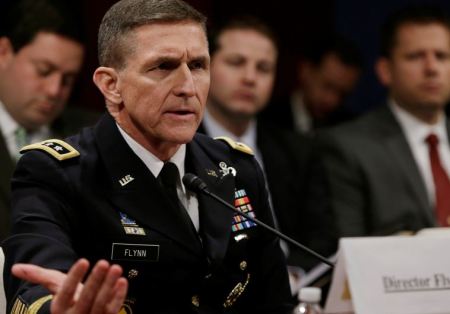
flynnRetired U.S. Army Lt. General Michael Flynn in 2014. (photo credit:REUTERS)

Mattis argued that Iran’s nuclear program was far from the only threat Iran constituted to the US and its allies. By empowering Iran through the nuclear deal, Obama was enabling Iran’s rise as a hegemonic power throughout the region.

With Mattis and Flynn at his side, Trump intends to bring down the Iranian regime as a first step toward securing an unconditional victory in the war against radical Islam.

**************************

In the US and around the world, people are anxiously awaiting US President-elect Donald Trump’s announcement of his choice to serve as secretary of state. There is no doubt that Trump’s choice for the position will tell us a great deal about the direction his foreign policy is likely to take.

But the fact is that we already have sufficient information to understand what his greatest focus will be.

Trump’s announcement last week that he has selected Marine General James Mattis to serve as his defense secretary is a key piece of the puzzle.

Mattis has a sterling reputation as a brilliant strategist and a sober-minded leader. His appointment has garnered plaudits across the ideological spectrum.

In 2013, US President Barack Obama summarily removed Mattis from his command as head of the US Military’s Central Command. According to media reports, Mattis was fired due to his opposition to Obama’s strategy of embracing Iran, first and foremost through his nuclear diplomacy. Mattis argued that Iran’s nuclear program was far from the only threat Iran constituted to the US and its allies. By empowering Iran through the nuclear deal, Obama was enabling Iran’s rise as a hegemonic power throughout the region.

Mattis’s dim view of Iran is shared by Trump’s choice to serve as his national security adviser. Lt. General Michael Flynn’s appointment has been met with far less enthusiasm among Washington’s foreign policy elites.

Tom Ricks of The New York Times, for instance, attacked Flynn as “erratic” in an article Saturday where he praised Mattis.

It is difficult to understand the basis for Ricks’ criticism. Flynn is considered the most talented intelligence officer of his generation. Like Mattis, Obama promoted Flynn only to fire him over disagreements regarding Obama’s strategy of embracing Iran and pretending away the war that radical Islamists are waging against the US and across the globe.

Flynn served under Obama as the director of the Defense Intelligence Agency. He was fired in 2014 for his refusal to toe the administration’s mendacious lines that radical Islam is not the doctrine informing and inspiring the enemy, and that al-Qaida and its fellows are losing their war.

What Obama and his advisers didn’t want to hear about the US’s enemies and about how best to defeat them Flynn shared with the public in his recently published book Field of Fight, which he coauthored with Michael Ledeen, who served in various national security positions during the Reagan administration.

Flynn’s book is a breath of fresh air in the acrid intellectual environment that Washington has become during the Obama administration. Writing it in this intellectually corrupt atmosphere was an act of intellectual courage.

In Field of Fight, Flynn disposes of the political correctness that has dictated the policy discourse in Washington throughout the Bush and Obama administrations. He forthrightly identifies the enemy that the US is facing as “radical Islam,” and provides a detailed, learned description of its totalitarian ideology and supremacist goals. Noting that no strategy based on denying the truth about the enemy can lead to victory, Flynn explains how his understanding of the enemy’s doctrine and modes of operation enabled him to formulate strategies for winning the ground wars in both Iraq and Afghanistan.

And win them he did. As he explains in his book, Flynn oversaw the transformation of the US’s strategies for fighting in both theaters from strategies based on top-down decapitation of the enemy’s leadership to a groundup destruction of the terrorist networks.

Flynn’s strategy, which worked in both countries, was based on the premise that it wasn’t enough to kill “high value” targets. The US needed to develop a granular understanding of the terrorist networks from the village level up the line. Only by taking out the local terrorist leaders would the US be able to destroy the ability of the likes of al-Qaida, the Iranian-controlled Shi’ite militias and the Taliban to quickly mobilize new forces and reignite fighting shortly after every successful US operation.

Flynn’s book contributes three essential insights to the discussion of the global jihad. First, he explains that the Bush and Obama administrations were both unable to translate military victories on the ground into strategic victories because they both refused to join their military war with a war of ideas.

The purpose of a war of ideas is to discredit the cause for which the enemy fights. Without such a war, on the one hand the American people sour on the war because they don’t understand why it is important to win. On the other hand, without a war of ideas directed specifically at the Islamic world, Muslims worldwide have continued to be susceptible to recruitment by the likes of ISIS and al-Qaida.

As Flynn notes, the popularity of radical Islam has skyrocketed during the Obama years. Whereas in 2011 there were 20,000 foreign recruits fighting for ISIS in Iraq and Syria, by 2015, the number had risen to 35,000.

Flynn’s second contribution is his forthright discussion of the central role the Iranian regime plays in the global jihad. Flynn chronicles not only Iran’s leadership of the war against the US in Iraq and Afghanistan. He shows that their cooperation is global and predates 9/11 by several years.

Flynn recalls for instance that in 1996 British troops confiscated an al-Qaida training manual written by Iranian intelligence in a terrorist training facility in Bosnia. Six Iranian “diplomats” were arrested at the scene.

Flynn is unflinching in his criticism of the Obama administration’s moves to develop an alliance with Iran. And he is almost equally critical of George W. Bush’s war against terror.

For instance, Flynn argues, “It was a huge strategic mistake for the United States to invade Iraq militarily.”

Iran, he said was the main culprit in 2001 and remains the main enemy today.

“If, as we claimed, our basic mission after 9/11 was the defeat of the terrorists and their state sponsors then our primary target should have been Tehran, not Baghdad, and that method should have been political – support of the internal Iranian opposition.”

Flynn’s final major contribution to the intellectual discourse regarding the war is his blunt identification of the members of the enemy axis. Flynn states that the radical Islamic terrorist armies operate in cooperation with and at the pleasure of a state alliance dominated by Russia and Iran and joined by North Korea, Venezuela and other rogue regimes. Flynn’s frank discussion of Russia’s pivotal role in the alliance exposes the widely touted claims that he is somehow pro-Russian as utter nonsense.

In Flynn’s view, while Russia is Iran’s primary partner in its war for global domination, it should not be the primary focus of US efforts. Iran should be the focus.

In his words, the best place to unravel the enemy alliance is at its “weakest point,” which, he argues, is Iran.

Flynn explains that the basic and endemic weakness of the Iranian regime owes to the fact that the Iranian people hate it. To defeat the regime, Flynn recommends a strategy of political war and subversion that empowers the Iranian people to overthrow the regime as they sought to do in the 2009 Green Revolution. Flynn makes the case that the Green Revolution failed in large part because the Obama administration refused to stand with the Iranian people.

Flynn is both an experienced commander and an innovative, critical, strategic thinker. As his book makes clear, while flamboyant and blunt he is not at all erratic. He is far-sighted and determined, and locked on his target: Iran.

Whoever Trump selects as secretary of state, his appointment of Mattis on the one hand and Flynn on the other exposes his hand. Trump is interested in ending the war that the forces of radical Islam started with the US not on September 11, 2001, but on November 4, 1979, with the seizure of the US embassy in Tehran.

With Mattis and Flynn at his side, Trump intends to bring down the Iranian regime as a first step toward securing an unconditional victory in the war against radical Islam.

Responses In Iran To Trump’s Presidential Win

November 18, 2016

Responses In Iran To Trump’s Presidential Win, Memri, By: A. Savyon, E. Kharrazi, and U. Kafash*, November 17, 2016

Introduction

While the Iranian regime’s official position is that there is no difference between a Democrat or a Republican in the White House because both of them will be anti-Iran, there are a number of notable trends in Iranian reactions to Donald Trump’s election:

Reactions Common To Both The Ideological And Pragmatic Camps  

  • Trump’s win was a protest against the U.S. administration’s policies of slaughter, violence, and oppression both in and outside the U.S. Despite the Obama administration’s extraordinary efforts to end Iran’s international isolation, speakers from both Iranian camps attacked Obama and gloated over the Democrats’ loss.
  • Trump is better for Iran than Clinton. In spite of the regime’s official policy of not preferring either candidate, some Iranians have said that a President Trump is better for Tehran for a number of reasons:

o Trump seeks better relations, not conflict, with Russian President Vladimir Putin, so Iran expects that he will let Putin deal with Syria, which is controlled by Iran.

o Trump is unpopular in the West, and will therefore find it difficult to form an international coalition against Iran – which Clinton could have easily done.

o Trump will need some time to identify his Republican allies in Congress before he can act against Iran.

o Since Trump is a businessman, there is cautious hope that his actions will be business-oriented, not purely ideology-oriented.

Reactions From The Pragmatic Camp

  • Fear that the JCPOA will now be cancelled – particularly among those who labored to achieve the agreement, including President Hassan Rohani, Foreign Minister Javad Zarif, and members of the negotiating team. These representatives of the pragmatic camp were quick to stress that the U.S. must adhere to its commitments and implement the agreement with Iran, due to their apprehensions that President Trump would follow through on his campaign promise to reverse it. Others expressed cautious optimism that Trump as president would be different than Trump as candidate, as evinced by his victory speech, which they said was more measured and moderate than his campaign rhetoric.

Reactions From The Ideological Camp

  • Threats against the U.S. are toned down, and instead there are vague threats that are less specific than in the past about an appropriate Iranian response to any move the U.S. might make against Iran.
  • Recommendations that Trump focus on rebuilding at home rather than taking anti-Iran measures.
  • Calling on Iranians to adhere to the regime’s official stance by refraining completely from issuing any pro- or anti-Trump statements.
30714Cartoon published November 16, 2016 by the Iranian news agency Mehr. Note the two Hitler serpents behind Trump.

MEMRI’s Assessment

It appears that Iran’s military-political elite prefers to deal with a male president, not a female one.[1] Furthermore, in a November 2 speech ahead of the anniversary of the U.S. Embassy takeover in Tehran, Supreme Leader Ali Khamenei, in an unusual statement, explained Trump’s popularity among the American public as due to the fact that he speaks “honestly.” Moreover, unlike Clinton, Trump is seen by the Iranian leadership as not committed to democratic values or human rights because of his past remarks on women and minorities, and as a dominant ruler with whom Iran can find common ground. Iran has actually chosen to cooperate with Republican administrations that demonstrated strength and determination.

In this context, it is important to note that it is with Republican administrations that have demonstrated strength and determination that Iran has chosen to cooperate. For instance, when the U.S. military operated in Iraq and Afghanistan during the George W. Bush administration, Iran cooperated with U.S. forces and even stopped enriching uranium of its own accord, fearing an American attack. Also, during the Reagan administration, it was the Iranian regime that initiated dialogue with the U.S. on the Iran-Contra affair.

A contemporary example is the announcement by an Iranian diplomatic source, immediately after Trump’s win was declared, that Iran intends to remove from its territory a quantity of heavy water that puts it above the limits set by the JCPOA. An International Atomic Energy Agency (IAEA) report from early November 2016 warned that Iran possessed too much heavy water, but it was only after Trump’s win that Iran hastened to announce its intention to rectify the violation.

It should also be noted that Trump, who was critical of the JCPOA, need not take measures to cancel the agreement. He can take another tack to do this, by this by strictly implementing all sections of the agreement as it already exists, upholding Congress’ initial sanctions on Iran for its human rights violations and support for terrorism, and passing additional sanctions, for example on Iran’s ballistic missile program which the Obama administration did not include in the JCPOA. In fact, in recent months, the Obama administration had been working to help Iran,[2] in direct violation of the JCPOA and of Congress’s initial sanctions.

Such moves could restructure the relationship between Iran and the U.S. administration, making it into one based on cooperation and mutual understanding – in contrast to the Iranian regime’s contempt for and ridicule of the Obama administration. This scenario would be like the Reagan presidential win, after which Iran immediately released the Americans it had been holding hostage for over a year during the Carter administration.

Even more important than the future of the JCPOA, and much more urgent, is what Trump will do about the military and political empire that Iran is building in the Middle East – in Iraq, Syria, Lebanon, and Yemen – with the encouragement of the Obama administration, which sought to shift the region’s Sunni-Shi’ite power balance towards the Shi’ites.[3] What action will he take against the Iran-led Shi’ite axis that is standing against the Sunnis, led by Saudi Arabia and Turkey? What will he do about Iran’s strategic partner, Putin’s Russia?
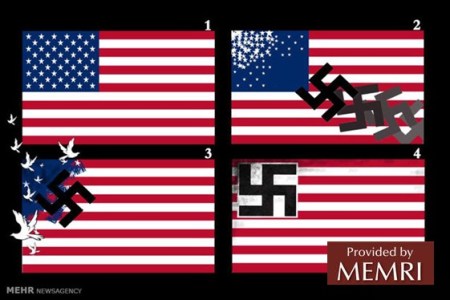
30715Mehr, November 16, 2016.

Following are excerpts from Iranian reactions to Trump’s win, from both the pragmatic and ideological camps:

Iran’s Pragmatic Camp

Iranian Foreign Minister Javad Zarif said, during a visit to Romania: “We do not interfere in the internal affairs of other countries. This is the choice of the American people. Anyone who will be president in America should recognize the reality in the region and the world, and address it realistically. Iran and America have no political ties, but America must meet its international obligations [under] the JCPOA, along with other parties.”[4]

Iranian Foreign Ministry spokesman Bahram Qassemi said: “The Iranian people and the Islamic Republic of Iran have bad and bitter memories from the previous policies and approach of American administration officials. What is important to Iran, and the Iranian people – whom [we] consider a touchstone – is how the next American administration will act and conduct itself. These things are more important than [Trump’s] statements and the policies he expressed during his election campaign.

“The main cause of the escalating violence, extremism, and provocations of Muslims in the region is the policies of the previous American administrations, and their interference in the affairs of the countries in the region. The instability in the strategic regions of the Middle East, the Persian Gulf, the Gulf of Aden, and the Red Sea, and the threats stemming from the violence, extremism, spread of deviant and dangerous thought, and terrorism of groups such as ISIS – which Iran is at the forefront of combatting – indicate that America must reexamine its regional policy.”[5]

Iranian President Hassan Rohani stated, at a government meeting on November 9, that the JCPOA cannot be cancelled: “Iran’s wisdom in the nuclear agreement was to ratify the JCPOA as a Security Council resolution, and not a [bilateral] agreement with a particular country or administration. Therefore, [the JCPOA] cannot be changed according to the whims of a particular administration… The results of the American election will not influence Iranian policy.” He added: “Because of its mistaken policies, America’s status in international society and in global public opinion has waned, and its growing rift with the global society and with Europe damages this status even further… The American election results attest to domestic worry and instability, which will remain for a long time. It will also take a long time until these domestic disagreements and problems are sorted out.

“America today can no longer take advantage of Iranophobia to create a global anti-Iran coalition. Iran’s policy is based on constructive cooperation with the world, on breaking the nuclear sanctions, and on economic ties with the entire world. [This policy] is now emerging, and can no longer be reversed.”[6]

Reformist intellectual Prof. Sadegh Zibakalam explained on November 10 why Iran’s ideological camp preferred Trump to Clinton: “After the American election, there is surely much rejoicing among the streams hostile to America, and among those in Iran who persist in remaining hostile to America, because when Trump enters the White House there will be no more opportunity to ease Iran-U.S. tensions or to bring the [two] closer together… The extremists will exploit Trump’s positions and tell the moderates ‘See how wrong you were? Do you see we were right and that America can absolutely not be trusted? Look at Trump’s anti-Iran stances – do you see why we said that we cannot be fooled by America and that we shouldn’t take its friendly smile seriously?’

“It won’t be long before many in Iran long for the days when Obama was in the White House and John Kerry ran the U.S. State Department. Then they will realize how good we had it, and that we could have reached understandings with America and moved towards removing the tension – but we missed that golden opportunity.

“The Russians are also glad that an extremist is now in the White House, because they believe that they can handle extremists, but not Democrats. They believe that it is possible to get along with Reagan, Trump, and George Bush, but that it is always difficult to deal with the Democrats. Therefore, the Russians, much like our own extremists, welcome Trump’s election, while moderate liberal streams in Europe that support human rights and such do not.”[7]

Responding to Zibakalam’s argument that Iran would welcome Trump, but not an Obama or a Clinton,the pragmatic website Asr-e Iran wrote: “Many believe that Trump’s victory will damage Iran and that Iran will encounter many problems in the post-Obama era. But in this article we will state not only that Trump’s victory will not harm Iran, but that Iran will benefit it.

“Unlike Obama and Clinton, Trump is more inclined [to deal with] domestic affairs, and does not wish to occupy himself with foreign affairs and regional crises. In his speeches, Trump openly stated that he opposes the attacks in Iraq and Afghanistan and does not want to bring America into other countries’problems. Obama and Clinton desperately wanted to create hegemony in the region and outside it, but because America is now weaker at home, Trump wants to improve its domestic situation, and it can therefore be said that he does not wish to deal with Iran and the Middle East region.

“The most important Trump opponents now are European governments. The Europeans did not want Trump in power. But this is today’s reality, and we can say that Trump’s arrival has opened up a yawning chasm between Europe and America. The American presidents who preceded Trump had global leadership strength, because the world, and especially Europe, recognized them as world leaders. But today, not even the American elite, let alone European countries, recognize Trump as a global powerbroker. This means that Trump cannot form an international coalition against Iran or against countries that oppose America.

“Certainly, Europe in the Trump era will try to engage in its own interests, and will no longer make efforts for American interests. This is Iran’s best opportunity to take advantage of this possible Europe-U.S. gap. The Europeans have expressed interest in economic and political cooperation with Iran, and during these years [i.e. the Obama years], America was the only obstacle. In the Trump era, Iran could strengthen its ties with Europe.

“Trump is an economic player; for him, policy is determined by economic profit. Those who seek economic windfalls are never interested in wars or political crises, which can create market panic, unless the war benefits their economic interests.

“Trump’s America will be a country focused on matters that are marginal and on mere noise. This is the best time for Iran to promote its policy on the regional and international levels. The JCPOA under Trump could be the JCPOA of Iran and Europe, and because of the red-headed American president, America might slowly drift away from the JCPOA with Iran. Of course, we must stress that nothing is certain or predictable, especially with regard to Trump, and therefore the world and Iran should keep a close eye on the 45th American president.”[8]

Foad Izadi, an assistant professor in the American Studies department at Tehran University who has a degree from Louisiana State University, claimed that the biggest gift that Trump’s win is giving Iran is that Trump will find it difficult to mobilize international support against Iran – unlike Clinton, who could have easily done so. He added that Trump would also work against Iran in Congress, as Clinton would have, but that it will take Trump a while to identify his allies in Congress, unlike Clinton who would easily have gained support for whatever she chose to do.

Iran’s Ideological Camp

Deputy Majlis Speaker Ali Motahari said: “There will be a difference between Trump’s positions during the election campaign and [those he will adopt] during his presidency. I will summarize his election positions by saying that his presidency will be better for Iran than Clinton’s would have been, because the Democrats advance [toward their goals] more meticulously and they behead you with cotton wool.

“Trump is more honest and has better positions on Syria. Additionally, he does not view Saudi Arabia positively, and he wants good relations with Russia. I believe Trump’s opposition to the JCPOA is good for Iran. In effect, they [the Americans] can do nothing. Ultimately, I think Trump’s presidency will benefit Iran.”[9]

Mocking Western democracy, the Kayhan daily, on its November 10 front page, called Trump’s victory “Another Win For Liberal Democracy: The Madman Defeats The Mendacious Woman.”[10] That day’s editorial explained: “The whites who voted for Trump, being mostly educated [sic], and not from the upper classes, are greatly inclined to clash with racial minorities. Yesterday, immediately after Trump’s victory, in one state, young people who support him [congregated] and chanted anti-black and anti-Muslim slogans. The domestic situation in America is not so great, and daily events, such as what happened in Ferguson, deprive citizens of security. The Trump era could be anything but a time to heal the wounds opened by racial discrimination…

“Trump’s America will absolutely not be a new America with new capabilities, and therefore his anti-Iran declarations will not come to fruition. What is certain is that in the current situation, most Republicans in today’s House and Senate wish to reduce America’s extra-regional conflicts, and will abandon the rash policies of Obama, [who sought] to solve the [crisis] dossiers of the Middle East.

“Trump cannot reinvigorate America’s weary army, and the region is also lacking forces that can seriously replace those who are interfering there on behalf of America [i.e. rebel groups]. That is, the Trump era will see a decline in the wars waged by those who fight in America’s name.

“An interesting point in the American election was crediting Russia [with influencing the result]… Now there is talk of Russia’s influence in the American elections. Donald Trump not only does not deny allegations that he depends on Russia, but his [campaign] statements regarding U.S.-Russia cooperation brought him votes. He said that if he were elected, he would consider Crimea to be under Russian rule.”[11]

Iranian Army chief of staff Mohammad Bagheri said on November 10: “With regard to statements by the American president-elect and what he said during the election campaign – this man, who has now come to power, was too boastful. I have a suggestion for him: ‘Relax, and ask your naval commanders and officers how your forces on that [U.S.] vessel ended up [i.e. captured by Iran, in January 2016].’ Threatening Iran in the Strait of Hormuz and the Persian Gulf is a joke. The might of Iran’s navy also exists in the IRGC’s land [branch], air [branch], passive defense, and Qods Force.”[12]

Ala Al-Din Boroujerdi, chairman of the Majlis National Security and Foreign Policy Committee, said on November 9: “Trump’s victory shows the America people’s reaction to the [U.S.] policy of warmongering, which caused thousands of Americans to lose their lives and squandered hundreds of millions of U.S. dollars in vain… It seems that American public opinion expects the people’s problems to be addressed [now]… We must wait and see what Trump’s policy vis-à-vis the region and the Islamic world will be…

“As for implementing the JCPOA, there is a difference between Trump campaigning for election and Trump the president. It is natural that when someone is elected U.S. president, they must place themselves within the framework of laws and international relations, including the JCPOA, and must remain committed to them. Any step or action [by Trump] will be met with an appropriate [Iranian] reaction.

“If Trump wants to act according to the positions he expressed during his campaign, he must end America’s cooperation with Saudi Arabia in the evil slaughter of the Yemeni people, because Saudi Arabia cannot drown tens of thousands of oppressed Yemenis in blood and ashes without American support. Trump should, at the very least, stop the [American] shipment of weapons to Saudi Arabia.”[13]

Yadollah Javani, senior advisor to Khamenei’s representative in the IRGC, indicated that Trump’s election campaign was different from previous campaigns, and that this has to do with the domestic situation in the U.S.: “Although Trump himself is seen as a wealthy businessman, in his election campaign he defended the poor, blacks, and the lower classes, and challenged the White House’s discriminatory and corrupt policy. Therefore, his message was popular.” Javani added that Trump becoming president was unlikely to radically shift American policy: “Neither Trump nor Clinton nor anyone else can save America, whose power is dwindling, and which has reached the end of the line as a superpower and an empire… American hostility towards [Iran’s] Islamic Revolution, its Islamic regime, and the Iranian nation lies in the arrogance of the American political regime. Thus, there is no difference between Democrats and Republicans… The clearer the enemy’s hostility becomes, the easier it is to deal with. Based on experience over the past 37 years, the Republicans’ hostility towards the Islamic Revolution and the Iranian nation has been more out in the open [than the Democrats’].”[14]

Hossein Naqavi Hosseini, spokesman for the Majlis National Security and Foreign Policy Committee, said on November 9 that Trump had won because the Americans “were displeased with their rulers.” U.S. foreign policy, he said, “is fixed, and is based on interference, aggression, control, usurpation, and the beheading of nations. [But the difference is that] Democrats loot and behead with cotton wool, while Republicans [do it] cruelly with a knife.” About the JCPOA, he said: “Trump only has two options: [Either] act within the framework of the agreement, since it is not an agreement with America [only]. [Or,] if the Americans tear up the agreement, then Iran will be ready to burn it, as the leader [Khamenei] has said.”[15]

In his main official Friday sermon, on November 11, Ayatollah Ahmad Khatami, Assembly of Experts member and Tehran Friday prayer leader, rebuked all those in Iran who expressed hope for a Trump presidency, contradicting the regime’s official line, and advised Trump to focus on U.S. affairs rather than seek adventures overseas: “Before the election, Iran’s policy [vis-à-vis the candidates] was logical and neutral, because our regime said that as far as that is concerned ‘they are all the same,’ and [all the candidates] take orders from somewhere else – that is, they are servants of the Zionist regime. But some websites and newspapers [in Iran] were biased, and even before the election they welcomed a particular candidate’s win. This was unwise, and it would have been better for them to adhere to the regime’s policy…

“The candidate who won the American presidency said, ‘Our country needs new roads, tunnels, and hospitals, but we do not have the necessary funds.’ Where do the [American] tax dollars go? They are spent on slaughter. I want to preach to the new president who has just come to power in America: If you continue in the path of your predecessors, be certain that your fate will be the same as theirs. They had particular characteristics, and you should not repeat their mistakes.

“The American president-elect must know that the Iranian nation exhausted previous American presidents… You called the Iranian people terrorists. If you have any decency and courage, you will apologize to them.

“Take care, because playing with the Iranian nation is like playing with a lion’s tail. I hope these words will reach your ears. You should know that Iran has a single character and a single slogan. Our character is resisting to the final man and final breath, and our slogan is that of the Imam Hussein: ‘Humiliation and disgrace are far from us.’

“I hope that the new American president is wise enough to carry out what he said when he said ‘I do not want tense [relations] with any country.’ If he does not carry this out, he will soon get to know the Iranian people…”[16]

Majlis speaker Ali Larijani called for restraint, saying, on November 13: “The analyses and editorializing regarding the American president-elect should be more mature. We must refrain from making rash judgments and from judging prematurely. We must wait and allow [Iran’s] diplomatic apparatus to take a clear stance.”[17]   

*A. Savyon is director of the MEMRI Iran Studies Project; E. Kharrazi, and U. Kafash are Research Fellows at MEMRI*


Endnotes:

[1] Due in part to a preference by Iran’s political and cultural leadership, which ideologically excludes women in key roles, to not deal directly with a woman, especially one who in the past has openly worked against Iran.

[2] According to Western media reports, the Obama administration, and particularly Secretary of State John Kerry, are pressuring European companies and banks to invest in Iran despite Congress’s sanctions. See, for example, State.gov/secretary/remarks/2016/04/256536.htm, April 23, 2016; State.gov/secretary/remarks/2016/05/257116.htm,  May 12, 2016.  See also article by Stuart Levey, chief legal officer of HSBC Holdings, and former undersecretary for terrorism and financial intelligence at the U.S. Treasury Department (2004-11), “Kerry’s Peculiar Message About Iran For European Banks: Why is Washington pushing banks like mine to do what is still illegal for American banks?”,” Wsj.com/articles/kerrys-peculiar-message-about-iran-for-european-banks-1463093348, May 12, 2016; Finance.yahoo.com/news/uk-working-resolve-banking-concerns-093933912.html; and Bloomberg.com/view/articles/2016-10-26/clinton-s-allies-promise-a-tougher-line-on-iran.

[3] Saudi Prince Turki Al-Faisal also said that Trump should not cancel the JCPOA and instead should focus on thwarting Iran, “which is working to destabilize” the Middle East. Reuters.com, November 11, 2016.

[4] Tasnim (Iran), November 9, 2016. Behrouz Kamalvandi, spokesman for the Atomic Energy Organization of Iran (AEOI) also said that “Iran is prepared for any development. Iran is attempting to continue implementing the JCPOA” and “it has a long term plan.” Tasnim (Iran), November 9, 2016.

[5] ISNA (Iran), November 9, 2016.

[6] ISNA (Iran), November 9, 2016.

[7] Asr-e Iran (Iran), November 10, 2016.

[8] Asr-e Iran (Iran), November 10, 2016.

[9] ISNA (Iran), November 9, 2016.

[10] Kayhan (Iran), November 10, 2016.

[11] Kayhan (Iran), November 10, 2016.

[12] Tasnim (Iran), November 10, 2016.

[13] ISNA (Iran), November 9, 2016.

[14] Javan (Iran), November 10, 2016.

[15] Javan (Iran), November 9, 2016.

[16] Fars (Iran), November 11, 2016.

[17] ISNA (Iran), November 13, 2016.
Muslim Trump Voter Unloads on Democrats and Radical Islam

November 12, 2016

Muslim Trump Voter Unloads on Democrats and Radical Islam, Iran Aware, Ed Straker, November 12, 2016

(The author need not have been quite so surprised. At least a few other Muslims, including Dr. Zuhdi Jasser’s American Islamic Forum for Democracy, also reject Islamist notions. Perhaps President Trump will ask for their help in dealing with American’s Islamist problems. — DM)

boom

For a long time I’ve been critical of the Muslim community, many of whom seem to revel in victimhood status even when it’s clear that they are not the victims of anything.  Meanwhile, a substantial number of their coreligionists are slaughtering people by the thousands, including, from time to time, Americans, and they don’t seem to have any public opinions about that.

So nothing could be more surprising to me to see Asra Q. Nomani, a Muslim who penned an op-ed in the Washington Post announcing that not only did she vote for Trump, but she has a deep dislike for Hillary and, yes, wait for it… radical Islam!

I – a 51-year-old, a Muslim, an immigrant woman “of color” – am one of those silent voters for Donald Trump. And I’m not a “bigot,” “racist,” “chauvinist” or “white supremacist,” as Trump voters are being called, nor part of some “whitelash.”

I have been opposed to the decision by President Obama and the Democratic Party to tap dance around the “Islam” in Islamic State.

… the issue that most worries me as a human being on this earth: extremist Islam of the kind that has spilled blood from the hallways of the Taj Mahal hotel in Mumbai to the dance floor of the Pulse nightclub in Orlando, Fla.

The revelations of multimillion-dollar donations to the Clinton Foundation from Qatar and Saudi Arabia [which Wikileaks emails claimed are funders of ISIS] killed my support for Clinton.

I have absolutely no fears about being a Muslim in a “Trump America.” The checks and balances in America and our rich history of social justice and civil rights will never allow the fear-mongering that has been attached to candidate Trump’s rhetoric to come to fruition.

What worried me the most were my concerns about the influence of theocratic Muslim dictatorships, including Qatar and Saudi Arabia, in a Hillary Clinton America. These dictatorships are no shining examples of progressive society with their failure to offer fundamental human rights and pathways to citizenship to immigrants from India, refugees from Syria and the entire class of de facto slaves that live in those dictatorships.

We have to stand up with moral courage against not just hate against Muslims, but hate by Muslims[.]

Nomani condemned radical Islam and the Democrats’ refusal to fight it.  Can you imagine if most American Muslims spoke this way publicly?

Can you imagine if even some American Muslims spoke this way publicly, instead of blaming people who want to scrutinize fundamentalists for our own safety?

Nomani’s op-ed piece, while unprecedented, highlights the continuing moral crisis in the Muslim community by virtue of the near uniqueness of her perspective.

The Consequences of Inaction

November 7, 2016

The Consequences of Inaction, Gatestone InstituteBarry Shaw, November 7, 2016

The reality is that the actors who are replacing a once powerful and influential America are malevolently reshaping both the Middle East and Asia in their own image.

“I announce my separation from the United States… I’ve realigned myself in your ideological flow, and maybe I will also go to Russia to talk to Putin and tell him that there are three of us against the world — China, Philippines and Russia.” — Philippines President Rodrigo Dutere, in a speech to China’s leaders in Beijing, Oct. 20, 2016.<

Statements that relations were “steady and trusted” by US Assistant Secretary of State, David Russel did nothing to hide the fact that America’s self-imposed impotence is being felt in Asia.

Action, including inaction, has consequences. We have seen this in the failure of the US to respond to:

  • Syria’s effective genocide of its own people;
  • Russia’s unhindered aggression in the Ukraine, Crimea, Syria and in the oil-rich Arctic circle;
  • China building military islands in the South China Sea in an apparent attempt to control international maritime routes
  • ISIS’s metastization into 18 countries in three years;
  • Iran, now billions of dollars richer, stepping up its aggression into Yemen, continuing work on its offensive military program, and holding new Americans hostage for ransom;
  • North Korea continuing to develop its nuclear weapons for both itself and Iran;
  • Turkey now threatening adventures in both and Syria and Iraq, where it will probably be thwarted respectively by Russia and Iran.

Most recently, on October 9th, 12th and 15th, missiles were launched against US Navy ships off the coast of Yemen. They were launched by Iranian-backed Houthi rebels and were deliberately fired at American warships.

These attacks followed one aimed at the HSV Swift on October 1. The missiles were all identified by the US Naval Institute as being Chinese-produced C-802 anti-ship missiles, sold to Iran, and now being fired at United States vessels by proxy fighters of Tehran.

Then, Turkish President Recep Tayyip Erdogan responded to Iraqi demands that Turkey withdraw its troops from northern Iraq by telling Iraqi Prime Minister, Haider al-Abadi at the Eurasian Islamic Council meeting in Istanbul:

“It’s not important at all how you shout from Iraq. You should know that we will do what we want to do. First, know your place. The army of the Republic of Turkey had not lost its standing so as to take orders from you!”

This is the direct consequence of a deal done between the US State Department and Erdogan whereby the US is allowed to use the Turkish airbase at Incirlik in return for Washington turning a blind eye to Turkish actions against the Kurds. Turkey has been allowed to trespass into Iraq and Syria by the US Administration, under the pretext of adding Istanbul to an Obama coalition of nations fighting ISIS. However, facts on the ground clearly show that Turkey has disproportionately been targeting Kurds rather than Islamic State. Turkish warplanes bombed Kurdish fighters, who were fighting ISIS in northern Syria, on October 20.

Egypt and Russia held a week-long joint military exercise in Egypt at the end of October. That followed renewed Russian supplies of military equipment to Cairo after Obama’s refusal to restock the government of Egypt’s Abdel Fattah el-Sisi with US-made weapons and equipment. The US had apparently been upset when in 2013 el-Sisi overthrew the Morsi-led government, backed by the Muslim Brotherhood, with whom the US would apparently and incomprehensibly like to be allied.

Philippines President Rodrigo Dutere announced his country’s separation from the United States on October 20, by declaring that he has realigned it with China as the two nations agreed to resolved their South China Sea dispute. Dutere made his remarks in Beijing on an official visit to which he brought two hundred business people, saying in his address to China’s leadership: “I announce my separation from the United States… I’ve realigned myself in your ideological flow, and maybe I will also go to Russia to talk to Putin and tell him that there are three of us against the world — China, Philippines and Russia.”

Statements that relations were “steady and trusted” by US Assistant Secretary of State David Russel did nothing to hide the fact that America’s impotence is being felt in Asia.

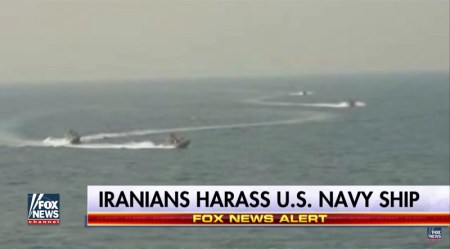
Back to Iran, where a top admiral, Ali Fadavi, said that the US lacks the power to confront Iran militarily. He backed that up by having four Iranian naval speedboats harass US naval ships in the Persian Gulf.

2026Four armed speedboats of Iran’s Islamic Revolutionary Guards Corps harass the US Navy destroyer USS Nitze, on August 24, 2016. (Image source: Fox News video screenshot)

Alon Ben David, chief military correspondent for Israeli TV Channel 10 News, wrote that American foreign policy is turning Iran into a world power by allowing it free range to act in Syria and Yemen, and even having the Obama Administration allow Iran to supply and support a Shi’ite militia taking part in the battle for Mosul.

The acts of global aggression are all the result of an American policy to do little or nothing to stop other actors from strutting the global stage in a dangerous and shifting world.

Many countries evidently believe that America’s role in recent years has been one of damaging everything it touches — or does not touch — leaving them nervously sitting on the sidelines, criticizing what they perceive as the mistakes of others. The reality is that the actors who are replacing a once powerful and influential America are malevolently reshaping both the Middle East and Asia in their own image.

The result has not been a more peaceful world but one in which the vacuum left by America vacating strategically important areas is rapidly being filled by troublesome power-players that leave countries once dependent on US protection feeling increasingly vulnerable.

The consequences of inaction can only soon be damaging to US interests at home as well as abroad.

How Clinton’s National-Security Cluelessness Emboldened Putin

November 4, 2016

How Clinton’s National-Security Cluelessness Emboldened Putin, Center for Security Policy, Fred Fleitz, November 4, 2016

whatmeworry

Joby Warrick and Karen DeYoung authored an important column for the Washington Post yesterday in which they tried to explain Hillary Clinton’s supposed feud with Russian President Vladimir Putin.  According to Warrick and DeYoung, when Clinton left the State Department in 2013, she advised President Obama to snub Putin, avoid working with him and turn down any invitations by Putin for a presidential summit.

Clinton also counseled Obama that “strength and resolve were the only language Putin would understand.”

Clinton’s advice reflected her frustration that the so-called U.S.–Russia reset she attempted in 2009 went nowhere. Instead, U.S.–Russian relations deteriorated drastically while Clinton was Secretary of State and Russia engaged in destabilizing and belligerent behavior in Ukraine and Syria.

Clinton’s recommendation that President Obama snub Putin goes to the heart of her foreign-policy incompetence. While the United States obviously does not condone Russia’s foreign adventurism and support for the genocidal Assad regime, Russia is nevertheless a major power with the world’s largest nuclear arsenal, thus Washington must maintain an ongoing dialogue with Moscow, especially at the head of state level. Despite the bashing Donald Trump has endured from the Clinton campaign and the mainstream media for supposedly admiring Putin, Trump seems to understand this since he has called for America to find a way to work cooperatively with Russia.

Trump gave his best response to Clinton’s criticism of him over Russia and Putin at the last presidential debate on October 9 when he said that “Putin has outsmarted her at every step of the way. From everything I see he has no respect for this person [Clinton].”

Clinton’s call to snub Putin ignores the reality that our country frequently must deal with many regimes accused of violating international law and having abysmal human rights records.

For example, China’s active oppression of Tibet and Xinjiang is far worse than anything Putin has done in Ukraine. China also has significantly increased international tensions by its naval maneuvers to seize control of the entire South China Sea. If Clinton believes the United States must shun Russia because of its human rights record and aggressive behavior, why did she not also call for China to be shunned?

And of course there is Cuba and Iran. The Obama administration decided to ignore both countries’ abysmal human rights records because it wanted to strike historic agreements – normalization of relations with Cuba and the 2015 nuclear deal with Iran – with both states.    The world sees these agreements for what they really are: American hypocrisy and appeasement.

Making this worse was Clinton’s advice that “strength and resolve were the only language Putin would understand.” I agree, but it is laughable that such a weak Secretary of State representing one of the weakest presidents in history would say this. Putin never sensed resolve or strength from the Obama administration or Clinton.

Instead of strength and resolve, the Obama administration’s Russia policy has consisted of fecklessness and confusion. President Obama and Secretaries of State Clinton and Kerry constantly issued ultimatums and endorsed sanctions in response to Russia’s intervention in Ukraine and support for the Assad regime. These actions undermined America’s credibility since Russia ignored them and Washington failed to back them up.

At the same time the Obama administration was condemning Russia’s intervention in Ukraine, it was simultaneously trying to engage it as a partner to negotiate the nuclear deal with Iran and has tried to work with Russia on the Syrian crisis.  This obviously undermined the Obama administration’s efforts to isolate Russia over Ukraine. But even worse, Russia exploited both situations to expand its influence with these countries and throughout the Middle East at America’s expense.

There was a good example of the Obama administration’s toothless Russia policy in September 2016 when Secretary of State Kerry told Moscow after it ignored a two-week old U.S.–Russia Syria cease-fire plan by stepping up airstrikes on the Syrian city of Aleppo that the United States would cease Syria talks with Russia if it continued to violate the cease-fire.  In a joint statement, Senators John McCain and Lindsey Graham perfectly captured the absurdity of this threat.

Finally, a real power move in American diplomacy. Secretary of State John “Not Delusional” Kerry has made the one threat the Russians feared most – the suspension of U.S.-Russia bilateral talks about Syria. No more lakeside tête-à-têtes at five-star hotels in Geneva. No more joint press conferences in Moscow. We can only imagine that having heard the news, Vladimir Putin has called off his bear hunt and is rushing back to the Kremlin to call off Russian airstrikes on hospitals, schools, and humanitarian aid convoys around Aleppo. After all, butchering the Syrian people to save the Assad regime is an important Russian goal. But not if it comes at the unthinkable price of dialogue with Secretary Kerry.

Warrick and DeYoung cite officials who claim Putin dislikes Clinton because of policy differences and her condemnation of Russian elections.  Many experts have claimed this may be why Russia could be behind the WikiLeaks disclosures of Clinton campaign and DNC emails.  Although I don’t doubt Putin dislikes Clinton, I believe his aggressive policies and possible interference in the 2016 U.S. presidential election are in response to his perception of American weakness under the Obama administration and have little to do with any personal animus toward Hillary Clinton.

The overall consequences of the failed Obama/Clinton/Kerry failed approach to Russia are much more alarming. In recent years there have been significant improvements in Russia’s nuclear ballistic missile arsenals, drastically improved air and missile defenses, and hardened shelters against nuclear attacks, apparently in preparation to survive a nuclear war. Russia also has stepped up economic, cyber, information and intelligence warfare against the United States to undermine American security and create a new global order.

The Center for Security Policy addresses these issues in a new book, Putin’s Reset: The Bear is Back and How America Must Respond.  This series of essays I edited by nine U.S. national security experts — Dr. Stephen Blank, Kevin D. Freeman, Frank J. Gaffney, Jr., Dr. Daniel Gouré, Cliff Kincaid, Roger W. Robinson, Jr, David Satter, Dr. Mark B. Schneider, and Dr. J. Michael Waller — document how the threat from Russia is growing as it gears up, at best, for a do-over of the Cold War. And at worst, how Russia is creating what the Soviets used to call “a correlation of forces” that will enable the Kremlin to engage decisively in actual hostilities against the United States.

The bottom line in this book is that the cluelessness of President Obama, Hillary Clinton and John Kerry undermined American credibility to such an extent that it emboldened Putin’s belligerent and destabilizing behavior.

Strength and resolve are the only language Putin understands.  We haven’t seen that from the Obama administration. I am certain we would not see in in a Clinton presidency.

I am hopeful that Donald Trump, if he wins the 2016 presidential election, will launch a new U.S. approach to Russia that deals with Russia from a position of strength and restores a relationship of trust and respect between Moscow and Washington.

Hillary Clinton: Architect of Disaster

October 24, 2016

Hillary Clinton: Architect of Disaster, Power Line, Paul Mirengoff, October 24, 2016

Many conservatives hold out hope that, as president, Hillary Clinton will be okay on foreign policy and national security issues. A few even plan to vote for her for this reason, seeing Donald Trump as worse than Clinton on these matters.

Keith Kellogg, a retired U.S. Army Lieutenant General and adviser to the Trump campaign, demonstrates that hopes for a sound foreign national security policy can only be founded on wishful thinking and dislike of Trump. They find no support in her record.

Kellogg begins with Iraq. Clinton voted for that war. Was this a mistake? Clinton says it was.

It certainly was a major mistake to vote (as Clinton did) against the surge that turned the tide in Iraq, and to ridicule Gen. Petraeus, the surge’s architect. And it was a major mistake to pull out of Iraq when President Obama came to office. (The excuses for the pullout have been debunked by Dexter Filkins of the New York Times).

Kellogg blames Clinton for not being able to negotiate a status of forces agreement with the Iraqi government. The evidence suggests that Obama didn’t want to reach an agreement and I believe that this, not poor negotiating by Clinton, is why we didn’t get one. But Clinton was part of the team that gave away our hard-won gains (gains she tried to prevent by opposing the surge) in Iraq.

Kellogg next considers Libya. There can be no Clinton finger pointing when it comes to the disasters that have occurred there. She was the architect of our Libya policy, which, email traffic shows, her team considered her greatest achievement as Secretary of State.

Some achievement. As Kellogg points out:

When [Qaddifi] was overthrown, there was no plan for follow-up governance. The result was instability, a huge refugee flow into southern Europe and the Islamic State gaining a foothold in Libya.

Worse was the eventual loss of U.S. Ambassador Christopher Stevens in the Benghazi terrorist attack. It was the first killing of a U.S. ambassador in the line of duty since 1979. The response from our secretary of state? She claimed his killing was the result of an anti-Islamic video.

Clinton’s Russian reset began badly. As Kellogg reminds us, Clinton couldn’t even get the translation on the idiotic reset button correct: The Russian word emblazoned on the button actually meant “overload.”

Since the reset, Russia has taken Crimea, invaded main portions of Ukraine, strongly supported Syrian President Bashar Assad, conducted airstrikes against civilians in Aleppo, Syria and significantly increased its military and political presence in the Middle East.

It’s ironic that Clinton is winning the debate over Russia. Yes, Clinton talks tougher than Trump about Russia. But, as Trump likes to say, it’s all talk.

Egypt is a case in point. In 2009, she called Mubarak a family friend. But when he came under attack, she supported his overthrow and then backed the Muslim Brotherhood government. Now, she denounces the U.S. friendly government as “basically a military dictatorship.”

As for Iran, Clinton backs the great giveaway known as the nuclear deal. We can be confident that in a Clinton administration, Iran will get away with violation after violation.

As for Syria, Clinton has tried to distance herself from the disastrous Obama policy. Supposedly, she wanted a firmer anti-Obama stance.

You can believe this if you want to. But the big question is how Clinton will deal with Syria now and, more generally, how she will deal with the next hot spots and crises.

Given her astounding misjudgments about Iraq, Libya, and Russia — indeed, about virtually every hot spot and crisis that arose during her time as Secretary of State — it should be impossible for any fair-minded observer to believe Clinton won’t botch any significant foreign policy issue that comes up.

Trump beats the Big Fix in Vegas

October 20, 2016

Trump beats the Big Fix in Vegas, Israel National News, Jack Engelhard, October 20, 2016

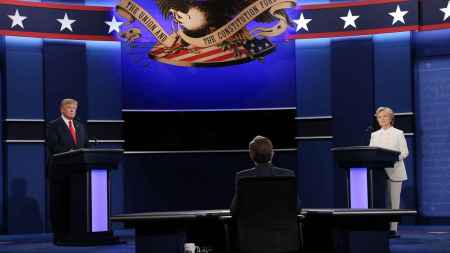
Donald Trump had a good night, here in Vegas at the third and final debate, but was it good enough – would anything be good enough – to stop the Clinton Machine?

The Clinton Machine, since time began, is a colossus that is prepared to run over and demolish everything in its path by use of an unholy alliance – a compliant media in cahoots with government agencies that have been fully corrupted to meet Hillary’s every need, truth and integrity be damned.

Trump is right to be worried about playing against loaded dice.

Americans ought to be worried that the White House may be won by means of theft.  FBI files and Wikileaks provide evidence of double-dealing on a massive scale.

Trump started off slowly but he got stronger, much stronger as the debate moved along and he did respond on the question as to whether he actually did take it that the system is rigged against him. He said that the media are “one-sided against my campaign. They even admit that it’s the case.”

Then, on the topic of women and the flurry of accusations against him, Trump pivoted to add: “That’s all fiction started by Hillary, just as her campaign hired thugs to commit violence at my rallies. That is a fact now out in the open.” Trump spoke in declarative sentences.

Clinton spoke in prepared paragraphs that amounted to rehearsed speeches, and when finally he’d had enough of her barbs, remarked, “Such a nasty woman.”

If that wasn’t the quote of the night, then it was Trump saying, “Given what she did destroying those emails, Hillary Clinton has no right to be running for president.”

Trump was unsparing on her email scandals, noting that a four star general was going to jail for committing the same offenses but to a far lesser degree.

The crowd in Vegas gasped when Trump said, “I’ll keep you in suspense,” as to whether he would support her if she won.

He left that open-ended by calling attention to all the corruption being exposed against her through Wikileaks.

He accused her Clinton Foundation of being a “sleazy operation” that took “millions from countries like Saudi Arabia where they throw gays off buildings.”

He turned to her directly: “Why don’t you give back the money? It would be a great gesture.”

Moderator Chris Wallace challenged her on the Foundation, but she passed to make a speech about something else

This writer finds her a nightmare to quote. The mind wanders for all that political gobbledygook. Throughout, she emphasized her experience nationally and on a global scale and, in political posturing at its finest, mentioned everything she would do for women and children and yes, “undocumented people.”

“You had 30 years and you did nothing. All talk, no action,” said Trump.

He blamed her (and Obama) for American failures in Iraq and Syria. “You created ISIS,” he said. “They are now in 32 countries, thanks to you.”

As for the Iran deal, and likewise bringing in tens of thousands of Syrian migrants, “Wait till you see what’s coming,” he said. “ISIS for sure.”

On our overseas ventures in general, Trump said, “We’re being played, by China, Russia, Iran, everybody.”

Trump had a good night, even a terrific night. He was calm, but firm, and did not fall for the usual traps.

Clinton, in a word, was boring. She came across as a prepackaged politician, prepared and scripted to the point of being mechanical and cute.

Sixteen months ago a gambler rolled the dice and shot for all the works. That gambler was Donald Trump. He should have remembered Rule #1.

The House always wins. In political terms the House is the Clinton Machine.

Last night Donald Trump beat the House.

The Third Debate: ‘What Kind of Country Are We Going to Be?

October 20, 2016

The Third Debate: ‘What Kind of Country Are We Going to Be? Front Page MagazineRobert Spencer, October 20, 2016

rd

The peculiar self-contradiction of Hillary Clinton’s presidential campaign was on abundant display Wednesday night during her third and last presidential debate with Donald Trump: running as the anointed heir of a two-term president in whose administration she served, she has to maintain both that everything is going great and that the nation in general  is in drastic need of repair. Above all, amid all the bluster and platitudes, she and Trump took up opposing sides on virtually all the major fault lines of contemporary America, emphasizing yet again that this election is for all the marbles: either the U.S. will continue on the road to socialist internationalism, or recover a sense of itself. This may be the last time that question is at stake in a presidential election.

“What kind of country are we going to be?,” Hillary Clinton asked near the beginning of the debate, and that indeed was the question. The Supreme Court, she told us, needs to stand on the side of the American people, not on side of the wealthy. What would a Supreme Court that stood on the side of the people, rather than the plutocrats, look like? Why, of course it would be one that said no to Citizen’s United, and yes to Marriage Equality and Roe vs. Wade: as far as Hillary Clinton is concerned, anyone who stands for traditional values is simply not of the people, or any people she has any interest in representing. Nor, presumably, among Hillary Clinton’s people are those who respect and want to uphold the Second Amendment – in which she firmly believes, she assured us Wednesday night, as long as it is gutted of any actual substance.

Trump, on the other hand, affirmed that he would appoint justices who would interpret the Constitution as written, repeal Roe v. Wade and return the abortion question to the states, and protect gun rights. Chicago, he pointed out, has some of the nation’s toughest gun laws, yet also has more gun violence than any other city. This was a telling point; in response, Clinton promised she would give us both the Second Amendment and “reform,” but did not explain how this sleight-of-hand would be performed.

The situation was the same when the topic turned to immigration. Trump spoke of the need for strong borders, pointing to the drugs pouring into the country over the Mexican border as the reason why a border wall was needed, and declaring: “We have no country if we have no border.” In response, Clinton spoke about not wanting to send illegal immigrant parents away from their children who are citizens – an answer that may have tugged at Leftist heartstrings, but left the drug problem unaddressed.

Clinton danced all night. When moderator Chris Wallace quoted her earlier statement saying she wanted open borders, Clinton turned the question into one about Wikileaks, and pressed Trump over whether he would condemn Russia, which she insisted was behind the leaks, for meddling in an American election. “That was a great pivot,” Trump noted drily, “from her wanting open borders.”

Once Clinton had brought up Putin, Trump bored in, charging: “She doesn’t like Putin because Putin has outsmarted her in every way.” In response, Clinton promised to work with our allies all over the world. That highlighted her campaign’s nagging contradiction again, leaving unanswered the question of why the world is so aflame today after eight years of Barack Obama, who came into office with similar promises to mend America’s relationships with friends and foes alike globally – promises that were taken so seriously that he won the Nobel Peace Prize before he had done anything at all. (What’s left to give President Hillary Clinton as she begins herefforts to bring peace to our troubled world? Sainthood?)

There was so much that he had heard before. Clinton promised to make the rich pay their fair share of taxes. Some enterprising and independent-minded historian should research the history of that shopworn phrase, used by so very many Democratic presidential candidates before Hillary. Who was the first to use it? Certainly not Barack Obama, although he made the same promise, or John Kerry or Al Gore, who did as well, or Hillary’s husband. Was it Mike Dukakis? Jimmy Carter? Harry Truman? Woodrow Wilson? Grover Cleveland? How far back does this phrase go, and why, after eight years of Barack Obama, are the poor soaked rich still not paying their fair share? If he couldn’t make them pony up, how will Hillary accomplish it?

That was the rub, on all the issues Trump and Clinton discussed Wednesday evening. She pledged to eradicate the Islamic State, whereupon Trump noted that it was the vacuum created in Iraq by the precipitous Obama/Clinton withdrawal from Iraq that led to the creation of ISIS in the first place. Trump pointed out that the U.S. is pouring money into Syrian rebel groups of doubtful reliability, and noted that if they overthrow Assad (“and he is a bad guy”), Syria might end up with a regime’s worse than Assad, and noted that the chaos in Syria has “caused the great migration, the great Trojan Horse,” with “many ISIS-aligned” coming into the U.S. “Thanks a lot Hillary,” he said acidly, “thanks a lot for doing a great job.”

Indeed. If she didn’t get all this right when she was Secretary of State, how can Americans be confident she will get it right the next time, particularly when all she is offering is more of the same, more of the same failed foreign policies that have gotten the world into the fix it’s in today — with the centerpiece being the denial of the nature, magnitude and motivating ideology of the jihad threat?

That is what is ultimately the choice Americans face: more of the same, or a drastic change of course. If Hillary Clinton is elected president, and the mainstream media is in a frenzy to do all it can to make sure that she is, Americans will at very least know what they’re getting, and a great many of them will applaud it. Ultimately, however, politically correct fantasies will collapse under the weight of reality. If that happens while she is president, there will be more of the same in another way as well: many Americans who applauded her platitudes, generalities, and appeals to sentiment on Wednesday night will be looking for ways to blame the Republicans.

“Stronger Together” Under Hillary Clinton? I Don’t Think So

October 13, 2016

“Stronger Together” Under Hillary Clinton? I Don’t Think So, Power LinePaul Mirengoff, October 13, 2016

“Stronger together” is Hillary Clinton’s campaign slogan. Like most of what comes out of Hillary’s mouth, it is insincere. Clinton has written off approximately 20 percent of the American public as deplorable and irredeemable. Her top aides express contempt for traditional Catholics, evangelicals, and Jews who support Israel.

But let’s look beyond the inevitable Clinton insincerity and ask whether, under a Hillary presidency, America would be stronger together.

We must first ask what makes America strong. I believe there are four main elements.

First, America must have a strong military. Second, America must have a shared belief that it is great, and not just “because it is good.” Third, America must hold its citizens to high standards of personal conduct. Fourth, America must be a meritocracy and must judge merit without regard to extraneous factors such as race, ethnicity, and gender.

Would an America unified behind Hillary Clinton’s left-liberal leadership and vision satisfy these requirement? I don’t think so.

First, America’s military is in steep decline under President Obama. Marco Rubio laid out some of the sorry details here. In all likelihood, this decline would continue under Hillary Clinton.

Second, Hillary Clinton’s stated position on American greatness is that “America is great because it is good.” Coming from Hillary, this tired phrase is code for the claim that American greatness depends on policies such as open borders and liberal largess.

The real left-liberal view of American greatness is even more disturbing. It holds that America is anything but great. Political leaders like Bill Clinton and Barack Obama have manifested this view by running around the world apologizing for American foreign policy.

Meanwhile, under the guidance of left-liberal intellectuals, the rejection of American greatness has become the organizing principle behind a new way of teaching of American history to top high schools students.

Can America be great if it teaches students that it isn’t even good?

Third, Hillary Clinton and her fellow left-liberals want to hold Americans to lower standards of personal conduct than those currently embodied in the criminal law. They want to release criminals, set lower sentences, and decriminalize certain conduct. They also want to impose substantially less discipline on disruptive students.

Their main argument in favor of these measures is that certain segments of the population bear a “disproportionate” burden as a result of current standards. Thus, they want standards lowered because some groups have difficulty adhering to them. Such laxity won’t make America stronger; it will weaken us.

Finally, Hillary Clinton and her fellow left-liberals oppose a meritocracy in which merit is judged without regard to factors like race, ethnicity, and gender. Instead, they favor a spoils system in which a share of rewards — e.g. admission to college and accession to jobs — is set aside for African-Americans, Latinos, and (where necessary) females. This system produces a lowering of quality and a sense of entitlement antithetical to a strong America.

For these reasons, America won’t be “stronger together” under Hillary Clinton’s leadership. Rather, it will be stronger if those who oppose the left-liberal policies and viewpoints described above maintain a status apart. That way, we can uphold a vision of what a strong America truly is like and, as Hillary’s America begins to unravel, perhaps persuade a critical mass of Americans of the soundness of our vision.

Venezuela, Iran, USA and Narco-Terrorism

October 13, 2016

Venezuela, Iran, USA and Narco-Terrorism, Gatestone Institute, Susan Warner, October 13, 2016

There are an estimated six million Muslims living in Latin American cities, who provide a fertile terrorist recruiting environment.

“Iran has opened up more than 80 cultural centers in Latin America in order to export its toxic brand of political influence and serve its interest, focusing on partnering with nations well known for their anti-American rhetoric including Venezuela, Argentina, Bolivia, Ecuador, and Nicaragua.” — US Rep. Ileana Ros-Lehtinen, in testimony for the House Sub-Committee on the Middle East and North Africa.

Amidst the unspeakable economic distress facing residents of Venezuela today, security experts have identified yet another major cause for concern emanating from this once prosperous, oil-rich nation: Iran is moving in, partnering with Venezuela’s prosperous drug traders and creating a foothold there, as well as in other “friendly” Latin American countries. Iran is laundering money in Latin America and presumably secretly plotting to accomplish a strategic long-term goal to penetrate the Western hemisphere.

Iran’s terrorist activities, its partnership with Venezuelan drug traffickers and the general criminal atmosphere affects the citizens of Caracas so much that people reportedly are fearful of even going to the store to wait in the endless lines for food.

In Venezuela, security analysts say, the corruption starts at the very top with President Nicolas Maduro himself, who is looking frantically for money in every crevasse to keep the nation and his presidency afloat. Reports estimate that in Venezuela one police officer dies every day and the number of homicides per capita in Caracas is the highest in the world.

National crime statistics, however, seem to be just the start: deeper and more alarming than the Venezuelan homicide toll, there appears to be an imminent threat to the entire Western hemisphere from partnerships between Venezuelan drug traffickers and terrorist networks like Hamas and Hezbollah, two groups that act a proxies for Iran.

Together, terrorism and illegal drugs represent a significant export for Venezuela. Iran and Venezuela partner together to move terrorist cells and drugs to hubs in the United States and throughout North America.

This alliance has already come to the attention of the House Sub-Committee on the Middle East and North Africa; in 2015, Chairwoman Ileana Ros-Lehtinen headed a hearing entitled, “Iran and Hezbollah in the Western Hemisphere.”

“Drug trafficking funds terrorism,” said Ros-Lehtinen. “The need for a comprehensive strategy must address this fundamental cause of the problem.”

“Recent reports of the connections between Hezbollah and the FARC [Colombia]; the murder of the special prosecutor of Argentina, Alberto Nisman, and the alleged conspiracy between the Argentine Government, Venezuela and Iran to cover up Hezbollah’s activities and involvement in the AMIA [Jewish Community Center] bombing do nothing to quell doubts about Iran’s activities in Latin America.”

Through its Islamic Revolutionary Guard Corps (IRGC) and Hezbollah, Iran’s terrorist proxy in Lebanon, Iran is spreading its roots through legitimate enterprise “laundries” throughout Latin America.

Iran has set up banking entities, embassies, cultural centers and business enterprises, through which it is building an infrastructure to advance expansionist strategies.

Vanessa Neumann wrote in 2011:

“Besides its sponsored terrorist groups, Iran also has a growing direct influence in Latin America, spurred by three principal motivations: 1) a quest for uranium, 2) a quest for gasoline, 3) a quest for a base of operations that is close to the US territory, in order to position itself to resist diplomatic and possible military pressure, possibly by setting up a missile base within striking distance of the mainland US, as the Soviets did in the Cuban Missile Crisis”

“FARC in Columbia, Hezbollah in Lebanon and Al Qaeda all have training camps, recruiting bases and networks of mutual assistance in Venezuela as well as throughout the continent,” the Foreign Policy Research Institute reported.

Jaime Daremblum wrote in 2011:

“An official involved in the fight against terrorism said that the relation between Venezuela and Iran is becoming a strategic association. How to explain otherwise reported regular flights between Caracas and Tehran, for which no tickets are sold and no immigration or customs inspections are required?”

Rachel Ehrenfeld, in her 1990 book on terrorism funding (page xiii), defined the term “narco-terrorism” as “the use of drug trafficking to advance the objectives of certain governments and terrorist organizations.” Two decades after the book’s publication, the term narco-terrorism has almost become a household word, with Venezuela as a hub of activity in the Western hemisphere.

A U.S. State Department report stated:

“Venezuela remained a major drug-transit country in 2014. Venezuela is one of the preferred trafficking routes for illegal drugs from South America to the Caribbean region, Central America, the United States, Western Africa, and Europe, due to its porous western border with Colombia, weak judicial system, sporadic international counternarcotics cooperation, and permissive and corrupt environment.”

Hezbollah’s annual budget of more than 100 million dollars is provided by the Iranian government directly and through a complex system of finance cells scattered around the world, from Bangkok and Paraguay to Michigan and North Carolina.

Far from being the passive beneficiaries of drug-trafficking expats and sympathizers, Hezbollah has high-level officials directly involved in the South American cocaine trade and its most violent cartels, including the Mexican crime syndicate Los Zetas. Hezbollah’s increasing foothold in the cocaine trade is facilitated by an enormous Lebanese diaspora.

There are an estimated six million Muslims living in Latin American cities, who provide a fertile terrorist recruiting environment. Vanessa Neumann writes:

“The Free Trade Zones of Iquique, Chile; Maicao, Colombia; and Colón, Panama, can generate undetected financial and logistical support for terrorist groups. Colombia, Bolivia, and Peru offer cocaine as a lucrative source of income. In addition, Cuba and Venezuela have cooperative agreements with Syria, Libya, and Iran.”

Iran’s Islamic Revolutionary Guards Corps (IRGC) was established by Ayatollah Khomeini in 1979. Today it plays a leading role in Iran’s expansionist enterprises. The IRGC has become a wide-ranging political, social, and economic corporation — with holdings in industry, security, energy, construction, and communications. It is the most robust economic organization in the country. According to reports, many of its former members currently hold senior political and bureaucratic positions in the Iranian government.

According to a 2013 report in Military and Strategic Affairs:

“… the Revolutionary Guards are active on two major complementary levels. First, the organization leads the efforts to export the Iranian Islamic Revolution, seeking to expand the republic’s political, ideological, and religious influences in the Middle East, Central Asia, Africa, and Latin America. Secondly, the Revolutionary Guards continuously exert efforts to undermine the influence of the United States in the Middle East by harming the superpower’s regional interests and its allies. … the Revolutionary Guards make extensive global use of asymmetrical strategies in their struggle against the West and its allies, preferring tactics of subversion and terrorism.”

The Quds Force, an arm of IRGC, is in charge of exporting the Islamic Revolution and organizing terrorist and subversive activity against Iran’s enemies, according to a 2013 report from theAmerican Center for Democracy

The Quds Force uses proxies as a way to disguise Iran’s involvement in terrorist activity. The force’s most prominent ally is the Lebanese Hezbollah, which was established in 1982 with the help of the Revolutionary Guards.

Alongside their efforts to battle their own serious homegrown drug problems in Iran, the Revolutionary Guards are also reportedly working to harness the strategic and tactical potential of the international drug trade in order to advance Iran’s expansion.

Venezuela and Iran seem to have been friendly since the establishment of the Organization of Petroleum Exporting Countries (OPEC) in 1960. They have been reinforcing their bonds since May 2001, when then President Hugo Chavez paid a visit to Tehran. There he coordinated their anti-Western narrative, stressing opposition to all forms of “imperialism and oppression” in the Third World — a code for “lets agree to stay away from any relationship with Western capitalist powers: the United States, Israel and their allies”. This “anti-imperialist” mantra has been used by both Chavez and his successor, Nicolas Maduro, along with Iran as a unifying cry against the U.S. and its allies.

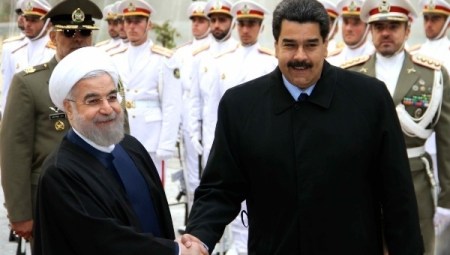
1944Venezuelan President Nicolas Maduro (right) meets with Iranian President Hassan Rouhani in Tehran, January 10, 2015. (Image Source: TeleSUR video screenshot)

According to the testimony of Ileana Ros-Lehtinen:

“Iran has opened up more than 80 cultural centers in Latin America in order to export its toxic brand of political influence and serve its interest, focusing on partnering with nations well known for their anti-American rhetoric including Venezuela, Argentina, Bolivia, Ecuador, and Nicaragua.”

Hamas and Hezbollah, both Iranian proxy terrorist groups, have also established offices in Caracas.

Representatives Ileana Ros-Lehtinen, Jeff Duncan and others say this is an appropriate time for the United States to pay more attention to activities happening in its own backyard.

The Need for a U.S. Response

In his statement to the House Committee on Foreign Affairs, Rep. Jeff Duncan asserted at the 2015 hearing, that the U.S. and its allies must do more to counter Iran’s goals to develop nuclear weapons, export terrorism and develop alliances with the narcotics trade.

Since the (unfortunate) approval of “Iran Nuclear Deal” in 2015, the United States has largely dissolved international sanctions against Iran, which leaves the IRGC free to make uninhibited alliances with networks of transnational organized crime organizations to finance its aspirations. Along with United States’ recent payment of $1.5 billion to Iran, there may be a grave risk to our own national security as Iran marches north from Venezuela into Central America and further into the United States through our southern border with Mexico.

In 2015, according to the US Department of State, U.S. President Barack Obama determined that Venezuela had failed to adhere to its obligations under international counternarcotics agreements. Even so, the US issued a waiver, allowing for continued assistance to be granted to Venezuela “in the interest of U.S. national security“.

The State Department admits that Venezuelan authorities do not effectively prosecute drug traffickers, in part due to their political corruption. Additionally, Venezuelan law enforcement officers lack the equipment, training, and resources required to significantly impede the operations of major drug trafficking organizations.

The U.S. Treasury Department has sanctioned multiple Venezuelan banks and Venezuelan regime operatives, including the former Minister of Interior and Justice. The U.S. State Department has cited Venezuela’s state-owned oil company, PDVSA, and CAVIM, the Venezuelan weapons company, for their role in helping Iran circumvent the sanctions that the U.S. has now lifted altogether.

At the same time, the U.S. administration continues to purchase 10% of its oil (roughly 300 million barrels per year) from Venezuela, the same entity that it sanctioned in 2011 for shipping gasoline to Iran.

This is all happening while terrorist groups are regularly connecting to drug cartels in the region, and forging a deepening narco-terror machine that in turn is funding terrorist activities.

While the US administration — apparently in denial about the clear threats posed by Iran’s expansionist and nuclear aspirations — dismisses Israel’s concerns as “hysteria,” Iran quietly continues its unfettered march westward.