Deep Cover Democrats | SUPERcuts! #420, Washington Free Beacon via YouTube, January 13, 2017
Ishmael Jones: From Russia With Doubt, Power Line,
(Please see also, Hmmm: FBI, CIA never examined DNC servers? — DM)
Ishmael Jones is a former CIA case officer and author of The Human Element: Inside the CIA’s Dysfunctional Intelligence Culture. He writes with a timely comment on the current intelligence controversy that is reaching a fever pitch. Mr. Jones indicates that his commentary has been reviewed and approved by the CIA’s publications review board:
CIA intelligence reporting stating that the Russian government hacked the presidential election in order to elect Donald Trump is false. It is merely a political attack against Donald Trump with the goal of delegitimizing his presidency.
The depth and quality of the CIA reporting is too good to be true. A December 16 NBC report states, for example: “Putin personally directed how hacked material from Democrats was leaked and otherwise used.” Everyone knows that a great deal of hacking comes out of Russia. But evidence of hacking does not lead to the conclusion that there was a Russian government conspiracy to get Mr. Trump elected.
Such a conclusion would require access to Putin’s inner circle and knowledge of Putin’s plans and intentions. Any spy that close to Putin would be one of the best intelligence sources of all time.
If such a source existed, he doesn’t exist any more. The leaked reporting would have put him in grave danger, and he would already have been imprisoned or executed.
The reporting instead reflects the political opinions and agendas of bureaucrats. CIA bureaucrats are a big blue voting machine with a long record of creating information harmful to Republican presidents. The danger to Mr. Trump is ratcheted up because the recent election influenced many people at the CIA to believe that Trump is the second coming of Hitler. And to stop Hitler, anything is ethical, even treason. CIA bureaucrats have chosen to attack Mr. Trump before he even takes office.
The CIA is meant to spy upon foreign countries. The secrets we seek are located in foreign countries. Yet the bloated CIA bureaucracy exists almost entirely within the United States. CIA bureaucrats appear to find foreign service disagreeable. They enjoy their lifestyle and will fight with aggressive passivity to keep it that way. More than 90% of CIA employees spend their careers living and working entirely within the United States.
James Bond would periodically come in from the field to report to the chief of British intelligence, “M.” On the way into M’s office he would joke around with M’s secretary, Miss Moneypenny.
When I reported to CIA Headquarters, there were thousands of these people – thousands of M’s and thousands of Miss Moneypennys. The CIA cafeteria looks like a great herd grazing peacefully upon the plains.
The incoming CIA chief, Mike Pompeo, will be astonished by how many of his senior leaders have not had an overseas assignment in decades. Brief junkets and TDY’s to foreign countries do not count. CIA boss John Brennan’s 40 plus years of CIA service have occurred almost entirely within the Headquarters building. During a 20 year career, the Left’s favorite spy, Valerie Plame, spent less than two and a half years in foreign operational assignments, mostly during an initial tour in Europe.
The CIA has a military origin, and in the military, huge staffs are required for planning and logistics. There are relatively few actual fighting infantrymen – at the point of the spear – because to send that infantryman to combat requires support from tanks, artillery, aircraft and so on, which need massive expenditure and meticulous planning. The CIA has the massive expenditure and the huge staffs, but the CIA’s equivalent of the infantryman is the case officer, and the best case officers require only a passport and an airline ticket to get half a world away and produce.
Michael Morell, author of the New York Times op-ed column “I Ran the CIA. Now I’m Endorsing Hillary Clinton” inhabited the Washington DC area for nearly all of his 33 years in the CIA. In the article, he writes: “I will do everything I can to ensure she is elected”.
While at the CIA, Morell’s top goal was to promote greater inclusiveness and diversity. The CIA has come a long way since the days of the polygraph question, “Have you ever held another man’s penis in your hand?” Today, we have more employees working in encouraging diversity, and as of recently, more transgender employees, than we do case officers operating under cover in Russia, China, Libya, Syria, Yemen, Iran, and North Korea combined. We should try to do both. Let’s be dedicated to diversity and also spy on our enemies.
Mr. Pompeo’s staff may wish to contact the staff of former CIA chief Porter Goss. Goss was the last Republican appointee to attempt change at the CIA and his staff will be able to provide valuable insights, especially former staffer Patrick Murray
Gritty foreign countries with their strange ways and pungent smells are not the only reason for bureaucrats to live in the United States. CIA Headquarters is also the place to make deals. Fighting fraud will be a real challenge to Mr. Pompeo. Most bureaucrats retire and become contractors, wheedling contracts from their pals still at the CIA. I hear many tales from colleagues about waste, theft, and great riches accruing to phony contractors. The CIA paid $40 to contractors to review documents to help prepare the Senate torture report, according to ABC News on December 10, 2014, for example. Had Hillary won, Michael Morell’s support may have put him on track to be a billionaire. Forty million here and forty million there really starts to add up.
It may be possible to make great progress in draining the swamp by firing or prosecuting just one leaker – just a single one. And by imprisoning just one phony contractor – just one. Word will spread that there’s a new sheriff in town and Mr. Pompeo may be pleasantly surprised to see that the swamp starts to drain itself.
Intelligence Officials Refuse to Brief House Intel Committee on Russian Hacking, PJ Media, Debra Heine, December 15, 2016
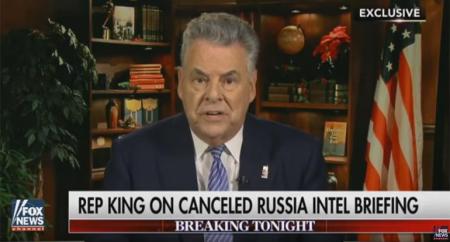
House Republicans on the House Intelligence Committee are crying foul after the FBI, CIA, and National Intelligence directors refused to brief them on the Russian cyber attacks that occurred during the presidential campaign. The Washington Post reported on Friday that according to anonymous sources, the CIA determined that Russia interfered in the election with the purpose of helping Trump’s campaign.
According to members of the House Intelligence Committee, that was the first time they had heard that analysis, even though intel officials had been briefing the panel on Russian cyber attacks for many months.
In an effort to fulfill his committee’s oversight responsibilities, Chairman Devin Nunes requested that National Intelligence Director James Clapper, along with FBI Director James Comey and CIA Director John Brennan, brief committee members in a closed session on Thursday. Nunes was not pleased Wednesday when the briefing had to be canceled due to their refusal to appear.
Via US News:
The California Republican, in a letter sent to Clapper on Monday, said he wanted clarification about why the CIA is now saying that Russian hacks of political campaign committees earlier this year appeared to be aimed at helping President-elect Donald Trump and hurting Democrat Hillary Clinton. Nunes pointed to testimony from Clapper in a public hearing in November that the Intelligence Community lacked the evidence to draw such a conclusion.”It is unacceptable that the Intelligence Community directors would not fulfill the House Intelligence Committee’s request to be briefed tomorrow on the cyber-attacks that occurred during the presidential campaign,” Nunes said in a statement released Wednesday night. “The legislative branch is constitutionally vested with oversight responsibility of executive branch agencies, which are obligated to comply with our requests.”
However, the Office of the Director of National Intelligence said that “senior administration officials have regularly provided extensive, detailed classified and unclassified briefings to members and staff from both parties on Capitol Hill since this past summer and have continued to do so after Election Day.”
“Last week, the President ordered a full Intelligence Community review of foreign efforts to influence recent presidential elections — from 2008 to present,” the director’s office said in a statement Wednesday. “Once the review is complete in the coming weeks, the Intelligence Community stands ready to brief Congress — and will make those findings available to the public consistent with protecting intelligence sources and methods. We will not offer any comment until the review is complete.”
Some members of the intelligence community [IC] have been selectively leaking comments to the media, however.
Rep. Peter King (R-NY), a permanent member of the Select Committee on Intelligence, appeared on Fox News’ The Kelly File Wednesday night to talk about the situation — which he called “absolutely disgraceful.”
King said members of the IC had been telling his committee for months that there was no proof that the Russians were trying to help Donald Trump.
“All we’ve heard from the intelligence community over the last several months is they could not say that there was any attempt to undermine Hillary Clinton, to help Donald Trump. The consensus was, there was an attempt by the Russians to put a cloud over the election — to create disunity. Well, that’s what’s happening right now, and it’s the intelligence community that’s doing it!” he thundered.
The congressman reiterated that the IC had told the Intel Committee previously that they couldn’t prove that there was an attempt to favor one candidate over the other.
King noted that Director James Clapper had even said publicly on November 17 that the IC “lacked strong evidence connecting Russian government Cyber-attacks and WikiLeaks disclosures.”
He continued: “And now, we have this — as far as I know, there is no decision by the CIA, there is no consensus opinion, and yet we find it in the New York Times, the New York Post and the House Committee on Intelligence was told nothing about this. And yet it’s our committee — it’s Devin Nunes — who has jurisdiction over the CIA and all the intelligence agencies. This violates all protocols and it’s almost as if people in the intelligence community are carrying out a disinformation campaign against the president elect of the Unite States. It’s absolutely disgraceful and if they’re not doing it, then it must be someone in the House or the Senate who’s leaking false information and there should be a full investigation of this.”
Megyn Kelly asked King if the Washington Post story Friday was the first time’s he’d heard that Russia was trying to help Trump.
“Yeah,” King replied, “and they have time to leak it to the Washington Post and the New York Times, but they don’t have time to come to Congress — and its the House Committee on Intelligence that has the absolute jurisdiction over the CIA and the intelligence community.”
Asked what kind of game he thinks the IC is playing, King said, “I don’t think there is any conclusion that they [the Russians] were attempting to favor Donald Trump over Hillary Clinton. Who is the CIA? When they say the CIA has made this conclusion, is that Brennan? Who? …There is no finding, there is no assessment that we’ve seen. If they have something, they have an obligation to show it to us. Maybe there is none. This could be a whole house of cards. I see it as some kind of disinformation to discredit our the incoming president-elect and that’s absolutely disgraceful.”
“If something so dramatic happened between November 17 and this week to change their assessment, didn’t they have the obligation to come before the Congress and tell us that?” King asked. He pointed out that no one from the intelligence agencies is on the record making these claims. “If it is true, they’re leaking it, and that’s a crime. If someone is making it up, that’s also wrong. This stinks. It’s wrong,” he concluded.
How President Trump Can Make American Intelligence Great Again, Center for Security Policy, Fred Fleitz, December 12, 2016
(But please see, Abolish the CIA? Perhaps Trump’s CIA will be better than the old CIA.– DM)
Source: National Review
In 2010, when I was on the staff of the House Permanent Select Committee on Intelligence, I attended a committee hearing on the North Korean nuclear program. That hearing epitomized the failure of post-9/11 reforms of U.S. intelligence and showed why the Trump administration must take aggressive steps to streamline American intelligence. Only then can it can return to being the great institution that provides the intelligence support our presidents need to protect our nation against national-security threats facing our nation today.
This process should start by sharply scaling back or eliminating the Office of the Director of National Intelligence (ODNI).
The lead witness at this hearing, seated at the center of a long witness table, was the ODNI North Korea issue manager. Seated next to him on each side were the ODNI issue manager for WMD proliferation and the director of the ODNI National Counterproliferation Center.
Joining them were the National Intelligence Council (NIC) officers for WMD proliferation and East Asia, both part of the ODNI. The CIA sent two witnesses, from its proliferation and North Korea–analysis offices. The Defense Intelligence Agency (DIA), the State Department, and the Department of Energy sent one witness each.
In addition to these 10 witnesses, other senior intelligence officials attended as backbenchers. There also was a gaggle of aides, handlers, and congressional liaison staffers. There were so many that they could not all fit into the hearing room.
The hearing seemed to go on forever, since the lead witness kept inviting all his colleagues to weigh in on every question asked by committee members. Some of the backbenchers spoke too. This became monotonous, since every witness (except for the one from DIA) parroted the same watered-down consensus view. Making this worse, the witnesses’ consensus statements were proven to be completely wrong a few months later.
This mob of intelligence officials spouting the same watered-down pablum exemplified why the reform of U.S. intelligence mandated by the 2004 Intelligence Reform and Terrorism Prevention Act (IRTPA) has been an utter failure. Although IRTPA created the position of the director of national intelligence as a new official to oversee all U.S. intelligence agencies, to ensure that these agencies would cooperate and share information, the Office of the Director of National Intelligence has developed into a huge additional layer of bureaucracy, with far too many officials, that has made American intelligence analysis and collection less efficient and more risk-averse.
This is in part due to blowback from 9/11 and Iraq War intelligence failures, but also is a typical situation for a 70-year-old, multi-billion-dollar bureaucracy that has become complex and complacent. As is true with many established government bureaucracies, political factors and fear of being wrong weigh heavily on the operations of U.S. intelligence agencies. While America still has the world’s best and most capable intelligence service, it has lost the “can-do” intrepid spirit of its predecessor, the heroic World War II-era Office of Strategic Services.
The ODNI has made this problem much worse — not just because it is an additional layer of stifling bureaucracy, but also because it has become a 17th intelligence agency, with its own intelligence analysts, thousands of employees, and a huge — and ever growing — budget.
In 2007, House Intelligence Committee members were so disturbed about the rapid growth of the ODNI bureaucracy that they approved, on a bipartisan basis, an amendment to the 2008 intelligence authorization bill to freeze the ODNI staff to the number working for it as of May 1, 2007. I drafted this amendment, which was co-sponsored by Congressmen Mike Rogers (R., Mich.) and Alcee Hastings (D., Fla.).
Hastings said at the time about this amendment:
We will not give you a blank check with which you could continue to grow a new bureaucracy before we know what you are doing with what you already have. A bigger bureaucracy does not make better intelligence.
Although Hastings was right, the Hastings/Rogers amendment was never implemented, since Congress did not pass an intelligence authorization bill that year. I hate to think how many times the ODNI staff has doubled since the House Intelligence Committee attempted to halt its growth in 2007.
The IRTPA reforms have hurt U.S. intelligence in other ways. The President’s Daily Brief (PDB), which used to be a lean and effective daily intelligence publication for the president produced by the CIA, has become an ODNI publication, weighed down with bureaucracy to make it “fair” so that all 17 intelligence organizations can participate and use it to publish articles justifying their budget requests to Congress.
The ODNI bureaucracy has also burdened intelligence agencies with unnecessary reports, regulations, and foreign travel by ODNI staff.
Aside from being an attempt to improve the sharing of information between intelligence agencies in the aftermath of the 9/11 intelligence failures, the ODNI also was created because some believed it is impossible for the CIA director to both manage the CIA and oversee the rest of the U.S. Intelligence Community.
I have long believed that these reasons are false. The CIA director, as the director of central intelligence (DCI), worked well for decades as the head of all U.S. intelligence agencies. The failure to share intelligence between U.S. intelligence agencies prior to the 9/11 terrorist attacks could have been addressed without creating the DNI position and its huge and plodding bureaucracy. Moreover, intelligence agencies have failed to share crucial information despite the creation of the ODNI.
For example, the Senate Select Committee on Intelligence (SSCI) issued a damning report in 2010 on how U.S. intelligence agencies failed to share information that could have prevented Umar Farouk Abdulmutallab — the 2009 “underwear bomber” — from boarding a plane from Europe that he almost blew up over the city of Detroit. The report found that U.S. intelligence agencies had the information to stop Umar Farouk Abdulmutallab from boarding a plane to the United States but had failed to cooperate with each other and share intelligence. According to the report, “no one agency saw itself as being responsible” for assessing such threats. The report identified 14 specific failures by intelligence agencies which included a bureaucratic process for adding names to terror watch lists that was too complicated and too rigid to address quickly emerging terrorist threats.
Concerning the argument that the CIA director can’t simultaneously manage the CIA and the rest of the intelligence community, if the president can manage the White House and the entire U.S. government, there’s no reason why we can’t have the CIA director in charge of his home agency and overseeing other U.S. intelligence agencies.
Eliminating the ODNI and rolling its duplicative organizations into the CIA would save at least $1 billion and could make U.S. intelligence more efficient and nimble. Such a move should include eliminating the huge number of redundant ODNI managers and officials such as those mentioned above.
More needs to be done to streamline U.S. intelligence and fix problems caused by earlier reforms and reorganizations.
For example, CIA director Brennan carried out a huge and controversial reorganization in 2015 that many critics believe created a confusing and bloated bureaucratic structure that will hurt long-term analysis and create security risks. This reorganization needs to be carefully reviewed by the next CIA director and possibly reversed.
There also are redundant units in multiple intelligence organizations that perform identical missions that should be streamlined. More of these crop up every year.
For example, U.S. intelligence agencies have increased their efforts to counter cyberwarfare over the last few years by creating large, separate organizations to address this issue. These include:
There are many other examples of such duplication and redundancy, especially concerning counterterrorism.
To the greatest extent possible, these types of offices should be streamlined into a single inter-agency entity with one agency having the lead.
A reconstituted DCI should also take the lead in doing a better job of encouraging cooperation between intelligence agencies by pressing intelligence officers to take temporary assignments in other agencies. Having worked as an analyst with CIA and DIA, I know their analysis missions are very similar and would greatly benefit from closer collaboration, possibly by creating a joint CIA/DIA intelligence analyst service.
Managers and experts need to be brought in from outside the U.S. intelligence community to challenge the groupthink and analysis-by-committee that has gripped our intelligence agencies in the aftermath of the 9/11 and Iraq WMD intelligence failures. To deal with emerging security threats, we need more out-of-the-box and “competitive” analysis that provides policymakers with alternative assessments of global threats. There also is a great need for better strategic analysis of future threats.
U.S. intelligence agencies also need to improve their efforts to analysze and collect against new technological developments and challenges, including social media, big data, and hostile actors utilizing increasingly powerful encryption.
Outside managers and experts could also help counter the politicization of intelligence by intelligence officers who don’t like President Trump. This was a serious problem for previous Republican presidents. Recent leaks to the press by intelligence officers about Trump’s daily briefings suggest this problem has already resurfaced.
Implementing intelligence reforms to make U.S. intelligence agencies into the innovative and effective institution they once were will take strong leaders in top intelligence positions who will act independently and are not beholden to the intelligence community. These officials must have the full backing of the president.
President-elect Trump, by appointing Mike Pompeo as CIA director, General Mike Flynn as National Security advisor, and KT McFarland as deputy national security advisor, is off to an excellent start to implementing these kinds of intelligence reforms to make American intelligence great again.
Trying to overturn a free and fair election, Washington Times,
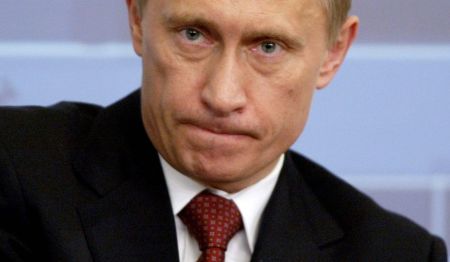
The world has turned itself upside down. Only yesterday the liberals and the left (the “progressives,” as they want to be called) regarded the CIA as the locus of evil, the gang that couldn’t shoot straight, forever poisoning gentle minds with a diet of conspiracy and tall tale.
In those gloomy days of the Cold War, where every day was seasoned with a sharp wind and a cold rain, it was the Democratic intellectuals who were forever chiding the rest of us that the Soviet Union was not so bad, the Russians just wanted to be understood and maybe deserved an occasional cuddle. It was the Republicans and other conservatives who were mindless rubes who imagined there was a mad Russian under everybody’s bed.
Now the CIA, in the liberal/left’s fevered dreams, is the last bulwark of the republic, the last remaining hope to turn the 2016 election result on its head and deprive Donald Trump of the victory he won. The Russians, it now turns out, are just as bad as the conservatives said they were.
The president, at last awake and paying attention to Russian cyber warfare, wants answers, and by noon on Jan. 20. He can then only dine out on the answers, because he won’t have any more authority to do anything about them than the cat.
Desperation pursues despair, and the Democrats are stumbling from inanity to insanity in search of a way to block Donald Trump’s path to the White House. Hilary Clinton’s remnant of a campaign has endorsed an attempt by a handful of members of the Electoral College — 9 Democrats and a rogue Republican — to get the “intelligence briefing” they think might derail next Monday’s scheduled day for the members of the Electoral College to vote for president, 306 of whom are honor bound to vote for the Donald. That’s 36 votes more than he needs.
“The bipartisan electors’ letter raises very grave issues involving our national security,” John Podesta said Monday. “Electors have a solemn responsibility under the Constitution and we support their efforts to have their questions addressed.
“Each day our campaign decried the interference of Russia in our campaign and its evident goal of hurting our campaign to aid Donald Trump. Despite our protestations this matter did not receive the attention it deserved by the media in our campaign. We now know that the CIA has determined Russia’s interference in our elections was for the purpose of electing Donald Trump. This should distress every American.”
What should distress every American is the way the left, the liberals, the progressives and their handmaidens in the press have discarded reasonable conversation to try out every absurd alarm, one after the other, to see whether one could stick, to undermine and undercut the results of what everyone agrees was a free and fair election on Nov. 8. None has worked. More than a month later, the republic stands.
Hysteria now threatens to become insanity. Rep. Jim Hines of Connecticut, a Democrat, says it came to him in the night, as if Marley’s ghost was rattling his chains at the bedside, “that this man is not only unqualified to be president, he’s a danger to the republic. I do think the Electoral College should choose someone other than Donald Trump to be president. That will lead to a fascinating legal issue, but I would rather have a legal issue, a complicated legal problem, than to find out the White House was now the Kremlin’s chief ally.”
Accusing a president-elect of treason, of plotting with the enemy against his country, and with no evidence at all, is something that even a congressman from Connecticut should understand is beyond the limits of rational and decent political debate. Alas, it’s par for the course on the left this season.
The sudden deep concern by President Obama and the Democrats about Russia and cyber warfare, is a bit rich. The Washington Post, which continues so deep in denial that its side lost the election that it may never find the way to the next stage of grief, hangs its survival on the conclusion of the intelligence agencies — which, to put it charitably, have a dismal record of finding out what’s going on anywhere.
A competent president and a responsible “intelligence community” would have done something about the Russians and their hackers a long time ago. Whining doesn’t work.
In the course of research for my two-volume history of Ronald Reagan I read through a lot of declassified CIA assessments and reports, and was amazed at how consistently bad, and most often wrong, the analysis was. Here’s one example I included in the book:
On October 5, 1973, the CIA’s daily bulletin commented on Egyptian military exercises on the west bank of the Suez canal, just across the canal from the Israeli-occupied Sinai peninsula: “The exercise and alert activities . . . in Egypt may be on a somewhat larger scale and more realistic than previous exercises, but they do not appear to be preparing for a military offensive against Israel.” The very next day, the CIA’s daily bulletin reiterated its judgment that “For Egypt a military initiative makes little sense at this critical juncture.” Before the ink was dry, 70,000 Egyptian troops and 800 tanks started rolling across pontoon bridges over the Suez. Syria launched a simultaneous surprise attack in the Golan Heights to Israel’s northeast. The attack had been carefully planned for months, yet Egypt achieved complete surprise over the CIA.
I could go on with a whole catalogue of CIA assessment blunders, from the Bay of Pigs, repeated wrongheaded conclusions about Vietnam, completely wrongheaded conclusions about the Soviet economy almost to the very end, and underestimating Soviet military expenditures and arms buildups. The CIA concluded after Pope John Paul II was named in 1978 that it “will undoubtedly prove extremely worrisome to Moscow.” For this keen analysis American taxpayers must pay? (And who can forget the CIA concluding about 10 years ago that Iran had given up its drive to develop nuclear weapons. Was anyone fired for that assessment?)
The left loves to remind us of the CIA’s assurances that WMDs in Iraq was a “slam dunk,” but my favorite example of CIA cluelessness was its 1986 assessment that real per capital income in East Germany was higher than real per capita income in West Germany ($10,440 versus $10,220)—a proposition so absurd that you needed to have an Ivy League education to believe it. But that’s just the problem; any taxi driver in West Berlin could have told you this was nonsense, but the CIA didn’t have any taxi drivers on their payroll, preferring sophisticated Ivy League graduates instead. This misprision turned out to be a cause of alarm and dismay in the eastern bloc. East Germany’s chief spymaster Markus Wolf later confessed: “For a time in the late 1970s and 1980s the quality of the American agents was so poor and their work so haphazard that our masters began to ask fearfully whether Washington had stopped taking East Germany seriously.”
Richard Nixon hated the CIA, and they reciprocated that hatred in ways that are still probably not fully known. Reagan’s great CIA director, William Casey, knew the CIA was dysfunctional and mostly went around it in his drive to undermine the Soviet Union. Another excerpt from my second Reagan book:
What Casey found was a stifling bureaucracy; Robert Gates wrote that it had slowly turned into the Department of Agriculture. Casey had been around Washington long enough to know that the CIA bureaucracy would not be susceptible to sweeping reform schemes; he had said as much at his confirmation hearings, telling the Senate Intelligence Committee “This is not the time for another bureaucratic shake-up of the CIA.” He also had the requisite distrust of the CIA’s inertia. The Soviet dissident Vladimir Bukovsky recalled visiting Casey with a proposal for nasty deed against the USSR. “It’s just great,” Casey told him, “but let me give you some advice: don’t tell anyone in the CIA about it; they’ll screw it up.” He focused instead on trying to get specific divisions of the CIA to conceive of their mission in radically new ways. Casey and Gates did shake up CIA analysts when they announced that henceforth the accuracy of individual reports would be taken into account when it came time for promotions.
The basic problem of the CIA is that, like any other bureaucracy, it will tend to send up the kind of assessments that it thinks its political masters want. Hence the Vietnam-era findings that were always congenial to LBJ (until they weren’t congenial), etc. The latest CIA assessment that Russia influenced our election may be true, but it is also highly convenient for what the Obama Administration would like to hear just now, no?
So if Trump really wants to “drain the swamp,” maybe he should revive an idea first proposed by Daniel Patrick Moynihan back in the 1990s—abolish the CIA. And Trump can claim it is a bipartisan idea: Moynihan isn’t the only Democrat who has made the suggestion. Bernie Sanders has been for abolishing the CIA. It would be fun to watch liberal critics of the CIA twist themselves into knots if Trump proposed this. Pass the popcorn.
Chaser:

This idea that the jihadis are going to quit trying to destroy America or kill Americans because Gitmo closes: in my mind, that’s insane. That’s just a narcissistic thing that somebody wants to do for their own legacy. Not because it’s going to make Americans any safer. I can’t imagine a situation in which some guy who has been crucifying children, or setting people on fire in cages, or decapitating people, and cutting the throats of Yezidi sex slaves so they can bleed out in a great big bowl, and believes that’s an act of worship, I can’t believe they are suddenly going to look and say, “Oh, they’re going to close Gitmo. I’m done with this.” That’s not going to happen.
**********************
Interview: Dr. James Mitchell debunks myths on the CIA’s interrogation program
 National Registry Office for Classified Information near Bucharest, Romania. Between 2003 and 2006, CIA operated secret prison from building’s basement / AP
Following the Sept. 11, 2001 terrorist attacks, psychologist and U.S. Air Force veteran Dr. James Mitchell was called back to national service. Along with a partner, Bruce Jessen, he was tasked with developing the CIA’s enhanced interrogation techniques, or EITs. Designed to elicit time-sensitive intelligence from hardened al Qaeda leaders, the EITs later became immersed in controversy. In 2014, Senate Democrats released a report accusing Mitchell of torturing suspects with EITs and producing no results.
In his new book, Enhanced Interrogation, Mitchell offers his own testimony on the EITs. He argues that the techniques were critical in saving the lives of Americans and others. The Washington Free Beacon interviewed Mitchell on Thursday to discuss his new book.
Washington Free Beacon: What motivated you to write Enhanced Interrogation?
WFB: Why do you think there was such a profound bias against you and your CIA colleagues?
Mitchell: Feinstein’s report read like a prosecutorial brief to me. I’ve got extensive experience doing all kinds of investigations. And I’ve read a prosecutorial briefing. Feinstein interviewed no one who was involved in the program. Not one director, not one high-level intelligence officer. Not one guard, not one analyst.
I think what [SSCI Democrats] wanted to do was poison the American mind with this, because in part Feinstein had the wrong idea about what was done. One of the reasons I wrote the book was to try and dispel the idea that the detainees were subjected to enhanced interrogations the whole time they were [at CIA black sites]. You know, Abu Zubaydah was enhanced-interrogated for about two weeks in the entire time he was with CIA. Khalid Sheikh Mohammed (KSM) was only enhanced-interrogated for three weeks. And he was never enhanced-interrogated again, even though some in the CIA were pushing to go back to enhanced-interrogations to try and find Osama bin Laden. The interrogators weren’t willing to do it, because we don’t interrogate people like that to find people; we do it to stop attacks.
WFB: What is your personal response to the treatment you received in the Senate report?
Mitchell: Feinstein maims us in every place she thinks she can smear us. And in those places where we could potentially be seen as doing the right thing, [she doesn’t give us recognition]. For example, [SSCI Democrats] say that Bruce wrote a cable in which he recommended EITs [on a prisoner at a black site]. But what Bruce actually said–and this is a verbatim quote–is that “EITs are not the first, nor best option for getting information” from [that suspect] because he’s too tough. What [Bruce] did recommend is heaters, food, blankets, get rid of the indigenous guards–get an American down there at night–and if you’re going to get interrogators down there, get people who are trained.
WFB: To what degree do you believe Islamist extremist thinkers such as Sayyid Qutb and Ibn Taymiyyah influence terrorist leaders like KSM more than the unique personality of each terrorist leader?
Mitchell: They absolutely believe, the way I can’t believe I can breathe underwater, that there is a paradise. They absolutely believe that Allah has given them a mandate to purify the Earth, to get rid of all the infidels. To bring peace by subjugating, converting, slaughtering, or enslaving everyone. It took me a year to get my head around it. I’ve dealt with some people who have strong beliefs, but I’ve never dealt with people whose beliefs almost bordered on magic to me. What I think happened in the case of people like KSM is that their personalities and who they are influence how those beliefs are expressed. But beliefs drive behavior and it gets colored by the personality, but ultimately, they are Islamists. They are trying to impose sharia law on the world. And their beliefs about their mandate and need to purify, rather than being a relatively new phenomenon, they’re trying to breathe new life into these traditions from 1,400 years ago.
 Khalid Sheikh Mohammed is seen shortly after his capture / AP
WFB: If you were president of the United States, what would your high-value detention program look like?
Mitchell: What the president has to ask himself is: What’s he going to do when he has reliable intelligence that there’s going to be another catastrophic attack–possibly involving nuclear weapons, like we had right after 9/11–to get the person who has the information to tell us that information? And that person is good at withholding information and they don’t want to give it up. I know, because we tried it with all of them, to get them to speak before they were ever given enhanced-interrogation. KSM is an excellent example of it. Before he was transferred to a black site, he had several days in which he was given tea and polite conversation. During that time he prayed and chanted. One of the interrogators during that period wore Pakistani dress [to try and earn KSM’s respect]. KSM later told me he thought those guys were clowns.
WFB: Some of your critics say that al Qaeda’s London plots against Canary Wharf/Heathrow were exaggerated. What’s your response?
Mitchell: Here’s why they say that. They say that if [the terrorists] are not inside the door with their backpacks on, it’s not an operational threat. But you know, the thing that saved most of the world from another catastrophic attack is that President Bush didn’t treat [9/11] like a law-enforcement issue. But when we did respond with military force, it threw them off balance. And on the London plots, Ramzi bin al-Shibh was behind that and he was working on it right when we picked him up. [Underplaying that threat] is a little bit like someone saying the guy down the street wants to kill you but he hasn’t loaded his weapon just yet, he’s not driving to your house yet. So when you stop him getting into his car, he wasn’t really coming to kill you. It’s a silly idea.
WFB: To what degree do you believe the Obama administration has taken too far of a step back from detaining and interrogating those who might be able to help us prevent Islamic State attacks?
Mitchell: I believe that we need a detention and interrogation program that focuses on actionable intelligence. That we don’t have that, I think, puts us at grave risk. I think that President Obama has stepped all the way back. But what I would do is quote KSM. When KSM was telling me that he expected George W. Bush to do exactly what Ronald Reagan had done and exactly what Clinton had done, to me that conveys that these guys look at how people have handled these situations in the past. And I think all you have to do is look at how the Obama administration has handled this problem.
We’re seeing more of these kinds of attacks because, quite frankly, the Obama administration is trying to manage it like a problem [as if the terrorists] can exist in our midst. The president treats it like a law enforcement problem, as opposed to how Bush did it–it’s a declaration of war. KSM expected that the [post-9/11 response] would be a law enforcement investigation and that the [Department of Justice] would try and extradite them from the Taliban. He expected that this would give them time to get other large-scale attacks off.
If U.S. policy continues to be what it is–if we don’t even call the problem, the problem–I think the [terrorists] would be emboldened by it. Here’s the problem that people in America don’t understand. [Terrorists] really do believe that our civil liberties, our willingness to be open to people, our tolerance, our multicultural diversity, they believe those are all weapons that Allah has provided them. [They believe] these things are flaws in us.
WFB: How do you feel about President Obama’s intention to close down the terrorist detention facilities at Guantanamo Bay?
Mitchell: I have mixed feelings about it. I have seen a Federal supermax prison. The [terrorists’] lives will be much, much worse in a Federal supermax prison. But I don’t want them on U.S. soil. So until there’s a federal prison that can isolate them from outside contact, I don’t think they should be on U.S. soil. KSM said that our desire to have the world be like us is a great flaw. He said that we lack the stomach to do what must be done to defeat them. Or even to protect ourselves.
This idea that the jihadis are going to quit trying to destroy America or kill Americans because Gitmo closes: in my mind, that’s insane. That’s just a narcissistic thing that somebody wants to do for their own legacy. Not because it’s going to make Americans any safer. I can’t imagine a situation in which some guy who has been crucifying children, or setting people on fire in cages, or decapitating people, and cutting the throats of Yezidi sex slaves so they can bleed out in a great big bowl, and believes that’s an act of worship, I can’t believe they are suddenly going to look and say, “Oh, they’re going to close Gitmo. I’m done with this.” That’s not going to happen.
I asked KSM about this. What he told me was that if it wasn’t Gitmo it would be something else: “We need something to stir things up.” The [terrorists] are going to find something because they need a place holder. Gitmo is what we’re fixated on; it’s not what they’re fixated on. The way you fight these hardcore guys is to make their mission look less sexy. They fear strength. They regard our efforts to look conciliatory as a weakness, as a gift to them from God.
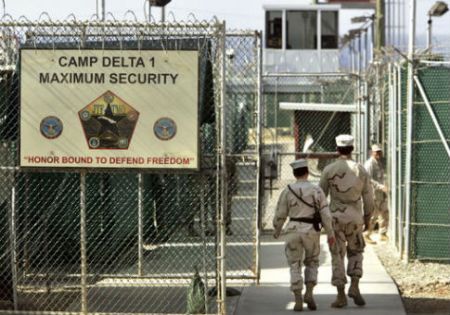 Guantanamo Bay U.S. Naval Base, Cuba / AP
WFB: Knowing all you know now, and having experienced all you have experienced, would you do it again?
Mitchell: [The CIA] presented all this information to me [when they asked for my help]. But really I thought I shouldn’t do this, this is going to ruin my life. And then I thought to myself, nothing in my ethics or my moral code said to me, I should put the temporary discomfort of a terrorist before saving hundreds of lives. I mean, I couldn’t live with myself. For some people that’s a hypothetical question that they can answer by taking the moral high ground. But for me it was a real question, I mean [CIA] really was asking me this. So I would make sure that what I did was legal. But if there was another situation where there was a catastrophic attack and there was credible intelligence that it was imminent, I would get out of the chair today and go do it.
WFB: Is there anything else that you want to add?
Mitchell: I would ask people to get familiar with what [ISIS/al Qaeda] ideology involves. We do not understand the depth of their commitment. The only way they can avoid the torment of the grave is to get up every day and try to figure out how they can convert, kill, enslave, or humiliate everyone else on the planet.
They want to purify the planet.
CIA’s Brennan says tearing up the Iran deal would be “height of folly”, Jihad Watch,
(Brennan’s statement is not the “clearest indication yet” that the Iran Scam needs to be rejected; many others predated it. It is, however, another pretty good indication of Brennan’s level of competence. — DM)
This is the clearest indication yet that tearing up the Iran deal is just what the U.S. needs to do. “Do the opposite of what John Brennan recommends” would be the wisest course the next administration could possibly take. John Brennan is the person who — after U.S. Muslim groups demanded he do so – “purged” all mention of Islam and jihad from law enforcement counter-terror training materials in 2011.
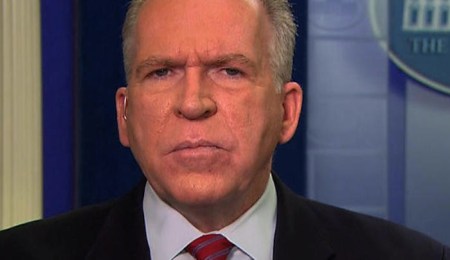
“CIA’s Brennan says tearing up Iran deal would be ‘folly,’” CNBC, November 30, 2016 (thanks to Lookmann):
Outgoing CIA Director John Brennan has said it would be the “height of folly” for U.S. President-elect Donald Trump to tear up Washington’s deal with Tehran because it would make it more likely that Iran and others would acquire nuclear weapons.
“It could lead to a weapons program inside of Iran that could lead other states in the region to embark on their own programs,” Brennan said in an interview with the BBC aired on Wednesday.
“So I think it would be the height of folly if the next administration were to tear up that agreement.”…
Brennan: Comments That ‘Taint’ Islam ‘Tremendously Detrimental’ to Counterterrorism, PJ Media, Bridget Johnson, September 30, 2016
(The fantasy religion of peace. — DM)
 ISIS video screenshot
WASHINGTON — CIA Director John Brennan said comments that “taint” Islam “as being the source of the problem” are “tremendously detrimental to our interests and to a better understanding of this phenomenon” of terrorism.
Speaking at the Washington Ideas Forum this week, Brennan said he’s met with “princes or presidents and prime ministers throughout the Middle East” who are “outraged that their community — their Muslim community — has been infected by this cancer, individuals who have this distorted and very perverted interpretation of Islam that pursue these psychopathic agendas of horrific violence, and they recognize that they have a very important role — the leading role to help purge their communities of these influences.”
“These individuals who are fanatics — extremists and terrorists — they are driven by this ideology that is not rooted in Islam,” Brennan said. “It’s a psychopathic ideology that is very absolutist, that either you are with us or against us.”
“And that’s why the establishment of the caliphate — the so-called caliphate by ISIL, as well as al-Qaeda’s agenda, really, are trying to cause this …clash of civilizations. They want to drive this wedge between the West and the Muslim world.”
Brennan said he has not spoken with Donald Trump, but “anybody who promotes that type of characterization of the problem, and mischaracterization, in my mind, I would try to describe how those comments are being interpreted and how they are feeding this narrative that the terrorist organizations are propagating, that it does not help to arrest this cancer that has taken over so many of the communities because of a lot of the underlying conditions that exist within Middle East and Africa, South Asia, the areas, because of economic deprivation, political disenfranchisements, lack of opportunity.”
“These terrorist organizations and this perverted version of religion preys upon their sense of hopelessness,” the CIA director continued. “And by making comments that are incendiary and are viewed as attacking a religion or a people or a community only further drive those individuals to grasp onto those extremist views because they interpret a lot of the comments that are made as the Western United States are out against them. And so, when those comments come forward, the comments of a Bin Laden or others resonate with them.”
“And they say, yes, you’re right. You know, the West is determined to exterminate us.”
Brennan was asked how he can separate terrorism from Islam when terrorists are quoting the Quran and enjoy support from some Muslims, particularly in certain parts of the world.
“People can take any faith — the Jewish faith, the Christian faith — and distort it and use it for violent agendas. And we’ve seen through the course of history that individuals who think that they are the vanguard of the effort of Christianity or Judaism or even Hinduism or other religions, really have this distorted interpretation of their faith,” Brennan replied.
“And the overwhelming majority, the 99.9 percent of Muslims do not support that type of violent agenda. Yes, there may be some individuals who are considered to be radical within their Islamic faith or even extremist,” he added.
“But the use of this horrific violence, the type of violence that’s being perpetrated by ISIL is something that we have not seen, I think, previously… their philosophy is, well, even if the innocents are killed, God will sort them out and they’ll go to heaven even earlier.”
Trump Will Face a Huge Challenge with U.S. Intelligence If He Wins, Center for Security Policy, Fred Fleitz, August 18, 2016

Before his classified national-security briefing yesterday, Donald Trump said he didn’t trust U.S. intelligence. His comments attracted the expected condemnations and ridicule from the media pundits and foreign-policy experts. However, based on my 25 years working in U.S. intelligence, I believe Trump’s concerns are well-founded.
On Wednesday, Trump received the intelligence briefing traditionally provided by the U.S. Intelligence Community to newly nominated presidential candidates. This briefing was preceded by calls from the Clinton campaign, other Democrats, and, privately, by some intelligence officials that Trump be denied these briefings because, they claim, he can’t be trusted to protect classified information.
Harry Reid, the top Democrat in the Senate, actually asked intelligence analysts to give Trump fake briefings.
The Washington Post’s intelligence reporter Greg Miller reported on July 28 that a senior intelligence official told Miller privately that he would refuse to brief Trump because of concerns about Trump’s alleged admiration of Russian president Putin and because “he’s been so uninterested in the truth and so reckless with it when he sees it.” Reuters ran a similar story on June 2, reporting that eight senior security officials said they had concerns about briefing Trump; Reuters did not indicate how many of the officials cited were intelligence officials or Obama appointees.
These calls to deny intelligence briefings to a presidential candidate are unprecedented, but they also reflect a serious problem within the U.S. intelligence community that awaits a possible Trump administration: the politicization of American intelligence by the Left.
I saw this constantly during my 19 years as a CIA analyst. CIA officers frequently tried to undermine CIA directors Casey and Gates because they disagreed with President Reagan’s policy goal of defeating the Soviet Union. Several testified against Gates’s nomination to be CIA director in 1991 by lodging false claims that he and Casey had politicized intelligence. Former senator Warren Rudman, a moderate Republican who headed President Clinton’s Foreign Intelligence Advisory Board, described these attacks by CIA analysts as “an attempted assassination, an assassination of [Gates’s] character . . . McCarthyism, pure and simple.”
The liberal tilt within the CIA, especially in the Directorate of Intelligence (the analysis office), grew worse during the Clinton years as personnel were hired and promoted to support Clinton-Gore policy objectives. These included wasteful initiatives such as the DCI Environmental Center, launched at the same time the CIA was dangerously downplaying counterterrorism analysis.
Unfortunately, the intensified liberal tilt at the CIA during the Clinton years was not reversed by the George W. Bush administration. Bush kept on Clinton’s CIA director, George Tenet, who had no interest in cleaning house or taking steps to ensure that CIA analysis would be balanced and not politicized. When his successor, Porter Goss, tried to clean up the agency, CIA careerists fought back aggressively by leaking to Congress and the media, eventually forcing Goss out.
As a result, intelligence careerists often paid no price for engaging in blatantly political activities to undermine the Bush administration. One officer in the CIA inspector general’s office was fired after she admitted she’d leaked classified information on Bush counterterrorism programs to aWashington Post reporter. In 2005, several intelligence officers attempted to sabotage John Bolton’s nomination to be U.N. ambassador — an act of political skullduggery for which they were never punished.
The most notorious example of partisan political activity by U.S. intelligence officers occurred just before the 2004 presidential election when Paul Pillar, the CIA’s national intelligence officer for Near East and South Asia, while giving a speech at a dinner on September 21, criticized President Bush and CIA director Tenet for ignoring critical intelligence that he claimed might have prevented the Iraq War. Incredibly, CIA management had cleared Pillar’s comments, saying that the substance of his remarks, but not the speaker or the audience, could be disclosed. The late columnist Robert Novak, who attended the dinner, sparked an uproar when he reported Pillar’s identity and the dinner anyway. Clearly, Pillar’s presentation was intended to affect the outcome of the 2004 presidential election.
The Wall Street Journal condemned such political activities by CIA officers in a scathing September 29, 2004, editorial titled “The CIA’s Insurgency”:
It’s become obvious over the past couple of years that large swaths of the CIA oppose U.S. anti-terror policy, especially toward Iraq. But rather than keep this dispute in-house, the dissenters have taken their objections to the public, albeit usually through calculated leaks that are always spun to make the agency look good and the Bush administration look bad. . . . Yet what the CIA insurgents are essentially doing here, with their leaks and insubordination, is engaging in a policy debate. Given the timing of the latest leaks so close to an election, they are now clearly trying to defeat President Bush and elect John Kerry.
Politicization of America’s intelligence agencies by the Left has grown worse during the Obama years. Recall that the CIA drafted the politicized (and later discredited) 2012 talking points on the Benghazi terrorist attacks. Additionally, the agency now uses racial, gender, gender identity, sexual orientation, age, religion, socioeconomic status, and other quotas for CIA hiring and promotions.
Significant examples of politicization in other intelligence agencies since 2009 include the congressional testimony of Director of National Intelligence James Clapper. During a briefing to the House Intelligence Committee in February 201, Clapper tried to downplay the Muslim Brotherhood as a radical Islamist group, saying: “The term Muslim Brotherhood is an umbrella term for a variety of movements. In the case of Egypt, a very heterogeneous group, largely secular, which has eschewed violence and has decried al-Qaeda as a perversion of Islam.”
And in 2015, as widely reported, more than 50 U.S. Central Command intelligence analysts lodged a formal complaint with the Pentagon’s inspector general. In the complaint, they alleged that their intelligence assessments were being intentionally manipulated by senior officials to downplay the threat from ISIS and the al-Nusra Front (the al-Qaeda branch in Syria) in order to support the Obama administration’s claim that the U.S. was making progress in defeating these Islamist terrorist groups. A recent congressional task force concluded this month that these complaints were valid and expressed alarm that nothing has been done to improve CENTCOM intelligence analysis in response to them.
In light of this history, it is no surprise that Democrats, intelligence officers, and the liberal media urged that Trump be denied an intelligence briefing as the GOP presidential candidate. Naturally, they did not raise similar concerns about briefing Hillary Clinton, although the FBI director determined she was “extremely careless” in handling classified information as secretary of state, even sharing classified intelligence with people who had no security clearance. Comey also stated that due to this carelessness, it’s possible hostile actors have gained access to the highly classified information that traveled through the multiple private servers Clinton used.
It’s true that intelligence briefings to presidential candidates are offered at the discretion of a sitting president. But calls to deny these briefings to Trump or to give him fake briefings are an affront to the American tradition of peaceful transfer of power and could undermine his presidential transition if he wins the election.
It is not up to Senator Reid or U.S. intelligence officers to prevent a duly elected major-party presidential candidate from receiving intelligence briefings because they don’t like him or because he is from the wrong political party. Of more concern is whether some intelligence personnel, out of political bias, would refuse to provide a President Trump with the intelligence support he would need to protect American national security.
Trump may have been too hard on U.S. intelligence agencies when he said that they got it wrong before the Iraq War; and perhaps he was unfair to lambaste Obama’s dismissal of ISIS as the “jayvee” team. Intelligence agencies must be held accountable for their work, but their analysis will never be 100 percent accurate. In addition, intelligence agencies only advisepolicymakers. They cannot force a president to use their analysis.
I was pleased to hear that Trump realizes he will have a lot of work ahead of him to fix the U.S. intelligence community if he becomes president. To get the objective, accurate, and hard-hitting intelligence support he will need if elected, Trump must name strong, decisive leaders — including good managers from the business community — to top intelligence posts. He must hire people who understand that America’s intelligence agencies do not work for themselves, for either party in Congress, or the foreign-policy establishment; they work for the president. Any U.S. intelligence officer who is not prepared to loyally provide whomever wins the presidency with his best efforts should find another job.




 anneinpt
 artaxes
 danmillerinpanama
 davidking1530
 Peter Hofman
 Joseph Wouk
 Peter
Peter Louisiana Steve
 WarSclerotic
Recent Comments