Posted tagged ‘China’

US twin sea buildup against China, NKorea, Iran

February 19, 2017

US twin sea buildup against China, NKorea, Iran, DEBKAfile, February 19, 2017

The conventional thinking until now was that, in the event of an Iranian clash with the US or Gulf states, including Saudi Arabia, Tehran would push back by blocking the strategic Strait of Hormuz. Today, American forces have been placed in position to prevent Iran from blocking the Strait of Mandeb, and so choking the main sea route used by oil and merchant shipping sailing to and from the Mediterranean via the Suez Canal, by posting missile bases on Yemen’s western Red Sea coast.

*********************

Donald Trump marked his first month as US President with two major military gambits in the Middle East, Asia and the South China Sea. Early Sunday, Feb. 19, the US Navy said that the Nimitz-class USS Carl Vinson aircraft carrier and strike group had begun patrols in the disputed waters of the South China Sea. With them are three air squadrons coming from their Naval Air Station Lemoore: the USS Lake Champlain guided missile cruiser and two guided missile destroyers, the USS Michael Murphy and the USS Wayne E. Meyer.

The deployment comes after Beijing’s warning that a US naval unit sailing near the disputed Spralys, where China has built islands and a military presence, would be seen as a violation of sovereignty, which the US and Japan refuse to recognize.

The Trump administration’s move therefore opens up a potential arena of confrontation between the US and China.  It also caries a message for North Korea, which Trump has called “a big, big problem and we will deal with that very strongly.”

A week ago, on Feb. 12, North Korea launched a missile, using new “cold eject” technology which makes it possible to fire a missile from a submarine. Military experts in Washington and Jerusalem estimate that once Pyongyang has perfected the system, it will be passed to Tehran, an eventuality covered in Prime Minister Binyamin Netanyahu’s White House talks with President Trump last week, our sources reveal.

Our military sources add that while Washington has publicly announced the transfer of a naval-air force to the South China Sea, the deployment of the large 11th Marine Expeditionary Combat Unit to the Gulf of Aden and Red Sea is being kept low key.

The conventional thinking until now was that, in the event of an Iranian clash with the US or Gulf states, including Saudi Arabia, Tehran would push back by blocking the strategic Strait of Hormuz. Today, American forces have been placed in position to prevent Iran from blocking the Strait of Mandeb, and so choking the main sea route used by oil and merchant shipping sailing to and from the Mediterranean via the Suez Canal, by posting missile bases on Yemen’s western Red Sea coast.

The 4,500-strong contingent of MEC marines and sailors is supported by the fighters and attack helicopters on board the USS Makin Island amphibious assault ship, the USS Somerset amphibious transport and the USS Comstock dock landing ship. Their task is to keep the strategic waterway open and safe.

The deployment of the USS Cole destroyer around the strait was announced on Feb. 3, days after a suicide boat attack by Yemeni Houthi rebels on the Saudi frigate Al Madinah off the Yemeni port of Al Hudaydah.

DEBKAfile’s military analysts note that the deployment of these naval and air forces in two international maritime arenas offers President Trump a flexible operational scenario. He can order one of those forces to go on the offensive as a warning to hostile elements in the other one – or go into action in both simultaneously – for example the US could strike North Korean and Iranian targets synchronously.

In line with these moves, a US flotilla departed its Arabian Sea base at Duqm in Oman on Feb. 12 and is sailing towards Bab Al Mandeb.

Tehran reacted Monday, Feb. 20, by embarking on a large-scale three-day military exercise titled Grand Prophet 11. Gen. Mohammed Pakpour, commander of the Revolutionary Guards ground forces, announced that the drill would include missile launches, without specifying their types or ranges.

Iranian leaders have repeatedly stated that they would not allow American warnings to deter them from their missile program, any more than Pyongyang hesitated to fly in the face of those warnings. Those warnings are now backed up by America’s sea and air might in combat positions.

Not Satire | UC San Diego Students Protest Visit by ‘Oppressive and Offensive’ Dalai Lama

February 17, 2017

UC San Diego Students Protest Visit by ‘Oppressive and Offensive’ Dalai Lama, Heatstreet, Kieran Corcoran, February 16, 2017

(Why not invite someone more favorable to China and less oppressive? How about Kim Jong-un? Or Nicholas Maduro? Or even Xi Jinping? — DM)

dalilama

China is prepared to take advantage of a newly censorious atmosphere on campus – and its supporters are happy to use the posture of SJWs to get their way.

**********************************

Students at the University of California, San Diego are protesting an upcoming visit by the Dalai Lama – claiming the Tibetan leader is “oppressive”.

Chinese students are leading objections to the event, which will see the Dalai Lama give a commencement speech on graduation day.

They have claimed that his presence is offensive because of his campaign to make Tibet more independent – contrary to the Communist government’s position that Tibet is a region of China under their control.

Arguments over Tibetan independence have raged for decades – but this dispute is remarkable because activists are conducting it through the language of social justice.

As noted by Quartz, the Chinese student association framed their complaints as an example of cultural oppression and a problem of equality.

A statement accused university leaders of having “contravened the spirit of respect, tolerance, equality, and earnestness—the ethos upon which the university is built.”

One student posting on Facebook said: “So you guys protest against Trump because he disrespects Muslims, blacks, Hispanics, LGBT.., but invites this oppresser [sic] to make a public speech?? The hypocrisy is appalling!”

Likewise, an alumni group based in Shanghai said UCSD will be breaching its ethos of “diversity” and will leave them “extremely offended and disrespected” if the Dalai Lama’s speech dips into the political.

Chinese officials are known to be extraordinarily hostile to any groups who get close to the Dalai Lama, and do their best to punish governments who engage with the exiled Tibetan regime.

They consider the Dalai Lama a threat to stability in China, akin to a terrorist who wants to split the country.

This is despite his stated aim being increased autonomy – rather than outright independence – for Tibet, which he fled in 1959.

His insistence on peaceful protest and non-violent resistance won him the Nobel Peace Prize in 1989. It is hard to see who he is oppressing by touring the world, giving speeches and promoting peaceful opposition to China.

Questions have been raised about whether the Chinese government is directly involved in lobbying against the address.

A statement by the Chinese Students and Scholars Association originally said it was seeking support from the Chinese Consulate General in Los Angeles, but later denied that claim.

Government officials are certainly not above getting involved in campus politics.

At the University of Durham in northern England, the Chinese Embassy in London tried to stop a Chinese-born activist and beauty queen speaking in a debate.

Anastasia Lin, a Miss World Canada winner, was asked to speak at the Durham Union Society on whether China was a “threat to the West”

But the students organizing the debate received angry calls from embassy officials, claiming that if Lin spoke it could damage UK-China relations, according to a BuzzFeed report.

The students ignored them and went ahead with the debate anyway (Lin’s side lost).

But the incident underlines that China is prepared to take advantage of a newly censorious atmosphere on campus – and its supporters are happy to use the posture of SJWs to get their way.

Cadence of Conflict: Asia, February 13, 2017

February 13, 2017

Cadence of Conflict: Asia, February 13, 2017, Pacific Daily Times, February 13, 2017

(How and to what extent can the “one China policy” be ameliorated without being abandoned? What impacts should China’s military adventures in the South China Sea and its highly permissive treatment of North Korea have? — DM)

The delay itself is a message to China like a father telling the disobedient son to wait his turn while everyone else at the dinner table has first choice. To China’s “indirect-implication” culture, it was no less than a smack in the face, no matter how friendly and reportedly positive the phone call was. No doubt China feels this somewhat, though President Xi probably doesn’t take the snub as seriously as he should.

Trump knew that Beijing would jump to report the phone call to give President Xi notoriety, forgetting the deeper implication that the phone call didn’t happen for three weeks into Trump’s term. Now, the Chinese people know that Trump didn’t talk to their president until three weeks after taking office, yet he received a phone call from Taipei only days after he was elected—Beijing made sure the people knew that. When trying to control information in one’s own country, that was an oversight. If Beijing were wise to the three-week snub, no newspaper in China would be allowed to report the phone call until two months later, with the comment, “Oh, they are presidents. They talk when it suits them.”

********************************

After three weeks, President Trump finally had his phone call with Chinese President Xi. The report is that Trump will uphold the United States’ long-standing “One China” policy, in which China proper and the island of Taiwan are one country and that country’s government seat is in Beijing. The effect is that the United States does not have an “embassy” with Taiwan, but the US has an “institute” and Taiwan an “economic and cultural” office; both are still considered envoys and consulates, offering passport and visa services. While self-important voices in news and politics view the phone call as a phone call, much more is happening beneath the surface, and Beijing may only be partially aware of what all is going on.

Being a Socialist State, China’s government is itself in business, both cooperative and competitive. China’s Communist Party can directly compete with social companies like Facebook, news networks like CNN, web service companies like Google, almost any manufacturer, and, of course not in the least, construction. China’s former business associate and new “boss”, as it were, of America calls all the “important” countries in the world, except China. The delay itself is a message to China like a father telling the disobedient son to wait his turn while everyone else at the dinner table has first choice. To China’s “indirect-implication” culture, it was no less than a smack in the face, no matter how friendly and reportedly positive the phone call was. No doubt China feels this somewhat, though President Xi probably doesn’t take the snub as seriously as he should.

Even allowing State-controlled newspapers, such as Xinhua news, to let three weeks of silence be known merely by reporting the phone call shows that Trump knows how to cut through promulgated gate keeping. Knowing how his old trading partner thinks, Trump knew that Beijing would jump to report the phone call to give President Xi notoriety, forgetting the deeper implication that the phone call didn’t happen for three weeks into Trump’s term. Now, the Chinese people know that Trump didn’t talk to their president until three weeks after taking office, yet he received a phone call from Taipei only days after he was elected—Beijing made sure the people knew that. When trying to control information in one’s own country, that was an oversight. If Beijing were wise to the three-week snub, no newspaper in China would be allowed to report the phone call until two months later, with the comment, “Oh, they are presidents. They talk when it suits them.”

In social battles of implication and indirection, the Chinese have endurance and mastery, but the West has a less frequent and even more subtle way of implication that often eludes the East. It is difficult to recognize deep implication when implication is used on a daily basis for routine communication. Americans trust Trump with China more, now, knowing that he can snub them for three weeks and State-run Xinhua news will consider it a “good first step”.

There are other problems—not being able to quit while so far ahead and declare victory after 70 years of war on the books, the US selling weapons to Taiwan—but the three week snub “trumps” them all. American people have often asked themselves who China thinks they are fooling. After this three-week snub thoroughly reported under the title of a “phone call”, the American people, Democrats and Republicans alike, certainly know who is successfully fooling China.

Uncertain Futures: China, Trump and the Two Koreas

February 10, 2017

Uncertain Futures: China, Trump and the Two Koreas, 38 North, February 9, 2017

(Kim Jong-un may be insane. Or, like his predecessors, he may pretend to be insane to make predictions about his behavior very difficult and often impossible. China’s leaders are not insane, they are merely devious. Dealing with them has been, and will continue to be, very difficult. — DM)

China waving flag on bad day

China waving flag on bad day

At the beginning of the Trump administration, the situation on the Korean peninsula is highly uncertain and potentially volatile. During a late January research trip to Beijing, “uncertainty” and “concerns” were the keywords that best characterized how Chinese scholars and officials are feeling about Trump and the two Koreas. During his presidential campaign, Trump suggested that he would be willing to negotiate with North Korea directly. However, that scenario has become more uncertain in recent months, especially given the hawkish instincts of President Trump and his national security team. Chinese analysts nonetheless expect the US to enlist Beijing’s support on the North Korea issue and are anxiously waiting for Washington to engage so that China can bargain for its preferred outcomes. The prolonged silence from the administration is making Beijing increasingly uncertain and uncomfortable, and complicating its plans to reduce the threat that the United States and its network of alliances in Northeast Asia poses to Chinese security and strategic influence.

Between 2013 and 2016, China tested an alternative alignment strategy on the Korean peninsula. Frustrated with North Korea’s brinkmanship continuously damaging Chinese security interests, President Xi Jinping placed his hope on South Korean President Park Geun-hye to improve China’s strategic position. At the heart of this scheme was an effort to turn South Korea into China’s “pivotal” state in Northeast Asia, thereby undermining the US alliance system in the region and diminishing its threat to China. As a result of Sino-ROK rapprochement, senior-level visits soared, bilateral economic ties strengthened and many South Koreans questioned the utility and future of the US-ROK alliance. In an ideal scenario, China’s new realignment strategy would defeat the US-orchestrated “Northeast Asia NATO” based on America’s alliances with Japan and Korea, and counter the US-Japan alliance with an alignment between China and both Koreas. From the Chinese point of view, this would not only reduce China’s vulnerability vis-à-vis the US, but also lay a firm foundation for Chinese regional predominance.

However, events after the fourth North Korean nuclear test in January 2016 entirely derailed China’s scheme. Overestimating its presumed influence over Seoul, Beijing refused to adequately address South Korea’s legitimate security concerns, which eventually led to Seoul’s decision to deploy the Terminal High Altitude Area Defense (THAAD) system. China sees the THAAD deployment as a threat to strategic stability with the United States and an obstacle to its desired regional blueprint. As such, Chinese policy toward the Korean peninsula has evolved significantly in the last year, reflecting the realization that undermining the US-ROK alliance and turning South Korea into a Chinese strategic asset were both improbable in the near future and raising the prospect that Beijing might not have a choice between the two Koreas after all.

Nonetheless, while China’s ambitious efforts to transform geopolitical alignments on the Korean peninsula did not come to fruition, it still has two other key priorities. First, Beijing has not completely given up its efforts to defeat the THAAD deployment. At a minimum, it hopes that a victory for progressive forces in the upcoming South Korean presidential election, such as the Minjoo Party, could alter Seoul’s deployment plans for the system. While acknowledging that a complete reversal of the deployment decision is unlikely, Beijing hopes that a new South Korean government might delay the initial deployment or reduce the number of deployed units. China sees the propensity of the progressives to engage North Korea, to improve relations with China and to limit the scope of the US-ROK alliance as aligned with its overall strategic agenda. Although China’s ability to sway a South Korean domestic election is limited—for example, by maintaining the implicit sanctions China has imposed on South Korean companies, products and industries for the THAAD deployment—its preference and influence are expected to have an impact.

Second, China hopes to mitigate the impact that any future North Korean intercontinental ballistic missile (ICBM) test might have on its strategic position and influence on the peninsula. The conventional wisdom is that North Korea will not want to conduct the test immediately after Trump’s inauguration, as it will almost certainly block the chance for dialogue with the new US administration and boost the popularity of the conservatives in the South Korean election. However, based on North Korea’s previous pattern of behavior, Chinese experts expect to see provocations in the coming months if Trump chooses to follow Obama’s policy of strategic patience. At the same time, Chinese analysts are inclined to downplay the significance of such an ICBM test, citing the immaturity of North Korea’s long-range missile technology and its likely failure. Still, Beijing will oppose any preemptive strike by the US on the launch site, although it does not fully believe that the US would take such a risky move and jeopardize South Korean security—a fundamental assumption embedded in China’s assessment of the prospects for conflict on the Korean peninsula.

Beijing has always insisted that North Korea’s nuclear development is motivated by Pyongyang’s vulnerability and insecurity, and argued that only the US and North Korea can resolve the stalemate through a peace negotiation. Selfless as it may sound, there is a certain level of hypocrisy in that position. As it has become clear to American officials and experts that strategic patience failed to address the North Korean nuclear threat, there have been more vocal calls to resume US-DPRK dialogue in return for a decision by Pyongyang to suspend its nuclear and missile tests. For China, the danger lies in the unpredictable consequences of such a bilateral negotiation. If the United States and North Korea decide to move ahead with a deal, the improvement of relations between them and the shifting balance of power on the Korean peninsula will diminish what China perceives as its leverage and strategic influence. Therefore, if the Trump administration unilaterally initiates bilateral talks with North Korea, it will be met with suspicion rather than enthusiasm from Beijing.

China’s potential reaction to a North Korean ICBM test all comes down to one question: What does Beijing want? One thing is clear: China wishes to see denuclearization and peace dialogues, but also wants to be an indispensable party in these dialogues to monitor and influence their direction. Beijing believes that the “dual-track” approach (parallel negotiations on denuclearization and a peace treaty) it proposed in 2016 offers the best hopes for achieving its strategic and security goals. Although the Obama administration largely rejected this approach, Beijing sees a new opportunity to try it again with the Trump administration. Trump should understand, however, that China’s position on the Korean peninsula is neither objective nor neutral and that it will view all solutions primarily through the lens of its strategic competition with the United States. As a result, it is important for all the concerned parties to have realistic expectations about a grand bargain with China over North Korea and treat it with extreme caution.

The US-China relationship under Trump is undoubtedly the largest uncertainty in China’s relations with both North and South Korea. If the Trump administration, as appears to be the case, chooses a more confrontational approach towards China, soliciting Beijing’s support and assistance in pressuring North Korea will be exceedingly difficult. A more hawkish stance from the United States will make Beijing instinctively seek more policy leverage, and provocative North Korea behavior that goes unpunished militarily by the United States offers tremendous opportunities for Beijing to be wooed by Americans to rein in Pyongyang. Past experience, including the Cheonan incident, the shelling of Yeonpyeong Island and South Korea’s THAAD deployment, have demonstrated the high level of leniency Beijing will afford Pyongyang when the United States applies greater pressure on China in response to such provocations.

The application of US secondary sanctions on China, which some American officials and experts have discussed, is likely to make China less rather than more cooperative on North Korea. It is unlikely that effective sanctions could be imposed on these entities without poisoning bilateral relations and adversely affecting China’s willingness to cooperate with the US on North Korea. China opposes unilateral sanctions as a general principle, and in particular condemns those that affect Chinese companies or interests. Beijing’s cooperation on the Iran nuclear deal was not incentivized by US sanctions on the Chinese Bank of Kunlun and Zhuhai Zhenrong, but by the opportunities offered for expanding Chinese influence in the Middle East and leveraging its cooperation in overall relations with Washington. In the Chinese view, the North Korea nuclear program, unlike the Iranian case, is much more complicated and sensitive because it directly affects China’s national security, and therefore requires more comprehensive and political solutions.

If the Trump administration’s primary goal is to confront China and thwart Beijing’s regional ambitions, the most effective policy (and the worst nightmare for China) would be a unilateral improvement of relations with North Korea. Whether that is politically possible depends on how far the administration is willing to pursue diplomacy and negotiations to defuse the North Korean threat. On the contrary, pressuring China is unlikely to make it cooperate. Beijing wants a grand bargain over the future of the Korean peninsula conducive to China’s interests. Without a proper endgame to incentivize the Chinese and a policy of dialogue that allows Beijing a key seat at the table, neither pressure nor solicitation will succeed.

Don’t Fall for China’s Global Baloney

January 25, 2017

Don’t Fall for China’s Global Baloney, Washington Free Beacon, January 25, 2017

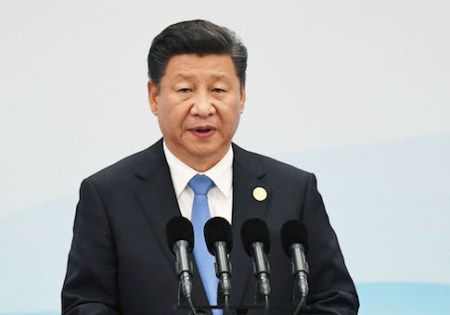
Chinese President Xi Jinping speaks before reporters after a two-day summit of the Group of 20 major economies in the Chinese city of Hangzhou on Sept. 5, 2016. (Kyodo) ==Kyodo

Chinese President Xi Jinping speaks before reporters after a two-day summit of the Group of 20 major economies in the Chinese city of Hangzhou on Sept. 5, 2016. (Kyodo)
==Kyodo

Reading the gushing coverage of this dictator’s turgid and clichéd speech, I can’t help thinking of the last time America’s liberal elite went gaga over China. “One-party autocracy certainly has its drawbacks,” Tom Friedman wrote in 2009. “But when it is led by a reasonably enlightened group of people, as China is today, it can also have great advantages.” Chief among those advantages, according to Friedman, is the Chinese Politburo’s ability to “just impose the politically difficult but critically important policies needed to move a society forward in the 21st century.” Spoken like a true apparatchik. Six months later, on Meet the Press, Friedman confessed his fantasy: “What if we could just be China for a day?”

They are therefore more sympathetic to the world Xi Jinping wants to preserve than the world Donald Trump wants to create. That democracy or self-rule plays a far larger part in Trump’s world than in Xi’s should not be forgotten, however. Least of all by people who think of themselves as liberal or progressive.

**************************

It’s rather sickening to watch self-described liberals embrace China as a responsible power. The headline on the cover of this week’s Economist, which I now read solely to find out what is not the case, is “China: the global grown-up.” The Washington Post purports to explain “Why China will be able to sell itself as the last liberal great power.” These articles, besides being wrong, have the distinction of following the line set by Beijing itself: “China may lead globalization movement,” says propaganda outlet CCTV.

How one can argue that a Communist oligarchy that practices mercantilism and industrial and diplomatic espionage, builds islands in contravention of international law, disappears lawyers and writers critical of the regime, feeds its people a steady diet of ethno-nationalist propaganda, threatens America’s allies, enables the North Korean psycho-state, recently sailed its aircraft carrier through the Taiwan Strait, massively censors the Internet, and has some of the worst air pollution in the world is “liberal” in any sense of the term is beyond me. Ironic, isn’t it, that the same press that examines every utterance of Donald Trump with Talmudic scrutiny is utterly credulous when Chinese leader Xi Jinping, who is quite self-consciously modeling himself after Mao Zedong, tells the elite assembled at Davos that he will defend free trade and—I had to laugh—immigration. How many Syrian refugees are there in China?

Credit to Xi, though, for putting one over on self-described globalists and others so eager to embrace foreign critics of Donald Trump that they are more than happy to check their belief in human rights at the door. It ought to be obvious that China’s commitment to liberalism does not exist; Xi’s rhetoric is a veneer overlaying the deeply illiberal principles that animate his regime. And that regime, it seems to me, is on the defensive for the first time in 20 years. Surprised like so many at Trump’s victory, Xi understands the danger a nationalist and protectionist America poses to Chinese stability. America’s trade deficit fuels the economic growth that (barely) contains Chinese dissent. So his appeal to the Davos crowd was defensive, an attempt to rally favor among the men and women who have benefited personally from the economic arrangements of the post-Cold War era. It worked.

Makes you wonder, though. If China is invested so heavily in the status quo, perhaps Donald Trump has something of a point when he says that that status quo hasn’t benefited the average American. I know this isn’t a zero-sum world. But Xi seems to think it is, and so does Trump, and so do the millions of U.S. voters who feel that international trade agreements privilege Chinese oligarchs over American workers. A world in which the Chinese autocracy is fat and happy is not exactly a world conducive to liberty, at least not to the traditional liberty of non-dominated peoples. The Economist might have another definition in mind.

Reading the gushing coverage of this dictator’s turgid and clichéd speech, I can’t help thinking of the last time America’s liberal elite went gaga over China. “One-party autocracy certainly has its drawbacks,” Tom Friedman wrote in 2009. “But when it is led by a reasonably enlightened group of people, as China is today, it can also have great advantages.” Chief among those advantages, according to Friedman, is the Chinese Politburo’s ability to “just impose the politically difficult but critically important policies needed to move a society forward in the 21st century.” Spoken like a true apparatchik. Six months later, on Meet the Press, Friedman confessed his fantasy: “What if we could just be China for a day?”

It’s a confusing world. Many are puzzled at the international aspect of the new nationalism, the collaboration and commonalities between nation-state populists across North America and Europe. I’m not puzzled, because the nation-state populists are reacting against elites who are internationalized as well. The Frenchman and American applauding Xi at Davos have more in common with each other than they do the mass of their countrymen, especially those who live outside the major metropolitan areas. I think they share a common understanding of liberalism as well. They take it to mean the system of privileges and prerogatives that enriches and empowers meritocratic knowledge-workers like themselves. They are therefore more sympathetic to the world Xi Jinping wants to preserve than the world Donald Trump wants to create. That democracy or self-rule plays a far larger part in Trump’s world than in Xi’s should not be forgotten, however. Least of all by people who think of themselves as liberal or progressive.

China-N. Korea ties under Trump

January 24, 2017

China-N. Korea ties under Trump, North Korea Times, Lee Seong-hyon, January 24, 2017

With “Trump America” in place now, one of the areas that the East Asian geopolitical analysts pay attention to is how the Trump variable would enter into Sino-North Korea relations. First, China is wary that the tough-talking Trump may take a much harder line toward North Korea that may, in turn, “destabilize” China’s strategic neighborhood environment.

Beijing has a habit of suspecting that Washington gets tougher on North Korea when it wants to warn China. This might sound odd to outside observers, but “this pattern” is a well-entertained item among regional strategists. It also reveals how China identifies its geopolitical vulnerability more aligned with North Korea, than with the United States. At the extension of the logic, it also underscores the potential limitation of cooperation Washington wants to have from China, so as to jointly deal with the regional pariah. That won’t happen, however, to borrow Trump’s New Year’s resolution on North Korea.

In fact, when Trump blurted “That won’t happen” as a reaction to North Korean leader Kim Jong-un’s threat of test-launching an ICBM (with an obvious connotation that its reach could hit continental America), it was China that was also alarmed. Trump’s swift Twitter warning against North Korea’s seemingly unstoppable ICBM libido was perceived by China as a firm deterrence posture by Washington on the matter.

A North Korea-fired ICBM landing on American soil is tantamount to hurting U.S. “core interest,” a Chinese analyst observed. The term, “core interest,” is jargon with a specific definition when it is used in the Chinese security context. According to the Chinese Communist Party, “core interest” is the top-level national interest among the three interests (core, major and general). Specifically, it is an interest the “nation’s survival” (guojia de shengcun) depends on, and therefore there can be “no room for compromise” (burong tuoxie).

So, China’s perception of attaching a cardinal graveness to North Korea’s possible ICBM launch and America’s possible retaliation makes Beijing jittery, as it destabilizes China’s backyard. Furthermore, this warning came from the mouth of Trump – a human being China finds inhumanly challenging to pin down, let alone predict.

China expects the Trumpian push on Beijing to restrain Pyongyang, to be more demanding than Obama’s. Trump said China has “total control” over North Korea. “China should solve that problem,” he declared.

Whether China really has that level of leverage over North Korea is debatable, but what matters is Trump’s “thinking” on the matter. He is now the president of the United States (despite some Americans’ denial). Trump’s thinking will have decisive policy implications regarding how the U.S. government will approach the topic from now on. Supportive of this interpretation, Trump’s pick for U.S. ambassador to the United Nations, Nikki Haley, said China can “make magic” on the North Korean issue. The question is, will China make that magic?

As things stand now, and based on how China has been implementing the latest U.N. sanctions, China appears to be on a course that cannot afford to meet American expectations. The latest U.N.-approved sanctions, which China also signed, have been rolling in the aftermath of North Korea’s successful fifth nuclear test – reportedly its biggest yet.

While giving its nod behind the international body’s move, China yet insisted the sanctions not hurt the North Korean people’s “livelihood” (minsheng). The defining feature of “minsheng” is that, it is China that defines it, and it is China that enforces it. When the Chinese Foreign Minister Wang Yi was asked to define it, Wang circumscribed it by saying: “People know what it means when they hear it,” during a press conference last year. Wang’s Zen-like answer was masterful, but the “minsheng” clause serves to remain as one of the two main challenges to the task of implementing the sanctions, in both spirit and flesh.

The other challenge in the sanctions scheme is the so-called “conflict of interest” between the local governments and the central government. The local economy of a city such as Dandong, a Chinese city that borders North Korea, relies largely on its trade with North Korea. Sanctions naturally hurt the city’s economy. Therefore, enforcing sanctions goes against the local interests. Moreover, the provincial officials’ job evaluation is also significantly based on the local economy’s growth. The official’s local popularity also suffers when he strictly enforces the sanctions. “So, what would you do about the sanctions if you were the mayor of Dandong?” a Chinese interlocutor asked.

China also bemoans the lack of “incentives” from the United States for Beijing’s enforcing the sanctions. As the U.S.-China relations are expected to enter into a “conflict phase” under the Trump administration, China may find itself much less enthused to play the role of a “hit man” against its problematic neighbor. On the contrary, as North Korea is one of the few countries in the world that openly challenges the U.S. leadership, China will find Pyongyang more useful than before, in corroborating China’s geopolitical interests. Taken together, Sino-North Korea relations in 2017 will not only depend on their mutual mojo (a topic we’ll cover later), but also largely leveraged by the U.S.-China relationship.

FULL MEASURE: January 08, 2017 – China Challenge

January 11, 2017

FULL MEASURE: January 08, 2017 – China Challenge via YouTube, January 11, 2017


US Leaders Don’t Answer to Beijing

December 5, 2016

US Leaders Don’t Answer to Beijing, Center for Security Policy, Fred Fleitz, December 5, 2016

redflag

Instead of piling on Donald Trump for taking a phone call from the leader of a U.S. ally, Trump critics should be focusing on how the lack of global leadership by Barack Obama created a power vacuum in the Asia-Pacific region that emboldened China to engage in belligerent actions to seize control of almost the entire South China Sea.  This action is endangering the economies and security of America’s friend and allies in the region and also threatens freedom of navigation in a crucial sea area.

********************************

According to the mainstream media, foreign policy experts and Democrats, President-elect Donald Trump made a serious error when he accepted a phone call from Taiwan President  Tsai Ing-wen congratulating him on winning the 2016 presidential election.  Trump’s critics apparently believe Mr. Trump is not allowed to speak with the president of one of the world’s leading democracies and a close friend of the United Stats because the Chinese government forbids this.

Sorry, but China does not tell American officials who they can and cannot talk to.  Despite the 1979 decision to open diplomatic relations with China and withdraw diplomatic relations with Taiwan, America and Taiwan remain close friends.  We sell Taiwan billions of dollars in military hardware.  America may have an unofficial relationship with Taiwan, but this does not mean our leaders should shun or insult Taiwan’s president.

Trump’s critics claim his decision to accept Taiwanese President Tsai Ing-wen’s congratulatory phone call indicates he does not understand foreign policy.  I disagree.  This was an act of leadership by a president-elect who plans to enact a new U.S. foreign policy that rejects President Obama’s failed foreign policy of retreat, appeasement and leading from behind.

The Donald Trump-Tsai Ing-wen phone call also could reflect an intention by the Trump administration to reevaluate America’s relationship with Taiwan and possibly upgrade relations.  Such a move is long overdue. Taiwan is by any measure a thriving democracy and an independent state.  Although the United States in 1979 recognized that China and Taiwan believe in a “one China” policy, the U.S. government has never officially endorsed this position.  Instead of a U.S. embassy or consulate in Taipei, the United States maintains a nonprofit center known as the American Institute in Taiwan (AIT), which operates as a barely unofficial embassy.  Trump advisers are right in considering whether it is time to reevaluate  U.S.-relations with Taiwan and the AIT.  These advisers include China expert Peter Navarro, who contributed to the Center for Security Policy’s recent book on the growing threat from China, Warning Order: China Prepares for Conflict, and Why We Must Do the Same.

Instead of piling on Donald Trump for taking a phone call from the leader of a U.S. ally, Trump critics should be focusing on how the lack of global leadership by Barack Obama created a power vacuum in the Asia-Pacific region that emboldened China to engage in belligerent actions to seize control of almost the entire South China Sea.  This action is endangering the economies and security of America’s friend and allies in the region and also threatens freedom of navigation in a crucial sea area.

We need a new approach to China that deals with Beijing based on strength and principle.  Donald Trump’s phone call with Taiwanese President Tsai Ing-wen could be the beginning of such an approach.

Trump is Right on Taiwan

December 4, 2016

Trump is Right on Taiwan, Commentary Magazine, , December 4, 2016

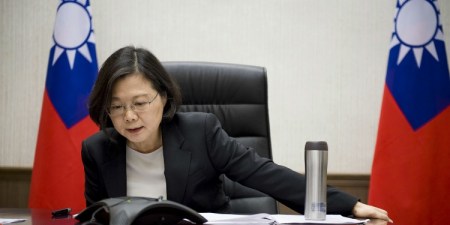
taiwan-callTaiwan Presidential Office via AP

Simply on its face, Trump is right to talk to Taiwan’s president. Unlike her Chinese counterpart, she is a democratically elected leader. Taiwan is the 11th largest Asian economy in terms of gross domestic product (purchasing power parity), with an economy larger than that of Singapore, Pakistan, Malaysia, or Israel. It’s also the United States’ 10th largest trading partner.

Nor should China’s propaganda about Taiwan being simply a renegade province true. Taiwan was only under mainland Chinese control during the Qing Dynasty, and Chinese control was tenuous even then. Control of Taiwan passed among colonial powers, each leaving a distinct stamp on the character of Taiwan, which is as different from mainland China as Argentina is from Colombia.

Trump may have reversed the policy of his immediate successors with regard to contacts, but the simple fact is that, even after the U.S. switched its recognition of China to Beijing from Taipei, U.S.-Taiwanese official exchanges still occurred at a high level–although admitted less so in recent decades.

The reason why critics consider Trump’s phone call as diplomatically counterproductive is because it will anger China. But has kowtowing to China’s diplomatic sensitivities or even broader cooperation with China enhanced America’s security? In Dancing With the Devil, my history of a half-century of U.S. diplomacy with rogue regimes and terrorist groups, I trace how successive U.S. administrations sought to use Beijing as an intermediary in diplomacy with North Korea. In order to keep China cooperative, both Democratic and Republican administration offered waivers on sensitive technology. Rather than pressure Pyongyang to roll back its nuclear developments and aggression, Chinese officials simply pocketed the concessions and did nothing. After a quarter century, the U.S. State Department has nothing to show for Chinese mediation with North Korea.

More recently, Chinese hackers stole designs for both America’s new F-35 and F-22 stealth aircraft. This saved Beijing billions of dollars and years of basic design work, all the while amplifying China’s ability to check the ability of the United States to project power or, conversely, for China to project power themselves. The Chinese hacking of tens of millions of U.S. personnel records is simply icing on the cake.

If China wants to the United States to defer to its world view, it should show that such deference benefits the United States as well as China. Regardless, it should not be the policy of the United States to endorse or empower Chinese land grabs of territories that have distinct identities and do not desire to be under Beijing’s control.

Rather than condemn Trump on Taiwan, it would be far better to encourage the incoming administration to show as much moral clarity on issues relating to the Ukraine, Belarus, Kazakhstan and the Baltics as they face a growing Russian menace.

Prime Minister Trudeau’s affection for despots, autocrats and Islamists

December 4, 2016

Prime Minister Trudeau’s affection for despots, autocrats and Islamists, CIJ NewsDiane Weber Bederman, December 4, 2016

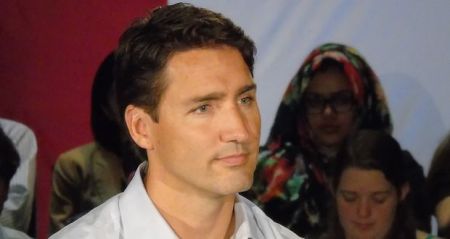
justin-trudeau-7-cijnewsJustin Trudeau. Photo: CIJnews

Canadian Prime Minister Justin Trudeau displayed his affection for fascism on the death of Fidel Castro. “We join the people of Cuba today in mourning the loss of this remarkable leader.” He seems to be following in the footsteps of his father Pierre. Members of Parliament, media outlets in Canada, and around the world expressed their shock at his comments.

Trudeau has also shared his affection for Chinese Communists. “Justin’s 2013 tribute to the role of big government in forcing people into living more environmentally might explain his flirtation with dictators and despots. ‘There is a level of admiration I actually have for China because their basic dictatorship is allowing them to actually turn their economy around on a dime…”’

Trudeau is in the process of cozying up to the Iranians. Iran; a country run by an autocratic, theocratic despot. Trudeau has opened the doors to warmer relations with Russia.

According to Canadian journalist Terence Corcoran “The Trudeaus have been at this for six decades, flirting with the murderous icons of communist oppression since the 1950s when Trudeau the First expressed his admiration for elements of Stalin’s Soviet Communism.

In the 1960s, a 41-year-old Pierre Trudeau visited Communist China during the great famine and co-wrote a book hailing Maoism and denying the existence of a national food policy that killed 38 million people. He never retracted his China views. But, in the 1970s, he cozied up to Fidel Castro, who until his death Friday has held the Caribbean island in a form of political slavery.”

Paul Wells from the Toronto Star did not parse his words of condemnation. “Trudeau lauded Castro’s ‘tremendous dedication and love for the Cuban people,’ whose speech and dietary protein Castro rationed, by law, for decades. I guess it was tough love.”

Margaret Wente from the Globe and Mail wrote “Mr. Trudeau’s affection for the old dictator puts him in the company of Vladimir Putin and Bashar al-Assad.” She found his comments oddly timed. “He was just winding up a far-flung trip whose theme was human rights, during which he lectured various African nations on the need to improve their treatment of women and sexual minorities. Unfortunately, Mr. Castro wasn’t all that progressive either. “

The Globe Editorial Board wrote their concerns about Justin Trudeau; that his comments leave the disturbing impression that he actually believes what he said about Castro including “I know my father was very proud to call him a friend and I had the opportunity to meet Fidel when my father passed away. It was also a real honour to meet his three sons and his brother President Raúl Castro during my recent visit to Cuba.”

Gerald Caplan wrote “Scarcity became the overriding characteristic of Fidelismo, scarcity in both the quantity and quality of the life he provided. Dissent was not tolerated, political dissidents imprisoned, human rights a foreign intrusion, free speech counterrevolutionary, trade unions government servants, gays an insult to the revolution.”

Kelly McParland of the National Post wrote: “Given a choice between saying something nice about his Dad’s Cuban pal, and defending the values of democracy and human rights, Justin Trudeau picked the wrong one.”

He went with “el Comandante” – the captain, the commander – one of the appellations accorded Cuba’s Fidel Castro during the 50+ years in which treated his country like a personal political project, impoverishing millions while pursuing a self-defeating confrontation with Washington.”

Mark Bonokoski, Toronto Sun wrote “Blind to Cuban history, and blinkered by his fathers’ fairy tales about Fidel Castro, Prime Minister Justin Trudeau’s statement about the death of the Cuban dictator was an embarrassment of international proportions. He ignored the brutal truth about the man, dancing around like a clown in a parade dodging horse droppings.”

Members of parliament shared their outrage; from Lisa Raitt, to Rona Ambrose, Maxime Bernier, Kellie Leitch, to Stephen Harper’s son. And then there was world-wide condemnation of Trudeau’s affection for this despot.

So I ask all of these people, journalists, columnists, and Canadian Members of Parliament, where is your outrage at Trudeau’s attempts to mimic these despots? First, by allowing him to pass a petition that attacks free speech without a word from any of you.

The Parliament passed petition 411 that could attack free speech.

We, the undersigned, Citizens and residents of Canada, call upon the House of Commons to join us in recognizing that extremist individuals do not represent the religion of Islam, and in condemning all forms of Islamophobia” (dislike of or prejudice against Islam or Muslims, especially as a political force).

In English this means that we will not be able to criticize Islam as a political force. This is denying us of our right to criticize an ideology that is diametrically opposed to the ideology of democracy.

This leads me to the next question. Where is your outrage with Trudeau’s statement that Islam is compatible with the west while the leading Muslim organization in Canada, ICNA, posted a publication on its official site saying this is not true?

The political system of Islam is totally incompatible with western democracy.

The concept of government party and the opposition is alien to Islam.

All belong to one Ummah with only one goal and pursue the same aims and objects of Islamic guidelines!”[Online publication of ICNA Canada’s site]

ICNA (Islamic Circle of North America) Canada is an Islamic nation-wide organization striving “to build an Exemplary Canadian Muslim Community” by “total submission to Him [Allah] and through the propagation of true and universal message of Islam.” Dr. Iqbal Massod Al-Nadvi is the Amir (President) of Islamic Circle of ICNA Canada and is also serving as Chairperson of Canadian Council of Imams.

Whom should we believe? Non-Muslims or respected Muslim leaders?

Trudeau’s stance is a breach of our Constitution and free speech. Islam, based on Sharia Law as is being interpreted by major Islamic groups, is innately homophobic, misogynistic, xenophobic and viciously anti-semitic. Saudi Arabia just announced they aren’t ready for female drivers!

Islam, as being reflected in Islamic literature in Canada, does not treat all people as equal; does not believe in free will; does not accept gay rights or women as equal to men. Islam the ideology does not separate itself from Islam the religion so it is not tolerant of other religions (there are no synagogues or churches in many Muslim countries) and it makes demands on democracy to accommodate religious beliefs in the secular world.

Where is Main Stream media when it comes to “outing” Trudeau and his comments about Islam? Where are these people who are shocked by Trudeau’s comments about Castro and his love of autocrats, despots and theocrats? Why are they not holding him to account for his declaration that Islam is compatible with the West?