Posted tagged ‘Assad’

Obama Administration Again Deliberates Air Strikes on Assad

October 5, 2016

Obama Administration Again Deliberates Air Strikes on Assad Regime President unlikely to accept military action in Syria

BY:
October 4, 2016 4:46 pm

Source: Obama Administration Again Deliberates Air Strikes on Assad

The Obama administration is again considering air strikes against the regime of Syrian President Bashar al Assad following the failure of a ceasefire deal brokered by the U.S. and Russia.

Top national security officials are meeting with senior administration officials Wednesday to address the ongoing crisis in the rebel-held city of Aleppo. President Obama is expected to reject proposed airstrikes, according to the Washington Post.

Officials from the State Department, CIA, and Joint Chiefs of Staff met last week at the White House to discuss limited military strikes in Syria against the regime to punish Assad for violating the latest ceasefire and continuing to commit war crimes against his people.

Administration officials also hope to pressure Assad into diplomatic talks aimed at ending the country’s civil war, now in its sixth year.

The administration is considering a number of options that include bombing Syrian air force runways, an official participating in the discussions told the Post. The official said the White House would work around its long-standing refusal to strike the Assad regime without a U.N. Security Council resolution by covertly conducting the strikes.

“There’s an increased mood in support of kinetic actions against the regime,” one senior administration official told the Post.

Still, Obama remains unlikely to approve military action against the regime.

The U.S. on Monday suspended bilateral engagement with Russia on negotiating a diplomatic resolution in Syria. Secretary of State John Kerry had worked to restore a week-long ceasefire with Moscow, but talks ultimately fell through given Russia’s continued assault on Aleppo along with Syrian forces.

Russia deploys advanced anti-missile system to Syria for first time, US officials say

October 4, 2016

Russia deploys advanced anti-missile system to Syria for first time, US officials say, Fox News, October 3, 2016

The SA-23 can fire two different types of missiles. A smaller missile is used against aircraft and cruise missiles and is known by NATO as Gladiator. The larger missile is used against intermediate-range ballistic missiles and jamming aircraft and is known as Giant. Both missiles use the same type of warhead containing over 300 pounds of explosives, according to military-today.com.

**********************

EXCLUSIVE: Russia has deployed an advanced anti-missile system to Syria for the first time, three US officials tell Fox News, the latest indication that Moscow continues to ramp up its military operations in Syria in support of President Bashar al-Assad.

It comes after Russia’s actions led to the collapse of a cease-fire and the cut-off of direct talks with the U.S.

While Moscow’s motives are not certain, officials say the new weapon system could potentially counter any American cruise missile attack in Syria.

Components of the SA-23 Gladiator anti-missile and anti-aircraft system, which has a range of roughly 150 miles, arrived over the weekend “on the docks” of a Russian naval base along Syria’s Mediterranean coastal city of Tartus, two US officials said.

It is the first time Russia has deployed the SA-23 system outside its borders, according to one Western official citing a recent intelligence assessment. The missiles and associated components are still in their crates and are not yet operational, according to the officials.

The U.S. intelligence community has been observing the shipment of the SA-23 inside Russia in recent weeks, according to one official.

While the purpose is not clear, one US official asked sarcastically, “Nusra doesn’t have an air force do they?” speaking about the Al Qaeda-linked group in Syria.  The Islamic State also does not fly any manned aircraft or possess cruise missiles, in a sign that Russia is directing its actions to protect itself against any potential attack from the United States or its allies.

The SA-23 can fire two different types of missiles. A smaller missile is used against aircraft and cruise missiles and is known by NATO as Gladiator. The larger missile is used against intermediate-range ballistic missiles and jamming aircraft and is known as Giant. Both missiles use the same type of warhead containing over 300 pounds of explosives, according to military-today.com.

Three years ago, President Obama weighed military action against the Assad regime’s chemical weapons facilities as well as airbases housing the regime’s attack helicopters and jets. US Navy ships in the eastern Mediterranean were prepared to launch Tomahawk cruise missiles in a limited strike to cripple the regime.

Russia deployed a separate air defense system, the S-400, to Syria after a Russian jet was shot down by a Turkish warplane last November.  Since the S-400 deployment, the U.S. military has been careful about flying  manned aircraft inside the range of the system, despite repeated pledges by the US military that its airstrikes in Syria are focused on ISIS, not the Assad regime.

Monday, the Pentagon announced it conducted an airstrike potentially killing a “prominent” al-Qaeda linked operative in Syria.  Officials said they were still assessing the strike and have not released the name of their target.

Hours after the State Department announced it was cutting off talks with Moscow, President Vladimir Putin said he had suspended a Russia-U.S. deal on the disposal of weapons-grade plutonium. Putin’s decree released by the Kremlin cited Washington’s “unfriendly actions.”

Top US officials have recently accused Russia and the Syrian regime of indiscriminant bombing in Syria using incendiary and bunker busting bombs on civilians. Two weeks ago, a UN aid convoy was bombed, killing dozens of aid workers attempting to deliver critical supplies to the more than 200,000 Aleppo residents trapped inside the eastern portion of the city, once Syria’s most populated. In the past week, hundreds of civilians, including children, have been killed, according to local reports.

Russia began its air campaign in Syria on Sept. 30, 2015 following a weeks-long buildup of fighter jets and attack aircraft.  Long-range bombers flying from Russia and Iran have also been used to attack Syrian rebels, some backed by the United States.

Days after Russian bombs started falling in Syria, President Obama predicted that Russia and Iran would find themselves mired in a “quagmire.”

“[A]n attempt by Russia and Iran to prop up Assad and try to pacify the population is just going to get them stuck in a quagmire. And it won’t work,” he told reporters in a White House press conference on Oct. 2, 2015.

On Friday, the one-year anniversary of the Russian strikes, the State Department acknowledged that Russia had succeeded in its goal of propping up the Assad regime.

“It is a grim anniversary…It is hard not to assess that they have succeeded in bolstering the regime,” said Mark Toner, a State Dept. spokesman.

US, Russia on brink of military showdown in Syria

September 30, 2016

US, Russia on brink of military showdown in Syria, DEBKAfile, September 30, 2016

5-3

The fact that President Obama instituted a secret inquiry to discover which link in the American chain of command ordered the attack pointed to his suspicion that a high-up in the Pentagon or possibly the CIA, had ordered the air strike, in order to sabotage the US-Russian military cooperation deal in Syria, which Secretary Kerry obtained after long and arduous toil.

The concessions he made to Russian Foreign Minister Lavrov in those negotiations, especially his consent for extensive sharing of intelligence, were found totally unacceptable in the US Defense Department, its military and intelligence community.

********************************

There is a sense in Washington and Moscow alike that a military showdown between the US and Russia is inevitable – direct this time, not through proxies, like the downing of a Russian warplane by Turkish jets last year. When the big powers are in direct confrontation, minor players step aside and run for cover.

When President Barack Obama Friday, Sept. 30 attended the funeral in Jerusalem of the Israeli leader Shimon Peres, he must have realized he was only 514km as the crow flies from Aleppo, the raging crux of the escalating big-power conflict.

The moment after the ceremonies ended the president and his party, including Secretary of State John Kerry and his security adviser Susan Rice, made haste to head back to Washington to navigate the crisis.

The first step toward a direct showdown was taken by the United States.

By now, it is no secret in Moscow, or indeed in any Middle East capital, that the American A-10 air strike of Sept. 17 against a Syrian military position at Jebel Tudar in the Deir ez-Zour region of eastern Syria was intentional, not accidental, as originally claimed. Scores of Syrian soldiers died in the attack.

The fact that President Obama instituted a secret inquiry to discover which link in the American chain of command ordered the attack pointed to his suspicion that a high-up in the Pentagon or possibly the CIA, had ordered the air strike, in order to sabotage the US-Russian military cooperation deal in Syria, which Secretary Kerry obtained after long and arduous toil.

The concessions he made to Russian Foreign Minister Lavrov in those negotiations, especially his consent for extensive sharing of intelligence, were found totally unacceptable in the US Defense Department, its military and intelligence community.

uspalnvsrussian480

The Russian-Syrian reprisal came two days after the A-10 strike. On Sept. 19, an emergency aid convoy was obliterated on its way to the desperate population of Aleppo. Moscow and Damascus denied responsibility for the deadly bombardment, but no other air force was present in the sky over the embattled city.

On the ground, meanwhile, an unbridled onslaught on rebel-held eastern Aleppo was launched Wednesday by the Russians, Syria, Hizballah and pro-Iranian Shiite militias under the command of Iranian Revolutionary Guards officers.

The fall of Aleppo, Syria’s second city after Damascus, would give Bashar Assad his most resounding victory in the nearly six-year civil war against his regime.

On Sept. 29, Kerry threatened Moscow that “the United States would suspend plans to coordinate anti-Islamic State counter-terrorism efforts if Moscow does not stop attacking Aleppo.”

Russia’s Deputy Foreign Minister Sergey Ryabkov answered with a sneering: “Once again there was a certain emotional breakdown yesterday against the backdrop of the Obama administration’s unwillingness to fulfill its part of the agreements.”

This was a strong hint of the knowledge in the Kremlin that someone in the US administration was holding out against the implementation in full of the cooperation deal agreed upon and was therefore responsible for its breakdown.

The United States is left with two options:

Either stand idly by in the face of the Russian-Syrian-Iranian onslaught on Aleppo, or shelve the coordination arrangements for US and Russian air operations in Syria, with the inevitable risk of a clash in the air space of Syria or over the eastern Mediterranean.

Russia: Dissolve US-Arab-Israeli Syria war room

September 12, 2016

Russia: Dissolve US-Arab-Israeli Syria war room, DEBKAfile, September 12, 2016

jordan_mifkada480

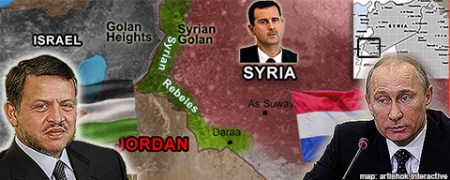
In another move to grab control of the Syrian arena, the Kremlin marked the start of the US-Russian brokered ceasefire in Syria on Sept 12 with a push for the United States to dissolve the war room that has been running anti-Assad operations from a venue north of the Jordanian capital Amman. DEBKAfile’s military and intelligence sources report that the demand was handed down from the Russian presidential office and Defense Minister Sergei Shoigu.

The US Central Command Forward Command in Jordan has for three years run the command and communications functions of select rebel ground operations against Bashar Assad, especially insofar as US special operations units and air force were involved.

Jordanian, Saudi, Israeli, Qatari and United Arab Emirates officers serve alongside American commanders.

This forward command has evolved, according to our sources, into the nerve center of the military campaigns waged by this coalition against the Syrian army and its allies in southern Syria and also against the Islamic State in southeastern Syria and parts of western Iraq.

In January 2016, President Vladimir Putin had the Saudis talk King Abdullah into establishing a Russian-Jordanian forward command outside Amman alongside the American war room. His pretext was the necessity to avert accidental collisions between the Russian and Jordanian warplanes operating in Syrian air space.

But over the past months, the Russian-led command center has gradually nudged the US war room into an inferior role in the control of ongoing operations.

Last week, in the course of the marathon talks on a Syrian truce held by US Secretary of State John Kelly and Russian Foreign Minister Sergei Lavrov in Geneva, the American delegation was suddenly confronted with a demand to shut down the Centcom forward command in Jordan and reassign the US officers staffing it to the Russian-Jordanian command center.

Although taken aback, the US delegation in Geneva did not immediately reject the demand, but agreed to give it due consideration provided that the 10-day truce in Syria holds up and can be extended.

If President Barack Obama submits to Moscow’s demand, our sources point out, it would mean curtains for Israeli, Saudi, Qatar and Emirate officers participation in the Amman command. They would be sent home and their governments would find themselves out in the cold in relation to coordinated Russia-US and Jordanian operations in Syria.

According to DEBKAfile’s intelligence sources, Israel and Gulf Arab military chiefs have concluded that Moscow’s move has the opposite goal of a ceasefire, and is in fact designed to clear the way for a major Russian-Syrian operation to seize Daraa, the main town of southern Syria, and drive all anti–Assad forces out of this region.

Since most of the rebel groups in control of the South are backed by Saudi Arabia, Israel and the Emirates, their expulsion would eliminate those nations’ influence and involvement in that part of Syria and sever their operational links with the United States.

This theory gained substance from the Syria ruler’s declaration Monday at the Daraya mosque:

“The Syrian state is determined to recover every area from the terrorists,” Assad said in an interview broadcast by state media. He made no mention of the ceasefire agreement going into effect that day, but said the army would continue its work “without hesitation, regardless of any internal or external circumstances”.

Fifteen years after the 9/11 attacks, al Qaeda fights on

September 12, 2016

Fifteen years after the 9/11 attacks, al Qaeda fights on, Long War Journal, September 11, 2016

All appeared lost for Osama bin Laden and al Qaeda in December 2001. In the years leading up to the 9/11 hijackings, bin Laden believed that the US was a “paper tiger” and would retreat from the Muslim majority world if al Qaeda struck hard enough. The al Qaeda founder had good reasons to think this. American forces withdrew from Lebanon after a series of attacks in the early 1980s and from Somalia after the “Black Hawk Down” episode in 1993. The US also did not respond forcefully to al Qaeda’s August 1998 embassy bombings in Kenya and Tanzania, or the USS Cole bombing in October 2000.

But bin Laden’s strategy looked like a gross miscalculation in late 2001. An American-led invasion quickly overthrew the Taliban’s regime just weeks after 19 of bin Laden’s men hijacked four airliners and crashed them into the World Trade Center, the Pentagon, and a field in Pennsylvania. Some of al Qaeda’s most senior figures were killed in American airstrikes. With al Qaeda’s foes closing in, bin Laden ordered his men to retreat to the remote Tora Bora Mountains. Here, bin Laden must have thought, al Qaeda would make its last stand. The end was nigh.

Except it wasn’t.

Bin Laden slithered away, eventually making his way to Abbottabad, Pakistan. When Navy SEALs came calling more than nine years later, in early May 2011, the world looked very different.

Documents recovered in bin Laden’s compound reveal that he and his lieutenants were managing a cohesive global network, with subordinates everywhere from West Africa to South Asia. Some US intelligence officials assumed that bin Laden was no longer really active. But Bin Laden’s files demonstrated that this view was wrong.

Writing in The Great War of Our Time: The CIA’s Fight Against Terrorism – From al Qa’ida to ISIS, former CIA official Mike Morell explains how the Abbottabad cache upended the US intelligence community’s assumptions regarding al Qaeda. “The one thing that surprised me was that the analysts made clear that our pre-raid understanding of Bin Laden’s role in the organization had been wrong,” Morell writes. “Before the raid we’d thought that Bin Laden’s deputy, Ayman al Zawahiri, was running the organization on a day-to-day basis, essentially the CEO of al Qaeda, while Bin Laden was the group’s ideological leader, its chairman of the board. But the DOCEX showed something quite different. It showed that Bin Laden himself had not only been managing the organization from Abbottabad, he had been micromanaging it.”*

Consider some examples from the small set of documents released already.

During the last year and a half of his life, Osama bin Laden: oversaw al Qaeda’s “external work,” that is, its operations targeting the West; directed negotiations with the Pakistani state over a proposed ceasefire between the jihadists and parts of the government;ordered his men to evacuate northern Pakistan for safe havens in Afghanistan;instructed Shabaab to keep its role as an al Qaeda branch secret and offered advice concerning how its nascent emirate in East Africa should be run; received status reports on his fighters’ operations in at least eight different Afghan provinces; discussed al Qaeda’s war strategy in Yemen with the head of Al Qaeda in the Arabian Peninsula and other subordinates; received updates from Al Qaeda in the Islamic Maghreb, including details on a proposed truce with the government of Mauritania; authorized the relocation of veteran jihadists to Libya, where they could take advantage of the uprising against Muammar al Qaddafi’s regime; corresponded with the Taliban’s leadership; and generally made decisions that impacted al Qaeda’s operations everywhere around the globe.

Again, these are just a handful of examples culled from the publicly-available files recovered in bin Laden’s compound. The overwhelming majority of these documents remain classified and, therefore, unavailable to the American public.

Al Qaeda has grown under Zawahiri’s tenure

The story of how bin Laden’s role was missed should raise a large red flag. Al Qaeda is still not well-understood and has been consistently misjudged. Not long after bin Laden was killed, a meme spread about his successor: Ayman al Zawahiri. Many ran with the idea that Zawahiri is an ineffectual and unpopular leader who lacked bin Laden’s charisma and was, therefore, incapable of guiding al Qaeda’s global network. This, too, was wrong.

There is no question that the Islamic State, which disobeyed Zawahiri’s orders and was disowned by al Qaeda’s “general command” in 2014, has cut into al Qaeda’s share of the jihadist market and undermined the group’s leadership position. But close observers will notice something interesting about al Qaeda’s response to the Islamic State’s challenge. Under Zawahiri’s stewardship, al Qaeda grew its largest paramilitary force ever.

Brett McGurk, the Special Presidential Envoy for the Global Coalition to Counter ISIL, warned about the rise of Al Nusrah Front during testimony before the Senate Foreign Relations Committee on June 28. “With direct ties to Ayman al Zawahiri, Osama Bin Laden’s successor, Nusra[h] is now al [Qaeda’s] largest formal affiliate in history,” McGurk said. US officials previously contacted by The Long War Journal said Nusrah could easily have 10,000 or more fighters in its ranks.

It is worth repeating that Nusrah grew in size and stature, while being openly loyal to Zawahiri, after the Islamic State became its own jihadist menace. Far from being irrelevant, Zawahiri ensured al Qaeda’s survival in the Levant and oversaw its growth.

image-posted-by-tilmidh-usamah-bin-ladin-1024x348

On July 28, Al Nusrah Front emir Abu Muhammad al Julani announced that his organization would henceforth be known as Jabhat Fath al Sham (JFS, or the “Conquest of the Levant Front”) and would have no “no affiliation to any external [foreign] entity.” This was widely interpreted as Al Nusrah’s “break” from al Qaeda. But Julani never actually said that and al Qaeda itself isn’t an “external entity” with respect to Syria as the group moved much of its leadership to the country long ago. Al Nusrah’s rebranding was explicitly approved by Abu Khayr al Masri, one of Zawahiri’s top deputies, in an audio message released just hours prior to Julani’s announcement. Masri was likely inside Syria at the time.

Julani, who was dressed like Osama bin Laden during his appearance (as pictured above), heaped praise on bin Laden, Zawahiri and Masri. “Their blessed leadership has, and shall continue to be, an exemplar of putting the needs of the community and their higher interests before the interest of any individual group,” Julani said of Zawahiri and Masri.

Most importantly, Al Nusrah’s relaunch as JFS is entirely consistent with al Qaeda’s longstanding strategy in Syria and elsewhere. Al Qaeda never wanted to formally announce its role in the rebellion against Bashar al Assad’s regime, correctly calculating that clandestine influence is preferable to an overt presence for many reasons. This helps explain why Nusrah was never officially renamed as “Al Qaeda in the Levant” in the first place. However, fifteen years after the 9/11 attacks, there is such widespread ignorance of al Qaeda’s goals and strategy that Nusrah’s name change is enough to fool many.

Al Qaeda has grown in South Asia as well. In Sept. 2014, Zawahiri announced the formation of Al Qaeda in the Indian Subcontinent (AQIS), which brought together elements of several existing jihadist organizations. AQIS quickly got to work, attempting to execute an audacious plan that would have used Pakistani arms against American and Indian ships. The plot failed, but revealed that al Qaeda had infiltrated Pakistan’s military.

Pakistani officials recently told the Washington Post that they suspect AQIS has a few thousand members in the city of Karachi alone. And al Qaeda remains closely allied with the Taliban while maintaining a significant presence inside Afghanistan. In October 2015, for instance, Afghan and American forces conducted a massive operation against two large al Qaeda training camps in the southern part of the country. One of the camps was approximately 30 square miles in size. Gen. John F. Campbell, who oversaw the war effort in Afghanistan, explained that the camp was run by AQIS and is “probably the largest training camp-type facility that we have seen in 14 years of war.”

With Zawahiri as its emir, al Qaeda raised its “largest formal affiliate in history” in Syria and operated its “largest training” camp ever in Afghanistan. These two facts alone undermine the widely-held assumption that al Qaeda is on death’s door.

Elsewhere, al Qaeda’s other regional branches remain openly loyal to Zawahiri.

From April 2015 to April 2016, Al Qaeda in the Arabian Peninsula (AQAP) controlled a large swath of territory along Yemen’s southern coast, including the key port city of Mukalla. An Arab-led coalition helped reclaim some of this turf earlier this year, but AQAP’s forces simply melted away, living to fight another day. AQAP continues to wage a prolific insurgency in the country, as does Shabaab across the Gulf of Aden in Somalia. Shabaab’s leaders announced their fealty to Zawahiri in February 2012 and remain faithful to him. They have taken a number of steps to stymie the growth of the Islamic State in Somalia and neighboring countries. Shabaab also exports terrorism throughout East Africa, executing a number of high-profile terrorist attacks in recent years.

Al Qaeda in the Islamic Maghreb (AQIM) continues to operate in West and North Africa, often working in conjunction with front groups. Like al Qaeda’s branches elsewhere, AQIM prefers to mask the extent of its influence, working through organizations such as Ansar al Sharia and Ansar Dine to achieve its goals. Late last year, Al Murabitoon rejoined AQIM’s ranks. Al Murabitoon is led by Mohktar Belmokhtar, who has been reportedly killed on several occasions. Al Qaeda claims that Belmokhtar is still alive and has praised him for rejoining AQIM after his contentious relations with AQIM’s hierarchy in the past. While Belmokhtar’s status cannot be confirmed, several statements have been released in his name in recent months. And Al Murabitoon’s merger with AQIM has led to an increase in high-profile attacks in West Africa.

In sum, AQAP, AQIM, AQIS and Shabaab are formal branches of al Qaeda and have made their allegiance to Zawahiri clear. Jabhat Fath al Sham, formerly known as Al Nusrah, is an obvious al Qaeda project in Syria. Other organizations continue to serve al Qaeda’s agenda as well.

Al Qaeda’s veterans and a “new generation” of jihadist leadership

As the brief summary above shows, Al Qaeda’s geographic footprint has expanded greatly since the Sept. 11, 2001 terrorist attacks. Some US officials argue that al Qaeda has been “decimated” because of the drone campaign and counterterrorism raids. They narrowly focus on the leadership layer of al Qaeda, while ignoring the bigger picture. But even their analysis of al Qaeda’s managers is misleading.

Al Qaeda has lost dozens of key men, but there is no telling how many veterans remain active to this day. Experienced operatives continue to serve in key positions, often returning to the fight after being detained or only revealing their hidden hand when it becomes necessary. Moreover, al Qaeda knew it was going to lose personnel and took steps to groom a new generation of jihadists capable of filling in.

3-aq-leaders-released-from-iran-1023x313From left to right: Saif al Adel, Abu Mohammed al Masri and Abu Khayr al Masri. These photos, first published by the FBI and US intelligence officials, show the al Qaeda leaders when they were younger.

Last year, several veterans were reportedly released from Iran, where they were held under murky circumstances. One of them was Abu Khayr al Masri, who paved the way for Al Nusrah’s rebranding in July. Another is Saif al Adel, who has long been wanted for his role in the 1998 US Embassy bombings in Kenya and Tanzania. At least two others freed by Iran, Abu Mohammed al Masri and Khalid al Aruri, returned to al Qaeda as well.

Masri, Al Adel, and Aruri may all be based inside Syria, or move back and forth to the country from Turkey, where other senior members are based. Mohammed Islambouli is an important leader within al Qaeda. After leaving Iran several years ago, Islambouli returned to Egypt and eventually made his way to Turkey, where he lives today.

Sitting to Julani’s right during his much ballyhooed announcement was one of Islambouli’s longtime compatriots, Ahmed Salama Mabrouk. The diminutive Mabrouk is another Zawahiri subordinate. He was freed from an Egyptian prison in the wake of the 2011 uprisings.

Al Qaeda moved some of its senior leadership to Syria and several others from this cadre are easy to identify. But al Qaeda has also relied on personnel in Yemen to guide its global network. One of Zawahiri’s lieutenants, Hossam Abdul Raouf, confirmed this in an audio message last October. Raouf explained that the “weight” of al Qaeda has been shifted to Syria and Yemen, because that is where its efforts are most needed.

The American drone campaign took out several key AQAP leaders in 2015, but they were quickly replaced. Qasim al Raymi, who was trained by al Qaeda in Afghanistan in the 1990s, succeeded Nasir al Wuhayshi as AQAP’s emir last summer. Raymi quickly renewed his allegiance to Zawahiri, whom Raymi described as the “the eminent sheikh” and “the beloved father.” Another al Qaeda lifer, Ibrahim Abu Salih, emerged from the shadows last year. Salih was not public figure beforehand, but he has been working towards al Qaeda’s goals in Yemen since the early 1990s. Ibrahim al Qosi (an ex-Guantanamo detainee) and Khalid al Batarfi have stepped forward to lead AQAP and are probably also part of al Qaeda’s management team.

This old school talent has helped buttress al Qaeda’s leadership cadre. They’ve been joined by men who signed up for al Qaeda’s cause after the 9/11 attacks as well. In July, the US Treasury Department designated three jihadists who are based in Iran. One of them, known as Abu Hamza al Khalidi, was listed in bin Laden’s files as part of a “new generation” of al Qaeda leaders. Today, he plays a crucial role as the head of al Qaeda’s military commission, meaning he is the equivalent of al Qaeda’s defense minister. Treasury has repeatedly identified other al Qaeda members based in Iran, Afghanistanand elsewhere.

Some members of the “new generation” are more famous than others. Such is the case with Osama’s son, Hamzah bin Laden, who is now regularly featured in propaganda.

This brief survey of al Qaeda is not intended to be exhaustive, yet it is still sufficient to demonstrate that the organization’s bench is far from empty. Moreover, many of the men who lead al Qaeda today are probably unknown to the public.

The threat to the West

Testifying before the Senate Armed Services Committee in February, Director of National Intelligence James Clapper warned that al Qaeda “nodes in Syria, Pakistan, Afghanistan, and Turkey” are “dedicating resources to planning attacks.” His statement underscored how the threats have become more geographically dispersed over time. With great success, the US worked for years to limit al Qaeda’s ability to strike the West from northern Pakistan. But today, al Qaeda’s “external operations” work is carried out across several countries.

During the past fifteen years, Al Qaeda has failed to execute another mass casualty attack in the US on the scale of the 9/11 hijackings. Its most recent attack in Europe came in January 2015, when a pair of brothers backed by AQAP conducted a military-style assault on the Charlie Hebdo office in Paris. AQAP made it clear that the Charlie Hebdo massacre was carried out according to Zawahiri’s orders.

Thanks to vigilance and luck, al Qaeda hasn’t been able to replicate a 9/11-style assault inside the US. Part of the reason is that America’s defenses, as well as those of its partner nations, have improved. Operations such as the 9/11 hijackings are also difficult to carry out in the first place. Even the 9/11 plan experienced interruptions despite a relatively lax security environment. (Most famously, for example, the would-be 20th hijacker was denied entry into the US at an Orlando airport in the summer of 2001.)

But there is another aspect to evaluating the al Qaeda threat that is seldom appreciated. It is widely assumed that al Qaeda is only interested in attacking the West. This is flat false. Most of the organization’s resources are devoted to waging insurgencies in Muslim majority countries.

The story in Syria has been telling. Although al Qaeda may have more resources in Syria than anywhere else, Zawahiri did not order his men to carry out a strike in the West. Al Qaeda’s so-called “Khorasan Group” laid the groundwork for such operations, but Zawahiri did not give this cadre the green light to actually carry them out. Zawahiri’s stand down order is well known. In an interview that aired in May 2015, for instance, Julani explained that the “directives that come to us from Dr. Ayman [al Zawahiri], may Allah protect him, are that Al Nusrah Front’s mission in Syria is to topple [Bashar al Assad’s] regime” and defeat its allies. “We have received guidance to not use Syria as a base for attacks against the West or Europe so that the real battle is not confused,” Julani said. However, he conceded that “maybe” the mother al Qaeda organization is plotting against the West, just “not from Syria.” Julani emphasized that this “directive” came from Zawahiri himself.

To date, al Qaeda has not lashed out at the West from inside Syria, even though it is certainly capable of doing so. Al Qaeda’s calculation has been that such an attack would be too costly for its strategic interests. It might get in the way of al Qaeda’s top priority in Syria, which is toppling the Assad regime. This calculation could easily change overnight and al Qaeda could use Syria as a launching pad against the West soon. But they haven’t thus far. It helps explain why there hasn’t been another 9/11-style plot by al Qaeda against the US in recent years. It also partially explains why al Qaeda hasn’t launched another large-scale operation in Europe for some time. Al Qaeda has more resources at its disposal today than ever, so the group doesn’t lack the capability. If Zawahiri and his advisors decided to make anti-Western attack planning more of a priority, then the probability of another 9/11-style event would go up. Even in that scenario, al Qaeda would have to successfully evade the West’s defenses. But the point is that al Qaeda hasn’t been attempting to hit the West nearly as much as some in the West assume.

In the meantime, it is easy to see how the al Qaeda threat has become more diverse, just as Clapper testified. AQAP has launched several thwarted plots aimed at the US, including the failed Christmas Day 2009 bombing. In 2009, al Qaeda also plotted to strike trains in the New York City area. In 2010, a Mumbai-style assault in Europe was unraveled by security services. It is not hard to imagine al Qaeda trying something along those lines once again. Other organizations tied to al Qaeda, such as the Pakistani Taliban, have plotted against the US as well.

Fifteen years after the 9/11 attacks, al Qaeda lives. Fortunately, Zawahiri’s men have not replicated the hijackings that killed nearly 3,000 Americans. But the al Qaeda threat looms. It would be a mistake to assume that al Qaeda won’t try a large-scale operation again.

*The spellings of al Qaeda and bin Laden are changed in this quote from Morell to make them consistent with the rest of the text.
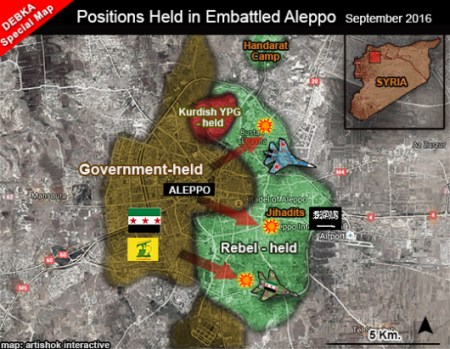
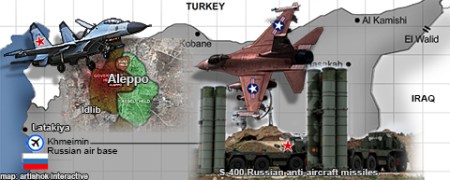
Putin-Erdogan deal for Syria is ME exit for Obama

September 9, 2016

Putin-Erdogan deal for Syria is ME exit for Obama, DEBKAfile, September 9, 2016

putin_obama_g-20_china

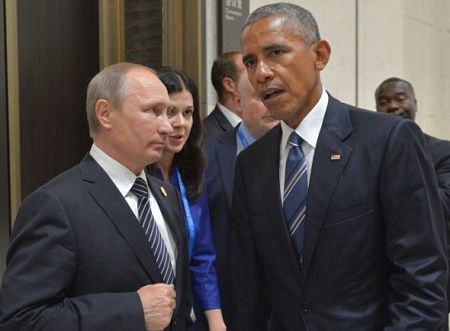
The fledgling “initiatives” reverberating this week in Washington, Moscow, Ankara, Jerusalem and the G20 summit were nothing but distractions from the quiet deals struck by two lead players, Russia and Turkey to seize control of the region’s affairs. Recep Tayyip Erdogan knew nothing would come of his offer on the G20 sidelines to US President Barack Obama to team up for a joint operation to evict ISIS from Raqqa. And, although Moscow was keen on hosting the first handshake in almost a decade between Israeli Prime Minister Binyamin Netanyahu and the Palestinian leader Mahmoud Abbas (Abu Mazen), neither were known to be ready for the last step toward a meeting.

But the game-changing events to watch out for took place in Hangzhou without fanfare – namely, the Obama-Putin talks and the far more fruitful encounter between Putin and Erdogan.

According to DEBKAfile’s intelligence and Mid East sources, Putin virtually shut the door on further cooperation with the United States in Syria. He highhandedly informed Obama that he now holds all the high cards for controlling the Syrian conflict, whereas Washington was just about out of the game.

Putin picked up the last cards, our sources disclose, in a secret deal with Erdogan for Russian-Turkish collaboration in charting the next steps in the Middle East.

The G20 therefore, instead of promoting new US-Russian understanding, gave the impetus to a new Russian-Turkish partnership.

Erdogan raked in instant winnings: Before he left China, he had pocketed Putin’s nod to grab a nice, 4,000-sq.km slice of northern Syria, as a “security zone” under the control of the Turkish army and air force, with Russian non-interference guaranteed.

This Turkish zone would include the Syrian towns of Jarablus, Manjib, Azaz and Al-Bab.

Ankara would reciprocate by withdrawing its support from the pro-US and pro-Saudi rebel groups fighting the Assad army and its allies in the area north of Aleppo.

Turkey’s concession gave Putin a selling-point to buy the Syrian ruler assent to Erdogan’s project. Ankara’s selling-point to the West was that the planned security zone would provide a safe haven for Syrian refugees and draw off some of the outflow perturbing Europe.

kremlinwhitehouse480

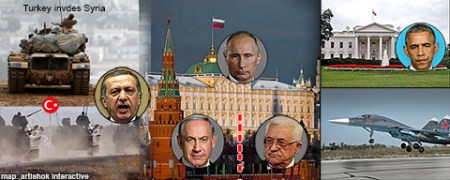
It now turns out that, just as the Americans sold the Syrian Kurds down the river to Turkey (when Vice President Joe Biden last month ordered them to withdraw from their lands to the eastern bank of the Euphrates River or lose US support), so too are the Turks now dropping the Syrian rebels they supported in the mud by re-branding them as “terrorists.”

The head of this NATO nation has moreover gone behind America’s back for a deal with the Russian ruler on how to proceed with the next steps of the Syrian conflict.

Therefore, when US Secretary of State John Kerry met Russian Foreign Minister Sergei Lavrov in Geneva Thursday and Friday, Sept. 8-9, for their sixth and seventh abortive sit-downs on the Syrian issue, there was not much left for them to discuss, aside from continuing to coordinate their air traffic over Syria and the eastern Mediterranean.

Washington and Moscow are alike fearful of an accidental collision in the sky in the current inflammable state of relations between the two powers.

As a gesture of warning, a Russian SU-25 fighter jet Tuesday, Sept 6, intercepted a US Navy P8 plane flying on an international route over the Black Sea. When the Russian jet came as close as 12 feet, the US pilots sent out emergency signals – in vain, because the Russian plane’s transponder was switched off. The American plane ended up changing course.

Amid these anomalies, Moscow pressed ahead with preparations to set up a meeting between the Israeli and Palestinian leaders, as the Russian Foreign Ministry announced Thursday.

Putin is keen to succeed where the Obama administration failed. John Kerry abandoned his last effort at peacemaking as a flop two years ago.  But it is hard to see Netanyahu or Abu Mazen rushing to play along with the Russian leader’s plan to demean the US president in the last months of his tenure – especially when no one can tell who will win the November 8 presidential election – Hillary Clinton or Donald Trump – or what policies either will pursue.

All the region’s actors will no doubt be watching closely to see how Turkey’s “Russian track” plays out and how long the inveterate opportunists can hang together.

Obama Demands UN Do Something Over Syria’s Violation of His Red Line

August 25, 2016

Obama Demands UN Do Something Over Syria’s Violation of His Red Line, Front Page Magazine, Daniel Greenfield, August 25, 2016

mission-accomplished_7

I could call on the fairies. Or the UN.

Both are equally likely to do anything. Obama knows that. This is why his theatrical outrage is such a ridiculous joke.

The US has urged “strong and swift action” after a UN investigation concluded that Syria used chemical weapons against its own people.

The year-long inquiry found the government used chlorine gas in attacks in Idlib province in 2014 and 2015.

The US ambassador to the UN, Samantha Power, said the use of chemical weapons was “barbaric” and called for “all states to support strong and swift action”.

Yes, please do something since we made it clear that we don’t want to. But wait, it’s all part of a brilliant collective plan.

These leaks and statements are part of an administration effort to put pressure on President Bashar Assad and his Russian backers before an August 30 meeting by the UN Security Council to look at the issue of chemical weapons in Syria, a U.S. intelligence official told The Daily Beast.

Why now? According to this official, the answer goes back to 2014, when the Assad regime was accused of repeated chlorine attacks, and the world shrugged its shoulders.

“We weren’t getting enough political oomph when the chlorine attacks first came to light. So we figured the best option was to work through the slow UN process, get the Russians to a place where they’re cornered diplomatically,” the intelligence official said.

Plus, the official added, finger pointing by the United States alone wouldn’t be nearly as effective as collective action.

Yes, because you guys are really good at cornering Russia diplomatically. This way we pass it to the UN. The UN does nothing. Obama shrugs. Mission accomplished.

Ex-CIA Chief’s Comments Reflect ‘What US is Secretly Doing in Syria’

August 11, 2016

Ex-CIA Chief’s Comments Reflect ‘What the US is Secretly Doing in Syria , from Sputnik News, August 10, 2016

(??????????????????????????? — DM)

Former CIA Deputy Director Michael Morell, who has recently endorsed Hillary Clinton, has caused a firestorm when he said that the United States should covertly kill Russians and Iranians in Syria, with Russian lawmakers denouncing the remarks as “monstrous” and experts saying that he merely confirmed what Washington has secretly been doing.

Vladimir Vasilyev, a senior research fellow at the Moscow-based Institute of US and Canada Studies of the Russian Academy of Sciences, maintained that Morell’s comments should be taken at face value.

This is “what the United States has secretly and surreptitiously been doing and most importantly what Washington will do if Hillary wins presidential election,” he told RIA Novosti. “Russia should understand who it is dealing with. In fact, Moscow could thank Morell for leaking important informationon Washington’s true goals in Syria.”

“Monstrous remarks”

Russian MP Irina Yarovaya, the head of the State Duma Committee for Security, echoed these sentiments, saying that Morell made “monstrous remarks.” He essentially confirmed that Washington is capable of carrying out “covert killings … to pursue its own devastating plans.”

Yarovaya also noted that Morell’s comments point to a hidden agenda in Washington’s counterterrorism activities. “The US State Department must issue a clear statement on the issue. Otherwise, there are grounds to assume that the former CIA deputy director inadvertently revealed an existing top secret CIA plan.”

Morell’s remarks are meant to “fuel tensions between Russia and the US,” Dmitry Gorovtsov, the deputy chairman of the State Duma’s Committee for Security, told RIA Novosti, adding that such rhetoric is unacceptable. He also called Morell’s plan “extremist” and “akin to fascist ideology.”

Morell “does not understand what he is talking about”

First deputy chairman of the defense and security committee in the Federation Council of Russia Franz Klintsevich referred to Morell’s remarks as “absurd.”

“I think that Michael Morell does not understand what he is talking about. Modern surveillance equipment that covers all Syria renders any ‘covert’ killings impossible,” he said. Russia’s cutting edge technologies allow Moscow to determine the name, the date, the place and the goal of any such activity if it took place.

Moreover, Morell’s advice “would automatically lead to an open confrontation between Russia and the US, which the Americans, as far as I understand, do not need,” Klintsevich added.

On Monday, Michael Morell, who served as CIA’s acting director twice, told talk show host Charlie Rose that the US “must make” Russia and Iran “pay a price” in Syria by “covertly” killing their nationals. “You don’t tell the world about it, right? You don’t stand up at the Pentagon and say, ‘we did this.’ Right? But you make sure they know it in Moscow and Tehran,” he added.

Morell also suggested “scaring” Bashar al-Assad by bombing government offices and presidential guard positions, but added that he did not urge to assassinate the Syrian president.

Journalist and political commentator Murtaza Hussain pointed out that the former CIA deputy director championed “efforts that later helped incubate al-Qaeda,” referring to a strategy that the United States employed in Afghanistan in the 1980s.

He also warned that if Morell’s plan is given the green light, it “would entail a massive escalation of American covert military involvement in Syria that would bring the United States much closer to direct confrontation with Russia and Iran.”

Israel’s let-down: Putin-Erdogan hook-up with Iran

August 9, 2016

Israel’s let-down: Putin-Erdogan hook-up with Iran, DEBKAfile, August 9, 2016

2 (1)

The talks between Presidents Vladimir Putin and Reccep Erdogen in St. Petersburg scheduled for Tuesday, Aug. 9, are causing trepidation among Israel’s policy-makers and military leaders. Their summit takes place on the sidelines of the G-20 summit, concluding nine months of hostility between the two capitals that was sparked by Turkish jets shooting down a Russian SU-24 warplane over the Syrian border on Nov. 24, 2015.

The feud was put to rest on July 17 – two days after Erdogan suppressed the attempted military coup against his rule. The Turkish ruler decided there and then to exploit the episode to expand his strength and use it not only for a massive settling of accounts with his critics, but also as a springboard for parlaying his reconciliation with Moscow for a strategic pact with Russia.

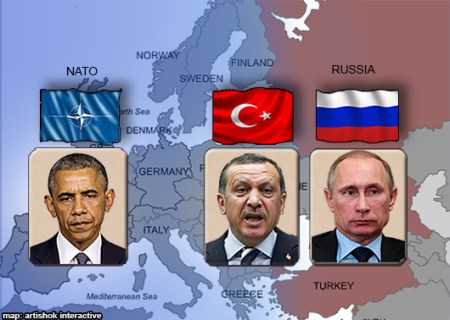
Israel, the worry is that while turning his back on the United States and NATO, Eerdogan will go all the way to bond with Russia to which Iran is also attached as a partner. Indeed, Erdogan has scheduled a trip to Tehran and a meeting with President Hassan Rouhani a few days after his talks with Putin.

The Turkish president’s latest moves look like spawning another new Middle East bloc that would consist of Turkey, Russia, Iran, Iraq, Syria and indirectly the Lebanese Hizballah terrorist group.

This prospect would upend Israel’s key policies for Turkey and Syria.

The Israeli détente with Ankara in recent months hinged on Turkey’s continuing to maintain its close military and intelligence ties with the United States and its integration in an anti-Iran Sunni alliance in partnership with Saudi Arabia, Egypt, the United Arab Emirates and Jordan.

But the Putin-Erdogan meeting Tuesday threatens to throw American, Israeli and moderate Arab rulers’ plans to the four winds. Turkey appears to have opted to line up with a Russian-Shiite front led by Tehran in preference to an anti-Iran Sunni alliance.

Therefore, the expanded military and intelligence cooperation which the Israeli-Turkish rapprochement was to have heralded will be low key at best for two reasons:

1. Israel will beware of sharing its military technology with Turkey lest it find its way to Iran. During the talks with Ankara for patching up their quarrel Israel was constantly on the lookout for indications that Turkey was prepared to break off its ties with Iran.

2. For the sake of keeping Iran and Hizballah away from its borders, Israel entered into arrangements with Russia, some of them never published, at the start of Moscow’s military intervention in Syria last September. Those arrangements included coordination of their air force operations over Syria.

Now, Israel finds itself suddenly up against a Russian-Turkish partnership aimed at strengthening Iranian domination of Syria – the exact reverse of the Netanyahu government’s objective in resolving its dispute with Ankara and forging deals with Moscow.

Aleppo battle seesaws: pro-Assad siege in place

August 8, 2016

Aleppo battle seesaws: pro-Assad siege in place, DEBKAfile, August 8, 2016

(Please see also, Jihadists and other rebels claim to have broken through siege of Aleppo. — DM)

Aleppo_A_6.8._2016

The battle for Aleppo was locked in a draw Monday, Aug. 8 – contrary to the claims of Syrian rebel forces to have broken through the weeks-long government siege on the city and seized key positions from Assad’s army and its allies, Hizballah and pro-Iranian Shiite militias.

DEBKAfile’s military sources report that the rebels had not yet secured control of the roads linking western and eastern Aleppo. Neither was there any sign of the heavy Russian air strikes claimed by the rebels Sunday afternoon to have been launched in an effort to halt their advance.

According to our sources, intensive air strikes are indeed being conducted in the Aleppo theater – but only by the Syrian air force. There is no Russian presence in the skies over city. Their air force is active in the last few days in only one arena, Idlib in northern Syria. Its absence accounts for the Syrian rebel militias’ partial gains in the battle for Aleppo, and the Pro-Assad forces’ difficulties in holding them back.

Had the Russians provided solid air support for the Syrian army and its allies, our military analysts assert that the rebels would have been pushed back.

It is being withheld, according to our intelligence sources, because Moscow wishes to keep the door ajar for dialogue to continue with the Obama administration. The Russians are interested in particular in setting up with the Americans a joint military and intelligence coordination mechanism in Syria for fighting Islamist forces.

the division of tasks is conceived in Moscow, the Americans would provide intelligence for the Russian air force to undertake the bombardment of targets to be marked by US intelligence.

An agreement in principle on this deal would necessitate direct communication lines to operate between their two active war rooms for Syria: the US-Jordanian and Russian-Jordanian joint command centers operating in Amman.

Kremlin fears that Russian aerial intervention in the Aleppo fighting would put paid to the talks with Washington on this broad collaboration.

So long as those talks are underway,, neither the Russians nor the Americans are likely to step in to determine the military situation in the battle for Aleppo – which was once Syria’s commercial center. The fighting will  continue to seesaw inconclusively between the warning sides.